Teaching WALKTHRUs INSET Tachwedd 6ed Teaching WALKTHRUs 2 No opt out Normalise Error Uncertainty 3 Scared of getting it wrong in front of peers Doesnt want to think about the answer lack of effort Genuinely not having an answer to
"Teaching WALKTHRUs – INSET Tachwedd 6ed Teaching" is the property of its rightful owner. Permission is granted to
download and print the materials on this website for personal, non-commercial use only, and to display it
on your personal computer provided you do not modify the materials and that you retain all copyright
notices contained in the materials. By downloading content from our website, you accept the terms of this
agreement.
Presentation Transcript
01
Teaching WALKTHRUs – INSET Tachwedd 6ed<br>
02
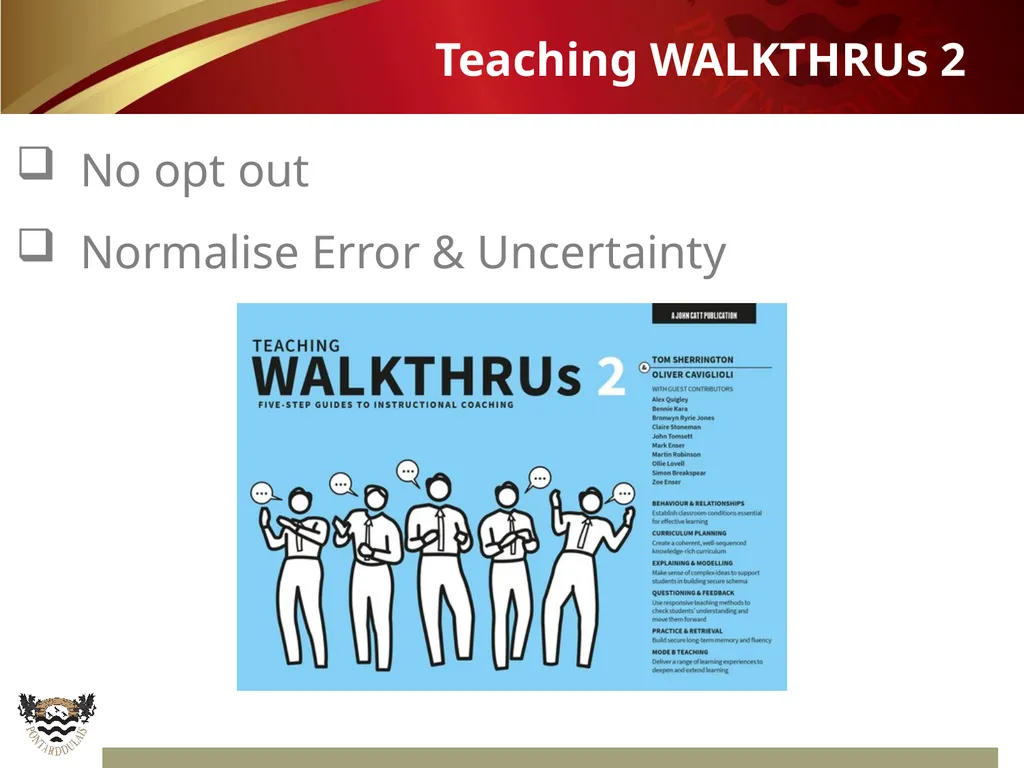
Teaching WALKTHRUs 2 No opt out
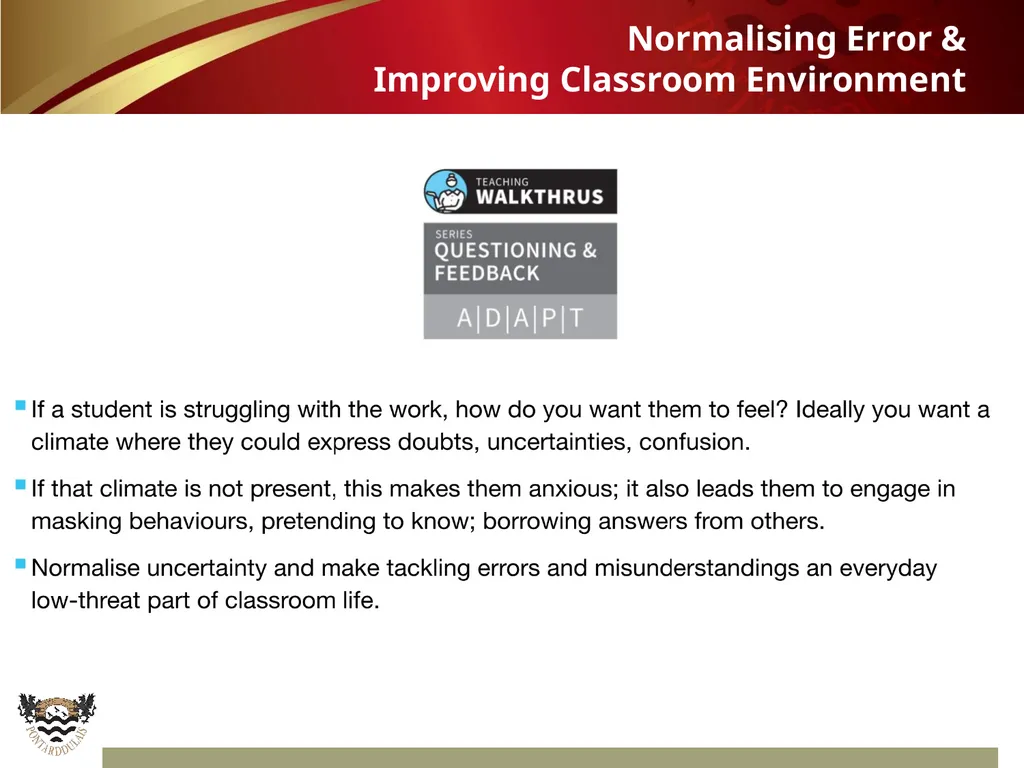
Normalise Error & Uncertainty<br>
03
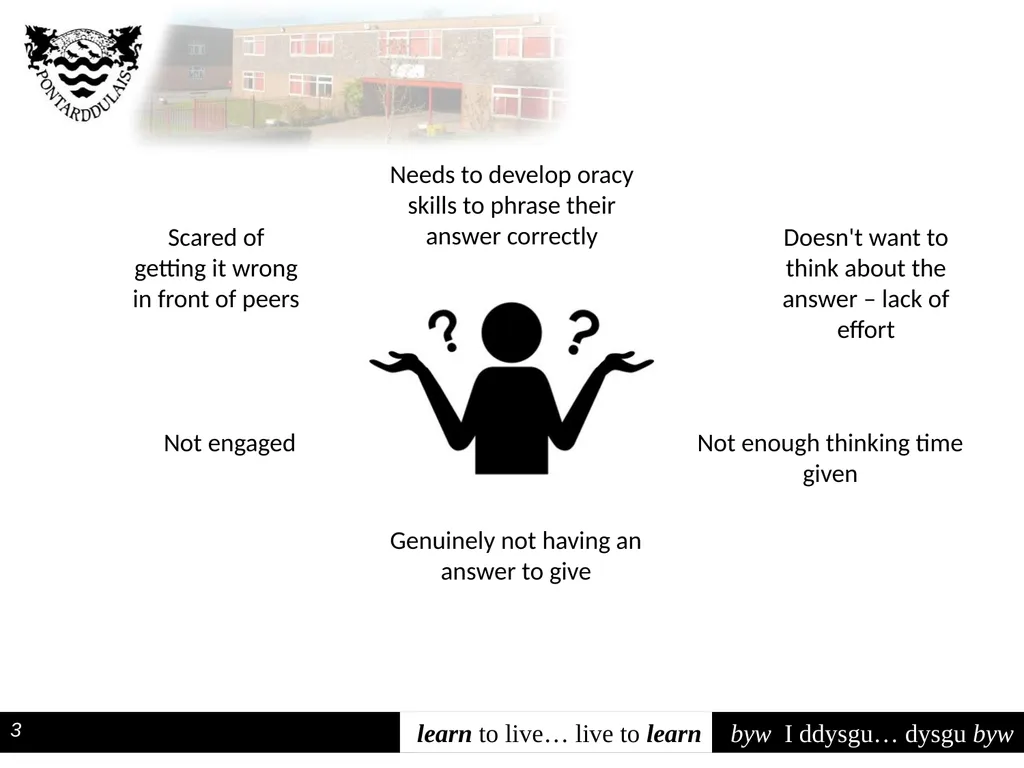
3 Scared of getting it wrong in front of peers Doesn't want to think about the answer – lack of effort Genuinely not having an answer to give Needs to develop oracy skills to phrase their answer correctly Not engaged Not enough thinking time given<br>
04
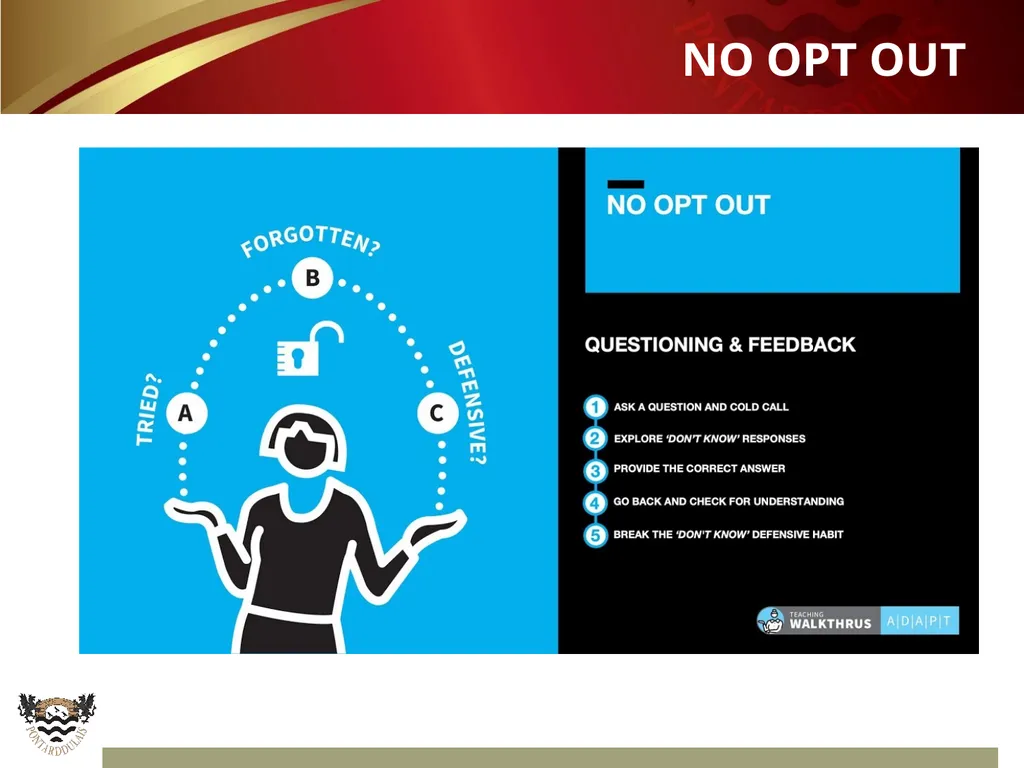
NO OPT OUT<br>
05
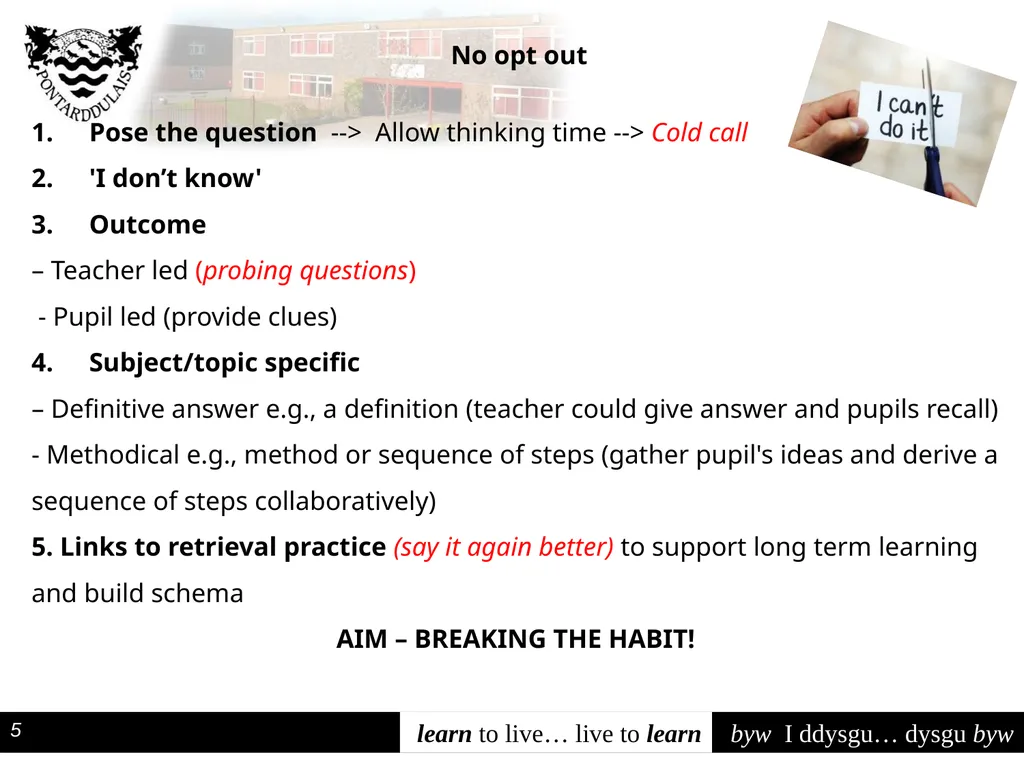
5 No opt out
Pose the question --> Allow thinking time --> Cold call
'I don’t know'
Outcome
– Teacher led (probing questions)
- Pupil led (provide clues)
Subject/topic specific
– Definitive answer e.g., a definition (teacher could give answer and pupils recall)
- Methodical e.g., method or sequence of steps (gather pupil's ideas and derive a sequence of steps collaboratively)
5. Links to retrieval practice (say it again better) to support long term learning and build schema
AIM – BREAKING THE HABIT!<br>
06
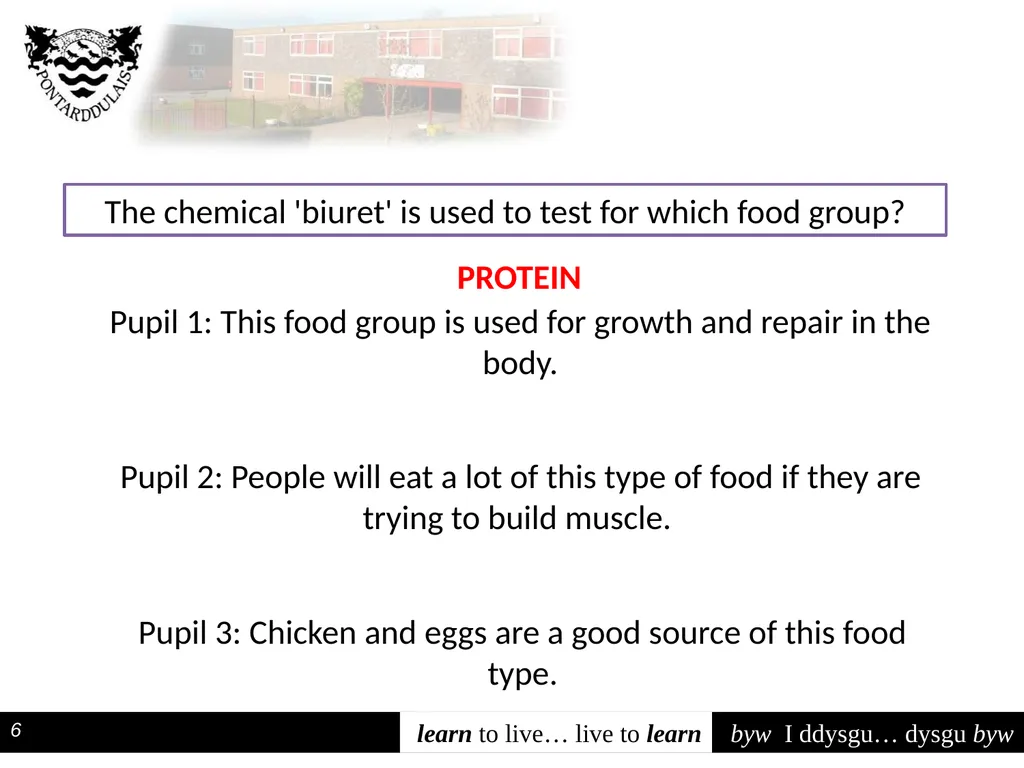
6 The chemical 'biuret' is used to test for which food group? Pupil 1: This food group is used for growth and repair in the body. Pupil 2: People will eat a lot of this type of food if they are trying to build muscle. Pupil 3: Chicken and eggs are a good source of this food type. PROTEIN<br>
07
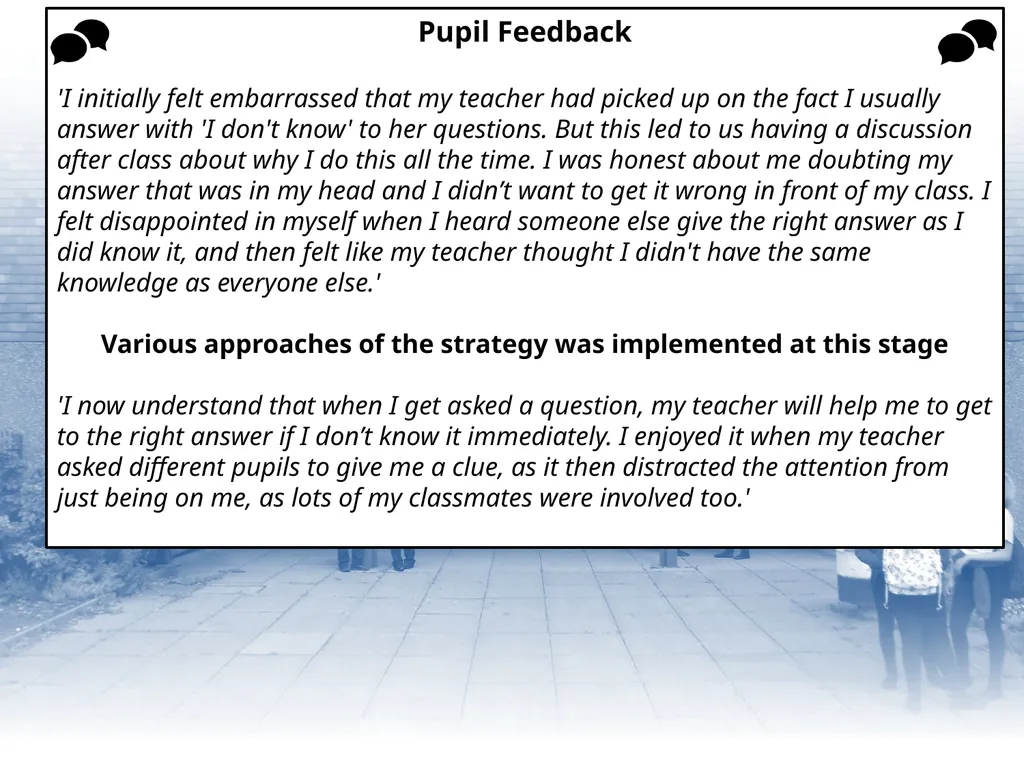
7 Pupil Feedback
'I initially felt embarrassed that my teacher had picked up on the fact I usually answer with 'I don't know' to her questions. But this led to us having a discussion after class about why I do this all the time. I was honest about me doubting my answer that was in my head and I didn’t want to get it wrong in front of my class. I felt disappointed in myself when I heard someone else give the right answer as I did know it, and then felt like my teacher thought I didn't have the same knowledge as everyone else.'
Various approaches of the strategy was implemented at this stage
'I now understand that when I get asked a question, my teacher will help me to get to the right answer if I don’t know it immediately. I enjoyed it when my teacher asked different pupils to give me a clue, as it then distracted the attention from just being on me, as lots of my classmates were involved too.'<br>
08
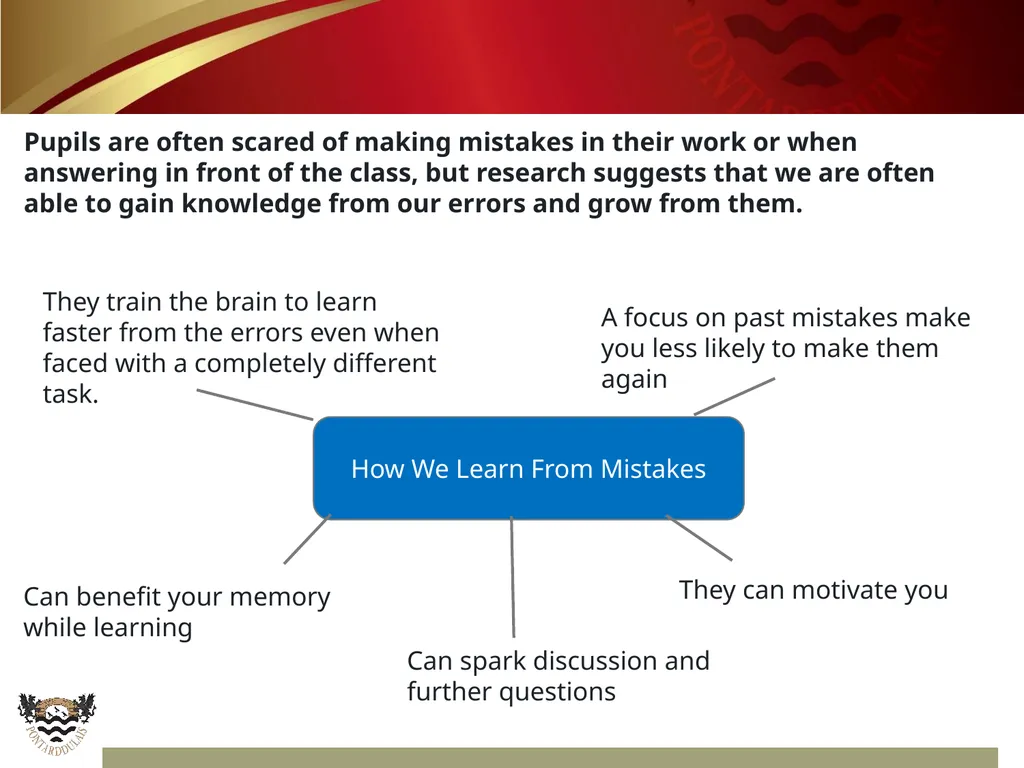
Pupils are often scared of making mistakes in their work or when answering in front of the class, but research suggests that we are often able to gain knowledge from our errors and grow from them. How We Learn From Mistakes A focus on past mistakes make you less likely to make them again They train the brain to learn faster from the errors even when faced with a completely different task. Can benefit your memory while learning They can motivate you Can spark discussion and further questions<br>
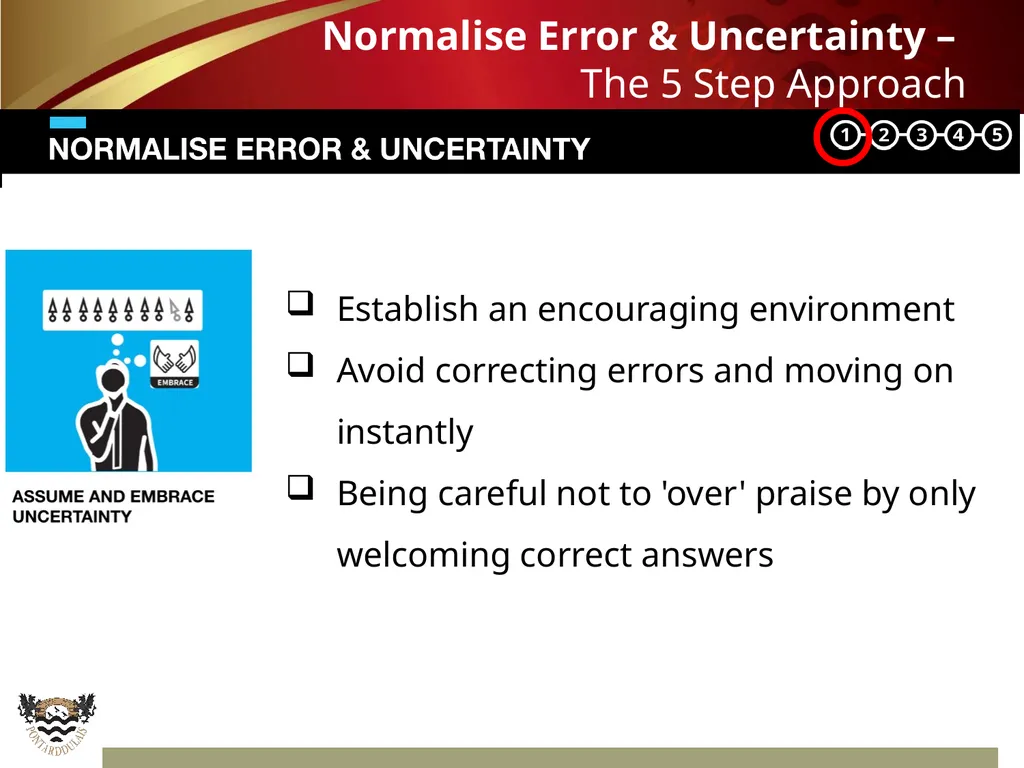
Normalise Error & Uncertainty – The 5 Step Approach Establish an encouraging environment
Avoid correcting errors and moving on instantly
Being careful not to 'over' praise by only welcoming correct answers<br>
11
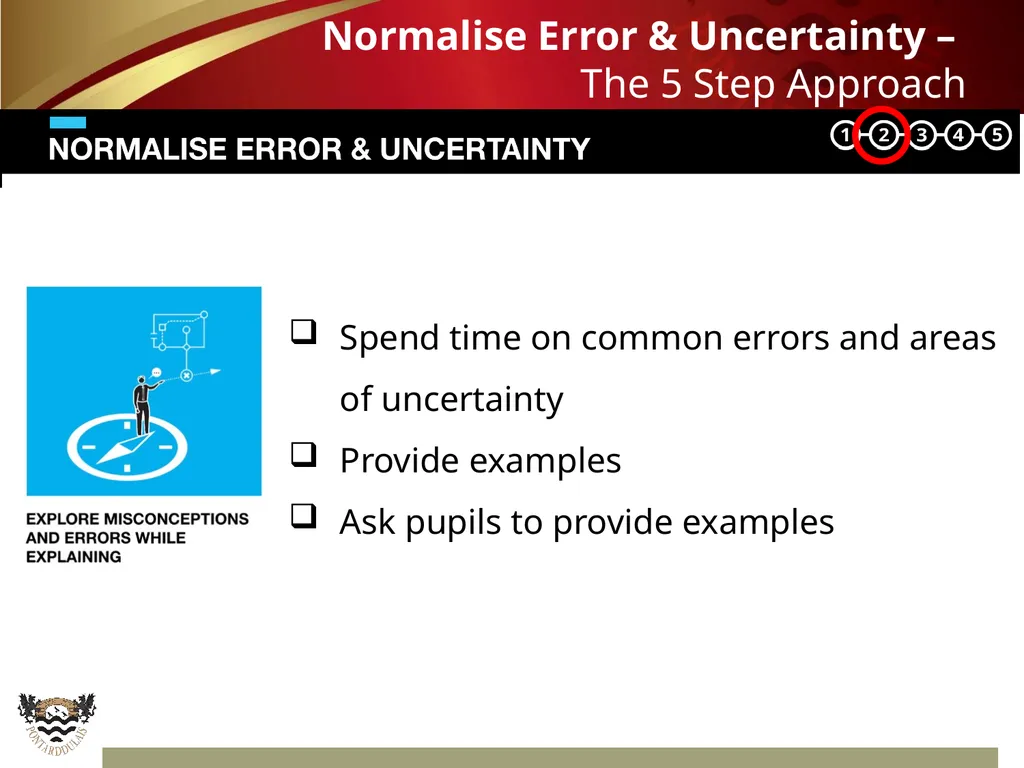
Normalise Error & Uncertainty – The 5 Step Approach Spend time on common errors and areas of uncertainty
Provide examples
Ask pupils to provide examples<br>
12
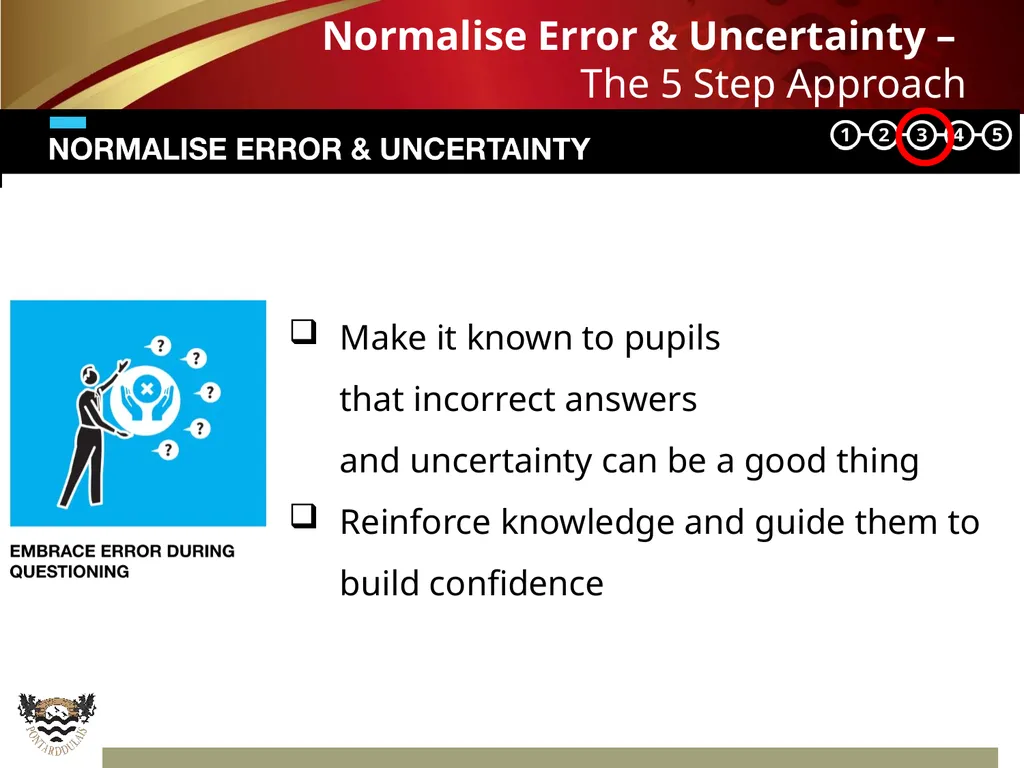
Normalise Error & Uncertainty – The 5 Step Approach Make it known to pupils that incorrect answers and uncertainty can be a good thing
Reinforce knowledge and guide them to build confidence<br>
13
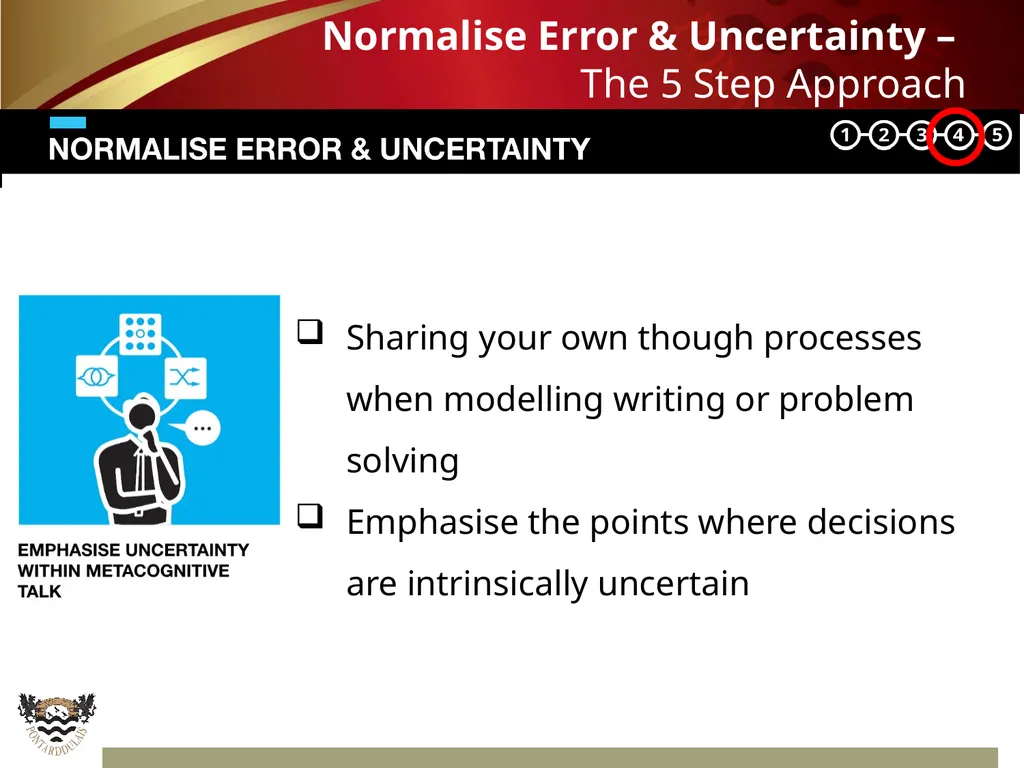
Normalise Error & Uncertainty – The 5 Step Approach Sharing your own though processes when modelling writing or problem solving
Emphasise the points where decisions are intrinsically uncertain<br>
14
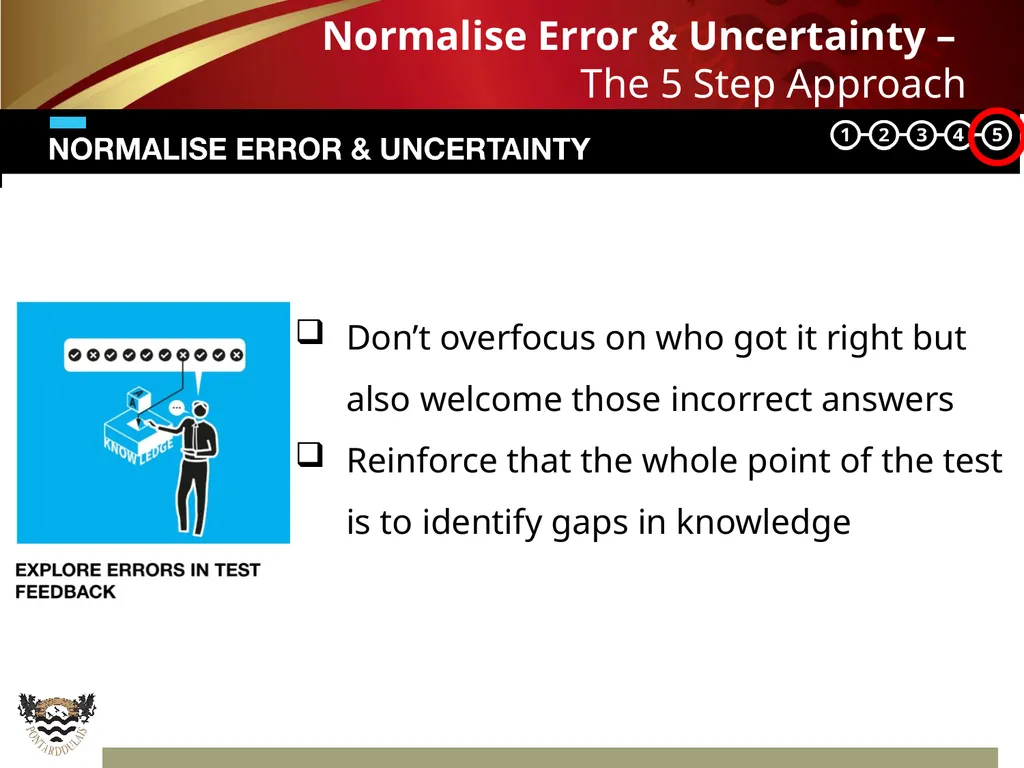
Normalise Error & Uncertainty – The 5 Step Approach Don’t overfocus on who got it right but also welcome those incorrect answers
Reinforce that the whole point of the test is to identify gaps in knowledge<br>
15
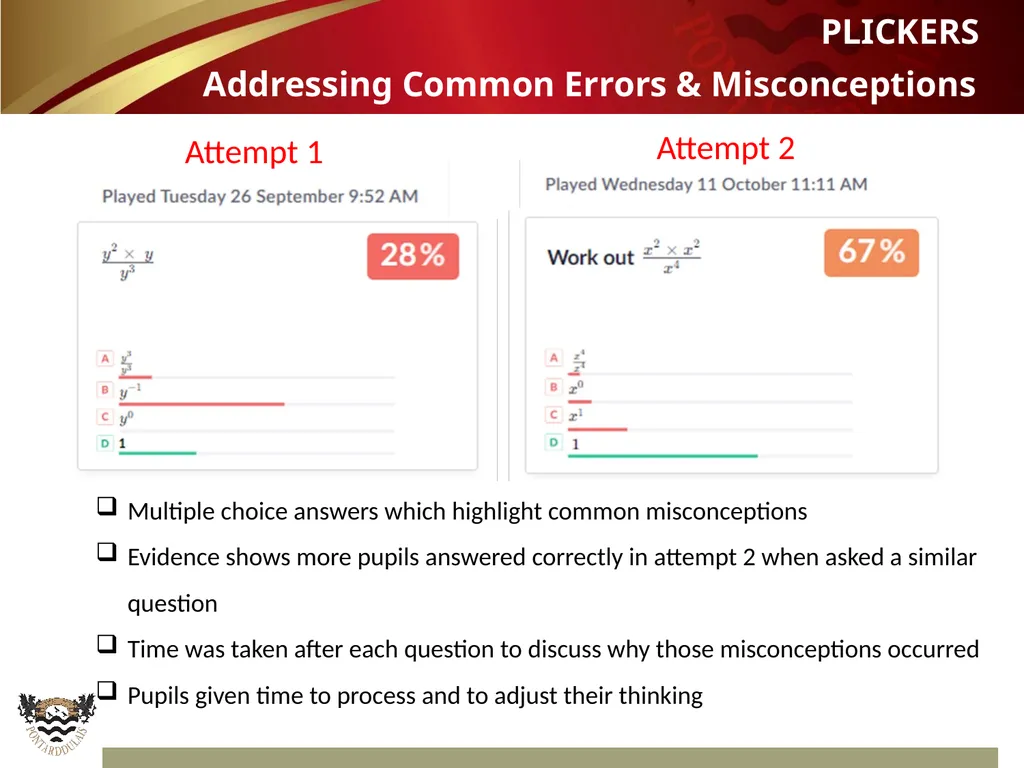
PLICKERS Addressing Common Errors & Misconceptions Attempt 1 Attempt 2 Multiple choice answers which highlight common misconceptions
Evidence shows more pupils answered correctly in attempt 2 when asked a similar question
Time was taken after each question to discuss why those misconceptions occurred
Pupils given time to process and to adjust their thinking<br>
16
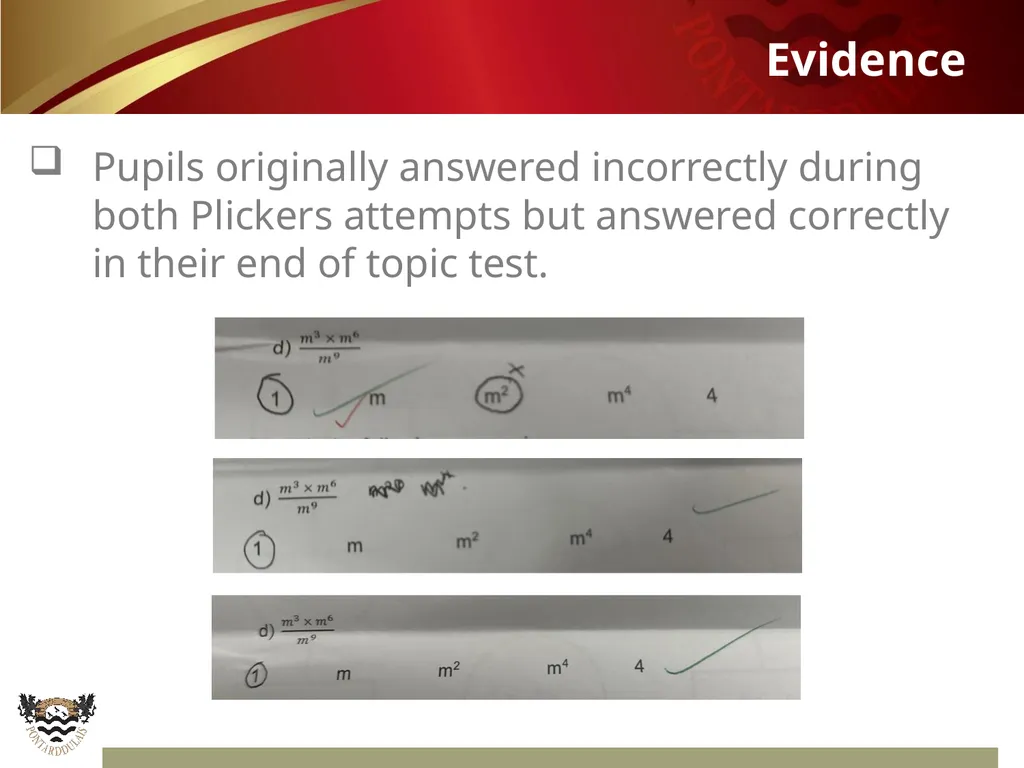
Evidence Pupils originally answered incorrectly during both Plickers attempts but answered correctly in their end of topic test.<br>
17
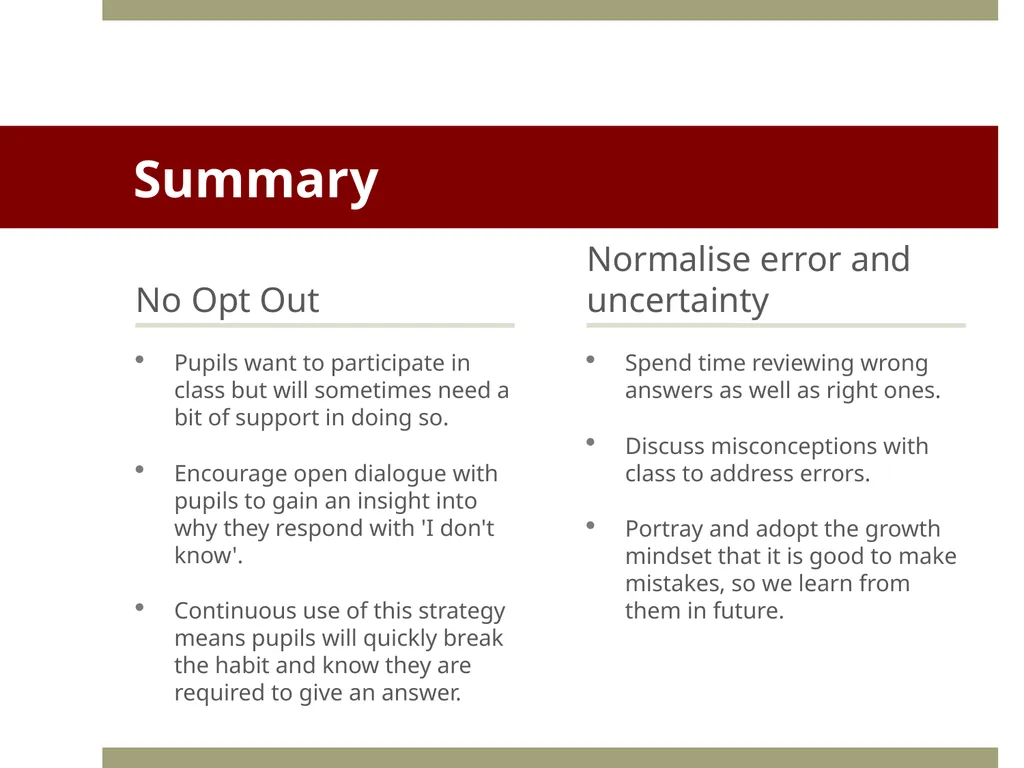
Summary No Opt Out Pupils want to participate in class but will sometimes need a bit of support in doing so.
Encourage open dialogue with pupils to gain an insight into why they respond with 'I don't know'.
Continuous use of this strategy means pupils will quickly break the habit and know they are required to give an answer. Normalise error and uncertainty Spend time reviewing wrong answers as well as right ones.
Discuss misconceptions with class to address errors.
Portray and adopt the growth mindset that it is good to make mistakes, so we learn from them in future.<br>
18
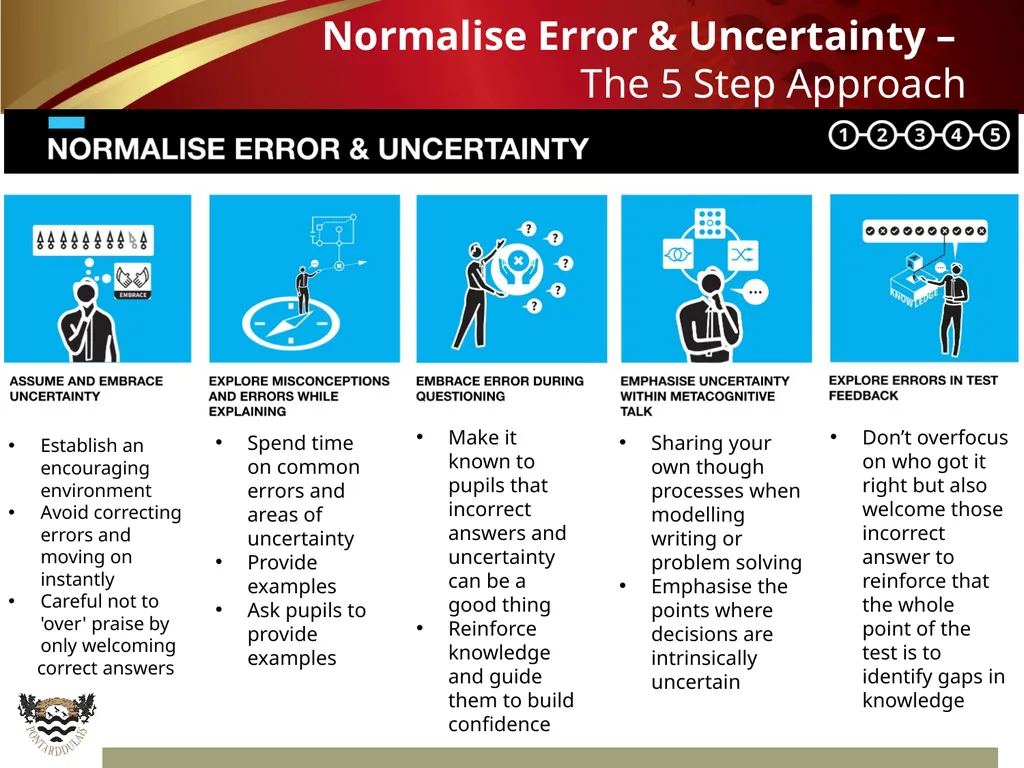
Normalise Error & Uncertainty – The 5 Step Approach Establish an encouraging environment
Avoid correcting errors and moving on instantly
Careful not to 'over' praise by only welcoming
correct answers Spend time on common errors and areas of uncertainty
Provide examples
Ask pupils to provide examples Make it known to pupils that incorrect answers and uncertainty can be a good thing
Reinforce knowledge and guide them to build confidence Sharing your own though processes when modelling writing or problem solving
Emphasise the points where decisions are intrinsically uncertain Don’t overfocus on who got it right but also welcome those incorrect answer to reinforce that the whole point of the test is to identify gaps in knowledge<br>