Tech Presentations Sampath Jayarathna Cal Poly Pomona These are only TIPS, not RULES If you are nervous before or during a presentation, YOU ARE NOT ALONE How to Give an Effective Presentation: Structure Basic rule Say what you are going to
"Tech Presentations Sampath Jayarathna Cal Poly" is the property of its rightful owner. Permission is granted to
download and print the materials on this website for personal, non-commercial use only, and to display it
on your personal computer provided you do not modify the materials and that you retain all copyright
notices contained in the materials. By downloading content from our website, you accept the terms of this
agreement.
Presentation Transcript
01
Tech Presentations Sampath Jayarathna
Cal Poly Pomona<br>
02
These are only TIPS, not RULES
If you are nervous before or during a presentation,
YOU ARE NOT ALONE<br>
03
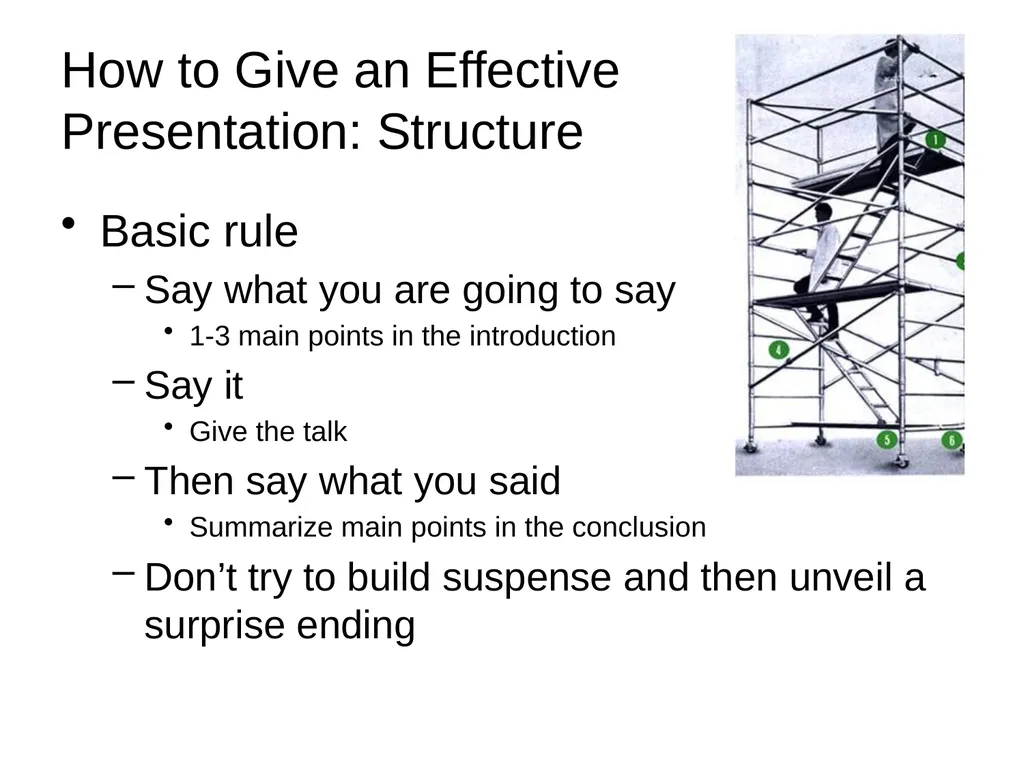
How to Give an Effective Presentation: Structure Basic rule
Say what you are going to say
1-3 main points in the introduction
Say it
Give the talk
Then say what you said
Summarize main points in the conclusion
Don’t try to build suspense and then unveil a surprise ending<br>
04
Tip 1 : Prepare your material so that it tells a story logically
Introduction
Introduction/overview
Body
Method/approach
Technicalities
Results/information/analysis/Discussion/New Theories etc.
Conclusion/summary
Use a demonstration of the tool, examples, anecdotes, and significant details
Create continuity so that your slides flow smoothly
Guide the audience through your story
Your last point on one slide can anticipate the next slide<br>
05
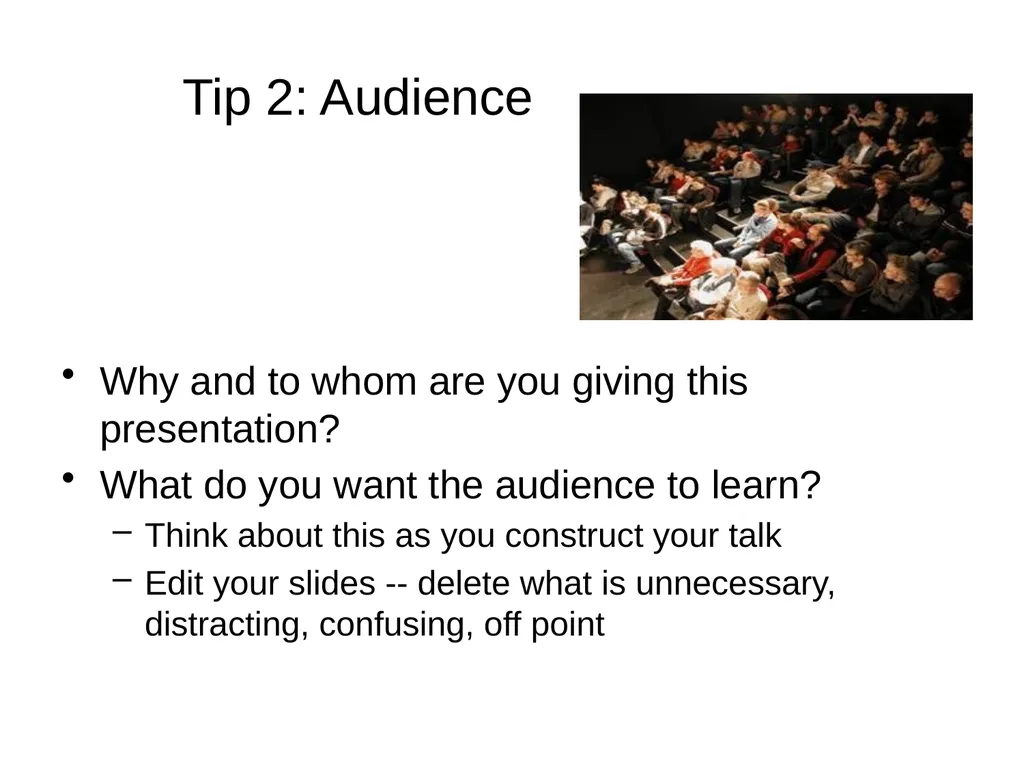
Tip 2: Audience Why and to whom are you giving this presentation?
What do you want the audience to learn?
Think about this as you construct your talk
Edit your slides -- delete what is unnecessary, distracting, confusing, off point<br>
06
Tip 2A: Set goals for the talk
Frame questions that you would like the audience to know answers to at the end of your talk.<br>
07
Tip 3 Talk to your audience.
Don’t talk to yourself. You are giving a seminar/talk, not delivering a speech<br>
08
Tip 4 You have to be the master
of what you are talking about<br>
09
Tip 5 Don’t have anything on your slide that you don’t intend to talk about<br>
10
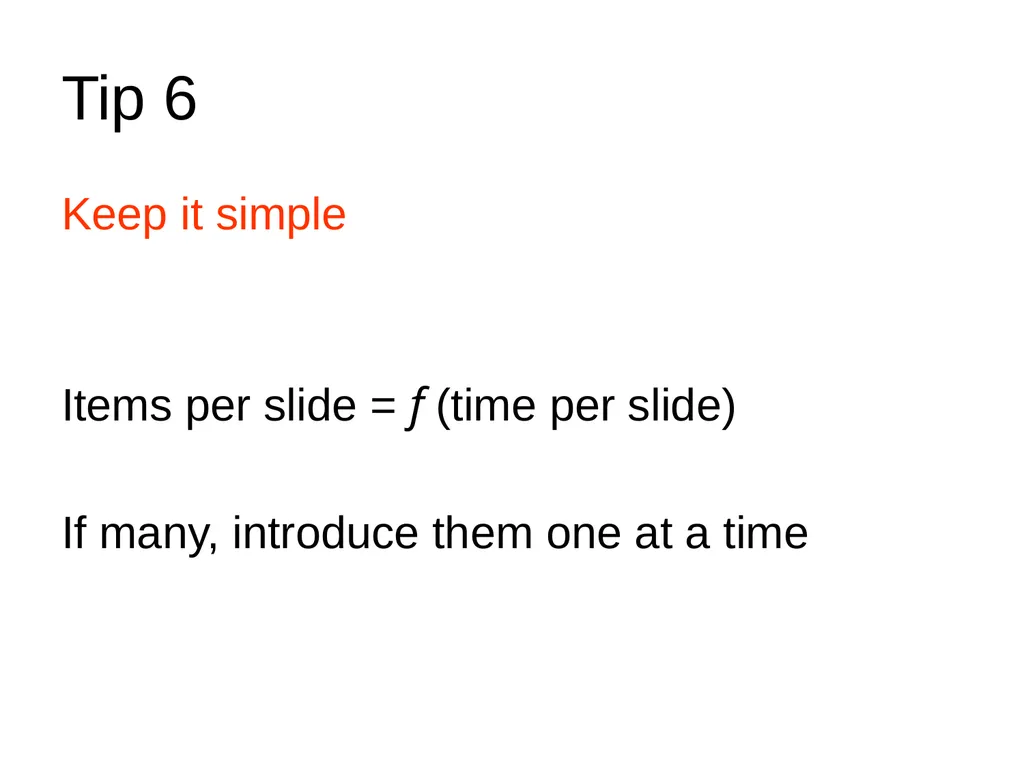
Tip 6 Keep it simple
Items per slide = f (time per slide)
If many, introduce them one at a time<br>
11
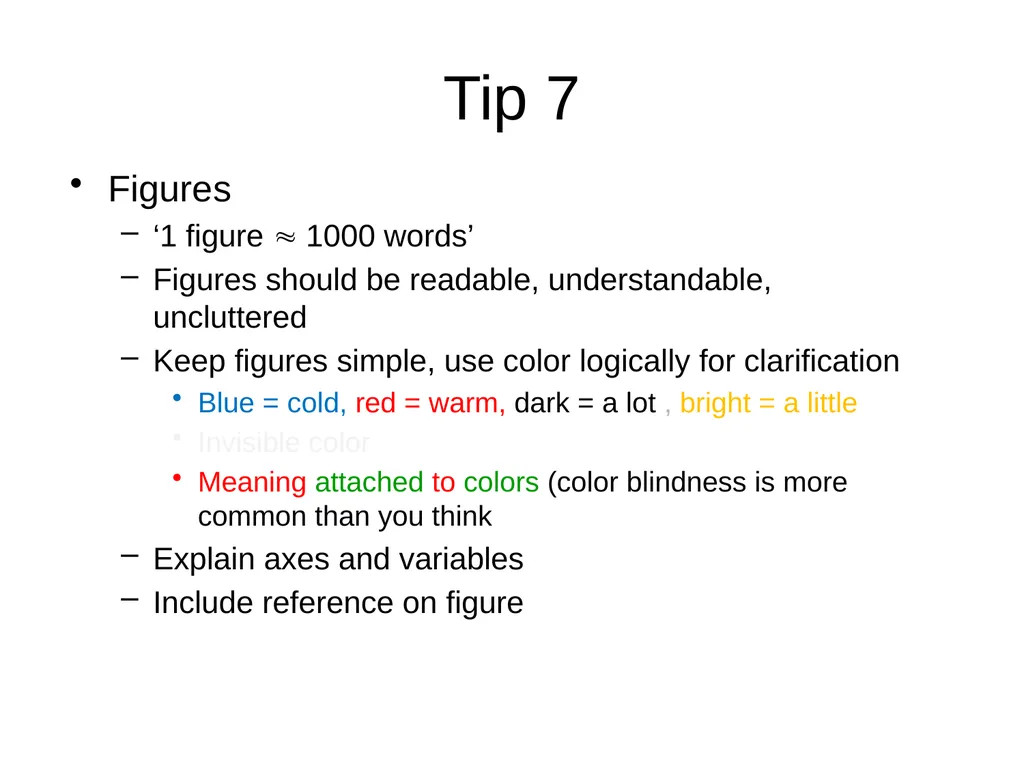
Tip 7 Figures
‘1 figure 1000 words’
Figures should be readable, understandable, uncluttered
Keep figures simple, use color logically for clarification
Blue = cold, red = warm, dark = a lot , bright = a little
Invisible color
Meaning attached to colors (color blindness is more common than you think
Explain axes and variables
Include reference on figure<br>
12
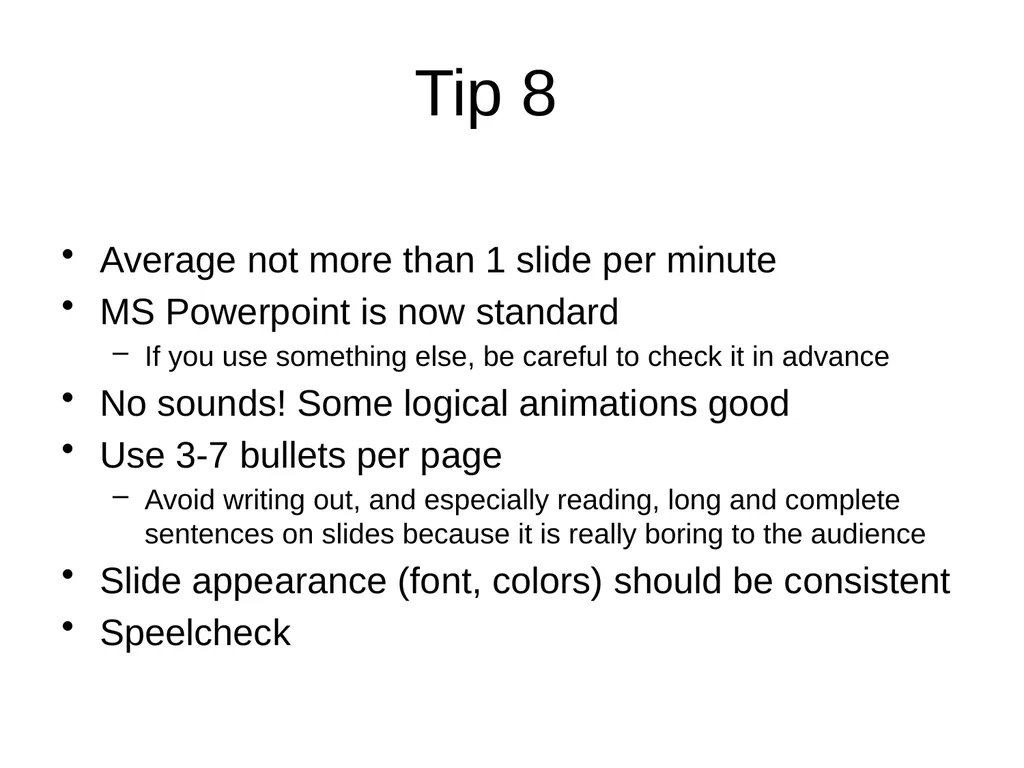
Tip 8 Average not more than 1 slide per minute
MS Powerpoint is now standard
If you use something else, be careful to check it in advance
No sounds! Some logical animations good
Use 3-7 bullets per page
Avoid writing out, and especially reading, long and complete sentences on slides because it is really boring to the audience
Slide appearance (font, colors) should be consistent
Speelcheck<br>
13
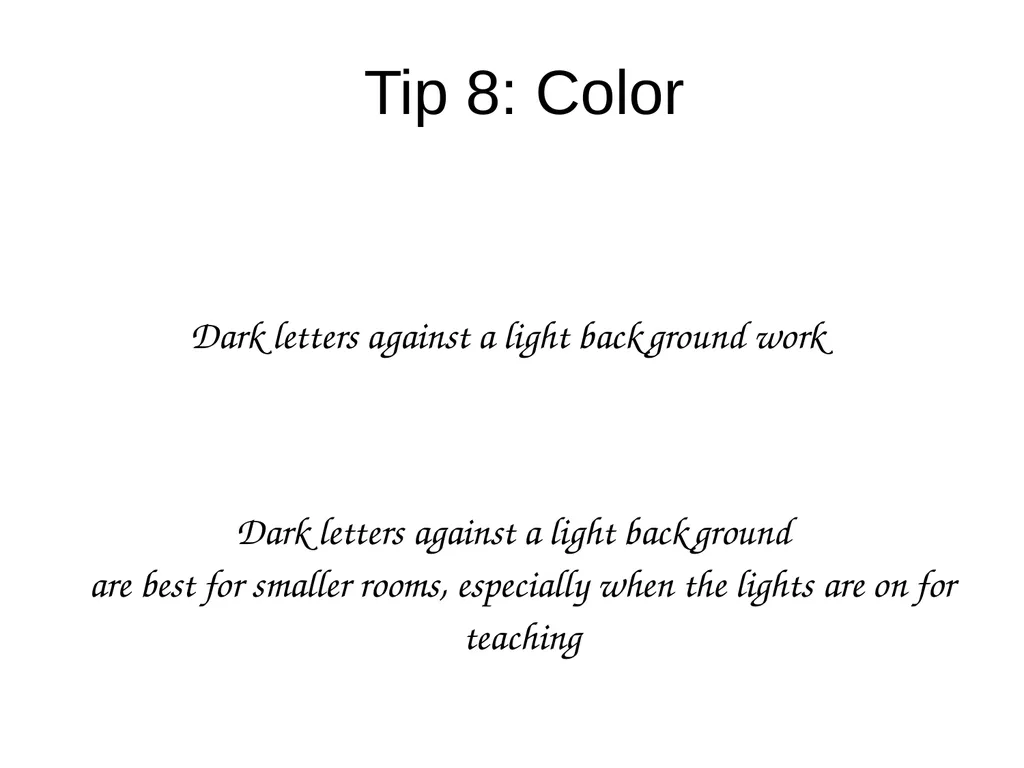
Tip 8: Color Dark letters against a light background work Dark letters against a light background
are best for smaller rooms, especially when the lights are on for teaching<br>
14
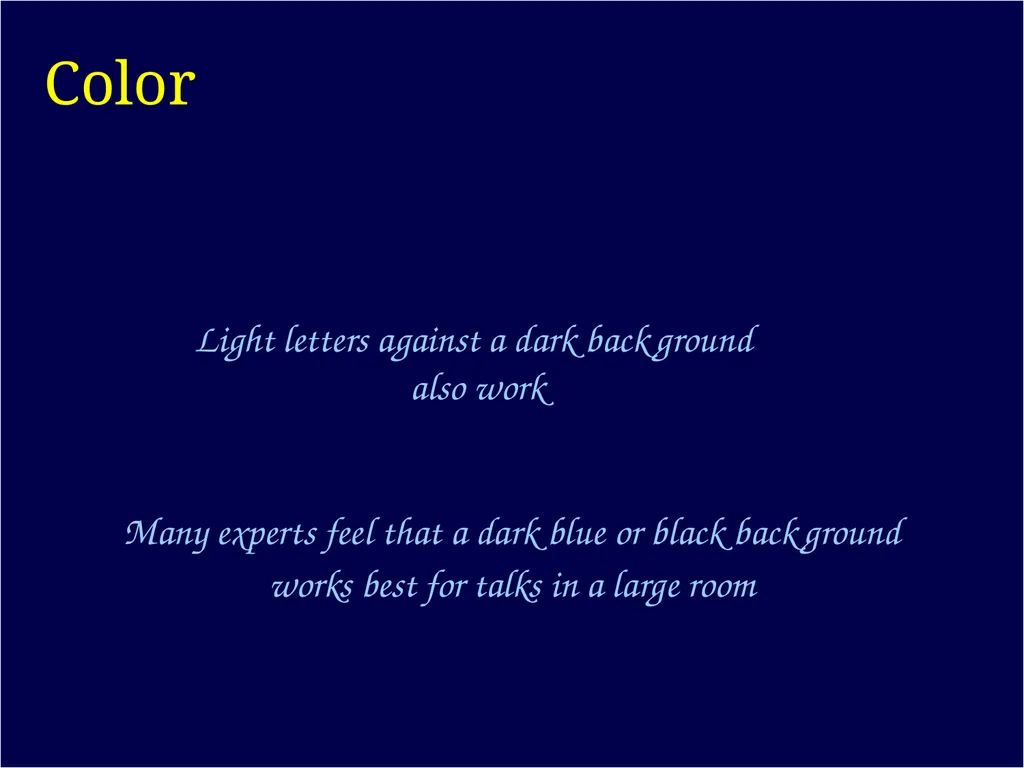
Color Many experts feel that a dark blue or black background works best for talks in a large room Light letters against a dark background
also work<br>
15
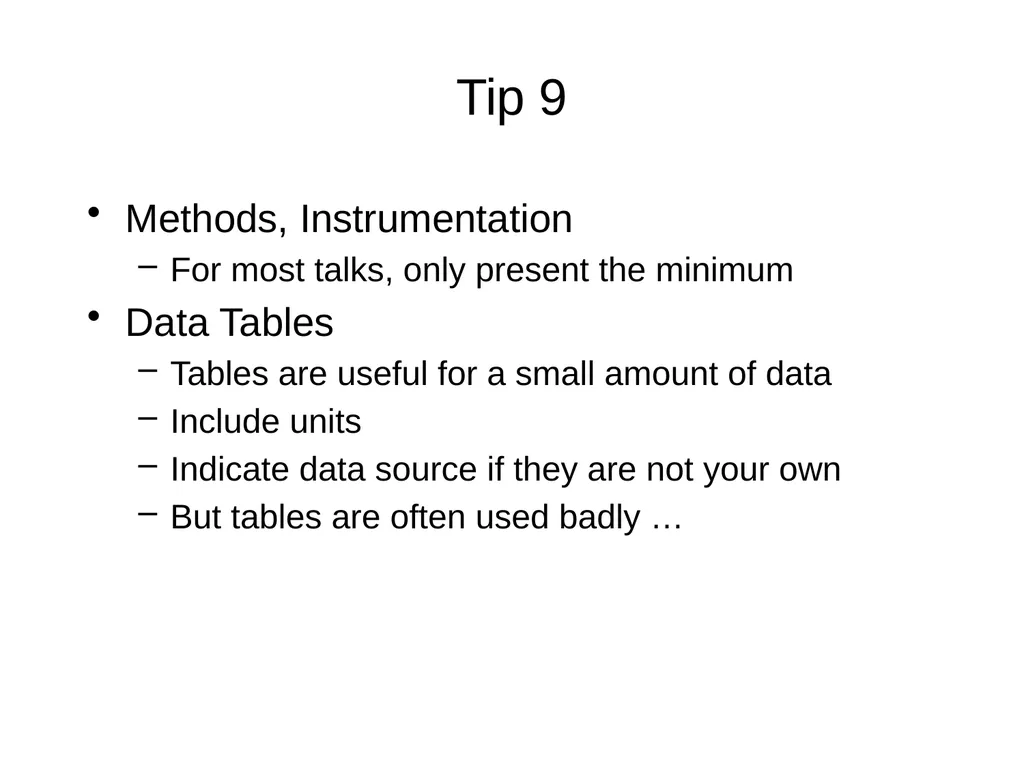
Tip 9 Methods, Instrumentation
For most talks, only present the minimum
Data Tables
Tables are useful for a small amount of data
Include units
Indicate data source if they are not your own
But tables are often used badly …<br>
16
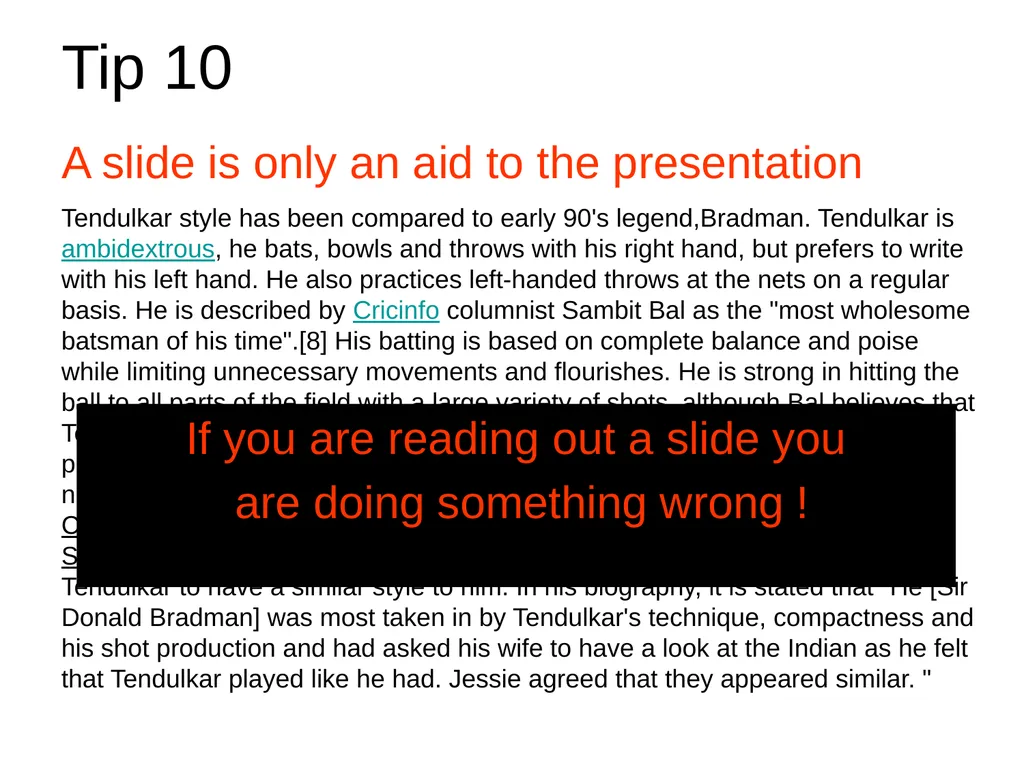
Tip 10 A slide is only an aid to the presentation Tendulkar style has been compared to early 90's legend,Bradman. Tendulkar is ambidextrous, he bats, bowls and throws with his right hand, but prefers to write with his left hand. He also practices left-handed throws at the nets on a regular basis. He is described by Cricinfo columnist Sambit Bal as the "most wholesome batsman of his time".[8] His batting is based on complete balance and poise while limiting unnecessary movements and flourishes. He is strong in hitting the ball to all parts of the field with a large variety of shots, although Bal believes that Tendulkar's back-foot punch is his signature shot.[8] He appears to show little preference for the slow and low wickets typically produced in India, hitting numerous centuries around the world including the hard bouncy pitches of the Carribean and Western Australia.[8]
Sir Donald Bradman, regarded as the greatest batsman of all time, regarded Tendulkar to have a similar style to him. In his biography, it is stated that "He [Sir Donald Bradman] was most taken in by Tendulkar's technique, compactness and his shot production and had asked his wife to have a look at the Indian as he felt that Tendulkar played like he had. Jessie agreed that they appeared similar. " If you are reading out a slide you
are doing something wrong !<br>
17
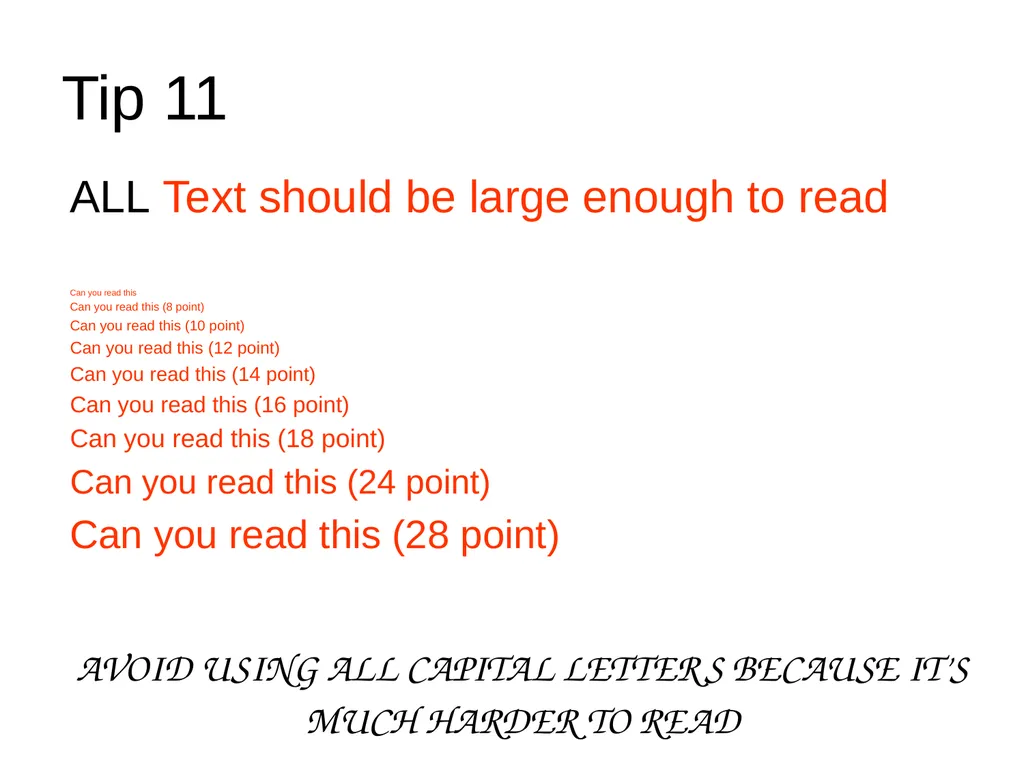
Tip 11 ALL Text should be large enough to read
Can you read this
Can you read this (8 point)
Can you read this (10 point)
Can you read this (12 point)
Can you read this (14 point)
Can you read this (16 point)
Can you read this (18 point)
Can you read this (24 point)
Can you read this (28 point) AVOID USING ALL CAPITAL LETTERS BECAUSE IT’S MUCH HARDER TO READ<br>
18
Tip 12 Have enough for the time allotted to you
Neither less
nor EVEN A LITTLE more<br>
19
Tip 13 Practice, Get Feedback, Get Better
Work on flow and transition<br>
20
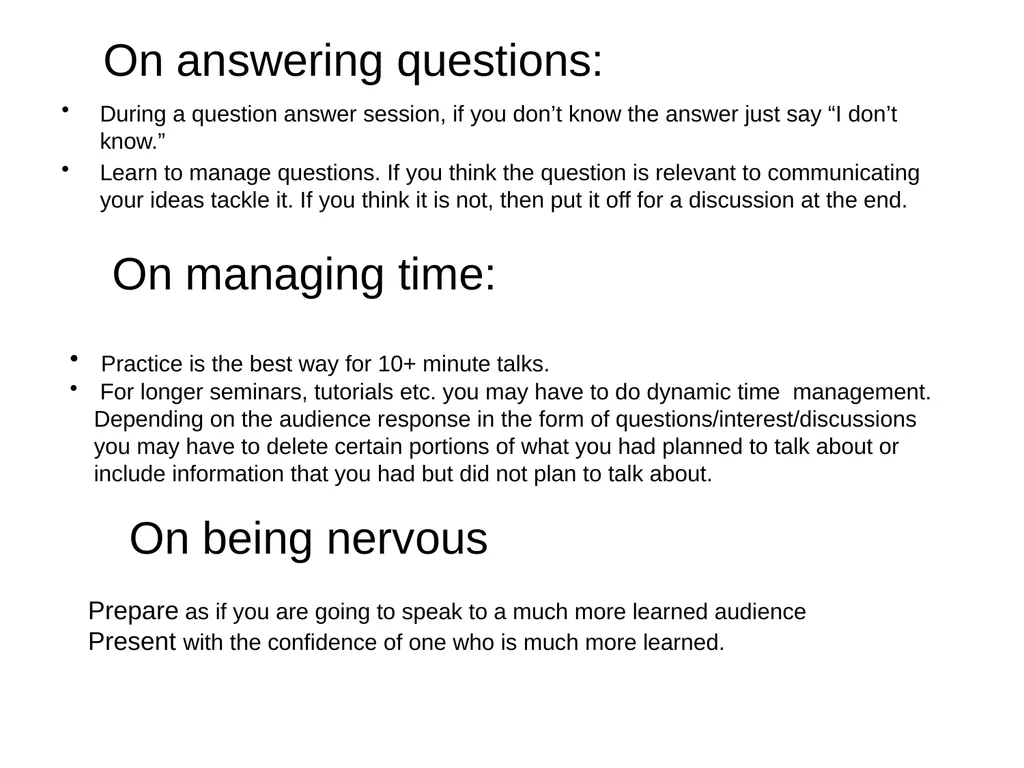
During a question answer session, if you don’t know the answer just say “I don’t know.”
Learn to manage questions. If you think the question is relevant to communicating your ideas tackle it. If you think it is not, then put it off for a discussion at the end. On answering questions: On managing time: Practice is the best way for 10+ minute talks.
For longer seminars, tutorials etc. you may have to do dynamic time management. Depending on the audience response in the form of questions/interest/discussions you may have to delete certain portions of what you had planned to talk about or include information that you had but did not plan to talk about. On being nervous Prepare as if you are going to speak to a much more learned audience
Present with the confidence of one who is much more learned.<br>
21
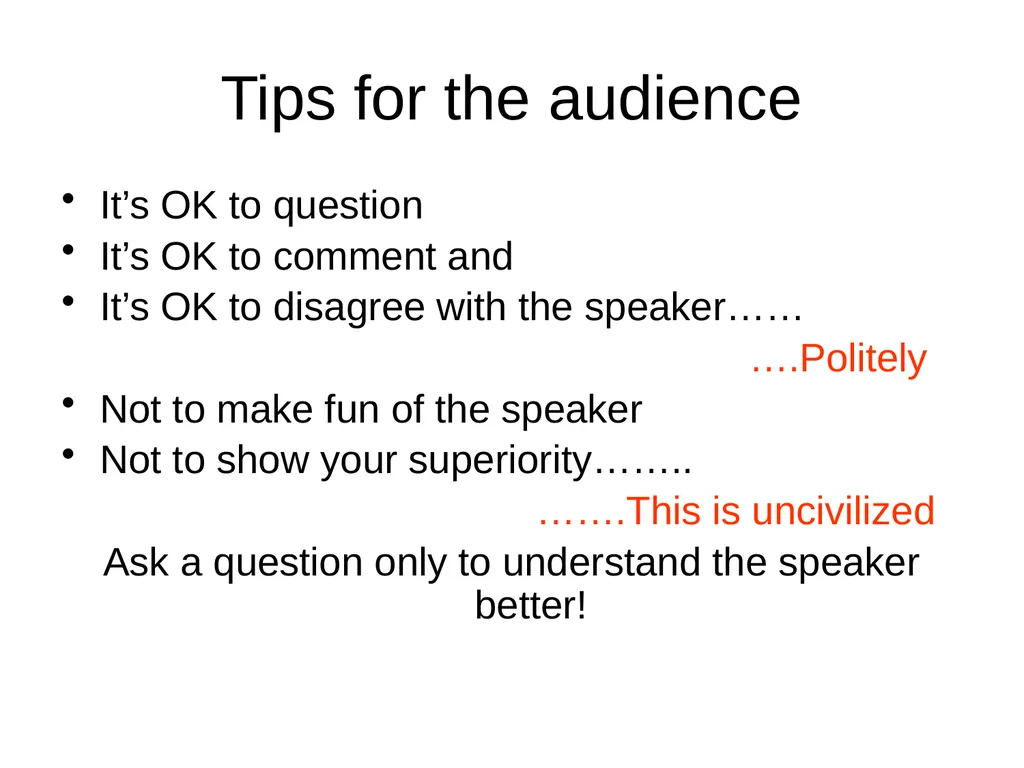
Tips for the audience It’s OK to question
It’s OK to comment and
It’s OK to disagree with the speaker……
….Politely
Not to make fun of the speaker
Not to show your superiority……..
…….This is uncivilized
Ask a question only to understand the speaker better!<br>