
Technical and Business Writing TECHNICAL
LD
Published · 45 slides · 0 views
1 / 1


Description
Technical and Business Writing TECHNICAL COMMUNICATION IN THE WORKPLACE CHAPTER: 1 Technical and Business Writing Text Book: William S. Pfeiffer. Technical Communication: A Practical Approach 8th Edition Course Evaluation Criteria Features
Related Topics
Share
Embed code
Download this presentation From Below
"Technical and Business Writing TECHNICAL" is the property of its rightful owner. Permission is granted to download and print the materials on this website for personal, non-commercial use only, and to display it on your personal computer provided you do not modify the materials and that you retain all copyright notices contained in the materials. By downloading content from our website, you accept the terms of this agreement.
Presentation Transcript
01
Technical and Business Writing TECHNICAL COMMUNICATION IN THE WORKPLACE
CHAPTER: 1<br>
CHAPTER: 1<br>
02
Technical and Business Writing Text Book:
William S. Pfeiffer. Technical Communication: A Practical Approach 8th Edition<br>
William S. Pfeiffer. Technical Communication: A Practical Approach 8th Edition<br>
03
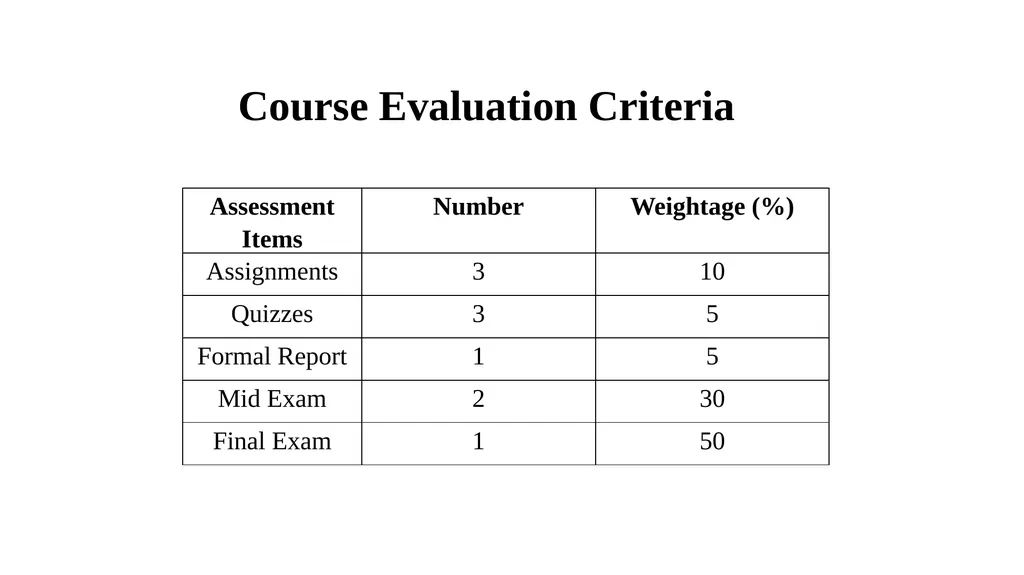
Course Evaluation Criteria<br>
04
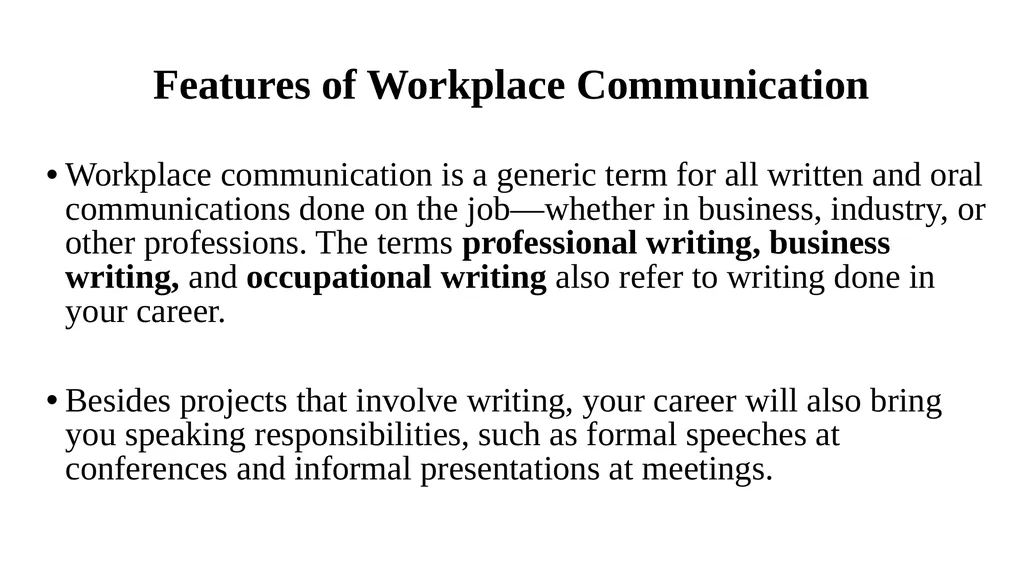
Features of Workplace Communication Workplace communication is a generic term for all written and oral communications done on the job—whether in business, industry, or other professions. The terms professional writing, business writing, and occupational writing also refer to writing done in your career.
Besides projects that involve writing, your career will also bring you speaking responsibilities, such as formal speeches at conferences and informal presentations at meetings.<br>
Besides projects that involve writing, your career will also bring you speaking responsibilities, such as formal speeches at conferences and informal presentations at meetings.<br>
05
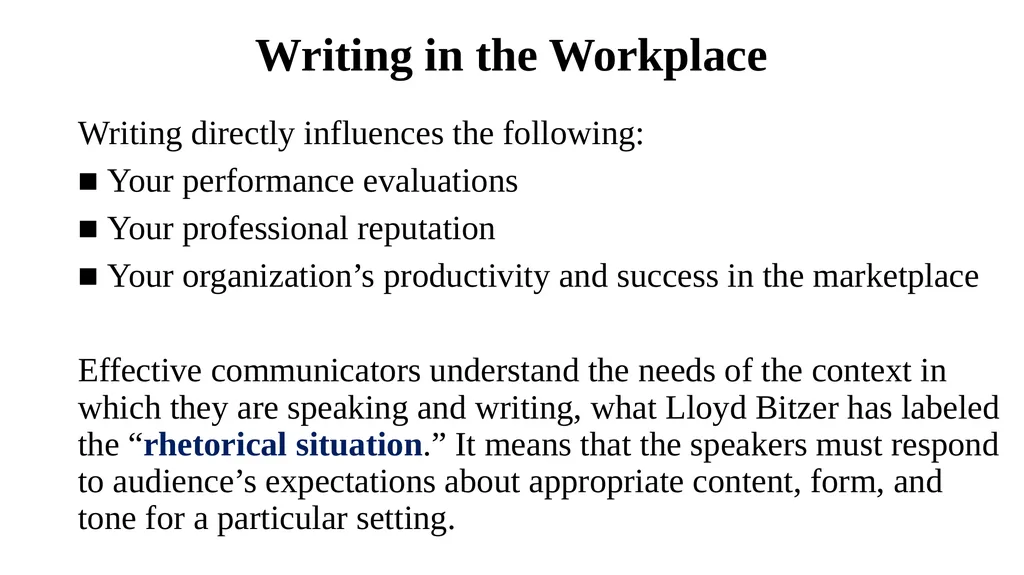
Writing in the Workplace Writing directly influences the following:
■ Your performance evaluations
■ Your professional reputation
■ Your organization’s productivity and success in the marketplace
Effective communicators understand the needs of the context in which they are speaking and writing, what Lloyd Bitzer has labeled the “rhetorical situation.” It means that the speakers must respond to audience’s expectations about appropriate content, form, and tone for a particular setting.<br>
■ Your performance evaluations
■ Your professional reputation
■ Your organization’s productivity and success in the marketplace
Effective communicators understand the needs of the context in which they are speaking and writing, what Lloyd Bitzer has labeled the “rhetorical situation.” It means that the speakers must respond to audience’s expectations about appropriate content, form, and tone for a particular setting.<br>
06
At workplace we are both the consumers and producers of technical communication<br>
07
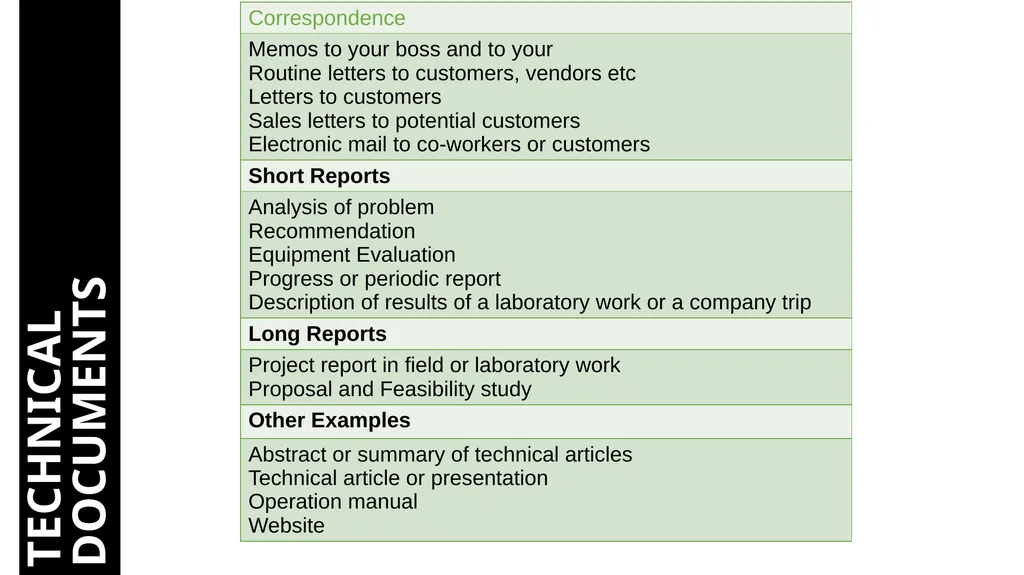
TECHNICAL DOCUMENTS<br>
08
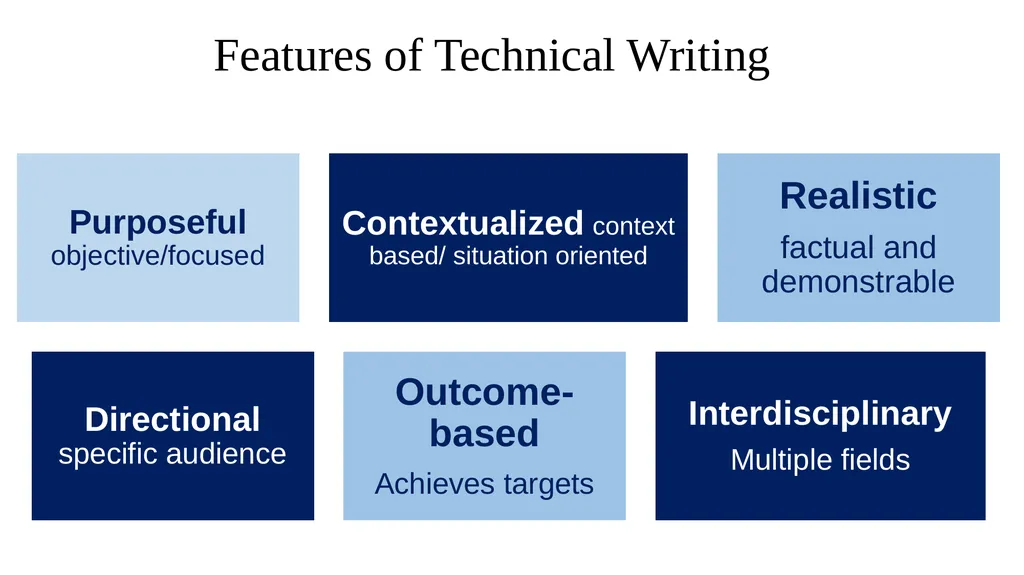
Features of Technical Writing<br>
09
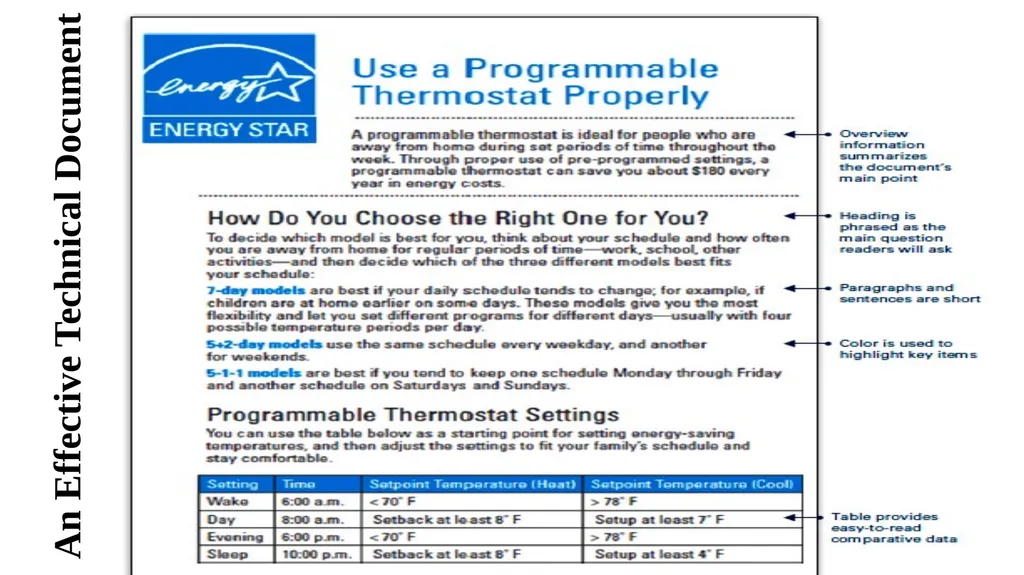
An Effective Technical Document<br>
10
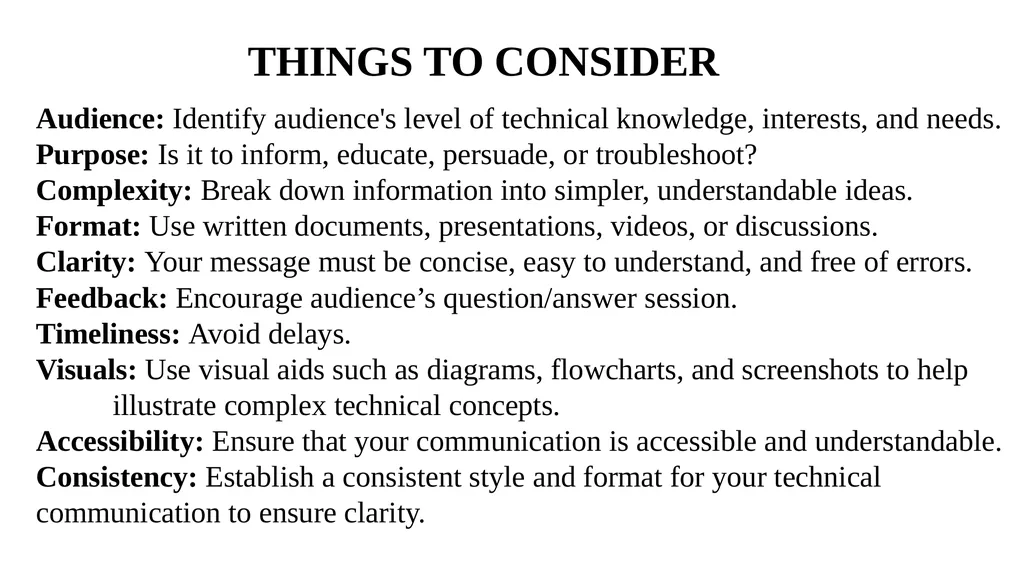
THINGS TO CONSIDER Audience: Identify audience's level of technical knowledge, interests, and needs.
Purpose: Is it to inform, educate, persuade, or troubleshoot?
Complexity: Break down information into simpler, understandable ideas.
Format: Use written documents, presentations, videos, or discussions.
Clarity: Your message must be concise, easy to understand, and free of errors.
Feedback: Encourage audience’s question/answer session.
Timeliness: Avoid delays.
Visuals: Use visual aids such as diagrams, flowcharts, and screenshots to help illustrate complex technical concepts.
Accessibility: Ensure that your communication is accessible and understandable.
Consistency: Establish a consistent style and format for your technical communication to ensure clarity.<br>
Purpose: Is it to inform, educate, persuade, or troubleshoot?
Complexity: Break down information into simpler, understandable ideas.
Format: Use written documents, presentations, videos, or discussions.
Clarity: Your message must be concise, easy to understand, and free of errors.
Feedback: Encourage audience’s question/answer session.
Timeliness: Avoid delays.
Visuals: Use visual aids such as diagrams, flowcharts, and screenshots to help illustrate complex technical concepts.
Accessibility: Ensure that your communication is accessible and understandable.
Consistency: Establish a consistent style and format for your technical communication to ensure clarity.<br>
11
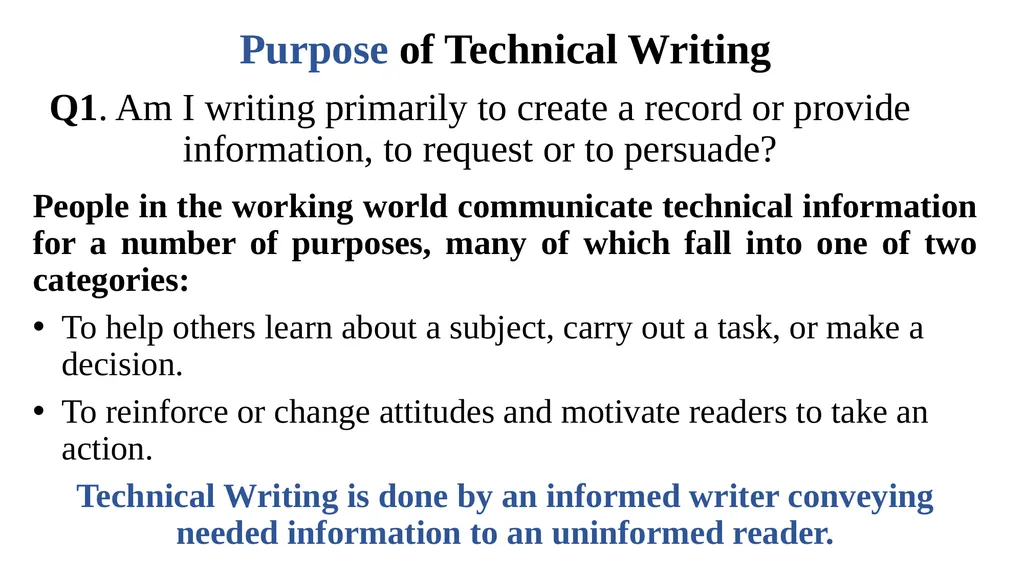
Purpose of Technical Writing People in the working world communicate technical information for a number of purposes, many of which fall into one of two categories:
To help others learn about a subject, carry out a task, or make a decision.
To reinforce or change attitudes and motivate readers to take an action.
Technical Writing is done by an informed writer conveying needed information to an uninformed reader. Q1. Am I writing primarily to create a record or provide information, to request or to persuade?<br>
To help others learn about a subject, carry out a task, or make a decision.
To reinforce or change attitudes and motivate readers to take an action.
Technical Writing is done by an informed writer conveying needed information to an uninformed reader. Q1. Am I writing primarily to create a record or provide information, to request or to persuade?<br>
12
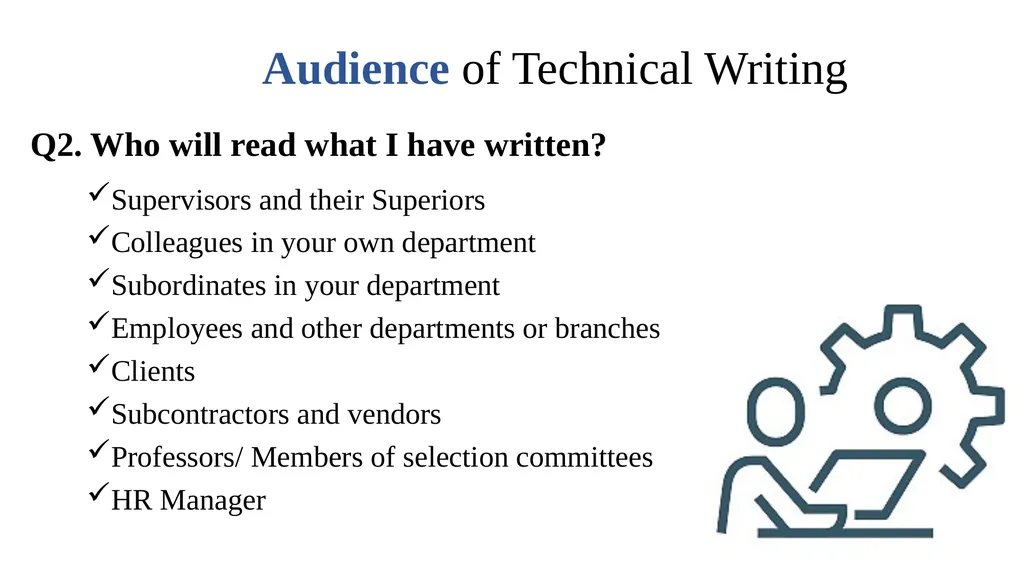
Audience of Technical Writing Supervisors and their Superiors
Colleagues in your own department
Subordinates in your department
Employees and other departments or branches
Clients
Subcontractors and vendors
Professors/ Members of selection committees
HR Manager Q2. Who will read what I have written?<br>
Colleagues in your own department
Subordinates in your department
Employees and other departments or branches
Clients
Subcontractors and vendors
Professors/ Members of selection committees
HR Manager Q2. Who will read what I have written?<br>
13
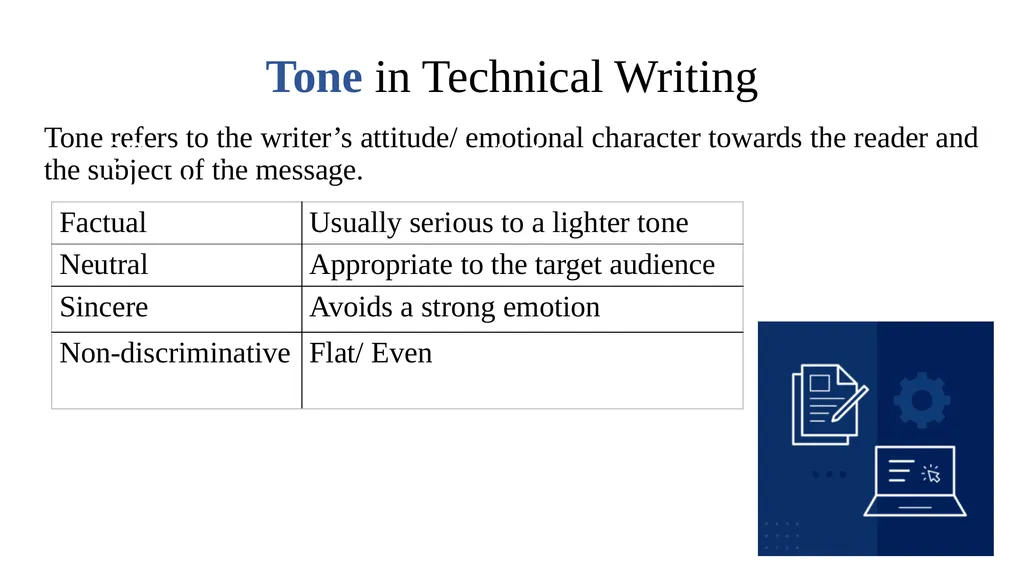
Tone in Technical Writing Tone refers to the writer’s attitude/ emotional character towards the reader and the subject of the message. Q3. Is your tone appropriate to your purpose and your intended<br>
14
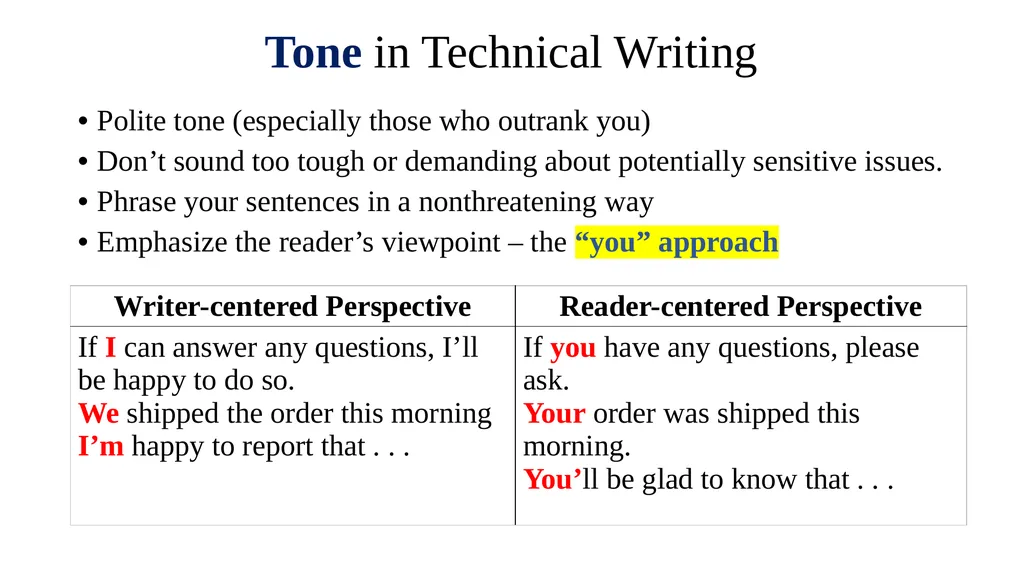
Tone in Technical Writing Polite tone (especially those who outrank you)
Don’t sound too tough or demanding about potentially sensitive issues.
Phrase your sentences in a nonthreatening way
Emphasize the reader’s viewpoint – the “you” approach<br>
Don’t sound too tough or demanding about potentially sensitive issues.
Phrase your sentences in a nonthreatening way
Emphasize the reader’s viewpoint – the “you” approach<br>
15
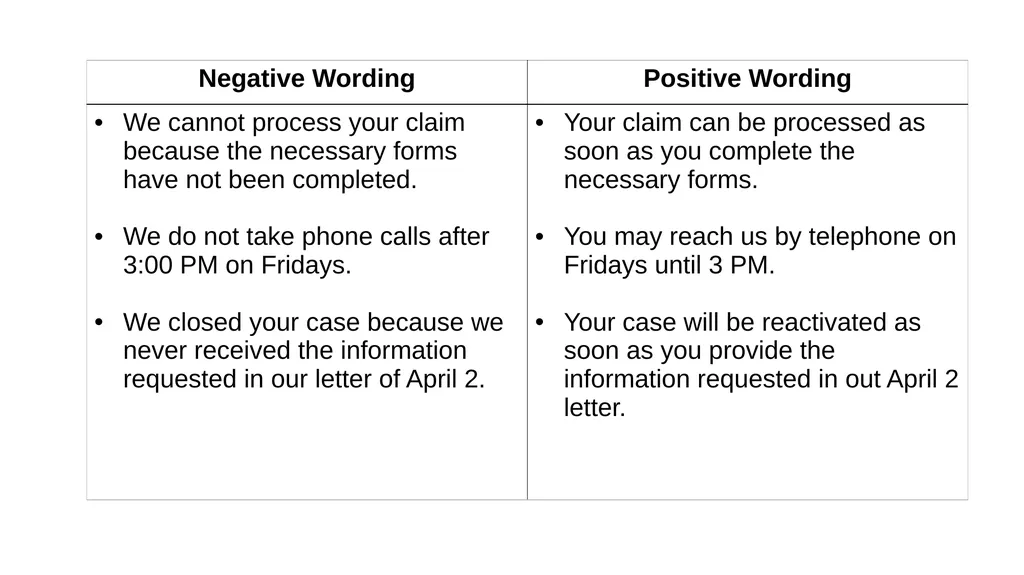
Positive Language What are the possible alternatives of “no problem” to make your readers feel positive?<br>
16
Task 1 Locate an example of technical communication, such as users guide, manual, or a document borrowed from a family member or an acquaintance who works, and prepare a brief analysis in which you explain:
The purpose for which the piece was written
The apparent readers and their needs
The way in which the examples differ from typical academic writing
The relative success with which the piece conveys the message (organization, special features of technical writing)<br>
The purpose for which the piece was written
The apparent readers and their needs
The way in which the examples differ from typical academic writing
The relative success with which the piece conveys the message (organization, special features of technical writing)<br>
17
Task for Next Class Read the guidelines for Email Writing
P. 167 – 172 , (Technical Communication, Pfeiffer)<br>
P. 167 – 172 , (Technical Communication, Pfeiffer)<br>
18
STRUCTURE of Technical Writing<br>
19
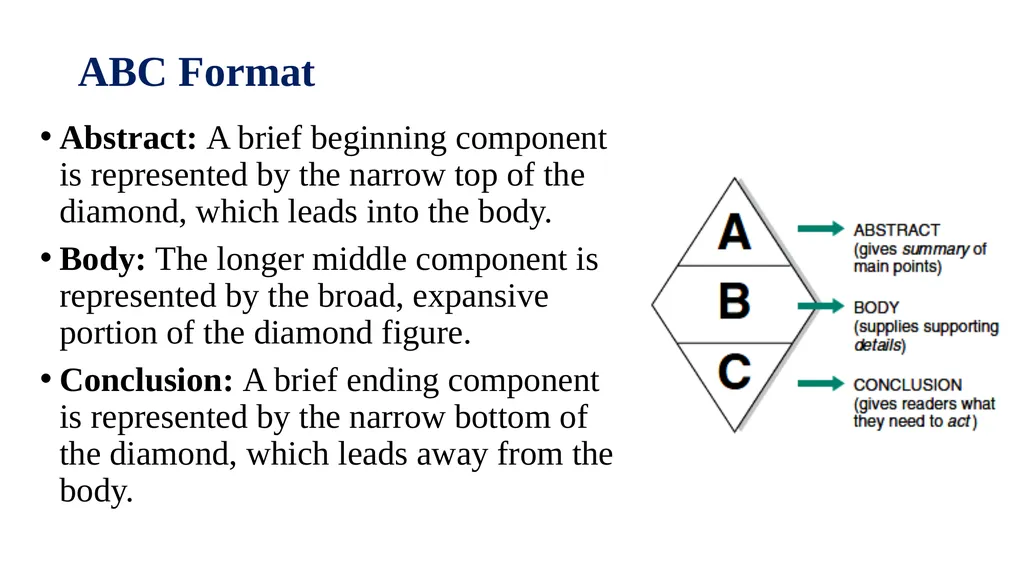
ABC Format Abstract: A brief beginning component is represented by the narrow top of the diamond, which leads into the body.
Body: The longer middle component is represented by the broad, expansive portion of the diamond figure.
Conclusion: A brief ending component is represented by the narrow bottom of the diamond, which leads away from the body.<br>
Body: The longer middle component is represented by the broad, expansive portion of the diamond figure.
Conclusion: A brief ending component is represented by the narrow bottom of the diamond, which leads away from the body.<br>
20
Email Writing Guidelines
Maintain a high level of professionalism in your use of e-mail.
Do not forward jokes or spam, discuss office gossip, or use biased language.
Do not send flames (e-mails that contain abusive, obscene, or derogatory language) to attack someone.
Do not use clever or hobby-related e-mail usernames (sushilover@ domain.com); instead use, e.g. msmith@domain.com.
Do not use emoticons
Provide a subject line that describes the topic and focus of your message.
Adapt forwarded messages: revise the subject line to reflect the current content and cut irrelevant previous text, based on your purpose and context.
Use the “cc:” (courtesy copy) address line thoughtfully to keep others informed and follow your organization’s practice or protocol for copying messages to others.
Include a cover message for all e-mail messages with attachments (“Attached is a copy of my budget proposal for your review. . . .”).
Do not write in ALL UPPERCASE LETTERS or in all lowercase letters.
Avoid abbreviations (BTW for by the way) used in personal e-mail, chat rooms, and text messaging.<br>
Maintain a high level of professionalism in your use of e-mail.
Do not forward jokes or spam, discuss office gossip, or use biased language.
Do not send flames (e-mails that contain abusive, obscene, or derogatory language) to attack someone.
Do not use clever or hobby-related e-mail usernames (sushilover@ domain.com); instead use, e.g. msmith@domain.com.
Do not use emoticons
Provide a subject line that describes the topic and focus of your message.
Adapt forwarded messages: revise the subject line to reflect the current content and cut irrelevant previous text, based on your purpose and context.
Use the “cc:” (courtesy copy) address line thoughtfully to keep others informed and follow your organization’s practice or protocol for copying messages to others.
Include a cover message for all e-mail messages with attachments (“Attached is a copy of my budget proposal for your review. . . .”).
Do not write in ALL UPPERCASE LETTERS or in all lowercase letters.
Avoid abbreviations (BTW for by the way) used in personal e-mail, chat rooms, and text messaging.<br>
21
Writing Task: Email to Instructor The email should concisely describe the following:
Your course goals for the semester
A description of your employment, if any, and your favorite activities
An assessment of your current communication skills, including strengths and weaknesses
Let me know if you have any teacher pet peeves<br>
Your course goals for the semester
A description of your employment, if any, and your favorite activities
An assessment of your current communication skills, including strengths and weaknesses
Let me know if you have any teacher pet peeves<br>
22
Grading Rubric for Email Did you email the assignment to faststudents@gmail.com by 7am, __________
Did you summarize the main idea in the subject line?
Was the appropriate salutation included?
Did the body concisely describe each of the required components?
Was the body organized into paragraphs so it was easy to read quickly?
Did the email end with a summary or closing thought?
Did you include full contact information after your name?
Was the email free of any grammatical errors or typos?<br>
Did you summarize the main idea in the subject line?
Was the appropriate salutation included?
Did the body concisely describe each of the required components?
Was the body organized into paragraphs so it was easy to read quickly?
Did the email end with a summary or closing thought?
Did you include full contact information after your name?
Was the email free of any grammatical errors or typos?<br>
23
Culture in Organizations<br>
24
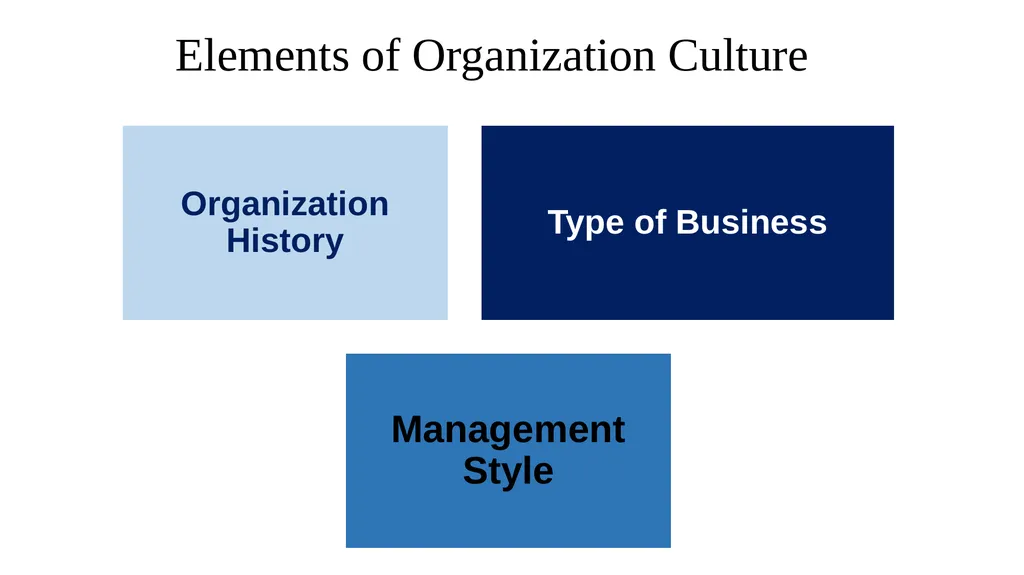
Elements of Organization Culture<br>
25
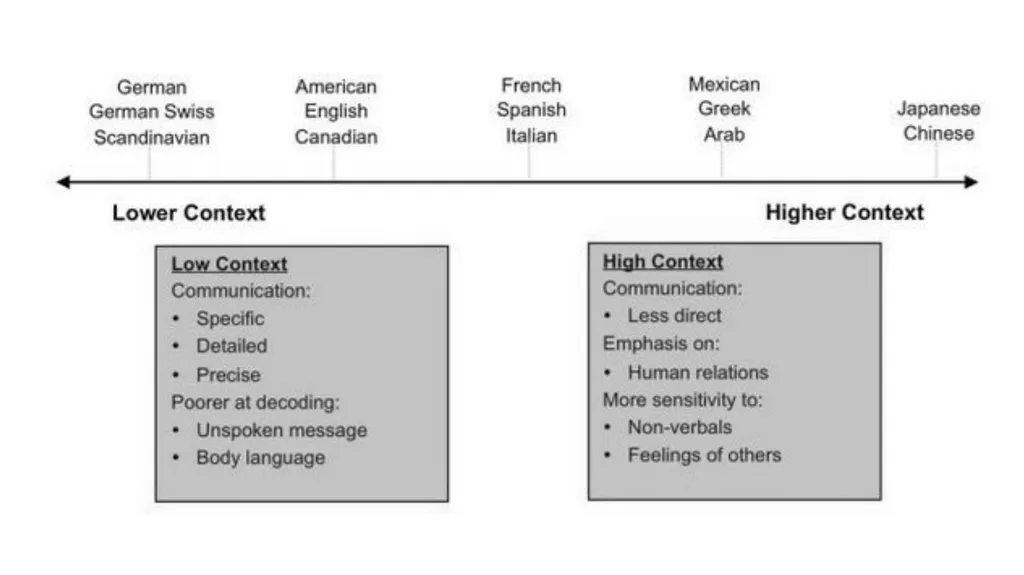
Understanding Cultures All cultures have both common features and distinctive differences that must be studied. People in different cultures have different ways of thinking, different ways of acting and different expectations in communication.
One of the ways that differences between cultures can be understood is through the concepts of high-context cultures and low-context cultures.<br>
One of the ways that differences between cultures can be understood is through the concepts of high-context cultures and low-context cultures.<br>
26
High-Context Cultures High-context cultures are fairly homogeneous, with the culture providing a high degree of context for communication. Thus, communications may be less explicit because members of the culture share characteristics such as religion, ethnic background, and education.
Important characteristics of high-context cultures include:
■ Clear distinctions between insiders and outsiders
■ A focus on maintaining relationships, on saving face, and on helping others save face
■ A dependence on internalized cultural norms to govern behavior.<br>
Important characteristics of high-context cultures include:
■ Clear distinctions between insiders and outsiders
■ A focus on maintaining relationships, on saving face, and on helping others save face
■ A dependence on internalized cultural norms to govern behavior.<br>
27
Low-Context Cultures Low-context cultures consist of diverse religions, ethnic backgrounds, and educational levels; as a result, communication must be explicit, because members of a group cannot assume that they share knowledge or attitudes. The culture provides a low degree of context for communication. The United States is an example of a low-context culture.
Important characteristics that affect communication in low-context cultures include
■ Openness to outsiders
■ A focus on actions and solving problems, with a willingness to disagree openly
■ A dependence on formally established rules to govern behavior<br>
Important characteristics that affect communication in low-context cultures include
■ Openness to outsiders
■ A focus on actions and solving problems, with a willingness to disagree openly
■ A dependence on formally established rules to govern behavior<br>
28
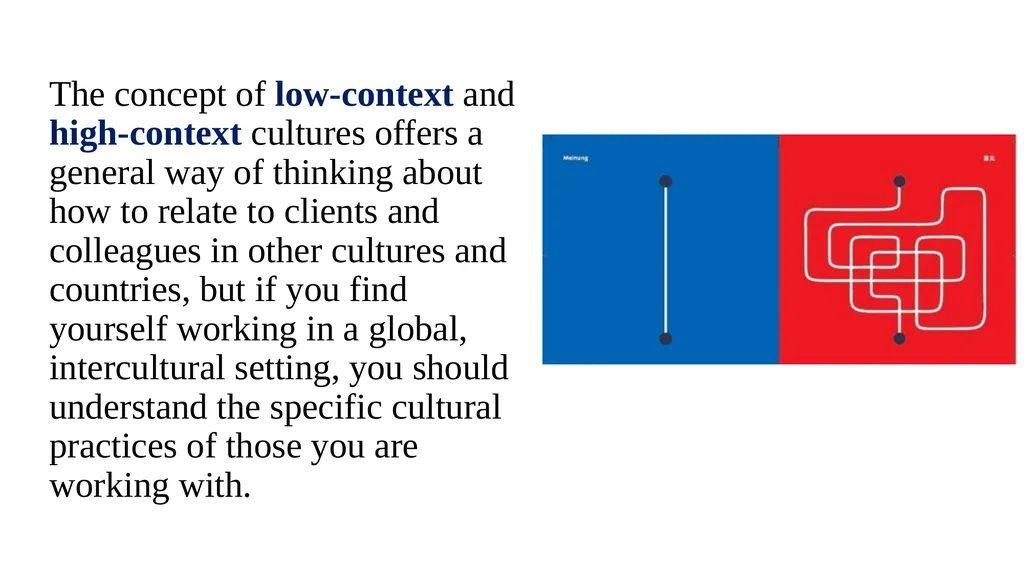
The concept of low-context and high-context cultures offers a general way of thinking about how to relate to clients and colleagues in other cultures and countries, but if you find yourself working in a global, intercultural setting, you should understand the specific cultural practices of those you are working with.<br>
29
When writing documents for other cultures, remember that your work will not be read in the cultural context in which it was written.
For that matter, you may lose control of the document altogether if it is translated into a language that you do not know.
In order to help solve this problem, organizations such as Intecom and the AeroSpace and Defence Industries Association of Europe have worked to develop and promote Simplified English, also known as Controlled English. The goal of Simplified English is to eliminate ambiguity, improve translation, and make reading English easier for nonnative English speakers.<br>
For that matter, you may lose control of the document altogether if it is translated into a language that you do not know.
In order to help solve this problem, organizations such as Intecom and the AeroSpace and Defence Industries Association of Europe have worked to develop and promote Simplified English, also known as Controlled English. The goal of Simplified English is to eliminate ambiguity, improve translation, and make reading English easier for nonnative English speakers.<br>
30
Following are some basic guidelines to reduce the risk of misunderstanding: Simplify grammar and style rules.
Use simple verb tenses and verb constructions.
Limit vocabulary to words with clear meanings.
Use language and terminology consistently.
Define technical terms.
Avoid slang terms and idioms.
Include visuals.<br>
Use simple verb tenses and verb constructions.
Limit vocabulary to words with clear meanings.
Use language and terminology consistently.
Define technical terms.
Avoid slang terms and idioms.
Include visuals.<br>
31
Case Study: Intercultural Communication in a Global Business Environment GlobalTech Solutions (GTS) is a multinational technology company headquartered in the United States, with offices in Europe, Asia, and South America. The company specializes in software development, IT consulting, and digital transformation services. GTS recently acquired a smaller tech firm, TechInnovate, based in Pakistan, to expand its market presence in Asia. As part of the acquisition, GTS plans to integrate TechInnovate’s employees into its global operations. This integration involves a series of virtual meetings, cross-cultural training sessions, and collaborative projects between teams in the U.S. and Pakistan.
In the first virtual meeting between the U.S. and Pakistani teams, several communication issues arise. The American team notices that their Pakistani counterparts are unusually quiet during discussions. They rarely voice their opinions or disagree with any points made. Meanwhile, the Pakistani team feels that the American team is overly direct and somewhat aggressive in their approach, which makes them uncomfortable.<br>
In the first virtual meeting between the U.S. and Pakistani teams, several communication issues arise. The American team notices that their Pakistani counterparts are unusually quiet during discussions. They rarely voice their opinions or disagree with any points made. Meanwhile, the Pakistani team feels that the American team is overly direct and somewhat aggressive in their approach, which makes them uncomfortable.<br>
32
Key Players:
John Davis: Project Manager from the U.S. team, known for his direct communication style.
Saba Ali: Senior Developer from the Pakistani team, values harmony and prefers a consensus-driven approach.
Sarah Lee: HR Manager at GTS, responsible for overseeing the integration process.
Aslam Khan : HR Manager at TechInnovate, tasked with supporting the transition.<br>
John Davis: Project Manager from the U.S. team, known for his direct communication style.
Saba Ali: Senior Developer from the Pakistani team, values harmony and prefers a consensus-driven approach.
Sarah Lee: HR Manager at GTS, responsible for overseeing the integration process.
Aslam Khan : HR Manager at TechInnovate, tasked with supporting the transition.<br>
33
Questions: Question 1: What are the key cultural differences in communication styles between the U.S. and Japanese teams?
Question 2: How can GTS facilitate better communication between the teams?
Question 3:What strategies can John and Saba use to improve their collaboration?
Question 4: How can the HR managers, Sarah and Aslam, support a smoother integration process?<br>
Question 2: How can GTS facilitate better communication between the teams?
Question 3:What strategies can John and Saba use to improve their collaboration?
Question 4: How can the HR managers, Sarah and Aslam, support a smoother integration process?<br>
34
Ethics in the Workplace<br>
35
Ethical behavior enables employees to act with equity, fairness, impartiality and respect for the rights of others.
Ethical business communicators make choices that enable them to:
follow the organization's policies, procedures, guidelines and code of ethics
Communicate factual information objectively
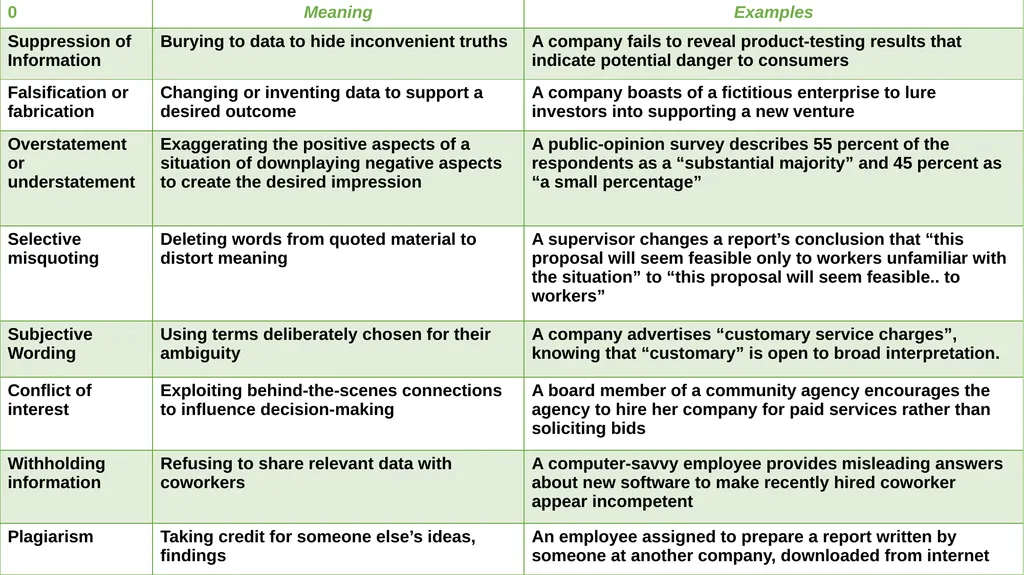
avoid using distortions of fact and misleading information
respect the dignity of each person, irrespective of ethnic background, religion or gender<br>
Ethical business communicators make choices that enable them to:
follow the organization's policies, procedures, guidelines and code of ethics
Communicate factual information objectively
avoid using distortions of fact and misleading information
respect the dignity of each person, irrespective of ethnic background, religion or gender<br>
36
Documents should pass the ETHICS test. The online Encyclopedia Britannica defines ethics as “the discipline concerned with what is morally good and bad, right and wrong.”<br>
37
“our product is just what you need”
“our artificial sweetener is composed of proteins that occur naturally in the human body [amino acids].”
“our Krunchy Cookies contain no cholesterol” Such claims are technically accurate but misleading. Amino acids in certain sweeteners can alter body chemistry and cause headaches, seizures and possible brain tumors Processed food snacks often contain saturated fat and trans fats, from which liver produces cholesterol In addition to being informative and persuasive, communicators must be ethical.<br>
“our artificial sweetener is composed of proteins that occur naturally in the human body [amino acids].”
“our Krunchy Cookies contain no cholesterol” Such claims are technically accurate but misleading. Amino acids in certain sweeteners can alter body chemistry and cause headaches, seizures and possible brain tumors Processed food snacks often contain saturated fat and trans fats, from which liver produces cholesterol In addition to being informative and persuasive, communicators must be ethical.<br>
38
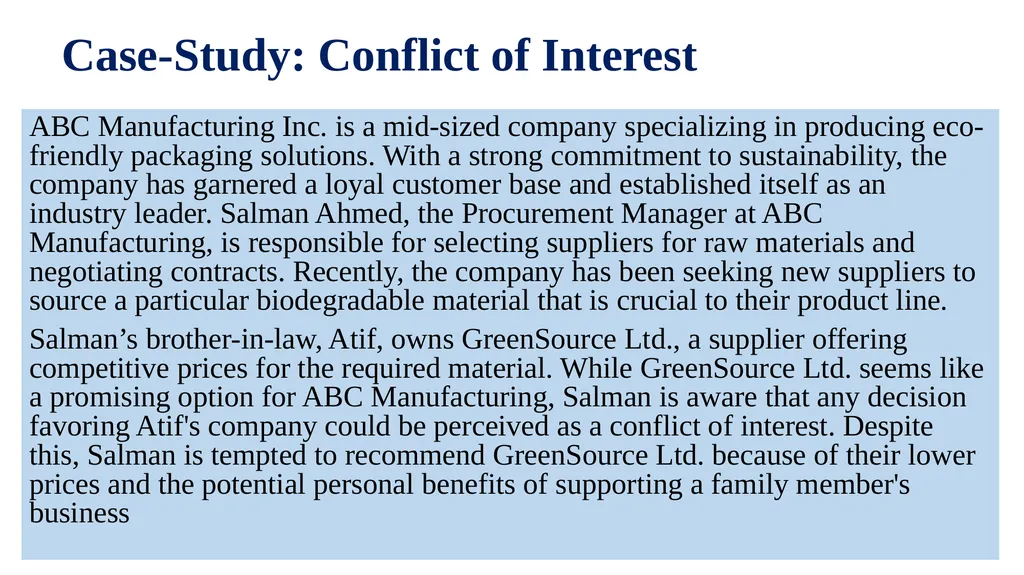
Case-Study: Conflict of Interest ABC Manufacturing Inc. is a mid-sized company specializing in producing eco-friendly packaging solutions. With a strong commitment to sustainability, the company has garnered a loyal customer base and established itself as an industry leader. Salman Ahmed, the Procurement Manager at ABC Manufacturing, is responsible for selecting suppliers for raw materials and negotiating contracts. Recently, the company has been seeking new suppliers to source a particular biodegradable material that is crucial to their product line.
Salman’s brother-in-law, Atif, owns GreenSource Ltd., a supplier offering competitive prices for the required material. While GreenSource Ltd. seems like a promising option for ABC Manufacturing, Salman is aware that any decision favoring Atif's company could be perceived as a conflict of interest. Despite this, Salman is tempted to recommend GreenSource Ltd. because of their lower prices and the potential personal benefits of supporting a family member's business<br>
Salman’s brother-in-law, Atif, owns GreenSource Ltd., a supplier offering competitive prices for the required material. While GreenSource Ltd. seems like a promising option for ABC Manufacturing, Salman is aware that any decision favoring Atif's company could be perceived as a conflict of interest. Despite this, Salman is tempted to recommend GreenSource Ltd. because of their lower prices and the potential personal benefits of supporting a family member's business<br>
39
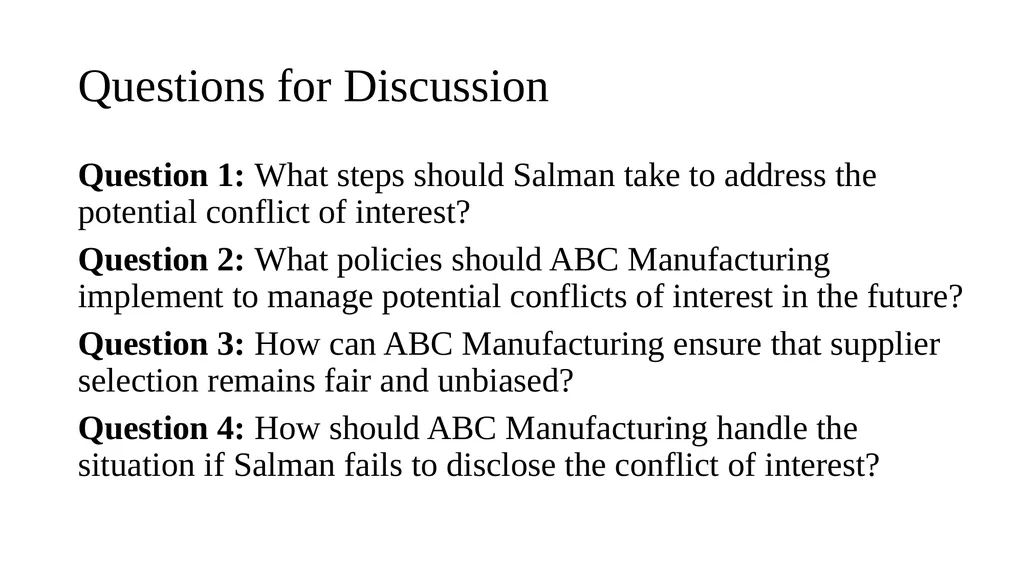
Questions for Discussion Question 1: What steps should Salman take to address the potential conflict of interest?
Question 2: What policies should ABC Manufacturing implement to manage potential conflicts of interest in the future?
Question 3: How can ABC Manufacturing ensure that supplier selection remains fair and unbiased?
Question 4: How should ABC Manufacturing handle the situation if Salman fails to disclose the conflict of interest?<br>
Question 2: What policies should ABC Manufacturing implement to manage potential conflicts of interest in the future?
Question 3: How can ABC Manufacturing ensure that supplier selection remains fair and unbiased?
Question 4: How should ABC Manufacturing handle the situation if Salman fails to disclose the conflict of interest?<br>
40
References S. Pfeiffer, William George. Technical Writing: A Practical Approach (Pearson), 2012
Lannon & Gurak, Technical Communication., 14th Edition, 2016<br>
Lannon & Gurak, Technical Communication., 14th Edition, 2016<br>