TEG and ROTEM: Technology and Clinical Applications David Whiting James A DiNardo, Dept of cardiac anesthesia, Boston Children Hospital Published in American Journal of Hematology 2013 Introduction. Thromboelastography (TEG) and
"TEG and ROTEM: Technology and Clinical" is the property of its rightful owner. Permission is granted to
download and print the materials on this website for personal, non-commercial use only, and to display it
on your personal computer provided you do not modify the materials and that you retain all copyright
notices contained in the materials. By downloading content from our website, you accept the terms of this
agreement.
Presentation Transcript
01
TEG and ROTEM: Technology and Clinical Applications David Whiting & James A DiNardo, Dept of cardiac anesthesia, Boston Children Hospital
Published in American Journal of Hematology 2013<br>
02
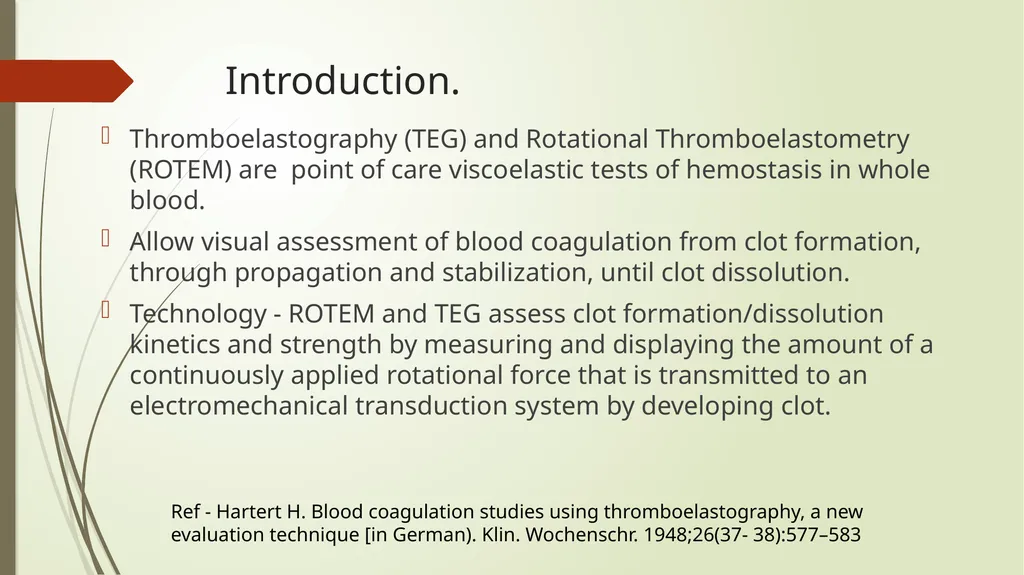
Introduction. Thromboelastography (TEG) and Rotational Thromboelastometry (ROTEM) are point of care viscoelastic tests of hemostasis in whole blood.
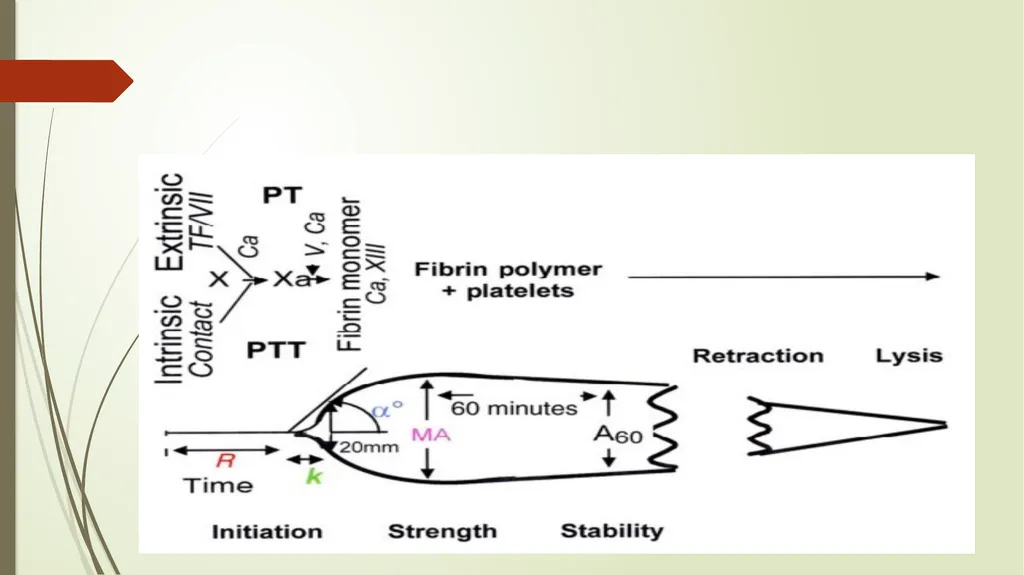
Allow visual assessment of blood coagulation from clot formation, through propagation and stabilization, until clot dissolution.
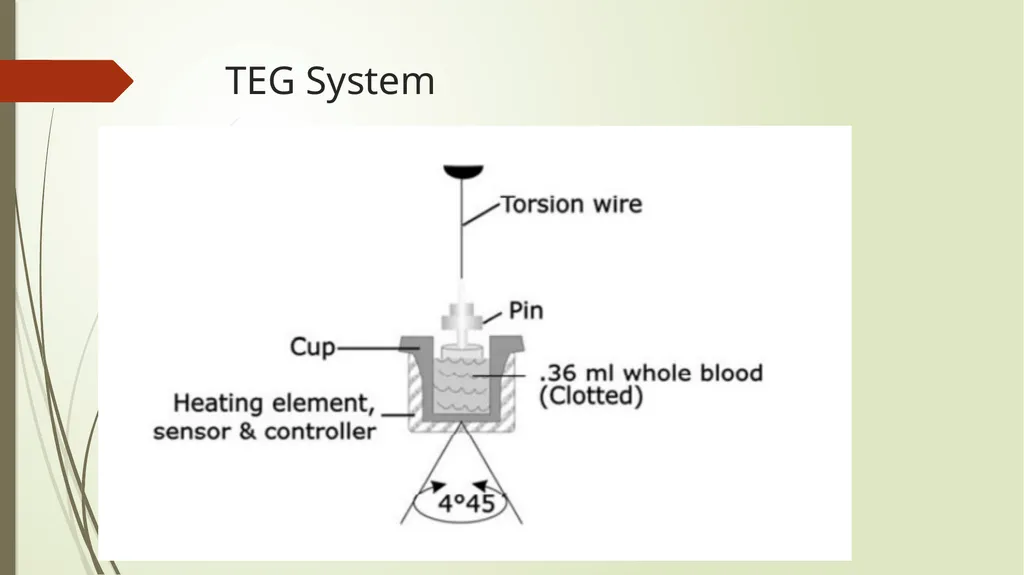
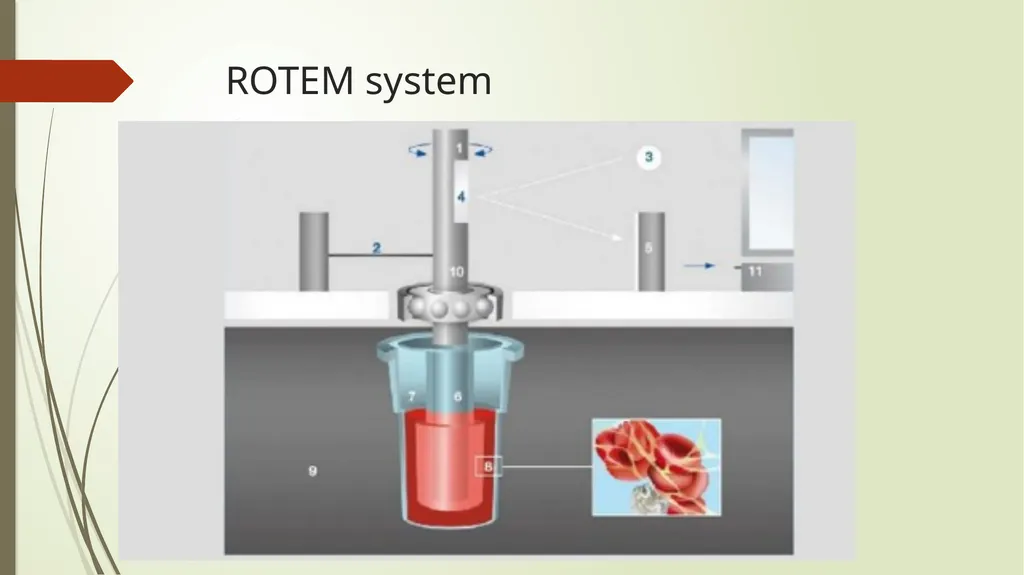
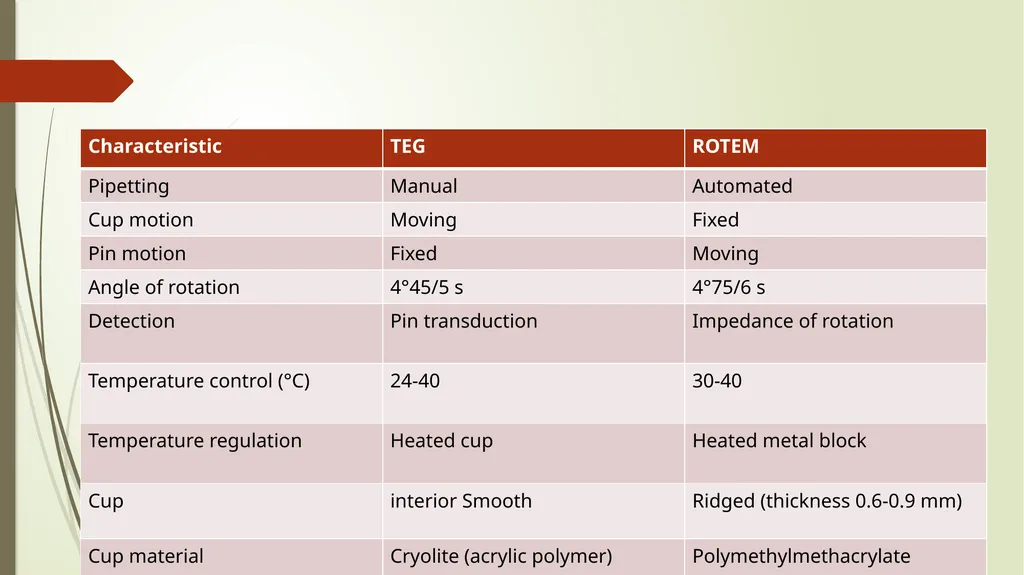
Technology - ROTEM and TEG assess clot formation/dissolution kinetics and strength by measuring and displaying the amount of a continuously applied rotational force that is transmitted to an electromechanical transduction system by developing clot. Ref - Hartert H. Blood coagulation studies using thromboelastography, a new evaluation technique [in German). Klin. Wochenschr. 1948;26(37- 38):577–583<br>
03
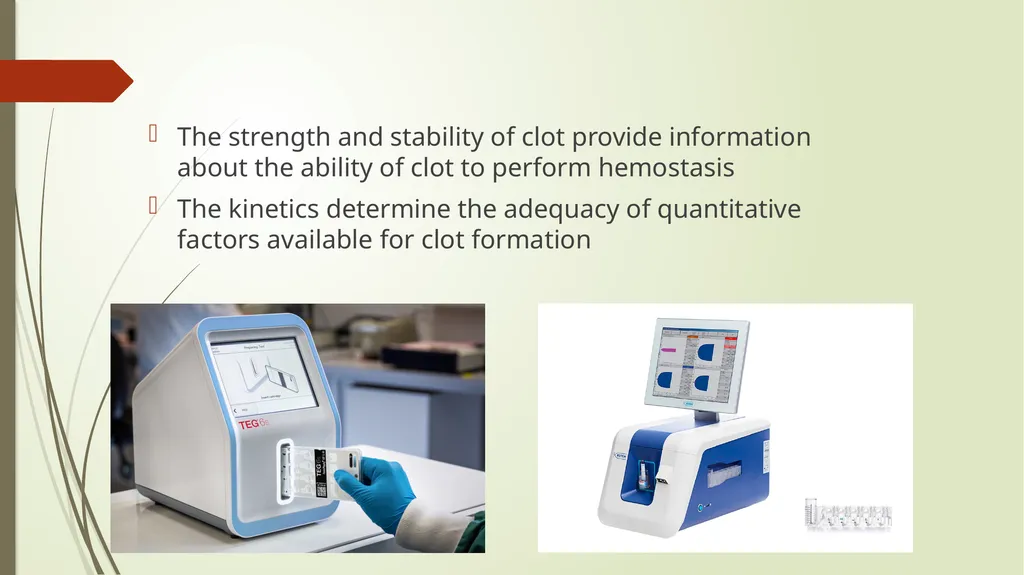
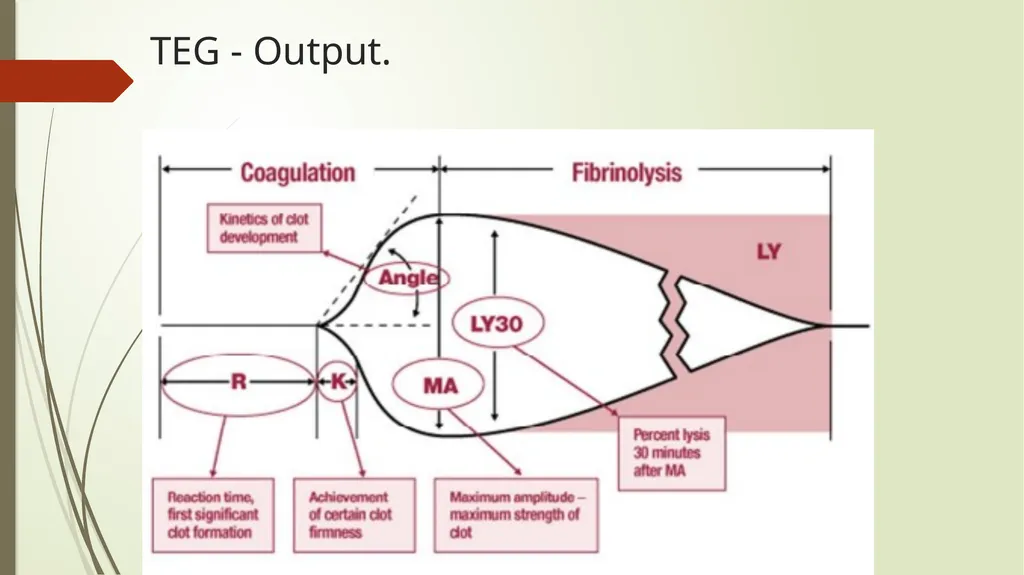
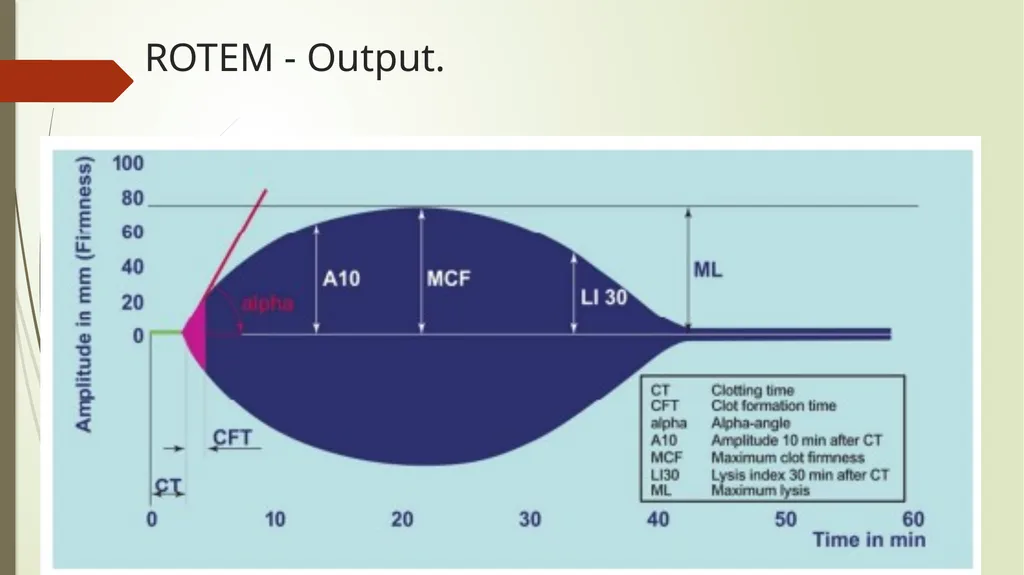
The strength and stability of clot provide information about the ability of clot to perform hemostasis
The kinetics determine the adequacy of quantitative factors available for clot formation<br>
04
TEG System<br>
05
ROTEM system<br>
06
TEG - Output.<br>
07
ROTEM - Output.<br>
08
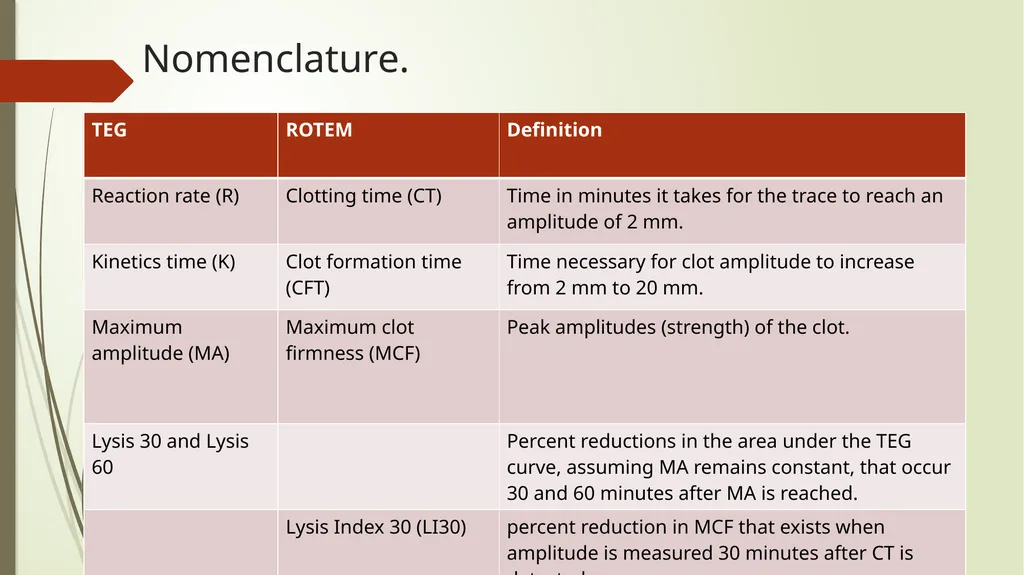
Nomenclature.<br>
09
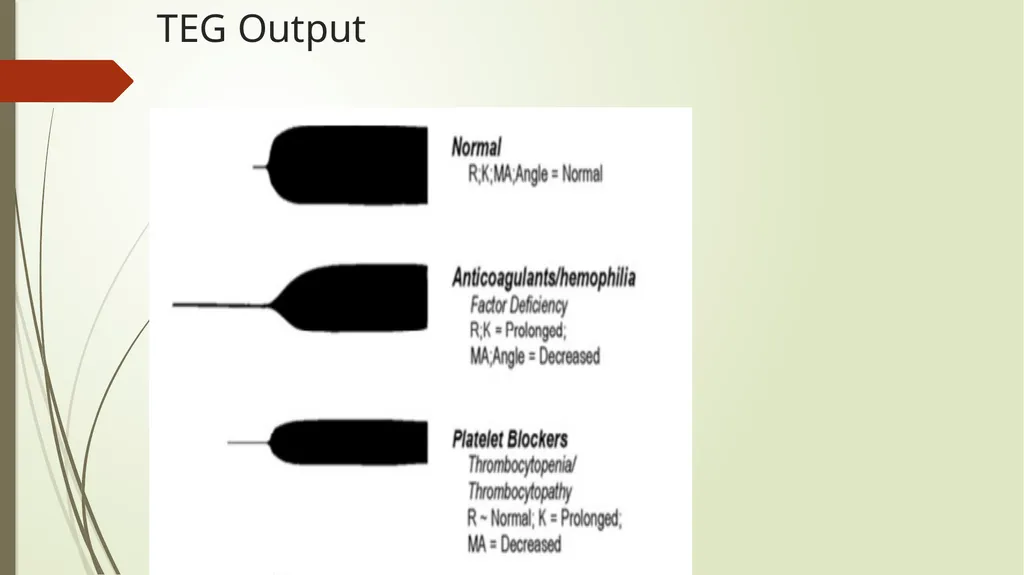
TEG Output<br>
10
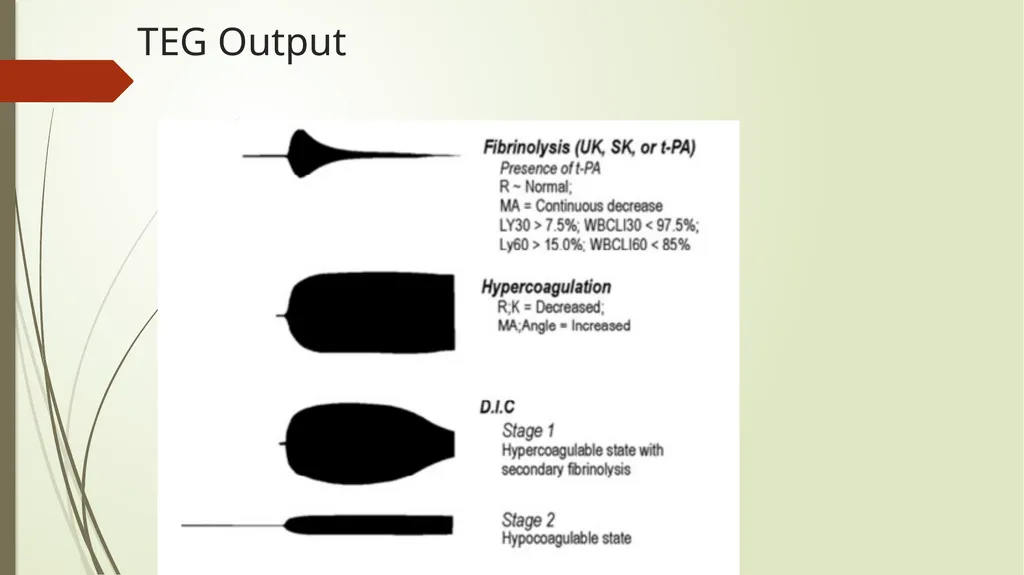
TEG Output<br>
11
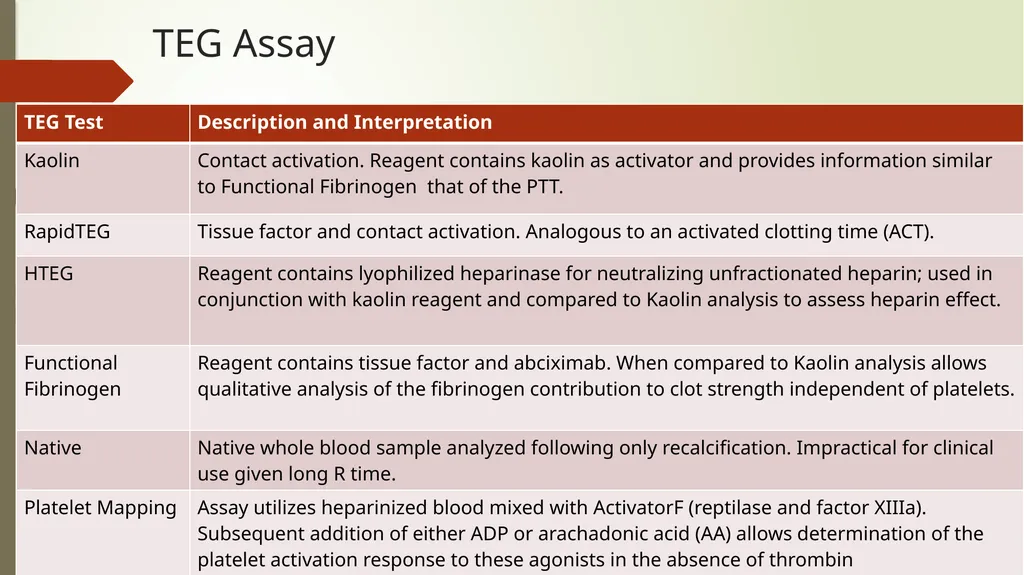
TEG Assay<br>
12
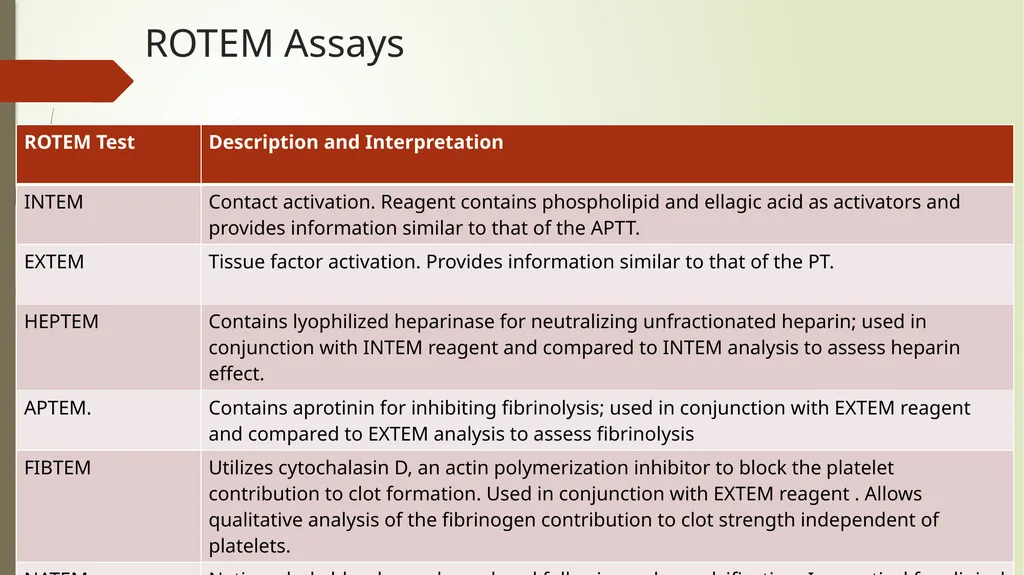
ROTEM Assays<br>
13
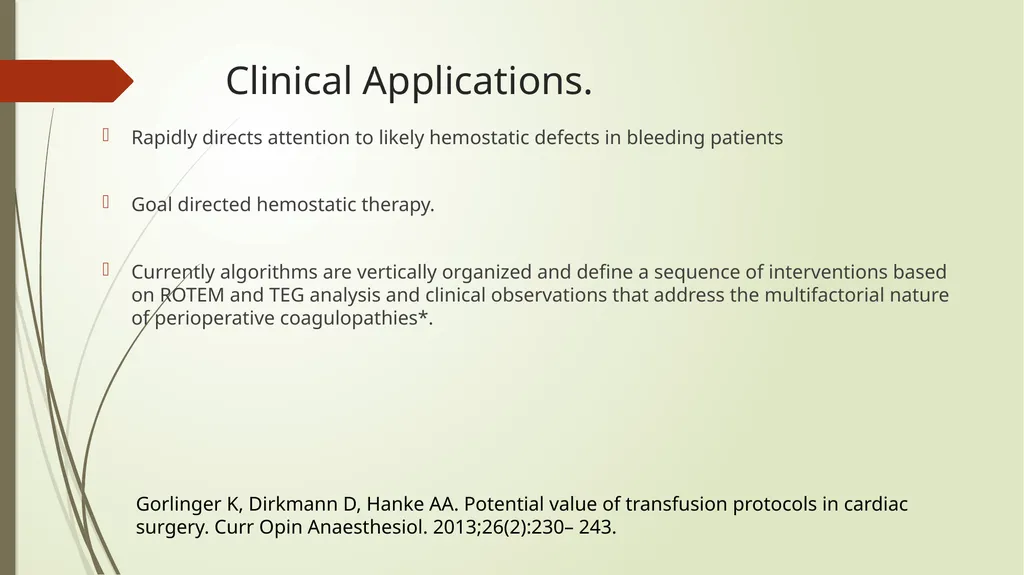
Clinical Applications. Rapidly directs attention to likely hemostatic defects in bleeding patients
Goal directed hemostatic therapy.
Currently algorithms are vertically organized and define a sequence of interventions based on ROTEM and TEG analysis and clinical observations that address the multifactorial nature of perioperative coagulopathies*. Gorlinger K, Dirkmann D, Hanke AA. Potential value of transfusion protocols in cardiac surgery. Curr Opin Anaesthesiol. 2013;26(2):230– 243.<br>
14
Vertical algorithm in CV surgery - ROTEM<br>
15
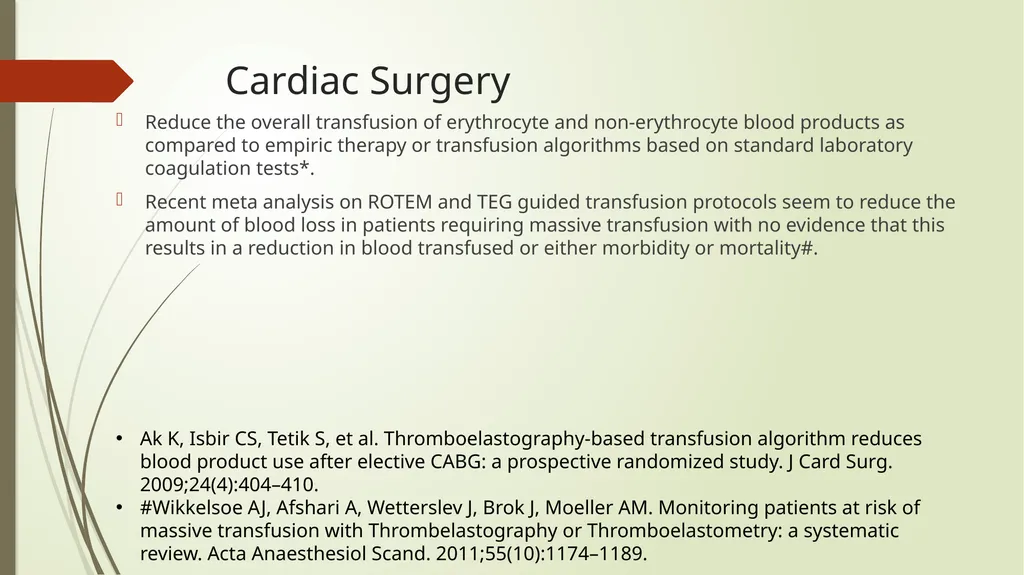
Cardiac Surgery Reduce the overall transfusion of erythrocyte and non-erythrocyte blood products as compared to empiric therapy or transfusion algorithms based on standard laboratory coagulation tests*.
Recent meta analysis on ROTEM and TEG guided transfusion protocols seem to reduce the amount of blood loss in patients requiring massive transfusion with no evidence that this results in a reduction in blood transfused or either morbidity or mortality#. Ak K, Isbir CS, Tetik S, et al. Thromboelastography-based transfusion algorithm reduces blood product use after elective CABG: a prospective randomized study. J Card Surg. 2009;24(4):404–410.
#Wikkelsoe AJ, Afshari A, Wetterslev J, Brok J, Moeller AM. Monitoring patients at risk of massive transfusion with Thrombelastography or Thromboelastometry: a systematic review. Acta Anaesthesiol Scand. 2011;55(10):1174–1189.<br>
16
Trauma Acute Trauma Coagulopathy (ATC) - characterized by systemic anticoagulation and hyperfibrinolysis believed secondary to endothelial injury and activation of protein C may progress to Trauma Induced Coagulopathy (TIC) following on-going blood loss, fluid replacement and the development of hypothermia and tissue acidosis from hypoperfusion*.
ROTEM and TEG analysis is proving to be useful in identifying the coagulation profile of ATC and TIC#. *Davenport R. Pathogenesis of acute traumatic coagulopathy. Transfusion. 2013;53 Suppl 1:23S–27S.
#Schochl H, Maegele M, Solomon C, Gorlinger K, Voelckel W. Early and individualized goal-directed therapy for trauma-induced coagulopathy. Scand J Trauma Resusc Emerg Med. 2012;20(1):15.<br>
17
Obstetrics ROTEM and TEG based algorithms for diagnosis and treatment of specific coagulation deficiencies in patients with PPH has been suggested.
Useful to detect common occurrence of hypofibrinogenemia and hyperfibrinolysis in these patients.<br>
18
Liver transplantation The underlying coagulopathies of cirrhosis, the intraoperative replacement of large blood losses, and the changing metabolism of coagulant factors during the different phases of liver transplantation create a complicated, dynamic hemostatic profile.
Pre-operative ROTEM MCF in cirrhotic patients correlates well with the model of end stage liver disease (MELD) and Child-Pugh severity of illness scores.<br>
19
Hemophilia Whole blood assessment of coagulation (ROTEM, TEG) might be able to define an individual hemophiliac’s phenotype and assess the response to treatment with bypassing agents* * Young G, Sørensen B, Dargaud Y, et al. Thrombin generation and whole blood viscoelastic assays in the management of hemophilia: current state of art and future perspectives. Blood. 2013;121(11):1944–1950.<br>
20
Conclusions ROTEM and TEG technology provide real-time, analysis of the viscoelastic properties of clot formation and dissolution in whole blood.
Both ROTEM and TEG, using several samples run in parallel with a variety of activators and inhibitors, allow the processes of clot initiation, propagation, stabilization, and dissolution to be evaluated separately
It is possible to separate the effects of platelets and fibrinogen on overall clot strength.<br>