
The African Monsoon Recent Evolution and Current
CB
Published · 12 slides · 0 views
1 / 1
Description
The African Monsoon Recent Evolution and Current Status Include Week-1 and Week-2 Outlooks 05 October 2026 For more information, visit: http:www.cpc.ncep.noaa.govproductsGlobalMonsoonsAfricanMonsoonsprecipmonitoring.shtml Outline
Related Topics
Share
Embed code
Download this presentation From Below
"The African Monsoon Recent Evolution and Current" is the property of its rightful owner. Permission is granted to download and print the materials on this website for personal, non-commercial use only, and to display it on your personal computer provided you do not modify the materials and that you retain all copyright notices contained in the materials. By downloading content from our website, you accept the terms of this agreement.
Presentation Transcript
01
The African Monsoon Recent Evolution and Current Status
Include Week-1 and Week-2 Outlooks 05 October 2026 For more information, visit:
http://www.cpc.ncep.noaa.gov/products/Global_Monsoons/African_Monsoons/precip_monitoring.shtml<br>
http://www.cpc.ncep.noaa.gov/products/Global_Monsoons/African_Monsoons/precip_monitoring.shtml<br>
02
Outline Highlights
Recent Evolution and Current Conditions
NCEP GEFS Forecasts
Summary<br>
Recent Evolution and Current Conditions
NCEP GEFS Forecasts
Summary<br>
03
Highlights:
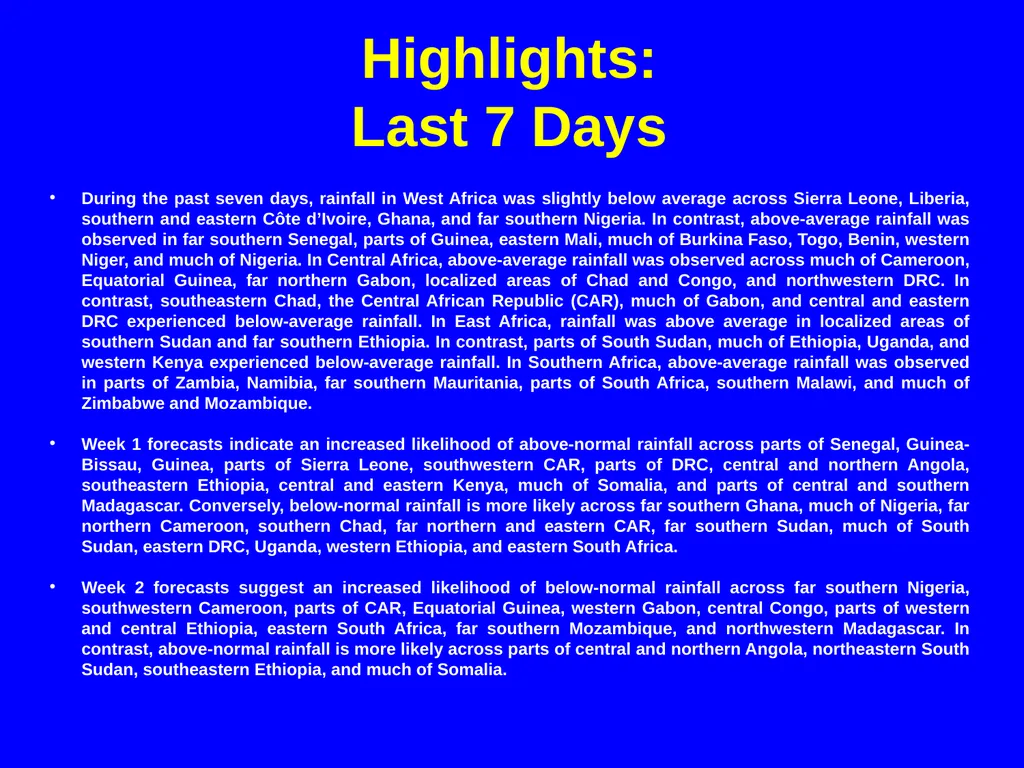
Last 7 Days During the past seven days, rainfall in West Africa was slightly below average across Sierra Leone, Liberia, southern and eastern Côte d’Ivoire, Ghana, and far southern Nigeria. In contrast, above-average rainfall was observed in far southern Senegal, parts of Guinea, eastern Mali, much of Burkina Faso, Togo, Benin, western Niger, and much of Nigeria. In Central Africa, above-average rainfall was observed across much of Cameroon, Equatorial Guinea, far northern Gabon, localized areas of Chad and Congo, and northwestern DRC. In contrast, southeastern Chad, the Central African Republic (CAR), much of Gabon, and central and eastern DRC experienced below-average rainfall. In East Africa, rainfall was above average in localized areas of southern Sudan and far southern Ethiopia. In contrast, parts of South Sudan, much of Ethiopia, Uganda, and western Kenya experienced below-average rainfall. In Southern Africa, above-average rainfall was observed in parts of Zambia, Namibia, far southern Mauritania, parts of South Africa, southern Malawi, and much of Zimbabwe and Mozambique.
Week 1 forecasts indicate an increased likelihood of above-normal rainfall across parts of Senegal, Guinea-Bissau, Guinea, parts of Sierra Leone, southwestern CAR, parts of DRC, central and northern Angola, southeastern Ethiopia, central and eastern Kenya, much of Somalia, and parts of central and southern Madagascar. Conversely, below-normal rainfall is more likely across far southern Ghana, much of Nigeria, far northern Cameroon, southern Chad, far northern and eastern CAR, far southern Sudan, much of South Sudan, eastern DRC, Uganda, western Ethiopia, and eastern South Africa.
Week 2 forecasts suggest an increased likelihood of below-normal rainfall across far southern Nigeria, southwestern Cameroon, parts of CAR, Equatorial Guinea, western Gabon, central Congo, parts of western and central Ethiopia, eastern South Africa, far southern Mozambique, and northwestern Madagascar. In contrast, above-normal rainfall is more likely across parts of central and northern Angola, northeastern South Sudan, southeastern Ethiopia, and much of Somalia.<br>
Week 1 forecasts indicate an increased likelihood of above-normal rainfall across parts of Senegal, Guinea-Bissau, Guinea, parts of Sierra Leone, southwestern CAR, parts of DRC, central and northern Angola, southeastern Ethiopia, central and eastern Kenya, much of Somalia, and parts of central and southern Madagascar. Conversely, below-normal rainfall is more likely across far southern Ghana, much of Nigeria, far northern Cameroon, southern Chad, far northern and eastern CAR, far southern Sudan, much of South Sudan, eastern DRC, Uganda, western Ethiopia, and eastern South Africa.
Week 2 forecasts suggest an increased likelihood of below-normal rainfall across far southern Nigeria, southwestern Cameroon, parts of CAR, Equatorial Guinea, western Gabon, central Congo, parts of western and central Ethiopia, eastern South Africa, far southern Mozambique, and northwestern Madagascar. In contrast, above-normal rainfall is more likely across parts of central and northern Angola, northeastern South Sudan, southeastern Ethiopia, and much of Somalia.<br>
04
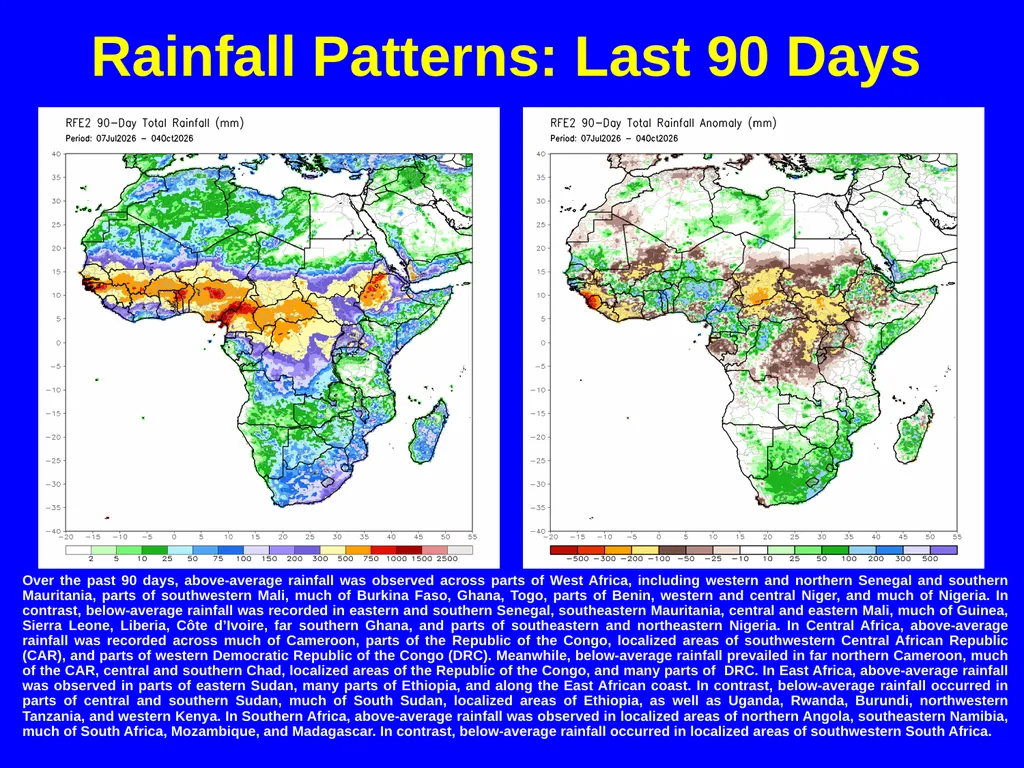
Rainfall Patterns: Last 90 Days Over the past 90 days, above-average rainfall was observed across parts of West Africa, including western and northern Senegal and southern Mauritania, parts of southwestern Mali, much of Burkina Faso, Ghana, Togo, parts of Benin, western and central Niger, and much of Nigeria. In contrast, below-average rainfall was recorded in eastern and southern Senegal, southeastern Mauritania, central and eastern Mali, much of Guinea, Sierra Leone, Liberia, Côte d’Ivoire, far southern Ghana, and parts of southeastern and northeastern Nigeria. In Central Africa, above-average rainfall was recorded across much of Cameroon, parts of the Republic of the Congo, localized areas of southwestern Central African Republic (CAR), and parts of western Democratic Republic of the Congo (DRC). Meanwhile, below-average rainfall prevailed in far northern Cameroon, much of the CAR, central and southern Chad, localized areas of the Republic of the Congo, and many parts of DRC. In East Africa, above-average rainfall was observed in parts of eastern Sudan, many parts of Ethiopia, and along the East African coast. In contrast, below-average rainfall occurred in parts of central and southern Sudan, much of South Sudan, localized areas of Ethiopia, as well as Uganda, Rwanda, Burundi, northwestern Tanzania, and western Kenya. In Southern Africa, above-average rainfall was observed in localized areas of northern Angola, southeastern Namibia, much of South Africa, Mozambique, and Madagascar. In contrast, below-average rainfall occurred in localized areas of southwestern South Africa.<br>
05
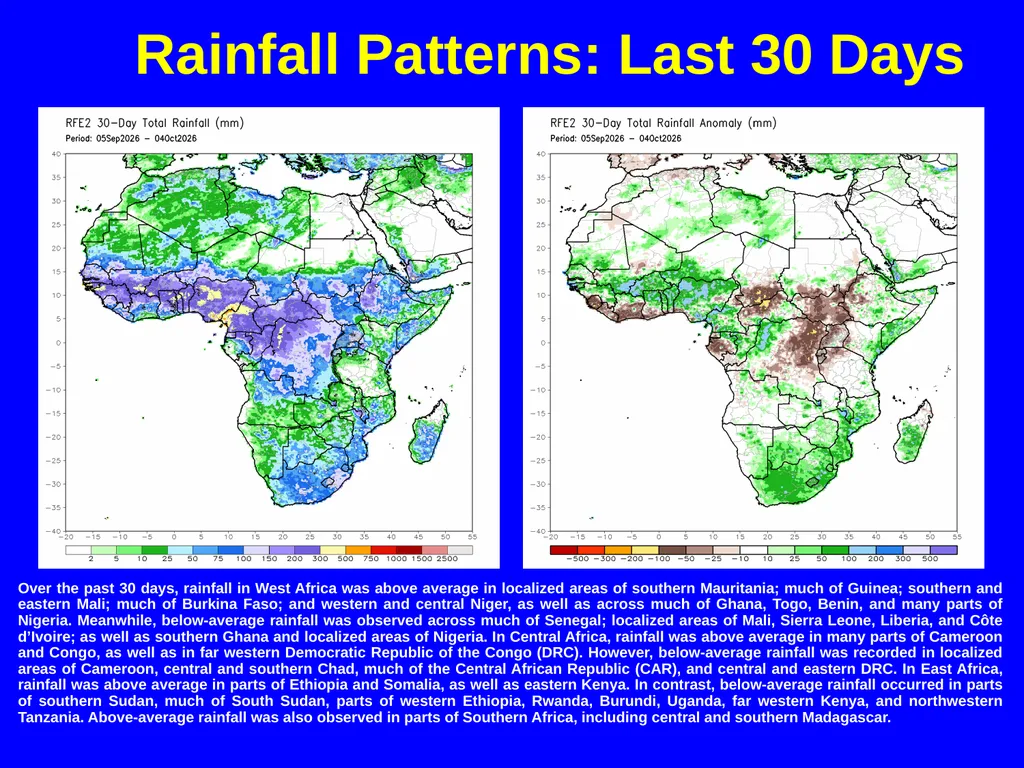
Rainfall Patterns: Last 30 Days Over the past 30 days, rainfall in West Africa was above average in localized areas of southern Mauritania; much of Guinea; southern and eastern Mali; much of Burkina Faso; and western and central Niger, as well as across much of Ghana, Togo, Benin, and many parts of Nigeria. Meanwhile, below-average rainfall was observed across much of Senegal; localized areas of Mali, Sierra Leone, Liberia, and Côte d’Ivoire; as well as southern Ghana and localized areas of Nigeria. In Central Africa, rainfall was above average in many parts of Cameroon and Congo, as well as in far western Democratic Republic of the Congo (DRC). However, below-average rainfall was recorded in localized areas of Cameroon, central and southern Chad, much of the Central African Republic (CAR), and central and eastern DRC. In East Africa, rainfall was above average in parts of Ethiopia and Somalia, as well as eastern Kenya. In contrast, below-average rainfall occurred in parts of southern Sudan, much of South Sudan, parts of western Ethiopia, Rwanda, Burundi, Uganda, far western Kenya, and northwestern Tanzania. Above-average rainfall was also observed in parts of Southern Africa, including central and southern Madagascar.<br>
06
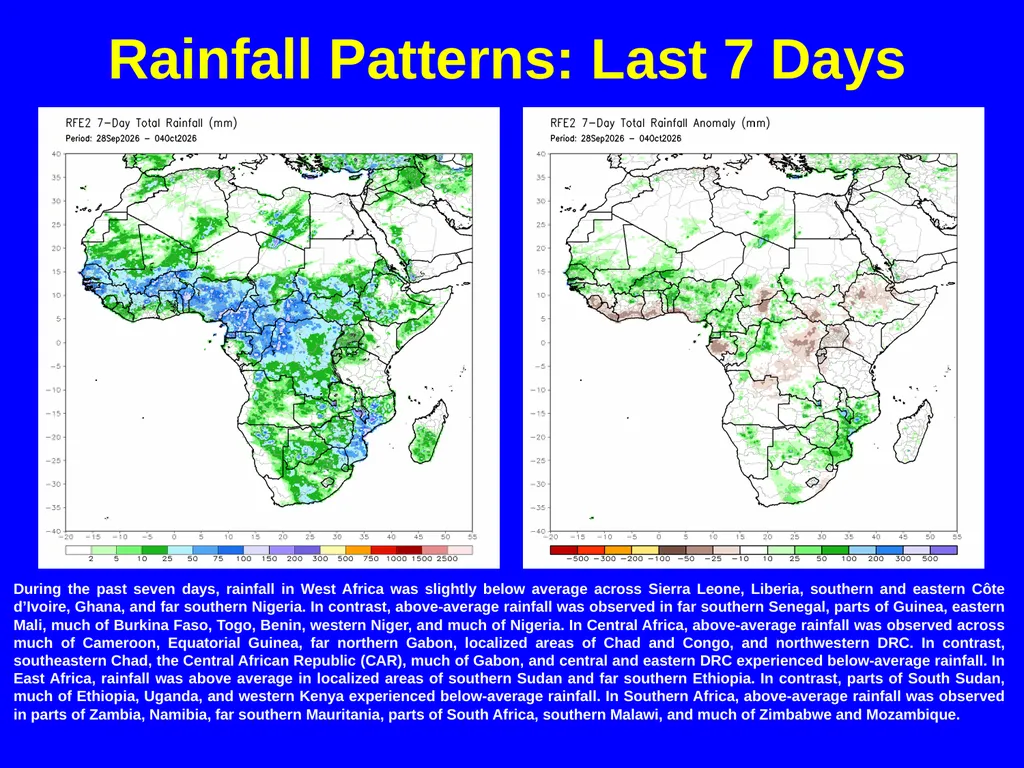
Rainfall Patterns: Last 7 Days During the past seven days, rainfall in West Africa was slightly below average across Sierra Leone, Liberia, southern and eastern Côte d’Ivoire, Ghana, and far southern Nigeria. In contrast, above-average rainfall was observed in far southern Senegal, parts of Guinea, eastern Mali, much of Burkina Faso, Togo, Benin, western Niger, and much of Nigeria. In Central Africa, above-average rainfall was observed across much of Cameroon, Equatorial Guinea, far northern Gabon, localized areas of Chad and Congo, and northwestern DRC. In contrast, southeastern Chad, the Central African Republic (CAR), much of Gabon, and central and eastern DRC experienced below-average rainfall. In East Africa, rainfall was above average in localized areas of southern Sudan and far southern Ethiopia. In contrast, parts of South Sudan, much of Ethiopia, Uganda, and western Kenya experienced below-average rainfall. In Southern Africa, above-average rainfall was observed in parts of Zambia, Namibia, far southern Mauritania, parts of South Africa, southern Malawi, and much of Zimbabwe and Mozambique.<br>
07
Atmospheric Circulation:
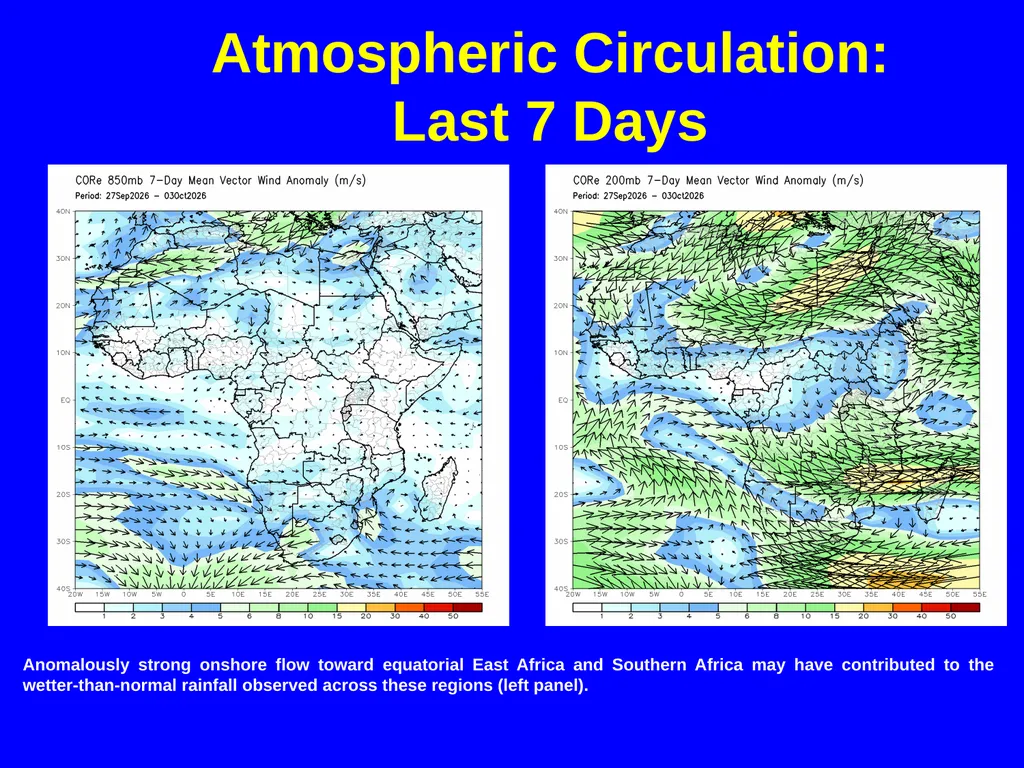
Last 7 Days Anomalously strong onshore flow toward equatorial East Africa and Southern Africa may have contributed to the wetter-than-normal rainfall observed across these regions (left panel).<br>
08
NCEP GEFS Model Forecasts
Non-Bias Corrected Probability of
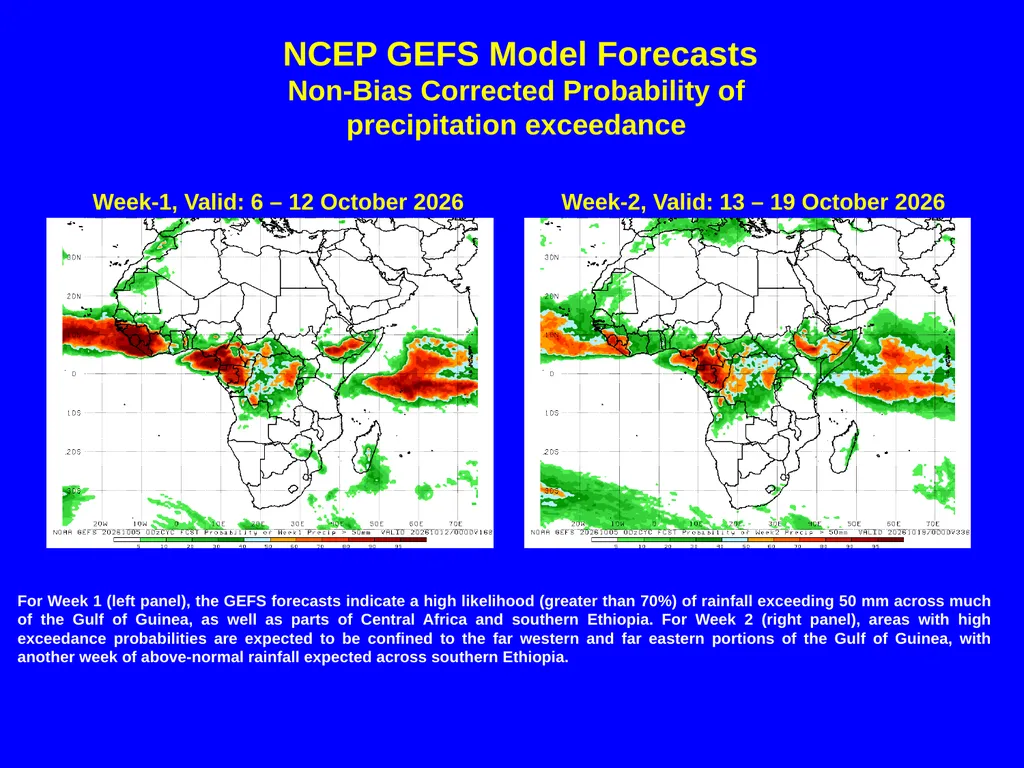
precipitation exceedance For Week 1 (left panel), the GEFS forecasts indicate a high likelihood (greater than 70%) of rainfall exceeding 50 mm across much of the Gulf of Guinea, as well as parts of Central Africa and southern Ethiopia. For Week 2 (right panel), areas with high exceedance probabilities are expected to be confined to the far western and far eastern portions of the Gulf of Guinea, with another week of above-normal rainfall expected across southern Ethiopia. Week-1, Valid: 6 – 12 October 2026 Week-2, Valid: 13 – 19 October 2026<br>
09
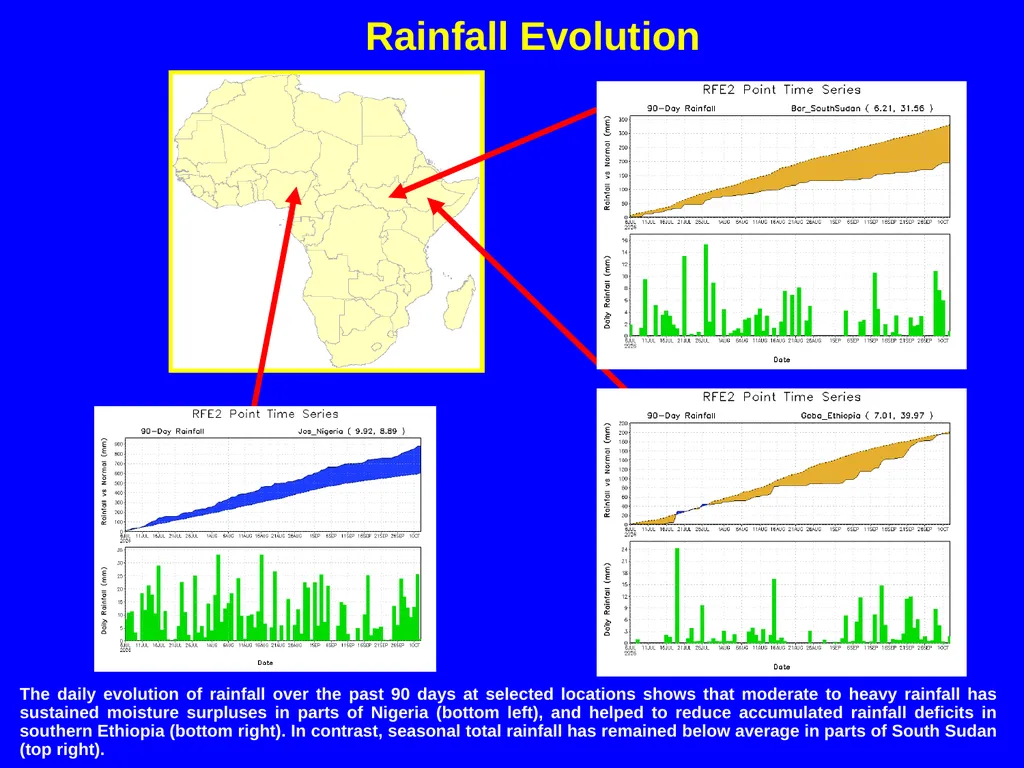
Rainfall Evolution The daily evolution of rainfall over the past 90 days at selected locations shows that moderate to heavy rainfall has sustained moisture surpluses in parts of Nigeria (bottom left), and helped to reduce accumulated rainfall deficits in southern Ethiopia (bottom right). In contrast, seasonal total rainfall has remained below average in parts of South Sudan (top right).<br>
10
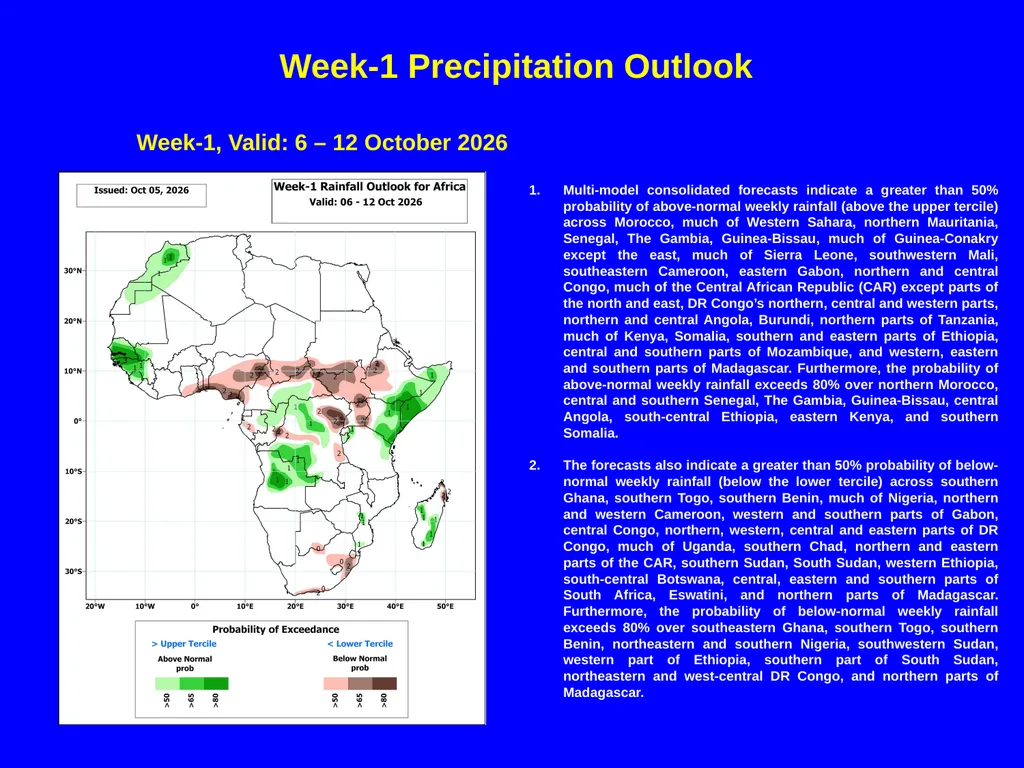
Week-1 Precipitation Outlook Multi-model consolidated forecasts indicate a greater than 50% probability of above-normal weekly rainfall (above the upper tercile) across Morocco, much of Western Sahara, northern Mauritania, Senegal, The Gambia, Guinea-Bissau, much of Guinea-Conakry except the east, much of Sierra Leone, southwestern Mali, southeastern Cameroon, eastern Gabon, northern and central Congo, much of the Central African Republic (CAR) except parts of the north and east, DR Congo’s northern, central and western parts, northern and central Angola, Burundi, northern parts of Tanzania, much of Kenya, Somalia, southern and eastern parts of Ethiopia, central and southern parts of Mozambique, and western, eastern and southern parts of Madagascar. Furthermore, the probability of above-normal weekly rainfall exceeds 80% over northern Morocco, central and southern Senegal, The Gambia, Guinea-Bissau, central Angola, south-central Ethiopia, eastern Kenya, and southern Somalia.
The forecasts also indicate a greater than 50% probability of below-normal weekly rainfall (below the lower tercile) across southern Ghana, southern Togo, southern Benin, much of Nigeria, northern and western Cameroon, western and southern parts of Gabon, central Congo, northern, western, central and eastern parts of DR Congo, much of Uganda, southern Chad, northern and eastern parts of the CAR, southern Sudan, South Sudan, western Ethiopia, south-central Botswana, central, eastern and southern parts of South Africa, Eswatini, and northern parts of Madagascar. Furthermore, the probability of below-normal weekly rainfall exceeds 80% over southeastern Ghana, southern Togo, southern Benin, northeastern and southern Nigeria, southwestern Sudan, western part of Ethiopia, southern part of South Sudan, northeastern and west-central DR Congo, and northern parts of Madagascar. Week-1, Valid: 6 – 12 October 2026<br>
The forecasts also indicate a greater than 50% probability of below-normal weekly rainfall (below the lower tercile) across southern Ghana, southern Togo, southern Benin, much of Nigeria, northern and western Cameroon, western and southern parts of Gabon, central Congo, northern, western, central and eastern parts of DR Congo, much of Uganda, southern Chad, northern and eastern parts of the CAR, southern Sudan, South Sudan, western Ethiopia, south-central Botswana, central, eastern and southern parts of South Africa, Eswatini, and northern parts of Madagascar. Furthermore, the probability of below-normal weekly rainfall exceeds 80% over southeastern Ghana, southern Togo, southern Benin, northeastern and southern Nigeria, southwestern Sudan, western part of Ethiopia, southern part of South Sudan, northeastern and west-central DR Congo, and northern parts of Madagascar. Week-1, Valid: 6 – 12 October 2026<br>
11
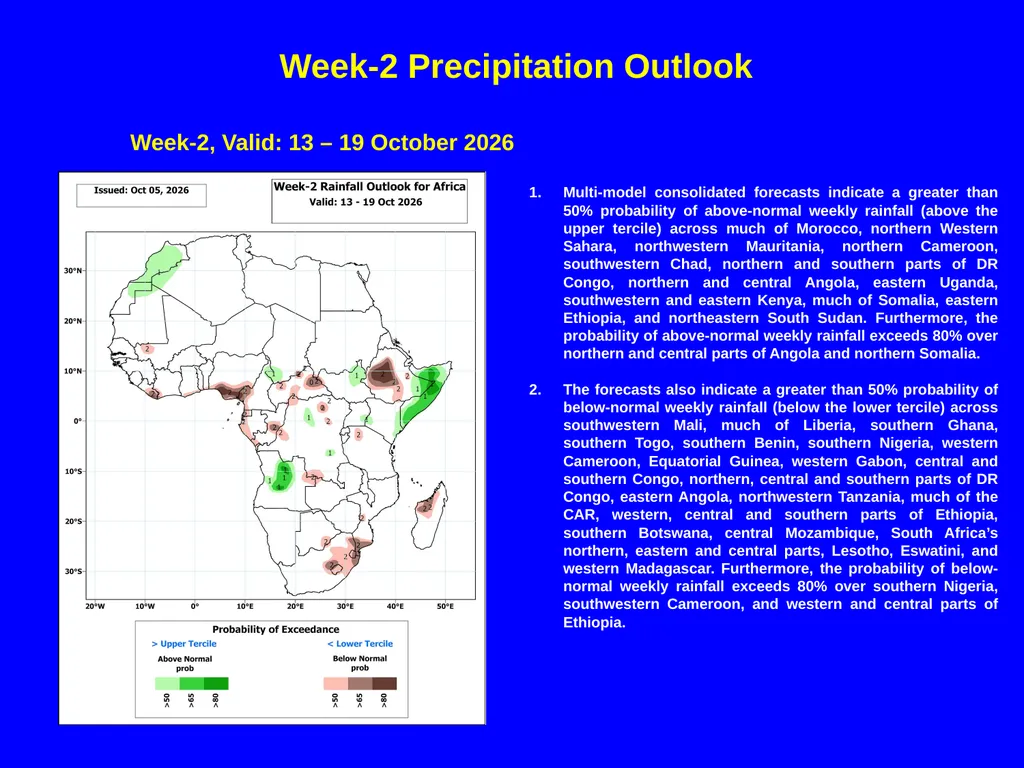
Week-2 Precipitation Outlook Multi-model consolidated forecasts indicate a greater than 50% probability of above-normal weekly rainfall (above the upper tercile) across much of Morocco, northern Western Sahara, northwestern Mauritania, northern Cameroon, southwestern Chad, northern and southern parts of DR Congo, northern and central Angola, eastern Uganda, southwestern and eastern Kenya, much of Somalia, eastern Ethiopia, and northeastern South Sudan. Furthermore, the probability of above-normal weekly rainfall exceeds 80% over northern and central parts of Angola and northern Somalia.
The forecasts also indicate a greater than 50% probability of below-normal weekly rainfall (below the lower tercile) across southwestern Mali, much of Liberia, southern Ghana, southern Togo, southern Benin, southern Nigeria, western Cameroon, Equatorial Guinea, western Gabon, central and southern Congo, northern, central and southern parts of DR Congo, eastern Angola, northwestern Tanzania, much of the CAR, western, central and southern parts of Ethiopia, southern Botswana, central Mozambique, South Africa’s northern, eastern and central parts, Lesotho, Eswatini, and western Madagascar. Furthermore, the probability of below-normal weekly rainfall exceeds 80% over southern Nigeria, southwestern Cameroon, and western and central parts of Ethiopia. Week-2, Valid: 13 – 19 October 2026<br>
The forecasts also indicate a greater than 50% probability of below-normal weekly rainfall (below the lower tercile) across southwestern Mali, much of Liberia, southern Ghana, southern Togo, southern Benin, southern Nigeria, western Cameroon, Equatorial Guinea, western Gabon, central and southern Congo, northern, central and southern parts of DR Congo, eastern Angola, northwestern Tanzania, much of the CAR, western, central and southern parts of Ethiopia, southern Botswana, central Mozambique, South Africa’s northern, eastern and central parts, Lesotho, Eswatini, and western Madagascar. Furthermore, the probability of below-normal weekly rainfall exceeds 80% over southern Nigeria, southwestern Cameroon, and western and central parts of Ethiopia. Week-2, Valid: 13 – 19 October 2026<br>
12
Over the past 30 days, rainfall in West Africa was above average in localized areas of southern Mauritania; much of Guinea; southern and eastern Mali; much of Burkina Faso; and western and central Niger, as well as across much of Ghana, Togo, Benin, and many parts of Nigeria. Meanwhile, below-average rainfall was observed across much of Senegal, localized areas of Mali, Sierra Leone, Liberia, and Côte d’Ivoire, as well as southern Ghana and localized areas of Nigeria. In Central Africa, rainfall was above average in many parts of Cameroon and Congo, as well as in far western Democratic Republic of the Congo (DRC). However, below-average rainfall was recorded in localized areas of Cameroon, central and southern Chad, much of the Central African Republic (CAR), and central and eastern DRC. In East Africa, rainfall was above average in parts of Ethiopia and Somalia, as well as eastern Kenya. In contrast, below-average rainfall occurred in parts of southern Sudan, much of South Sudan, parts of western Ethiopia, Rwanda, Burundi, Uganda, far western Kenya, and northwestern Tanzania. Above-average rainfall was also observed in parts of Southern Africa, including central and southern Madagascar.
During the past seven days, rainfall in West Africa was slightly below average across Sierra Leone, Liberia, southern and eastern Côte d’Ivoire, Ghana, and far southern Nigeria. In contrast, above-average rainfall was observed in far southern Senegal, parts of Guinea, eastern Mali, much of Burkina Faso, Togo, Benin, western Niger, and much of Nigeria. In Central Africa, above-average rainfall was observed across much of Cameroon, Equatorial Guinea, far northern Gabon, localized areas of Chad and Congo, and northwestern DRC. In contrast, southeastern Chad, the Central African Republic (CAR), much of Gabon, and central and eastern DRC experienced below-average rainfall. In East Africa, rainfall was above average in localized areas of southern Sudan and far southern Ethiopia. In contrast, parts of South Sudan, much of Ethiopia, Uganda, and western Kenya experienced below-average rainfall. In Southern Africa, above-average rainfall was observed in parts of Zambia, Namibia, far southern Mauritania, parts of South Africa, southern Malawi, and much of Zimbabwe and Mozambique.
Week 1 forecasts indicate an increased likelihood of above-normal rainfall across parts of Senegal, Guinea-Bissau, Guinea, parts of Sierra Leone, southwestern CAR, parts of DRC, central and northern Angola, southeastern Ethiopia, central and eastern Kenya, much of Somalia, and parts of central and southern Madagascar. Conversely, below-normal rainfall is more likely across far southern Ghana, much of Nigeria, far northern Cameroon, southern Chad, far northern and eastern CAR, far southern Sudan, much of South Sudan, eastern DRC, Uganda, western Ethiopia, and eastern South Africa.
Week 2 forecasts suggest an increased likelihood of below-normal rainfall across far southern Nigeria, southwestern Cameroon, parts of CAR, Equatorial Guinea, western Gabon, central Congo, parts of western and central Ethiopia, eastern South Africa, far southern Mozambique, and northwestern Madagascar. In contrast, above-normal rainfall is more likely across parts of central and northern Angola, northeastern South Sudan, southeastern Ethiopia, and much of Somalia. Summary<br>
During the past seven days, rainfall in West Africa was slightly below average across Sierra Leone, Liberia, southern and eastern Côte d’Ivoire, Ghana, and far southern Nigeria. In contrast, above-average rainfall was observed in far southern Senegal, parts of Guinea, eastern Mali, much of Burkina Faso, Togo, Benin, western Niger, and much of Nigeria. In Central Africa, above-average rainfall was observed across much of Cameroon, Equatorial Guinea, far northern Gabon, localized areas of Chad and Congo, and northwestern DRC. In contrast, southeastern Chad, the Central African Republic (CAR), much of Gabon, and central and eastern DRC experienced below-average rainfall. In East Africa, rainfall was above average in localized areas of southern Sudan and far southern Ethiopia. In contrast, parts of South Sudan, much of Ethiopia, Uganda, and western Kenya experienced below-average rainfall. In Southern Africa, above-average rainfall was observed in parts of Zambia, Namibia, far southern Mauritania, parts of South Africa, southern Malawi, and much of Zimbabwe and Mozambique.
Week 1 forecasts indicate an increased likelihood of above-normal rainfall across parts of Senegal, Guinea-Bissau, Guinea, parts of Sierra Leone, southwestern CAR, parts of DRC, central and northern Angola, southeastern Ethiopia, central and eastern Kenya, much of Somalia, and parts of central and southern Madagascar. Conversely, below-normal rainfall is more likely across far southern Ghana, much of Nigeria, far northern Cameroon, southern Chad, far northern and eastern CAR, far southern Sudan, much of South Sudan, eastern DRC, Uganda, western Ethiopia, and eastern South Africa.
Week 2 forecasts suggest an increased likelihood of below-normal rainfall across far southern Nigeria, southwestern Cameroon, parts of CAR, Equatorial Guinea, western Gabon, central Congo, parts of western and central Ethiopia, eastern South Africa, far southern Mozambique, and northwestern Madagascar. In contrast, above-normal rainfall is more likely across parts of central and northern Angola, northeastern South Sudan, southeastern Ethiopia, and much of Somalia. Summary<br>