
The cell (نظري) Dr. israa Hussein lec 1-

Description: The cell (نظري) Dr. israa Hussein lec 1- introduction of cell biology reference : 1- essentials of biology 3rd edition Mader, S.S. and Windelspencht,M.(2012) 2- Essential cell biology , Davey,J. and Lord (2002). Introduction of cell biology
Related Topics
Download Presentation
"The cell (نظري) Dr. israa Hussein lec 1-" is the property of its rightful owner. Permission is granted to download and print the materials on this website for personal, non-commercial use only, and to display it on your personal computer provided you do not modify the materials and that you retain all copyright notices contained in the materials. By downloading content from our website, you accept the terms of this agreement.
Presentation Transcript
slide1. The cell (نظري)
Dr. israa Hussein
lec 1- introduction of cell biology
reference : 1- essentials of biology 3rd edition Mader, S.S. and Windelspencht,M.(2012)
2- Essential cell biology , Davey,J. and Lord (2002).<br>
slide2. Introduction of cell biology
Cell biology
The branch of biology dealing with the study of structure, function, molecular organization, growth, reproduction and genetics of the cells, is called cytology or cell biology.
The discovery of the cells
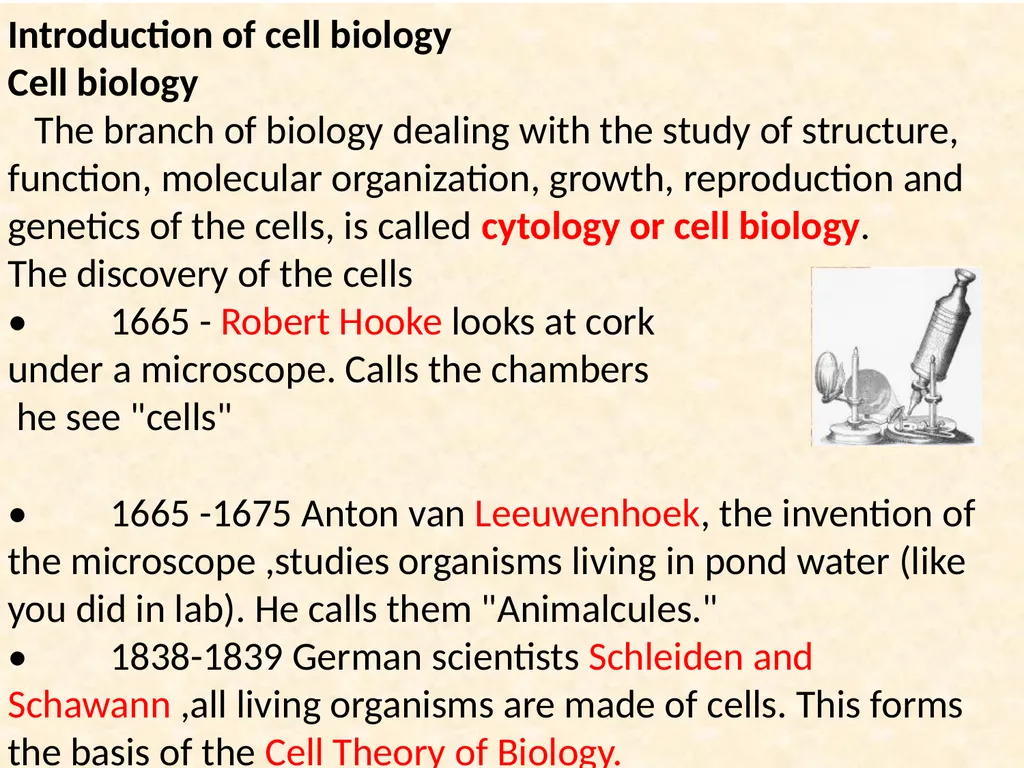
• 1665 - Robert Hooke looks at cork
under a microscope. Calls the chambers
he see "cells"
• 1665 -1675 Anton van Leeuwenhoek, the invention of the microscope ,studies organisms living in pond water (like you did in lab). He calls them "Animalcules."
• 1838-1839 German scientists Schleiden and Schawann ,all living organisms are made of cells. This forms the basis of the Cell Theory of Biology.<br>
slide3. The Cell Theory of Biology
1- All living organisms (animals, plants and microbes) are made up of one or more cells and cell products.
2-All metabolic reactions in unicellular and multicellular organisms take place in cells.
3- Cells arise by division of preexisting cells.
4- The smallest clearly defined unit of life is the cell.
5-Cells can be cultured to produce more cells
in vitro = outside organism or cell
in vivo = inside organism or cell<br>
slide4. Properties of Cells
1- Cells are complex and highly organized
• They contain numerous internal structures
• Some are membrane bound (organelles) while others do not
2-Cells contain a genetic blueprint and machinery to use it
• Genes are instructions for cells to create specific proteins
• All cells use the same types of information
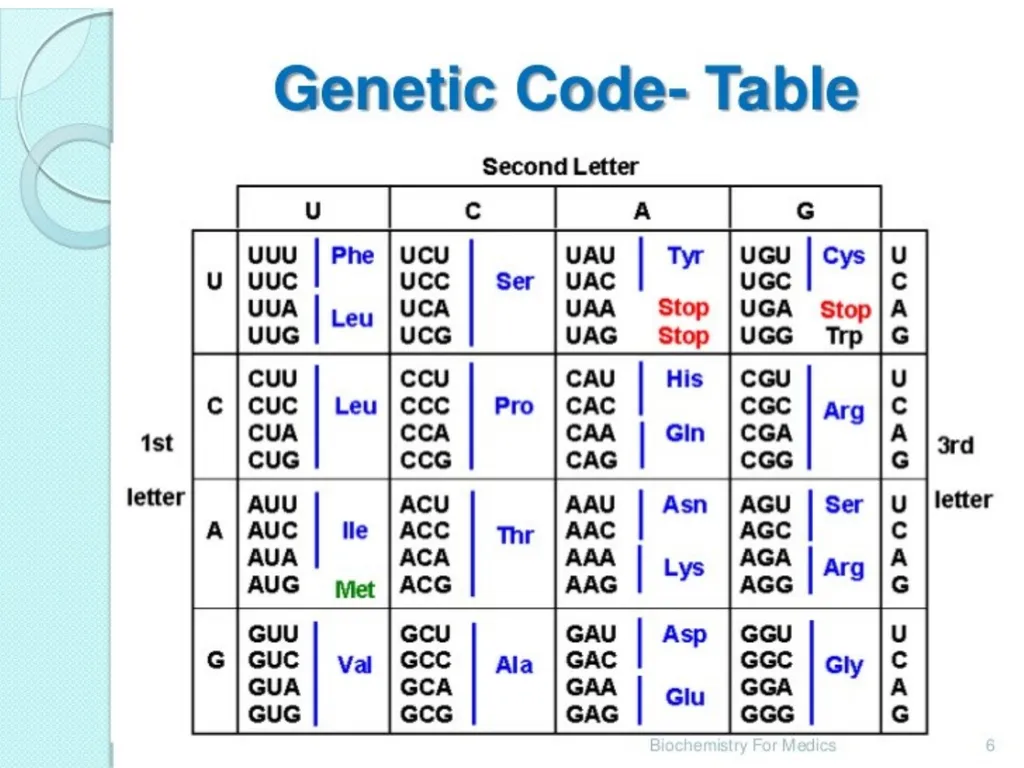
o The genetic code is universal
o The machinery used for synthesis is interchangeable
• however, for this to function properly, Information transfer must be error free
o Errors are called mutations<br>
slide6. 3-Cells arise from the division of other cells
•Daughter cells inherit the genes from the mother cells
•Daughter cells inherit cytoplasm and organelles from the mother cells
•Binary fission - cell division in bacteria
•Mitosis - the genetic complement of each daughter cell is identical to the other and to the mother cell. This is asexual reproduction
•Meiosis - the genetic complement of each daughter cell is reduced by half. This is sexual reproduction
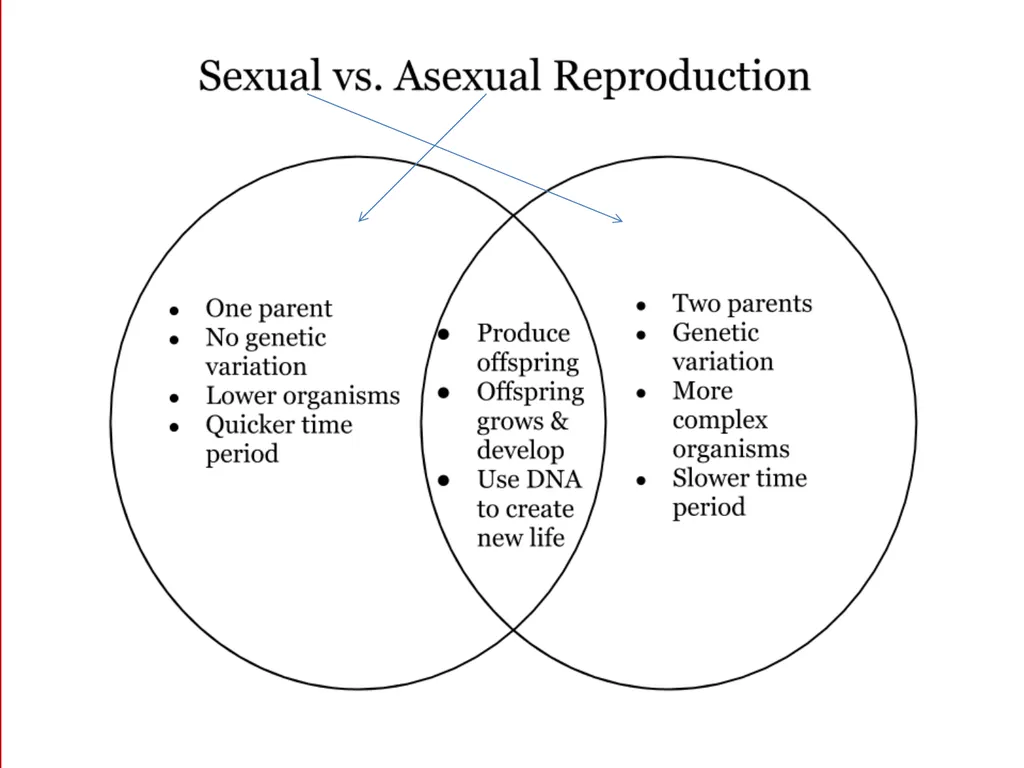
The difference between sexual and sexual reproduction as in the following scheme:<br>
slide8. 4-Cells acquire and utilize energy
• Plant cells undergo photosynthesis
o convert light energy and CO2 to chemical energy (ATP and glucose)
• Most cells respire
o release energy found in organic compounds
o convert organic compounds to CO2 and H2O
o make ATP
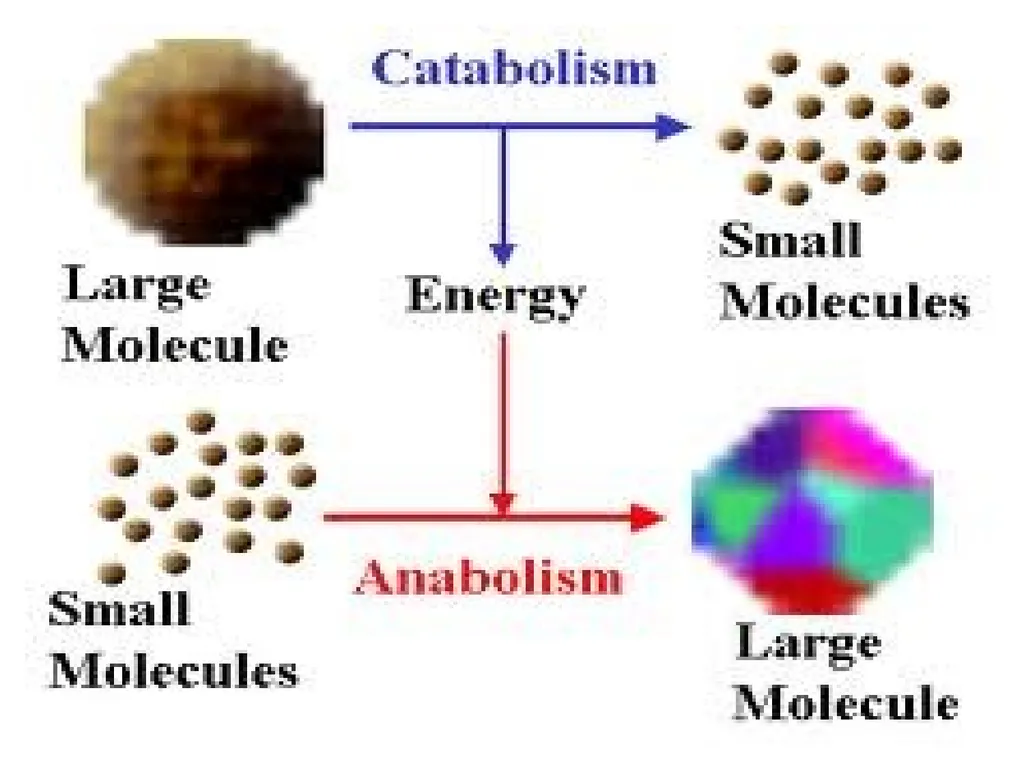
5-Cells can perform a variety of chemical reactions
• Transform simple organic molecules into complex molecules (anabolism)
• Breakdown complex molecules to release energy (catabolism)
• Metabolism = all reactions by cells<br>
slide10. 6-Cells can engage in mechanical activities
• Cells can move
• Organelles can move
• Cells can respond to stimuli
o chemotaxis - movement towards chemicals
o phototaxis - movement towards light
o hormone responses
o touch responses
7-Cells can regulate activities
• Cells control DNA synthesis and cell division
• Gene regulation - cells make specific proteins only when needed
• Turn on and off metabolic pathways
8-Cells all contain the following structures:
• Plasma membrane - separates the cell from the external environment
• Cytoplasm - fluid-filled cell interior
• Nuclear material - genetic information stored as DNA<br>
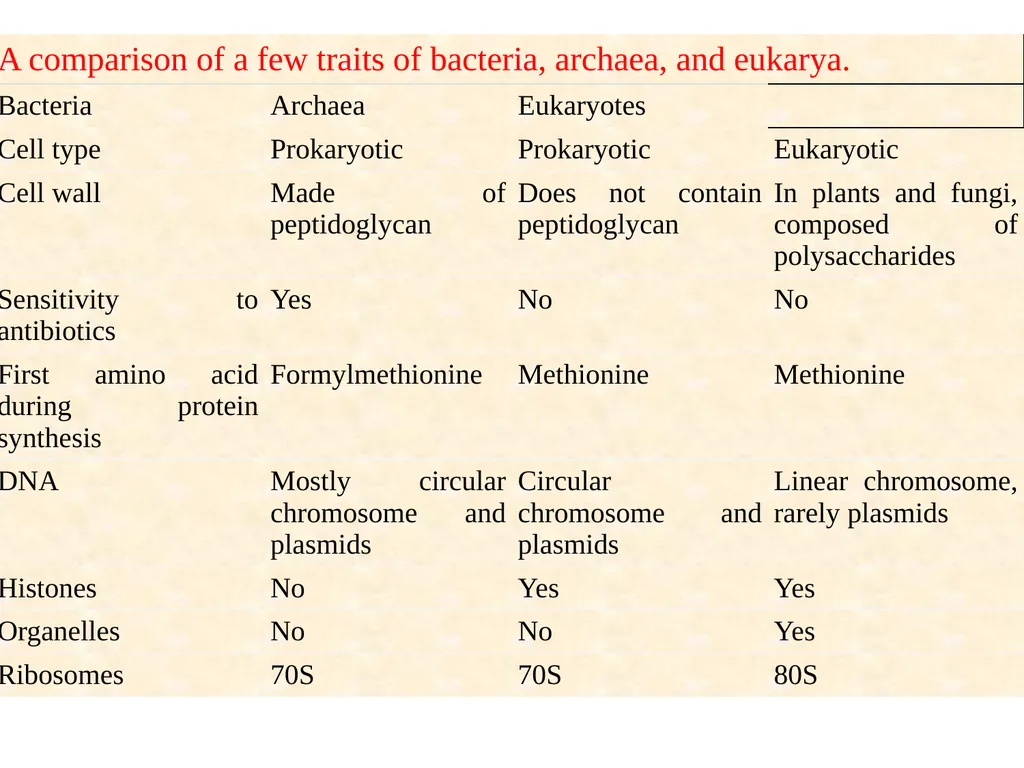
slide11. Types of Cells
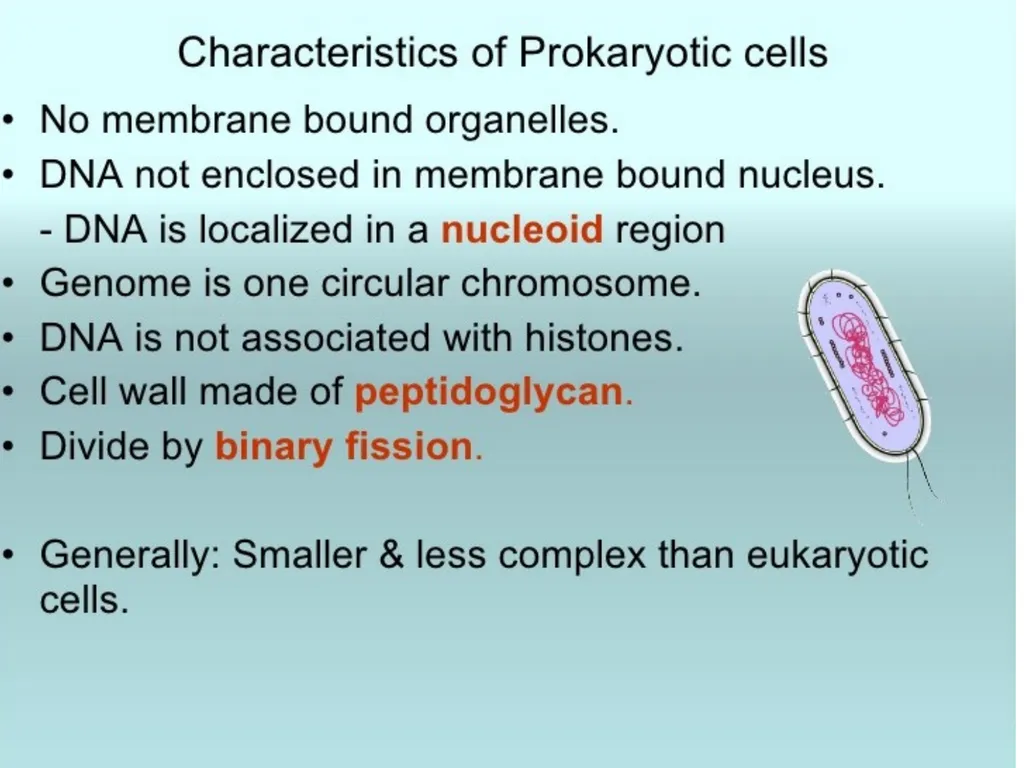
1-Prokaryotes
•Pro = before; karyon = nucleus
•relatively small 1 - 10 um
•lack membrane-bound organelles
•earliest cell type
2-Archaea
•Originally thought to be prokaryotes
•relatively small 5 - 10 um , generally similar to bacteria in size and shape
possess genes and several metabolic pathways that are more closely related to those of eukaryotes.
•lack membrane-bound organelles
•Usually live in extreme environments (thermophiles, halophiles, etc)
3-Eukaryotes
•Eu = true; karyon = nucleus
•contain membrane-bound organelles
•Evolved from prokaryotes by endosymbiosis association association of two or more prokaryotes
•Include Protozoans , Fungi, Animals, and Plants<br>
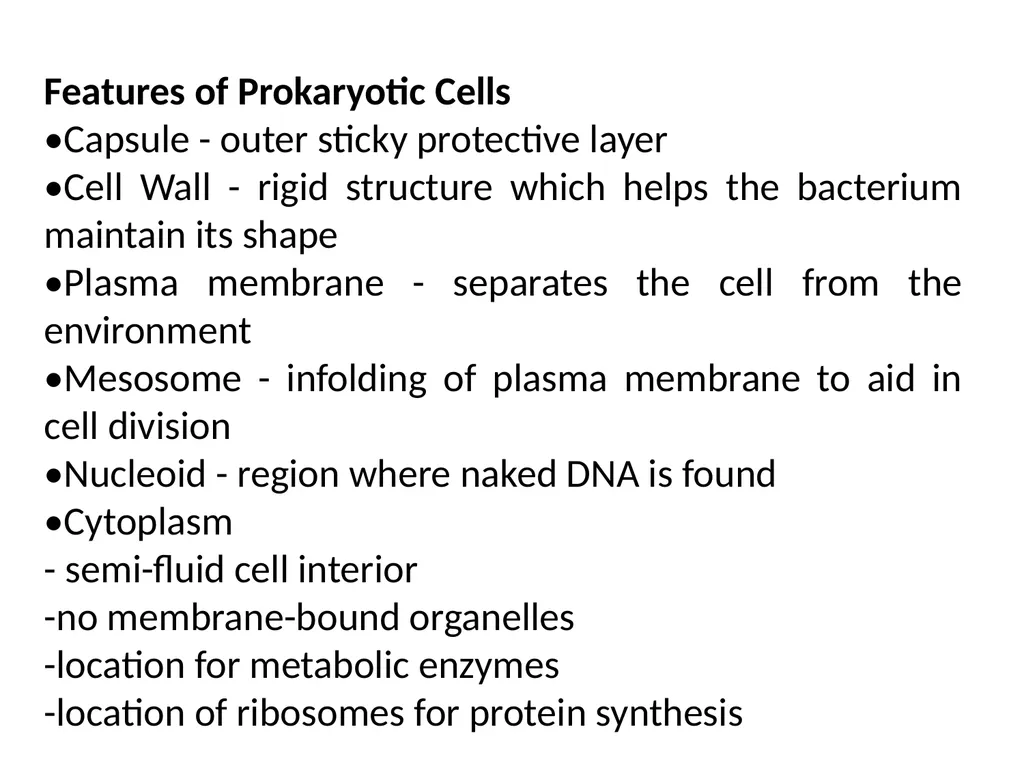
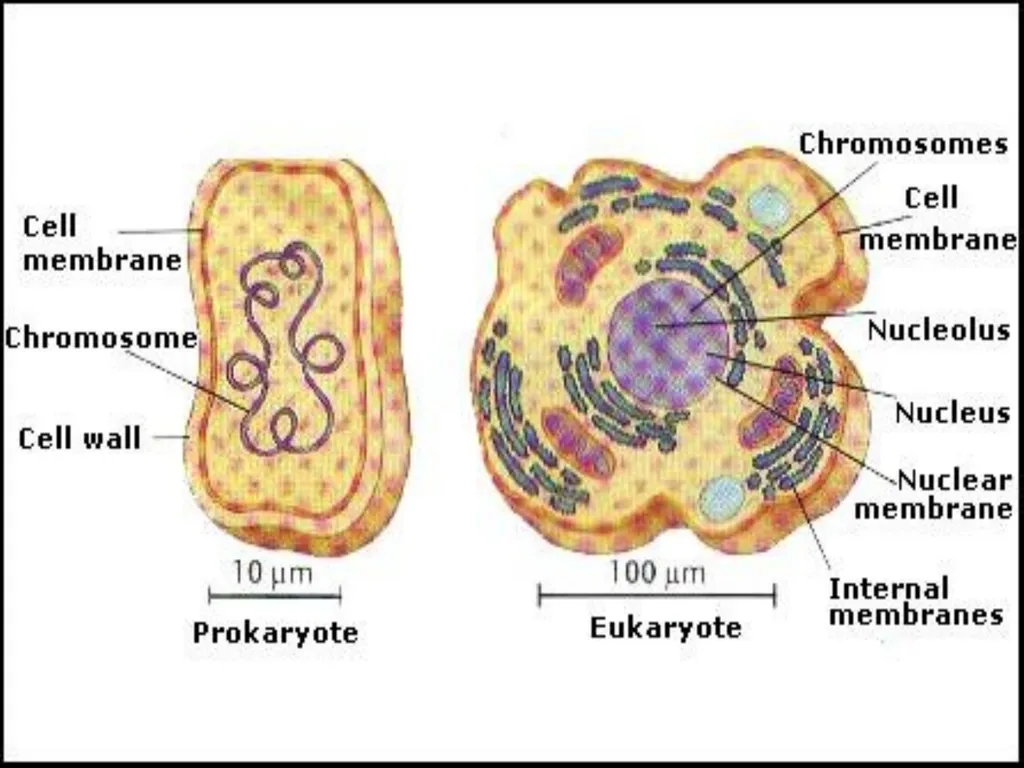
slide12. Features of Prokaryotic Cells
•Capsule - outer sticky protective layer
•Cell Wall - rigid structure which helps the bacterium maintain its shape
•Plasma membrane - separates the cell from the environment
•Mesosome - infolding of plasma membrane to aid in cell division
•Nucleoid - region where naked DNA is found
•Cytoplasm
- semi-fluid cell interior
-no membrane-bound organelles
-location for metabolic enzymes
-location of ribosomes for protein synthesis<br>
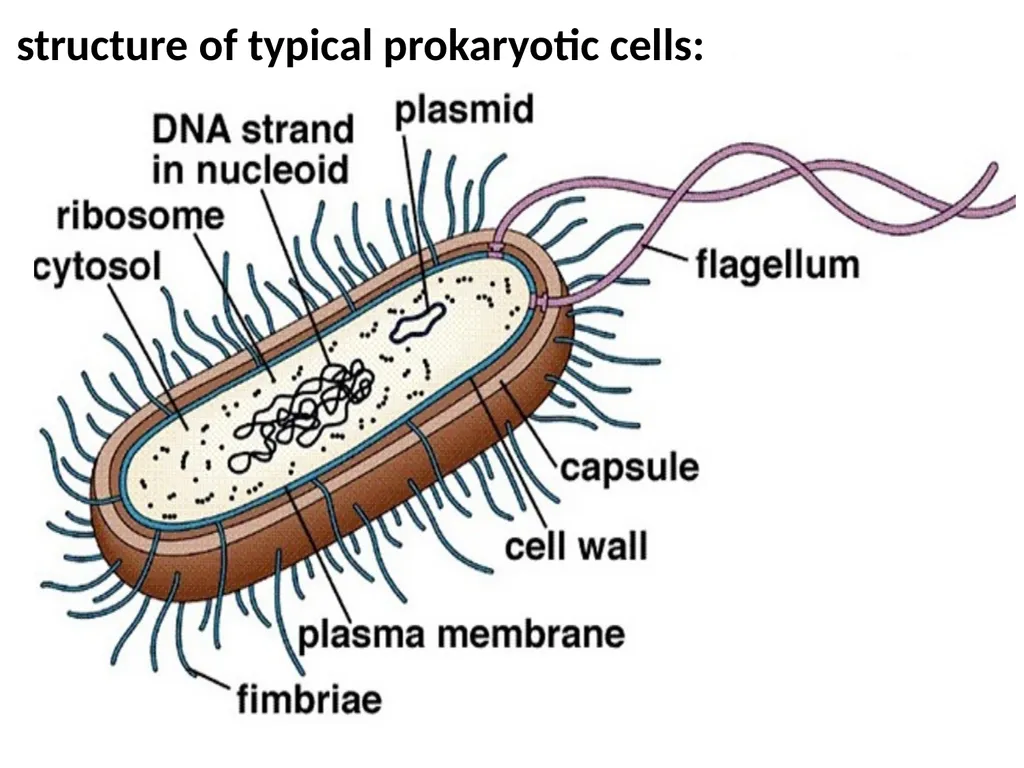
slide14. structure of typical prokaryotic cells:<br>
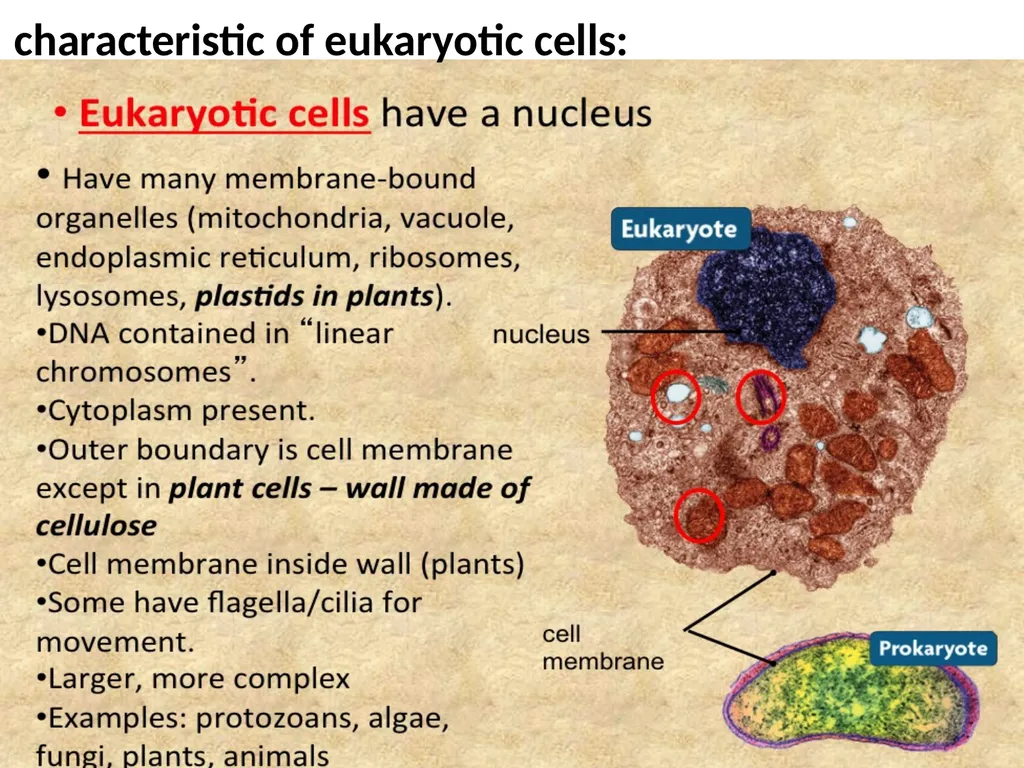
slide15. characteristic of eukaryotic cells:<br>
slide16. Major Cell Structures and Primary Functions
Cell Membrane
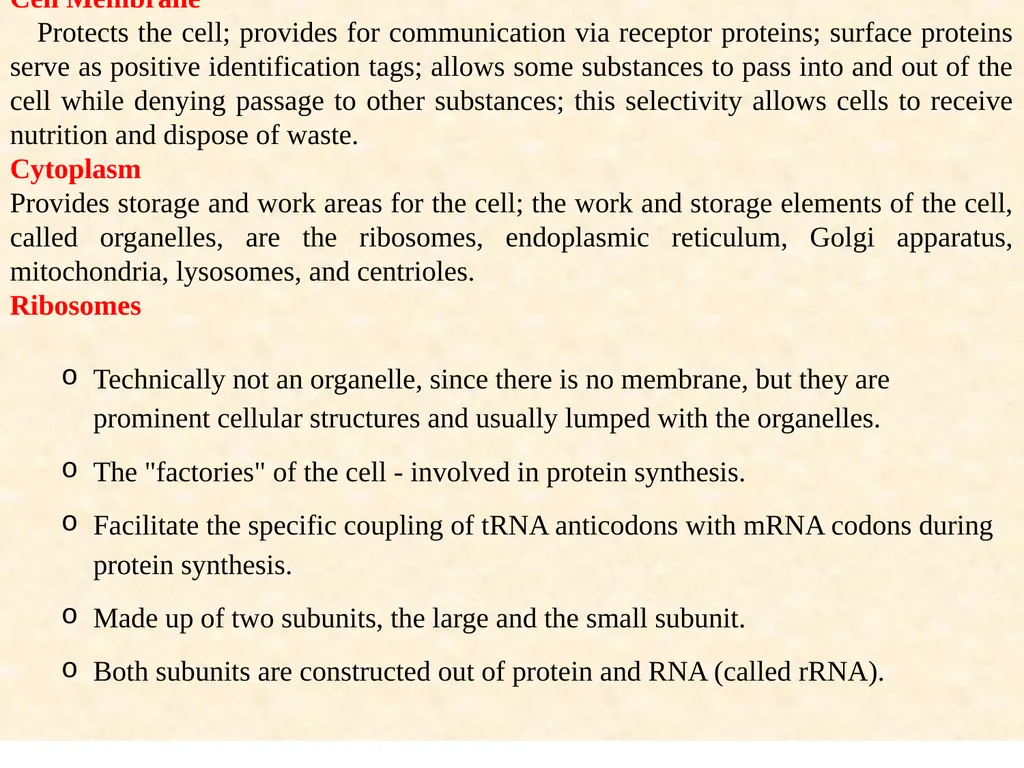
Protects the cell; provides for communication via receptor proteins; surface proteins serve as positive identification tags; allows some substances to pass into and out of the cell while denying passage to other substances; this selectivity allows cells to receive nutrition and dispose of waste.
Cytoplasm
Provides storage and work areas for the cell; the work and storage elements of the cell, called organelles, are the ribosomes, endoplasmic reticulum, Golgi apparatus, mitochondria, lysosomes, and centrioles.
Ribosomes
Technically not an organelle, since there is no membrane, but they are prominent cellular structures and usually lumped with the organelles.
The "factories" of the cell - involved in protein synthesis.
Facilitate the specific coupling of tRNA anticodons with mRNA codons during protein synthesis.
Made up of two subunits, the large and the small subunit.
Both subunits are constructed out of protein and RNA (called rRNA).<br>
slide17. The ribosomes of prokaryotes and eukaryotes vary slightly with regard to size and shape.
Make enzymes and other proteins; nicknamed "protein factories".
Endoplasmic reticulum (ER)
Carries proteins and other substances through the cytoplasm.<br>
slide18. Endoplasmic reticulum (ER)
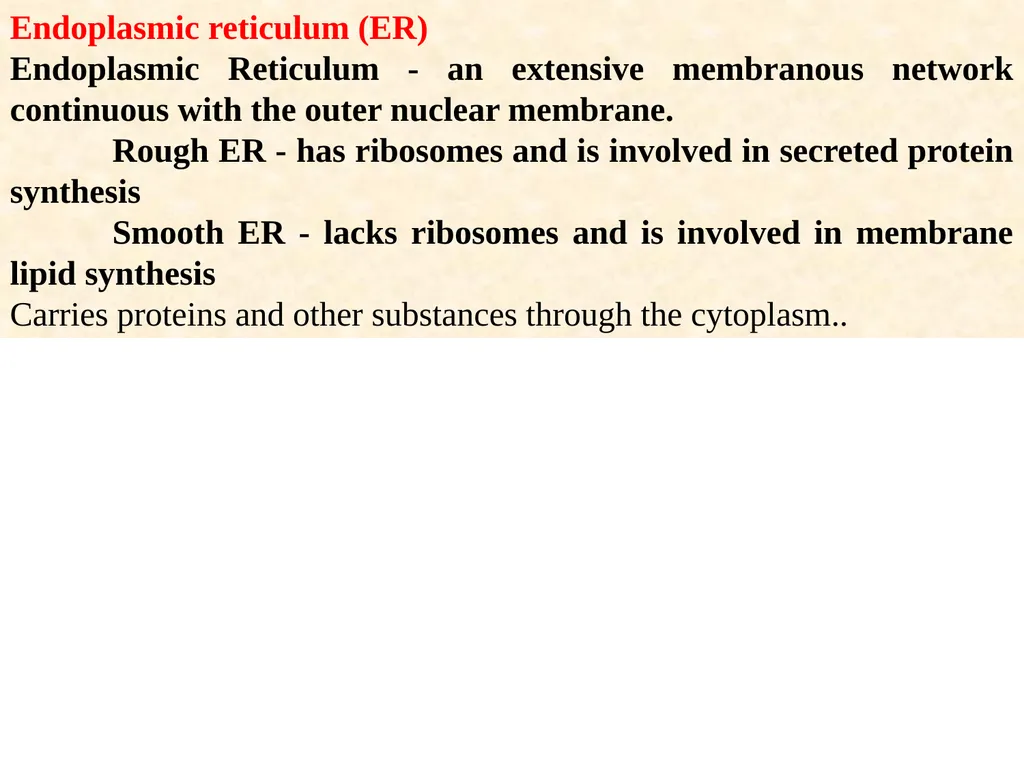
Endoplasmic Reticulum - an extensive membranous network continuous with the outer nuclear membrane.
Rough ER - has ribosomes and is involved in secreted protein synthesis
Smooth ER - lacks ribosomes and is involved in membrane lipid synthesis
Carries proteins and other substances through the cytoplasm..<br>
slide19. Mitochondria
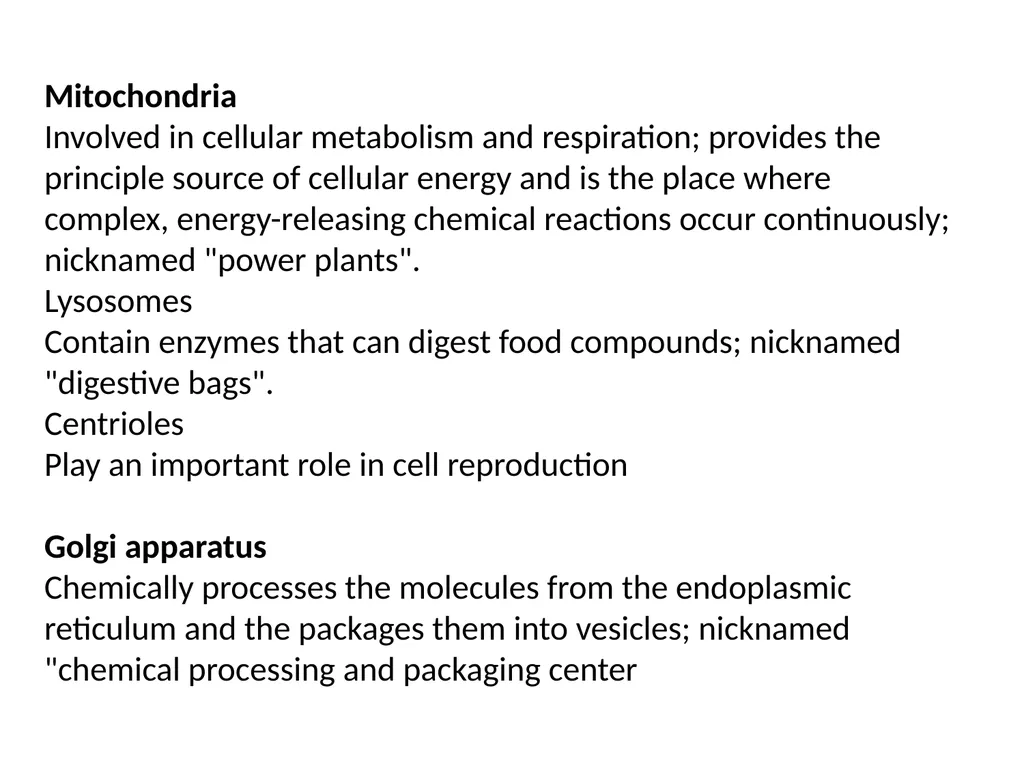
Involved in cellular metabolism and respiration; provides the principle source of cellular energy and is the place where complex, energy-releasing chemical reactions occur continuously; nicknamed "power plants".
Lysosomes
Contain enzymes that can digest food compounds; nicknamed "digestive bags".
Centrioles
Play an important role in cell reproduction
Golgi apparatus
Chemically processes the molecules from the endoplasmic reticulum and the packages them into vesicles; nicknamed "chemical processing and packaging center<br>
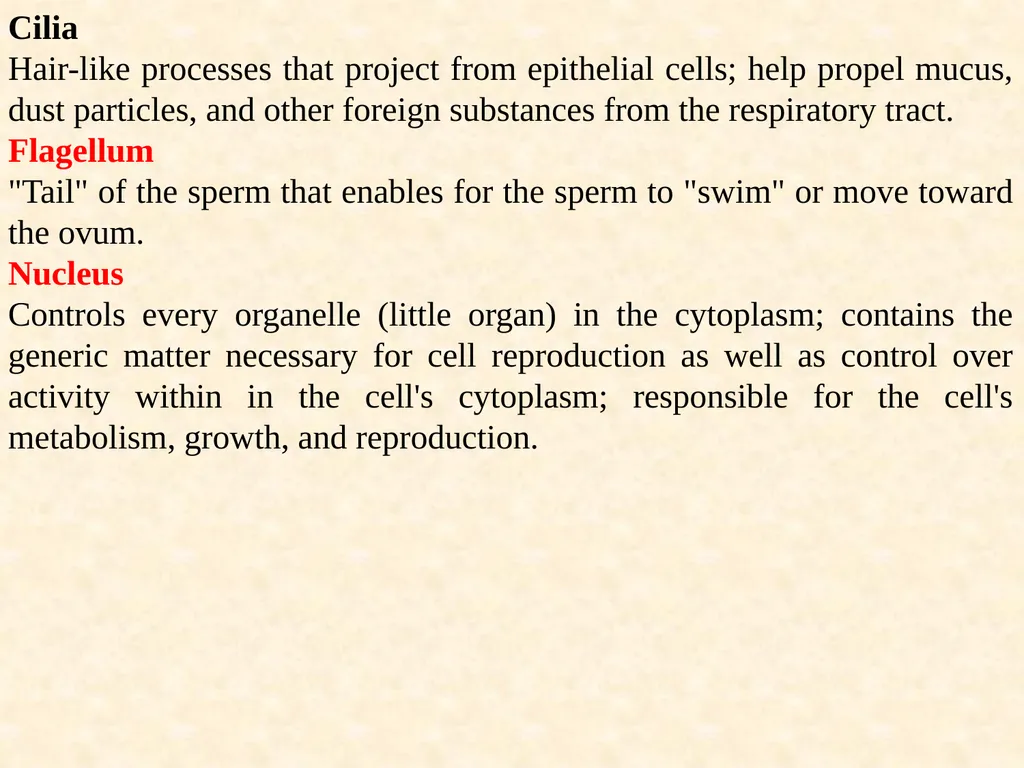
slide20. Cilia
Hair-like processes that project from epithelial cells; help propel mucus, dust particles, and other foreign substances from the respiratory tract.
Flagellum
"Tail" of the sperm that enables for the sperm to "swim" or move toward the ovum.
Nucleus
Controls every organelle (little organ) in the cytoplasm; contains the generic matter necessary for cell reproduction as well as control over activity within in the cell's cytoplasm; responsible for the cell's metabolism, growth, and reproduction.<br>
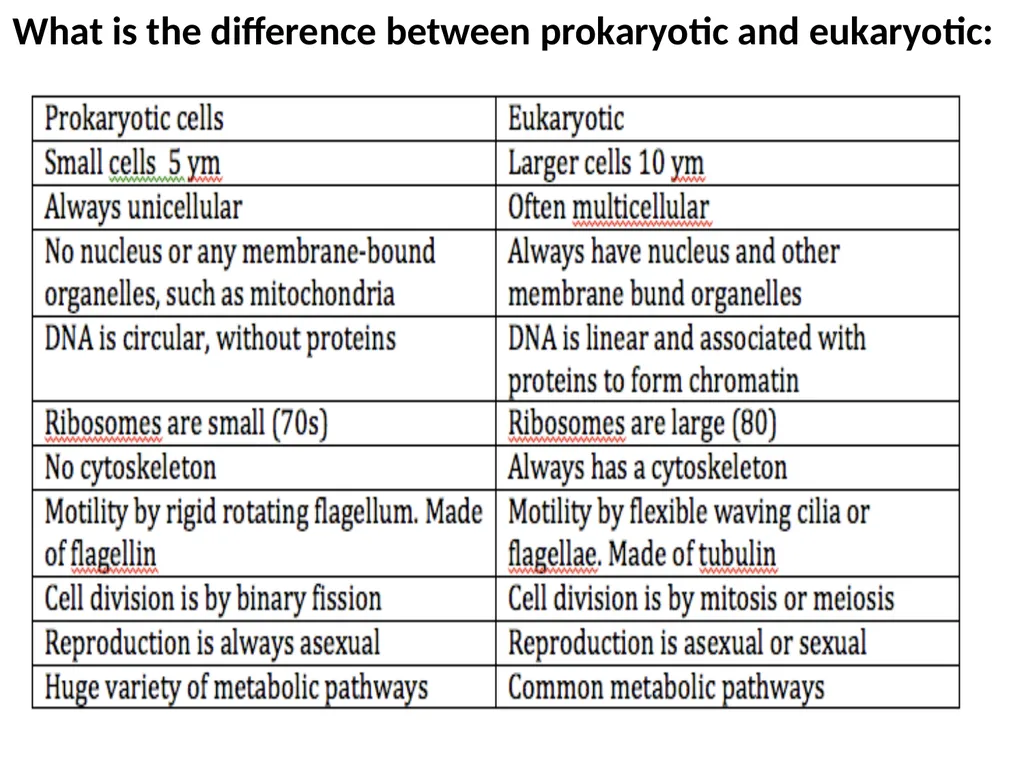
slide23. What is the difference between prokaryotic and eukaryotic:<br>
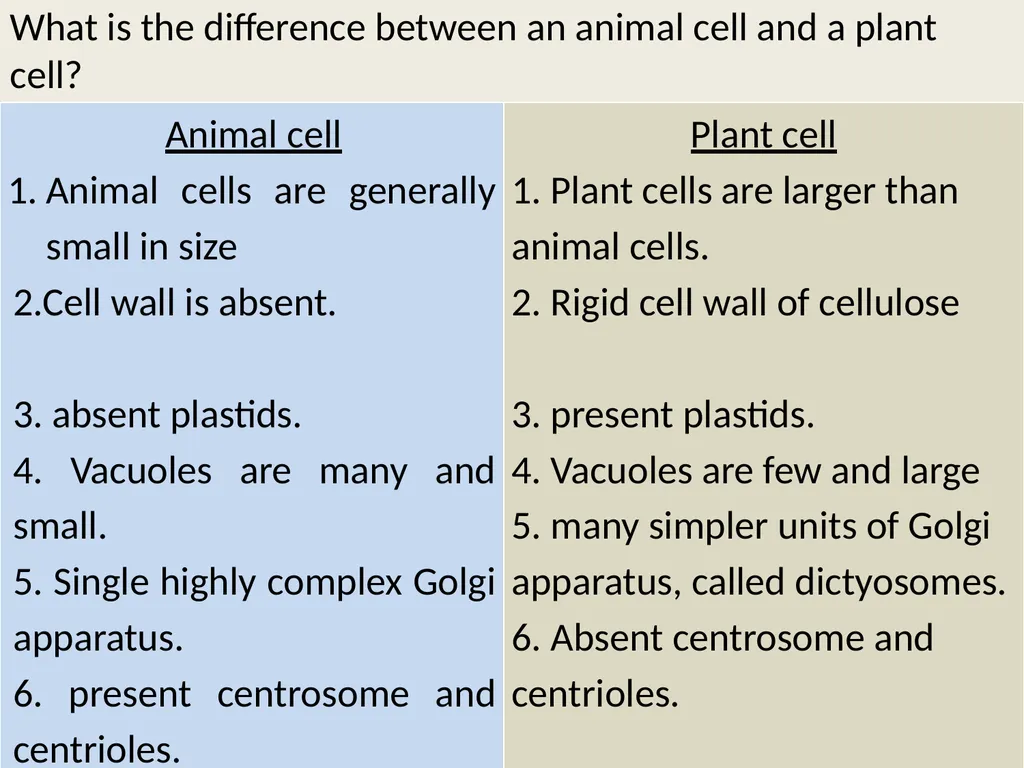
slide24. What is the difference between an animal cell and a plant cell?<br>
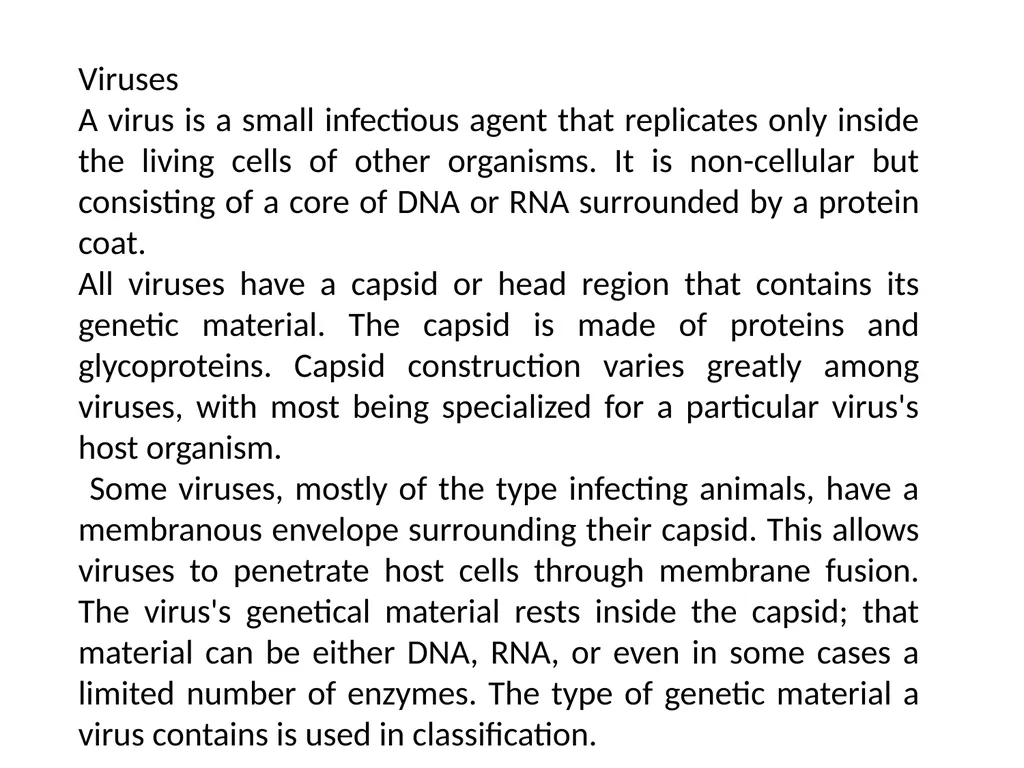
slide25. Viruses
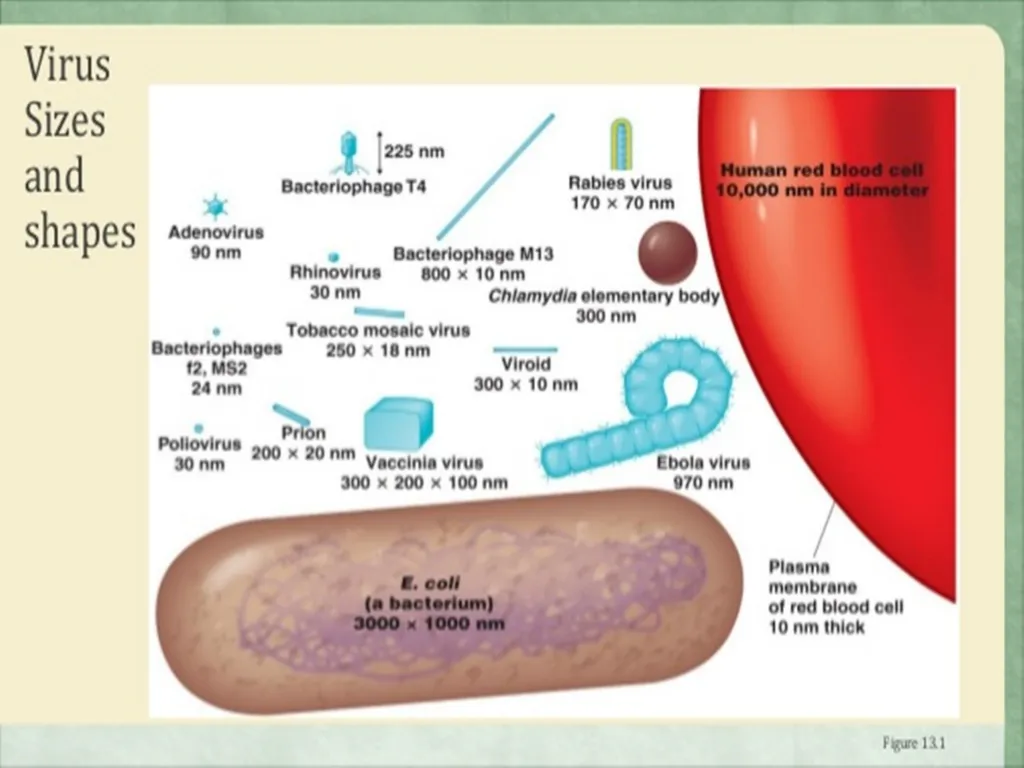
A virus is a small infectious agent that replicates only inside the living cells of other organisms. It is non-cellular but consisting of a core of DNA or RNA surrounded by a protein coat.
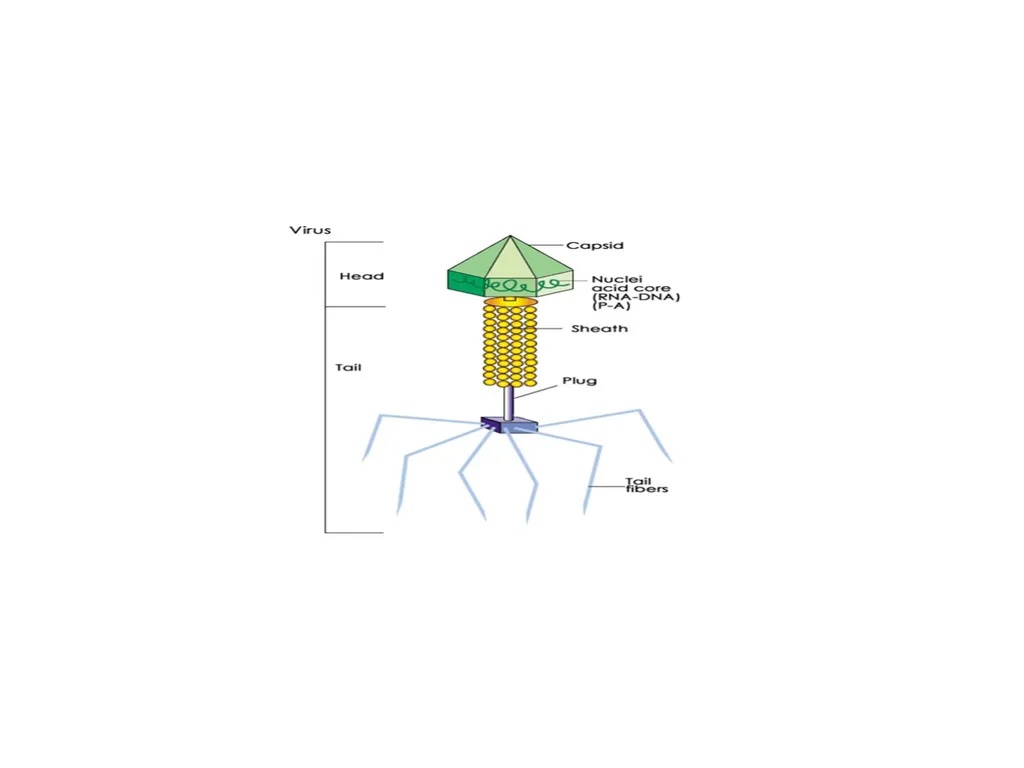
All viruses have a capsid or head region that contains its genetic material. The capsid is made of proteins and glycoproteins. Capsid construction varies greatly among viruses, with most being specialized for a particular virus's host organism.
Some viruses, mostly of the type infecting animals, have a membranous envelope surrounding their capsid. This allows viruses to penetrate host cells through membrane fusion. The virus's genetical material rests inside the capsid; that material can be either DNA, RNA, or even in some cases a limited number of enzymes. The type of genetic material a virus contains is used in classification.<br>
slide2. Introduction of cell biology
Cell biology
The branch of biology dealing with the study of structure, function, molecular organization, growth, reproduction and genetics of the cells, is called cytology or cell biology.
The discovery of the cells
• 1665 - Robert Hooke looks at cork
under a microscope. Calls the chambers
he see "cells"
• 1665 -1675 Anton van Leeuwenhoek, the invention of the microscope ,studies organisms living in pond water (like you did in lab). He calls them "Animalcules."
• 1838-1839 German scientists Schleiden and Schawann ,all living organisms are made of cells. This forms the basis of the Cell Theory of Biology.<br>
slide3. The Cell Theory of Biology
1- All living organisms (animals, plants and microbes) are made up of one or more cells and cell products.
2-All metabolic reactions in unicellular and multicellular organisms take place in cells.
3- Cells arise by division of preexisting cells.
4- The smallest clearly defined unit of life is the cell.
5-Cells can be cultured to produce more cells
in vitro = outside organism or cell
in vivo = inside organism or cell<br>
slide4. Properties of Cells
1- Cells are complex and highly organized
• They contain numerous internal structures
• Some are membrane bound (organelles) while others do not
2-Cells contain a genetic blueprint and machinery to use it
• Genes are instructions for cells to create specific proteins
• All cells use the same types of information
o The genetic code is universal
o The machinery used for synthesis is interchangeable
• however, for this to function properly, Information transfer must be error free
o Errors are called mutations<br>
slide6. 3-Cells arise from the division of other cells
•Daughter cells inherit the genes from the mother cells
•Daughter cells inherit cytoplasm and organelles from the mother cells
•Binary fission - cell division in bacteria
•Mitosis - the genetic complement of each daughter cell is identical to the other and to the mother cell. This is asexual reproduction
•Meiosis - the genetic complement of each daughter cell is reduced by half. This is sexual reproduction
The difference between sexual and sexual reproduction as in the following scheme:<br>
slide8. 4-Cells acquire and utilize energy
• Plant cells undergo photosynthesis
o convert light energy and CO2 to chemical energy (ATP and glucose)
• Most cells respire
o release energy found in organic compounds
o convert organic compounds to CO2 and H2O
o make ATP
5-Cells can perform a variety of chemical reactions
• Transform simple organic molecules into complex molecules (anabolism)
• Breakdown complex molecules to release energy (catabolism)
• Metabolism = all reactions by cells<br>
slide10. 6-Cells can engage in mechanical activities
• Cells can move
• Organelles can move
• Cells can respond to stimuli
o chemotaxis - movement towards chemicals
o phototaxis - movement towards light
o hormone responses
o touch responses
7-Cells can regulate activities
• Cells control DNA synthesis and cell division
• Gene regulation - cells make specific proteins only when needed
• Turn on and off metabolic pathways
8-Cells all contain the following structures:
• Plasma membrane - separates the cell from the external environment
• Cytoplasm - fluid-filled cell interior
• Nuclear material - genetic information stored as DNA<br>
slide11. Types of Cells
1-Prokaryotes
•Pro = before; karyon = nucleus
•relatively small 1 - 10 um
•lack membrane-bound organelles
•earliest cell type
2-Archaea
•Originally thought to be prokaryotes
•relatively small 5 - 10 um , generally similar to bacteria in size and shape
possess genes and several metabolic pathways that are more closely related to those of eukaryotes.
•lack membrane-bound organelles
•Usually live in extreme environments (thermophiles, halophiles, etc)
3-Eukaryotes
•Eu = true; karyon = nucleus
•contain membrane-bound organelles
•Evolved from prokaryotes by endosymbiosis association association of two or more prokaryotes
•Include Protozoans , Fungi, Animals, and Plants<br>
slide12. Features of Prokaryotic Cells
•Capsule - outer sticky protective layer
•Cell Wall - rigid structure which helps the bacterium maintain its shape
•Plasma membrane - separates the cell from the environment
•Mesosome - infolding of plasma membrane to aid in cell division
•Nucleoid - region where naked DNA is found
•Cytoplasm
- semi-fluid cell interior
-no membrane-bound organelles
-location for metabolic enzymes
-location of ribosomes for protein synthesis<br>
slide14. structure of typical prokaryotic cells:<br>
slide15. characteristic of eukaryotic cells:<br>
slide16. Major Cell Structures and Primary Functions
Cell Membrane
Protects the cell; provides for communication via receptor proteins; surface proteins serve as positive identification tags; allows some substances to pass into and out of the cell while denying passage to other substances; this selectivity allows cells to receive nutrition and dispose of waste.
Cytoplasm
Provides storage and work areas for the cell; the work and storage elements of the cell, called organelles, are the ribosomes, endoplasmic reticulum, Golgi apparatus, mitochondria, lysosomes, and centrioles.
Ribosomes
Technically not an organelle, since there is no membrane, but they are prominent cellular structures and usually lumped with the organelles.
The "factories" of the cell - involved in protein synthesis.
Facilitate the specific coupling of tRNA anticodons with mRNA codons during protein synthesis.
Made up of two subunits, the large and the small subunit.
Both subunits are constructed out of protein and RNA (called rRNA).<br>
slide17. The ribosomes of prokaryotes and eukaryotes vary slightly with regard to size and shape.
Make enzymes and other proteins; nicknamed "protein factories".
Endoplasmic reticulum (ER)
Carries proteins and other substances through the cytoplasm.<br>
slide18. Endoplasmic reticulum (ER)
Endoplasmic Reticulum - an extensive membranous network continuous with the outer nuclear membrane.
Rough ER - has ribosomes and is involved in secreted protein synthesis
Smooth ER - lacks ribosomes and is involved in membrane lipid synthesis
Carries proteins and other substances through the cytoplasm..<br>
slide19. Mitochondria
Involved in cellular metabolism and respiration; provides the principle source of cellular energy and is the place where complex, energy-releasing chemical reactions occur continuously; nicknamed "power plants".
Lysosomes
Contain enzymes that can digest food compounds; nicknamed "digestive bags".
Centrioles
Play an important role in cell reproduction
Golgi apparatus
Chemically processes the molecules from the endoplasmic reticulum and the packages them into vesicles; nicknamed "chemical processing and packaging center<br>
slide20. Cilia
Hair-like processes that project from epithelial cells; help propel mucus, dust particles, and other foreign substances from the respiratory tract.
Flagellum
"Tail" of the sperm that enables for the sperm to "swim" or move toward the ovum.
Nucleus
Controls every organelle (little organ) in the cytoplasm; contains the generic matter necessary for cell reproduction as well as control over activity within in the cell's cytoplasm; responsible for the cell's metabolism, growth, and reproduction.<br>
slide23. What is the difference between prokaryotic and eukaryotic:<br>
slide24. What is the difference between an animal cell and a plant cell?<br>
slide25. Viruses
A virus is a small infectious agent that replicates only inside the living cells of other organisms. It is non-cellular but consisting of a core of DNA or RNA surrounded by a protein coat.
All viruses have a capsid or head region that contains its genetic material. The capsid is made of proteins and glycoproteins. Capsid construction varies greatly among viruses, with most being specialized for a particular virus's host organism.
Some viruses, mostly of the type infecting animals, have a membranous envelope surrounding their capsid. This allows viruses to penetrate host cells through membrane fusion. The virus's genetical material rests inside the capsid; that material can be either DNA, RNA, or even in some cases a limited number of enzymes. The type of genetic material a virus contains is used in classification.<br>