
The Ectothermic Vertebrates: Chapter 17A and B

Description: The Ectothermic Vertebrates: Chapter 17A and B Page: 500 - 519 Phylum Chordata Classification Kingdom: Animalia Subkingdom: Vertebrates (has a backbone) Phylum: Chordata (has a spinal cord) Three subphylums are under Phylum Chordata:
Related Topics
Download Presentation
"The Ectothermic Vertebrates: Chapter 17A and B" is the property of its rightful owner. Permission is granted to download and print the materials on this website for personal, non-commercial use only, and to display it on your personal computer provided you do not modify the materials and that you retain all copyright notices contained in the materials. By downloading content from our website, you accept the terms of this agreement.
Presentation Transcript
slide1. The Ectothermic Vertebrates: Chapter 17A and B Page: 500 - 519<br>
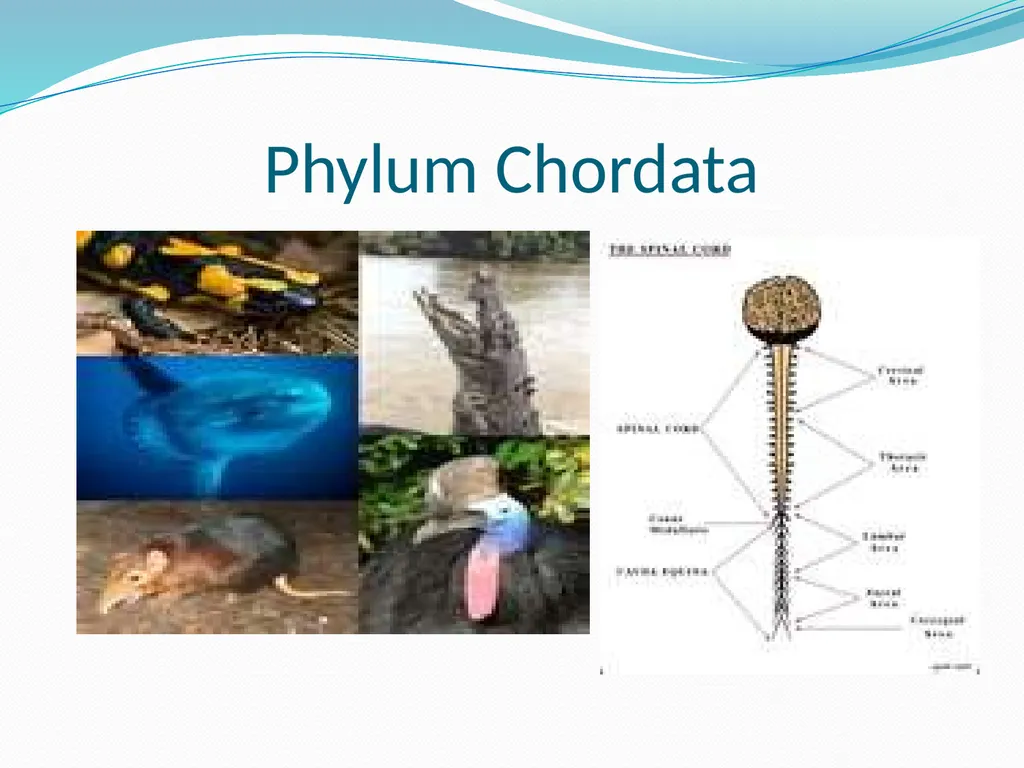
slide2. Phylum Chordata<br>
slide3. Classification Kingdom: Animalia
Subkingdom: Vertebrates (has a backbone)
Phylum: Chordata (has a spinal cord)
Three subphylums are under Phylum Chordata:
Subphylum Cephalochordata
Subphylum Urochordata
Subphylum Vertebra<br>
slide4. Phylum Chordata<br>
slide5. Characteristics of Phylum Chordata Includes fish, land animals, birds, turtles, snakes, cats, dogs, and even humans
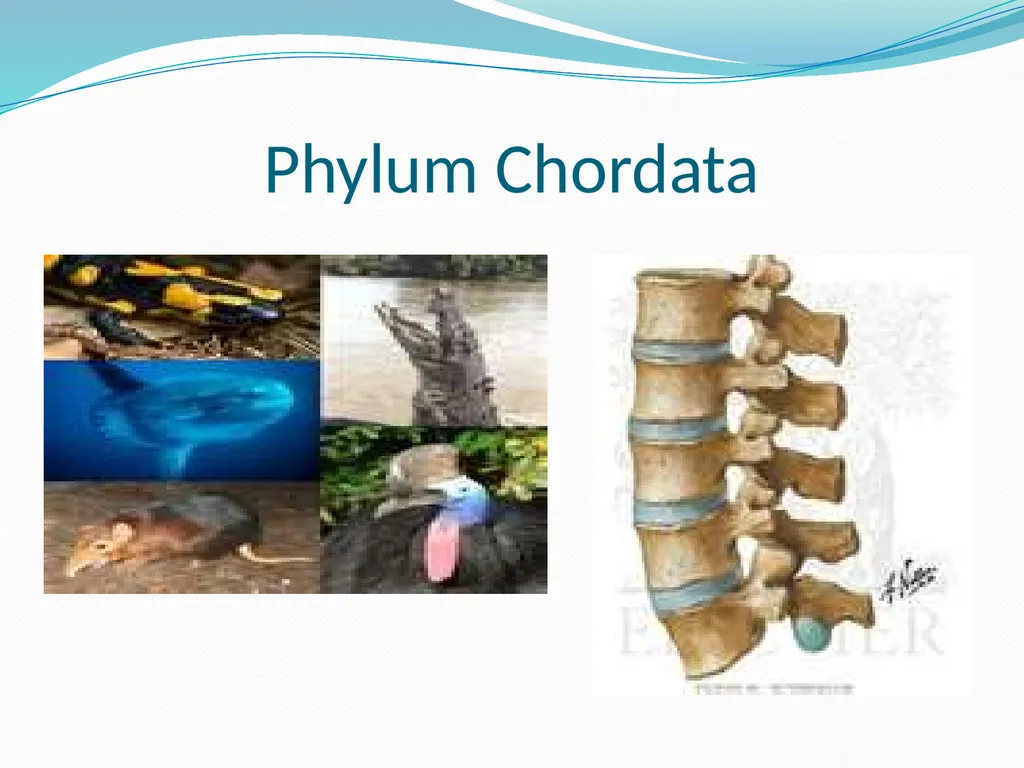
All Chordata have a Dorsal Notochord – this is also known as a backbone
All chordata start with a notochord – a soft, flexible backbone
In many chordata, this notochord is replaced with hard bones called vertebrae
All the vertebrae together are called the vertebral column<br>
slide6. Phylum Chordata<br>
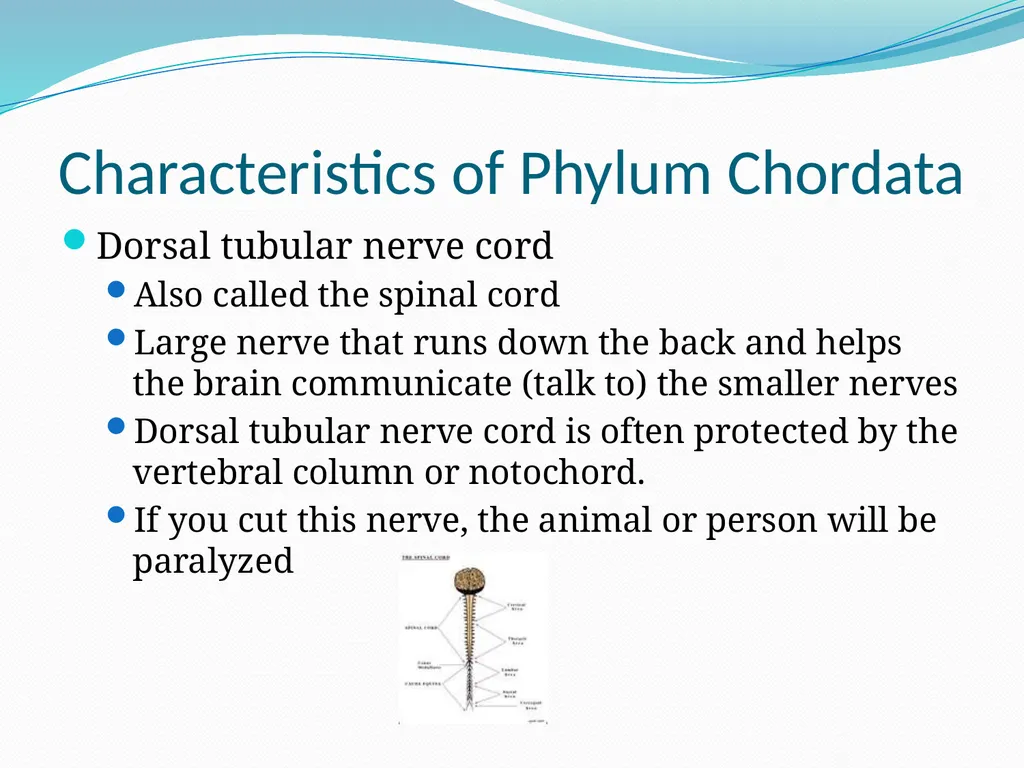
slide7. Characteristics of Phylum Chordata Dorsal tubular nerve cord
Also called the spinal cord
Large nerve that runs down the back and helps the brain communicate (talk to) the smaller nerves
Dorsal tubular nerve cord is often protected by the vertebral column or notochord.
If you cut this nerve, the animal or person will be paralyzed<br>
slide8. Phylum Chordata<br>
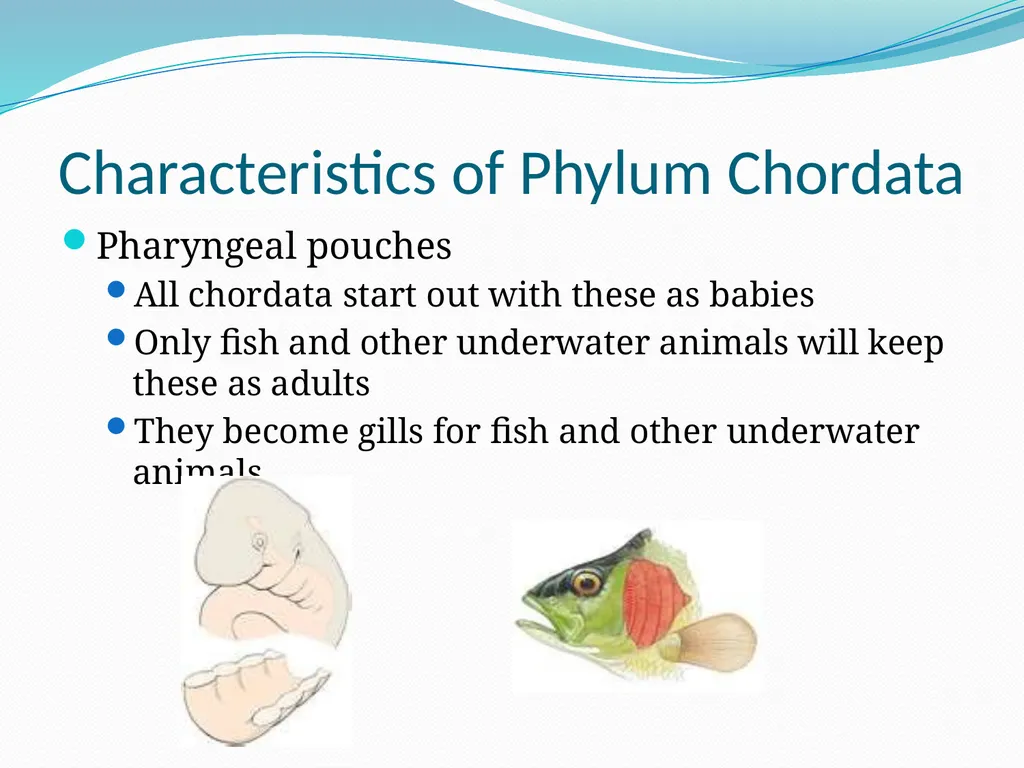
slide9. Characteristics of Phylum Chordata Pharyngeal pouches
All chordata start out with these as babies
Only fish and other underwater animals will keep these as adults
They become gills for fish and other underwater animals<br>
slide10. Subphylums Under Chordata<br>
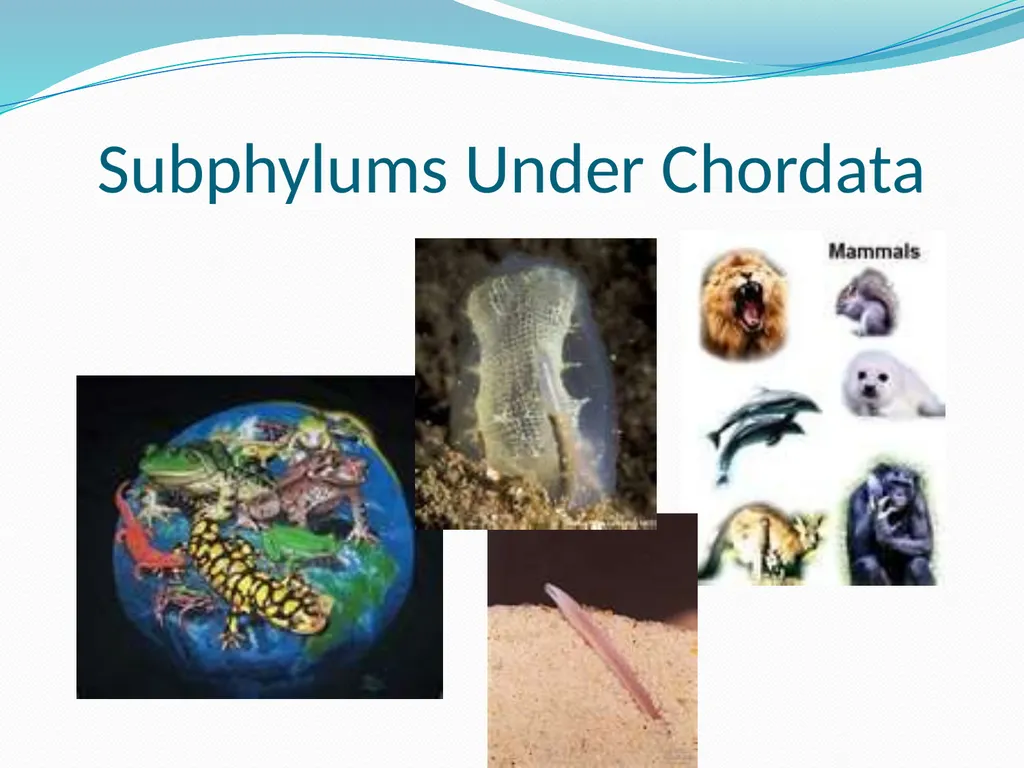
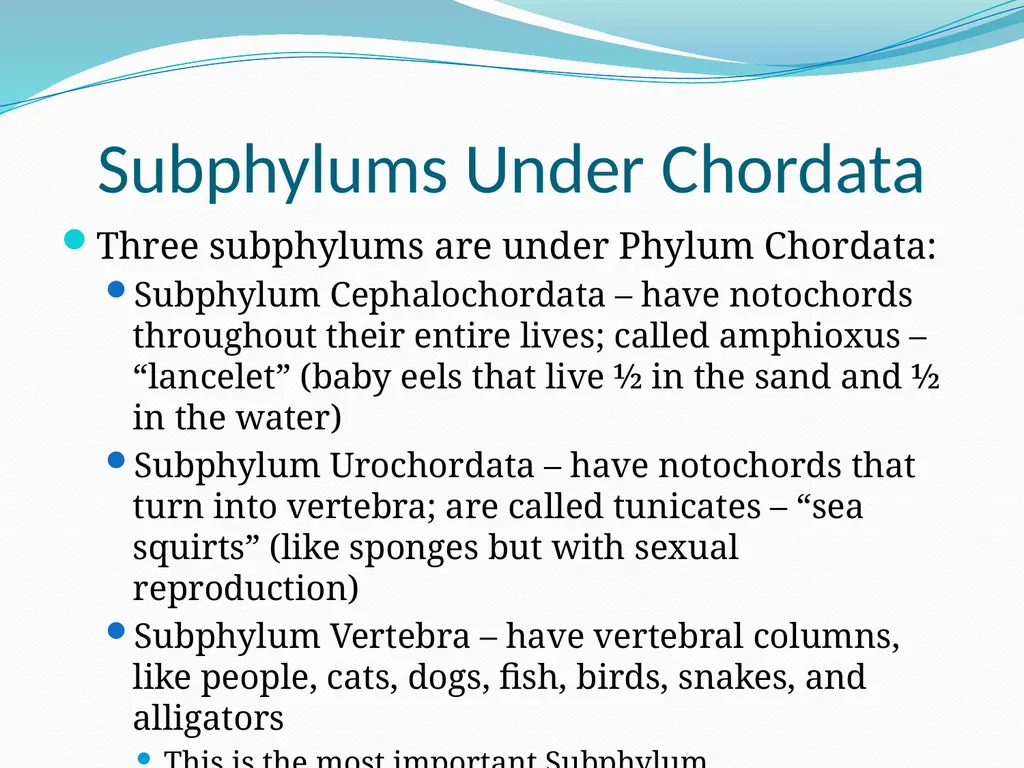
slide11. Subphylums Under Chordata Three subphylums are under Phylum Chordata:
Subphylum Cephalochordata – have notochords throughout their entire lives; called amphioxus – “lancelet” (baby eels that live ½ in the sand and ½ in the water)
Subphylum Urochordata – have notochords that turn into vertebra; are called tunicates – “sea squirts” (like sponges but with sexual reproduction)
Subphylum Vertebra – have vertebral columns, like people, cats, dogs, fish, birds, snakes, and alligators
This is the most important Subphylum<br>
slide12. Classification<br>
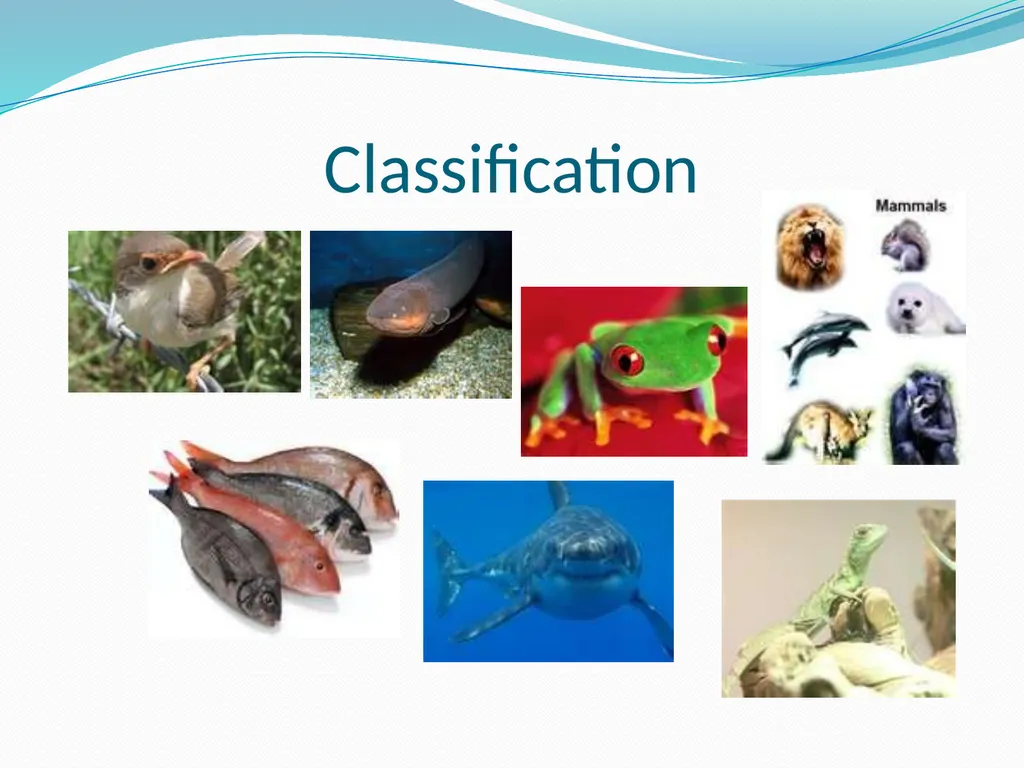
slide13. Classification Class: 7 classes under vertebrates
Agnatha (eels) – jawless fish, no bones or paired fins, ectothermic
Chondrichthyes (sharks and rays) – cartilaginous (flexible) skeleton, paired fins, ectothermic
Osteichthyes (normal fish – perch, salmon, bass) – bony skeleton, ectothermic
Amphibia (frogs) – lay eggs in water, aquatic larval stage, ectothermic
Reptilia (snakes, turtles, alligators) – dry scaly skin, amniotic egg, internal fertilization, ectothermic
Aves (birds) – hollow bones, flying, feathers, endothermic
Mammalia (dogs, cats, horses, pigs –* humans also go here*) – have hair, nurse their young with milk, endothermic<br>
slide14. Ectothermic Vertebrates<br>
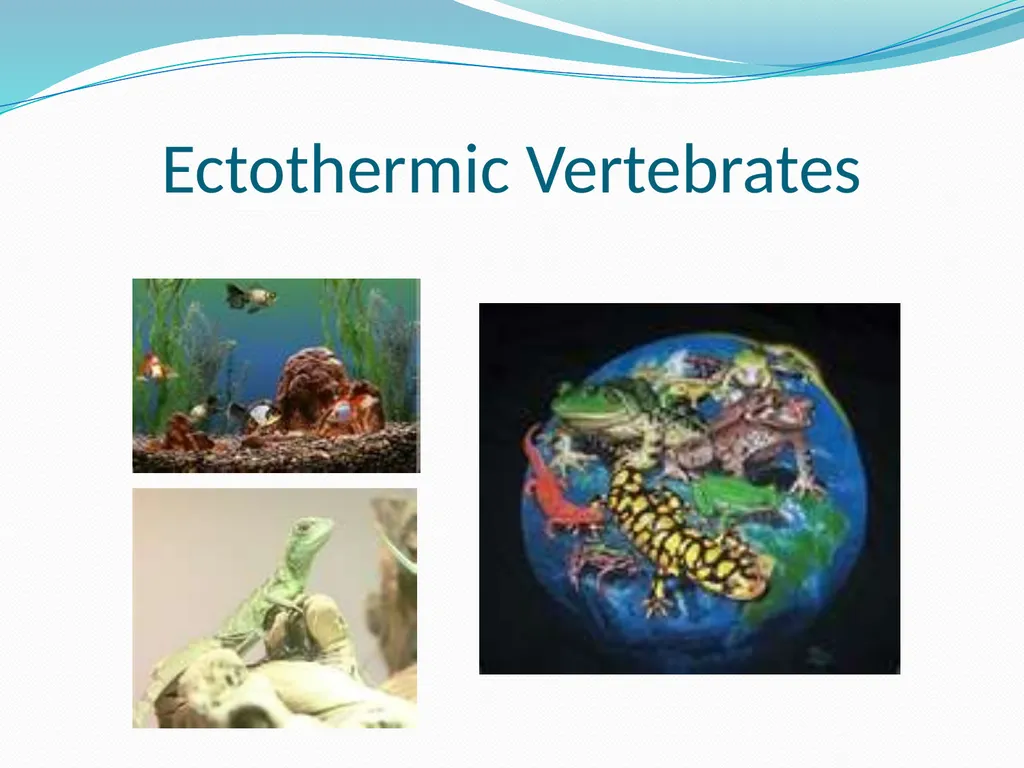
slide15. Ectothermic Vertebrates Vertebrates are put into 2 groups: Ectothermic and Endothermic
Ectothermic
Cold-blooded animals – their body temperature depends on their environment – they cannot control their own body temperature
Five Classes are ectothermic
Agnatha (eels)
Chondrichthyes (sharks and rays)
Osteichthyes (normal fish – perch, salmon, bass)
Amphibia (frogs)
Reptilia (snakes, turtles, alligators)
These animals are slow when cold and active when warm
They have to go to warmer areas or sit in the sun when they get too cold<br>
slide16. Endothermic Vertebrates<br>
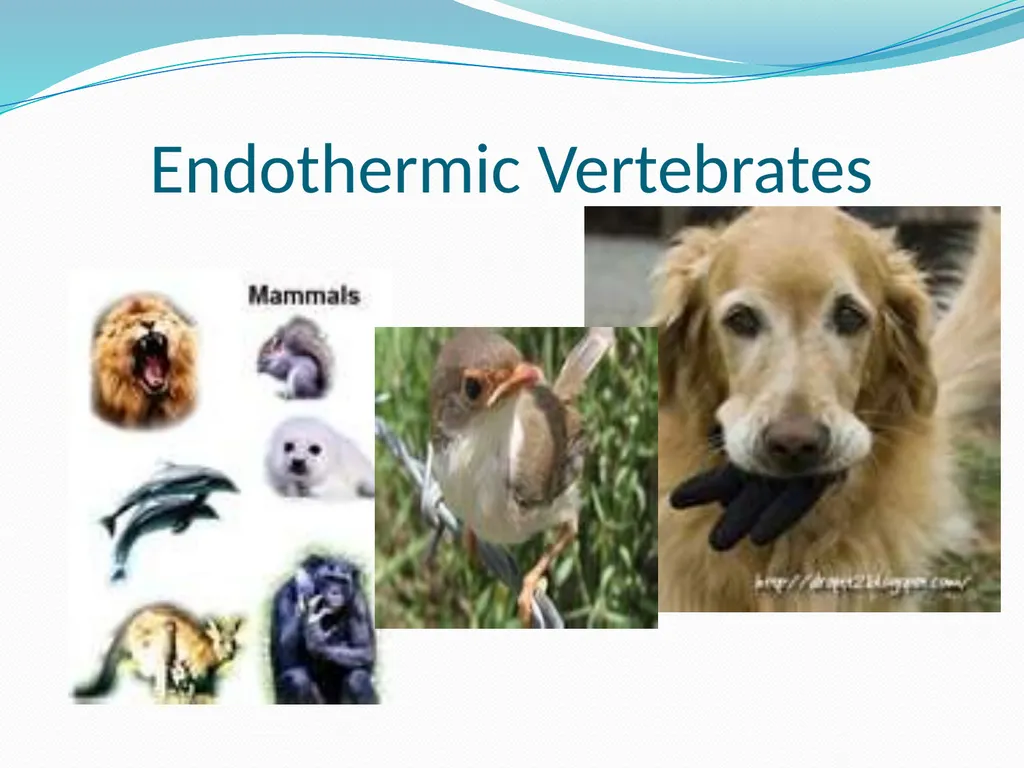
slide17. Endothermic Vertebrates Endothermic animals are warm-blooded – they control their own body temperature
Two classes are Endothermic
Aves (birds)
Mammalia (dogs, cats, horses, pigs –* humans also go here*)
They do not need their environments to stay warm or cold
They can be active in cold environments (places)
Endothermic animals need more energy (and more food) than ectothermic animals, because they use their energy faster<br>
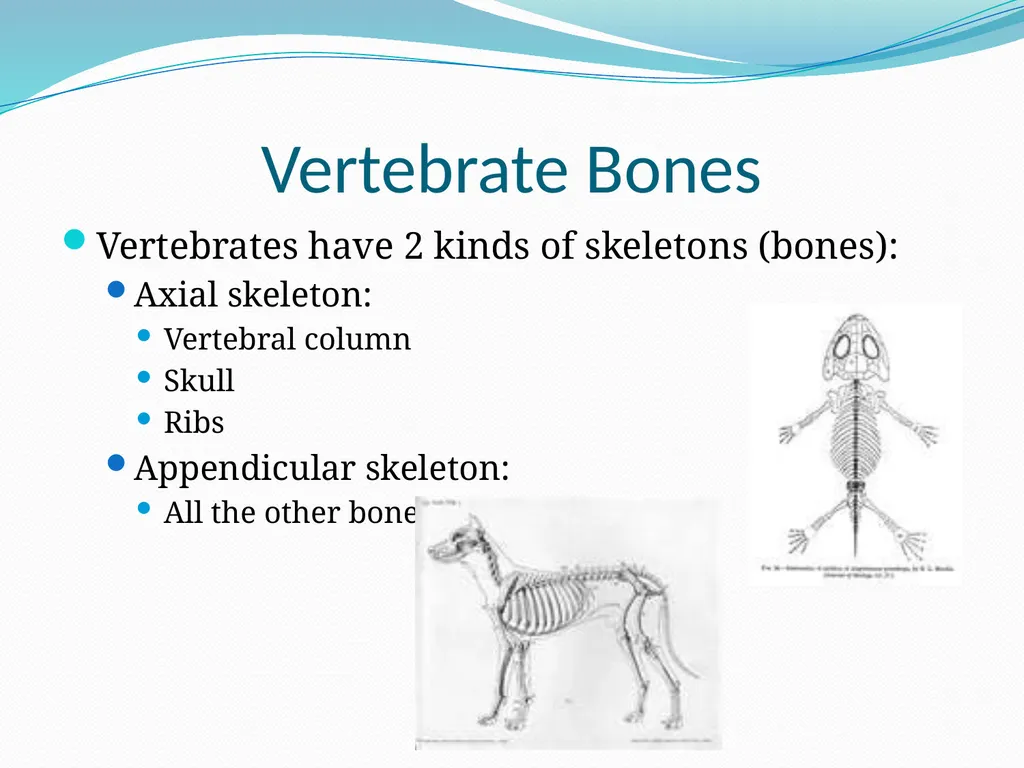
slide18. Vertebrate Bones Vertebrates have 2 kinds of skeletons (bones):
Axial skeleton:
Vertebral column
Skull
Ribs
Appendicular skeleton:
All the other bones<br>
slide19. Vertebrate circulation and excretion Closed circulatory system – they have veins and arteries
All vertebrates have red blood because of hemoglobin (part that carries oxygen in the blood)
All vertebrates do excretion – they poop and pee<br>
slide20. Vertebrate Nutrition Vertebrates are Kingdom Animalia – heterotrophs – they have to eat
There are three kinds of heterotrophs:
Carnivorous – eat other animals – “meat eaters” – sharks, lions, cats, eagles, frogs, dogs
Herbivorous – eat only plants – cows, horses, some turtles, some fish, some birds
Omnivorous – eat plants and animals – pigs, bears, rats, people<br>
slide21. Vertebrate Reproduction All vertebrates do sexual reproduction
There are 2 kinds of sexual reproduction:
External fertilization – the egg and the sperm meet OUTSIDE the body
Happens in the water
No shells on the eggs
Internal fertilization – the sperm goes into the female’s body to meet the egg
Happens in the water or on the land
Shell around the egg or live birth
3 kinds of development of babies (offspring)<br>
slide22. 3 kinds of development Oviparous – eggs are laid which hatch outside the body
Birds and many reptiles (snakes, crocodiles)
Viviparous – live offspring (babies) are made in the female’s uterus and are connected to the mother
Mammals – cats, dogs, pigs, horses, people
Ovoviviparous – eggs with a shell stay inside the mother but are not connected to her
Garter snakes, some sharks, other reptiles<br>
slide23. Vertebrate Behavior The way that vertebrate animals act is called behavior
There are 3 kinds of behavior
Inborn behavior – the animal is born doing these things
Reflex behavior – automatic and involuntary (can’t control it); also called reflexes; pulling away from pain, closing eyes
Instinct behavior – also called instincts; the animal knows how to do certain things to help it survive (live); eating, drinking, sexual reproduction<br>
slide24. Vertebrate Behavior Conditioned behavior – the animal learns these behaviors through its life experiences
Intelligent behavior
some vertebrates are able to think well
they are smart, can communicate, and can change their environment based on what they want
birds, mammals (cats, dogs, chimpanzees, monkeys), people<br>
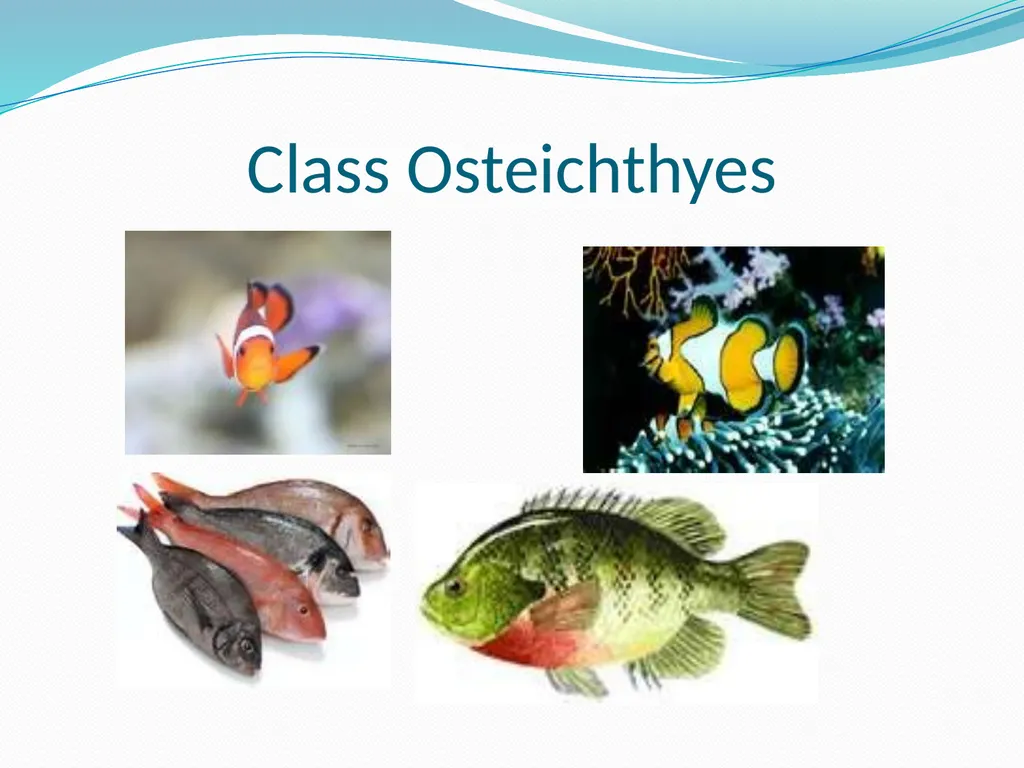
slide25. Class Osteichthyes<br>
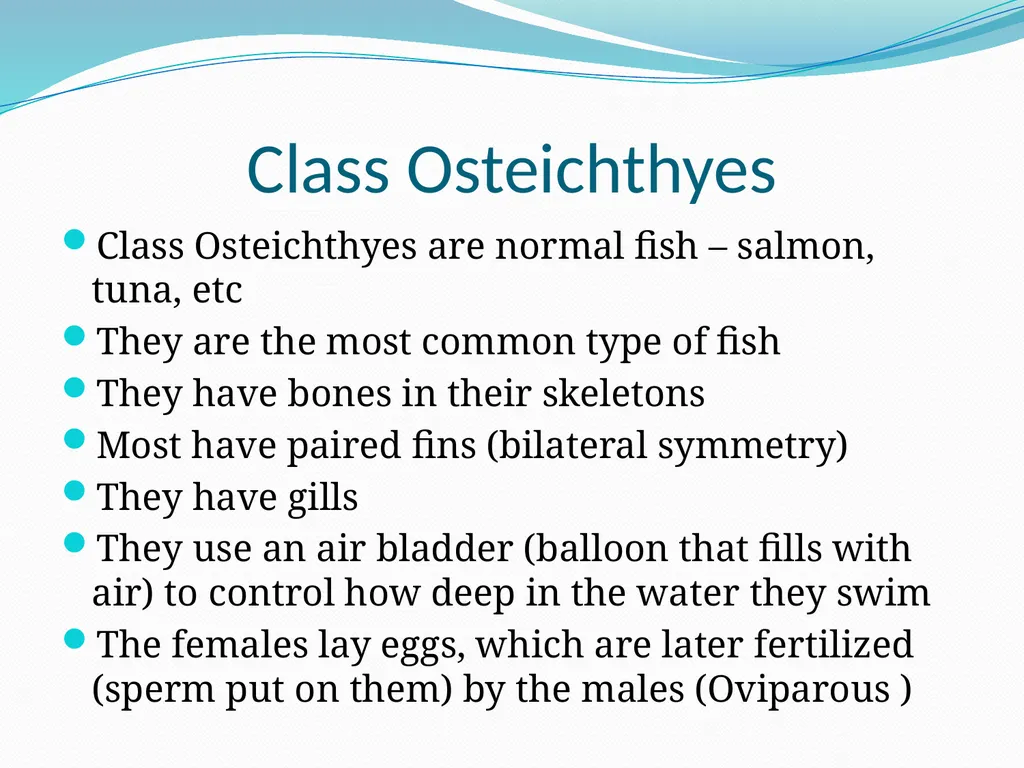
slide26. Class Osteichthyes Class Osteichthyes are normal fish – salmon, tuna, etc
They are the most common type of fish
They have bones in their skeletons
Most have paired fins (bilateral symmetry)
They have gills
They use an air bladder (balloon that fills with air) to control how deep in the water they swim
The females lay eggs, which are later fertilized (sperm put on them) by the males (Oviparous )<br>
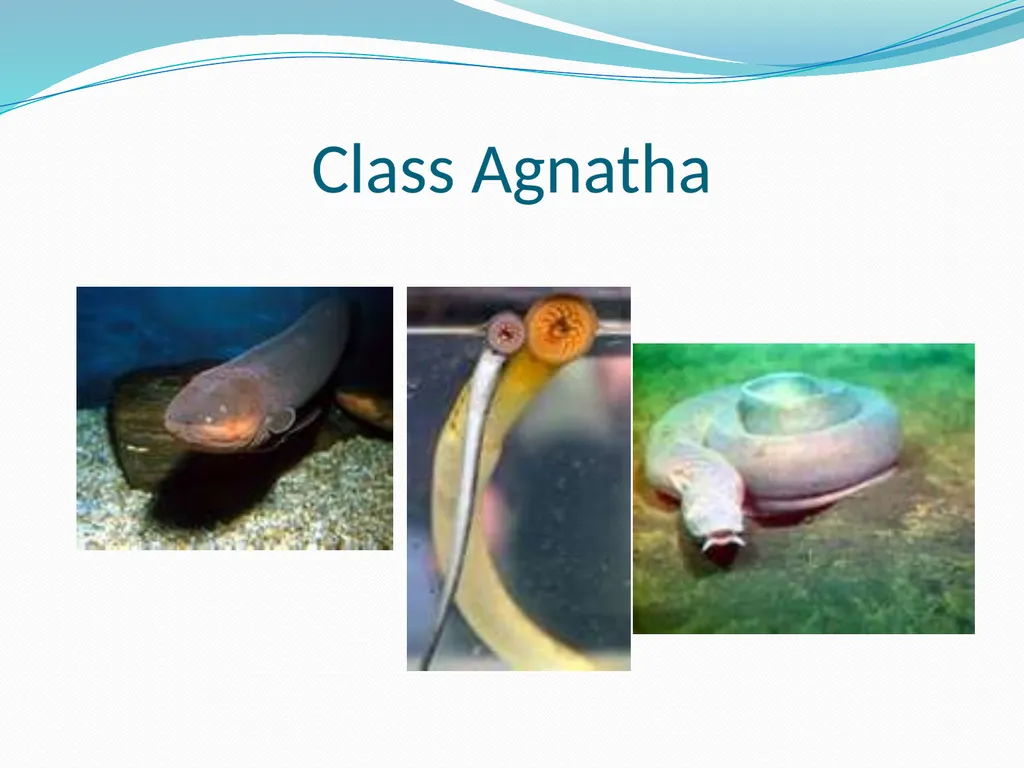
slide27. Class Agnatha<br>
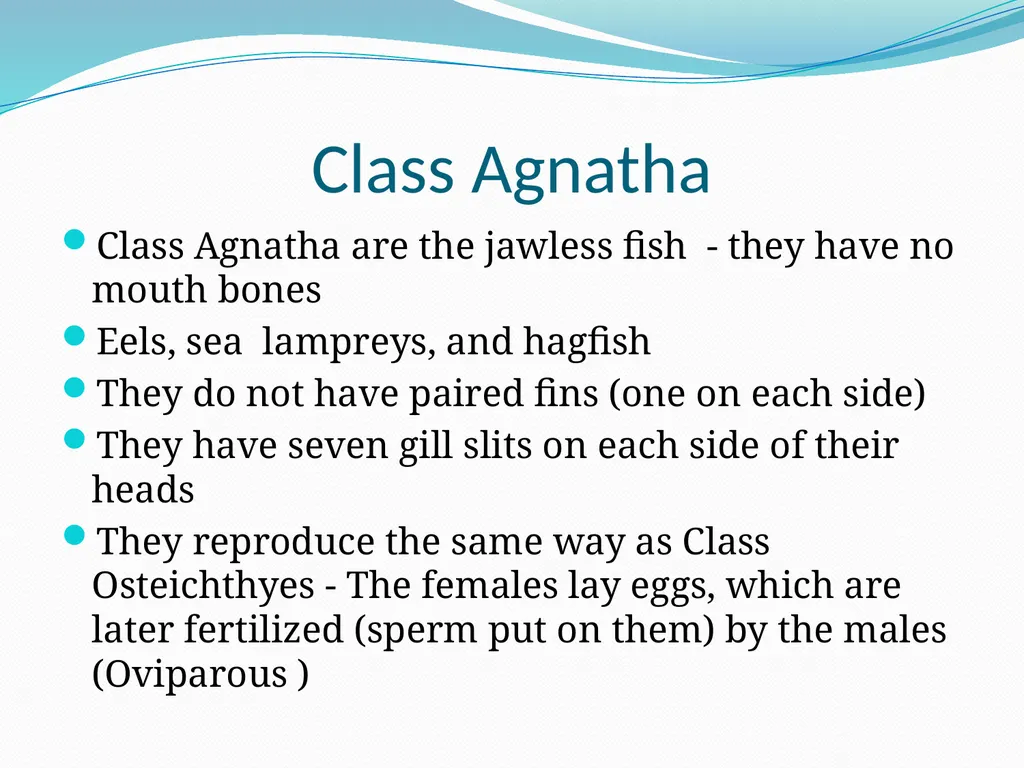
slide28. Class Agnatha Class Agnatha are the jawless fish - they have no mouth bones
Eels, sea lampreys, and hagfish
They do not have paired fins (one on each side)
They have seven gill slits on each side of their heads
They reproduce the same way as Class Osteichthyes - The females lay eggs, which are later fertilized (sperm put on them) by the males (Oviparous )<br>
slide29. Class Chondrichthyes<br>
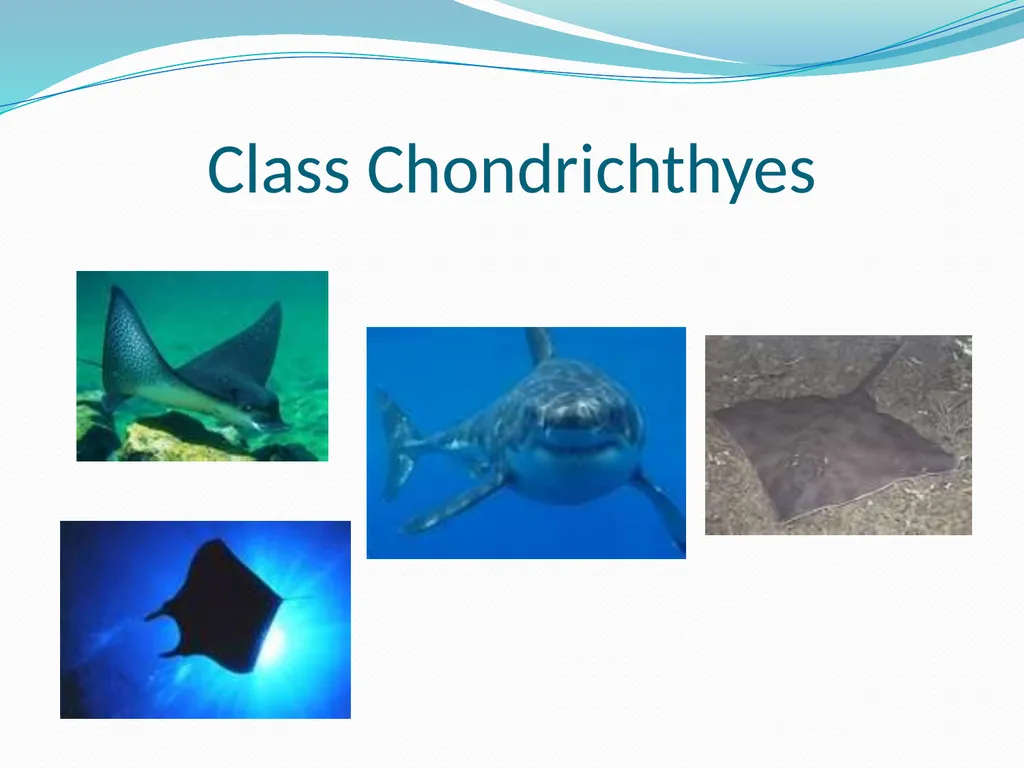
slide30. Class Chondrichthyes These fish have strong, flexible cartilage instead of bones
These are sharks, rays, and skates
They usually have paired fins and bilateral symmetry
Male sharks put their sperm inside the female sharks using their fins. Some sharks will lay their eggs (ovoviviparous), others will give birth to their baby sharks (viviparous) – this is not normal outside of Class Mammalia<br>
slide2. Phylum Chordata<br>
slide3. Classification Kingdom: Animalia
Subkingdom: Vertebrates (has a backbone)
Phylum: Chordata (has a spinal cord)
Three subphylums are under Phylum Chordata:
Subphylum Cephalochordata
Subphylum Urochordata
Subphylum Vertebra<br>
slide4. Phylum Chordata<br>
slide5. Characteristics of Phylum Chordata Includes fish, land animals, birds, turtles, snakes, cats, dogs, and even humans
All Chordata have a Dorsal Notochord – this is also known as a backbone
All chordata start with a notochord – a soft, flexible backbone
In many chordata, this notochord is replaced with hard bones called vertebrae
All the vertebrae together are called the vertebral column<br>
slide6. Phylum Chordata<br>
slide7. Characteristics of Phylum Chordata Dorsal tubular nerve cord
Also called the spinal cord
Large nerve that runs down the back and helps the brain communicate (talk to) the smaller nerves
Dorsal tubular nerve cord is often protected by the vertebral column or notochord.
If you cut this nerve, the animal or person will be paralyzed<br>
slide8. Phylum Chordata<br>
slide9. Characteristics of Phylum Chordata Pharyngeal pouches
All chordata start out with these as babies
Only fish and other underwater animals will keep these as adults
They become gills for fish and other underwater animals<br>
slide10. Subphylums Under Chordata<br>
slide11. Subphylums Under Chordata Three subphylums are under Phylum Chordata:
Subphylum Cephalochordata – have notochords throughout their entire lives; called amphioxus – “lancelet” (baby eels that live ½ in the sand and ½ in the water)
Subphylum Urochordata – have notochords that turn into vertebra; are called tunicates – “sea squirts” (like sponges but with sexual reproduction)
Subphylum Vertebra – have vertebral columns, like people, cats, dogs, fish, birds, snakes, and alligators
This is the most important Subphylum<br>
slide12. Classification<br>
slide13. Classification Class: 7 classes under vertebrates
Agnatha (eels) – jawless fish, no bones or paired fins, ectothermic
Chondrichthyes (sharks and rays) – cartilaginous (flexible) skeleton, paired fins, ectothermic
Osteichthyes (normal fish – perch, salmon, bass) – bony skeleton, ectothermic
Amphibia (frogs) – lay eggs in water, aquatic larval stage, ectothermic
Reptilia (snakes, turtles, alligators) – dry scaly skin, amniotic egg, internal fertilization, ectothermic
Aves (birds) – hollow bones, flying, feathers, endothermic
Mammalia (dogs, cats, horses, pigs –* humans also go here*) – have hair, nurse their young with milk, endothermic<br>
slide14. Ectothermic Vertebrates<br>
slide15. Ectothermic Vertebrates Vertebrates are put into 2 groups: Ectothermic and Endothermic
Ectothermic
Cold-blooded animals – their body temperature depends on their environment – they cannot control their own body temperature
Five Classes are ectothermic
Agnatha (eels)
Chondrichthyes (sharks and rays)
Osteichthyes (normal fish – perch, salmon, bass)
Amphibia (frogs)
Reptilia (snakes, turtles, alligators)
These animals are slow when cold and active when warm
They have to go to warmer areas or sit in the sun when they get too cold<br>
slide16. Endothermic Vertebrates<br>
slide17. Endothermic Vertebrates Endothermic animals are warm-blooded – they control their own body temperature
Two classes are Endothermic
Aves (birds)
Mammalia (dogs, cats, horses, pigs –* humans also go here*)
They do not need their environments to stay warm or cold
They can be active in cold environments (places)
Endothermic animals need more energy (and more food) than ectothermic animals, because they use their energy faster<br>
slide18. Vertebrate Bones Vertebrates have 2 kinds of skeletons (bones):
Axial skeleton:
Vertebral column
Skull
Ribs
Appendicular skeleton:
All the other bones<br>
slide19. Vertebrate circulation and excretion Closed circulatory system – they have veins and arteries
All vertebrates have red blood because of hemoglobin (part that carries oxygen in the blood)
All vertebrates do excretion – they poop and pee<br>
slide20. Vertebrate Nutrition Vertebrates are Kingdom Animalia – heterotrophs – they have to eat
There are three kinds of heterotrophs:
Carnivorous – eat other animals – “meat eaters” – sharks, lions, cats, eagles, frogs, dogs
Herbivorous – eat only plants – cows, horses, some turtles, some fish, some birds
Omnivorous – eat plants and animals – pigs, bears, rats, people<br>
slide21. Vertebrate Reproduction All vertebrates do sexual reproduction
There are 2 kinds of sexual reproduction:
External fertilization – the egg and the sperm meet OUTSIDE the body
Happens in the water
No shells on the eggs
Internal fertilization – the sperm goes into the female’s body to meet the egg
Happens in the water or on the land
Shell around the egg or live birth
3 kinds of development of babies (offspring)<br>
slide22. 3 kinds of development Oviparous – eggs are laid which hatch outside the body
Birds and many reptiles (snakes, crocodiles)
Viviparous – live offspring (babies) are made in the female’s uterus and are connected to the mother
Mammals – cats, dogs, pigs, horses, people
Ovoviviparous – eggs with a shell stay inside the mother but are not connected to her
Garter snakes, some sharks, other reptiles<br>
slide23. Vertebrate Behavior The way that vertebrate animals act is called behavior
There are 3 kinds of behavior
Inborn behavior – the animal is born doing these things
Reflex behavior – automatic and involuntary (can’t control it); also called reflexes; pulling away from pain, closing eyes
Instinct behavior – also called instincts; the animal knows how to do certain things to help it survive (live); eating, drinking, sexual reproduction<br>
slide24. Vertebrate Behavior Conditioned behavior – the animal learns these behaviors through its life experiences
Intelligent behavior
some vertebrates are able to think well
they are smart, can communicate, and can change their environment based on what they want
birds, mammals (cats, dogs, chimpanzees, monkeys), people<br>
slide25. Class Osteichthyes<br>
slide26. Class Osteichthyes Class Osteichthyes are normal fish – salmon, tuna, etc
They are the most common type of fish
They have bones in their skeletons
Most have paired fins (bilateral symmetry)
They have gills
They use an air bladder (balloon that fills with air) to control how deep in the water they swim
The females lay eggs, which are later fertilized (sperm put on them) by the males (Oviparous )<br>
slide27. Class Agnatha<br>
slide28. Class Agnatha Class Agnatha are the jawless fish - they have no mouth bones
Eels, sea lampreys, and hagfish
They do not have paired fins (one on each side)
They have seven gill slits on each side of their heads
They reproduce the same way as Class Osteichthyes - The females lay eggs, which are later fertilized (sperm put on them) by the males (Oviparous )<br>
slide29. Class Chondrichthyes<br>
slide30. Class Chondrichthyes These fish have strong, flexible cartilage instead of bones
These are sharks, rays, and skates
They usually have paired fins and bilateral symmetry
Male sharks put their sperm inside the female sharks using their fins. Some sharks will lay their eggs (ovoviviparous), others will give birth to their baby sharks (viviparous) – this is not normal outside of Class Mammalia<br>