01
The Importance of Hydration Learning Intention: The students will be aware that drinking enough water and being hydrated is important for optimal physical and mental function and development.
Curriculum Links: Health and Well Being – H2 & H3. To recognise opportunities and develop the skills to make their own choices about food, understanding what might influence their choices and the benefits of eating a balanced diet Activity A: To create a Hydration Fact Sheet
Show 2 fruits – one that is fresh and one that is dried, e.g. a banana and a banana chip, or a plum and a prune.
Discuss the difference between the 2 fruits. Lead on to the word HYDRATION.
*Discuss the meaning of hydration and how we as humans can become easily dehydrated. What factors can contribute to dehydration? Add to Fact Sheet
Class to create a brainstorm of all their ideas for display – add to Fact Sheet
*Explore ways that we can identify dehydration. Share with class classic signs of dehydration. Class to add these points to their fact sheet
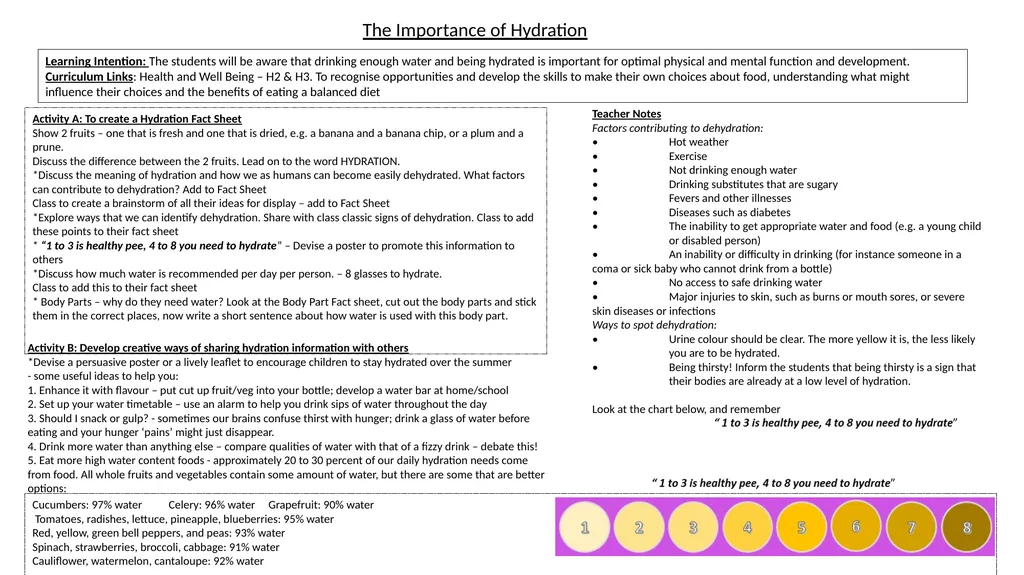
* “1 to 3 is healthy pee, 4 to 8 you need to hydrate” – Devise a poster to promote this information to others
*Discuss how much water is recommended per day per person. – 8 glasses to hydrate.
Class to add this to their fact sheet
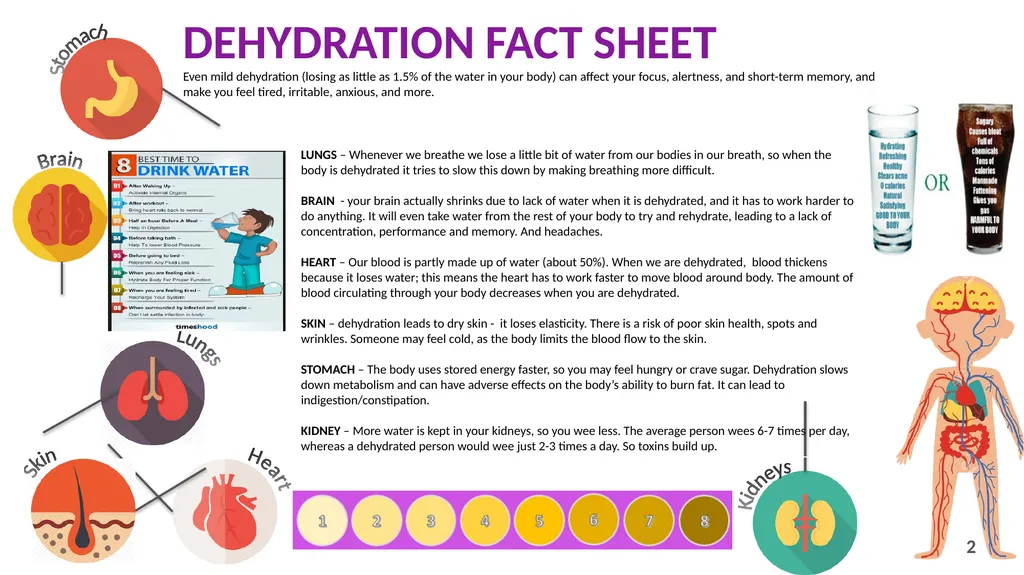
* Body Parts – why do they need water? Look at the Body Part Fact sheet, cut out the body parts and stick them in the correct places, now write a short sentence about how water is used with this body part. Teacher Notes
Factors contributing to dehydration:
• Hot weather
• Exercise
• Not drinking enough water
• Drinking substitutes that are sugary
• Fevers and other illnesses
• Diseases such as diabetes
• The inability to get appropriate water and food (e.g. a young child or disabled person)
• An inability or difficulty in drinking (for instance someone in a coma or sick baby who cannot drink from a bottle)
• No access to safe drinking water
• Major injuries to skin, such as burns or mouth sores, or severe skin diseases or infections
Ways to spot dehydration:
• Urine colour should be clear. The more yellow it is, the less likely you are to be hydrated.
• Being thirsty! Inform the students that being thirsty is a sign that their bodies are already at a low level of hydration.
Look at the chart below, and remember Activity B: Develop creative ways of sharing hydration information with others
*Devise a persuasive poster or a lively leaflet to encourage children to stay hydrated over the summer
- some useful ideas to help you:
1. Enhance it with flavour – put cut up fruit/veg into your bottle; develop a water bar at home/school
2. Set up your water timetable – use an alarm to help you drink sips of water throughout the day
3. Should I snack or gulp? - sometimes our brains confuse thirst with hunger; drink a glass of water before eating and your hunger ‘pains’ might just disappear.
4. Drink more water than anything else – compare qualities of water with that of a fizzy drink – debate this!
5. Eat more high water content foods - approximately 20 to 30 percent of our daily hydration needs come from food. All whole fruits and vegetables contain some amount of water, but there are some that are better options: Cucumbers: 97% water Celery: 96% water Grapefruit: 90% water
Tomatoes, radishes, lettuce, pineapple, blueberries: 95% water
Red, yellow, green bell peppers, and peas: 93% water
Spinach, strawberries, broccoli, cabbage: 91% water
Cauliflower, watermelon, cantaloupe: 92% water<br>
02
DEHYDRATION Fact Sheet�Even mild dehydration (losing as little as 1.5% of the water in your body) can affect your focus, alertness, and short-term memory, and make you feel tired, irritable, anxious, and more. LUNGS – Whenever we breathe we lose a little bit of water from our bodies in our breath, so when the body is dehydrated it tries to slow this down by making breathing more difficult.
BRAIN - your brain actually shrinks due to lack of water when it is dehydrated, and it has to work harder to do anything. It will even take water from the rest of your body to try and rehydrate, leading to a lack of concentration, performance and memory. And headaches.
HEART – Our blood is partly made up of water (about 50%). When we are dehydrated, blood thickens because it loses water; this means the heart has to work faster to move blood around body. The amount of blood circulating through your body decreases when you are dehydrated.
SKIN – dehydration leads to dry skin - it loses elasticity. There is a risk of poor skin health, spots and wrinkles. Someone may feel cold, as the body limits the blood flow to the skin.
STOMACH – The body uses stored energy faster, so you may feel hungry or crave sugar. Dehydration slows down metabolism and can have adverse effects on the body’s ability to burn fat. It can lead to indigestion/constipation.
KIDNEY – More water is kept in your kidneys, so you wee less. The average person wees 6-7 times per day, whereas a dehydrated person would wee just 2-3 times a day. So toxins build up.<br>
03
My DEHYDRATION FACT SHEET<br>