01
The NIH Peer Review Process Denise Wiesch, Ph.D., M.P.H
Ramona Gianina Dumitrescu, Ph.D., M.P.H. (CHD)
Mohammed Elfaramawi M.D, Ph.D., M.P.H. (CRD)
Scientific Review Officer
Cancer and Hematologic Disorders (CHD) Study Section
Epidemiology and Population Health (EPH) Branch
Division of AIDS, Behavioral and Population Sciences
Center for Scientific Review, NIH<br>
04
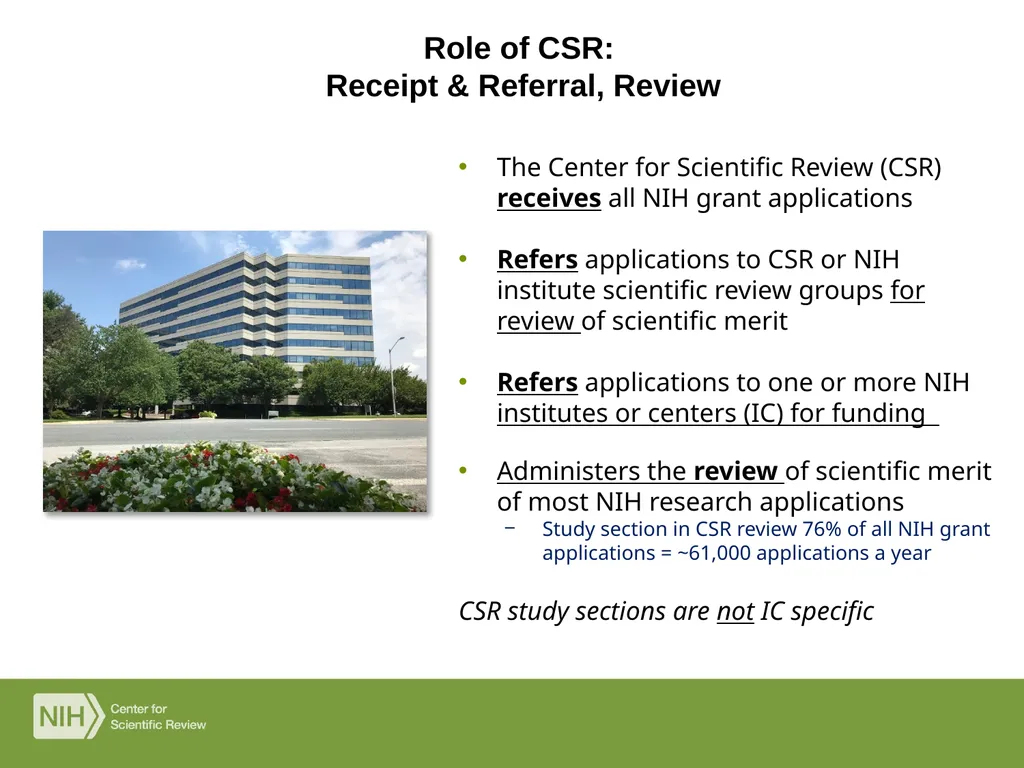
Role of CSR: �Receipt & Referral, Review The Center for Scientific Review (CSR) receives all NIH grant applications
Refers applications to CSR or NIH institute scientific review groups for review of scientific merit
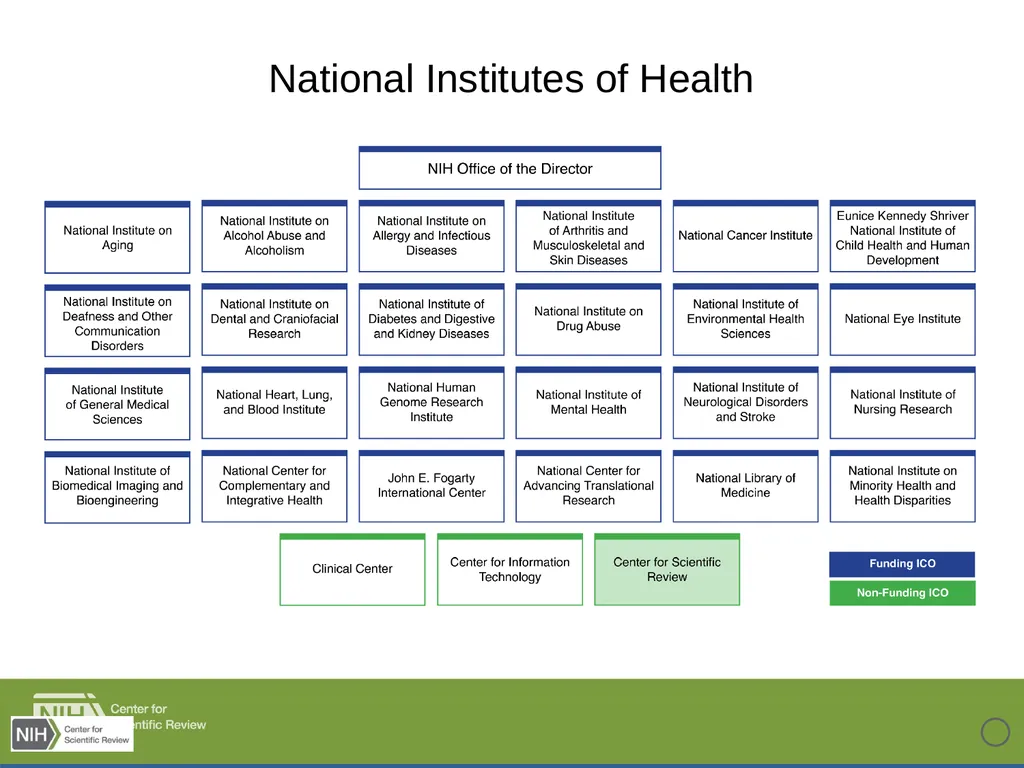
Refers applications to one or more NIH institutes or centers (IC) for funding
Administers the review of scientific merit of most NIH research applications
Study section in CSR review 76% of all NIH grant applications = ~61,000 applications a year
CSR study sections are not IC specific<br>
05
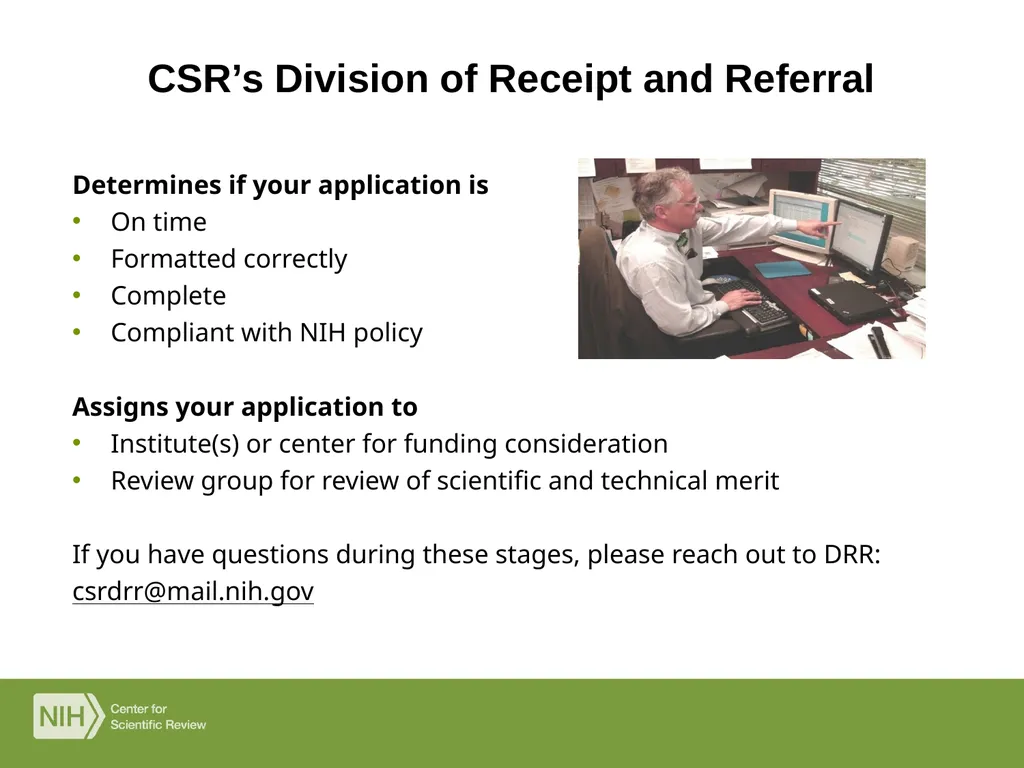
CSR’s Division of Receipt and Referral Determines if your application is
On time
Formatted correctly
Complete
Compliant with NIH policy
Assigns your application to
Institute(s) or center for funding consideration
Review group for review of scientific and technical merit
If you have questions during these stages, please reach out to DRR:
csrdrr@mail.nih.gov<br>
06
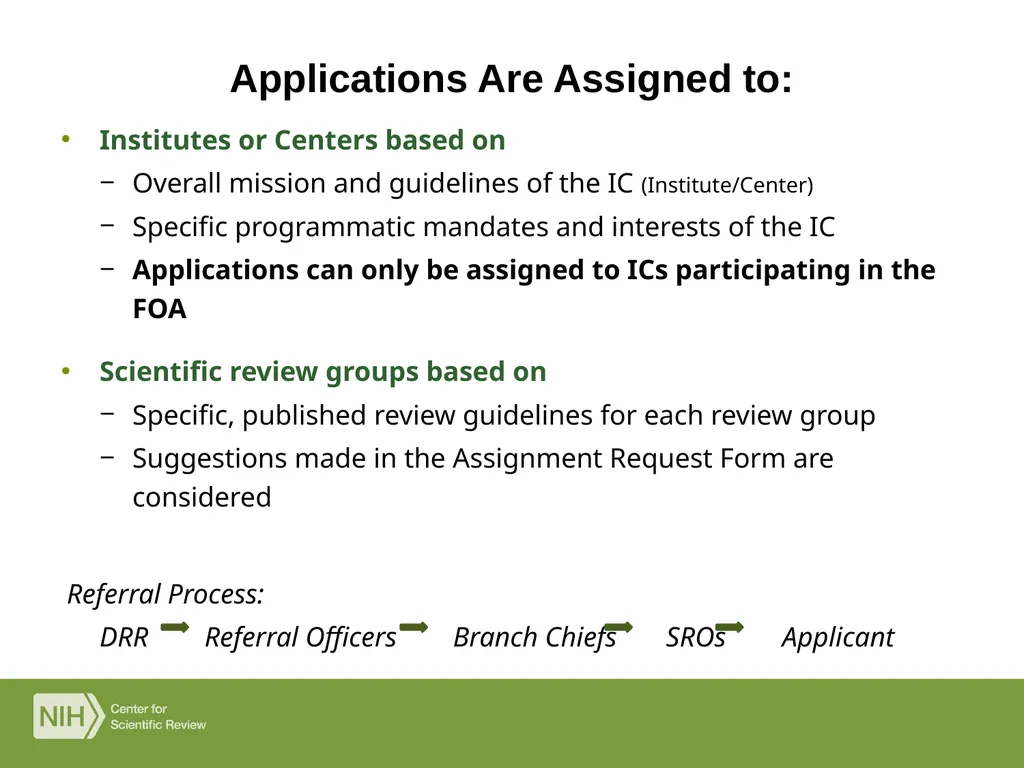
Institutes or Centers based on
Overall mission and guidelines of the IC (Institute/Center)
Specific programmatic mandates and interests of the IC
Applications can only be assigned to ICs participating in the FOA
Scientific review groups based on
Specific, published review guidelines for each review group
Suggestions made in the Assignment Request Form are considered
Referral Process:
DRR Referral Officers Branch Chiefs SROs Applicant Applications Are Assigned to:<br>
07
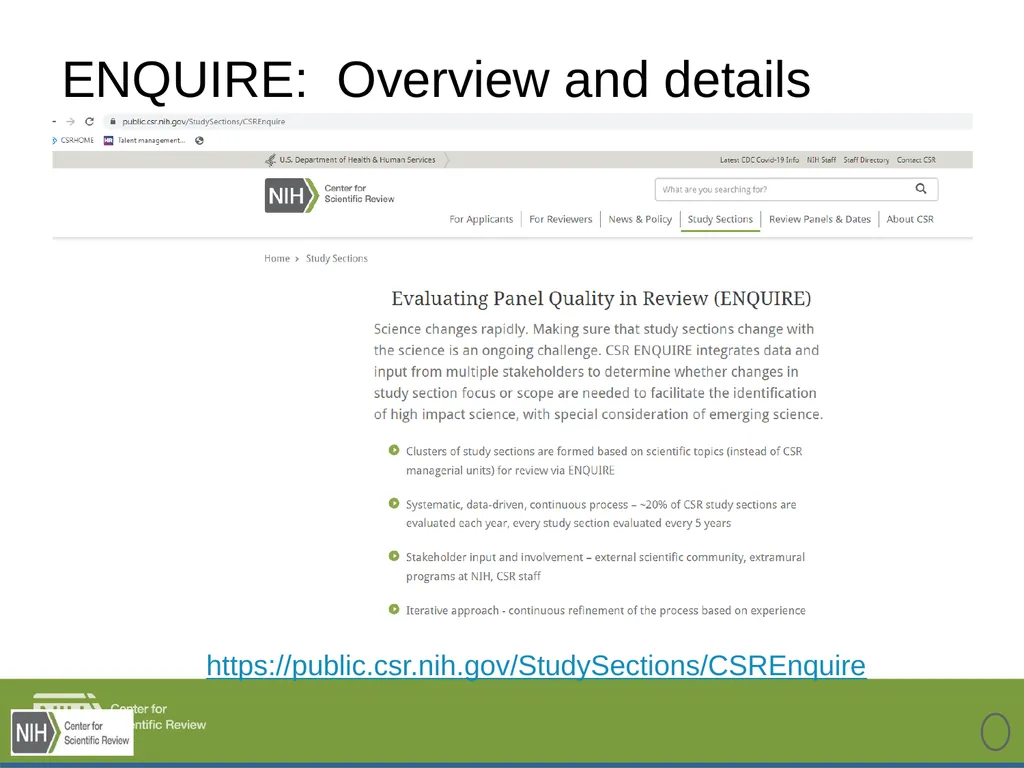
ENQUIRE: Overview and details https://public.csr.nih.gov/StudySections/CSREnquire<br>
08
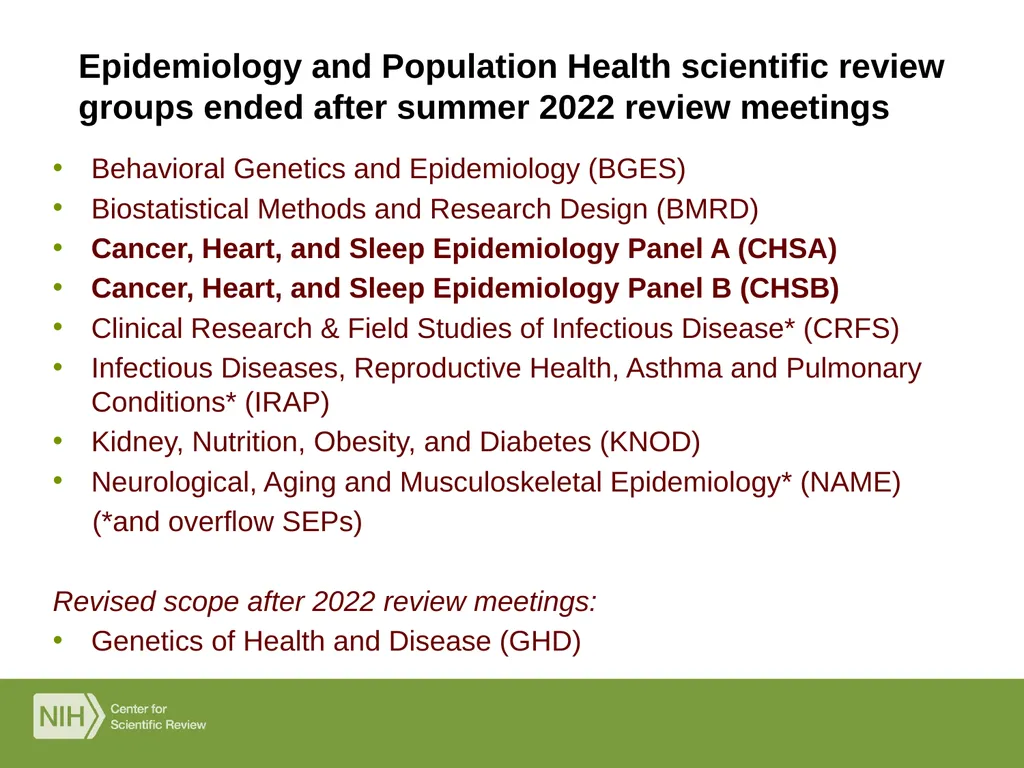
Epidemiology and Population Health scientific review groups ended after summer 2022 review meetings Behavioral Genetics and Epidemiology (BGES)
Biostatistical Methods and Research Design (BMRD)
Cancer, Heart, and Sleep Epidemiology Panel A (CHSA)
Cancer, Heart, and Sleep Epidemiology Panel B (CHSB)
Clinical Research & Field Studies of Infectious Disease* (CRFS)
Infectious Diseases, Reproductive Health, Asthma and Pulmonary Conditions* (IRAP)
Kidney, Nutrition, Obesity, and Diabetes (KNOD)
Neurological, Aging and Musculoskeletal Epidemiology* (NAME)
(*and overflow SEPs)
Revised scope after 2022 review meetings:
Genetics of Health and Disease (GHD)<br>
09
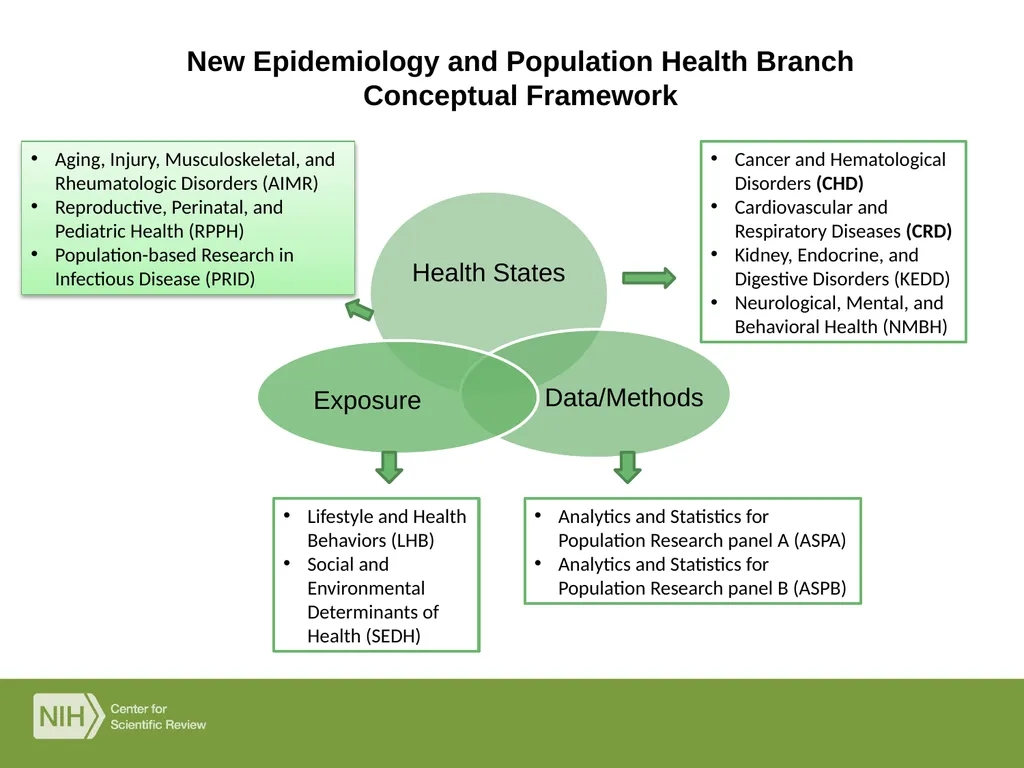
New Epidemiology and Population Health Branch �Conceptual Framework Cancer and Hematological Disorders (CHD)
Cardiovascular and Respiratory Diseases (CRD)
Kidney, Endocrine, and Digestive Disorders (KEDD)
Neurological, Mental, and Behavioral Health (NMBH) Lifestyle and Health Behaviors (LHB)
Social and Environmental Determinants of Health (SEDH) Analytics and Statistics for Population Research panel A (ASPA)
Analytics and Statistics for Population Research panel B (ASPB) Aging, Injury, Musculoskeletal, and Rheumatologic Disorders (AIMR)
Reproductive, Perinatal, and Pediatric Health (RPPH)
Population-based Research in Infectious Disease (PRID)<br>
10
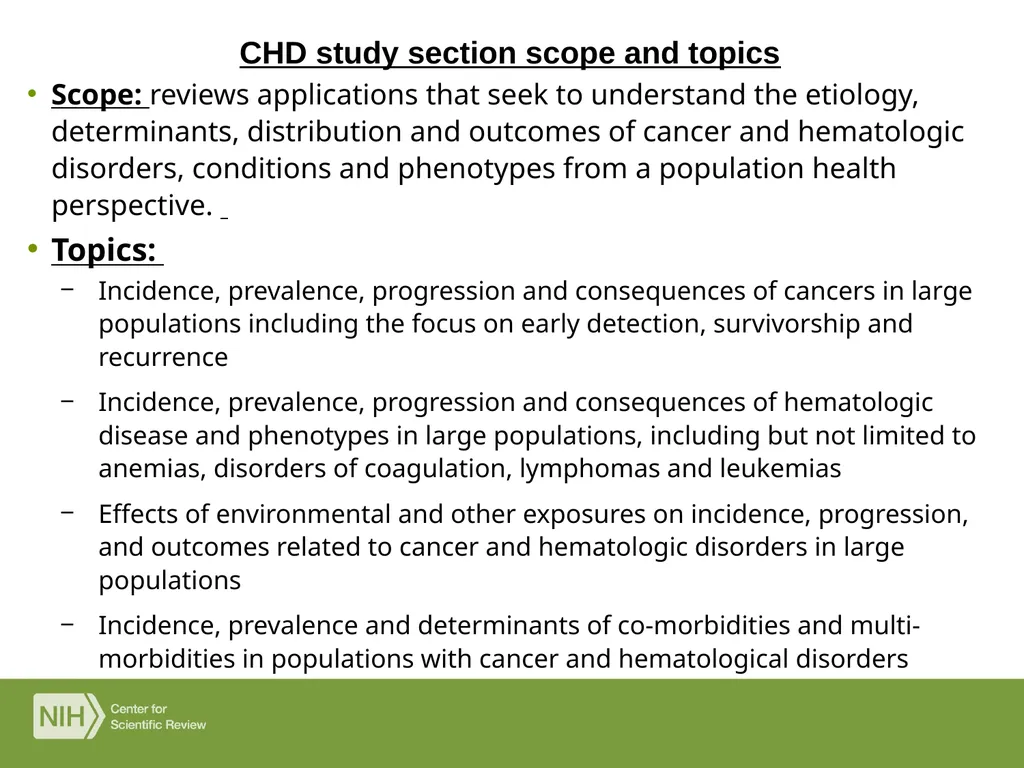
CHD study section scope and topics Scope: reviews applications that seek to understand the etiology, determinants, distribution and outcomes of cancer and hematologic disorders, conditions and phenotypes from a population health perspective.
Topics:
Incidence, prevalence, progression and consequences of cancers in large populations including the focus on early detection, survivorship and recurrence
Incidence, prevalence, progression and consequences of hematologic disease and phenotypes in large populations, including but not limited to anemias, disorders of coagulation, lymphomas and leukemias
Effects of environmental and other exposures on incidence, progression, and outcomes related to cancer and hematologic disorders in large populations
Incidence, prevalence and determinants of co-morbidities and multi-morbidities in populations with cancer and hematological disorders<br>
11
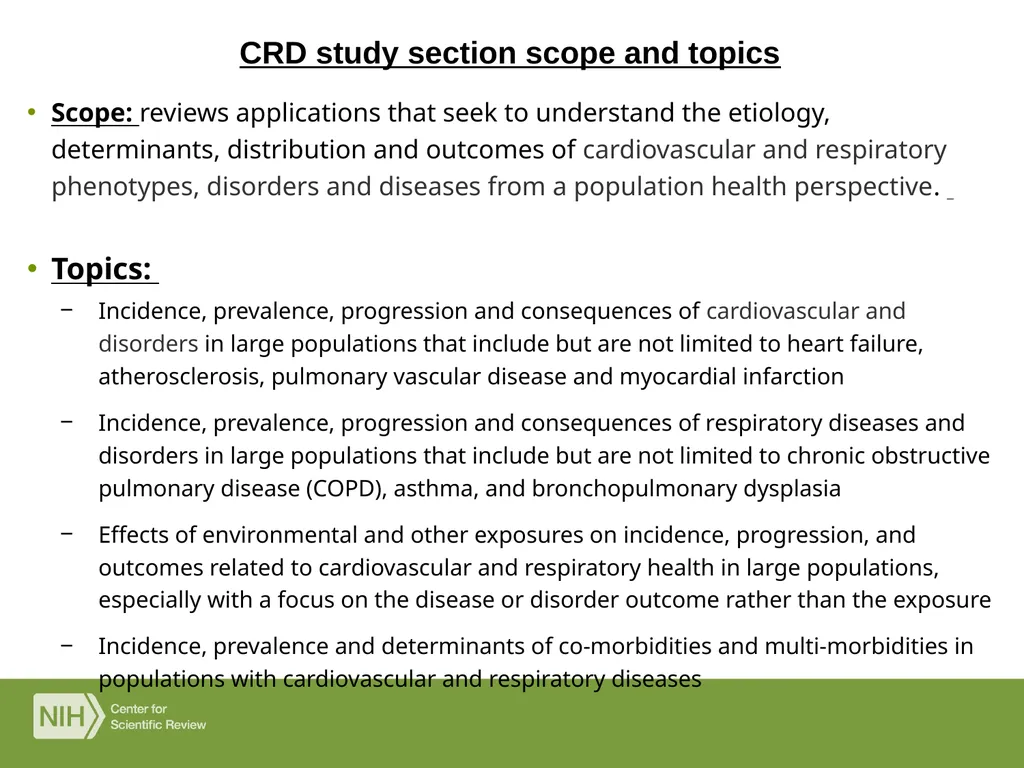
CRD study section scope and topics Scope: reviews applications that seek to understand the etiology, determinants, distribution and outcomes of cardiovascular and respiratory phenotypes, disorders and diseases from a population health perspective.
Topics:
Incidence, prevalence, progression and consequences of cardiovascular and disorders in large populations that include but are not limited to heart failure, atherosclerosis, pulmonary vascular disease and myocardial infarction
Incidence, prevalence, progression and consequences of respiratory diseases and disorders in large populations that include but are not limited to chronic obstructive pulmonary disease (COPD), asthma, and bronchopulmonary dysplasia
Effects of environmental and other exposures on incidence, progression, and outcomes related to cardiovascular and respiratory health in large populations, especially with a focus on the disease or disorder outcome rather than the exposure
Incidence, prevalence and determinants of co-morbidities and multi-morbidities in populations with cardiovascular and respiratory diseases<br>
12
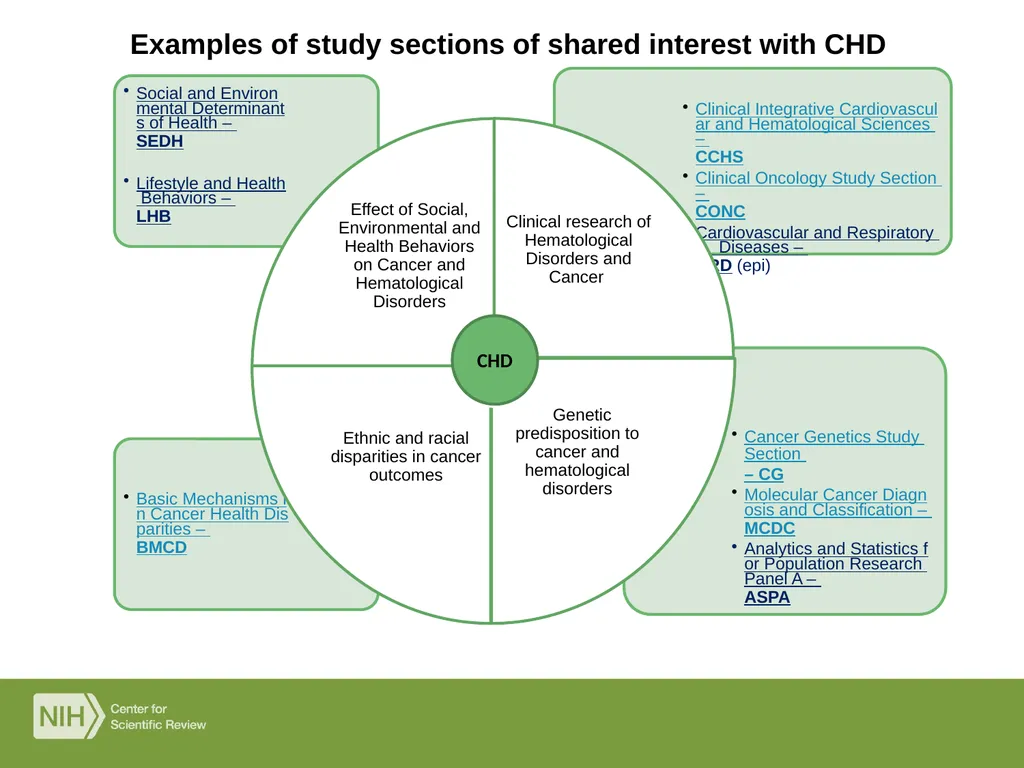
Examples of study sections of shared interest with CHD CHD<br>
13
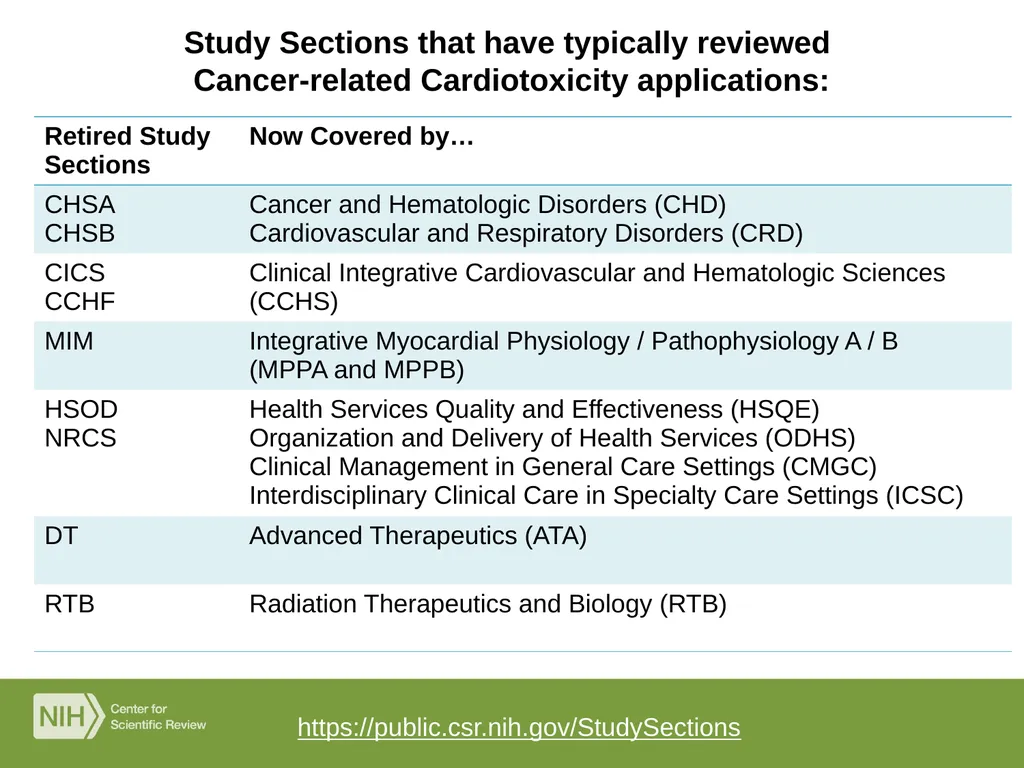
Study Sections that have typically reviewed �Cancer-related Cardiotoxicity applications: https://public.csr.nih.gov/StudySections<br>
14
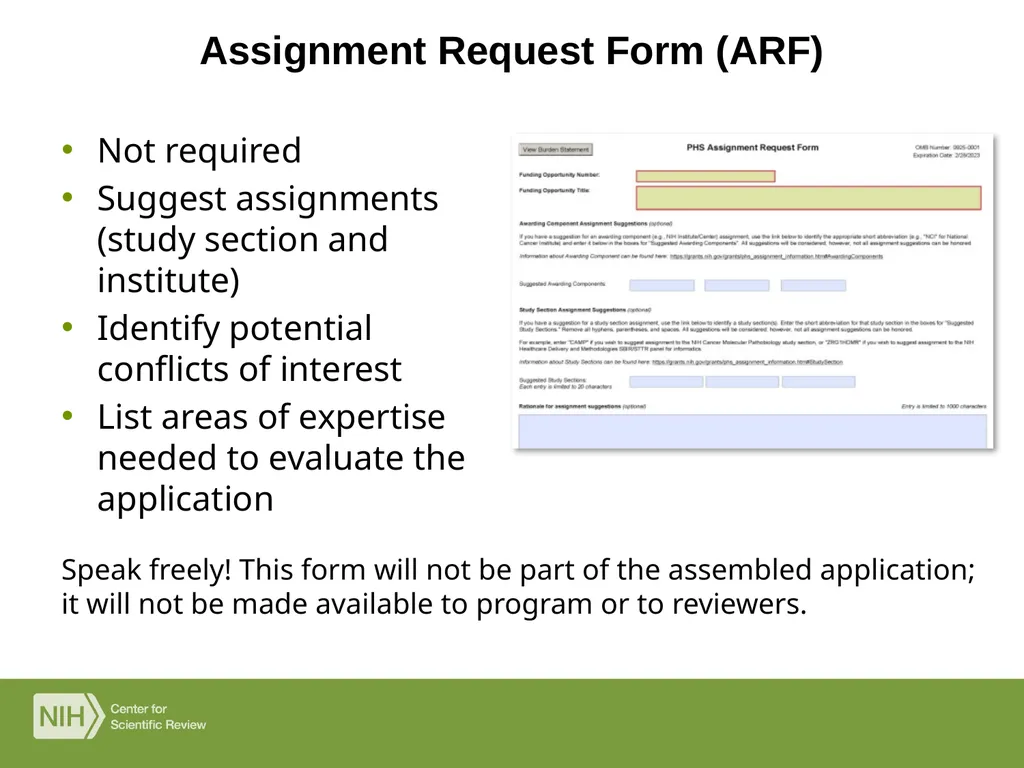
Not required
Suggest assignments (study section and institute)
Identify potential conflicts of interest
List areas of expertise needed to evaluate the application Assignment Request Form (ARF) Speak freely! This form will not be part of the assembled application; it will not be made available to program or to reviewers.<br>
15
Before you submit your application
A program officer (PO) at an NIH Institute or Center
Scientific review officer (SRO)
CSR Division of Receipt and Referral (csrdrr@mail.nih.gov)
After you submit
Your SRO
CSR Division of Receipt and Referral (csrdrr@mail.nih.gov)
After your review
Your assigned PO
Grants Info: GrantsInfo@od.nih.gov – 301 945-7573 Who Can Answer Your Questions?<br>
16
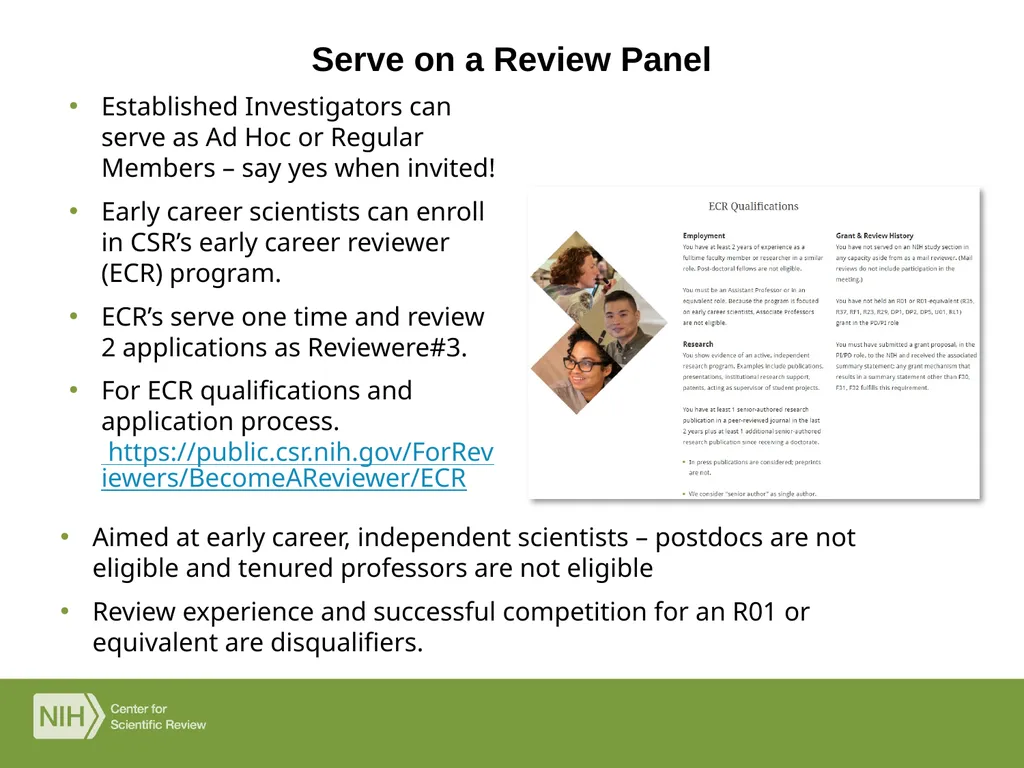
Serve on a Review Panel Established Investigators can serve as Ad Hoc or Regular Members – say yes when invited!
Early career scientists can enroll in CSR’s early career reviewer (ECR) program.
ECR’s serve one time and review 2 applications as Reviewere#3.
For ECR qualifications and application process. https://public.csr.nih.gov/ForReviewers/BecomeAReviewer/ECR Aimed at early career, independent scientists – postdocs are not eligible and tenured professors are not eligible
Review experience and successful competition for an R01 or equivalent are disqualifiers.<br>
17
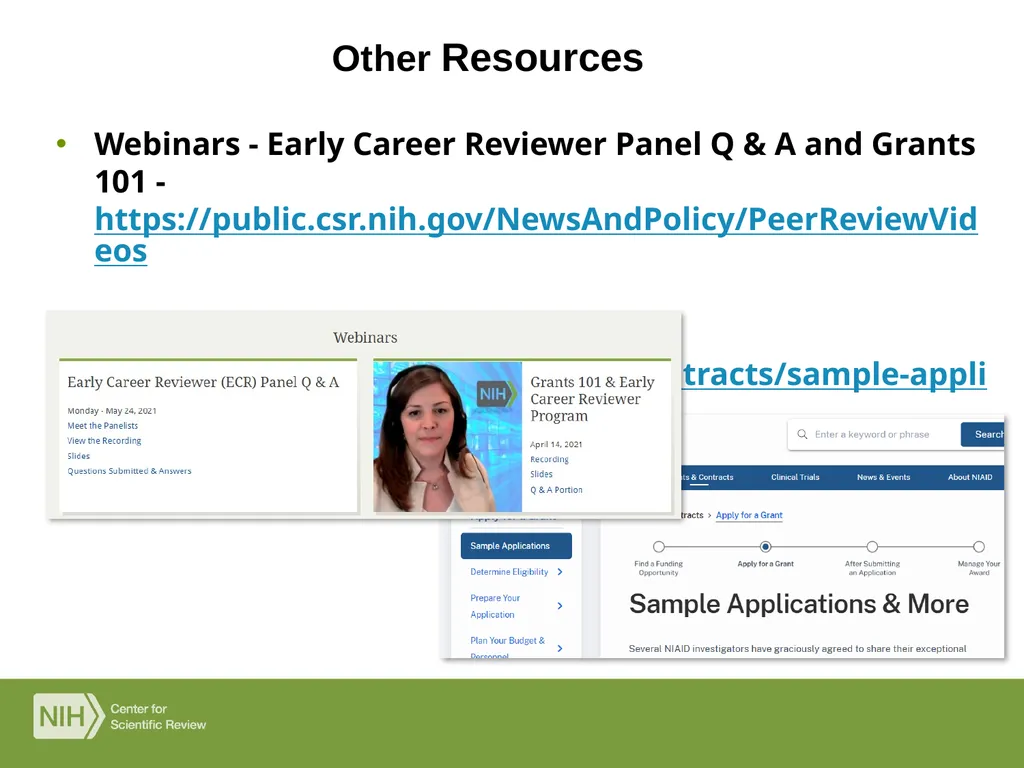
Webinars - Early Career Reviewer Panel Q & A and Grants 101 - https://public.csr.nih.gov/NewsAndPolicy/PeerReviewVideos
Sample applications at https://www.niaid.nih.gov/grants-contracts/sample-applications Other Resources<br>
18
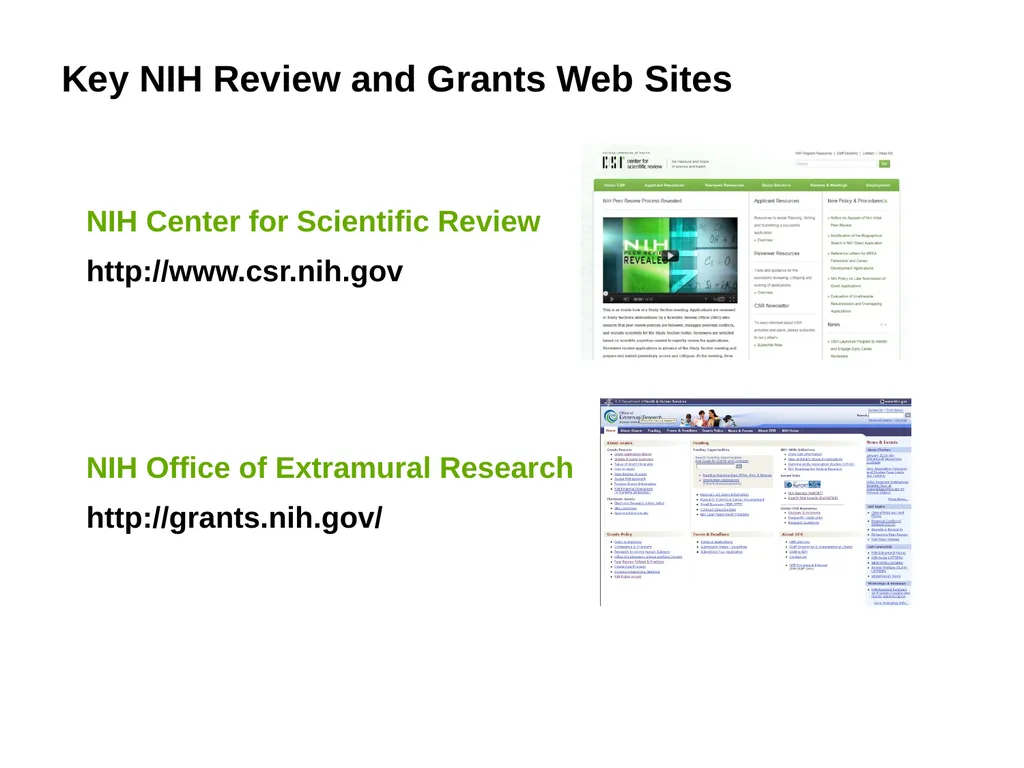
NIH Office of Extramural Research
�http://grants.nih.gov/ NIH Center for Scientific Review�
http://www.csr.nih.gov Key NIH Review and Grants Web Sites<br>