The Organization Organization a social arrangement which pursues collective goals, controls its own performance, and has a boundary separating it from its environment. derived from the Greek word ὄργανον (organon) meaning tool. Theories
"The Organization Organization a social arrangement" is the property of its rightful owner. Permission is granted to
download and print the materials on this website for personal, non-commercial use only, and to display it
on your personal computer provided you do not modify the materials and that you retain all copyright
notices contained in the materials. By downloading content from our website, you accept the terms of this
agreement.
Presentation Transcript
01
The Organization<br>
02
Organization a social arrangement which pursues collective goals, controls its own performance, and has a boundary separating it from its environment.
derived from the Greek word ὄργανον (organon) meaning tool.<br>
03
Theories & perspectives on Organization process-related: an entity is being (re-)organized
functional: organization as a function of how entities like businesses or state authorities are used (organization as a permanent structure).<br>
04
Institutional: an entity is an organization (organization as an actual purposeful structure within a social context)
The organization is defined by the elements that are part of it<br>
05
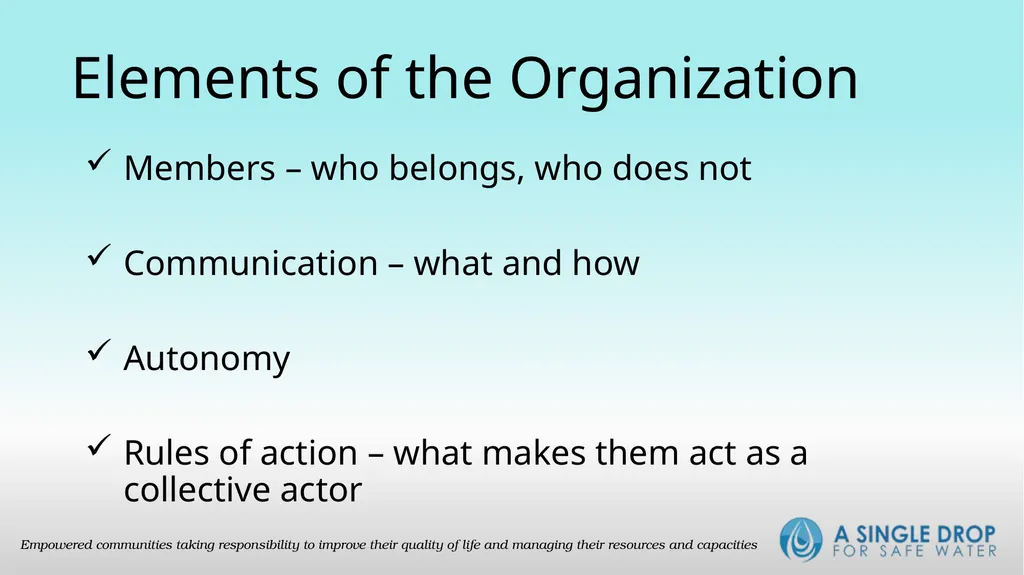
Elements of the Organization Members – who belongs, who does not
Communication – what and how
Autonomy
Rules of action – what makes them act as a collective actor<br>
06
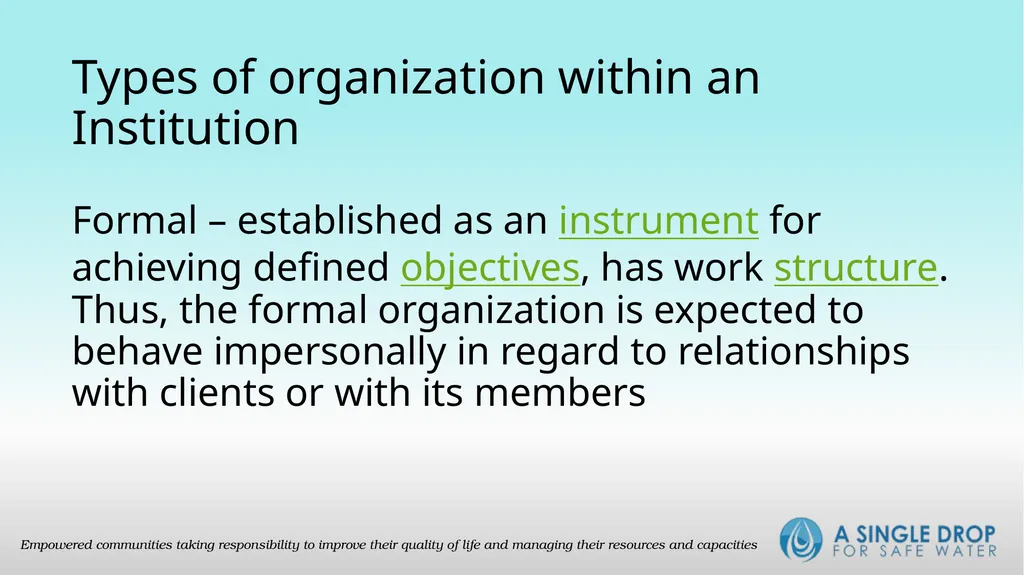
Types of organization within an Institution Formal – established as an instrument for achieving defined objectives, has work structure. Thus, the formal organization is expected to behave impersonally in regard to relationships with clients or with its members<br>
07
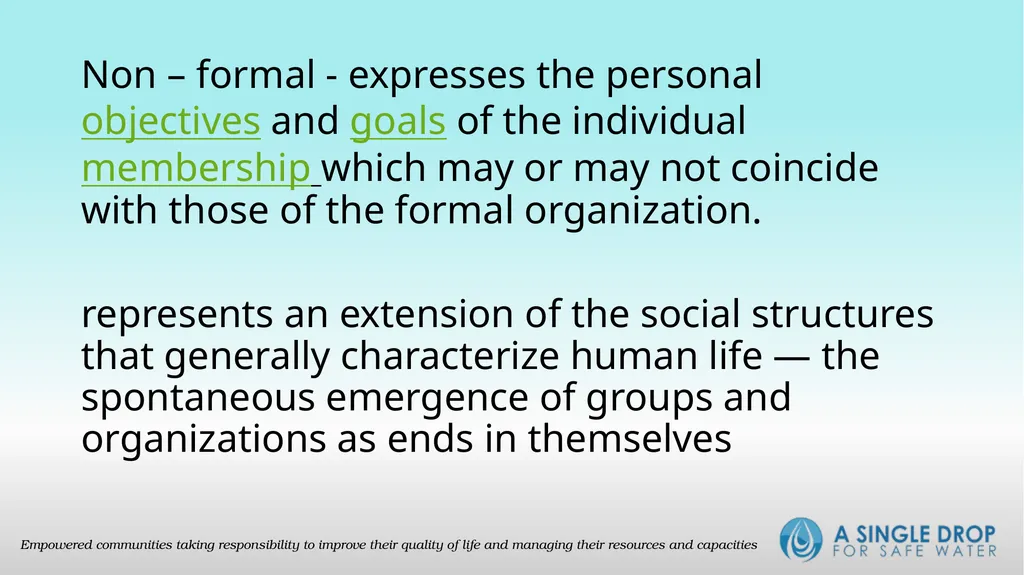
Non – formal - expresses the personal objectives and goals of the individual membership which may or may not coincide with those of the formal organization.
represents an extension of the social structures that generally characterize human life — the spontaneous emergence of groups and organizations as ends in themselves<br>
08
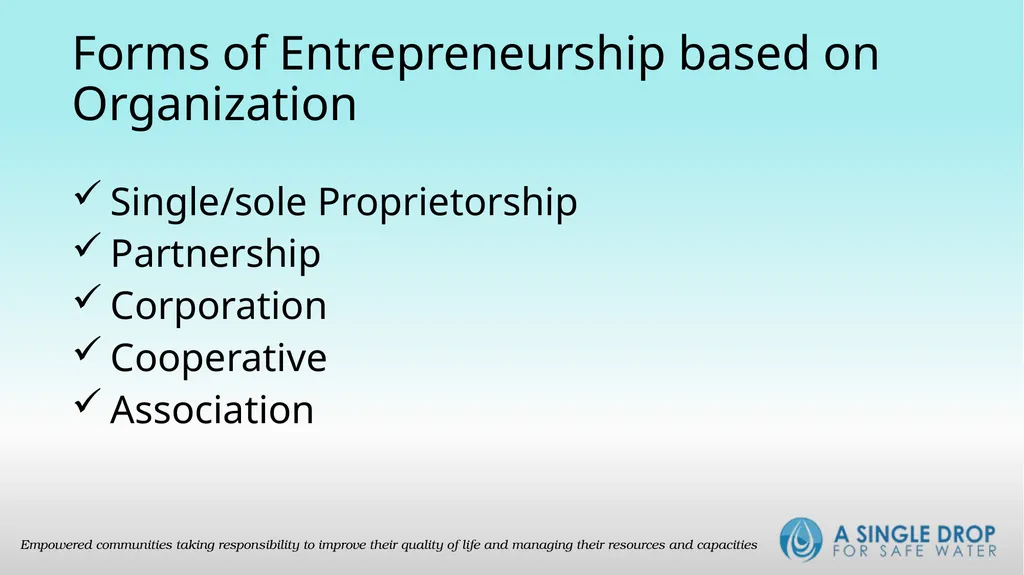
Forms of Entrepreneurship based on Organization Single/sole Proprietorship
Partnership
Corporation
Cooperative
Association<br>
09
Organizational Structure refers to the relationship of different activities within an organization
design must be based on the general principles of management and operation
effective management can only be achieved when there is a balanced structure that work in accordance with the objectives and functions of the organization.<br>
10
is the basis for unified purpose and expectation of both the management and individual staff and for assigning respective duties and responsibilities.
when drawn, shows the classification of the different positions in the organization
reflects to whom a person is accountable for what type of work/decision s/he is obliged to carry out. Organizational Structure<br>
11
An organizational chart is useful because:
It lessens misunderstanding as to who should do what, who is accountable to whom;
It eliminates unnecessary duplication of functions; and,
It generates proper communication in the organization.<br>
12
Organizational Structure vs Project Management Structure<br>
13
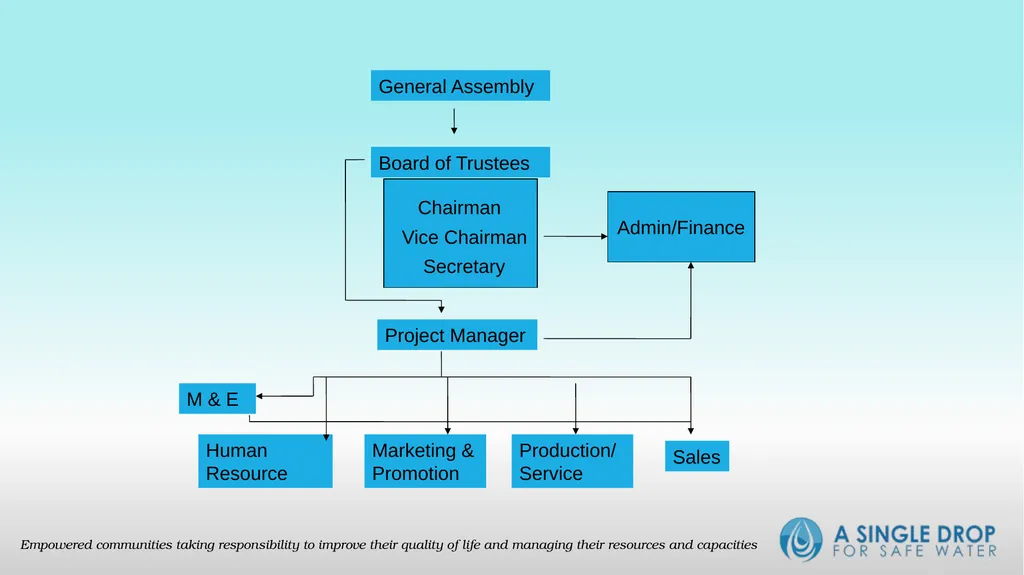
General Assembly Board of Trustees Chairman
Vice Chairman
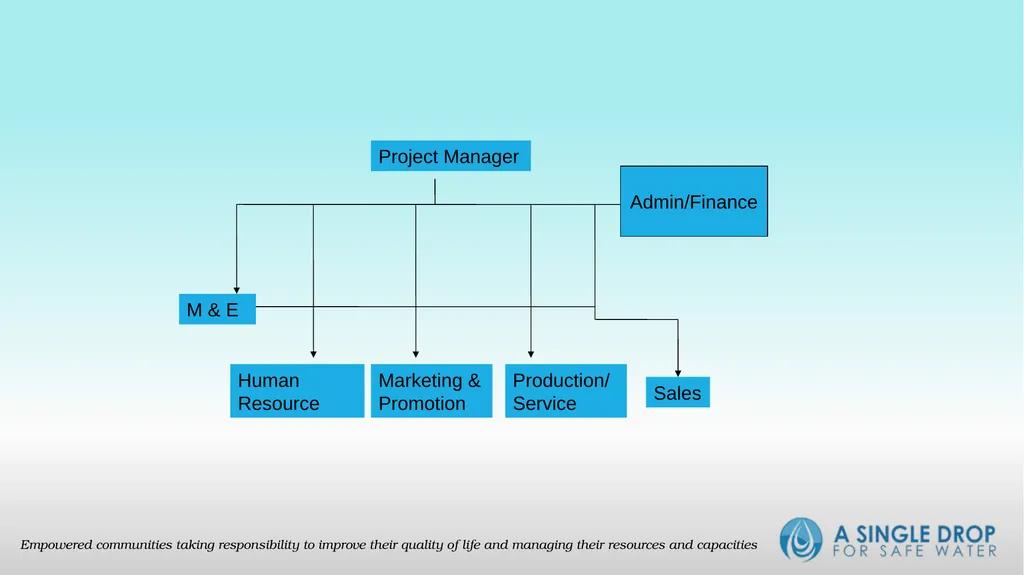
Secretary Admin/Finance Project Manager Human Resource M & E Marketing & Promotion Production/Service Sales<br>
14
Admin/Finance Project Manager Human Resource M & E Marketing & Promotion Production/Service Sales<br>