The Present Simple vs. The Present Continuous Grammar A1.2 23 PPT Slides Can differentiate between when to use the present simple and when to use the present continuous Can read and understand short texts using both tenses Im driving to
"The Present Simple vs. The Present Continuous" is the property of its rightful owner. Permission is granted to
download and print the materials on this website for personal, non-commercial use only, and to display it
on your personal computer provided you do not modify the materials and that you retain all copyright
notices contained in the materials. By downloading content from our website, you accept the terms of this
agreement.
Presentation Transcript
01
The Present Simple vs. The Present Continuous Grammar
A1.2
23 PPT Slides
Can differentiate between when to use the present simple and when to use the present continuous
Can read and understand short texts using both tenses<br>
02
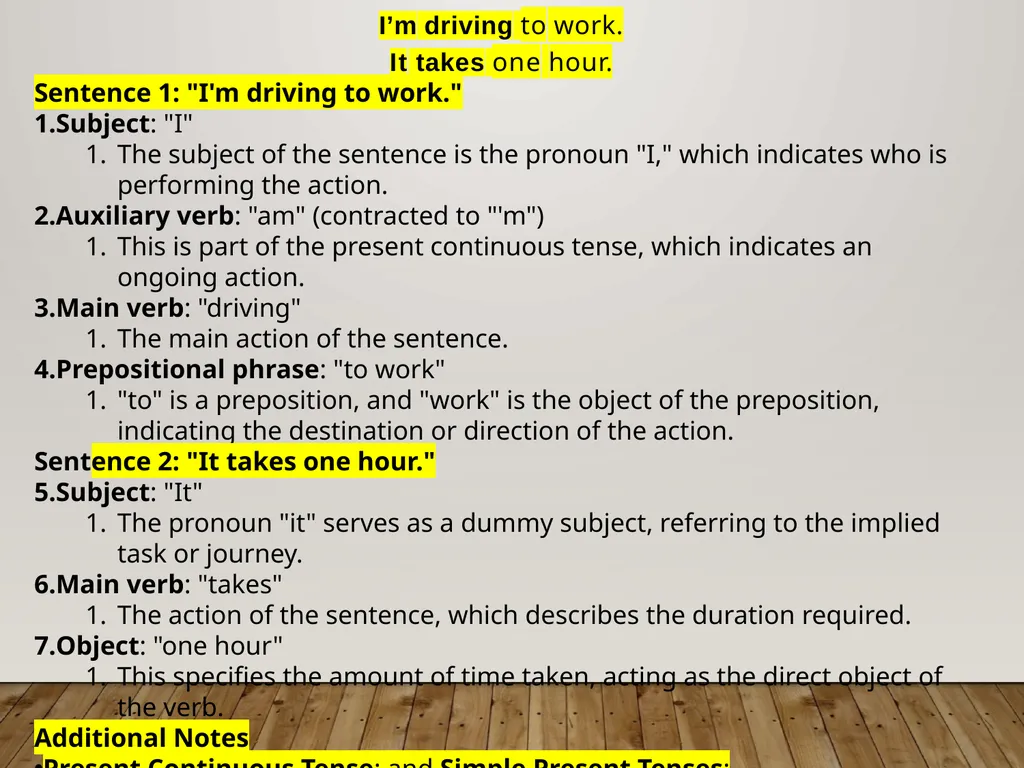
I’m driving to work.
It takes one hour.
Sentence 1: "I'm driving to work."
Subject: "I"
The subject of the sentence is the pronoun "I," which indicates who is performing the action.
Auxiliary verb: "am" (contracted to "'m")
This is part of the present continuous tense, which indicates an ongoing action.
Main verb: "driving"
The main action of the sentence.
Prepositional phrase: "to work"
"to" is a preposition, and "work" is the object of the preposition, indicating the destination or direction of the action.
Sentence 2: "It takes one hour."
Subject: "It"
The pronoun "it" serves as a dummy subject, referring to the implied task or journey.
Main verb: "takes"
The action of the sentence, which describes the duration required.
Object: "one hour"
This specifies the amount of time taken, acting as the direct object of the verb.
Additional Notes
Present Continuous Tense: and Simple Present Tenses:<br>
03
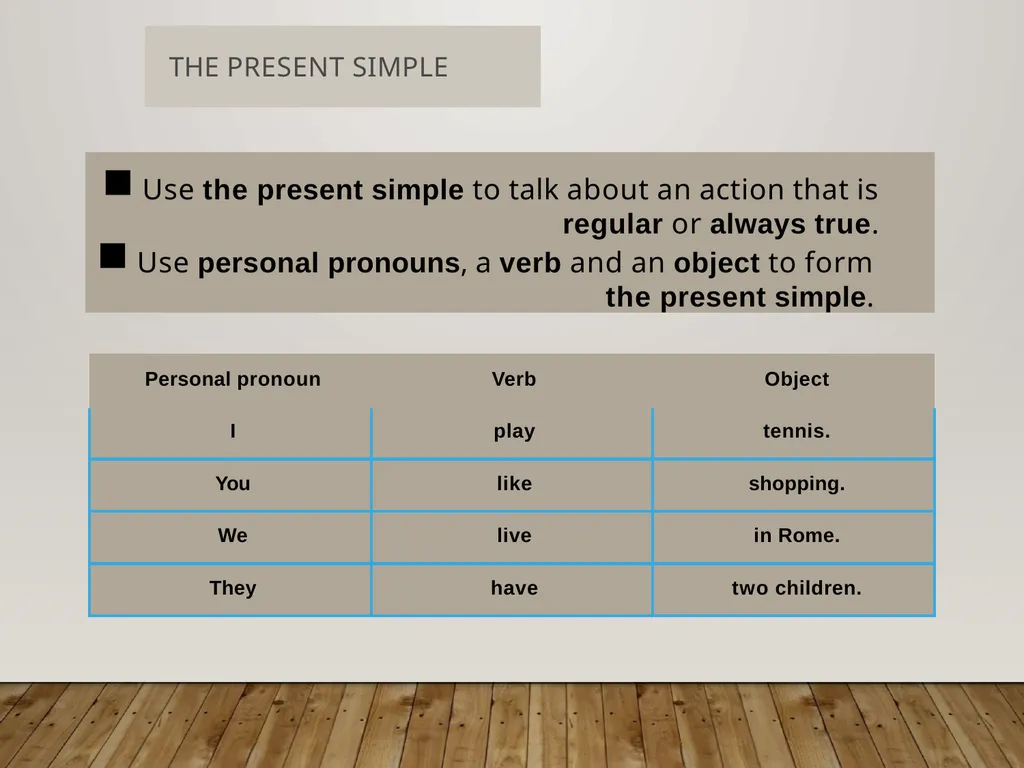
Use the present simple to talk about an action that is regular or always true.
Use personal pronouns, a verb and an object to form the present simple. The present simple<br>
04
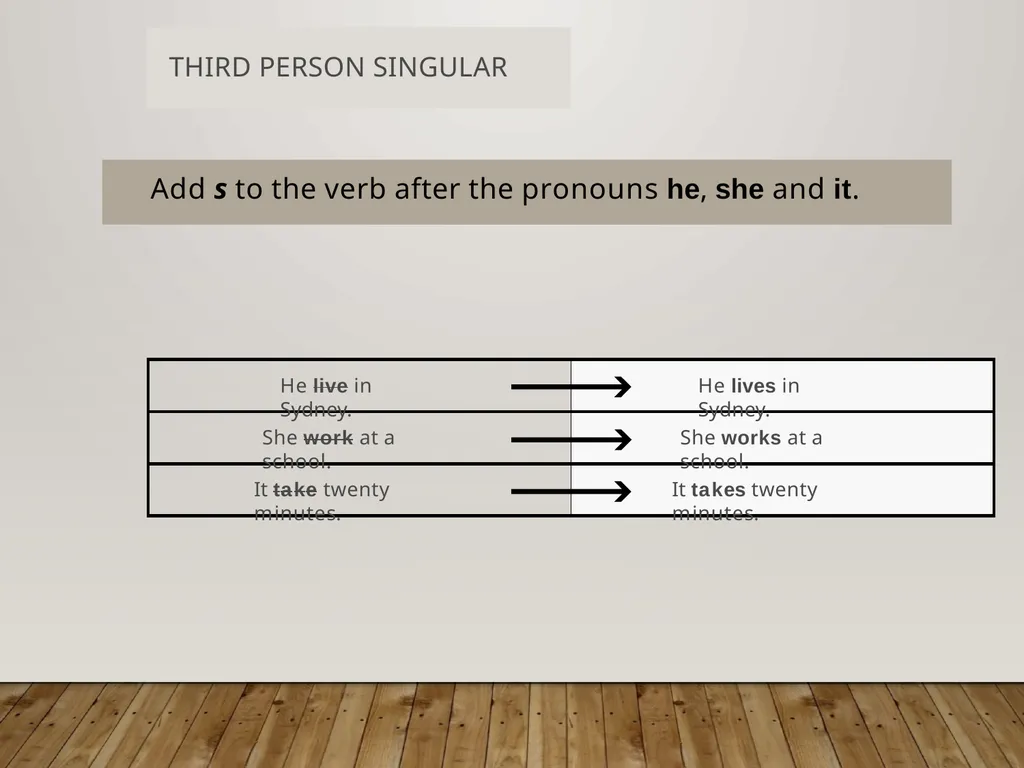
Add s to the verb after the pronouns he, she and it. Third person singular He live in Sydney. He lives in Sydney. She work at a school. She works at a school. It take twenty minutes. It takes twenty minutes.<br>
05
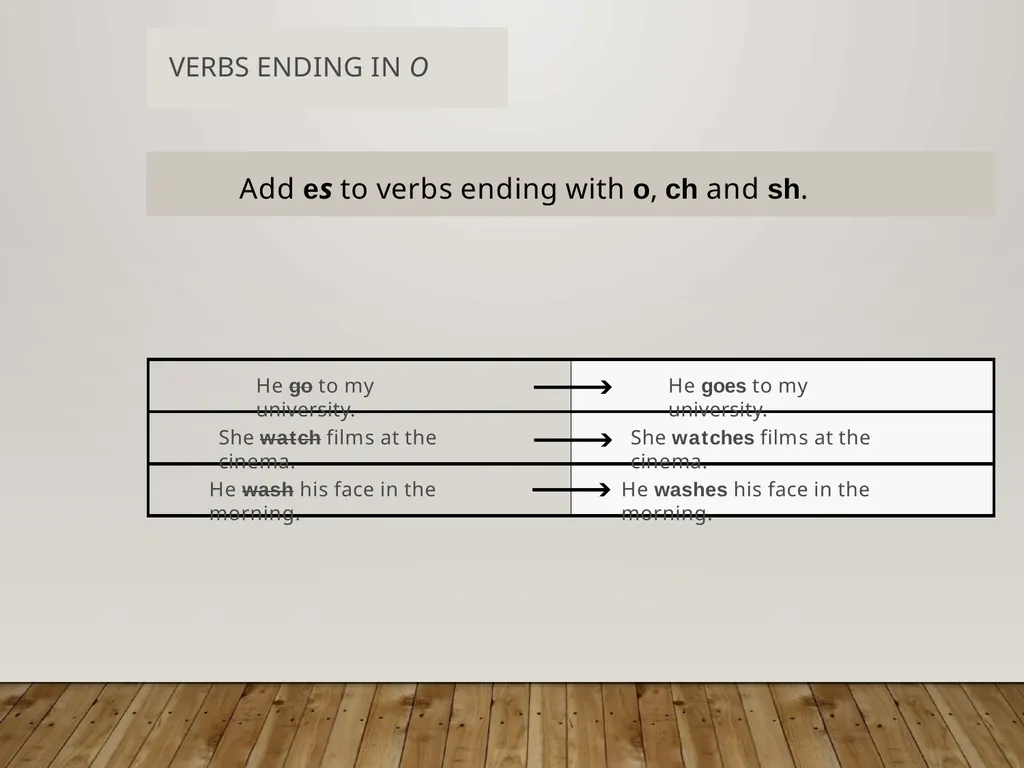
Add es to verbs ending with o, ch and sh. Verbs ending in o He go to my university. He goes to my university. She watch films at the cinema. She watches films at the cinema. He wash his face in the morning. He washes his face in the morning.<br>
06
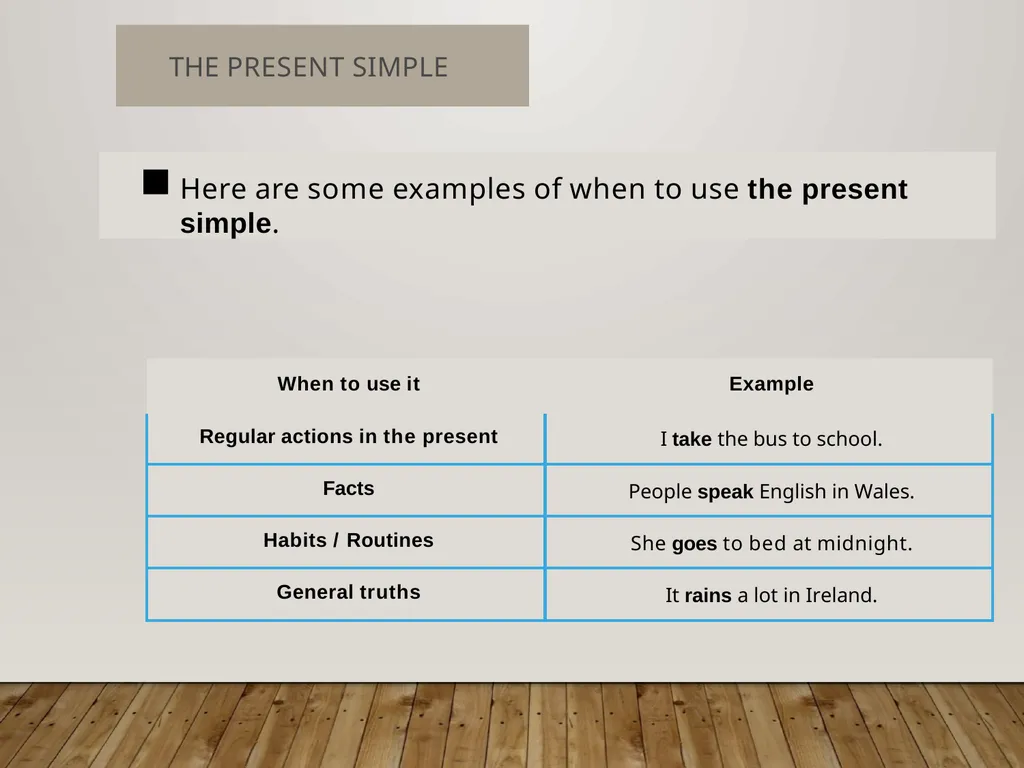
The present simple Here are some examples of when to use the present simple.<br>
07
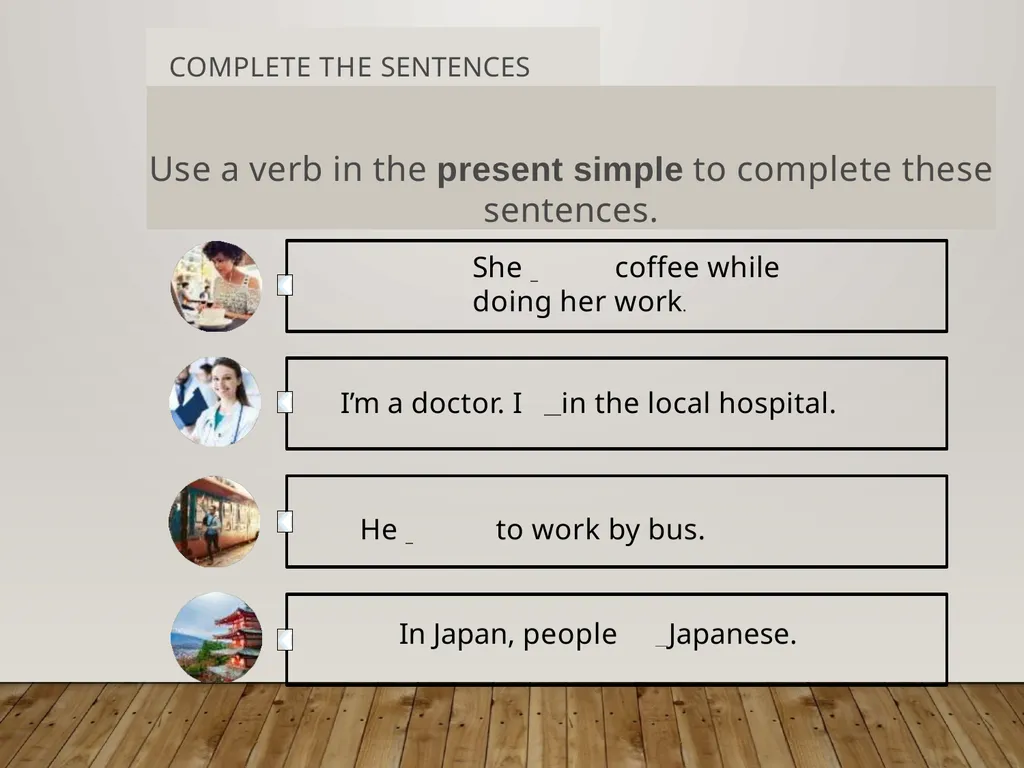
Complete the sentences She coffee while doing her work. Use a verb in the present simple to complete these sentences. I’m a doctor. I in the local hospital. He to work by bus. In Japan, people Japanese.<br>
08
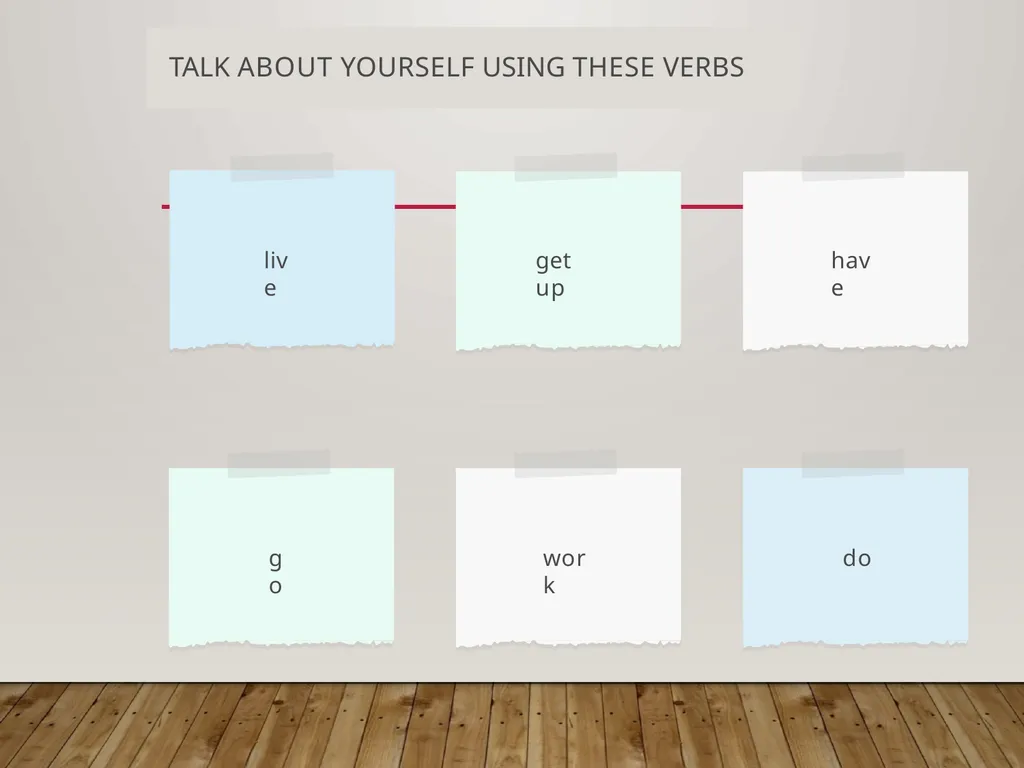
live Talk about yourself using these verbs get up go work have do<br>
09
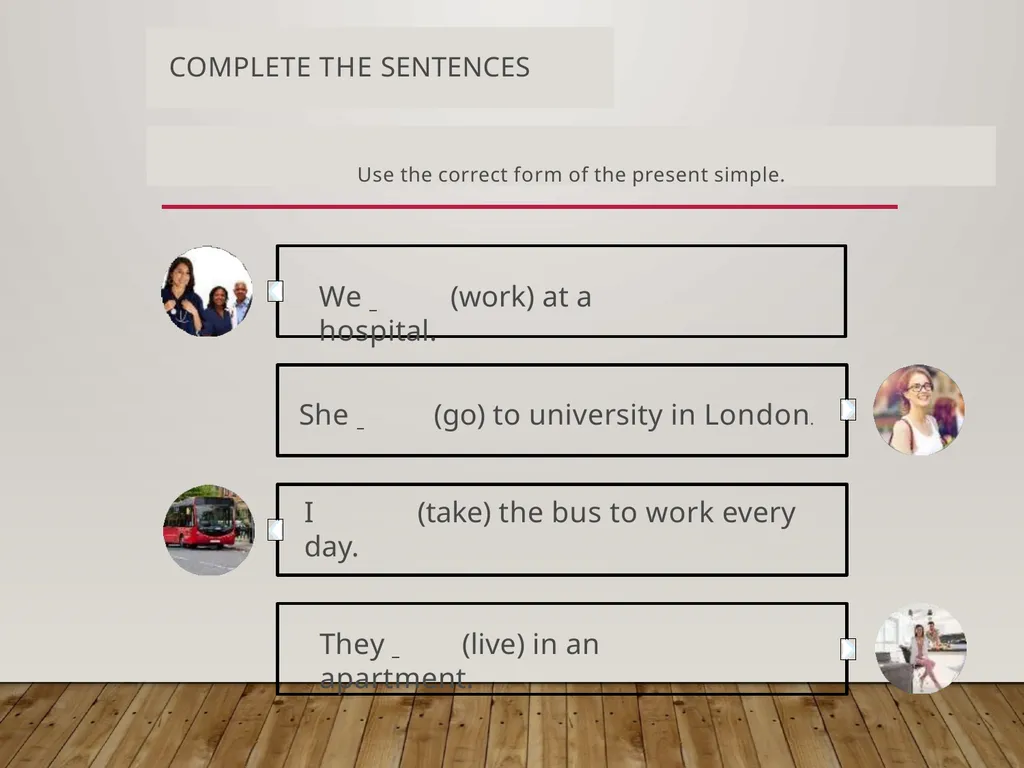
Complete the sentences We (work) at a hospital. She (go) to university in London. I (take) the bus to work every day. They (live) in an apartment. Use the correct form of the present simple.<br>
10
My name is Sergio. I lives in an apartment in Madrid with my wife. We both works at a hospital in the city. We takes the train together every morning. She eat lunch with her friend and I usually go to a restaurant.
After work, we goes shopping and we buy food for dinner. My wife cook and I cleans. We makes a great team! Find and correct the mistakes<br>
11
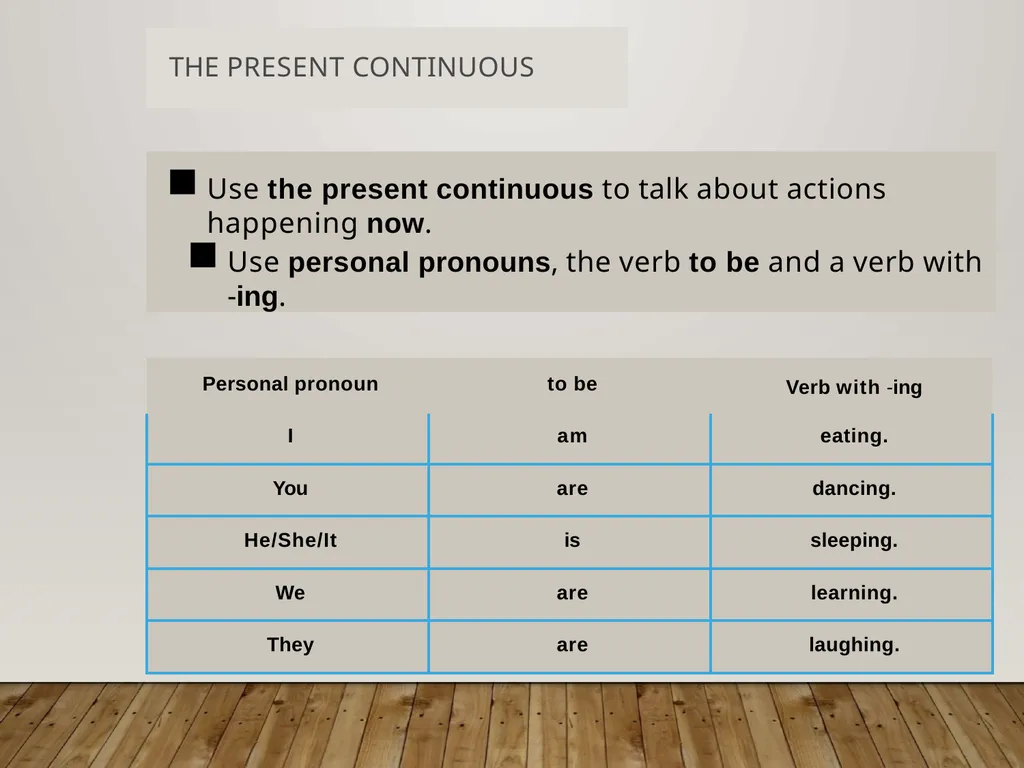
Use the present continuous to talk about actions happening now.
Use personal pronouns, the verb to be and a verb with -ing. The present continuous<br>
12
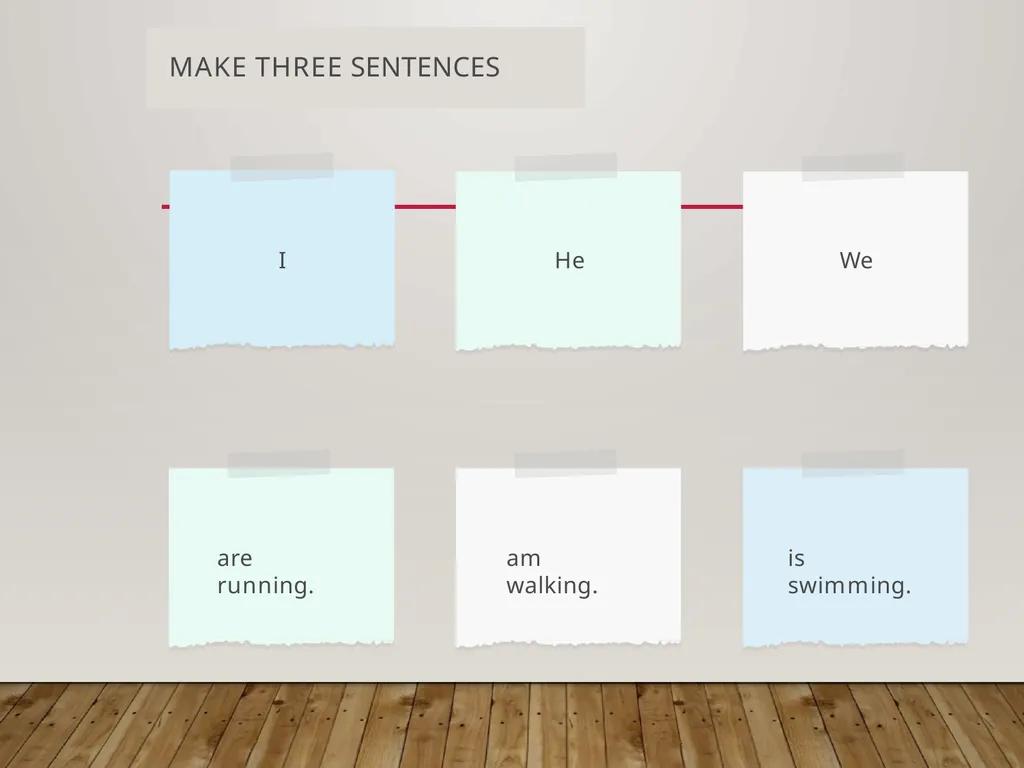
I Make three sentences He are running. am walking. We is swimming.<br>
13
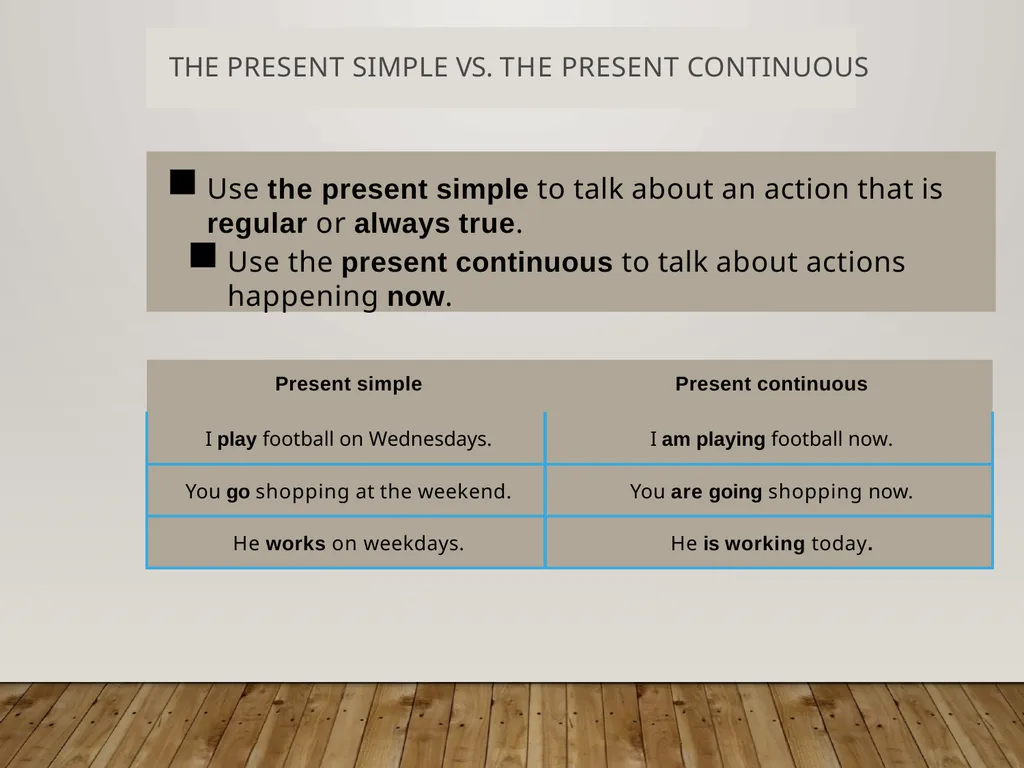
The present simple vs. the present continuous Use the present simple to talk about an action that is regular or always true.
Use the present continuous to talk about actions happening now.<br>
14
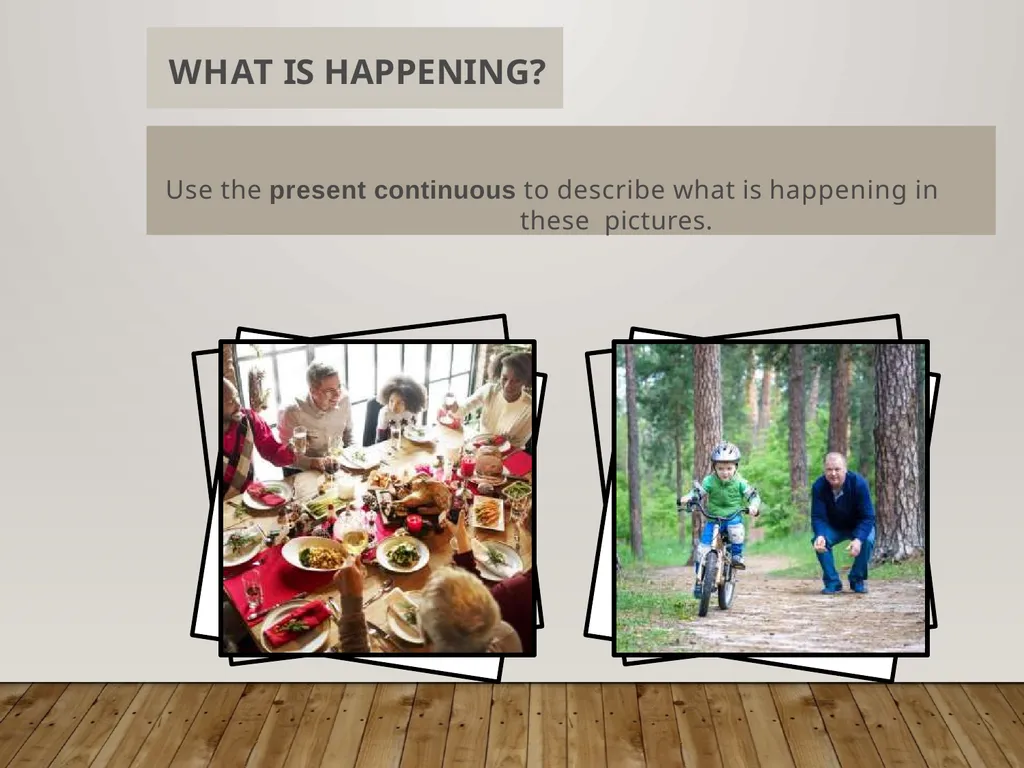
Use the present continuous to describe what is happening in these pictures. What is happening?<br>
15
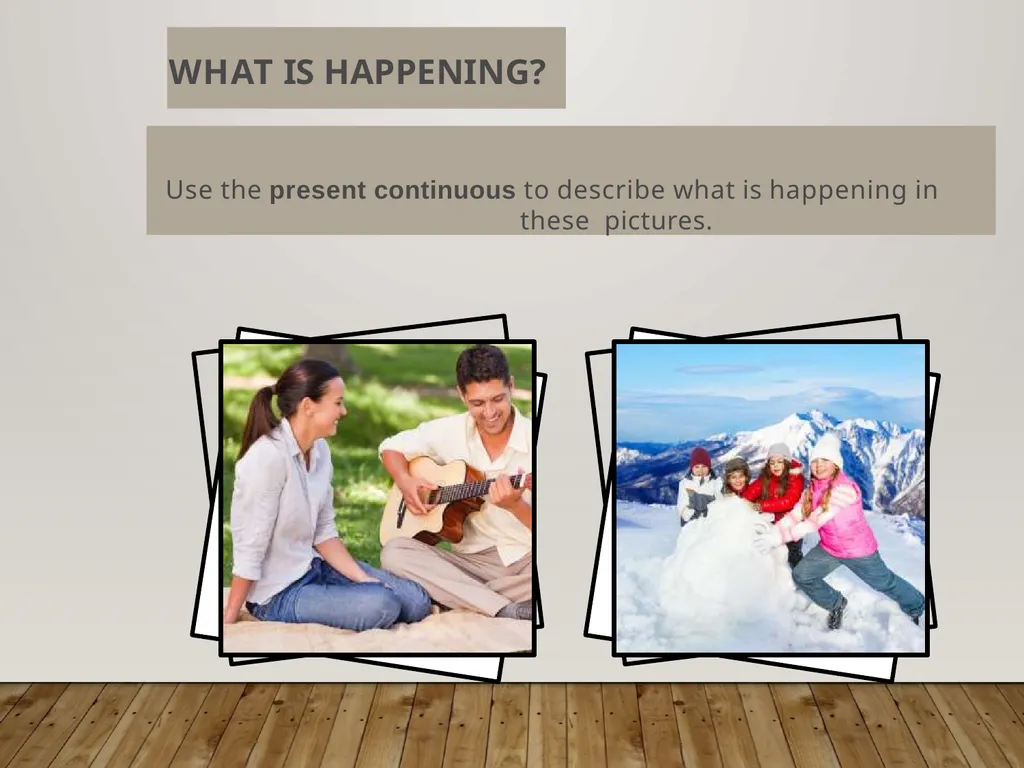
Use the present continuous to describe what is happening in these pictures. What is happening?<br>
16
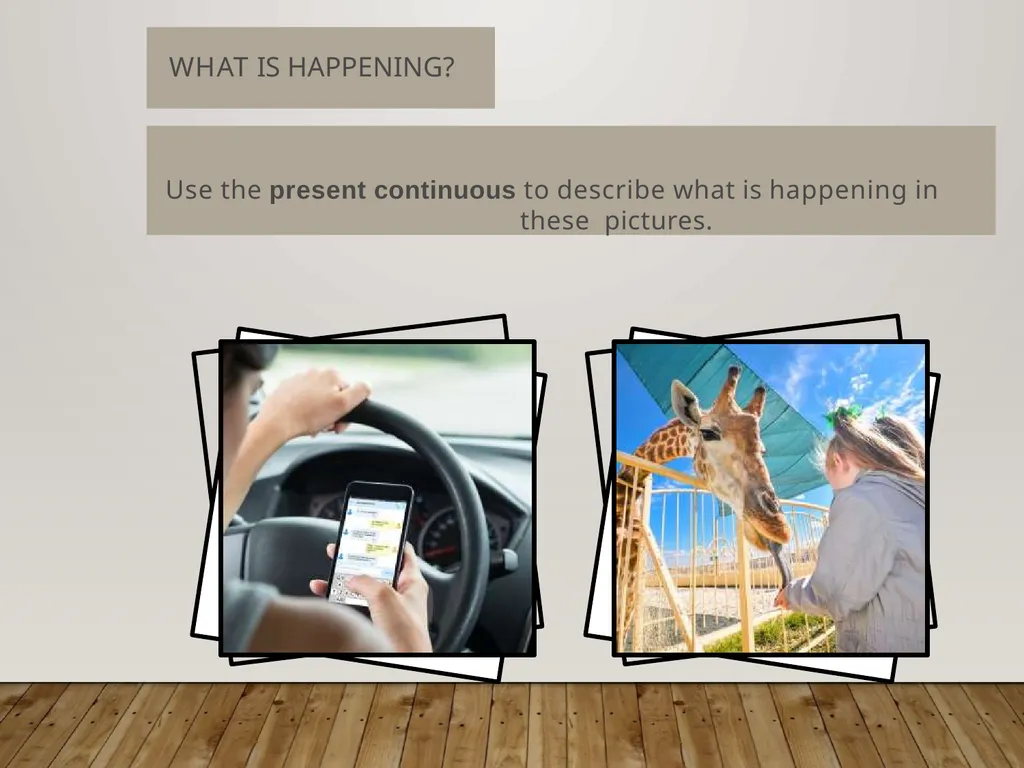
Use the present continuous to describe what is happening in these pictures. What is happening?<br>
17
1. My sister at a bank. 2. I to music now. Choose the correct answer a. works b. is working. a. am listening b. listen<br>
18
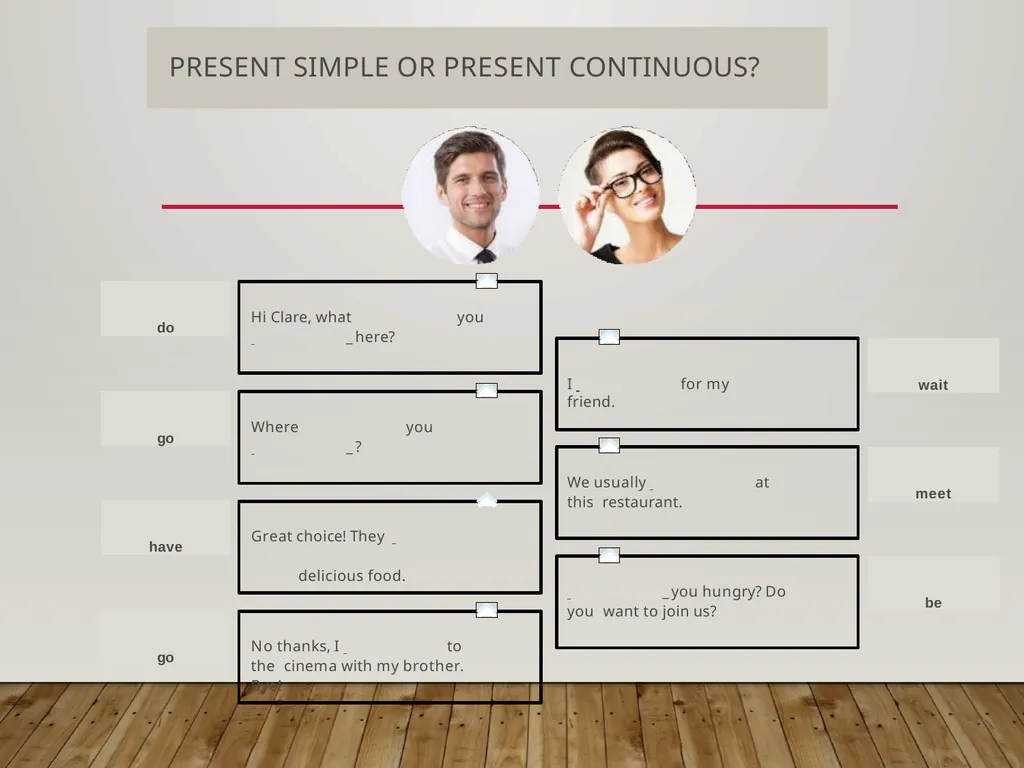
wait Present simple or present continuous? Hi Clare, what you
_ here? Where you
_ ? Great choice! They delicious food. No thanks, I to the cinema with my brother. Bye! I for my friend. We usually at this restaurant. _ you hungry? Do you want to join us? do go go meet be have<br>
19
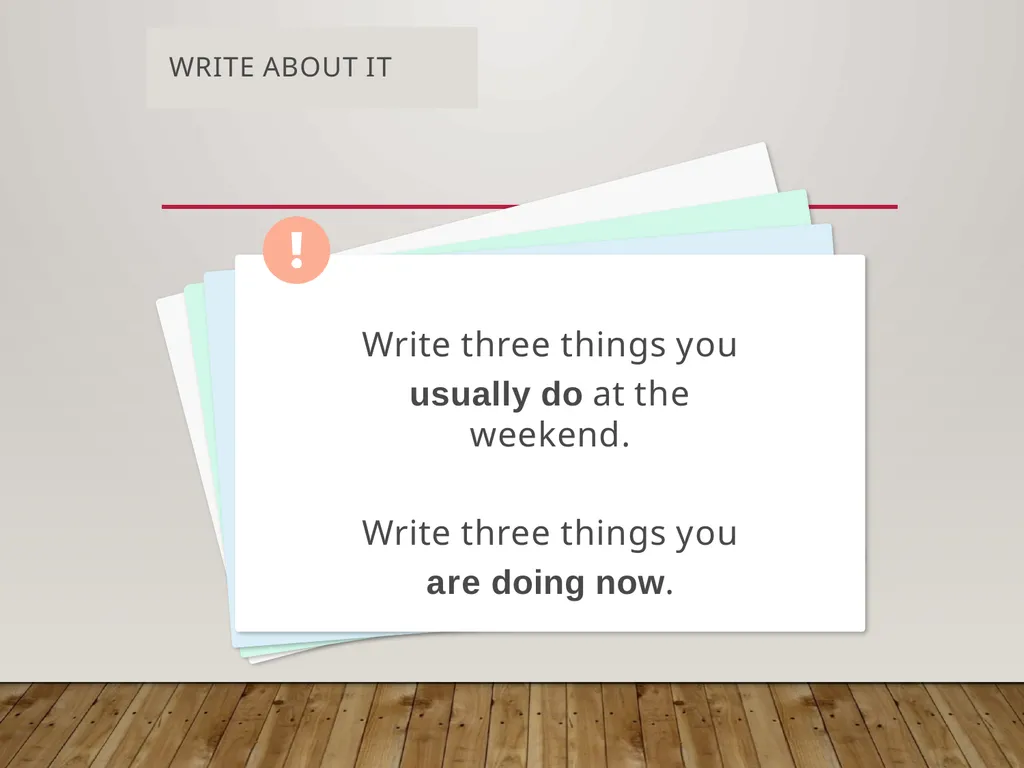
Write about it Write three things you
usually do at the weekend.
Write three things you
are doing now.<br>
20
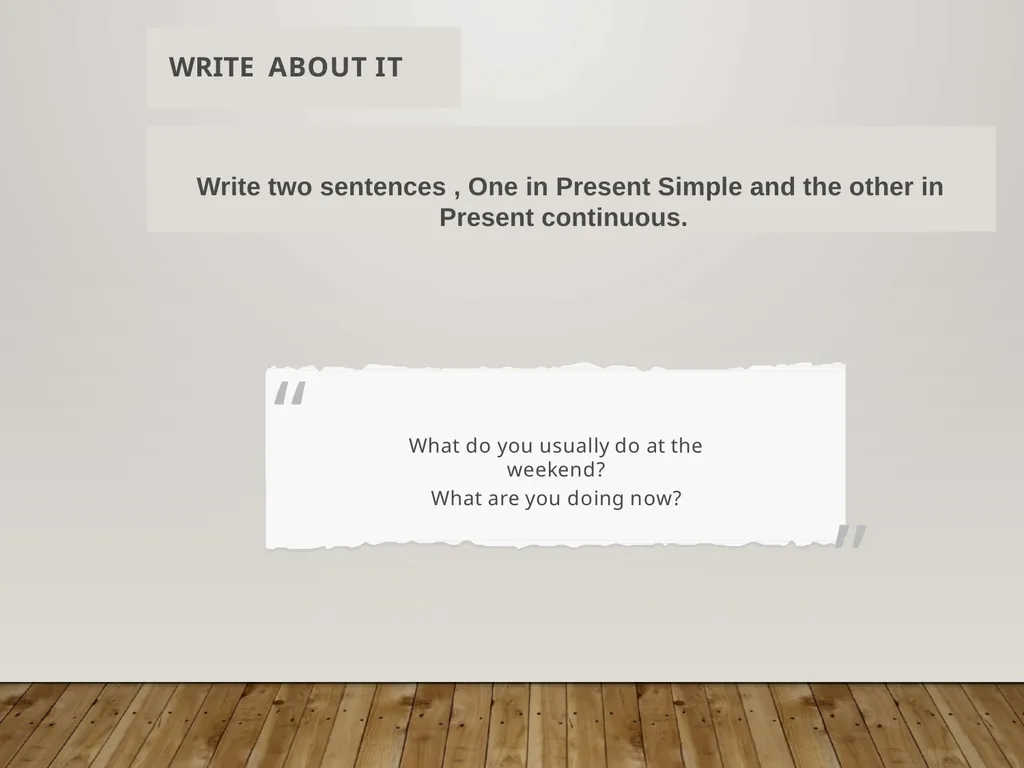
“ “ Write two sentences , One in Present Simple and the other in Present continuous. WRITE about it What do you usually do at the weekend?
What are you doing now?<br>
21
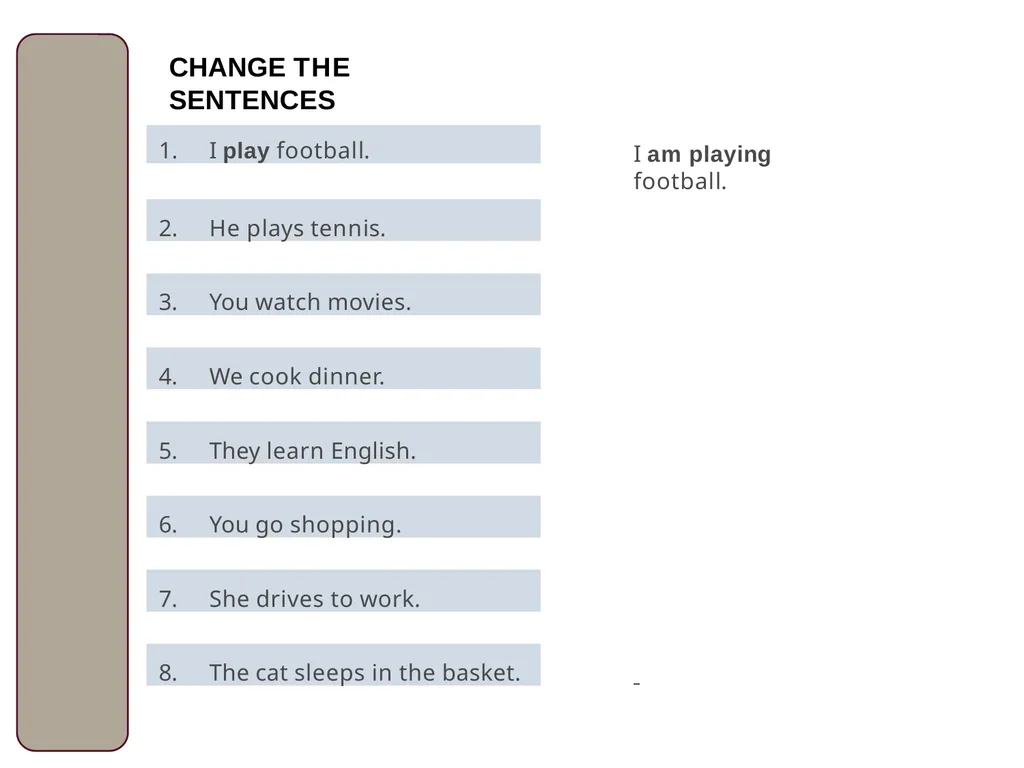
Change the sentences 21 2. He plays tennis. 3. You watch movies. I am playing football. 4. We cook dinner. 6. You go shopping. 7. She drives to work. 8. The cat sleeps in the basket. 5. They learn English. 1. I play football.<br>
22
Find the verbs Verbs Find the verbs in this lesson and write them down.
Which are new? Do you know all of them?
Look these words up.<br>
23
Conclusion
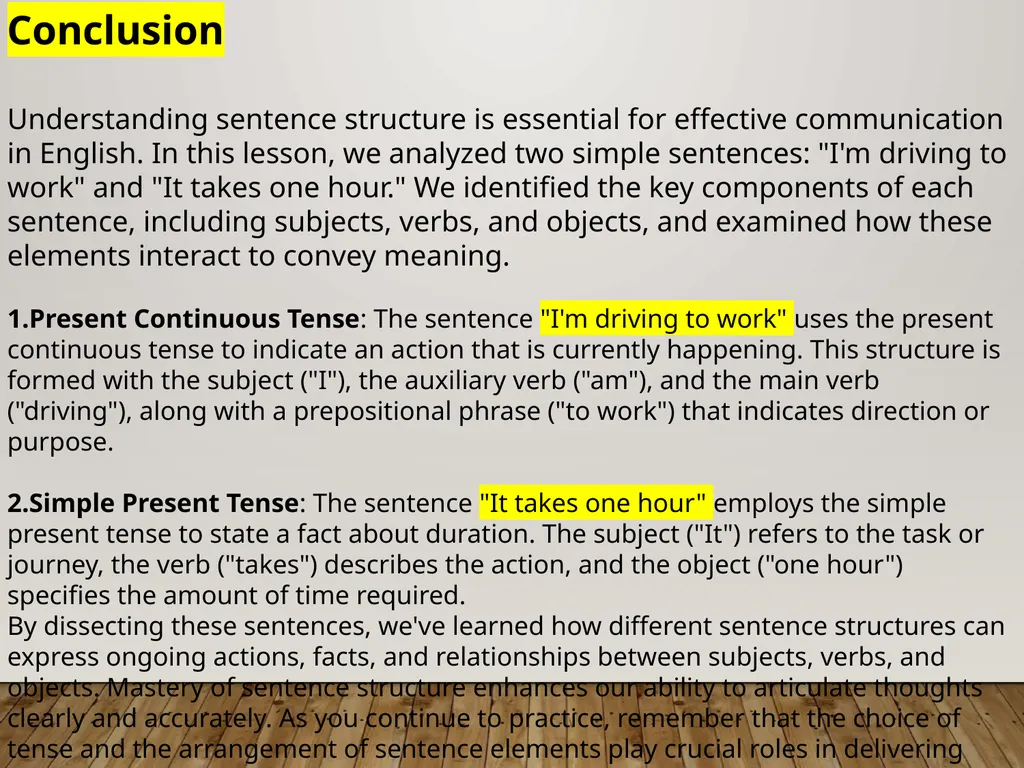
Understanding sentence structure is essential for effective communication in English. In this lesson, we analyzed two simple sentences: "I'm driving to work" and "It takes one hour." We identified the key components of each sentence, including subjects, verbs, and objects, and examined how these elements interact to convey meaning.
Present Continuous Tense: The sentence "I'm driving to work" uses the present continuous tense to indicate an action that is currently happening. This structure is formed with the subject ("I"), the auxiliary verb ("am"), and the main verb ("driving"), along with a prepositional phrase ("to work") that indicates direction or purpose.
Simple Present Tense: The sentence "It takes one hour" employs the simple present tense to state a fact about duration. The subject ("It") refers to the task or journey, the verb ("takes") describes the action, and the object ("one hour") specifies the amount of time required.
By dissecting these sentences, we've learned how different sentence structures can express ongoing actions, facts, and relationships between subjects, verbs, and objects. Mastery of sentence structure enhances our ability to articulate thoughts clearly and accurately. As you continue to practice, remember that the choice of tense and the arrangement of sentence elements play crucial roles in delivering your message effectively.<br>