03
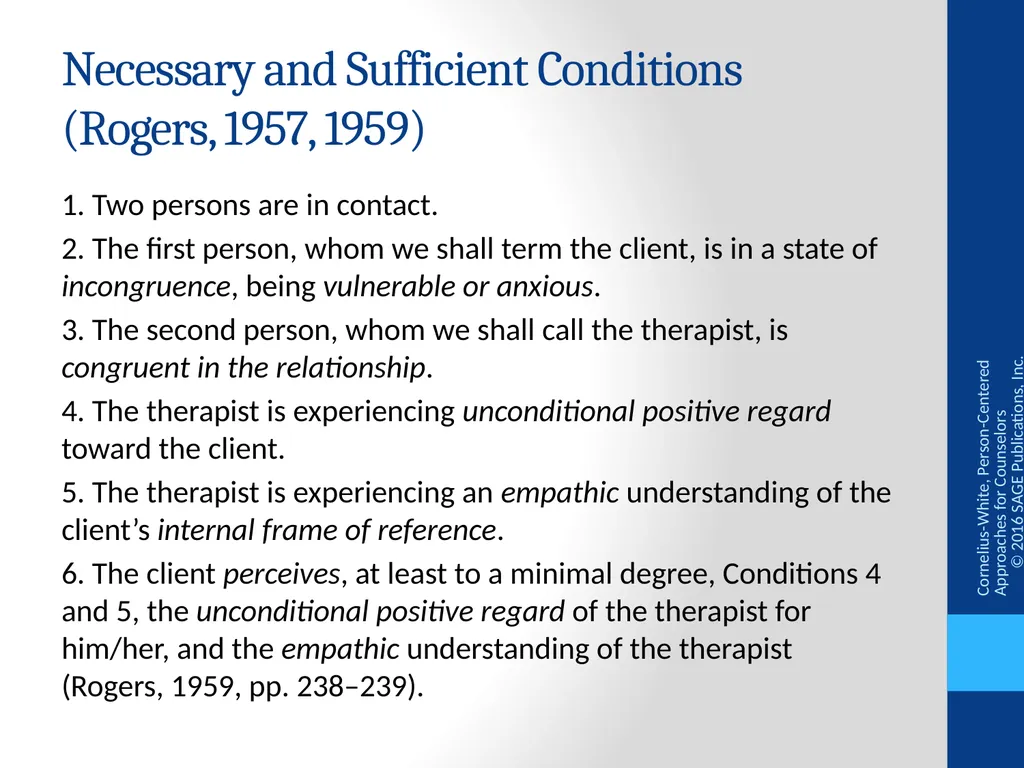
Necessary and Sufficient Conditions (Rogers, 1957, 1959) 1. Two persons are in contact.
2. The first person, whom we shall term the client, is in a state of incongruence, being vulnerable or anxious.
3. The second person, whom we shall call the therapist, is congruent in the relationship.
4. The therapist is experiencing unconditional positive regard toward the client.
5. The therapist is experiencing an empathic understanding of the client’s internal frame of reference.
6. The client perceives, at least to a minimal degree, Conditions 4 and 5, the unconditional positive regard of the therapist for him/her, and the empathic understanding of the therapist (Rogers, 1959, pp. 238–239). Cornelius-White, Person-Centered Approaches for Counselors © 2016 SAGE Publications, Inc.<br>
04
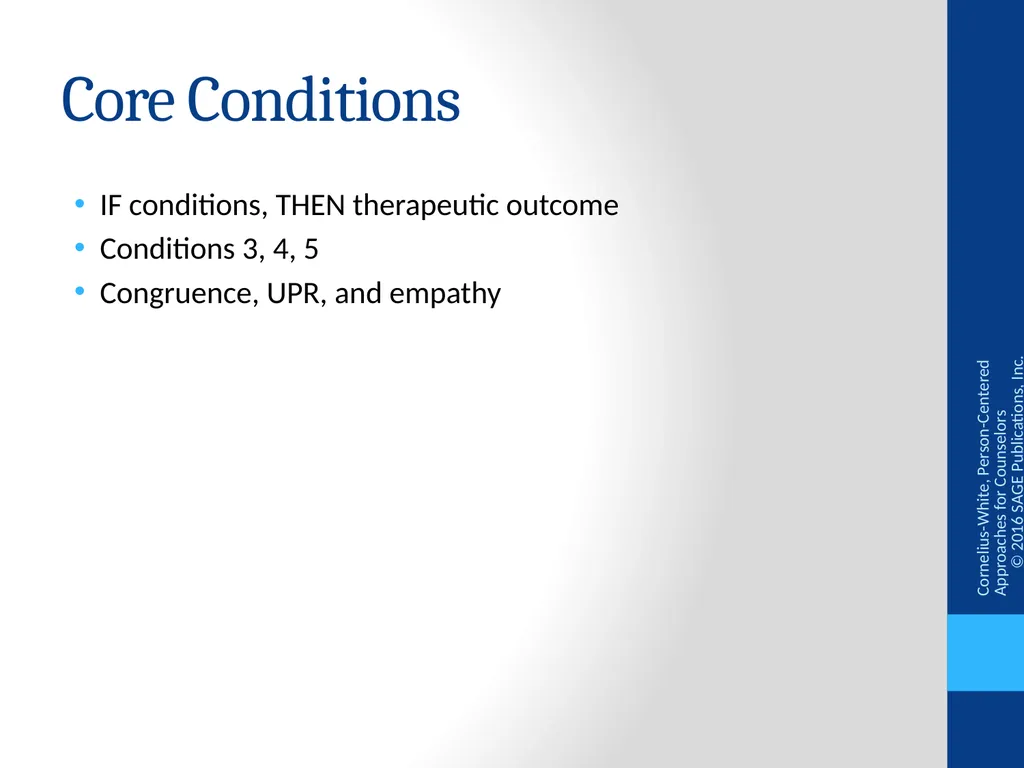
Core Conditions IF conditions, THEN therapeutic outcome
Conditions 3, 4, 5
Congruence, UPR, and empathy Cornelius-White, Person-Centered Approaches for Counselors © 2016 SAGE Publications, Inc.<br>
05
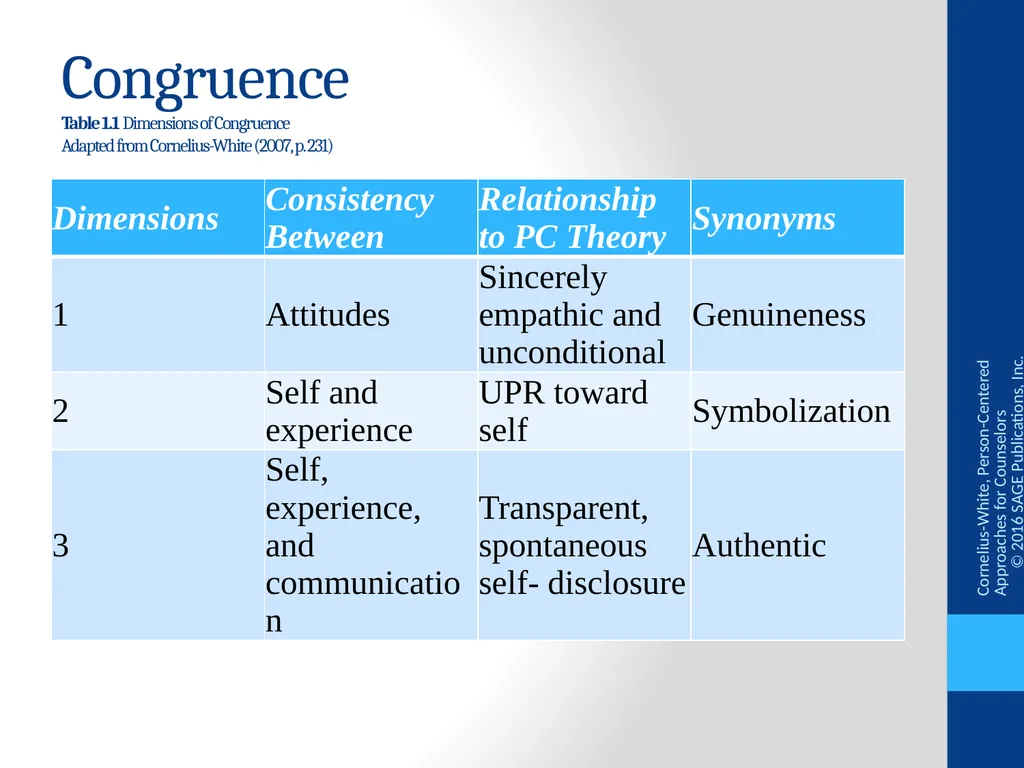
Congruence�Table 1.1 Dimensions of Congruence�Adapted from Cornelius-White (2007, p. 231) Cornelius-White, Person-Centered Approaches for Counselors © 2016 SAGE Publications, Inc.<br>
06
Examples Level 1
Level 2
Level 3 Cornelius-White, Person-Centered Approaches for Counselors © 2016 SAGE Publications, Inc.<br>
07
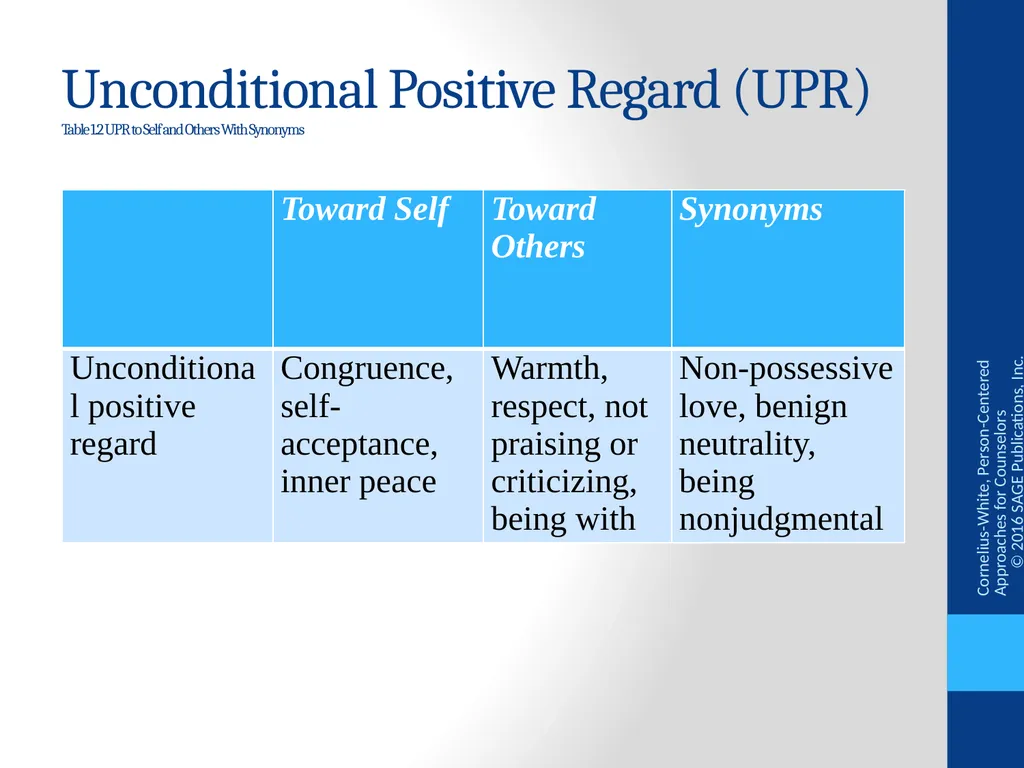
Unconditional Positive Regard (UPR)�Table 1.2 UPR to Self and Others With Synonyms Cornelius-White, Person-Centered Approaches for Counselors © 2016 SAGE Publications, Inc.<br>
08
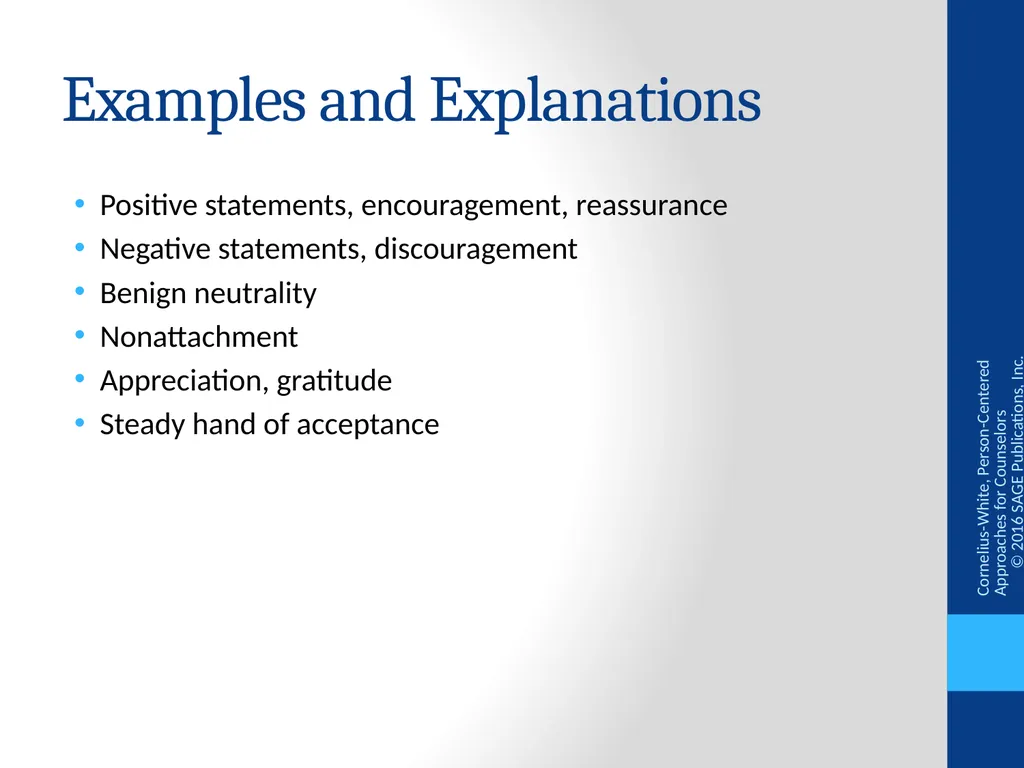
Examples and Explanations Positive statements, encouragement, reassurance
Negative statements, discouragement
Benign neutrality
Nonattachment
Appreciation, gratitude
Steady hand of acceptance Cornelius-White, Person-Centered Approaches for Counselors © 2016 SAGE Publications, Inc.<br>
09
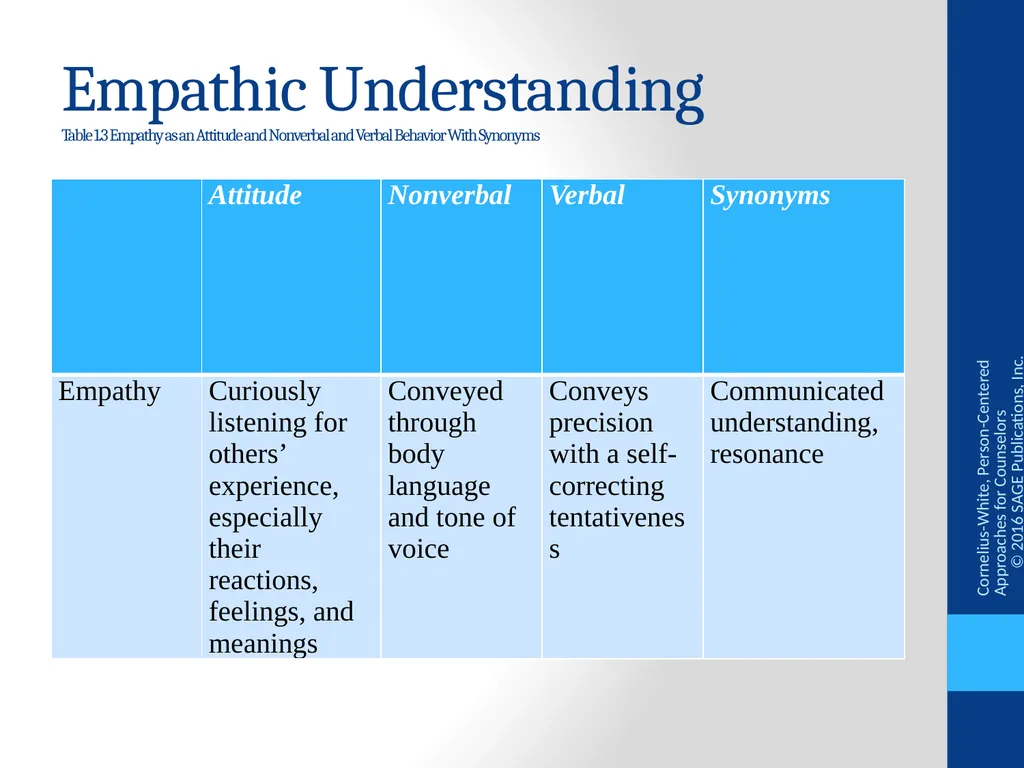
Empathic Understanding�Table 1.3 Empathy as an Attitude and Nonverbal and Verbal Behavior With Synonyms Cornelius-White, Person-Centered Approaches for Counselors © 2016 SAGE Publications, Inc.<br>
10
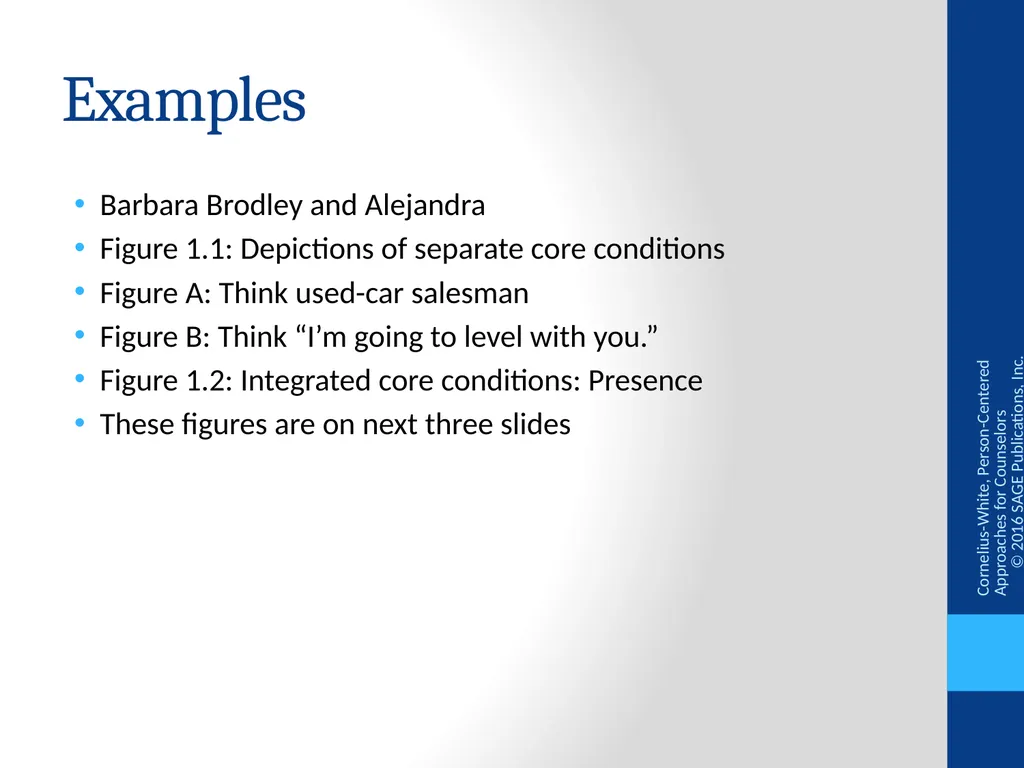
Examples Barbara Brodley and Alejandra
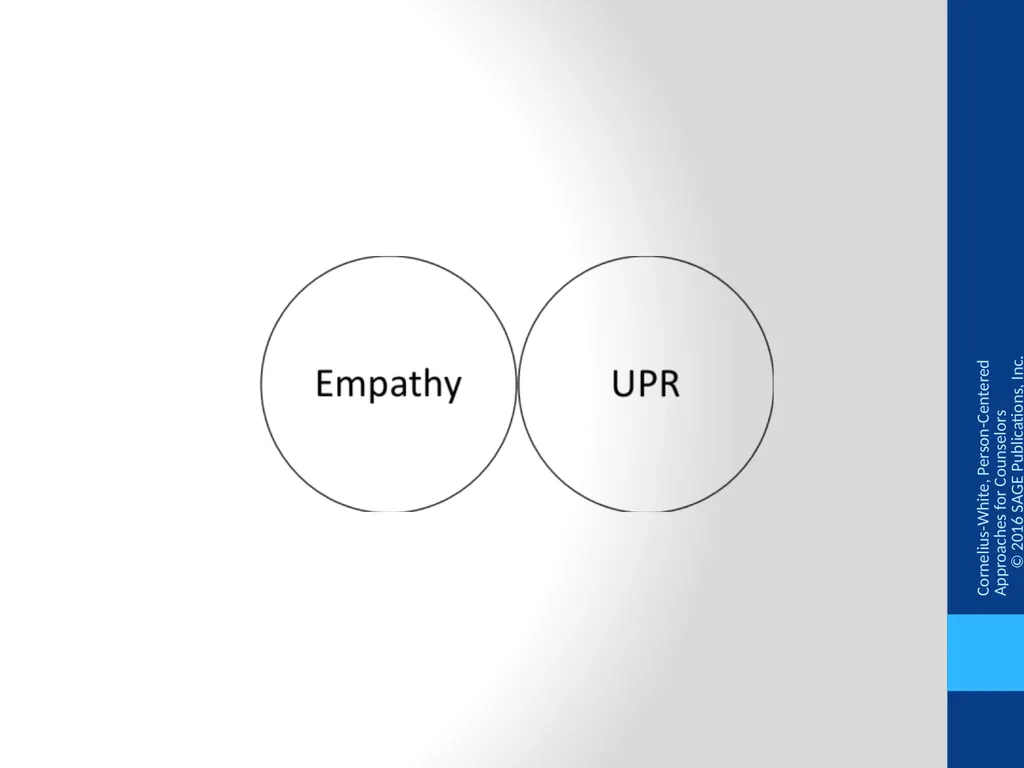
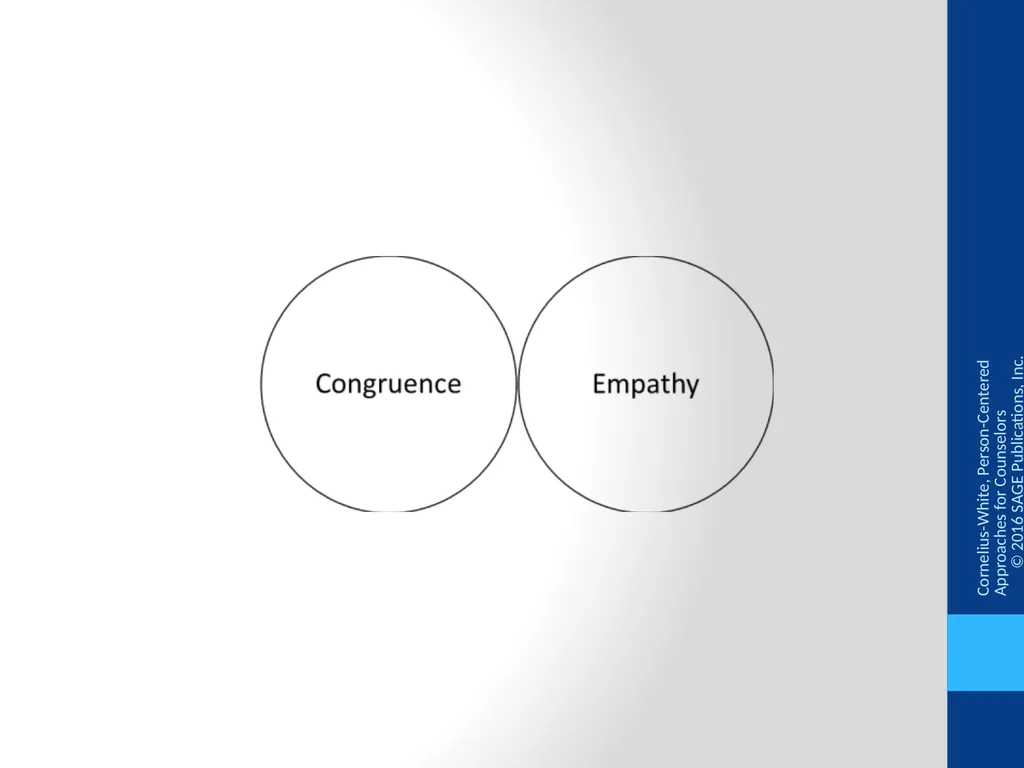
Figure 1.1: Depictions of separate core conditions
Figure A: Think used-car salesman
Figure B: Think “I’m going to level with you.”
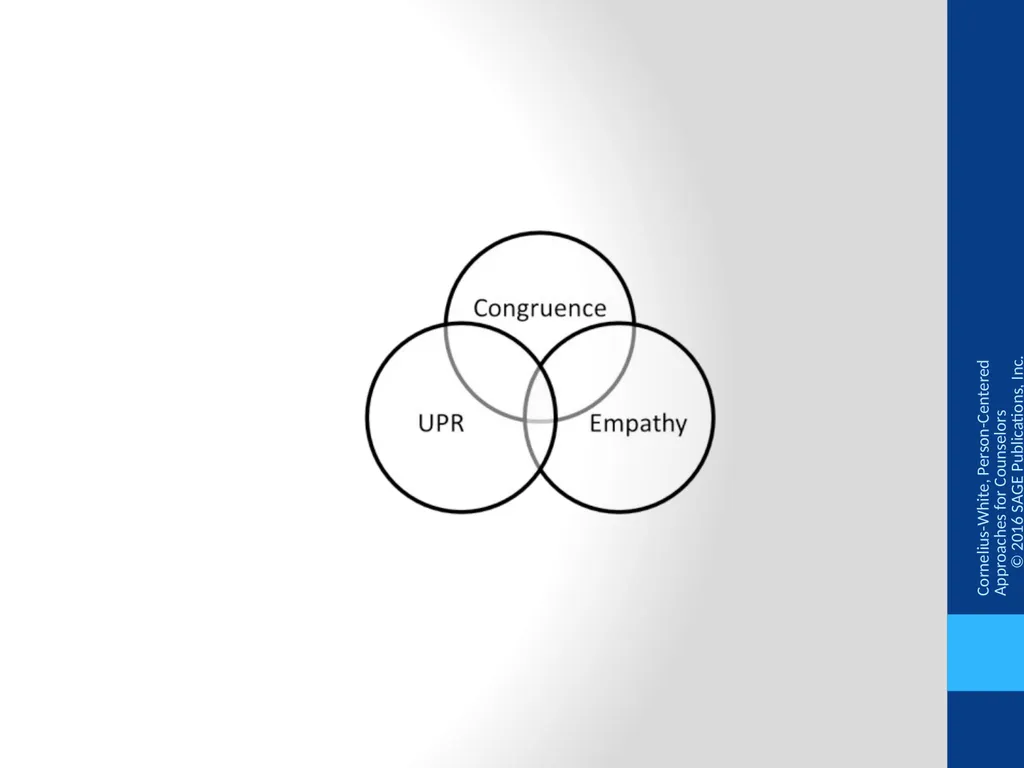
Figure 1.2: Integrated core conditions: Presence
These figures are on next three slides Cornelius-White, Person-Centered Approaches for Counselors © 2016 SAGE Publications, Inc.<br>
11
Cornelius-White, Person-Centered Approaches for Counselors © 2016 SAGE Publications, Inc.<br>
12
Cornelius-White, Person-Centered Approaches for Counselors © 2016 SAGE Publications, Inc.<br>
13
Cornelius-White, Person-Centered Approaches for Counselors © 2016 SAGE Publications, Inc.<br>
14
Presence Quote From Rogers “I find that when I am the closest to my inner, intuitive self—when perhaps I am somehow in touch with the unknown in me—when perhaps I am in a slightly altered state of consciousness in the relationship, then whatever I do seems to be full of healing. Then simply my presence is releasing and helpful. At those moments, it seems that my inner spirit has reached out and touched the inner spirit of the other. Our relationship transcends itself, and has become part of something larger. Profound growth and healing are present.” (Baldwin, 2000, p. 36) Cornelius-White, Person-Centered Approaches for Counselors © 2016 SAGE Publications, Inc.<br>
15
Summary The person of the therapist appears to be a key common factor.
Rogers’s (1957, 1959) necessary and sufficient conditions provide six conditions, including what are commonly referred to as the three core conditions, which if present facilitate client growth and improvement.
Congruence has several levels, such as genuineness or sincerity in the relationship and a self-acceptance and consistency between one’s experience and self-concept. Cornelius-White, Person-Centered Approaches for Counselors © 2016 SAGE Publications, Inc.<br>
16
Summary Continued Unconditional positive regard (UPR) is acceptance, neutrality toward clients’ thoughts, feelings, and perceptions, with warmth and respect, a non-possessive love.
Empathy is understanding of a client’s experience, his or her thoughts, feelings, meanings, and especially reactions in the moment to his or her narrative and experience of the therapist.
Presence is the intersection of congruence, UPR, and empathy, a quality that is larger than the sum of the parts, a way of “being there” that is therapeutic for someone. Cornelius-White, Person-Centered Approaches for Counselors © 2016 SAGE Publications, Inc.<br>
17
References Baldwin, M. (2000). Interview with Carl Rogers on the use of self in therapy. In M. Baldwin (Ed.), The use of self in therapy (pp. 29–38). New York, NY: Haworth.
Cornelius-White, J. H. D. (2007). Congruence: An integrated five dimension model. Person-Centered and Experiential Psychotherapies, 6, 228–238.
Cornelius-White, J. H. D. (2012). Соответствие: интегральная пятимерная модель [Congruence: An integrative five dimensional model]. Журнал Практикующего Психолога [Journal of the Practicing Psychologist, Russia], 4, 50–62.
Moon, K. A., Witty, M., Grant, B., & Rice, B. (2011). Practicing client-centered therapy: Selected writings of Barbara Temaner Brodley. Ross-on-Wye, United Kingdom: PCCS Books.
Rogers, C. R. (1957). The necessary and sufficient conditions of therapeutic personality change. Journal of Consulting Psychology, 21(2), 95–103.
Rogers, C. R. (1959). A theory of therapy, personality and interpersonal relationships as developed in the client-centered framework. In S. Koch (Ed.), Psychology: A study of a science. Vol. 3: Formulations of the person and the social context. New York, NY: McGraw Hill. Cornelius-White, Person-Centered Approaches for Counselors © 2016 SAGE Publications, Inc.<br>