Thick lens –solved problems Q1: A double convex
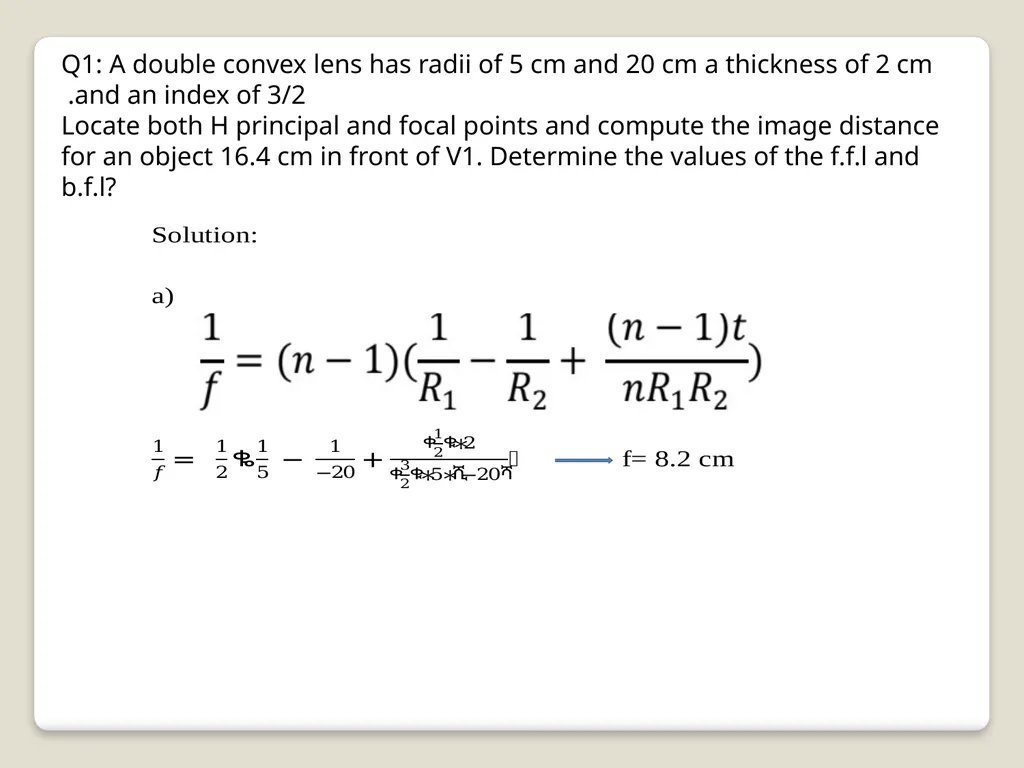
Description: Thick lens solved problems Q1: A double convex lens has radii of 5 cm and 20 cm a thickness of 2 cm and an index of 32. Locate both H principal and focal points and compute the image distance for an object 16.4 cm in front of V1.
Related Topics
Download Presentation
"Thick lens –solved problems Q1: A double convex" is the property of its rightful owner. Permission is granted to download and print the materials on this website for personal, non-commercial use only, and to display it on your personal computer provided you do not modify the materials and that you retain all copyright notices contained in the materials. By downloading content from our website, you accept the terms of this agreement.
Presentation Transcript
slide1. Thick lens –solved problems<br>
slide2. Q1: A double convex lens has radii of 5 cm and 20 cm a thickness of 2 cm and an index of 3/2.
Locate both H principal and focal points and compute the image distance for an object 16.4 cm in front of V1. Determine the values of the f.f.l and b.f.l?<br>
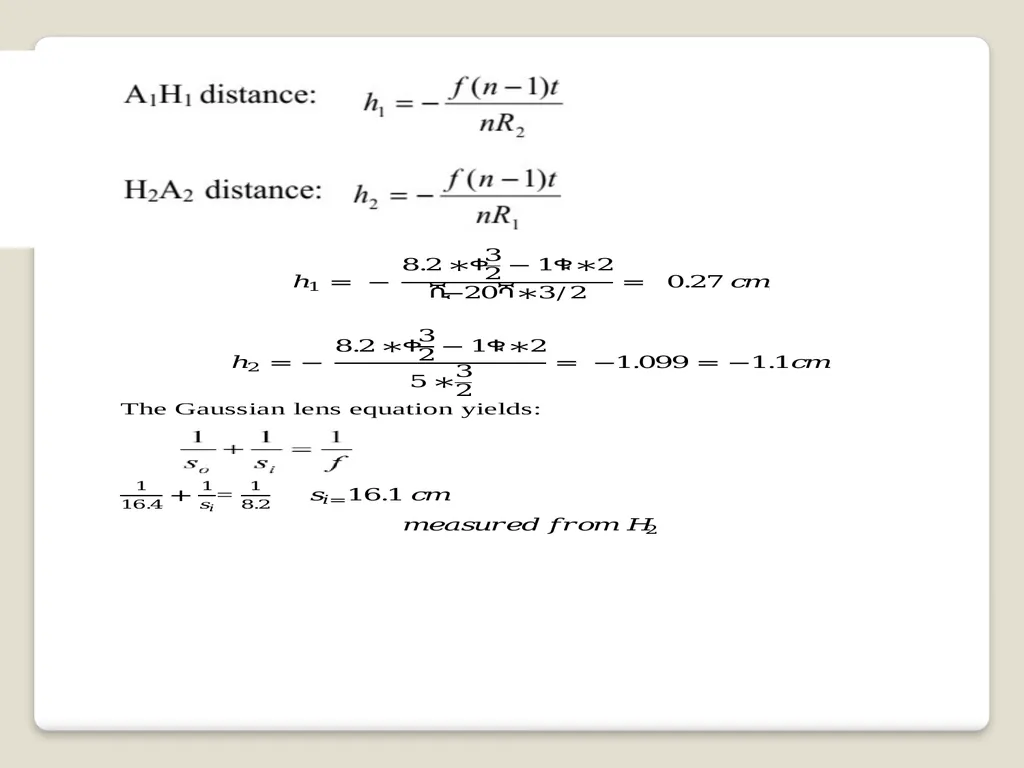
slide4. B.f.l= f+ h2= 8.2 + (-1.1)= 7.1 cm
f.f.l = f+ h1 = 8.2 -0.27= 7.9 cm
Â
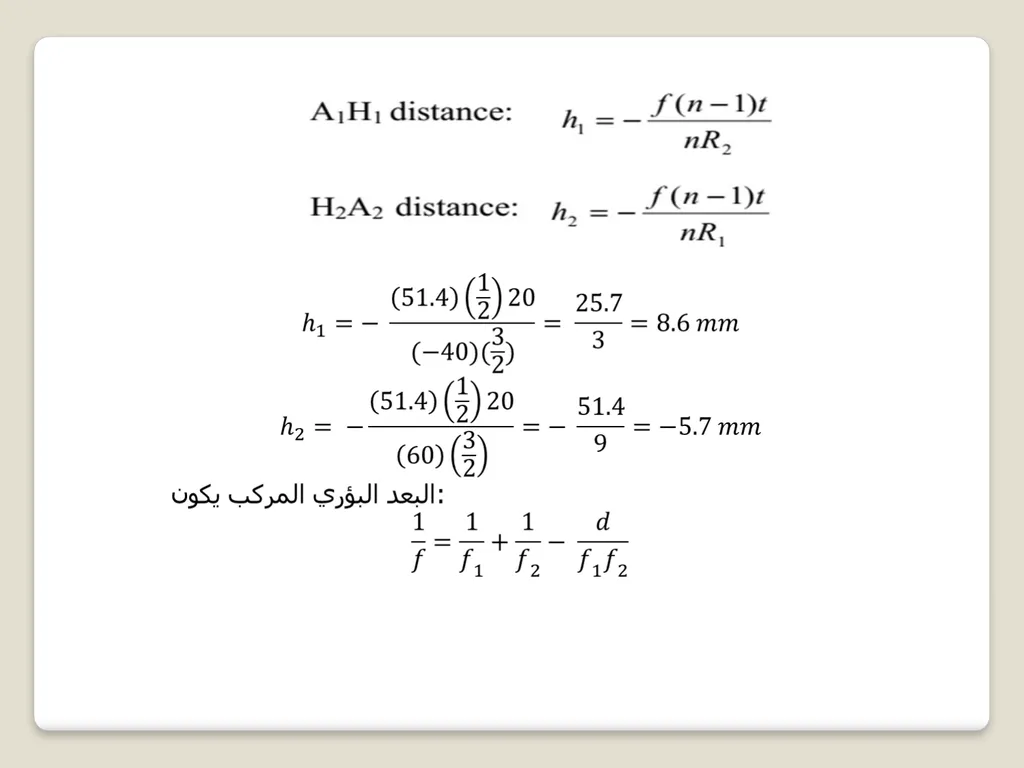
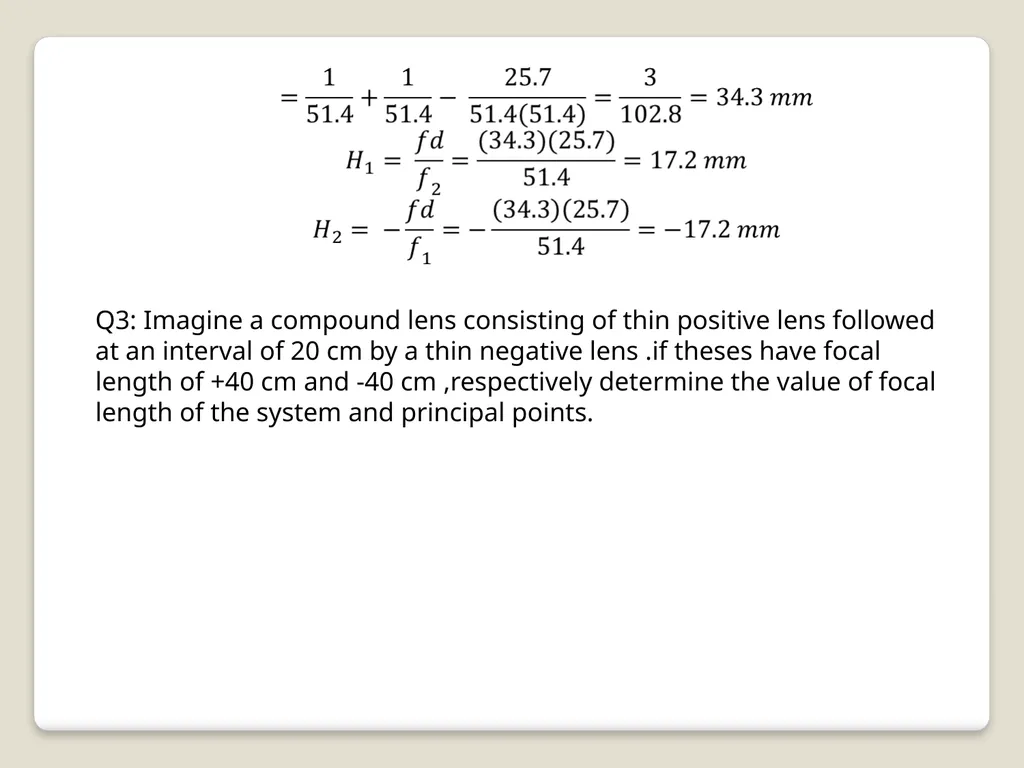
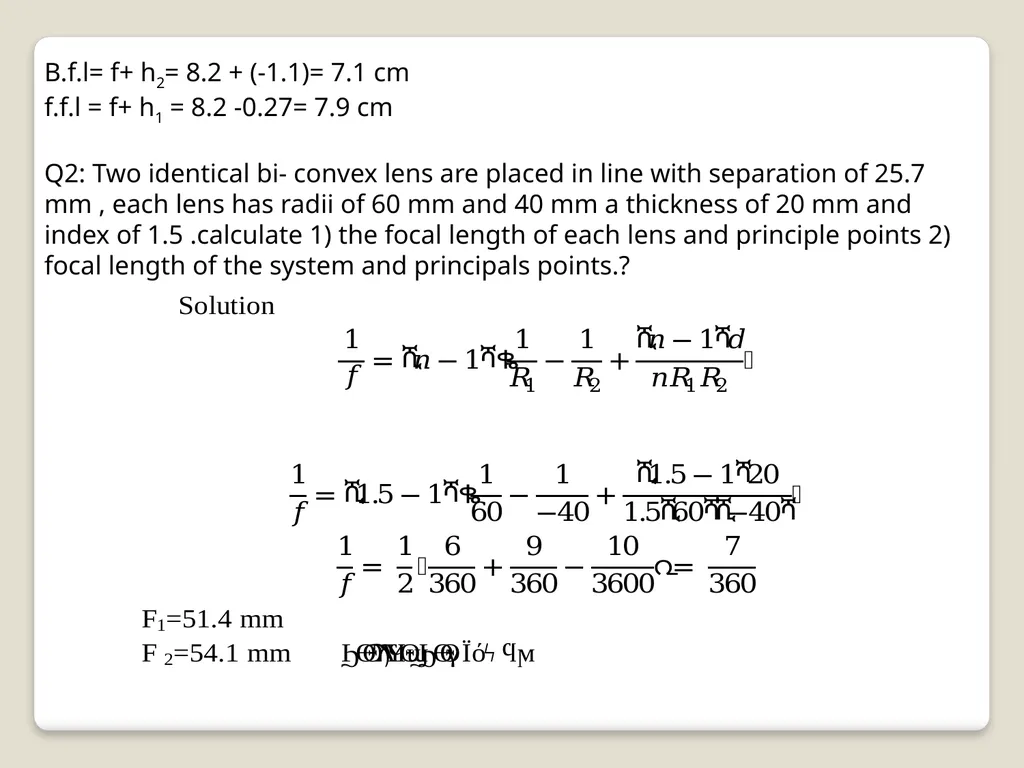
Q2: Two identical bi- convex lens are placed in line with separation of 25.7 mm , each lens has radii of 60 mm and 40 mm a thickness of 20 mm and index of 1.5 .calculate 1) the focal length of each lens and principle points 2) focal length of the system and principals points.?<br>
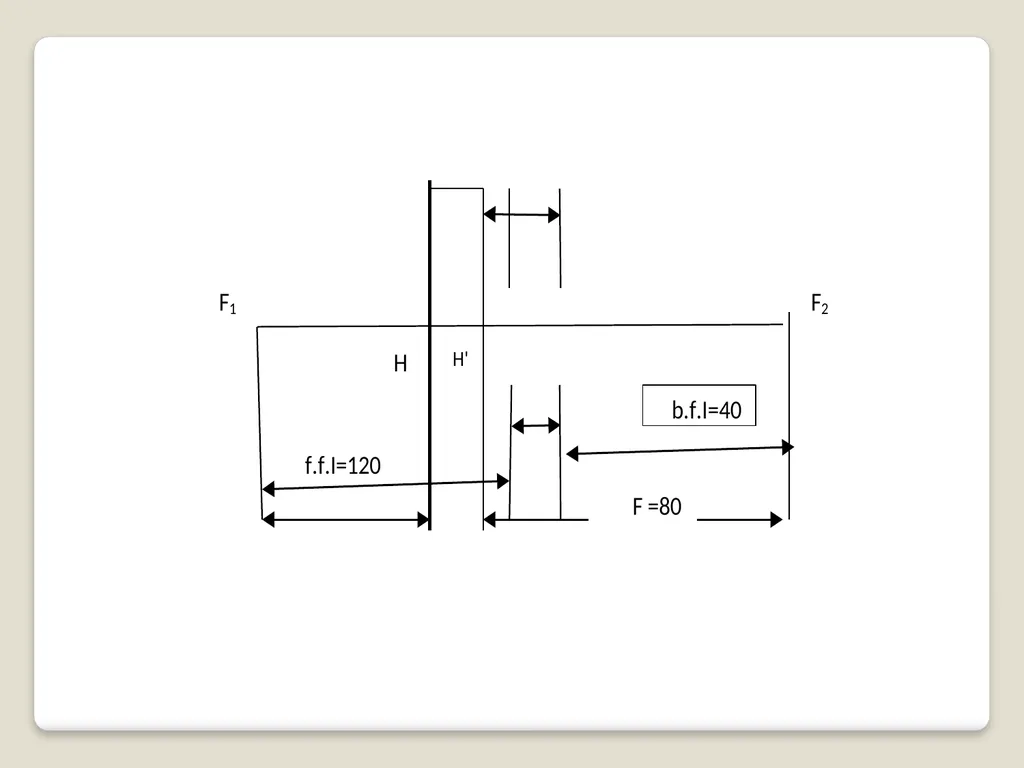
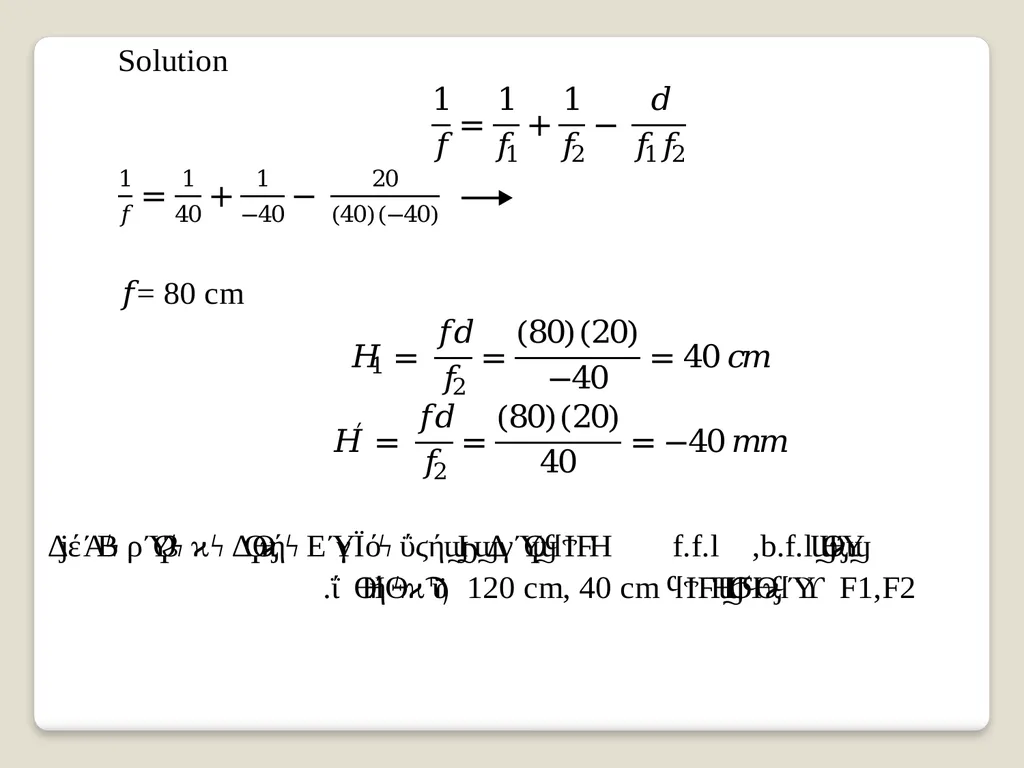
slide6. Q3: Imagine a compound lens consisting of thin positive lens followed at an interval of 20 cm by a thin negative lens .if theses have focal length of +40 cm and -40 cm ,respectively determine the value of focal length of the system and principal points.<br>
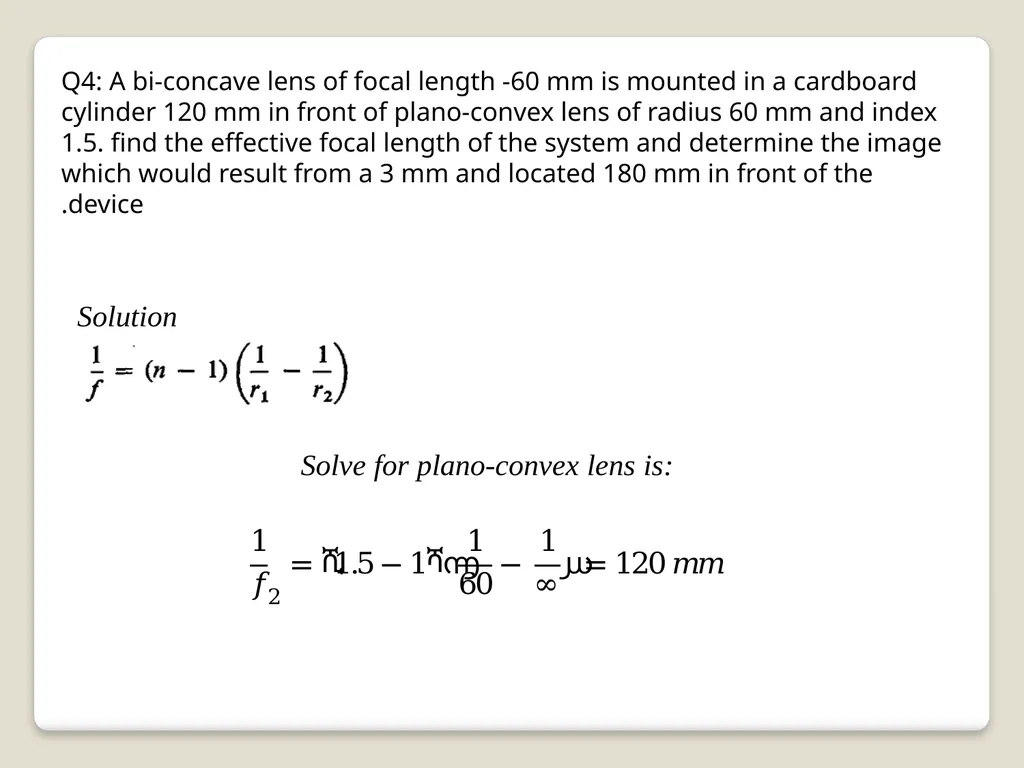
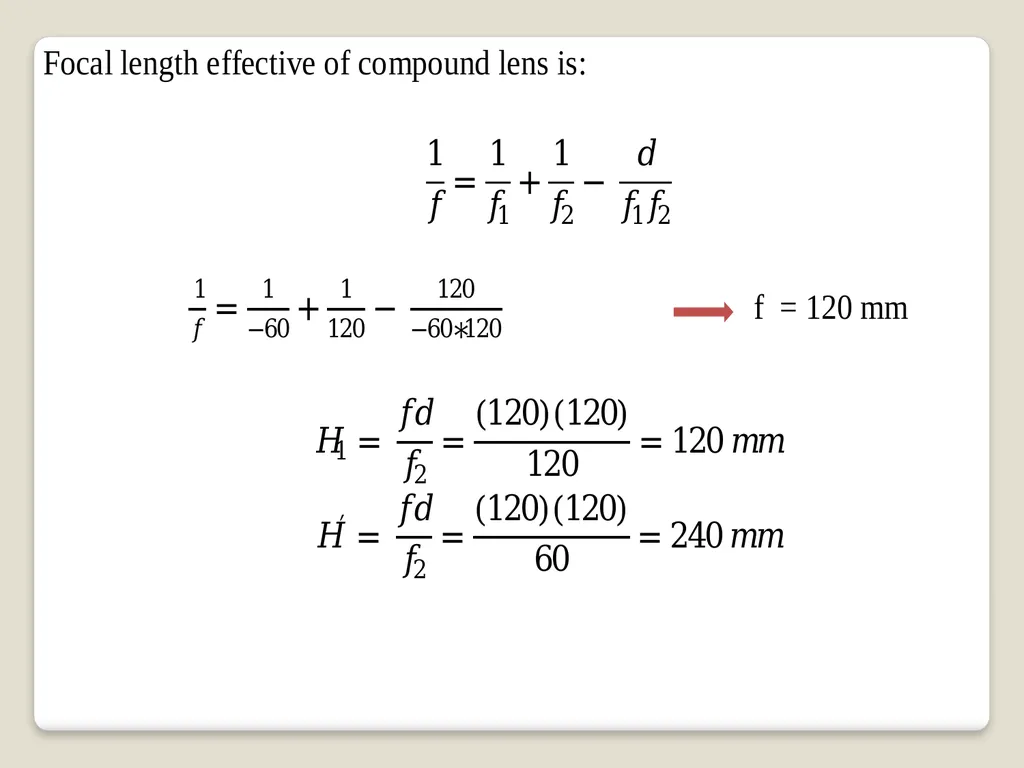
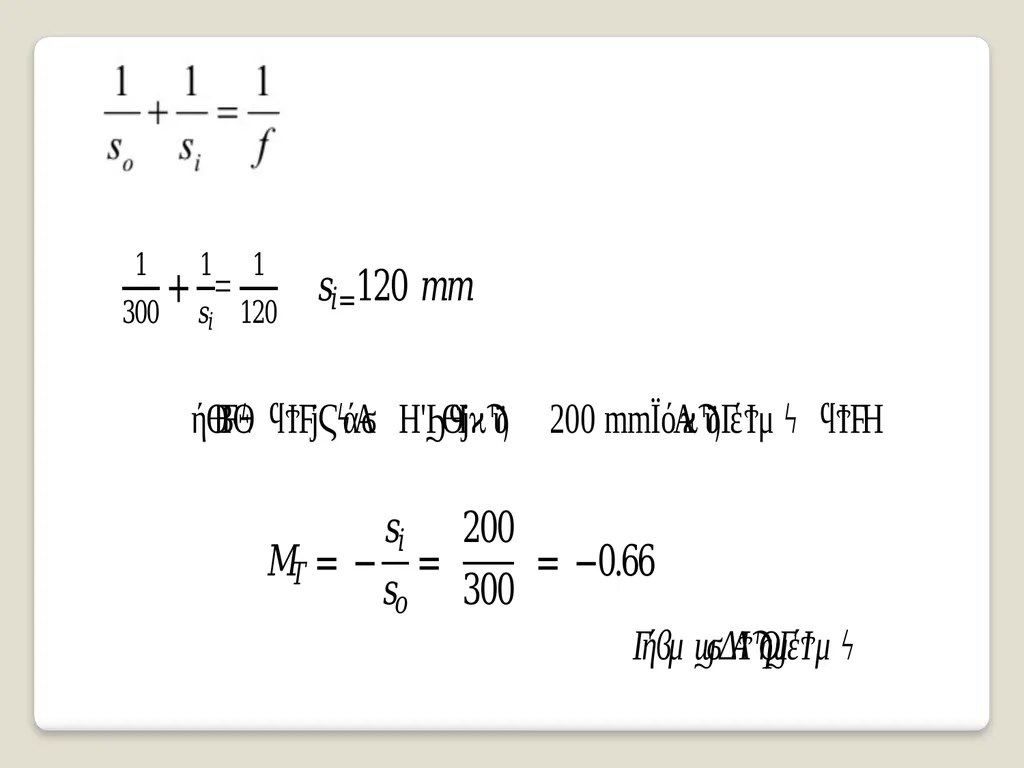
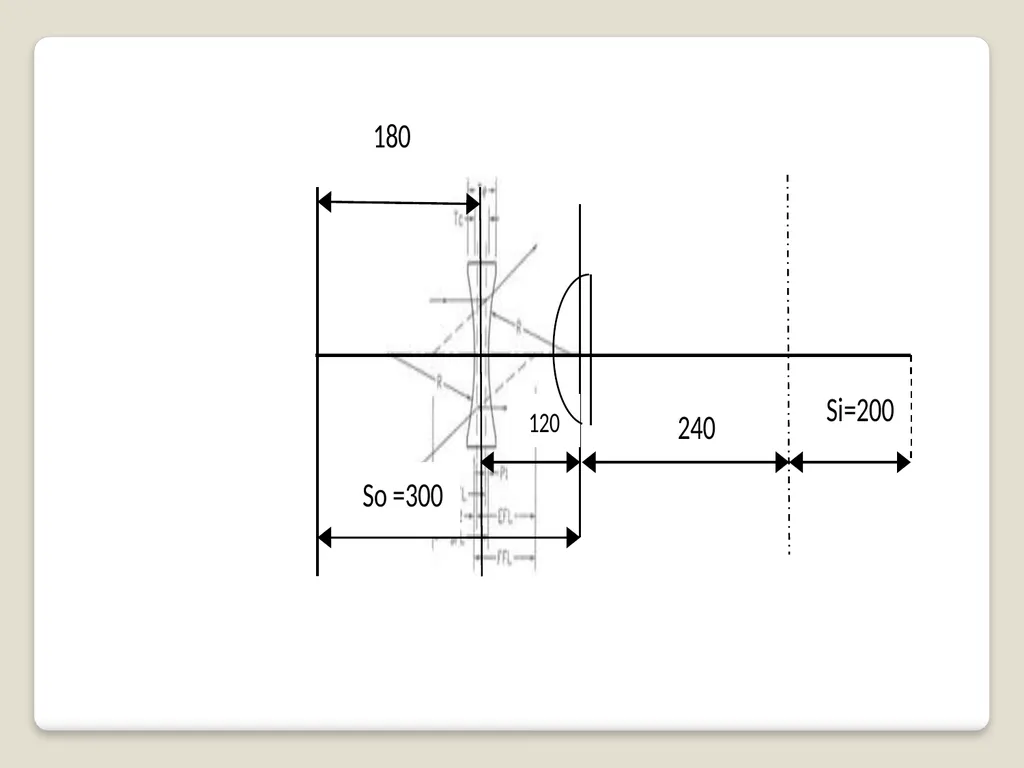
slide9. Q4: A bi-concave lens of focal length -60 mm is mounted in a cardboard cylinder 120 mm in front of plano-convex lens of radius 60 mm and index 1.5. find the effective focal length of the system and determine the image which would result from a 3 mm and located 180 mm in front of the device.<br>
slide2. Q1: A double convex lens has radii of 5 cm and 20 cm a thickness of 2 cm and an index of 3/2.
Locate both H principal and focal points and compute the image distance for an object 16.4 cm in front of V1. Determine the values of the f.f.l and b.f.l?<br>
slide4. B.f.l= f+ h2= 8.2 + (-1.1)= 7.1 cm
f.f.l = f+ h1 = 8.2 -0.27= 7.9 cm
Â
Q2: Two identical bi- convex lens are placed in line with separation of 25.7 mm , each lens has radii of 60 mm and 40 mm a thickness of 20 mm and index of 1.5 .calculate 1) the focal length of each lens and principle points 2) focal length of the system and principals points.?<br>
slide6. Q3: Imagine a compound lens consisting of thin positive lens followed at an interval of 20 cm by a thin negative lens .if theses have focal length of +40 cm and -40 cm ,respectively determine the value of focal length of the system and principal points.<br>
slide9. Q4: A bi-concave lens of focal length -60 mm is mounted in a cardboard cylinder 120 mm in front of plano-convex lens of radius 60 mm and index 1.5. find the effective focal length of the system and determine the image which would result from a 3 mm and located 180 mm in front of the device.<br>