Thinking for a Change Integrated Cognitive
Description: Thinking for a Change Integrated Cognitive Behavior Change Program March 21, 2012 About the Presentation 2 This presentation is large part is taken from the actual curriculum developed by The National Institute of Corrections. The slides
Related Topics
Download Presentation
"Thinking for a Change Integrated Cognitive" is the property of its rightful owner. Permission is granted to download and print the materials on this website for personal, non-commercial use only, and to display it on your personal computer provided you do not modify the materials and that you retain all copyright notices contained in the materials. By downloading content from our website, you accept the terms of this agreement.
Presentation Transcript
slide1. Thinking for a Change Integrated Cognitive Behavior Change Program
March 21, 2012<br>
slide2. About the Presentation 2 This presentation is large part is taken from the actual curriculum developed by The National Institute of Corrections. The slides will highlight the core elements of the curriculum with resources as to where additional information can be found.<br>
slide3. About the curriculum The Thinking for a Change curriculum uses as its core, a problem solving program embellished by both cognitive restructuring and social skills interventions. 3<br>
slide4. Learning Objectives Upon completion of this presentation, participants will :
Know the three types of skills needed for change
Know how many lessons are in the curriculum
Know the basic structure for the lessons
Homework, modeling new skills, contract to practice outside of class 4<br>
slide5. About the curriculum The National Institute of Corrections has offered a training seminar, “Cognitive Approaches to Changing Offender Behavior”, for the last six years at their Academy in Longmont, Colorado, and more recently as cooperative training programs in various locations throughout the country. Essentially, the curriculum which was developed by a panel of experts in cognitive behavioral interventions presented many of the cognitive restructuring and cognitive skills concepts in a generic, yet practical manner. 5<br>
slide6. The Premise 6 By taking charge of our thinking we can take control of our lives<br>
slide7. Three Key Skills #1 7 Cognitive Self-Change - Paying attention to the thoughts and feelings that go on inside of us to avoid the kinds of thoughts and feelings that lead us to trouble.
Social Skills – Behaviors or abilities we use in situations that involve other people
Problem Solving Skills – Skills to help us make better choices<br>
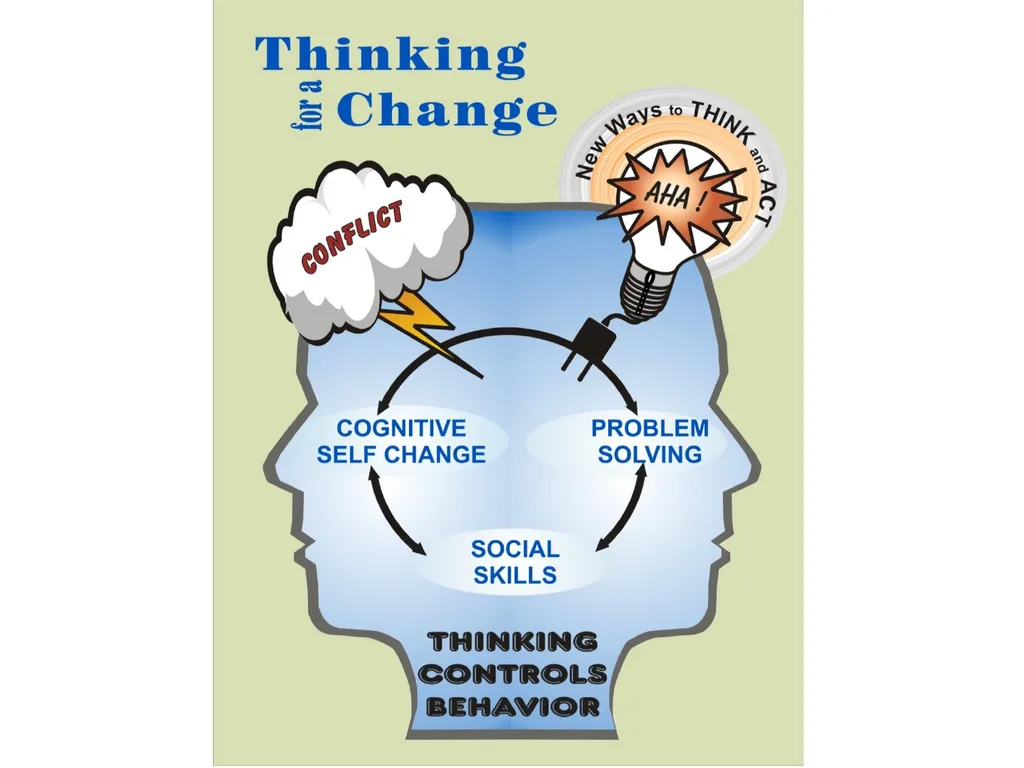
slide8. Showing what goes on in our head 8<br>
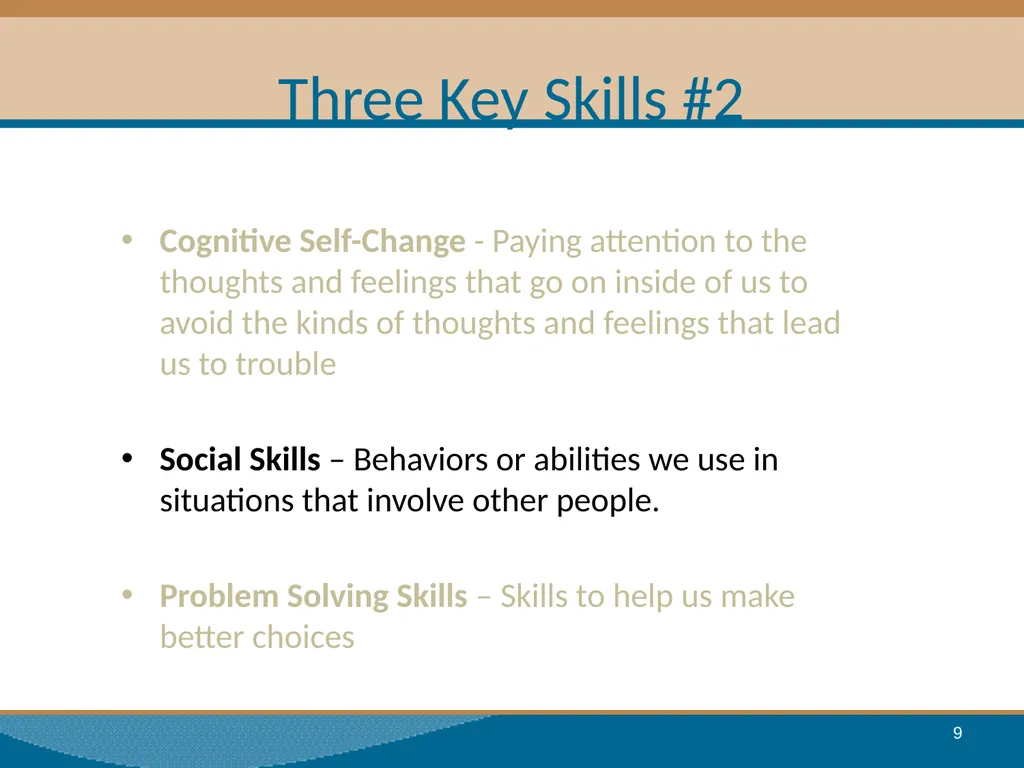
slide9. Three Key Skills #2 9 Cognitive Self-Change - Paying attention to the thoughts and feelings that go on inside of us to avoid the kinds of thoughts and feelings that lead us to trouble
Social Skills – Behaviors or abilities we use in situations that involve other people.
Problem Solving Skills – Skills to help us make better choices<br>
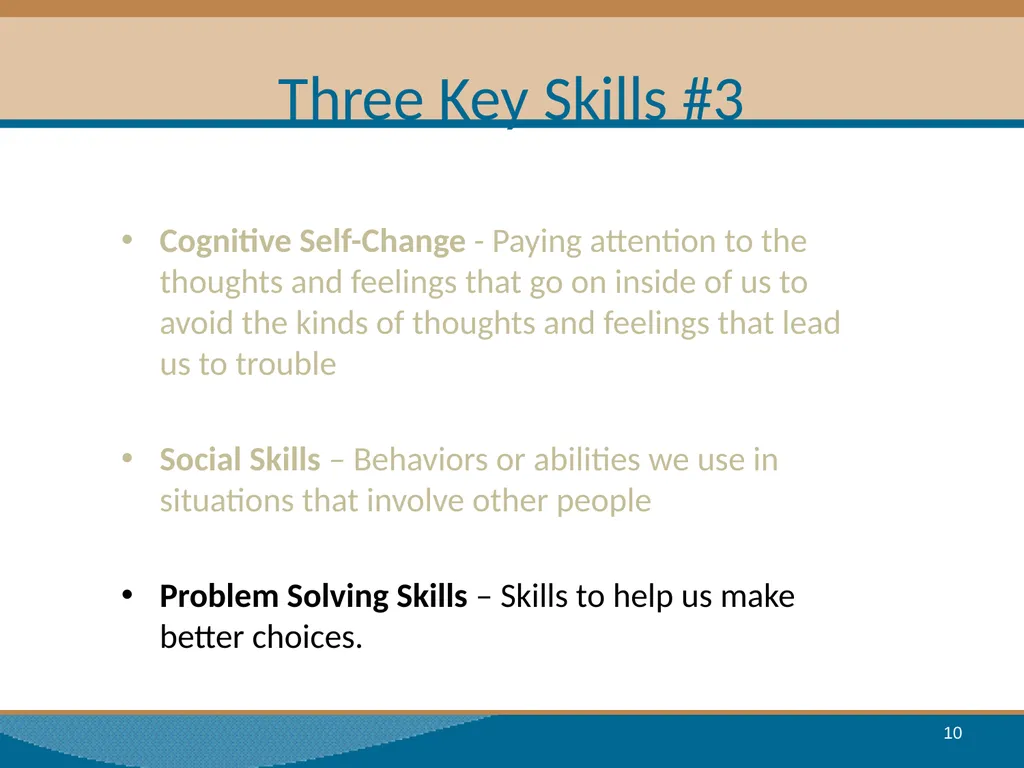
slide10. Three Key Skills #3 10 Cognitive Self-Change - Paying attention to the thoughts and feelings that go on inside of us to avoid the kinds of thoughts and feelings that lead us to trouble
Social Skills – Behaviors or abilities we use in situations that involve other people
Problem Solving Skills – Skills to help us make better choices.<br>
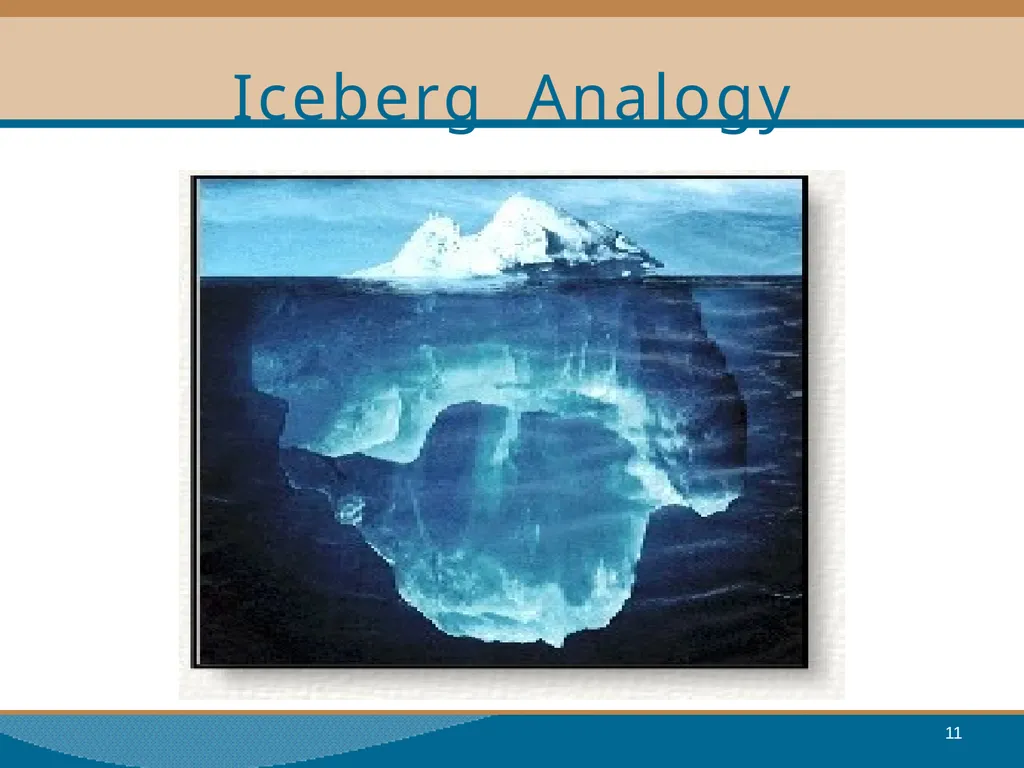
slide11. Iceberg Analogy 11<br>
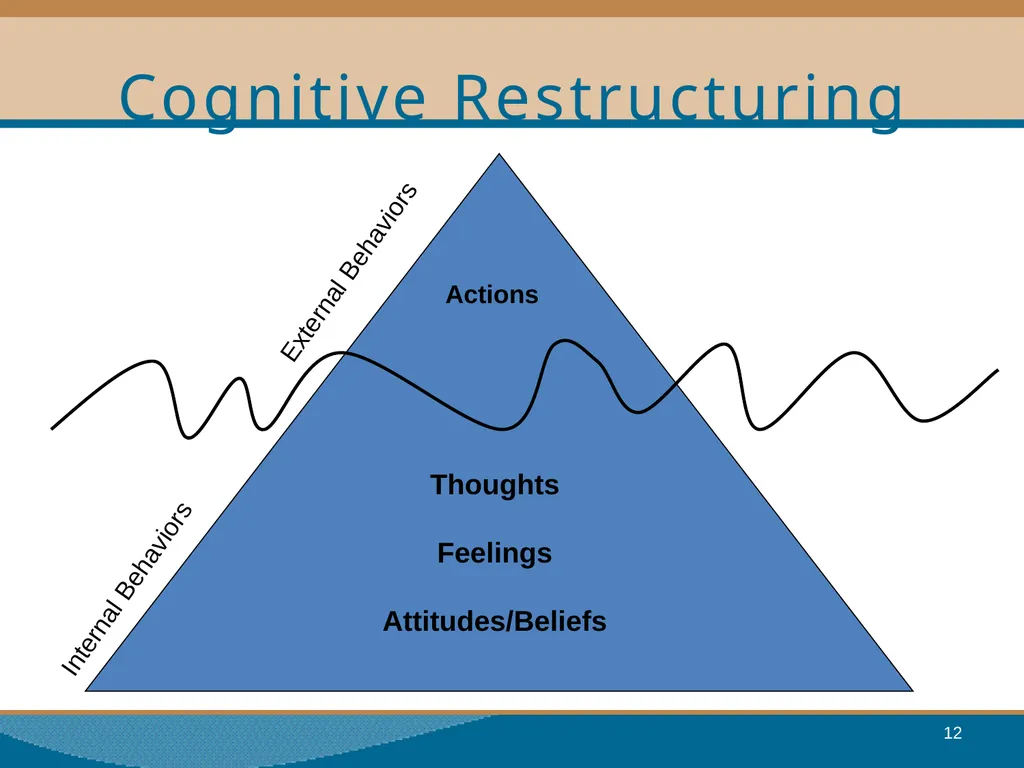
slide12. Cognitive Restructuring 12 Actions Thoughts
Feelings
Attitudes/Beliefs Internal Behaviors External Behaviors<br>
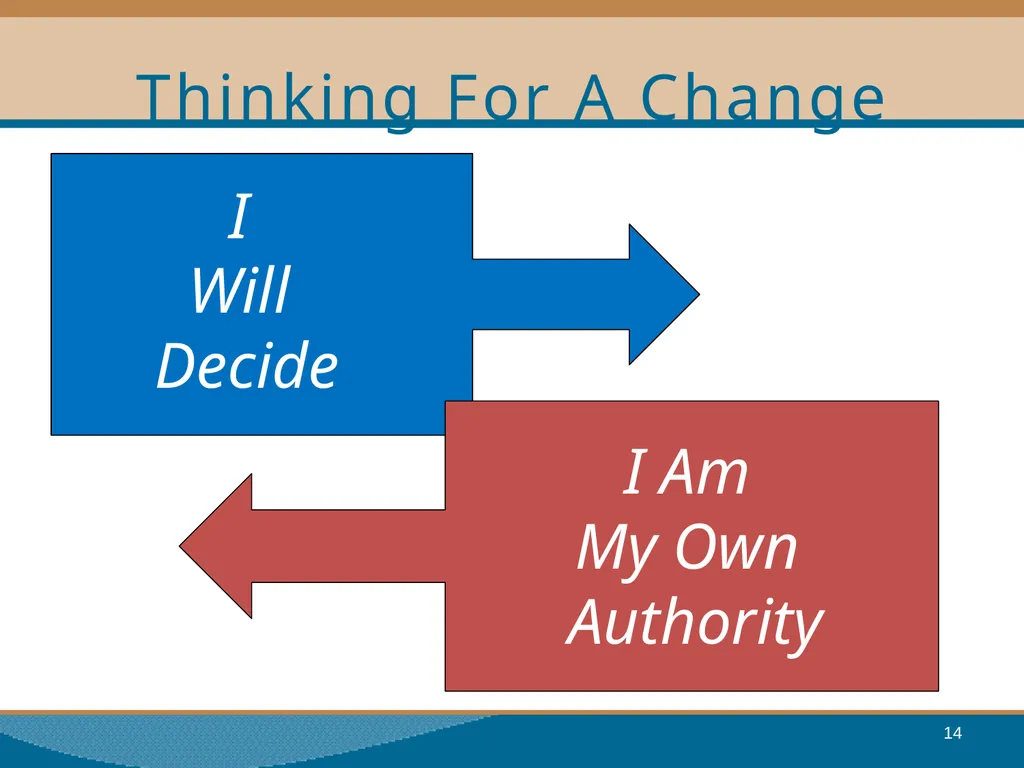
slide14. Thinking For A Change 14<br>
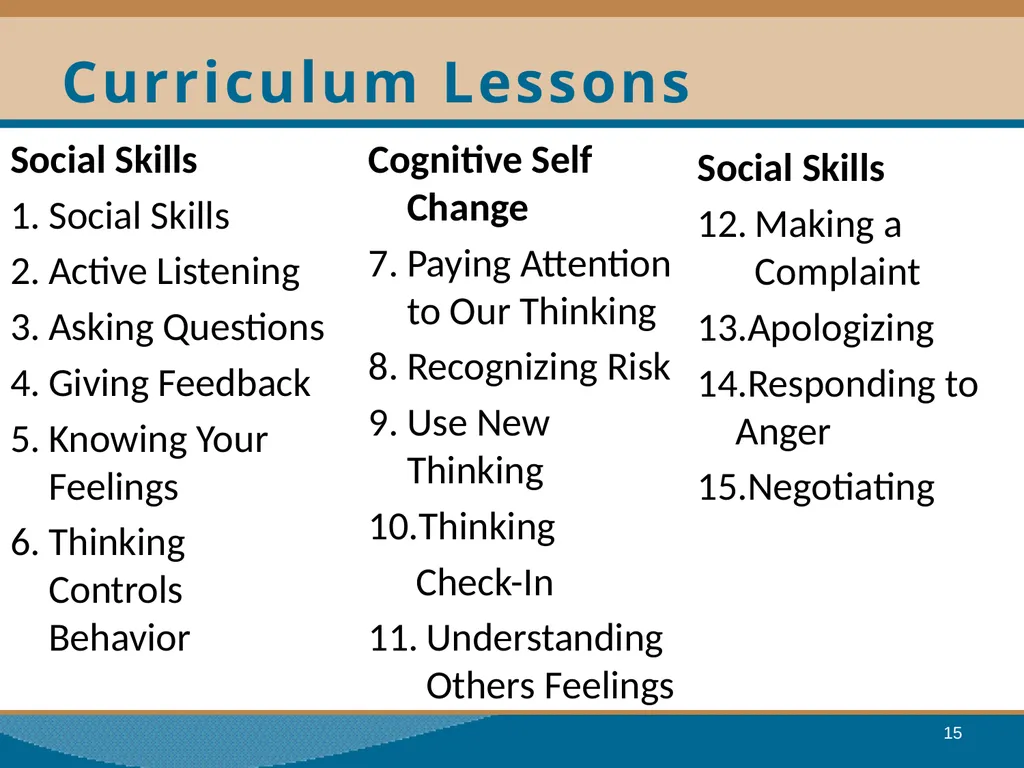
slide15. Curriculum Lessons Social Skills
Social Skills
Active Listening
Asking Questions
Giving Feedback
Knowing Your Feelings
Thinking Controls Behavior 15 Social Skills
Making a Complaint
Apologizing
Responding to Anger
Negotiating Cognitive Self Change
Paying Attention to Our Thinking
Recognizing Risk
Use New Thinking
Thinking
Check-In
Understanding Others Feelings<br>
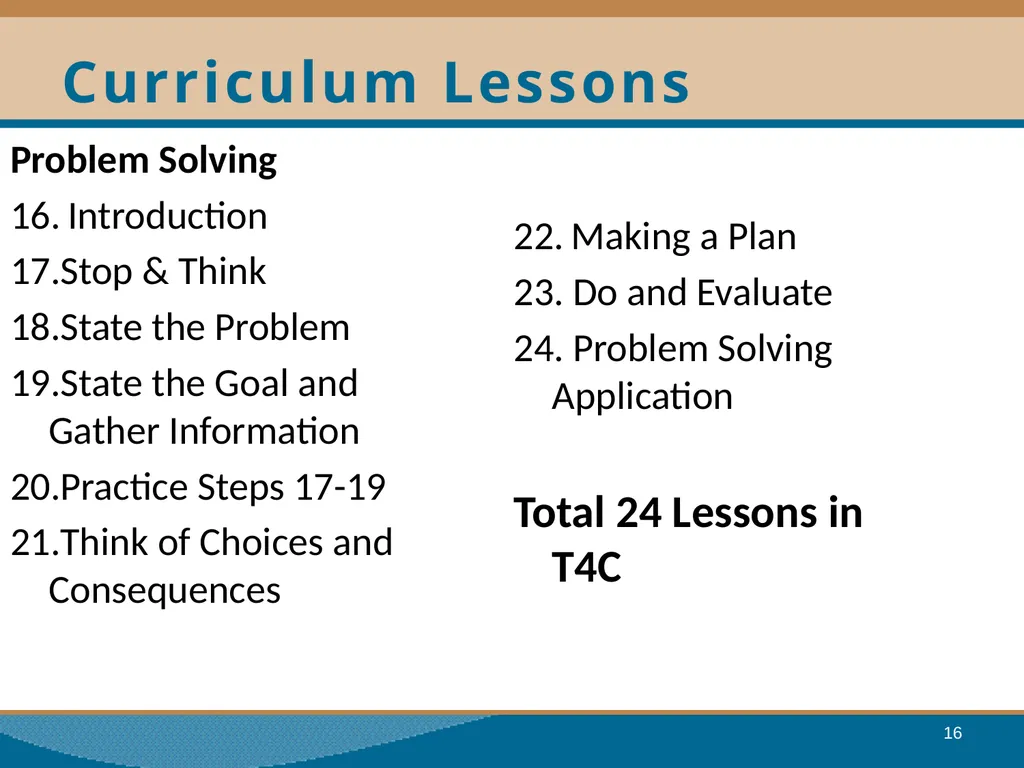
slide16. Curriculum Lessons Problem Solving
Introduction
Stop & Think
State the Problem
State the Goal and Gather Information
Practice Steps 17-19
Think of Choices and Consequences 16 Making a Plan
Do and Evaluate
Problem Solving Application
Total 24 Lessons in T4C<br>
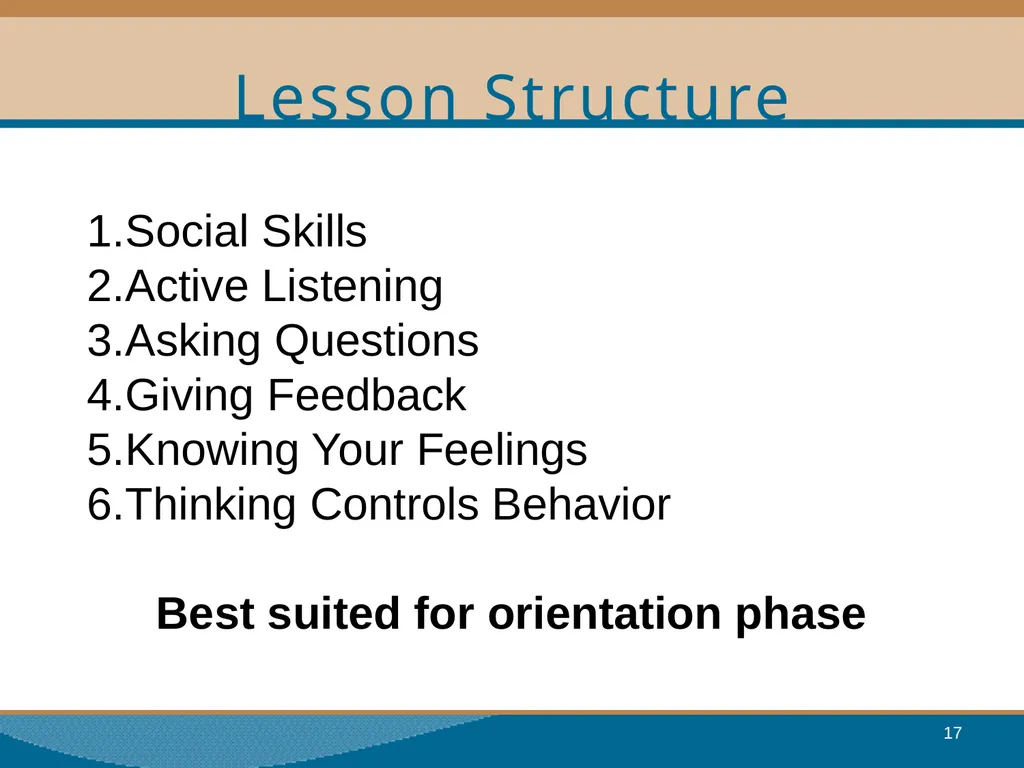
slide17. Lesson Structure 17 Social Skills
Active Listening
Asking Questions
Giving Feedback
Knowing Your Feelings
Thinking Controls Behavior
Best suited for orientation phase<br>
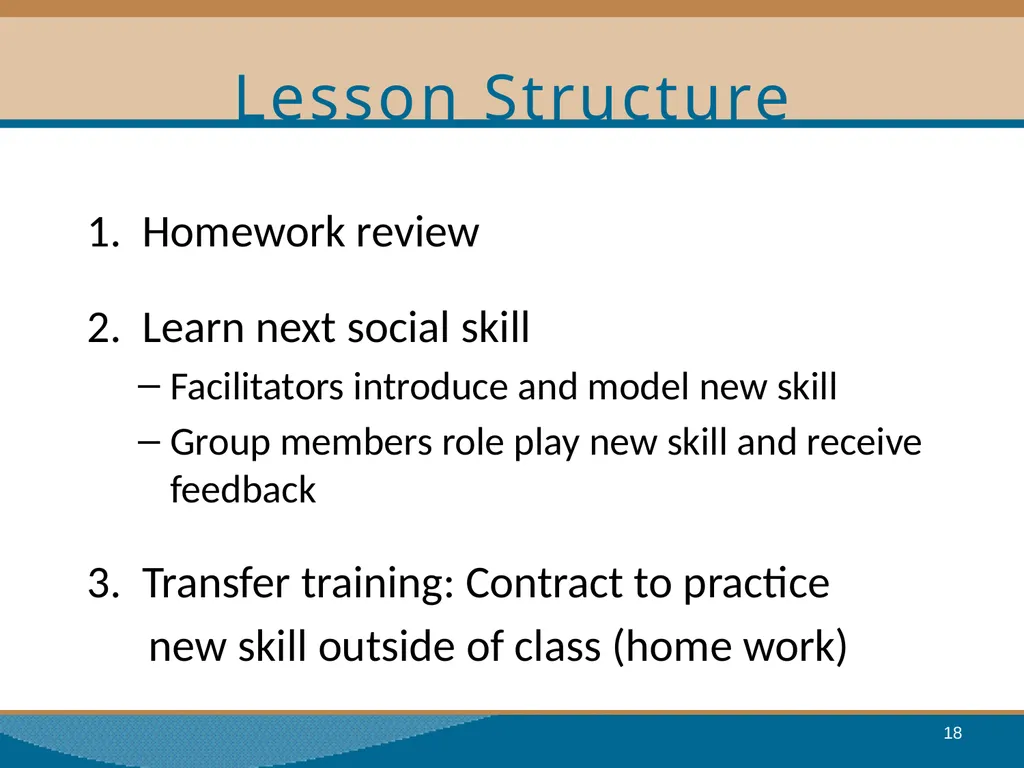
slide18. Lesson Structure 18 1. Homework review
2. Learn next social skill
Facilitators introduce and model new skill
Group members role play new skill and receive feedback
3. Transfer training: Contract to practice
new skill outside of class (home work)<br>
slide19. Lesson 1 - Social Skills 19 Social skills are the skills we use when we deal with other people
Good social skills help get us what we want; maximizing positive responses, and minimizing negative responses from other people<br>
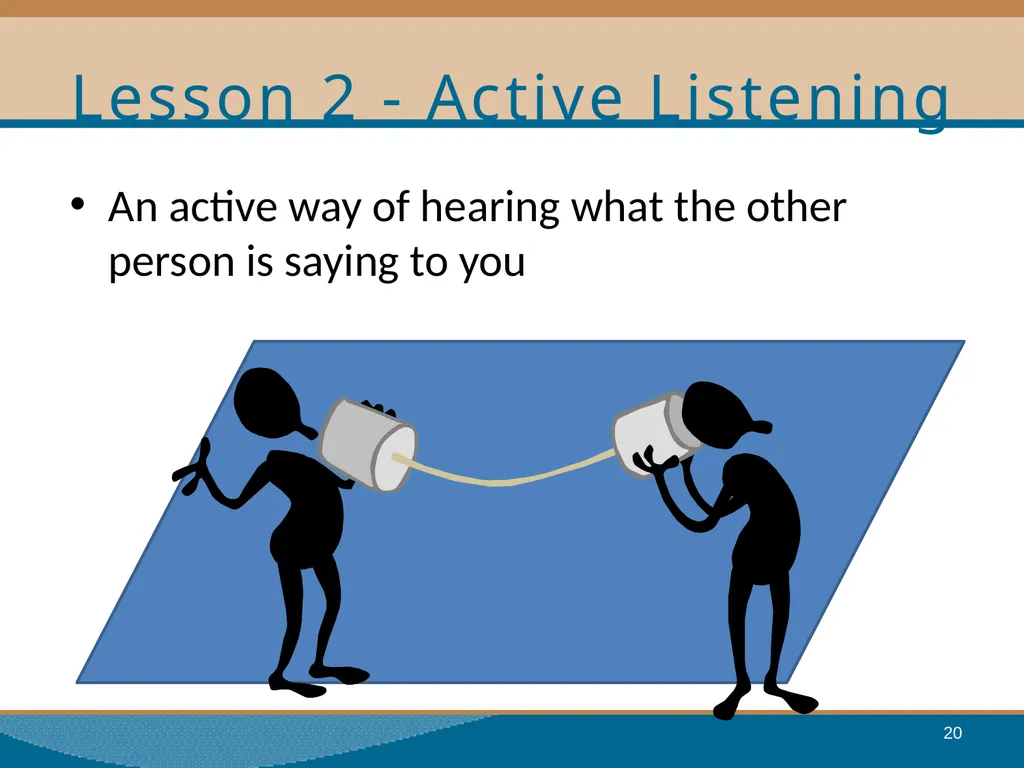
slide20. Lesson 2 - Active Listening 20 An active way of hearing what the other person is saying to you<br>
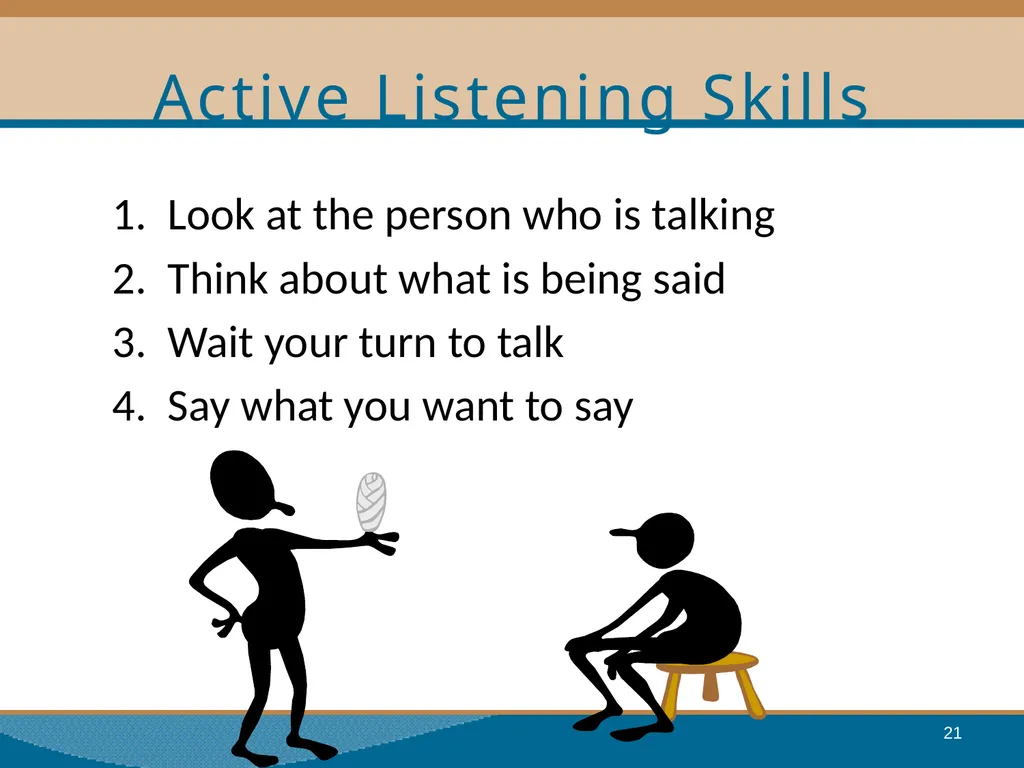
slide21. Active Listening Skills 21 1. Look at the person who is talking
2. Think about what is being said
3. Wait your turn to talk
4. Say what you want to say<br>
slide22. Lesson Review 22 When did you practice the skill? Where? With whom?
What did you do to follow each step of the skill? Be specific
Tell us another situation where
you will use the skill<br>
slide23. Tools & Techniques T4C 23<br>
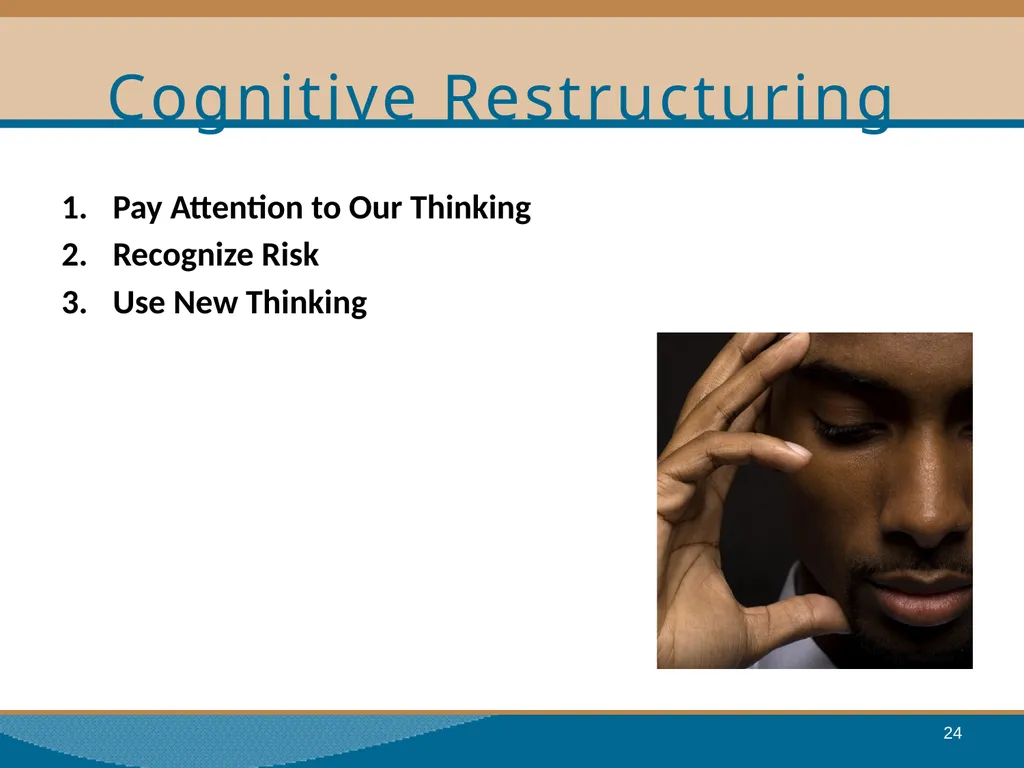
slide24. Cognitive Restructuring Pay Attention to Our Thinking
Recognize Risk
Use New Thinking 24<br>
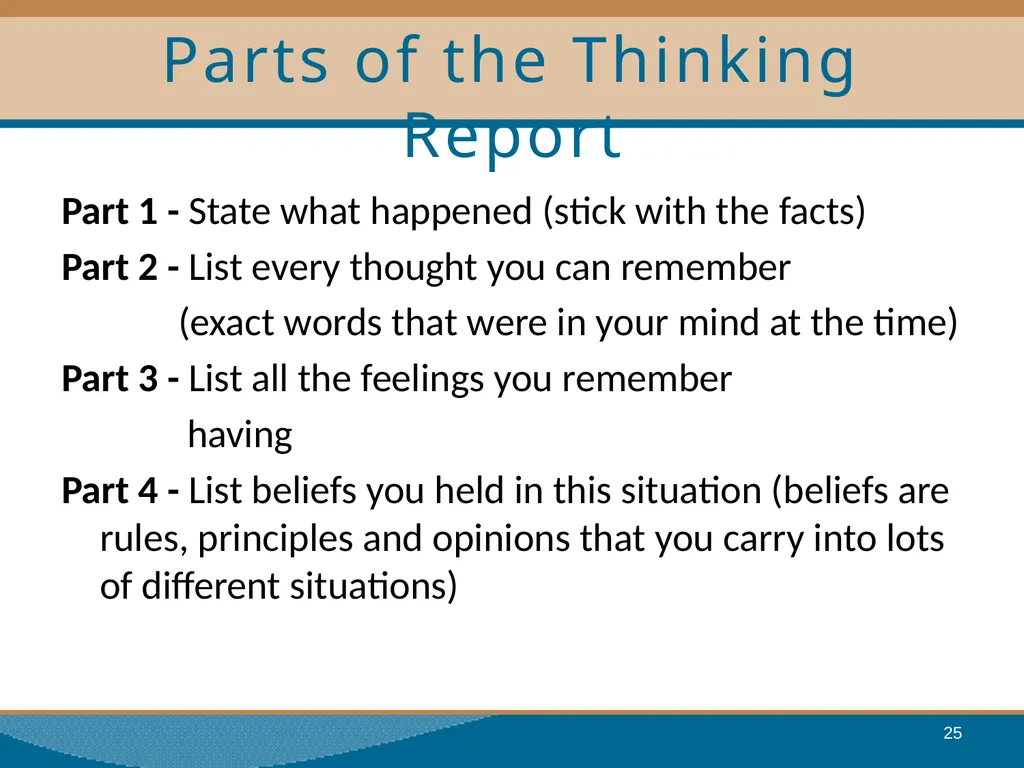
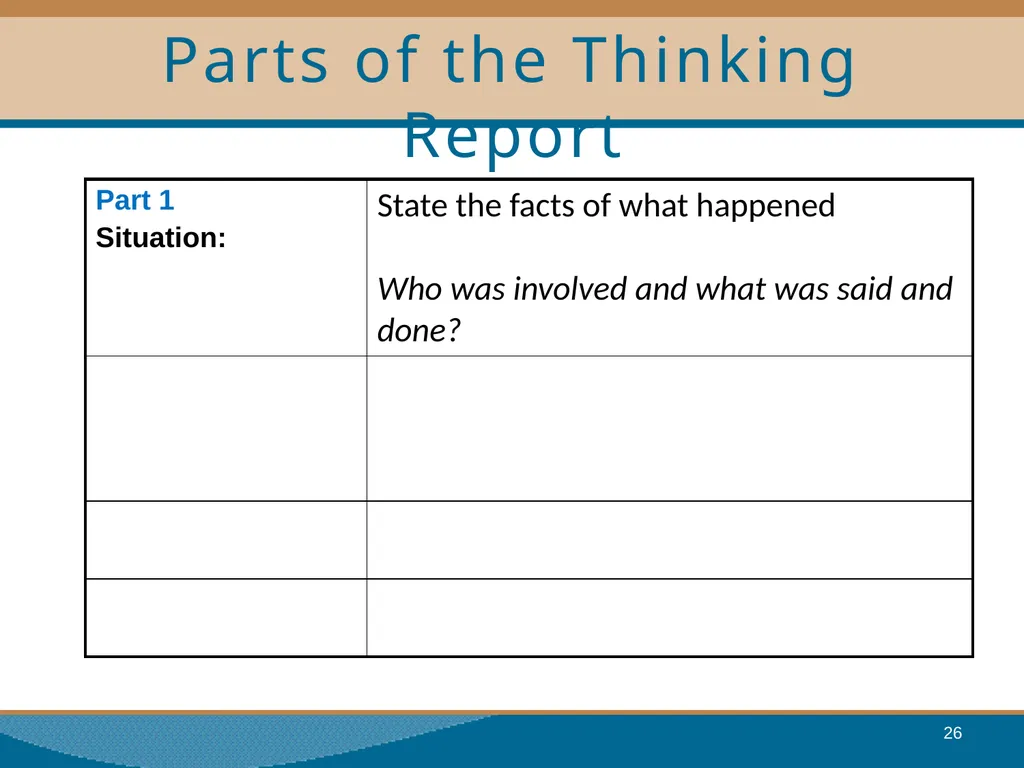
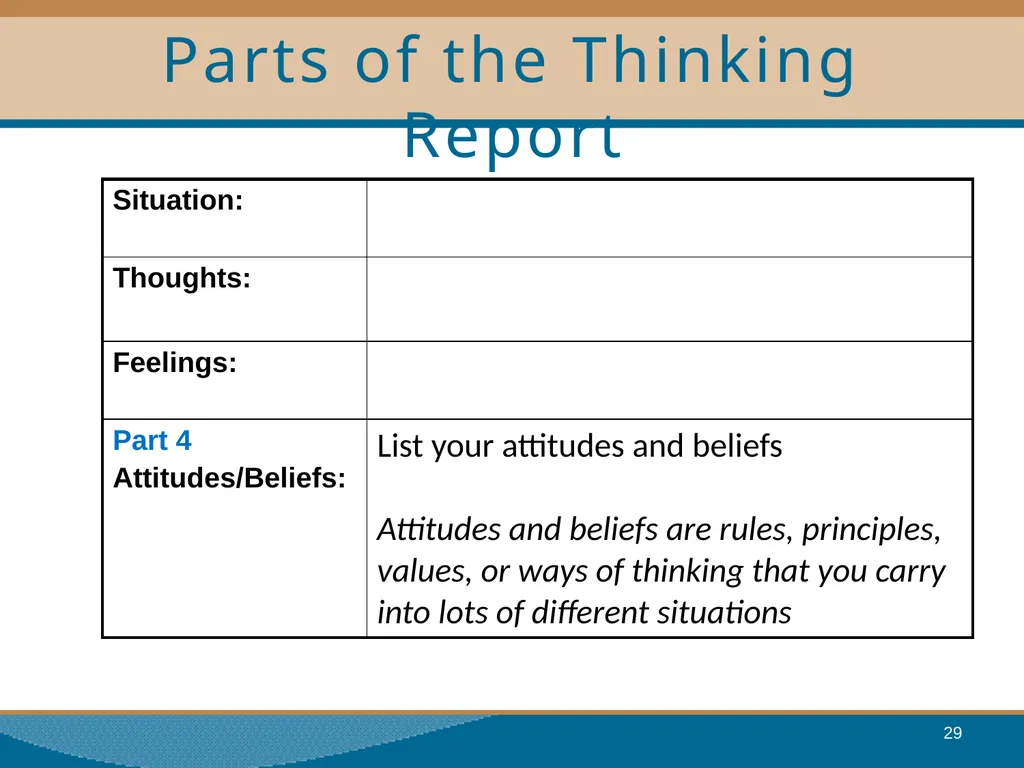
slide25. Parts of the Thinking Report Part 1 - State what happened (stick with the facts)
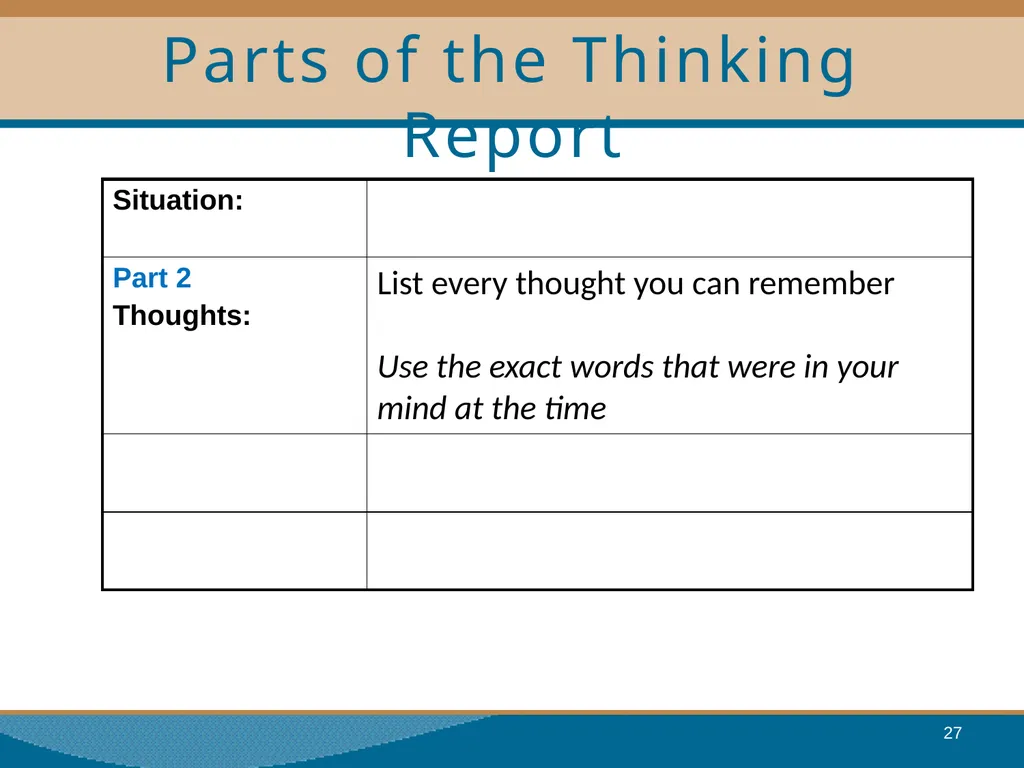
Part 2 - List every thought you can remember
(exact words that were in your mind at the time)
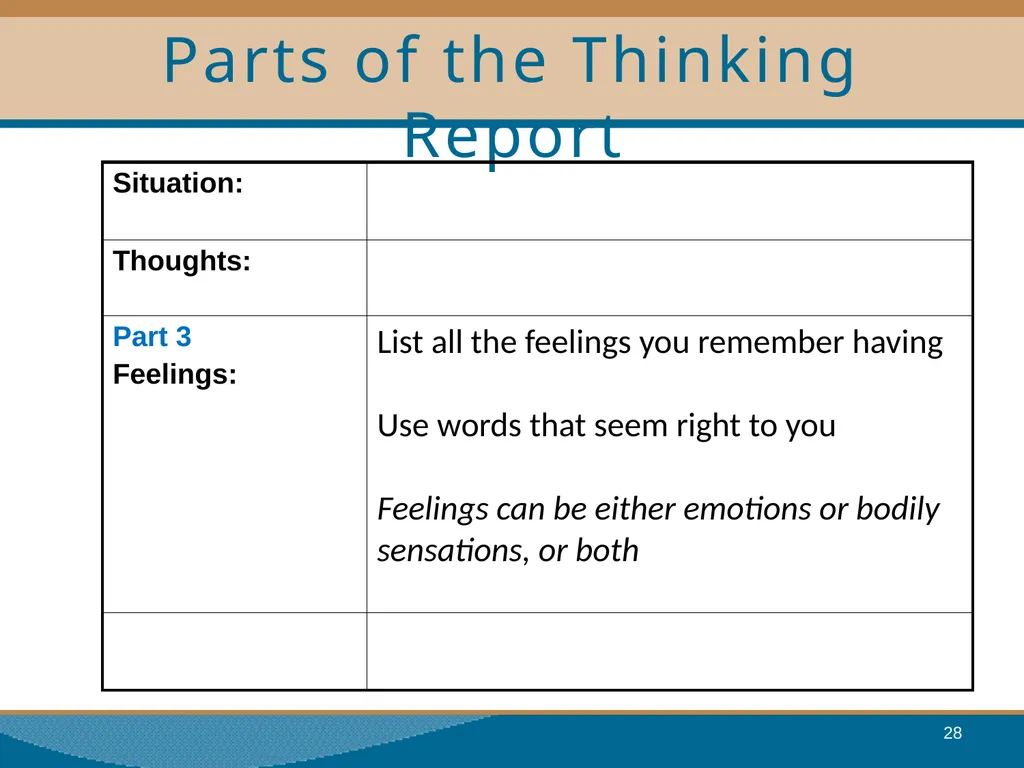
Part 3 - List all the feelings you remember
having
Part 4 - List beliefs you held in this situation (beliefs are rules, principles and opinions that you carry into lots of different situations) 25<br>
slide26. Parts of the Thinking Report 26<br>
slide27. Parts of the Thinking Report 27<br>
slide28. Parts of the Thinking Report 28<br>
slide29. Parts of the Thinking Report 29<br>
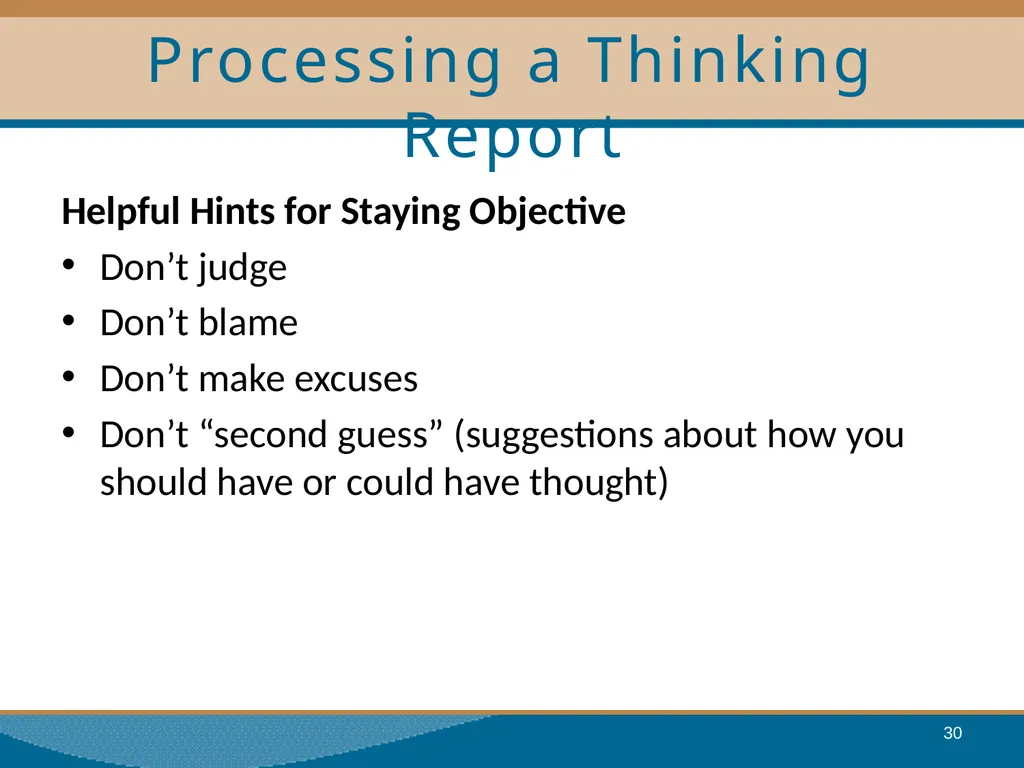
slide30. Processing a Thinking Report Helpful Hints for Staying Objective
Don’t judge
Don’t blame
Don’t make excuses
Don’t “second guess” (suggestions about how you should have or could have thought) 30<br>
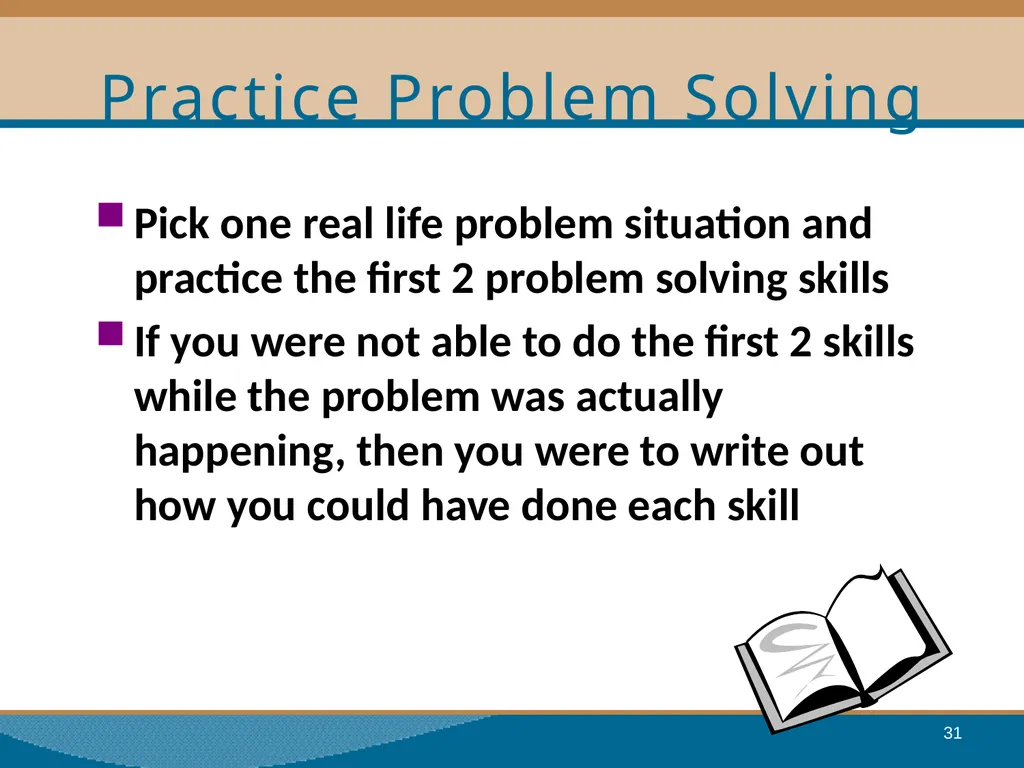
slide31. Practice Problem Solving 31 Pick one real life problem situation and practice the first 2 problem solving skills
If you were not able to do the first 2 skills while the problem was actually happening, then you were to write out how you could have done each skill<br>
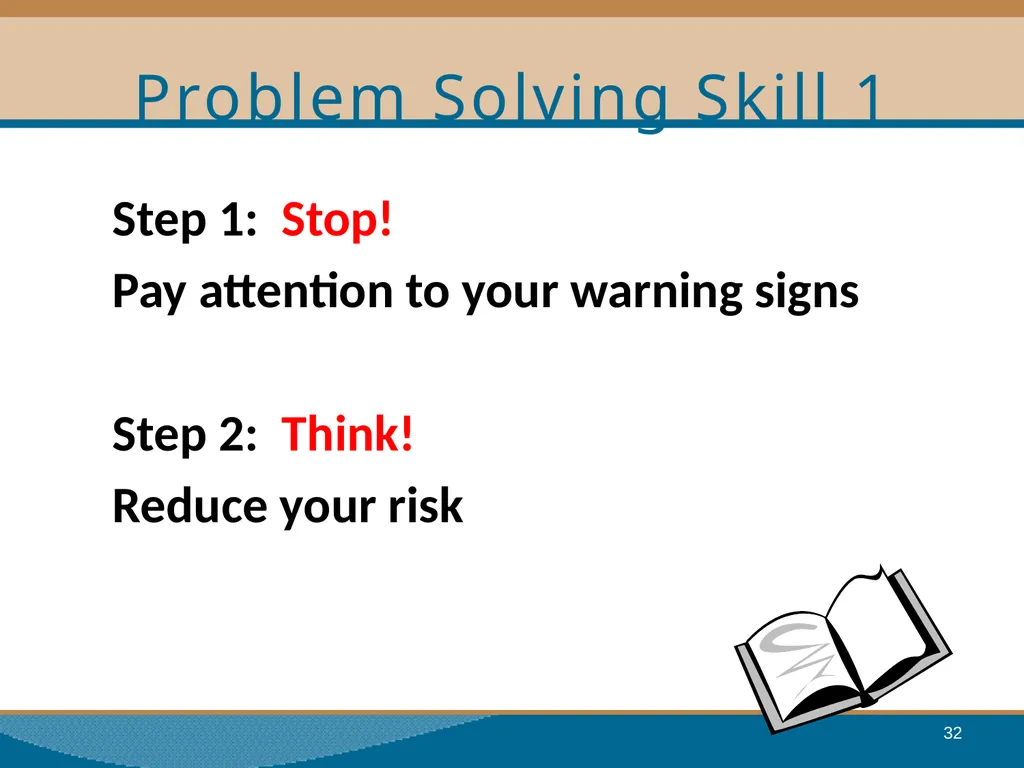
slide32. Problem Solving Skill 1 32 Step 1: Stop!
Pay attention to your warning signs
Step 2: Think!
Reduce your risk<br>
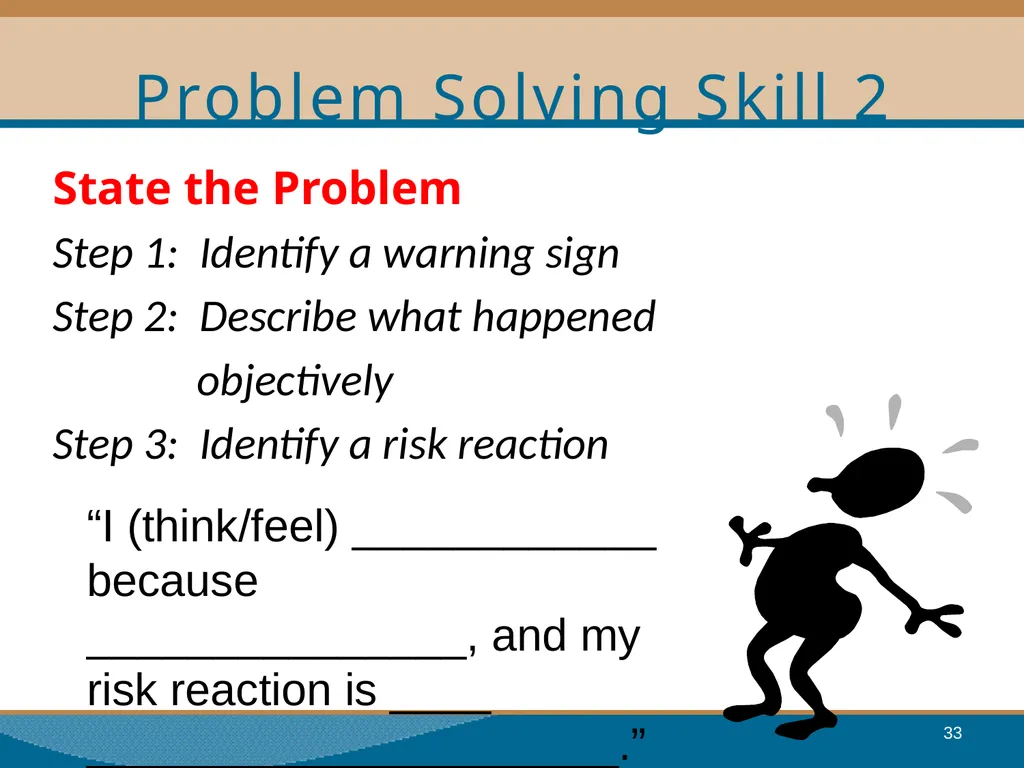
slide33. Problem Solving Skill 2 33 State the Problem
Step 1: Identify a warning sign
Step 2: Describe what happened
objectively
Step 3: Identify a risk reaction “I (think/feel) ____________ because _______________, and my risk reaction is ____ _____________________.”<br>
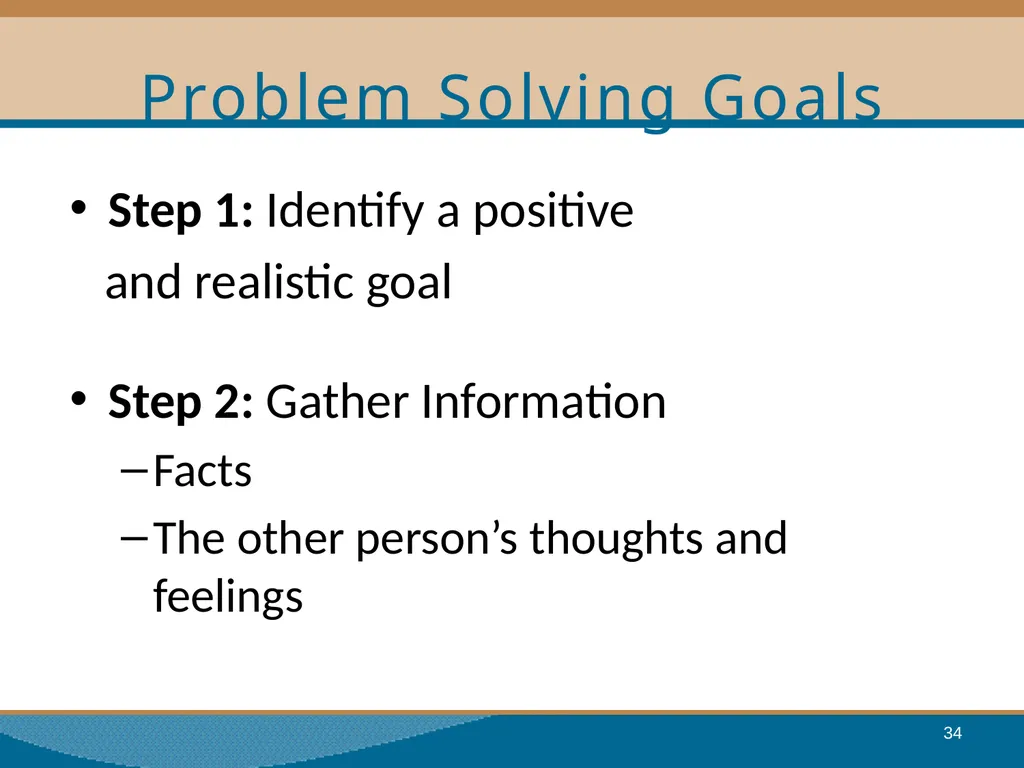
slide34. Problem Solving Goals 34 Step 1: Identify a positive
and realistic goal
Step 2: Gather Information
Facts
The other person’s thoughts and feelings<br>
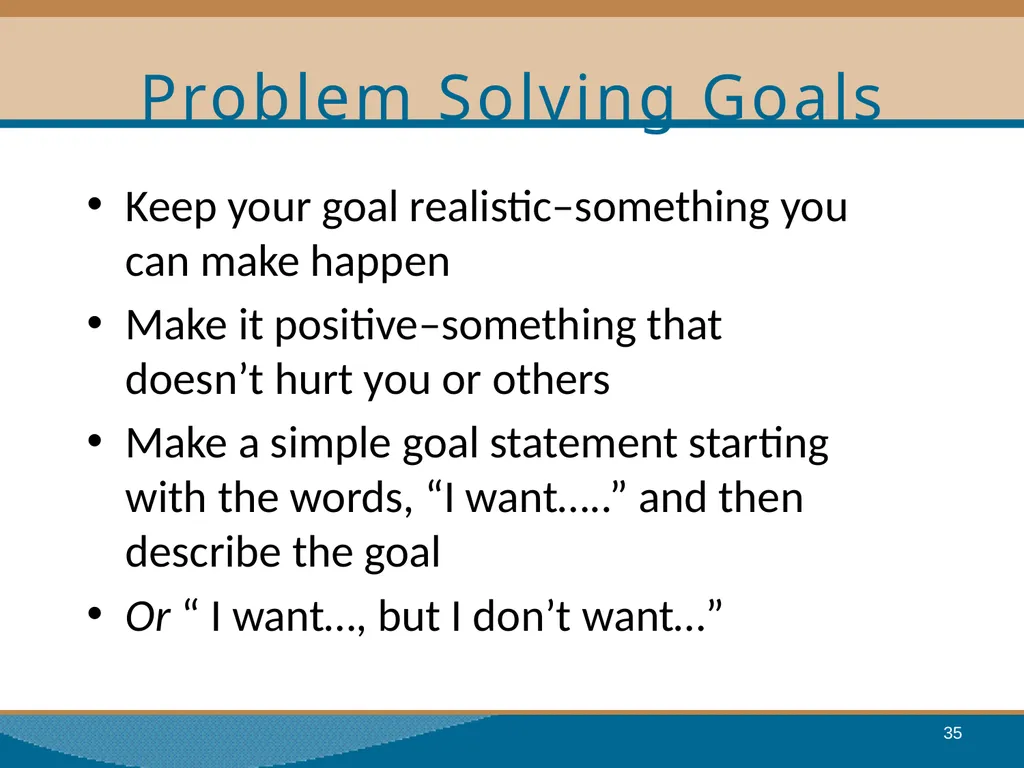
slide35. Problem Solving Goals 35 Keep your goal realistic–something you can make happen
Make it positive–something that doesn’t hurt you or others
Make a simple goal statement starting with the words, “I want…..” and then describe the goal
Or “ I want…, but I don’t want…”<br>
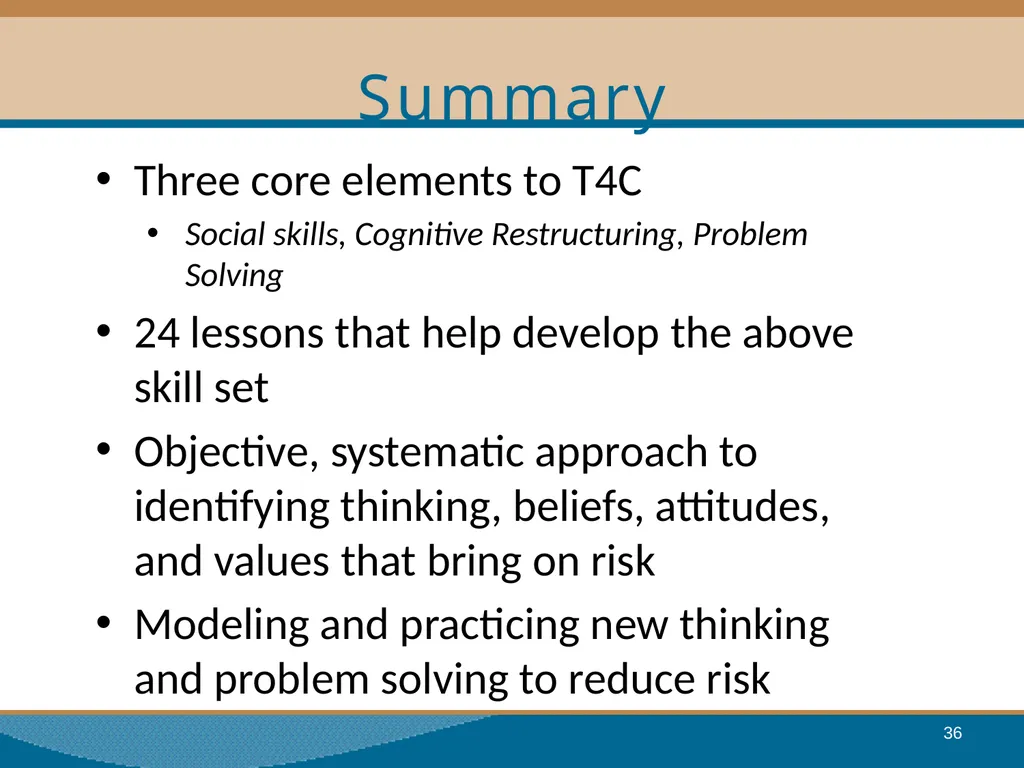
slide36. Summary 36 Three core elements to T4C
Social skills, Cognitive Restructuring, Problem Solving
24 lessons that help develop the above skill set
Objective, systematic approach to identifying thinking, beliefs, attitudes, and values that bring on risk
Modeling and practicing new thinking and problem solving to reduce risk<br>
slide37. Summary 37 National Institute of Corrections
http://nicic.gov/t4c<br>
slide38. Next Presentation 38 Title of next months presentation Date & Time<br>

March 21, 2012<br>
slide2. About the Presentation 2 This presentation is large part is taken from the actual curriculum developed by The National Institute of Corrections. The slides will highlight the core elements of the curriculum with resources as to where additional information can be found.<br>
slide3. About the curriculum The Thinking for a Change curriculum uses as its core, a problem solving program embellished by both cognitive restructuring and social skills interventions. 3<br>
slide4. Learning Objectives Upon completion of this presentation, participants will :
Know the three types of skills needed for change
Know how many lessons are in the curriculum
Know the basic structure for the lessons
Homework, modeling new skills, contract to practice outside of class 4<br>
slide5. About the curriculum The National Institute of Corrections has offered a training seminar, “Cognitive Approaches to Changing Offender Behavior”, for the last six years at their Academy in Longmont, Colorado, and more recently as cooperative training programs in various locations throughout the country. Essentially, the curriculum which was developed by a panel of experts in cognitive behavioral interventions presented many of the cognitive restructuring and cognitive skills concepts in a generic, yet practical manner. 5<br>
slide6. The Premise 6 By taking charge of our thinking we can take control of our lives<br>
slide7. Three Key Skills #1 7 Cognitive Self-Change - Paying attention to the thoughts and feelings that go on inside of us to avoid the kinds of thoughts and feelings that lead us to trouble.
Social Skills – Behaviors or abilities we use in situations that involve other people
Problem Solving Skills – Skills to help us make better choices<br>
slide8. Showing what goes on in our head 8<br>
slide9. Three Key Skills #2 9 Cognitive Self-Change - Paying attention to the thoughts and feelings that go on inside of us to avoid the kinds of thoughts and feelings that lead us to trouble
Social Skills – Behaviors or abilities we use in situations that involve other people.
Problem Solving Skills – Skills to help us make better choices<br>
slide10. Three Key Skills #3 10 Cognitive Self-Change - Paying attention to the thoughts and feelings that go on inside of us to avoid the kinds of thoughts and feelings that lead us to trouble
Social Skills – Behaviors or abilities we use in situations that involve other people
Problem Solving Skills – Skills to help us make better choices.<br>
slide11. Iceberg Analogy 11<br>
slide12. Cognitive Restructuring 12 Actions Thoughts
Feelings
Attitudes/Beliefs Internal Behaviors External Behaviors<br>
slide14. Thinking For A Change 14<br>
slide15. Curriculum Lessons Social Skills
Social Skills
Active Listening
Asking Questions
Giving Feedback
Knowing Your Feelings
Thinking Controls Behavior 15 Social Skills
Making a Complaint
Apologizing
Responding to Anger
Negotiating Cognitive Self Change
Paying Attention to Our Thinking
Recognizing Risk
Use New Thinking
Thinking
Check-In
Understanding Others Feelings<br>
slide16. Curriculum Lessons Problem Solving
Introduction
Stop & Think
State the Problem
State the Goal and Gather Information
Practice Steps 17-19
Think of Choices and Consequences 16 Making a Plan
Do and Evaluate
Problem Solving Application
Total 24 Lessons in T4C<br>
slide17. Lesson Structure 17 Social Skills
Active Listening
Asking Questions
Giving Feedback
Knowing Your Feelings
Thinking Controls Behavior
Best suited for orientation phase<br>
slide18. Lesson Structure 18 1. Homework review
2. Learn next social skill
Facilitators introduce and model new skill
Group members role play new skill and receive feedback
3. Transfer training: Contract to practice
new skill outside of class (home work)<br>
slide19. Lesson 1 - Social Skills 19 Social skills are the skills we use when we deal with other people
Good social skills help get us what we want; maximizing positive responses, and minimizing negative responses from other people<br>
slide20. Lesson 2 - Active Listening 20 An active way of hearing what the other person is saying to you<br>
slide21. Active Listening Skills 21 1. Look at the person who is talking
2. Think about what is being said
3. Wait your turn to talk
4. Say what you want to say<br>
slide22. Lesson Review 22 When did you practice the skill? Where? With whom?
What did you do to follow each step of the skill? Be specific
Tell us another situation where
you will use the skill<br>
slide23. Tools & Techniques T4C 23<br>
slide24. Cognitive Restructuring Pay Attention to Our Thinking
Recognize Risk
Use New Thinking 24<br>
slide25. Parts of the Thinking Report Part 1 - State what happened (stick with the facts)
Part 2 - List every thought you can remember
(exact words that were in your mind at the time)
Part 3 - List all the feelings you remember
having
Part 4 - List beliefs you held in this situation (beliefs are rules, principles and opinions that you carry into lots of different situations) 25<br>
slide26. Parts of the Thinking Report 26<br>
slide27. Parts of the Thinking Report 27<br>
slide28. Parts of the Thinking Report 28<br>
slide29. Parts of the Thinking Report 29<br>
slide30. Processing a Thinking Report Helpful Hints for Staying Objective
Don’t judge
Don’t blame
Don’t make excuses
Don’t “second guess” (suggestions about how you should have or could have thought) 30<br>
slide31. Practice Problem Solving 31 Pick one real life problem situation and practice the first 2 problem solving skills
If you were not able to do the first 2 skills while the problem was actually happening, then you were to write out how you could have done each skill<br>
slide32. Problem Solving Skill 1 32 Step 1: Stop!
Pay attention to your warning signs
Step 2: Think!
Reduce your risk<br>
slide33. Problem Solving Skill 2 33 State the Problem
Step 1: Identify a warning sign
Step 2: Describe what happened
objectively
Step 3: Identify a risk reaction “I (think/feel) ____________ because _______________, and my risk reaction is ____ _____________________.”<br>
slide34. Problem Solving Goals 34 Step 1: Identify a positive
and realistic goal
Step 2: Gather Information
Facts
The other person’s thoughts and feelings<br>
slide35. Problem Solving Goals 35 Keep your goal realistic–something you can make happen
Make it positive–something that doesn’t hurt you or others
Make a simple goal statement starting with the words, “I want…..” and then describe the goal
Or “ I want…, but I don’t want…”<br>
slide36. Summary 36 Three core elements to T4C
Social skills, Cognitive Restructuring, Problem Solving
24 lessons that help develop the above skill set
Objective, systematic approach to identifying thinking, beliefs, attitudes, and values that bring on risk
Modeling and practicing new thinking and problem solving to reduce risk<br>
slide37. Summary 37 National Institute of Corrections
http://nicic.gov/t4c<br>
slide38. Next Presentation 38 Title of next months presentation Date & Time<br>