
This content may be used or adapted for
Description: This content may be used or adapted for noncommercial, educational purposes only. Please use the following citation: George Washington University Cancer Center TAP. (2023). Fertility Preservation in Patients with Cancer PowerPoint Slides.
Related Topics
Download Presentation
"This content may be used or adapted for" is the property of its rightful owner. Permission is granted to download and print the materials on this website for personal, non-commercial use only, and to display it on your personal computer provided you do not modify the materials and that you retain all copyright notices contained in the materials. By downloading content from our website, you accept the terms of this agreement.
Presentation Transcript
slide1. This content may be used or adapted for noncommercial, educational purposes only. Please use the following citation:
George Washington University Cancer Center TAP. (2023). Fertility Preservation in Patients with Cancer [PowerPoint Slides]. GWU Cancer Center TAP. https://cme.smhs.gwu.edu/gw-cancer-center-/content/fertility-preservation-patients-cancer-0
This content was adapted from the GW Cancer Center the Oncology Patient Navigation Training: The Fundamentals (PI: Pratt-Chapman) developed and maintained by CDC cooperative agreements #NU38DP004972, #5NU58DP006461 and #NU58DP007539. The content added, changed, or adapted by our organization do not necessarily represent the views of the GW Cancer Center or the CDC.
If you have any questions about the following material or would like permission to use this material, please contact cancercontrol@gwu.edu<br>
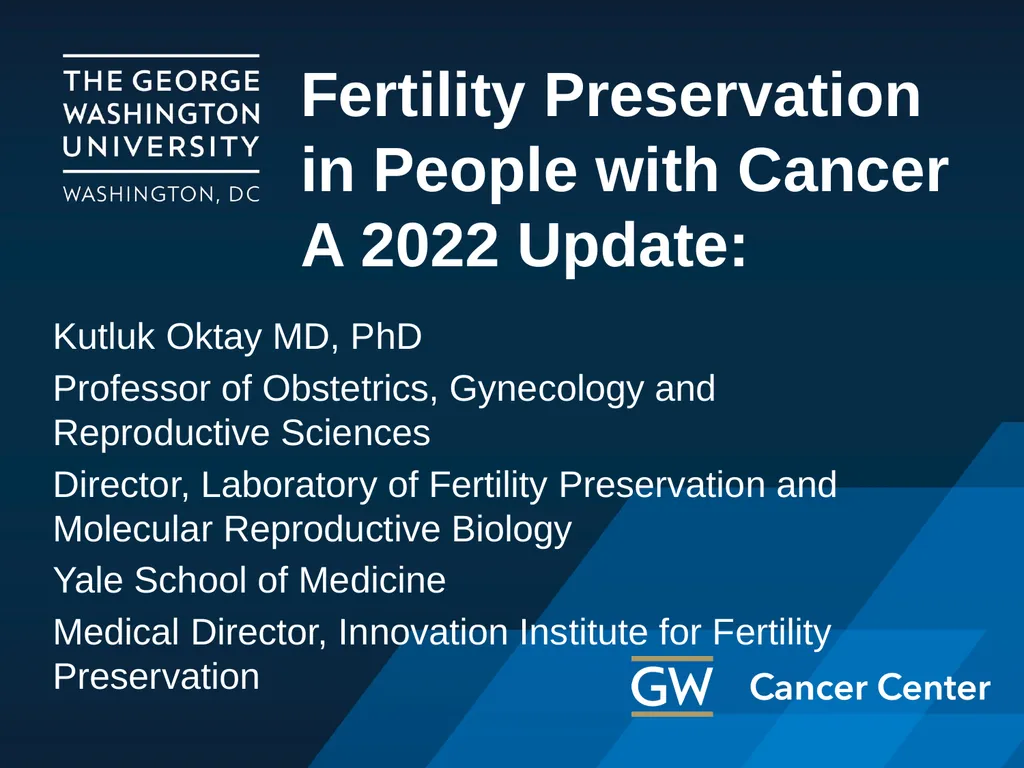
slide2. Kutluk Oktay MD, PhD
Professor of Obstetrics, Gynecology and Reproductive Sciences
Director, Laboratory of Fertility Preservation and Molecular Reproductive Biology
Yale School of Medicine
Medical Director, Innovation Institute for Fertility Preservation Fertility Preservation in People with Cancer A 2022 Update:<br>
slide3. Disclosure This American Society of Clinical Oncology (ASCO) Guideline summary was prepared by GW Cancer Center. Any summaries or commentary appearing herein were not prepared or reviewed by American Society of Clinical Oncology, Inc. (ASCO) or the editors of Journal of Clinical Oncology® (JCO). The ideas and opinions expressed herein do not necessarily reflect those of ASCO, the editors of JCO, or GW Cancer Center. The mention of any company, product, service, or therapy does not constitute an endorsement by ASCO. It is the responsibility of the treating physician or other health care provider, relying on independent experience and knowledge of the patient, to determine drug dosages and the best treatment for the patient. ASCO, the editors of JCO, and GW Cancer Center assume no responsibility for any injury or damage to persons or property arising out of or related to any use of these materials or any errors or omissions. This material has been reviewed by the speaker and deemed to be appropriate for continuing education.<br>
slide4. Learning Objectives Describe the impact of cancer and cancer treatment on fertility
Identify methods of fertility preservation in different populations diagnosed with cancer
Describe the role of the health care provider in fertility preservation for patients with cancer<br>
slide5. Infertility and Patients with Cancer Photo from Canva library authorized by subscription Males Females<br>
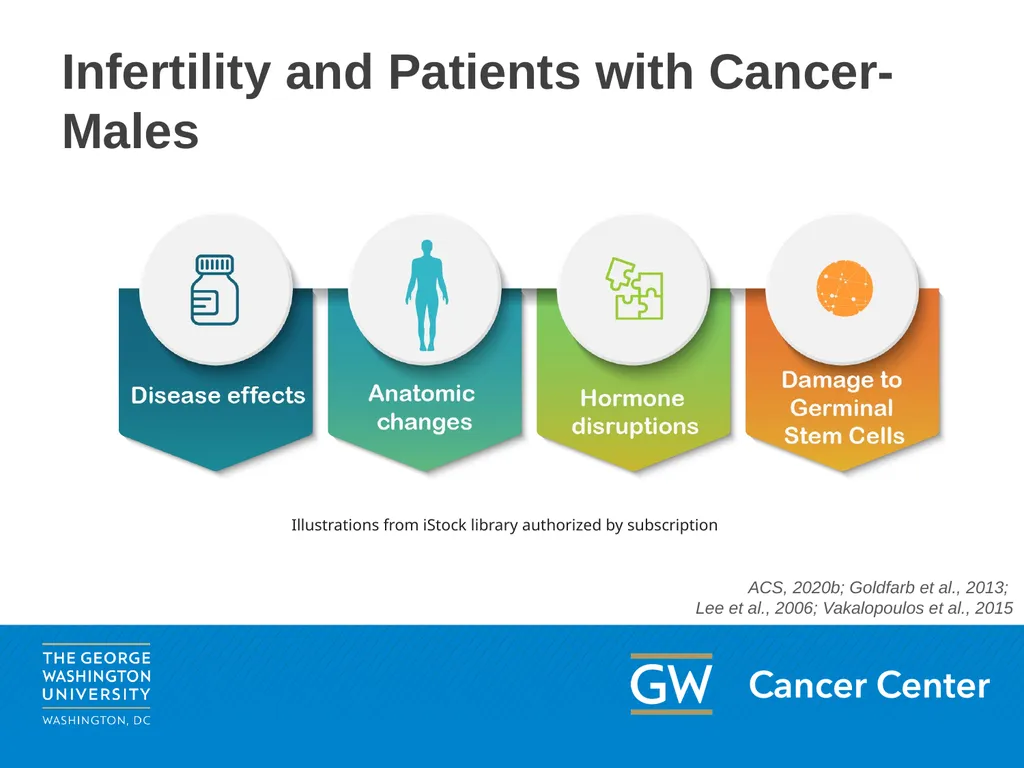
slide6. Infertility and Patients with Cancer- Males ACS, 2020b; Goldfarb et al., 2013;
Lee et al., 2006; Vakalopoulos et al., 2015 Illustrations from iStock library authorized by subscription<br>
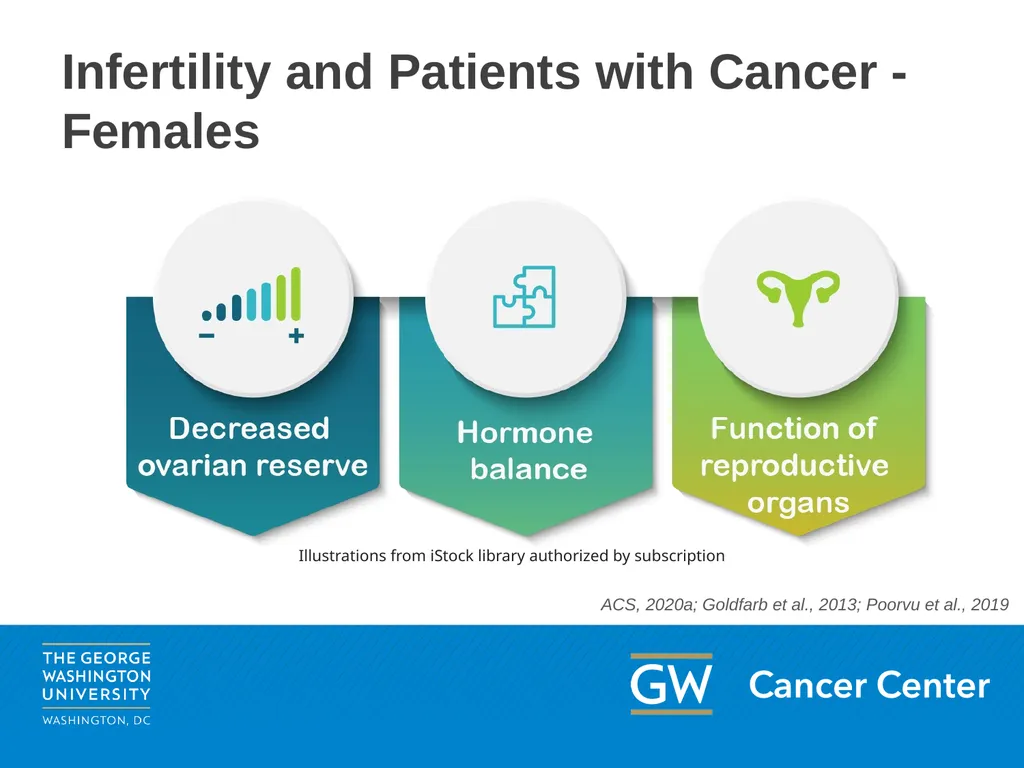
slide7. Infertility and Patients with Cancer - Females ACS, 2020a; Goldfarb et al., 2013; Poorvu et al., 2019 Illustrations from iStock library authorized by subscription<br>
slide8. Cancer Treatment and Fertility Cancer treatment can cause infertility through cellular damage or removal of gonadal organs
Treatment effects on fertility depend on the drug, size/location of radiation field, age, sex, and pretreatment fertility of the patient Goldfarb et al., 2013; Oktay et al., 2018 Photo from Canva library authorized by subscription<br>
slide9. When Does Cancer Treatment Affect Fertility? Sperm counts fall significantly within approximately 3 months of chemotherapy and longer recovery does not necessarily predict sterility
Timing of fertility effect(s) in women is related to ovarian reserve
Even if women are initially fertile post-treatment, duration of fertile lifespan is shortened by reduced ovarian reserve causing premature menopause Goldfarb et al., 2013; Poorvu et al., 2019<br>
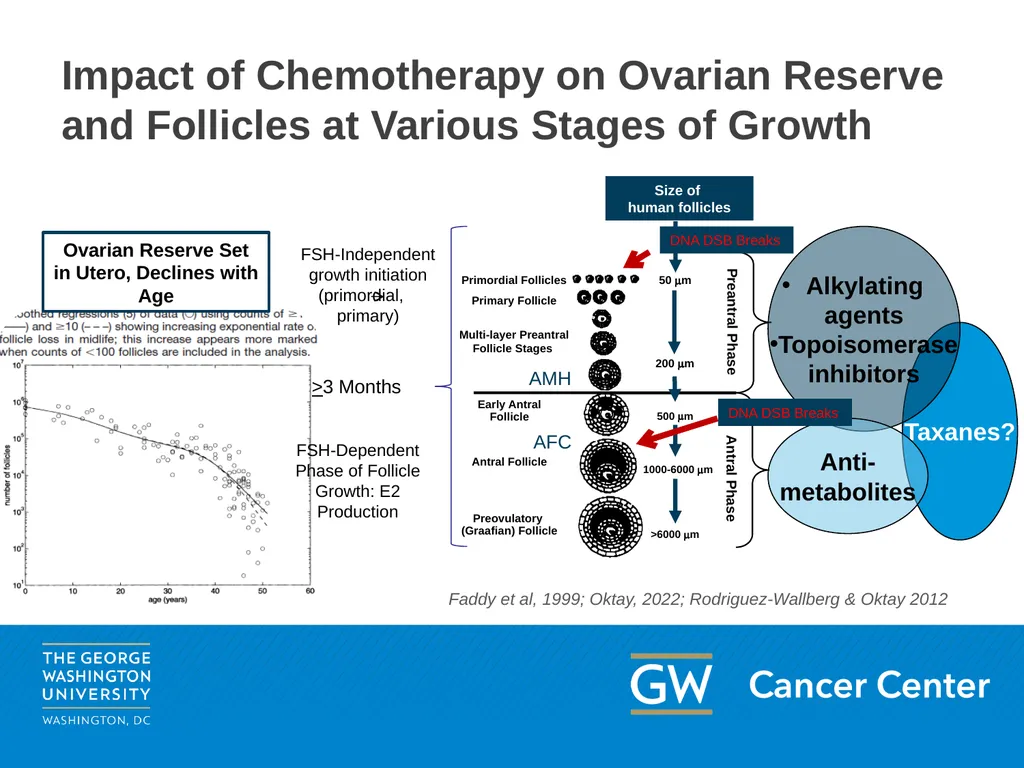
slide10. Impact of Chemotherapy on Ovarian Reserve and Follicles at Various Stages of Growth Faddy et al, 1999; Oktay, 2022; Rodriguez-Wallberg & Oktay 2012 >3 Months Primordial Follicles
Primary Follicle
Multi-layer Preantral
Follicle Stages 50 mm Size of human follicles 200 mm 500 mm 1000-6000 mm >6000 mm Preantral Phase Antral Phase Preovulatory (Graafian) Follicle Antral Follicle Early Antral
Follicle FSH-Dependent
Phase of Follicle
Growth: E2 Production Taxanes? Alkylating
agents
Topoisomerase
inhibitors Anti-
metabolites FSH-Independent growth initiation (primordial, primary) AMH AFC DNA DSB Breaks DNA DSB Breaks Ovarian Reserve Set in Utero, Declines with Age<br>
slide11. Fertility Recommendations Illustrations from Canva library authorized by subscription<br>
slide12. Fertility Recommendations Illustrations from Canva library authorized by subscription<br>
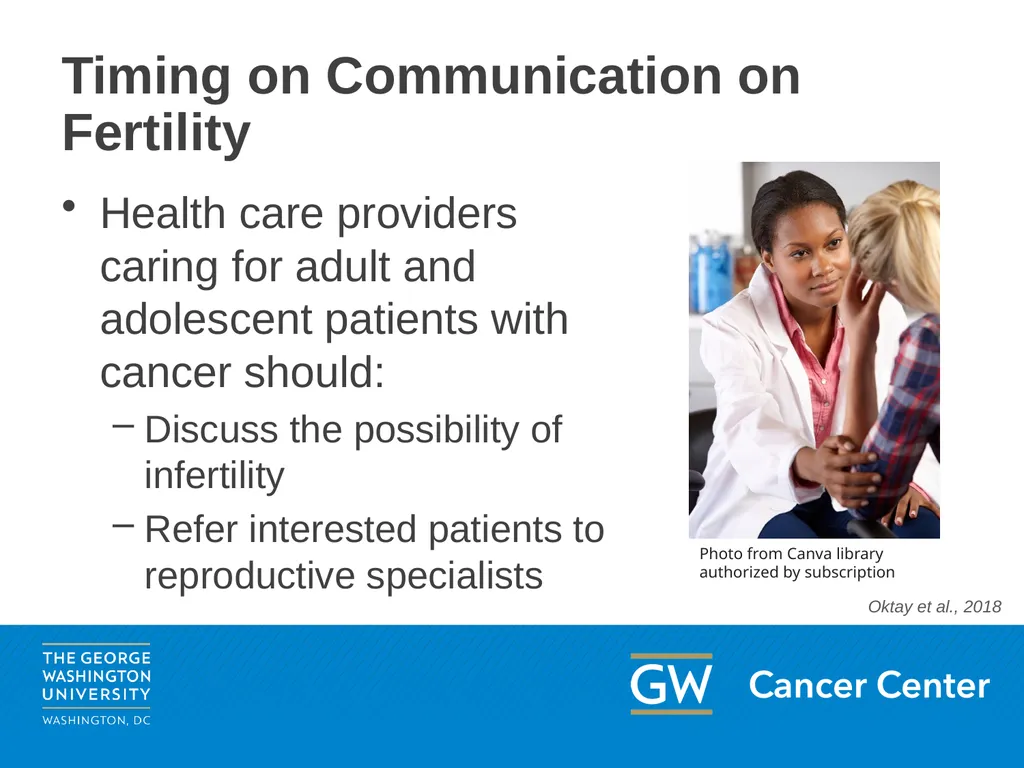
slide13. Timing on Communication on Fertility Health care providers caring for adult and adolescent patients with cancer should:
Discuss the possibility of infertility
Refer interested patients to reproductive specialists Oktay et al., 2018 Photo from Canva library authorized by subscription<br>
slide14. Fertility Discussions Discussing fertility preservation approaches as early as possible helps maximize the range of available options:
Can reduce distress and improve quality of life
A follow-up discussion may be necessary post-therapy or when pregnancy is being considered Goldfarb et al., 2013; Oktay et al., 2018<br>
slide15. Fertility Recommendations Illustrations from Canva library authorized by subscription<br>
slide16. Fertility Preservation in Men with Cancer Sperm cryopreservation is an effective method of fertility preservation in adult men
Hormonal therapy does NOT successfully preserve fertility in men Oktay et al., 2018 Photo from Canva library authorized by subscription<br>
slide17. Experimental Methods in Men with Cancer Oktay et al., 2018 Testicular tissue cryopreservation with the intent of reimplantation (grafting) Photo from Canva library authorized by subscription<br>
slide18. Fertility Preservation in Transgender Men with Cancer Embryo and Oocyte cryopreservation available for post pubertal transmen before and after the initiation of gender affirming hormonal therapy (GAHT) Sterling & Garcia, 2020 Illustration from iStock library authorized by subscription<br>
slide19. Male Fertility after Chemotherapy Advise men of the high risk of genetic damage in sperm if collected after initiation of therapy
Strongly recommend sperm collection prior to treatment initiation:
Intracytoplasmic sperm injection allows future use of even limited number of sperm Oktay et al., 2018 Illustration from iStock library authorized by subscription<br>
slide20. Fertility Recommendations Illustrations from Canva library authorized by subscription<br>
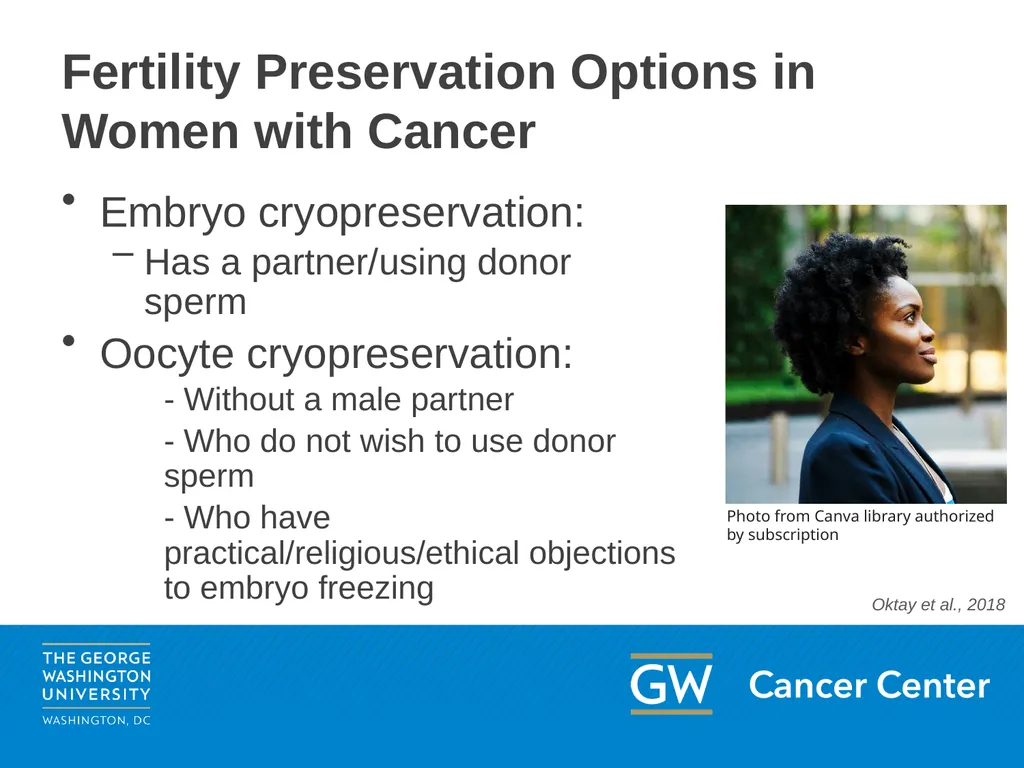
slide21. Fertility Preservation Options in Women with Cancer Embryo cryopreservation:
Has a partner/using donor sperm
Oocyte cryopreservation:
- Without a male partner
- Who do not wish to use donor sperm
- Who have practical/religious/ethical objections to embryo freezing Oktay et al., 2018 Photo from Canva library authorized by subscription<br>
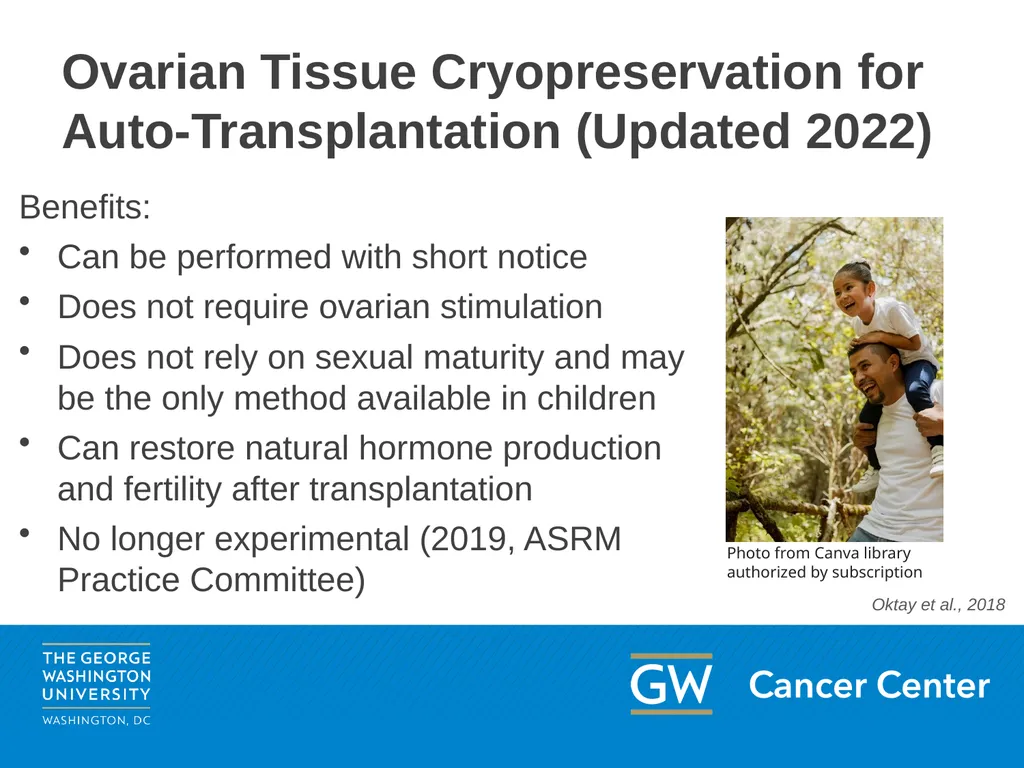
slide22. Ovarian Tissue Cryopreservation for Auto-Transplantation (Updated 2022) Benefits:
Can be performed with short notice
Does not require ovarian stimulation
Does not rely on sexual maturity and may be the only method available in children
Can restore natural hormone production and fertility after transplantation
No longer experimental (2019, ASRM Practice Committee) Oktay et al., 2018 Photo from Canva library authorized by subscription<br>
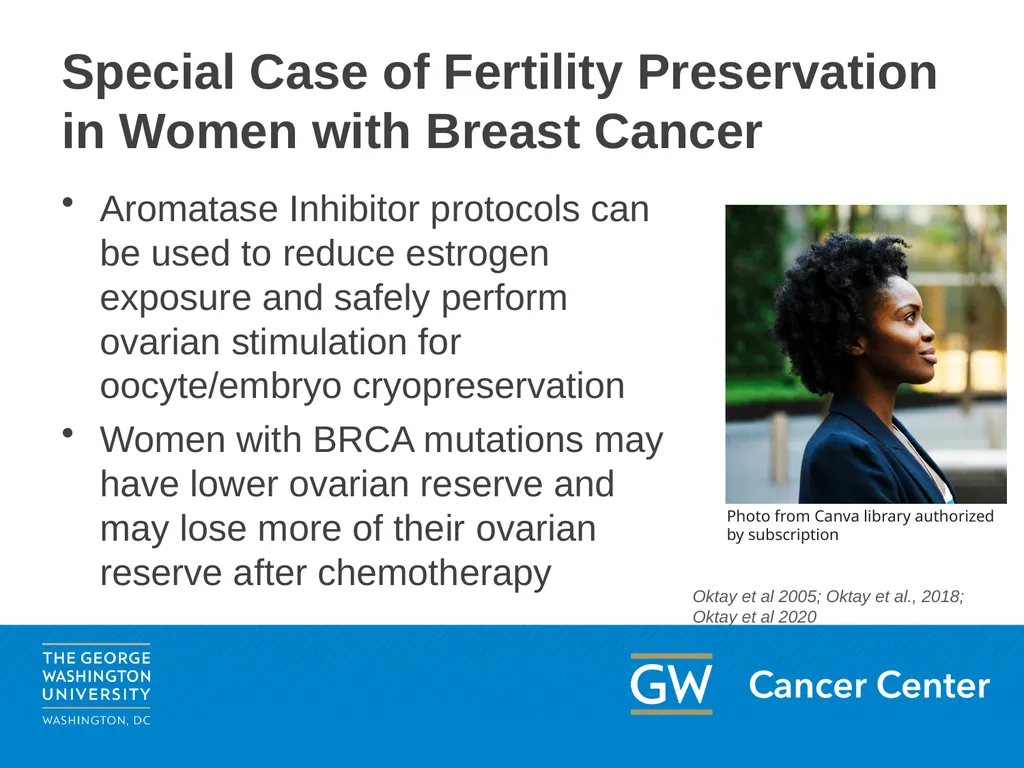
slide23. Special Case of Fertility Preservation in Women with Breast Cancer Aromatase Inhibitor protocols can be used to reduce estrogen exposure and safely perform ovarian stimulation for oocyte/embryo cryopreservation
Women with BRCA mutations may have lower ovarian reserve and may lose more of their ovarian reserve after chemotherapy Oktay et al 2005; Oktay et al., 2018; Oktay et al 2020 Photo from Canva library authorized by subscription<br>
slide24. Additional Fertility Preservation Options in Special Circumstances Ovarian Transposition:
May be offered when cancer treatment only involves pelvic/abdominal/spinal irradiation
Not always successful due to risk of ovarian exposure to scatter radiation/vascular kinking/migration
Conservative Gynecologic Surgery:
Radical trachelectomy (surgical removal of uterine cervix) typically restricted to stage IA2 and IB cervical cancer Oktay et al., 2018<br>
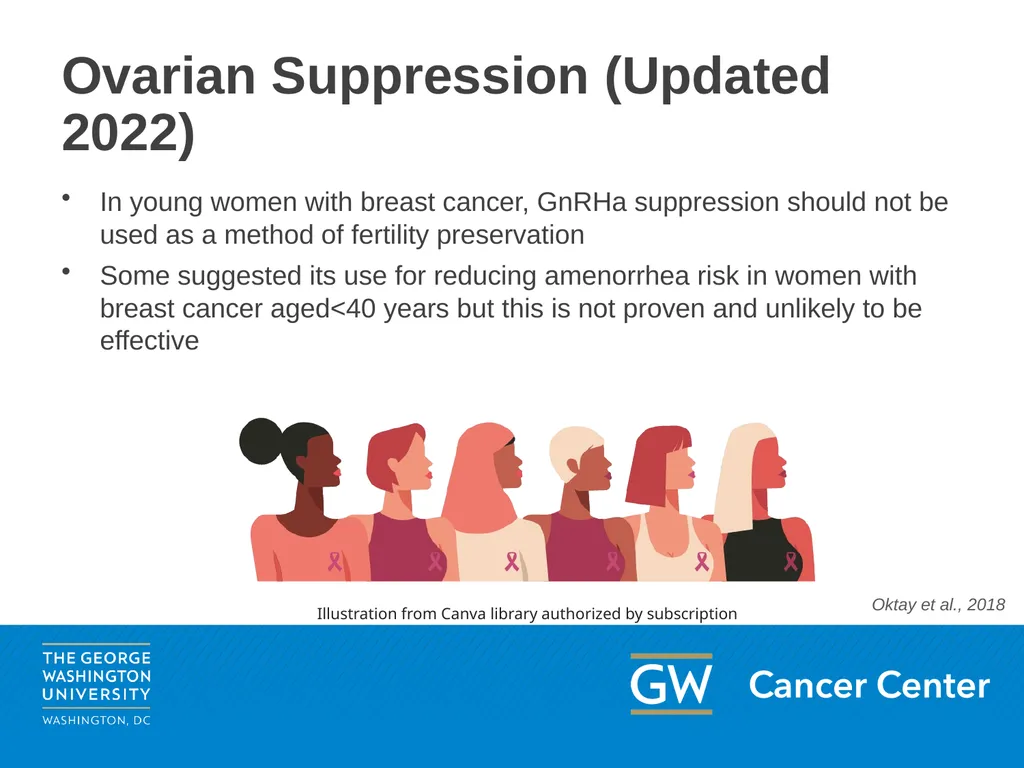
slide25. Ovarian Suppression (Updated 2022) In young women with breast cancer, GnRHa suppression should not be used as a method of fertility preservation
Some suggested its use for reducing amenorrhea risk in women with breast cancer aged<40 years but this is not proven and unlikely to be effective Oktay et al., 2018 Illustration from Canva library authorized by subscription<br>
slide26. Fertility Preservation in Transgender Women with Cancer Sperm cryopreservation available for post pubertal transwomen before and after the initiation of gender affirming hormonal therapy (GAHT) Illustration from iStock library authorized by subscription Sterling & Garcia, 2020<br>
slide27. Fertility Recommendations Illustrations from Canva library authorized by subscription<br>
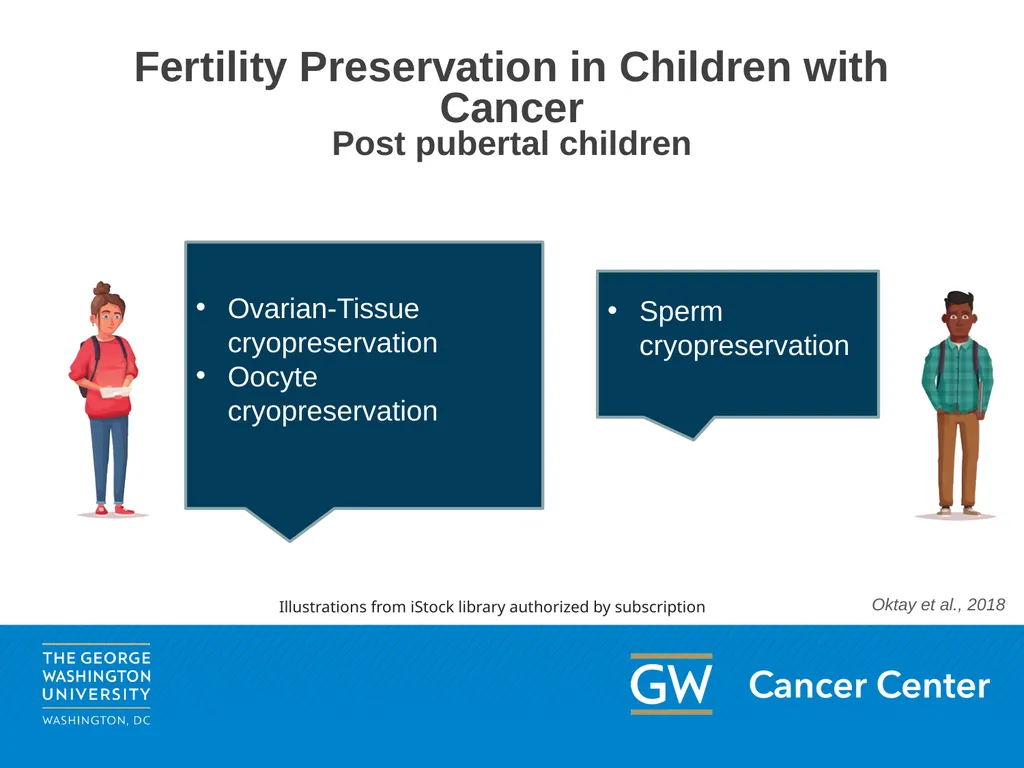
slide28. Fertility Preservation in Children with Cancer Post pubertal children Oktay et al., 2018 Ovarian-Tissue cryopreservation
Oocyte cryopreservation Sperm cryopreservation Illustrations from iStock library authorized by subscription<br>
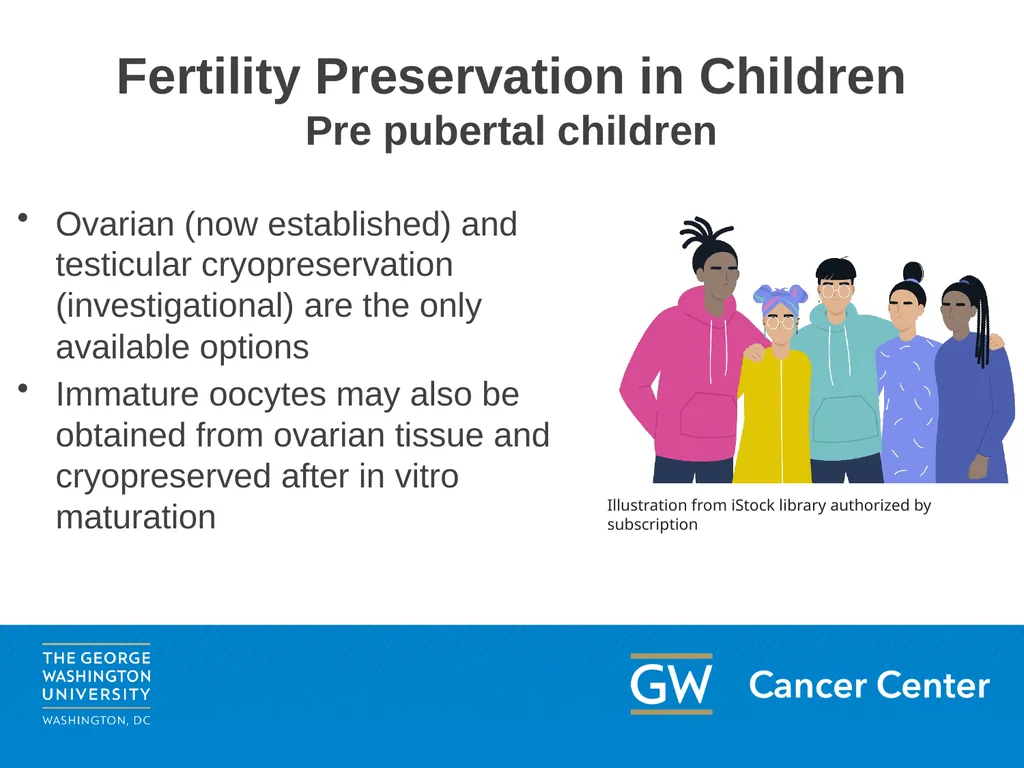
slide29. Fertility Preservation in Children Pre pubertal children Ovarian (now established) and testicular cryopreservation (investigational) are the only available options
Immature oocytes may also be obtained from ovarian tissue and cryopreserved after in vitro maturation Illustration from iStock library authorized by subscription<br>
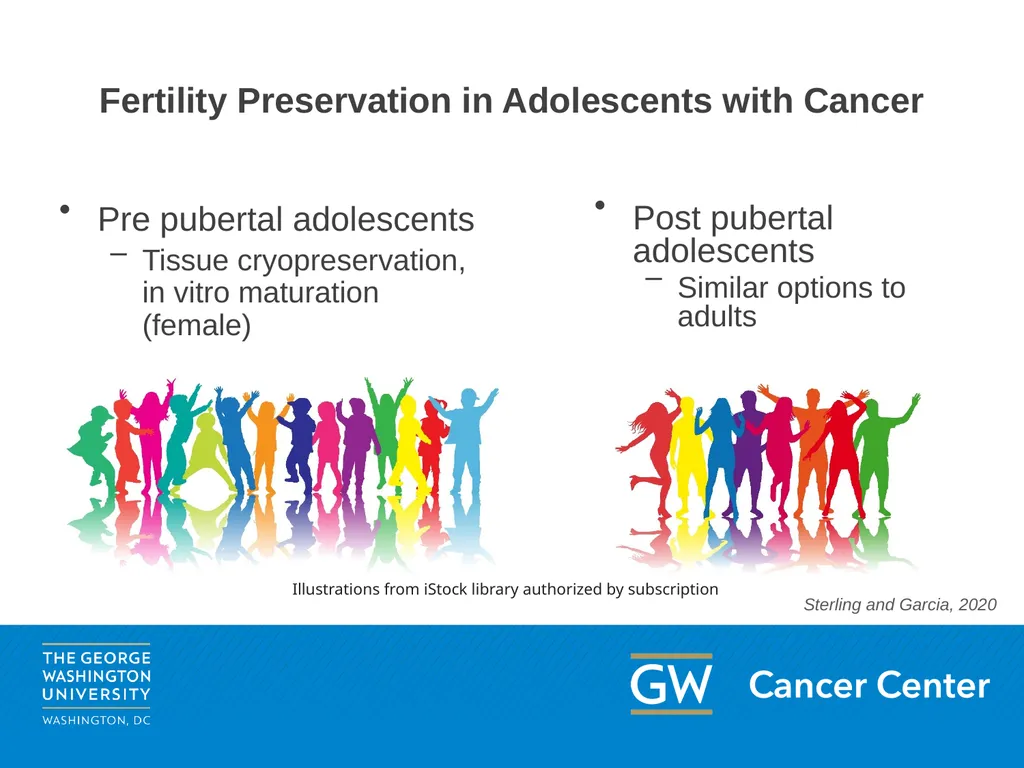
slide30. Fertility Preservation in Adolescents with Cancer Pre pubertal adolescents
Tissue cryopreservation, in vitro maturation (female) Illustrations from iStock library authorized by subscription Post pubertal adolescents
Similar options to adults Sterling and Garcia, 2020<br>
slide31. Fertility Recommendations Illustrations from Canva library authorized by subscription<br>
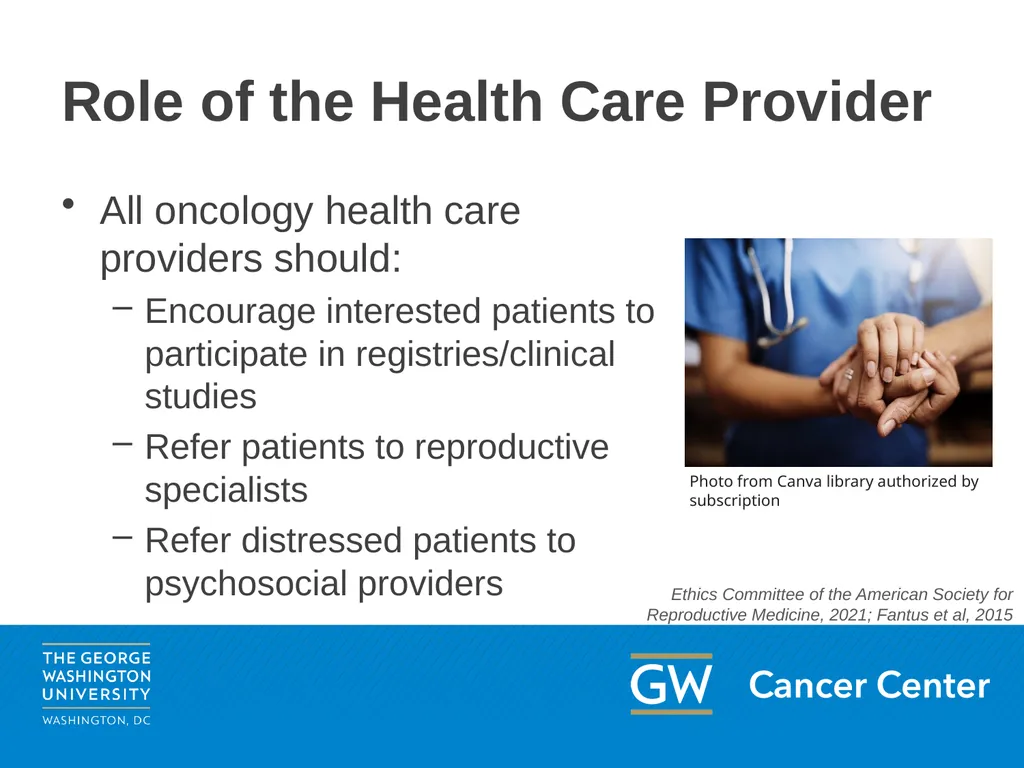
slide32. Role of the Health Care Provider All oncology health care providers should:
Encourage interested patients to participate in registries/clinical studies
Refer patients to reproductive specialists
Refer distressed patients to psychosocial providers Photo from Canva library authorized by subscription Ethics Committee of the American Society for Reproductive Medicine, 2021; Fantus et al, 2015<br>
slide33. Transgender and Nonbinary patients All oncology health care providers should:
Should treat all requests for fertility services without regard to gender identity status
Should be educated on how to provide culturally competent care Ethics Committee of the American Society for Reproductive Medicine, 2021; Fantus et al, 2015<br>
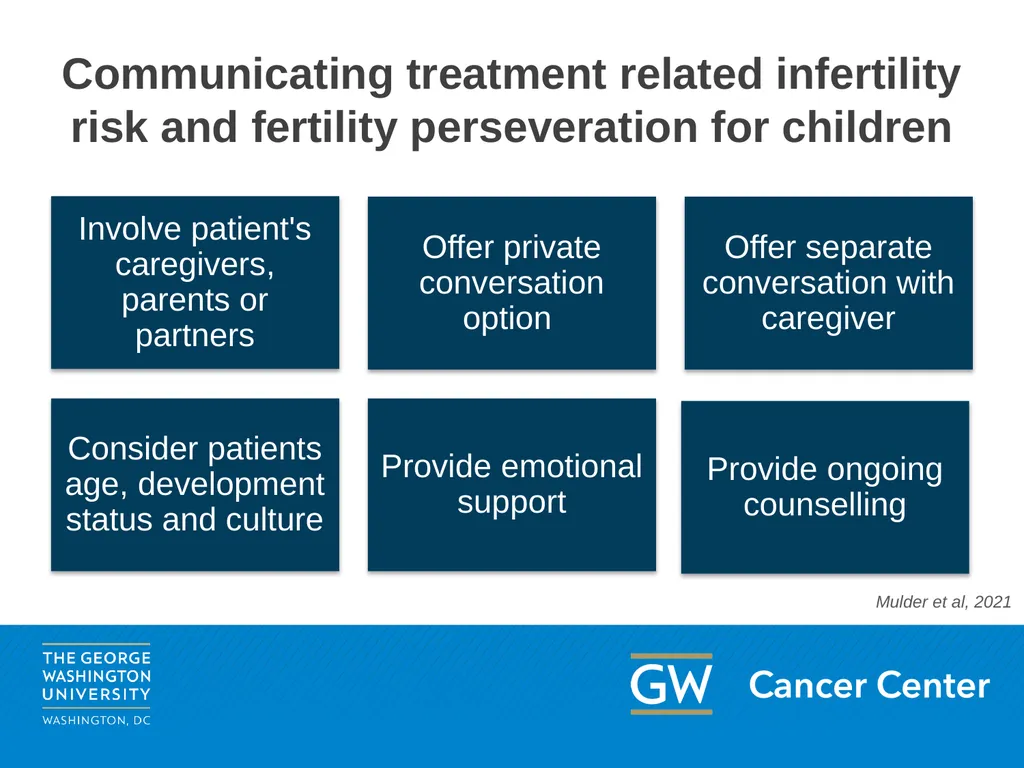
slide34. Communicating treatment related infertility risk and fertility perseveration for children Mulder et al, 2021<br>
slide35. Cost & Health Disparities Patients with cancer are increasingly required to pay a larger portion of care costs:
Discussing cost is an important part of shared decision-making
When two methods are comparable in terms of benefits/harms, discuss use of less expensive alternatives Letourneau et al., 2012; Oktay et al., 2018; Salsman et al., 2016; Tschudin & Bitzer, 2009<br>
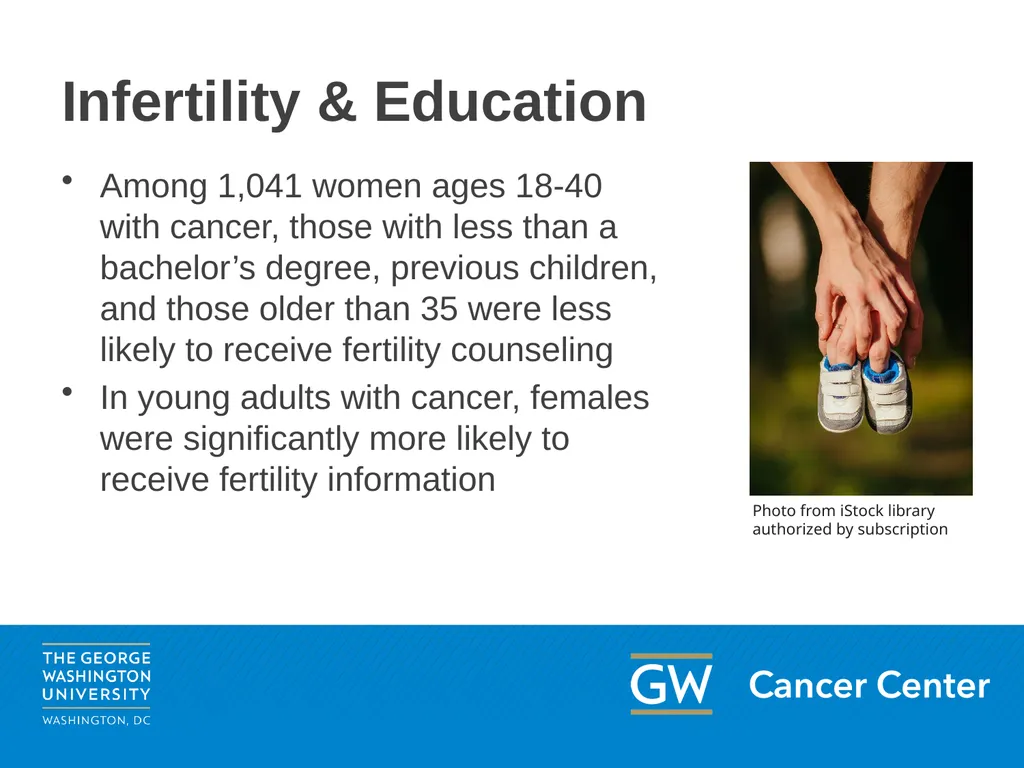
slide36. Infertility & Education Among 1,041 women ages 18-40 with cancer, those with less than a bachelor’s degree, previous children, and those older than 35 were less likely to receive fertility counseling
In young adults with cancer, females were significantly more likely to receive fertility information Photo from iStock library authorized by subscription<br>
slide37. Key Points Providers should proactively provide patients with fertility preservation options as soon as possible following a cancer diagnosis
All conversations should be documented in medical records and patients should be referred to reproductive specialists and psychosocial providers as needed
Awareness of health disparities in access to care should be considered and health care providers should always aim to provide the highest level of care to all patients<br>
slide38. Prior Versions of the Guidelines The recommendations in this presentation are based on the 2018 version of the ASCO Guidelines. For additional information, see the 2013 and 2006 versions, available here:
2006: Lee, S. J., Schover, L. R., Partridge, A. H., Patrizio, P., Wallace, W. H., Hagerty, K., Beck, L. N., Brennan, L. V., Oktay, K., & American Society of Clinical, O. (2006, Jun 20). American Society of Clinical Oncology recommendations on fertility preservation in cancer patients. J Clin Oncol, 24(18), 2917-2931. https://doi.org/10.1200/JCO.2006.06.5888
2013: Loren, A. W., Mangu, P. B., Beck, L. N., Brennan, L., Magdalinski, A. J., Partridge, A. H., Quinn, G., Wallace, W. H., Oktay, K., & American Society of Clinical, O. (2013, Jul 1). Fertility preservation for patients with cancer: American Society of Clinical Oncology clinical practice guideline update. J Clin Oncol, 31(19), 2500-2510. https://doi.org/10.1200/JCO.2013.49.2678
2018: Oktay, K., Harvey, B. E., Partridge, A. H., Quinn, G. P., Reinecke, J., Taylor, H. S., Wallace, W. H., Wang, E. T., & Loren, A. W. (2018, Jul 1). Fertility Preservation in Patients With Cancer: ASCO Clinical Practice Guideline Update. J Clin Oncol, 36(19), 1994-2001. https://doi.org/10.1200/JCO.2018.78.1914<br>
slide39. References American Cancer Society. (2020, February 6). How cancer and cancer treatment can affect fertility in females. American Cancer Society. Retrieved January 18, 2022, from https://www.cancer.org/treatment/treatments-and-side-effects/physical-side-effects/fertility-and-sexual-side-effects/fertility-and-women-with-cancer/how-cancer-treatments-affect-fertility.html
American Cancer Society. (2020, February 6). How cancer and cancer treatment can affect fertility in males. American Cancer Society. Retrieved January 13, 2022, from https://www.cancer.org/treatment/treatments-and-side-effects/physical-side-effects/fertility-and-sexual-side-effects/fertility-and-men-with-cancer/how-cancer-treatments-affect-fertility.html
Babayev, S. N., Arslan, E., Kogan, S., Moy, F., & Oktay, K. (2013). Evaluation of ovarian and testicular tissue cryopreservation in children undergoing gonadotoxic therapies. Journal of Assisted Reproduction and Genetics, 30(1), 3-9. doi:10.1007/s10815-012-9909-5.
Ethics Committee of the American Society for Reproductive Medicine. (2021). Access to fertility services by transgender and nonbinary persons: an Ethics Committee opinion. Fertility and Sterility, 115(4), 874-878.
Fantus, S., Gupta, A. A., Lorenzo, A. J., Brownstone, D., Maloney, A. M., & Zlotnik Shaul, R. (2015). Addressing fertility preservation for lesbian, gay, and bisexual adolescents and young adults with cancer. Journal of Adolescent and Young Adult Oncology, 4(4), 152-156.
Goldfarb, S., Mulhall, J., Nelson, C., Kelvin, J., Dickler, M., & Carter, J. (2013). Sexual and reproductive health in cancer survivors. Seminars in Oncology, 40(6), 726-744. doi:10.1053/j.seminoncol.2013.09.002.
Goldfarb, S. B., Turan, V., Bedoschi, G., Taylan, E., Abdo, N., Cigler, T., . . . Oktay, K. H. (2021). Impact of adjuvant chemotherapy or tamoxifen-alone on the ovarian reserve of young women with breast cancer. Breast Cancer Research and Treatment, 185(1), 165-173. doi:10.1007/s10549-020-05933-7.
Kim, J., Turan, V., & Oktay, K. (2016). Long-term safety of letrozole and gonadotropin stimulation for fertility preservation in women with breast cancer. Journal of Clinical Endocrinology & Metabolism, 101(4), 1364-1371. doi:10.1210/jc.2015-3878.
Lee, S. J., Schover, L. R., Partridge, A. H., Patrizio, P., Wallace, W. H., Hagerty, K., Beck, L. N., Brennan, L. V., Oktay, K., & American Society of Clinical, O. (2006, Jun 20). American Society of Clinical Oncology recommendations on fertility preservation in cancer patients. Journal of Clinical Oncology, 24(18), 2917-2931. doi:10.1200/JCO.2006.06.5888.<br>
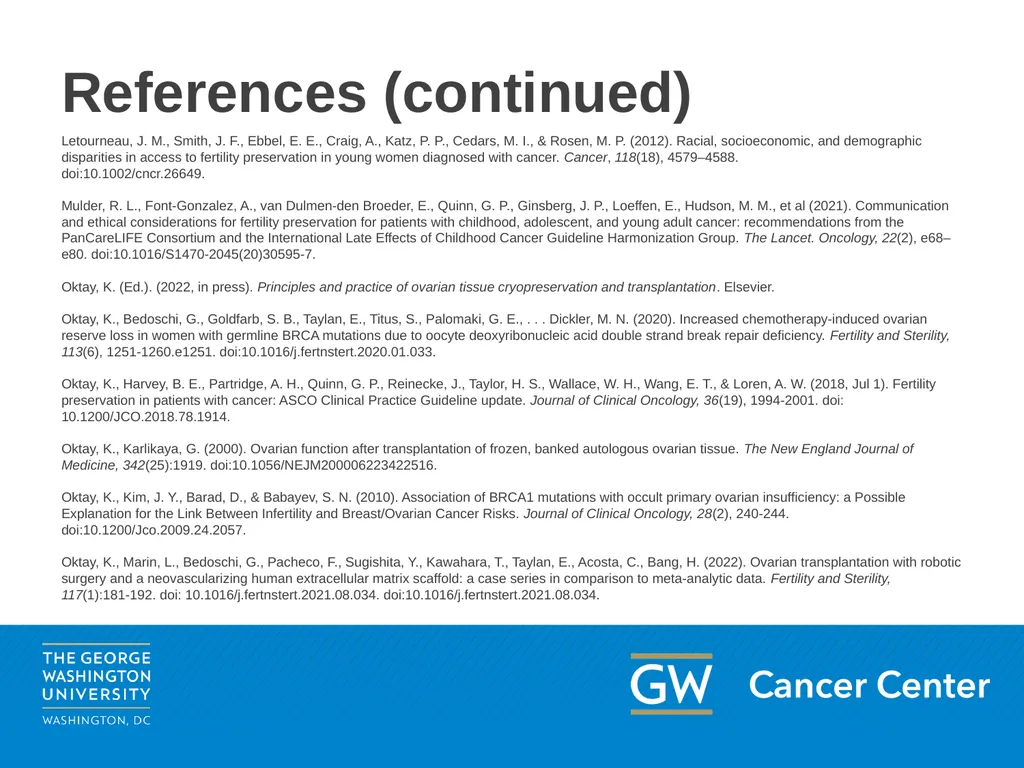
slide40. References (continued) Letourneau, J. M., Smith, J. F., Ebbel, E. E., Craig, A., Katz, P. P., Cedars, M. I., & Rosen, M. P. (2012). Racial, socioeconomic, and demographic disparities in access to fertility preservation in young women diagnosed with cancer. Cancer, 118(18), 4579–4588.
doi:10.1002/cncr.26649.
Mulder, R. L., Font-Gonzalez, A., van Dulmen-den Broeder, E., Quinn, G. P., Ginsberg, J. P., Loeffen, E., Hudson, M. M., et al (2021). Communication and ethical considerations for fertility preservation for patients with childhood, adolescent, and young adult cancer: recommendations from the PanCareLIFE Consortium and the International Late Effects of Childhood Cancer Guideline Harmonization Group. The Lancet. Oncology, 22(2), e68–e80. doi:10.1016/S1470-2045(20)30595-7.
Oktay, K. (Ed.). (2022, in press). Principles and practice of ovarian tissue cryopreservation and transplantation. Elsevier.
Oktay, K., Bedoschi, G., Goldfarb, S. B., Taylan, E., Titus, S., Palomaki, G. E., . . . Dickler, M. N. (2020). Increased chemotherapy-induced ovarian reserve loss in women with germline BRCA mutations due to oocyte deoxyribonucleic acid double strand break repair deficiency. Fertility and Sterility, 113(6), 1251-1260.e1251. doi:10.1016/j.fertnstert.2020.01.033.
Oktay, K., Harvey, B. E., Partridge, A. H., Quinn, G. P., Reinecke, J., Taylor, H. S., Wallace, W. H., Wang, E. T., & Loren, A. W. (2018, Jul 1). Fertility preservation in patients with cancer: ASCO Clinical Practice Guideline update. Journal of Clinical Oncology, 36(19), 1994-2001. doi: 10.1200/JCO.2018.78.1914.
Oktay, K., Karlikaya, G. (2000). Ovarian function after transplantation of frozen, banked autologous ovarian tissue. The New England Journal of Medicine, 342(25):1919. doi:10.1056/NEJM200006223422516.
Oktay, K., Kim, J. Y., Barad, D., & Babayev, S. N. (2010). Association of BRCA1 mutations with occult primary ovarian insufficiency: a Possible Explanation for the Link Between Infertility and Breast/Ovarian Cancer Risks. Journal of Clinical Oncology, 28(2), 240-244. doi:10.1200/Jco.2009.24.2057.
Oktay, K., Marin, L., Bedoschi, G., Pacheco, F., Sugishita, Y., Kawahara, T., Taylan, E., Acosta, C., Bang, H. (2022). Ovarian transplantation with robotic surgery and a neovascularizing human extracellular matrix scaffold: a case series in comparison to meta-analytic data. Fertility and Sterility, 117(1):181-192. doi: 10.1016/j.fertnstert.2021.08.034. doi:10.1016/j.fertnstert.2021.08.034.<br>
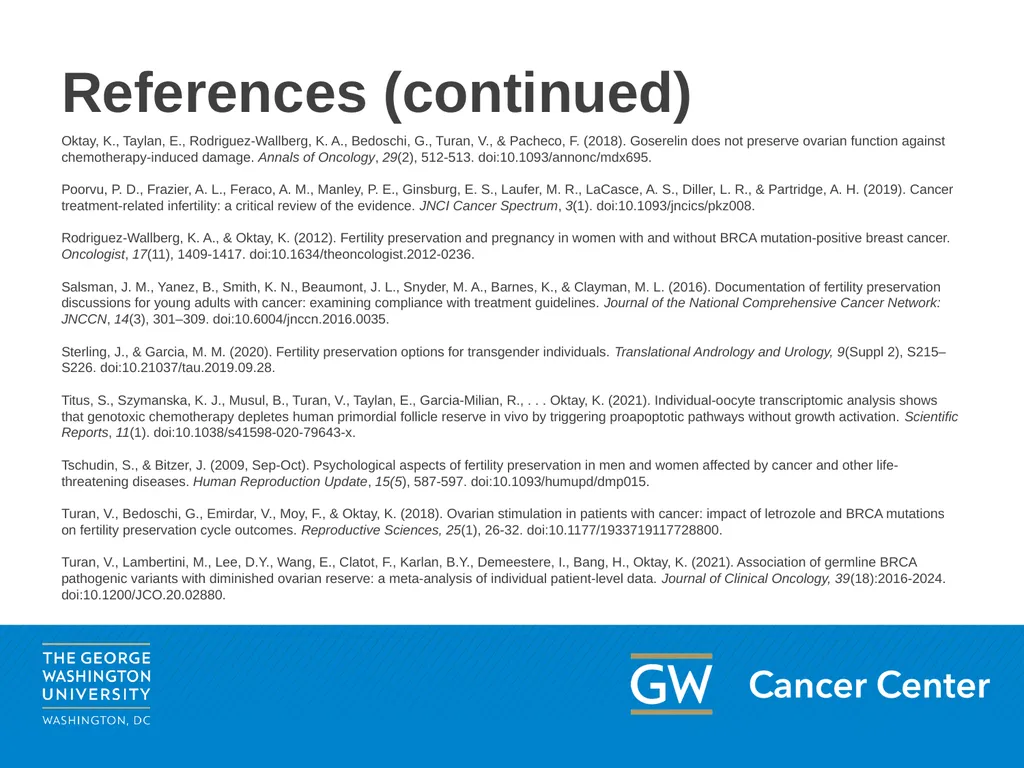
slide41. References (continued) Oktay, K., Taylan, E., Rodriguez-Wallberg, K. A., Bedoschi, G., Turan, V., & Pacheco, F. (2018). Goserelin does not preserve ovarian function against chemotherapy-induced damage. Annals of Oncology, 29(2), 512-513. doi:10.1093/annonc/mdx695.
Poorvu, P. D., Frazier, A. L., Feraco, A. M., Manley, P. E., Ginsburg, E. S., Laufer, M. R., LaCasce, A. S., Diller, L. R., & Partridge, A. H. (2019). Cancer treatment-related infertility: a critical review of the evidence. JNCI Cancer Spectrum, 3(1). doi:10.1093/jncics/pkz008.
Rodriguez-Wallberg, K. A., & Oktay, K. (2012). Fertility preservation and pregnancy in women with and without BRCA mutation-positive breast cancer. Oncologist, 17(11), 1409-1417. doi:10.1634/theoncologist.2012-0236.
Salsman, J. M., Yanez, B., Smith, K. N., Beaumont, J. L., Snyder, M. A., Barnes, K., & Clayman, M. L. (2016). Documentation of fertility preservation discussions for young adults with cancer: examining compliance with treatment guidelines. Journal of the National Comprehensive Cancer Network: JNCCN, 14(3), 301–309. doi:10.6004/jnccn.2016.0035.
Sterling, J., & Garcia, M. M. (2020). Fertility preservation options for transgender individuals. Translational Andrology and Urology, 9(Suppl 2), S215–S226. doi:10.21037/tau.2019.09.28.
Titus, S., Szymanska, K. J., Musul, B., Turan, V., Taylan, E., Garcia-Milian, R., . . . Oktay, K. (2021). Individual-oocyte transcriptomic analysis shows that genotoxic chemotherapy depletes human primordial follicle reserve in vivo by triggering proapoptotic pathways without growth activation. Scientific Reports, 11(1). doi:10.1038/s41598-020-79643-x.
Tschudin, S., & Bitzer, J. (2009, Sep-Oct). Psychological aspects of fertility preservation in men and women affected by cancer and other life-threatening diseases. Human Reproduction Update, 15(5), 587-597. doi:10.1093/humupd/dmp015.
Turan, V., Bedoschi, G., Emirdar, V., Moy, F., & Oktay, K. (2018). Ovarian stimulation in patients with cancer: impact of letrozole and BRCA mutations on fertility preservation cycle outcomes. Reproductive Sciences, 25(1), 26-32. doi:10.1177/1933719117728800.
Turan, V., Lambertini, M., Lee, D.Y., Wang, E., Clatot, F., Karlan, B.Y., Demeestere, I., Bang, H., Oktay, K. (2021). Association of germline BRCA pathogenic variants with diminished ovarian reserve: a meta-analysis of individual patient-level data. Journal of Clinical Oncology, 39(18):2016-2024. doi:10.1200/JCO.20.02880.<br>
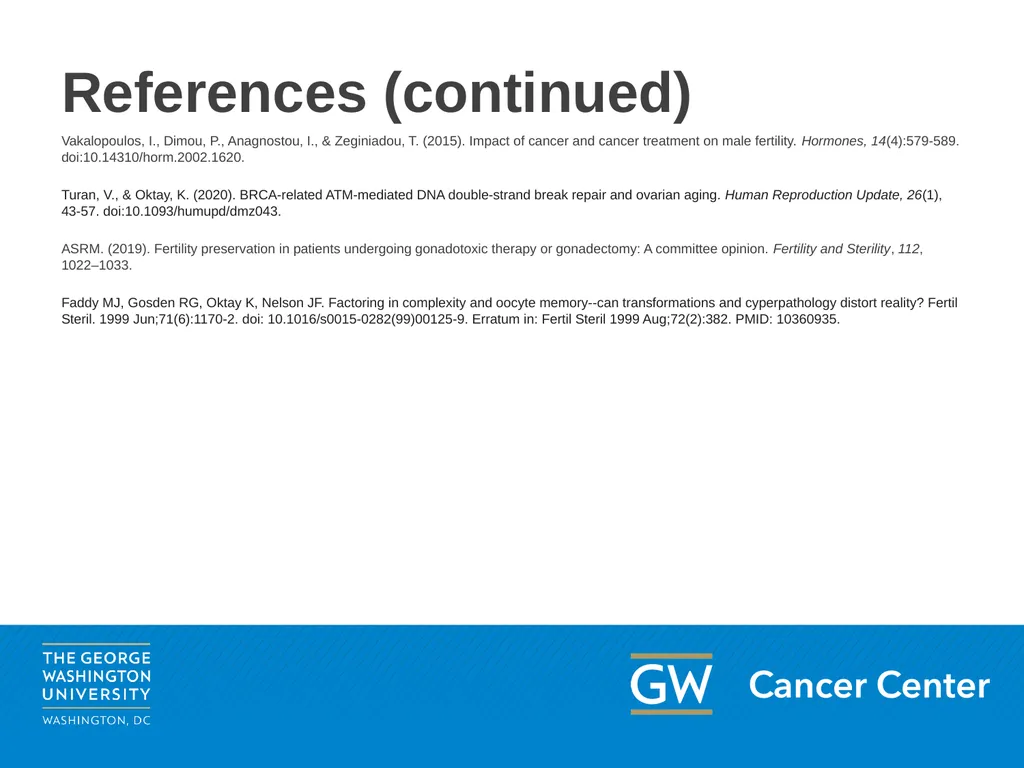
slide42. References (continued) Vakalopoulos, I., Dimou, P., Anagnostou, I., & Zeginiadou, T. (2015). Impact of cancer and cancer treatment on male fertility. Hormones, 14(4):579-589. doi:10.14310/horm.2002.1620.
Turan, V., & Oktay, K. (2020). BRCA-related ATM-mediated DNA double-strand break repair and ovarian aging. Human Reproduction Update, 26(1), 43-57. doi:10.1093/humupd/dmz043.
ASRM. (2019). Fertility preservation in patients undergoing gonadotoxic therapy or gonadectomy: A committee opinion. Fertility and Sterility, 112, 1022–1033.
Faddy MJ, Gosden RG, Oktay K, Nelson JF. Factoring in complexity and oocyte memory--can transformations and cyperpathology distort reality? Fertil Steril. 1999 Jun;71(6):1170-2. doi: 10.1016/s0015-0282(99)00125-9. Erratum in: Fertil Steril 1999 Aug;72(2):382. PMID: 10360935.<br>
slide43. Acknowledgments This training was supported by Cooperative Agreement #NU58DP006461-04 from the Centers for Disease Control and Prevention (CDC).
The views expressed in written workshop materials or publications and by speakers and moderators do not necessarily reflect the official policies of the Department of Health and Human Services, nor does the mention of trade names, commercial practices, or organizations imply endorsement by the U.S. Government.<br>
slide44. Thank you! Kutluk Oktay MD, PhD
kutluk.oktay@yale.edu
Follow us on Twitter: @GWCancer
www.gwcancercenter.org Sign-up for the GW Cancer Center’s Patient Navigation and Survivorship E-Newsletter: bit.ly/PNSurvEnews
Sign-up for the GW Cancer Center’s Cancer Control Technical Assistance E-Newsletter: bit.ly/TAPenews<br>
George Washington University Cancer Center TAP. (2023). Fertility Preservation in Patients with Cancer [PowerPoint Slides]. GWU Cancer Center TAP. https://cme.smhs.gwu.edu/gw-cancer-center-/content/fertility-preservation-patients-cancer-0
This content was adapted from the GW Cancer Center the Oncology Patient Navigation Training: The Fundamentals (PI: Pratt-Chapman) developed and maintained by CDC cooperative agreements #NU38DP004972, #5NU58DP006461 and #NU58DP007539. The content added, changed, or adapted by our organization do not necessarily represent the views of the GW Cancer Center or the CDC.
If you have any questions about the following material or would like permission to use this material, please contact cancercontrol@gwu.edu<br>
slide2. Kutluk Oktay MD, PhD
Professor of Obstetrics, Gynecology and Reproductive Sciences
Director, Laboratory of Fertility Preservation and Molecular Reproductive Biology
Yale School of Medicine
Medical Director, Innovation Institute for Fertility Preservation Fertility Preservation in People with Cancer A 2022 Update:<br>
slide3. Disclosure This American Society of Clinical Oncology (ASCO) Guideline summary was prepared by GW Cancer Center. Any summaries or commentary appearing herein were not prepared or reviewed by American Society of Clinical Oncology, Inc. (ASCO) or the editors of Journal of Clinical Oncology® (JCO). The ideas and opinions expressed herein do not necessarily reflect those of ASCO, the editors of JCO, or GW Cancer Center. The mention of any company, product, service, or therapy does not constitute an endorsement by ASCO. It is the responsibility of the treating physician or other health care provider, relying on independent experience and knowledge of the patient, to determine drug dosages and the best treatment for the patient. ASCO, the editors of JCO, and GW Cancer Center assume no responsibility for any injury or damage to persons or property arising out of or related to any use of these materials or any errors or omissions. This material has been reviewed by the speaker and deemed to be appropriate for continuing education.<br>
slide4. Learning Objectives Describe the impact of cancer and cancer treatment on fertility
Identify methods of fertility preservation in different populations diagnosed with cancer
Describe the role of the health care provider in fertility preservation for patients with cancer<br>
slide5. Infertility and Patients with Cancer Photo from Canva library authorized by subscription Males Females<br>
slide6. Infertility and Patients with Cancer- Males ACS, 2020b; Goldfarb et al., 2013;
Lee et al., 2006; Vakalopoulos et al., 2015 Illustrations from iStock library authorized by subscription<br>
slide7. Infertility and Patients with Cancer - Females ACS, 2020a; Goldfarb et al., 2013; Poorvu et al., 2019 Illustrations from iStock library authorized by subscription<br>
slide8. Cancer Treatment and Fertility Cancer treatment can cause infertility through cellular damage or removal of gonadal organs
Treatment effects on fertility depend on the drug, size/location of radiation field, age, sex, and pretreatment fertility of the patient Goldfarb et al., 2013; Oktay et al., 2018 Photo from Canva library authorized by subscription<br>
slide9. When Does Cancer Treatment Affect Fertility? Sperm counts fall significantly within approximately 3 months of chemotherapy and longer recovery does not necessarily predict sterility
Timing of fertility effect(s) in women is related to ovarian reserve
Even if women are initially fertile post-treatment, duration of fertile lifespan is shortened by reduced ovarian reserve causing premature menopause Goldfarb et al., 2013; Poorvu et al., 2019<br>
slide10. Impact of Chemotherapy on Ovarian Reserve and Follicles at Various Stages of Growth Faddy et al, 1999; Oktay, 2022; Rodriguez-Wallberg & Oktay 2012 >3 Months Primordial Follicles
Primary Follicle
Multi-layer Preantral
Follicle Stages 50 mm Size of human follicles 200 mm 500 mm 1000-6000 mm >6000 mm Preantral Phase Antral Phase Preovulatory (Graafian) Follicle Antral Follicle Early Antral
Follicle FSH-Dependent
Phase of Follicle
Growth: E2 Production Taxanes? Alkylating
agents
Topoisomerase
inhibitors Anti-
metabolites FSH-Independent growth initiation (primordial, primary) AMH AFC DNA DSB Breaks DNA DSB Breaks Ovarian Reserve Set in Utero, Declines with Age<br>
slide11. Fertility Recommendations Illustrations from Canva library authorized by subscription<br>
slide12. Fertility Recommendations Illustrations from Canva library authorized by subscription<br>
slide13. Timing on Communication on Fertility Health care providers caring for adult and adolescent patients with cancer should:
Discuss the possibility of infertility
Refer interested patients to reproductive specialists Oktay et al., 2018 Photo from Canva library authorized by subscription<br>
slide14. Fertility Discussions Discussing fertility preservation approaches as early as possible helps maximize the range of available options:
Can reduce distress and improve quality of life
A follow-up discussion may be necessary post-therapy or when pregnancy is being considered Goldfarb et al., 2013; Oktay et al., 2018<br>
slide15. Fertility Recommendations Illustrations from Canva library authorized by subscription<br>
slide16. Fertility Preservation in Men with Cancer Sperm cryopreservation is an effective method of fertility preservation in adult men
Hormonal therapy does NOT successfully preserve fertility in men Oktay et al., 2018 Photo from Canva library authorized by subscription<br>
slide17. Experimental Methods in Men with Cancer Oktay et al., 2018 Testicular tissue cryopreservation with the intent of reimplantation (grafting) Photo from Canva library authorized by subscription<br>
slide18. Fertility Preservation in Transgender Men with Cancer Embryo and Oocyte cryopreservation available for post pubertal transmen before and after the initiation of gender affirming hormonal therapy (GAHT) Sterling & Garcia, 2020 Illustration from iStock library authorized by subscription<br>
slide19. Male Fertility after Chemotherapy Advise men of the high risk of genetic damage in sperm if collected after initiation of therapy
Strongly recommend sperm collection prior to treatment initiation:
Intracytoplasmic sperm injection allows future use of even limited number of sperm Oktay et al., 2018 Illustration from iStock library authorized by subscription<br>
slide20. Fertility Recommendations Illustrations from Canva library authorized by subscription<br>
slide21. Fertility Preservation Options in Women with Cancer Embryo cryopreservation:
Has a partner/using donor sperm
Oocyte cryopreservation:
- Without a male partner
- Who do not wish to use donor sperm
- Who have practical/religious/ethical objections to embryo freezing Oktay et al., 2018 Photo from Canva library authorized by subscription<br>
slide22. Ovarian Tissue Cryopreservation for Auto-Transplantation (Updated 2022) Benefits:
Can be performed with short notice
Does not require ovarian stimulation
Does not rely on sexual maturity and may be the only method available in children
Can restore natural hormone production and fertility after transplantation
No longer experimental (2019, ASRM Practice Committee) Oktay et al., 2018 Photo from Canva library authorized by subscription<br>
slide23. Special Case of Fertility Preservation in Women with Breast Cancer Aromatase Inhibitor protocols can be used to reduce estrogen exposure and safely perform ovarian stimulation for oocyte/embryo cryopreservation
Women with BRCA mutations may have lower ovarian reserve and may lose more of their ovarian reserve after chemotherapy Oktay et al 2005; Oktay et al., 2018; Oktay et al 2020 Photo from Canva library authorized by subscription<br>
slide24. Additional Fertility Preservation Options in Special Circumstances Ovarian Transposition:
May be offered when cancer treatment only involves pelvic/abdominal/spinal irradiation
Not always successful due to risk of ovarian exposure to scatter radiation/vascular kinking/migration
Conservative Gynecologic Surgery:
Radical trachelectomy (surgical removal of uterine cervix) typically restricted to stage IA2 and IB cervical cancer Oktay et al., 2018<br>
slide25. Ovarian Suppression (Updated 2022) In young women with breast cancer, GnRHa suppression should not be used as a method of fertility preservation
Some suggested its use for reducing amenorrhea risk in women with breast cancer aged<40 years but this is not proven and unlikely to be effective Oktay et al., 2018 Illustration from Canva library authorized by subscription<br>
slide26. Fertility Preservation in Transgender Women with Cancer Sperm cryopreservation available for post pubertal transwomen before and after the initiation of gender affirming hormonal therapy (GAHT) Illustration from iStock library authorized by subscription Sterling & Garcia, 2020<br>
slide27. Fertility Recommendations Illustrations from Canva library authorized by subscription<br>
slide28. Fertility Preservation in Children with Cancer Post pubertal children Oktay et al., 2018 Ovarian-Tissue cryopreservation
Oocyte cryopreservation Sperm cryopreservation Illustrations from iStock library authorized by subscription<br>
slide29. Fertility Preservation in Children Pre pubertal children Ovarian (now established) and testicular cryopreservation (investigational) are the only available options
Immature oocytes may also be obtained from ovarian tissue and cryopreserved after in vitro maturation Illustration from iStock library authorized by subscription<br>
slide30. Fertility Preservation in Adolescents with Cancer Pre pubertal adolescents
Tissue cryopreservation, in vitro maturation (female) Illustrations from iStock library authorized by subscription Post pubertal adolescents
Similar options to adults Sterling and Garcia, 2020<br>
slide31. Fertility Recommendations Illustrations from Canva library authorized by subscription<br>
slide32. Role of the Health Care Provider All oncology health care providers should:
Encourage interested patients to participate in registries/clinical studies
Refer patients to reproductive specialists
Refer distressed patients to psychosocial providers Photo from Canva library authorized by subscription Ethics Committee of the American Society for Reproductive Medicine, 2021; Fantus et al, 2015<br>
slide33. Transgender and Nonbinary patients All oncology health care providers should:
Should treat all requests for fertility services without regard to gender identity status
Should be educated on how to provide culturally competent care Ethics Committee of the American Society for Reproductive Medicine, 2021; Fantus et al, 2015<br>
slide34. Communicating treatment related infertility risk and fertility perseveration for children Mulder et al, 2021<br>
slide35. Cost & Health Disparities Patients with cancer are increasingly required to pay a larger portion of care costs:
Discussing cost is an important part of shared decision-making
When two methods are comparable in terms of benefits/harms, discuss use of less expensive alternatives Letourneau et al., 2012; Oktay et al., 2018; Salsman et al., 2016; Tschudin & Bitzer, 2009<br>
slide36. Infertility & Education Among 1,041 women ages 18-40 with cancer, those with less than a bachelor’s degree, previous children, and those older than 35 were less likely to receive fertility counseling
In young adults with cancer, females were significantly more likely to receive fertility information Photo from iStock library authorized by subscription<br>
slide37. Key Points Providers should proactively provide patients with fertility preservation options as soon as possible following a cancer diagnosis
All conversations should be documented in medical records and patients should be referred to reproductive specialists and psychosocial providers as needed
Awareness of health disparities in access to care should be considered and health care providers should always aim to provide the highest level of care to all patients<br>
slide38. Prior Versions of the Guidelines The recommendations in this presentation are based on the 2018 version of the ASCO Guidelines. For additional information, see the 2013 and 2006 versions, available here:
2006: Lee, S. J., Schover, L. R., Partridge, A. H., Patrizio, P., Wallace, W. H., Hagerty, K., Beck, L. N., Brennan, L. V., Oktay, K., & American Society of Clinical, O. (2006, Jun 20). American Society of Clinical Oncology recommendations on fertility preservation in cancer patients. J Clin Oncol, 24(18), 2917-2931. https://doi.org/10.1200/JCO.2006.06.5888
2013: Loren, A. W., Mangu, P. B., Beck, L. N., Brennan, L., Magdalinski, A. J., Partridge, A. H., Quinn, G., Wallace, W. H., Oktay, K., & American Society of Clinical, O. (2013, Jul 1). Fertility preservation for patients with cancer: American Society of Clinical Oncology clinical practice guideline update. J Clin Oncol, 31(19), 2500-2510. https://doi.org/10.1200/JCO.2013.49.2678
2018: Oktay, K., Harvey, B. E., Partridge, A. H., Quinn, G. P., Reinecke, J., Taylor, H. S., Wallace, W. H., Wang, E. T., & Loren, A. W. (2018, Jul 1). Fertility Preservation in Patients With Cancer: ASCO Clinical Practice Guideline Update. J Clin Oncol, 36(19), 1994-2001. https://doi.org/10.1200/JCO.2018.78.1914<br>
slide39. References American Cancer Society. (2020, February 6). How cancer and cancer treatment can affect fertility in females. American Cancer Society. Retrieved January 18, 2022, from https://www.cancer.org/treatment/treatments-and-side-effects/physical-side-effects/fertility-and-sexual-side-effects/fertility-and-women-with-cancer/how-cancer-treatments-affect-fertility.html
American Cancer Society. (2020, February 6). How cancer and cancer treatment can affect fertility in males. American Cancer Society. Retrieved January 13, 2022, from https://www.cancer.org/treatment/treatments-and-side-effects/physical-side-effects/fertility-and-sexual-side-effects/fertility-and-men-with-cancer/how-cancer-treatments-affect-fertility.html
Babayev, S. N., Arslan, E., Kogan, S., Moy, F., & Oktay, K. (2013). Evaluation of ovarian and testicular tissue cryopreservation in children undergoing gonadotoxic therapies. Journal of Assisted Reproduction and Genetics, 30(1), 3-9. doi:10.1007/s10815-012-9909-5.
Ethics Committee of the American Society for Reproductive Medicine. (2021). Access to fertility services by transgender and nonbinary persons: an Ethics Committee opinion. Fertility and Sterility, 115(4), 874-878.
Fantus, S., Gupta, A. A., Lorenzo, A. J., Brownstone, D., Maloney, A. M., & Zlotnik Shaul, R. (2015). Addressing fertility preservation for lesbian, gay, and bisexual adolescents and young adults with cancer. Journal of Adolescent and Young Adult Oncology, 4(4), 152-156.
Goldfarb, S., Mulhall, J., Nelson, C., Kelvin, J., Dickler, M., & Carter, J. (2013). Sexual and reproductive health in cancer survivors. Seminars in Oncology, 40(6), 726-744. doi:10.1053/j.seminoncol.2013.09.002.
Goldfarb, S. B., Turan, V., Bedoschi, G., Taylan, E., Abdo, N., Cigler, T., . . . Oktay, K. H. (2021). Impact of adjuvant chemotherapy or tamoxifen-alone on the ovarian reserve of young women with breast cancer. Breast Cancer Research and Treatment, 185(1), 165-173. doi:10.1007/s10549-020-05933-7.
Kim, J., Turan, V., & Oktay, K. (2016). Long-term safety of letrozole and gonadotropin stimulation for fertility preservation in women with breast cancer. Journal of Clinical Endocrinology & Metabolism, 101(4), 1364-1371. doi:10.1210/jc.2015-3878.
Lee, S. J., Schover, L. R., Partridge, A. H., Patrizio, P., Wallace, W. H., Hagerty, K., Beck, L. N., Brennan, L. V., Oktay, K., & American Society of Clinical, O. (2006, Jun 20). American Society of Clinical Oncology recommendations on fertility preservation in cancer patients. Journal of Clinical Oncology, 24(18), 2917-2931. doi:10.1200/JCO.2006.06.5888.<br>
slide40. References (continued) Letourneau, J. M., Smith, J. F., Ebbel, E. E., Craig, A., Katz, P. P., Cedars, M. I., & Rosen, M. P. (2012). Racial, socioeconomic, and demographic disparities in access to fertility preservation in young women diagnosed with cancer. Cancer, 118(18), 4579–4588.
doi:10.1002/cncr.26649.
Mulder, R. L., Font-Gonzalez, A., van Dulmen-den Broeder, E., Quinn, G. P., Ginsberg, J. P., Loeffen, E., Hudson, M. M., et al (2021). Communication and ethical considerations for fertility preservation for patients with childhood, adolescent, and young adult cancer: recommendations from the PanCareLIFE Consortium and the International Late Effects of Childhood Cancer Guideline Harmonization Group. The Lancet. Oncology, 22(2), e68–e80. doi:10.1016/S1470-2045(20)30595-7.
Oktay, K. (Ed.). (2022, in press). Principles and practice of ovarian tissue cryopreservation and transplantation. Elsevier.
Oktay, K., Bedoschi, G., Goldfarb, S. B., Taylan, E., Titus, S., Palomaki, G. E., . . . Dickler, M. N. (2020). Increased chemotherapy-induced ovarian reserve loss in women with germline BRCA mutations due to oocyte deoxyribonucleic acid double strand break repair deficiency. Fertility and Sterility, 113(6), 1251-1260.e1251. doi:10.1016/j.fertnstert.2020.01.033.
Oktay, K., Harvey, B. E., Partridge, A. H., Quinn, G. P., Reinecke, J., Taylor, H. S., Wallace, W. H., Wang, E. T., & Loren, A. W. (2018, Jul 1). Fertility preservation in patients with cancer: ASCO Clinical Practice Guideline update. Journal of Clinical Oncology, 36(19), 1994-2001. doi: 10.1200/JCO.2018.78.1914.
Oktay, K., Karlikaya, G. (2000). Ovarian function after transplantation of frozen, banked autologous ovarian tissue. The New England Journal of Medicine, 342(25):1919. doi:10.1056/NEJM200006223422516.
Oktay, K., Kim, J. Y., Barad, D., & Babayev, S. N. (2010). Association of BRCA1 mutations with occult primary ovarian insufficiency: a Possible Explanation for the Link Between Infertility and Breast/Ovarian Cancer Risks. Journal of Clinical Oncology, 28(2), 240-244. doi:10.1200/Jco.2009.24.2057.
Oktay, K., Marin, L., Bedoschi, G., Pacheco, F., Sugishita, Y., Kawahara, T., Taylan, E., Acosta, C., Bang, H. (2022). Ovarian transplantation with robotic surgery and a neovascularizing human extracellular matrix scaffold: a case series in comparison to meta-analytic data. Fertility and Sterility, 117(1):181-192. doi: 10.1016/j.fertnstert.2021.08.034. doi:10.1016/j.fertnstert.2021.08.034.<br>
slide41. References (continued) Oktay, K., Taylan, E., Rodriguez-Wallberg, K. A., Bedoschi, G., Turan, V., & Pacheco, F. (2018). Goserelin does not preserve ovarian function against chemotherapy-induced damage. Annals of Oncology, 29(2), 512-513. doi:10.1093/annonc/mdx695.
Poorvu, P. D., Frazier, A. L., Feraco, A. M., Manley, P. E., Ginsburg, E. S., Laufer, M. R., LaCasce, A. S., Diller, L. R., & Partridge, A. H. (2019). Cancer treatment-related infertility: a critical review of the evidence. JNCI Cancer Spectrum, 3(1). doi:10.1093/jncics/pkz008.
Rodriguez-Wallberg, K. A., & Oktay, K. (2012). Fertility preservation and pregnancy in women with and without BRCA mutation-positive breast cancer. Oncologist, 17(11), 1409-1417. doi:10.1634/theoncologist.2012-0236.
Salsman, J. M., Yanez, B., Smith, K. N., Beaumont, J. L., Snyder, M. A., Barnes, K., & Clayman, M. L. (2016). Documentation of fertility preservation discussions for young adults with cancer: examining compliance with treatment guidelines. Journal of the National Comprehensive Cancer Network: JNCCN, 14(3), 301–309. doi:10.6004/jnccn.2016.0035.
Sterling, J., & Garcia, M. M. (2020). Fertility preservation options for transgender individuals. Translational Andrology and Urology, 9(Suppl 2), S215–S226. doi:10.21037/tau.2019.09.28.
Titus, S., Szymanska, K. J., Musul, B., Turan, V., Taylan, E., Garcia-Milian, R., . . . Oktay, K. (2021). Individual-oocyte transcriptomic analysis shows that genotoxic chemotherapy depletes human primordial follicle reserve in vivo by triggering proapoptotic pathways without growth activation. Scientific Reports, 11(1). doi:10.1038/s41598-020-79643-x.
Tschudin, S., & Bitzer, J. (2009, Sep-Oct). Psychological aspects of fertility preservation in men and women affected by cancer and other life-threatening diseases. Human Reproduction Update, 15(5), 587-597. doi:10.1093/humupd/dmp015.
Turan, V., Bedoschi, G., Emirdar, V., Moy, F., & Oktay, K. (2018). Ovarian stimulation in patients with cancer: impact of letrozole and BRCA mutations on fertility preservation cycle outcomes. Reproductive Sciences, 25(1), 26-32. doi:10.1177/1933719117728800.
Turan, V., Lambertini, M., Lee, D.Y., Wang, E., Clatot, F., Karlan, B.Y., Demeestere, I., Bang, H., Oktay, K. (2021). Association of germline BRCA pathogenic variants with diminished ovarian reserve: a meta-analysis of individual patient-level data. Journal of Clinical Oncology, 39(18):2016-2024. doi:10.1200/JCO.20.02880.<br>
slide42. References (continued) Vakalopoulos, I., Dimou, P., Anagnostou, I., & Zeginiadou, T. (2015). Impact of cancer and cancer treatment on male fertility. Hormones, 14(4):579-589. doi:10.14310/horm.2002.1620.
Turan, V., & Oktay, K. (2020). BRCA-related ATM-mediated DNA double-strand break repair and ovarian aging. Human Reproduction Update, 26(1), 43-57. doi:10.1093/humupd/dmz043.
ASRM. (2019). Fertility preservation in patients undergoing gonadotoxic therapy or gonadectomy: A committee opinion. Fertility and Sterility, 112, 1022–1033.
Faddy MJ, Gosden RG, Oktay K, Nelson JF. Factoring in complexity and oocyte memory--can transformations and cyperpathology distort reality? Fertil Steril. 1999 Jun;71(6):1170-2. doi: 10.1016/s0015-0282(99)00125-9. Erratum in: Fertil Steril 1999 Aug;72(2):382. PMID: 10360935.<br>
slide43. Acknowledgments This training was supported by Cooperative Agreement #NU58DP006461-04 from the Centers for Disease Control and Prevention (CDC).
The views expressed in written workshop materials or publications and by speakers and moderators do not necessarily reflect the official policies of the Department of Health and Human Services, nor does the mention of trade names, commercial practices, or organizations imply endorsement by the U.S. Government.<br>
slide44. Thank you! Kutluk Oktay MD, PhD
kutluk.oktay@yale.edu
Follow us on Twitter: @GWCancer
www.gwcancercenter.org Sign-up for the GW Cancer Center’s Patient Navigation and Survivorship E-Newsletter: bit.ly/PNSurvEnews
Sign-up for the GW Cancer Center’s Cancer Control Technical Assistance E-Newsletter: bit.ly/TAPenews<br>