This is a discussion on email etiquette, with a focus on forwarding etiquette Email Etiquette What is etiquette? The rules which indicate the correct way to behave in a certain time and place. Email etiquette is especially important in
"This is a discussion on email etiquette, with a" is the property of its rightful owner. Permission is granted to
download and print the materials on this website for personal, non-commercial use only, and to display it
on your personal computer provided you do not modify the materials and that you retain all copyright
notices contained in the materials. By downloading content from our website, you accept the terms of this
agreement.
Presentation Transcript
01
This is a discussion on email etiquette, with a focus on forwarding etiquette Email Etiquette<br>
02
What is etiquette?
The rules which indicate the “correct” way to behave in a certain time and place.
Email etiquette is especially important in the work place<br>
03
5 Basic Email Etiquette Rules<br>
04
The need for this will be made clear during out Email Safety Day.
Why is a subject important?
It informs recipient what the email is about. Rule #1: Always include a subject and use the recipient’s name in the greeting<br>
05
Writing in all capitals can convey that you are shouting in your message, and nobody likes to be yelled at. Consider other ways to get your message across while conveying its importance. Using all capitals can be annoying and trigger an unintended response. Rule #2: Do not write in ALL CAPITALS<br>
06
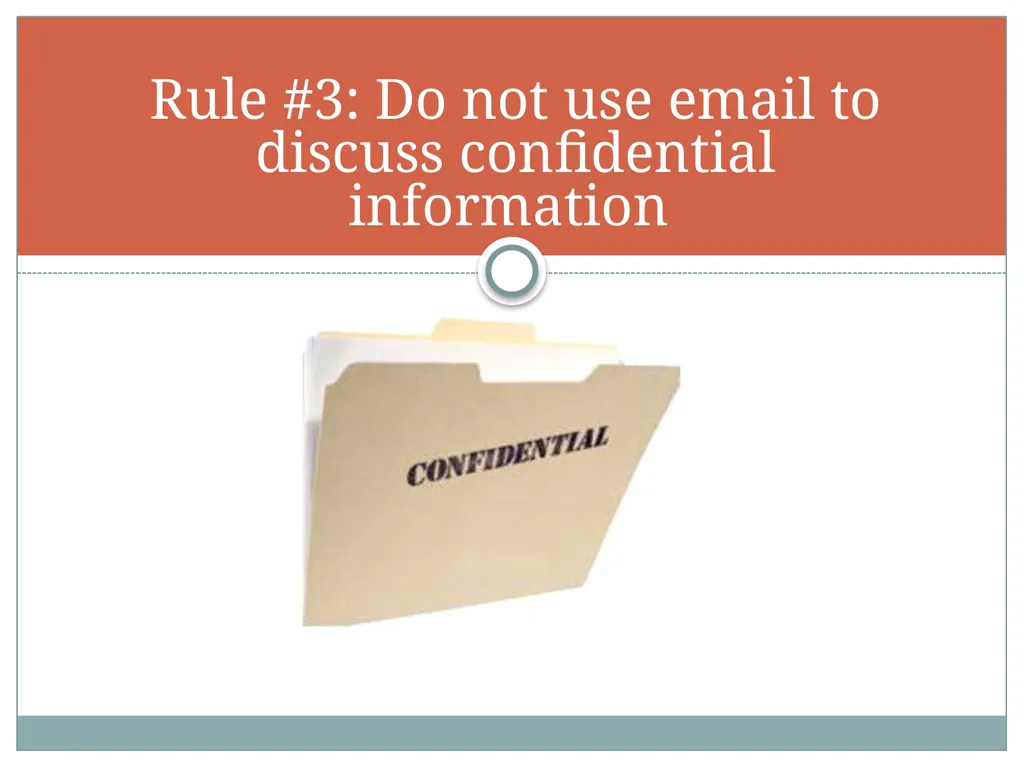
Rule #3: Do not use email to discuss confidential information<br>
07
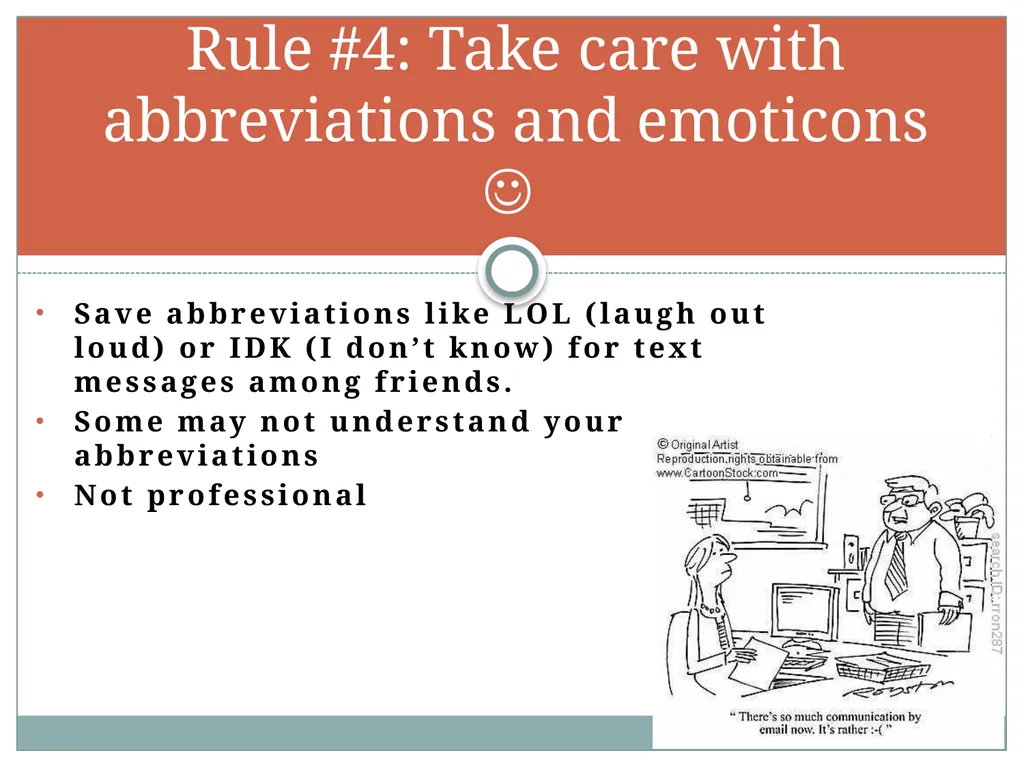
Save abbreviations like LOL (laugh out loud) or IDK (I don’t know) for text messages among friends.
Some may not understand your abbreviations
Not professional Rule #4: Take care with abbreviations and emoticons <br>
08
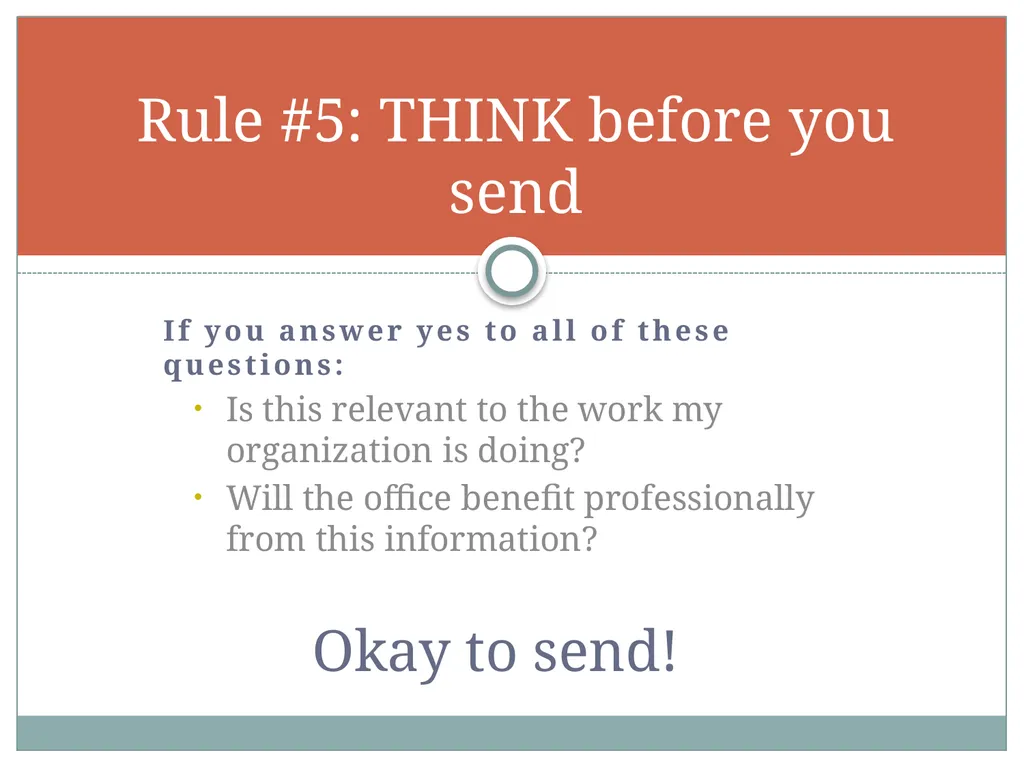
If you answer yes to all of these questions:
Is this relevant to the work my organization is doing?
Will the office benefit professionally from this information? Rule #5: THINK before you send Okay to send!<br>
09
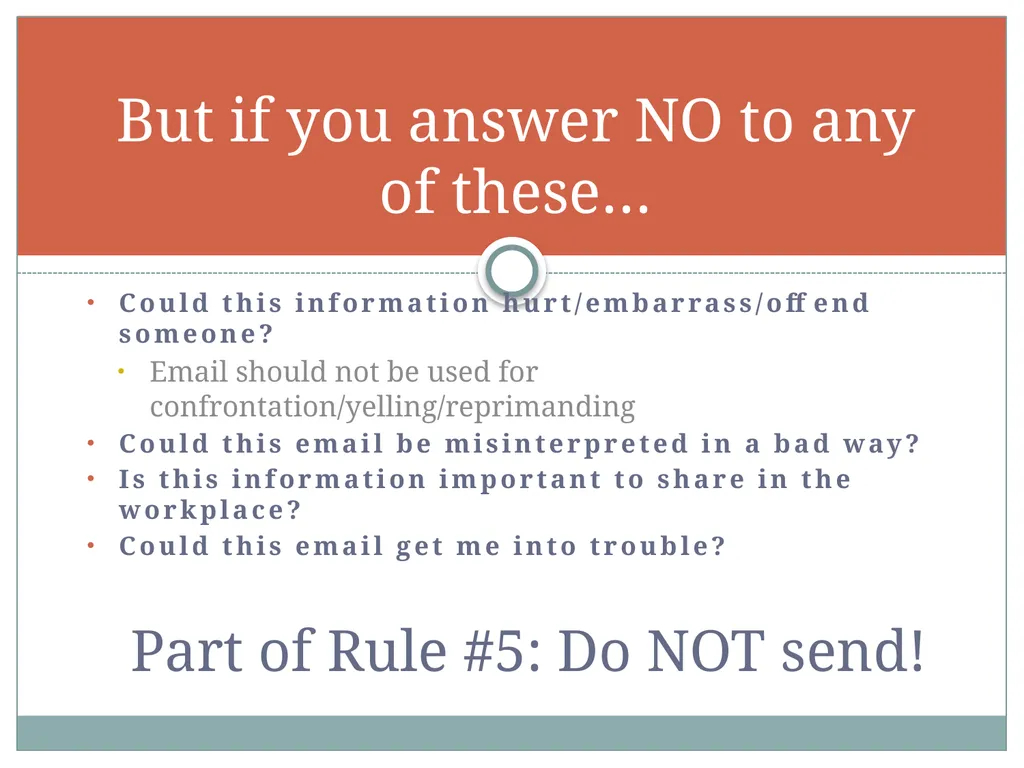
Could this information hurt/embarrass/offend someone?
Email should not be used for confrontation/yelling/reprimanding
Could this email be misinterpreted in a bad way?
Is this information important to share in the workplace?
Could this email get me into trouble? But if you answer NO to any of these… Part of Rule #5: Do NOT send!<br>
10
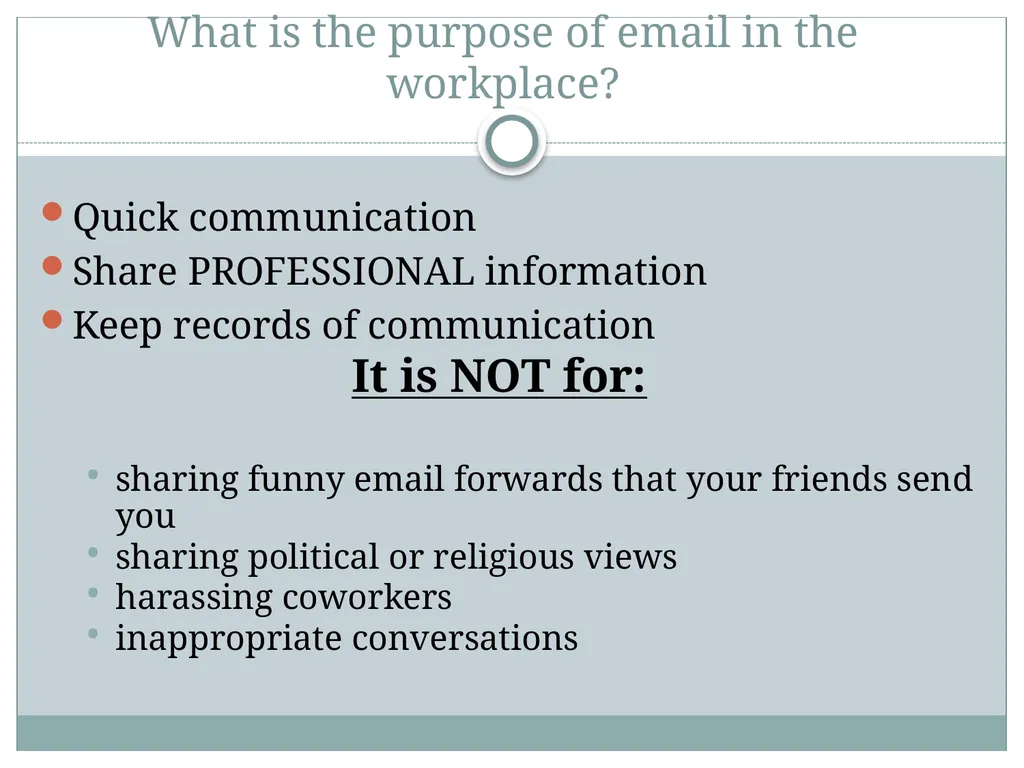
What is the purpose of email in the workplace? Quick communication
Share PROFESSIONAL information
Keep records of communication It is NOT for: sharing funny email forwards that your friends send you
sharing political or religious views
harassing coworkers
inappropriate conversations<br>
11
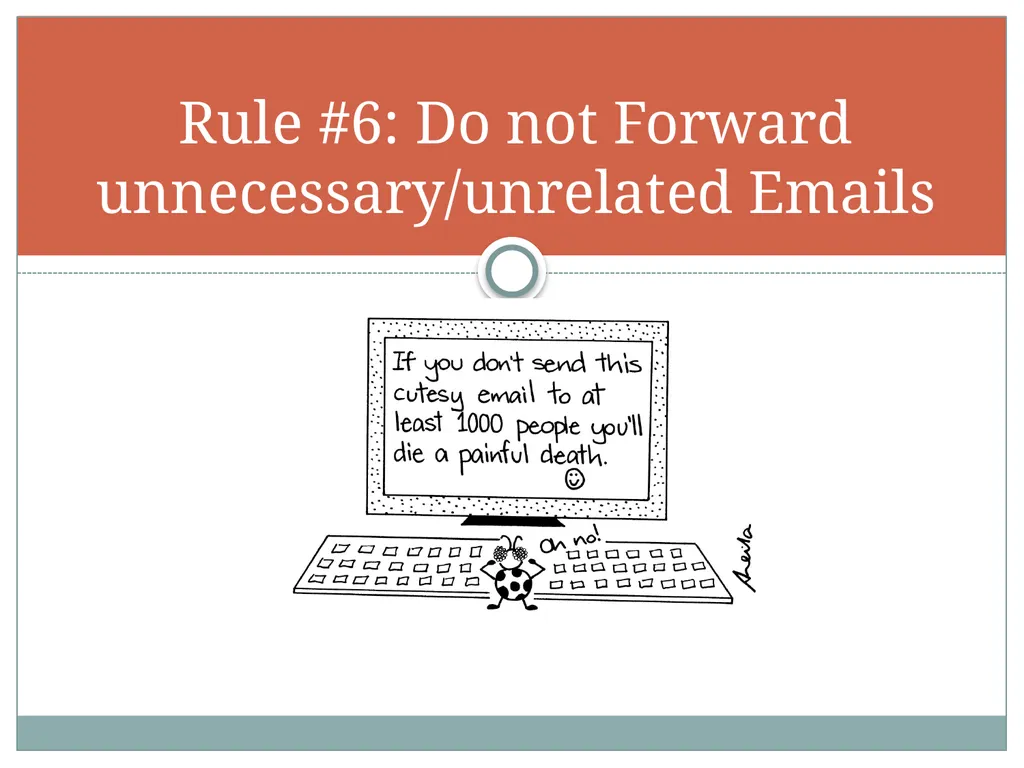
Rule #6: Do not Forward unnecessary/unrelated Emails<br>
12
Rules for Forwarding If you cannot take the time to write a personal comment at the top of your forwarded email to the person you are sending to – then you shouldn’t forward it at all.
Think carefully about if what you are forwarding will be of value, appreciated or humorous to the person on the other side.
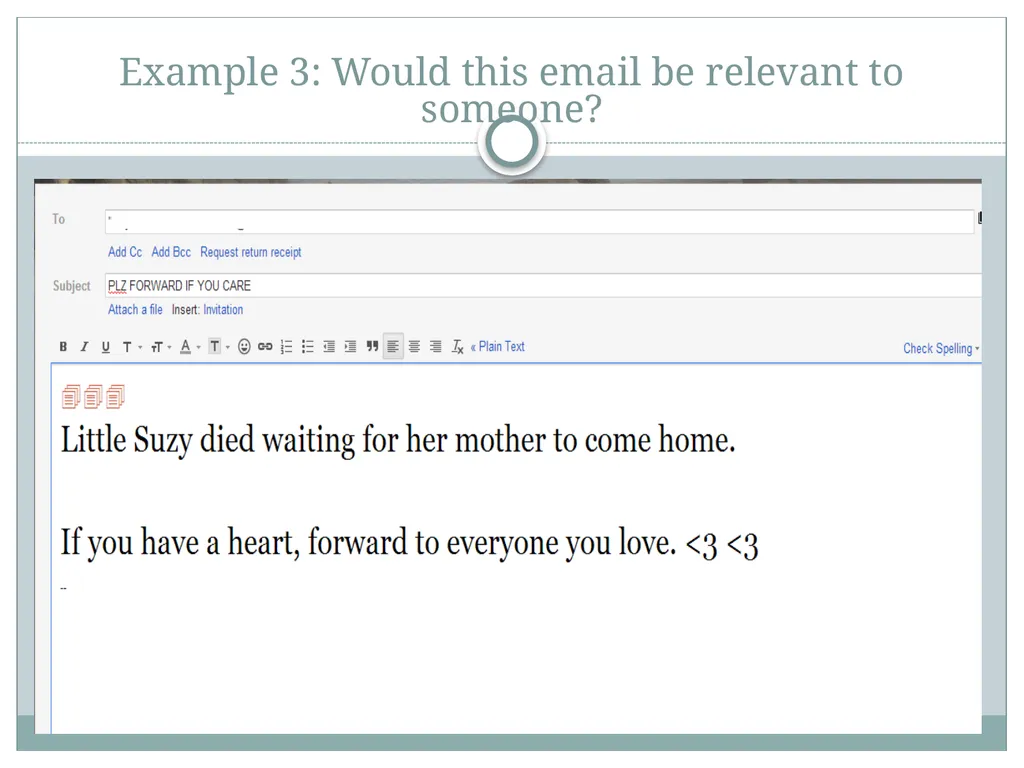
If an email tells you to “Forward to everyone you know/love/all of your family” do NOT forward<br>
13
Forwarding Is it a good idea to forward emails that promise money or goods?
Should you forward emails to as many contacts as possible?<br>
14
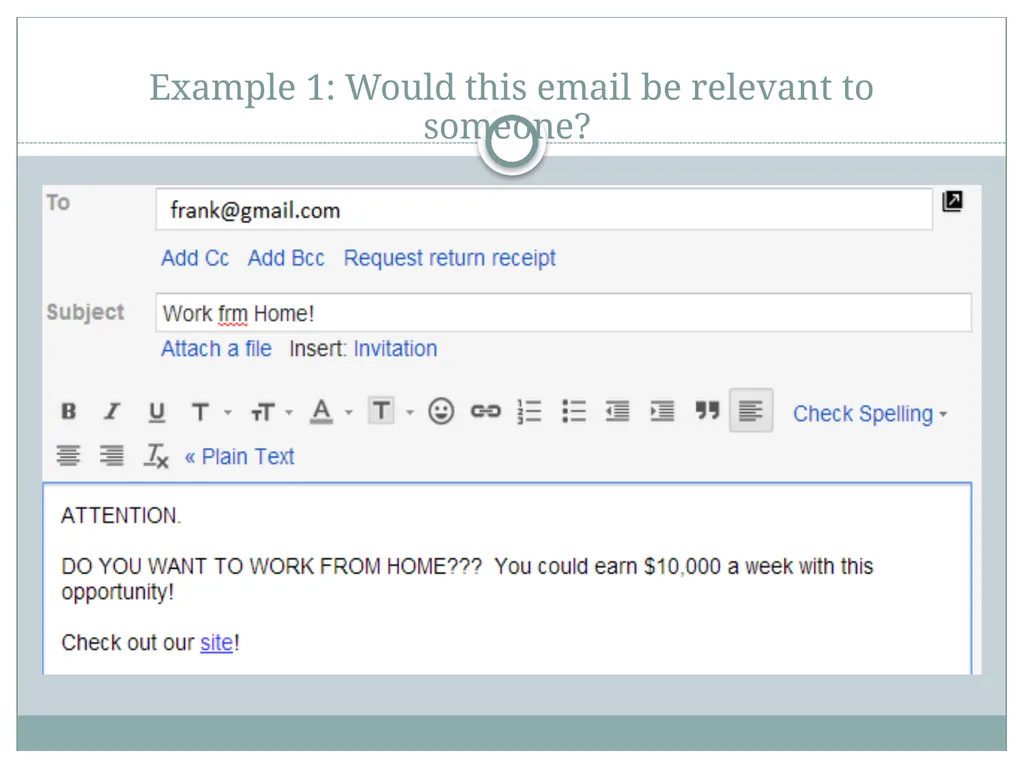
Example 1: Would this email be relevant to someone?<br>
15
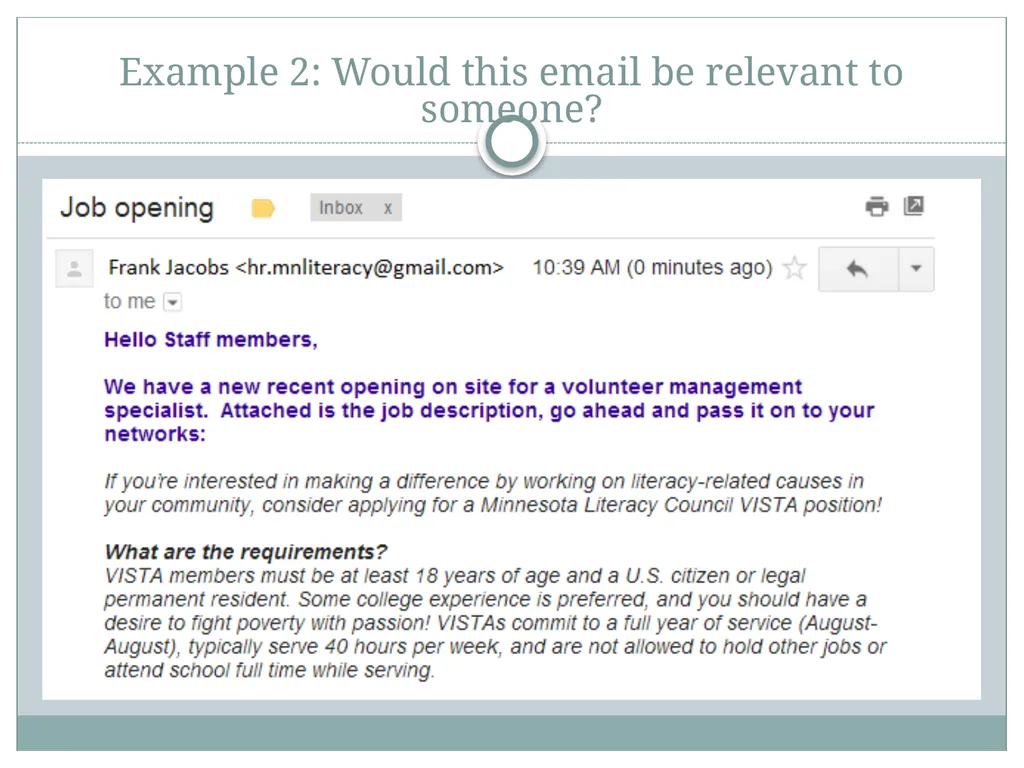
Example 2: Would this email be relevant to someone?<br>
16
Example 3: Would this email be relevant to someone?<br>
17
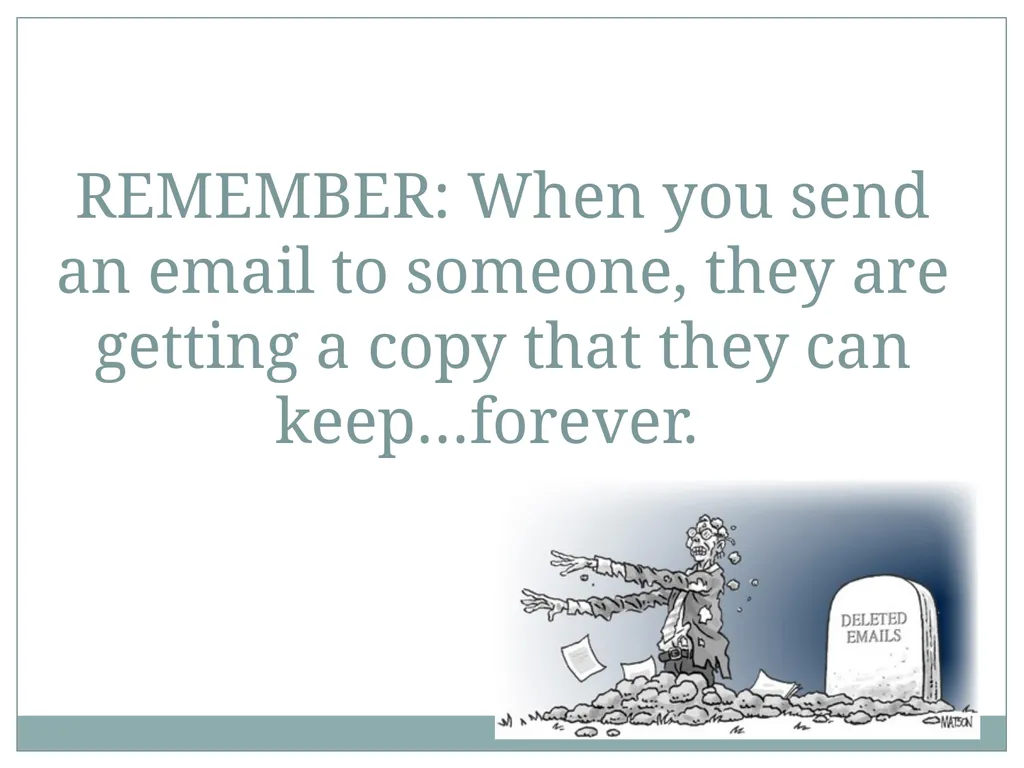
REMEMBER: When you send an email to someone, they are getting a copy that they can keep…forever.<br>