Three Common Risk Failure: How to avoid them Nada Alharbi, Ms.CPHQ.CPSO.Isqua Fellow, GBLSS, JC certified champion, IHI Certified Performance Improvement Coach Introduction Risk management failures are often depicted as the result of
"Three Common Risk Failure: How to avoid them Nada" is the property of its rightful owner. Permission is granted to
download and print the materials on this website for personal, non-commercial use only, and to display it
on your personal computer provided you do not modify the materials and that you retain all copyright
notices contained in the materials. By downloading content from our website, you accept the terms of this
agreement.
Presentation Transcript
01
Three Common Risk Failure: How to avoid them Nada Alharbi, Ms.CPHQ.CPSO.Isqua Fellow, GBLSS, JC certified champion, IHI Certified Performance Improvement Coach<br>
02
Introduction Risk management failures are often depicted as the result of Unfortunate Events, Reckless Behavior or Bad Judgment.
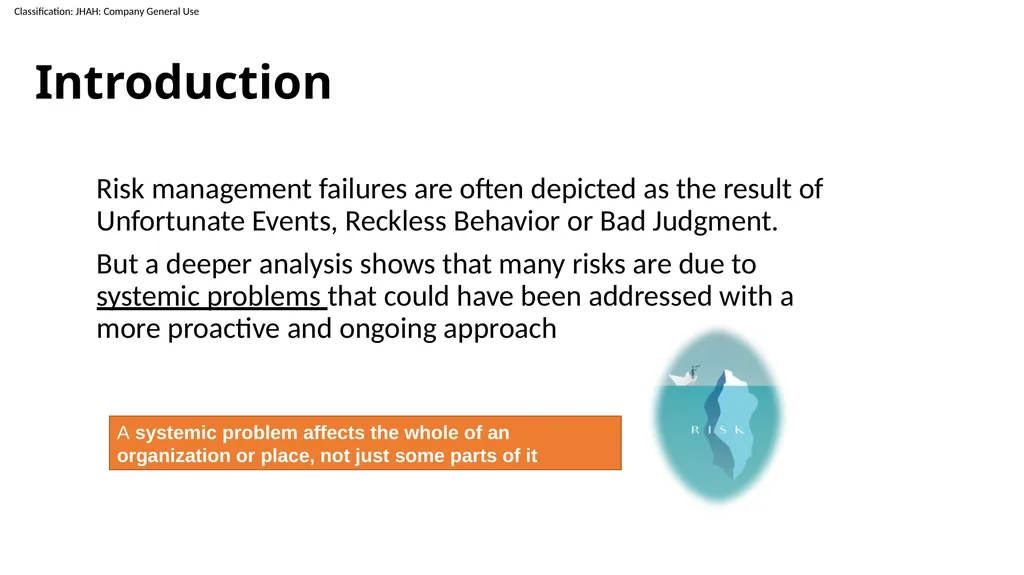
But a deeper analysis shows that many risks are due to systemic problems that could have been addressed with a more proactive and ongoing approach A systemic problem affects the whole of an organization or place, not just some parts of it<br>
03
Cost of risk management failures While risk-taking is a fundamental driving force in business and entrepreneurship, the cost of risk management failures is still often underestimated, both externally and internally, including the cost in terms of management time needed to rectify the situation.
Corporate governance should therefore ensure that risks are understood, managed, and, when appropriate, communicated. Following the financial crisis, many companies have started to pay more attention to risk management. This is, however, seldom reflected in changes to formal procedures, except in the financial sector and in companies that have suffered serious risk management failure in the recent past. It appears that most companies consider that risk management should remain the responsibility of line managers !<br>
04
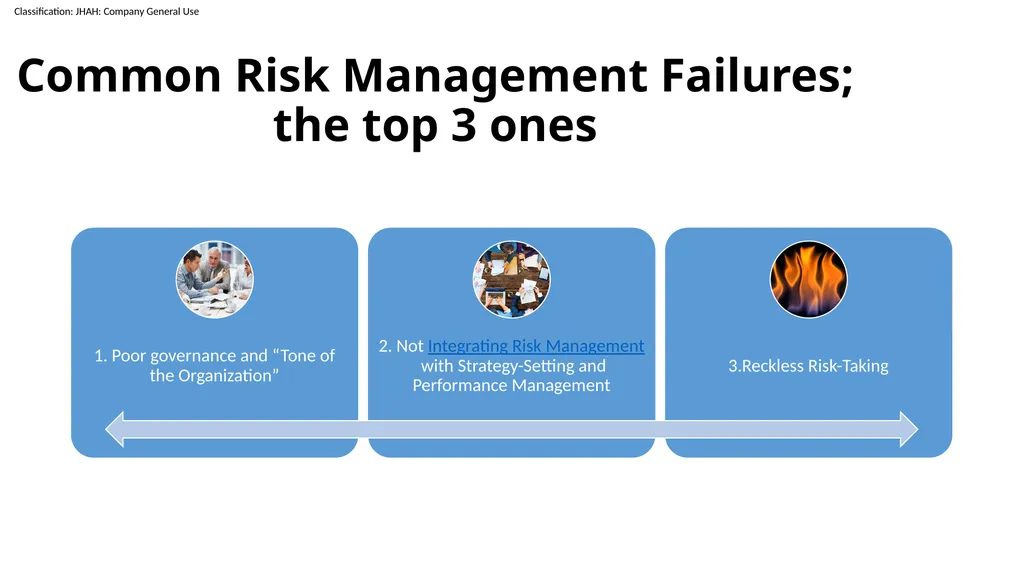
Common Risk Management Failures; the top 3 ones<br>
05
1st . Poor Governance And “Tone Of The Organization<br>
06
1st Poor governance and “Tone of the Organization” -Governance is the act or process of providing Oversight, Authoritative Direction Or Control. The term itself is often used to describe what the Board of Directors and executive management do to oversee the enterprise’s planning and operations and ensure the effectiveness of strategy-setting and the organization’s other management processes. -If the behavior of middle managers contradicts the messaging and values conveyed from the top, it won’t take long for lower-level employees to notice.<br>
07
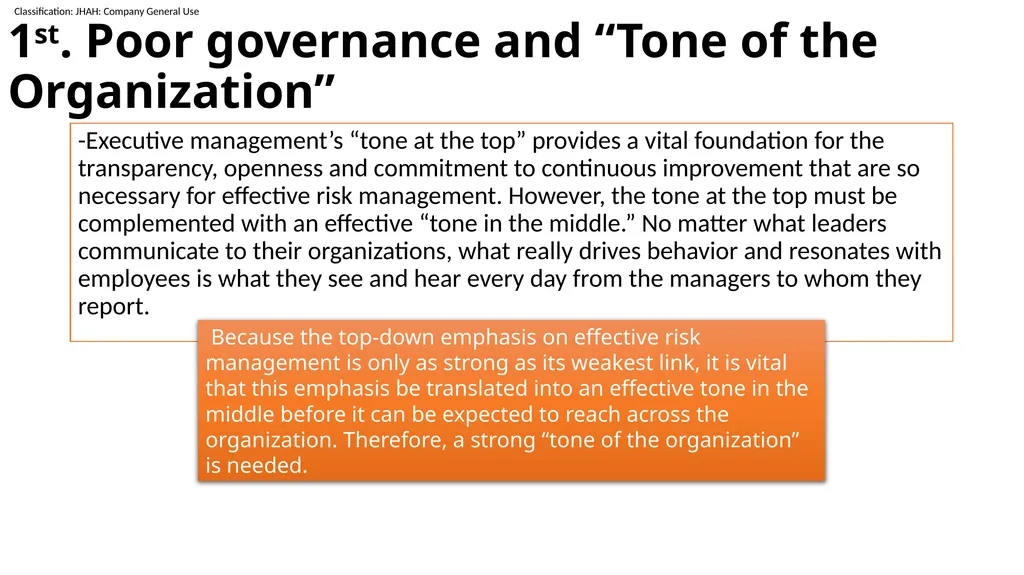
1st. Poor governance and “Tone of the Organization” -Executive management’s “tone at the top” provides a vital foundation for the transparency, openness and commitment to continuous improvement that are so necessary for effective risk management. However, the tone at the top must be complemented with an effective “tone in the middle.” No matter what leaders communicate to their organizations, what really drives behavior and resonates with employees is what they see and hear every day from the managers to whom they report. Because the top-down emphasis on effective risk management is only as strong as its weakest link, it is vital that this emphasis be translated into an effective tone in the middle before it can be expected to reach across the organization. Therefore, a strong “tone of the organization” is needed.<br>
08
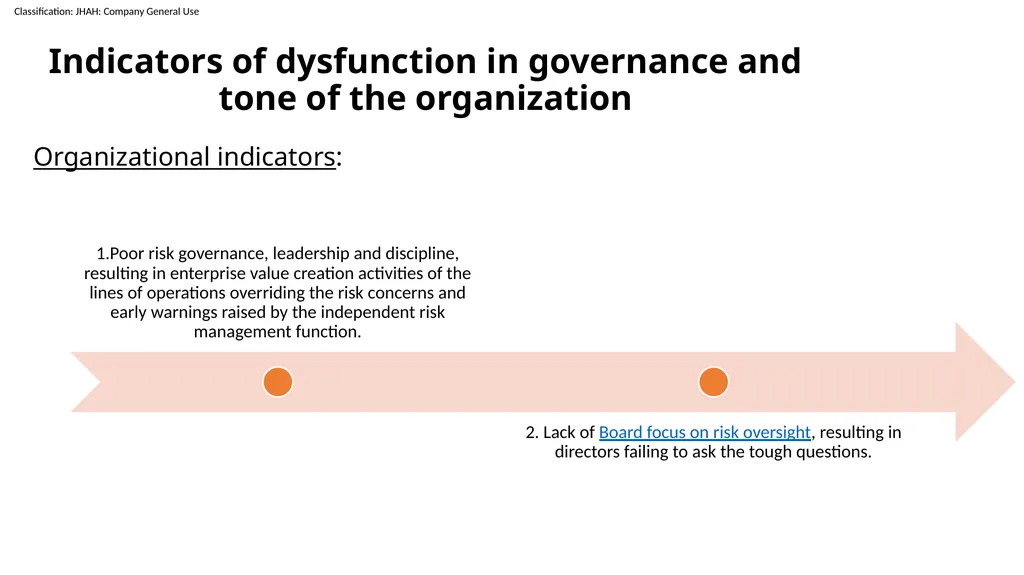
Indicators of dysfunction in governance and tone of the organization Organizational indicators:<br>
09
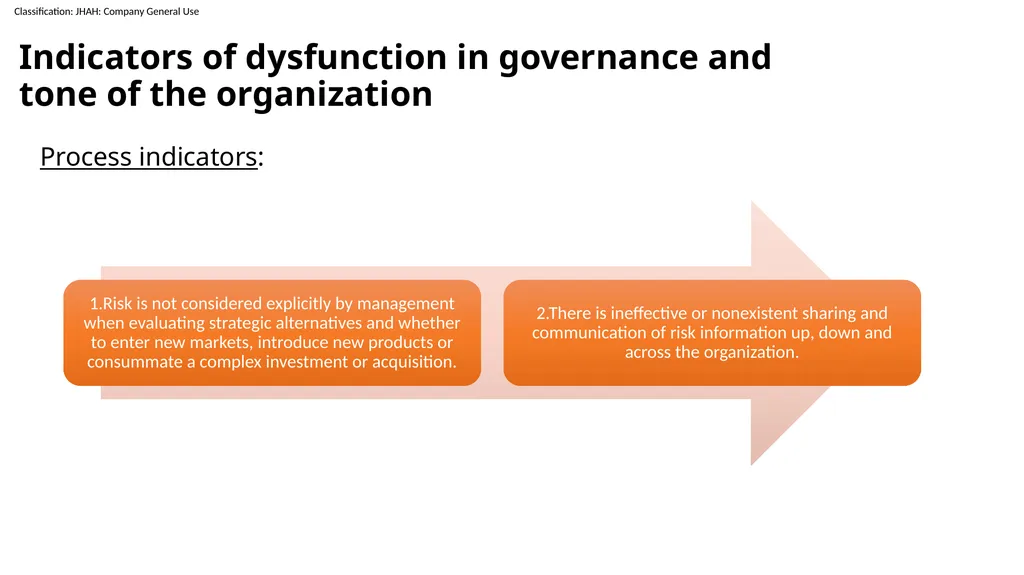
Indicators of dysfunction in governance and tone of the organization Process indicators:<br>
10
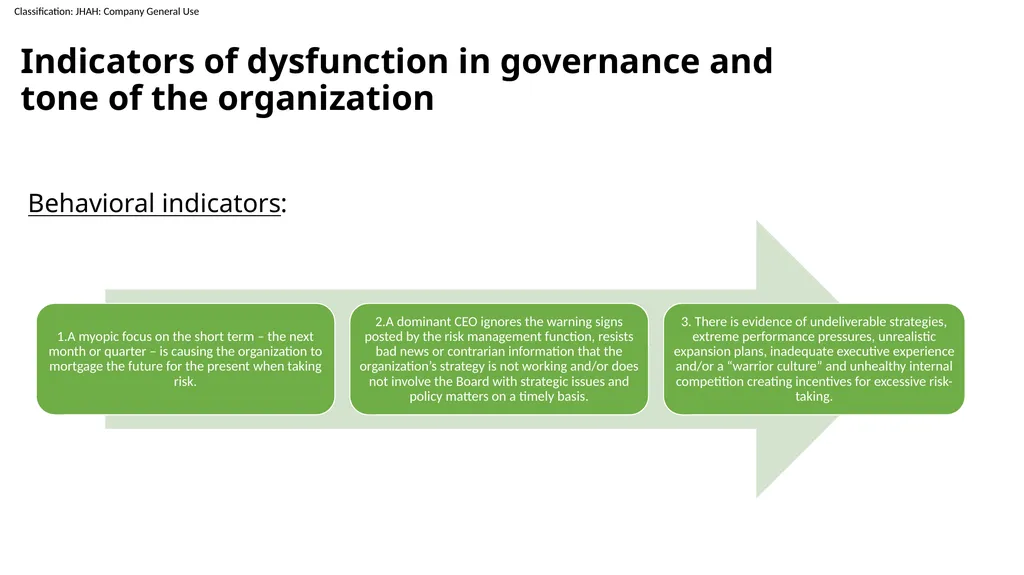
Indicators of dysfunction in governance and tone of the organization Behavioral indicators:<br>
11
2nd. Not Integrating Risk Management with Strategy-Setting and Performance Management<br>
12
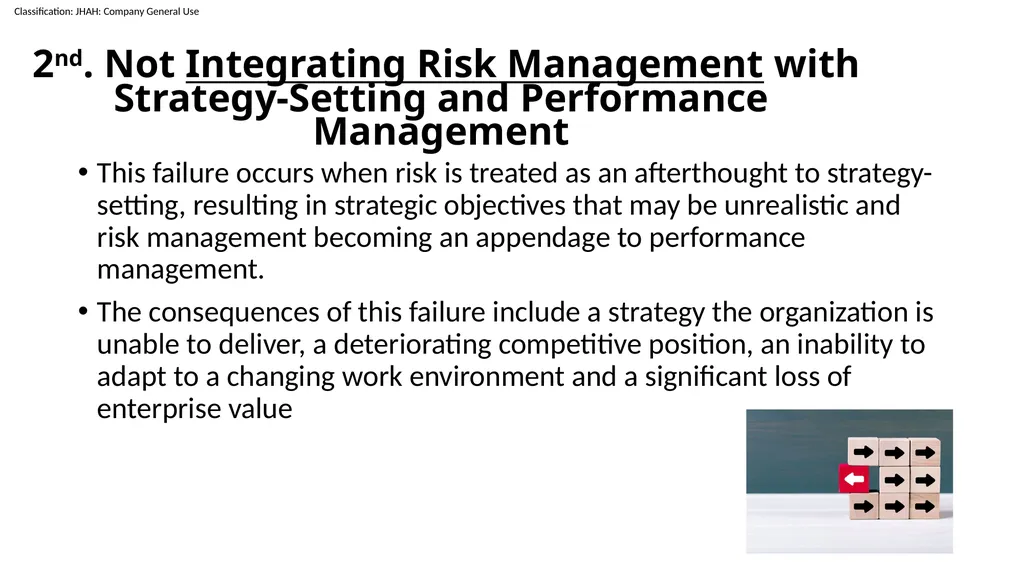
2nd. Not Integrating Risk Management with Strategy-Setting and Performance Management This failure occurs when risk is treated as an afterthought to strategy-setting, resulting in strategic objectives that may be unrealistic and risk management becoming an appendage to performance management.
The consequences of this failure include a strategy the organization is unable to deliver, a deteriorating competitive position, an inability to adapt to a changing work environment and a significant loss of enterprise value<br>
13
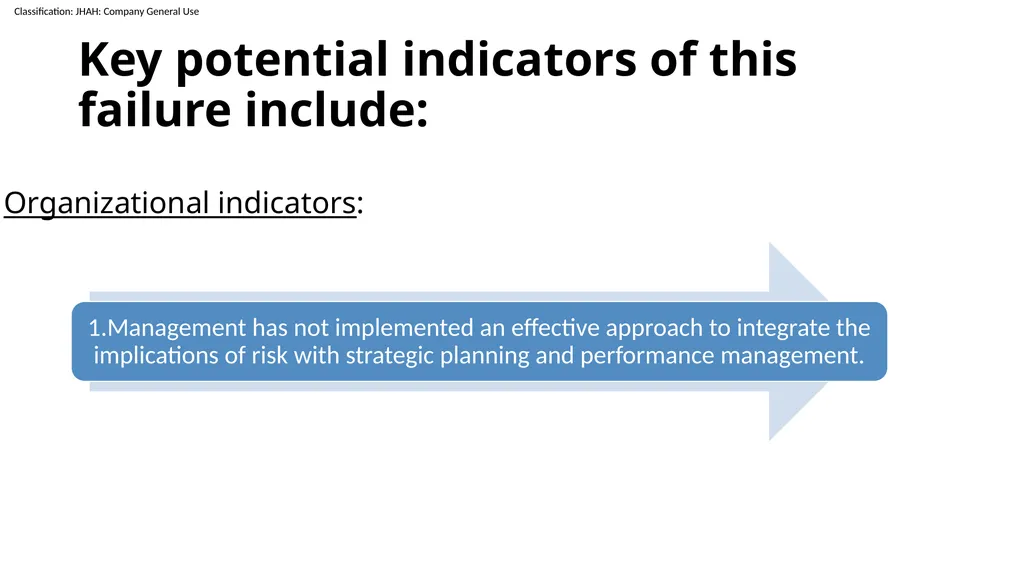
Key potential indicators of this failure include: Organizational indicators:<br>
14
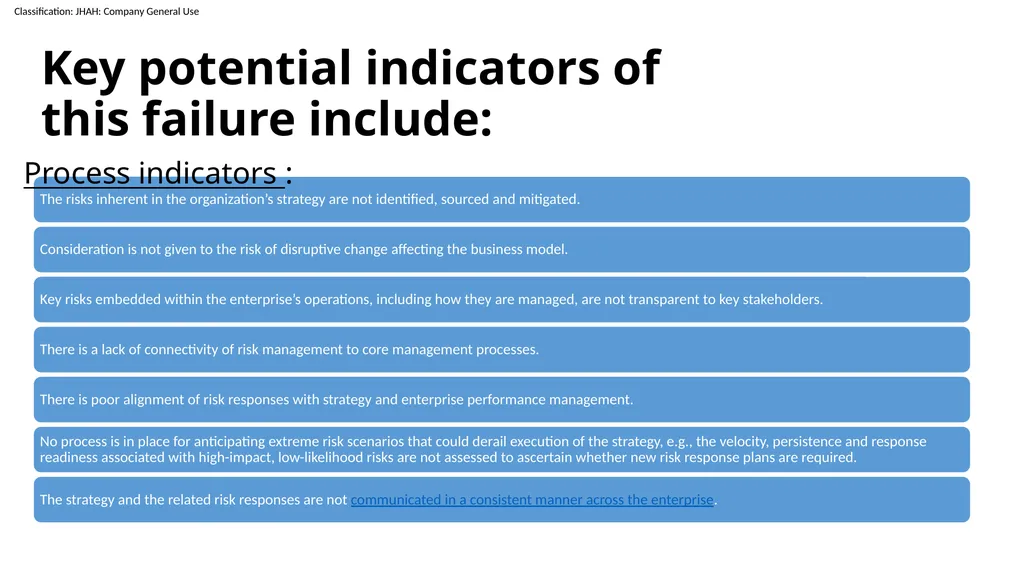
Key potential indicators of this failure include: Process indicators :<br>
15
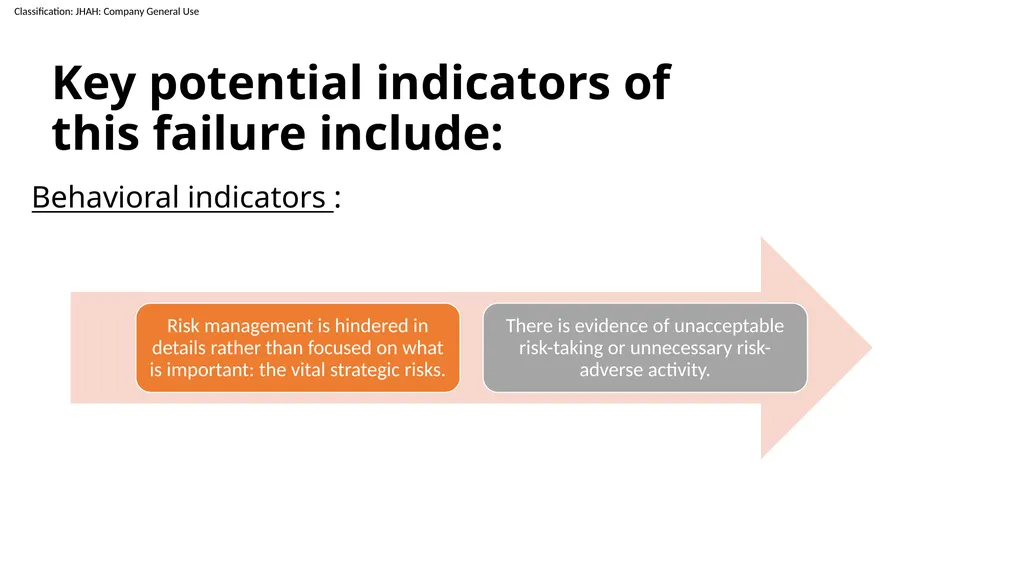
Key potential indicators of this failure include: Behavioral indicators :<br>
16
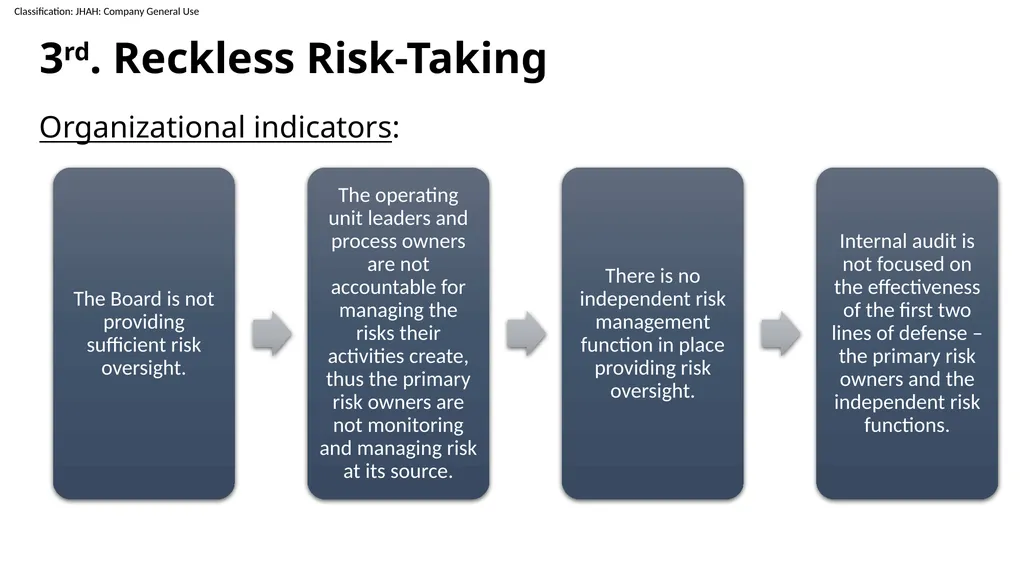
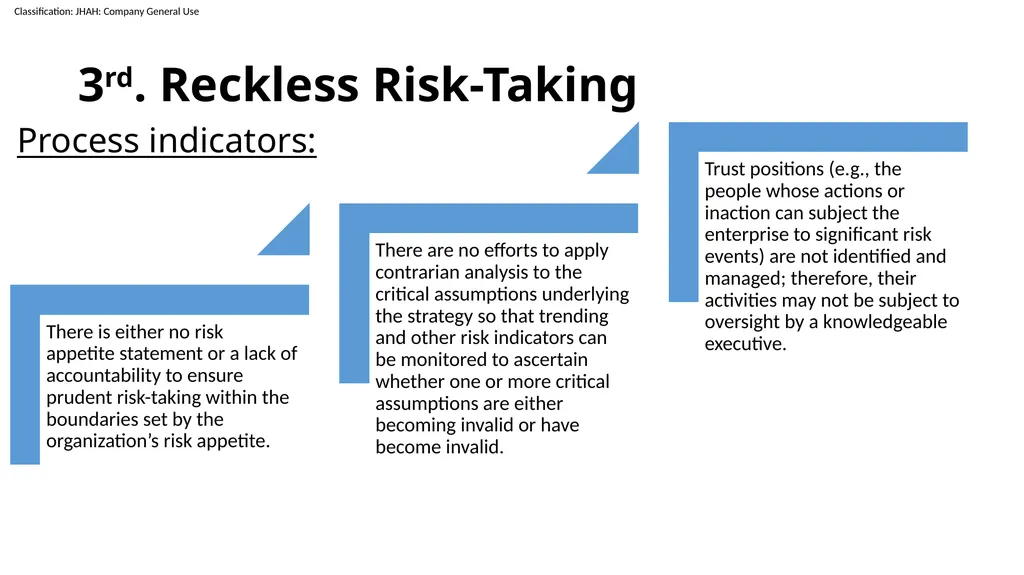
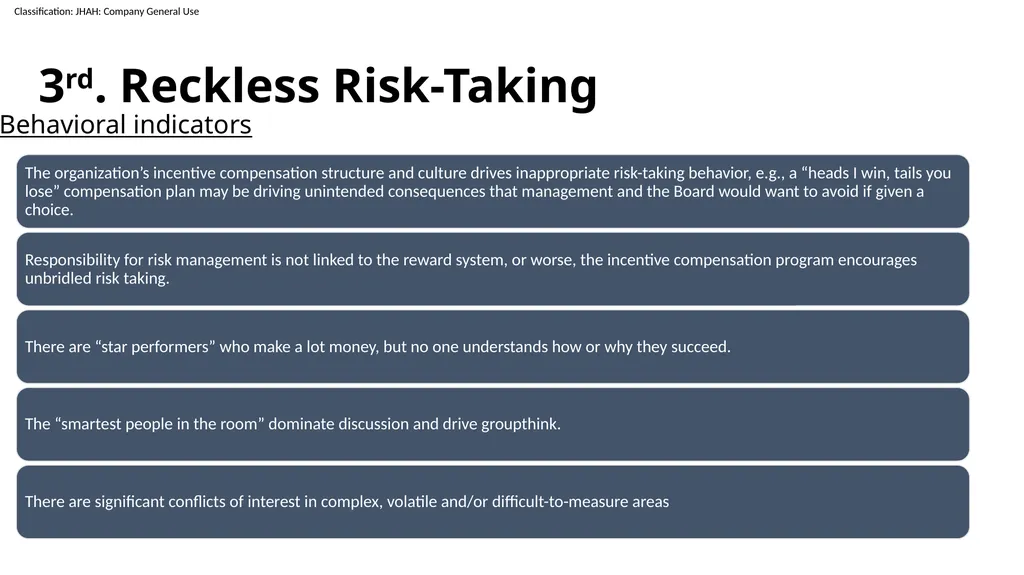
3rd. Reckless Risk-Taking<br>
17
Reckless risk taking Reckless risk taking is an enterprise value killer. It represents undertaking risks that the Board of Directors and/or executive management neither understand nor approve.
A lesson we keep learning, time and again, is the need for more disciplined risk-taking during periods of rapid growth and favorable markets.<br>
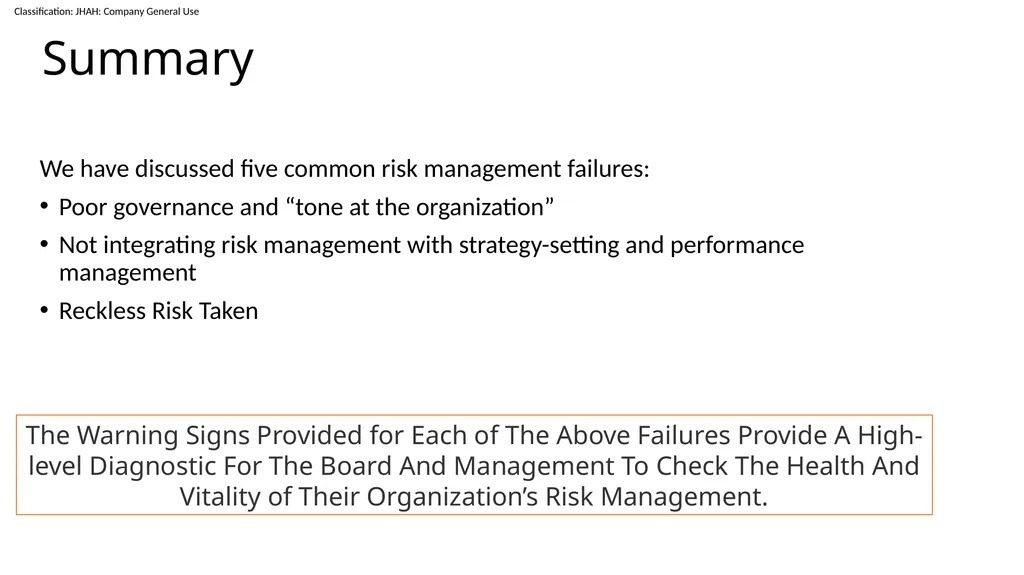
Summary We have discussed five common risk management failures:
Poor governance and “tone at the organization”
Not integrating risk management with strategy-setting and performance management
Reckless Risk Taken The Warning Signs Provided for Each of The Above Failures Provide A High-level Diagnostic For The Board And Management To Check The Health And Vitality of Their Organization’s Risk Management.<br>