Thresholding Based Efficient Outlier Robust PCA
Description: Thresholding Based Efficient Outlier Robust PCA Yeshwanth Cherapanamjeri, Prateek Jain, Praneeth Netrapalli Microsoft Research India Vanilla PCA Vanilla PCA Outlier Robust PCA Our Contributions Outlier Effects Blatant Outliers Outliers
Related Topics
Download Presentation
"Thresholding Based Efficient Outlier Robust PCA" is the property of its rightful owner. Permission is granted to download and print the materials on this website for personal, non-commercial use only, and to display it on your personal computer provided you do not modify the materials and that you retain all copyright notices contained in the materials. By downloading content from our website, you accept the terms of this agreement.
Presentation Transcript
slide1. Thresholding Based Efficient Outlier Robust PCA Yeshwanth Cherapanamjeri, Prateek Jain, Praneeth Netrapalli
Microsoft Research India<br>
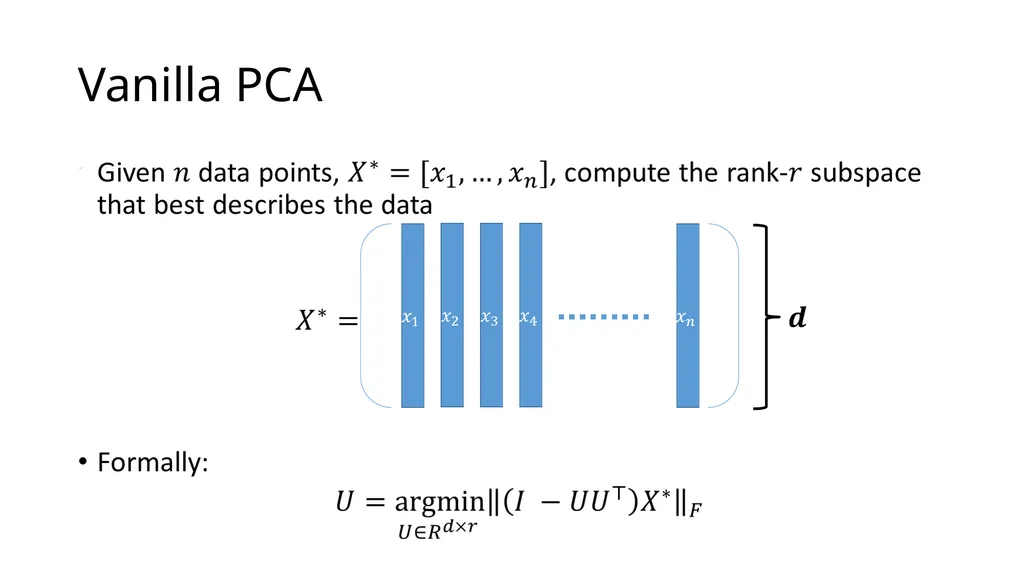
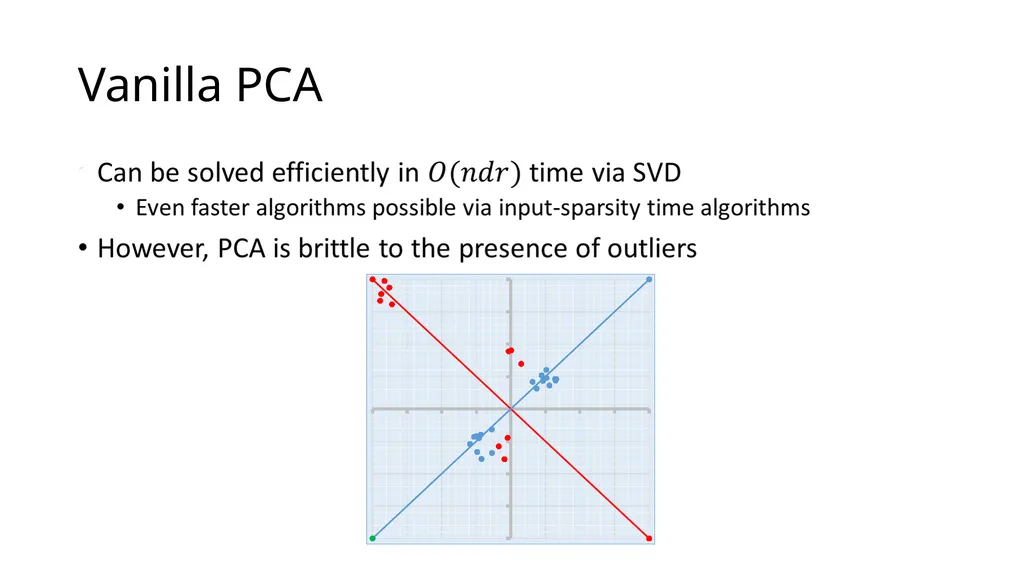
slide2. Vanilla PCA<br>
slide3. Vanilla PCA<br>
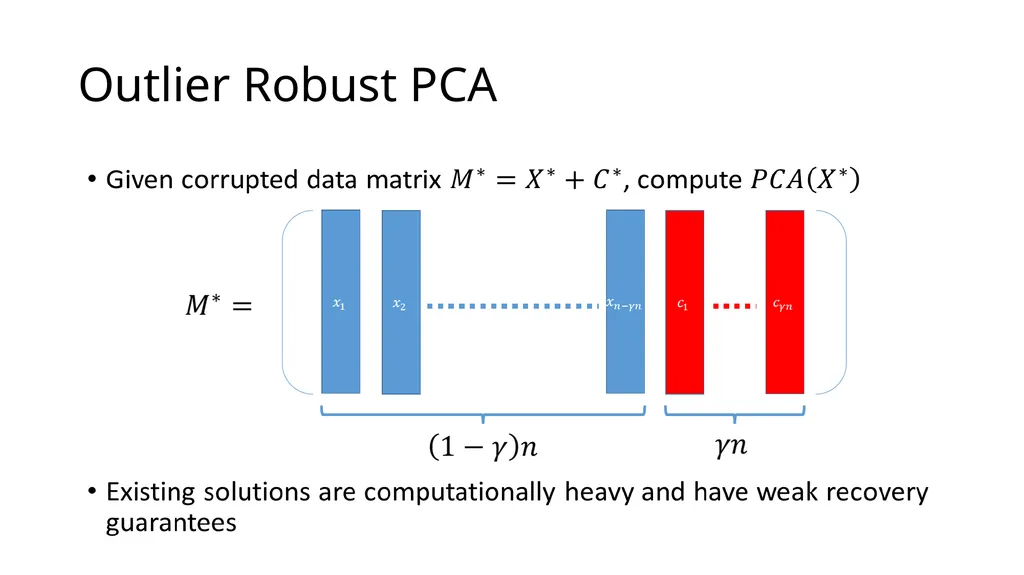
slide4. Outlier Robust PCA<br>
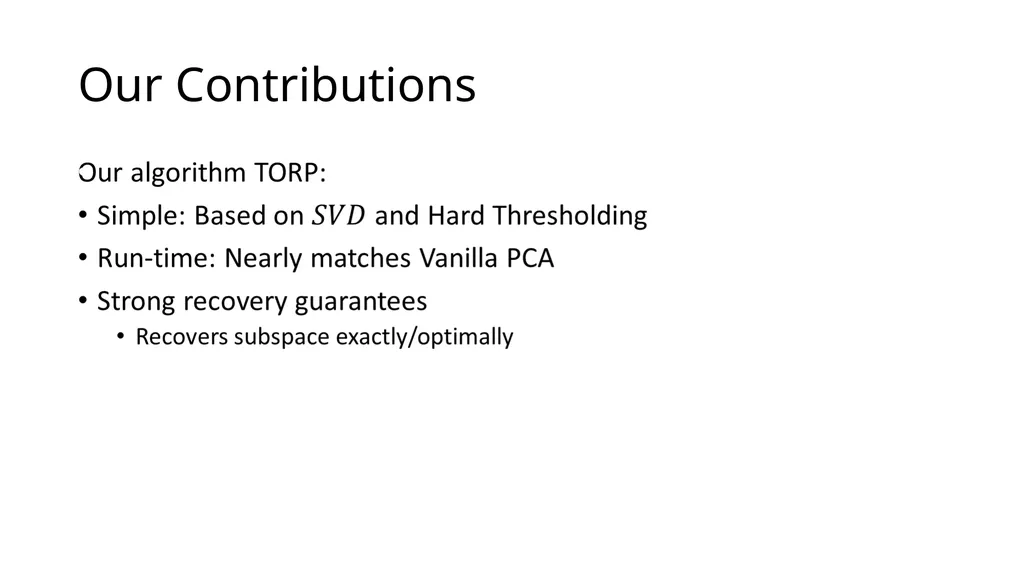
slide5. Our Contributions<br>
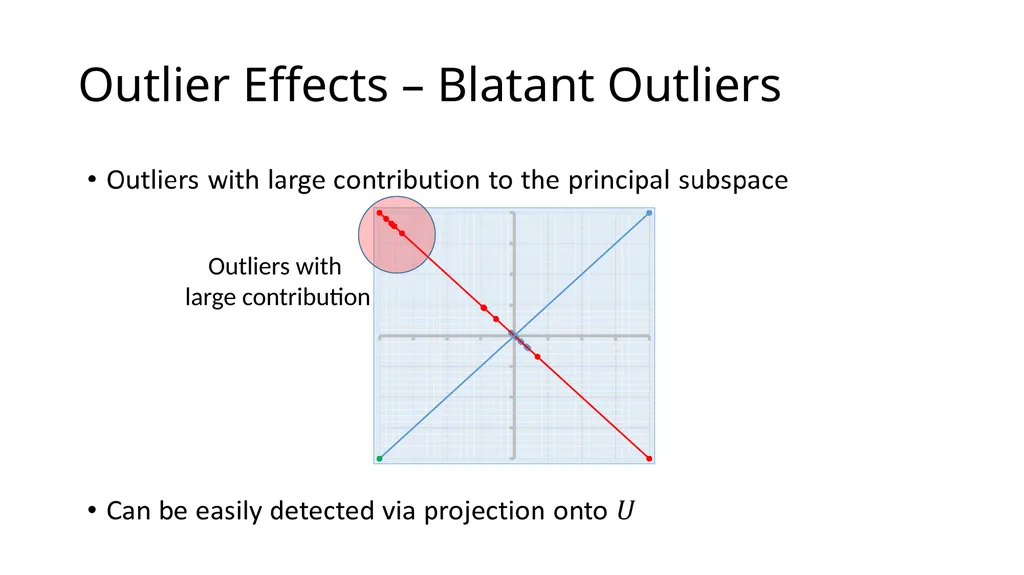
slide6. Outlier Effects – Blatant Outliers Outliers with
large contribution<br>
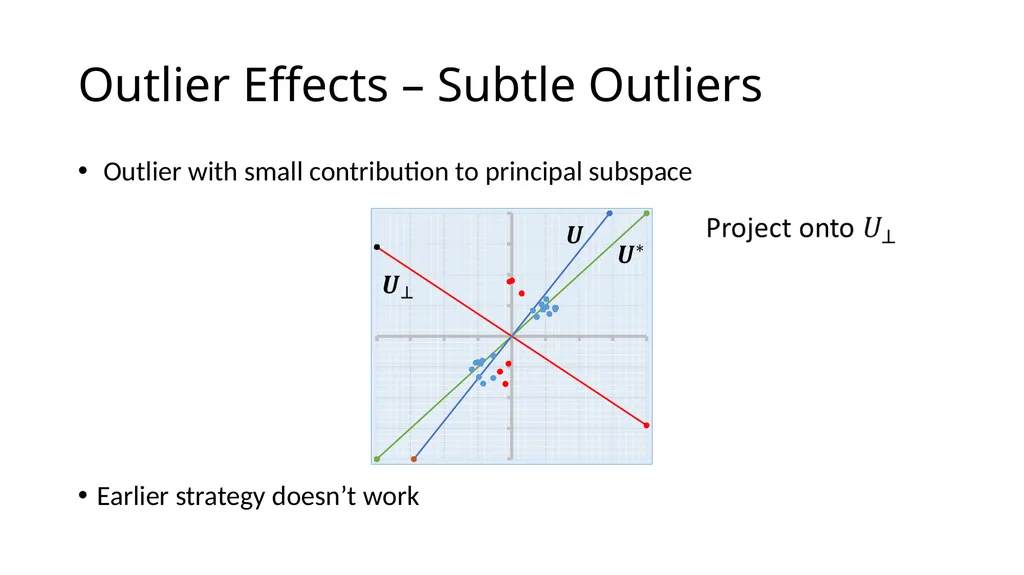
slide7. Outlier Effects – Subtle Outliers Outlier with small contribution to principal subspace
Earlier strategy doesn’t work<br>
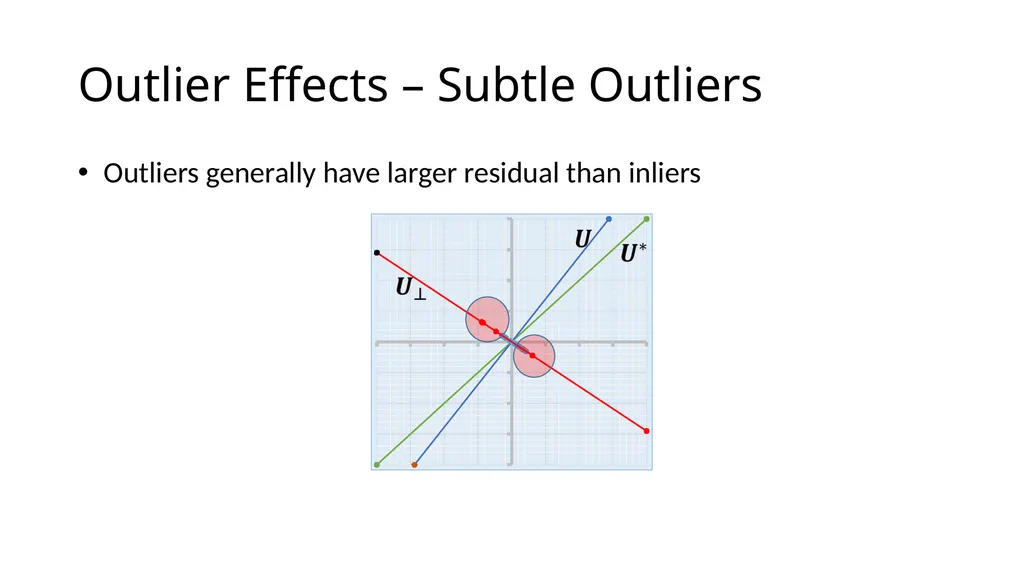
slide8. Outlier Effects – Subtle Outliers Outliers generally have larger residual than inliers<br>
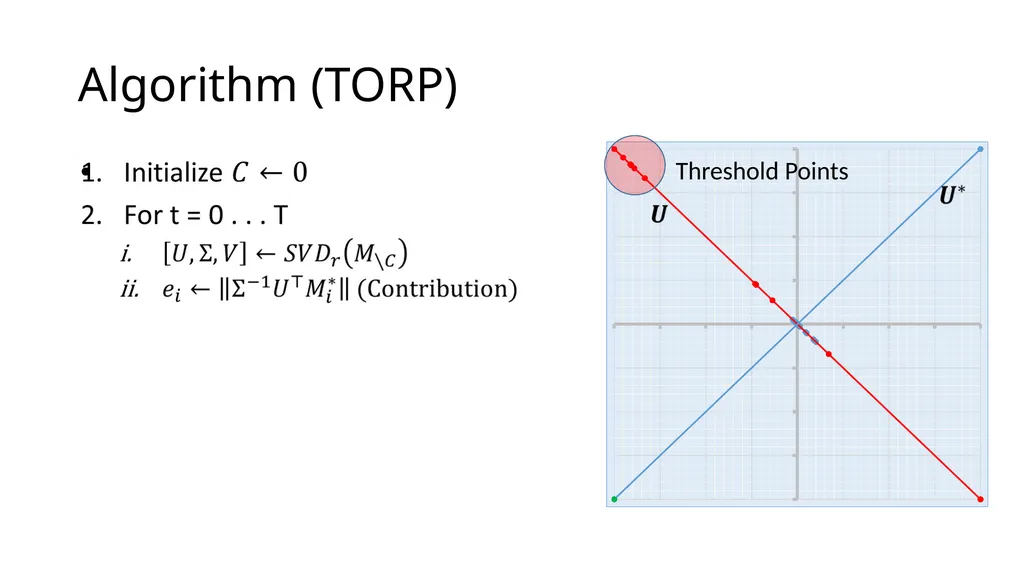
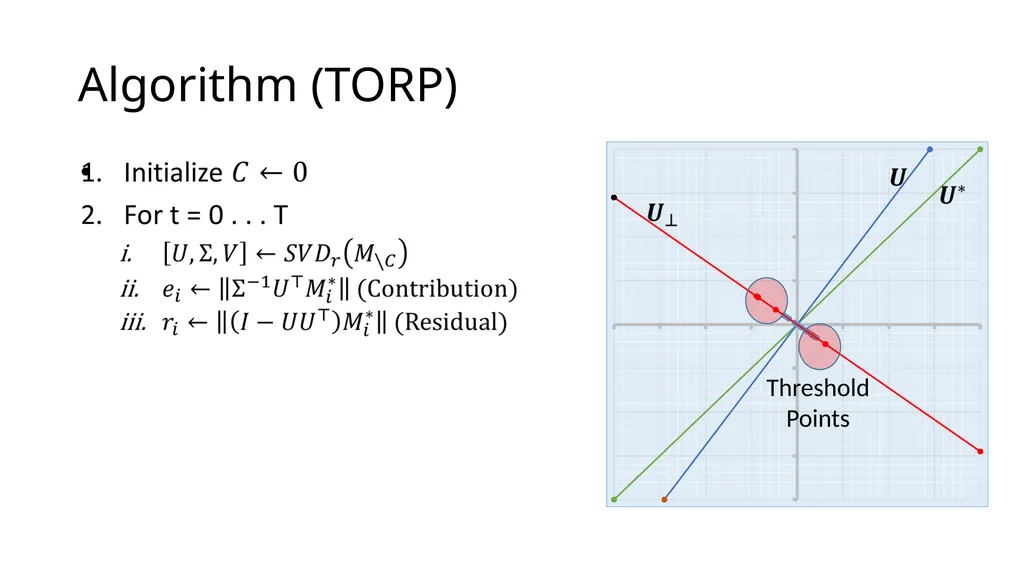
slide9. Algorithm (TORP) Threshold Points<br>
slide10. Algorithm (TORP) Threshold
Points<br>
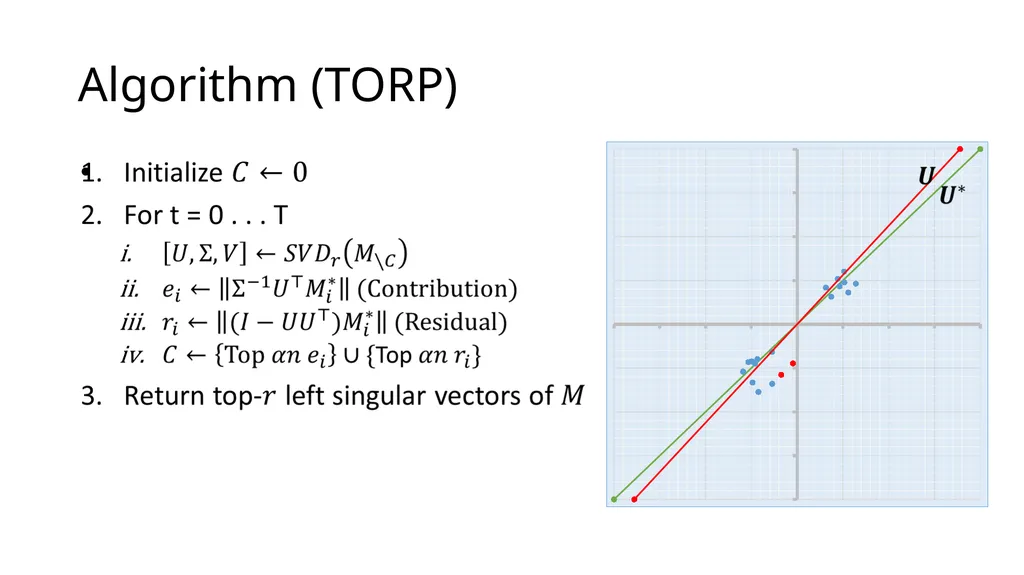
slide11. Algorithm (TORP)<br>
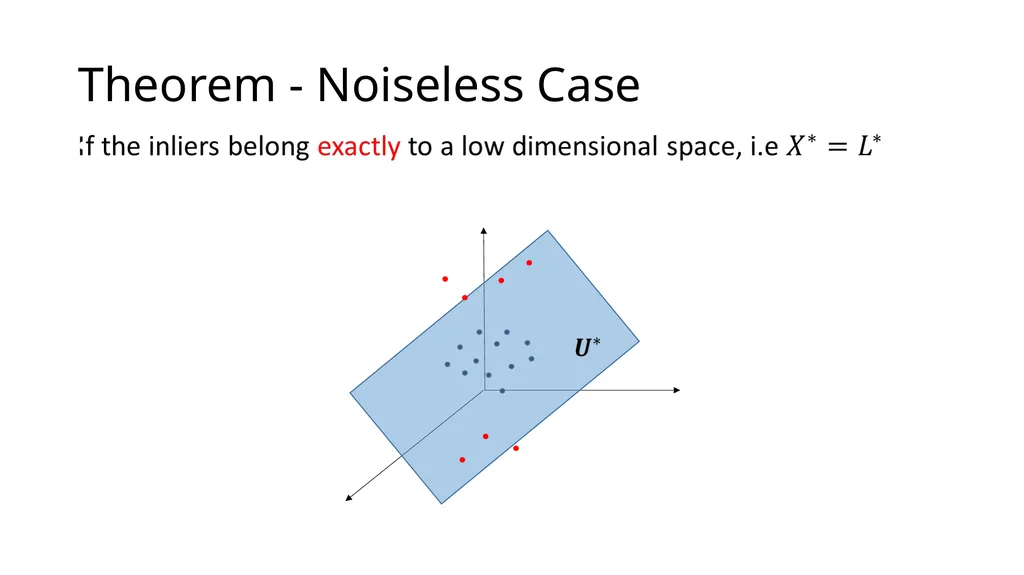
slide12. Theorem - Noiseless Case<br>
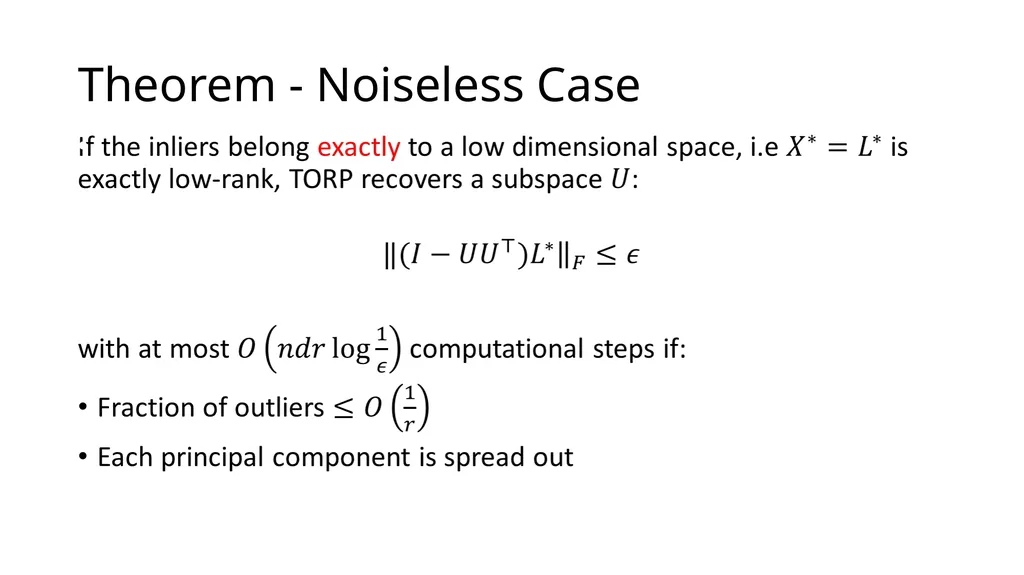
slide13. Theorem - Noiseless Case<br>
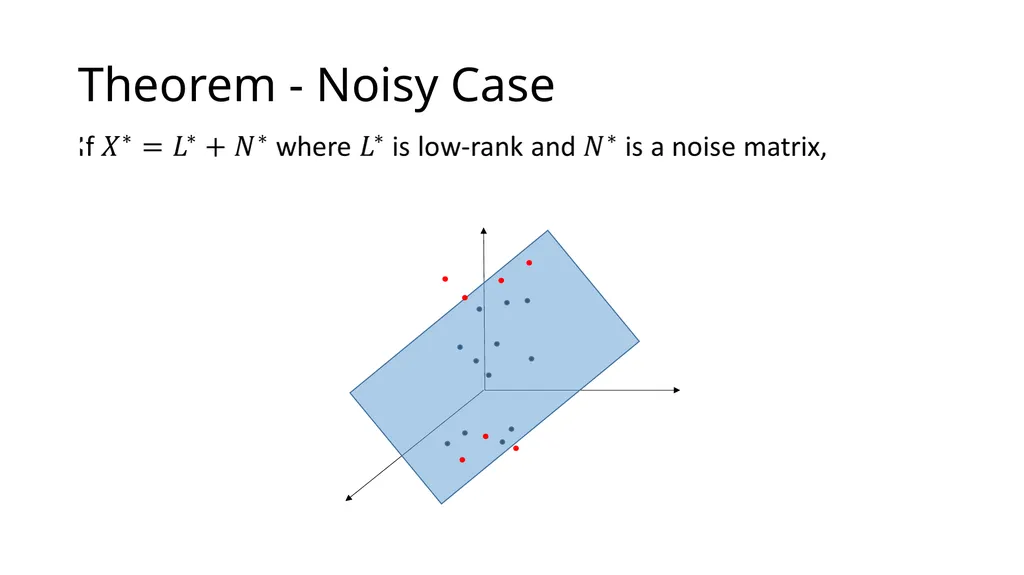
slide14. Theorem - Noisy Case<br>
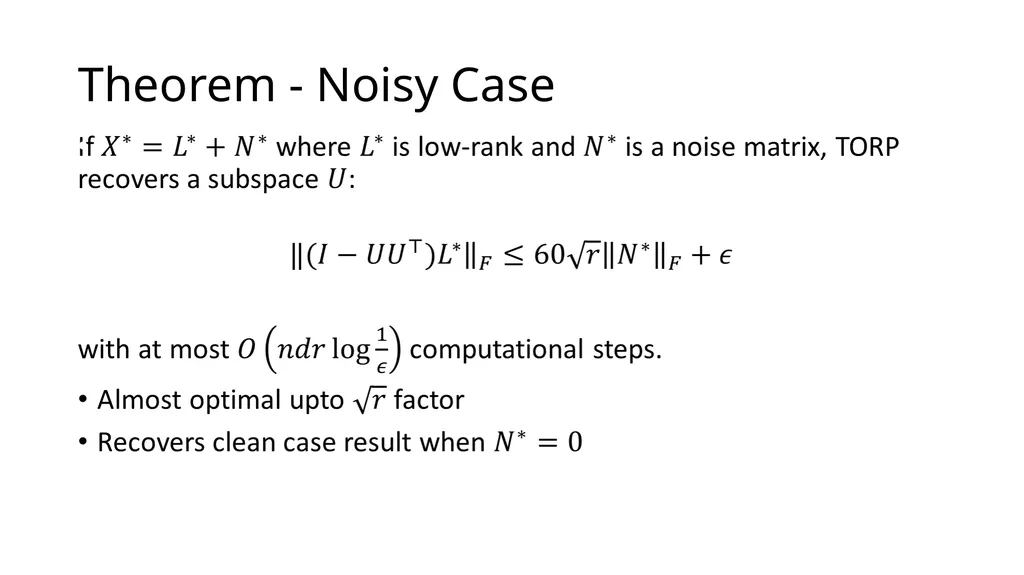
slide15. Theorem - Noisy Case<br>
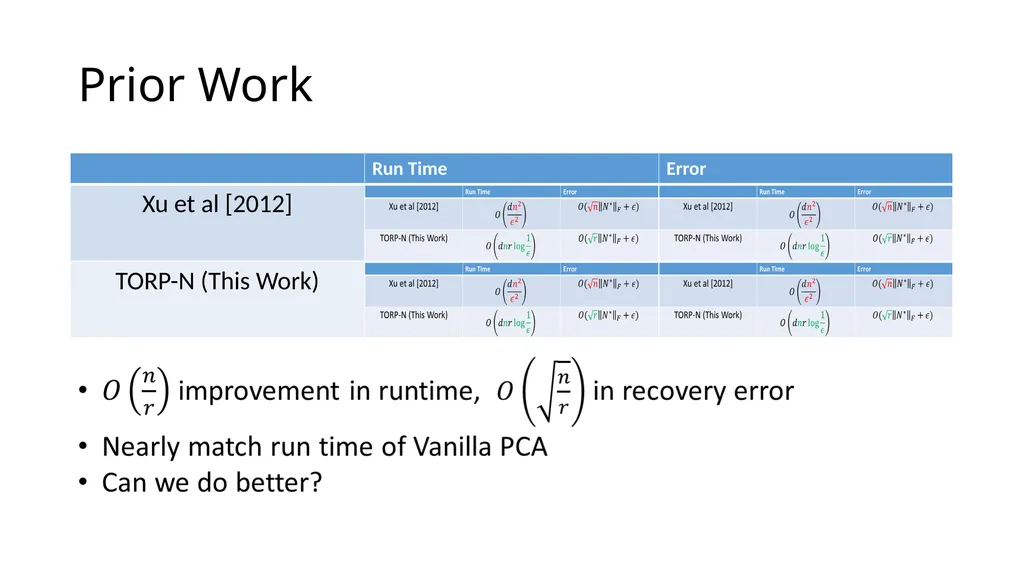
slide16. Prior Work<br>
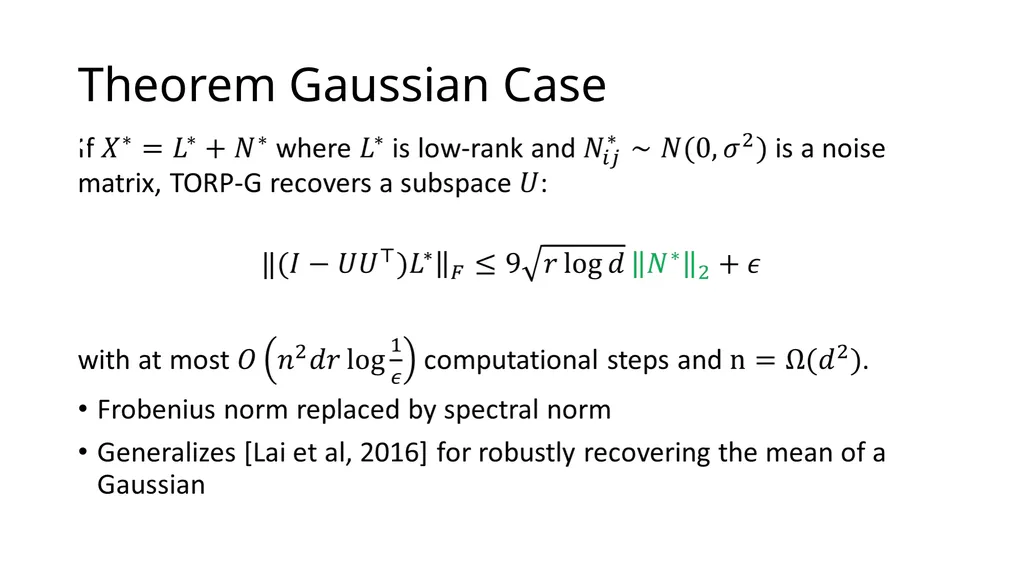
slide17. Theorem Gaussian Case<br>
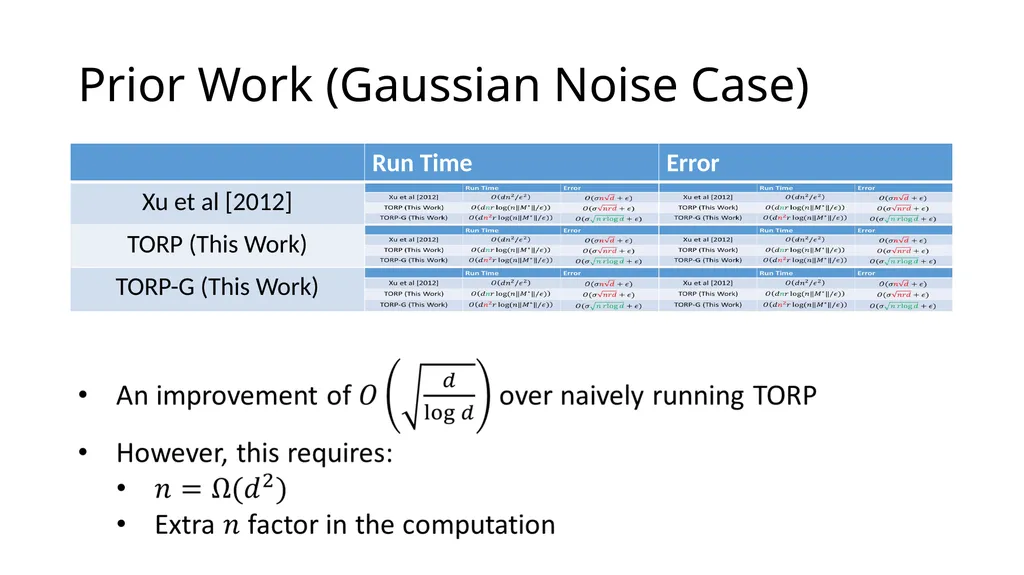
slide18. Prior Work (Gaussian Noise Case)<br>
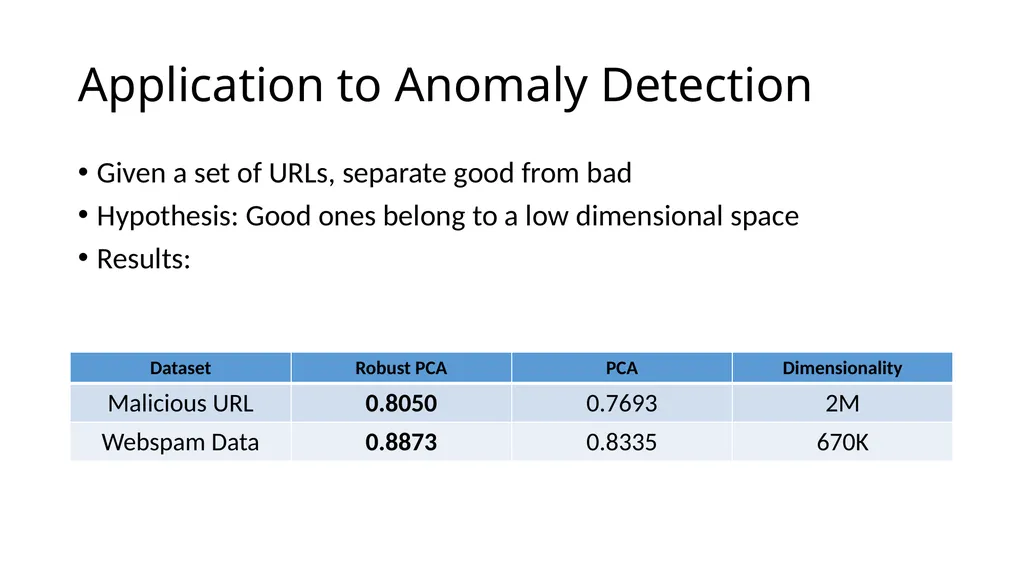
slide19. Application to Anomaly Detection Given a set of URLs, separate good from bad
Hypothesis: Good ones belong to a low dimensional space
Results:<br>
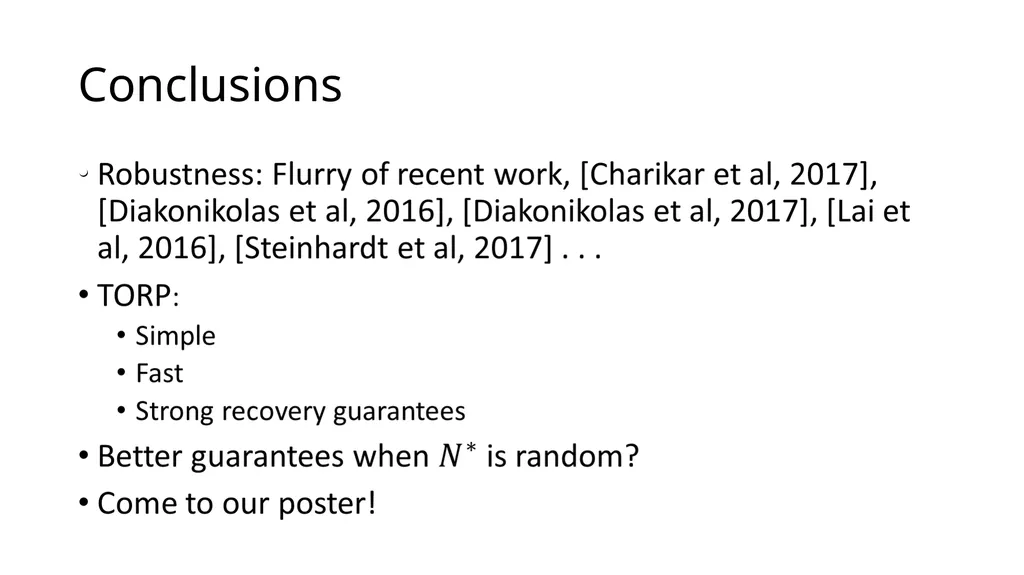
slide20. Conclusions<br>
slide21. Thank You<br>
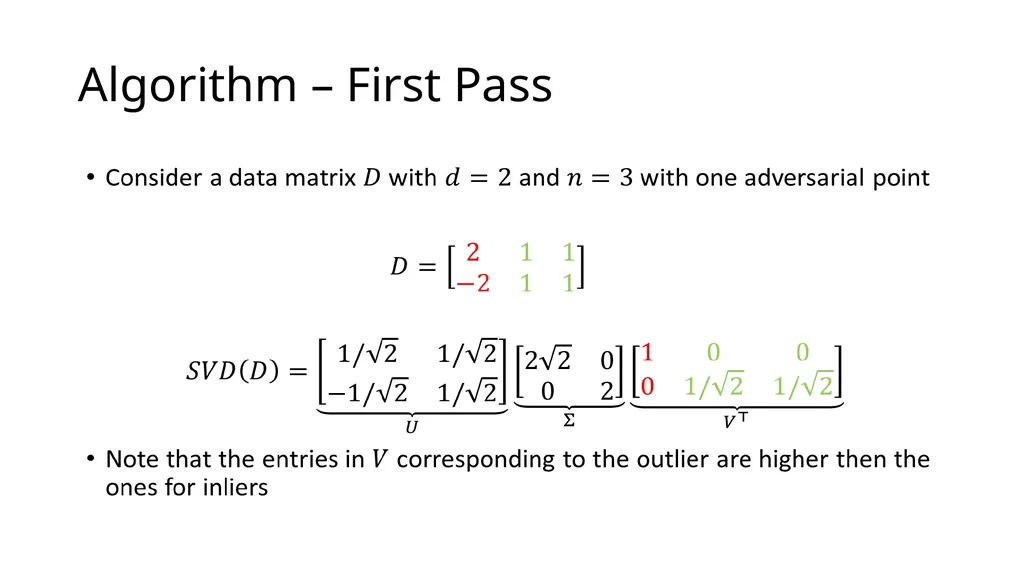
slide22. Algorithm – First Pass<br>
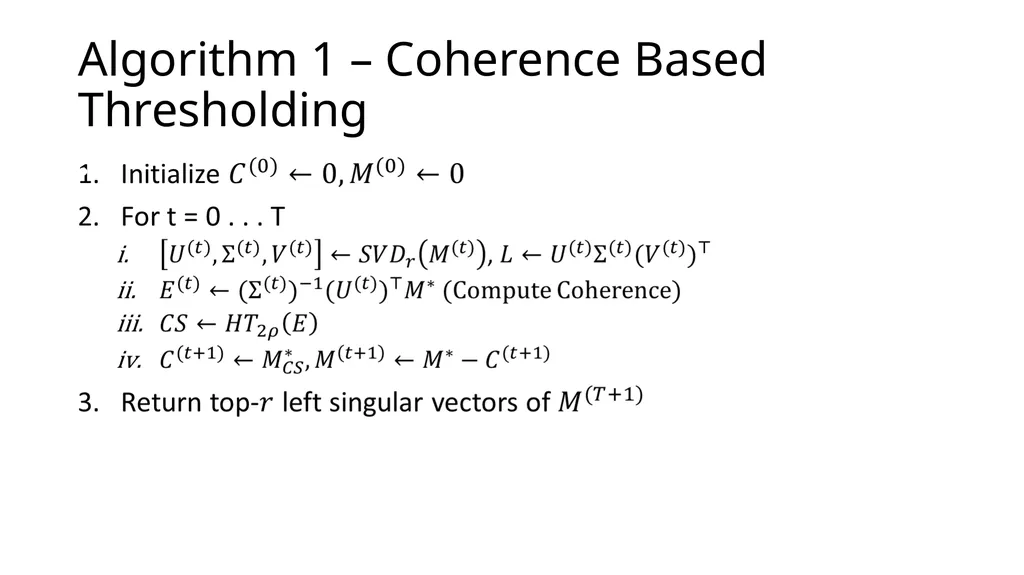
slide23. Algorithm 1 – Coherence Based Thresholding<br>
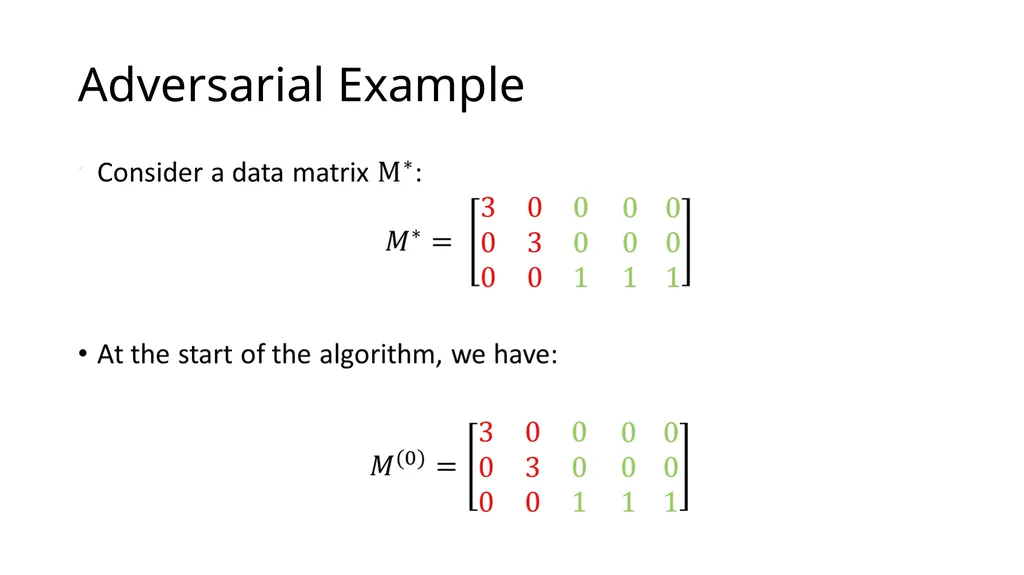
slide24. Adversarial Example<br>
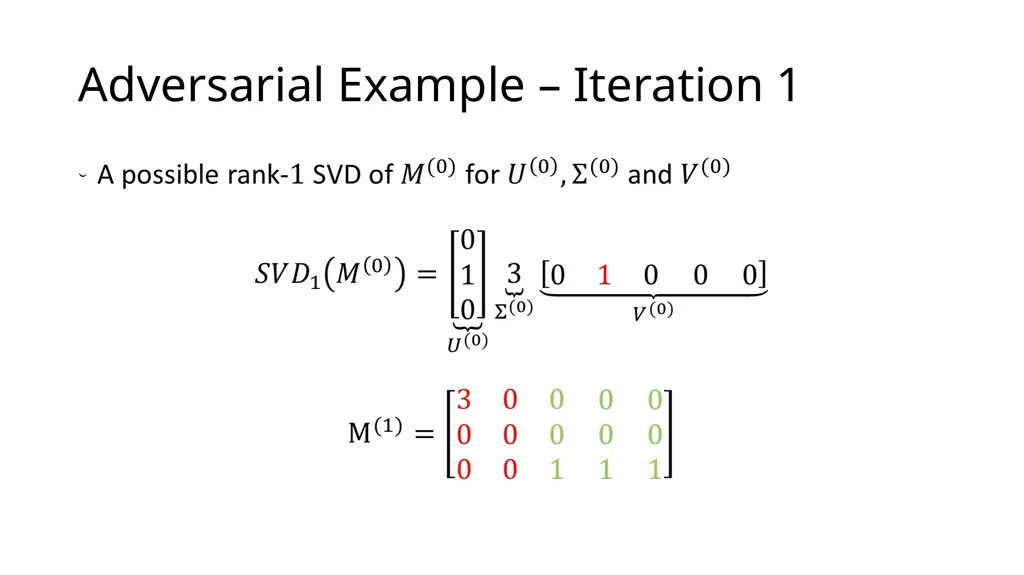
slide25. Adversarial Example – Iteration 1<br>
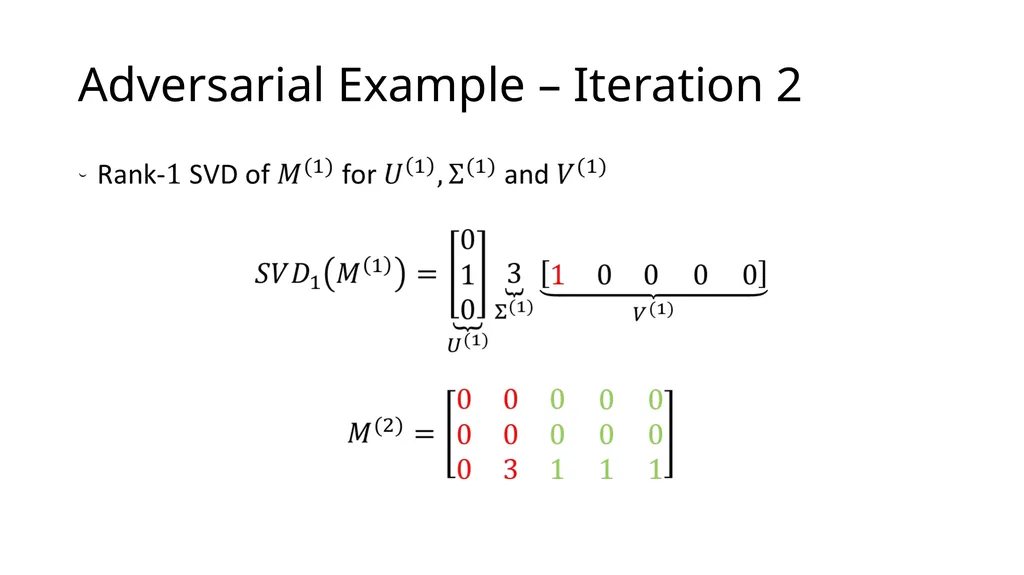
slide26. Adversarial Example – Iteration 2<br>
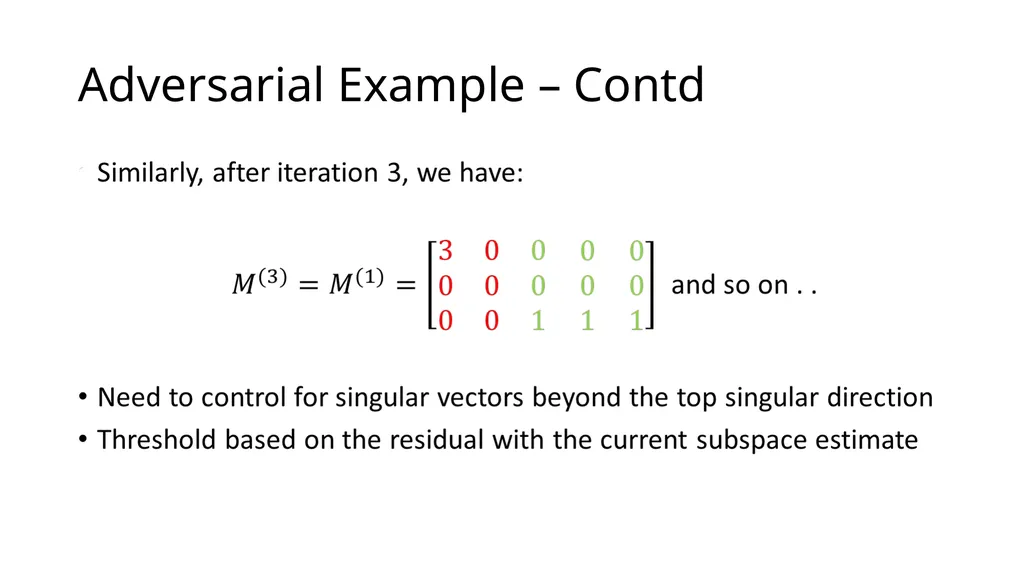
slide27. Adversarial Example – Contd<br>
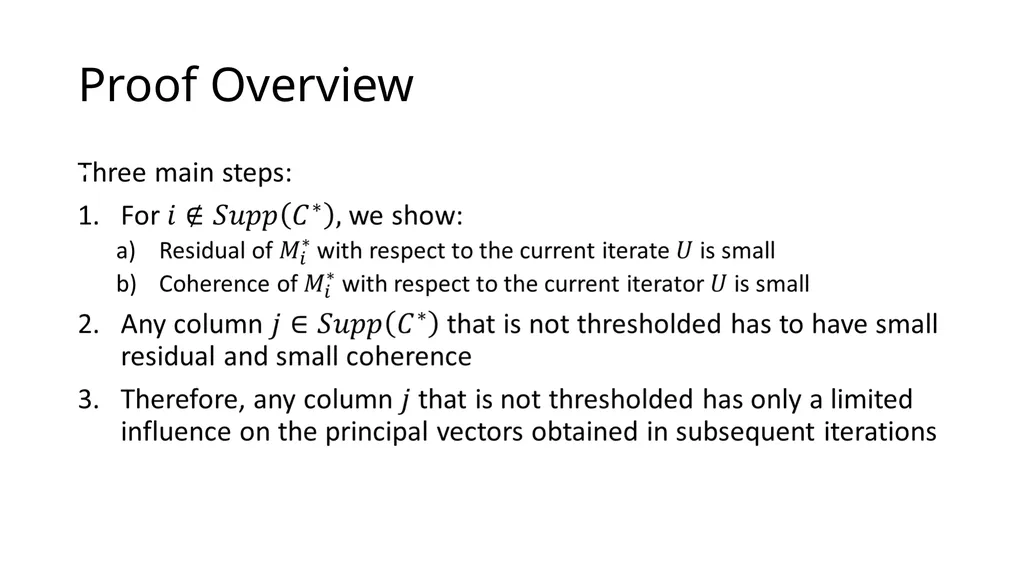
slide28. Proof Overview<br>
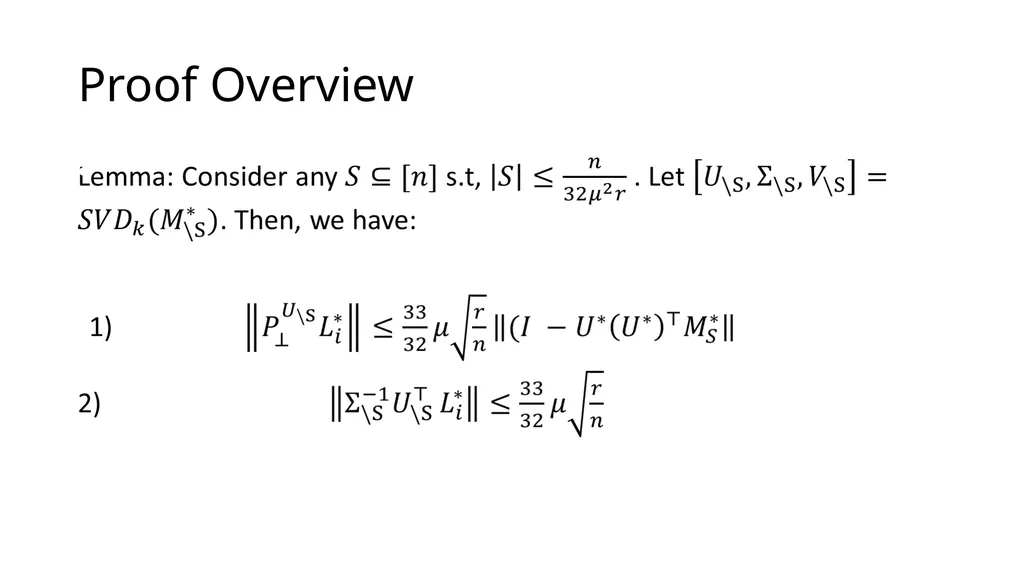
slide29. Proof Overview<br>
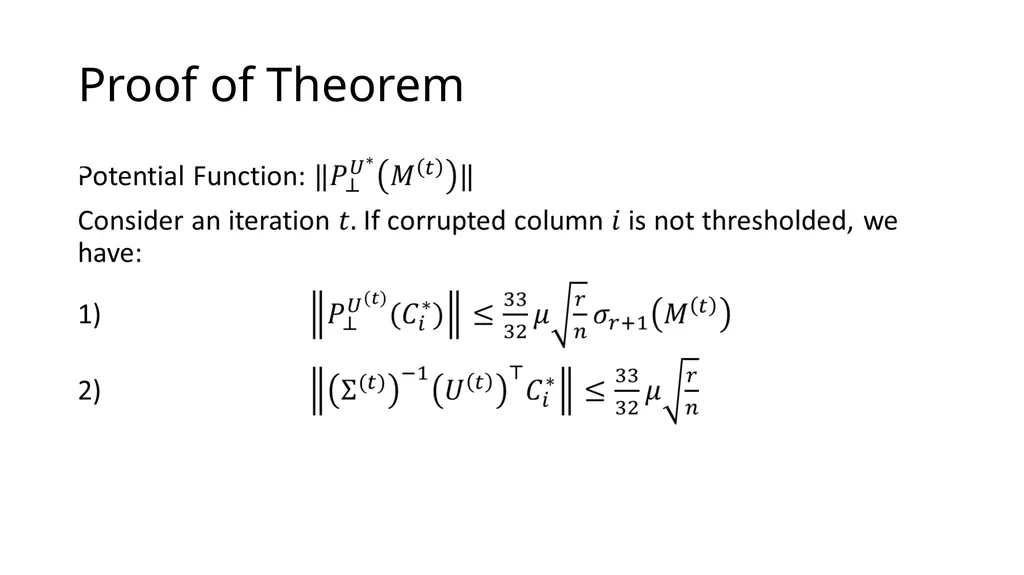
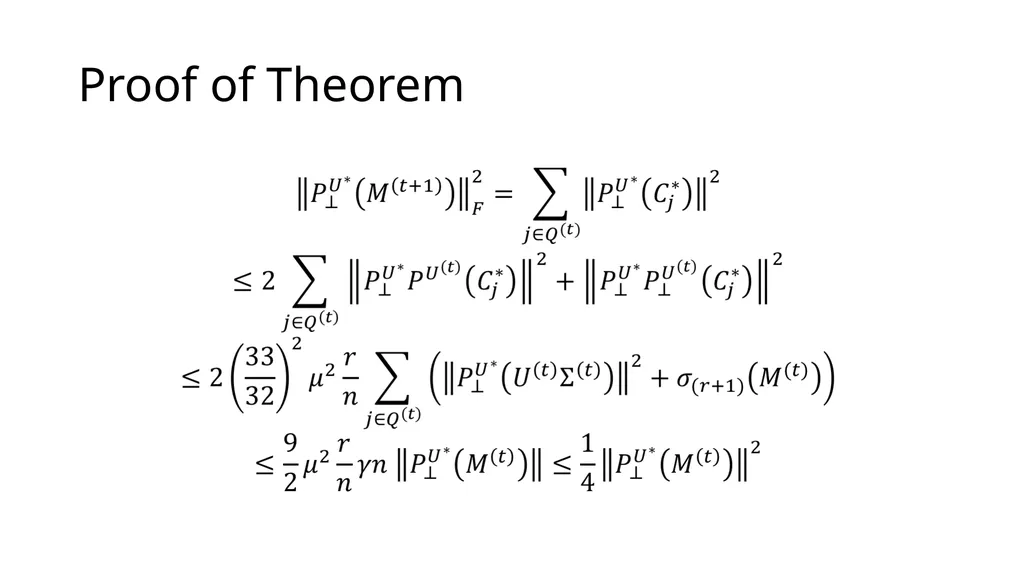
slide30. Proof of Theorem<br>
slide31. Proof of Theorem<br>
slide33. Appendix and Extra Slides<br>
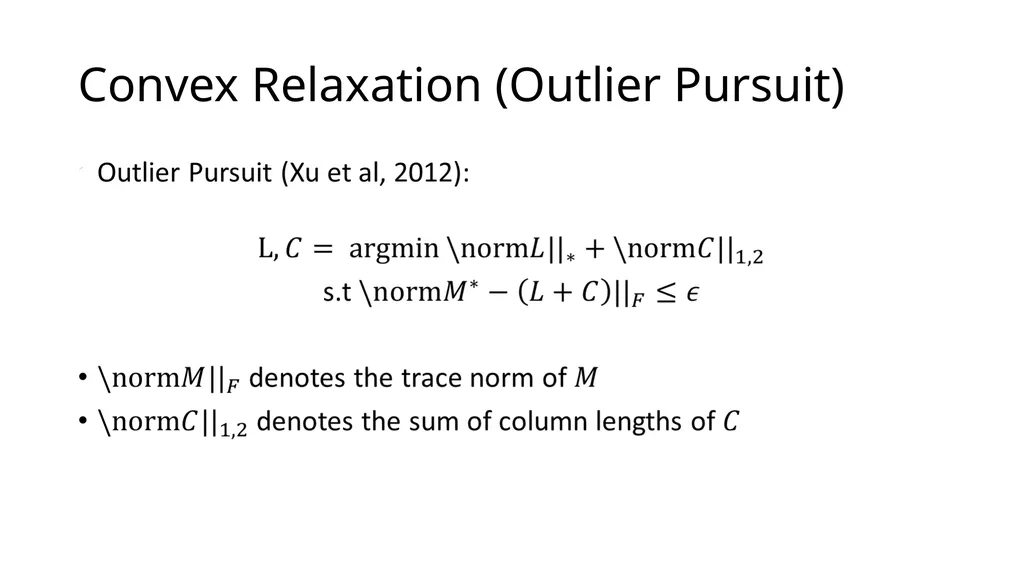
slide34. Convex Relaxation (Outlier Pursuit)<br>
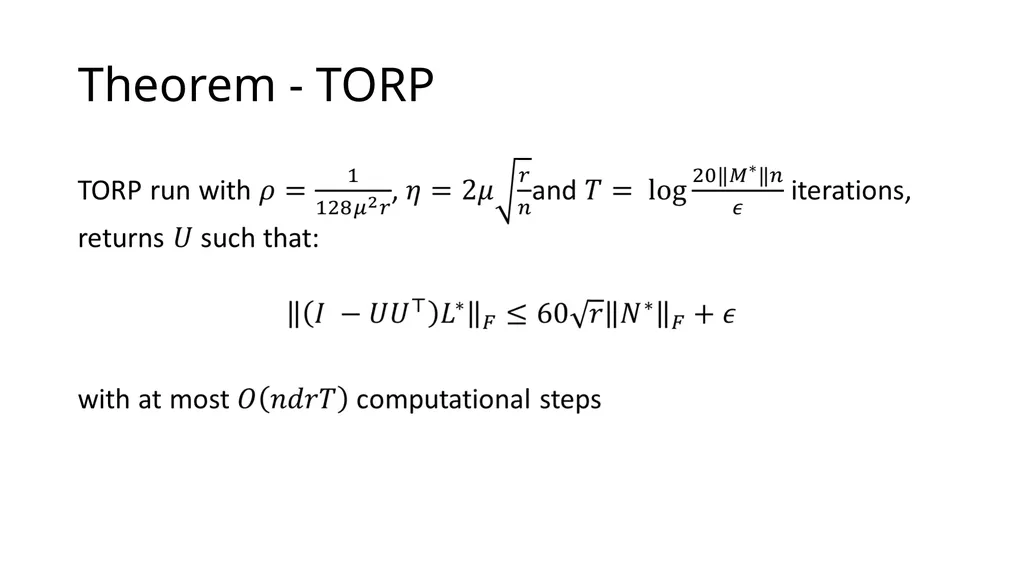
slide35. Theorem - TORP<br>
Microsoft Research India<br>
slide2. Vanilla PCA<br>
slide3. Vanilla PCA<br>
slide4. Outlier Robust PCA<br>
slide5. Our Contributions<br>
slide6. Outlier Effects – Blatant Outliers Outliers with
large contribution<br>
slide7. Outlier Effects – Subtle Outliers Outlier with small contribution to principal subspace
Earlier strategy doesn’t work<br>
slide8. Outlier Effects – Subtle Outliers Outliers generally have larger residual than inliers<br>
slide9. Algorithm (TORP) Threshold Points<br>
slide10. Algorithm (TORP) Threshold
Points<br>
slide11. Algorithm (TORP)<br>
slide12. Theorem - Noiseless Case<br>
slide13. Theorem - Noiseless Case<br>
slide14. Theorem - Noisy Case<br>
slide15. Theorem - Noisy Case<br>
slide16. Prior Work<br>
slide17. Theorem Gaussian Case<br>
slide18. Prior Work (Gaussian Noise Case)<br>
slide19. Application to Anomaly Detection Given a set of URLs, separate good from bad
Hypothesis: Good ones belong to a low dimensional space
Results:<br>
slide20. Conclusions<br>
slide21. Thank You<br>
slide22. Algorithm – First Pass<br>
slide23. Algorithm 1 – Coherence Based Thresholding<br>
slide24. Adversarial Example<br>
slide25. Adversarial Example – Iteration 1<br>
slide26. Adversarial Example – Iteration 2<br>
slide27. Adversarial Example – Contd<br>
slide28. Proof Overview<br>
slide29. Proof Overview<br>
slide30. Proof of Theorem<br>
slide31. Proof of Theorem<br>
slide33. Appendix and Extra Slides<br>
slide34. Convex Relaxation (Outlier Pursuit)<br>
slide35. Theorem - TORP<br>