
THYROID GLAND –part 3 disorders DR. SHEETAL JAIN

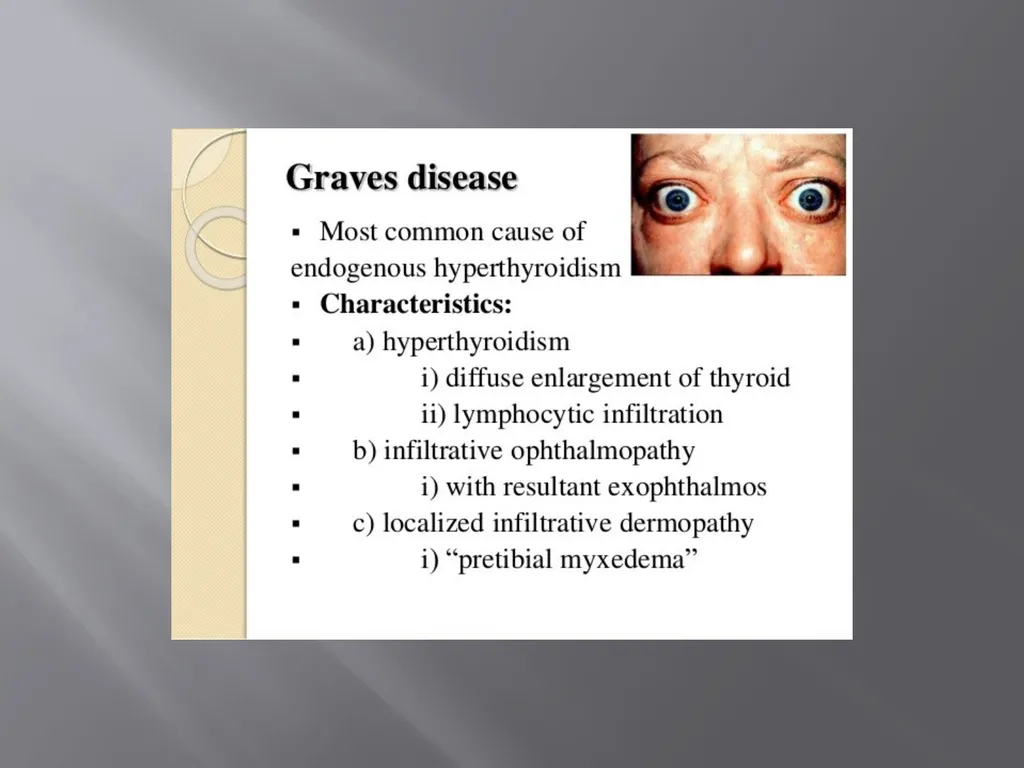
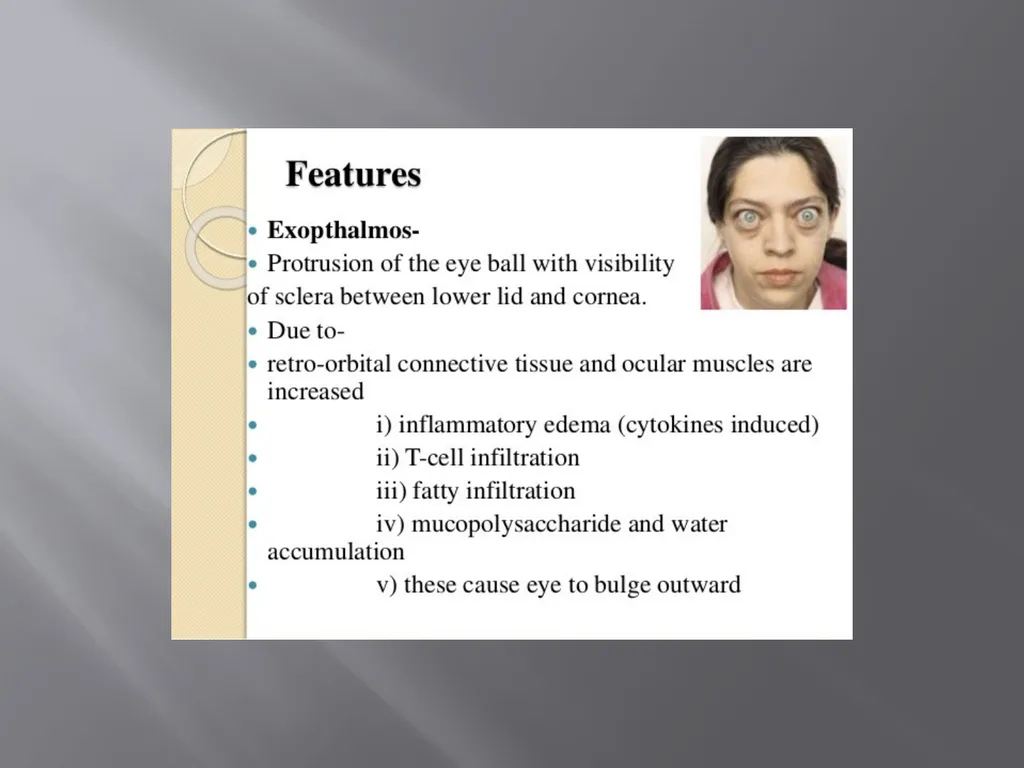
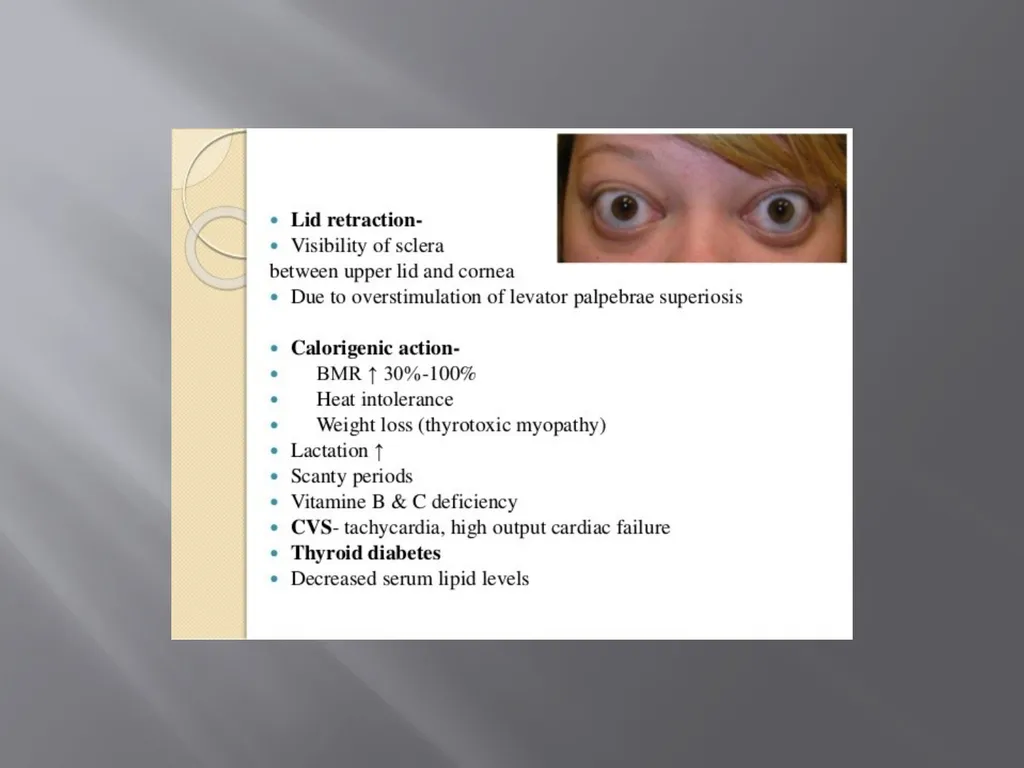
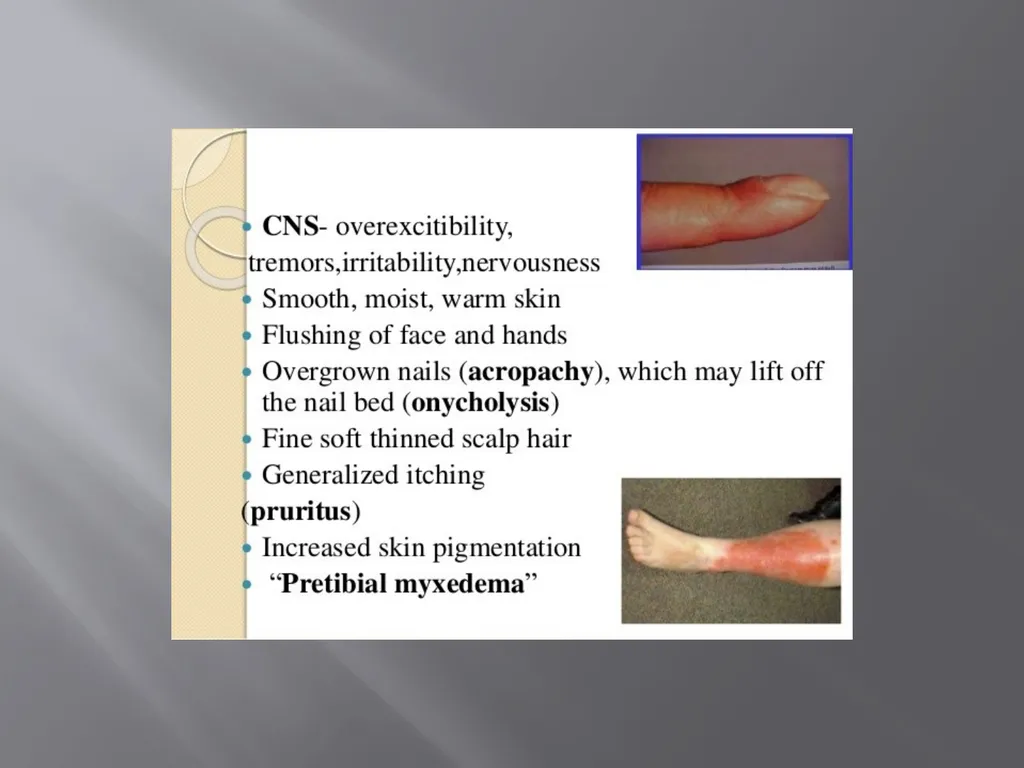
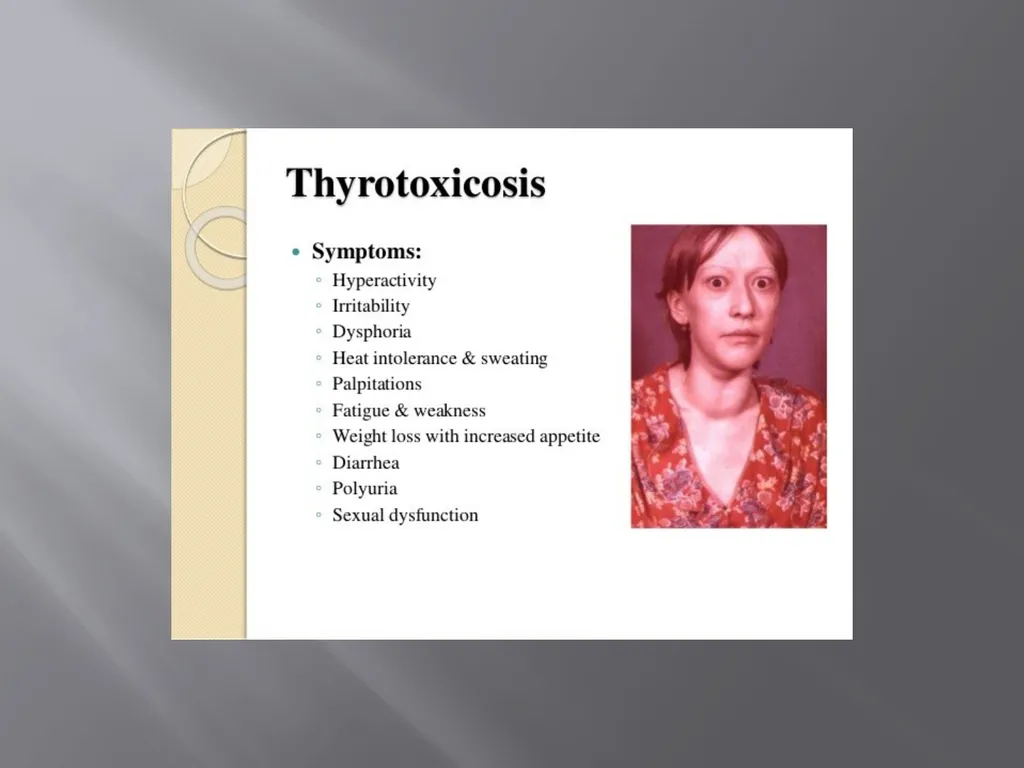

Description: THYROID GLAND part 3 disorders DR. SHEETAL JAIN HORMONAL DYSFUNCTIONS: Hypersecretion Graves disease Elevated metabolic rate, sweating, rapid, irregular heartbeat, nervousness, weight loss despite adequate food intake, and exopthalmos
Related Topics
Download Presentation
"THYROID GLAND –part 3 disorders DR. SHEETAL JAIN" is the property of its rightful owner. Permission is granted to download and print the materials on this website for personal, non-commercial use only, and to display it on your personal computer provided you do not modify the materials and that you retain all copyright notices contained in the materials. By downloading content from our website, you accept the terms of this agreement.
Presentation Transcript
slide1. THYROID GLAND –part 3
disorders DR. SHEETAL JAIN<br>
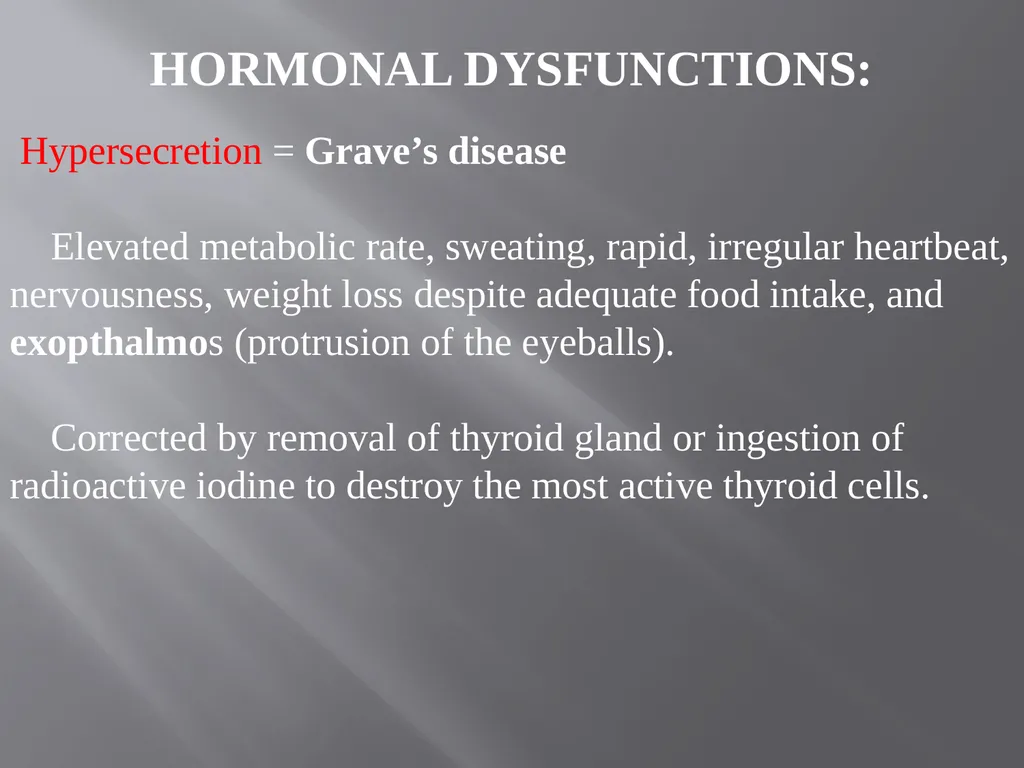
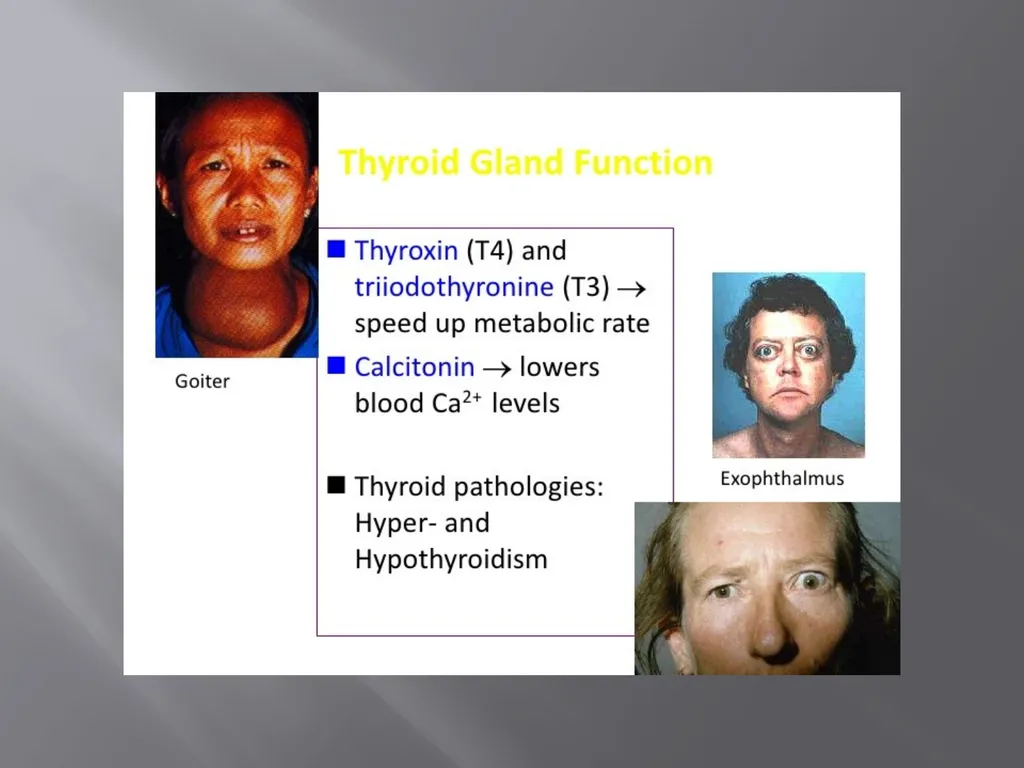
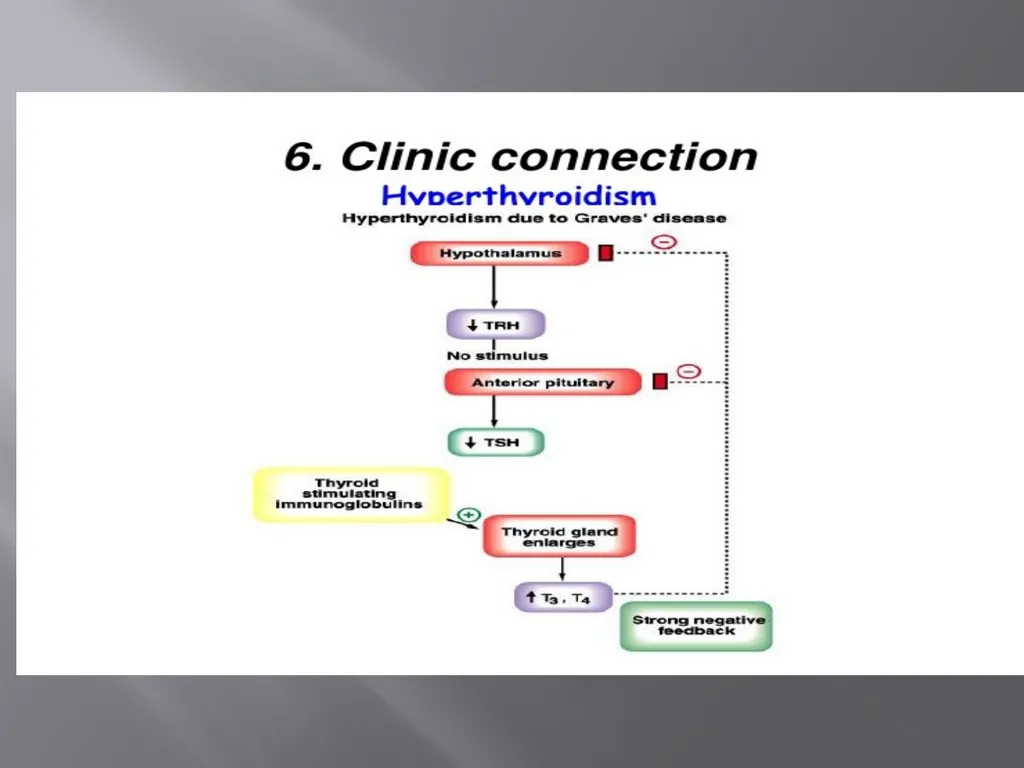
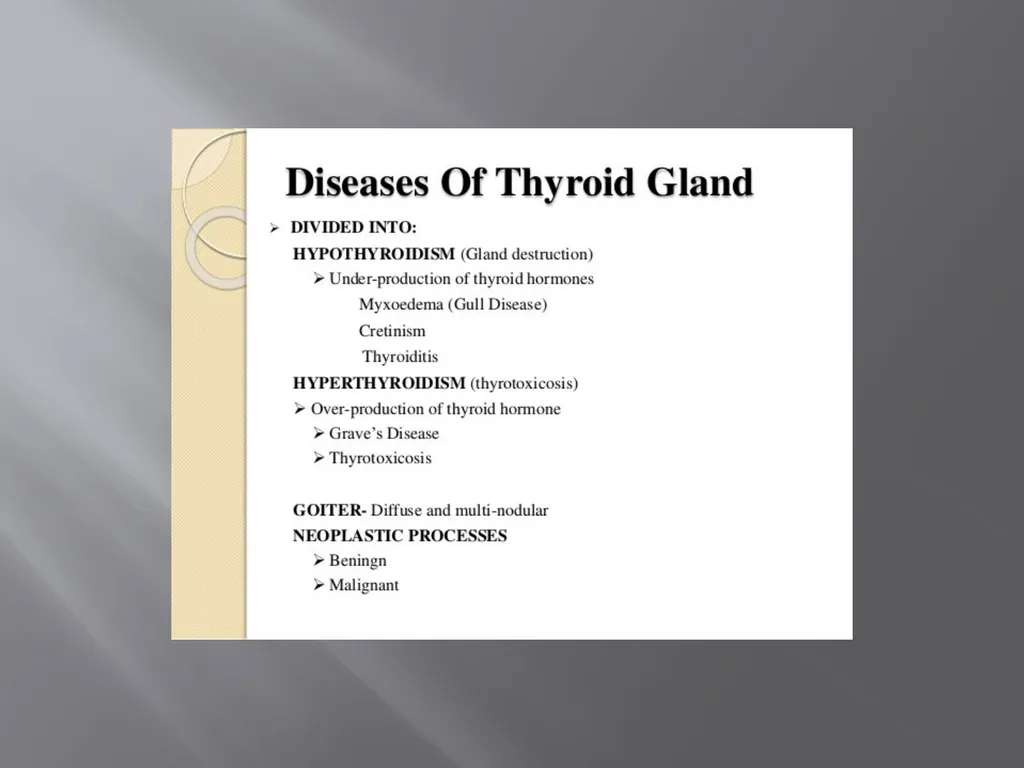
slide3. HORMONAL DYSFUNCTIONS: Hypersecretion = Grave’s disease
Elevated metabolic rate, sweating, rapid, irregular heartbeat,
nervousness, weight loss despite adequate food intake, and
exopthalmos (protrusion of the eyeballs).
Corrected by removal of thyroid gland or ingestion of radioactive iodine to destroy the most active thyroid cells.<br>
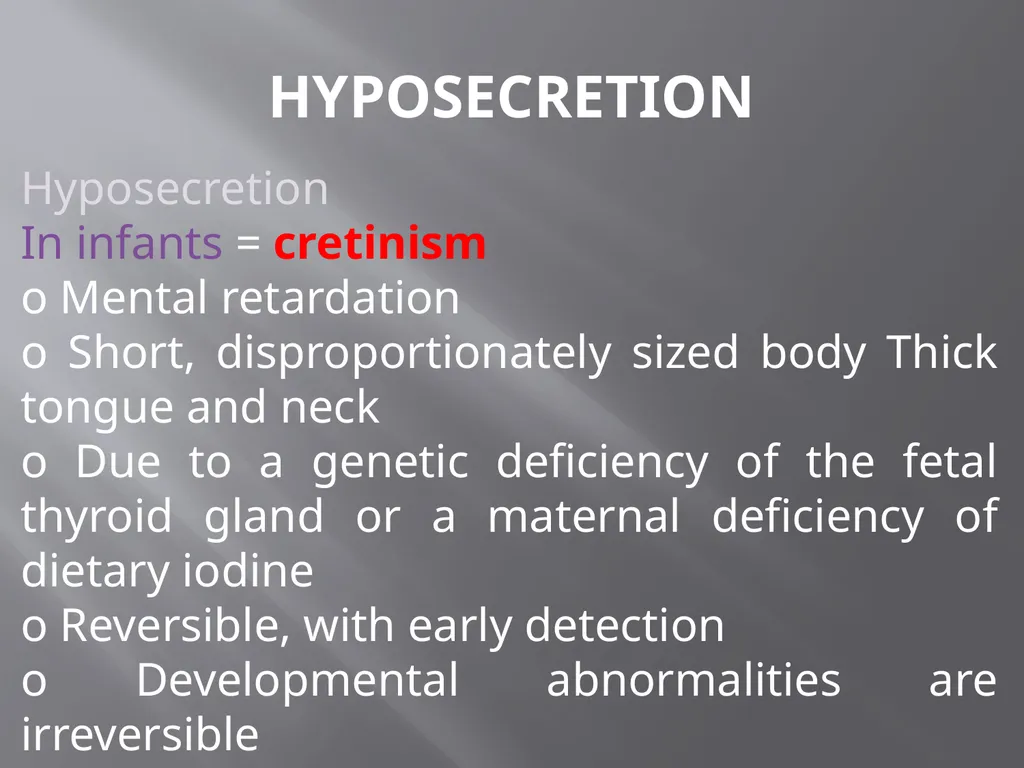
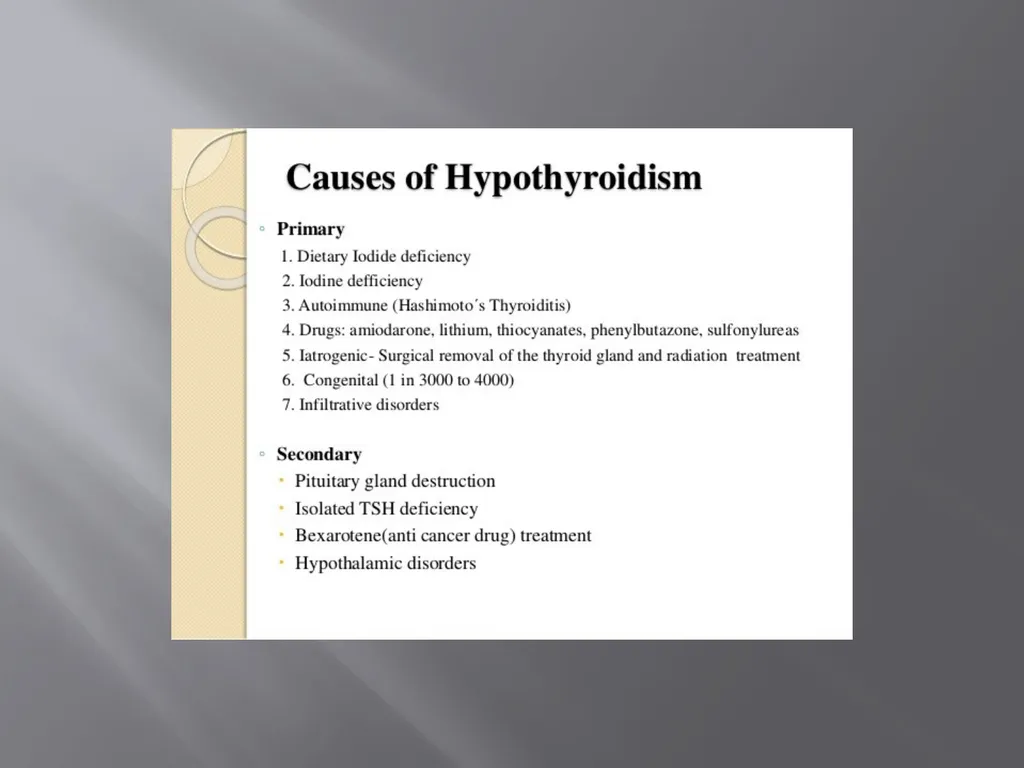
slide4. HYPOSECRETION Hyposecretion
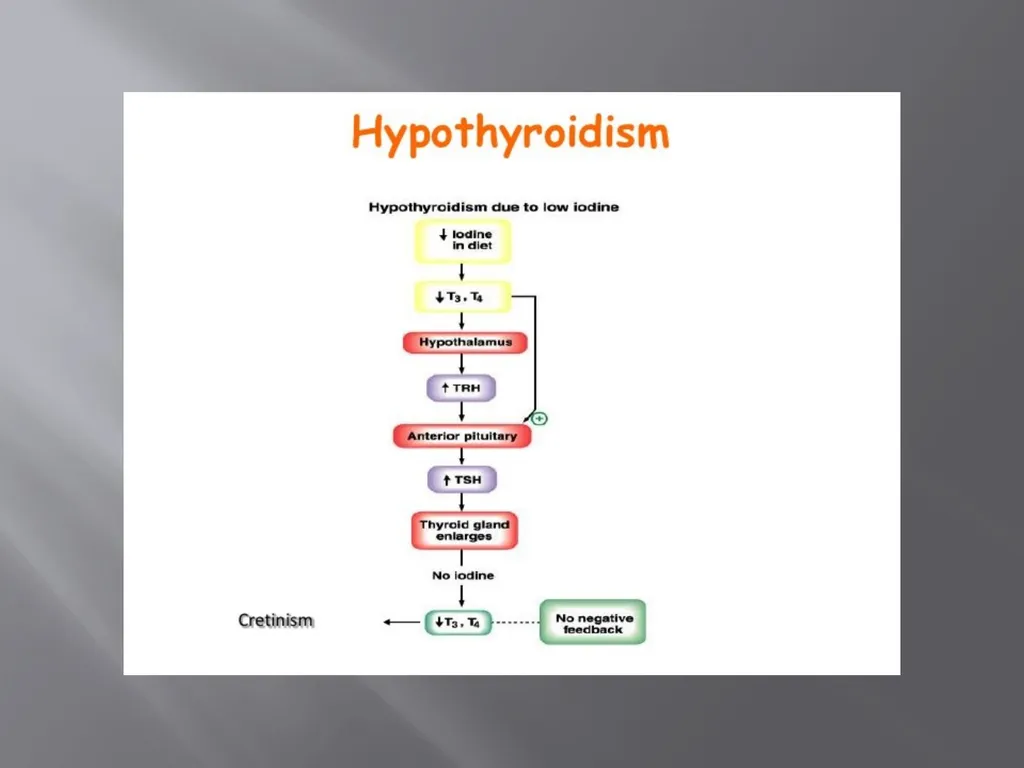
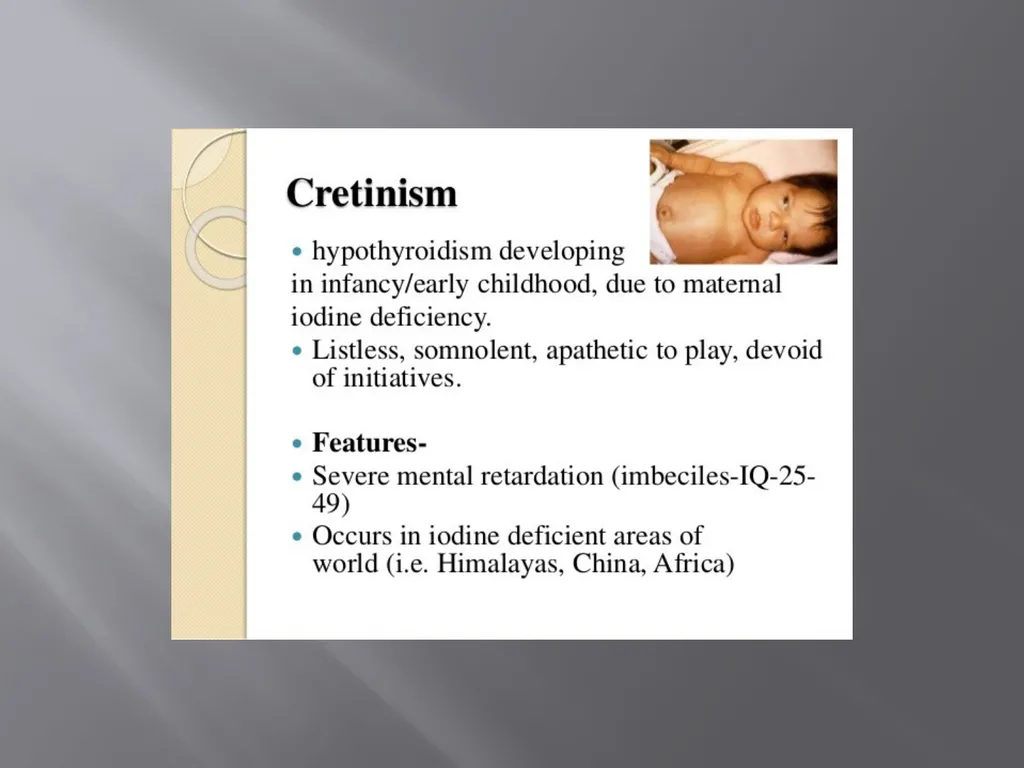
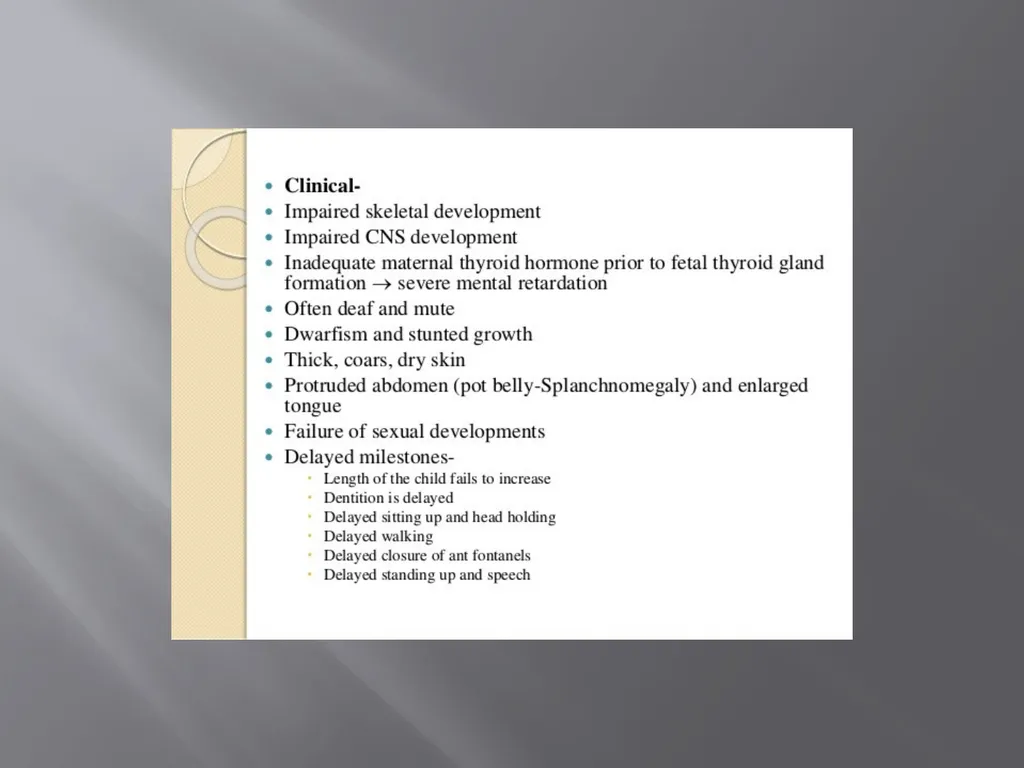
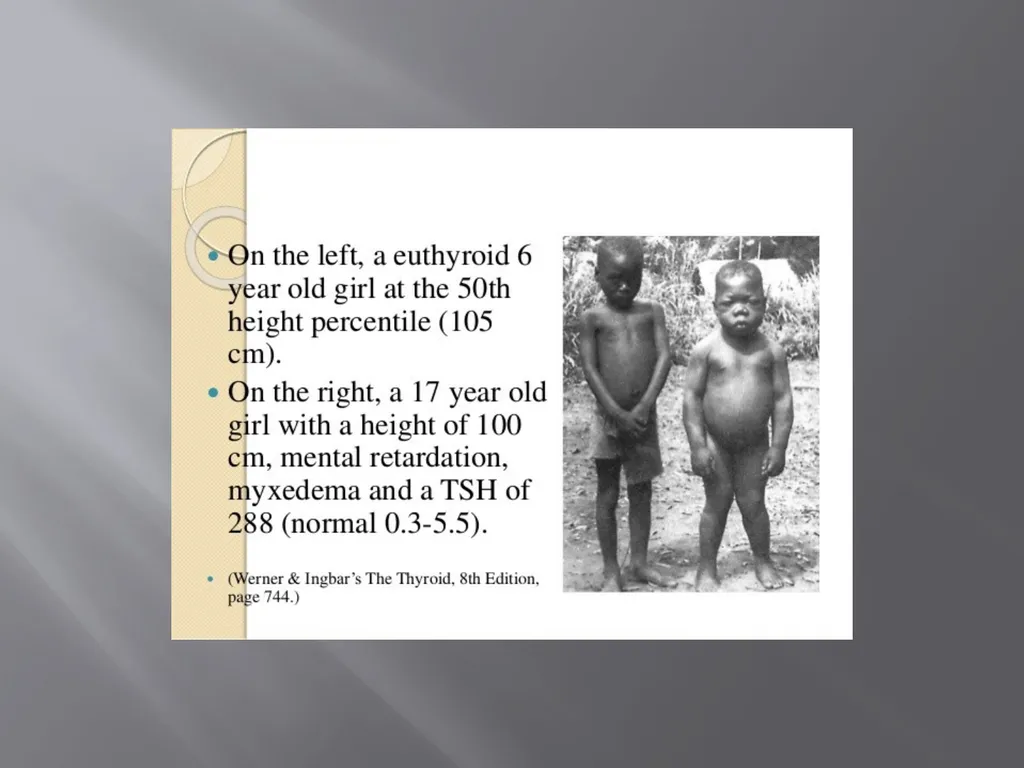
In infants = cretinism
o Mental retardation
o Short, disproportionately sized body Thick tongue and neck
o Due to a genetic deficiency of the fetal thyroid gland or a maternal deficiency of dietary iodine
o Reversible, with early detection
o Developmental abnormalities are irreversible<br>
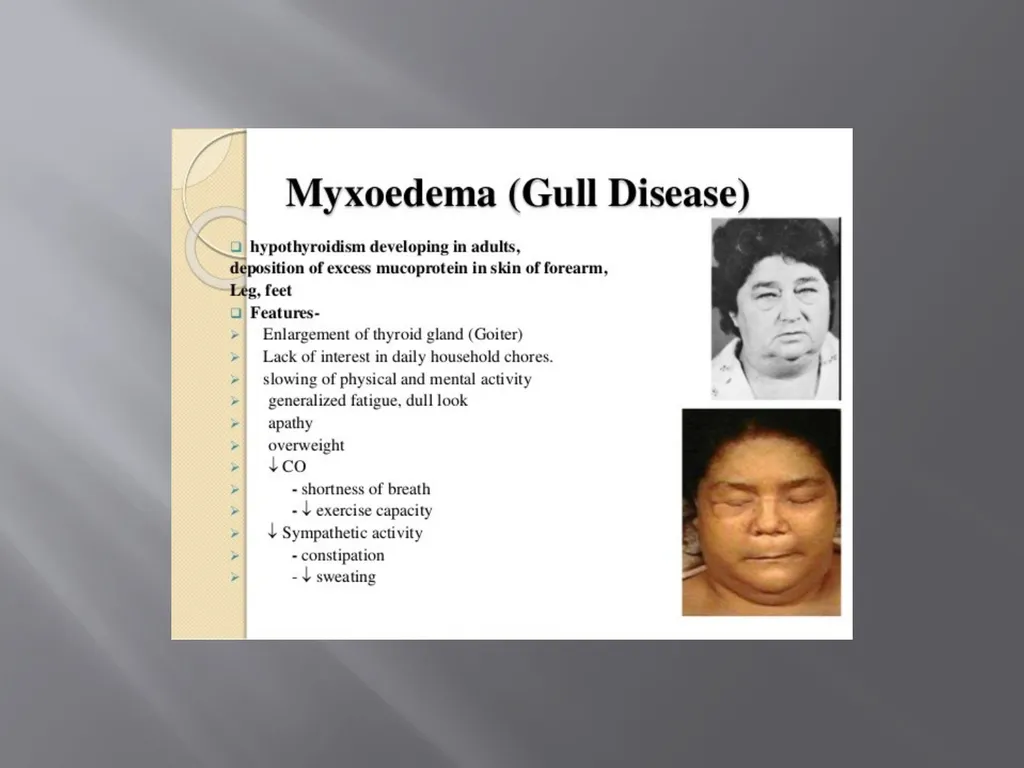
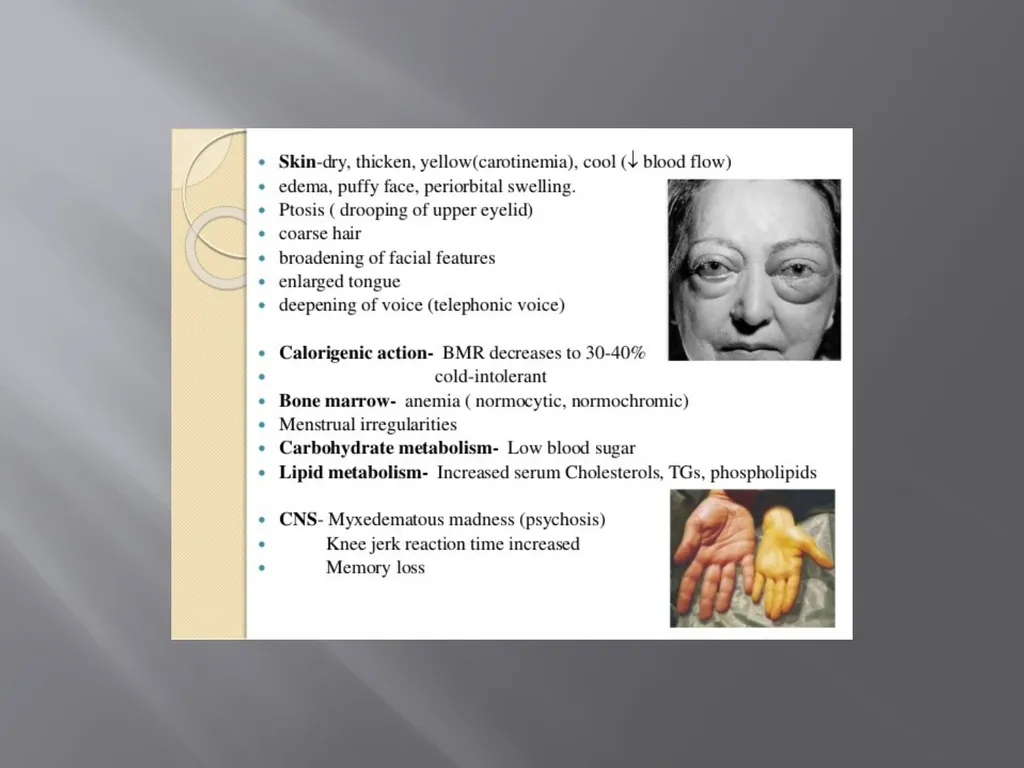
slide5. HYPOSERETION In adults = myxedema
o Low metabolic rate
o Chills and constipation
o Thick, dry skin and puffy eyes
o Edema
o Lethargy and mental sluggishness (not retardation)
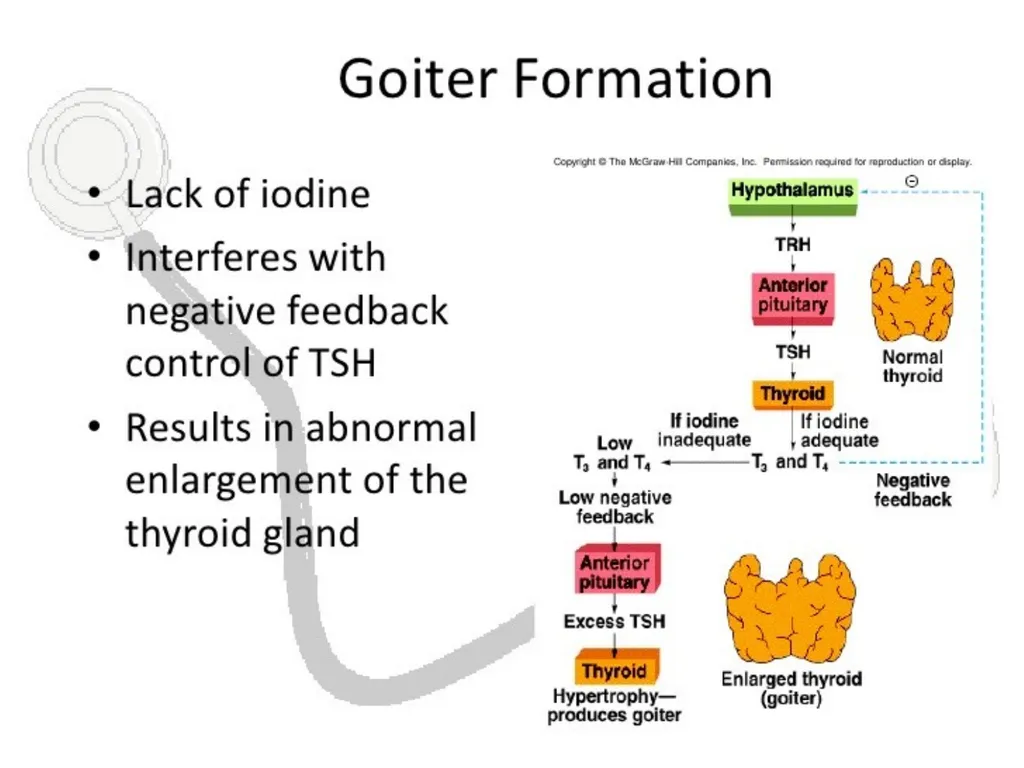
o Results from lack of iodine
o Enlargement and protrusion of thyroid gland = endemic
Goiter
Colloid production normal; can’t iodinate it or make
functional TH<br>
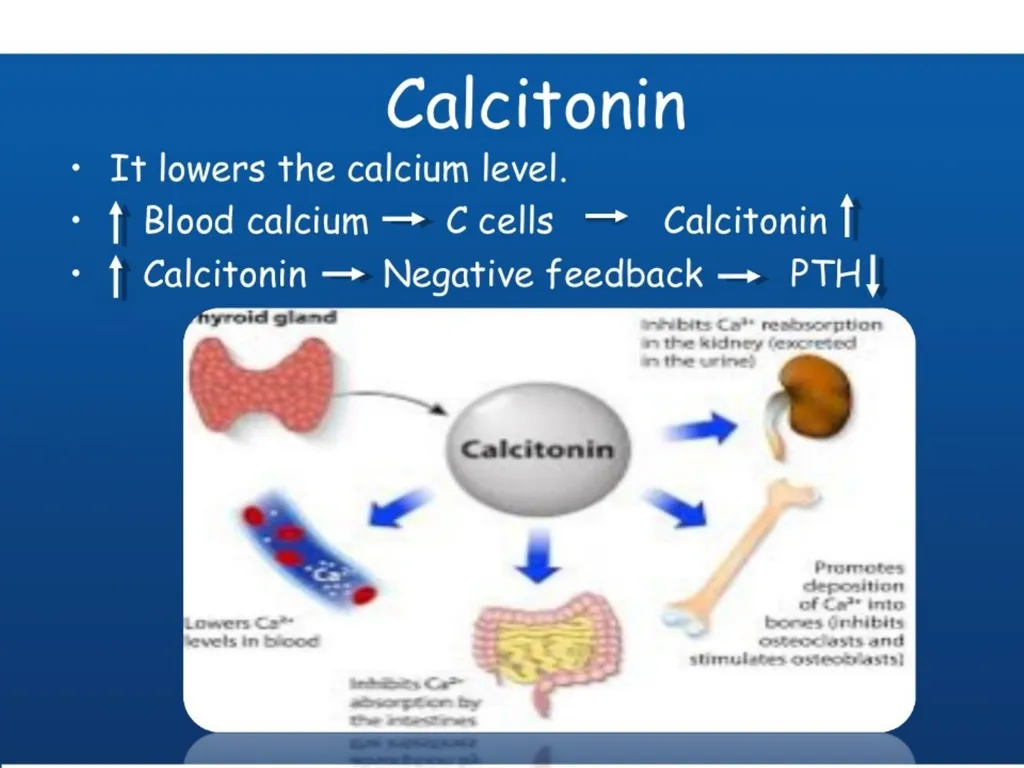
slide7. CALCITONIN Calcitonin – lowers blood Ca2+ concentration levels
o Produced by the parafollicular cells (or C cells)
o Direct antagonist of parathyroid hormone
o Targets the skeleton
Inhibits osteoclast activity, bone resorption and release of calcium ions from the bone matrix.
Stimulates calcium ion uptake and incorporation into bone matrix
Especially important in growing children; less important in adults
o Control of calcitonin release
Regulation short lived, but rapid
Excessive blood levels of Ca2+ (20% above normal) = release of calcitonin
Low Ca2+ blood levels inhibit calcitonin secretion<br>
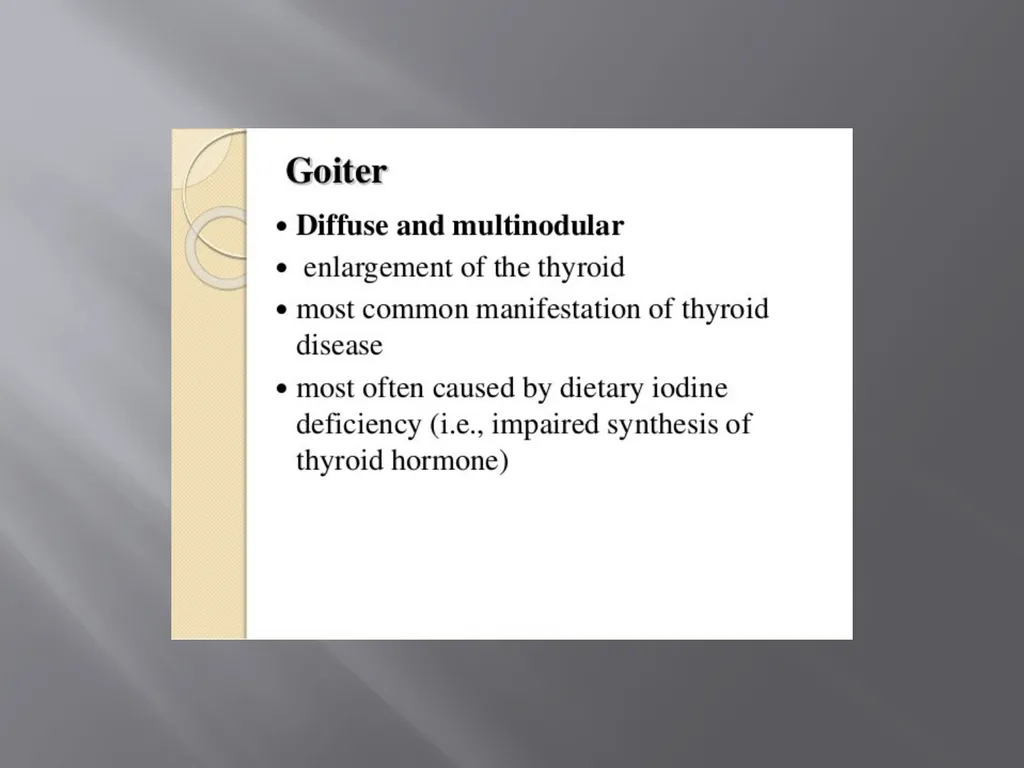
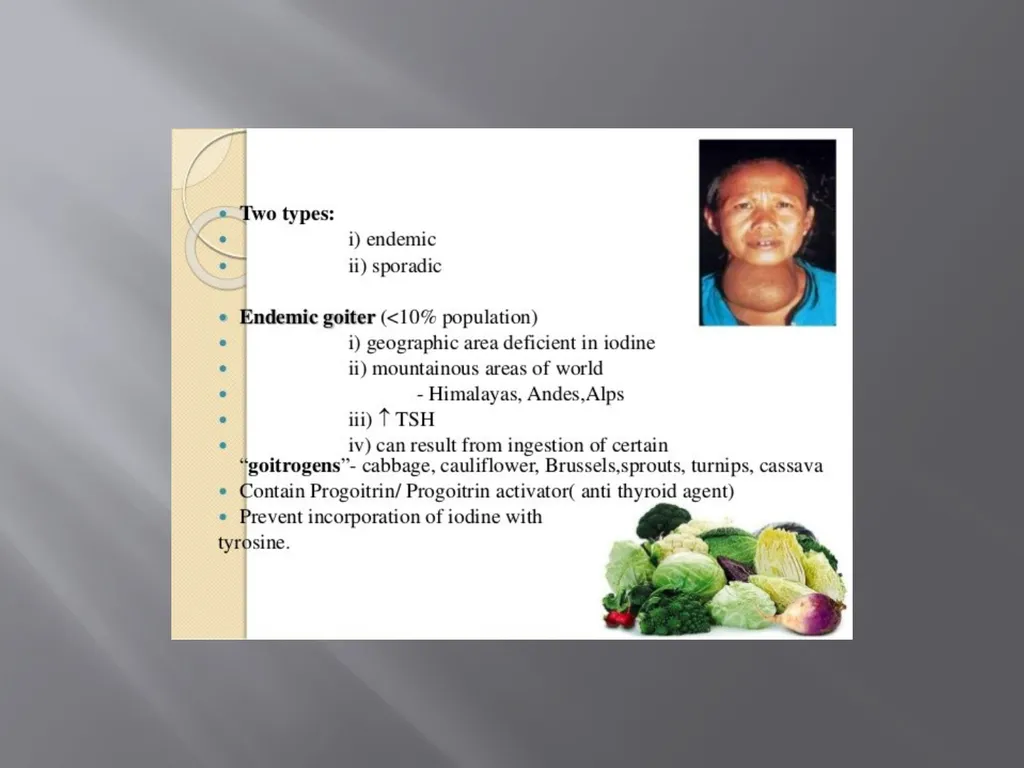
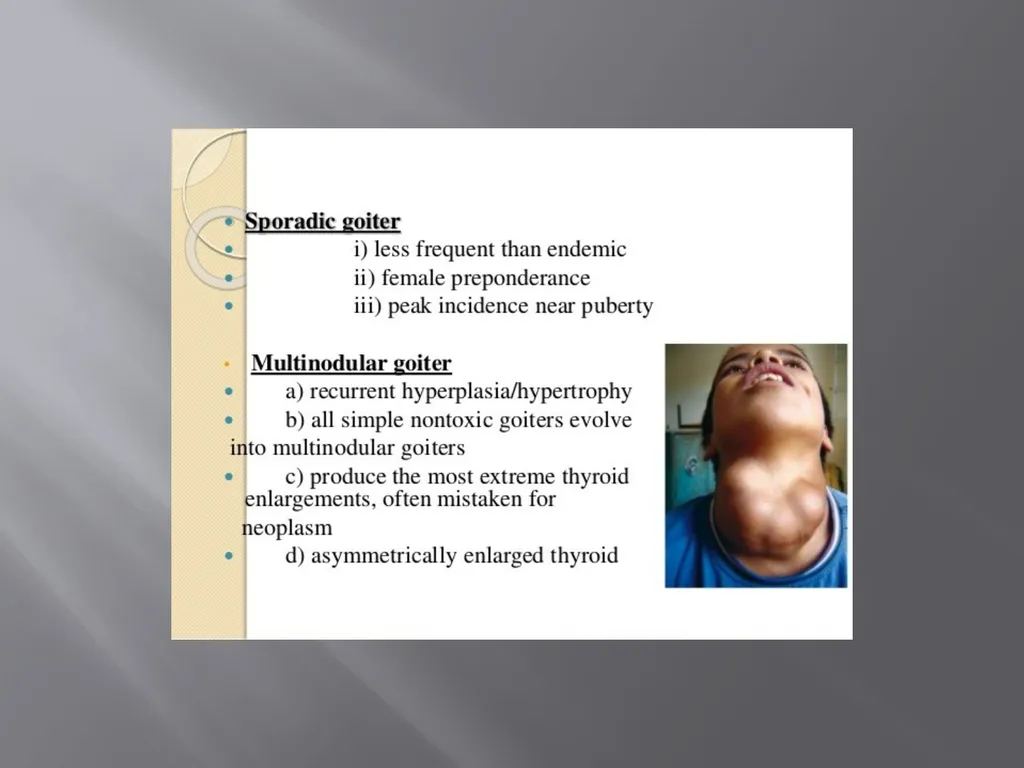
slide8. GOITER Goiter is an enlargement of the thyroid gland from a noncancerous origin. Most commonly, goiter will arise in patients who have an iodine deficiency in their diet. This, of course, is a bit more common in places in the world where foods are not rich enough in iodine, or in women over the age of forty who are likelier to develop a goiter. The symptoms of goiter include swelling or tightness of the neck, breathing and swallowing difficulties, hoarseness of the voice, and wheezing. Typically, these clinical signs will only show when a patient’s thyroid has grown large enough. Goiter will be treated either with radioactive iodine doses or surgery.<br>
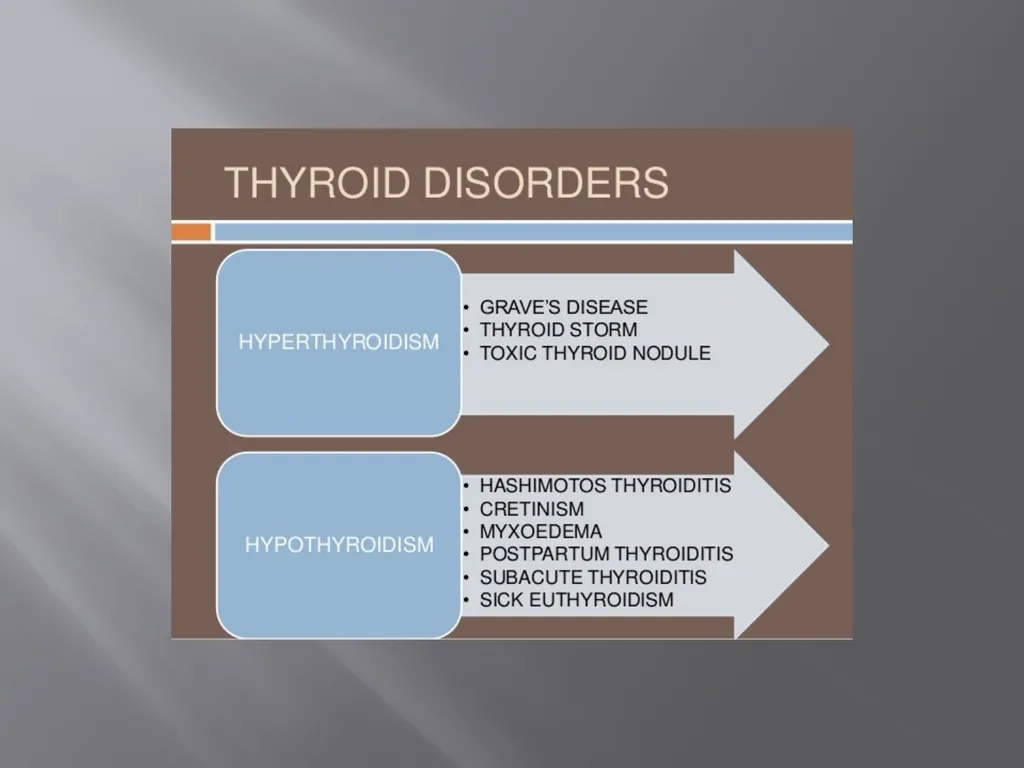
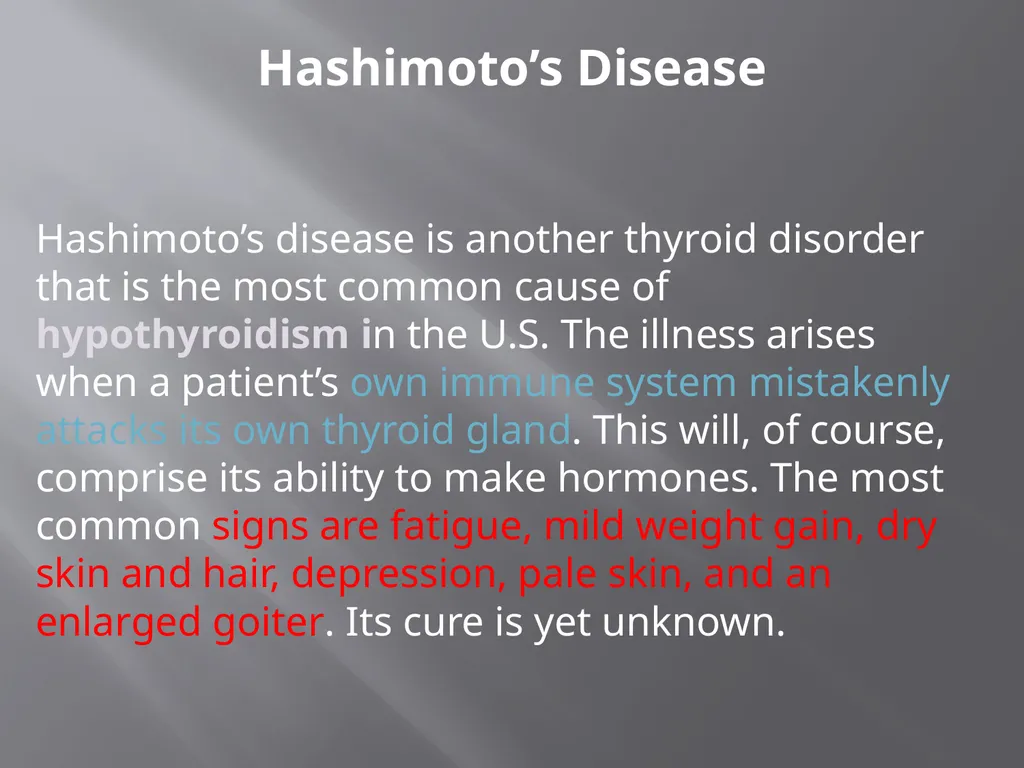
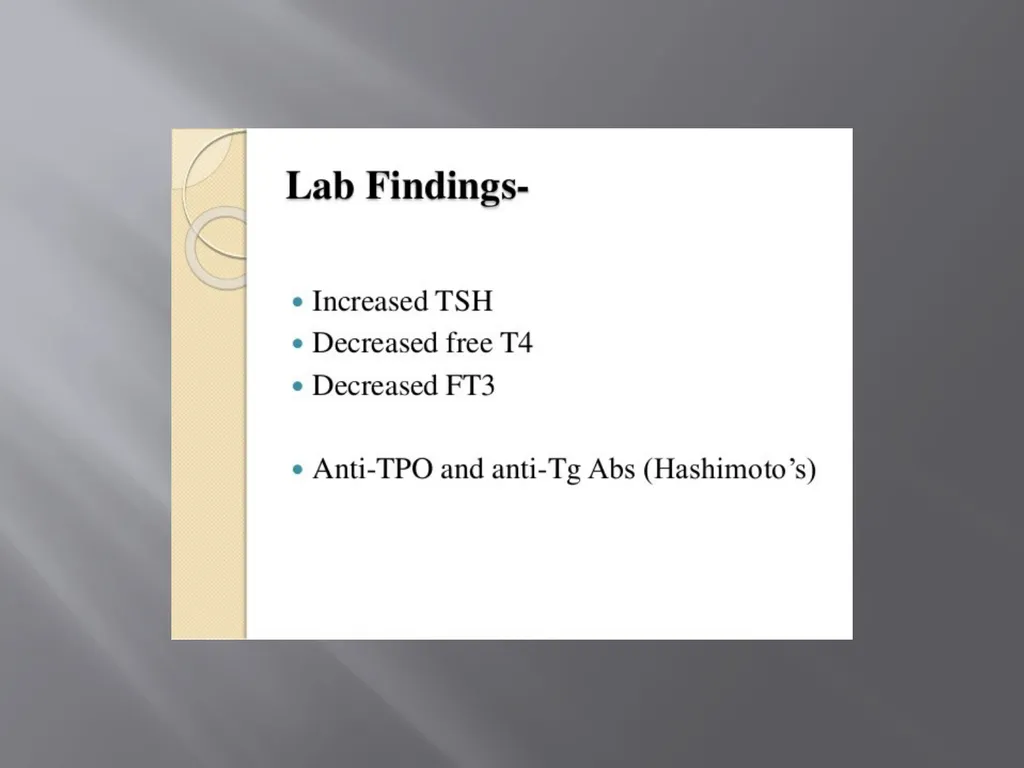
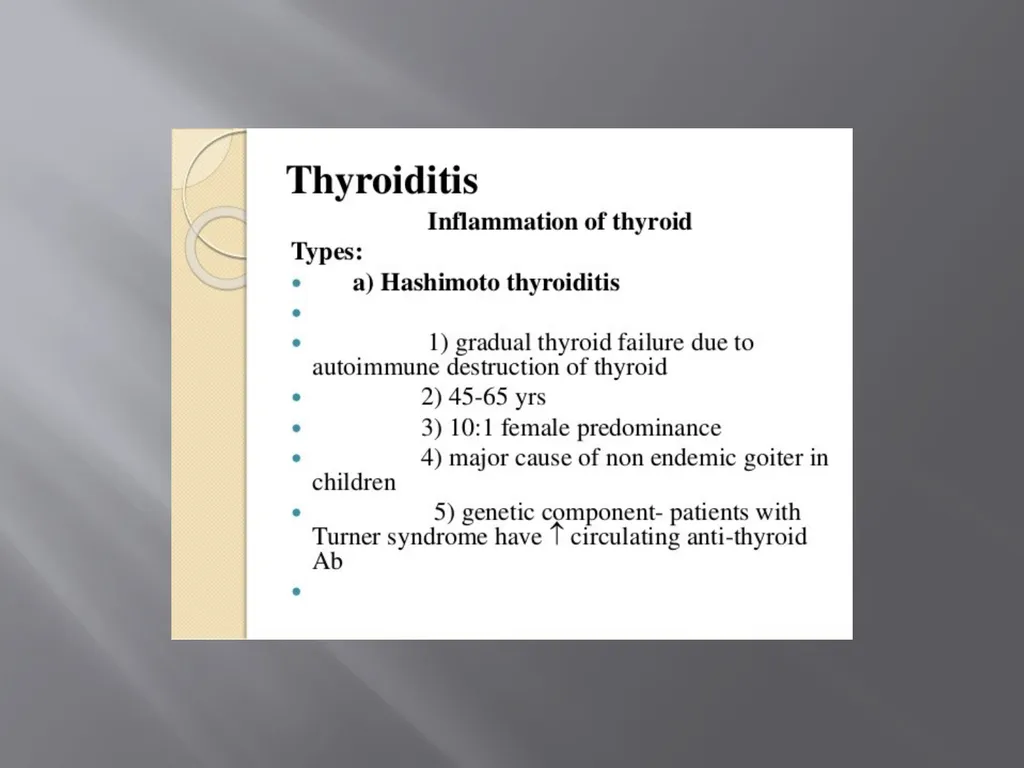
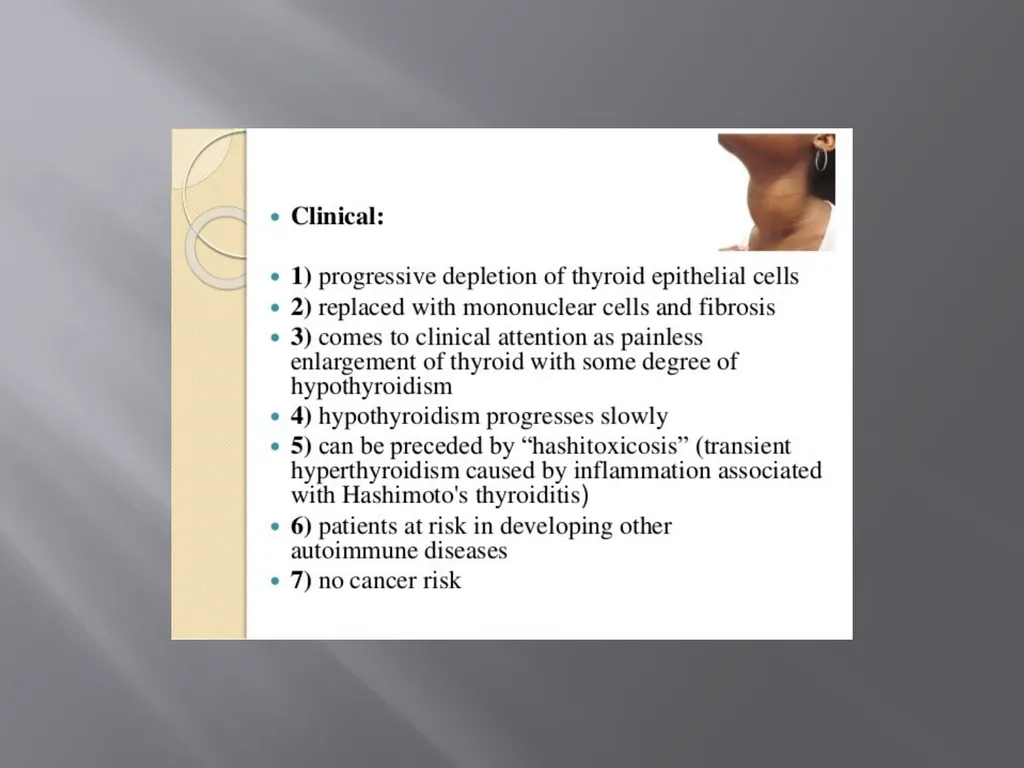
slide9. Hashimoto’s Disease Hashimoto’s disease is another thyroid disorder that is the most common cause of hypothyroidism in the U.S. The illness arises when a patient’s own immune system mistakenly attacks its own thyroid gland. This will, of course, comprise its ability to make hormones. The most common signs are fatigue, mild weight gain, dry skin and hair, depression, pale skin, and an enlarged goiter. Its cure is yet unknown.<br>
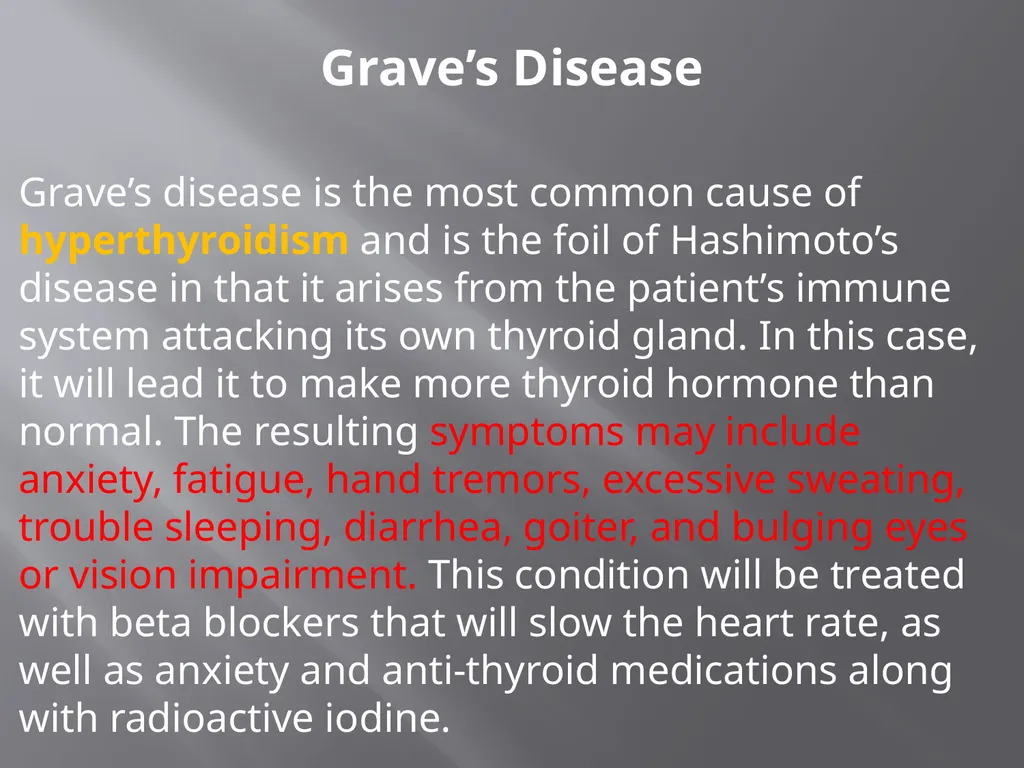
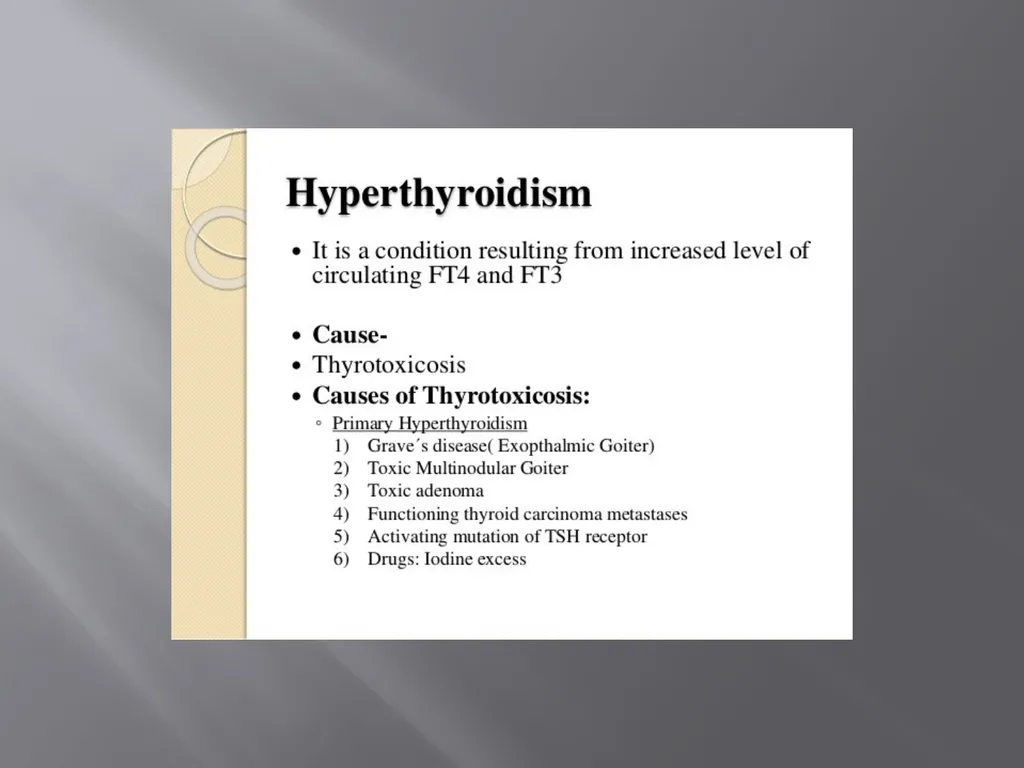
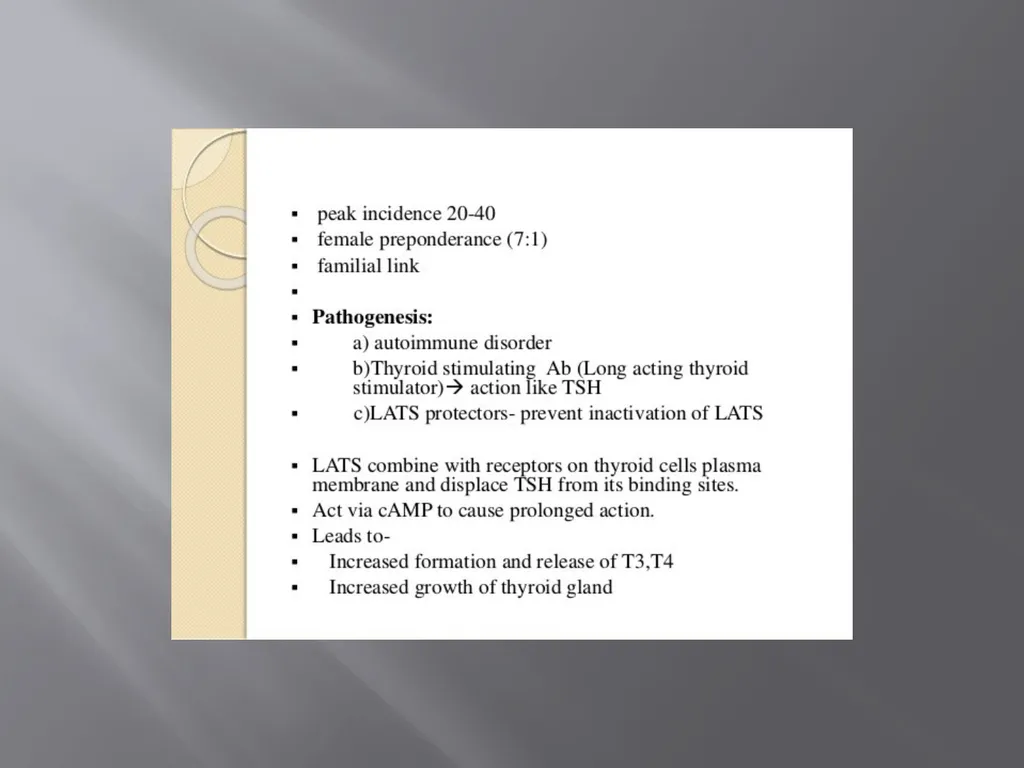
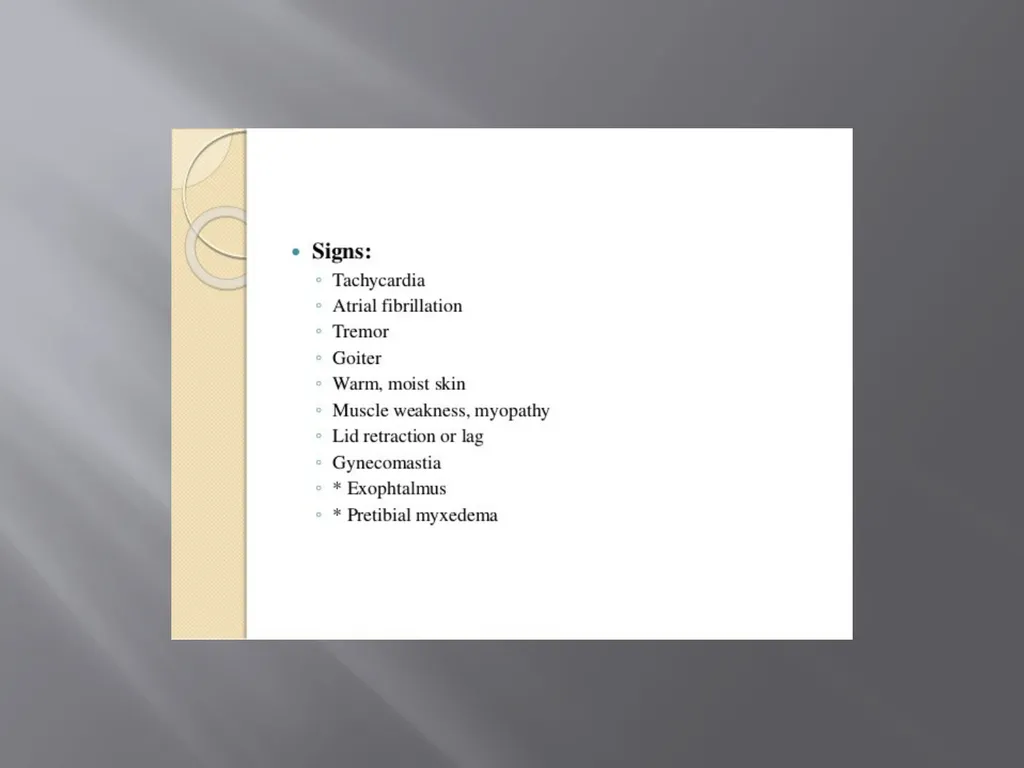
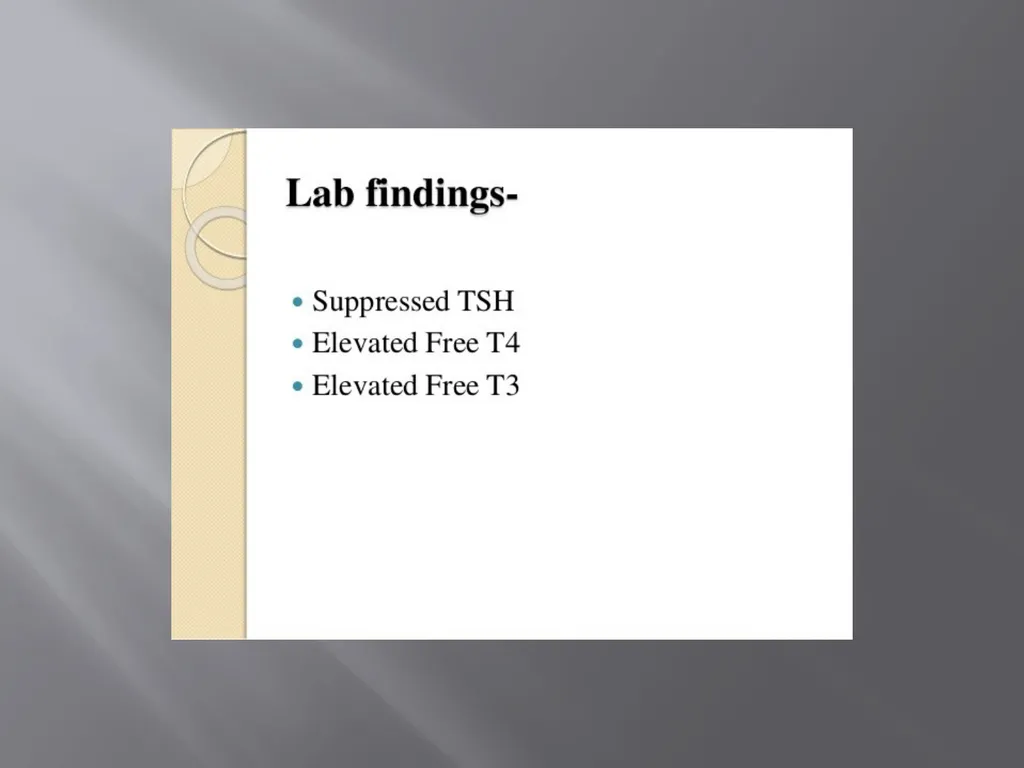
slide10. Grave’s Disease Grave’s disease is the most common cause of hyperthyroidism and is the foil of Hashimoto’s disease in that it arises from the patient’s immune system attacking its own thyroid gland. In this case, it will lead it to make more thyroid hormone than normal. The resulting symptoms may include anxiety, fatigue, hand tremors, excessive sweating, trouble sleeping, diarrhea, goiter, and bulging eyes or vision impairment. This condition will be treated with beta blockers that will slow the heart rate, as well as anxiety and anti-thyroid medications along with radioactive iodine.<br>
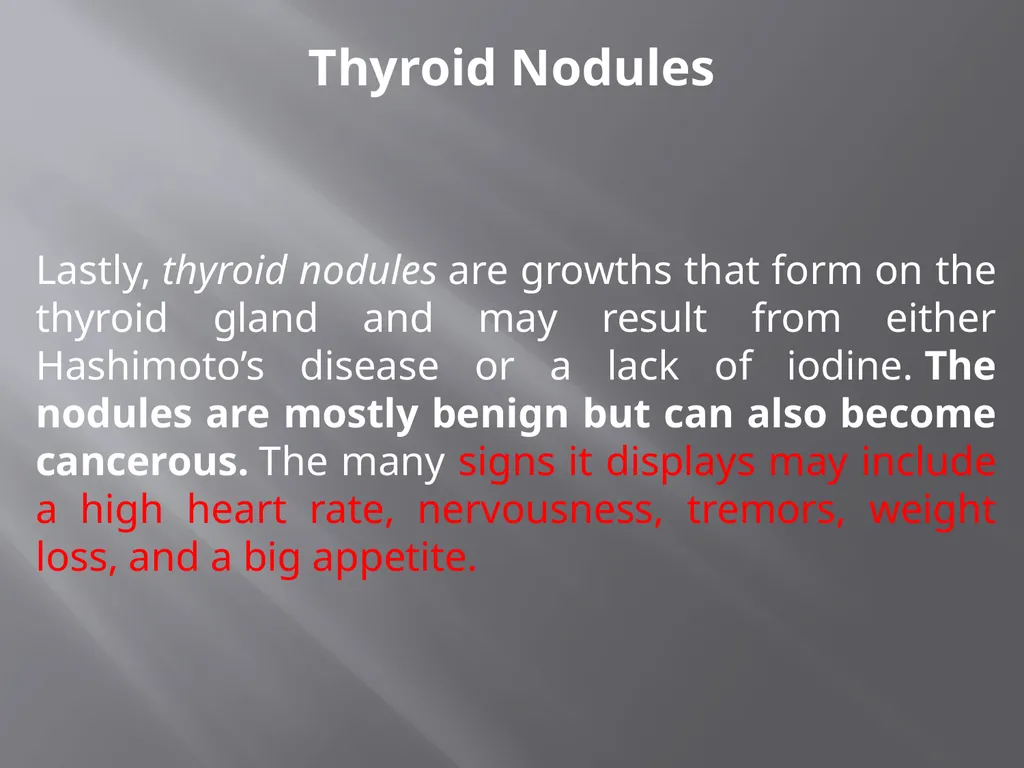
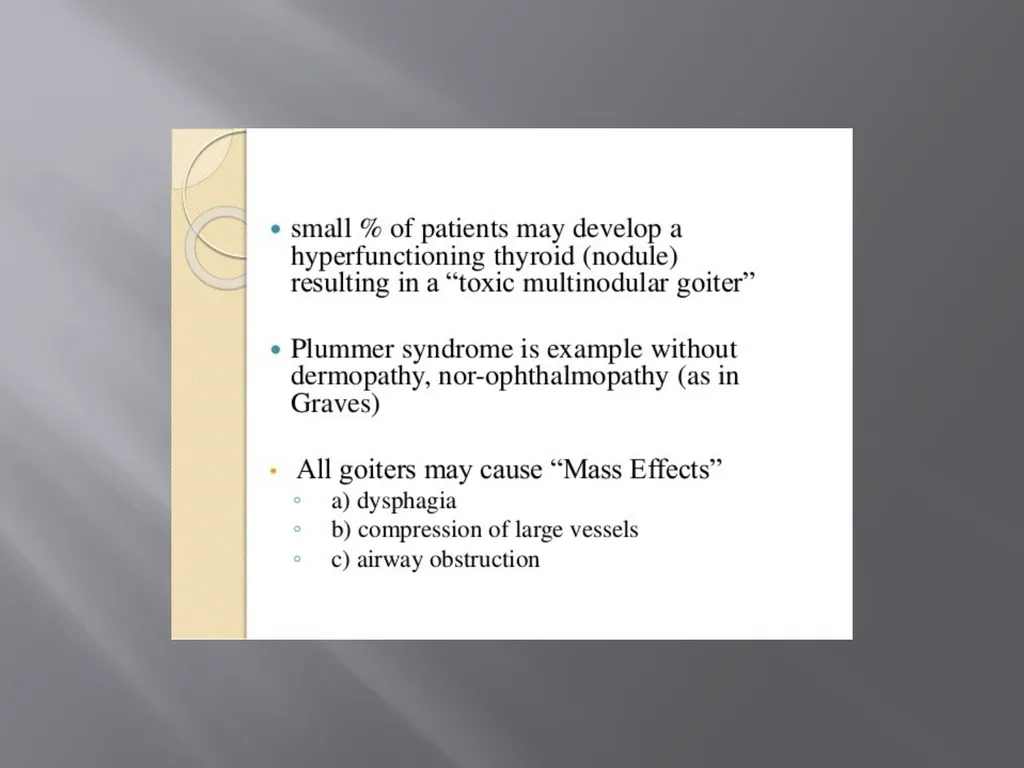
slide11. Thyroid Nodules Lastly, thyroid nodules are growths that form on the thyroid gland and may result from either Hashimoto’s disease or a lack of iodine. The nodules are mostly benign but can also become cancerous. The many signs it displays may include a high heart rate, nervousness, tremors, weight loss, and a big appetite.<br>
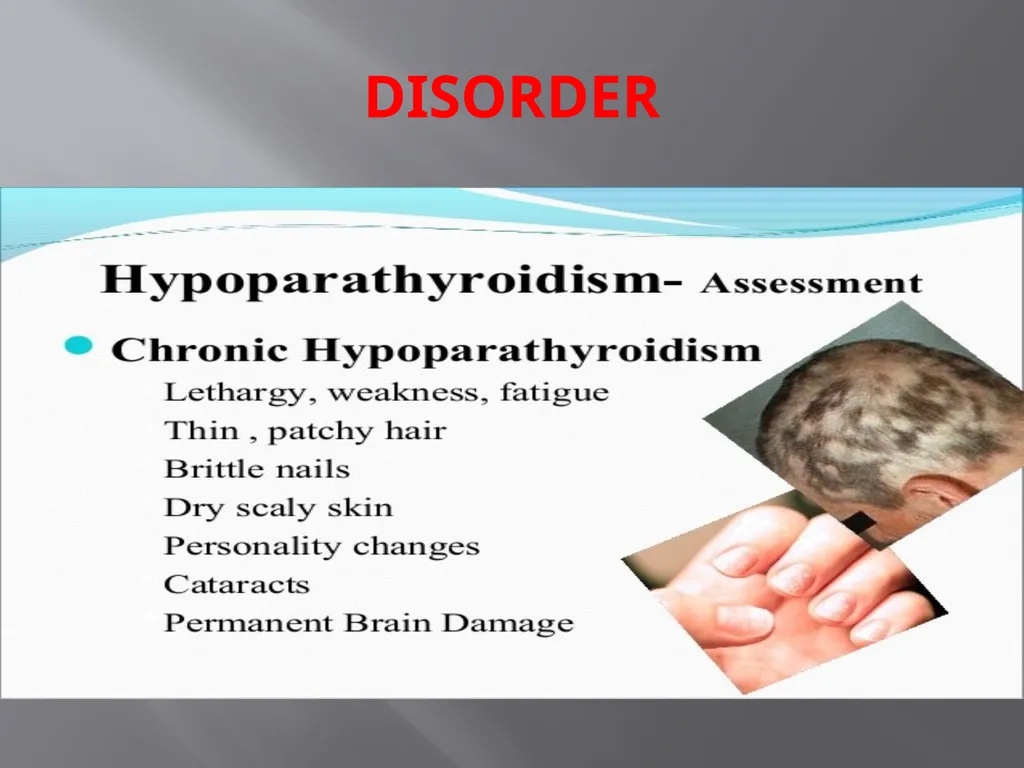
slide39. DISORDER<br>
slide40. THANKS<br>
slide3. HORMONAL DYSFUNCTIONS: Hypersecretion = Grave’s disease
Elevated metabolic rate, sweating, rapid, irregular heartbeat,
nervousness, weight loss despite adequate food intake, and
exopthalmos (protrusion of the eyeballs).
Corrected by removal of thyroid gland or ingestion of radioactive iodine to destroy the most active thyroid cells.<br>
slide4. HYPOSECRETION Hyposecretion
In infants = cretinism
o Mental retardation
o Short, disproportionately sized body Thick tongue and neck
o Due to a genetic deficiency of the fetal thyroid gland or a maternal deficiency of dietary iodine
o Reversible, with early detection
o Developmental abnormalities are irreversible<br>
slide5. HYPOSERETION In adults = myxedema
o Low metabolic rate
o Chills and constipation
o Thick, dry skin and puffy eyes
o Edema
o Lethargy and mental sluggishness (not retardation)
o Results from lack of iodine
o Enlargement and protrusion of thyroid gland = endemic
Goiter
Colloid production normal; can’t iodinate it or make
functional TH<br>
slide7. CALCITONIN Calcitonin – lowers blood Ca2+ concentration levels
o Produced by the parafollicular cells (or C cells)
o Direct antagonist of parathyroid hormone
o Targets the skeleton
Inhibits osteoclast activity, bone resorption and release of calcium ions from the bone matrix.
Stimulates calcium ion uptake and incorporation into bone matrix
Especially important in growing children; less important in adults
o Control of calcitonin release
Regulation short lived, but rapid
Excessive blood levels of Ca2+ (20% above normal) = release of calcitonin
Low Ca2+ blood levels inhibit calcitonin secretion<br>
slide8. GOITER Goiter is an enlargement of the thyroid gland from a noncancerous origin. Most commonly, goiter will arise in patients who have an iodine deficiency in their diet. This, of course, is a bit more common in places in the world where foods are not rich enough in iodine, or in women over the age of forty who are likelier to develop a goiter. The symptoms of goiter include swelling or tightness of the neck, breathing and swallowing difficulties, hoarseness of the voice, and wheezing. Typically, these clinical signs will only show when a patient’s thyroid has grown large enough. Goiter will be treated either with radioactive iodine doses or surgery.<br>
slide9. Hashimoto’s Disease Hashimoto’s disease is another thyroid disorder that is the most common cause of hypothyroidism in the U.S. The illness arises when a patient’s own immune system mistakenly attacks its own thyroid gland. This will, of course, comprise its ability to make hormones. The most common signs are fatigue, mild weight gain, dry skin and hair, depression, pale skin, and an enlarged goiter. Its cure is yet unknown.<br>
slide10. Grave’s Disease Grave’s disease is the most common cause of hyperthyroidism and is the foil of Hashimoto’s disease in that it arises from the patient’s immune system attacking its own thyroid gland. In this case, it will lead it to make more thyroid hormone than normal. The resulting symptoms may include anxiety, fatigue, hand tremors, excessive sweating, trouble sleeping, diarrhea, goiter, and bulging eyes or vision impairment. This condition will be treated with beta blockers that will slow the heart rate, as well as anxiety and anti-thyroid medications along with radioactive iodine.<br>
slide11. Thyroid Nodules Lastly, thyroid nodules are growths that form on the thyroid gland and may result from either Hashimoto’s disease or a lack of iodine. The nodules are mostly benign but can also become cancerous. The many signs it displays may include a high heart rate, nervousness, tremors, weight loss, and a big appetite.<br>
slide39. DISORDER<br>
slide40. THANKS<br>