
TOPIC – LAND REFORMS IN INDIA YEAR- SECOND

TOPIC – LAND REFORMS IN INDIA YEAR- SECOND

1 / 1
TOPIC – LAND REFORMS IN INDIA YEAR- SECOND - slide 1 of 6 TOPIC – LAND REFORMS IN INDIA YEAR- SECOND - slide 2 of 6 TOPIC – LAND REFORMS IN INDIA YEAR- SECOND - slide 3 of 6 TOPIC – LAND REFORMS IN INDIA YEAR- SECOND - slide 4 of 6 TOPIC – LAND REFORMS IN INDIA YEAR- SECOND - slide 5 of 6 TOPIC – LAND REFORMS IN INDIA YEAR- SECOND - slide 6 of 6


TOPIC LAND REFORMS IN INDIA YEAR- SECOND SEMESTER-3 SESSION -2021-2022 PAPER NAME BASIC FEATURES OF INDIAN ECONOMY PREPARED BY DR. KAMALIKA CHAKRABORTY ASSISTANT PROFESSOR (DEPARTMENT OF ECONOMICS) KHATRA ADIBASI MAHAVIDYALAYA, BANKURA,

Related Topics

Download this presentation From Below

"TOPIC – LAND REFORMS IN INDIA YEAR- SECOND" is the property of its rightful owner. Permission is granted to download and print the materials on this website for personal, non-commercial use only, and to display it on your personal computer provided you do not modify the materials and that you retain all copyright notices contained in the materials. By downloading content from our website, you accept the terms of this agreement.

Presentation Transcript

01
TOPIC – LAND REFORMS IN INDIA
YEAR- SECOND SEMESTER-3 SESSION -2021-2022 PAPER NAME – BASIC FEATURES OF INDIAN ECONOMY PREPARED BY
DR. KAMALIKA CHAKRABORTY
ASSISTANT PROFESSOR (DEPARTMENT OF ECONOMICS)
KHATRA ADIBASI MAHAVIDYALAYA, BANKURA, WEST BENGAL DATE OF LECTURE: 29/10/2021 COURSE: B.Sc. (PROGRAMME) IN ECONOMICS<br>
02
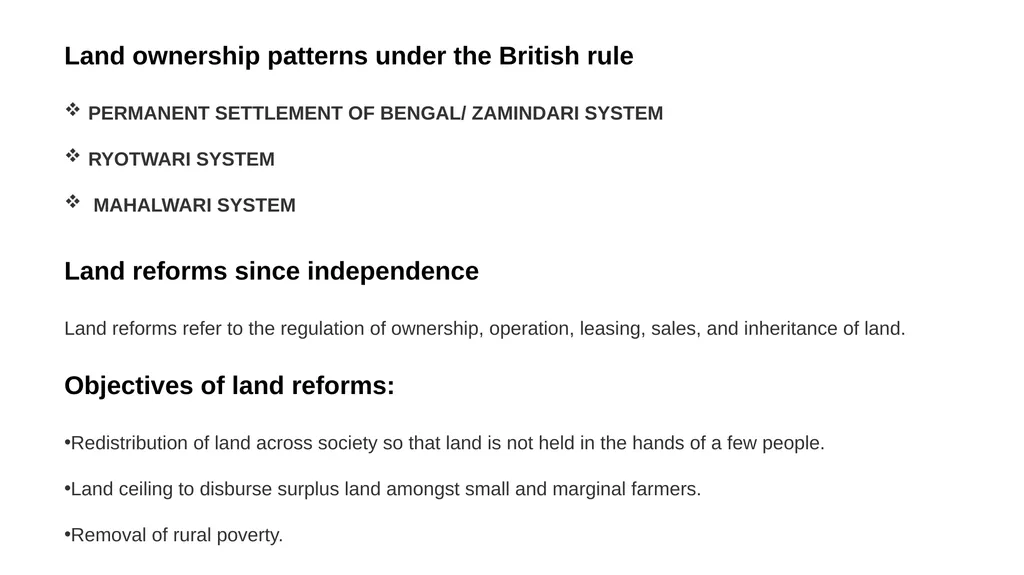
Land ownership patterns under the British rule

PERMANENT SETTLEMENT OF BENGAL/ ZAMINDARI SYSTEM

RYOTWARI SYSTEM

MAHALWARI SYSTEM Land reforms since independence

Land reforms refer to the regulation of ownership, operation, leasing, sales, and inheritance of land. Objectives of land reforms:

Redistribution of land across society so that land is not held in the hands of a few people.

Land ceiling to disburse surplus land amongst small and marginal farmers.

Removal of rural poverty.<br>
03
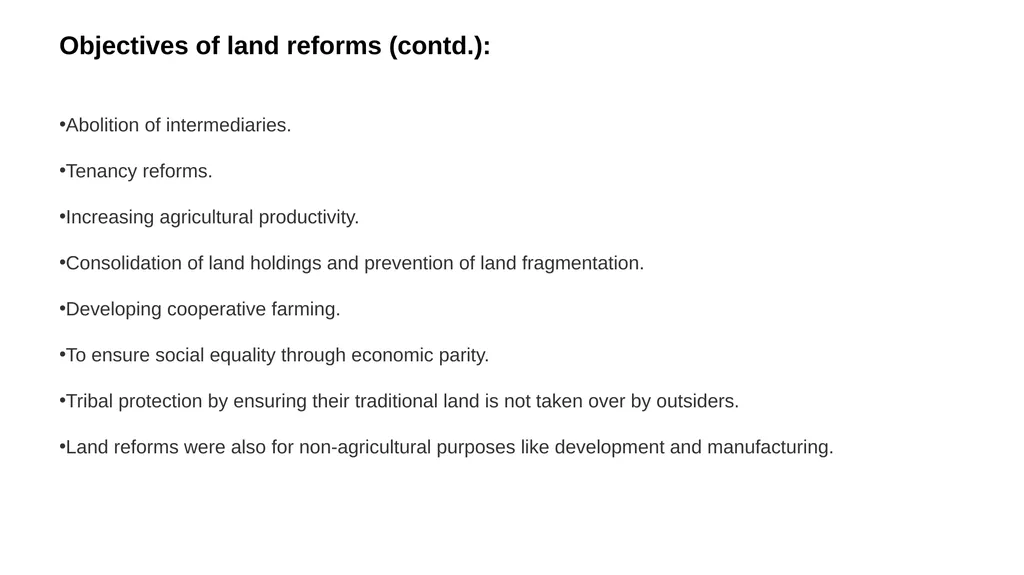
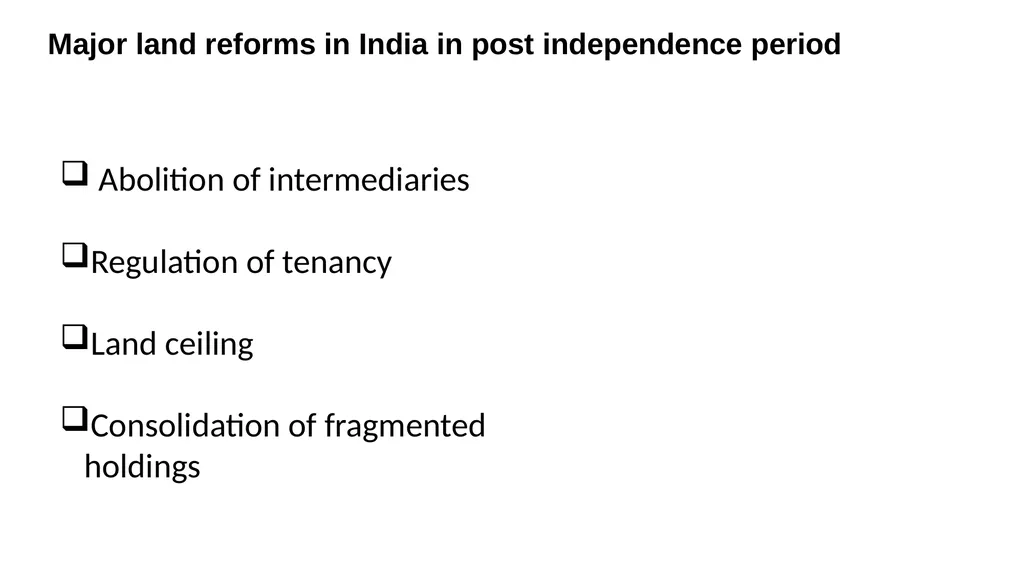
Objectives of land reforms (contd.): Abolition of intermediaries.

Tenancy reforms.

Increasing agricultural productivity.

Consolidation of land holdings and prevention of land fragmentation.

Developing cooperative farming.

To ensure social equality through economic parity.

Tribal protection by ensuring their traditional land is not taken over by outsiders.

Land reforms were also for non-agricultural purposes like development and manufacturing.<br>