
TOPOLOGY in computer networking What is topology

Published  . 0 views
↓ Download
TOPOLOGY in computer networking What is topology
1 / 1
TOPOLOGY in computer networking What is topology - slide 1 of 10 TOPOLOGY in computer networking What is topology - slide 2 of 10 TOPOLOGY in computer networking What is topology - slide 3 of 10 TOPOLOGY in computer networking What is topology - slide 4 of 10 TOPOLOGY in computer networking What is topology - slide 5 of 10 TOPOLOGY in computer networking What is topology - slide 6 of 10 TOPOLOGY in computer networking What is topology - slide 7 of 10 TOPOLOGY in computer networking What is topology - slide 8 of 10 TOPOLOGY in computer networking What is topology - slide 9 of 10 TOPOLOGY in computer networking What is topology - slide 10 of 10


Description: TOPOLOGY in computer networking What is topology in computer networking? A network topology is the physical and logical arrangement of nodes and connections in a network. Nodes usually include devices such as switches, routers and software

Related Topics

Download Presentation

"TOPOLOGY in computer networking What is topology" is the property of its rightful owner. Permission is granted to download and print the materials on this website for personal, non-commercial use only, and to display it on your personal computer provided you do not modify the materials and that you retain all copyright notices contained in the materials. By downloading content from our website, you accept the terms of this agreement.

Presentation Transcript

slide1. TOPOLOGY in computer networking<br>
slide2. What is topology in computer networking? A network topology is the physical and logical arrangement of nodes and connections in a network.

Nodes usually include devices such as switches, routers and software with switch and router features. Network topologies are often represented as a graph.<br>
slide3. Types of Network topologies Network topologies are categorized as either a physical network topology and logical network topology

Physical network topology The physical topology of a network is the physical layout of the nodes and connections.

logical network topology Logical network topologies define how a network is set up, including which nodes connect and how, as well as the pattern of data transfers.<br>
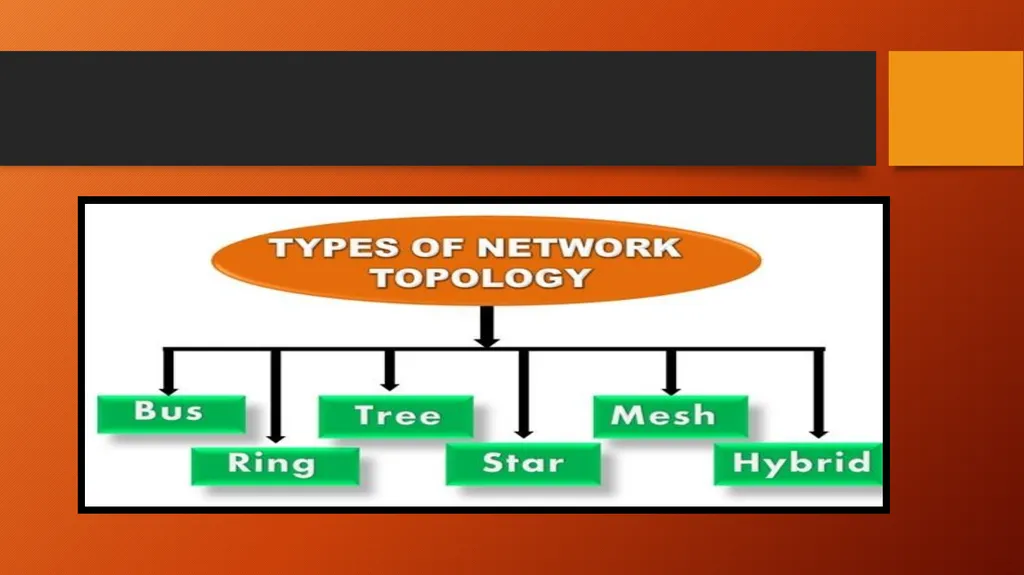
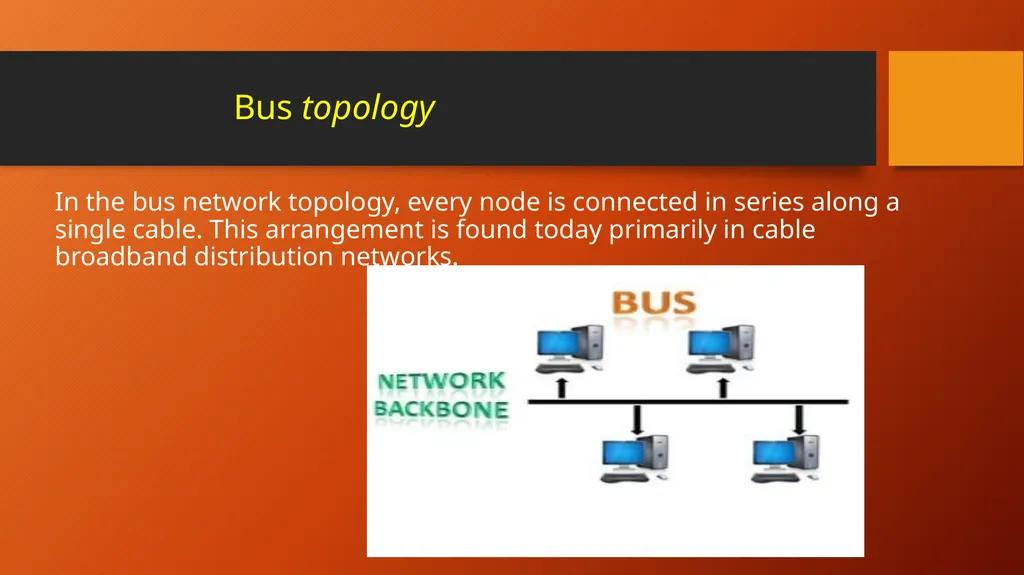
slide5. Bus topology In the bus network topology, every node is connected in series along a single cable. This arrangement is found today primarily in cable broadband distribution networks.<br>
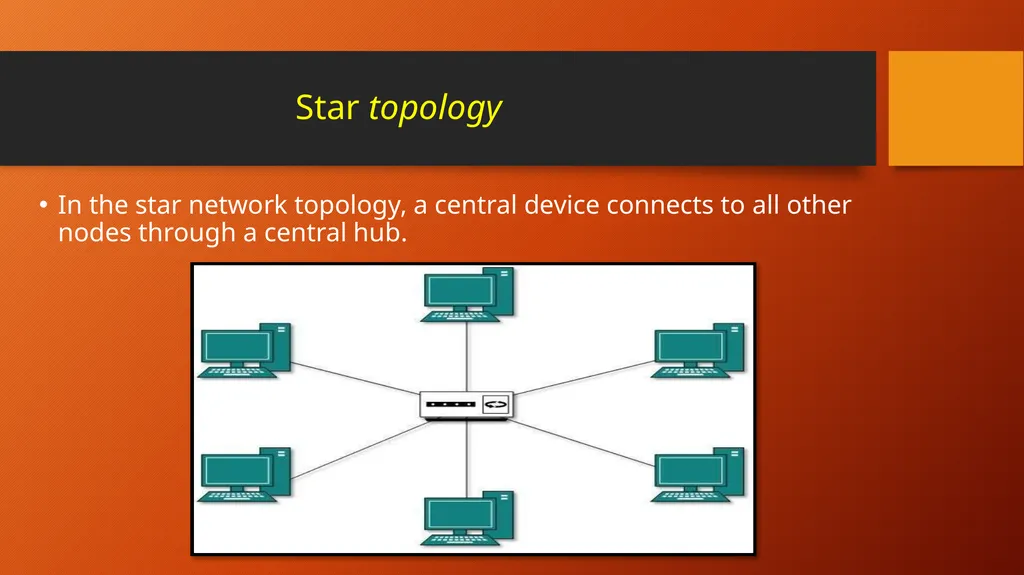
slide6. Star topology In the star network topology, a central device connects to all other nodes through a central hub.<br>
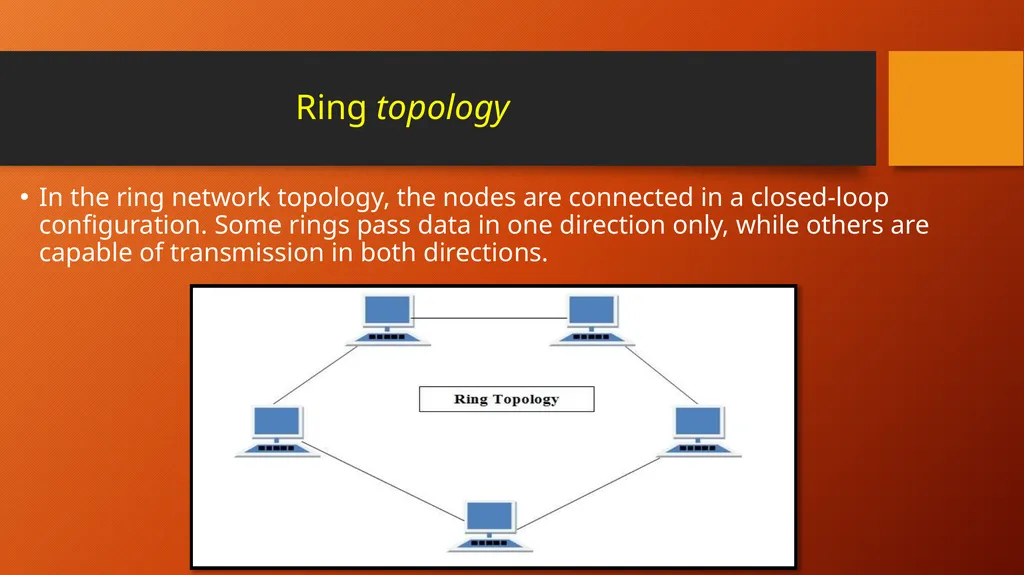
slide7. Ring topology In the ring network topology, the nodes are connected in a closed-loop configuration. Some rings pass data in one direction only, while others are capable of transmission in both directions.<br>
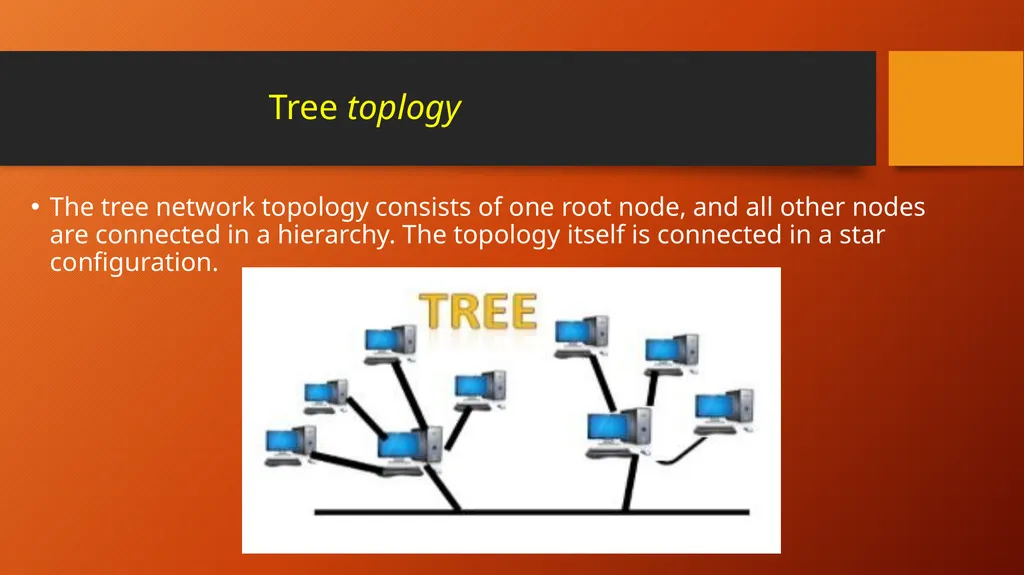
slide8. Tree toplogy The tree network topology consists of one root node, and all other nodes are connected in a hierarchy. The topology itself is connected in a star configuration.<br>
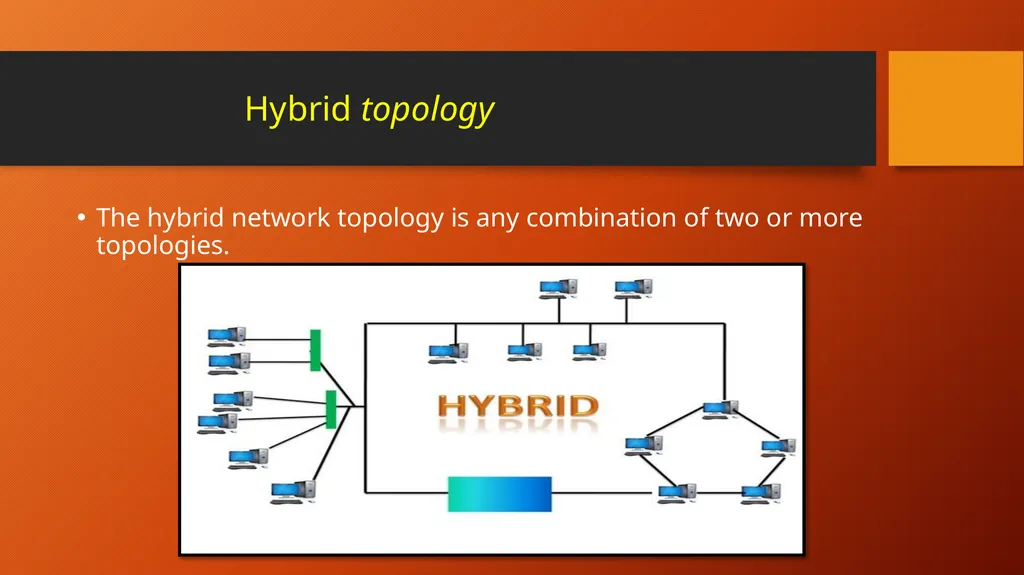
slide9. Hybrid topology The hybrid network topology is any combination of two or more topologies.<br>
slide10. Conclusion Network topology plays a major role in how a network functions. Namely, the topology has a direct effect on network functionality. Choosing the right topology can help increase performance, as a properly chosen and maintained network topology increases energy efficiency and data transfer rates.<br>