
TOXICOLOGY B. Sc. THIRD YEAR PAPER – i


Description: TOXICOLOGY B. Sc. THIRD YEAR PAPER i INTRODUCTION TO TOXICOLOGY - Outline What is Toxicology Scope Basic divisions of toxicology Goals Concepts - Types of Toxicants Toxicology Formerly The Science of Poisons Now The science that deals
Related Topics
Download Presentation
"TOXICOLOGY B. Sc. THIRD YEAR PAPER – i" is the property of its rightful owner. Permission is granted to download and print the materials on this website for personal, non-commercial use only, and to display it on your personal computer provided you do not modify the materials and that you retain all copyright notices contained in the materials. By downloading content from our website, you accept the terms of this agreement.
Presentation Transcript
slide1. TOXICOLOGY B. Sc. THIRD YEAR
PAPER – i<br>
slide2. INTRODUCTION TO TOXICOLOGY - Outline What is Toxicology
Scope
Basic divisions of toxicology
Goals
Concepts - Types of Toxicants<br>
slide3. Toxicology Formerly The Science of Poisons
Now
The science that deals with the adverse effects of chemicals on living organisms and assesses the probability of their occurrence
Toxicology term derived from
Toxicon – arrow (poison)
logos – study
Scientifically speaking, toxicology is the quantitative and qualitative study of the adverse or toxic effects of chemicals and other anthropogenic materials or xenobiotic on organisms.
Toxicology is the youngest science of poisons<br>
slide4. Definition of toxicology
• The study of the adverse effects of a toxicant on living organisms.
Adverse effects may be
• any change from an organism’s normal state
• dependent upon the concentration of active compound at the target site for a
sufficient time.
• Toxicant
• any agent capable of producing a deleterious response in a biological system
• Living organism
• a „sac of water” with target sites, storage depots and enzymes<br>
slide5. Toxicology is both
Science , like medicine and
An art, like practise
It is one of the several multi disciplinary fields of environmental sciences where many disciplines are common with other fields
It is concern with the study of concentrations, transport, distribution , transformation and the ultimate fate of toxins and chemicals in the environment.
It is essential to understand the chemical reactions (eg. Hydrolysis, oxidation, photolysis), physical (eg. Molecular structure, solubility, volatility and sorption) and biological (eg. Biotransformation, accumulation, biomagnification) factors that affect environmental concentration of chemicals in order to assess how toxic agents act in environment and how environment act and try to neutralize these agents and impact on living beings.
Environmental toxicology: The study of the effects of pollutants on organisms, populations, ecosystems, and the biosphere. SCOPE OF TOXICOLOGY<br>
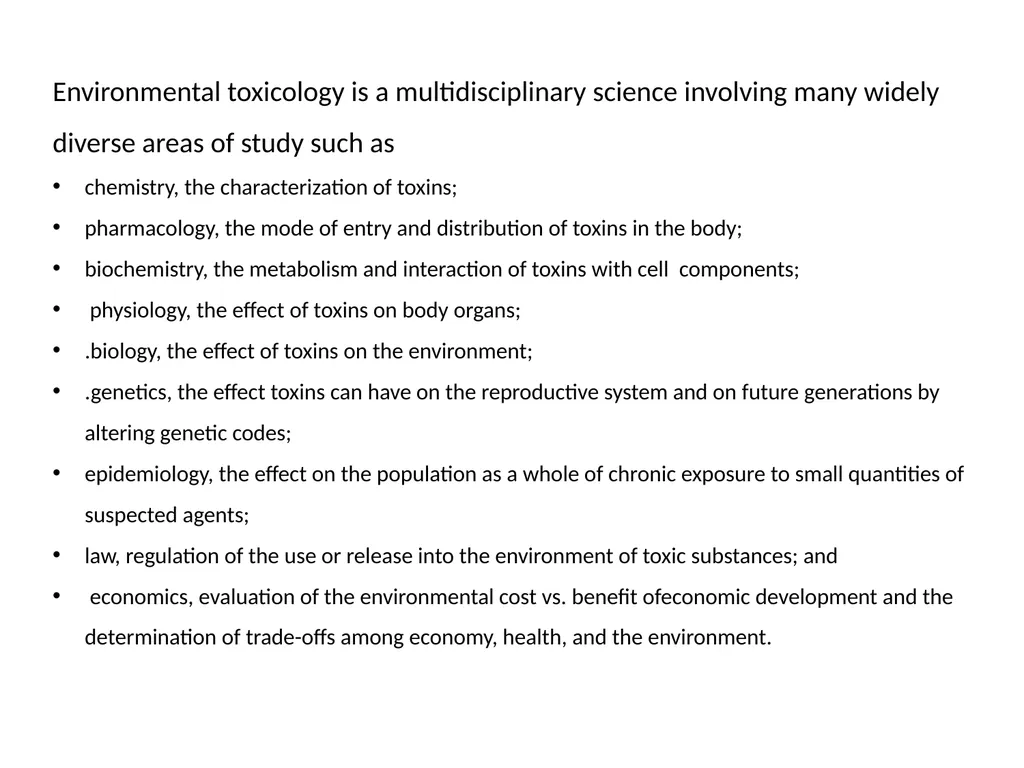
slide6. Environmental toxicology is a multidisciplinary science involving many widely diverse areas of study such as
chemistry, the characterization of toxins;
pharmacology, the mode of entry and distribution of toxins in the body;
biochemistry, the metabolism and interaction of toxins with cell components;
physiology, the effect of toxins on body organs;
.biology, the effect of toxins on the environment;
.genetics, the effect toxins can have on the reproductive system and on future generations by altering genetic codes;
epidemiology, the effect on the population as a whole of chronic exposure to small quantities of suspected agents;
law, regulation of the use or release into the environment of toxic substances; and
economics, evaluation of the environmental cost vs. benefit ofeconomic development and the determination of trade-offs among economy, health, and the environment.<br>
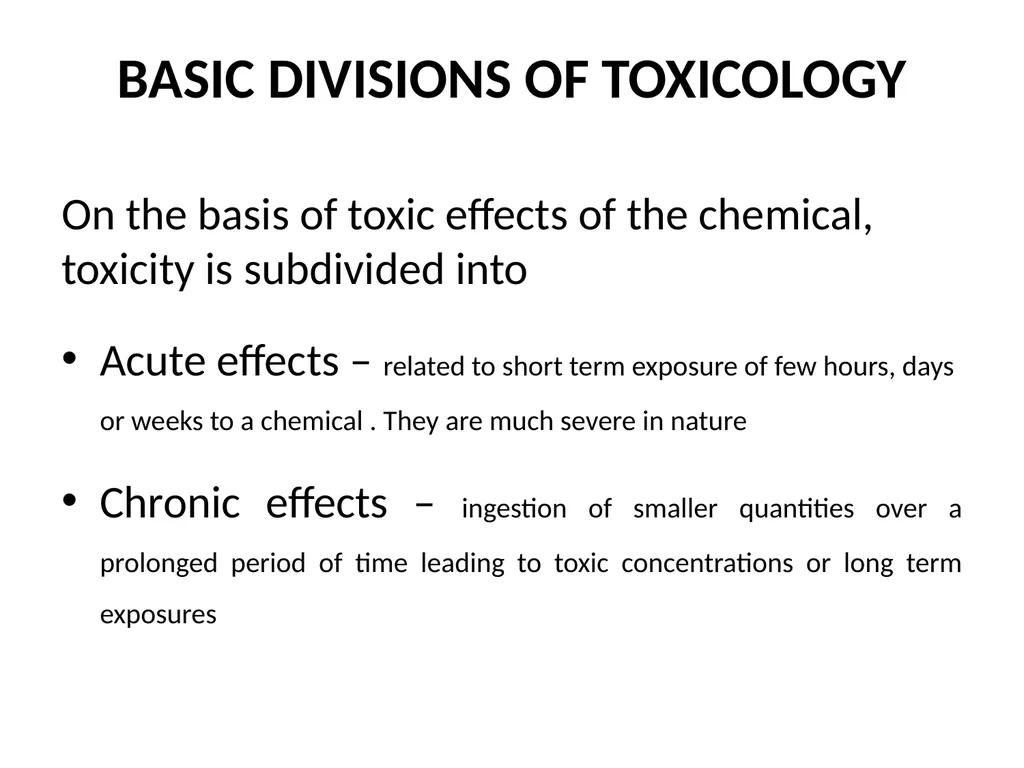
slide7. BASIC DIVISIONS OF TOXICOLOGY On the basis of toxic effects of the chemical, toxicity is subdivided into
Acute effects – related to short term exposure of few hours, days or weeks to a chemical . They are much severe in nature
Chronic effects – ingestion of smaller quantities over a prolonged period of time leading to toxic concentrations or long term exposures<br>
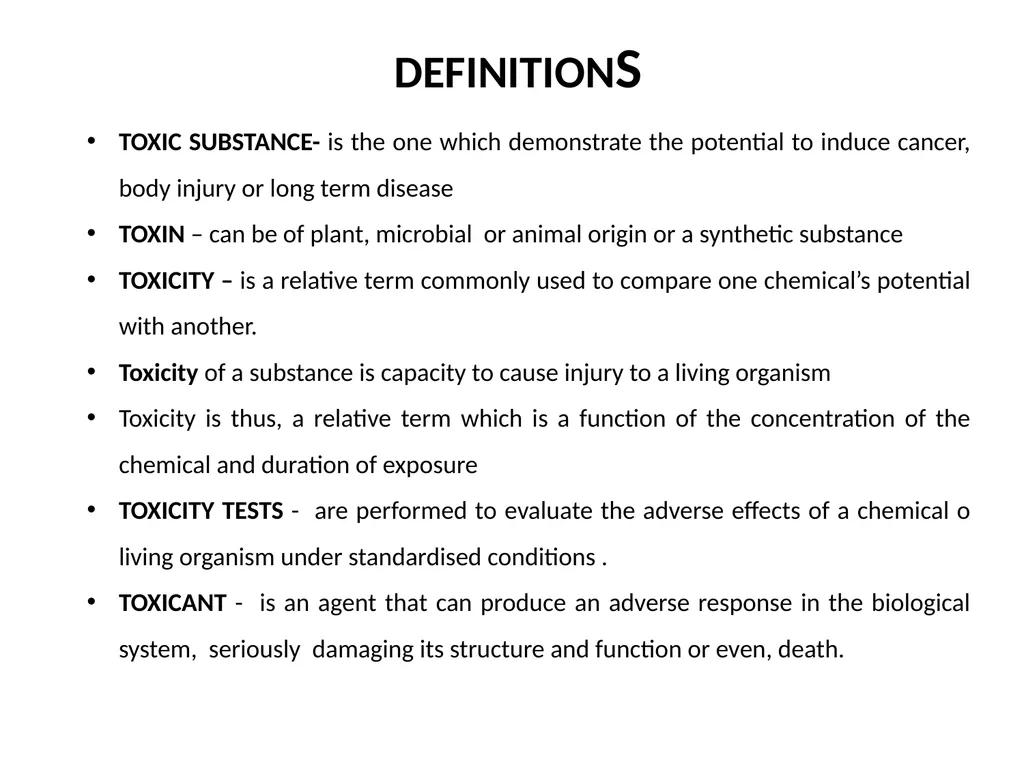
slide8. DEFINITIONS TOXIC SUBSTANCE- is the one which demonstrate the potential to induce cancer, body injury or long term disease
TOXIN – can be of plant, microbial or animal origin or a synthetic substance
TOXICITY – is a relative term commonly used to compare one chemical’s potential with another.
Toxicity of a substance is capacity to cause injury to a living organism
Toxicity is thus, a relative term which is a function of the concentration of the chemical and duration of exposure
TOXICITY TESTS - are performed to evaluate the adverse effects of a chemical o living organism under standardised conditions .
TOXICANT - is an agent that can produce an adverse response in the biological system, seriously damaging its structure and function or even, death.<br>
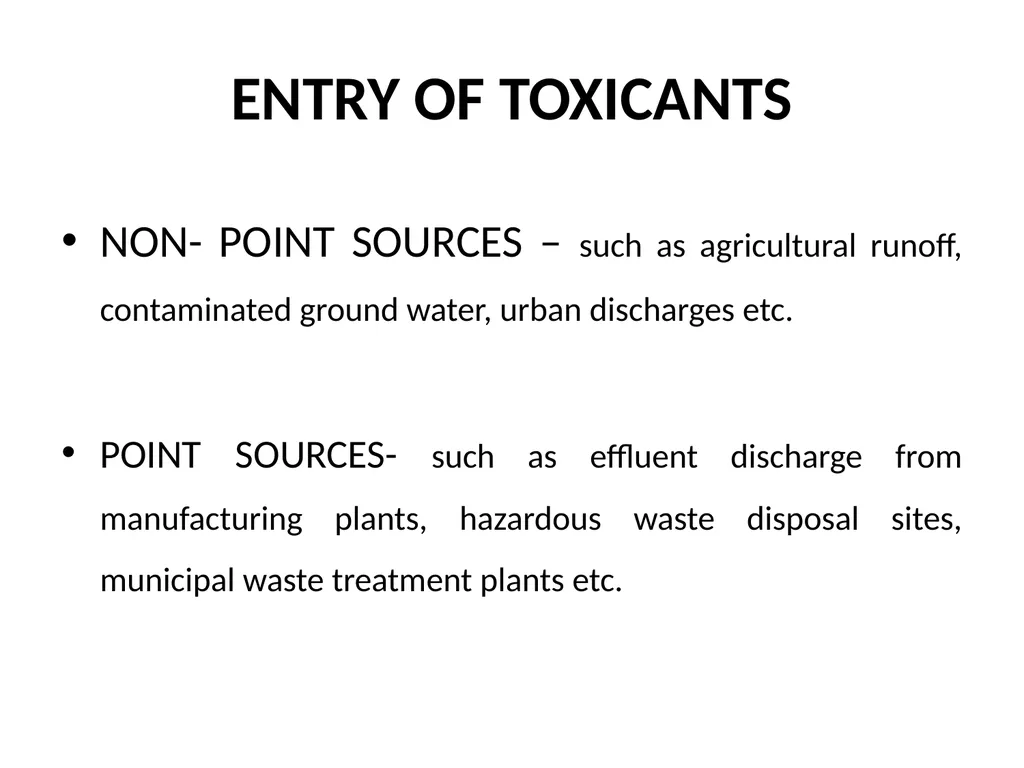
slide9. ENTRY OF TOXICANTS NON- POINT SOURCES – such as agricultural runoff, contaminated ground water, urban discharges etc.
POINT SOURCES- such as effluent discharge from manufacturing plants, hazardous waste disposal sites, municipal waste treatment plants etc.<br>
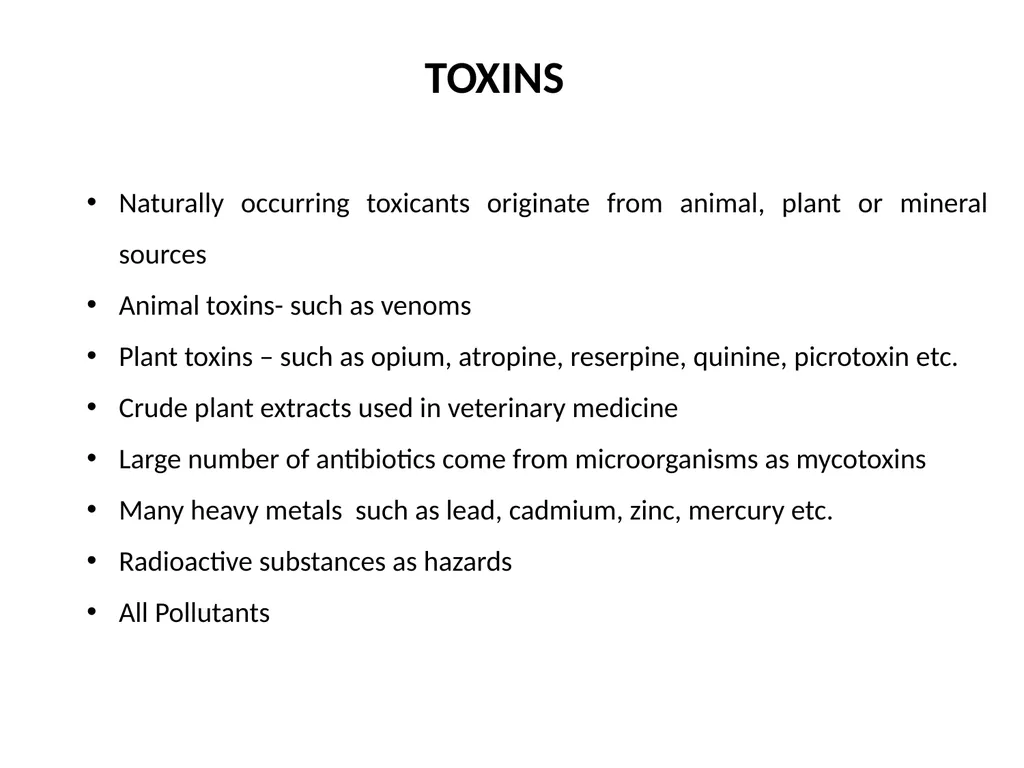
slide10. TOXINS Naturally occurring toxicants originate from animal, plant or mineral sources
Animal toxins- such as venoms
Plant toxins – such as opium, atropine, reserpine, quinine, picrotoxin etc.
Crude plant extracts used in veterinary medicine
Large number of antibiotics come from microorganisms as mycotoxins
Many heavy metals such as lead, cadmium, zinc, mercury etc.
Radioactive substances as hazards
All Pollutants<br>
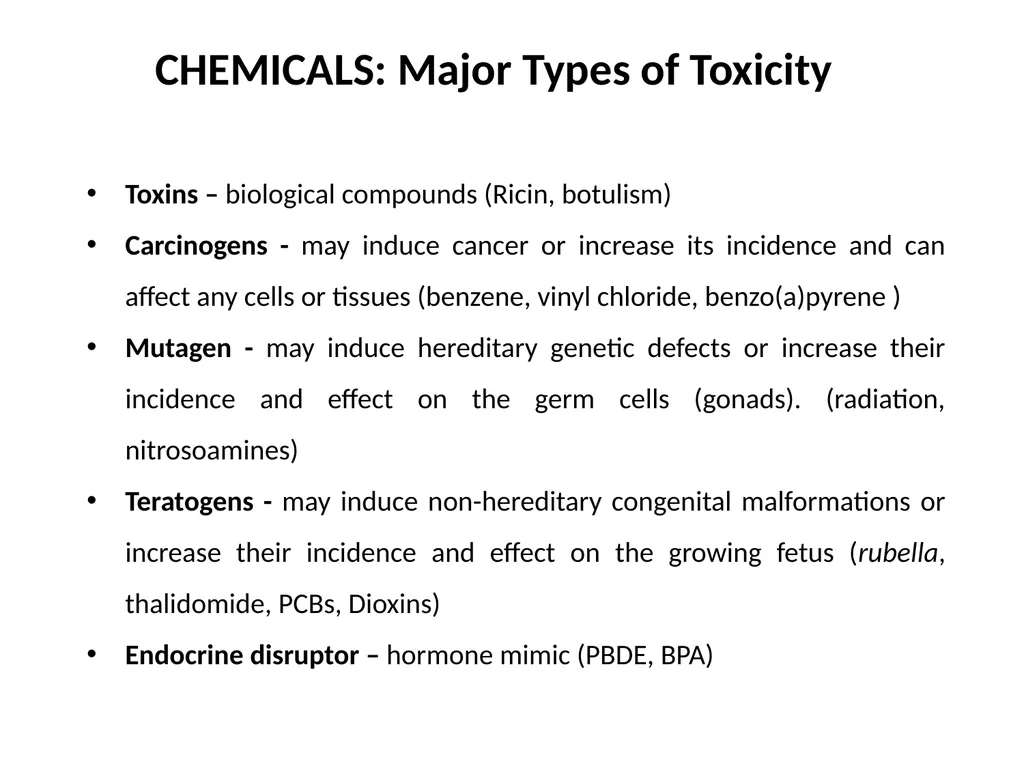
slide11. Toxins – biological compounds (Ricin, botulism)
Carcinogens - may induce cancer or increase its incidence and can affect any cells or tissues (benzene, vinyl chloride, benzo(a)pyrene )
Mutagen - may induce hereditary genetic defects or increase their incidence and effect on the germ cells (gonads). (radiation, nitrosoamines)
Teratogens - may induce non-hereditary congenital malformations or increase their incidence and effect on the growing fetus (rubella, thalidomide, PCBs, Dioxins)
Endocrine disruptor – hormone mimic (PBDE, BPA) CHEMICALS: Major Types of Toxicity<br>
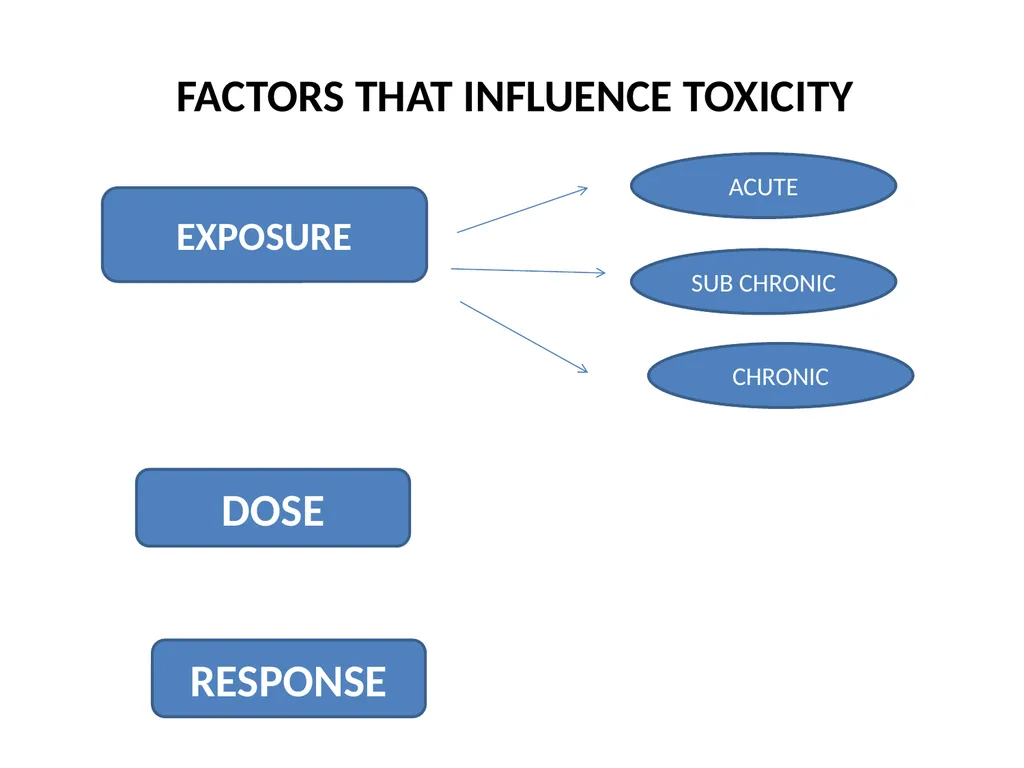
slide12. FACTORS THAT INFLUENCE TOXICITY EXPOSURE ACUTE SUB CHRONIC CHRONIC DOSE RESPONSE<br>
PAPER – i<br>
slide2. INTRODUCTION TO TOXICOLOGY - Outline What is Toxicology
Scope
Basic divisions of toxicology
Goals
Concepts - Types of Toxicants<br>
slide3. Toxicology Formerly The Science of Poisons
Now
The science that deals with the adverse effects of chemicals on living organisms and assesses the probability of their occurrence
Toxicology term derived from
Toxicon – arrow (poison)
logos – study
Scientifically speaking, toxicology is the quantitative and qualitative study of the adverse or toxic effects of chemicals and other anthropogenic materials or xenobiotic on organisms.
Toxicology is the youngest science of poisons<br>
slide4. Definition of toxicology
• The study of the adverse effects of a toxicant on living organisms.
Adverse effects may be
• any change from an organism’s normal state
• dependent upon the concentration of active compound at the target site for a
sufficient time.
• Toxicant
• any agent capable of producing a deleterious response in a biological system
• Living organism
• a „sac of water” with target sites, storage depots and enzymes<br>
slide5. Toxicology is both
Science , like medicine and
An art, like practise
It is one of the several multi disciplinary fields of environmental sciences where many disciplines are common with other fields
It is concern with the study of concentrations, transport, distribution , transformation and the ultimate fate of toxins and chemicals in the environment.
It is essential to understand the chemical reactions (eg. Hydrolysis, oxidation, photolysis), physical (eg. Molecular structure, solubility, volatility and sorption) and biological (eg. Biotransformation, accumulation, biomagnification) factors that affect environmental concentration of chemicals in order to assess how toxic agents act in environment and how environment act and try to neutralize these agents and impact on living beings.
Environmental toxicology: The study of the effects of pollutants on organisms, populations, ecosystems, and the biosphere. SCOPE OF TOXICOLOGY<br>
slide6. Environmental toxicology is a multidisciplinary science involving many widely diverse areas of study such as
chemistry, the characterization of toxins;
pharmacology, the mode of entry and distribution of toxins in the body;
biochemistry, the metabolism and interaction of toxins with cell components;
physiology, the effect of toxins on body organs;
.biology, the effect of toxins on the environment;
.genetics, the effect toxins can have on the reproductive system and on future generations by altering genetic codes;
epidemiology, the effect on the population as a whole of chronic exposure to small quantities of suspected agents;
law, regulation of the use or release into the environment of toxic substances; and
economics, evaluation of the environmental cost vs. benefit ofeconomic development and the determination of trade-offs among economy, health, and the environment.<br>
slide7. BASIC DIVISIONS OF TOXICOLOGY On the basis of toxic effects of the chemical, toxicity is subdivided into
Acute effects – related to short term exposure of few hours, days or weeks to a chemical . They are much severe in nature
Chronic effects – ingestion of smaller quantities over a prolonged period of time leading to toxic concentrations or long term exposures<br>
slide8. DEFINITIONS TOXIC SUBSTANCE- is the one which demonstrate the potential to induce cancer, body injury or long term disease
TOXIN – can be of plant, microbial or animal origin or a synthetic substance
TOXICITY – is a relative term commonly used to compare one chemical’s potential with another.
Toxicity of a substance is capacity to cause injury to a living organism
Toxicity is thus, a relative term which is a function of the concentration of the chemical and duration of exposure
TOXICITY TESTS - are performed to evaluate the adverse effects of a chemical o living organism under standardised conditions .
TOXICANT - is an agent that can produce an adverse response in the biological system, seriously damaging its structure and function or even, death.<br>
slide9. ENTRY OF TOXICANTS NON- POINT SOURCES – such as agricultural runoff, contaminated ground water, urban discharges etc.
POINT SOURCES- such as effluent discharge from manufacturing plants, hazardous waste disposal sites, municipal waste treatment plants etc.<br>
slide10. TOXINS Naturally occurring toxicants originate from animal, plant or mineral sources
Animal toxins- such as venoms
Plant toxins – such as opium, atropine, reserpine, quinine, picrotoxin etc.
Crude plant extracts used in veterinary medicine
Large number of antibiotics come from microorganisms as mycotoxins
Many heavy metals such as lead, cadmium, zinc, mercury etc.
Radioactive substances as hazards
All Pollutants<br>
slide11. Toxins – biological compounds (Ricin, botulism)
Carcinogens - may induce cancer or increase its incidence and can affect any cells or tissues (benzene, vinyl chloride, benzo(a)pyrene )
Mutagen - may induce hereditary genetic defects or increase their incidence and effect on the germ cells (gonads). (radiation, nitrosoamines)
Teratogens - may induce non-hereditary congenital malformations or increase their incidence and effect on the growing fetus (rubella, thalidomide, PCBs, Dioxins)
Endocrine disruptor – hormone mimic (PBDE, BPA) CHEMICALS: Major Types of Toxicity<br>
slide12. FACTORS THAT INFLUENCE TOXICITY EXPOSURE ACUTE SUB CHRONIC CHRONIC DOSE RESPONSE<br>