
Training basics Overview of conducting effective

Description: Training basics Overview of conducting effective training 1 Objectives Participants will be able to- Apply basic principles of adult learning to training Use training methods discussed in the workshop to facilitate a training session
Related Topics
Download Presentation
"Training basics Overview of conducting effective" is the property of its rightful owner. Permission is granted to download and print the materials on this website for personal, non-commercial use only, and to display it on your personal computer provided you do not modify the materials and that you retain all copyright notices contained in the materials. By downloading content from our website, you accept the terms of this agreement.
Presentation Transcript
slide1. Training basics Overview of conducting effective training 1<br>
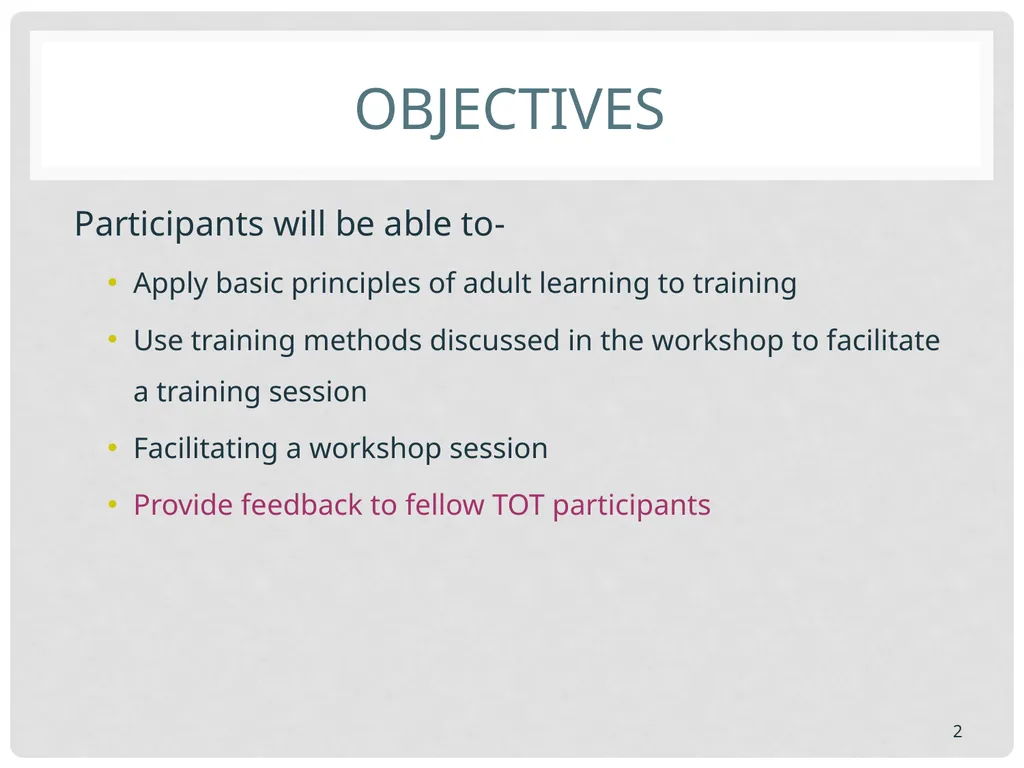
slide2. Objectives Participants will be able to-
Apply basic principles of adult learning to training
Use training methods discussed in the workshop to facilitate a training session
Facilitating a workshop session
Provide feedback to fellow TOT participants 2<br>
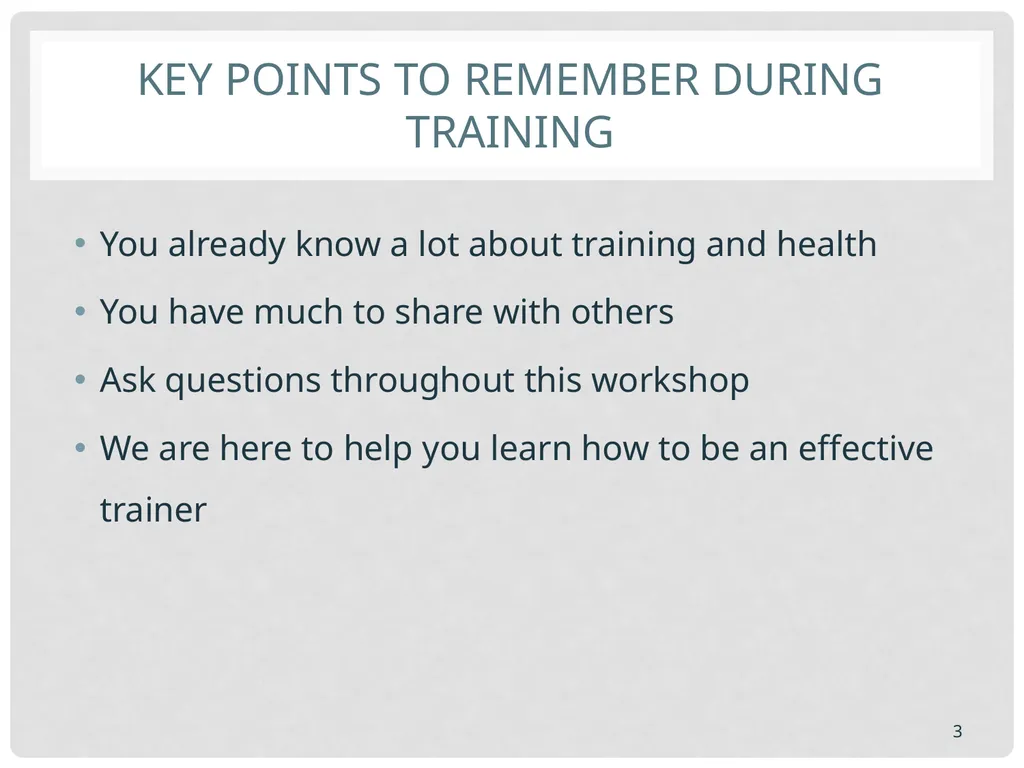
slide3. Key Points to Remember during Training You already know a lot about training and health
You have much to share with others
Ask questions throughout this workshop
We are here to help you learn how to be an effective trainer 3<br>
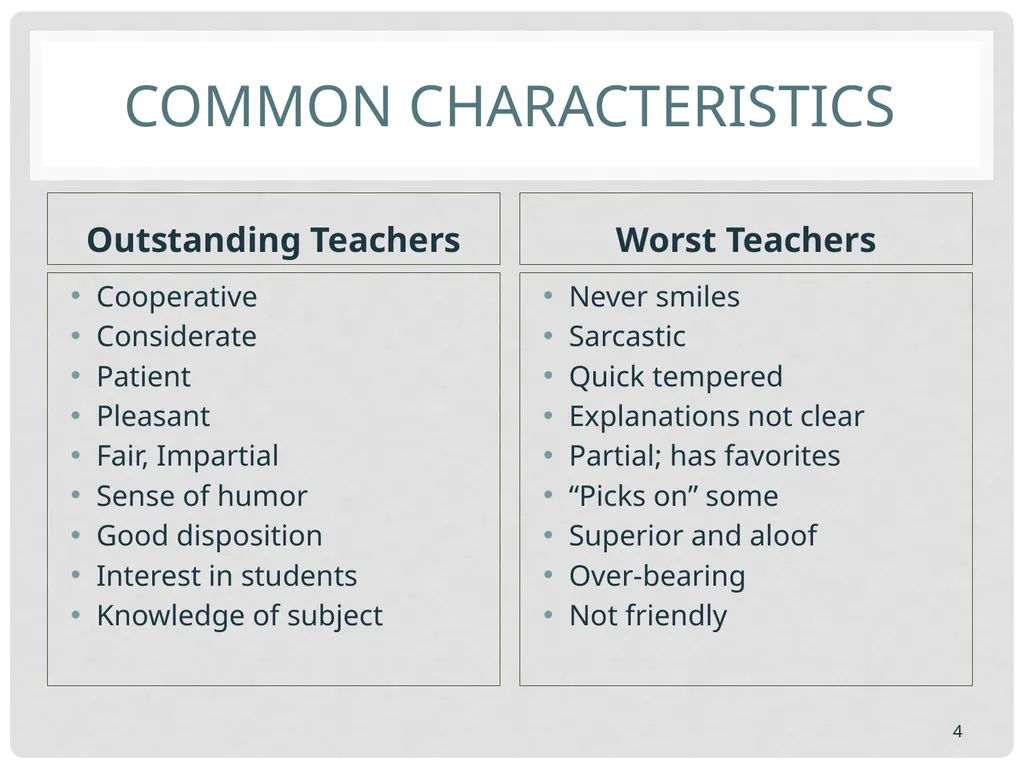
slide4. Common Characteristics Outstanding Teachers Cooperative
Considerate
Patient
Pleasant
Fair, Impartial
Sense of humor
Good disposition
Interest in students
Knowledge of subject Worst Teachers Never smiles
Sarcastic
Quick tempered
Explanations not clear
Partial; has favorites
“Picks on” some
Superior and aloof
Over-bearing
Not friendly 4<br>
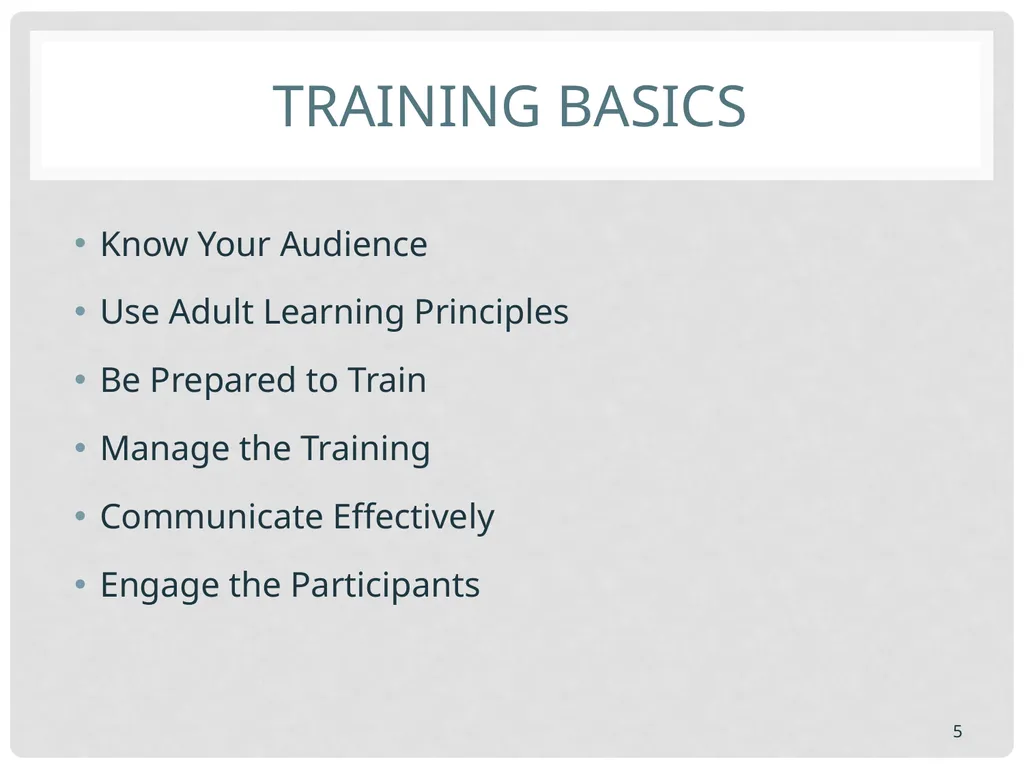
slide5. Training Basics Know Your Audience
Use Adult Learning Principles
Be Prepared to Train
Manage the Training
Communicate Effectively
Engage the Participants 5<br>
slide6. Know Your Audience 6<br>
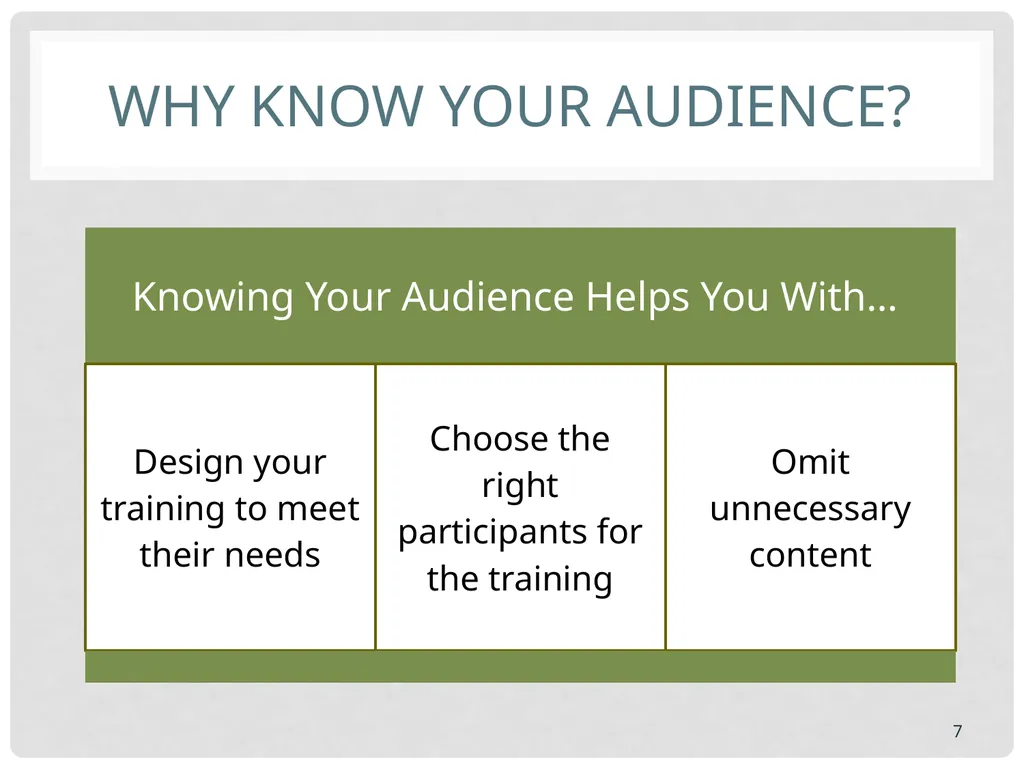
slide7. Why Know Your Audience? 7<br>
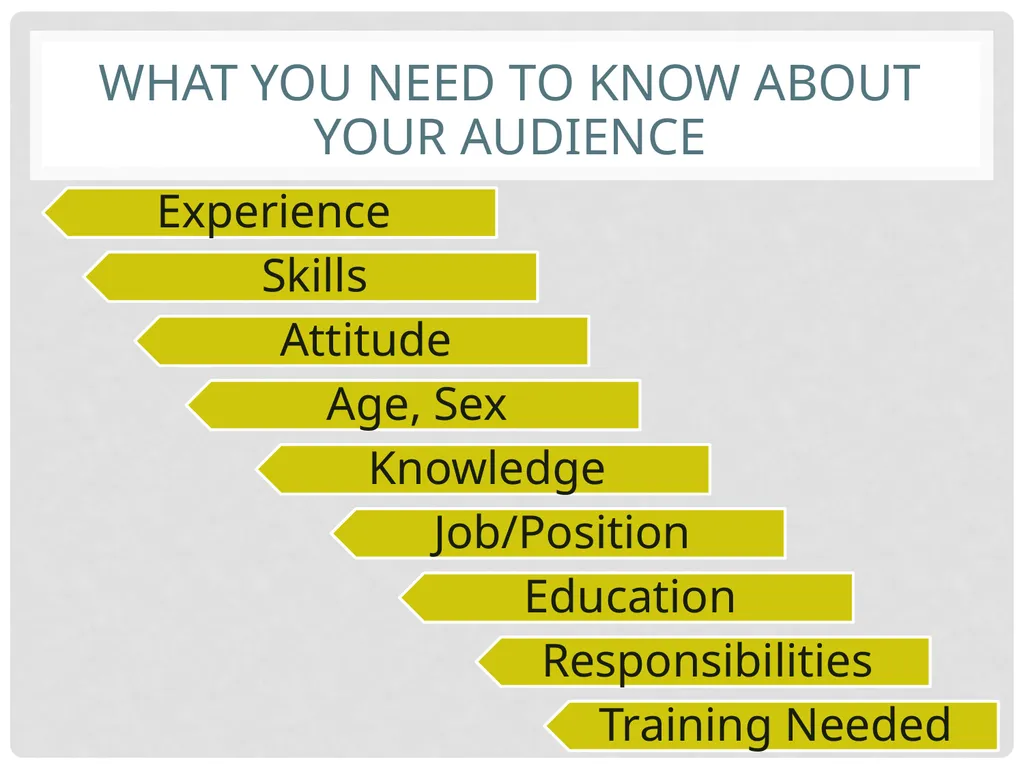
slide8. What You Need to Know About Your Audience 8<br>
slide9. Get to Know Course Participants Use a “get-to-know-you” exercise
Ask participants to share their expectations of the course
Talk with them before the training starts, during breaks, etc. 9<br>
slide10. Use Adult Learning Principles 10<br>
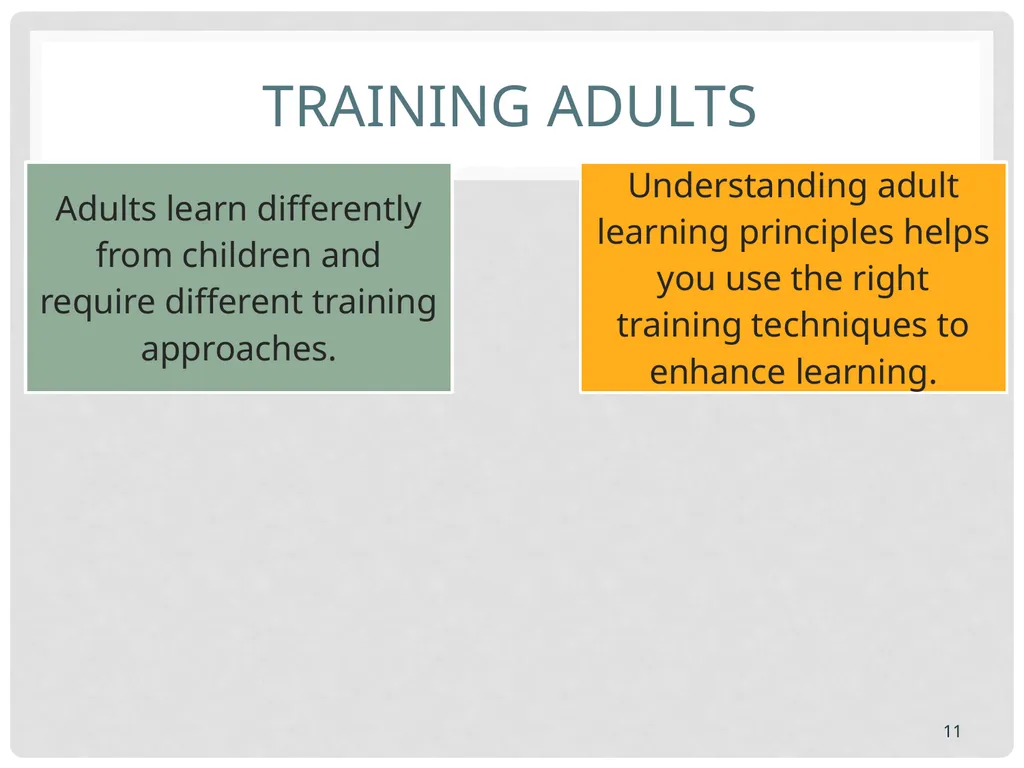
slide11. Training Adults 11<br>
slide12. Attendees learn best Under low to moderate stress; if stress is too high, it becomes a barrier to learning.
Adults are motivated by information or tasks that they find meaningful.
Listen to what they want and need, and be flexible in your planning.
Change your approach if your methods are not working.
Adults bring a great deal of experience and knowledge to any learning situation.
Safe to ask questions.
Confident that they will be respected. 12<br>
slide13. Be Prepared to Train 13<br>
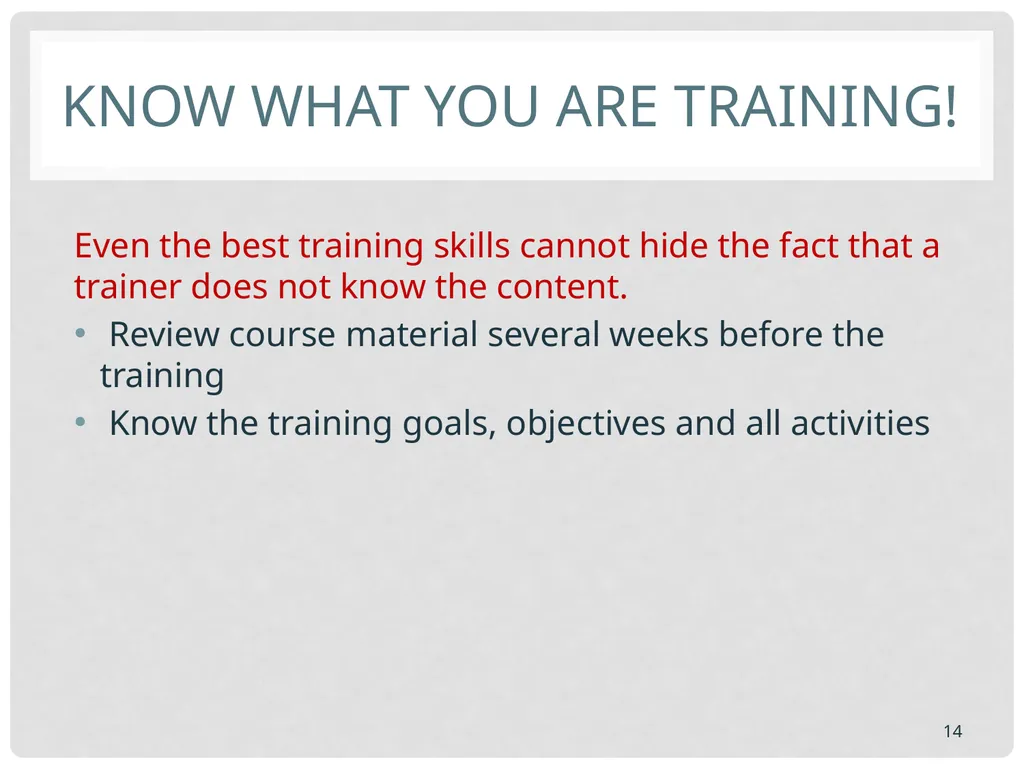
slide14. Know What You Are Training! Even the best training skills cannot hide the fact that a trainer does not know the content.
Review course material several weeks before the training
Know the training goals, objectives and all activities 14<br>
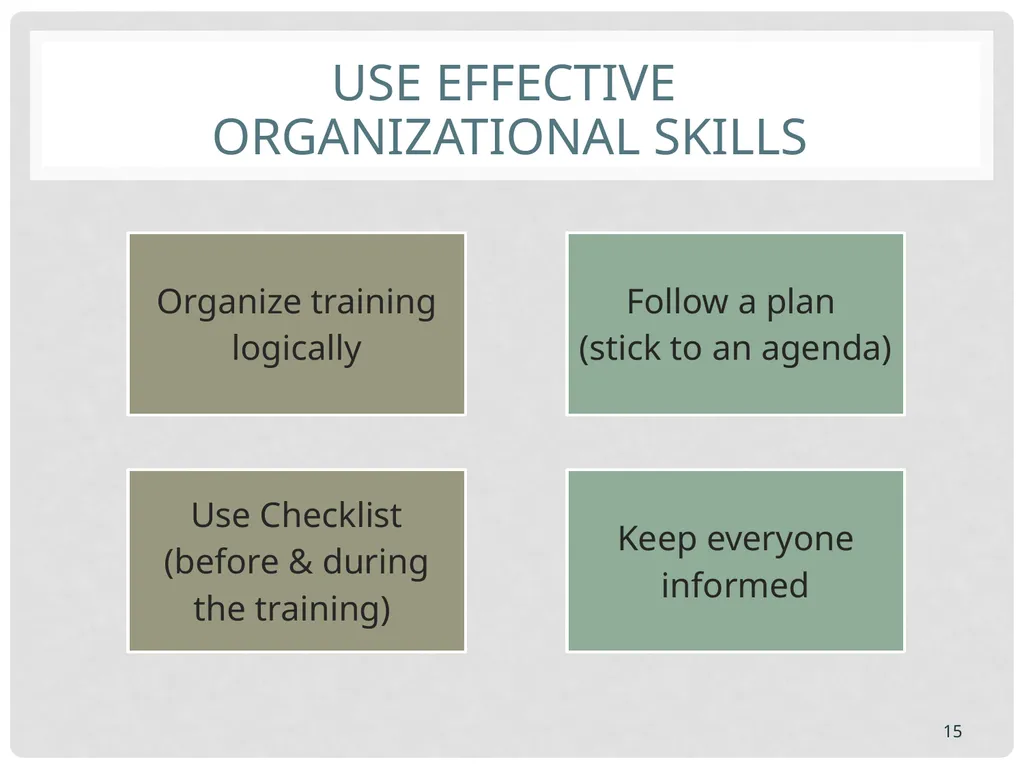
slide15. Use Effective Organizational Skills 15<br>
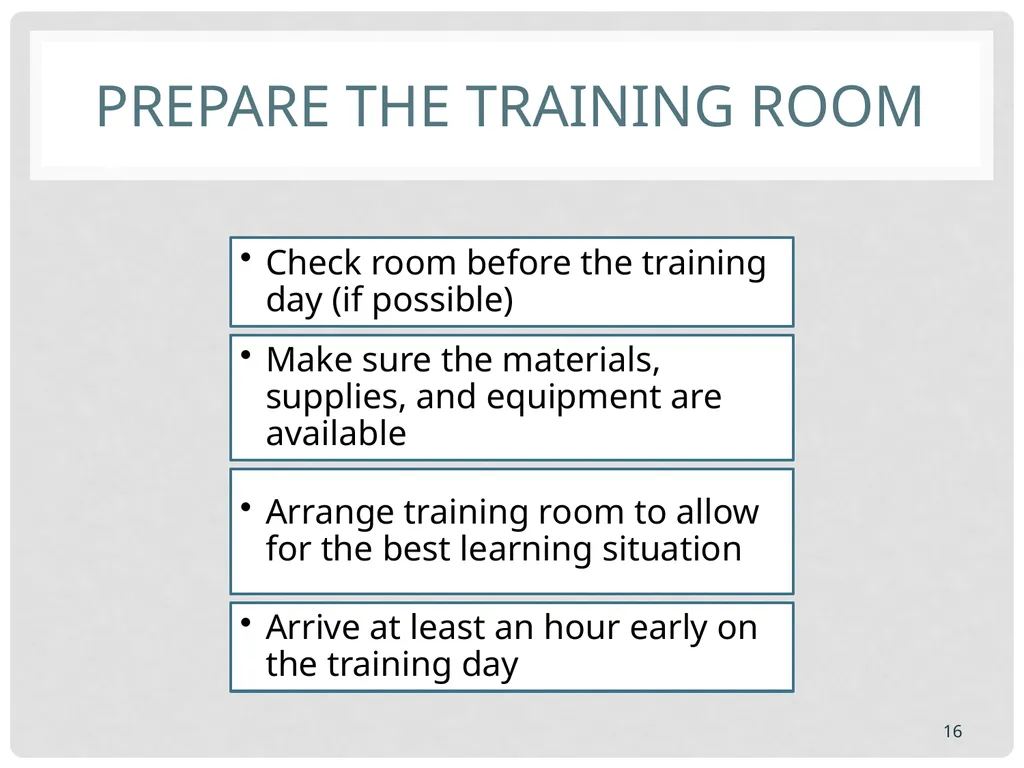
slide16. Prepare the Training Room 16<br>
slide17. Have a Back-up Plan Be prepared for any and all problems by having a back-up plan
Have extra supplies and materials
Use multiple formats (handouts, slides, overhead transparencies)
Be flexible
Make positive situations out of negative ones 17<br>
slide18. Practice Your Presentations Practice out loud in front of a mirror or with a colleague
Rehearse in the training room, if possible
TIME your presentation 18<br>
slide19. Manage the Training 19<br>
slide20. Manage the Training As the facilitator, you are the manager of the training course.
Time
Participants
Logistics (locations and unexpected situations)
You are responsible for creating a training that successfully meets the goals and objectives. 20<br>
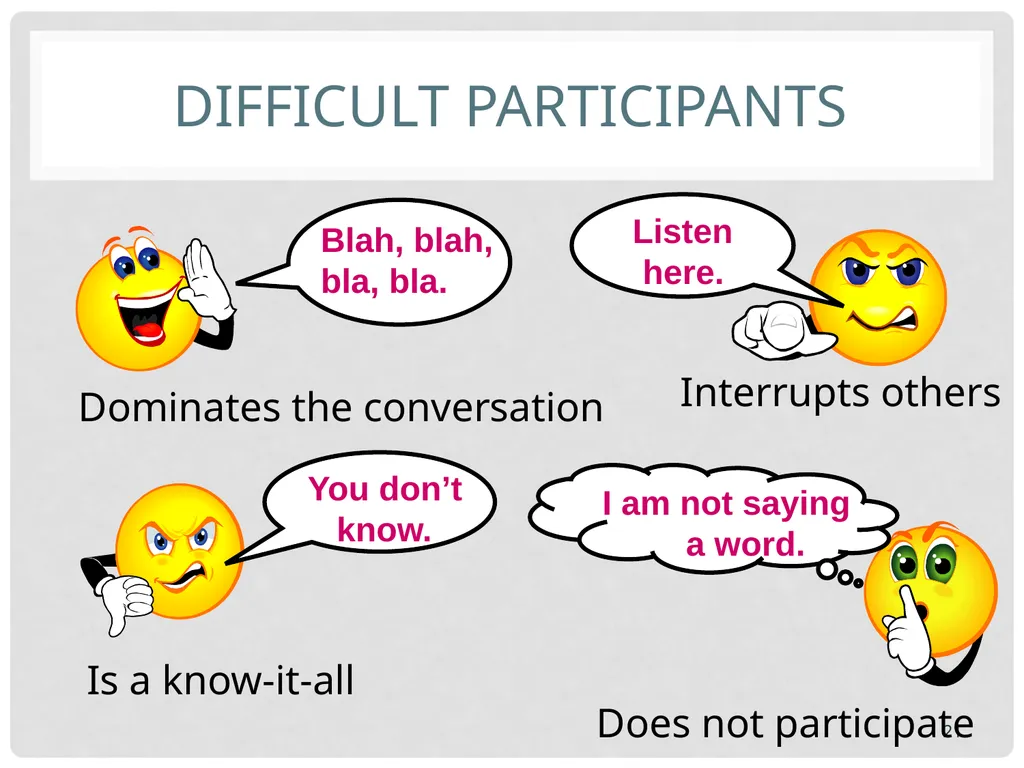
slide21. Difficult Participants Dominates the conversation Interrupts others Is a know-it-all Does not participate Blah, blah,
bla, bla. You don’t know. Listen here. I am not saying a word. 21<br>
slide22. Ways to Manage Difficult Participants Maintain control
Use verbal cues
Use body language
Refer to the “Ground Rules”
Use the “Parking Lot”
Give the person a specific task
Talk to the person outside the classroom
Never loose your “cool” or be rude 22<br>
slide23. Communicate Effectively 23<br>
slide24. Use Your Voice This is the most important communication tool
Set the tone of the training
Convey most of the training content
Show enthusiasm
Encourage participation
Provide positive reinforcement 24<br>
slide25. Use Your Voice (cont’d) Use your “trainer’s voice”
Project your voice so everyone can hear you
Vary your pitch
Use comfortable and varied pace
Speak at the audience’s technical level
Use a friendly tone
Use a microphone if necessary 25<br>
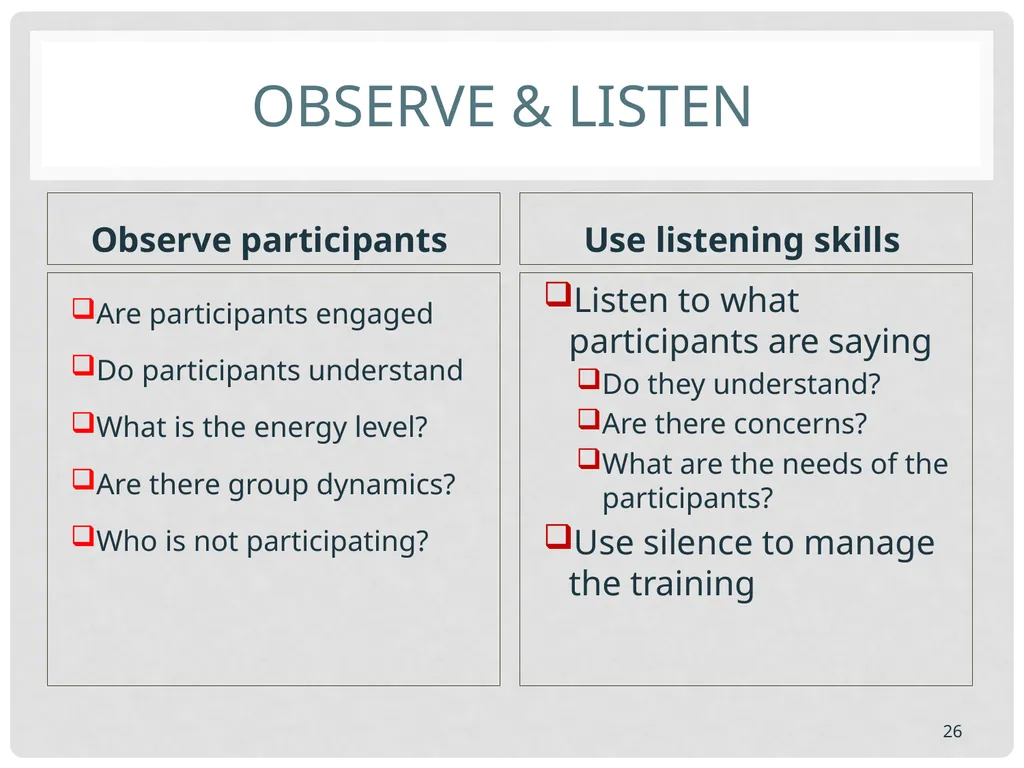
slide26. Observe & Listen Observe participants Are participants engaged
Do participants understand
What is the energy level?
Are there group dynamics?
Who is not participating? Use listening skills Listen to what participants are saying
Do they understand?
Are there concerns?
What are the needs of the participants?
Use silence to manage the training 26<br>
slide27. Engage the Participants 27<br>
slide28. Engage the Participants Create participatory learning situations
Use a variety of presentation styles, media, exercises, and activities to keep interest
Change the pace and/or activity every 30 minutes
Change location of seating arrangements 28<br>
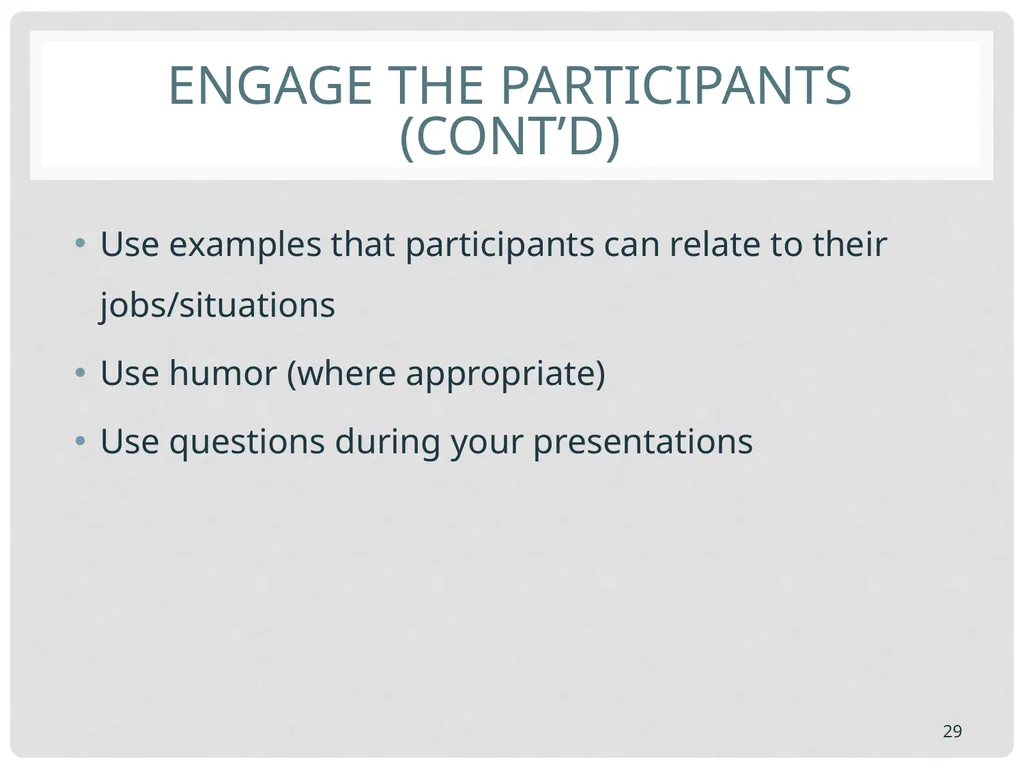
slide29. Engage the Participants (cont’d) Use examples that participants can relate to their jobs/situations
Use humor (where appropriate)
Use questions during your presentations 29<br>
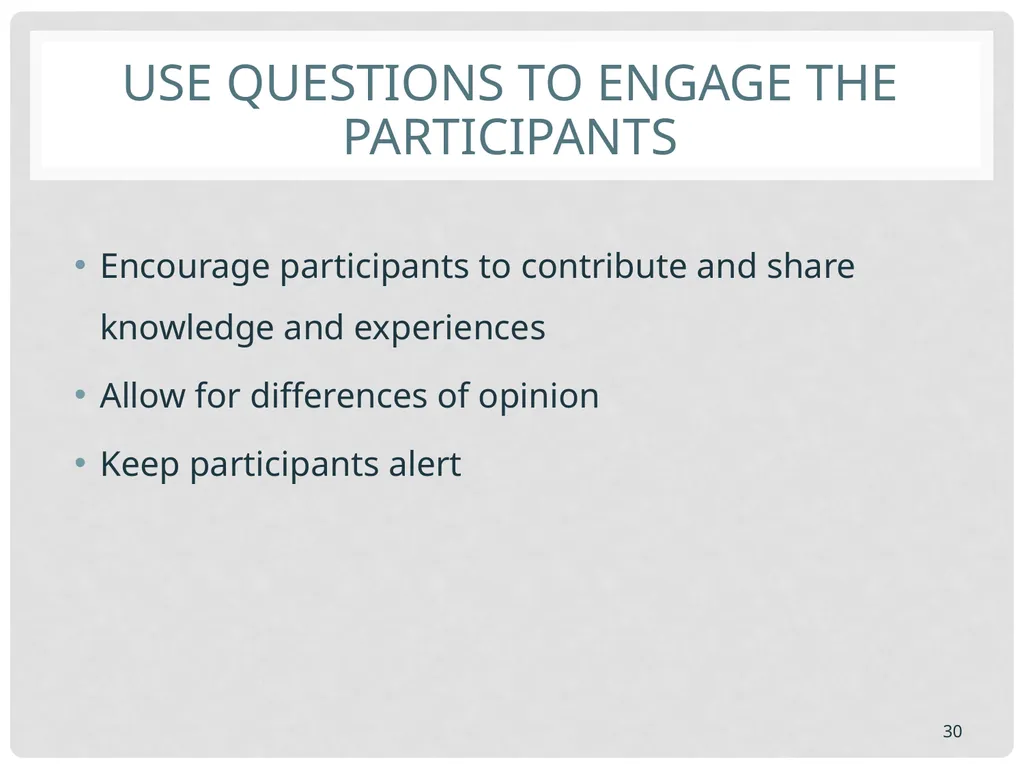
slide30. Use Questions to Engage the Participants Encourage participants to contribute and share knowledge and experiences
Allow for differences of opinion
Keep participants alert 30<br>
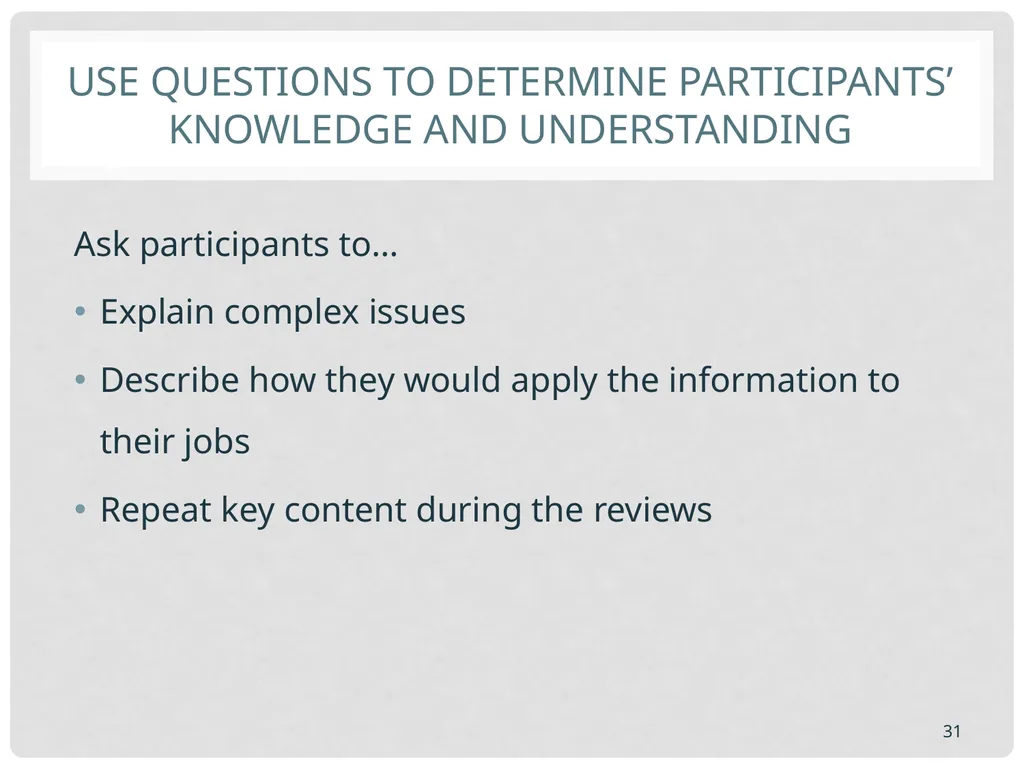
slide31. Use Questions to Determine Participants’ Knowledge and Understanding Ask participants to…
Explain complex issues
Describe how they would apply the information to their jobs
Repeat key content during the reviews 31<br>
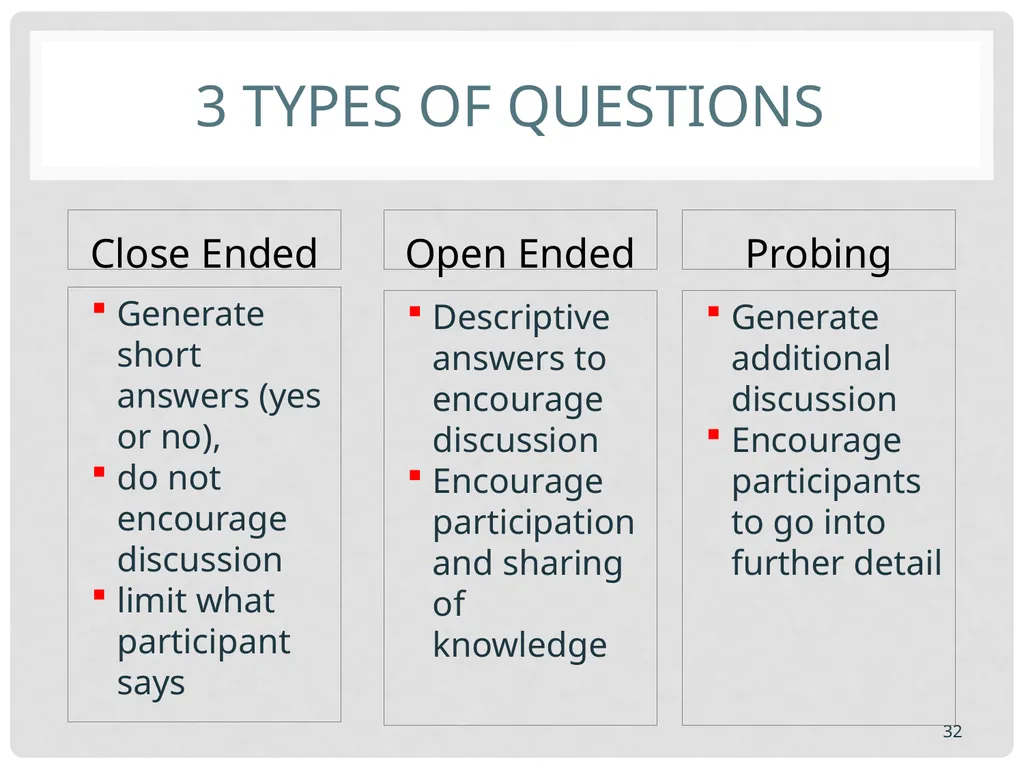
slide32. 3 Types of Questions Generate short answers (yes or no),
do not encourage discussion
limit what participant says Descriptive answers to encourage discussion
Encourage participation and sharing of knowledge Generate additional discussion
Encourage participants to go into further detail Close Ended Open Ended Probing 32<br>
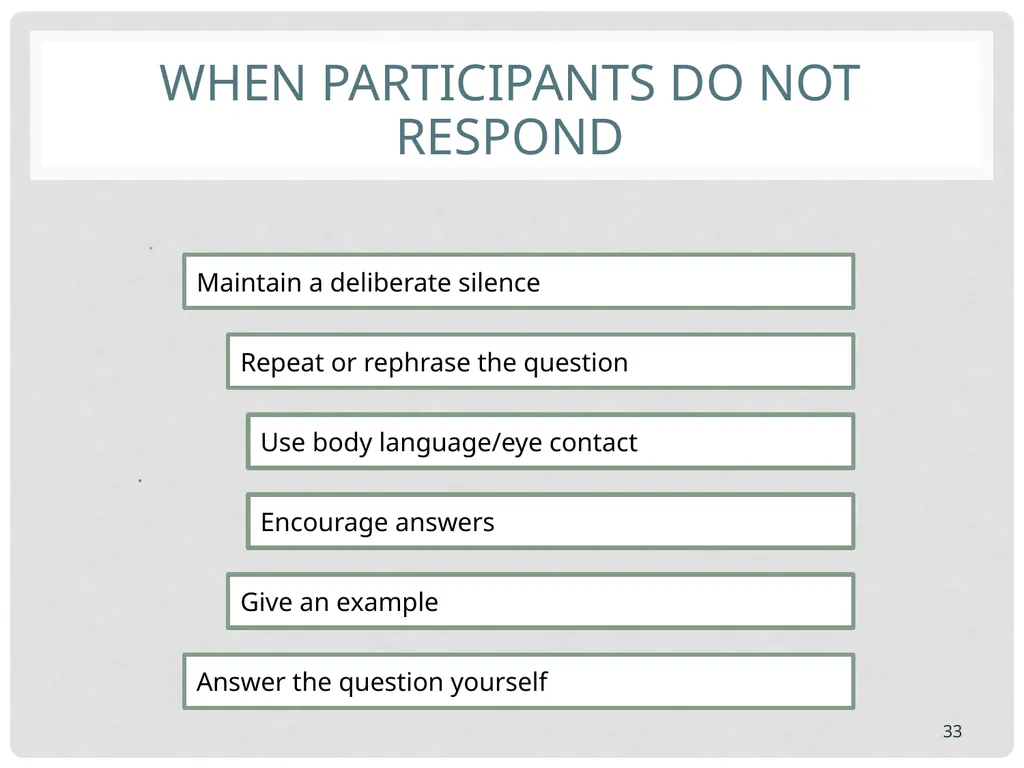
slide33. When Participants Do Not Respond 33<br>
slide34. Sandwich Feedback Technique 34<br>
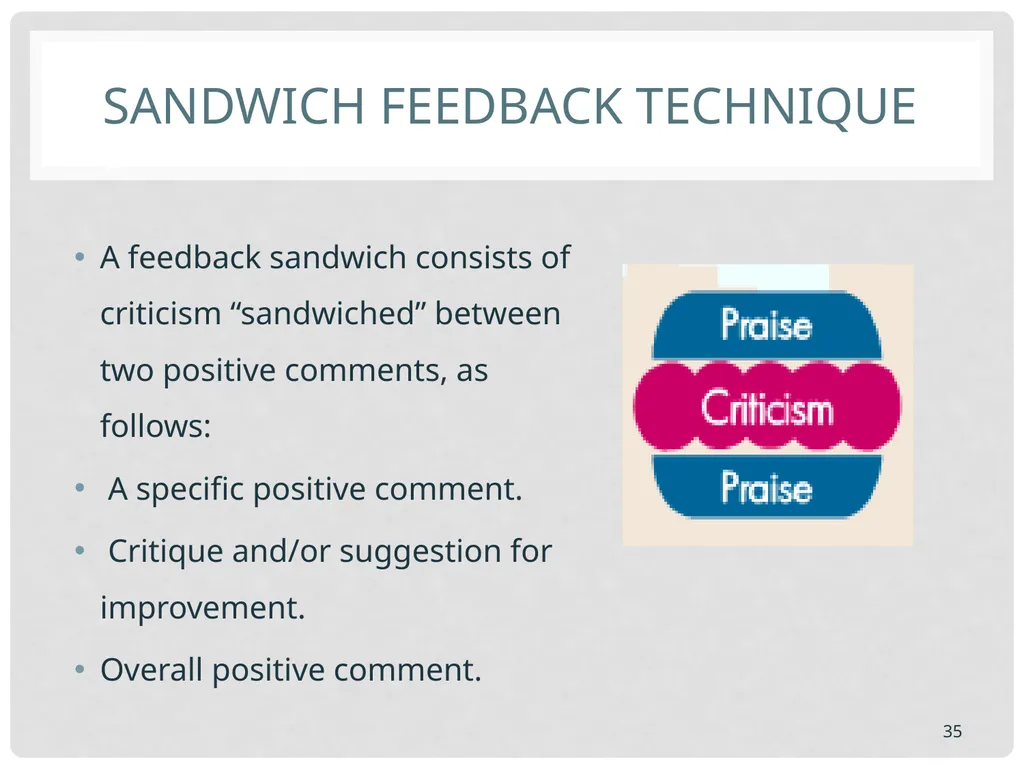
slide35. Sandwich Feedback Technique A feedback sandwich consists of criticism “sandwiched” between two positive comments, as follows:
A specific positive comment.
Critique and/or suggestion for improvement.
Overall positive comment. 35<br>
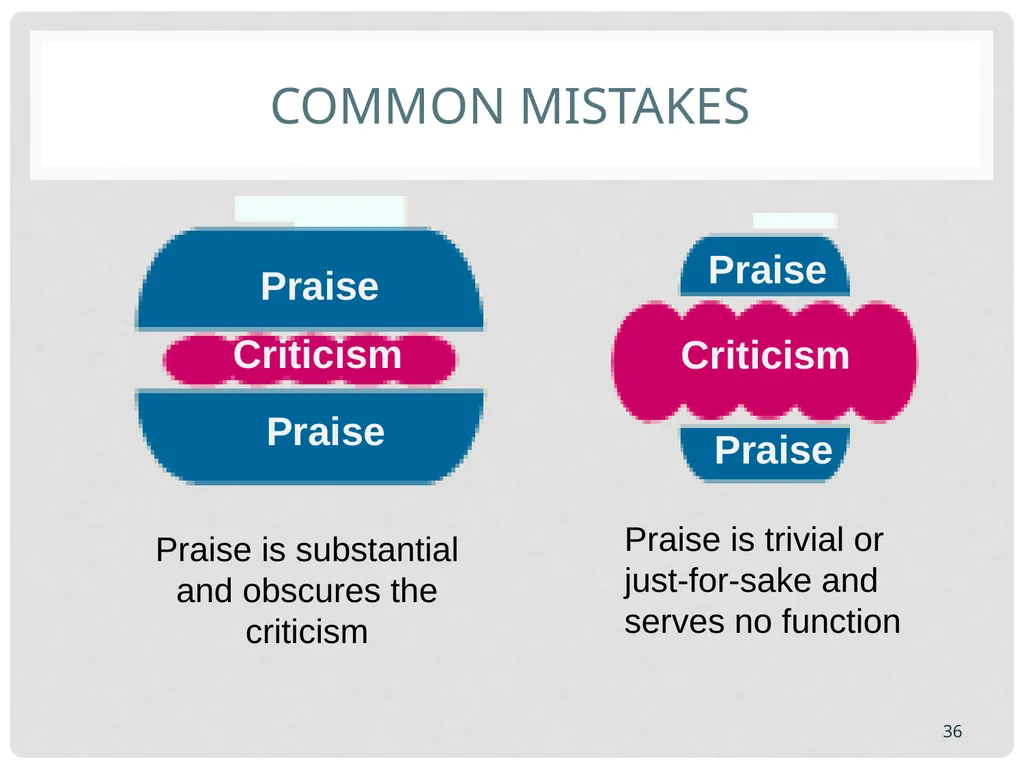
slide36. Common Mistakes Praise is substantial and obscures the criticism Praise Praise Criticism Praise Praise Criticism Praise is trivial or just-for-sake and serves no function 36<br>
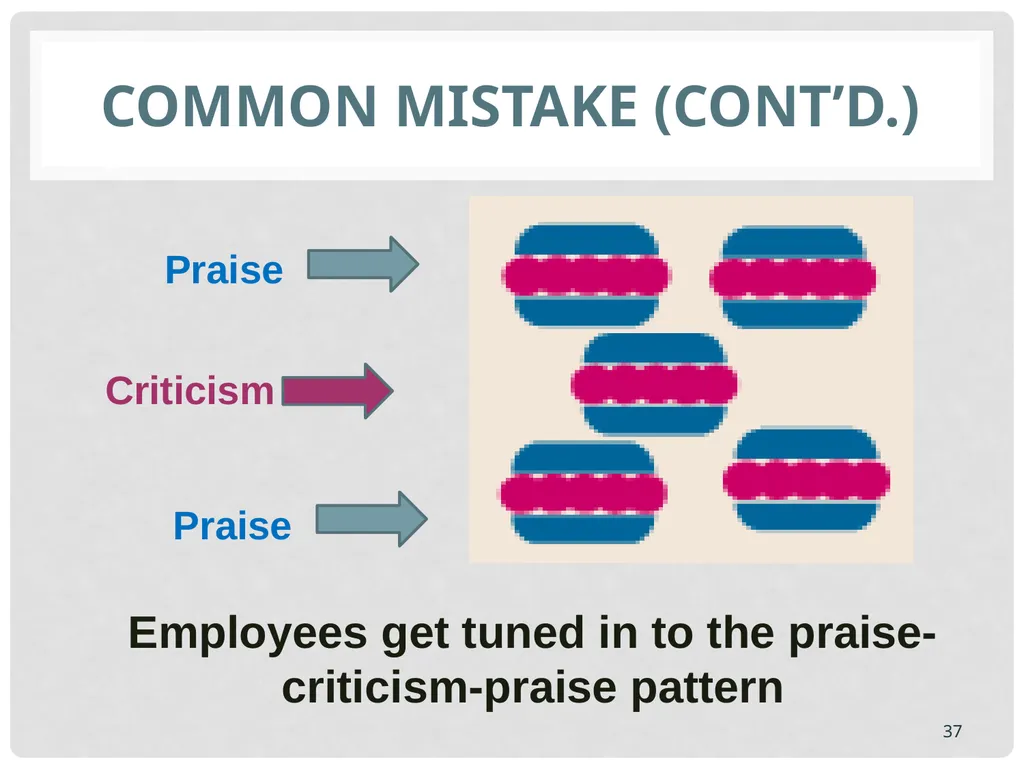
slide37. Common Mistake (cont’d.) Employees get tuned in to the praise-criticism-praise pattern Praise Praise Criticism 37<br>
slide38. Key Points for Facilitating a Training Be prepared!
Practice before you train
Know the material and how it is structured
Use organizational skills to keep the training on task in the allotted time
Demonstrate effective communication skills – teach by example! Use the skills you are trying to teach 38<br>
slide39. Learning and teaching Credo What I hear, I forget.
What I hear and see, I remember a little.
What I hear, see and discuss, I begin to understand.
What I hear, see, discuss and do, I acquire knowledge and skill.
What I teach to another, I master. 39<br>
slide2. Objectives Participants will be able to-
Apply basic principles of adult learning to training
Use training methods discussed in the workshop to facilitate a training session
Facilitating a workshop session
Provide feedback to fellow TOT participants 2<br>
slide3. Key Points to Remember during Training You already know a lot about training and health
You have much to share with others
Ask questions throughout this workshop
We are here to help you learn how to be an effective trainer 3<br>
slide4. Common Characteristics Outstanding Teachers Cooperative
Considerate
Patient
Pleasant
Fair, Impartial
Sense of humor
Good disposition
Interest in students
Knowledge of subject Worst Teachers Never smiles
Sarcastic
Quick tempered
Explanations not clear
Partial; has favorites
“Picks on” some
Superior and aloof
Over-bearing
Not friendly 4<br>
slide5. Training Basics Know Your Audience
Use Adult Learning Principles
Be Prepared to Train
Manage the Training
Communicate Effectively
Engage the Participants 5<br>
slide6. Know Your Audience 6<br>
slide7. Why Know Your Audience? 7<br>
slide8. What You Need to Know About Your Audience 8<br>
slide9. Get to Know Course Participants Use a “get-to-know-you” exercise
Ask participants to share their expectations of the course
Talk with them before the training starts, during breaks, etc. 9<br>
slide10. Use Adult Learning Principles 10<br>
slide11. Training Adults 11<br>
slide12. Attendees learn best Under low to moderate stress; if stress is too high, it becomes a barrier to learning.
Adults are motivated by information or tasks that they find meaningful.
Listen to what they want and need, and be flexible in your planning.
Change your approach if your methods are not working.
Adults bring a great deal of experience and knowledge to any learning situation.
Safe to ask questions.
Confident that they will be respected. 12<br>
slide13. Be Prepared to Train 13<br>
slide14. Know What You Are Training! Even the best training skills cannot hide the fact that a trainer does not know the content.
Review course material several weeks before the training
Know the training goals, objectives and all activities 14<br>
slide15. Use Effective Organizational Skills 15<br>
slide16. Prepare the Training Room 16<br>
slide17. Have a Back-up Plan Be prepared for any and all problems by having a back-up plan
Have extra supplies and materials
Use multiple formats (handouts, slides, overhead transparencies)
Be flexible
Make positive situations out of negative ones 17<br>
slide18. Practice Your Presentations Practice out loud in front of a mirror or with a colleague
Rehearse in the training room, if possible
TIME your presentation 18<br>
slide19. Manage the Training 19<br>
slide20. Manage the Training As the facilitator, you are the manager of the training course.
Time
Participants
Logistics (locations and unexpected situations)
You are responsible for creating a training that successfully meets the goals and objectives. 20<br>
slide21. Difficult Participants Dominates the conversation Interrupts others Is a know-it-all Does not participate Blah, blah,
bla, bla. You don’t know. Listen here. I am not saying a word. 21<br>
slide22. Ways to Manage Difficult Participants Maintain control
Use verbal cues
Use body language
Refer to the “Ground Rules”
Use the “Parking Lot”
Give the person a specific task
Talk to the person outside the classroom
Never loose your “cool” or be rude 22<br>
slide23. Communicate Effectively 23<br>
slide24. Use Your Voice This is the most important communication tool
Set the tone of the training
Convey most of the training content
Show enthusiasm
Encourage participation
Provide positive reinforcement 24<br>
slide25. Use Your Voice (cont’d) Use your “trainer’s voice”
Project your voice so everyone can hear you
Vary your pitch
Use comfortable and varied pace
Speak at the audience’s technical level
Use a friendly tone
Use a microphone if necessary 25<br>
slide26. Observe & Listen Observe participants Are participants engaged
Do participants understand
What is the energy level?
Are there group dynamics?
Who is not participating? Use listening skills Listen to what participants are saying
Do they understand?
Are there concerns?
What are the needs of the participants?
Use silence to manage the training 26<br>
slide27. Engage the Participants 27<br>
slide28. Engage the Participants Create participatory learning situations
Use a variety of presentation styles, media, exercises, and activities to keep interest
Change the pace and/or activity every 30 minutes
Change location of seating arrangements 28<br>
slide29. Engage the Participants (cont’d) Use examples that participants can relate to their jobs/situations
Use humor (where appropriate)
Use questions during your presentations 29<br>
slide30. Use Questions to Engage the Participants Encourage participants to contribute and share knowledge and experiences
Allow for differences of opinion
Keep participants alert 30<br>
slide31. Use Questions to Determine Participants’ Knowledge and Understanding Ask participants to…
Explain complex issues
Describe how they would apply the information to their jobs
Repeat key content during the reviews 31<br>
slide32. 3 Types of Questions Generate short answers (yes or no),
do not encourage discussion
limit what participant says Descriptive answers to encourage discussion
Encourage participation and sharing of knowledge Generate additional discussion
Encourage participants to go into further detail Close Ended Open Ended Probing 32<br>
slide33. When Participants Do Not Respond 33<br>
slide34. Sandwich Feedback Technique 34<br>
slide35. Sandwich Feedback Technique A feedback sandwich consists of criticism “sandwiched” between two positive comments, as follows:
A specific positive comment.
Critique and/or suggestion for improvement.
Overall positive comment. 35<br>
slide36. Common Mistakes Praise is substantial and obscures the criticism Praise Praise Criticism Praise Praise Criticism Praise is trivial or just-for-sake and serves no function 36<br>
slide37. Common Mistake (cont’d.) Employees get tuned in to the praise-criticism-praise pattern Praise Praise Criticism 37<br>
slide38. Key Points for Facilitating a Training Be prepared!
Practice before you train
Know the material and how it is structured
Use organizational skills to keep the training on task in the allotted time
Demonstrate effective communication skills – teach by example! Use the skills you are trying to teach 38<br>
slide39. Learning and teaching Credo What I hear, I forget.
What I hear and see, I remember a little.
What I hear, see and discuss, I begin to understand.
What I hear, see, discuss and do, I acquire knowledge and skill.
What I teach to another, I master. 39<br>