04
Trauma-Informed Interview Best Practices Use two full sleep cycles as a baseline after the incident to conduct the detailed follow-up interview.
With the victim's permission, arrange for an advocate or support person to attend the interview.
Work with the victim to identify an interview location that is convenient and comfortable for the victim.
Wear attire that will not be perceived as intimidating or threatening by the victim.
Provide contact information.
Explain next steps and confidentiality.<br>
05
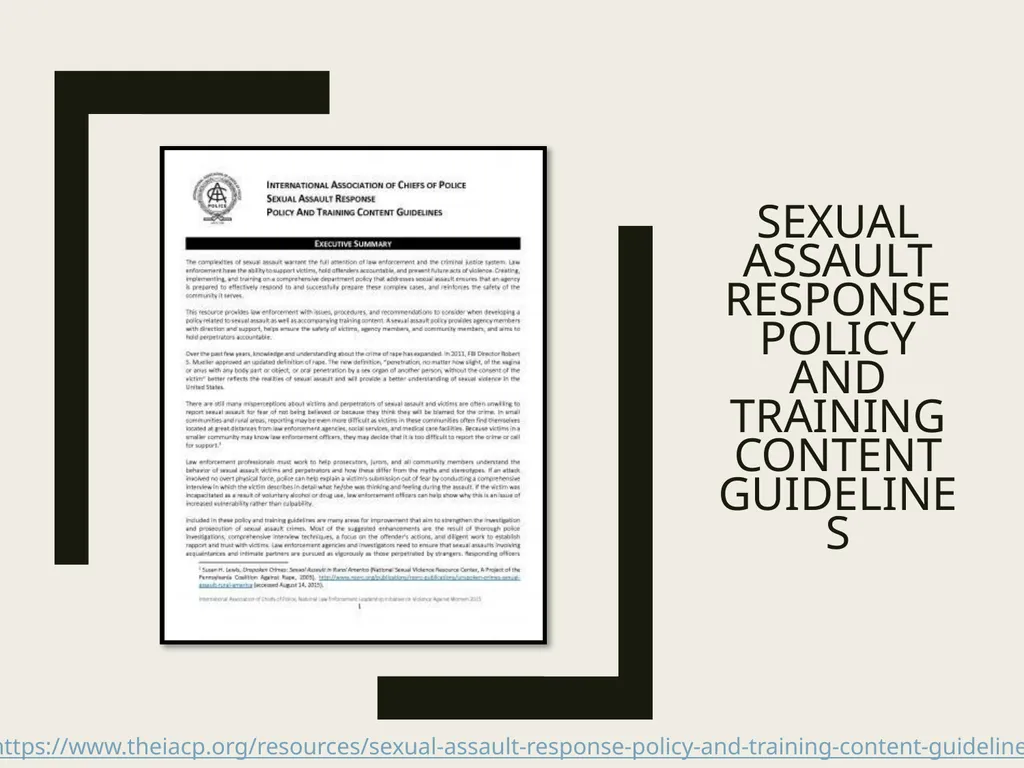
Sexual Assault Response Policy and Training Content Guidelines https://www.theiacp.org/resources/sexual-assault-response-policy-and-training-content-guidelines<br>
06
Trauma-Informed Interview Best Practices Express compassion.
Use open-ended questions.
Listen.
Do not interrupt.<br>
07
Trauma-Informed Interview Best Practices “I’m sorry this happened to you.”
"This is not your fault."
“You are not alone, how can we help you?”
“Your health and safety are our priority."<br>
08
Trauma-Informed Interview Best Practices “Where would you like to start?”
“What are you able to tell me about your experience?”
Allow for an uninterrupted narrative.
Wait until after the narrative to ask clarifying questions.
Use the victim’s words or descriptions.<br>
09
Trauma-Informed Interview Best Practices AVOID the following:
Questions that start with “why”
Directives such as “explain to me…”
Requests for a chronological account with prompts such as “and then what happened?”<br>
10
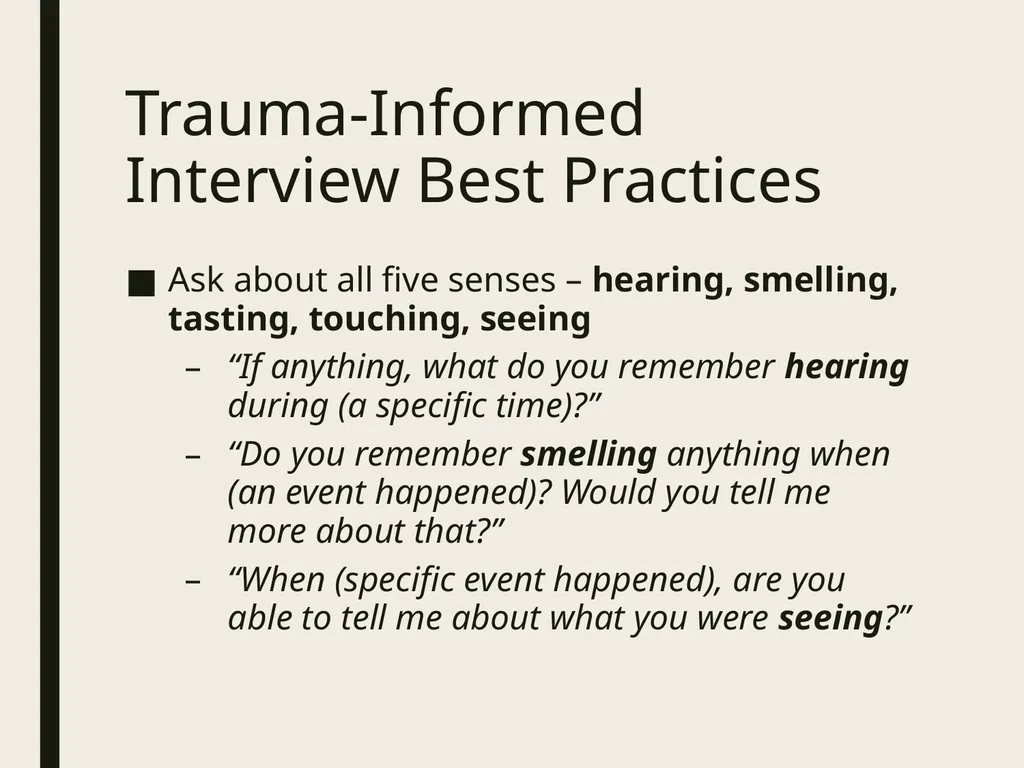
Trauma-Informed Interview Best Practices Ask about all five senses – hearing, smelling, tasting, touching, seeing
“If anything, what do you remember hearing during (a specific time)?”
“Do you remember smelling anything when (an event happened)? Would you tell me more about that?”
“When (specific event happened), are you able to tell me about what you were seeing?”<br>
11
Large Group Discussion
“What are some examples from your cases where sensory details led to evidence that corroborated the victim’s account?”<br>
12
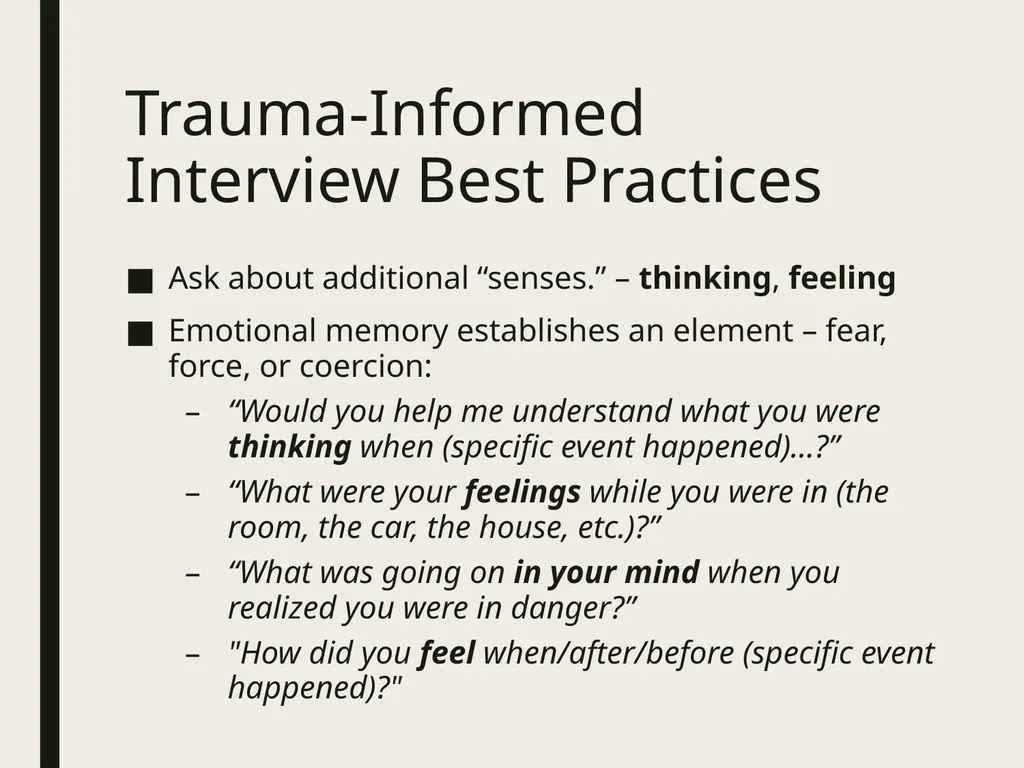
Trauma-Informed Interview Best Practices Ask about additional “senses.” – thinking, feeling
Emotional memory establishes an element – fear, force, or coercion:
“Would you help me understand what you were thinking when (specific event happened)…?”
“What were your feelings while you were in (the room, the car, the house, etc.)?”
“What was going on in your mind when you realized you were in danger?”
"How did you feel when/after/before (specific event happened)?"<br>
13
Activity: Trauma-Informed Interview Role-Play
5 minutes for each role<br>
14
Large Group Discussion:
Reframing Interview Questions
“Which reframed questions did you use in your role-play?”
“Which reframed questions did you not use but would
use in the future?”<br>
15
Report Writing Summarize the evidence and context uncovered during the investigation.
Describe the tools, objects, or weapons that were used and how they were used.
Detail the experience in ways that do not minimize or trivialize it.
Use direct quotes.
Do not sanitize victim’s language.<br>
16
Report Should Include: Perpetrator’s behavior, including premeditation, grooming, coercion, threats, force, etc.
Traumatic reaction of the victim before, during, and after the assault
What the victim observed with 5 senses: see, smell, taste, hear, touch
Additional senses: what the victim thought, felt, and feared
Victim’s condition
Physical: Injuries, clothes, etc.
Emotional: Fight, flight, or freeze response<br>
17
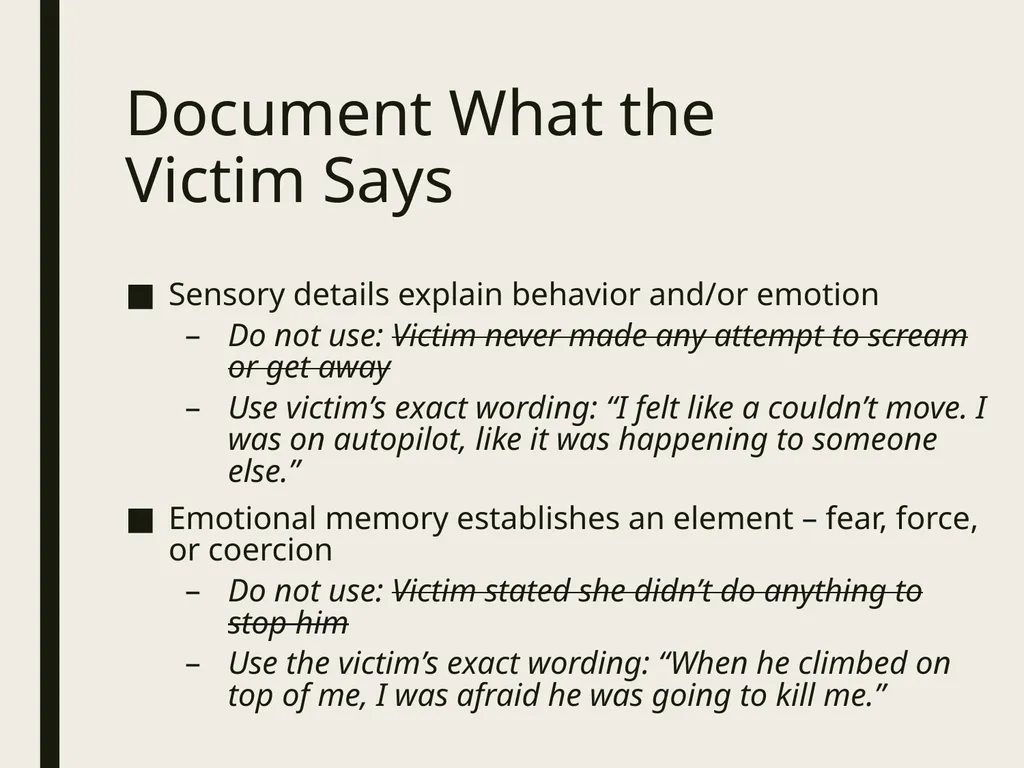
Document What the Victim Says Sensory details explain behavior and/or emotion
Do not use: Victim never made any attempt to scream or get away
Use victim’s exact wording: “I felt like a couldn’t move. I was on autopilot, like it was happening to someone else.”
Emotional memory establishes an element – fear, force, or coercion
Do not use: Victim stated she didn’t do anything to stop him
Use the victim’s exact wording: “When he climbed on top of me, I was afraid he was going to kill me.”<br>
18
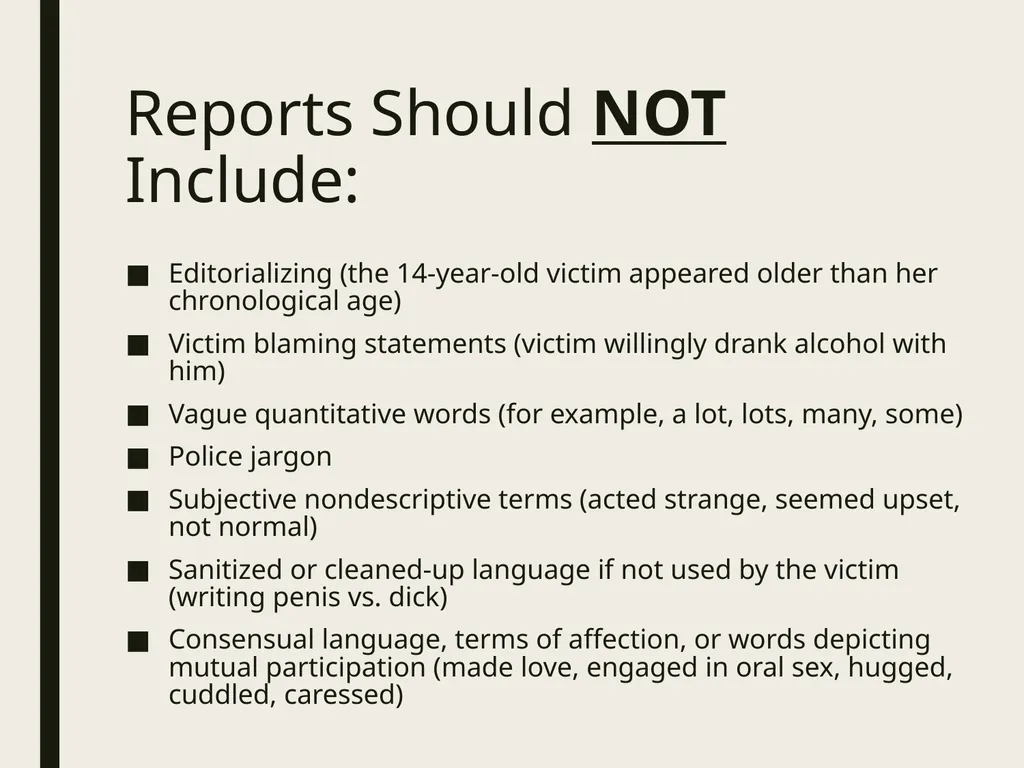
Reports Should NOT Include: Editorializing (the 14-year-old victim appeared older than her chronological age)
Victim blaming statements (victim willingly drank alcohol with him)
Vague quantitative words (for example, a lot, lots, many, some)
Police jargon
Subjective nondescriptive terms (acted strange, seemed upset, not normal)
Sanitized or cleaned-up language if not used by the victim (writing penis vs. dick)
Consensual language, terms of affection, or words depicting mutual participation (made love, engaged in oral sex, hugged, cuddled, caressed)<br>
19
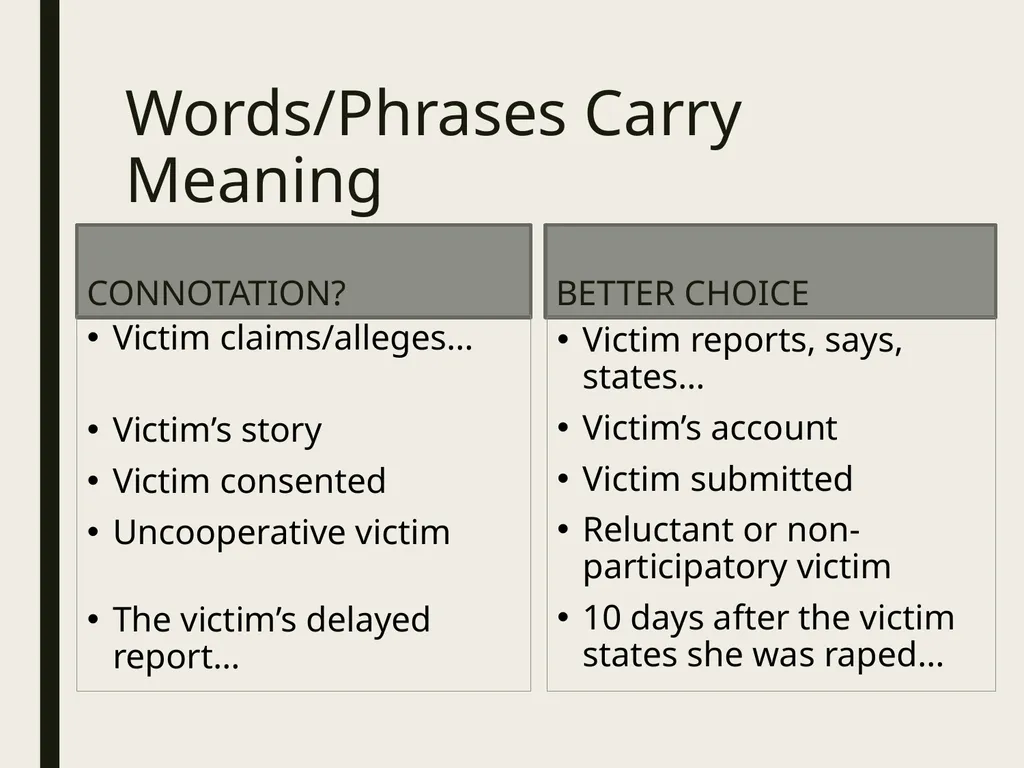
CONNOTATION? BETTER CHOICE Words/Phrases Carry Meaning Victim reports, says, states…
Victim’s account
Victim submitted
Reluctant or non-participatory victim
10 days after the victim states she was raped… Victim claims/alleges…�
Victim’s story
Victim consented
Uncooperative victim�
The victim’s delayed report…<br>
20
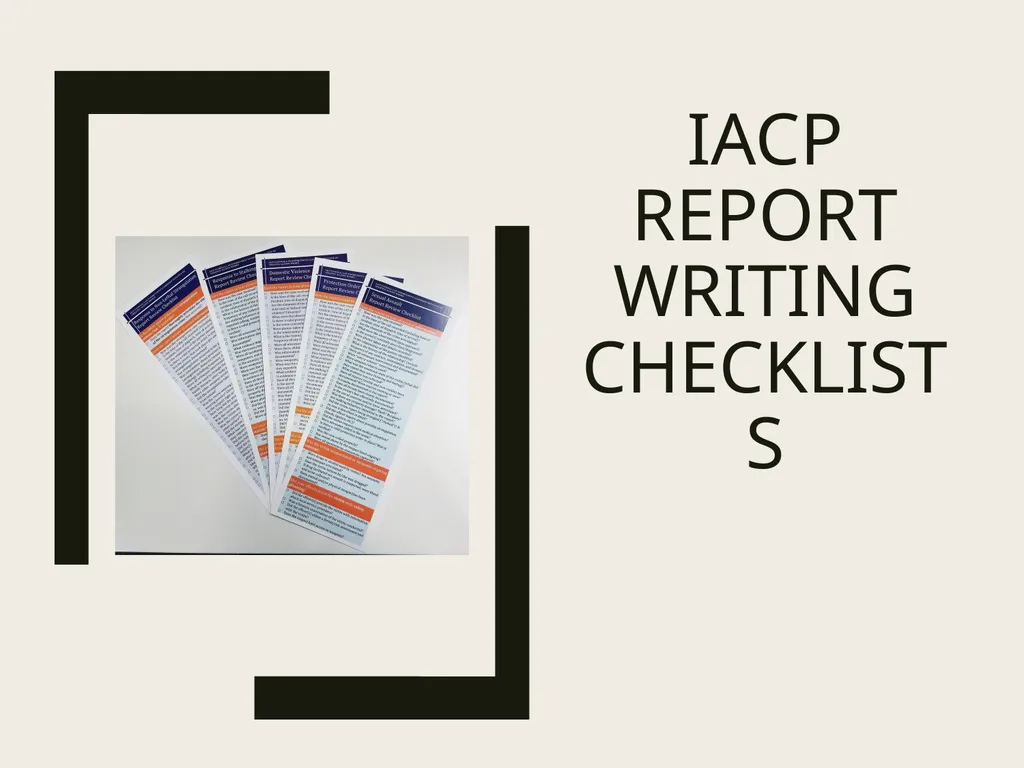
IACP Report writing checklists<br>
21
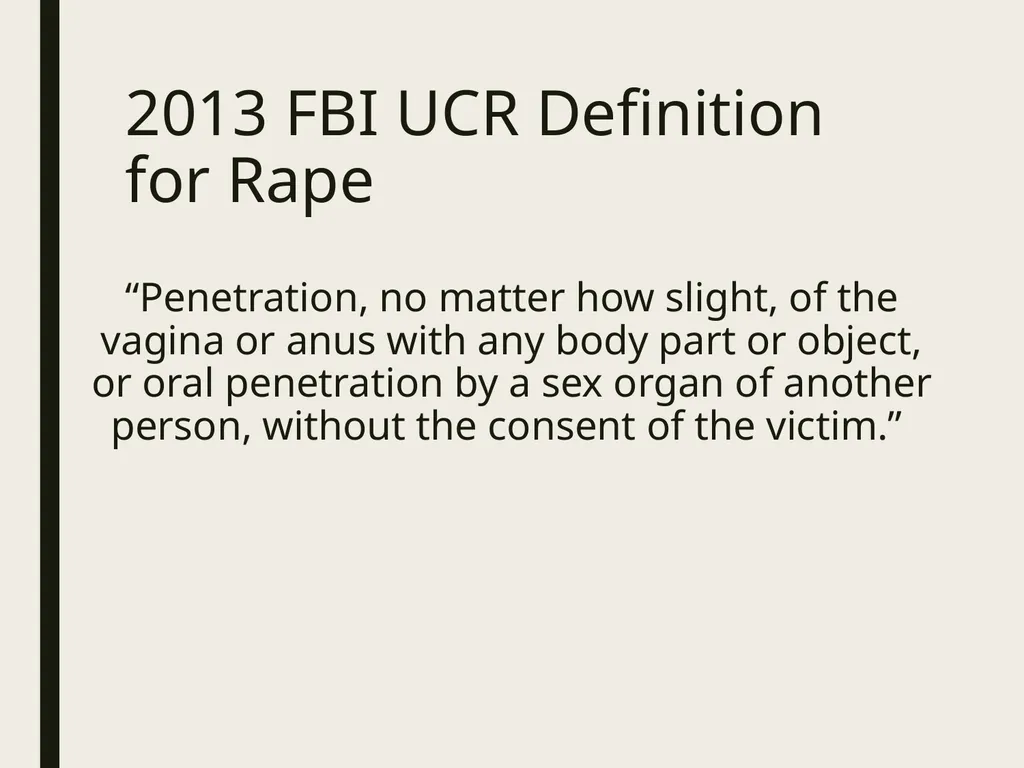
“Penetration, no matter how slight, of the vagina or anus with any body part or object, or oral penetration by a sex organ of another person, without the consent of the victim.” 2013 FBI UCR Definition for Rape<br>
22
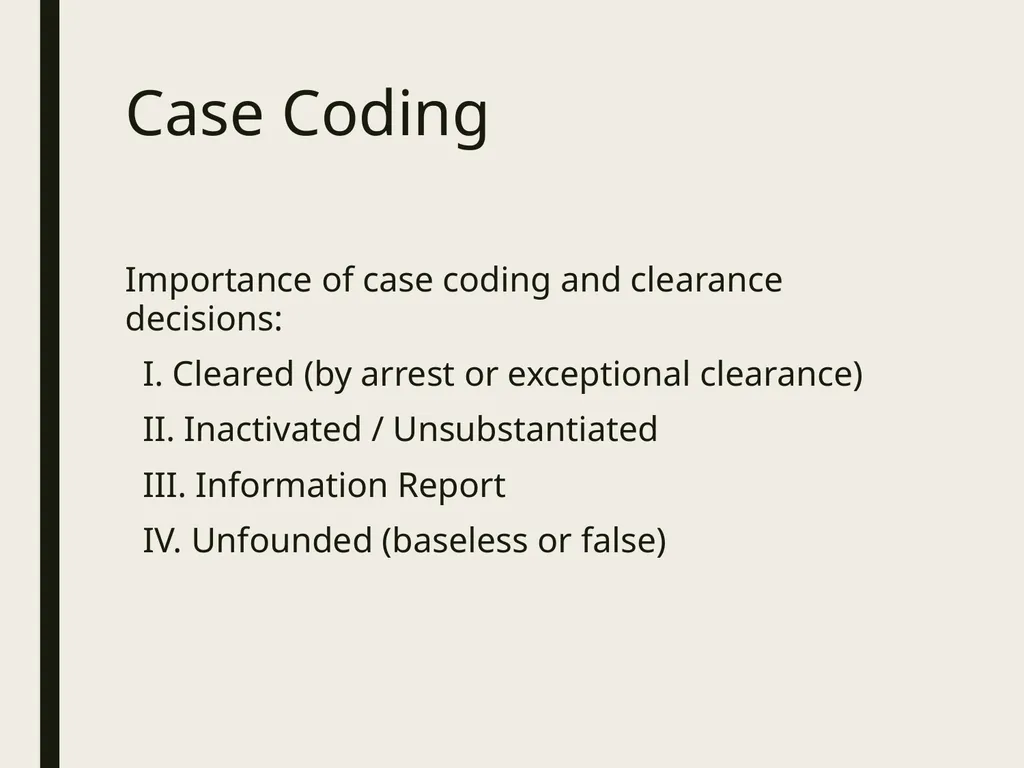
Case Coding Importance of case coding and clearance decisions:
I. Cleared (by arrest or exceptional clearance)
II. Inactivated / Unsubstantiated
III. Information Report
IV. Unfounded (baseless or false)<br>
23
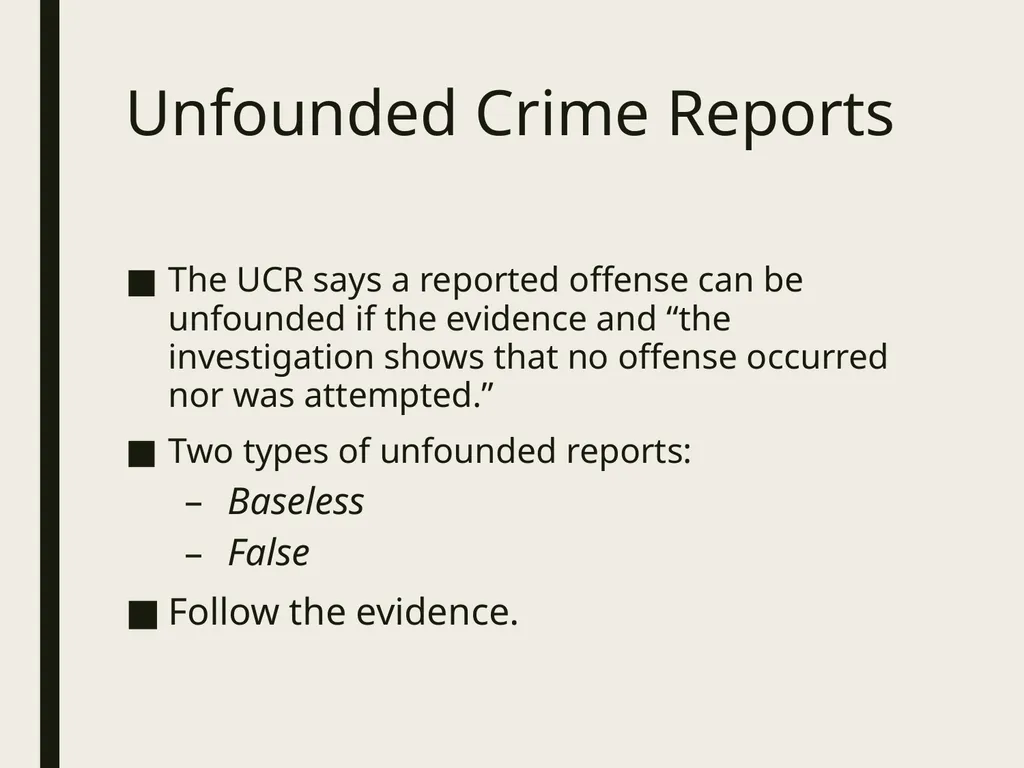
Unfounded Crime Reports The UCR says a reported offense can be unfounded if the evidence and “the investigation shows that no offense occurred nor was attempted.”
Two types of unfounded reports:
Baseless
False
Follow the evidence.<br>
24
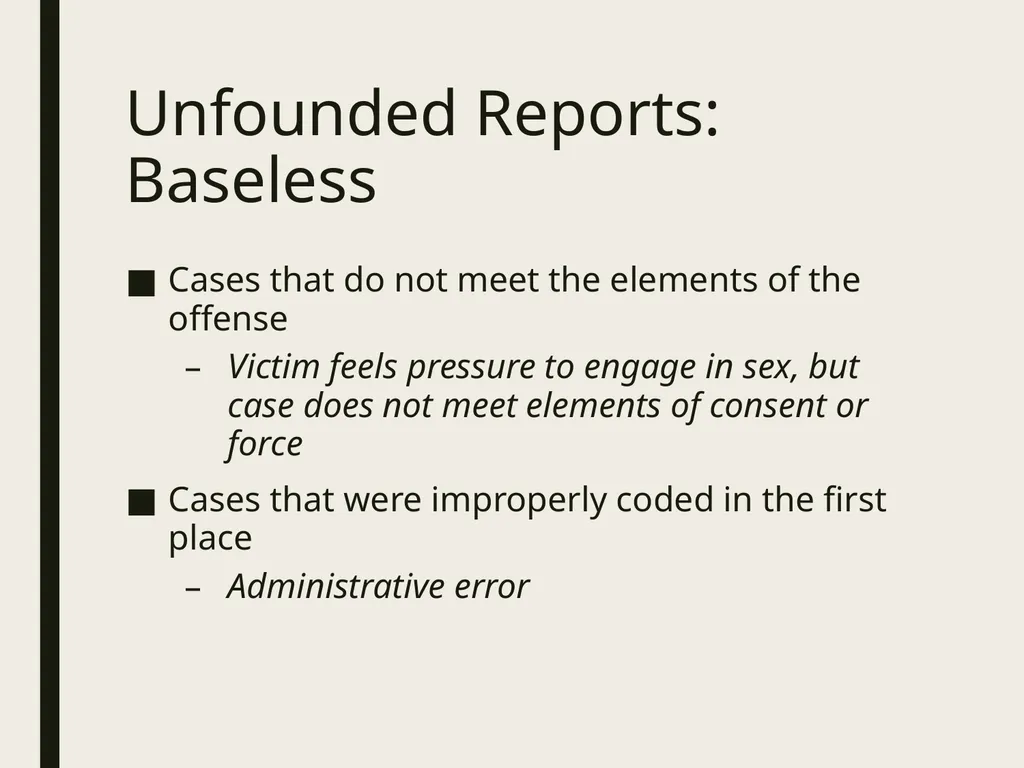
Unfounded Reports: Baseless Cases that do not meet the elements of the offense
Victim feels pressure to engage in sex, but case does not meet elements of consent or force
Cases that were improperly coded in the first place
Administrative error<br>
25
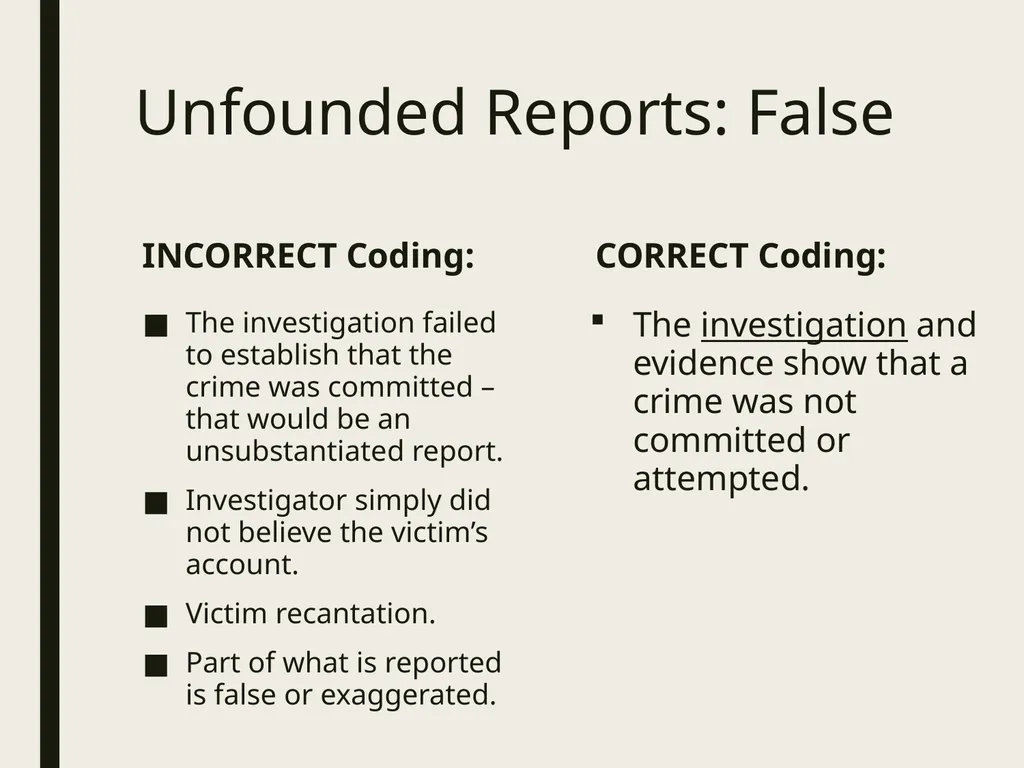
INCORRECT Coding: CORRECT Coding: Unfounded Reports: False The investigation failed to establish that the crime was committed – that would be an unsubstantiated report.
Investigator simply did not believe the victim’s account.
Victim recantation.
Part of what is reported is false or exaggerated. The investigation and evidence show that a crime was not committed or attempted.<br>
26
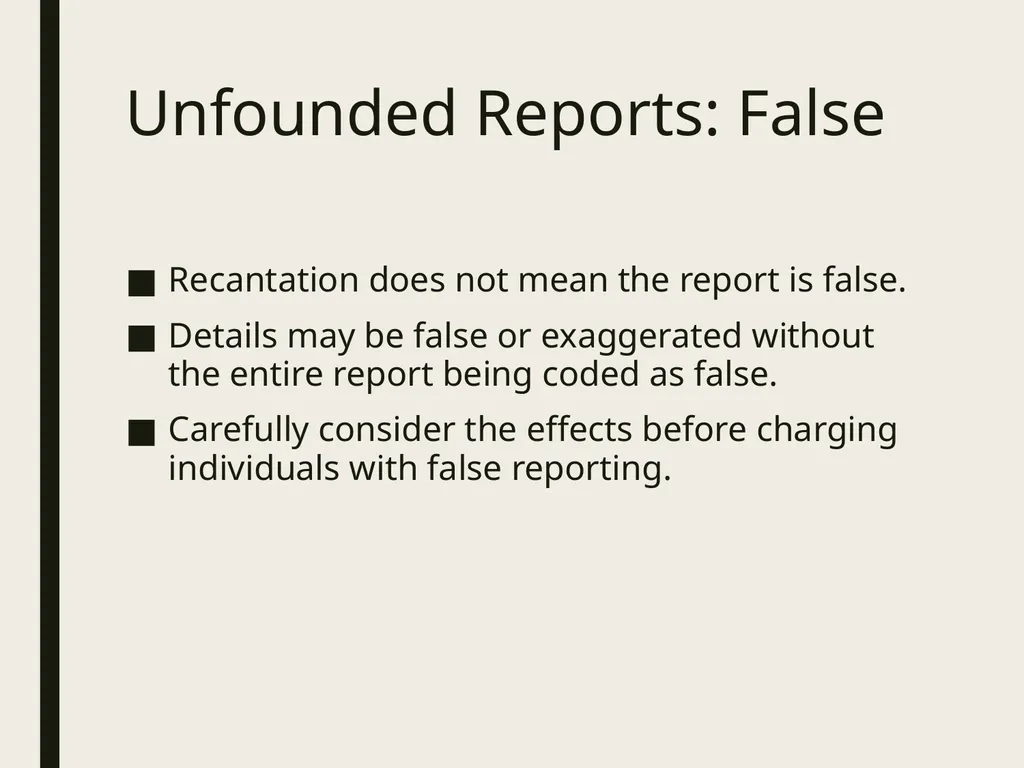
Unfounded Reports: False Recantation does not mean the report is false.
Details may be false or exaggerated without the entire report being coded as false.
Carefully consider the effects before charging individuals with false reporting.<br>
27
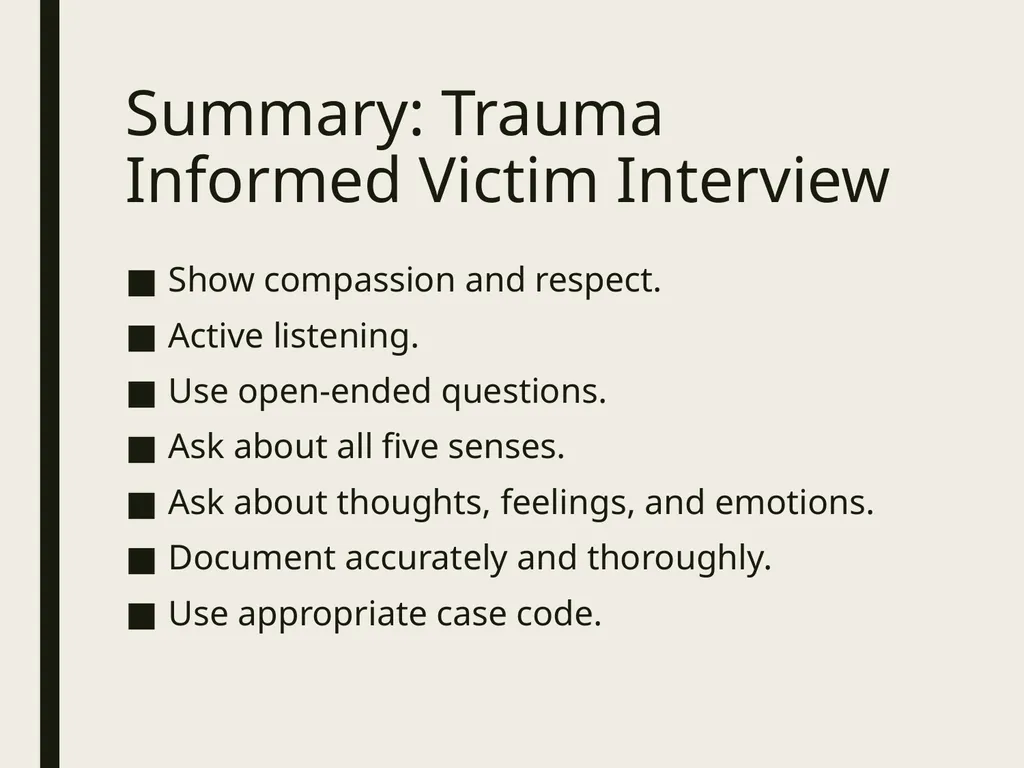
Summary: Trauma Informed Victim Interview Show compassion and respect.
Active listening.
Use open-ended questions.
Ask about all five senses.
Ask about thoughts, feelings, and emotions.
Document accurately and thoroughly.
Use appropriate case code.<br>