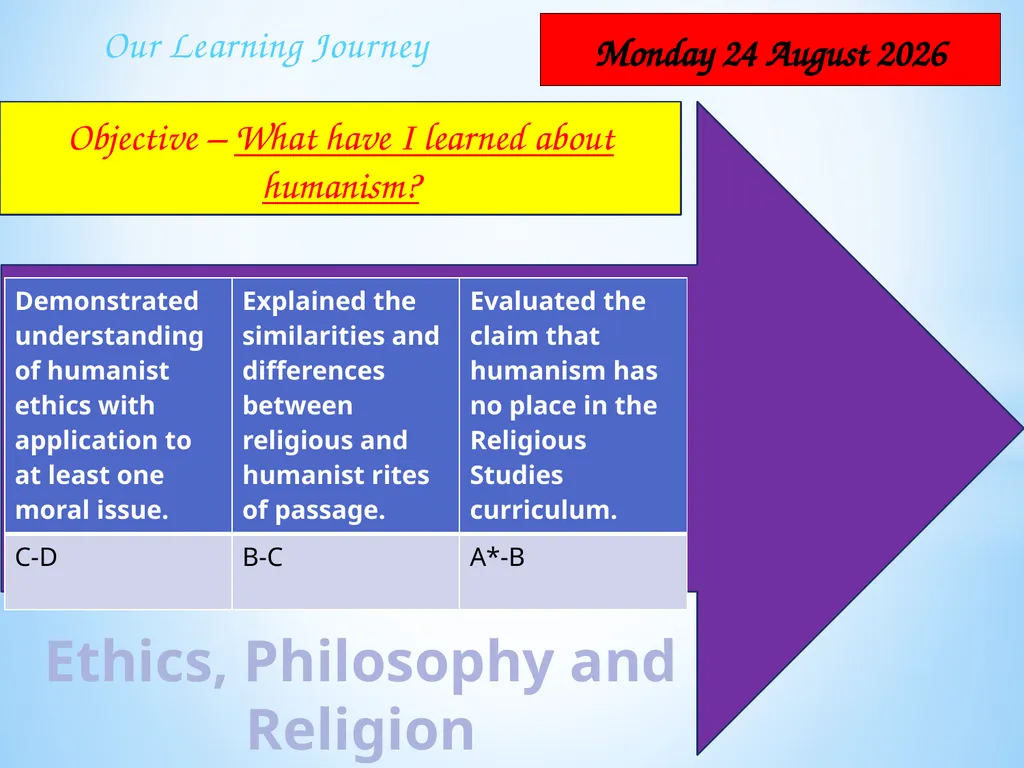
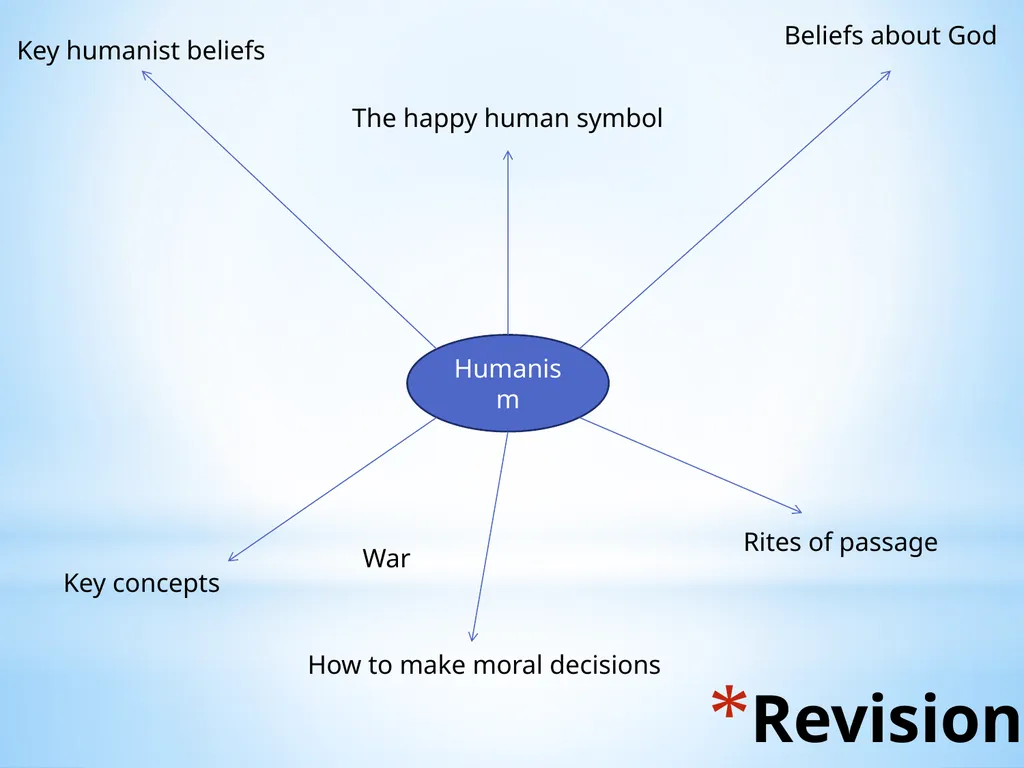
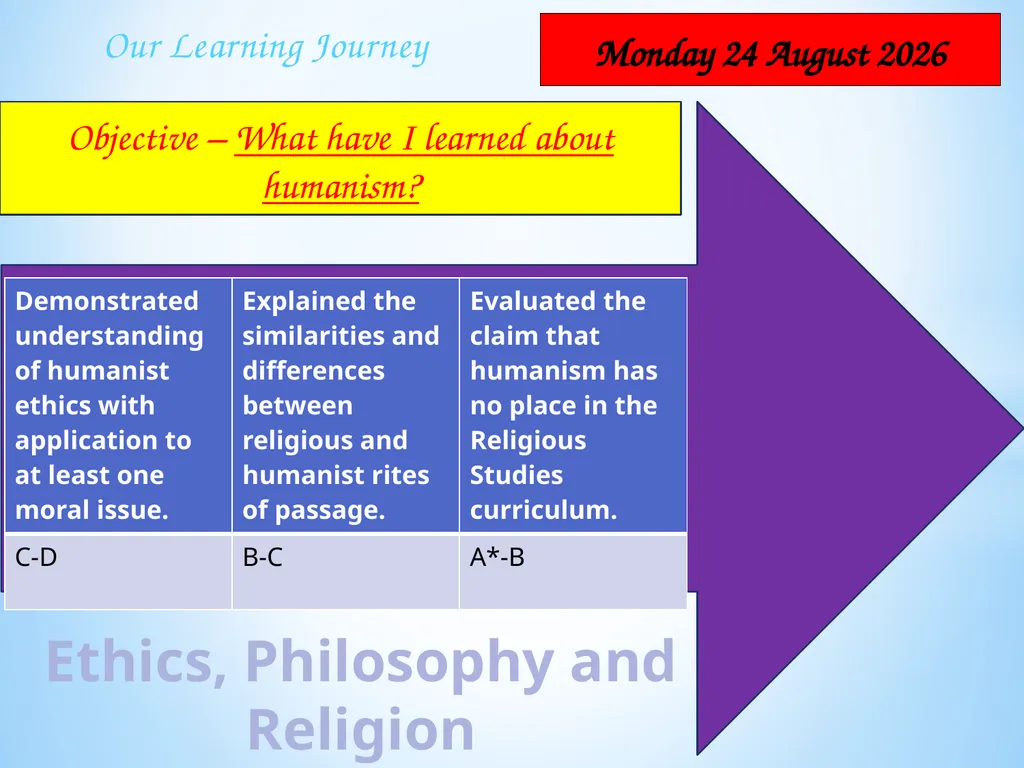
Tuesday, 15 August 2017 Objective What have I learned about humanism? Our Learning Journey Ethics, Philosophy and Religion Revision Humanism Key humanist beliefs Key concepts Beliefs about God Rites of passage How to make moral decisions
"Tuesday, 15 August 2017 Objective – What have I" is the property of its rightful owner. Permission is granted to
download and print the materials on this website for personal, non-commercial use only, and to display it
on your personal computer provided you do not modify the materials and that you retain all copyright
notices contained in the materials. By downloading content from our website, you accept the terms of this
agreement.
Presentation Transcript
01
Tuesday, 15 August 2017 Objective – What have I learned about humanism? Our Learning Journey Ethics, Philosophy and Religion<br>
02
Revision Humanism Key humanist beliefs Key concepts Beliefs about God Rites of passage How to make moral decisions The happy human symbol War<br>
03
Humanist beliefs<br>
04
What makes something ‘good’ or ‘right’<br>
05
Example of humanist rites of passage: Marriage<br>
06
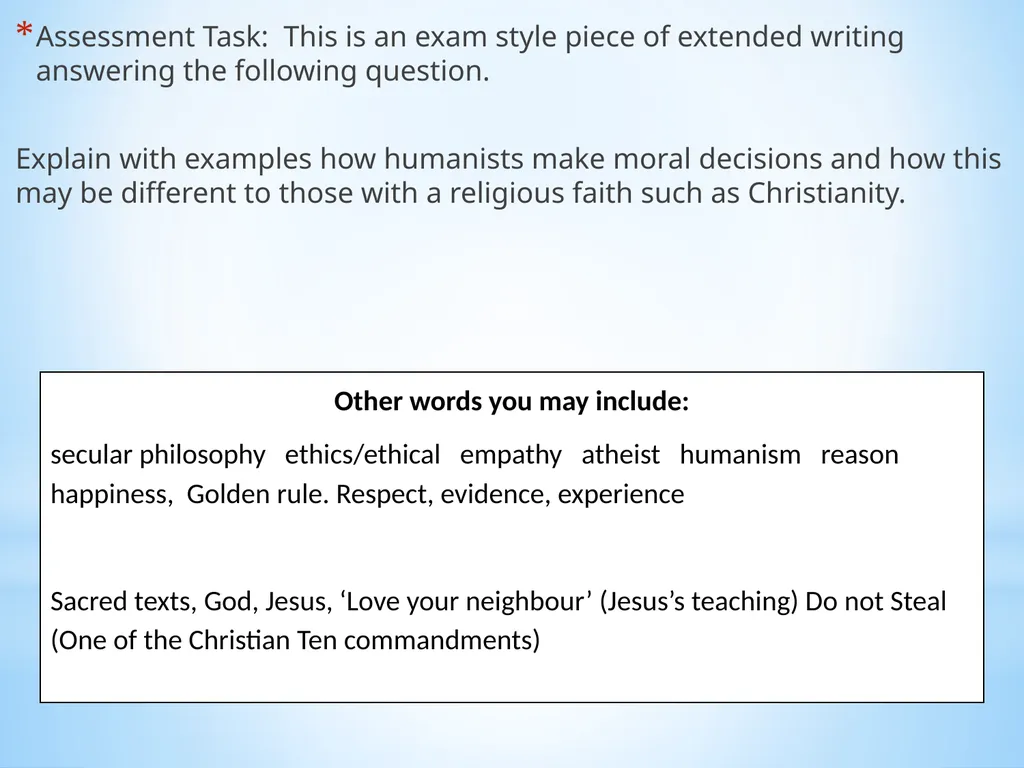
Assessment Task: This is an exam style piece of extended writing answering the following question.
Explain with examples how humanists make moral decisions and how this may be different to those with a religious faith such as Christianity. Other words you may include:
secular philosophy ethics/ethical empathy atheist humanism reason happiness, Golden rule. Respect, evidence, experience
Sacred texts, God, Jesus, ‘Love your neighbour’ (Jesus’s teaching) Do not Steal (One of the Christian Ten commandments)<br>
07
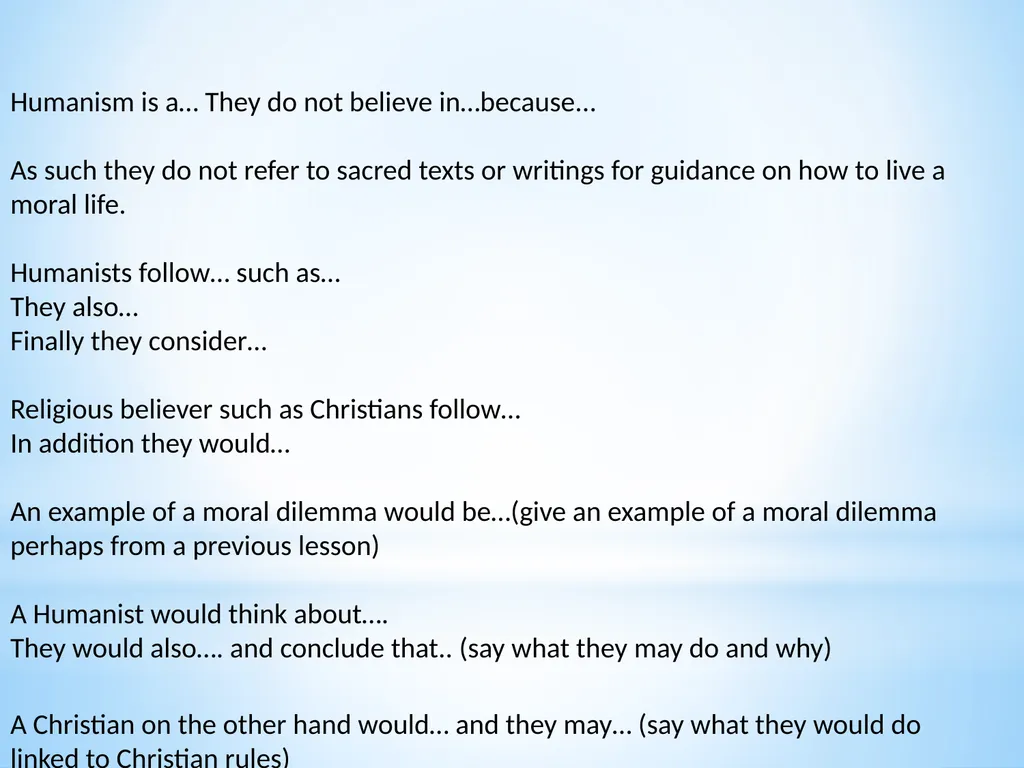
Humanism is a… They do not believe in…because...
As such they do not refer to sacred texts or writings for guidance on how to live a moral life.
Humanists follow… such as…
They also…
Finally they consider…
Religious believer such as Christians follow…
In addition they would…
An example of a moral dilemma would be…(give an example of a moral dilemma perhaps from a previous lesson)
A Humanist would think about….
They would also…. and conclude that.. (say what they may do and why) A Christian on the other hand would… and they may… (say what they would do linked to Christian rules)<br>
08
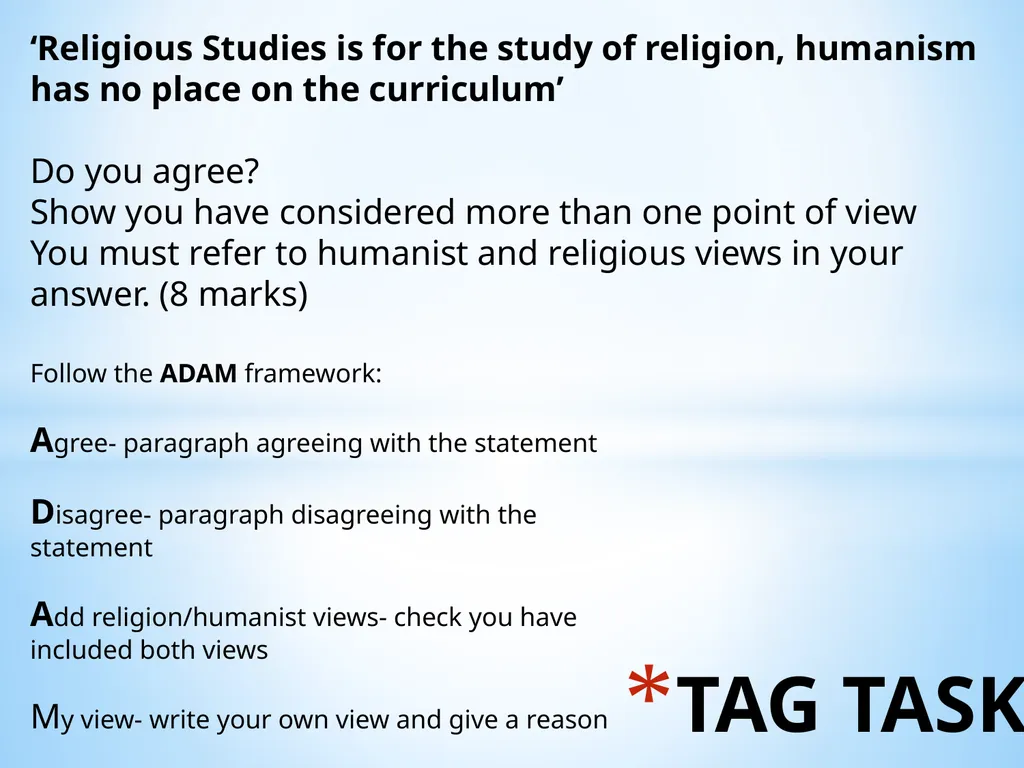
TAG TASK ‘Religious Studies is for the study of religion, humanism has no place on the curriculum’
Do you agree?
Show you have considered more than one point of view
You must refer to humanist and religious views in your answer. (8 marks) Follow the ADAM framework:
Agree- paragraph agreeing with the statement
Disagree- paragraph disagreeing with the statement
Add religion/humanist views- check you have included both views
My view- write your own view and give a reason<br>
09
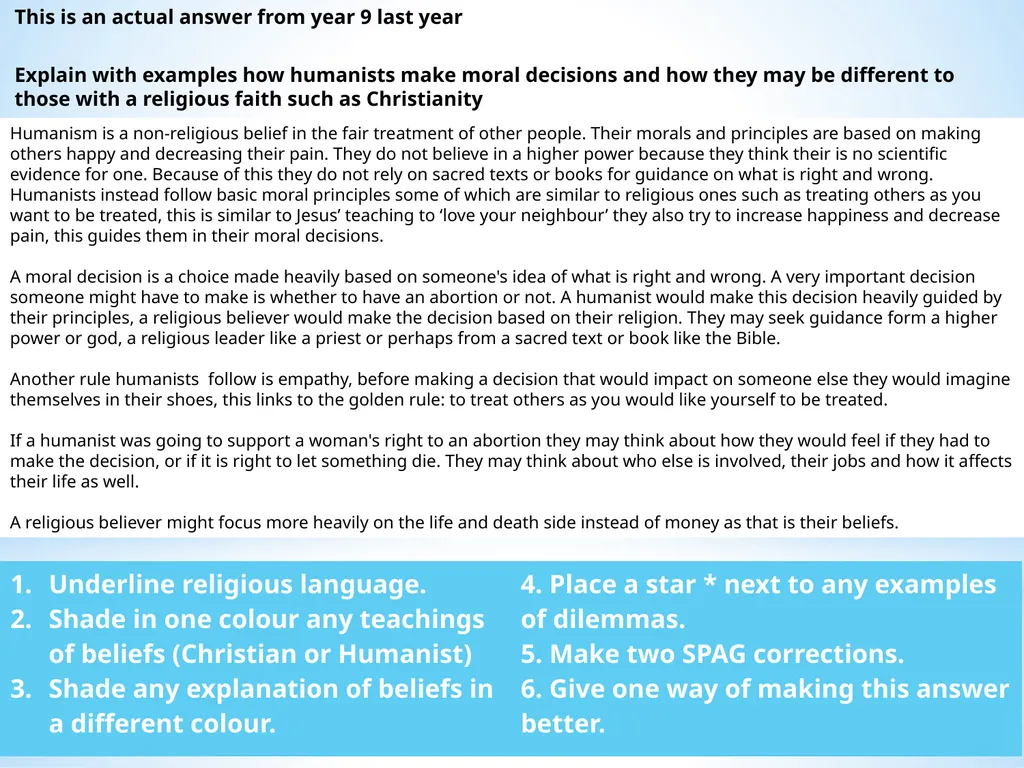
This is an actual answer from year 9 last year Explain with examples how humanists make moral decisions and how they may be different to those with a religious faith such as Christianity Humanism is a non-religious belief in the fair treatment of other people. Their morals and principles are based on making others happy and decreasing their pain. They do not believe in a higher power because they think their is no scientific evidence for one. Because of this they do not rely on sacred texts or books for guidance on what is right and wrong. Humanists instead follow basic moral principles some of which are similar to religious ones such as treating others as you want to be treated, this is similar to Jesus’ teaching to ‘love your neighbour’ they also try to increase happiness and decrease pain, this guides them in their moral decisions.
A moral decision is a choice made heavily based on someone's idea of what is right and wrong. A very important decision someone might have to make is whether to have an abortion or not. A humanist would make this decision heavily guided by their principles, a religious believer would make the decision based on their religion. They may seek guidance form a higher power or god, a religious leader like a priest or perhaps from a sacred text or book like the Bible.
Another rule humanists follow is empathy, before making a decision that would impact on someone else they would imagine themselves in their shoes, this links to the golden rule: to treat others as you would like yourself to be treated.
If a humanist was going to support a woman's right to an abortion they may think about how they would feel if they had to make the decision, or if it is right to let something die. They may think about who else is involved, their jobs and how it affects their life as well.
A religious believer might focus more heavily on the life and death side instead of money as that is their beliefs.<br>
10
Tuesday, 15 August 2017 Objective – What have I learned about humanism? Our Learning Journey Ethics, Philosophy and Religion<br>