
Type 2 diabetes Karen S Gregson, PhD Comparison of
KB
Published · 37 slides · 0 views

1 / 1


Description
Type 2 diabetes Karen S Gregson, PhD Comparison of Type 1 and Type 2 Diabetes Screening Criteria for Diabetes Testing for diabetes should be considered in all persons 45 yr of age; if normal, the test should be repeated at 3-yr intervals.
Related Topics
Share
Embed code
Download this presentation From Below
"Type 2 diabetes Karen S Gregson, PhD Comparison of" is the property of its rightful owner. Permission is granted to download and print the materials on this website for personal, non-commercial use only, and to display it on your personal computer provided you do not modify the materials and that you retain all copyright notices contained in the materials. By downloading content from our website, you accept the terms of this agreement.
Presentation Transcript
01
Type 2 diabetes Karen S Gregson, PhD<br>
02
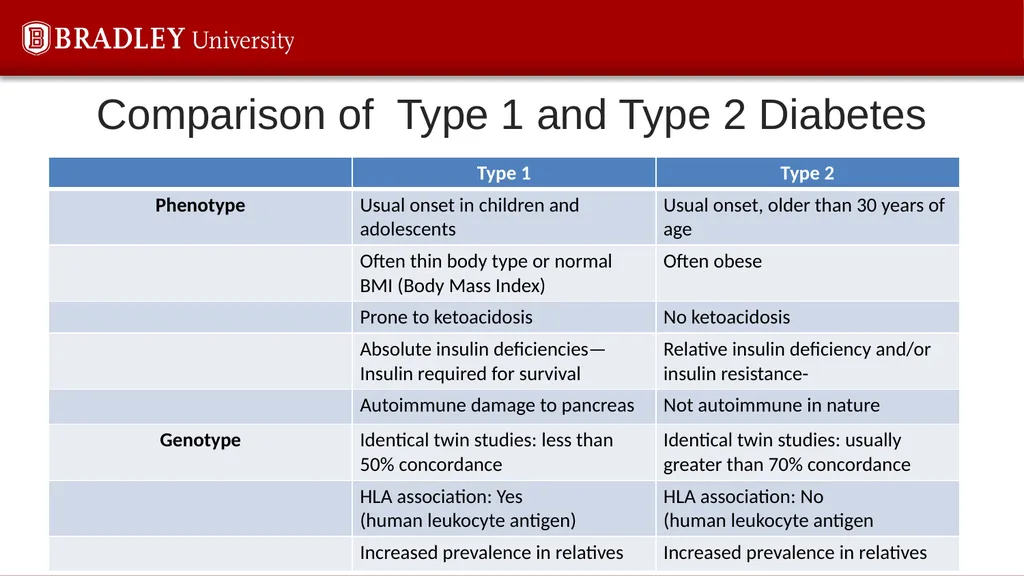
Comparison of Type 1 and Type 2 Diabetes<br>
03
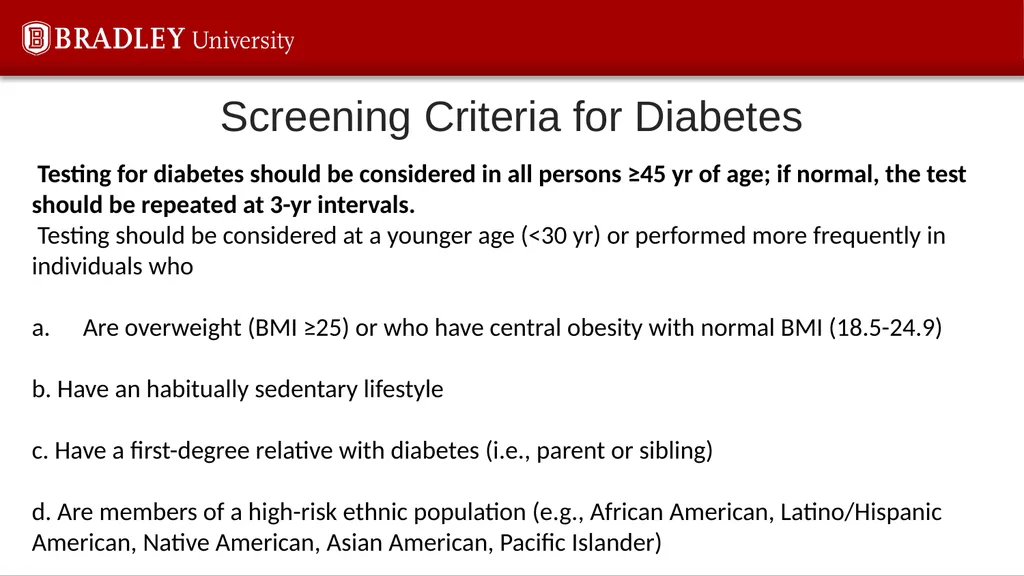
Screening Criteria for Diabetes Testing for diabetes should be considered in all persons ≥45 yr of age; if normal, the test should be repeated at 3-yr intervals.
Testing should be considered at a younger age (<30 yr) or performed more frequently in individuals who
a. Are overweight (BMI ≥25) or who have central obesity with normal BMI (18.5-24.9)
b. Have an habitually sedentary lifestyle
c. Have a first-degree relative with diabetes (i.e., parent or sibling)
d. Are members of a high-risk ethnic population (e.g., African American, Latino/Hispanic American, Native American, Asian American, Pacific Islander)<br>
04
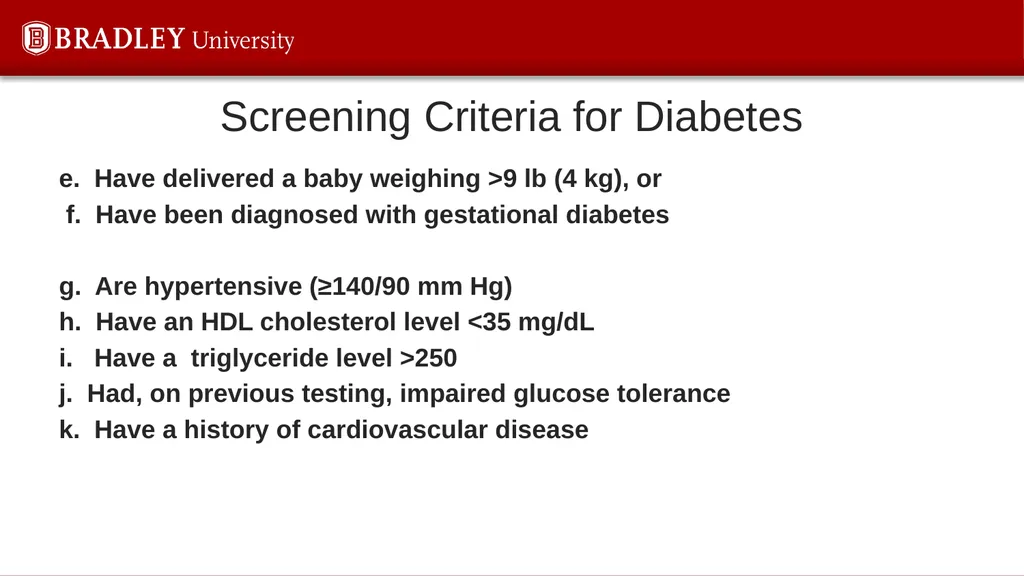
Screening Criteria for Diabetes e. Have delivered a baby weighing >9 lb (4 kg), or
f. Have been diagnosed with gestational diabetes
g. Are hypertensive (≥140/90 mm Hg)
h. Have an HDL cholesterol level <35 mg/dL
i. Have a triglyceride level >250
j. Had, on previous testing, impaired glucose tolerance
k. Have a history of cardiovascular disease<br>
f. Have been diagnosed with gestational diabetes
g. Are hypertensive (≥140/90 mm Hg)
h. Have an HDL cholesterol level <35 mg/dL
i. Have a triglyceride level >250
j. Had, on previous testing, impaired glucose tolerance
k. Have a history of cardiovascular disease<br>
05
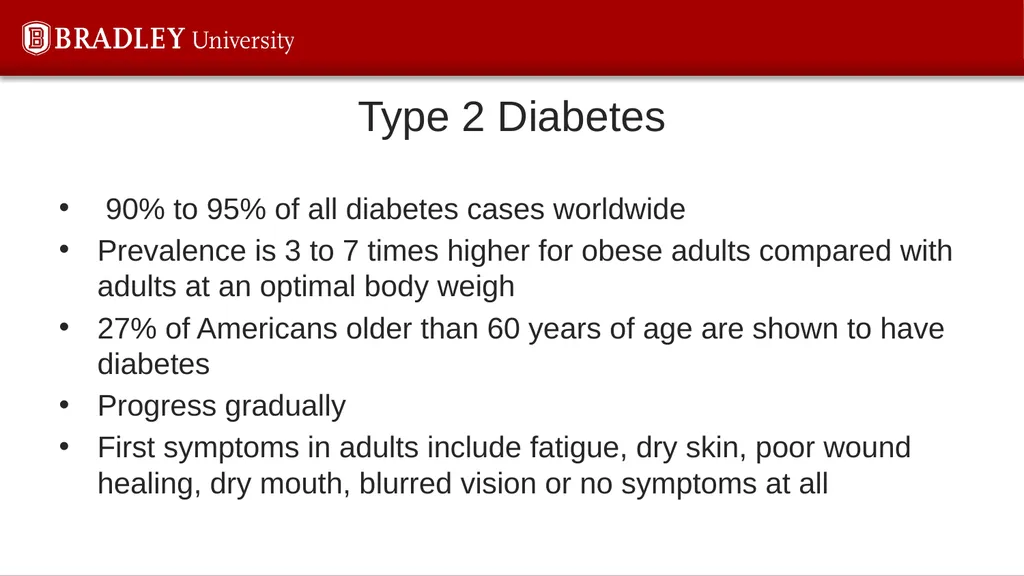
Type 2 Diabetes 90% to 95% of all diabetes cases worldwide
Prevalence is 3 to 7 times higher for obese adults compared with adults at an optimal body weigh
27% of Americans older than 60 years of age are shown to have diabetes
Progress gradually
First symptoms in adults include fatigue, dry skin, poor wound healing, dry mouth, blurred vision or no symptoms at all<br>
06
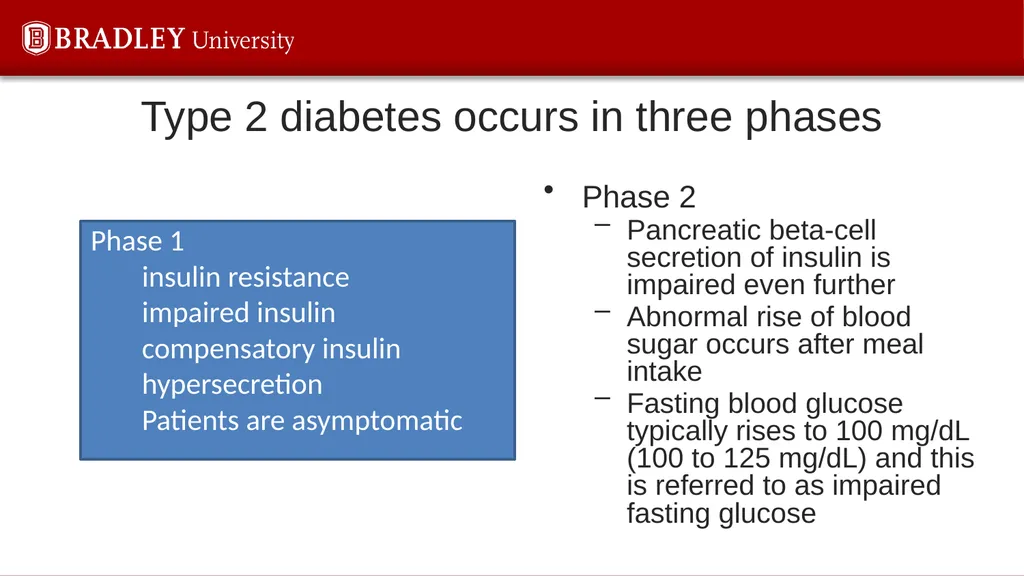
Phase 2
Pancreatic beta-cell secretion of insulin is impaired even further
Abnormal rise of blood sugar occurs after meal intake
Fasting blood glucose typically rises to 100 mg/dL (100 to 125 mg/dL) and this is referred to as impaired fasting glucose Type 2 diabetes occurs in three phases Phase 1
insulin resistance
impaired insulin
compensatory insulin hypersecretion
Patients are asymptomatic<br>
07
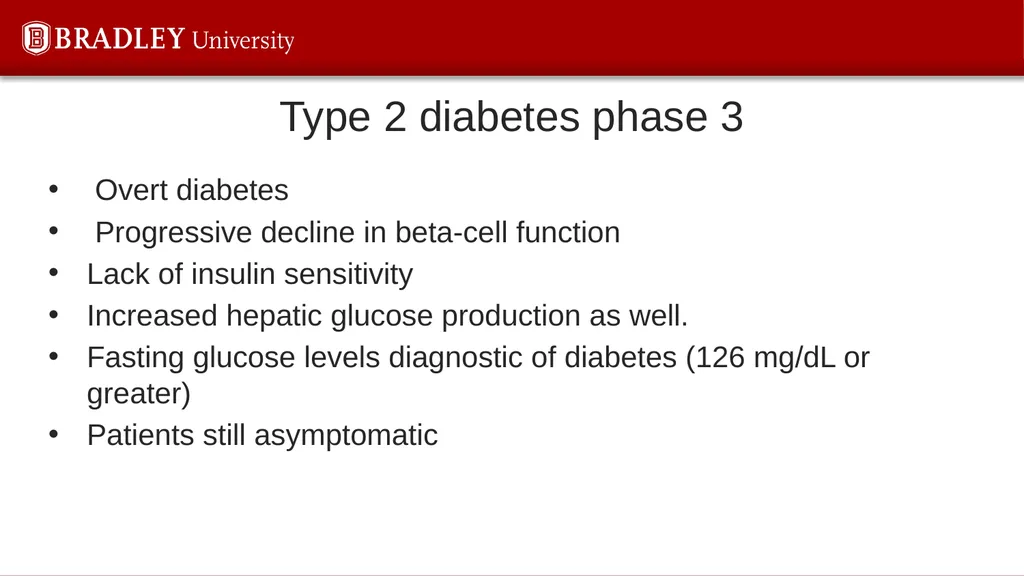
Type 2 diabetes phase 3 Overt diabetes
Progressive decline in beta-cell function
Lack of insulin sensitivity
Increased hepatic glucose production as well.
Fasting glucose levels diagnostic of diabetes (126 mg/dL or greater)
Patients still asymptomatic<br>
Progressive decline in beta-cell function
Lack of insulin sensitivity
Increased hepatic glucose production as well.
Fasting glucose levels diagnostic of diabetes (126 mg/dL or greater)
Patients still asymptomatic<br>
08
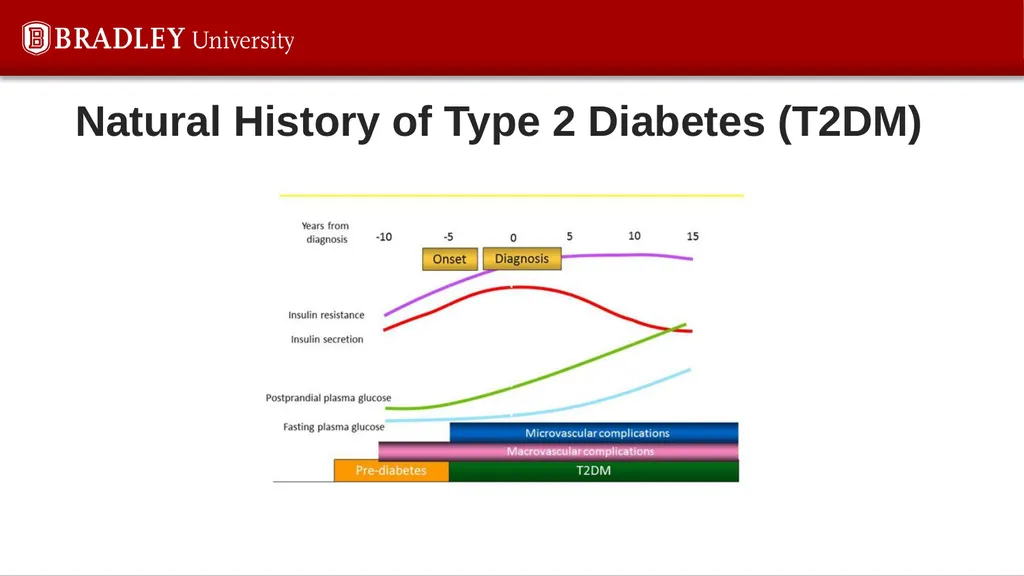
Natural History of Type 2 Diabetes (T2DM)<br>
09
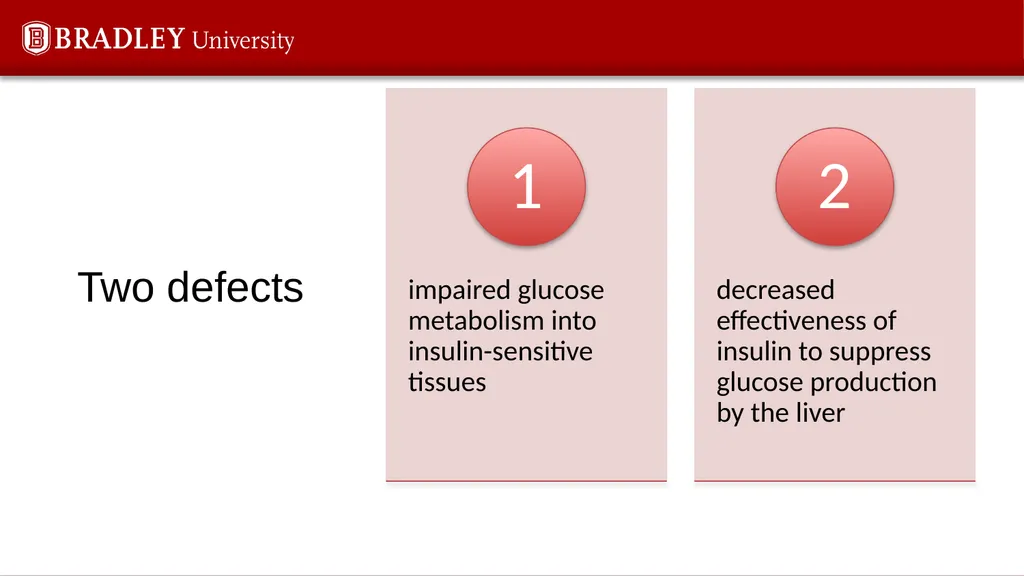
Two defects<br>
10
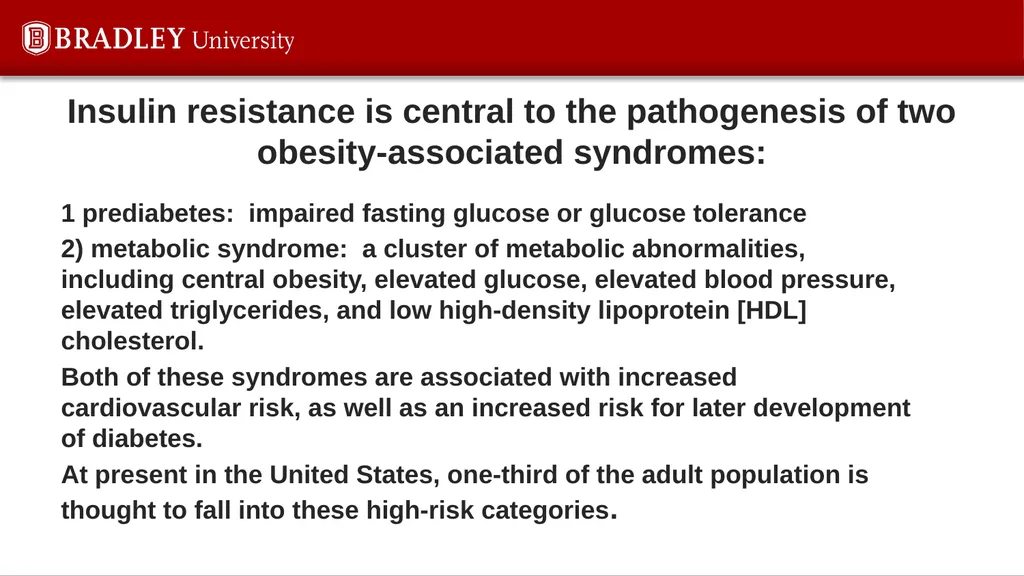
Insulin resistance is central to the pathogenesis of two obesity-associated syndromes: 1 prediabetes: impaired fasting glucose or glucose tolerance
2) metabolic syndrome: a cluster of metabolic abnormalities, including central obesity, elevated glucose, elevated blood pressure, elevated triglycerides, and low high-density lipoprotein [HDL] cholesterol.
Both of these syndromes are associated with increased cardiovascular risk, as well as an increased risk for later development of diabetes.
At present in the United States, one-third of the adult population is thought to fall into these high-risk categories.<br>
11
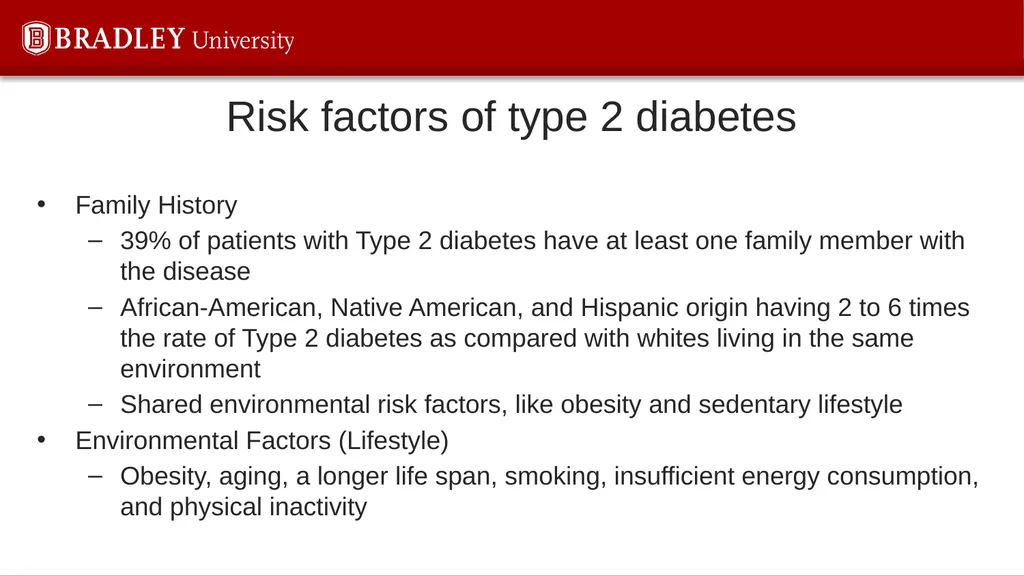
Risk factors of type 2 diabetes Family History
39% of patients with Type 2 diabetes have at least one family member with the disease
African-American, Native American, and Hispanic origin having 2 to 6 times the rate of Type 2 diabetes as compared with whites living in the same environment
Shared environmental risk factors, like obesity and sedentary lifestyle
Environmental Factors (Lifestyle)
Obesity, aging, a longer life span, smoking, insufficient energy consumption, and physical inactivity<br>
12
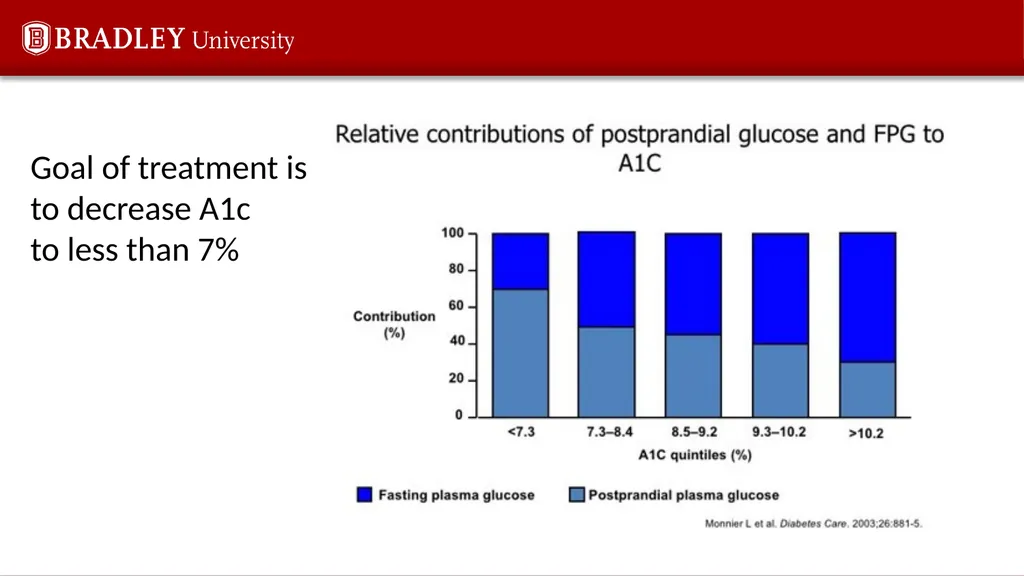
Goal of treatment is
to decrease A1c
to less than 7%<br>
to decrease A1c
to less than 7%<br>
13
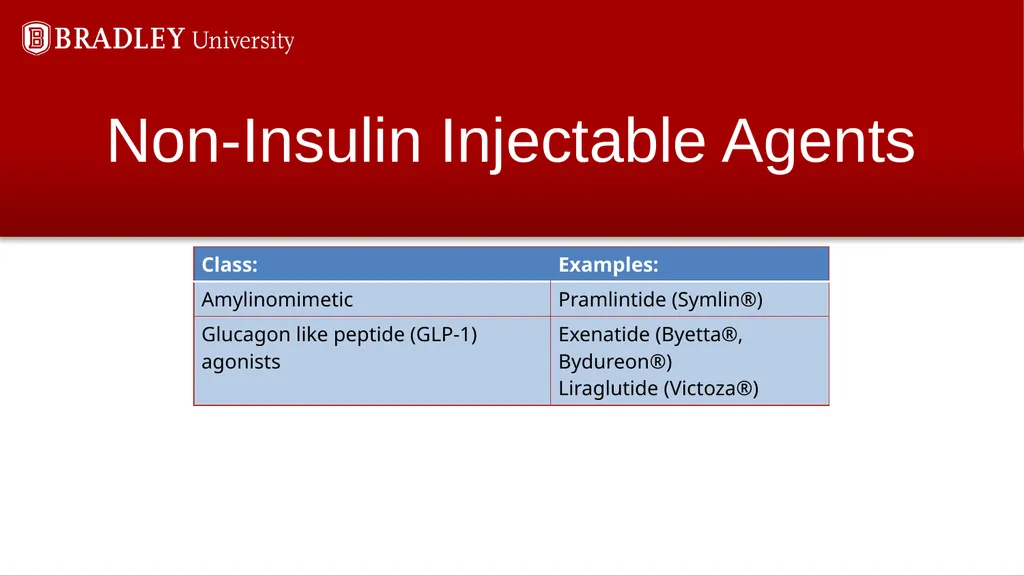
Non-Insulin Injectable Agents<br>
14
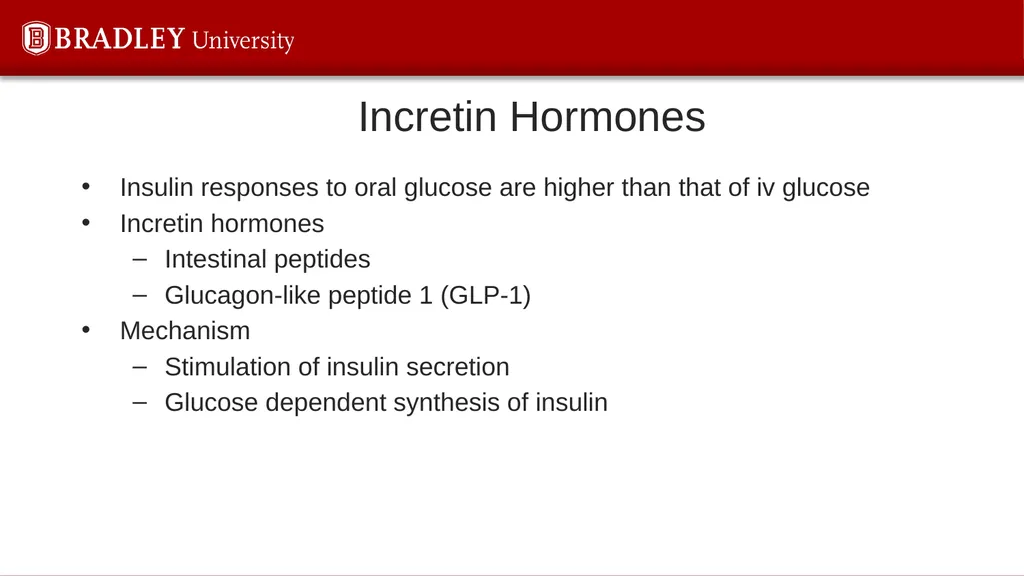
Incretin Hormones Insulin responses to oral glucose are higher than that of iv glucose
Incretin hormones
Intestinal peptides
Glucagon-like peptide 1 (GLP-1)
Mechanism
Stimulation of insulin secretion
Glucose dependent synthesis of insulin<br>
Incretin hormones
Intestinal peptides
Glucagon-like peptide 1 (GLP-1)
Mechanism
Stimulation of insulin secretion
Glucose dependent synthesis of insulin<br>
15
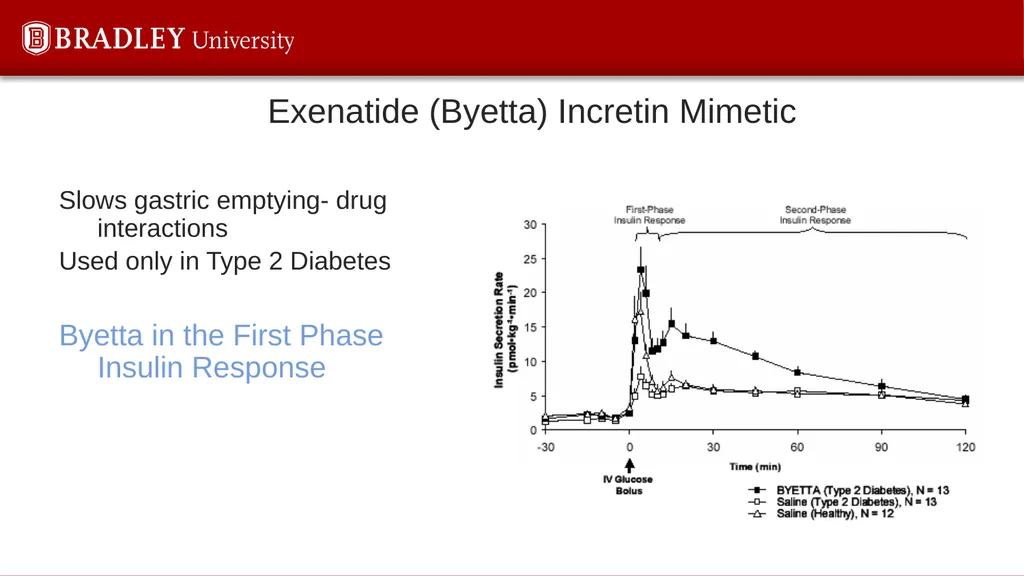
Exenatide (Byetta) Incretin Mimetic Slows gastric emptying- drug interactions
Used only in Type 2 Diabetes
Byetta in the First Phase Insulin Response<br>
Used only in Type 2 Diabetes
Byetta in the First Phase Insulin Response<br>
16
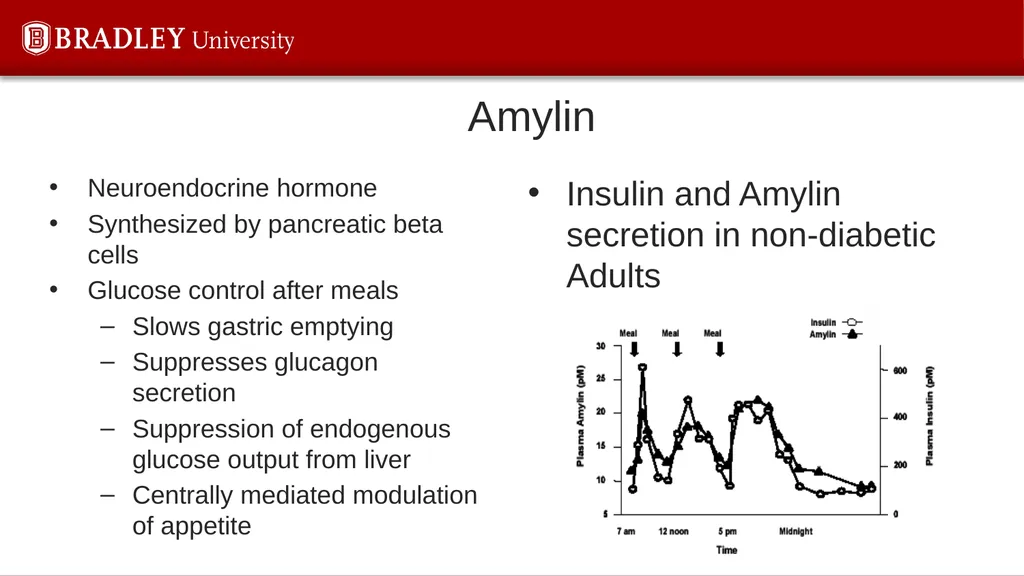
Neuroendocrine hormone
Synthesized by pancreatic beta cells
Glucose control after meals
Slows gastric emptying
Suppresses glucagon secretion
Suppression of endogenous glucose output from liver
Centrally mediated modulation of appetite Insulin and Amylin secretion in non-diabetic Adults Amylin<br>
Synthesized by pancreatic beta cells
Glucose control after meals
Slows gastric emptying
Suppresses glucagon secretion
Suppression of endogenous glucose output from liver
Centrally mediated modulation of appetite Insulin and Amylin secretion in non-diabetic Adults Amylin<br>
17
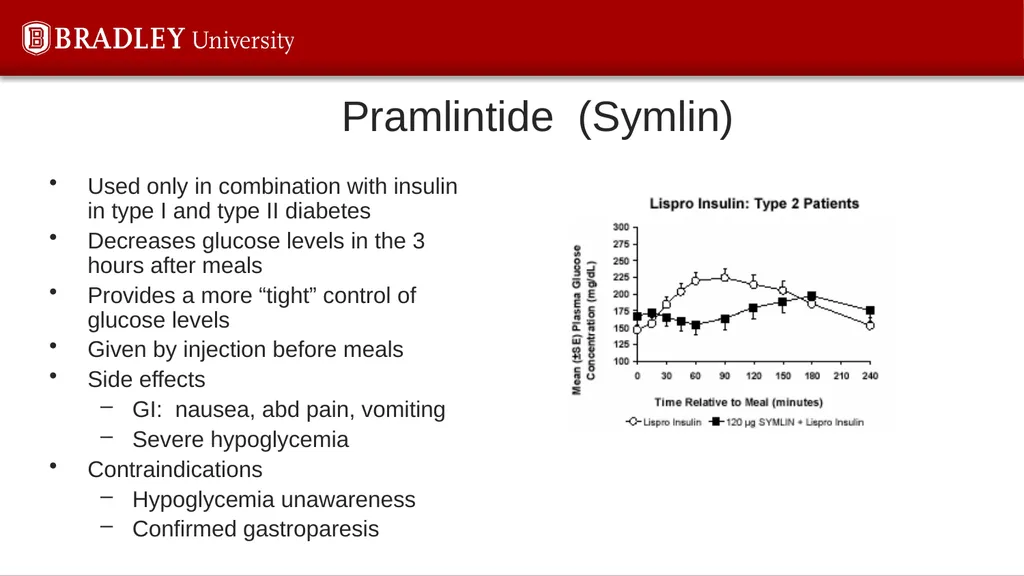
Used only in combination with insulin in type I and type II diabetes
Decreases glucose levels in the 3 hours after meals
Provides a more “tight” control of glucose levels
Given by injection before meals
Side effects
GI: nausea, abd pain, vomiting
Severe hypoglycemia
Contraindications
Hypoglycemia unawareness
Confirmed gastroparesis Pramlintide (Symlin)<br>
Decreases glucose levels in the 3 hours after meals
Provides a more “tight” control of glucose levels
Given by injection before meals
Side effects
GI: nausea, abd pain, vomiting
Severe hypoglycemia
Contraindications
Hypoglycemia unawareness
Confirmed gastroparesis Pramlintide (Symlin)<br>
18
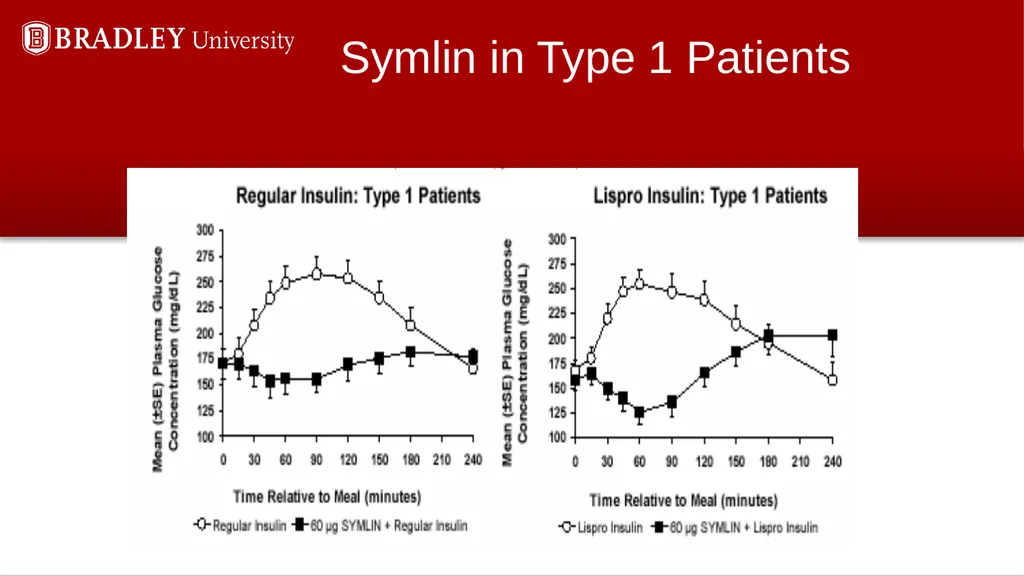
Symlin in Type 1 Patients<br>
19
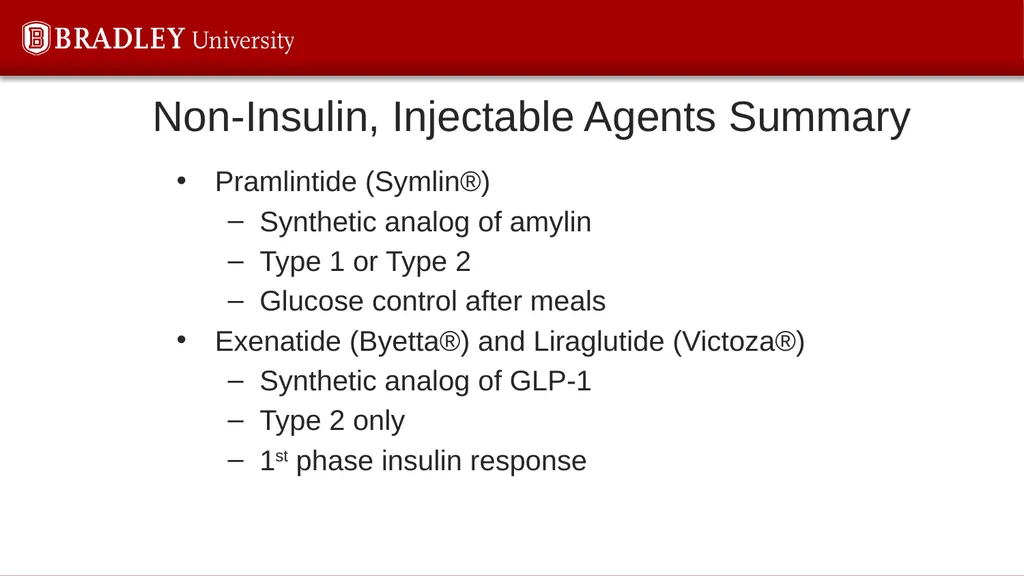
Non-Insulin, Injectable Agents Summary Pramlintide (Symlin®)
Synthetic analog of amylin
Type 1 or Type 2
Glucose control after meals
Exenatide (Byetta®) and Liraglutide (Victoza®)
Synthetic analog of GLP-1
Type 2 only
1st phase insulin response<br>
Synthetic analog of amylin
Type 1 or Type 2
Glucose control after meals
Exenatide (Byetta®) and Liraglutide (Victoza®)
Synthetic analog of GLP-1
Type 2 only
1st phase insulin response<br>
20
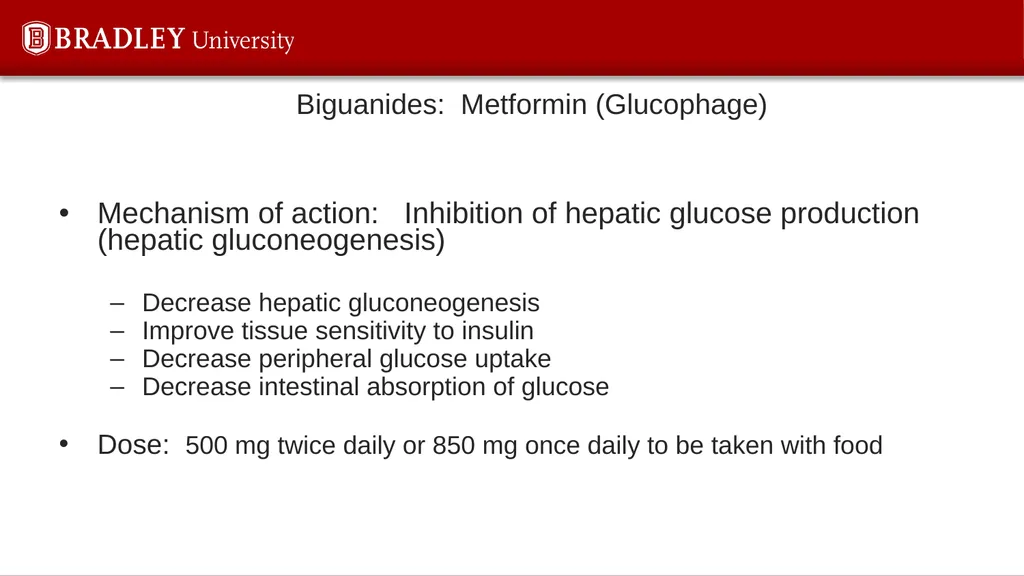
Biguanides: Metformin (Glucophage) Mechanism of action: Inhibition of hepatic glucose production (hepatic gluconeogenesis)
Decrease hepatic gluconeogenesis
Improve tissue sensitivity to insulin
Decrease peripheral glucose uptake
Decrease intestinal absorption of glucose
Dose: 500 mg twice daily or 850 mg once daily to be taken with food<br>
Decrease hepatic gluconeogenesis
Improve tissue sensitivity to insulin
Decrease peripheral glucose uptake
Decrease intestinal absorption of glucose
Dose: 500 mg twice daily or 850 mg once daily to be taken with food<br>
21
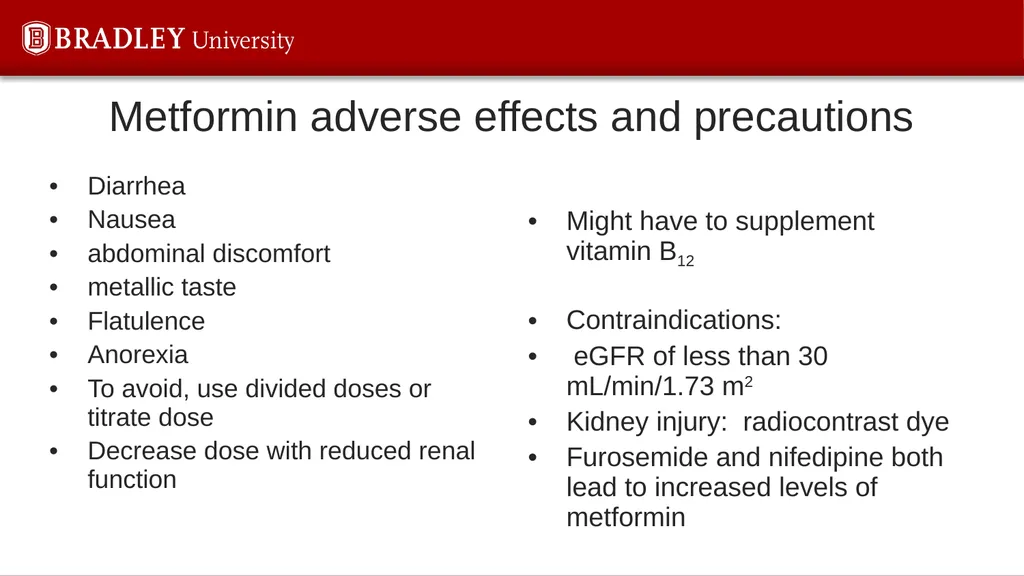
Diarrhea
Nausea
abdominal discomfort
metallic taste
Flatulence
Anorexia
To avoid, use divided doses or titrate dose
Decrease dose with reduced renal function Might have to supplement vitamin B12
Contraindications:
eGFR of less than 30 mL/min/1.73 m2
Kidney injury: radiocontrast dye
Furosemide and nifedipine both lead to increased levels of metformin Metformin adverse effects and precautions<br>
22
Glyburide (DiaBeta) Glipizide(Glucotrol)
Glimepiride (Amaryl)
Mechanism:
Potassium channel blockers on the β cells of the pancreas.
This causes the cells to carry a more positive membrane potential at rest, easing the ability of the cells to depolarize.
This leads to enhanced β-cell sensitivity to glucose and increased insulin secretion Sulfonylureas 2nd gen<br>
23
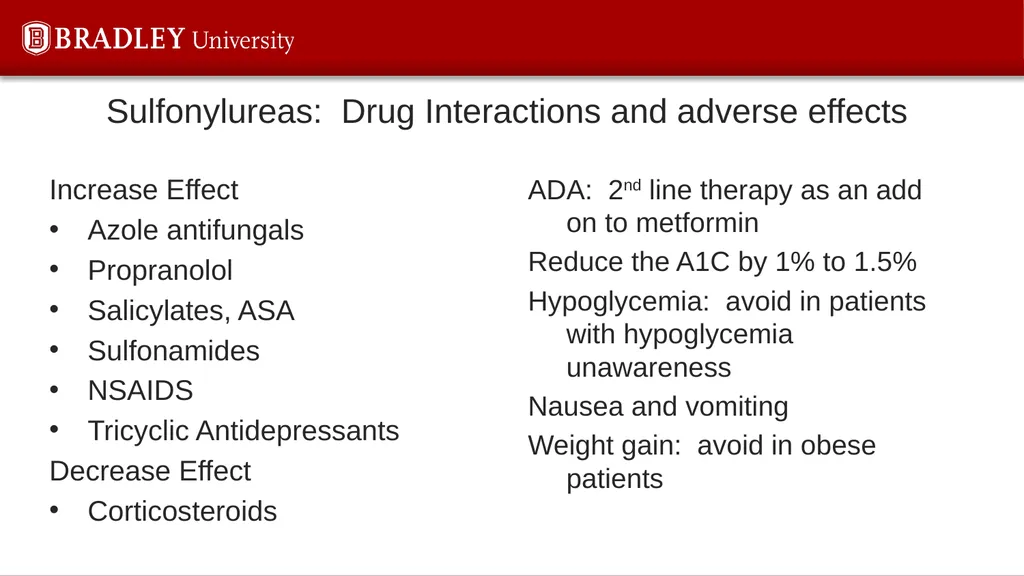
Increase Effect
Azole antifungals
Propranolol
Salicylates, ASA
Sulfonamides
NSAIDS
Tricyclic Antidepressants
Decrease Effect
Corticosteroids ADA: 2nd line therapy as an add on to metformin
Reduce the A1C by 1% to 1.5%
Hypoglycemia: avoid in patients with hypoglycemia unawareness
Nausea and vomiting
Weight gain: avoid in obese patients Sulfonylureas: Drug Interactions and adverse effects<br>
24
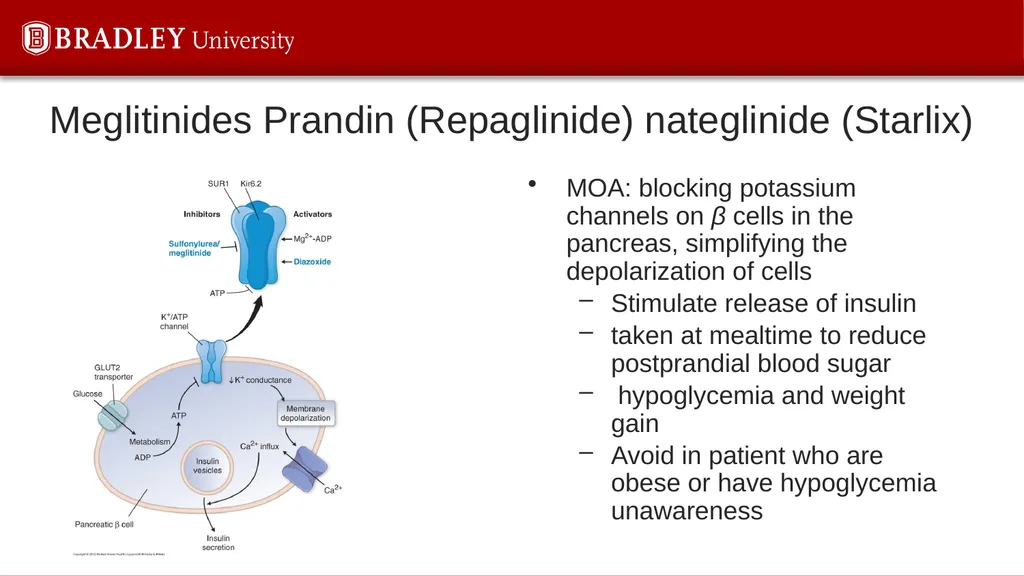
MOA: blocking potassium channels on β cells in the pancreas, simplifying the depolarization of cells
Stimulate release of insulin
taken at mealtime to reduce postprandial blood sugar
hypoglycemia and weight gain
Avoid in patient who are obese or have hypoglycemia unawareness Meglitinides Prandin (Repaglinide) nateglinide (Starlix)<br>
Stimulate release of insulin
taken at mealtime to reduce postprandial blood sugar
hypoglycemia and weight gain
Avoid in patient who are obese or have hypoglycemia unawareness Meglitinides Prandin (Repaglinide) nateglinide (Starlix)<br>
25
Thiazolidinediones-- Pioglitazone (Actos), Rosiglitazone (Avandia) Mechanism: bind to peroxisome proliferator-activated receptor-γ (PPAR-γ). Activation of this receptor results in increased transcription of a glucose transporter called GLUT-4.
Increased glucose uptake by cells
2nd line agents
A1C reduction of 1% to 1.5%.
weight gain and edema: avoid in patients who are obese or have heart failure
REMS program: Healthcare providers and patients must enroll in a special program in order to prescribe and receive these drugs<br>
Increased glucose uptake by cells
2nd line agents
A1C reduction of 1% to 1.5%.
weight gain and edema: avoid in patients who are obese or have heart failure
REMS program: Healthcare providers and patients must enroll in a special program in order to prescribe and receive these drugs<br>
26
Dipeptidyl peptidase 4 (DPP-4) inhibitors Incretin hormones
Stimulation of insulin secretion
Glucose dependent synthesis of insulin
Inactivated by DPP-4
reduction in A1C of 0.5% to 1%.
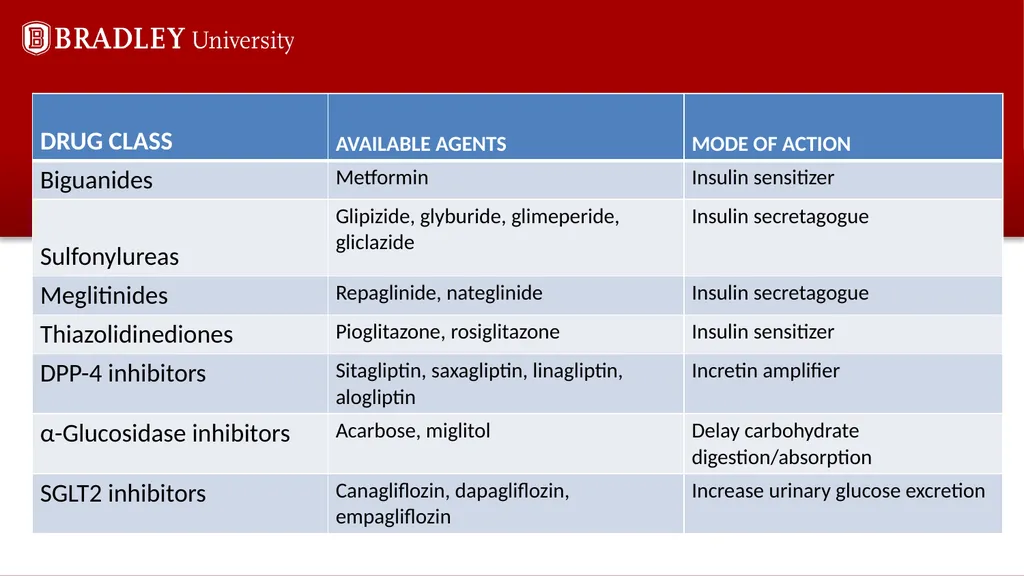
sitagliptin (Januvia), saxagliptin (Onglyza), linagliptin (Tradjenta), and alogliptin (Nesina)
Slows the inactivation of incretin hormones by inhibiting DPP-4<br>
Stimulation of insulin secretion
Glucose dependent synthesis of insulin
Inactivated by DPP-4
reduction in A1C of 0.5% to 1%.
sitagliptin (Januvia), saxagliptin (Onglyza), linagliptin (Tradjenta), and alogliptin (Nesina)
Slows the inactivation of incretin hormones by inhibiting DPP-4<br>
27
Dose 100 mg once daily
50 mg per day in patients with a creatinine clearance (CrCl) of from 30 to 50 mL/min
25 mg daily in patients with a CrCl of less than 30 mL/min Headache, nasopharyngitis, and hypoglycemia, though the risk of hypoglycemia is relatively low with these medications
Can be used in obese patients
2nd line drugs Dipeptidyl peptidase 4 (DPP-4) inhibitors<br>
28
αlpha glucosidase inhibitors Competitive and reversible inhibitor of α glucosidase, hydrolase, pancreatic α amylase
delaying the absorption of glucose,
Delay in the breakdown of carbohydrates to glucose
Acarbose (Precose), miglitol (Glyset)
1st line agents but not used often because of minimal effect on A1c and side effects
Flatulence, diarrhea, and abdominal bloating
Hypoglycemia risk is low
Contraindicated in inflammatory bowel disease, or other chronic intestinal diseases affecting digestion or absorption, or conditions that may deteriorate as the result of gas formation in the intestine<br>
29
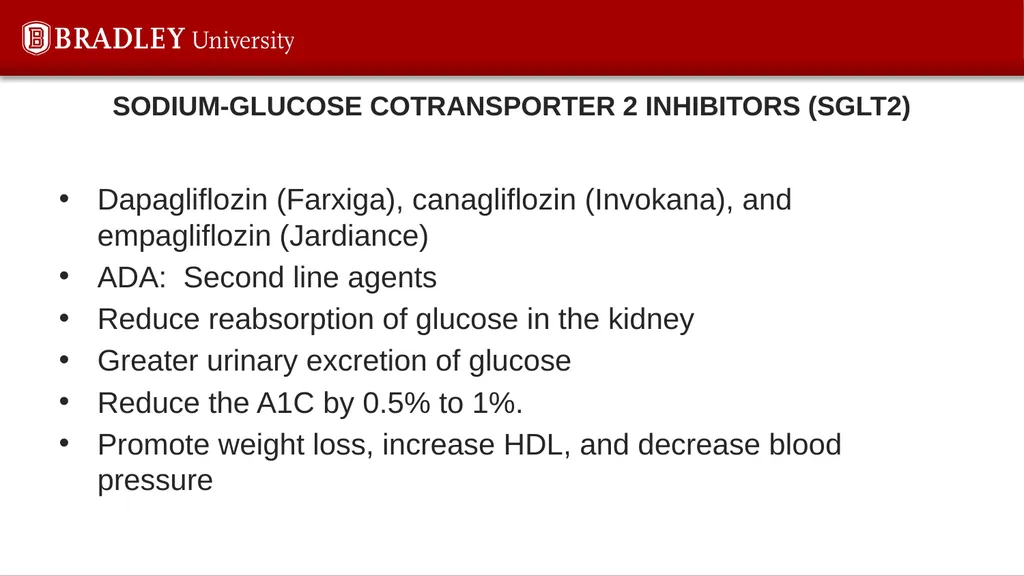
SODIUM-GLUCOSE COTRANSPORTER 2 INHIBITORS (SGLT2) Dapagliflozin (Farxiga), canagliflozin (Invokana), and empagliflozin (Jardiance)
ADA: Second line agents
Reduce reabsorption of glucose in the kidney
Greater urinary excretion of glucose
Reduce the A1C by 0.5% to 1%.
Promote weight loss, increase HDL, and decrease blood pressure<br>
ADA: Second line agents
Reduce reabsorption of glucose in the kidney
Greater urinary excretion of glucose
Reduce the A1C by 0.5% to 1%.
Promote weight loss, increase HDL, and decrease blood pressure<br>
30
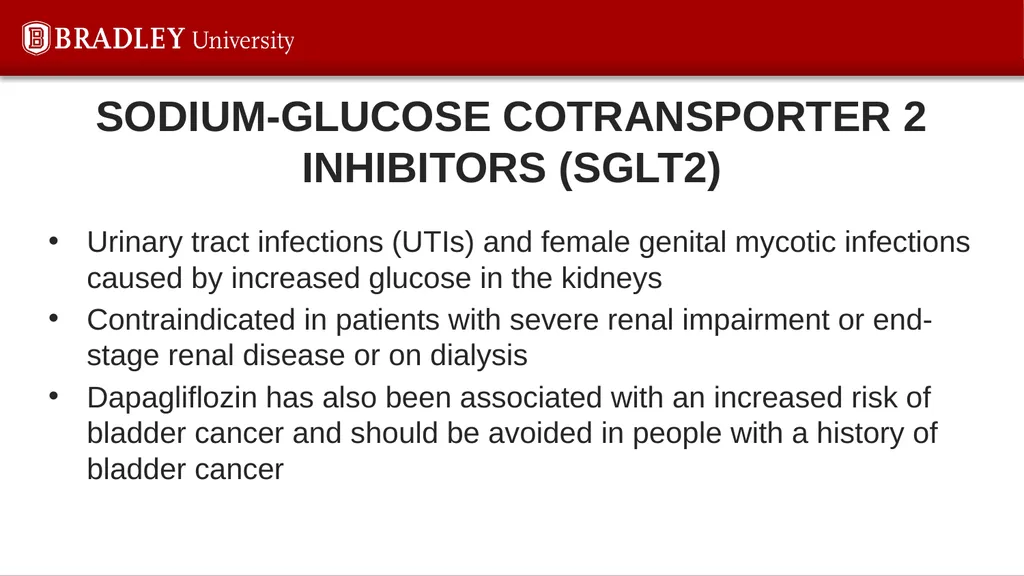
SODIUM-GLUCOSE COTRANSPORTER 2 INHIBITORS (SGLT2) Urinary tract infections (UTIs) and female genital mycotic infections caused by increased glucose in the kidneys
Contraindicated in patients with severe renal impairment or end-stage renal disease or on dialysis
Dapagliflozin has also been associated with an increased risk of bladder cancer and should be avoided in people with a history of bladder cancer<br>
Contraindicated in patients with severe renal impairment or end-stage renal disease or on dialysis
Dapagliflozin has also been associated with an increased risk of bladder cancer and should be avoided in people with a history of bladder cancer<br>
31
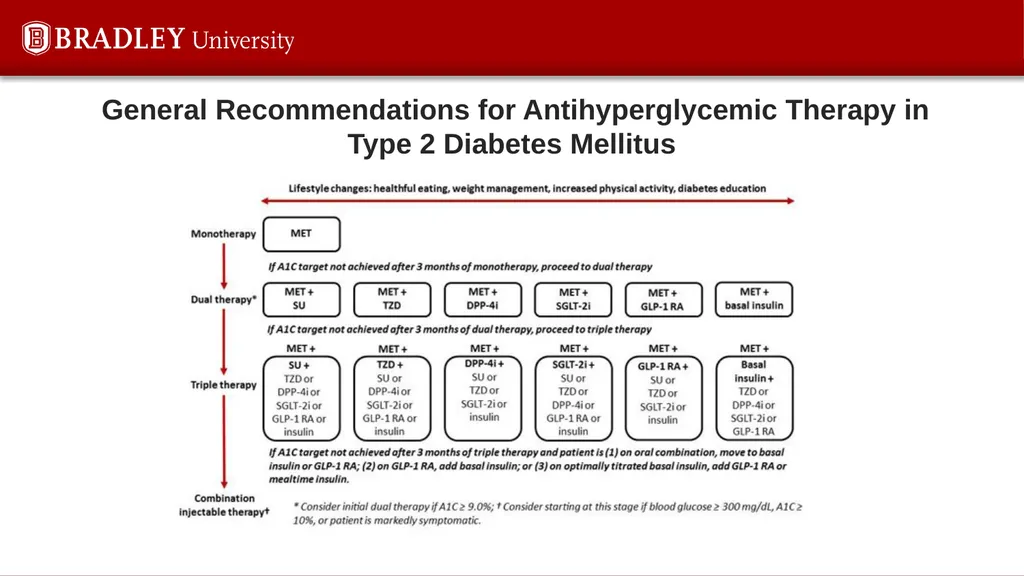
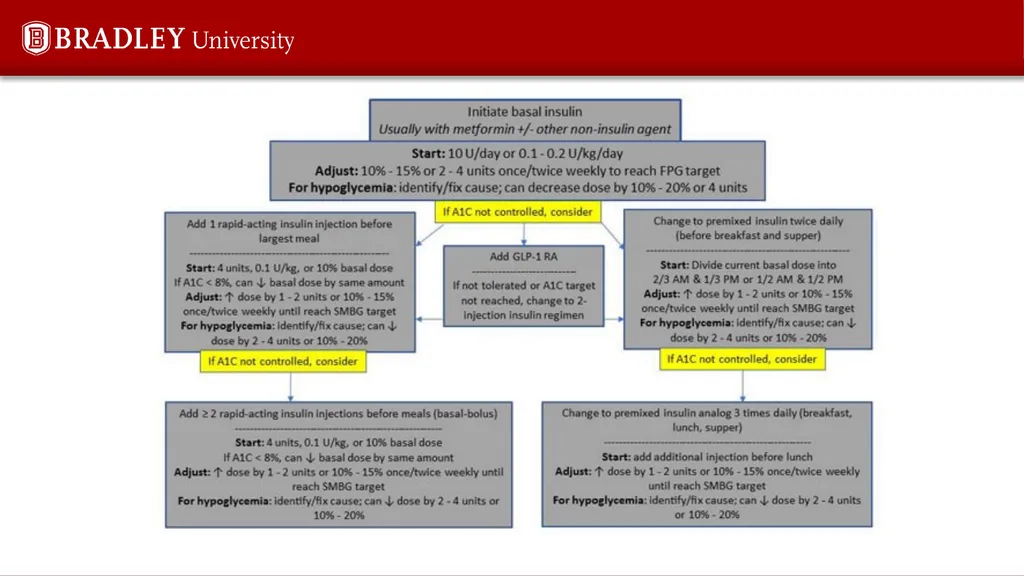
General Recommendations for Antihyperglycemic Therapy in Type 2 Diabetes Mellitus<br>
32
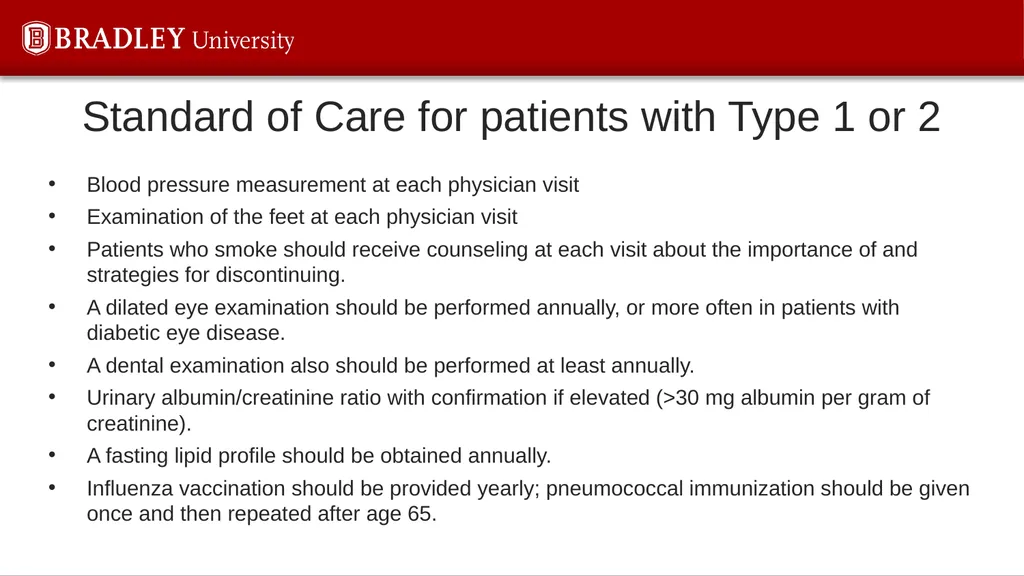
Standard of Care for patients with Type 1 or 2 Blood pressure measurement at each physician visit
Examination of the feet at each physician visit
Patients who smoke should receive counseling at each visit about the importance of and strategies for discontinuing.
A dilated eye examination should be performed annually, or more often in patients with diabetic eye disease.
A dental examination also should be performed at least annually.
Urinary albumin/creatinine ratio with confirmation if elevated (>30 mg albumin per gram of creatinine).
A fasting lipid profile should be obtained annually.
Influenza vaccination should be provided yearly; pneumococcal immunization should be given once and then repeated after age 65.<br>
33
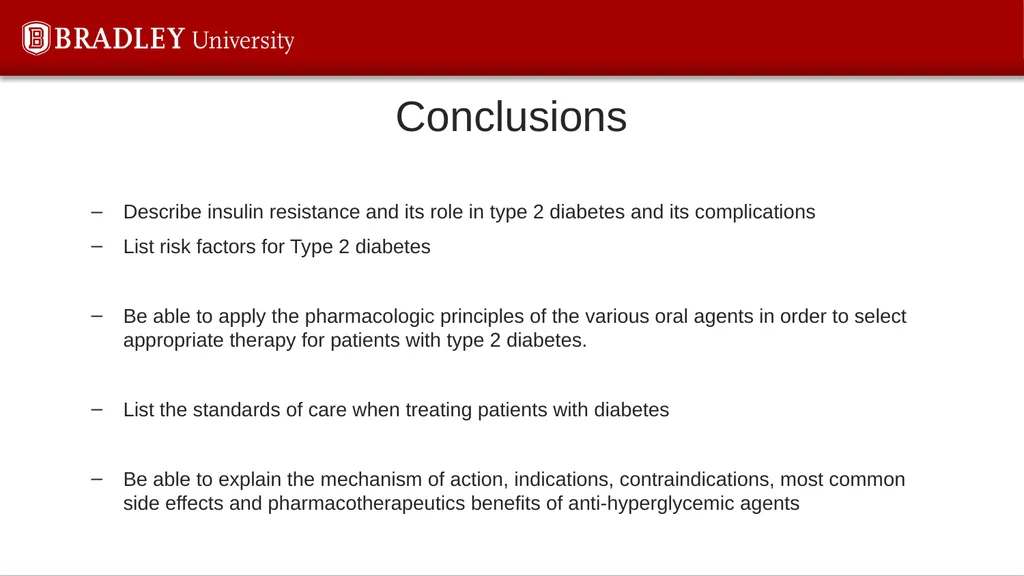
Conclusions Describe insulin resistance and its role in type 2 diabetes and its complications
List risk factors for Type 2 diabetes
Be able to apply the pharmacologic principles of the various oral agents in order to select appropriate therapy for patients with type 2 diabetes.
List the standards of care when treating patients with diabetes
Be able to explain the mechanism of action, indications, contraindications, most common side effects and pharmacotherapeutics benefits of anti-hyperglycemic agents<br>