
Understanding Adverse Childhood Experiences (ACEs)



Description: Understanding Adverse Childhood Experiences (ACEs) and their impact on an individual and a community How Common Are ACEs? Five parts of ACEs science Epidemiology ACE study and expanded ACE surveys Impact on the brain toxic stress caused by
Related Topics
Download Presentation
"Understanding Adverse Childhood Experiences (ACEs)" is the property of its rightful owner. Permission is granted to download and print the materials on this website for personal, non-commercial use only, and to display it on your personal computer provided you do not modify the materials and that you retain all copyright notices contained in the materials. By downloading content from our website, you accept the terms of this agreement.
Presentation Transcript
slide1. Understanding Adverse Childhood Experiences (ACEs) and their impact on an individual and a community<br>
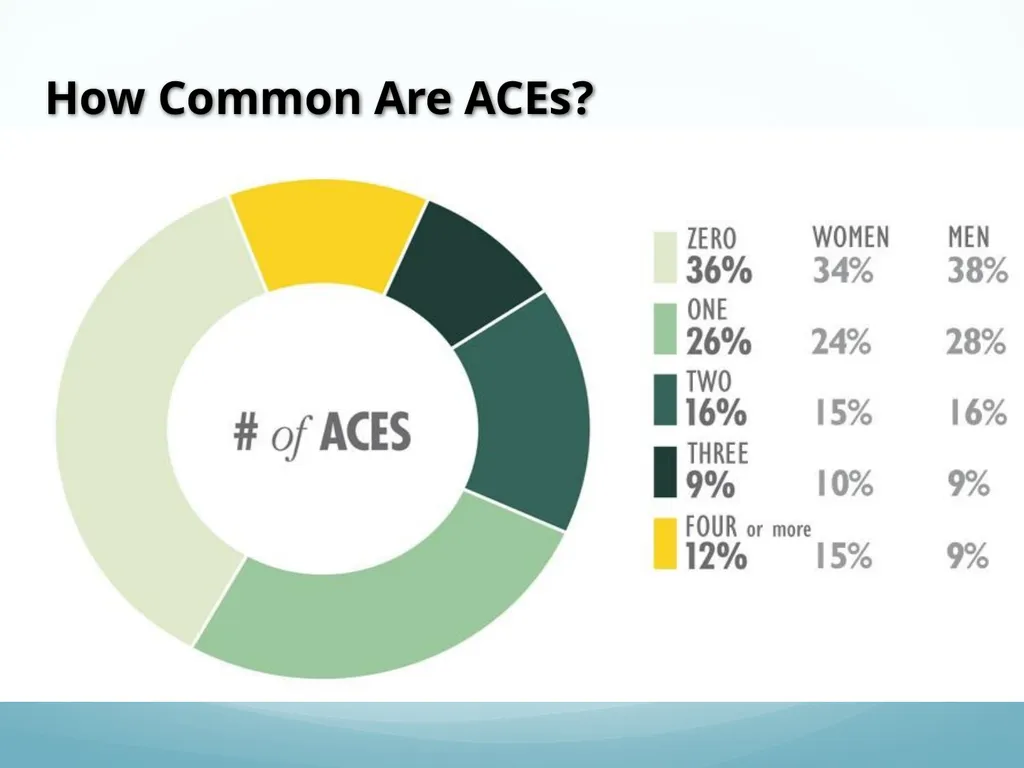
slide3. How Common Are ACEs?<br>
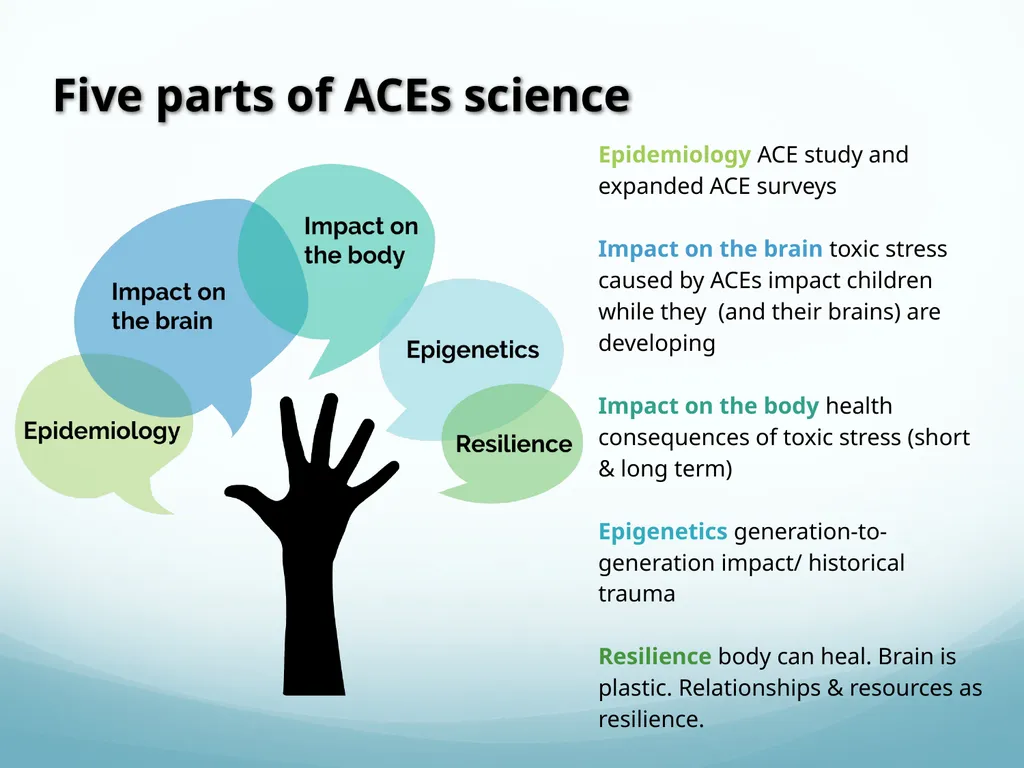
slide4. Five parts of ACEs science Epidemiology ACE study and expanded ACE surveys
Impact on the brain toxic stress caused by ACEs impact children while they (and their brains) are developing
Impact on the body health consequences of toxic stress (short & long term)
Epigenetics generation-to- generation impact/ historical trauma
Resilience body can heal. Brain is plastic. Relationships & resources as resilience.<br>
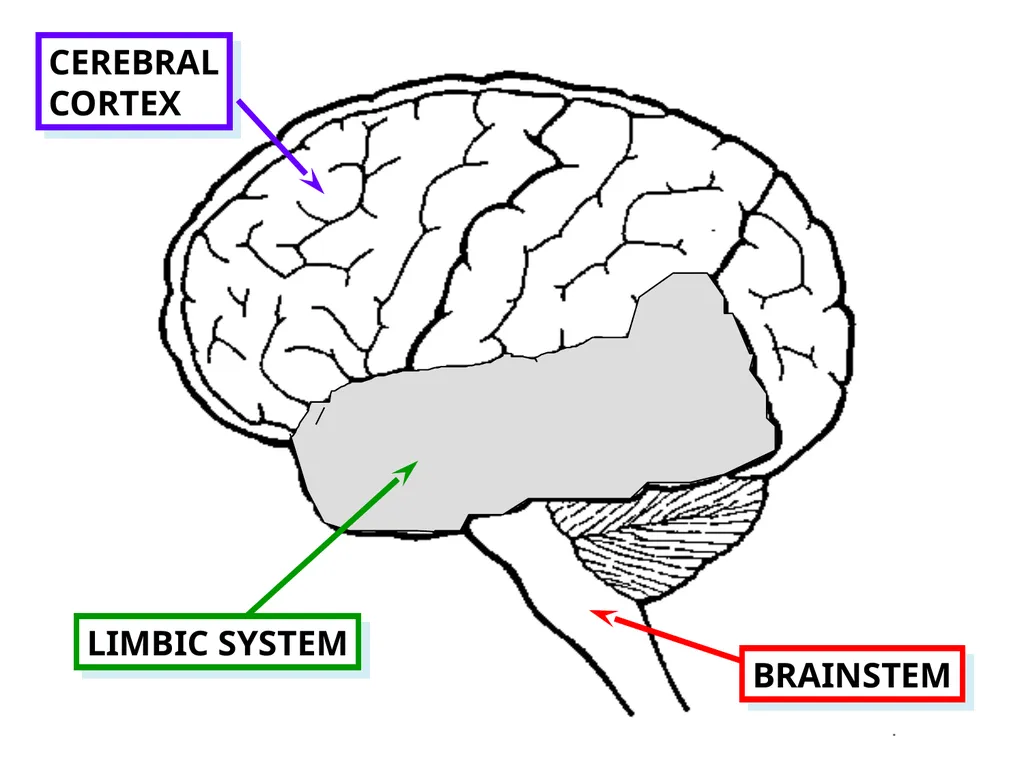
slide5. CEREBRAL
CORTEX LIMBIC SYSTEM<br>
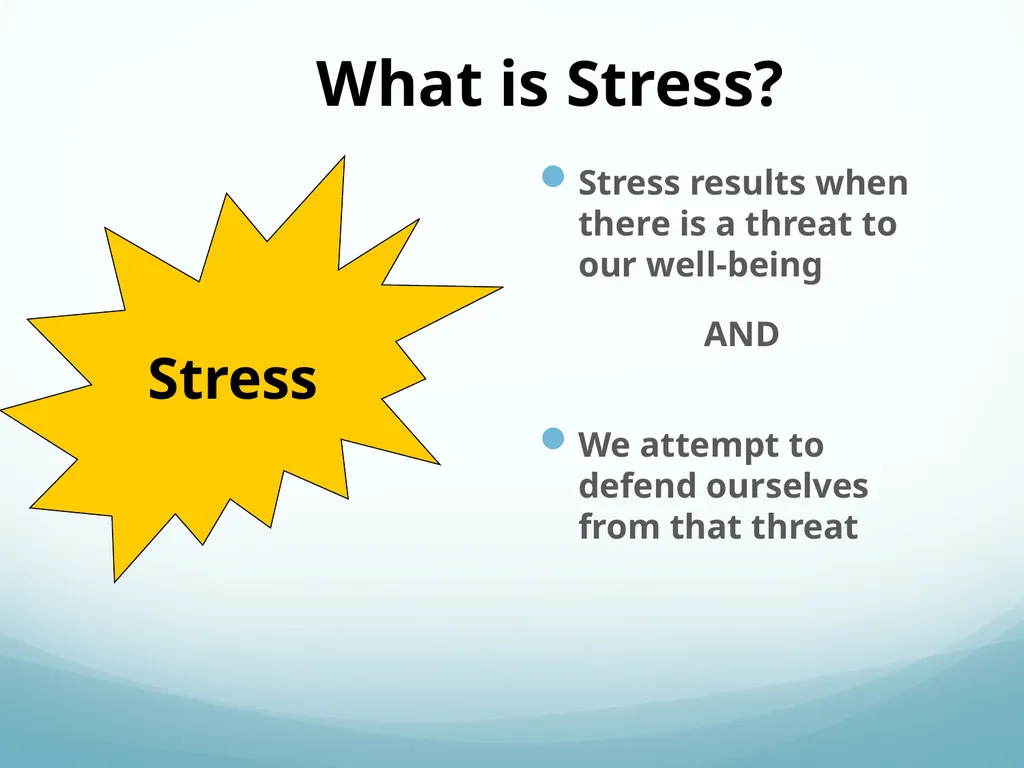
slide6. What is Stress? Stress results when there is a threat to our well-being
AND
We attempt to defend ourselves from that threat Stress<br>
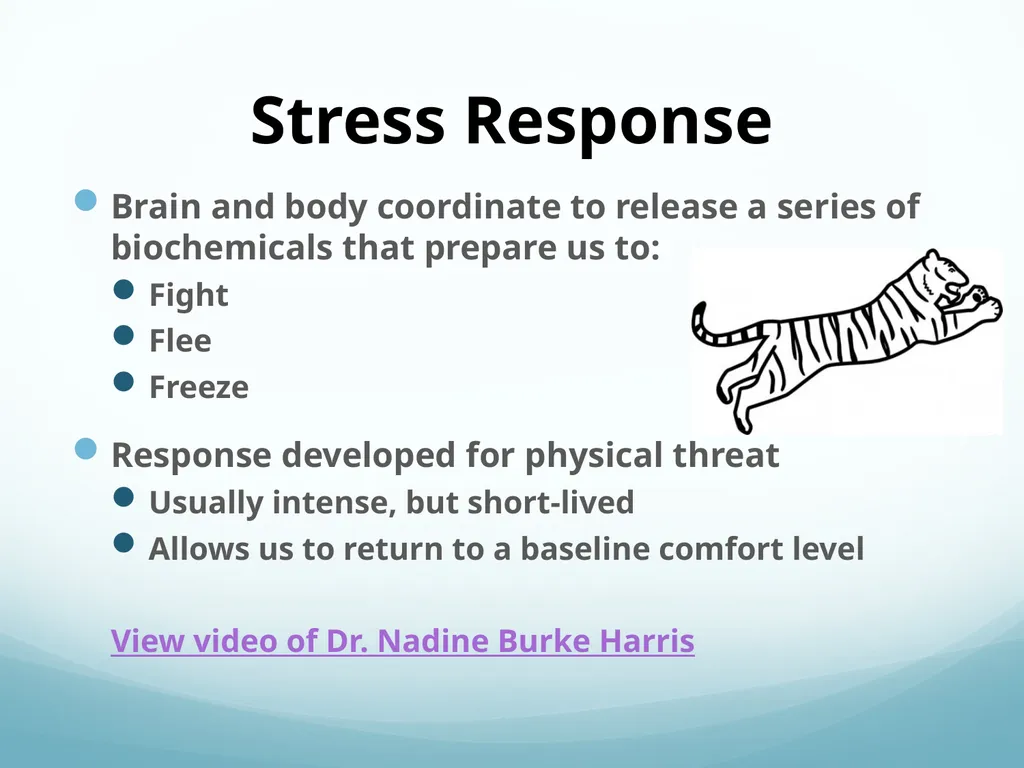
slide7. Stress Response Brain and body coordinate to release a series of biochemicals that prepare us to:
Fight
Flee
Freeze
Response developed for physical threat
Usually intense, but short-lived
Allows us to return to a baseline comfort level
View video of Dr. Nadine Burke Harris<br>
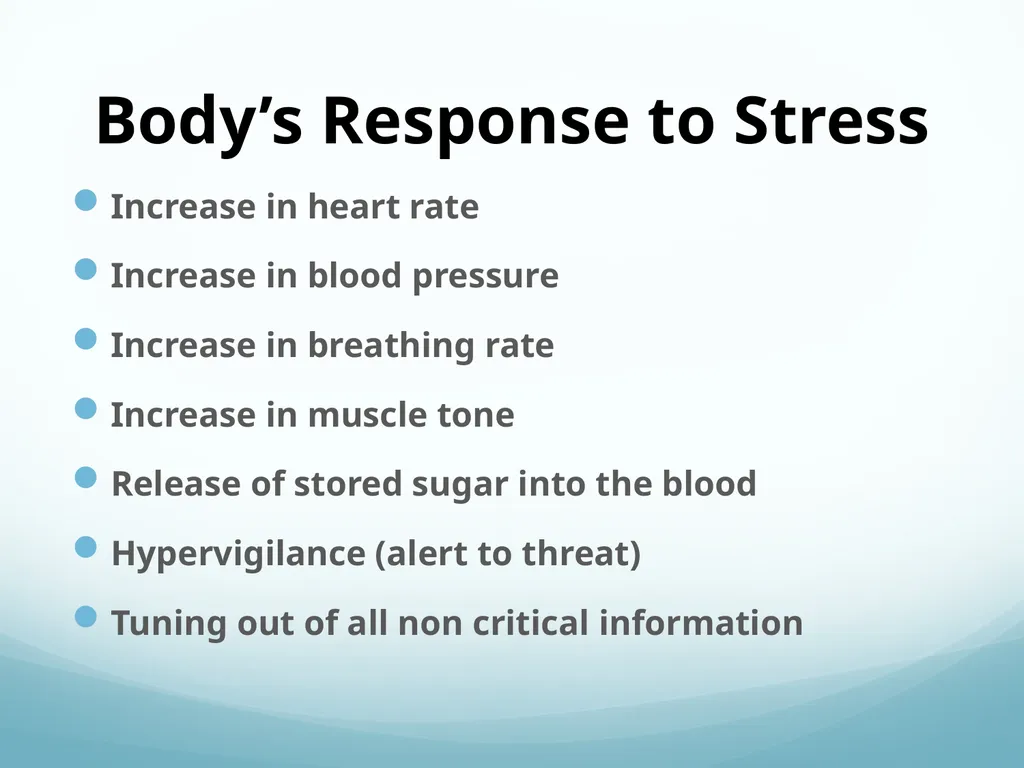
slide8. Body’s Response to Stress Increase in heart rate
Increase in blood pressure
Increase in breathing rate
Increase in muscle tone
Release of stored sugar into the blood
Hypervigilance (alert to threat)
Tuning out of all non critical information<br>
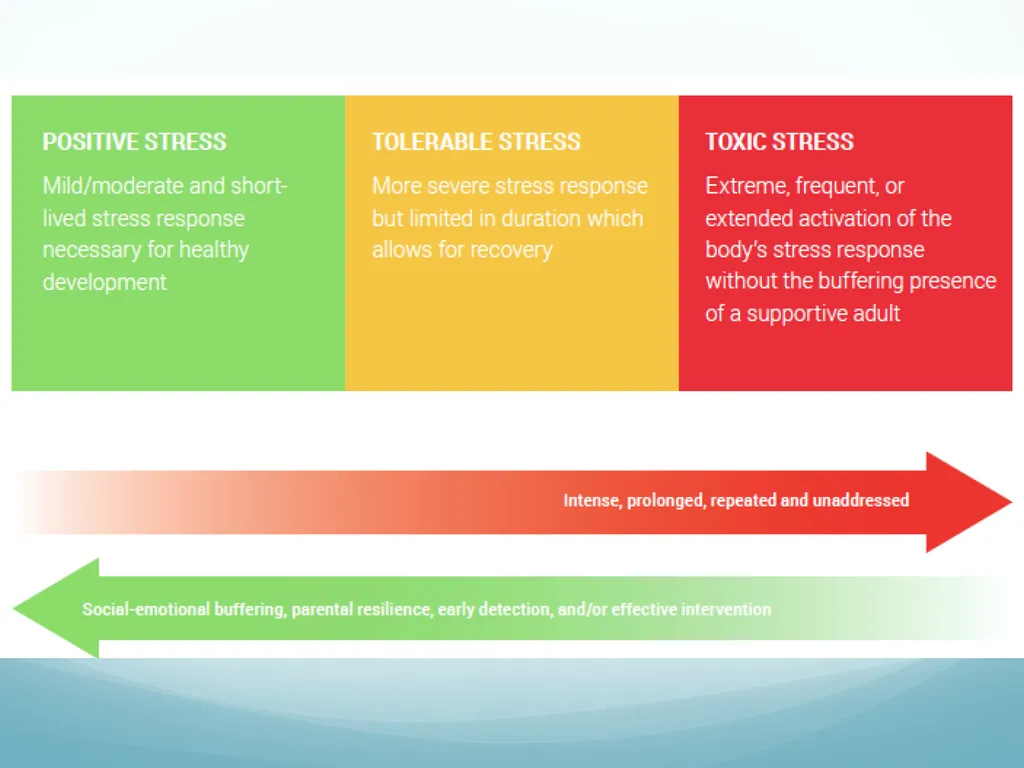
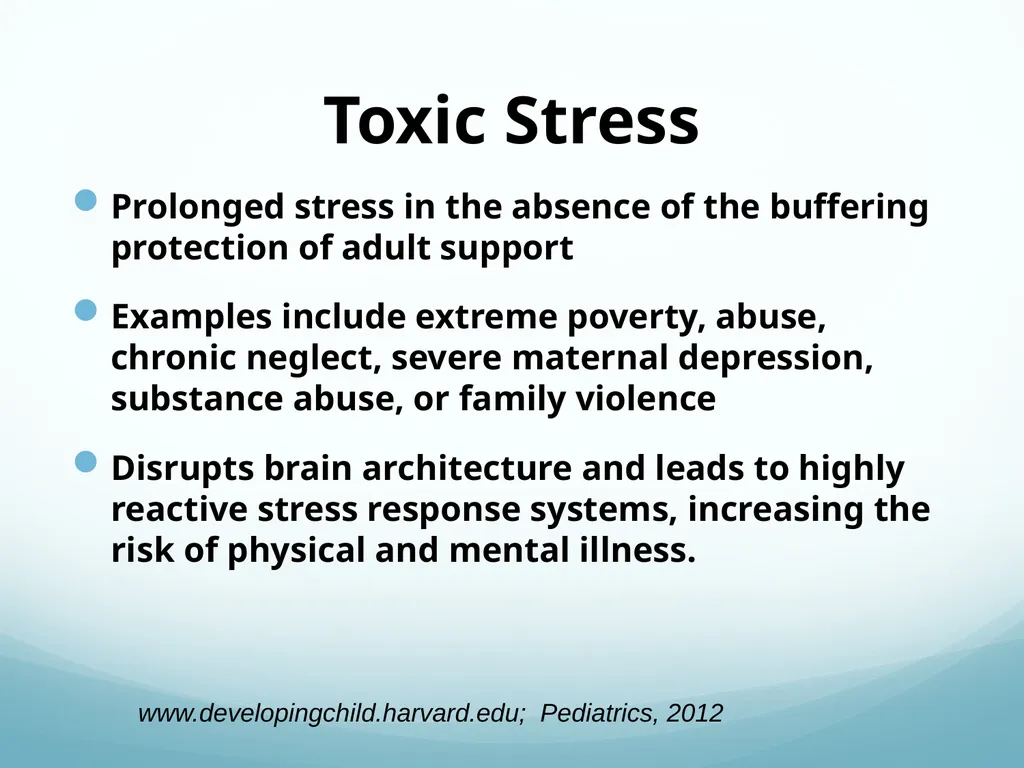
slide11. Toxic Stress Prolonged stress in the absence of the buffering protection of adult support
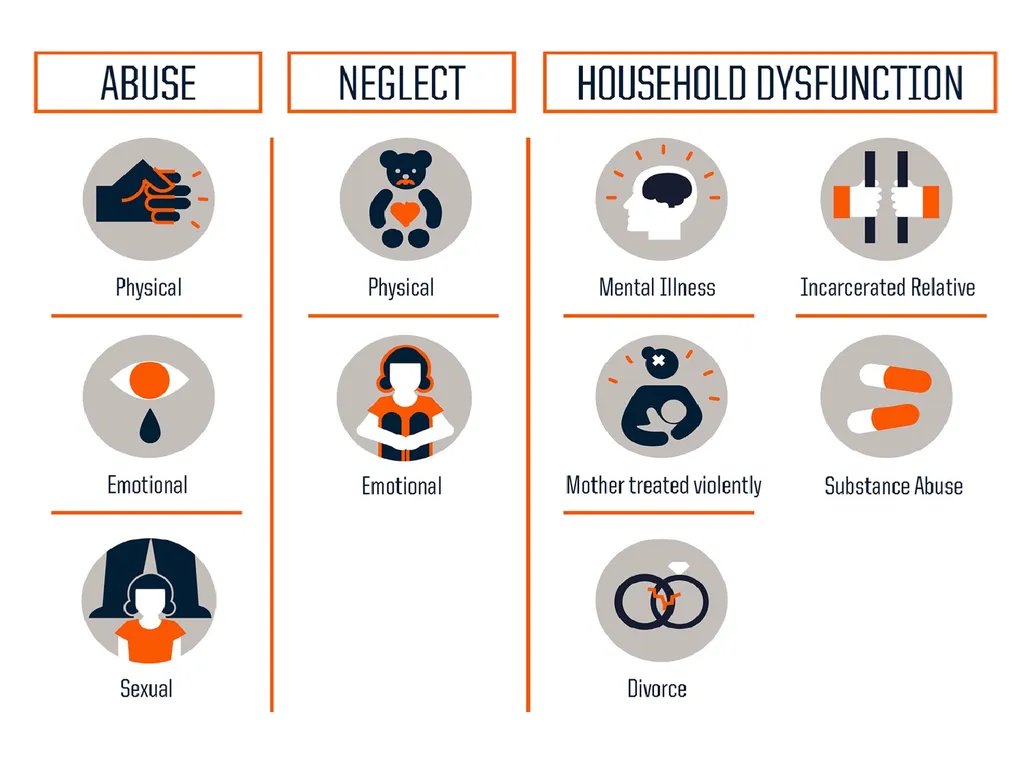
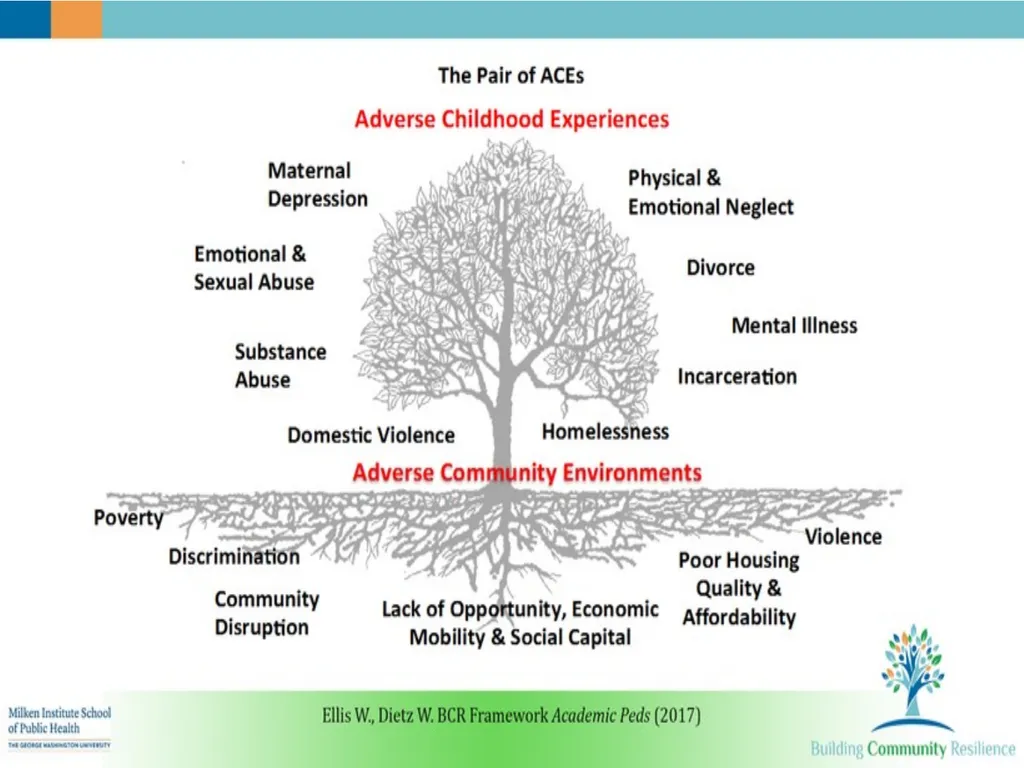
Examples include extreme poverty, abuse, chronic neglect, severe maternal depression, substance abuse, or family violence
Disrupts brain architecture and leads to highly reactive stress response systems, increasing the risk of physical and mental illness. www.developingchild.harvard.edu; Pediatrics, 2012<br>
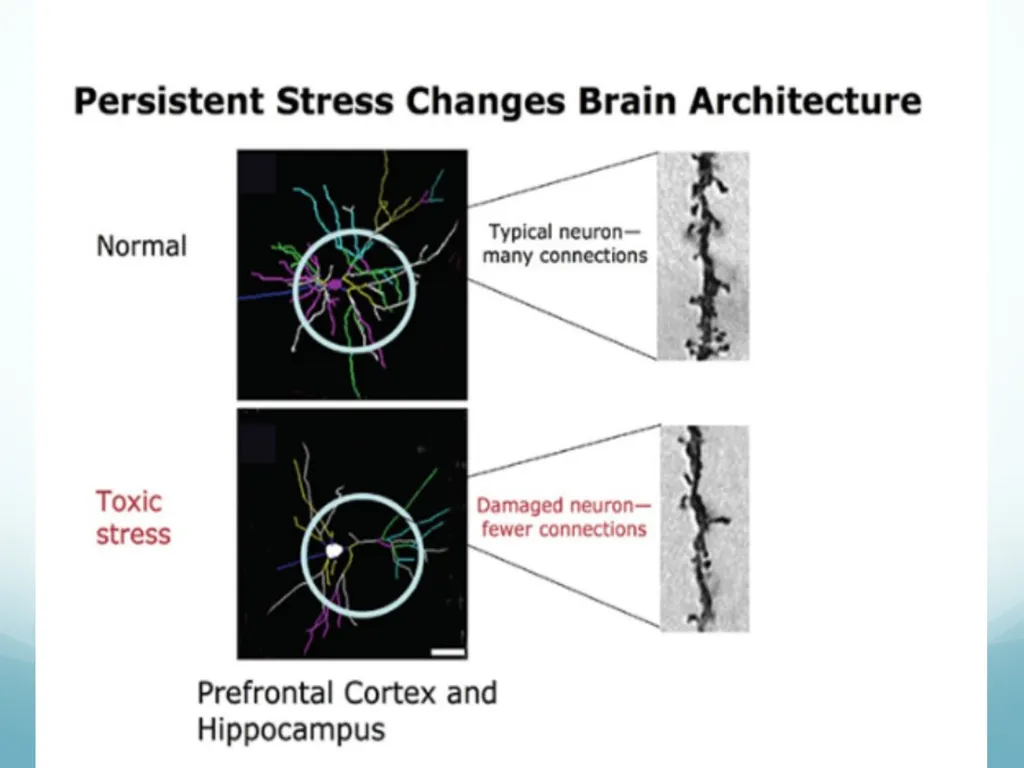
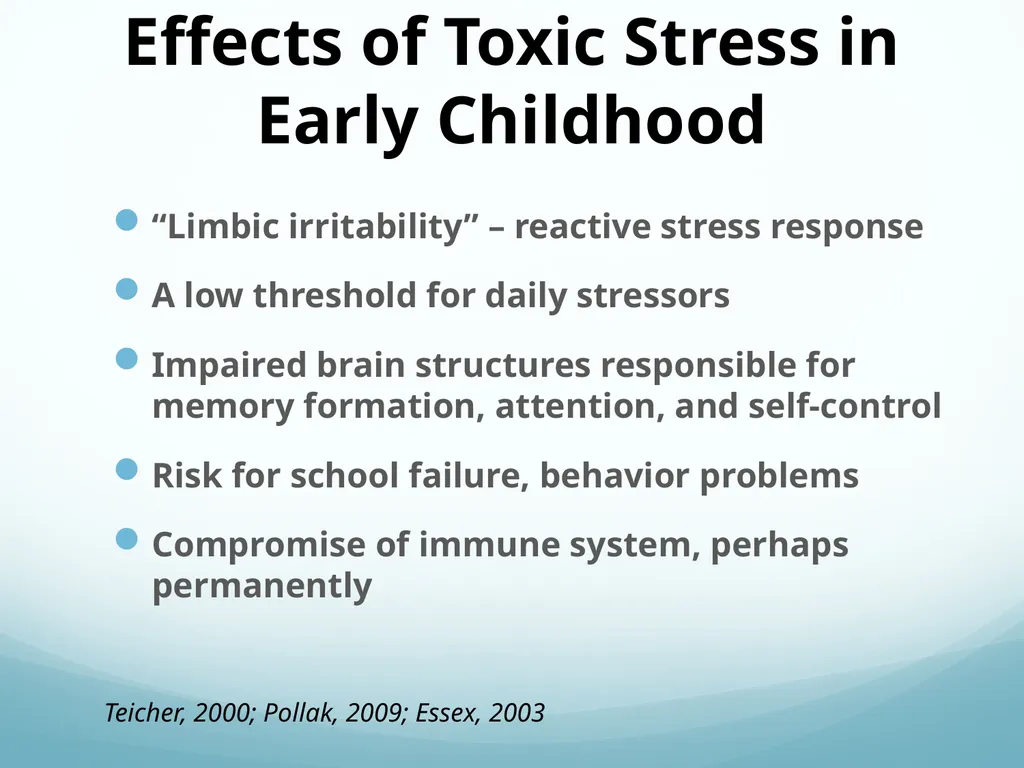
slide13. Effects of Toxic Stress in Early Childhood “Limbic irritability” – reactive stress response
A low threshold for daily stressors
Impaired brain structures responsible for memory formation, attention, and self-control
Risk for school failure, behavior problems
Compromise of immune system, perhaps permanently Teicher, 2000; Pollak, 2009; Essex, 2003<br>
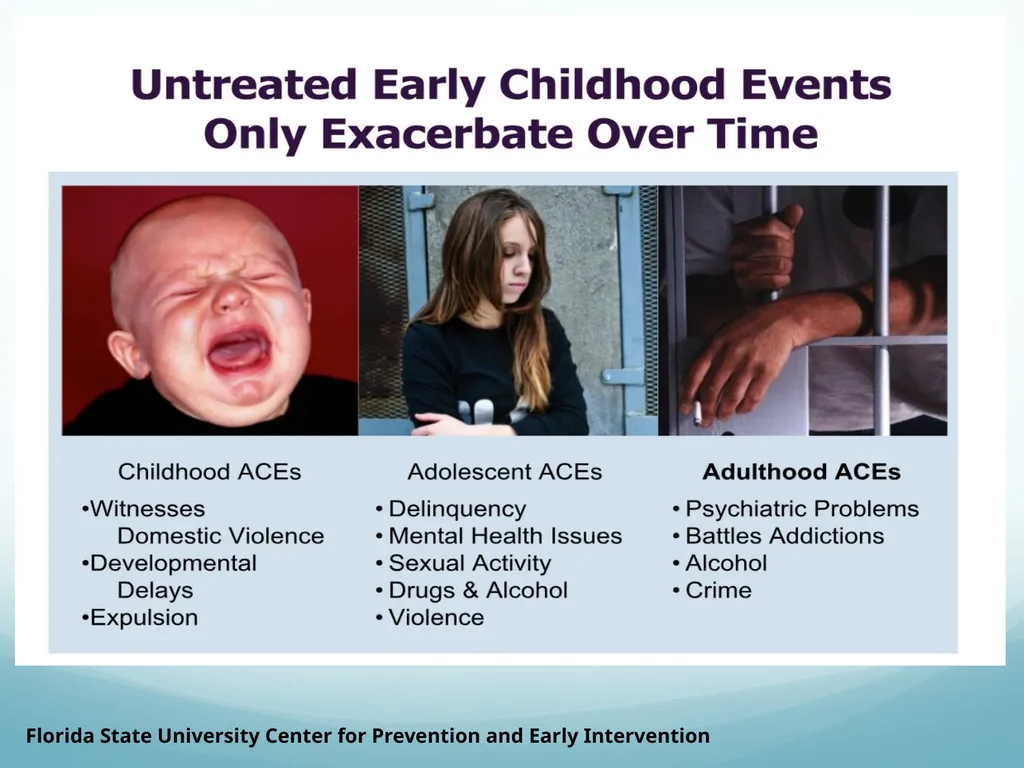
slide14. Florida State University Center for Prevention and Early Intervention<br>
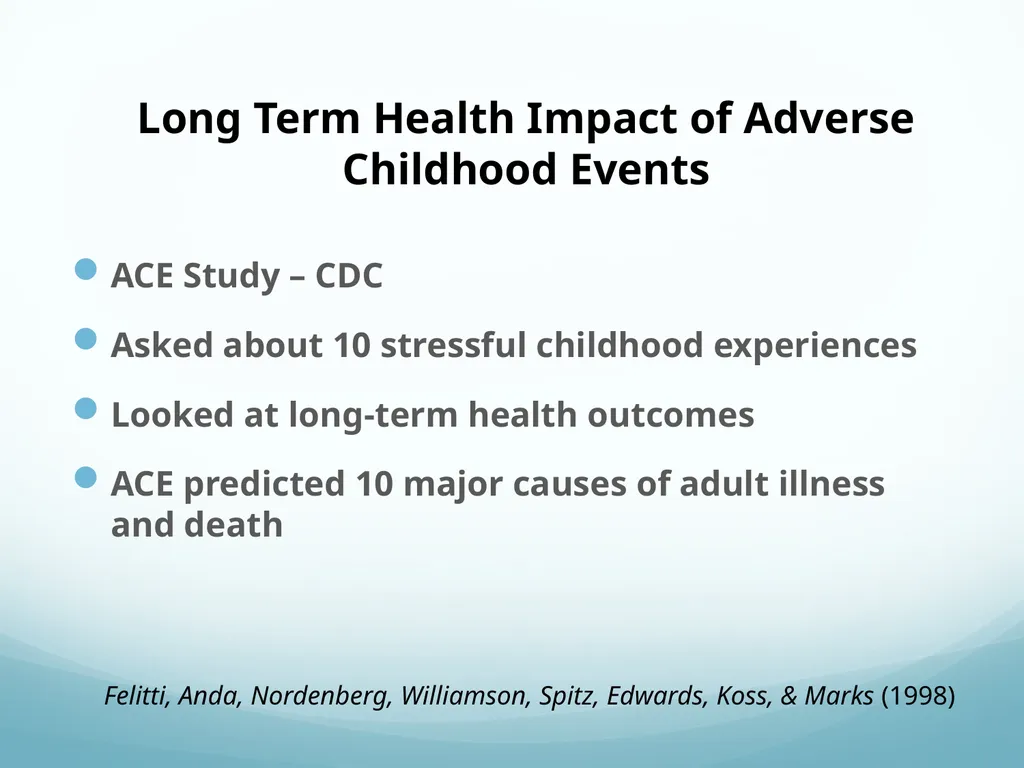
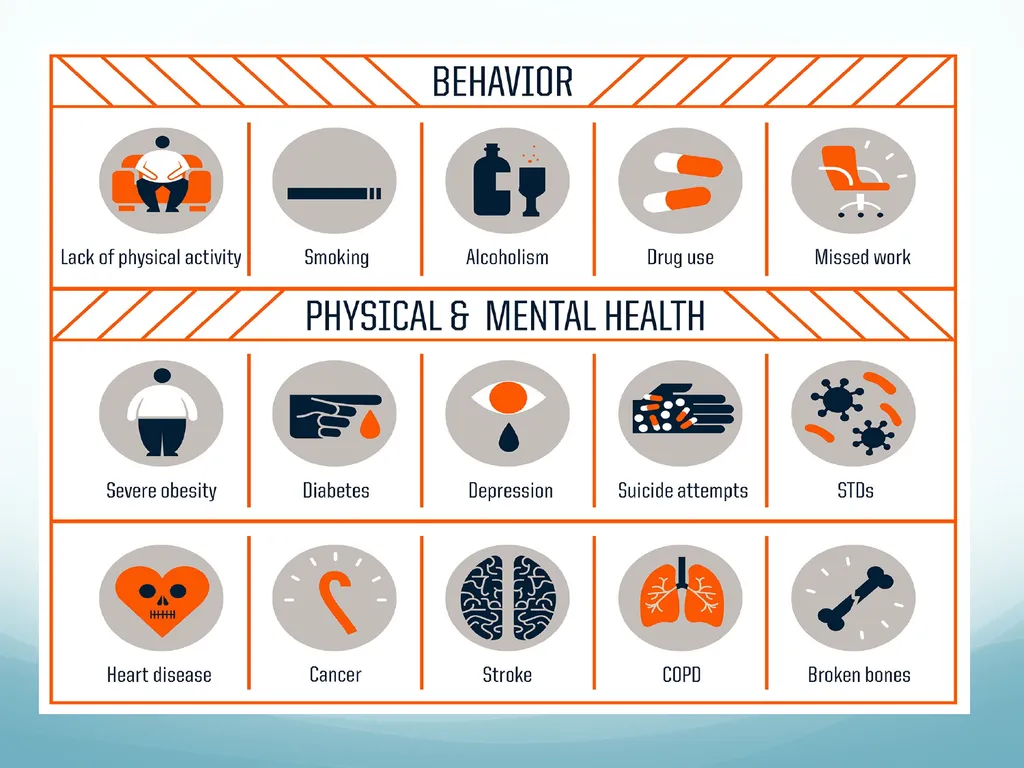
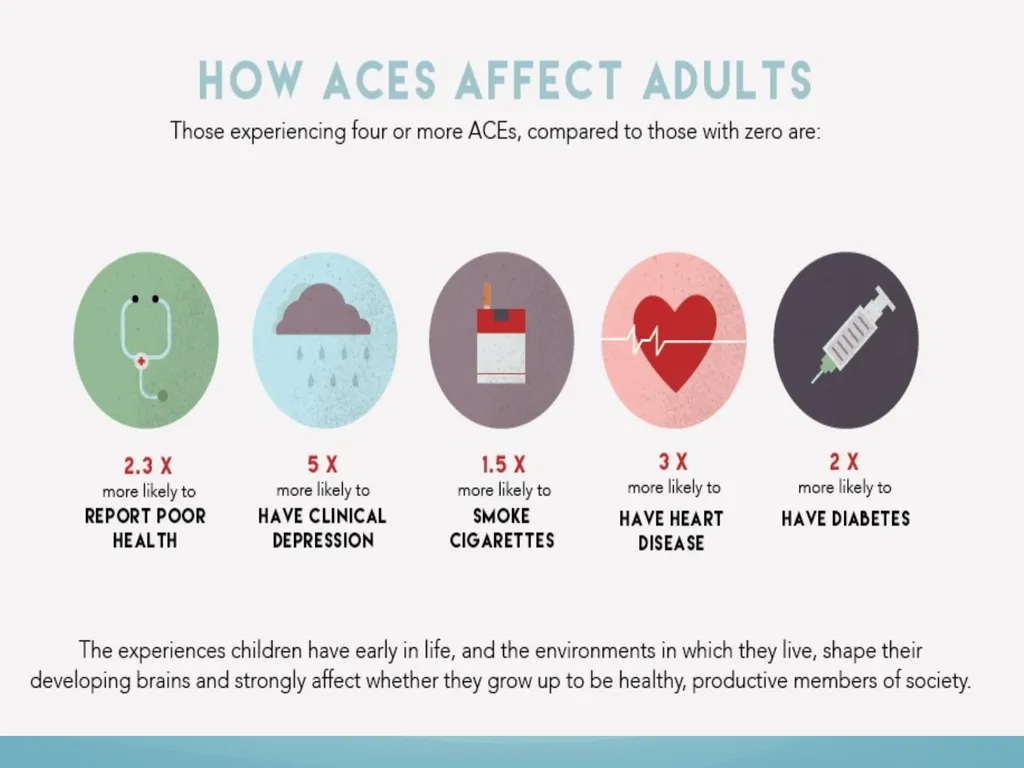
slide15. Long Term Health Impact of Adverse Childhood Events ACE Study – CDC
Asked about 10 stressful childhood experiences
Looked at long-term health outcomes
ACE predicted 10 major causes of adult illness and death Felitti, Anda, Nordenberg, Williamson, Spitz, Edwards, Koss, & Marks (1998)<br>
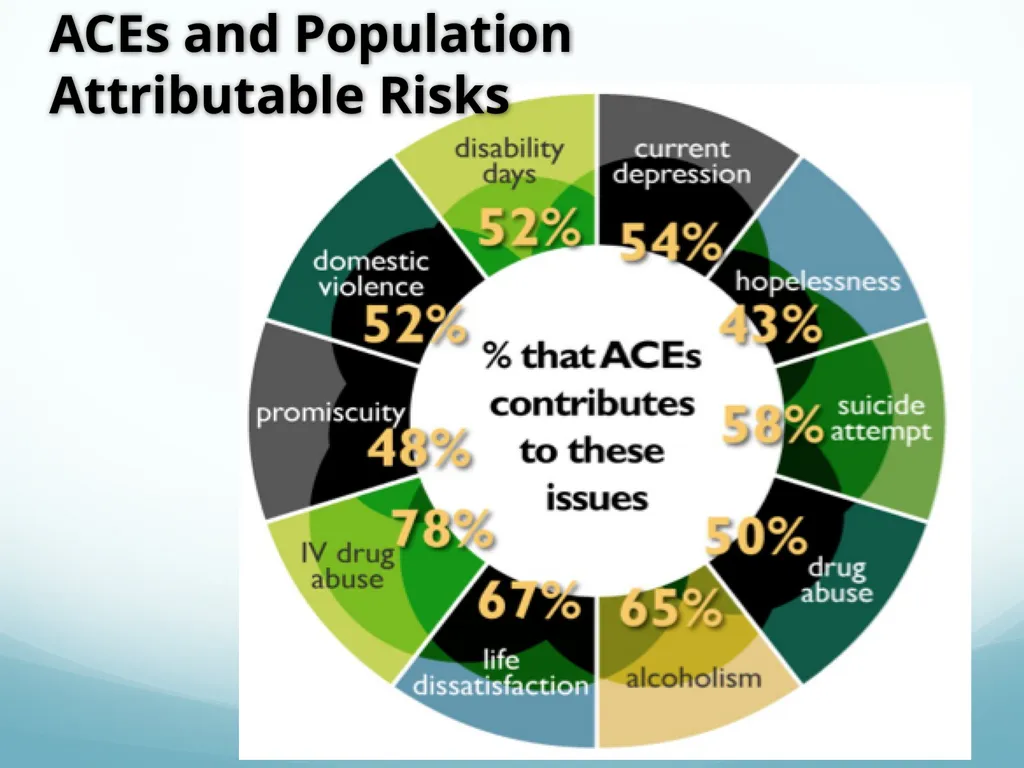
slide18. ACEs and Population Attributable Risks<br>
slide20. So What Can We Do?<br>
slide21. The number one factor to offset trauma is a relationship with a positive, consistent, caring adult<br>
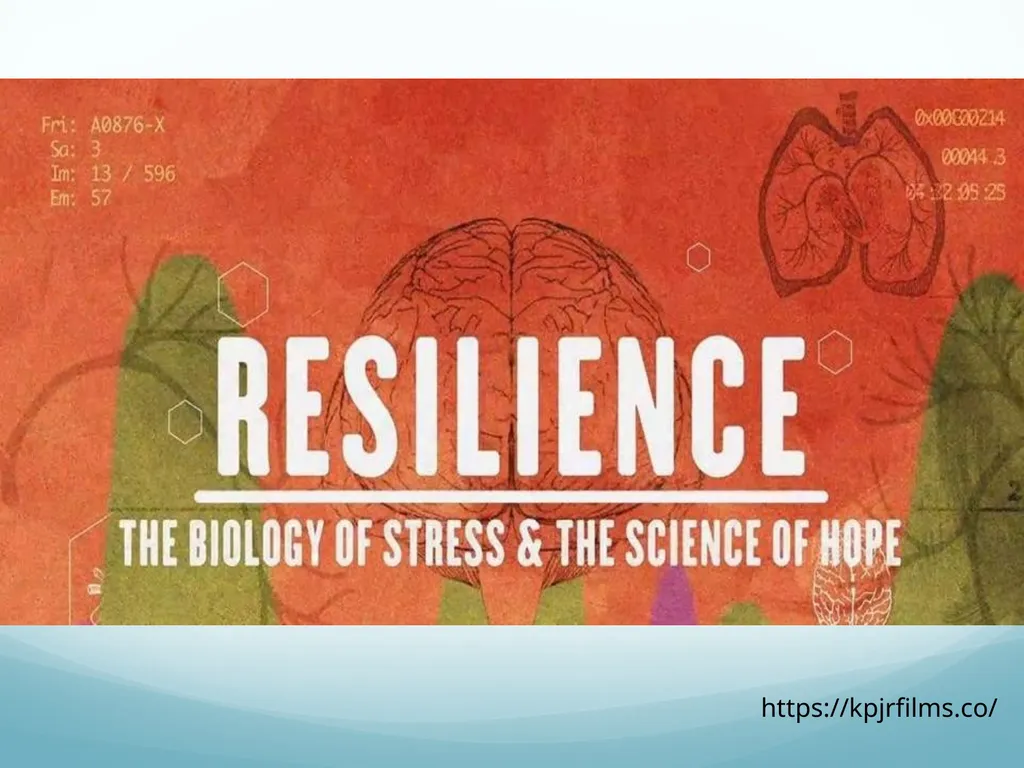
slide22. https://kpjrfilms.co/<br>
slide23. Knowing about ACEs changes what people believe about themselves We weren’t born bad.
We weren’t responsible for the things that happened to us when we were children.
We coped appropriately, given that we were offered no other ways – it kept us alive.
We can change.<br>
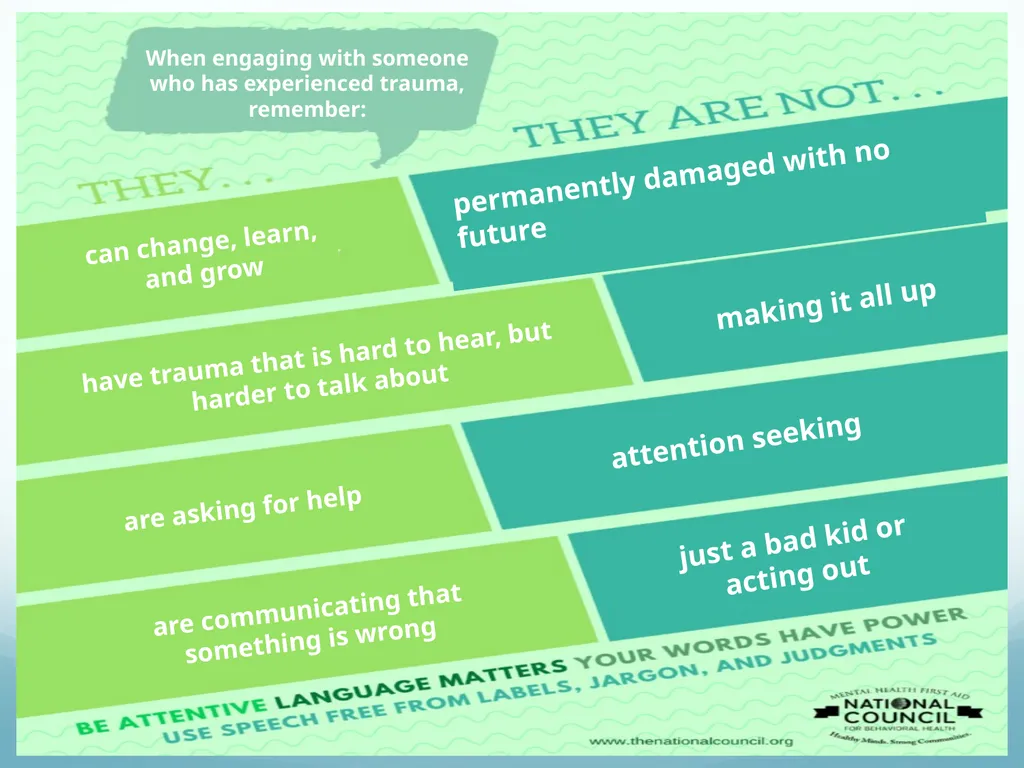
slide26. permanently damaged with no future When engaging with someone who has experienced trauma, remember: making it all up attention seeking just a bad kid or acting out can change, learn, and grow have trauma that is hard to hear, but harder to talk about are asking for help are communicating that something is wrong<br>
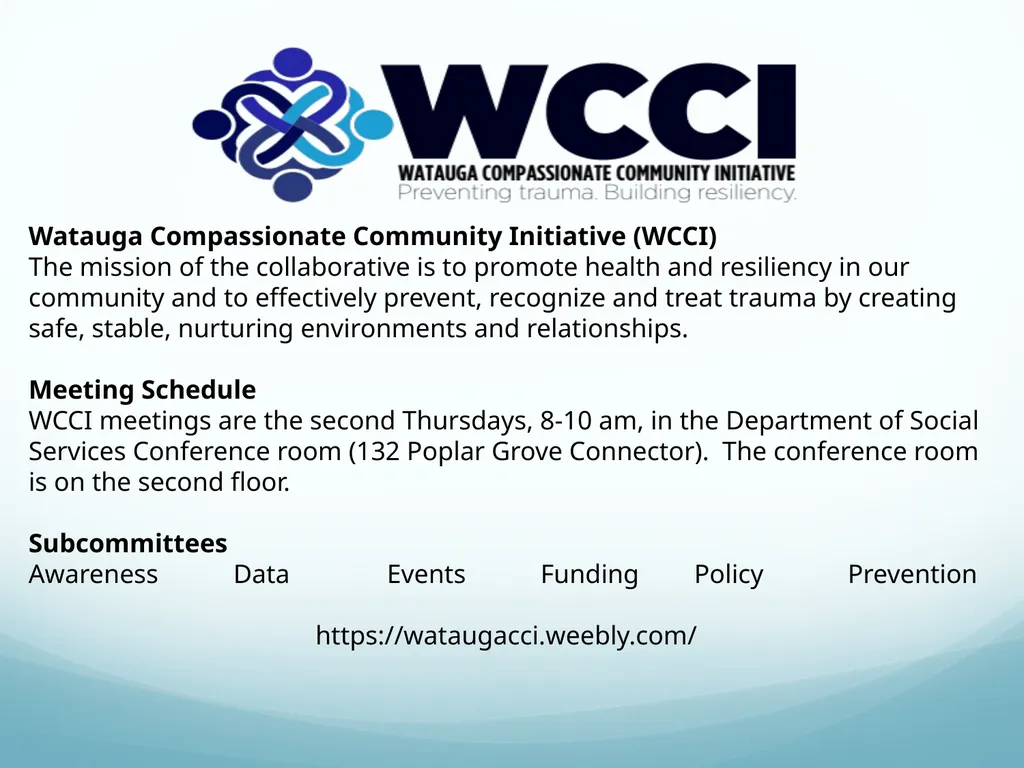
slide28. Watauga Compassionate Community Initiative (WCCI)
The mission of the collaborative is to promote health and resiliency in our community and to effectively prevent, recognize and treat trauma by creating safe, stable, nurturing environments and relationships.
Meeting Schedule
WCCI meetings are the second Thursdays, 8-10 am, in the Department of Social Services Conference room (132 Poplar Grove Connector). The conference room is on the second floor.
Subcommittees
Awareness Data Events Funding Policy Prevention
https://wataugacci.weebly.com/<br>
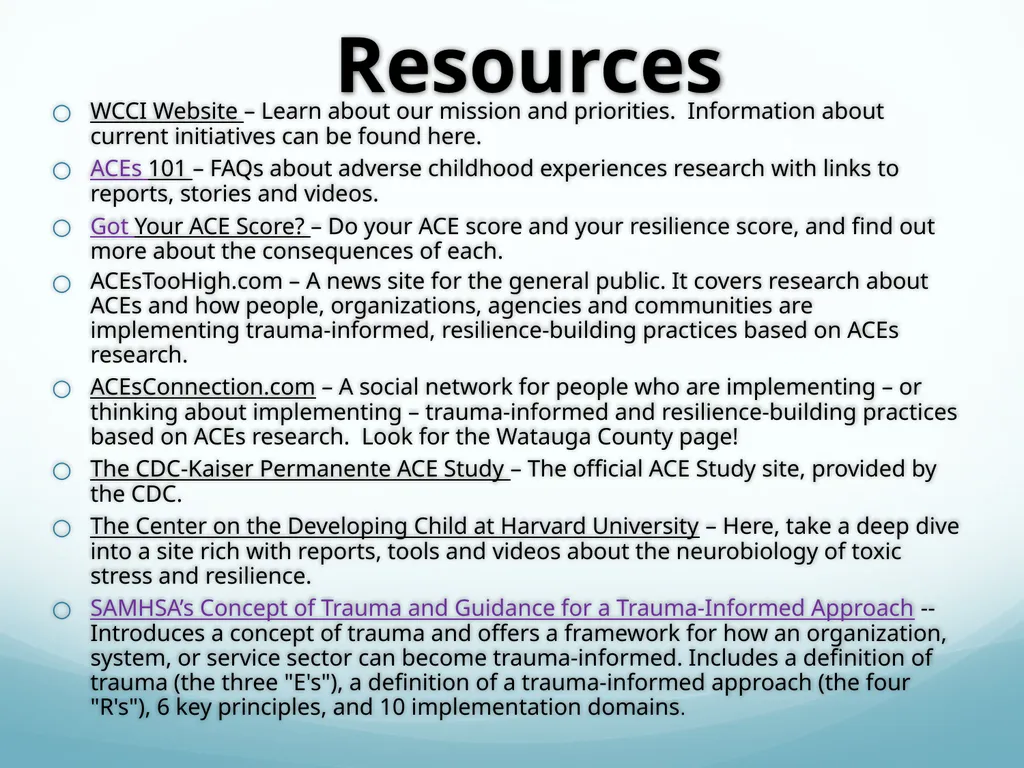
slide29. Resources WCCI Website – Learn about our mission and priorities. Information about current initiatives can be found here.
ACEs 101 – FAQs about adverse childhood experiences research with links to reports, stories and videos.
Got Your ACE Score? – Do your ACE score and your resilience score, and find out more about the consequences of each.
ACEsTooHigh.com – A news site for the general public. It covers research about ACEs and how people, organizations, agencies and communities are implementing trauma-informed, resilience-building practices based on ACEs research.
ACEsConnection.com – A social network for people who are implementing – or thinking about implementing – trauma-informed and resilience-building practices based on ACEs research. Look for the Watauga County page!
The CDC-Kaiser Permanente ACE Study – The official ACE Study site, provided by the CDC.
The Center on the Developing Child at Harvard University – Here, take a deep dive into a site rich with reports, tools and videos about the neurobiology of toxic stress and resilience.
SAMHSA’s Concept of Trauma and Guidance for a Trauma-Informed Approach -- Introduces a concept of trauma and offers a framework for how an organization, system, or service sector can become trauma-informed. Includes a definition of trauma (the three "E's"), a definition of a trauma-informed approach (the four "R's"), 6 key principles, and 10 implementation domains.<br>
slide3. How Common Are ACEs?<br>
slide4. Five parts of ACEs science Epidemiology ACE study and expanded ACE surveys
Impact on the brain toxic stress caused by ACEs impact children while they (and their brains) are developing
Impact on the body health consequences of toxic stress (short & long term)
Epigenetics generation-to- generation impact/ historical trauma
Resilience body can heal. Brain is plastic. Relationships & resources as resilience.<br>
slide5. CEREBRAL
CORTEX LIMBIC SYSTEM<br>
slide6. What is Stress? Stress results when there is a threat to our well-being
AND
We attempt to defend ourselves from that threat Stress<br>
slide7. Stress Response Brain and body coordinate to release a series of biochemicals that prepare us to:
Fight
Flee
Freeze
Response developed for physical threat
Usually intense, but short-lived
Allows us to return to a baseline comfort level
View video of Dr. Nadine Burke Harris<br>
slide8. Body’s Response to Stress Increase in heart rate
Increase in blood pressure
Increase in breathing rate
Increase in muscle tone
Release of stored sugar into the blood
Hypervigilance (alert to threat)
Tuning out of all non critical information<br>
slide11. Toxic Stress Prolonged stress in the absence of the buffering protection of adult support
Examples include extreme poverty, abuse, chronic neglect, severe maternal depression, substance abuse, or family violence
Disrupts brain architecture and leads to highly reactive stress response systems, increasing the risk of physical and mental illness. www.developingchild.harvard.edu; Pediatrics, 2012<br>
slide13. Effects of Toxic Stress in Early Childhood “Limbic irritability” – reactive stress response
A low threshold for daily stressors
Impaired brain structures responsible for memory formation, attention, and self-control
Risk for school failure, behavior problems
Compromise of immune system, perhaps permanently Teicher, 2000; Pollak, 2009; Essex, 2003<br>
slide14. Florida State University Center for Prevention and Early Intervention<br>
slide15. Long Term Health Impact of Adverse Childhood Events ACE Study – CDC
Asked about 10 stressful childhood experiences
Looked at long-term health outcomes
ACE predicted 10 major causes of adult illness and death Felitti, Anda, Nordenberg, Williamson, Spitz, Edwards, Koss, & Marks (1998)<br>
slide18. ACEs and Population Attributable Risks<br>
slide20. So What Can We Do?<br>
slide21. The number one factor to offset trauma is a relationship with a positive, consistent, caring adult<br>
slide22. https://kpjrfilms.co/<br>
slide23. Knowing about ACEs changes what people believe about themselves We weren’t born bad.
We weren’t responsible for the things that happened to us when we were children.
We coped appropriately, given that we were offered no other ways – it kept us alive.
We can change.<br>
slide26. permanently damaged with no future When engaging with someone who has experienced trauma, remember: making it all up attention seeking just a bad kid or acting out can change, learn, and grow have trauma that is hard to hear, but harder to talk about are asking for help are communicating that something is wrong<br>
slide28. Watauga Compassionate Community Initiative (WCCI)
The mission of the collaborative is to promote health and resiliency in our community and to effectively prevent, recognize and treat trauma by creating safe, stable, nurturing environments and relationships.
Meeting Schedule
WCCI meetings are the second Thursdays, 8-10 am, in the Department of Social Services Conference room (132 Poplar Grove Connector). The conference room is on the second floor.
Subcommittees
Awareness Data Events Funding Policy Prevention
https://wataugacci.weebly.com/<br>
slide29. Resources WCCI Website – Learn about our mission and priorities. Information about current initiatives can be found here.
ACEs 101 – FAQs about adverse childhood experiences research with links to reports, stories and videos.
Got Your ACE Score? – Do your ACE score and your resilience score, and find out more about the consequences of each.
ACEsTooHigh.com – A news site for the general public. It covers research about ACEs and how people, organizations, agencies and communities are implementing trauma-informed, resilience-building practices based on ACEs research.
ACEsConnection.com – A social network for people who are implementing – or thinking about implementing – trauma-informed and resilience-building practices based on ACEs research. Look for the Watauga County page!
The CDC-Kaiser Permanente ACE Study – The official ACE Study site, provided by the CDC.
The Center on the Developing Child at Harvard University – Here, take a deep dive into a site rich with reports, tools and videos about the neurobiology of toxic stress and resilience.
SAMHSA’s Concept of Trauma and Guidance for a Trauma-Informed Approach -- Introduces a concept of trauma and offers a framework for how an organization, system, or service sector can become trauma-informed. Includes a definition of trauma (the three "E's"), a definition of a trauma-informed approach (the four "R's"), 6 key principles, and 10 implementation domains.<br>