
Understanding And Coping With Vicarious Trauma


Description: Understanding And Coping With Vicarious Trauma Important questions to answer What is vicarious trauma? Why is it important for humanitarian workers to understand vicarious trauma? What are common signs of vicarious trauma? What can you do
Related Topics
Download Presentation
"Understanding And Coping With Vicarious Trauma" is the property of its rightful owner. Permission is granted to download and print the materials on this website for personal, non-commercial use only, and to display it on your personal computer provided you do not modify the materials and that you retain all copyright notices contained in the materials. By downloading content from our website, you accept the terms of this agreement.
Presentation Transcript
slide1. Understanding And Coping With Vicarious Trauma<br>
slide2. Important questions to answer What is vicarious trauma?
Why is it important for humanitarian workers to understand vicarious trauma?
What are common signs of vicarious trauma?
What can you do to prevent and recover from vicarious trauma?
How can the IRC help?<br>
slide3. 1. What is vicarious trauma?<br>
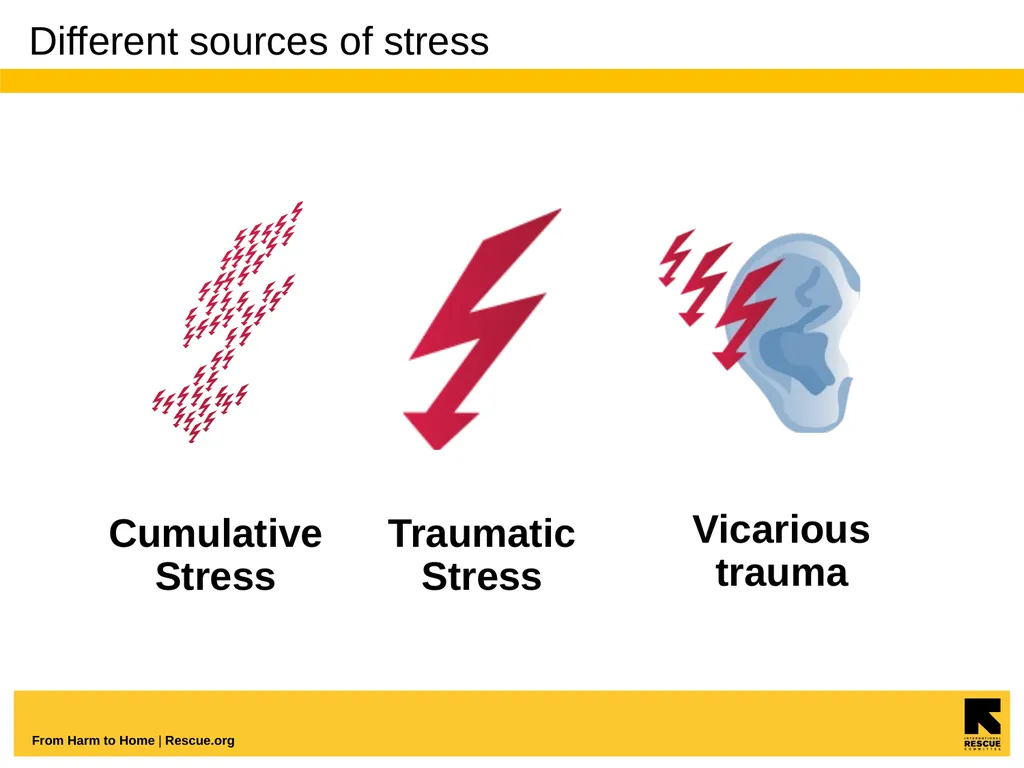
slide4. Different sources of stress<br>
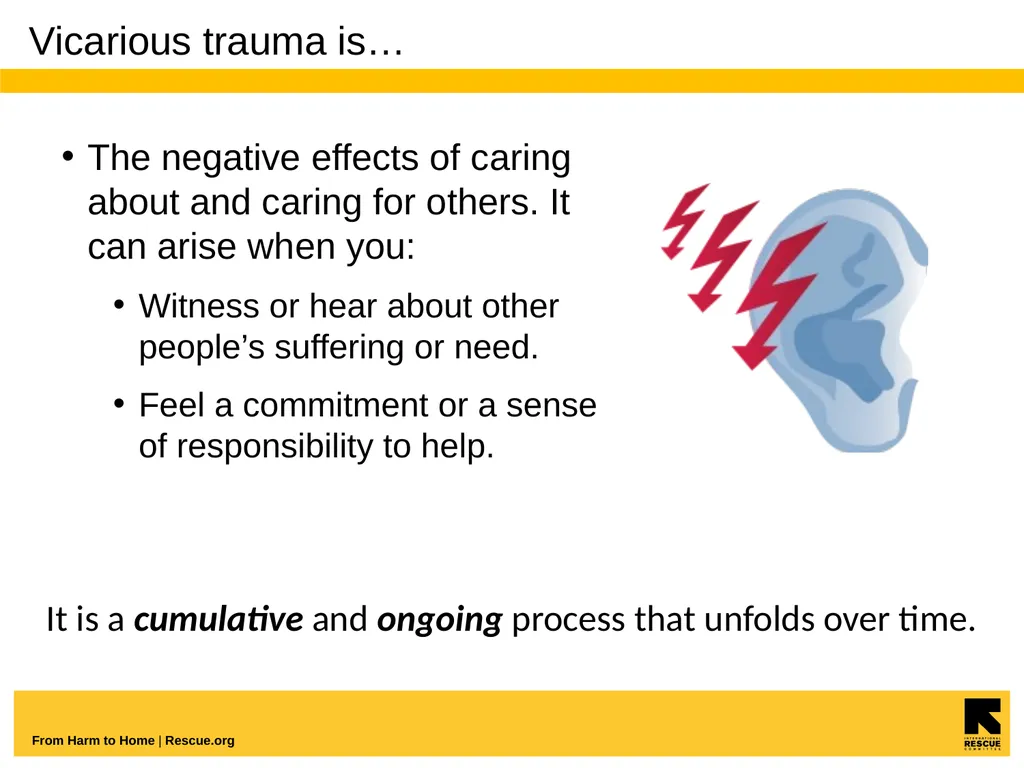
slide5. Vicarious trauma is… The negative effects of caring about and caring for others. It can arise when you:
Witness or hear about other people’s suffering or need.
Feel a commitment or a sense of responsibility to help. It is a cumulative and ongoing process that unfolds over time.<br>
slide6. 2. Why is it important for humanitarian workers to understand vicarious trauma?<br>
slide7. “The expectation that we can be immersed in suffering and loss daily and not be touched by it, is as unrealistic as expecting to be able to walk through water and not get wet.”
(Rachel Naomi Remen, M.D.)<br>
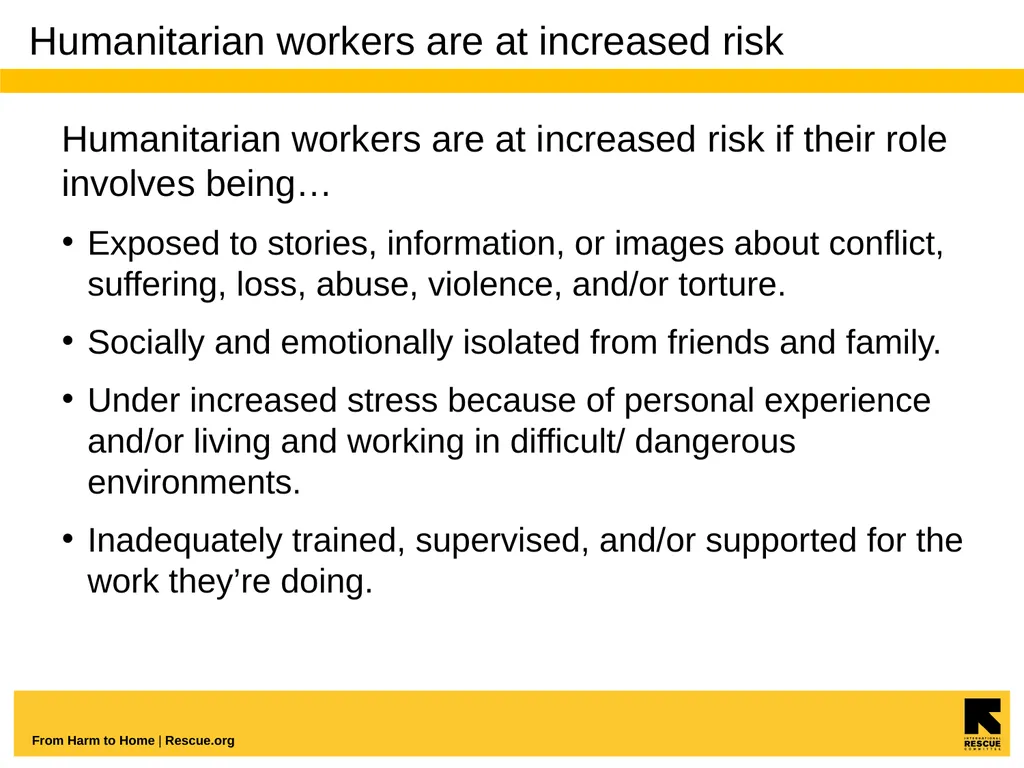
slide8. Humanitarian workers are at increased risk Humanitarian workers are at increased risk if their role involves being…
Exposed to stories, information, or images about conflict, suffering, loss, abuse, violence, and/or torture.
Socially and emotionally isolated from friends and family.
Under increased stress because of personal experience and/or living and working in difficult/ dangerous environments.
Inadequately trained, supervised, and/or supported for the work they’re doing.<br>
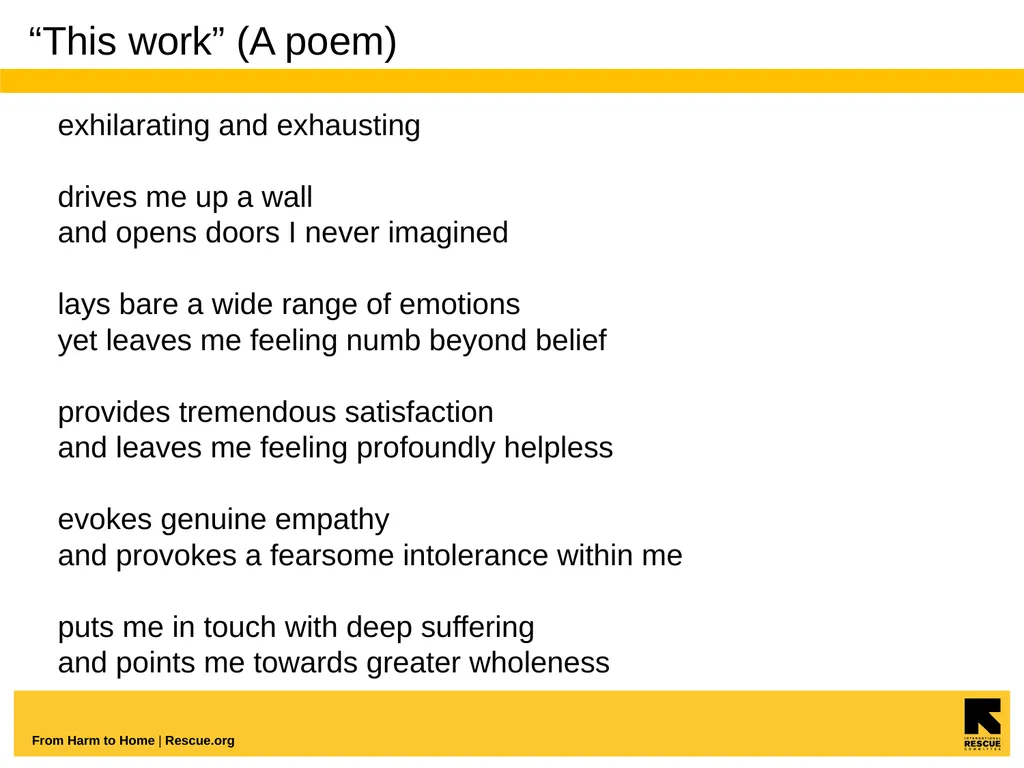
slide9. “This work” (A poem) exhilarating and exhausting
drives me up a wall
and opens doors I never imagined
lays bare a wide range of emotions
yet leaves me feeling numb beyond belief
provides tremendous satisfaction
and leaves me feeling profoundly helpless
evokes genuine empathy
and provokes a fearsome intolerance within me
puts me in touch with deep suffering
and points me towards greater wholeness<br>
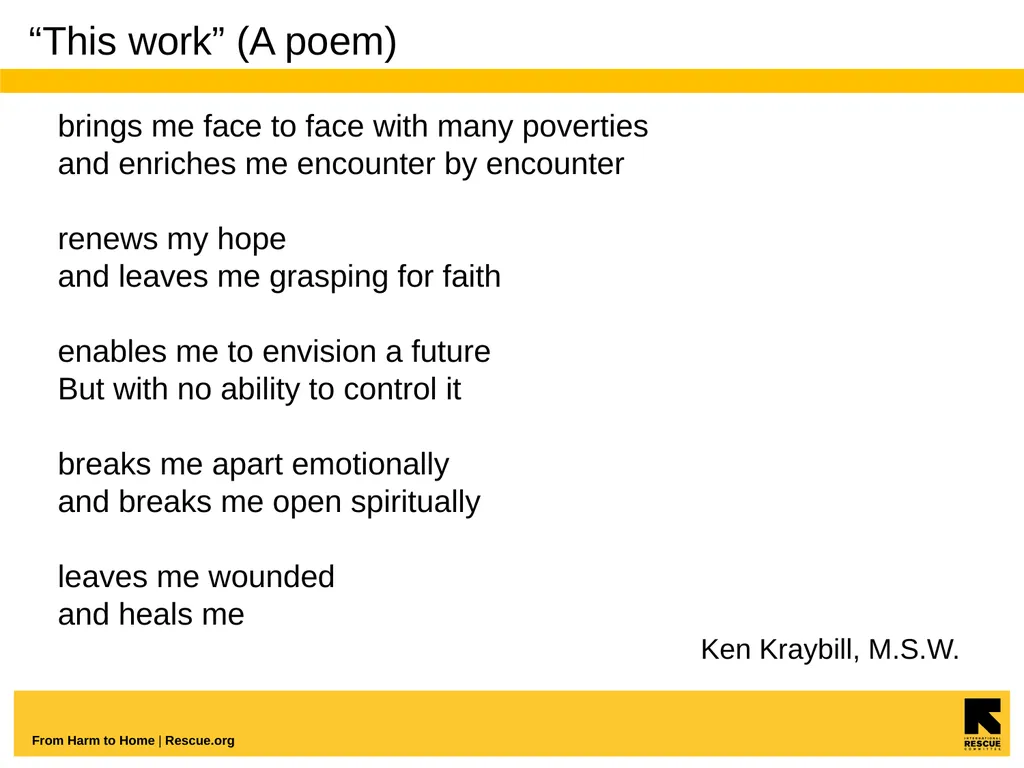
slide10. “This work” (A poem) brings me face to face with many poverties
and enriches me encounter by encounter
renews my hope
and leaves me grasping for faith
enables me to envision a future
But with no ability to control it
breaks me apart emotionally
and breaks me open spiritually
leaves me wounded
and heals me
Ken Kraybill, M.S.W.<br>
slide11. 3. What are common signs of vicarious trauma? Be alert to “changes” and “prolonged”<br>
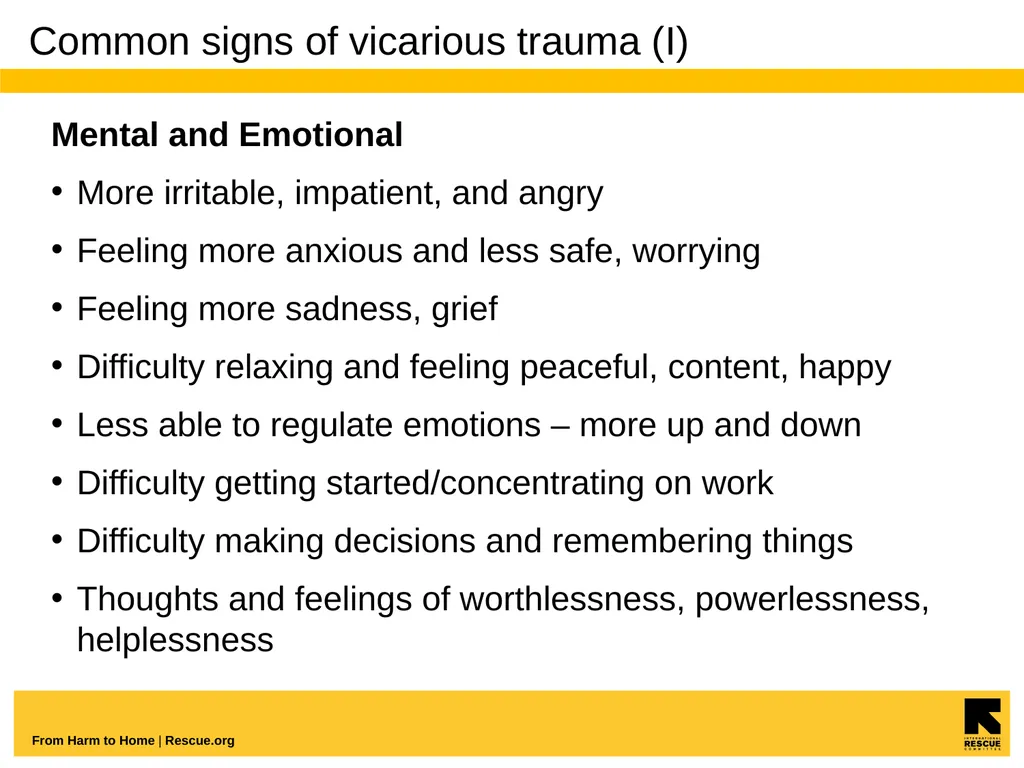
slide12. Common signs of vicarious trauma (I) Mental and Emotional
More irritable, impatient, and angry
Feeling more anxious and less safe, worrying
Feeling more sadness, grief
Difficulty relaxing and feeling peaceful, content, happy
Less able to regulate emotions – more up and down
Difficulty getting started/concentrating on work
Difficulty making decisions and remembering things
Thoughts and feelings of worthlessness, powerlessness, helplessness<br>
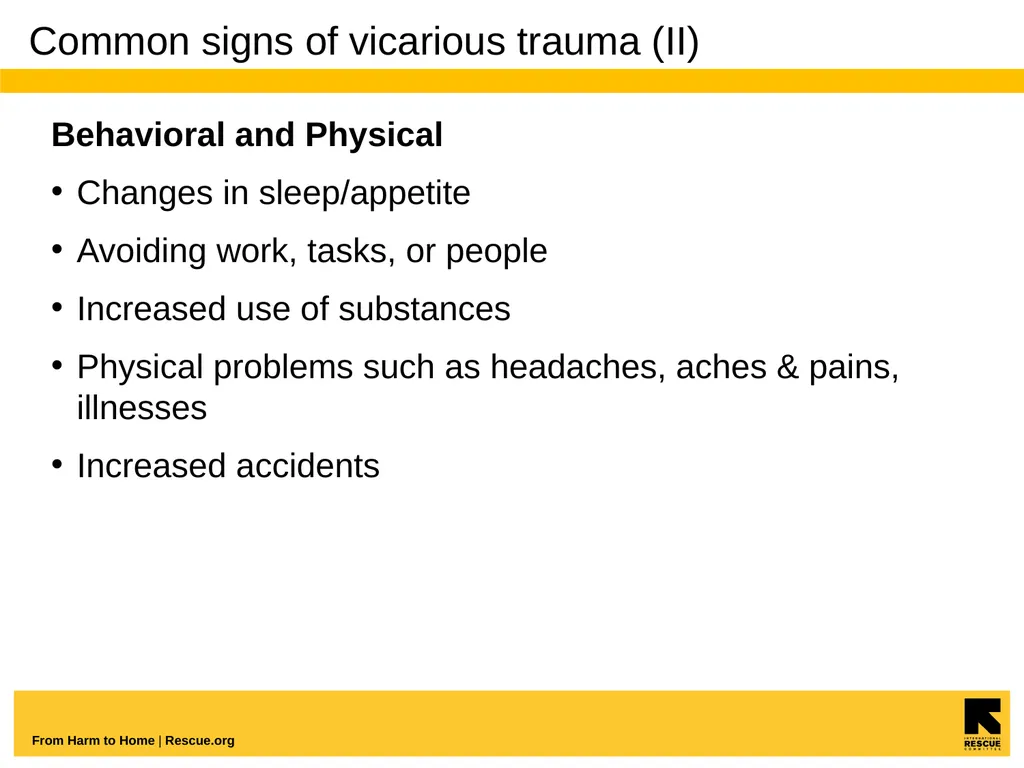
slide13. Common signs of vicarious trauma (II) Behavioral and Physical
Changes in sleep/appetite
Avoiding work, tasks, or people
Increased use of substances
Physical problems such as headaches, aches & pains, illnesses
Increased accidents<br>
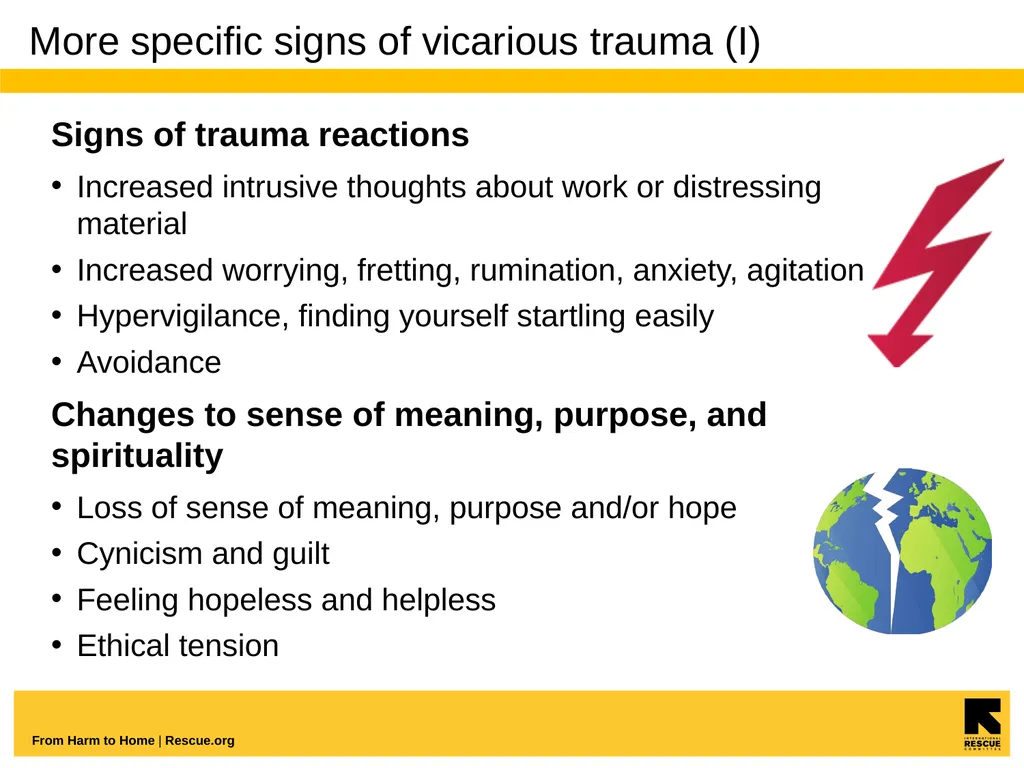
slide14. More specific signs of vicarious trauma (I) Signs of trauma reactions
Increased intrusive thoughts about work or distressing material
Increased worrying, fretting, rumination, anxiety, agitation
Hypervigilance, finding yourself startling easily
Avoidance
Changes to sense of meaning, purpose, and spirituality
Loss of sense of meaning, purpose and/or hope
Cynicism and guilt
Feeling hopeless and helpless
Ethical tension<br>
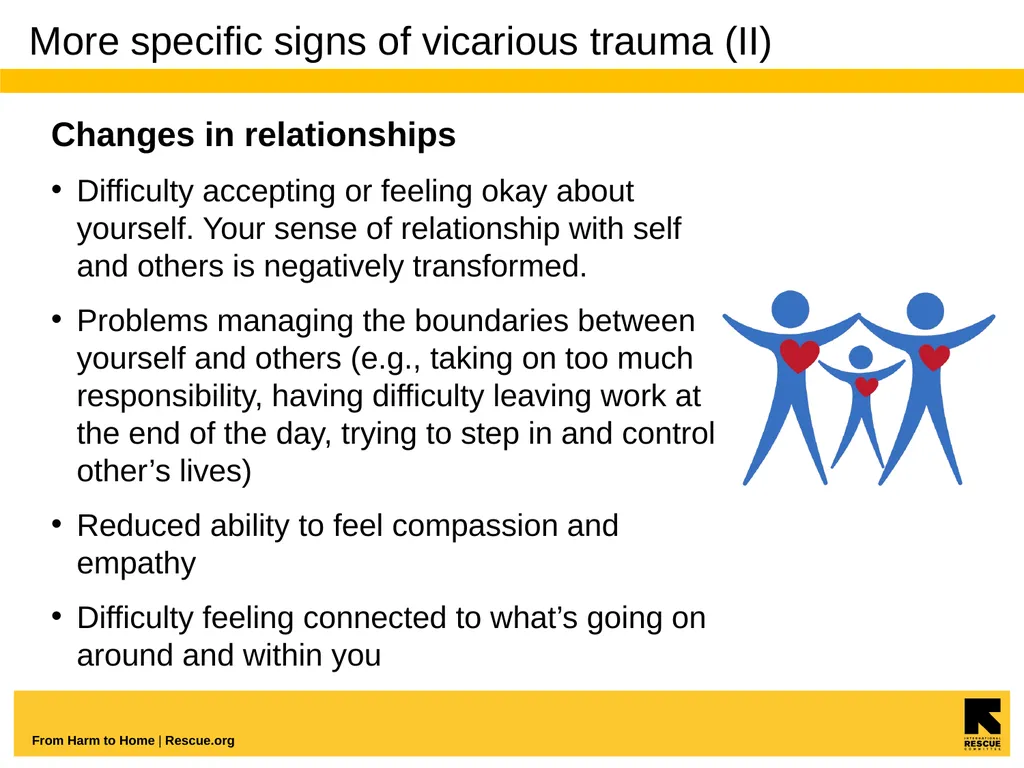
slide15. More specific signs of vicarious trauma (II) Changes in relationships
Difficulty accepting or feeling okay about yourself. Your sense of relationship with self and others is negatively transformed.
Problems managing the boundaries between yourself and others (e.g., taking on too much responsibility, having difficulty leaving work at the end of the day, trying to step in and control other’s lives)
Reduced ability to feel compassion and empathy
Difficulty feeling connected to what’s going on around and within you<br>
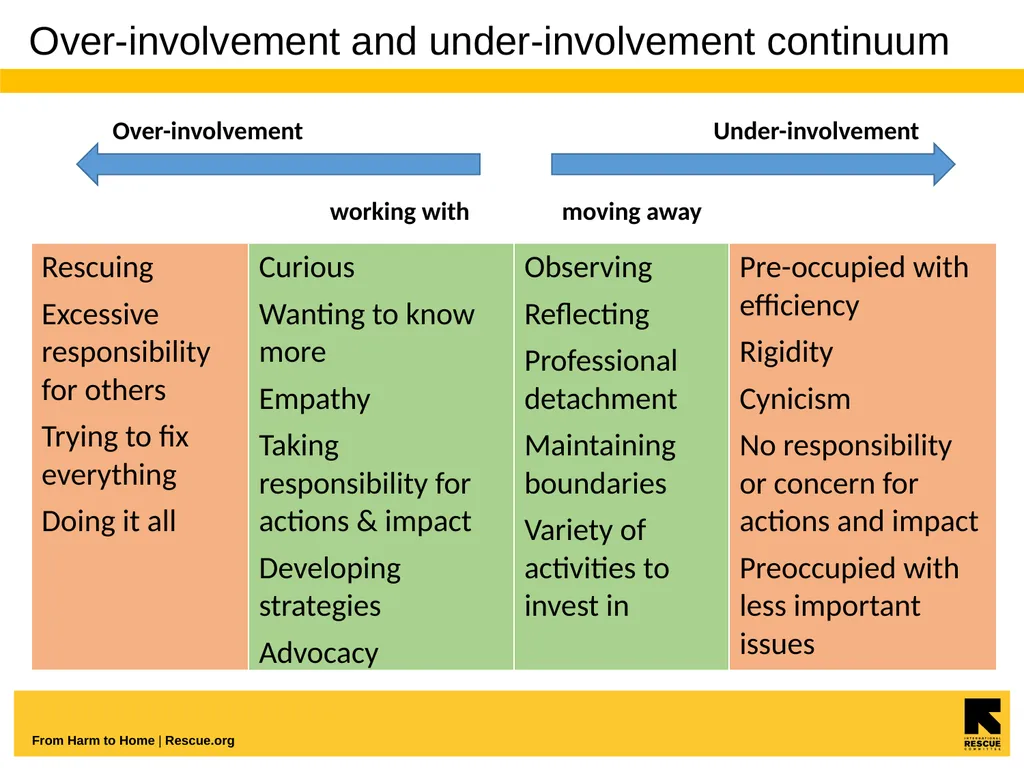
slide16. Over-involvement and under-involvement continuum Over-involvement Under-involvement working with moving away<br>
slide17. 4. What can you do to prevent and recover from vicarious trauma?<br>
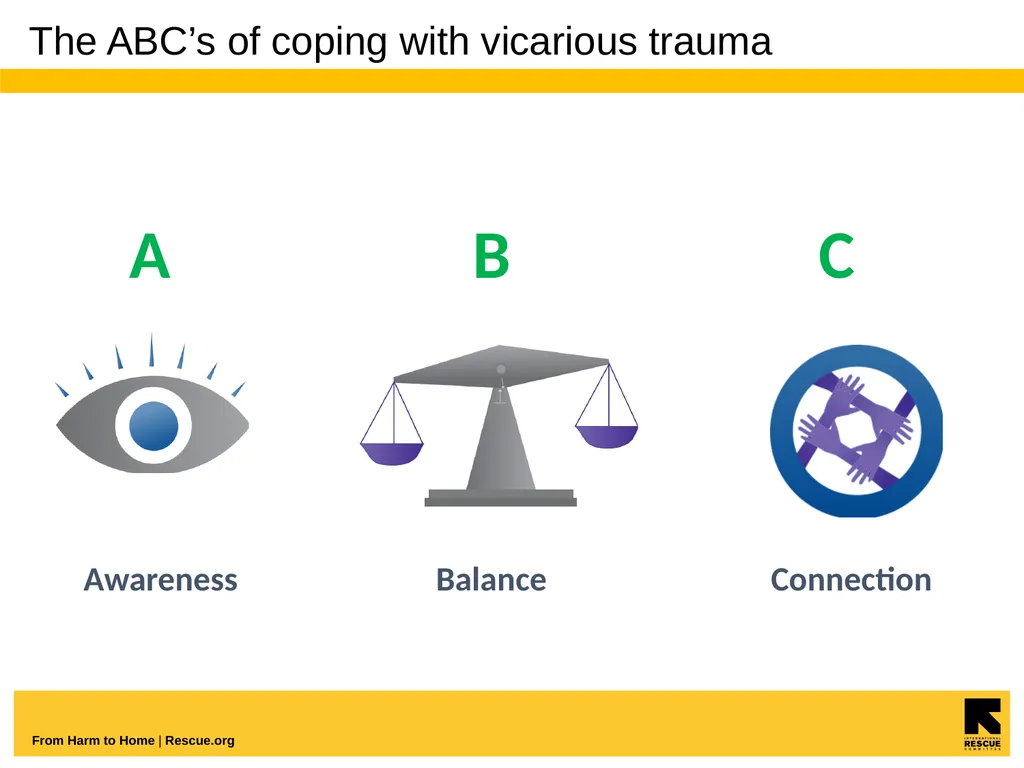
slide18. The ABC’s of coping with vicarious trauma Awareness Balance Connection A C B<br>
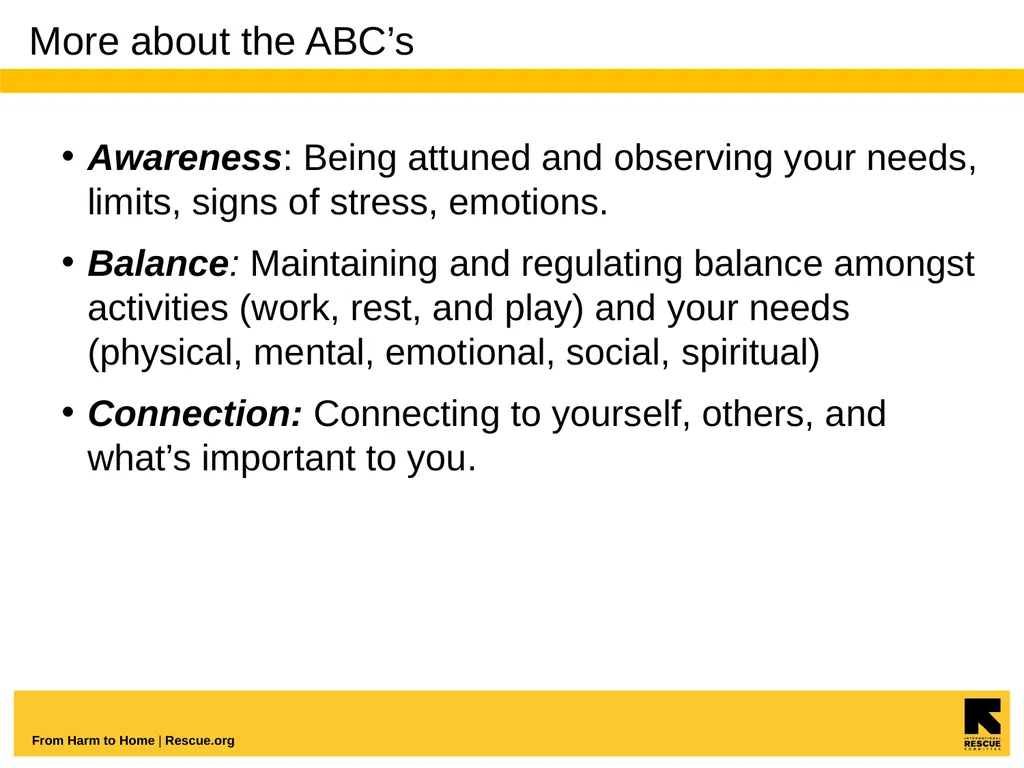
slide19. More about the ABC’s Awareness: Being attuned and observing your needs, limits, signs of stress, emotions.
Balance: Maintaining and regulating balance amongst activities (work, rest, and play) and your needs (physical, mental, emotional, social, spiritual)
Connection: Connecting to yourself, others, and what’s important to you.<br>
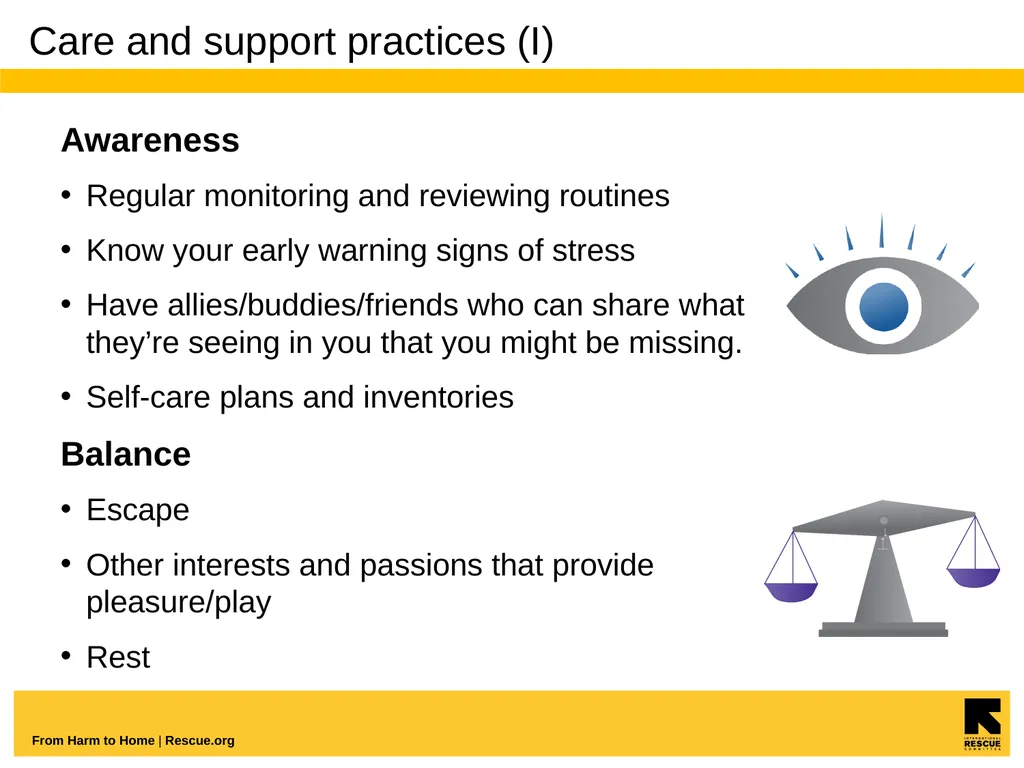
slide20. Care and support practices (I) Awareness
Regular monitoring and reviewing routines
Know your early warning signs of stress
Have allies/buddies/friends who can share what they’re seeing in you that you might be missing.
Self-care plans and inventories
Balance
Escape
Other interests and passions that provide pleasure/play
Rest<br>
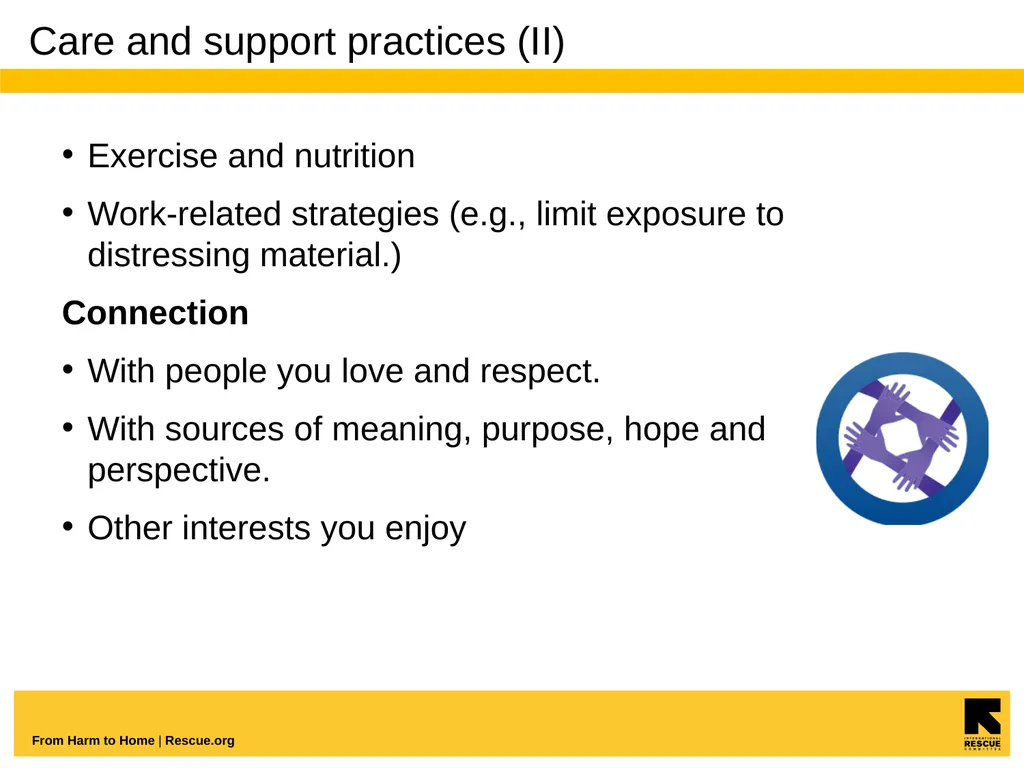
slide21. Care and support practices (II) Exercise and nutrition
Work-related strategies (e.g., limit exposure to distressing material.)
Connection
With people you love and respect.
With sources of meaning, purpose, hope and perspective.
Other interests you enjoy<br>
slide22. 5. How can the IRC help?<br>
slide23. What can managers and leaders do? Lead by example regarding self-care
Foster healthy climate
Identify and resolved problems early
Demonstrate genuine concern
Provide opportunities to rest
Deal with performance issues promptly
Normalize vicarious trauma as an occupational hazard Watch for behavior changes
Adjust workloads and rotate roles and responsibilities
Know the resources & how to access them
Reduce barriers to seeking help
Encourage early access to care
Consult with Staff Care, Human Resources, Medical Seek consultation
Involve mental health resources
Uphold confidentiality
Minimize rumors
Respect medical employment limitations
Maintain supportive contact<br>
slide24. Ways you can suggest support Set aside private time to share your concerns
“I can tell from recent conversations that this is bothering you”
Describe behavior, and avoid labeling, analyzing
“I’ve noticed….”
Discuss the benefits
“I think it would be helpful to talk with someone”
Summarize
Restate observations, concerns
Suggest helpful resources
Follow up!<br>
slide25. Ways you can respond to reluctance Normalize experience:
Remind them that stress and stress reactions are a normal part of life.
Remind them that successful staff seek and use resources.
Consider individual's perspective on seeking mental health support (cultural norms, stereotypes, stigma):
Ask about how friends and family cope with similar situations.
Describe staff care services, other mental health resources.
Remind them of confidentiality (yours, and mental health professionals).
Discuss options: They may be open to on-line resources, or consulting with a medical doctor first.
If not imminent concern, avoid pushing too hard (but do follow up).<br>
slide26. Keep, Stop, Start What’s something you are going to take away from this session?
What will you continue to do?
What will you do differently?<br>
slide27. IRC Resources for Self-Care Employee Assistance And Resilience Program (EARP)
Manager Consults
Personalized resilience planning
Counseling
Educational Resources
Duty of Care Webpage
IRC e-learning courses on Kaya Connect<br>
slide2. Important questions to answer What is vicarious trauma?
Why is it important for humanitarian workers to understand vicarious trauma?
What are common signs of vicarious trauma?
What can you do to prevent and recover from vicarious trauma?
How can the IRC help?<br>
slide3. 1. What is vicarious trauma?<br>
slide4. Different sources of stress<br>
slide5. Vicarious trauma is… The negative effects of caring about and caring for others. It can arise when you:
Witness or hear about other people’s suffering or need.
Feel a commitment or a sense of responsibility to help. It is a cumulative and ongoing process that unfolds over time.<br>
slide6. 2. Why is it important for humanitarian workers to understand vicarious trauma?<br>
slide7. “The expectation that we can be immersed in suffering and loss daily and not be touched by it, is as unrealistic as expecting to be able to walk through water and not get wet.”
(Rachel Naomi Remen, M.D.)<br>
slide8. Humanitarian workers are at increased risk Humanitarian workers are at increased risk if their role involves being…
Exposed to stories, information, or images about conflict, suffering, loss, abuse, violence, and/or torture.
Socially and emotionally isolated from friends and family.
Under increased stress because of personal experience and/or living and working in difficult/ dangerous environments.
Inadequately trained, supervised, and/or supported for the work they’re doing.<br>
slide9. “This work” (A poem) exhilarating and exhausting
drives me up a wall
and opens doors I never imagined
lays bare a wide range of emotions
yet leaves me feeling numb beyond belief
provides tremendous satisfaction
and leaves me feeling profoundly helpless
evokes genuine empathy
and provokes a fearsome intolerance within me
puts me in touch with deep suffering
and points me towards greater wholeness<br>
slide10. “This work” (A poem) brings me face to face with many poverties
and enriches me encounter by encounter
renews my hope
and leaves me grasping for faith
enables me to envision a future
But with no ability to control it
breaks me apart emotionally
and breaks me open spiritually
leaves me wounded
and heals me
Ken Kraybill, M.S.W.<br>
slide11. 3. What are common signs of vicarious trauma? Be alert to “changes” and “prolonged”<br>
slide12. Common signs of vicarious trauma (I) Mental and Emotional
More irritable, impatient, and angry
Feeling more anxious and less safe, worrying
Feeling more sadness, grief
Difficulty relaxing and feeling peaceful, content, happy
Less able to regulate emotions – more up and down
Difficulty getting started/concentrating on work
Difficulty making decisions and remembering things
Thoughts and feelings of worthlessness, powerlessness, helplessness<br>
slide13. Common signs of vicarious trauma (II) Behavioral and Physical
Changes in sleep/appetite
Avoiding work, tasks, or people
Increased use of substances
Physical problems such as headaches, aches & pains, illnesses
Increased accidents<br>
slide14. More specific signs of vicarious trauma (I) Signs of trauma reactions
Increased intrusive thoughts about work or distressing material
Increased worrying, fretting, rumination, anxiety, agitation
Hypervigilance, finding yourself startling easily
Avoidance
Changes to sense of meaning, purpose, and spirituality
Loss of sense of meaning, purpose and/or hope
Cynicism and guilt
Feeling hopeless and helpless
Ethical tension<br>
slide15. More specific signs of vicarious trauma (II) Changes in relationships
Difficulty accepting or feeling okay about yourself. Your sense of relationship with self and others is negatively transformed.
Problems managing the boundaries between yourself and others (e.g., taking on too much responsibility, having difficulty leaving work at the end of the day, trying to step in and control other’s lives)
Reduced ability to feel compassion and empathy
Difficulty feeling connected to what’s going on around and within you<br>
slide16. Over-involvement and under-involvement continuum Over-involvement Under-involvement working with moving away<br>
slide17. 4. What can you do to prevent and recover from vicarious trauma?<br>
slide18. The ABC’s of coping with vicarious trauma Awareness Balance Connection A C B<br>
slide19. More about the ABC’s Awareness: Being attuned and observing your needs, limits, signs of stress, emotions.
Balance: Maintaining and regulating balance amongst activities (work, rest, and play) and your needs (physical, mental, emotional, social, spiritual)
Connection: Connecting to yourself, others, and what’s important to you.<br>
slide20. Care and support practices (I) Awareness
Regular monitoring and reviewing routines
Know your early warning signs of stress
Have allies/buddies/friends who can share what they’re seeing in you that you might be missing.
Self-care plans and inventories
Balance
Escape
Other interests and passions that provide pleasure/play
Rest<br>
slide21. Care and support practices (II) Exercise and nutrition
Work-related strategies (e.g., limit exposure to distressing material.)
Connection
With people you love and respect.
With sources of meaning, purpose, hope and perspective.
Other interests you enjoy<br>
slide22. 5. How can the IRC help?<br>
slide23. What can managers and leaders do? Lead by example regarding self-care
Foster healthy climate
Identify and resolved problems early
Demonstrate genuine concern
Provide opportunities to rest
Deal with performance issues promptly
Normalize vicarious trauma as an occupational hazard Watch for behavior changes
Adjust workloads and rotate roles and responsibilities
Know the resources & how to access them
Reduce barriers to seeking help
Encourage early access to care
Consult with Staff Care, Human Resources, Medical Seek consultation
Involve mental health resources
Uphold confidentiality
Minimize rumors
Respect medical employment limitations
Maintain supportive contact<br>
slide24. Ways you can suggest support Set aside private time to share your concerns
“I can tell from recent conversations that this is bothering you”
Describe behavior, and avoid labeling, analyzing
“I’ve noticed….”
Discuss the benefits
“I think it would be helpful to talk with someone”
Summarize
Restate observations, concerns
Suggest helpful resources
Follow up!<br>
slide25. Ways you can respond to reluctance Normalize experience:
Remind them that stress and stress reactions are a normal part of life.
Remind them that successful staff seek and use resources.
Consider individual's perspective on seeking mental health support (cultural norms, stereotypes, stigma):
Ask about how friends and family cope with similar situations.
Describe staff care services, other mental health resources.
Remind them of confidentiality (yours, and mental health professionals).
Discuss options: They may be open to on-line resources, or consulting with a medical doctor first.
If not imminent concern, avoid pushing too hard (but do follow up).<br>
slide26. Keep, Stop, Start What’s something you are going to take away from this session?
What will you continue to do?
What will you do differently?<br>
slide27. IRC Resources for Self-Care Employee Assistance And Resilience Program (EARP)
Manager Consults
Personalized resilience planning
Counseling
Educational Resources
Duty of Care Webpage
IRC e-learning courses on Kaya Connect<br>