02
This talk Radiometry – measurement of electromagnetic energy (of visible light in particular)
Measure spatial (and angular) properties of light
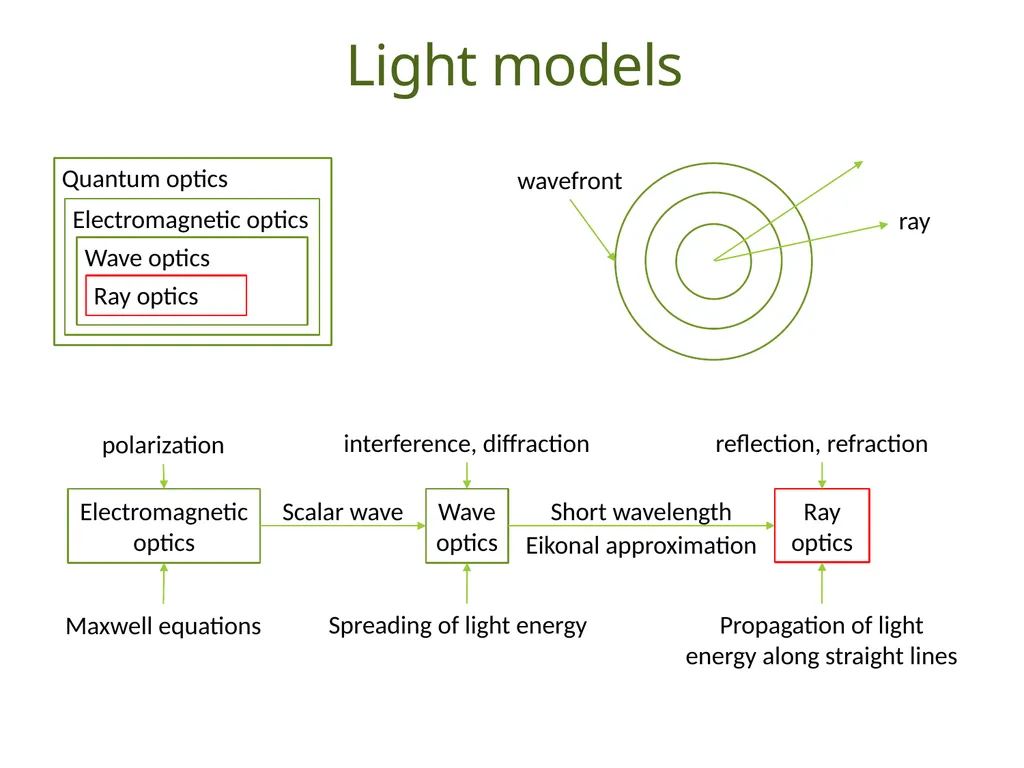
Use ray optics, hence largely a geometrical subject
A theoretical foundation for physically-based rendering algorithms
Concepts:
Flux, irradiance, radiance
Reflection functions (BRDF)
Provide intuitive understanding of above concepts
Point out common pitfalls of thinking, or sources of confusion along the way
Short digressions into somewhat related topics<br>
04
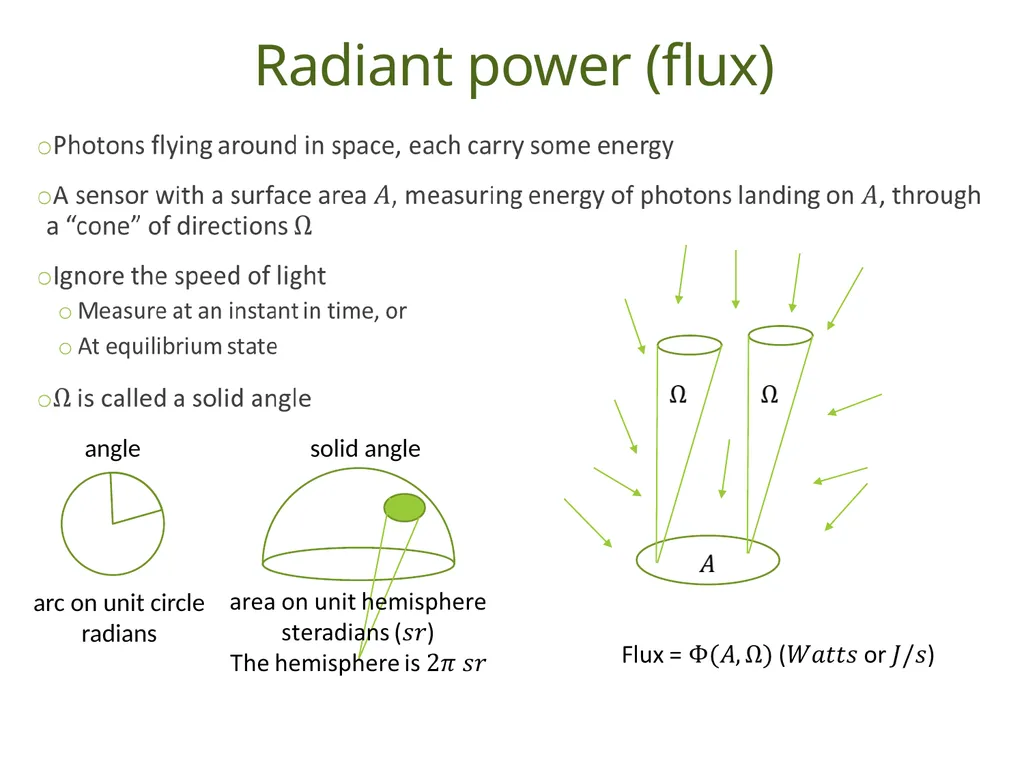
Radiant power (flux) arc on unit circle
radians angle solid angle<br>
06
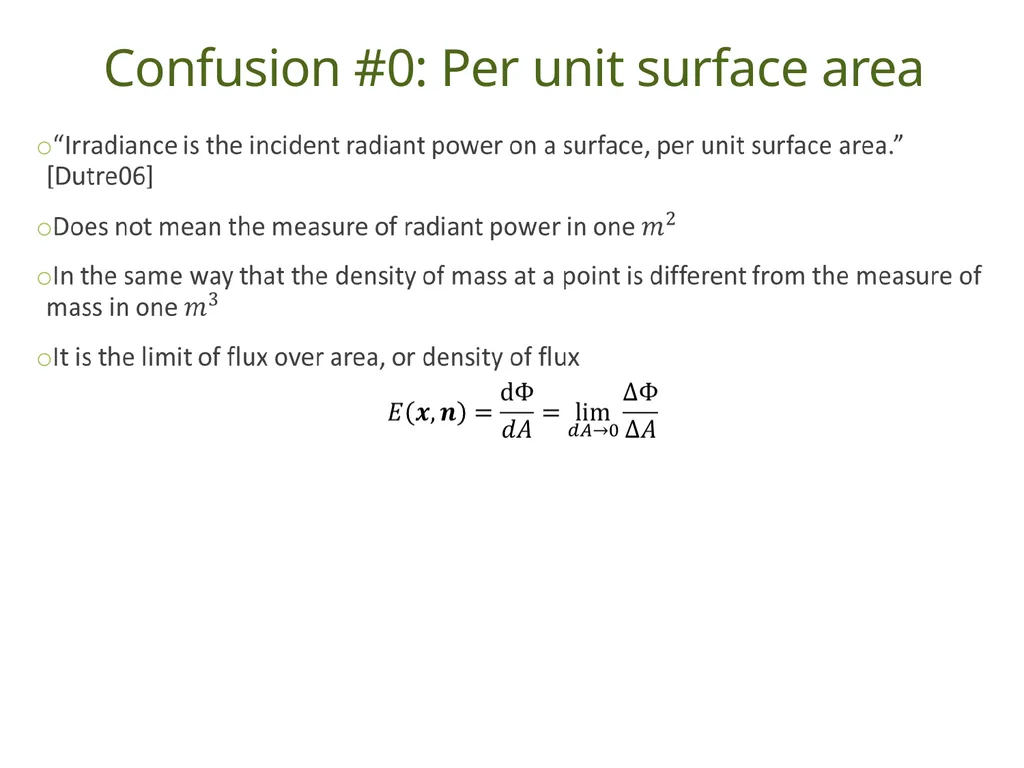
Confusion #0: Per unit surface area<br>
08
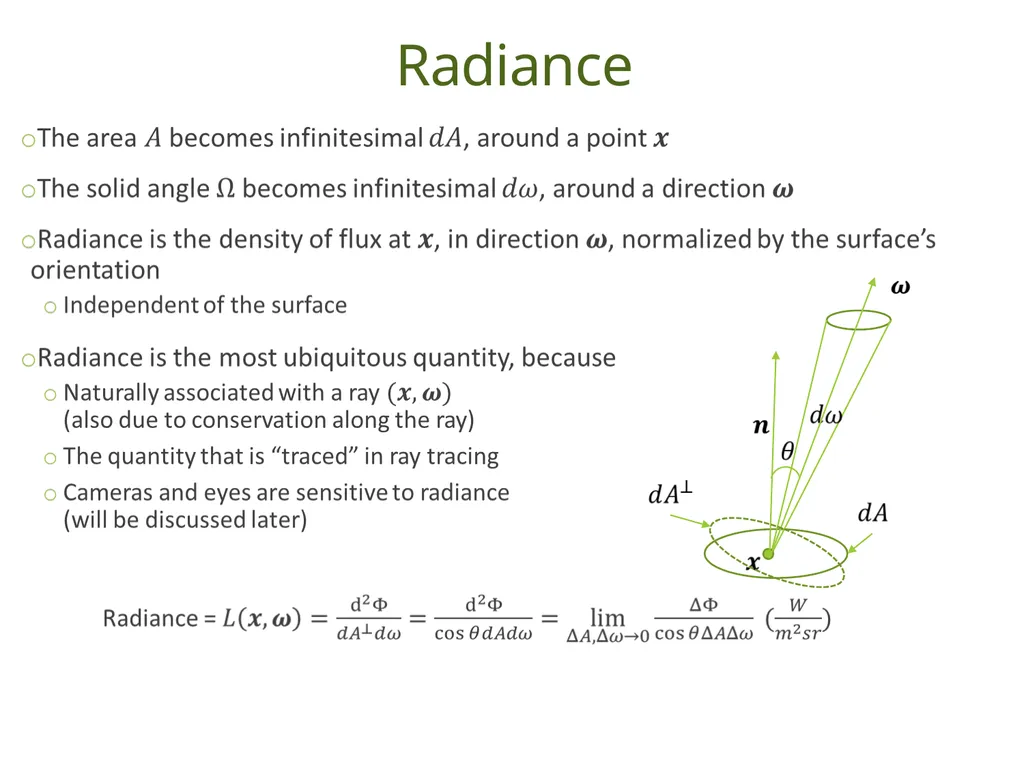
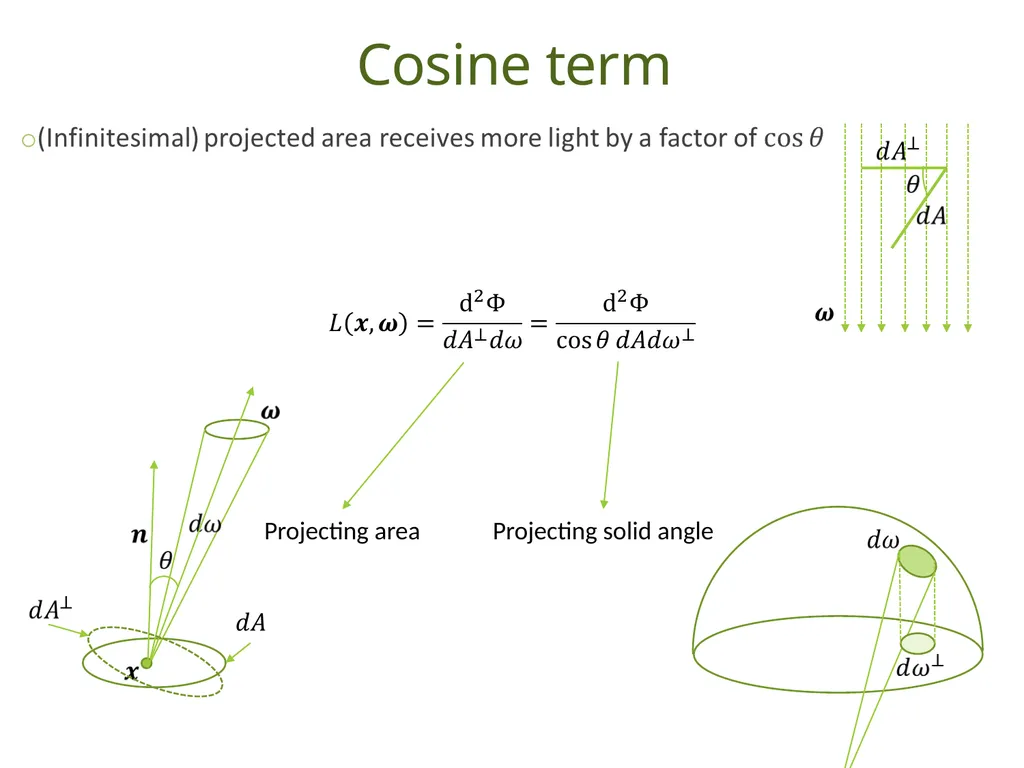
Cosine term Projecting area Projecting solid angle<br>
09
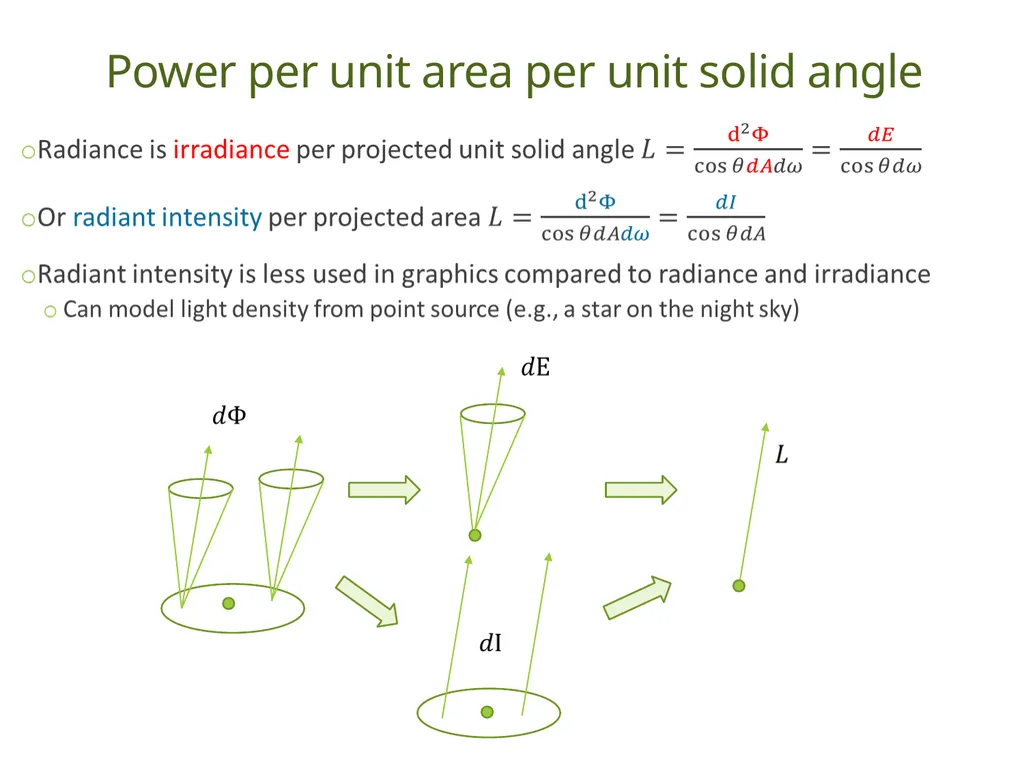
Power per unit area per unit solid angle<br>
10
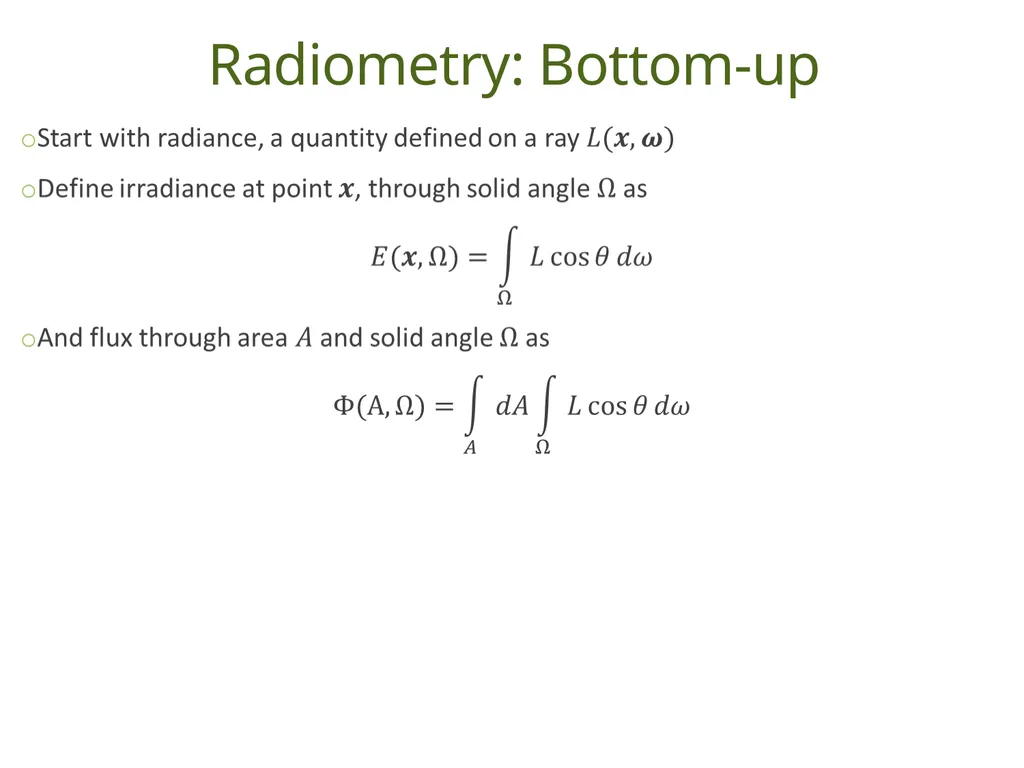
Radiometry: Bottom-up<br>
11
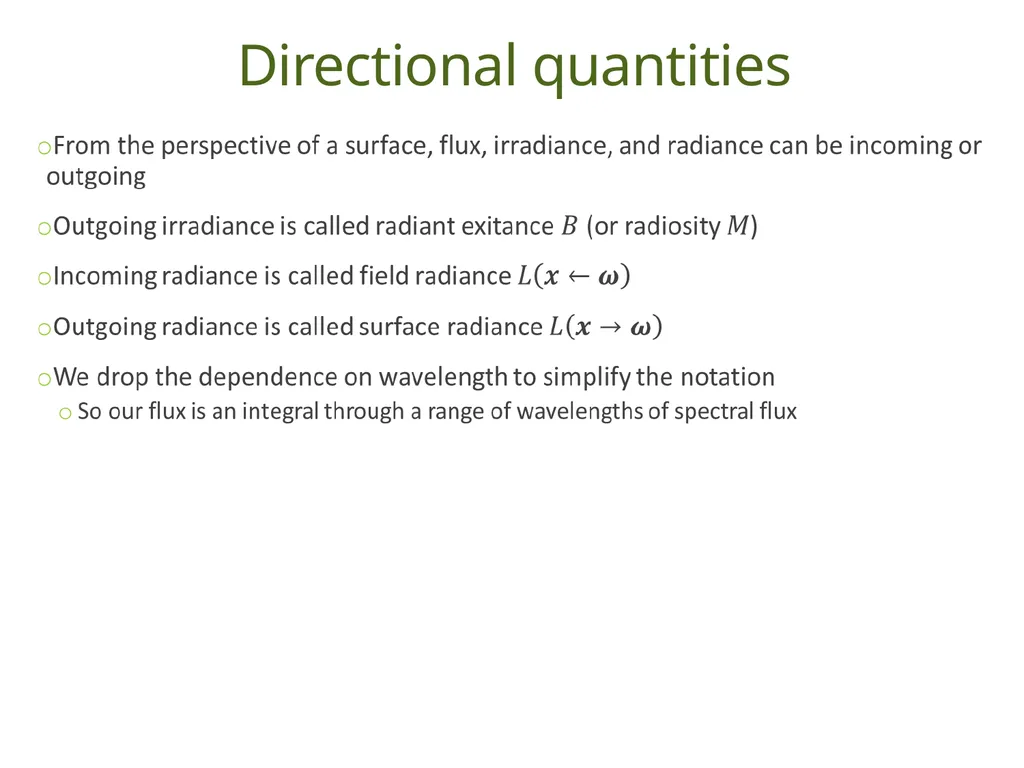
Directional quantities<br>
12
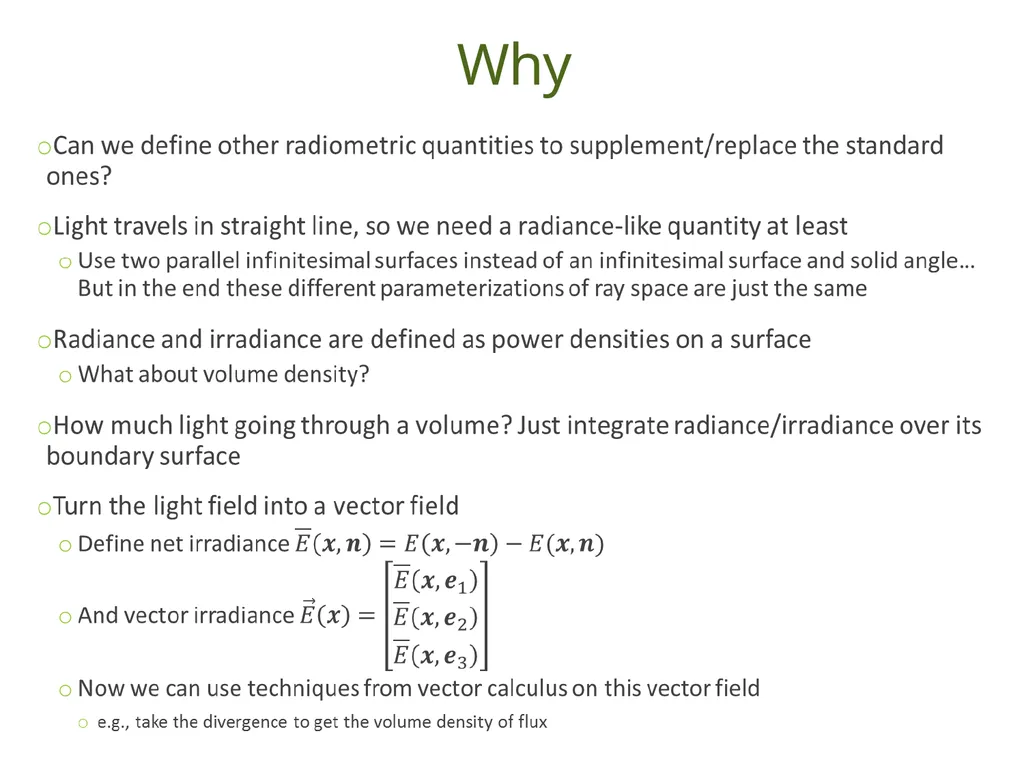
Why If we were to define “radiometric” quantities from scratch, would we derive the same quantities?
Will come back to this question after we learn more about what we can get from the quantities just defined<br>
13
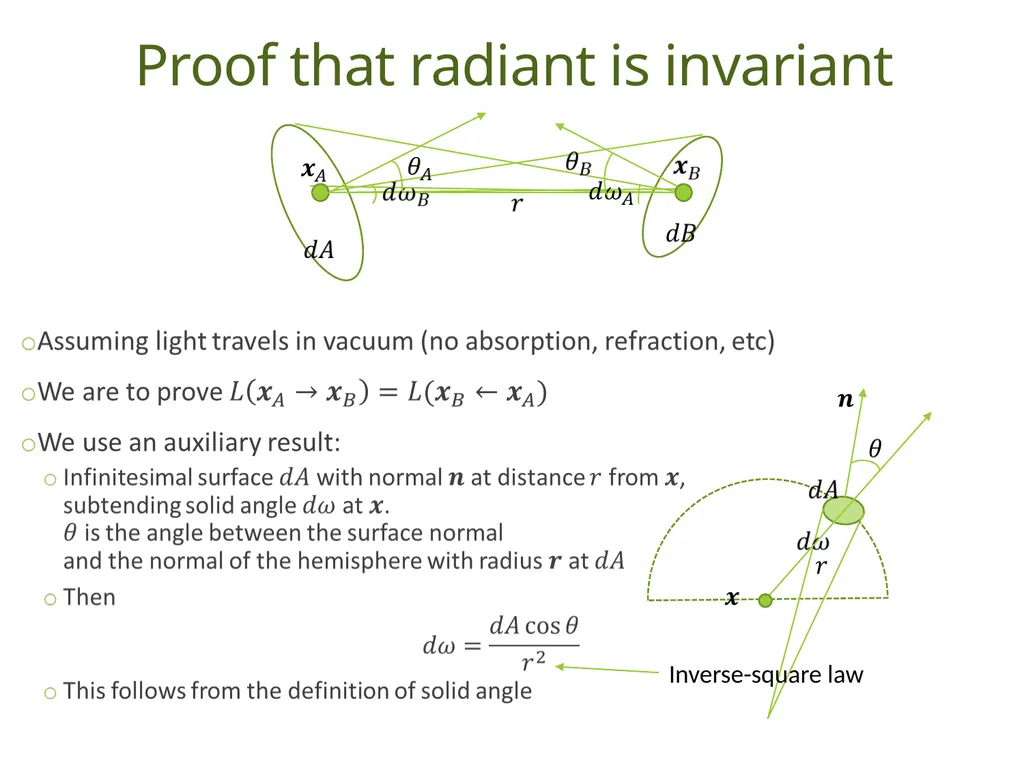
Proof that radiant is invariant Inverse-square law<br>
14
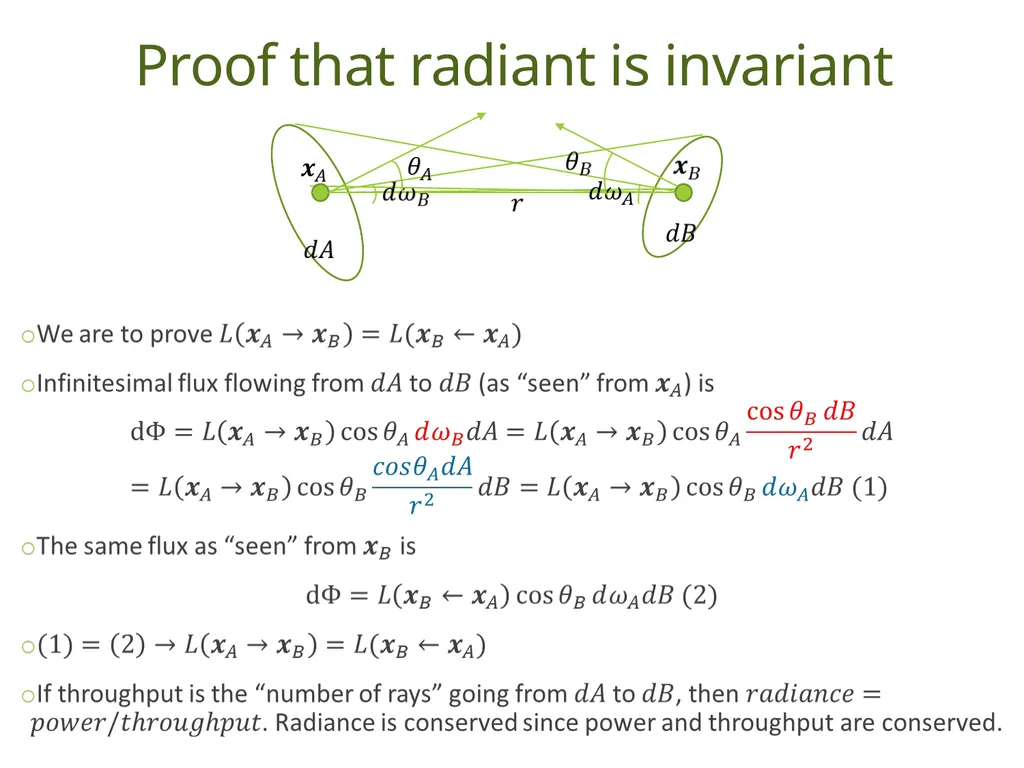
Proof that radiant is invariant<br>
15
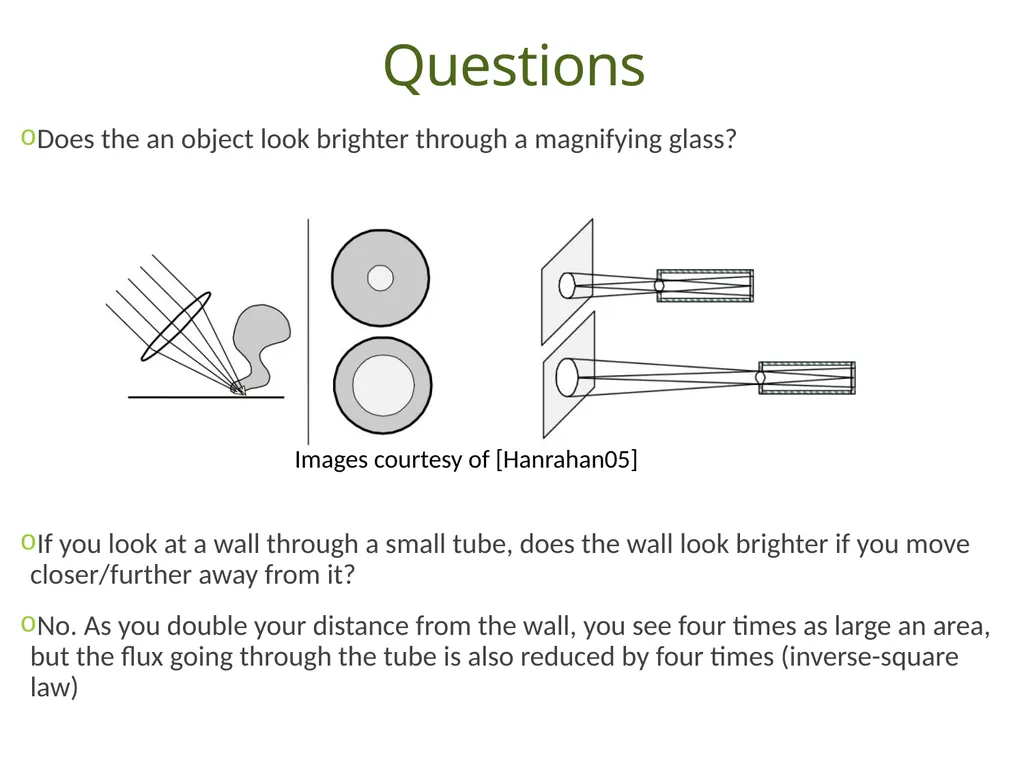
Questions Does the an object look brighter through a magnifying glass?
If you look at a wall through a small tube, does the wall look brighter if you move closer/further away from it?
No. As you double your distance from the wall, you see four times as large an area, but the flux going through the tube is also reduced by four times (inverse-square law) Images courtesy of [Hanrahan05]<br>
16
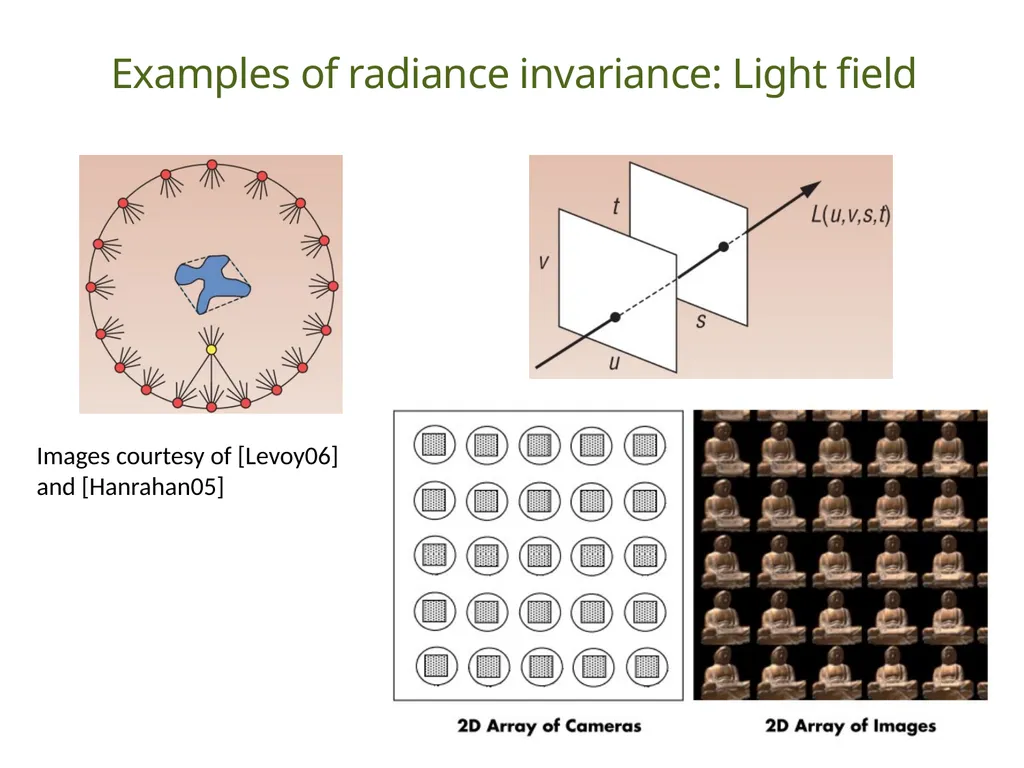
Examples of radiance invariance: Light field Images courtesy of [Levoy06]
and [Hanrahan05]<br>
17
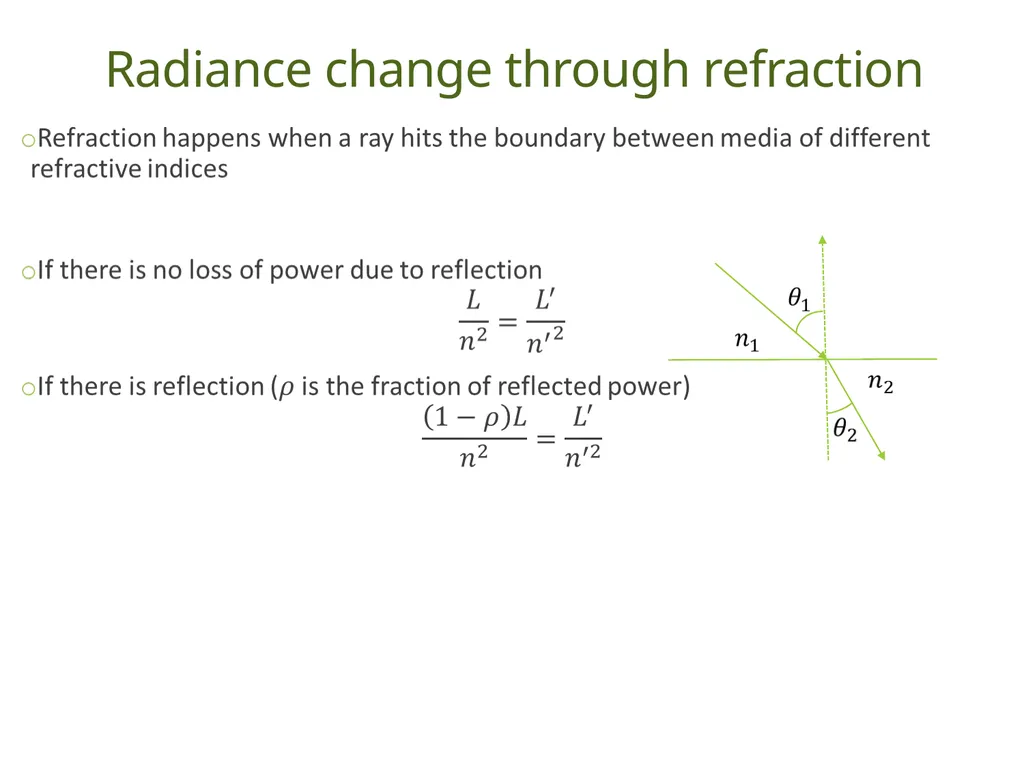
Radiance change through refraction<br>
18
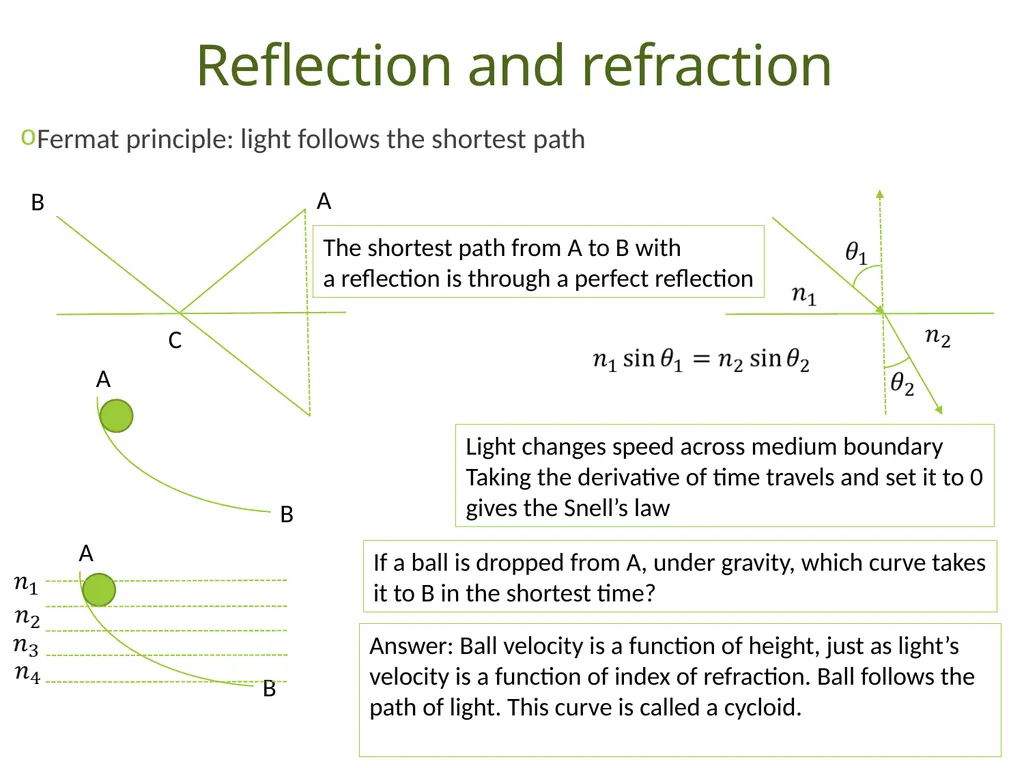
Reflection and refraction Fermat principle: light follows the shortest path A B C The shortest path from A to B with
a reflection is through a perfect reflection Light changes speed across medium boundary
Taking the derivative of time travels and set it to 0
gives the Snell’s law A B If a ball is dropped from A, under gravity, which curve takes
it to B in the shortest time? A B Answer: Ball velocity is a function of height, just as light’s�velocity is a function of index of refraction. Ball follows the�path of light. This curve is called a cycloid.<br>
19
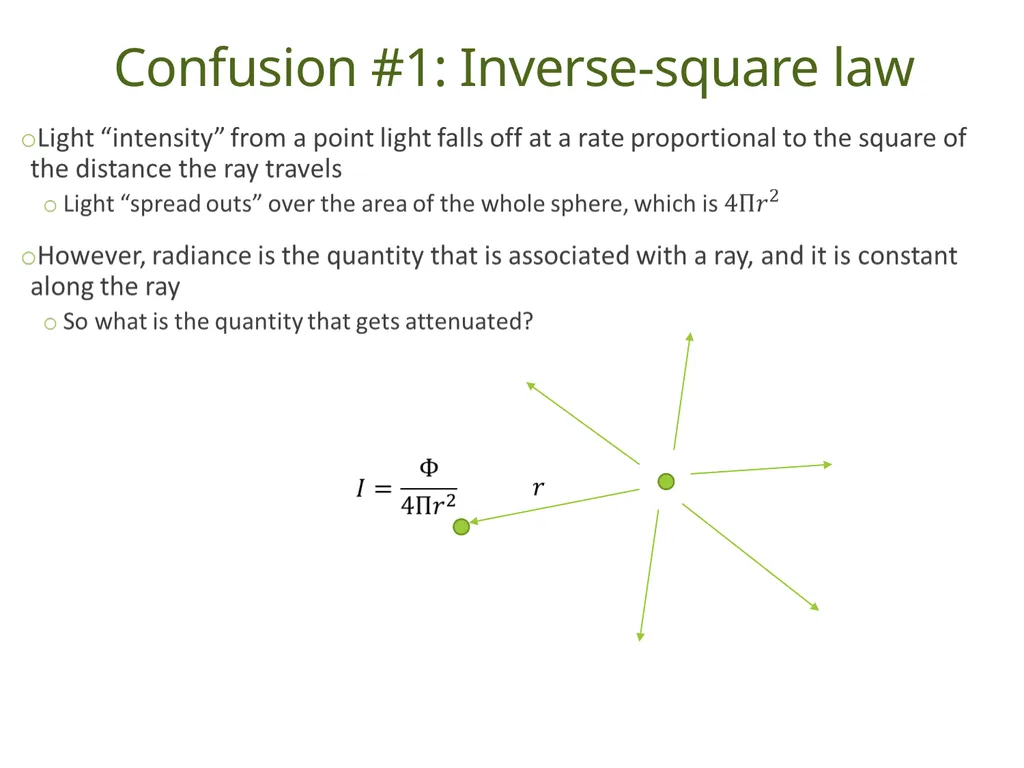
Confusion #1: Inverse-square law<br>
20
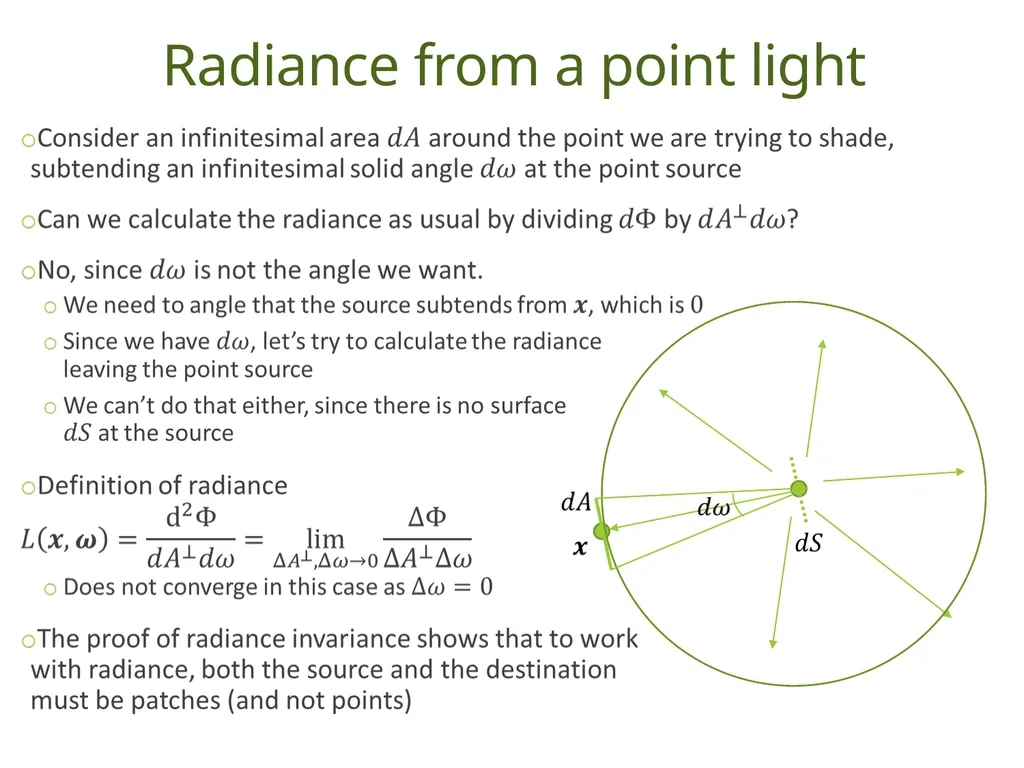
Radiance from a point light<br>
21
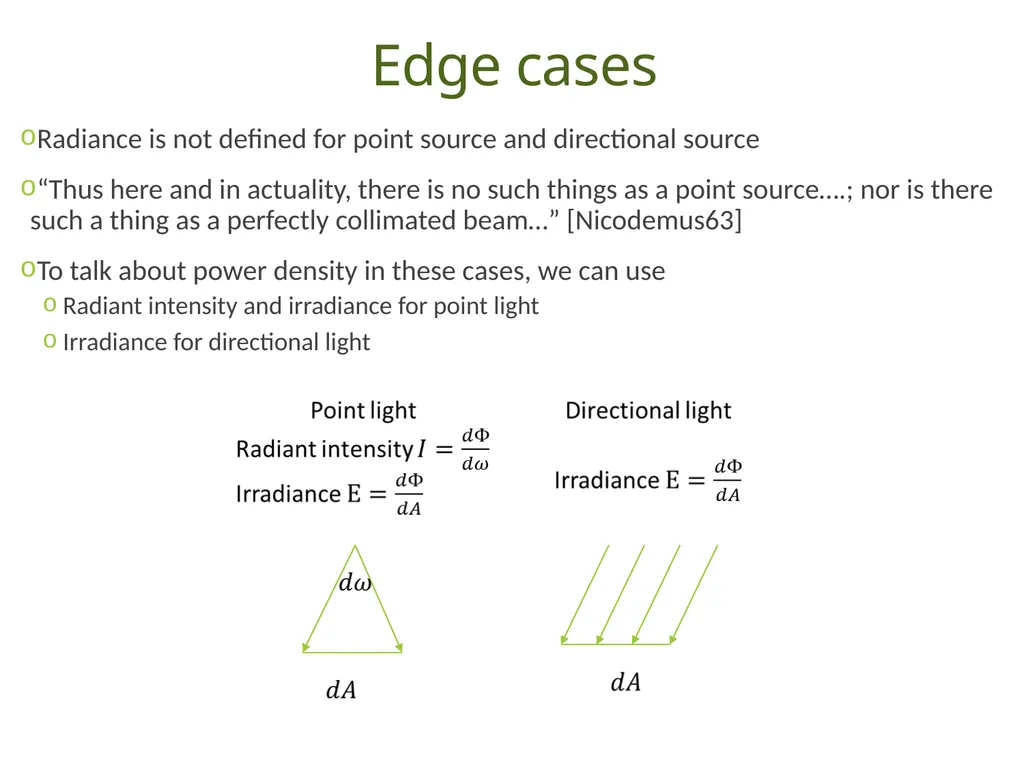
Edge cases Radiance is not defined for point source and directional source
“Thus here and in actuality, there is no such things as a point source….; nor is there such a thing as a perfectly collimated beam…” [Nicodemus63]
To talk about power density in these cases, we can use
Radiant intensity and irradiance for point light
Irradiance for directional light<br>
22
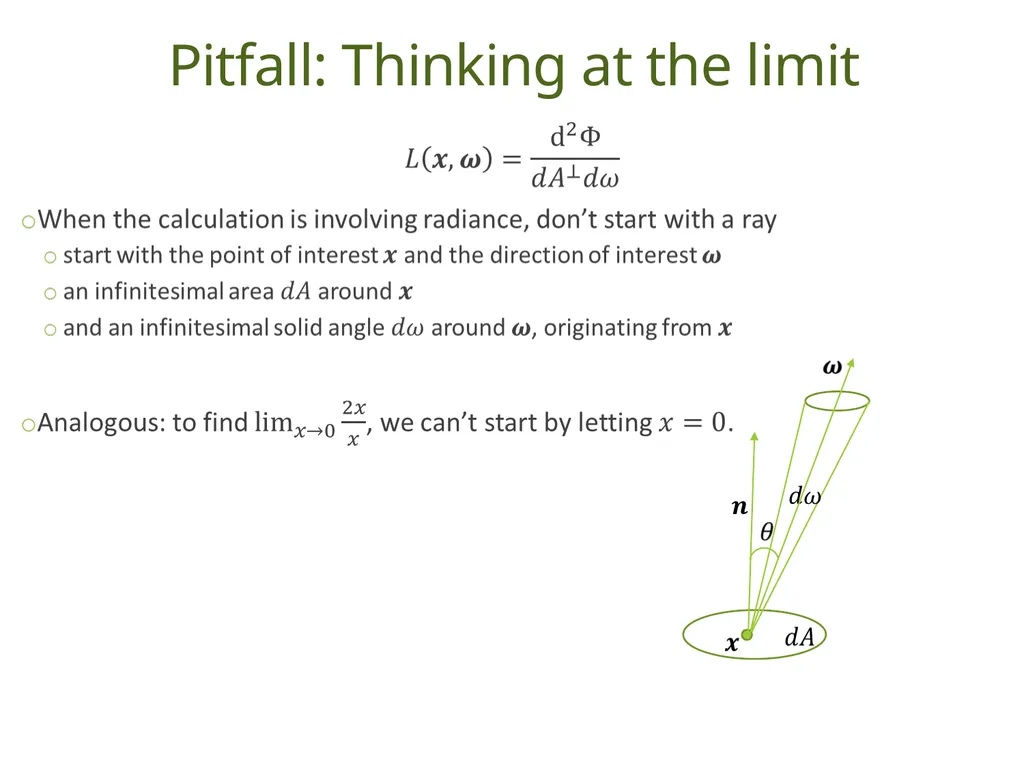
Pitfall: Thinking at the limit<br>
23
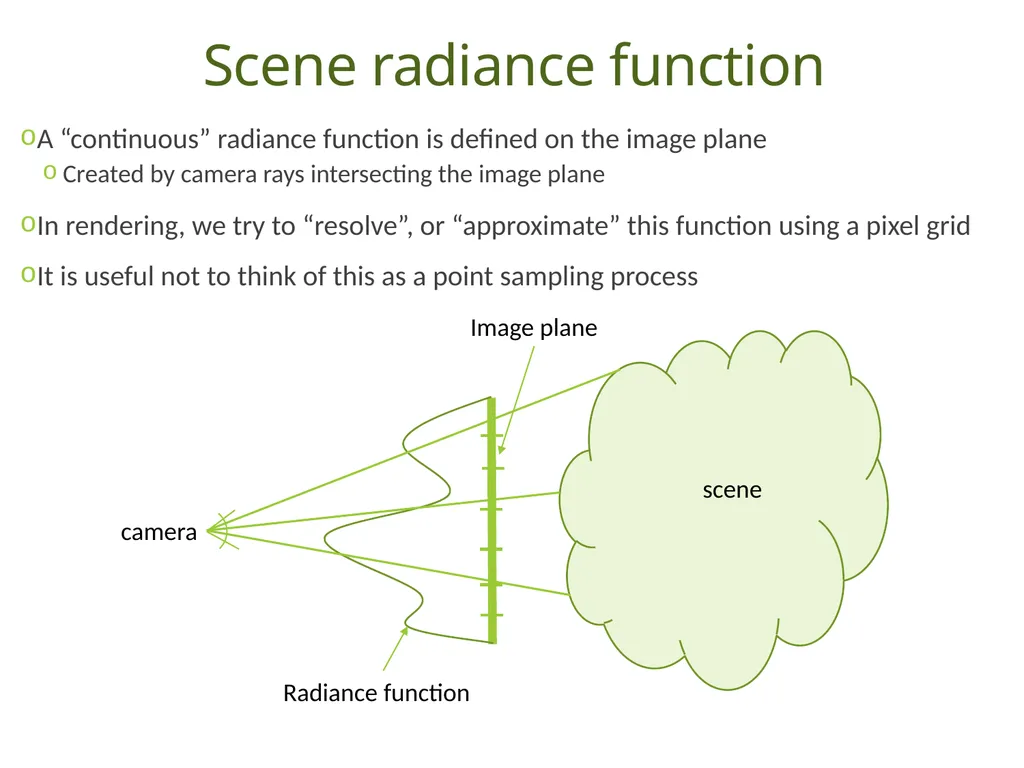
Scene radiance function A “continuous” radiance function is defined on the image plane
Created by camera rays intersecting the image plane
In rendering, we try to “resolve”, or “approximate” this function using a pixel grid
It is useful not to think of this as a point sampling process Image plane camera scene Radiance function<br>
24
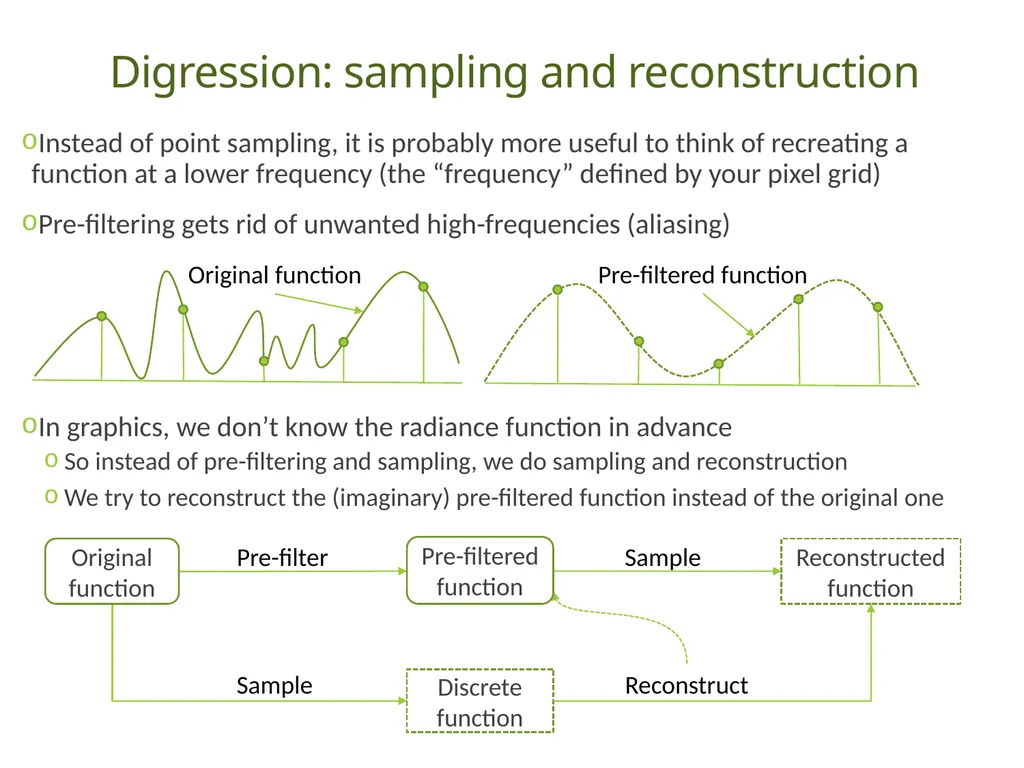
Digression: sampling and reconstruction Instead of point sampling, it is probably more useful to think of recreating a function at a lower frequency (the “frequency” defined by your pixel grid)
Pre-filtering gets rid of unwanted high-frequencies (aliasing)
In graphics, we don’t know the radiance function in advance
So instead of pre-filtering and sampling, we do sampling and reconstruction
We try to reconstruct the (imaginary) pre-filtered function instead of the original one Original function Pre-filtered function Discrete function Reconstructed function Pre-filter Sample Sample Reconstruct Original function Pre-filtered function<br>
25
Different views of rendering Signal processing point of view
Frequencies, sampling, reconstruction,…
Statistical point of view
The color of each pixel is an estimator to, say, the mean color of nearby samples
Different sampling strategies result in different variance of the estimator
Basis for Monte Carlo sampling
Optimization point of view
Minimize the “distance” between the reconstructed function and the original function
There might be different ways to define this distance (or cost function)<br>
26
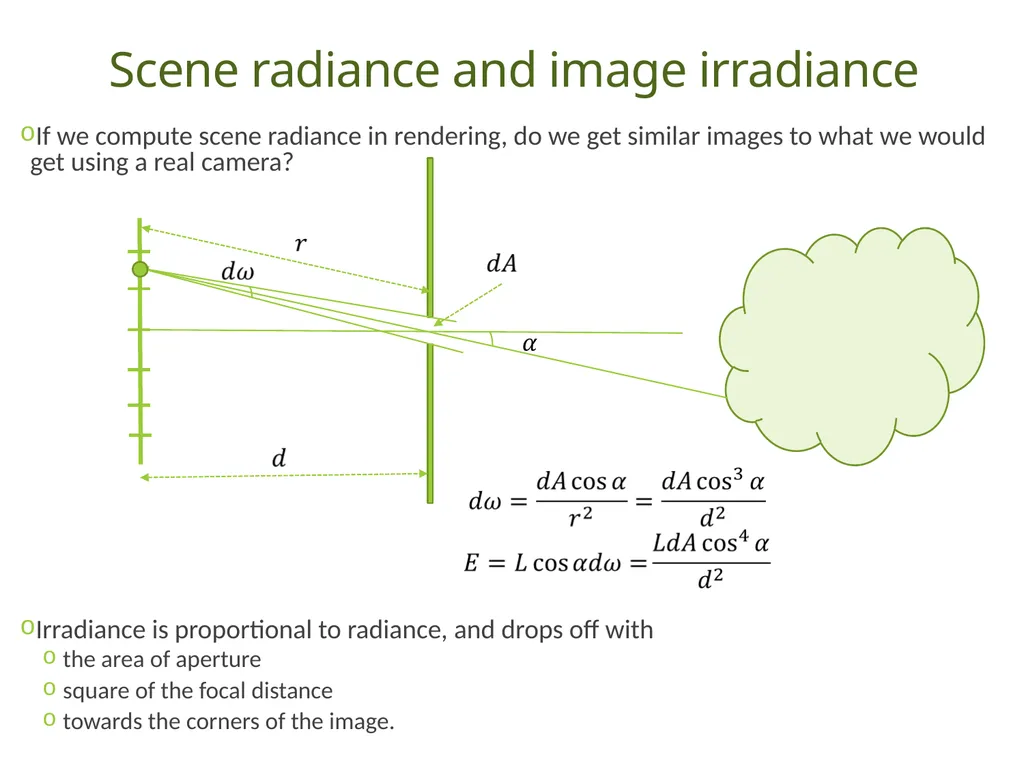
Scene radiance and image irradiance If we compute scene radiance in rendering, do we get similar images to what we would get using a real camera?
Irradiance is proportional to radiance, and drops off with
the area of aperture
square of the focal distance
towards the corners of the image.<br>
27
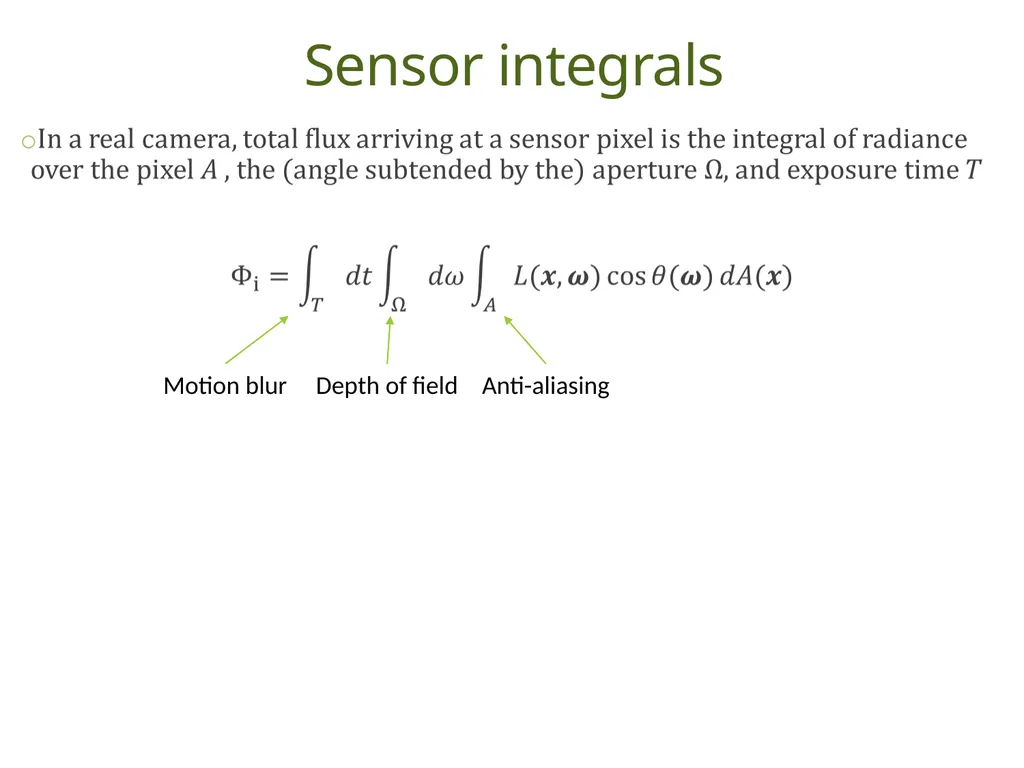
Sensor integrals Anti-aliasing Depth of field Motion blur<br>
28
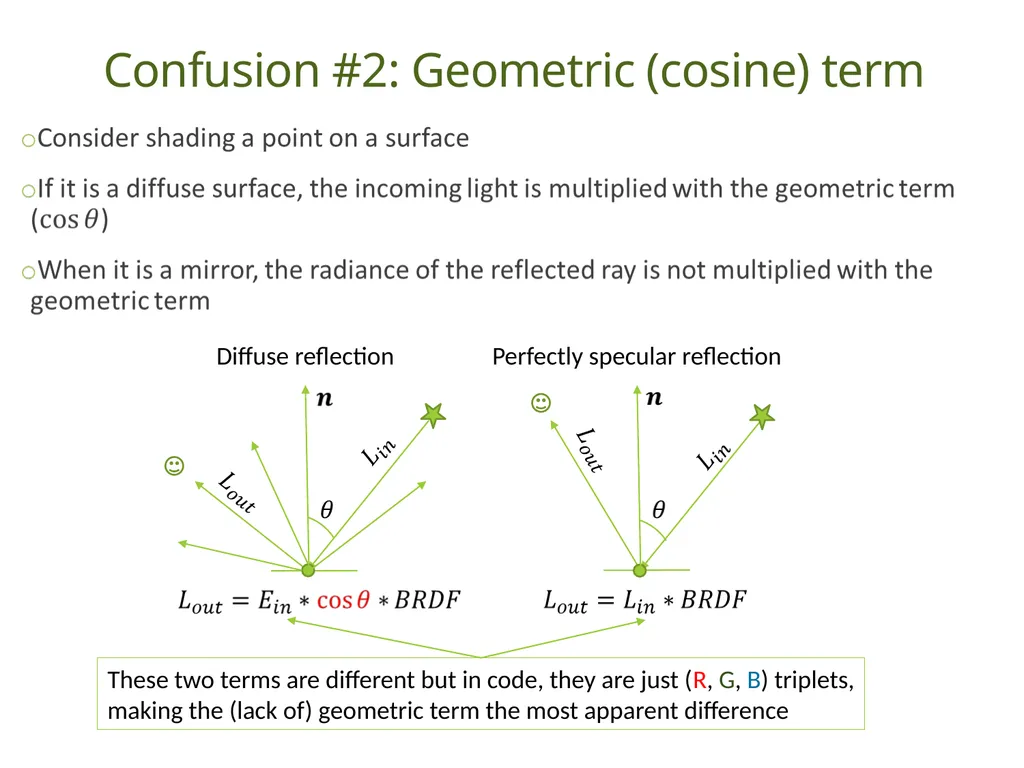
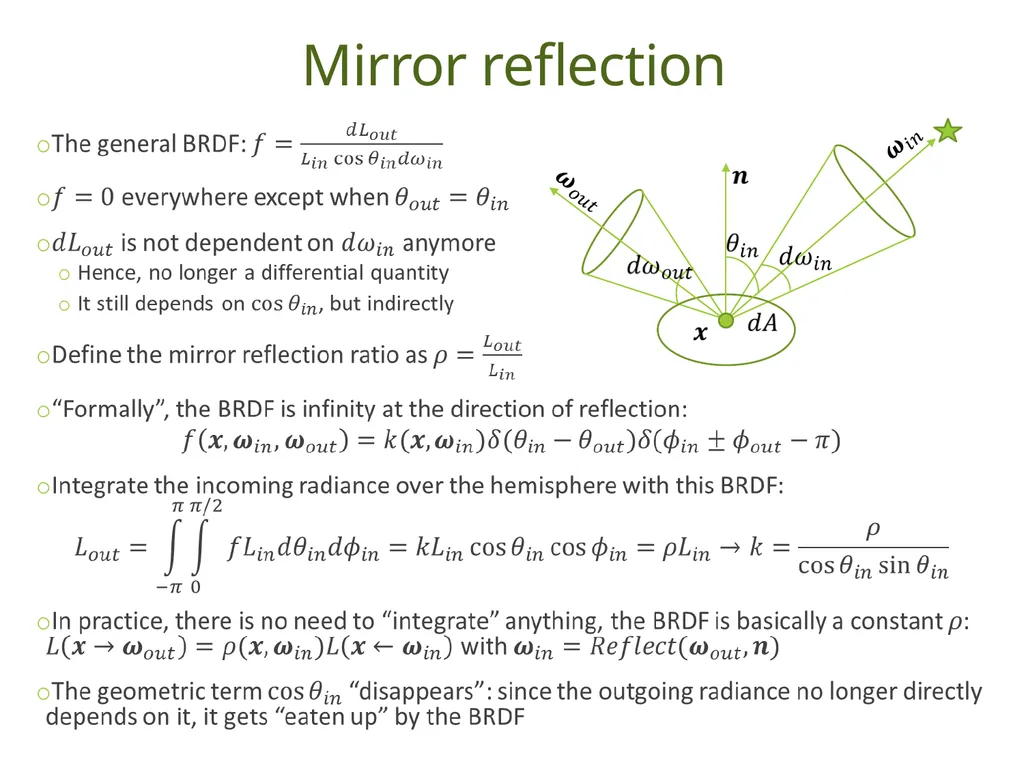
Confusion #2: Geometric (cosine) term Diffuse reflection Perfectly specular reflection These two terms are different but in code, they are just (R, G, B) triplets,�making the (lack of) geometric term the most apparent difference<br>
30
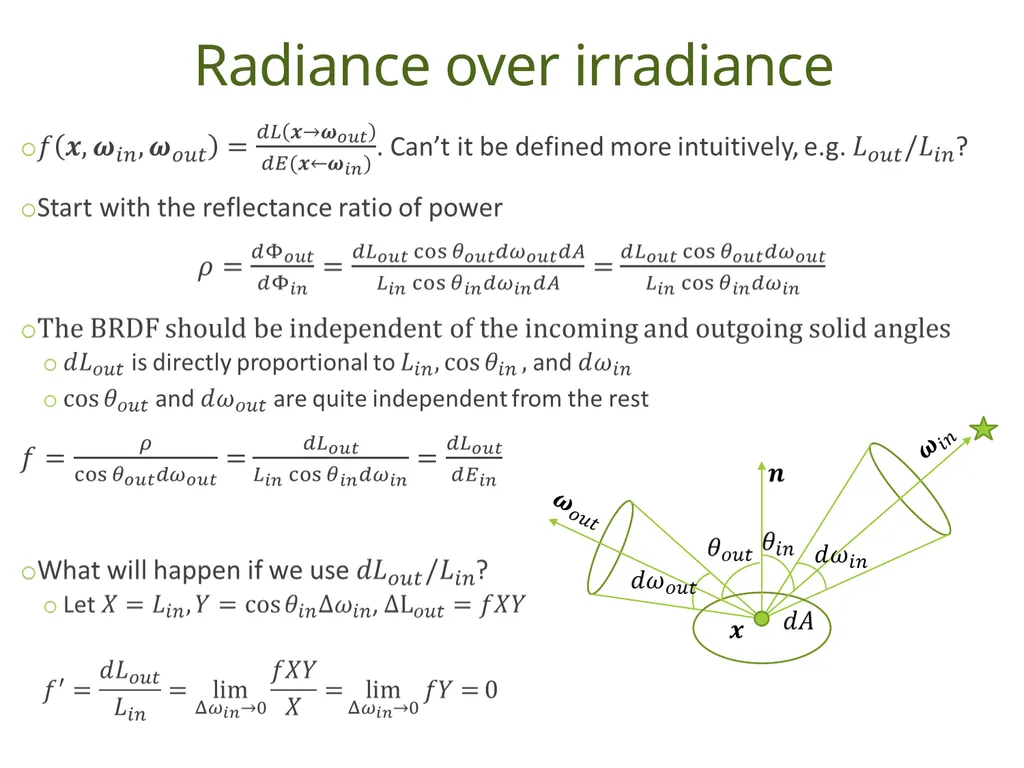
Radiance over irradiance<br>
31
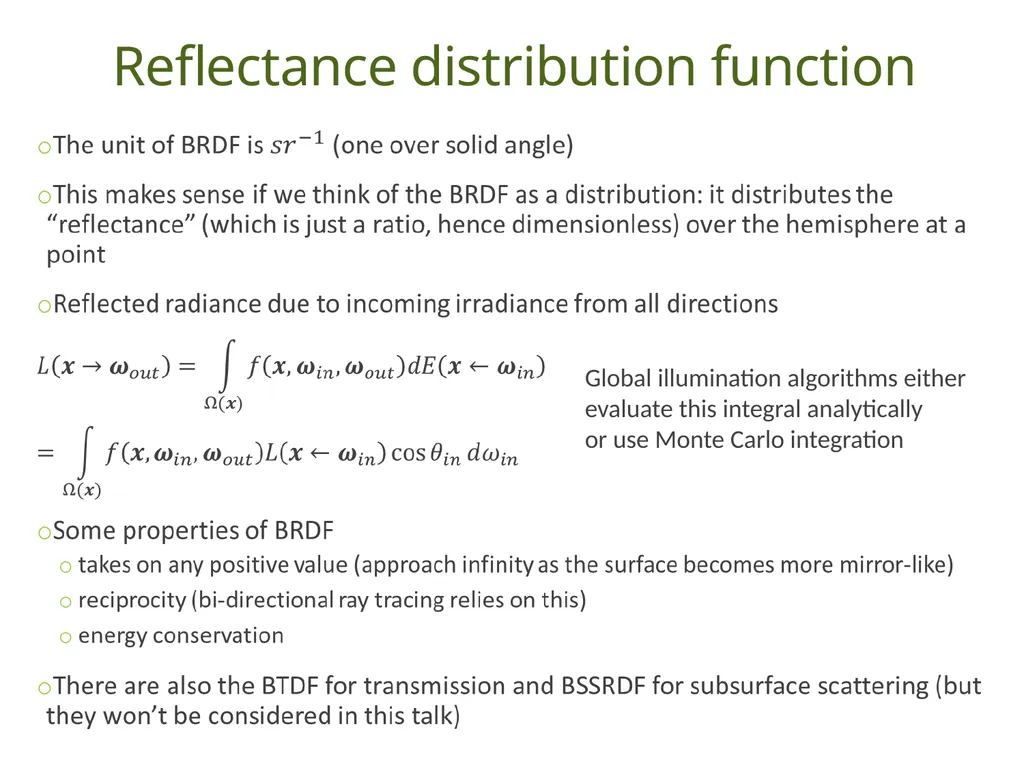
Reflectance distribution function Global illumination algorithms either
evaluate this integral analytically
or use Monte Carlo integration<br>
33
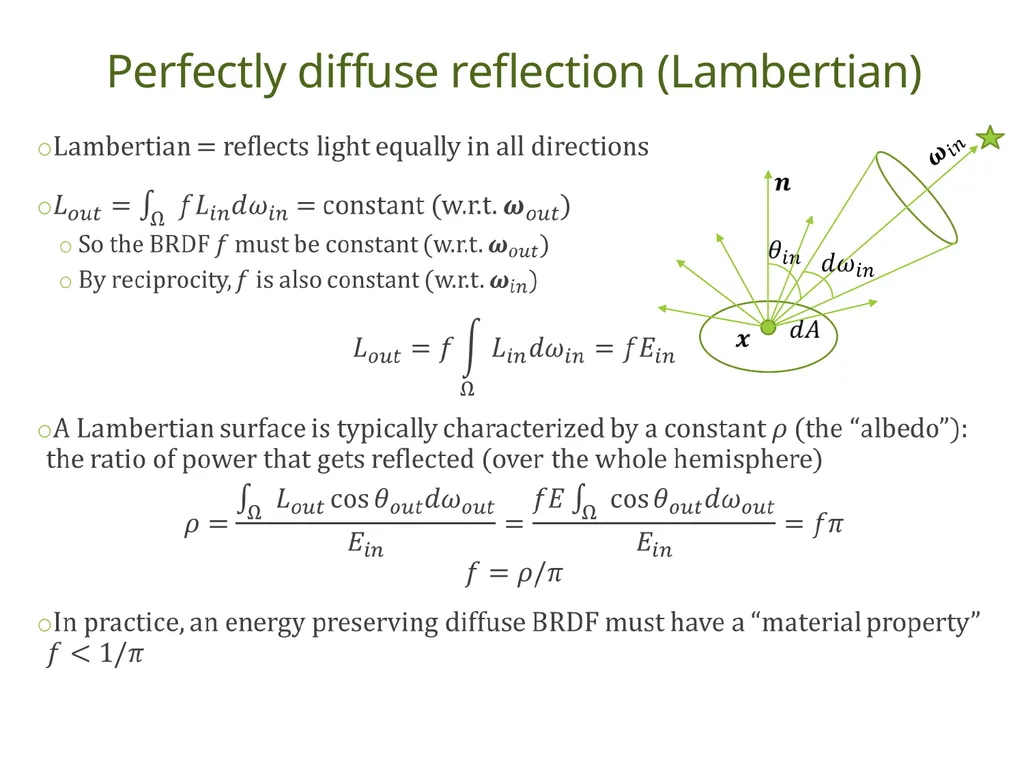
Perfectly diffuse reflection (Lambertian)<br>
34
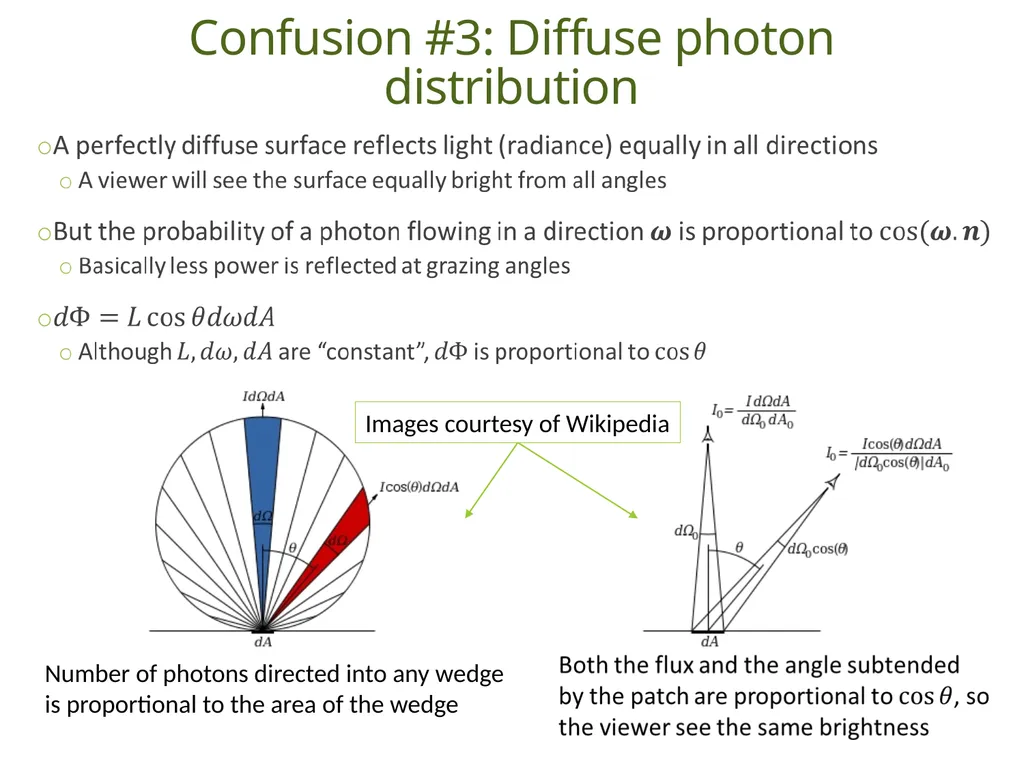
Confusion #3: Diffuse photon distribution Number of photons directed into any wedge
is proportional to the area of the wedge Images courtesy of Wikipedia<br>
35
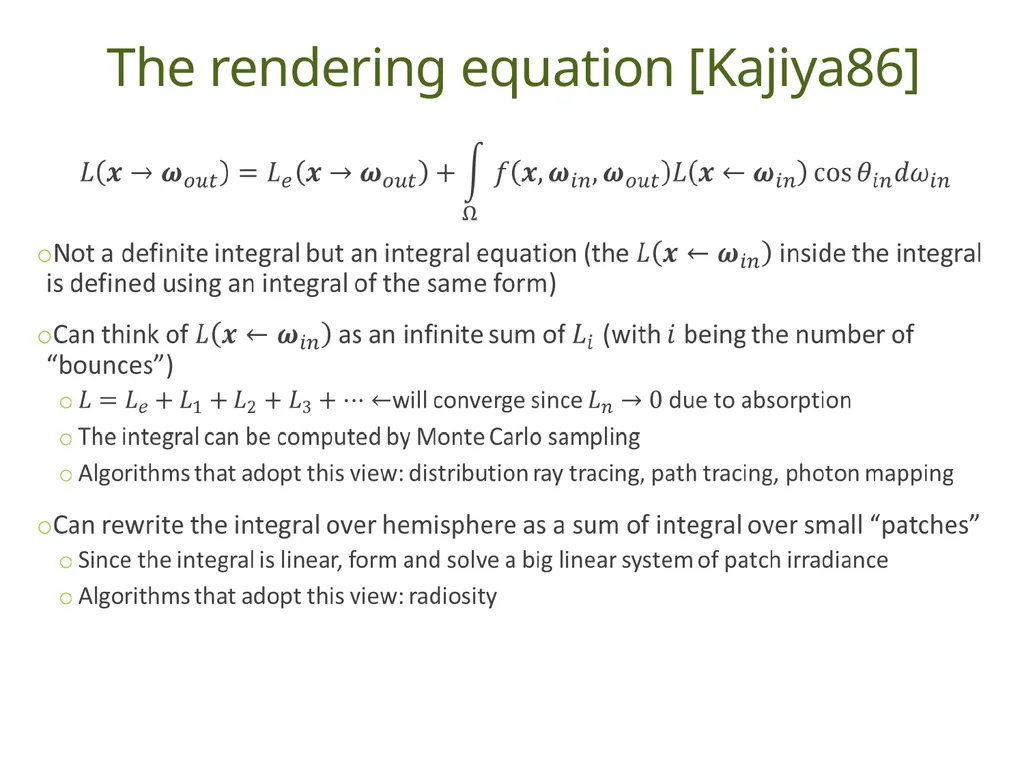
The rendering equation [Kajiya86]<br>
39
End Thank you
Questions?<br>
40
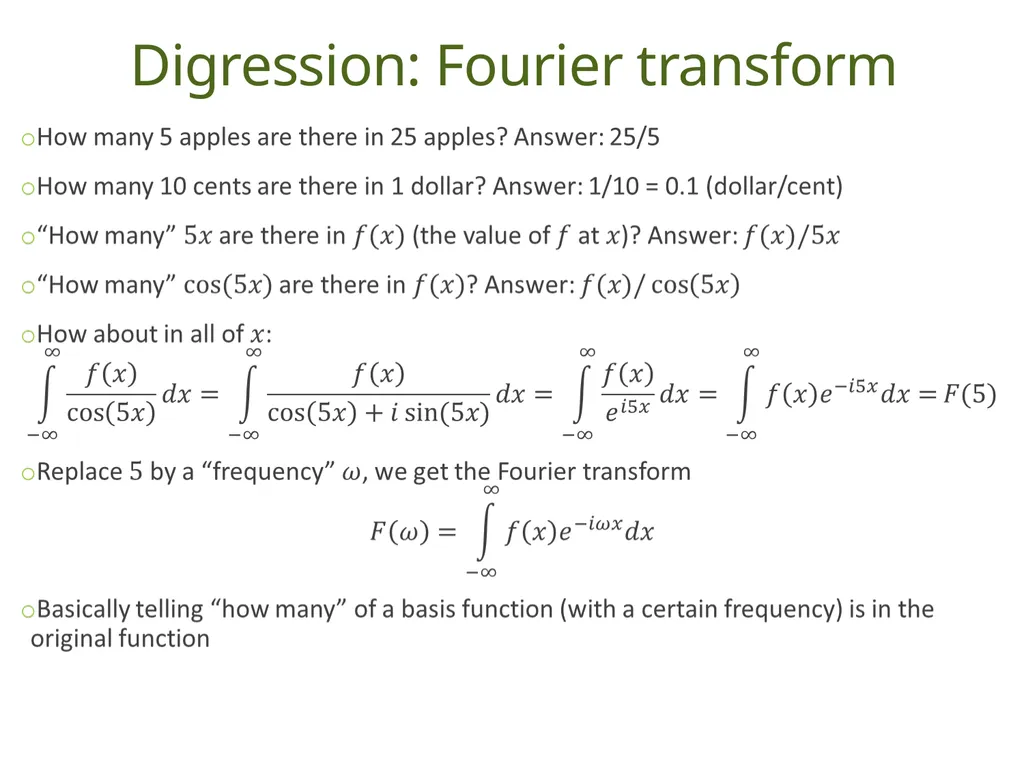
Digression: Fourier transform<br>