Understanding Climate Change Behaviors using a Modified Theory of Planned Behavior Caitlin K. Kirby Dr. Julie C. Libarkin Science Education and Action Research Question Which determinants of a modified Theory of Planned behavior are most
"Understanding Climate Change Behaviors using a" is the property of its rightful owner. Permission is granted to
download and print the materials on this website for personal, non-commercial use only, and to display it
on your personal computer provided you do not modify the materials and that you retain all copyright
notices contained in the materials. By downloading content from our website, you accept the terms of this
agreement.
Presentation Transcript
01
Understanding Climate Change Behaviors using a Modified Theory of Planned Behavior Caitlin K. Kirby
Dr. Julie C. Libarkin<br>
02
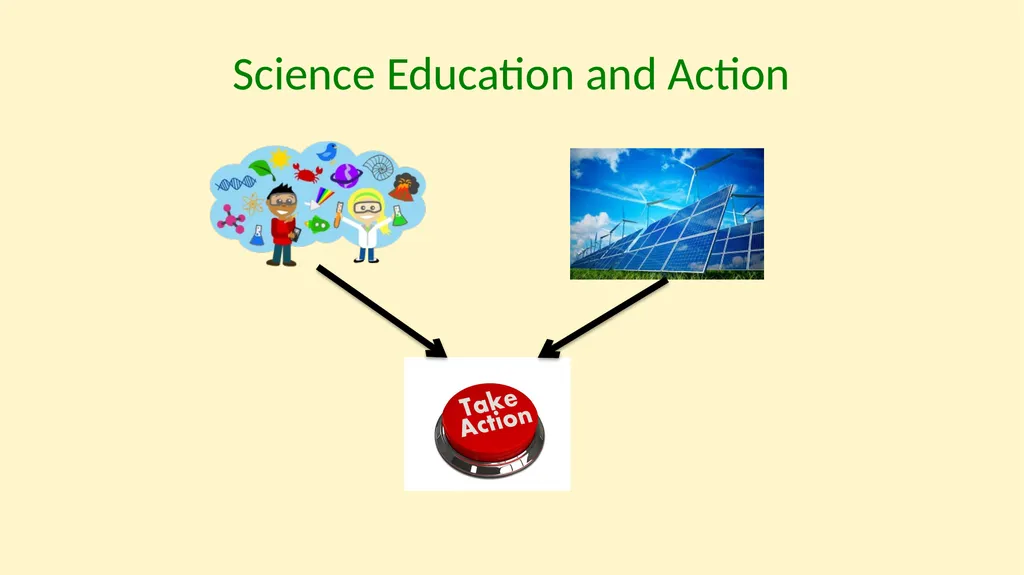
Science Education and Action<br>
03
Research Question Which determinants of a modified Theory of Planned behavior are most important in predicting pro-environmental behavioral intentions in undergraduates?<br>
04
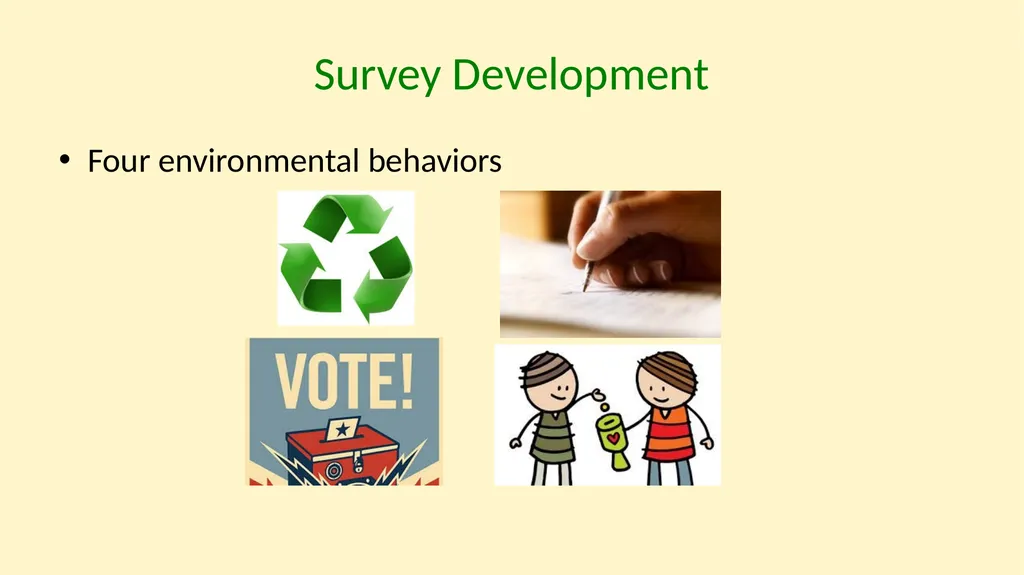
Survey Development Four environmental behaviors<br>
05
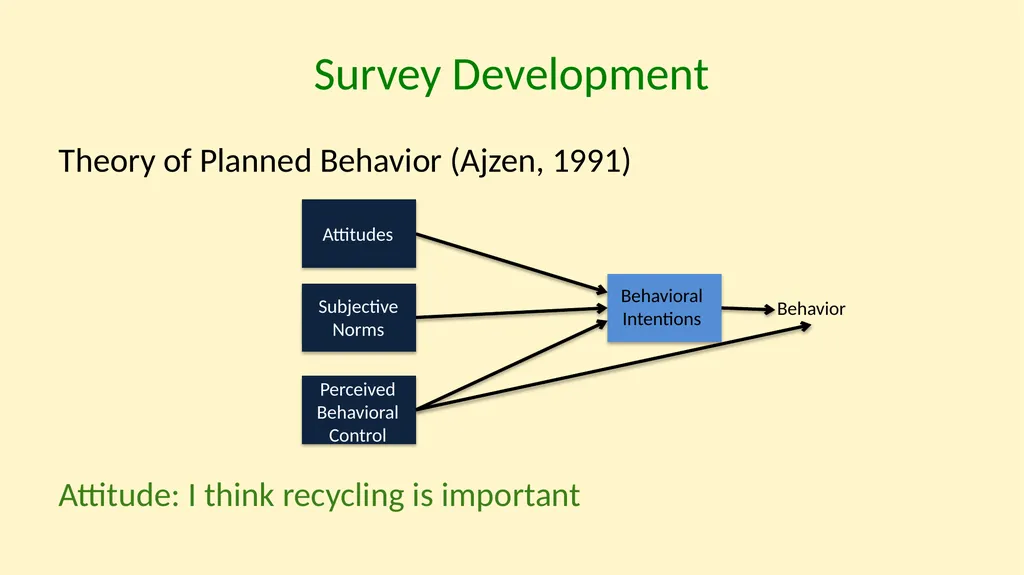
Survey Development Theory of Planned Behavior (Ajzen, 1991)
Attitude: I think recycling is important Behavior<br>
06
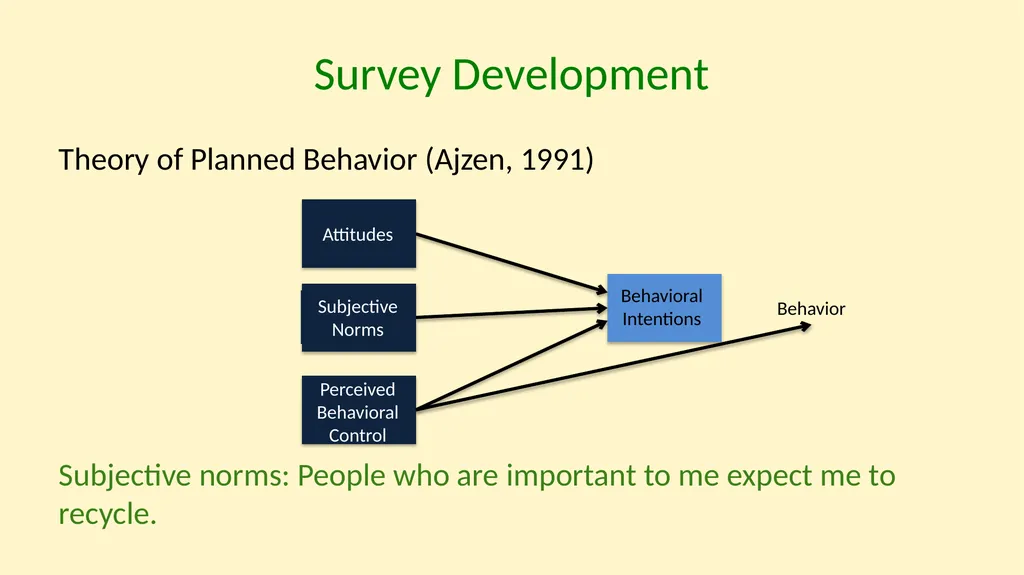
Survey Development Theory of Planned Behavior (Ajzen, 1991)
Subjective norms: People who are important to me expect me to recycle. Behavior<br>
07
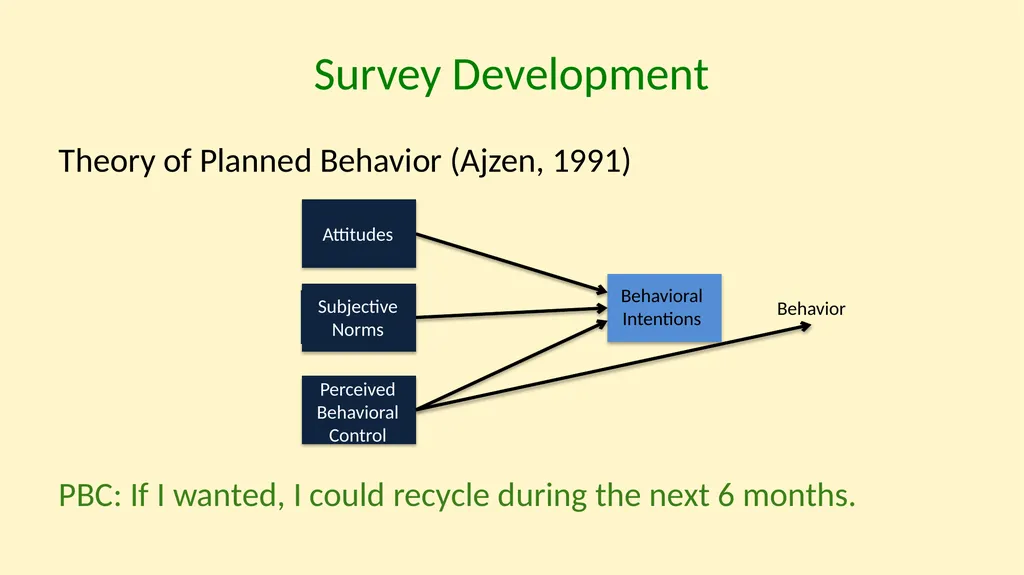
Survey Development Theory of Planned Behavior (Ajzen, 1991)
PBC: If I wanted, I could recycle during the next 6 months. Behavior<br>
08
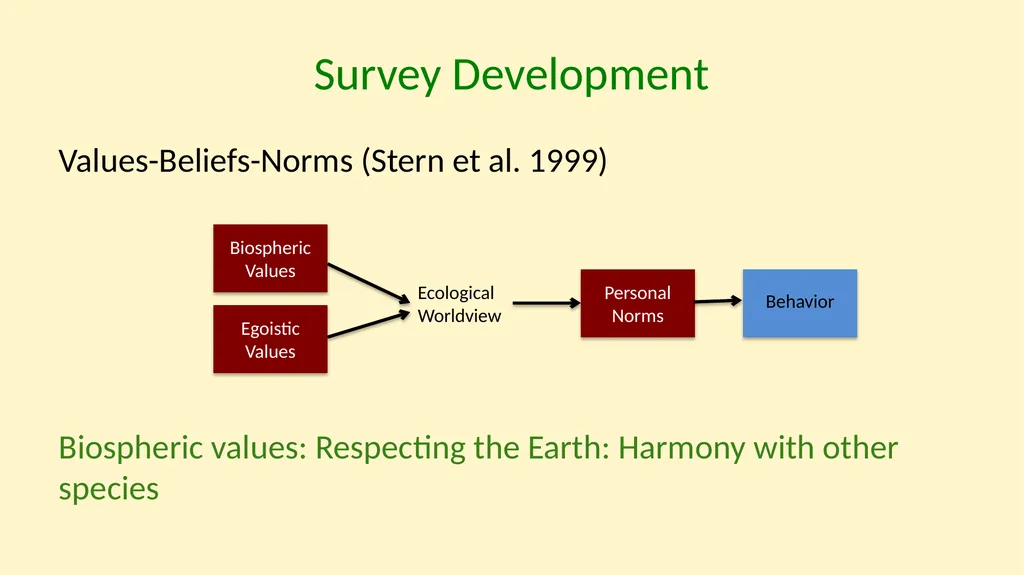
Survey Development Values-Beliefs-Norms (Stern et al. 1999)
Biospheric values: Respecting the Earth: Harmony with other species Behavior Ecological Worldview<br>
09
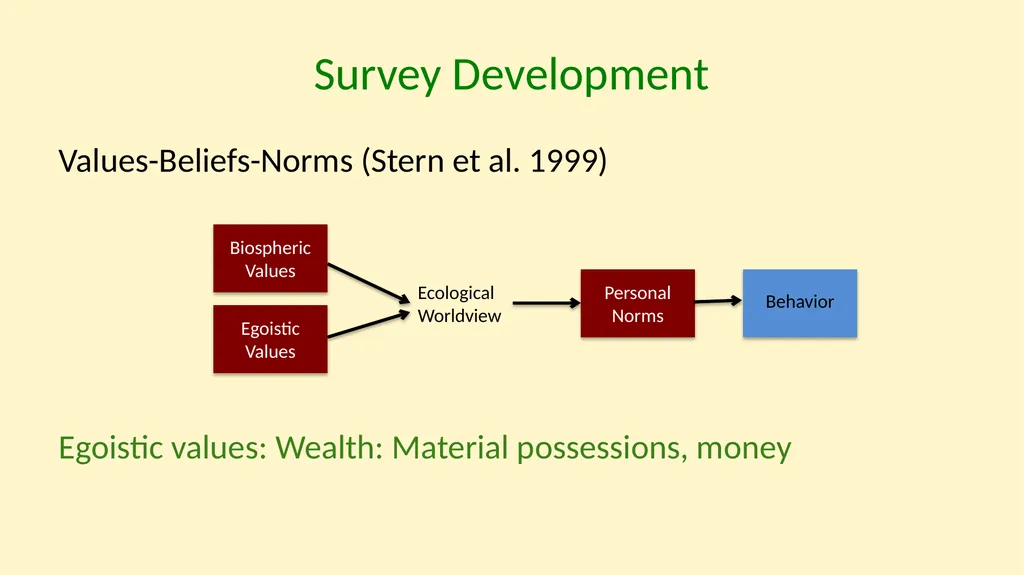
Survey Development Values-Beliefs-Norms (Stern et al. 1999)
Egoistic values: Wealth: Material possessions, money Behavior Ecological Worldview<br>
10
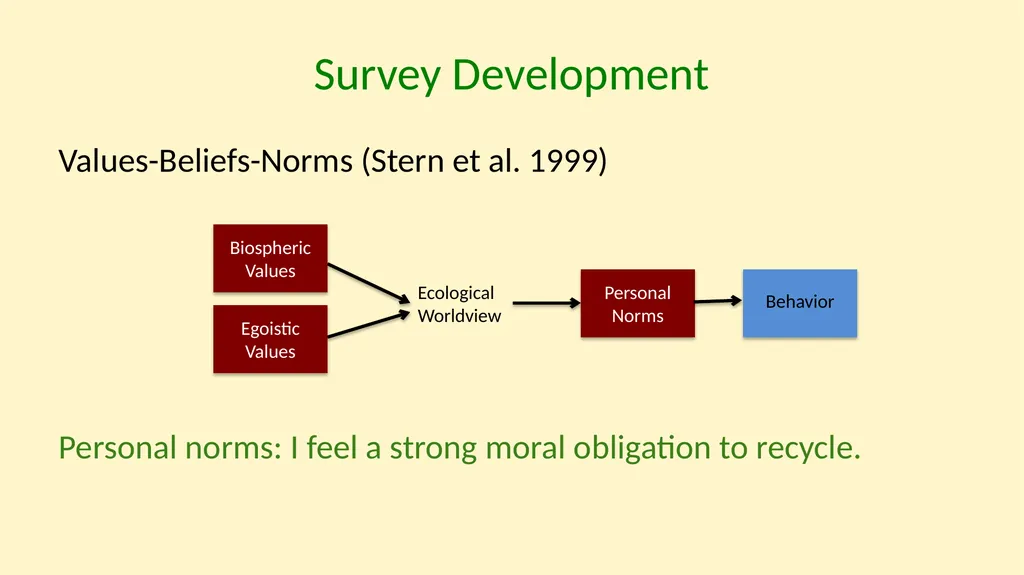
Survey Development Values-Beliefs-Norms (Stern et al. 1999)
Personal norms: I feel a strong moral obligation to recycle. Behavior Ecological Worldview<br>
11
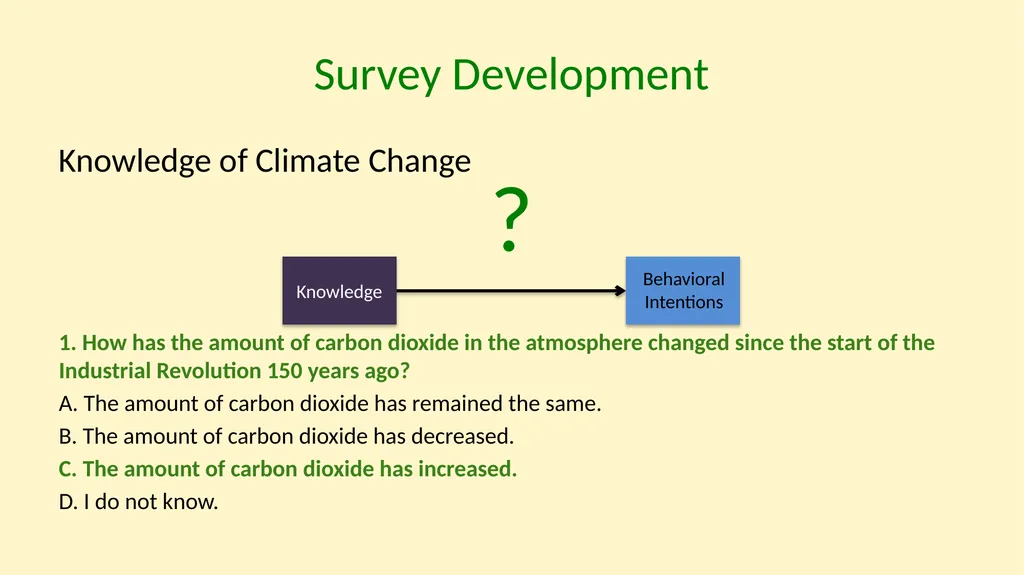
Survey Development Knowledge of Climate Change
1. How has the amount of carbon dioxide in the atmosphere changed since the start of the Industrial Revolution 150 years ago?
A. The amount of carbon dioxide has remained the same.
B. The amount of carbon dioxide has decreased.
C. The amount of carbon dioxide has increased.
D. I do not know.<br>
12
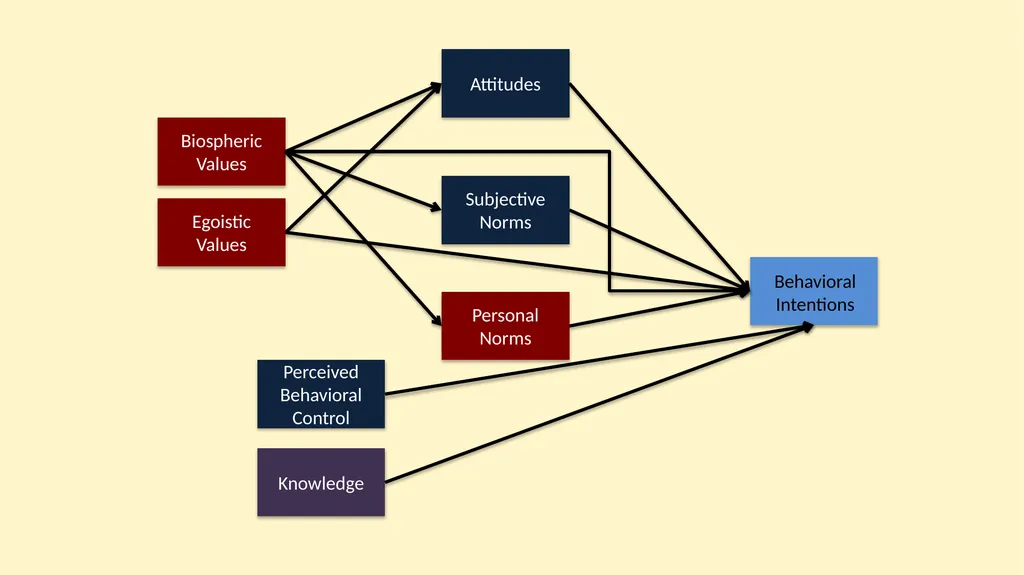
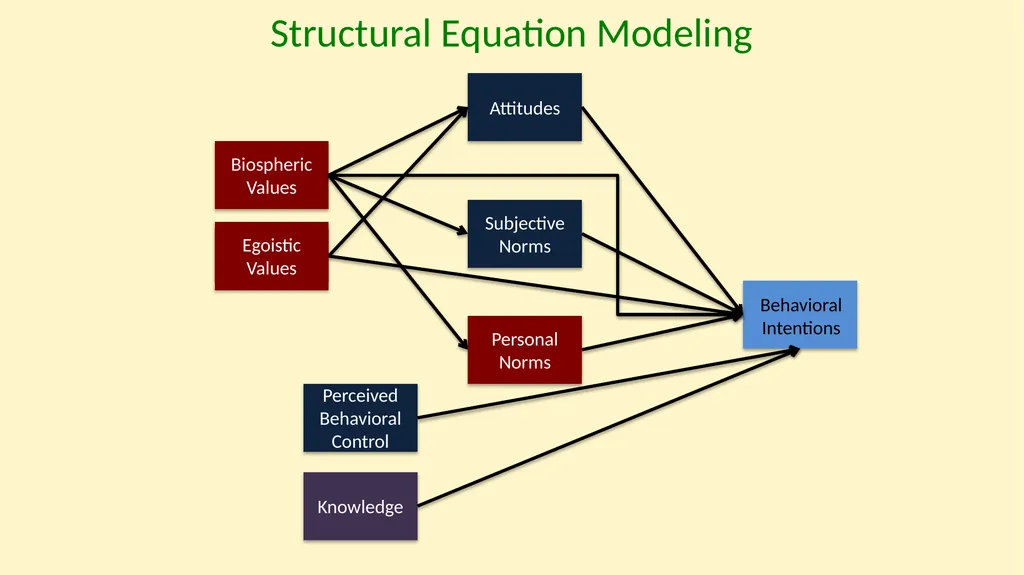
Perceived Behavioral Control Biospheric Values Egoistic Values Attitudes Subjective Norms Personal Norms Knowledge Behavioral Intentions<br>
13
Survey Dissemination Undergraduate students in general education science labs
Fall 2016-Spring 2017
n=132<br>
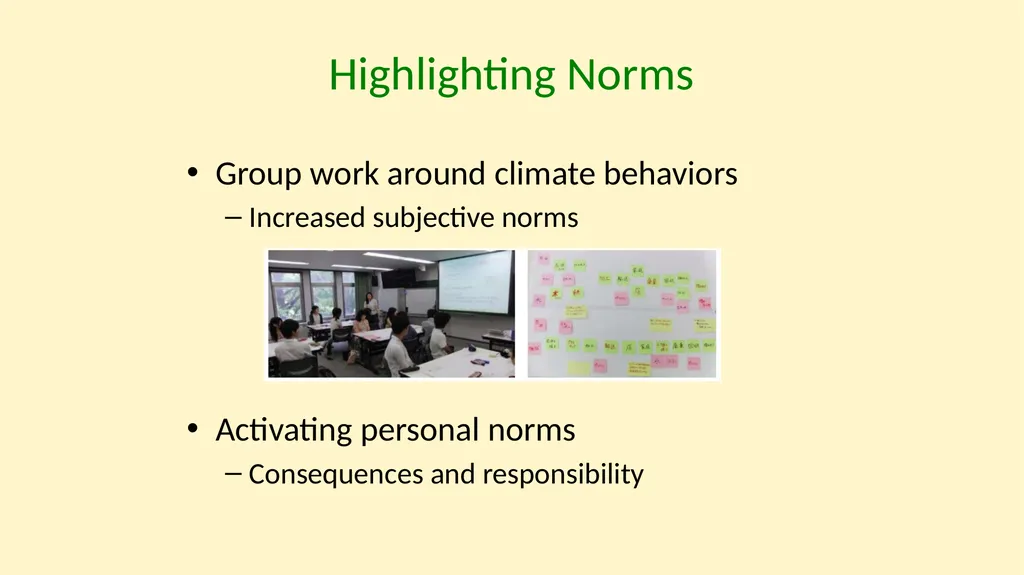
Highlighting Norms Group work around climate behaviors
Increased subjective norms
Activating personal norms
Consequences and responsibility<br>
21
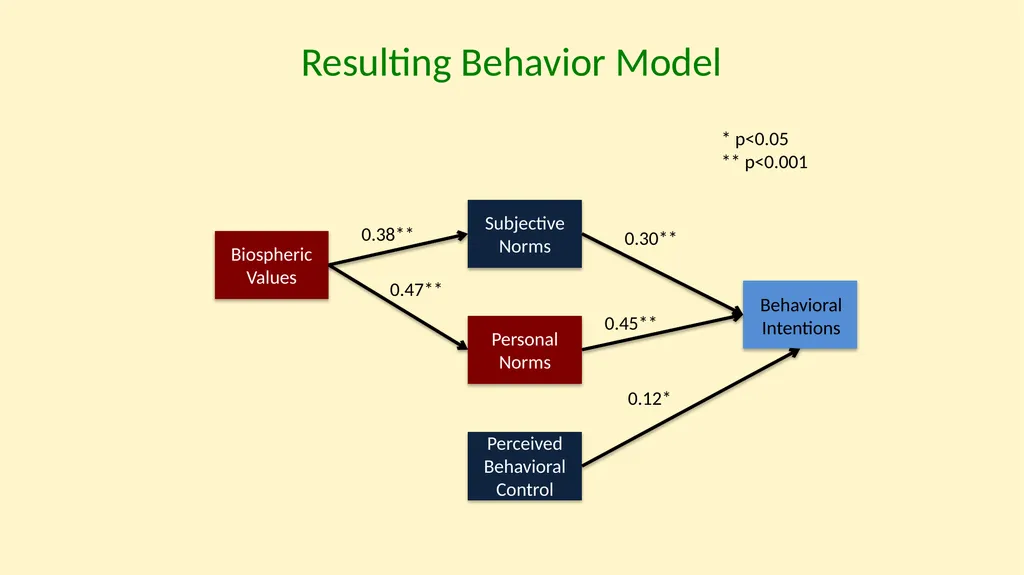
Conclusions Norms inform public sphere environmental behavior
Knowledge does not impact these behaviors
Students need opportunities to explore values, norms, and behaviors around socioscientific issues<br>
22
Acknowledgements and Contact This work was funded by Michigan State University’s Office of Sustainability Be Spartan Green Grant. Any Opinions, findings and conclusions or recommendations expressed in this material are those of the author(s) and do not necessarily reflect those of the Office of Sustainability. @kirbycai
kirbycai@msu.edu<br>
23
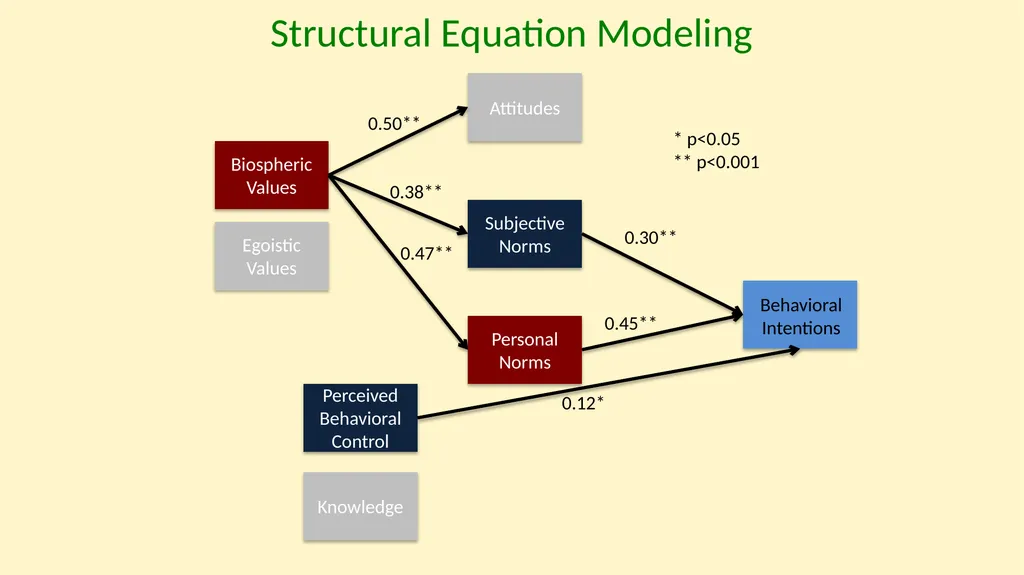
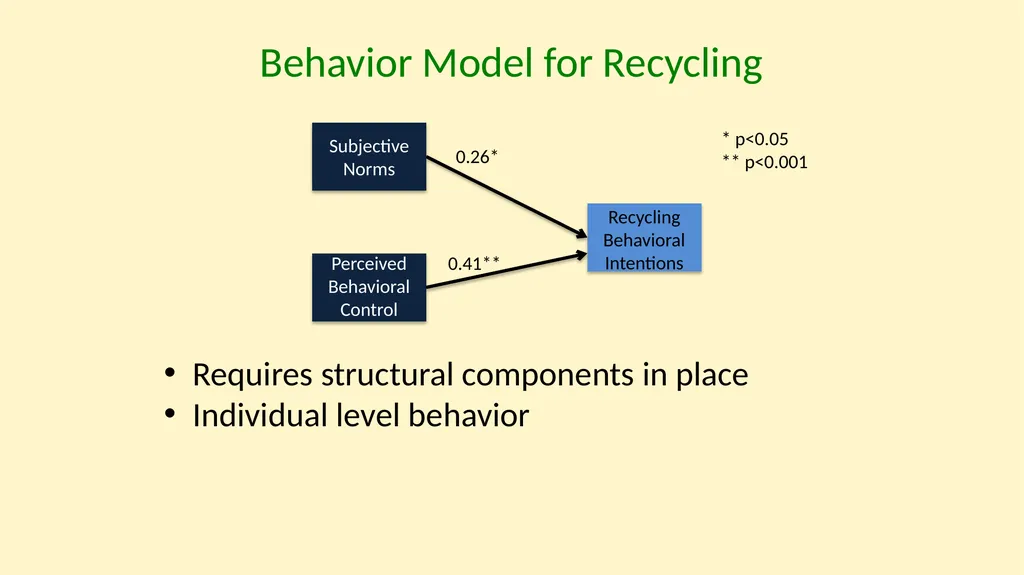
0.26* 0.41** * p<0.05
** p<0.001 Behavior Model for Recycling Requires structural components in place
Individual level behavior<br>
24
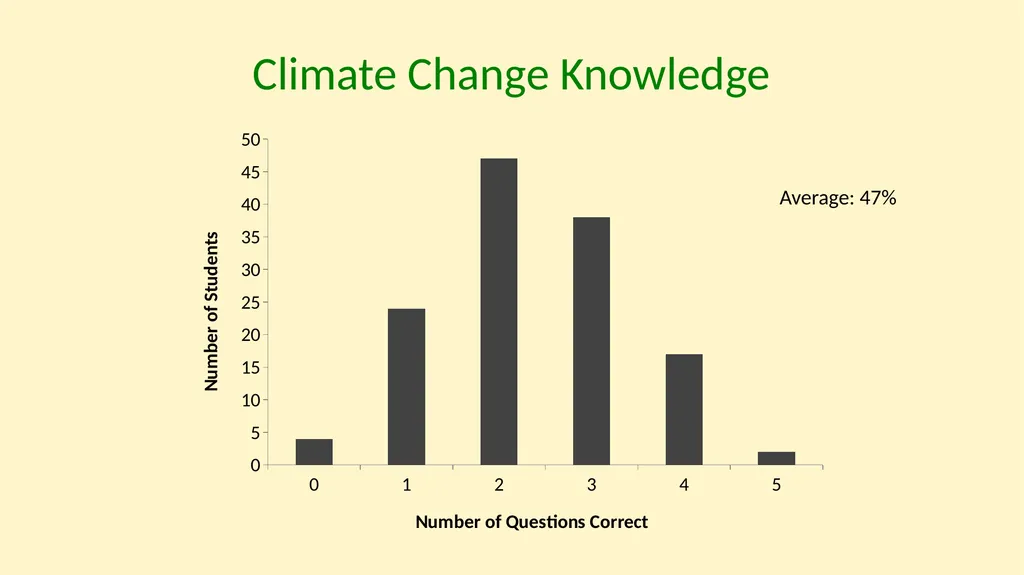
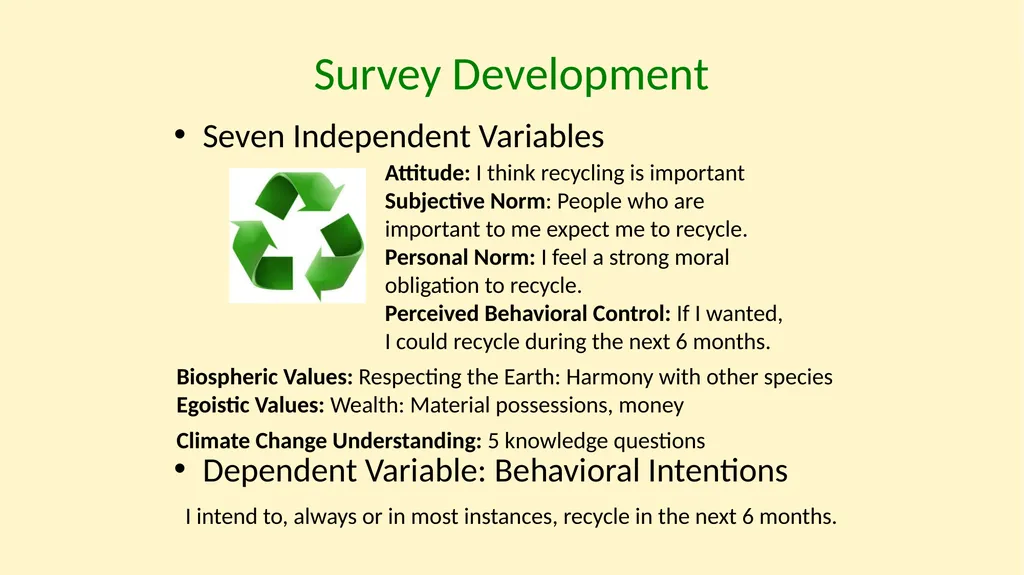
Survey Development Seven Independent Variables
Dependent Variable: Behavioral Intentions Attitude: I think recycling is important
Subjective Norm: People who are important to me expect me to recycle.
Personal Norm: I feel a strong moral obligation to recycle.
Perceived Behavioral Control: If I wanted, I could recycle during the next 6 months. Biospheric Values: Respecting the Earth: Harmony with other species
Egoistic Values: Wealth: Material possessions, money Climate Change Understanding: 5 knowledge questions I intend to, always or in most instances, recycle in the next 6 months.<br>
25
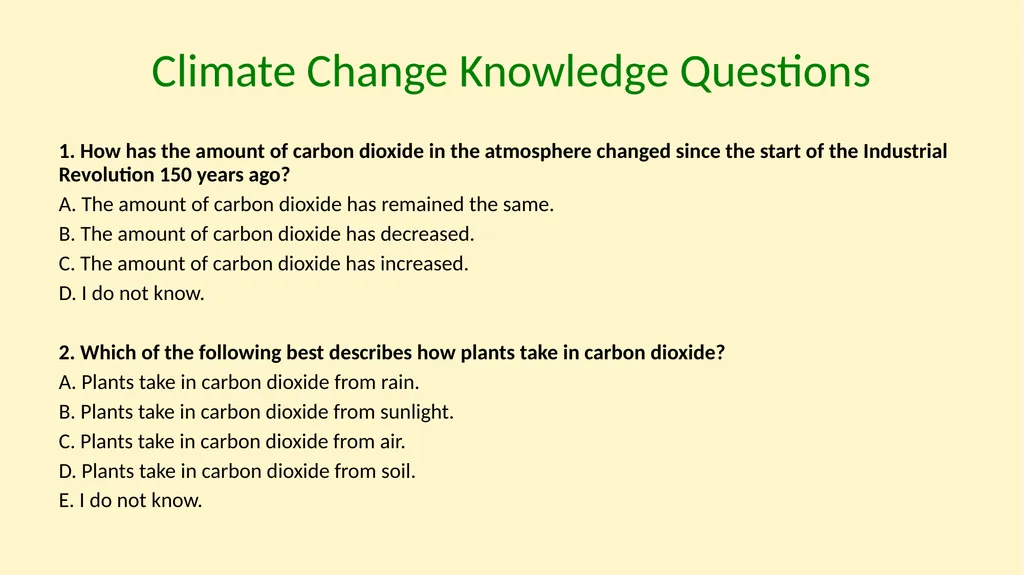
Climate Change Knowledge Questions 1. How has the amount of carbon dioxide in the atmosphere changed since the start of the Industrial Revolution 150 years ago?
A. The amount of carbon dioxide has remained the same.
B. The amount of carbon dioxide has decreased.
C. The amount of carbon dioxide has increased.
D. I do not know.
2. Which of the following best describes how plants take in carbon dioxide?
A. Plants take in carbon dioxide from rain.
B. Plants take in carbon dioxide from sunlight.
C. Plants take in carbon dioxide from air.
D. Plants take in carbon dioxide from soil.
E. I do not know.<br>
26
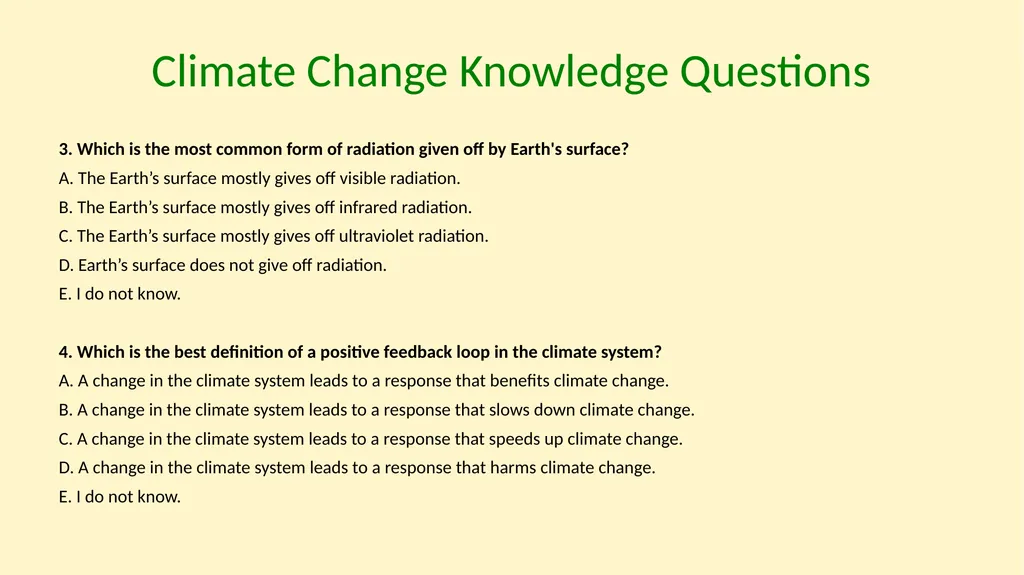
Climate Change Knowledge Questions 3. Which is the most common form of radiation given off by Earth's surface?
A. The Earth’s surface mostly gives off visible radiation.
B. The Earth’s surface mostly gives off infrared radiation.
C. The Earth’s surface mostly gives off ultraviolet radiation.
D. Earth’s surface does not give off radiation.
E. I do not know.
4. Which is the best definition of a positive feedback loop in the climate system?
A. A change in the climate system leads to a response that benefits climate change.
B. A change in the climate system leads to a response that slows down climate change.
C. A change in the climate system leads to a response that speeds up climate change.
D. A change in the climate system leads to a response that harms climate change.
E. I do not know.<br>
27
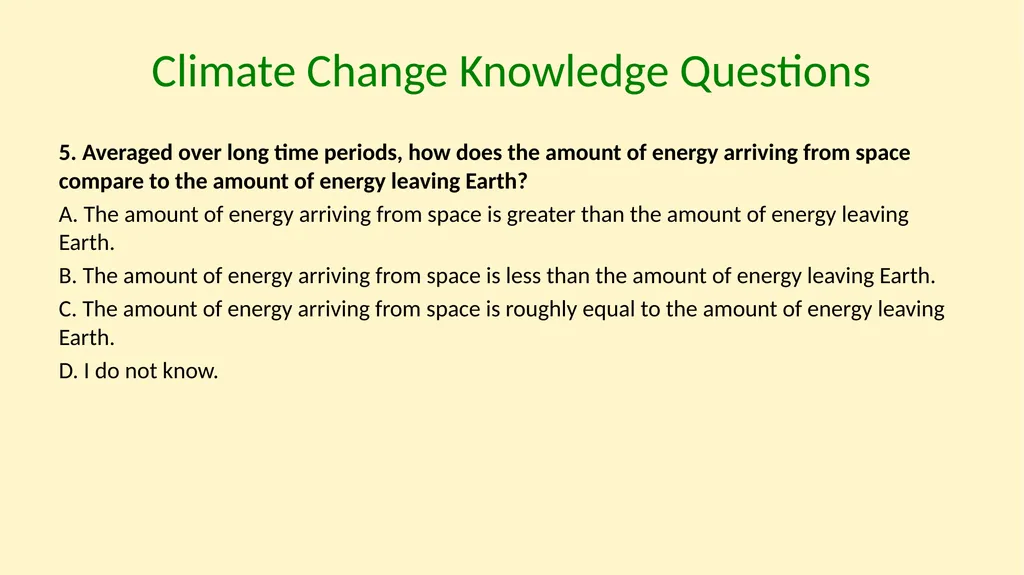
Climate Change Knowledge Questions 5. Averaged over long time periods, how does the amount of energy arriving from space compare to the amount of energy leaving Earth?
A. The amount of energy arriving from space is greater than the amount of energy leaving Earth.
B. The amount of energy arriving from space is less than the amount of energy leaving Earth.
C. The amount of energy arriving from space is roughly equal to the amount of energy leaving Earth.
D. I do not know.<br>