01
Understanding household food insecurity in Canada, and in New Brunswick Valerie Tarasuk
Professor, Department of Nutritional Sciences and Dalla Lana School of Public Health, University of Toronto Acknowledgements: This presentation includes the results of research funded by the Canadian Institutes of Health Research and by a grant from the New Brunswick Health Research Foundation/Social Development-Wellness Branch.
This presentation draws heavily on the work of Herb Emery, Xiaolin Guo, Andy Mitchell, Fei Men, Andree-Anne Fafard St-Germain, Lynn McIntrye, Sarah Anne Charlebois, and Steph Vasko.<br>
04
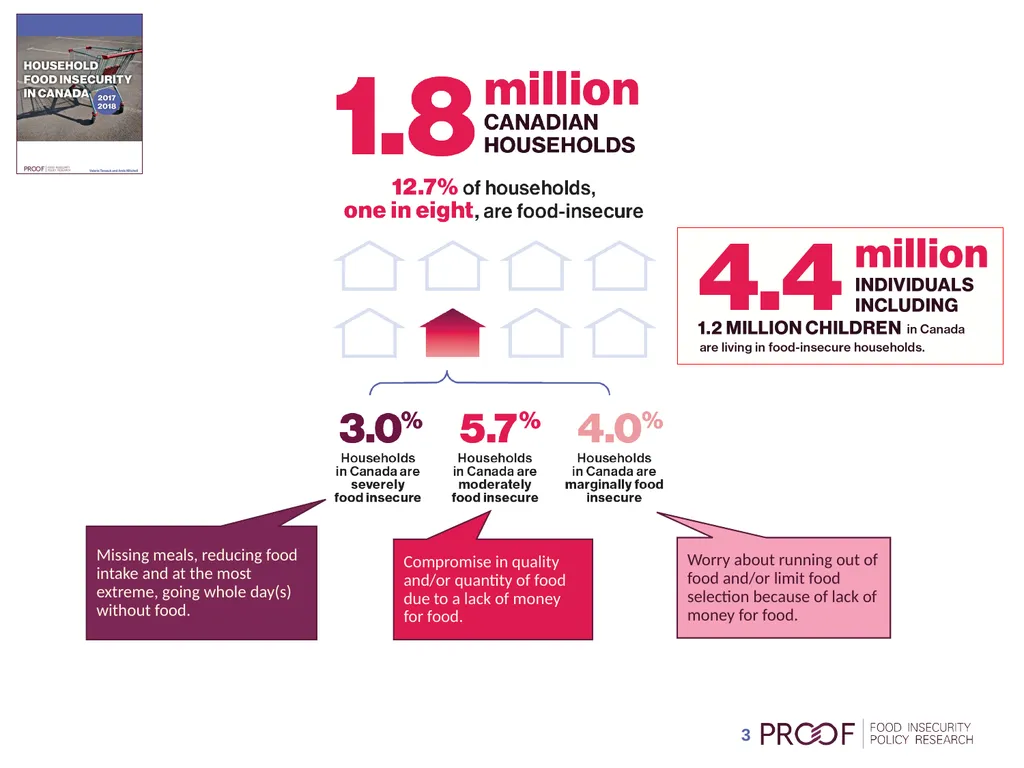
Prevalence of household food insecurity, 2017-18<br>
05
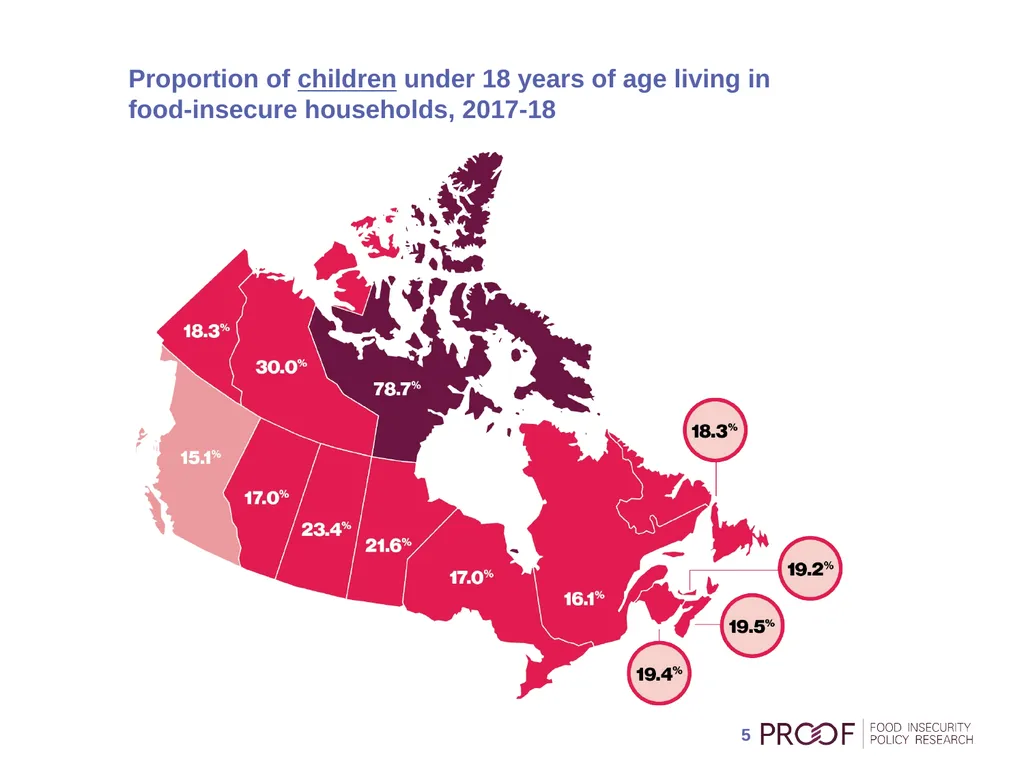
5 Proportion of children under 18 years of age living in food-insecure households, 2017-18<br>
06
The number of people living in food-insecure households in 2017-18 is higher than anything recorded previously.<br>
07
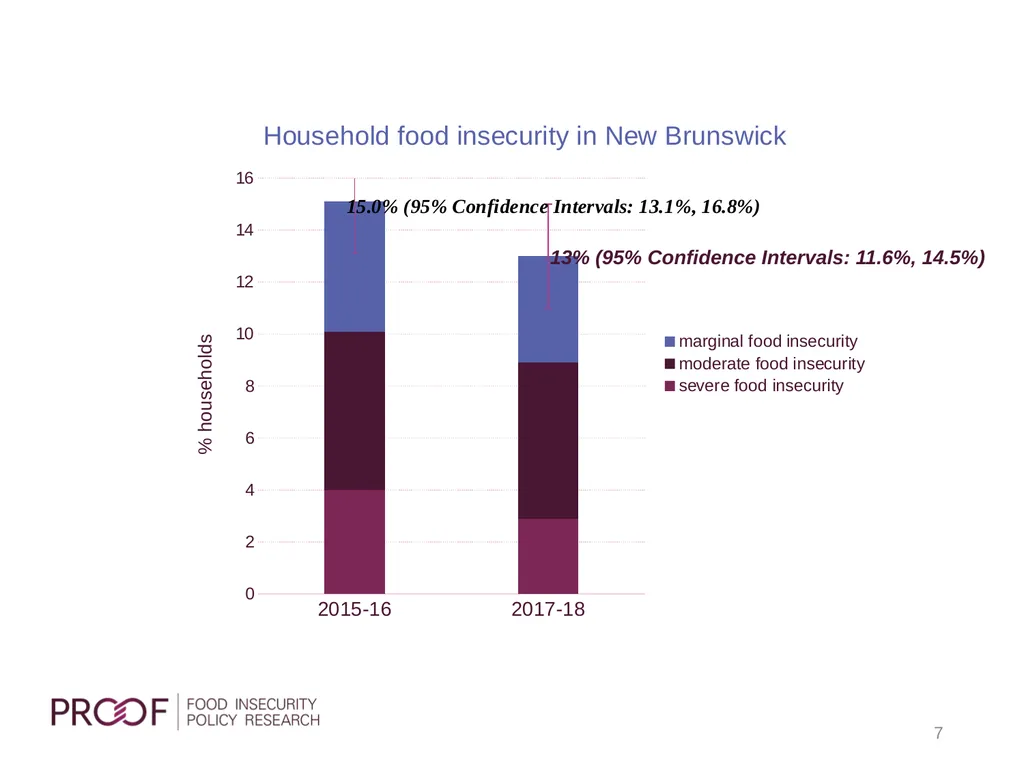
7 13% (95% Confidence Intervals: 11.6%, 14.5%)<br>
08
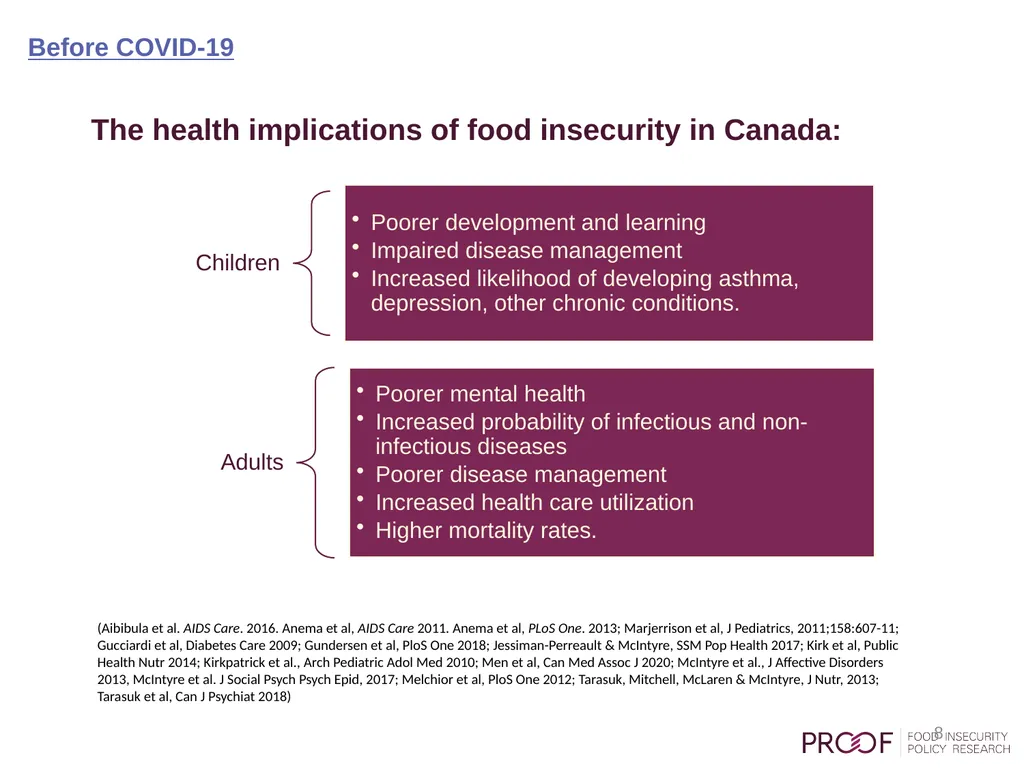
The health implications of food insecurity in Canada: (Aibibula et al. AIDS Care. 2016. Anema et al, AIDS Care 2011. Anema et al, PLoS One. 2013; Marjerrison et al, J Pediatrics, 2011;158:607-11; Gucciardi et al, Diabetes Care 2009; Gundersen et al, PloS One 2018; Jessiman-Perreault & McIntyre, SSM Pop Health 2017; Kirk et al, Public Health Nutr 2014; Kirkpatrick et al., Arch Pediatric Adol Med 2010; Men et al, Can Med Assoc J 2020; McIntyre et al., J Affective Disorders 2013, McIntyre et al. J Social Psych Psych Epid, 2017; Melchior et al, PloS One 2012; Tarasuk, Mitchell, McLaren & McIntyre, J Nutr, 2013; Tarasuk et al, Can J Psychiat 2018) 8 Before COVID-19<br>
09
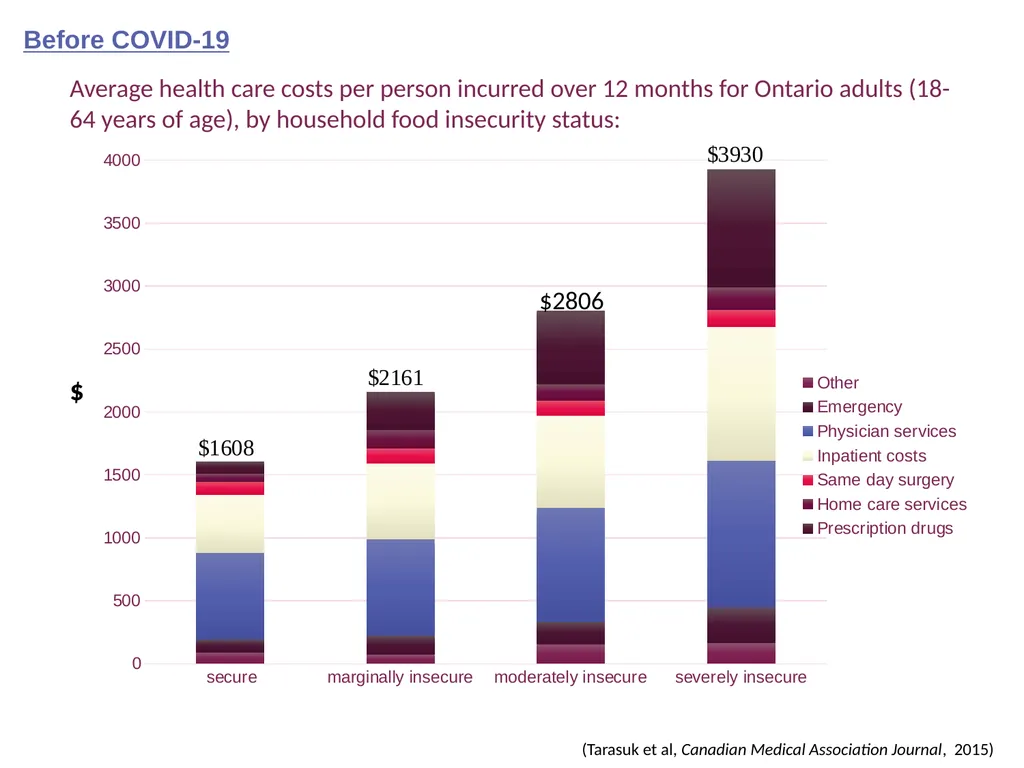
$ $2806 Average health care costs per person incurred over 12 months for Ontario adults (18-64 years of age), by household food insecurity status: (Tarasuk et al, Canadian Medical Association Journal, 2015) Before COVID-19<br>
10
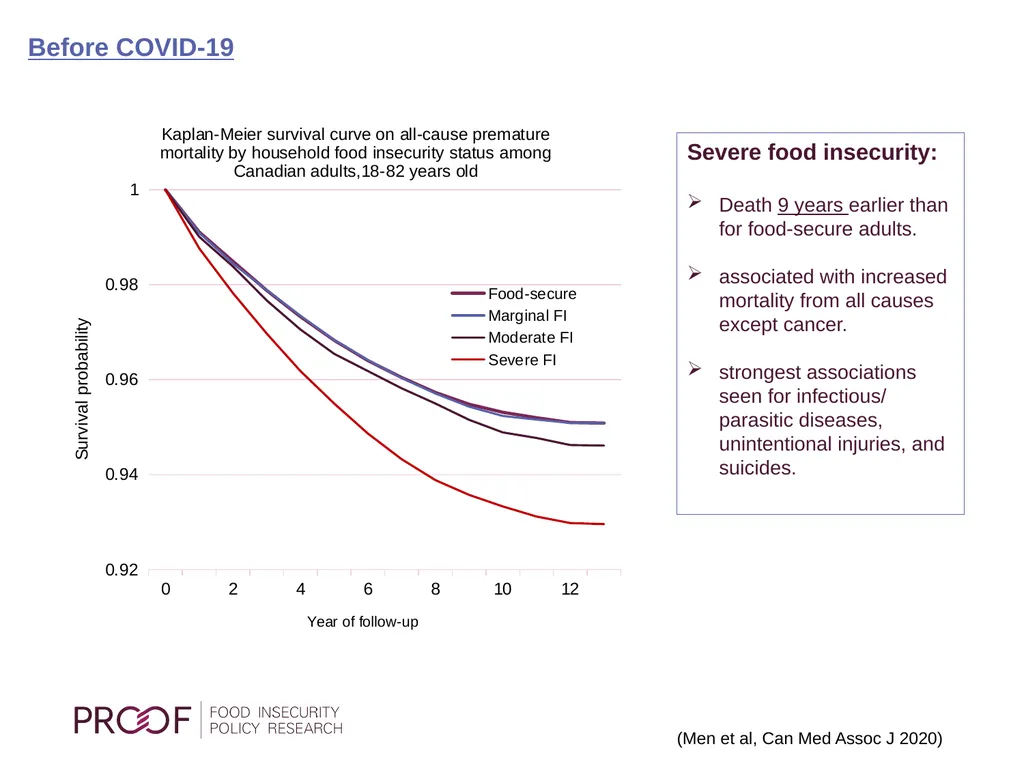
(Men et al, Can Med Assoc J 2020) Severe food insecurity:
Death 9 years earlier than for food-secure adults.
associated with increased mortality from all causes except cancer.
strongest associations seen for infectious/ parasitic diseases, unintentional injuries, and suicides. Before COVID-19<br>
11
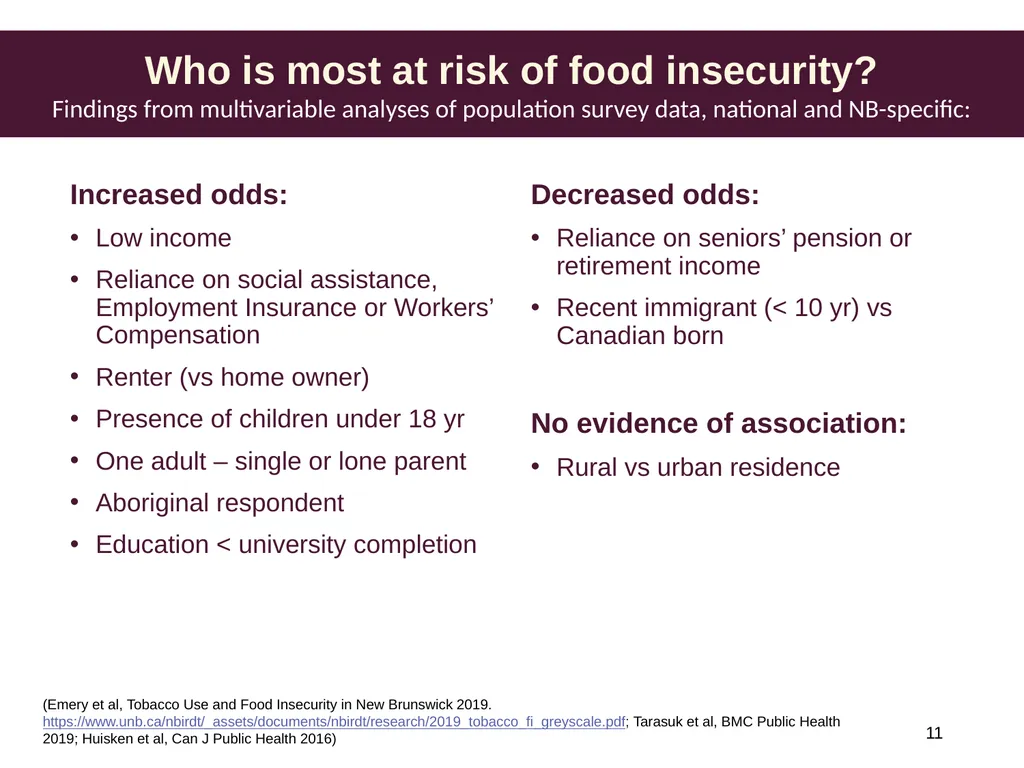
Increased odds:
Low income
Reliance on social assistance, Employment Insurance or Workers’ Compensation
Renter (vs home owner)
Presence of children under 18 yr
One adult – single or lone parent
Aboriginal respondent
Education < university completion Decreased odds:
Reliance on seniors’ pension or retirement income
Recent immigrant (< 10 yr) vs Canadian born
No evidence of association:
Rural vs urban residence Who is most at risk of food insecurity?
Findings from multivariable analyses of population survey data, national and NB-specific: 11 (Emery et al, Tobacco Use and Food Insecurity in New Brunswick 2019.
https://www.unb.ca/nbirdt/_assets/documents/nbirdt/research/2019_tobacco_fi_greyscale.pdf; Tarasuk et al, BMC Public Health 2019; Huisken et al, Can J Public Health 2016)<br>
12
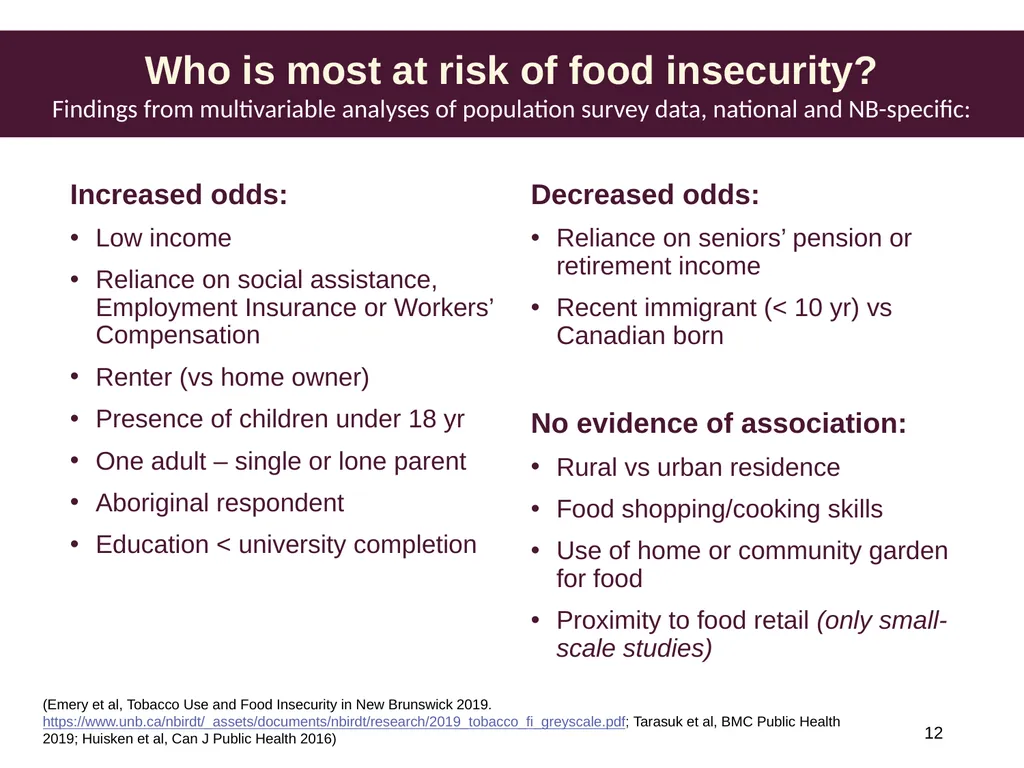
Increased odds:
Low income
Reliance on social assistance, Employment Insurance or Workers’ Compensation
Renter (vs home owner)
Presence of children under 18 yr
One adult – single or lone parent
Aboriginal respondent
Education < university completion Decreased odds:
Reliance on seniors’ pension or retirement income
Recent immigrant (< 10 yr) vs Canadian born
No evidence of association:
Rural vs urban residence
Food shopping/cooking skills
Use of home or community garden for food
Proximity to food retail (only small-scale studies) Who is most at risk of food insecurity?
Findings from multivariable analyses of population survey data, national and NB-specific: 12 (Emery et al, Tobacco Use and Food Insecurity in New Brunswick 2019.
https://www.unb.ca/nbirdt/_assets/documents/nbirdt/research/2019_tobacco_fi_greyscale.pdf; Tarasuk et al, BMC Public Health 2019; Huisken et al, Can J Public Health 2016)<br>
13
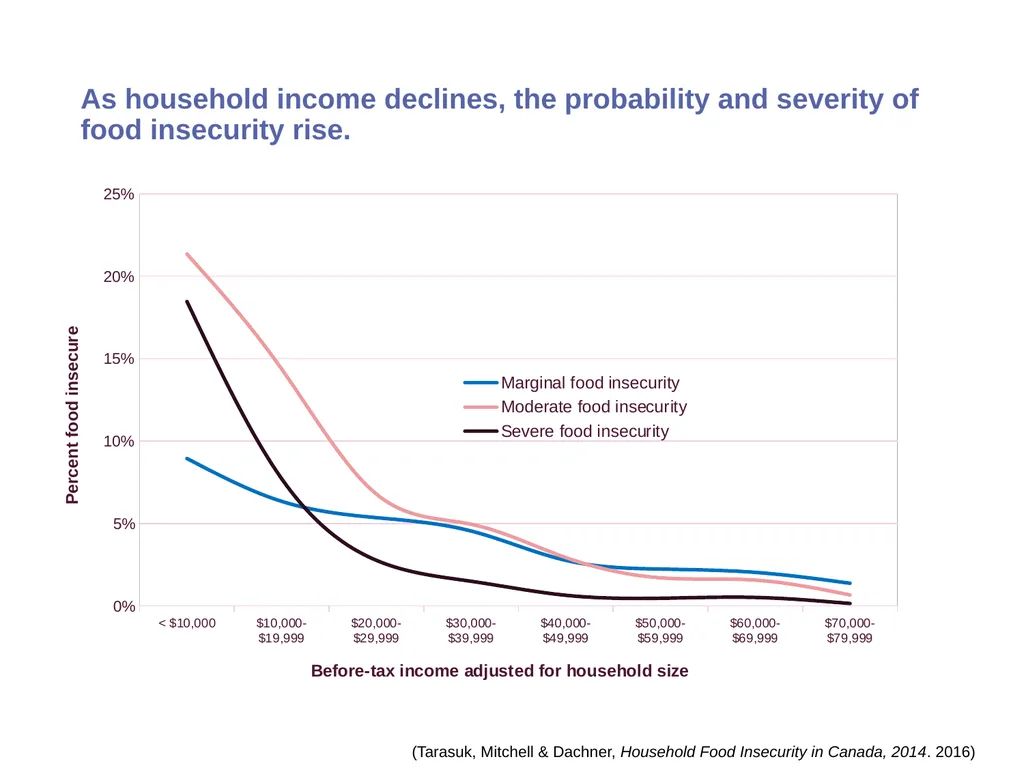
(Tarasuk, Mitchell & Dachner, Household Food Insecurity in Canada, 2014. 2016) As household income declines, the probability and severity of food insecurity rise.<br>
14
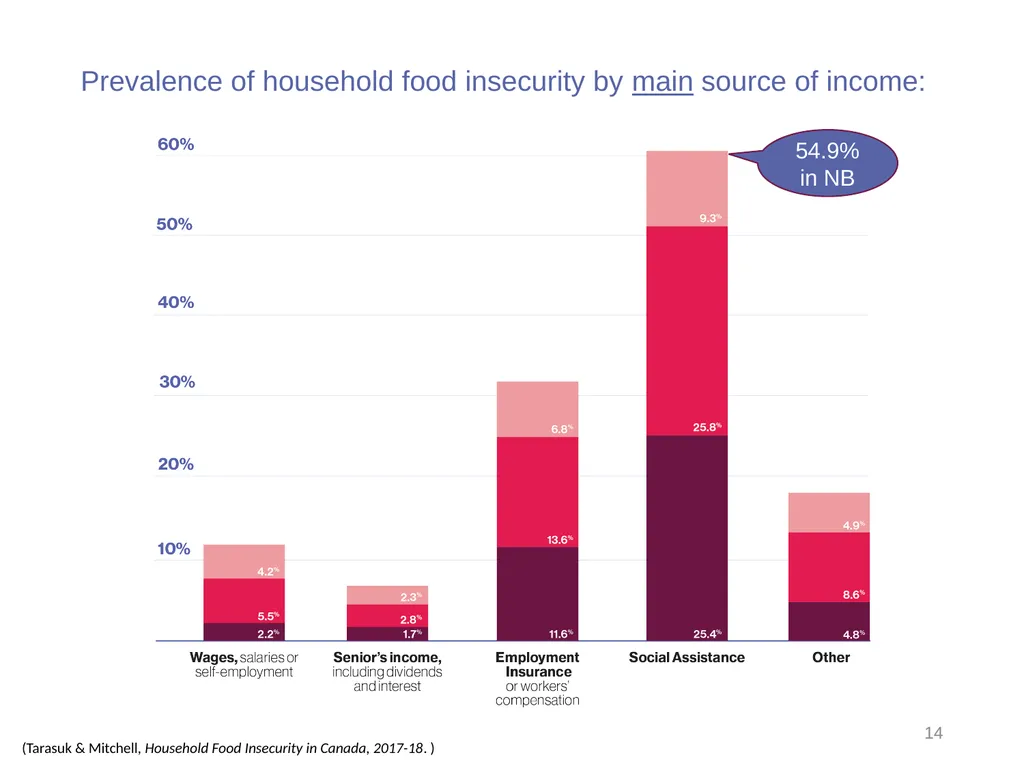
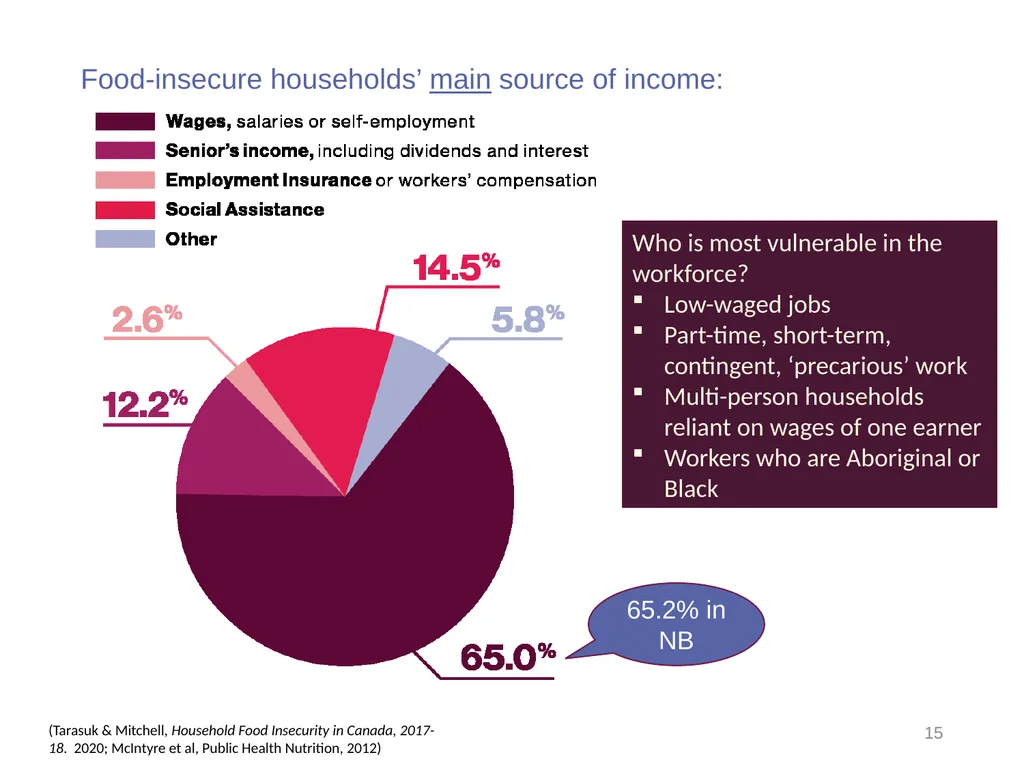
14 Prevalence of household food insecurity by main source of income: (Tarasuk & Mitchell, Household Food Insecurity in Canada, 2017-18. ) 54.9% in NB<br>
15
15 65.2% in NB Who is most vulnerable in the workforce?
Low-waged jobs
Part-time, short-term, contingent, ‘precarious’ work
Multi-person households reliant on wages of one earner
Workers who are Aboriginal or Black Food-insecure households’ main source of income: (Tarasuk & Mitchell, Household Food Insecurity in Canada, 2017-18. 2020; McIntyre et al, Public Health Nutrition, 2012)<br>
16
Compared to homeowners, renters have 2-3 times the odds of food insecurity.
Among homeowners, risk is greatest among those with mortgages and homes of low market value. (Fafard St-Germain & Tarasuk, Int J Equity Health 2020; McIntyre et al, J Hous and the Built Environ, 2016; Tarasuk et al, BMC Public Health 2019)<br>
17
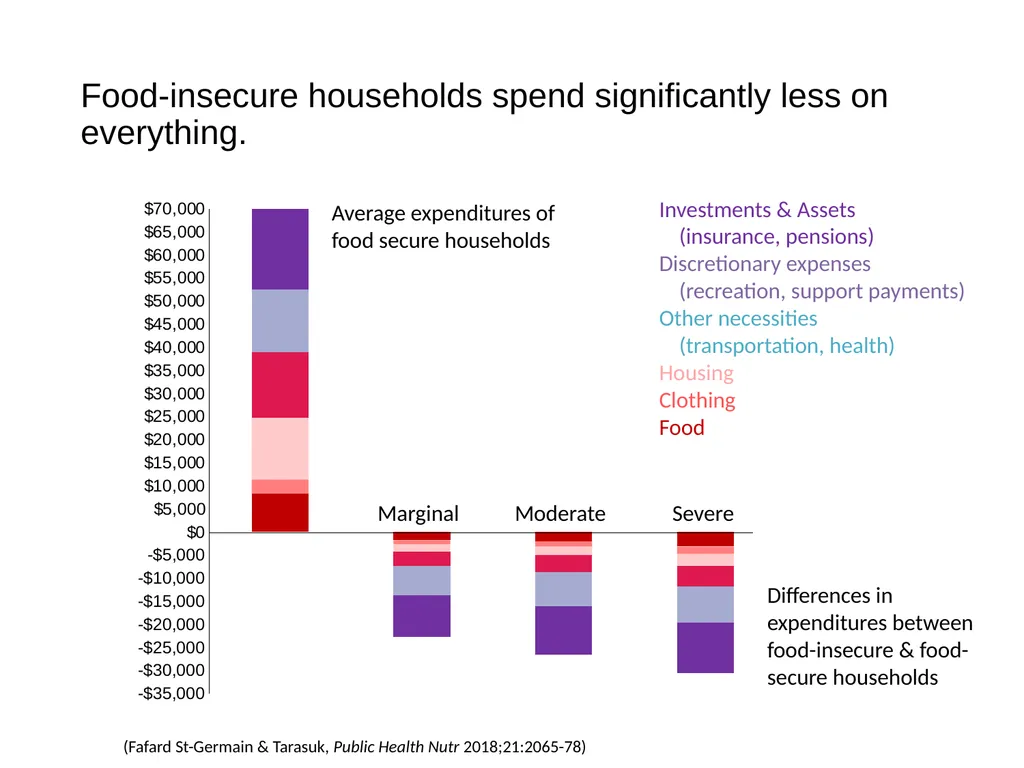
Food-insecure households spend significantly less on everything. Average expenditures of food secure households Differences in expenditures between food-insecure & food-secure households Marginal Moderate Severe Investments & Assets
(insurance, pensions)
Discretionary expenses (recreation, support payments)
Other necessities
(transportation, health)
Housing
Clothing
Food (Fafard St-Germain & Tarasuk, Public Health Nutr 2018;21:2065-78)<br>
18
Households that are food insecure lack more than food. Food-insecure households are also struggling to cover the costs of other basic needs:
Rent / mortgage
Utilities
Phone, internet
Prescription medications
(Fafard St-Germain & Tarasuk, Int J Equity Health 2020; Loopstra & Tarasuk, J Hunger Environ Nutr 2013; Men et al, CMAJ Open, 2019) 18<br>
19
Food charity remains the only direct response to food insecurity in Canada, but impact is limited by the scale and nature of these efforts. 19 (Food Banks Canada, HungerCount 2018; Tarasuk & Mitchell, Household Food Insecurity in Canada, 2017-18, 2020.)<br>
20
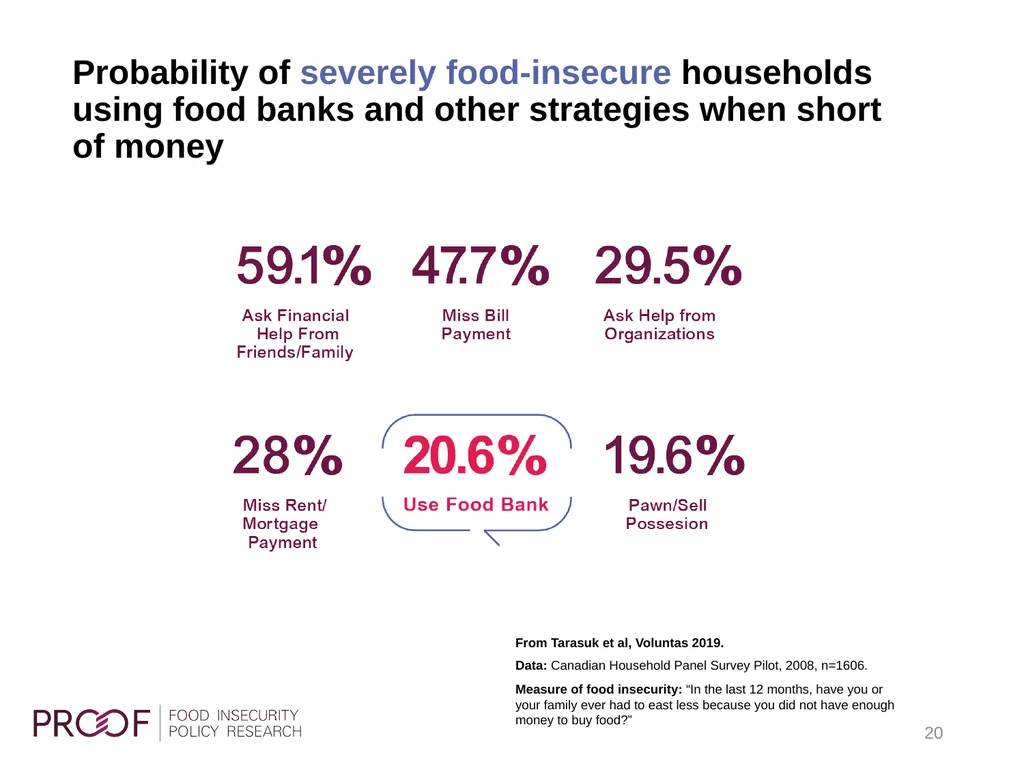
From Tarasuk et al, Voluntas 2019.
Data: Canadian Household Panel Survey Pilot, 2008, n=1606.
Measure of food insecurity: “In the last 12 months, have you or your family ever had to east less because you did not have enough money to buy food?” Probability of severely food-insecure households using food banks and other strategies when short �of money 20<br>
21
What has been shown to reduce food insecurity in Canada?��$$$$$ Household food insecurity has declined following the implementation of policies that have increased the financial resources of vulnerable households.
For example,
Old-Age Security + Guaranteed Income Supplement – Emery et al, SPP Research Papers, 2013; McIntyre et al, Can Public Pol 2016
Canada Child Benefit - Brown & Tarasuk, Prev Med 2019
Universal Child Care Benefit - Ionescu-Ittu et al, Prev Med 2015
NL Poverty Reduction Strategy – Loopstra et al, Can Public Pol 2015 21<br>
22
For emerging research and
resources, please visit our website: proof.utoronto.ca 22<br>