Understanding the Line of Separation Biosecurity Training for Individuals Working on the Poultry Operation Learning Goals Explain how to identify the Line of Separation (LOS) and what its purpose is Describe how to respect the LOS Explain
"Understanding the Line of Separation Biosecurity" is the property of its rightful owner. Permission is granted to
download and print the materials on this website for personal, non-commercial use only, and to display it
on your personal computer provided you do not modify the materials and that you retain all copyright
notices contained in the materials. By downloading content from our website, you accept the terms of this
agreement.
Share
Embed code
Presentation Transcript
01
Understanding the Line of Separation Biosecurity Training for Individuals Working on the Poultry Operation<br>
02
Learning Goals Explain how to identify the Line of Separation (LOS) and what its purpose is
Describe how to respect the LOS
Explain biosecurity measures to be taken when entering the LOS Center for Food Security and Public Health, Iowa State University, 2018<br>
03
Line of Separation Center for Food Security and Public Health, Iowa State University, 2018 Inner control boundary
Purpose to isolate poultry from potential disease sources
Walls of building/ other structure, obstacles
Control entry of people, vehicles/equipment reduce risk of disease introduction<br>
04
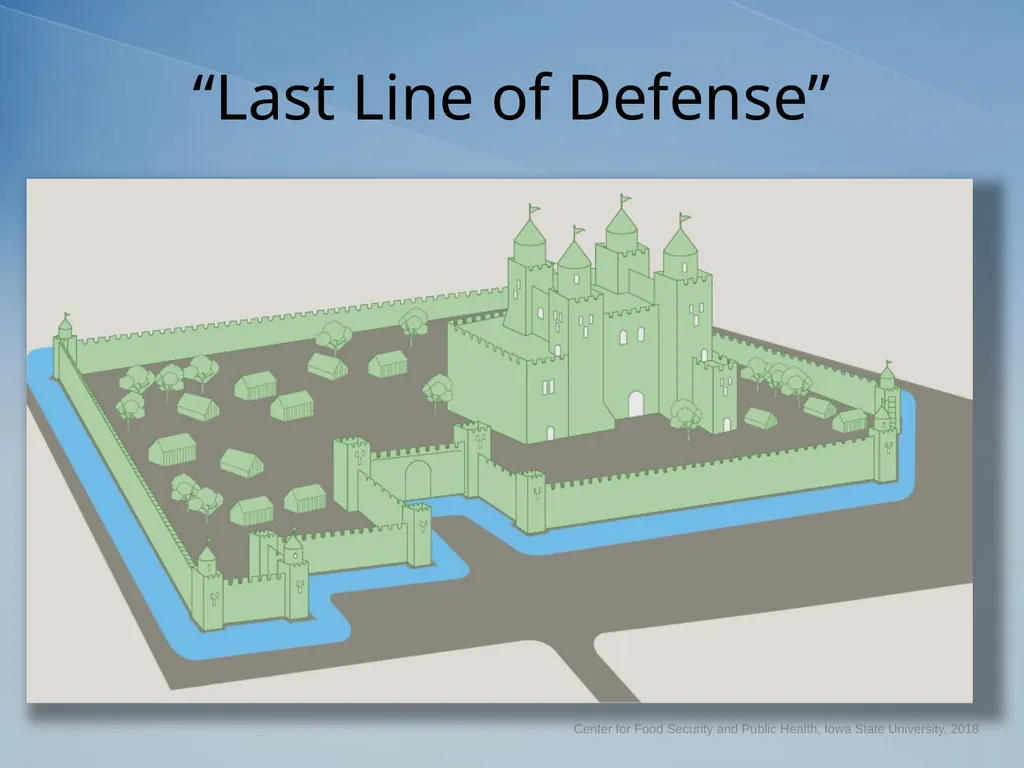
“Last Line of Defense” Center for Food Security and Public Health, Iowa State University, 2018<br>
05
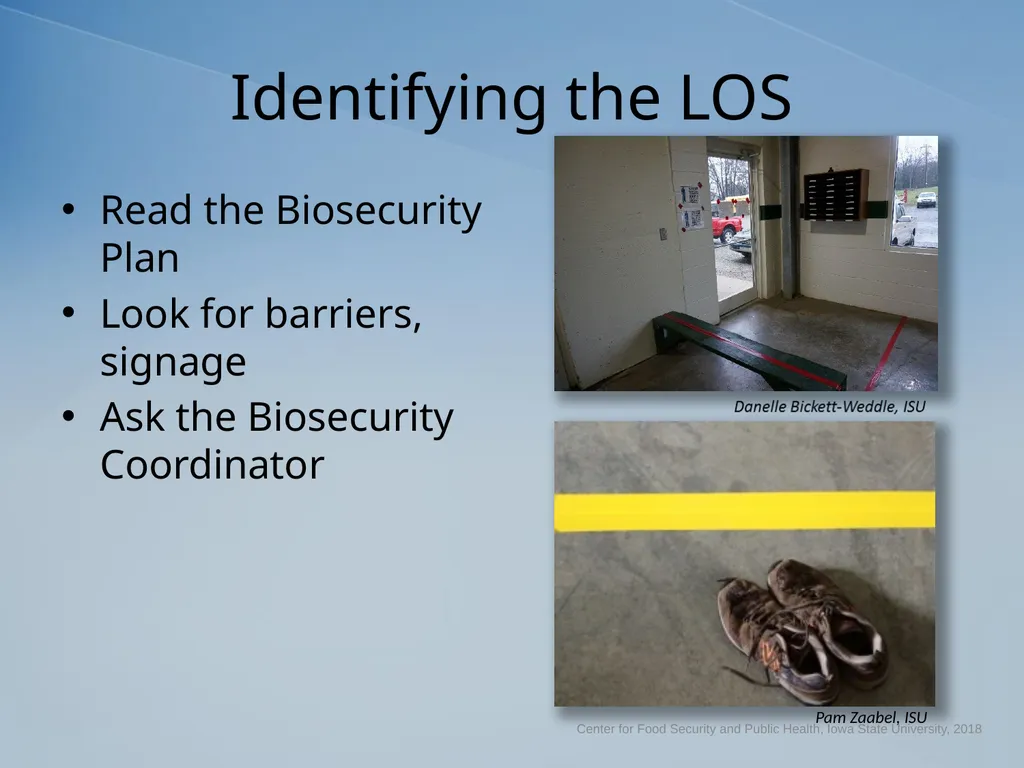
Identifying the LOS Read the Biosecurity Plan
Look for barriers, signage
Ask the Biosecurity Coordinator Center for Food Security and Public Health, Iowa State University, 2018 Pam Zaabel, ISU<br>
06
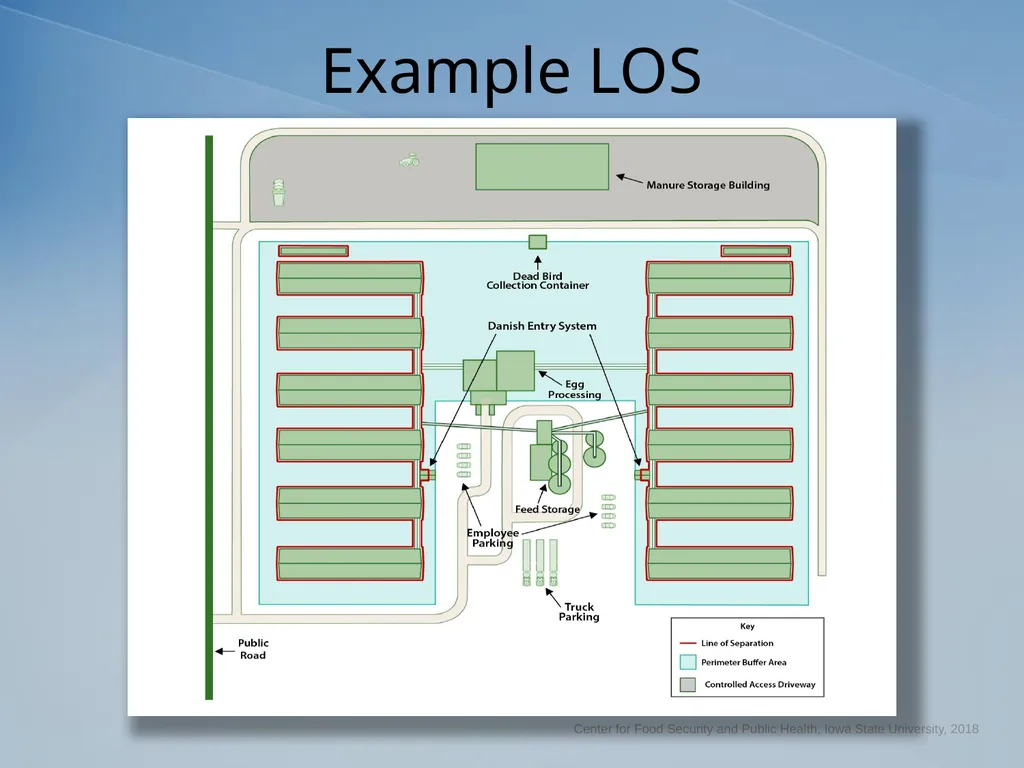
Example LOS Center for Food Security and Public Health, Iowa State University, 2018<br>
07
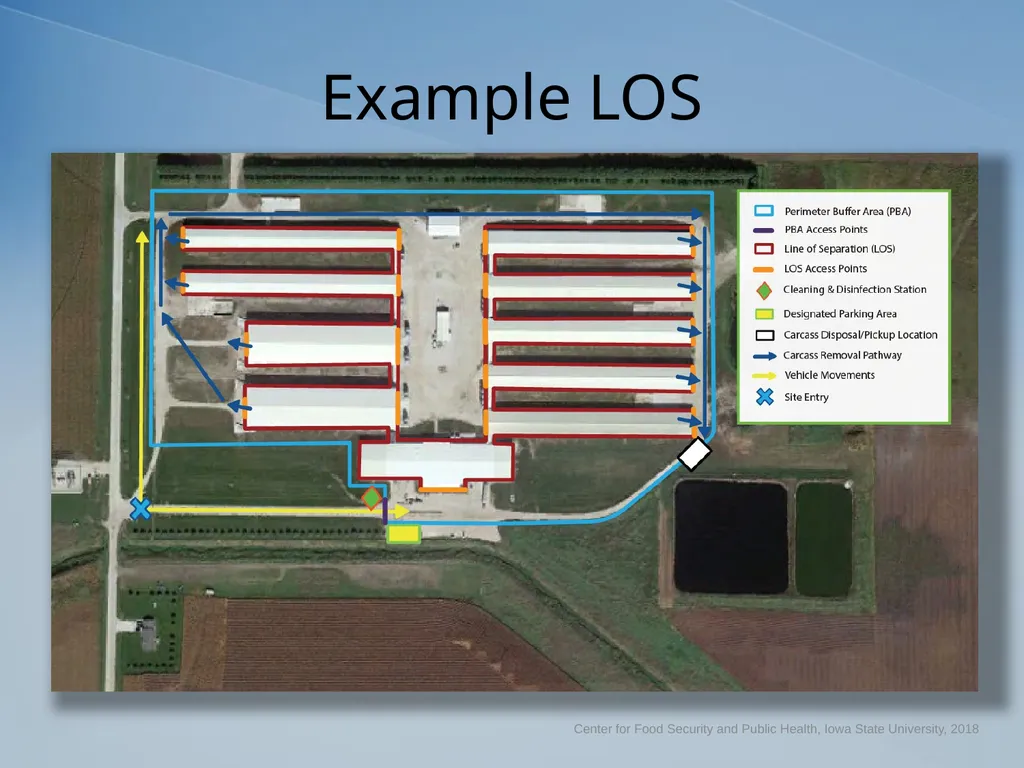
Example LOS Center for Food Security and Public Health, Iowa State University, 2018<br>
08
Respecting the LOS Determine in advance
Your need to cross the LOS
LOS boundaries
Access Point locations
Crossing requires additional biosecurity steps
Certain movements may be different
Check biosecurity plan Center for Food Security and Public Health, Iowa State University, 2018<br>
09
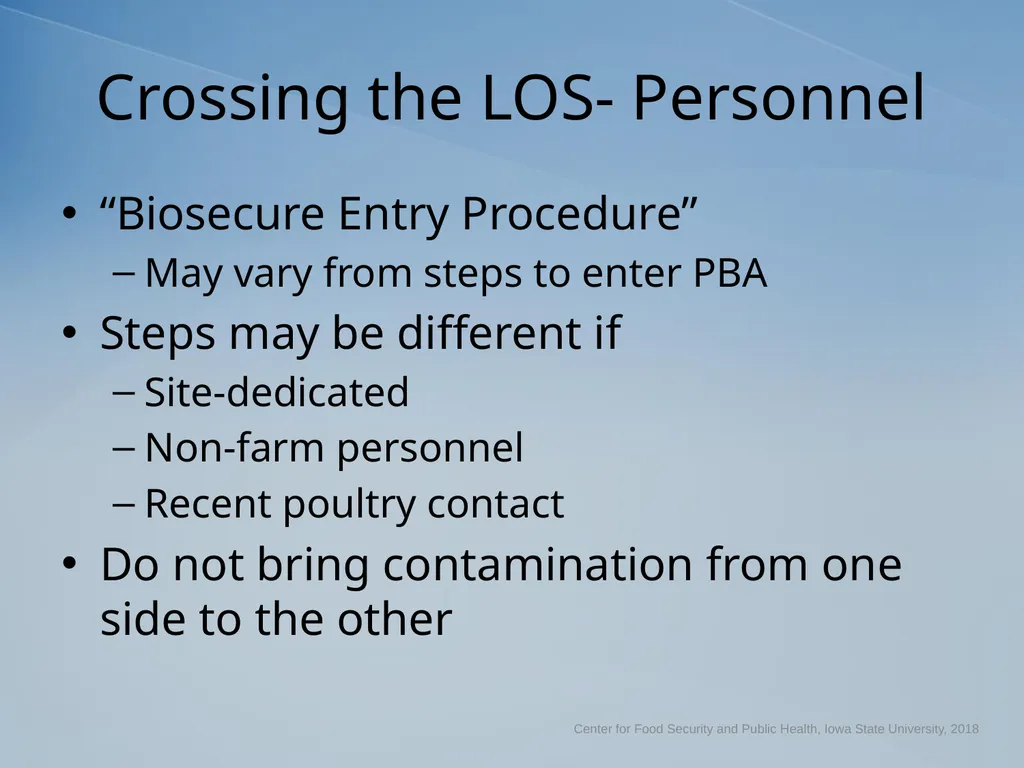
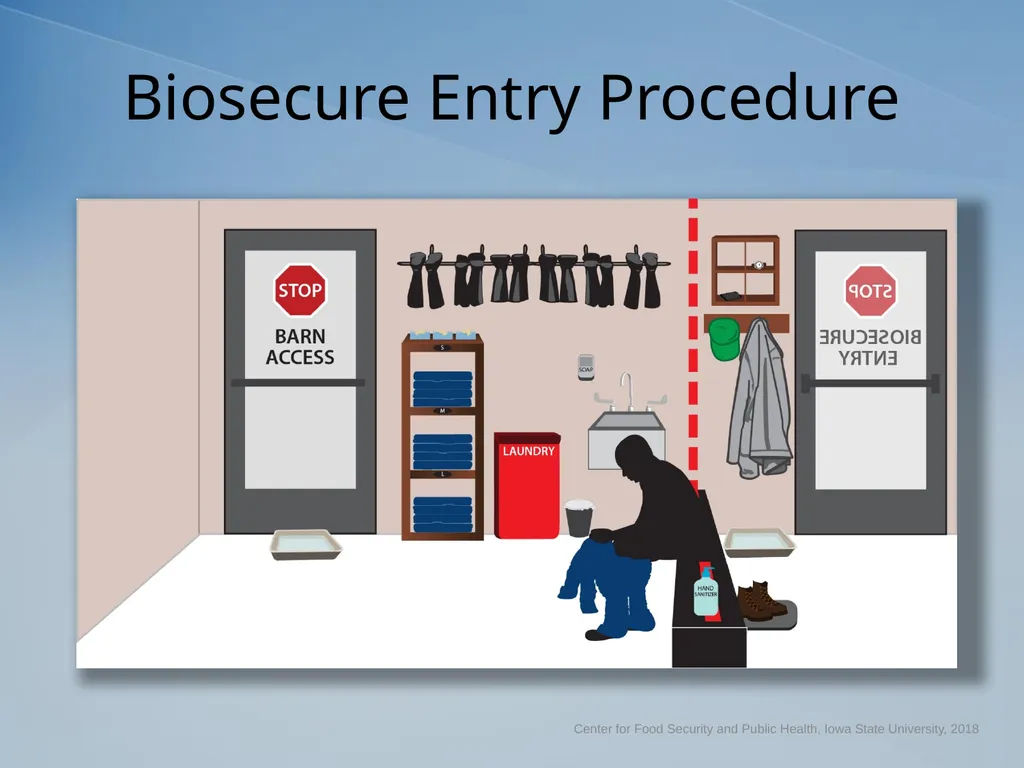
Crossing the LOS- Personnel “Biosecure Entry Procedure”
May vary from steps to enter PBA
Steps may be different if
Site-dedicated
Non-farm personnel
Recent poultry contact
Do not bring contamination from one side to the other Center for Food Security and Public Health, Iowa State University, 2018<br>
10
Biosecure Entry Procedure Center for Food Security and Public Health, Iowa State University, 2018<br>
11
Crossing the LOS- Supplies Best to leave off-site
May cross if biosecurity steps followed
See biosecurity plan, coordinator Center for Food Security and Public Health, Iowa State University, 2015 Pam Zaabel, ISU<br>
12
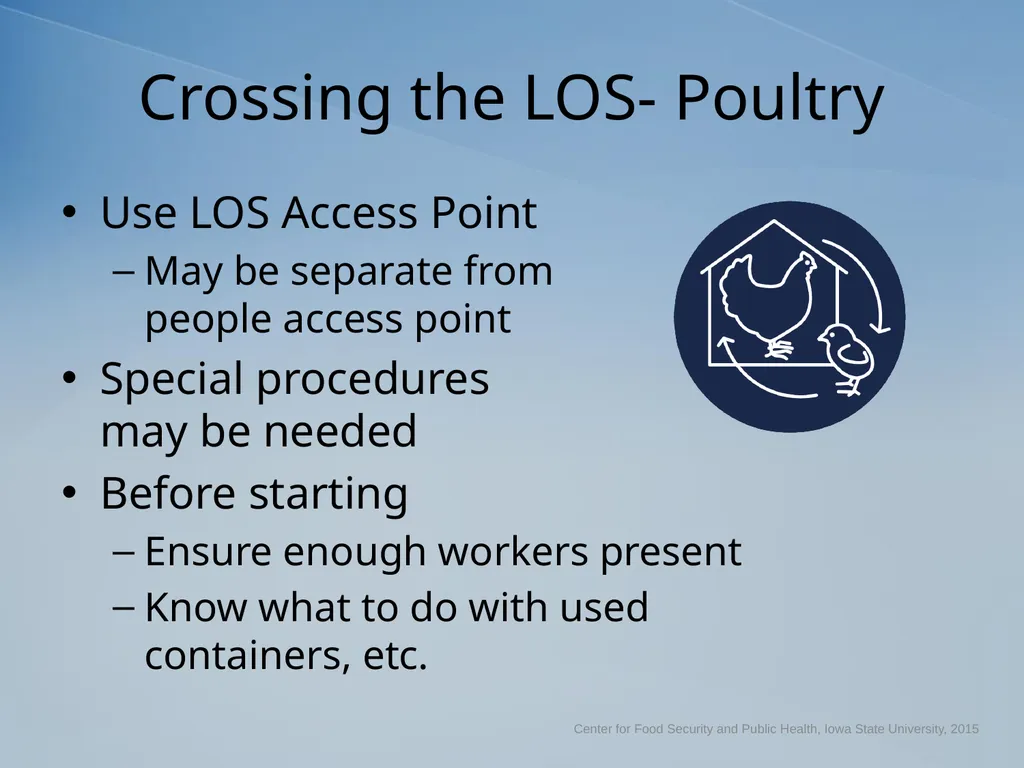
Crossing the LOS- Poultry Use LOS Access Point
May be separate from people access point
Special procedures may be needed
Before starting
Ensure enough workers present
Know what to do with used containers, etc. Center for Food Security and Public Health, Iowa State University, 2015<br>
13
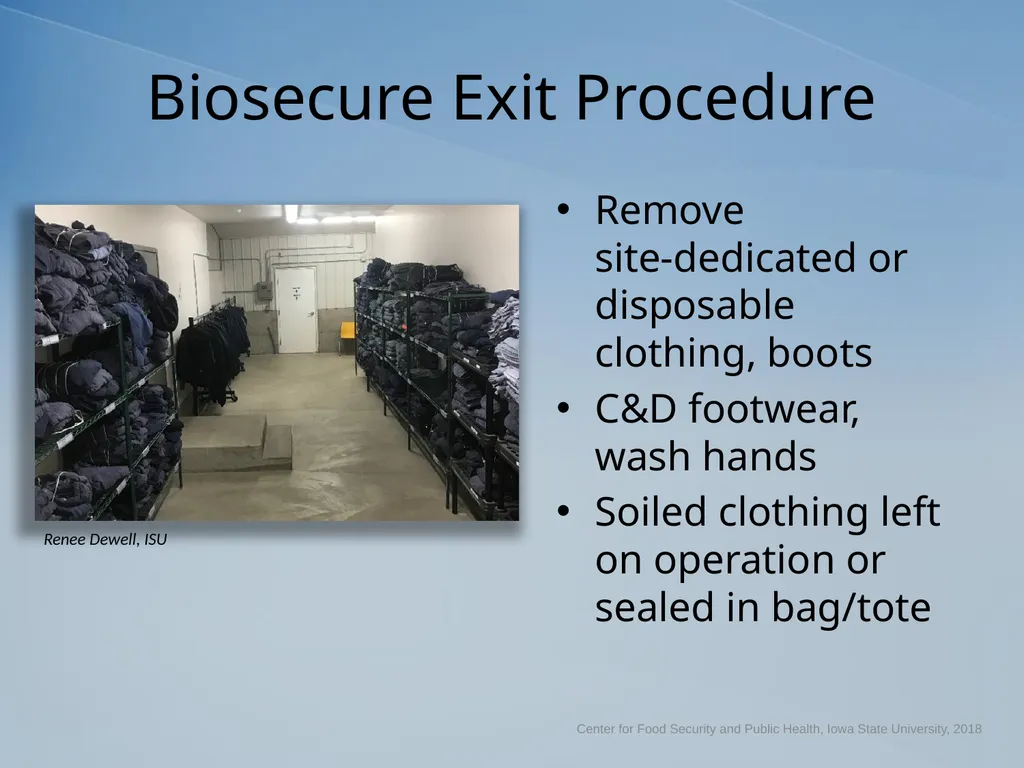
Biosecure Exit Procedure Remove site-dedicated or disposable clothing, boots
C&D footwear, wash hands
Soiled clothing left on operation or sealed in bag/tote Center for Food Security and Public Health, Iowa State University, 2018 Renee Dewell, ISU<br>
14
Mortalities, Manure/Litter Mortalities
One way, direct movement
Report if needed
Manure and litter
SOPs
May involve modified LOS Center for Food Security and Public Health, Iowa State University, 2018<br>
15
Congratulations! Complete the lessons:
Understanding the Line of Separation
Understanding the Perimeter Buffer Area
Do Not Bring Disease to the Poultry Site
Then:
Review the parts of the written site-specific biosecurity plan that apply to your responsibilities
Document your training Center for Food Security and Public Health, Iowa State University, 2018<br>
16
Center for Food Security and Public Health, Iowa State University, 2018<br>