Understanding Trust in Mobile Crowdsensing Systems from the perspective of Security Shameek Bhattacharjee Western Michigan University Email: shameek.bhattacharjeewmich.edu Crowd Sensing Architecture Crowd Sensing (CS) Consumers 3 aspects
"Understanding Trust in Mobile Crowdsensing Systems" is the property of its rightful owner. Permission is granted to
download and print the materials on this website for personal, non-commercial use only, and to display it
on your personal computer provided you do not modify the materials and that you retain all copyright
notices contained in the materials. By downloading content from our website, you accept the terms of this
agreement.
Presentation Transcript
01
Understanding Trust in Mobile Crowdsensing Systems from the perspective of Security Shameek Bhattacharjee
Western Michigan University
Email: shameek.bhattacharjee@wmich.edu<br>
02
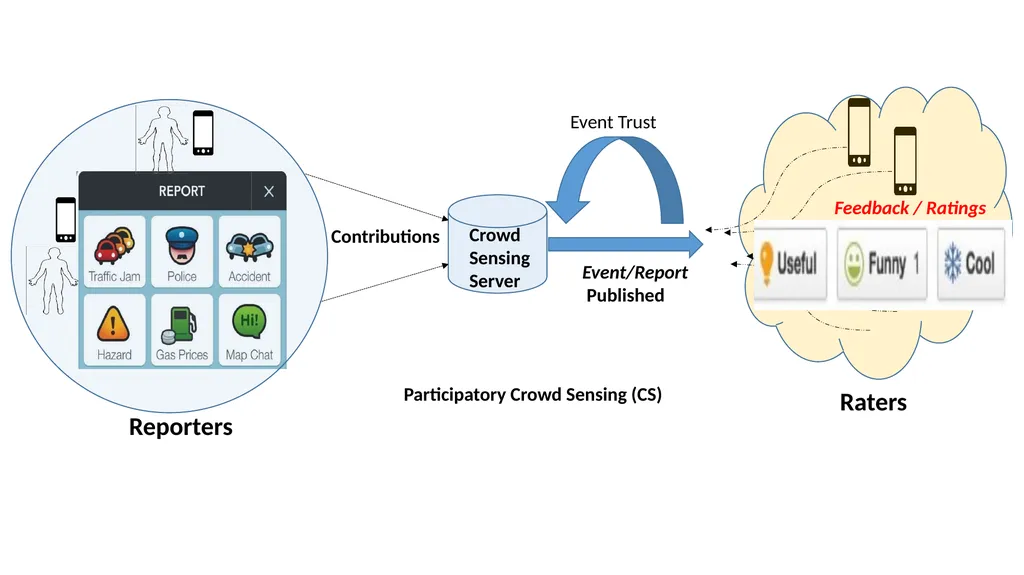
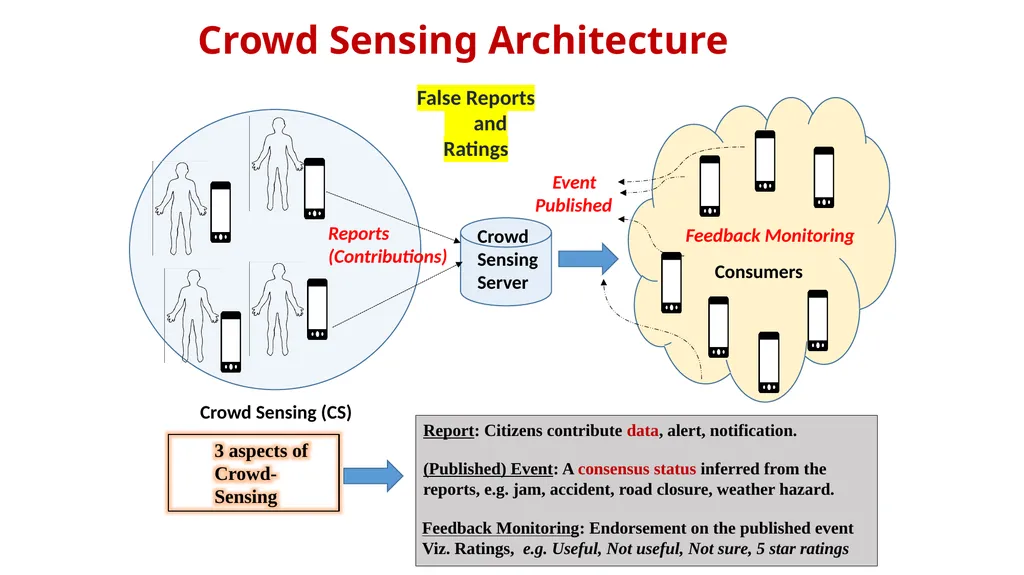
Crowd Sensing Architecture Crowd Sensing (CS) Consumers 3 aspects of Crowd-Sensing False Reports and Ratings<br>
03
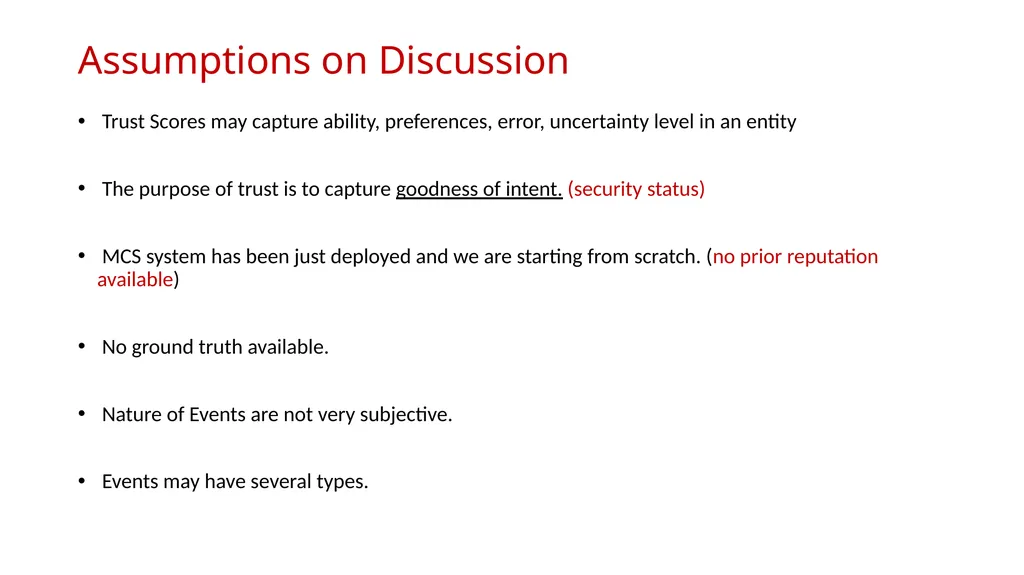
Assumptions on Discussion Trust Scores may capture ability, preferences, error, uncertainty level in an entity
The purpose of trust is to capture goodness of intent. (security status)
MCS system has been just deployed and we are starting from scratch. (no prior reputation available)
No ground truth available.
Nature of Events are not very subjective.
Events may have several types.<br>
04
Threat Landscape in Crowd-Sensing Why Selfish Intent ? (undue incentives)
Incentive mechanisms to motivate constant reports from users.
Incentivize based on degree of contribution (quantity) rather than quality of contributions.
(Huge # of false reports [Bhattacharjee et. al., IEEE CNS ’17] in Google Waze Dataset) Why Malicious Intent ?
Create congestion (civilian)
Drain company’s revenue (economic)
Strategic blocks or voids (internal security)
(Sinai et. al. DEFCON 14, News Reports LA) Reporting Behaviors:
Honest: mostly reports true events.
Selfish: intermittently generate true and false events. (2 groups)
Malicious: frequently collude on reporting the same false event type. Feedback Weaponizing Attacks:
Ballot stuffing: Rogue raters give positive ratings to false events.
Bad mouthing: Rogue raters give false ratings to true events.
Obfuscation stuffing: Rogue raters give uncertain ratings to false events Exploits Use Hardware Emulators
Hack Mobile Apps, Fake-Loc. Apps Belief Manipulation Attacks:
Orchestrate a fake event in a location with high prior likelihood, with ballot stuffing.
Choose to suppress true events in a location low prior likelihood, with bad mouthing.
(exploiting the use of priors in decision making)<br>
05
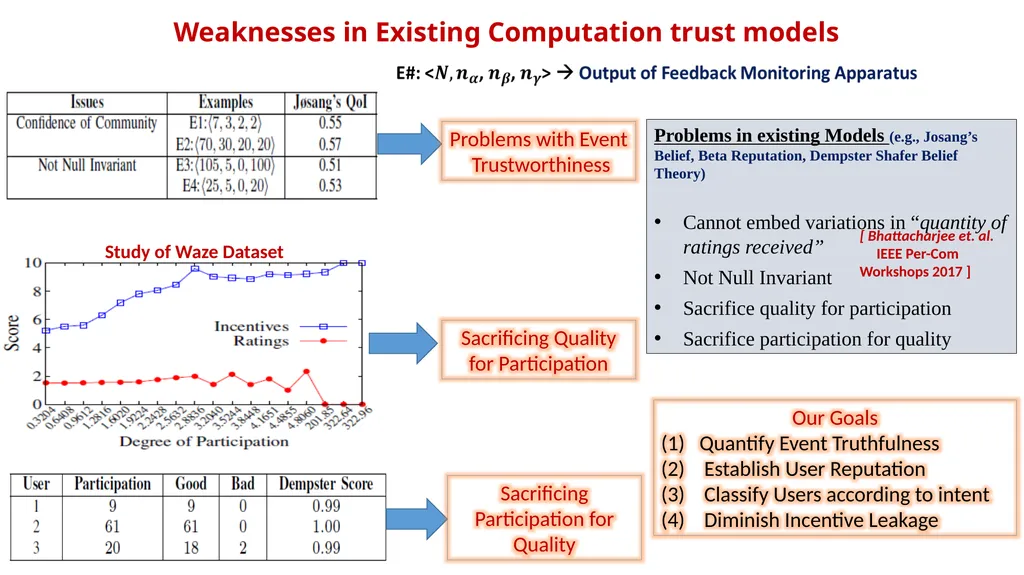
Weaknesses in Existing Computation trust models Problems with Event Trustworthiness Sacrificing Quality for Participation Sacrificing Participation for Quality Study of Waze Dataset Our Goals
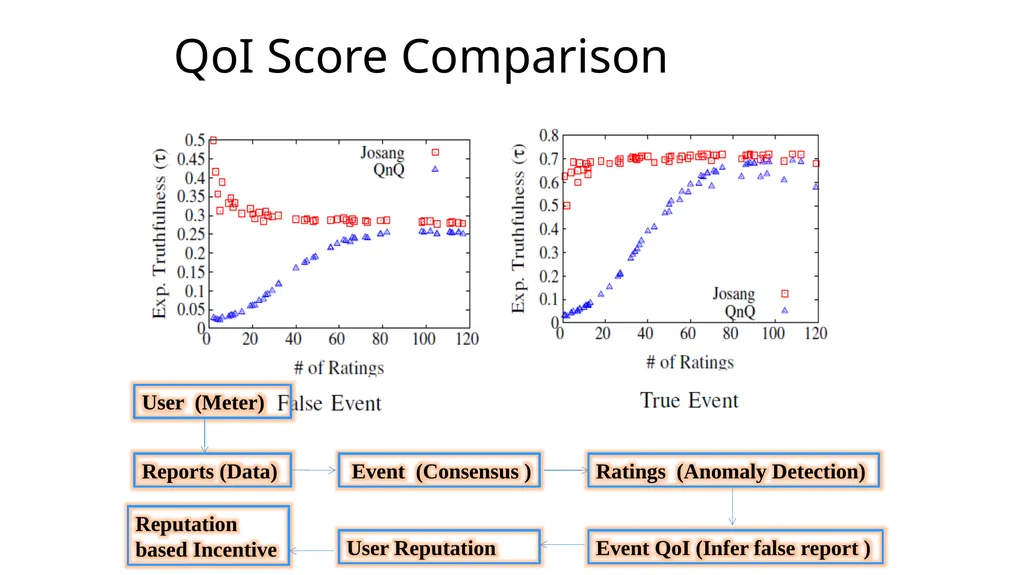
Quantify Event Truthfulness
Establish User Reputation
Classify Users according to intent
Diminish Incentive Leakage<br>
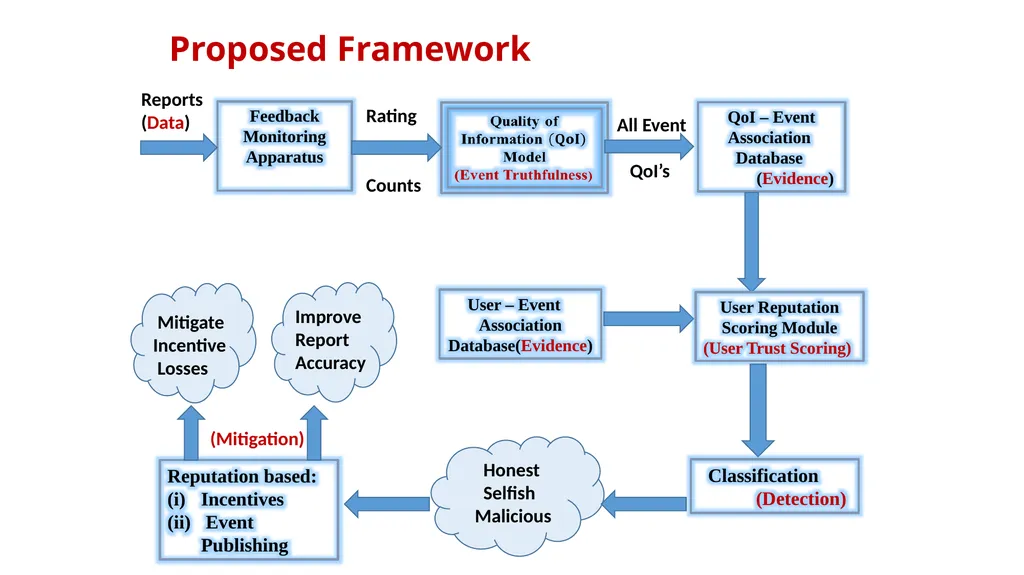
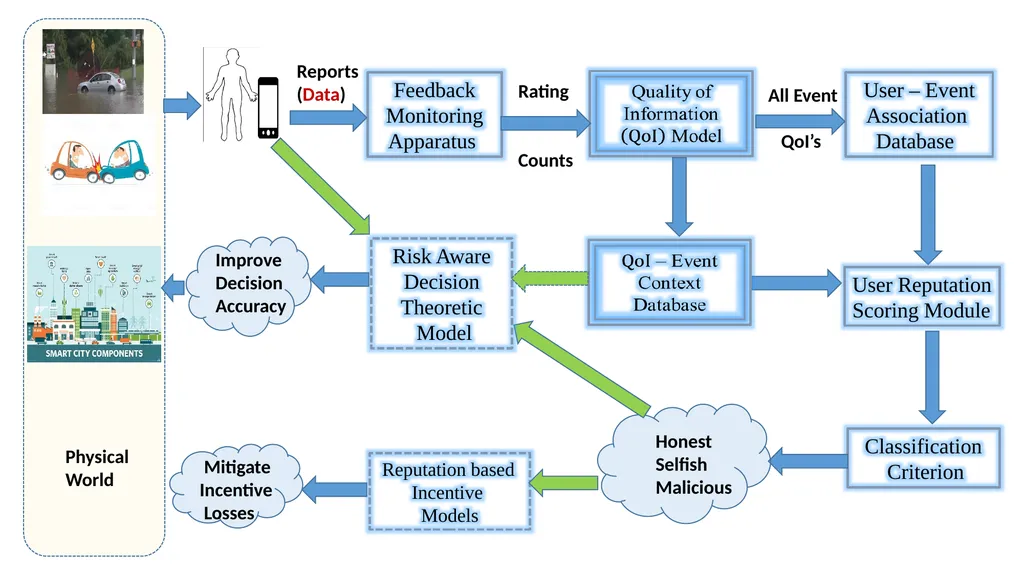
QoI’s User – Event Association Database(Evidence) User Reputation Scoring Module
(User Trust Scoring) Classification
(Detection) Honest
Selfish
Malicious Reputation based:
Incentives
Event Publishing Mitigate
Incentive
Losses Improve
Report
Accuracy (Mitigation)<br>
07
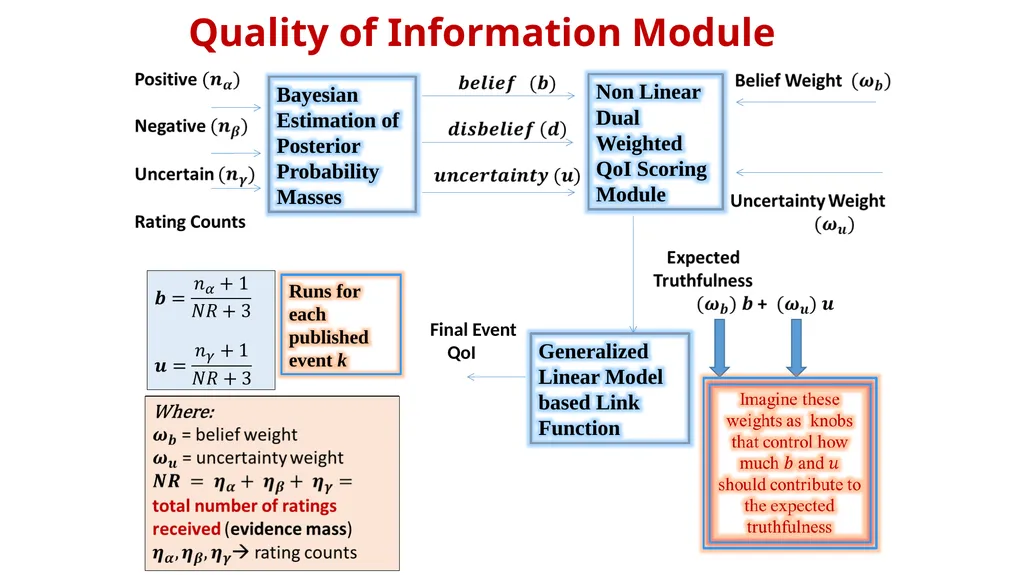
Quality of Information Module Runs for each
published event k<br>
08
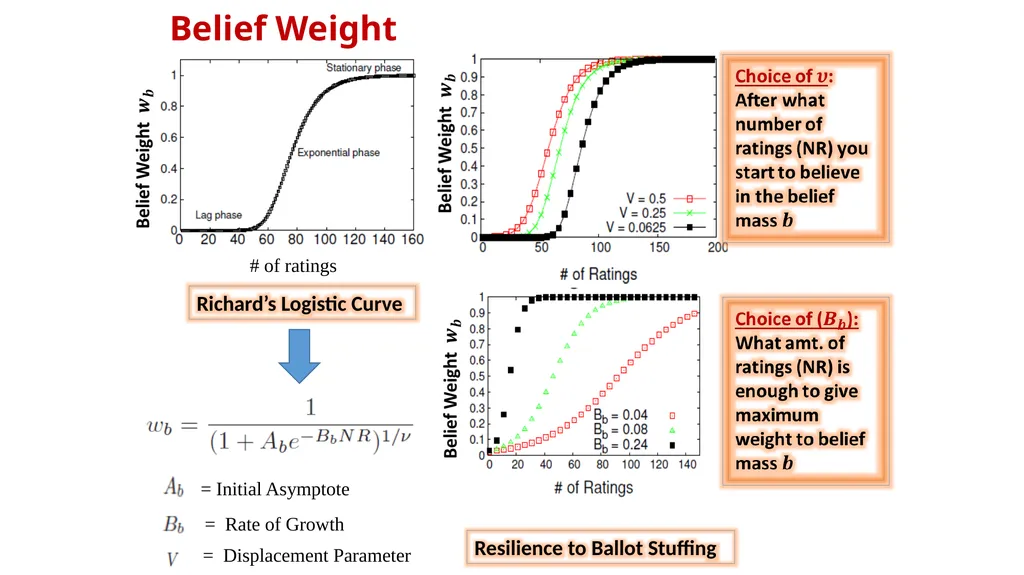
Belief Weight Richard’s Logistic Curve Resilience to Ballot Stuffing<br>
09
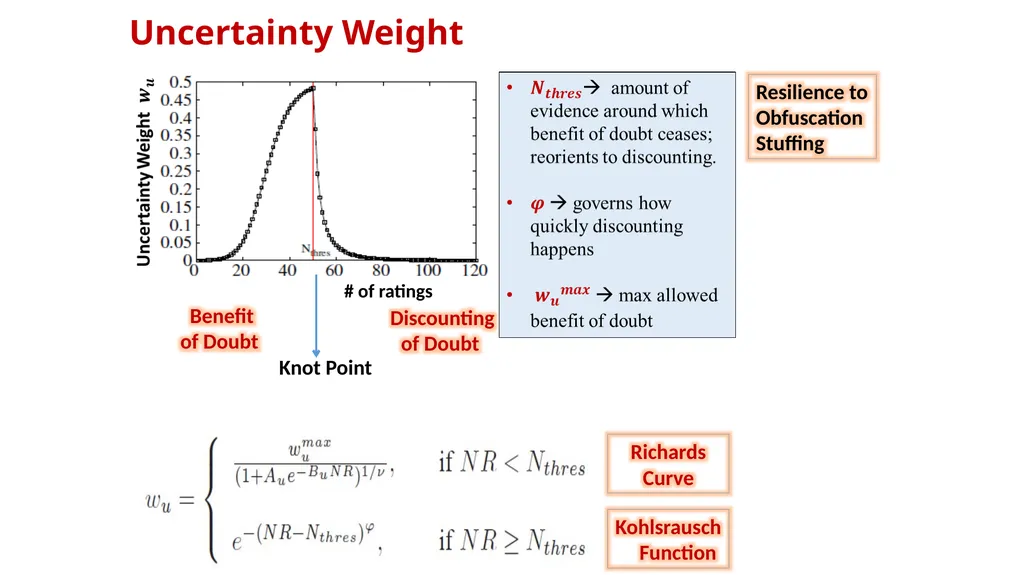
Uncertainty Weight # of ratings Knot Point Resilience to Obfuscation Stuffing<br>
10
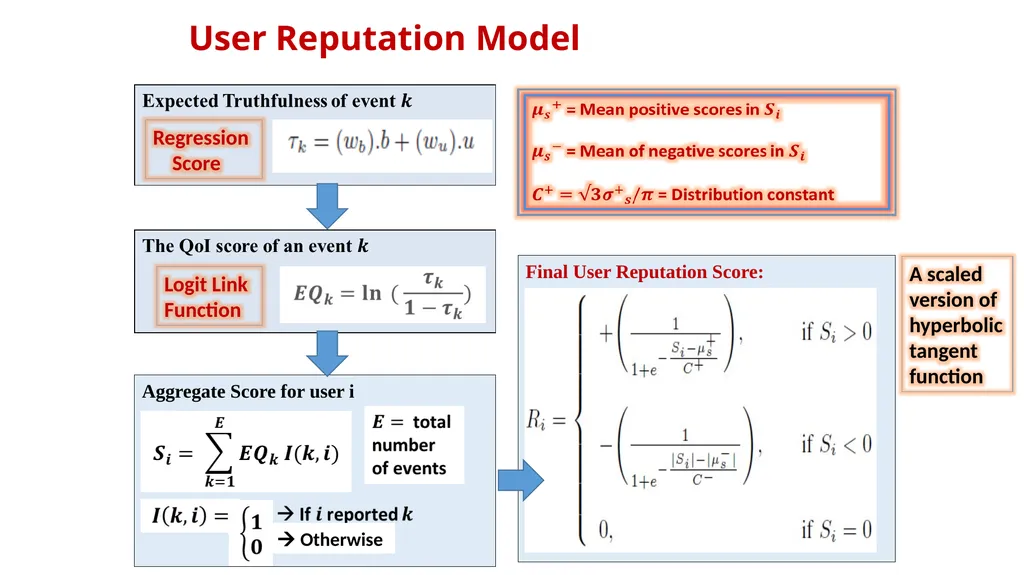
User Reputation Model A scaled version of hyperbolic tangent function<br>
11
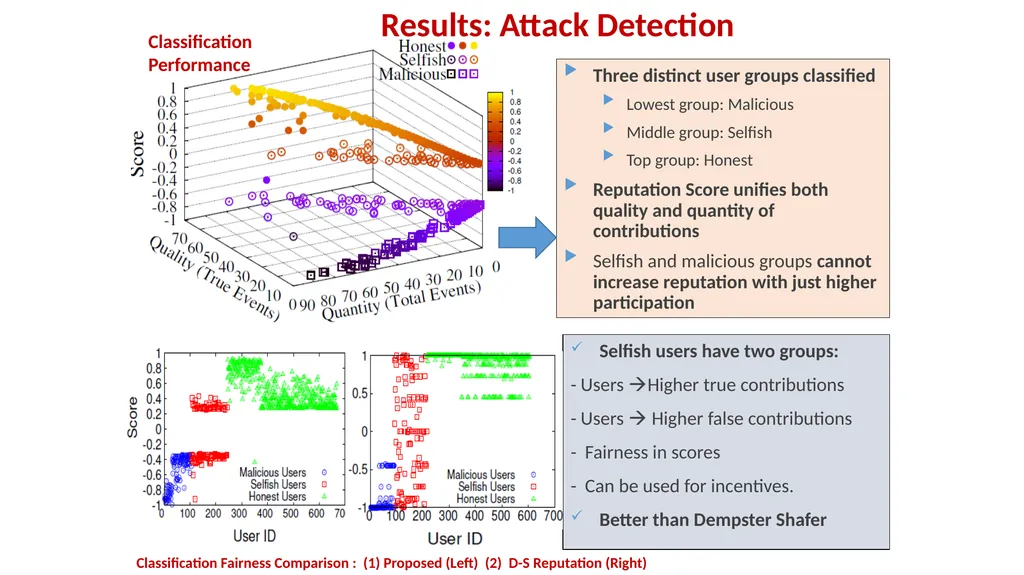
Results: Attack Detection Three distinct user groups classified
Lowest group: Malicious
Middle group: Selfish
Top group: Honest
Reputation Score unifies both quality and quantity of contributions
Selfish and malicious groups cannot increase reputation with just higher participation Classification Fairness Comparison : (1) Proposed (Left) (2) D-S Reputation (Right) Selfish users have two groups:
- Users Higher true contributions
- Users Higher false contributions
- Fairness in scores
- Can be used for incentives.
Better than Dempster Shafer Classification Performance<br>
12
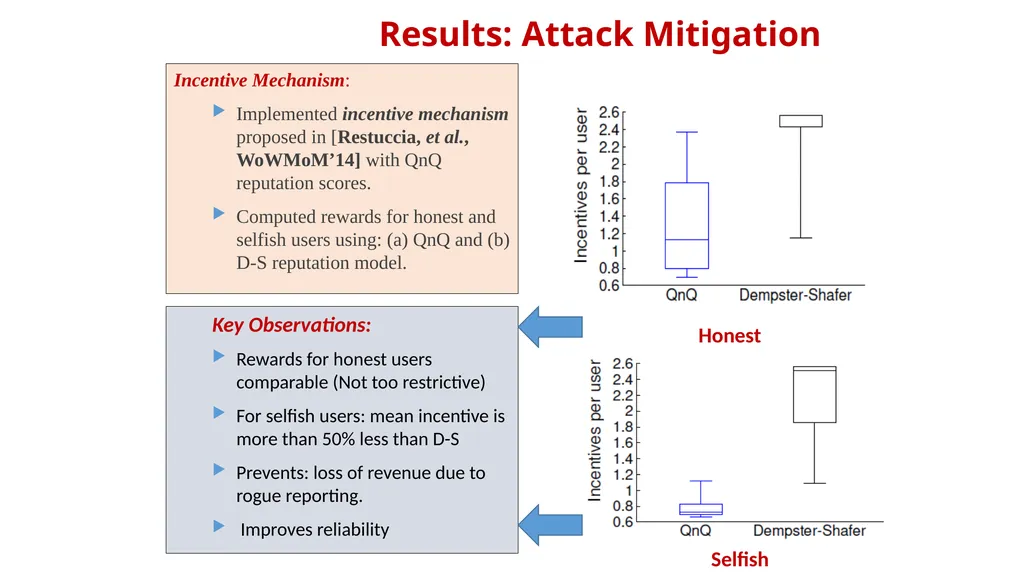
Incentive Mechanism:
Implemented incentive mechanism proposed in [Restuccia, et al., WoWMoM’14] with QnQ reputation scores.
Computed rewards for honest and selfish users using: (a) QnQ and (b) D-S reputation model. Key Observations:
Rewards for honest users comparable (Not too restrictive)
For selfish users: mean incentive is more than 50% less than D-S
Prevents: loss of revenue due to rogue reporting.
Improves reliability Honest Selfish Results: Attack Mitigation<br>