Unit 13: Concepts in Adult Learning Unit
Description: Unit 13: Concepts in Adult Learning Unit Objectives Upon completion of this Unit, the participants will be able to: Describe 3 types of Learning Describe 4 key characteristics of adults List 10 principles of adult learning PPT 13-2 4 Basic
Related Topics
Download Presentation
"Unit 13: Concepts in Adult Learning Unit" is the property of its rightful owner. Permission is granted to download and print the materials on this website for personal, non-commercial use only, and to display it on your personal computer provided you do not modify the materials and that you retain all copyright notices contained in the materials. By downloading content from our website, you accept the terms of this agreement.
Presentation Transcript
slide1. Unit 13: Concepts in Adult Learning<br>
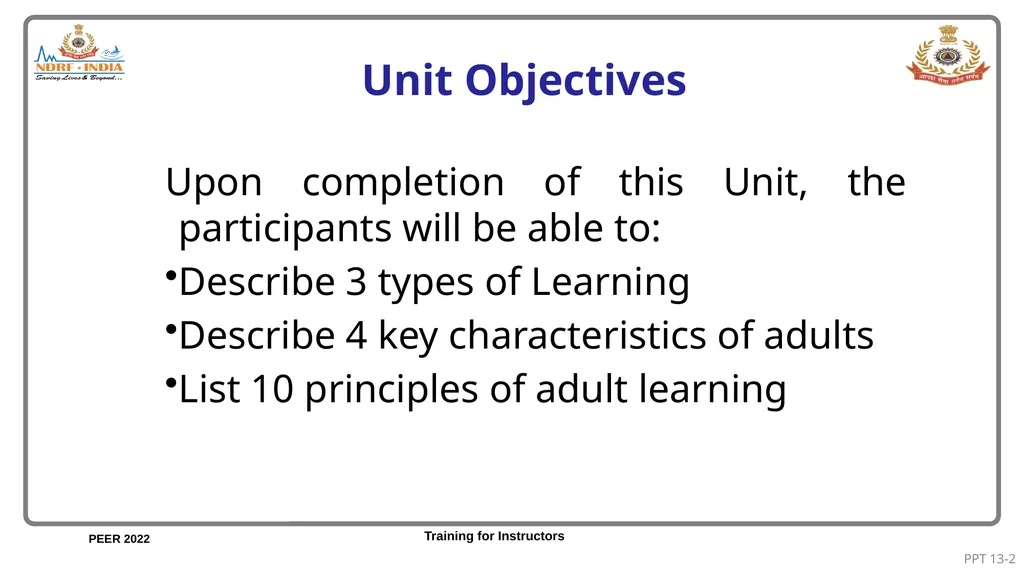
slide2. Unit Objectives Upon completion of this Unit, the participants will be able to:
Describe 3 types of Learning
Describe 4 key characteristics of adults
List 10 principles of adult learning PPT 13-2<br>
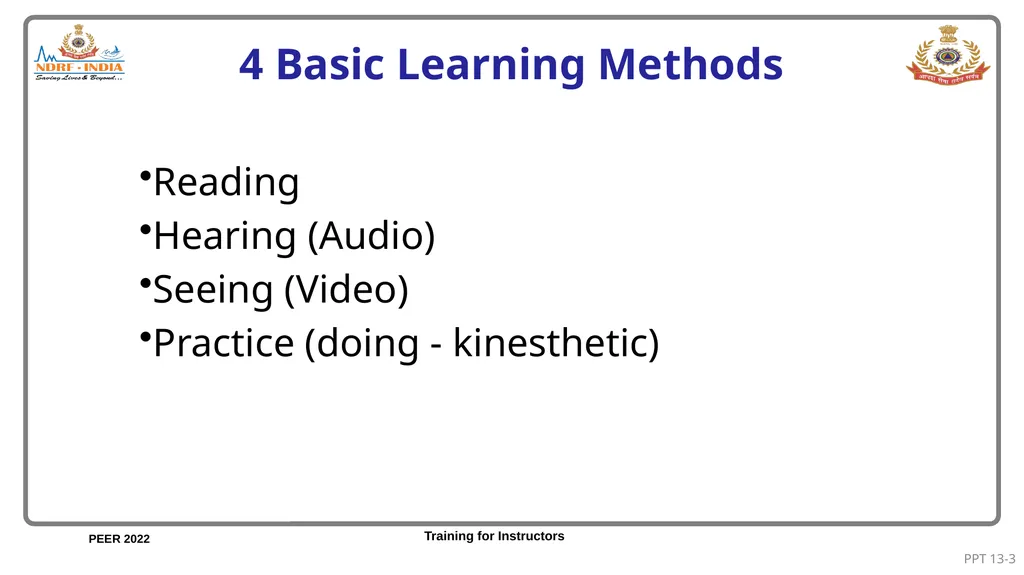
slide3. 4 Basic Learning Methods Reading
Hearing (Audio)
Seeing (Video)
Practice (doing - kinesthetic) PPT 13-3<br>
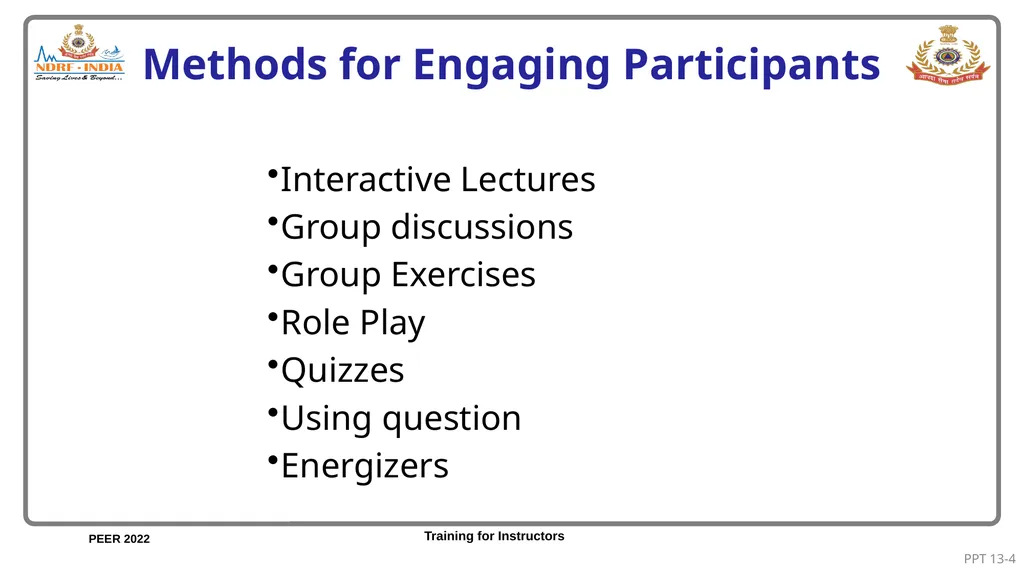
slide4. Methods for Engaging Participants Interactive Lectures
Group discussions
Group Exercises
Role Play
Quizzes
Using question
Energizers PPT 13-4<br>
slide5. Adult Learning Principles (Characteristics and Training techniques) Adults bring a wealth of knowledge and experience which they want to share
Adults are decision makers and self directed learners PPT 13-5<br>
slide6. Adult Learning Principles (Characteristics and Training techniques) Adults have different learning styles that must be respected
Adults want to participate rather than just listen to a lecture PPT 13-6<br>
slide7. Adult Learning Principles (Characteristics and Training techniques) Adults are motivated by information or tasks that are meaningful and applicable to their jobs
Adults prefer training that focuses on real life problems PPT 13-7<br>
slide8. Adult Learning Principles (Characteristics and Training techniques) Adults expect their time during the training to be used carefully
Adults feel anxious when participating in a group that makes them look uninformed, either professionally or personally PPT 13-8<br>
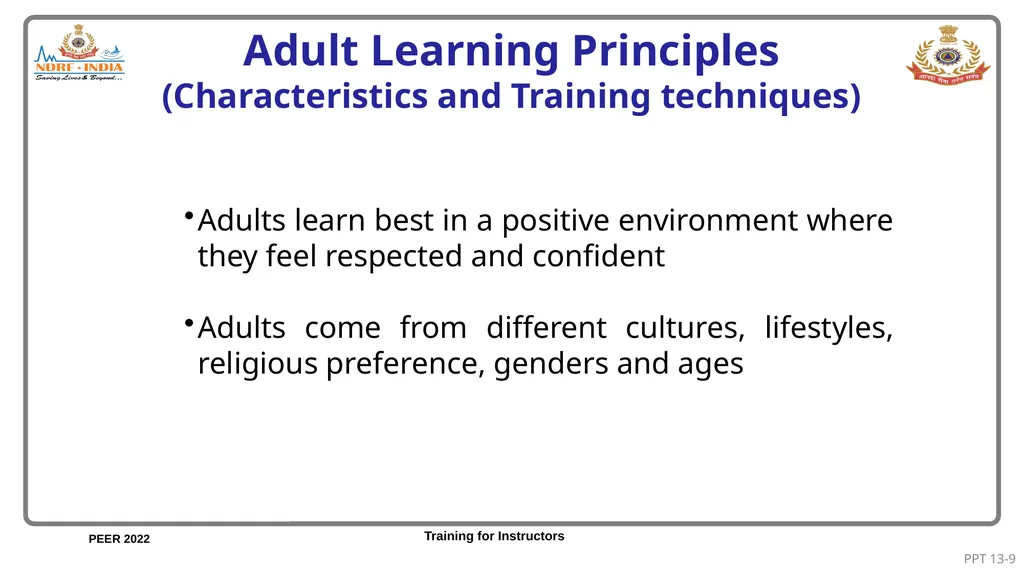
slide9. Adult Learning Principles (Characteristics and Training techniques) Adults learn best in a positive environment where they feel respected and confident
Adults come from different cultures, lifestyles, religious preference, genders and ages PPT 13-9<br>
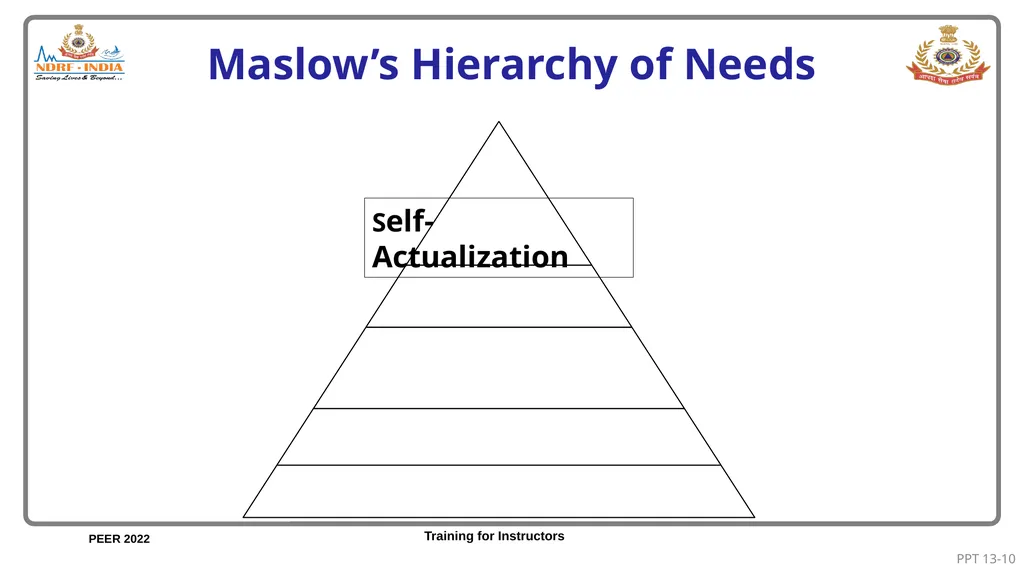
slide10. Maslow’s Hierarchy of Needs Self-Actualization PPT 13-10<br>
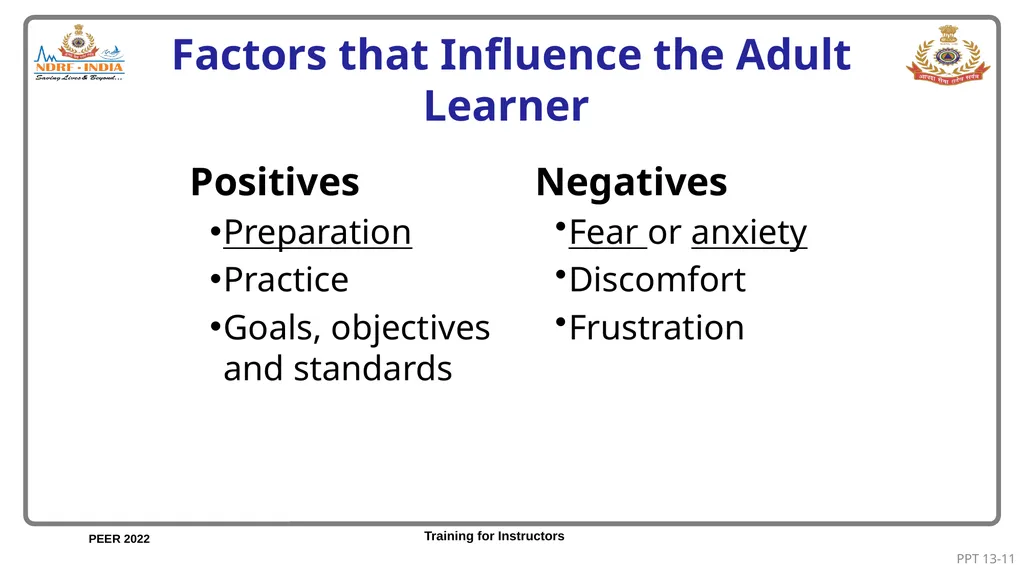
slide11. Factors that Influence the Adult Learner Positives
Preparation
Practice
Goals, objectives and standards Negatives
Fear or anxiety
Discomfort
Frustration PPT 13-11<br>
slide12. Individual Differences Age
Previous experience
Subcultures PPT 13-12<br>
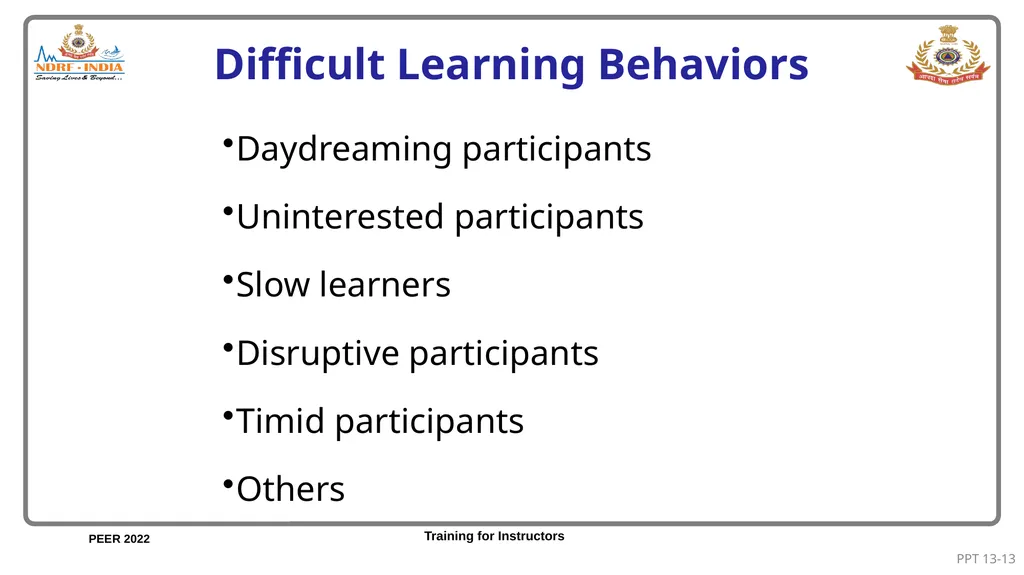
slide13. Difficult Learning Behaviors Daydreaming participants
Uninterested participants
Slow learners
Disruptive participants
Timid participants
Others PPT 13-13<br>
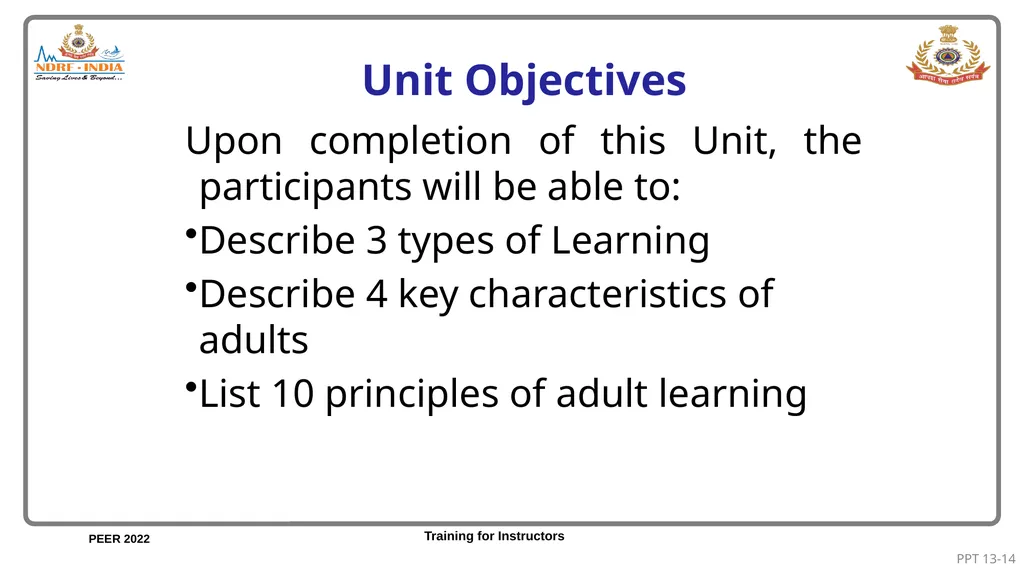
slide14. Unit Objectives Upon completion of this Unit, the participants will be able to:
Describe 3 types of Learning
Describe 4 key characteristics of adults
List 10 principles of adult learning PPT 13-14<br>

slide15. 15 THANK YOU<br>
slide2. Unit Objectives Upon completion of this Unit, the participants will be able to:
Describe 3 types of Learning
Describe 4 key characteristics of adults
List 10 principles of adult learning PPT 13-2<br>
slide3. 4 Basic Learning Methods Reading
Hearing (Audio)
Seeing (Video)
Practice (doing - kinesthetic) PPT 13-3<br>
slide4. Methods for Engaging Participants Interactive Lectures
Group discussions
Group Exercises
Role Play
Quizzes
Using question
Energizers PPT 13-4<br>
slide5. Adult Learning Principles (Characteristics and Training techniques) Adults bring a wealth of knowledge and experience which they want to share
Adults are decision makers and self directed learners PPT 13-5<br>
slide6. Adult Learning Principles (Characteristics and Training techniques) Adults have different learning styles that must be respected
Adults want to participate rather than just listen to a lecture PPT 13-6<br>
slide7. Adult Learning Principles (Characteristics and Training techniques) Adults are motivated by information or tasks that are meaningful and applicable to their jobs
Adults prefer training that focuses on real life problems PPT 13-7<br>
slide8. Adult Learning Principles (Characteristics and Training techniques) Adults expect their time during the training to be used carefully
Adults feel anxious when participating in a group that makes them look uninformed, either professionally or personally PPT 13-8<br>
slide9. Adult Learning Principles (Characteristics and Training techniques) Adults learn best in a positive environment where they feel respected and confident
Adults come from different cultures, lifestyles, religious preference, genders and ages PPT 13-9<br>
slide10. Maslow’s Hierarchy of Needs Self-Actualization PPT 13-10<br>
slide11. Factors that Influence the Adult Learner Positives
Preparation
Practice
Goals, objectives and standards Negatives
Fear or anxiety
Discomfort
Frustration PPT 13-11<br>
slide12. Individual Differences Age
Previous experience
Subcultures PPT 13-12<br>
slide13. Difficult Learning Behaviors Daydreaming participants
Uninterested participants
Slow learners
Disruptive participants
Timid participants
Others PPT 13-13<br>
slide14. Unit Objectives Upon completion of this Unit, the participants will be able to:
Describe 3 types of Learning
Describe 4 key characteristics of adults
List 10 principles of adult learning PPT 13-14<br>
slide15. 15 THANK YOU<br>