Unit- 2 Consignment Accounts Meaning of consignment a batch of goods destined for or delivered to someone. consign means to send Consignor The owner of the goods who sends the goods to an agent for sale. Consignee Who sells the goods
"Unit- 2 Consignment Accounts Meaning of" is the property of its rightful owner. Permission is granted to
download and print the materials on this website for personal, non-commercial use only, and to display it
on your personal computer provided you do not modify the materials and that you retain all copyright
notices contained in the materials. By downloading content from our website, you accept the terms of this
agreement.
Presentation Transcript
01
Unit- 2 Consignment Accounts<br>
02
Meaning of consignment
a batch of goods destined for or delivered to someone.
"consign" means "to send"<br>
03
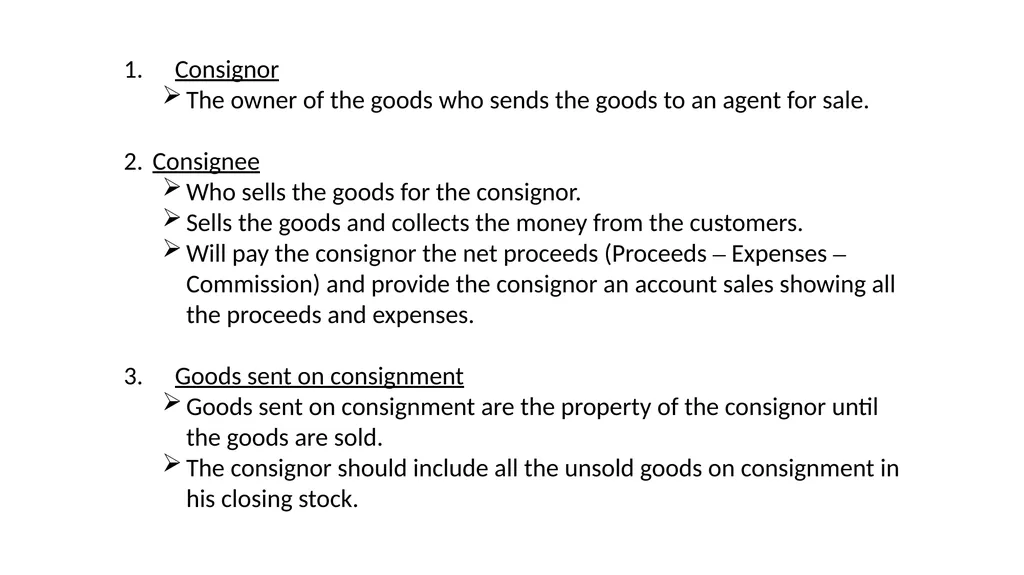
Consignor
The owner of the goods who sends the goods to an agent for sale.
Consignee
Who sells the goods for the consignor.
Sells the goods and collects the money from the customers.
Will pay the consignor the net proceeds (Proceeds – Expenses – Commission) and provide the consignor an account sales showing all the proceeds and expenses.
Goods sent on consignment
Goods sent on consignment are the property of the consignor until the goods are sold.
The consignor should include all the unsold goods on consignment in his closing stock.<br>
04
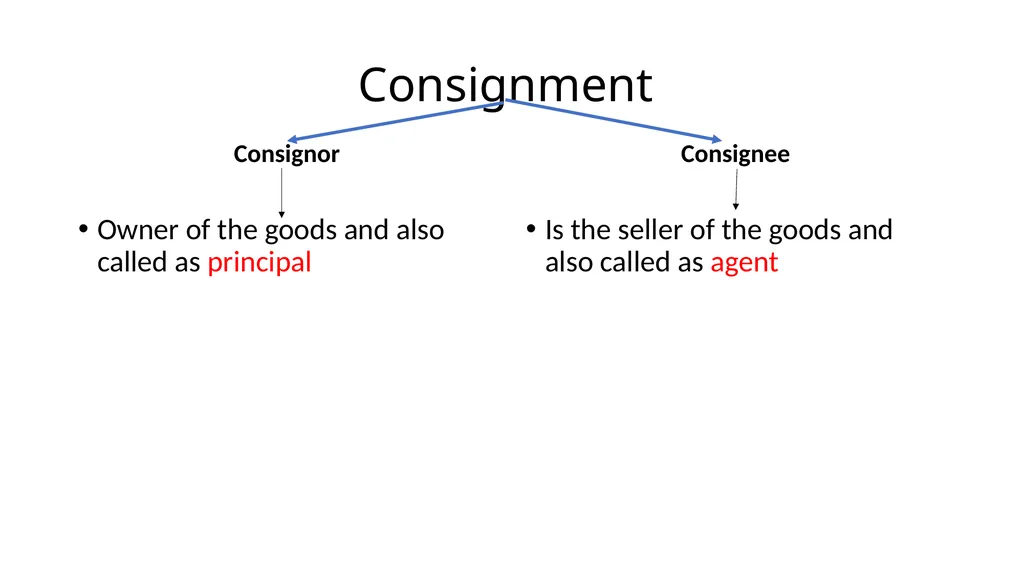
Consignment Consignor Owner of the goods and also called as principal Consignee Is the seller of the goods and also called as agent<br>
05
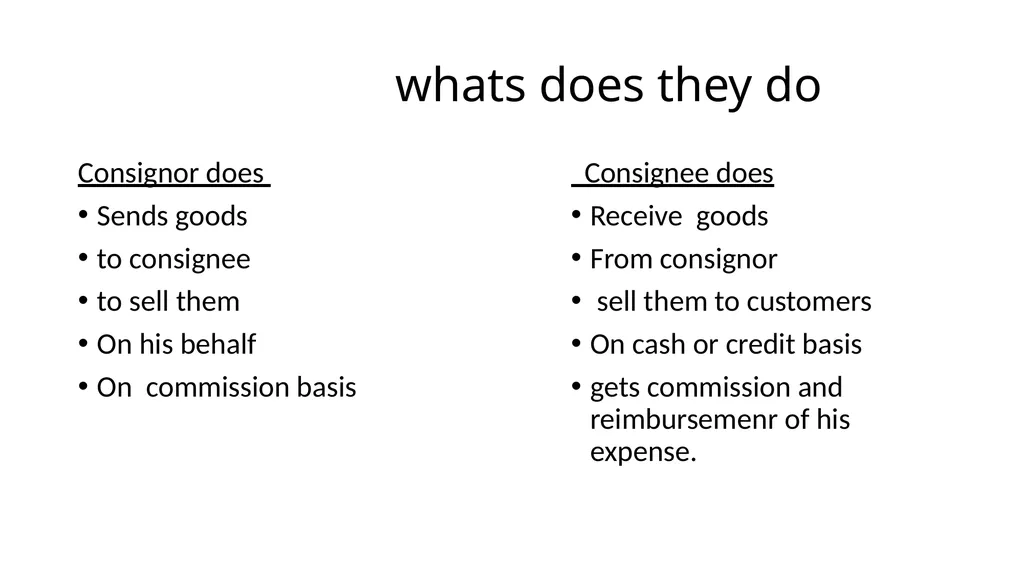
whats does they do Consignor does
Sends goods
to consignee
to sell them
On his behalf
On commission basis Consignee does
Receive goods
From consignor
sell them to customers
On cash or credit basis
gets commission and reimbursemenr of his expense.<br>
06
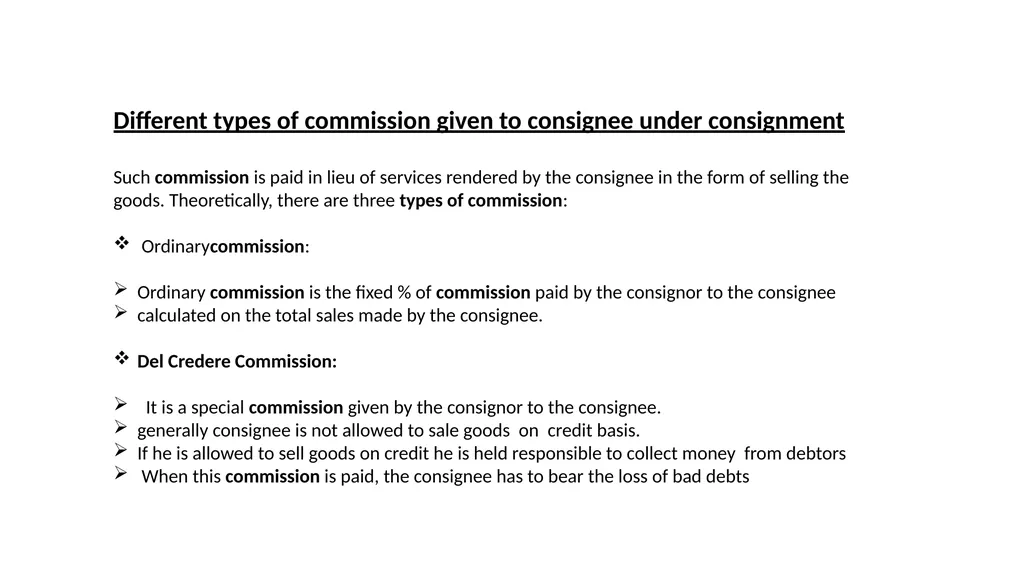
Different types of commission given to consignee under consignment
Such commission is paid in lieu of services rendered by the consignee in the form of selling the goods. Theoretically, there are three types of commission:
Ordinarycommission:
Ordinary commission is the fixed % of commission paid by the consignor to the consignee
calculated on the total sales made by the consignee.
Del Credere Commission:
It is a special commission given by the consignor to the consignee.
generally consignee is not allowed to sale goods on credit basis.
If he is allowed to sell goods on credit he is held responsible to collect money from debtors
When this commission is paid, the consignee has to bear the loss of bad debts<br>
07
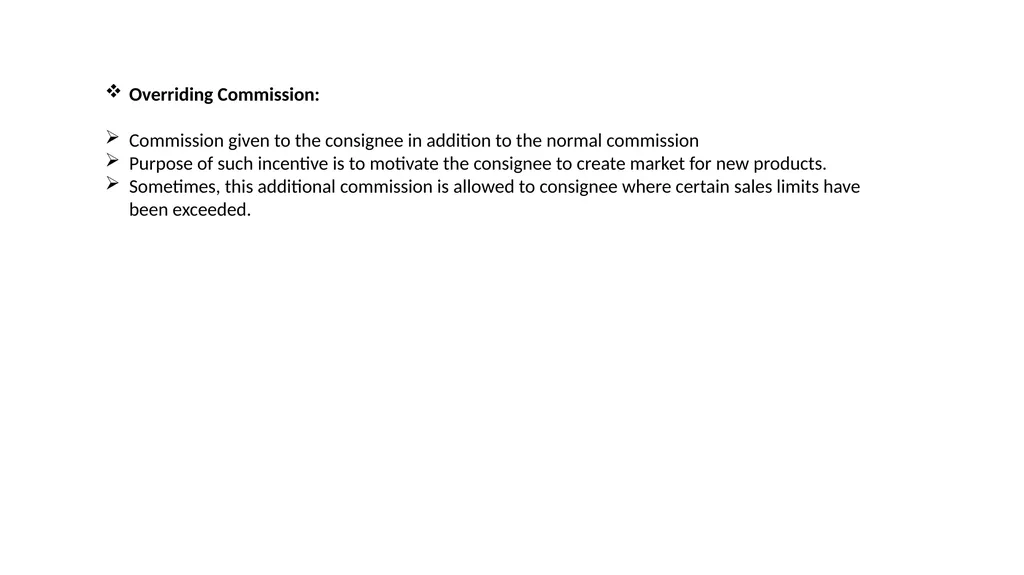
Overriding Commission:
Commission given to the consignee in addition to the normal commission
Purpose of such incentive is to motivate the consignee to create market for new products.
Sometimes, this additional commission is allowed to consignee where certain sales limits have been exceeded.<br>
08
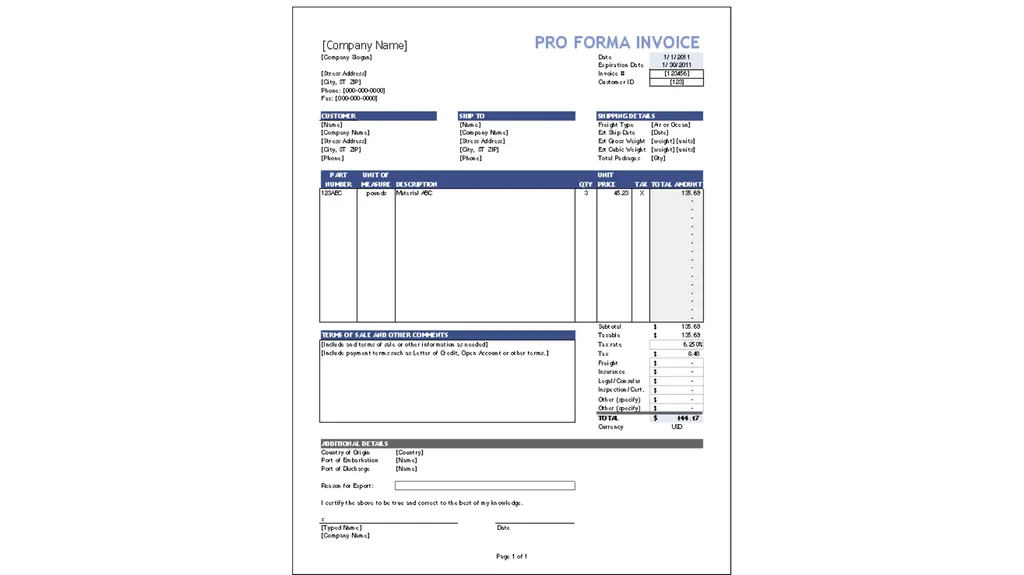
Pro-forma invoice A Pro-forma invoice is a document prepared by the consignor which is sent to the consignee along with the goods. It contains the details with respect to the quantity of goods sent, rates at which the goods are sent and other terms and conditions for sending the goods on consignment.<br>
09
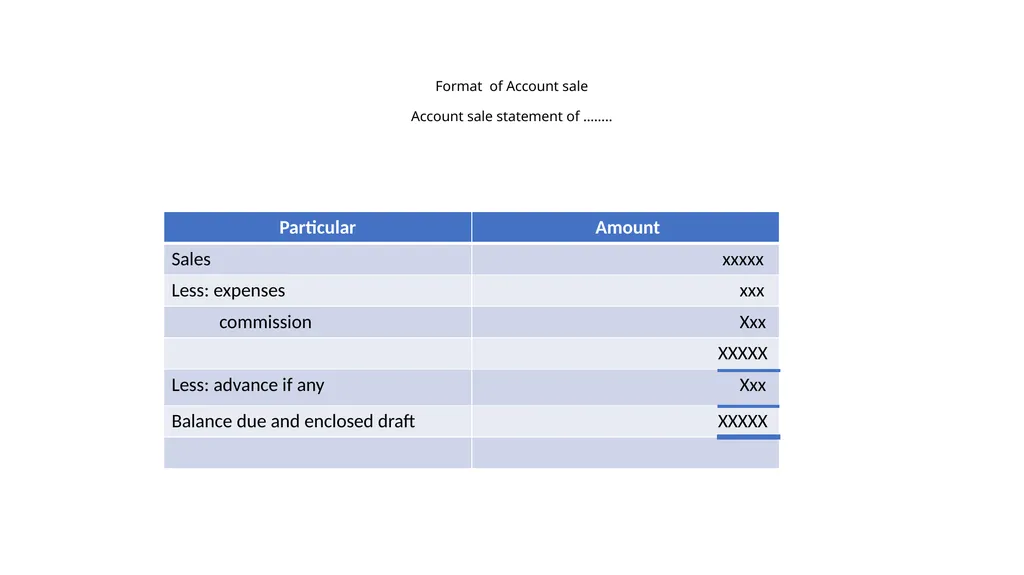
Account sale Account Sales. An Account sale is a statement prepared and sent by the consignee to the consignor. It contains the details with regard to the quantity of goods received, sales made, expenses incurred, commission, amount sent and the balance payable by consignee to the consignor.<br>
10
Difference PROFORMA INVOICE It is prepared by the consignor and send along with the goods send on consignment The instrument contains a description of goods, i.e. quantity, price, weight, kind and other specifications. It is a declaration by the seller to provide the products and services to the buyer on the specified date and price. ACCOUNT SALE Account sales is a report or statement that shows the price at which the goods are sold, expenses incurred by the consignee on behalf of the consignor, consignee's commission and the net balance for which the consignee is liable.<br>
11
Format of Account sale Account sale statement of ……..<br>
12
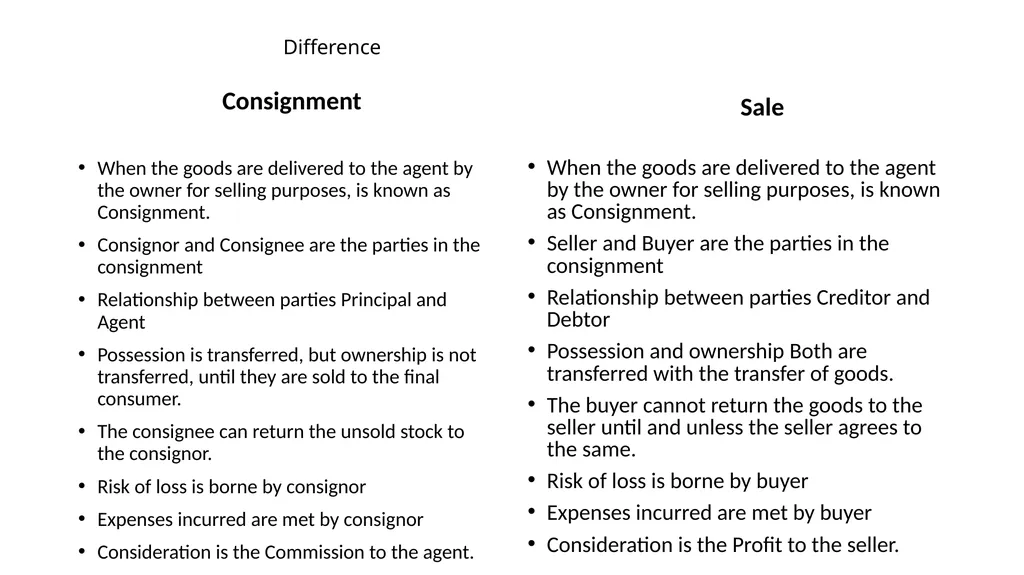
Difference Consignment When the goods are delivered to the agent by the owner for selling purposes, is known as Consignment.
Consignor and Consignee are the parties in the consignment
Relationship between parties Principal and Agent
Possession is transferred, but ownership is not transferred, until they are sold to the final consumer.
The consignee can return the unsold stock to the consignor.
Risk of loss is borne by consignor
Expenses incurred are met by consignor
Consideration is the Commission to the agent. Sale When the goods are delivered to the agent by the owner for selling purposes, is known as Consignment.
Seller and Buyer are the parties in the consignment
Relationship between parties Creditor and Debtor
Possession and ownership Both are transferred with the transfer of goods.
The buyer cannot return the goods to the seller until and unless the seller agrees to the same.
Risk of loss is borne by buyer
Expenses incurred are met by buyer
Consideration is the Profit to the seller.<br>
13
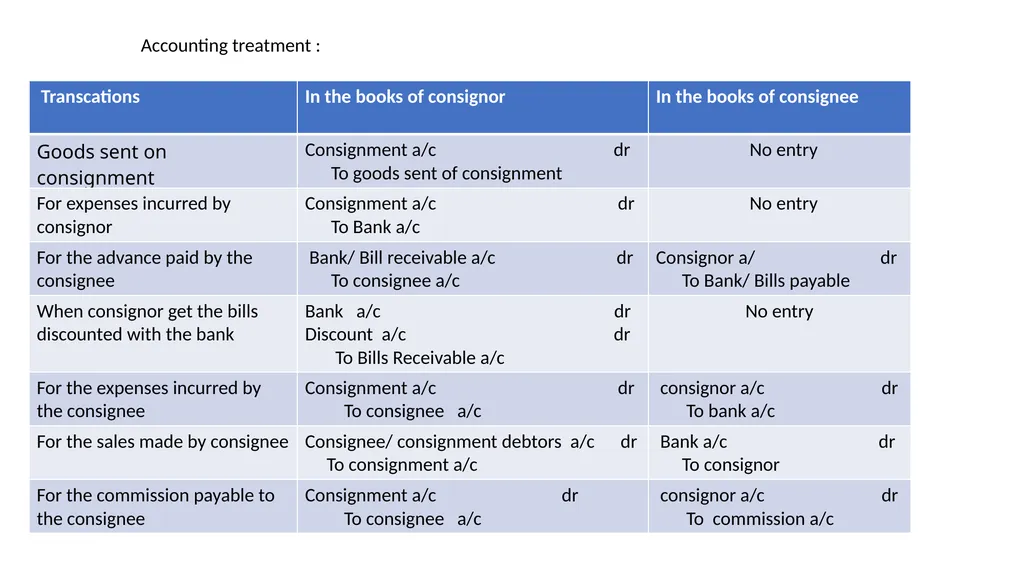
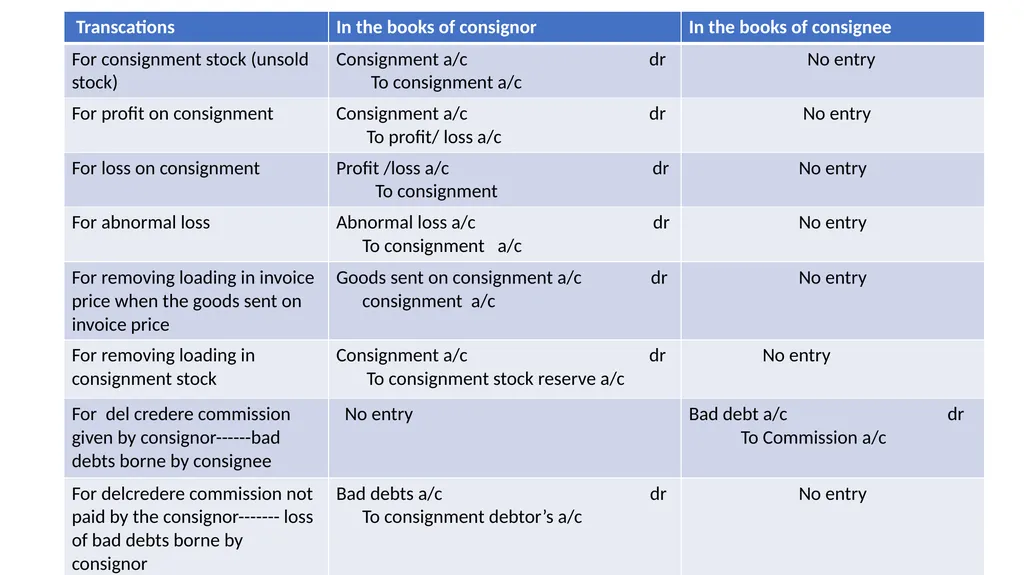
Accounting treatment :<br>
14
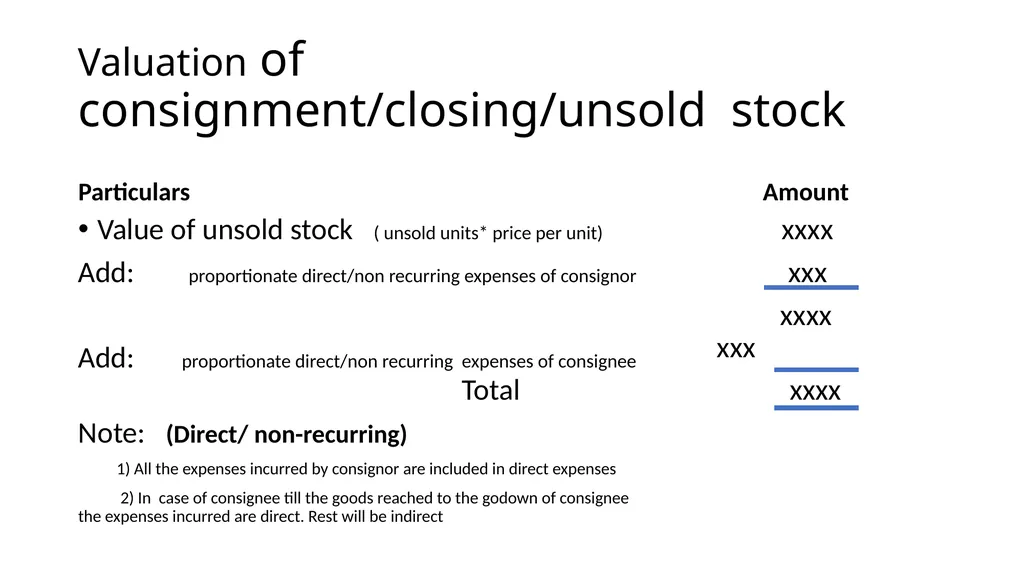
Valuation of consignment/closing/unsold stock Particulars Value of unsold stock ( unsold units* price per unit)
Add: proportionate direct/non recurring expenses of consignor
Add: proportionate direct/non recurring expenses of consignee Total
Note: (Direct/ non-recurring)
1) All the expenses incurred by consignor are included in direct expenses
2) In case of consignee till the goods reached to the godown of consignee the expenses incurred are direct. Rest will be indirect Amount xxxx
xxx
xxxx xxx
xxxx<br>
15
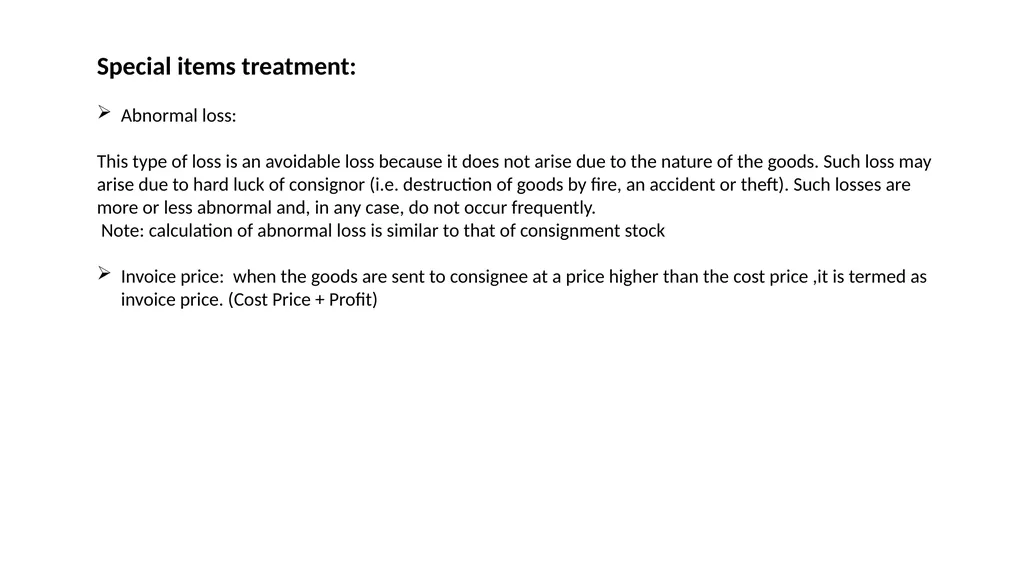
Special items treatment:
Abnormal loss:
This type of loss is an avoidable loss because it does not arise due to the nature of the goods. Such loss may arise due to hard luck of consignor (i.e. destruction of goods by fire, an accident or theft). Such losses are more or less abnormal and, in any case, do not occur frequently.
Note: calculation of abnormal loss is similar to that of consignment stock
Invoice price: when the goods are sent to consignee at a price higher than the cost price ,it is termed as invoice price. (Cost Price + Profit)<br>
16
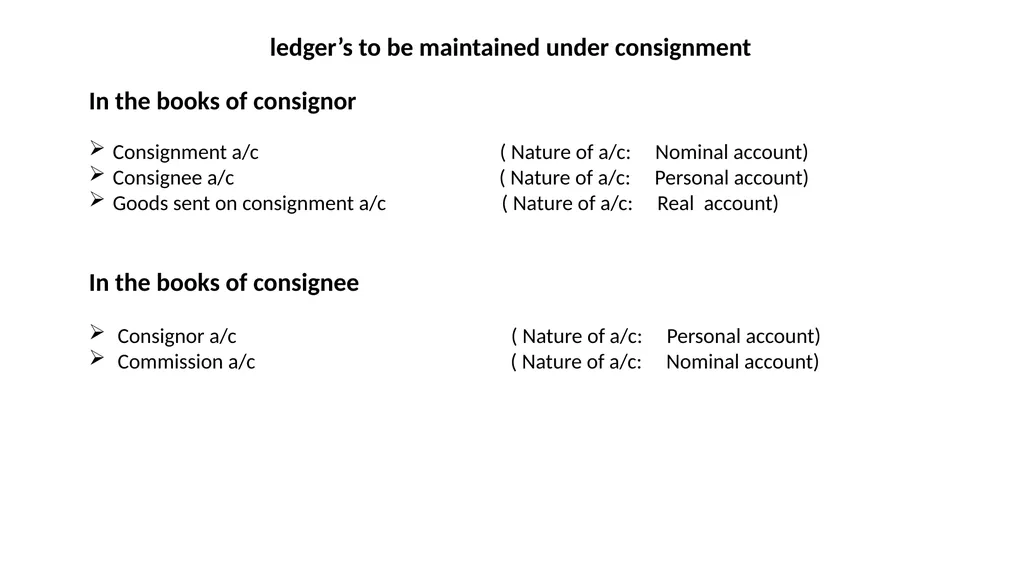
ledger’s to be maintained under consignment
In the books of consignor
Consignment a/c ( Nature of a/c: Nominal account)
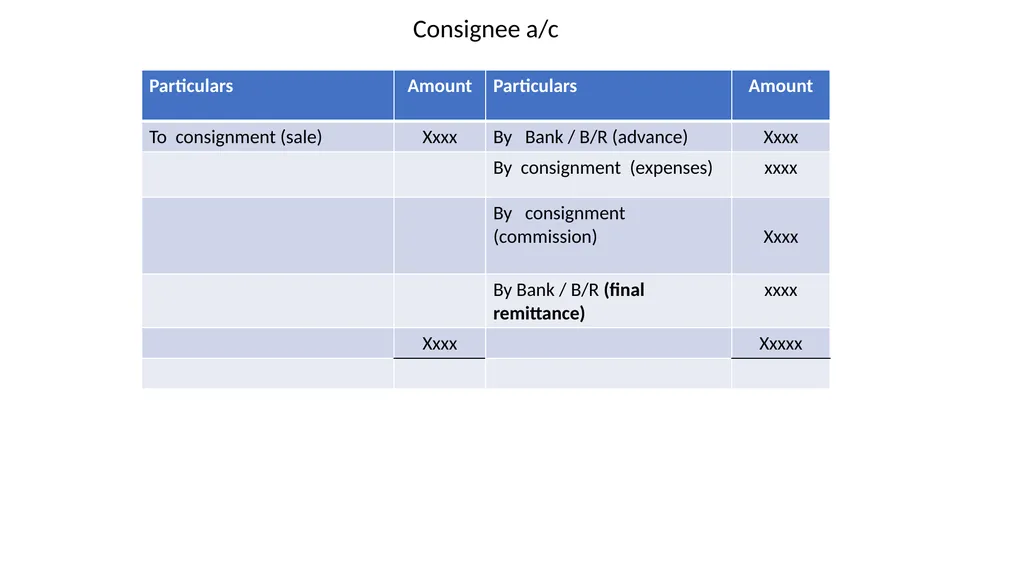
Consignee a/c ( Nature of a/c: Personal account)
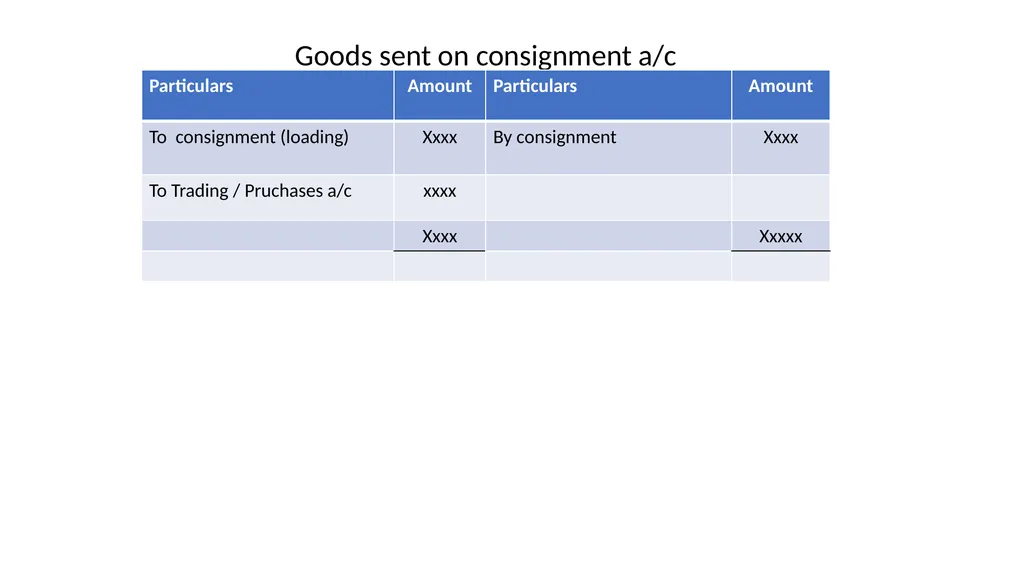
Goods sent on consignment a/c ( Nature of a/c: Real account)
In the books of consignee
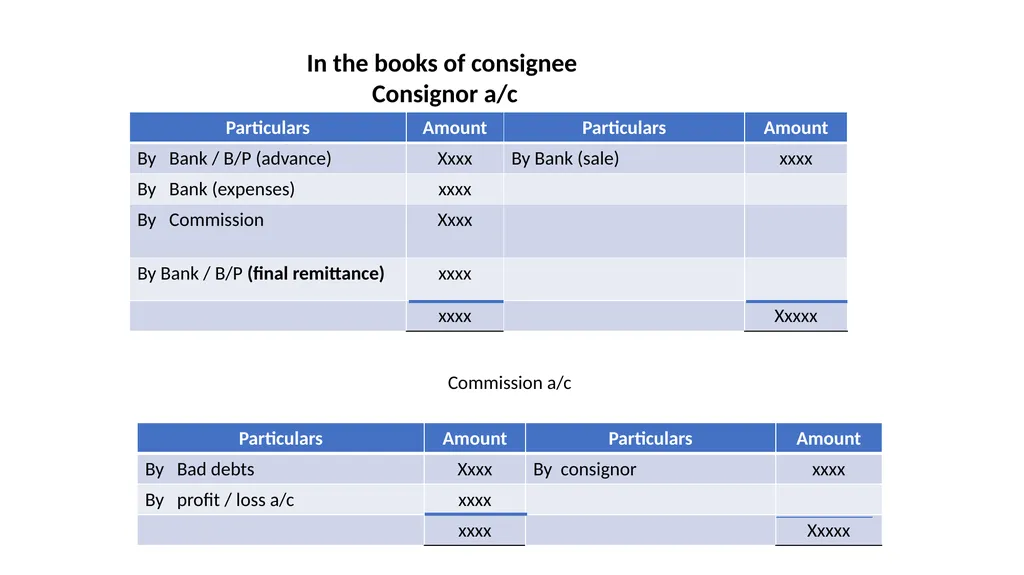
Consignor a/c ( Nature of a/c: Personal account)
Commission a/c ( Nature of a/c: Nominal account)<br>
17
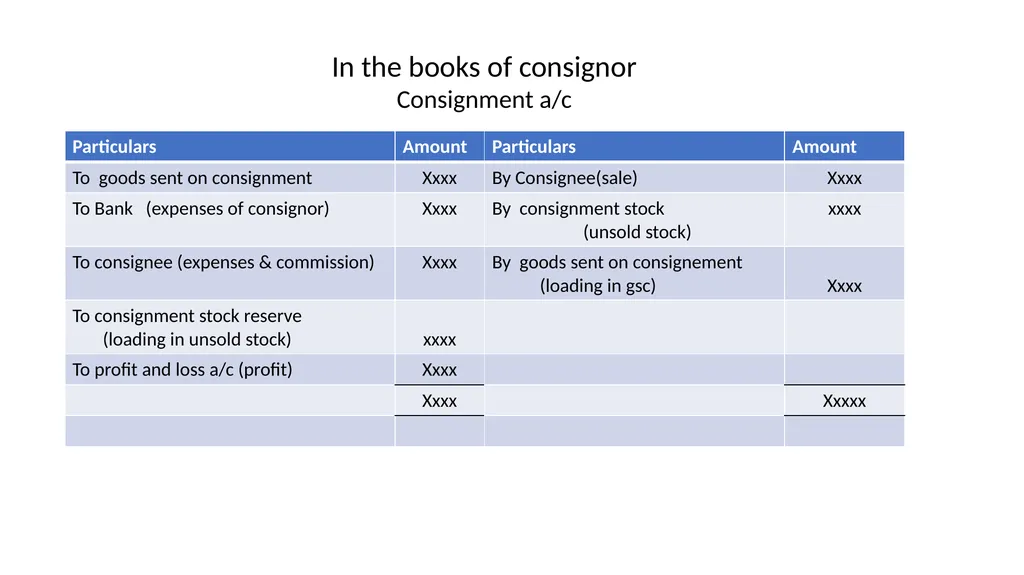
In the books of consignor
Consignment a/c<br>
18
Consignee a/c<br>
19
Goods sent on consignment a/c<br>
20
In the books of consignee
Consignor a/c Commission a/c<br>