Unit 2 Section B Poetry DOs and DONTs Tips to make sure you get it right in the Poetry section of the exam Try to come up with an initial idea or two yourself, even if you dont fully understand the poem at once or arent sure about it,
"Unit 2 Section B Poetry DOs and DON’Ts Tips to" is the property of its rightful owner. Permission is granted to
download and print the materials on this website for personal, non-commercial use only, and to display it
on your personal computer provided you do not modify the materials and that you retain all copyright
notices contained in the materials. By downloading content from our website, you accept the terms of this
agreement.
Presentation Transcript
01
Unit 2 Section B Poetry DOs and DON’Ts Tips to make sure you get it right in the Poetry section of the exam<br>
02
Try to come up with an initial idea or two yourself, even if you don’t fully understand the poem at once or aren’t sure about it, before looking for other people’s “answers” or interpretations.
Practising doing this will build your skills and your confidence. DO read through the poem yourself first, several times, to get a sense of the language and themes<br>
03
The poet’s intention is important, but so is the meaning the reader takes from the poem. ‘Babysitting’ by Gillian Clarke, for example, has been read by many critics as a metaphor for a mother experiencing post-natal depression, even though the poet herself insists there is no metaphor and that it is actually about a babysitter in charge of a child who isn’t hers. DON’T assume other people’s interpretations are automatically correct, no matter who they are<br>
04
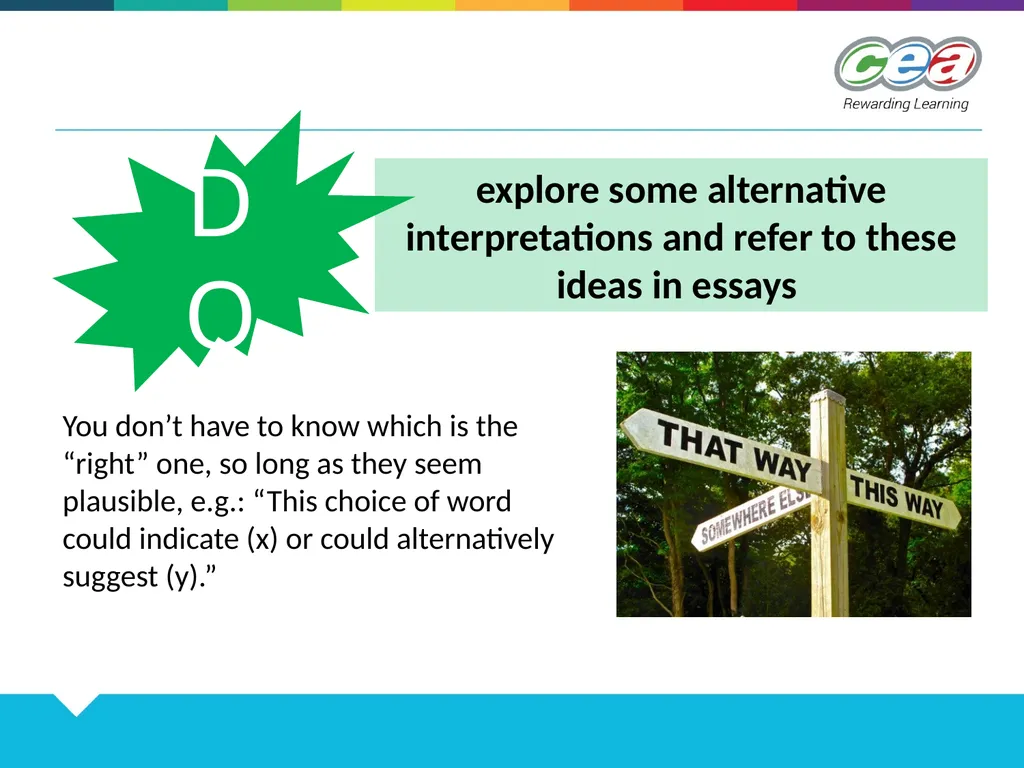
You don’t have to know which is the “right” one, so long as they seem plausible, e.g.: “This choice of word could indicate (x) or could alternatively suggest (y).” DO explore some alternative interpretations and refer to these ideas in essays<br>
05
It’s imperative to mention some, to show you understand the time and circumstances in which the poem was written, but you won’t gain marks if you simply regurgitate chunky paragraphs of facts about the poet’s life.
Instead, use contextual detail sparingly and make sure it relates to the points you are making, e.g.: how Heaney’s own religious background/experiences could perhaps colour the suspicion with which he views his subject in ‘Docker’. DON’T go overboard with the contextual information<br>
06
You can make any point provided there is a sensible basis for it within the language or structure of the poem itself. Cite the evidence to show your ability to select apt quotations that back up your argument. DO always back up the points you make with quotations or other evidence from the poem<br>
07
The more precisely you can pare quotations down, the more closely you can analyse words and their meanings.
Lists of single quoted words selected from throughout the poem – e.g. instances of forceful verbs in a poem suggesting action or violence – can allow you to quickly make a point and back it up with ample evidence, while using ellipsis can help you avoid copying out a longer quotation by letting you easily “drop” a section you don’t need. DO practise using quotations in versatile ways<br>
08
The exam is timed so you need to work efficiently, but you’ll have a clean copy of the anthology next to you so there’s no excuse for hurriedly spelling the poet’s name incorrectly or misquoting lines from the poem!
Likewise, you should be familiar with the correct spellings of the main poetic techniques so you can use these in the exam without trouble. DON’T quote inaccurately or make silly spelling mistakes!<br>
09
You could earn more marks by analysing a single word choice in effective detail than you would by generalising about a whole poem, because the first option shows your analytical skills while the second implies you lack confidence in your interpretation and can’t find suitable evidence to back up your idea. DO make sure that you avoid generalising and be as specific
as you can<br>
10
The more you repeat yourself, fill up the space with ‘big words’ that don’t mean anything or otherwise skirt around the real point, the more you will sound like you don’t actually know what you’re talking about!
Be as clear and confident as you can. If you can’t think clearly of the point you want to make, move on to another and come back to the one you got stuck on if there’s time at the end. DON’T waffle – it never works!<br>