04
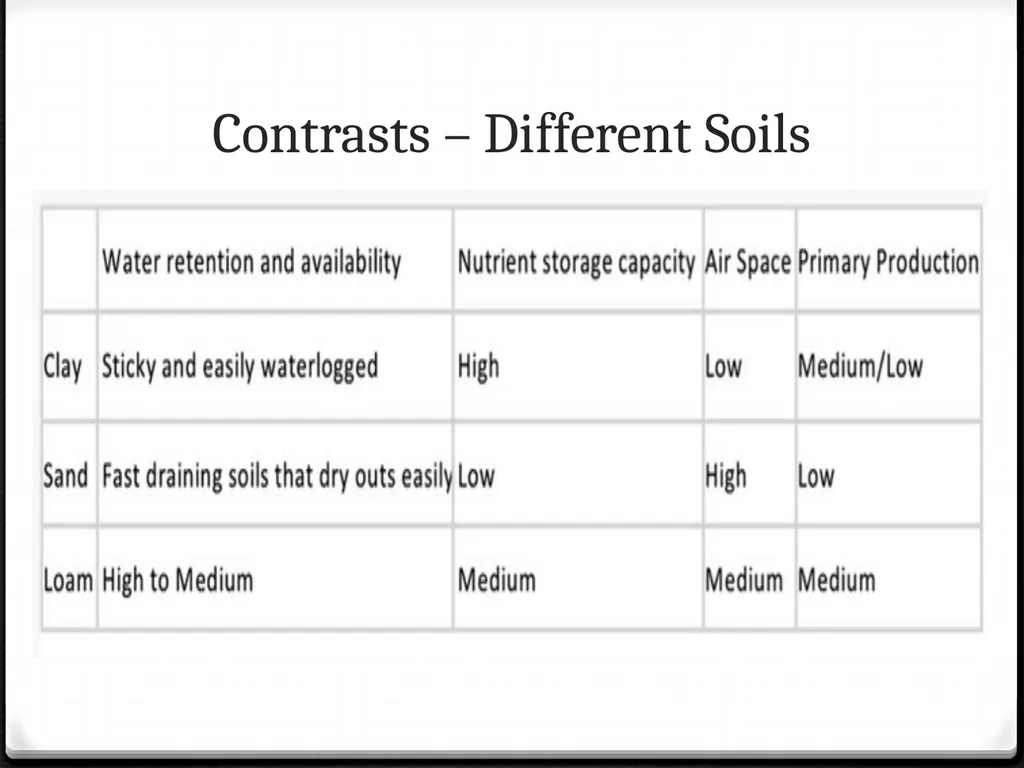
Contrasts – Different Soils<br>
05
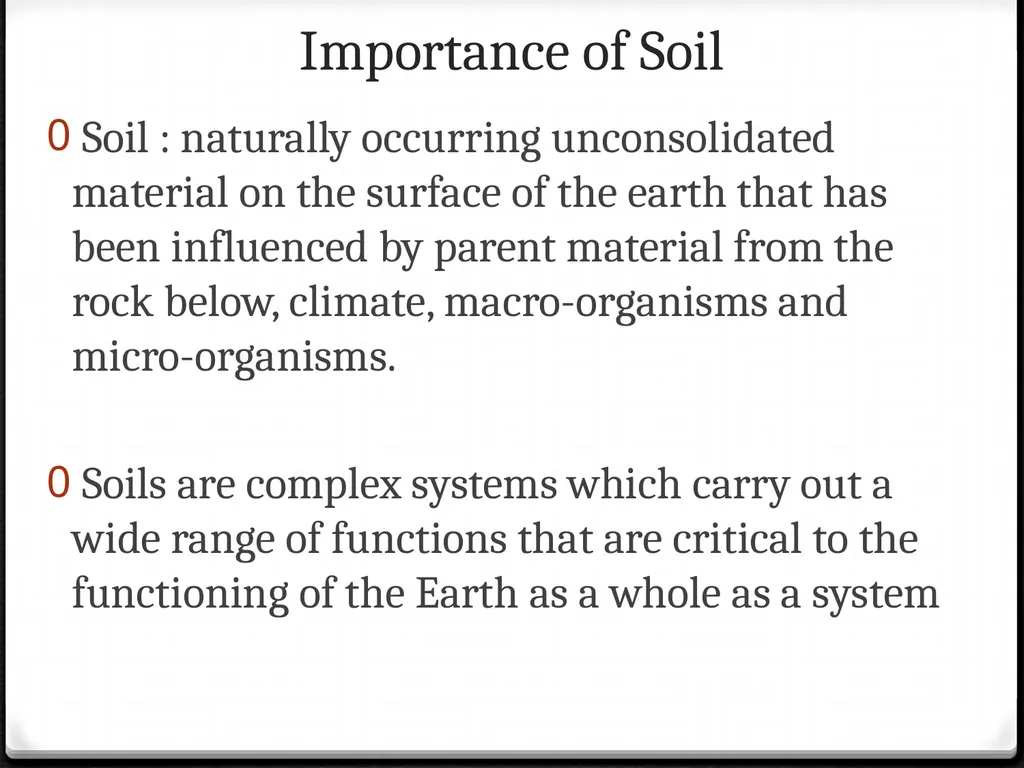
Importance of Soil Soil : naturally occurring unconsolidated material on the surface of the earth that has been influenced by parent material from the rock below, climate, macro-organisms and micro-organisms.
Soils are complex systems which carry out a wide range of functions that are critical to the functioning of the Earth as a whole as a system<br>
06
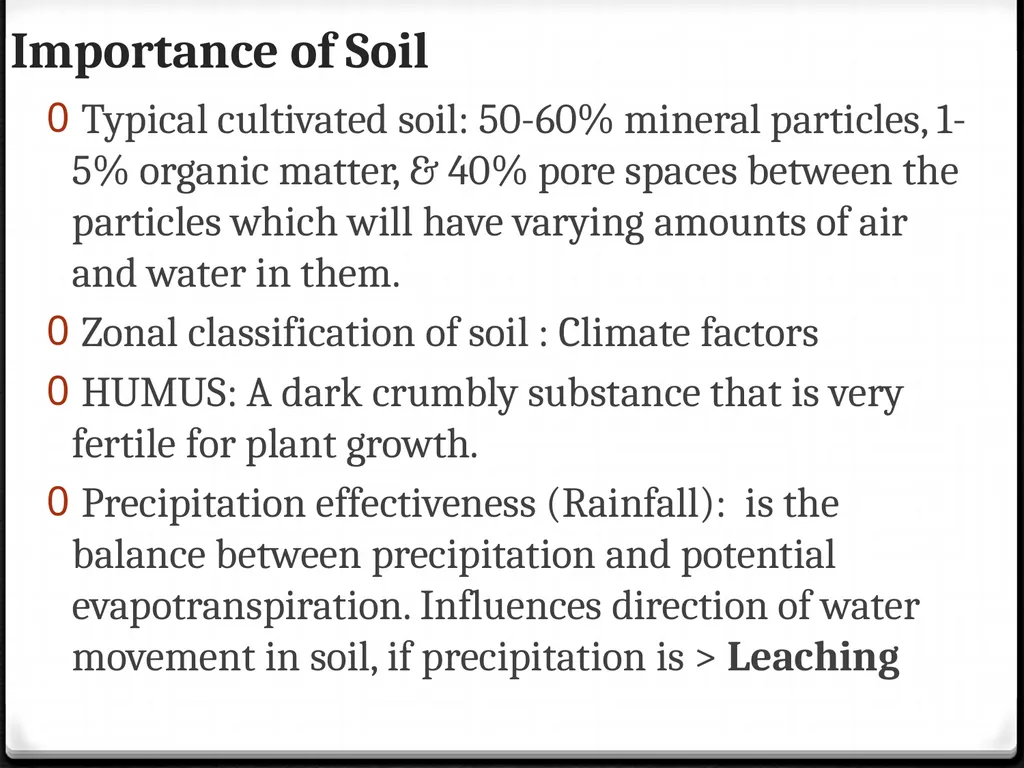
Importance of Soil Typical cultivated soil: 50-60% mineral particles, 1-5% organic matter, & 40% pore spaces between the particles which will have varying amounts of air and water in them.
Zonal classification of soil : Climate factors
HUMUS: A dark crumbly substance that is very fertile for plant growth.
Precipitation effectiveness (Rainfall): is the balance between precipitation and potential evapotranspiration. Influences direction of water movement in soil, if precipitation is > Leaching<br>
08
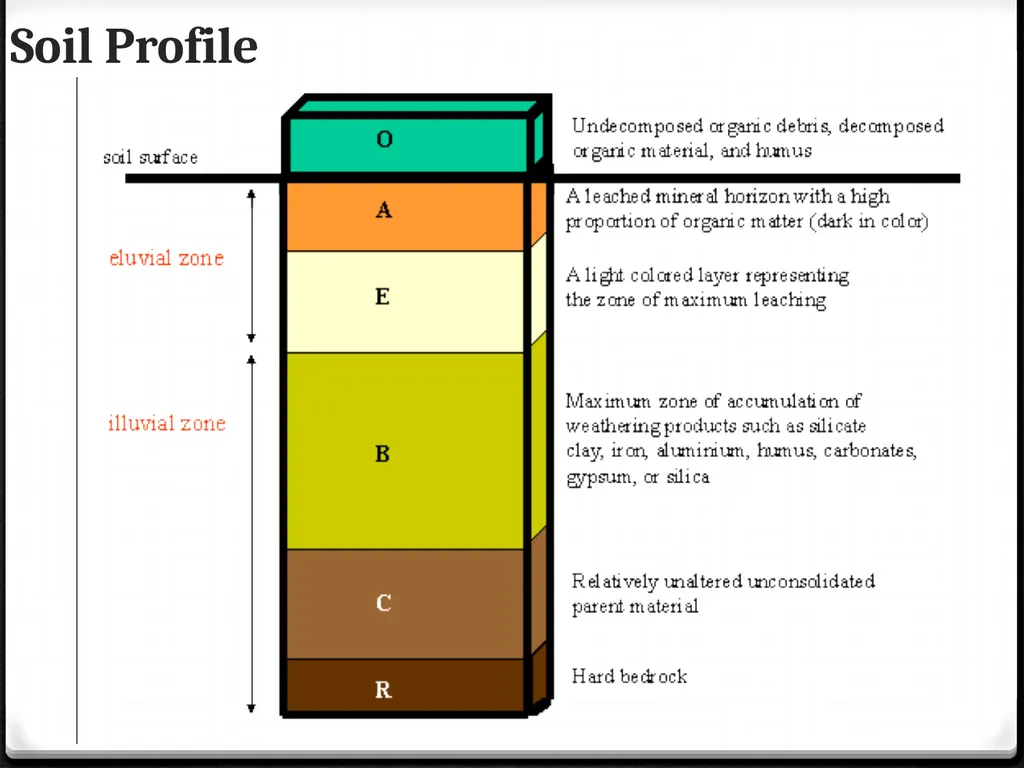
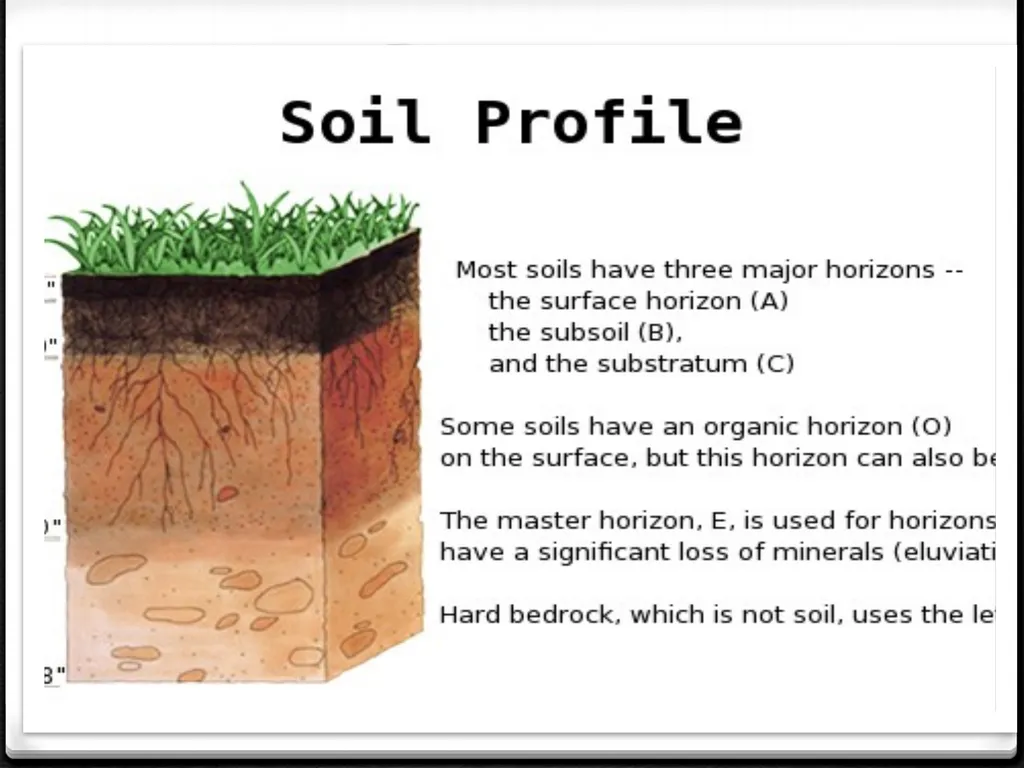
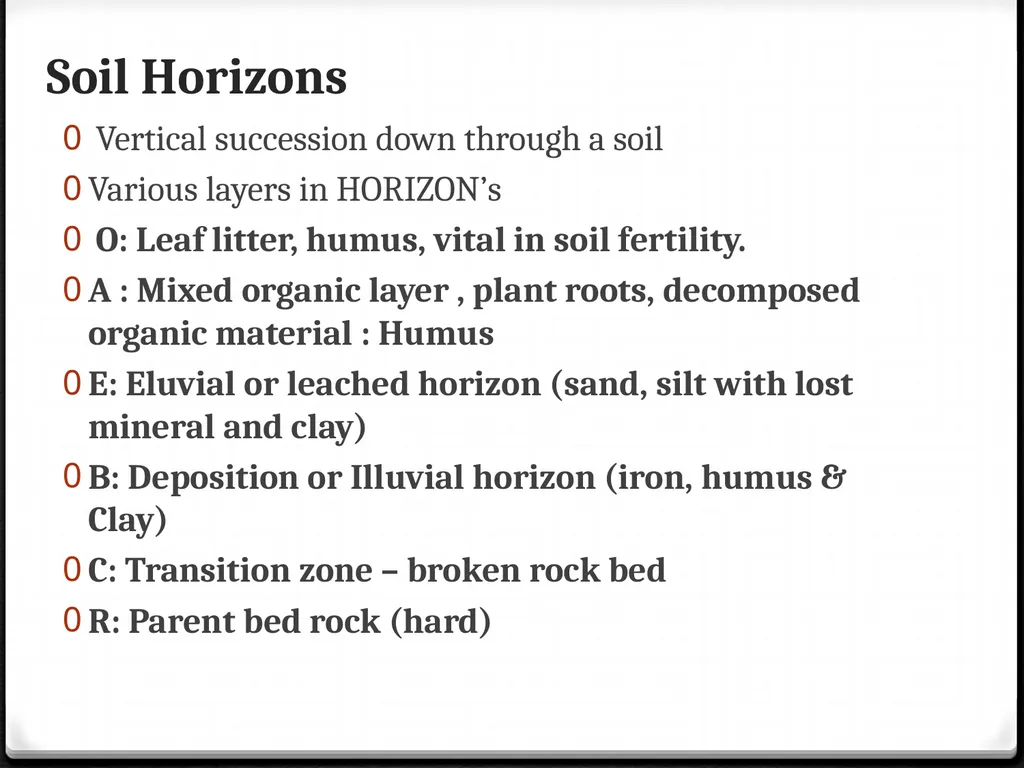
Soil Horizons Vertical succession down through a soil
Various layers in HORIZON’s
O: Leaf litter, humus, vital in soil fertility.
A : Mixed organic layer , plant roots, decomposed organic material : Humus
E: Eluvial or leached horizon (sand, silt with lost mineral and clay)
B: Deposition or Illuvial horizon (iron, humus & Clay)
C: Transition zone – broken rock bed
R: Parent bed rock (hard)<br>
09
Process of soil formation Three Process involved
Inputs
Transformation
Output<br>
10
Inputs into a soil Organic material from decaying flora and fauna
Precipitation, gases and solid particles from the atmosphere
Gases from the respiration of soil fauna
Excretion from plant roots
Minerals from the breakdown of parent material<br>
11
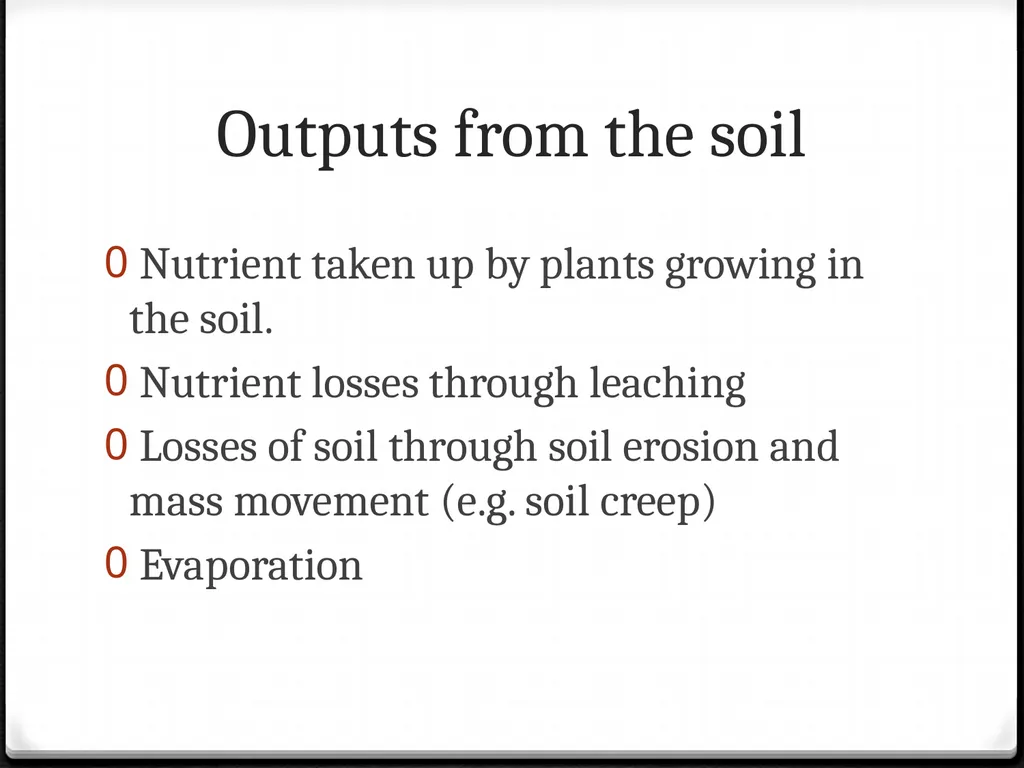
Outputs from the soil Nutrient taken up by plants growing in the soil.
Nutrient losses through leaching
Losses of soil through soil erosion and mass movement (e.g. soil creep)
Evaporation<br>
12
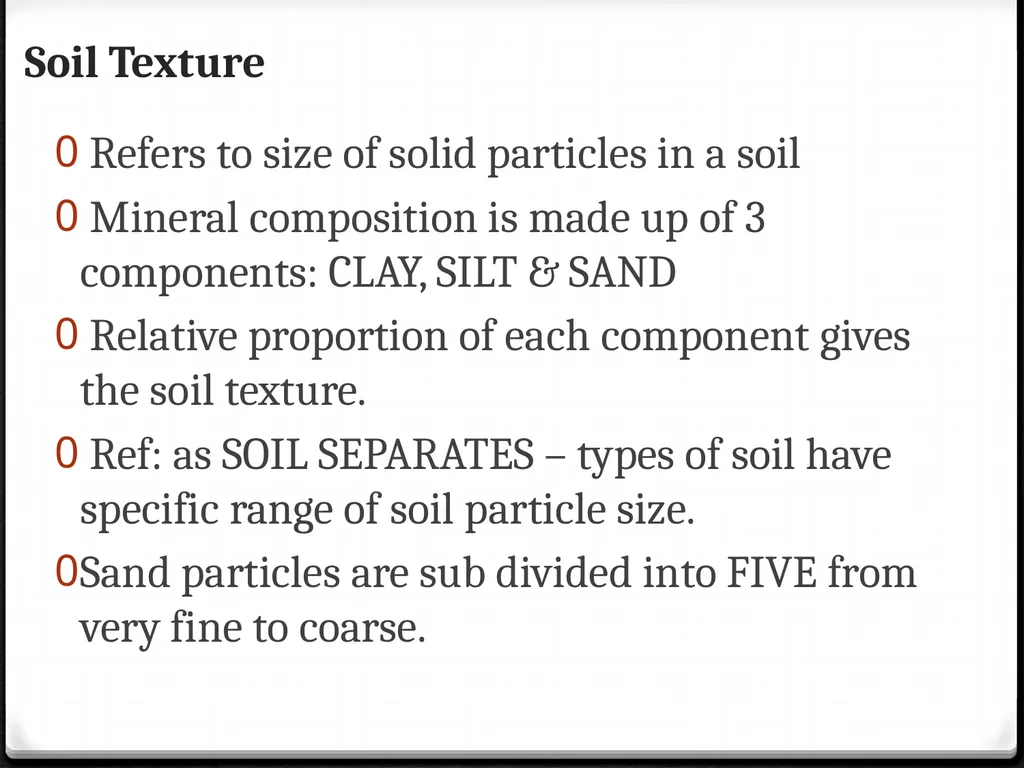
Soil Texture Refers to size of solid particles in a soil
Mineral composition is made up of 3 components: CLAY, SILT & SAND
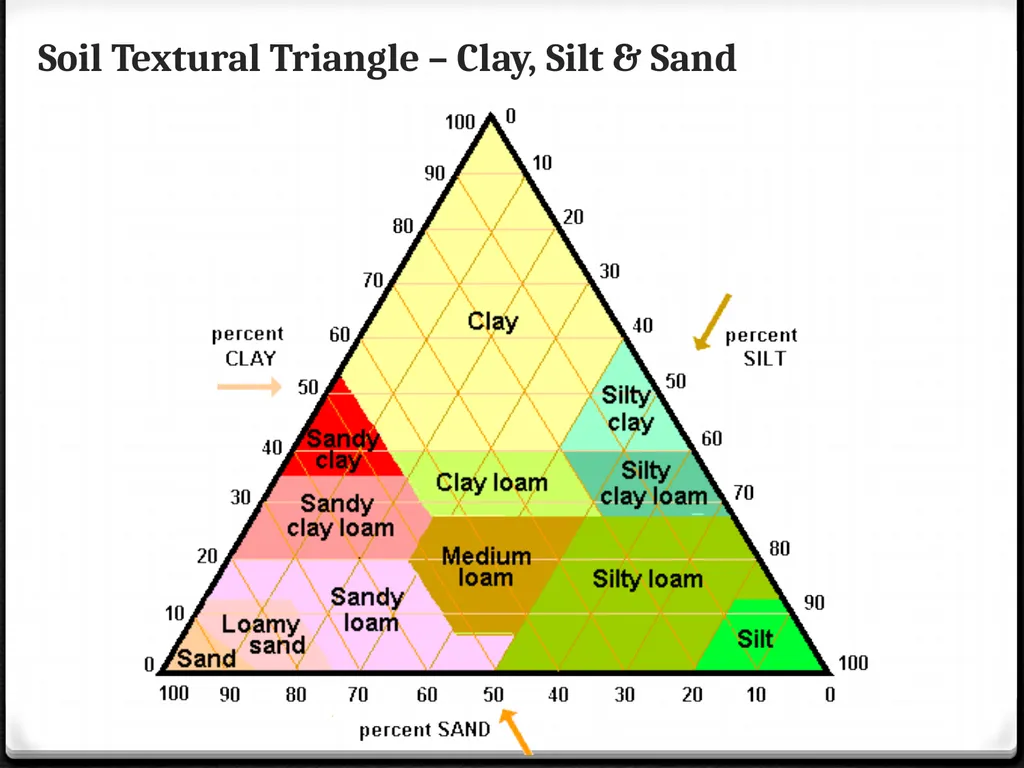
Relative proportion of each component gives the soil texture.
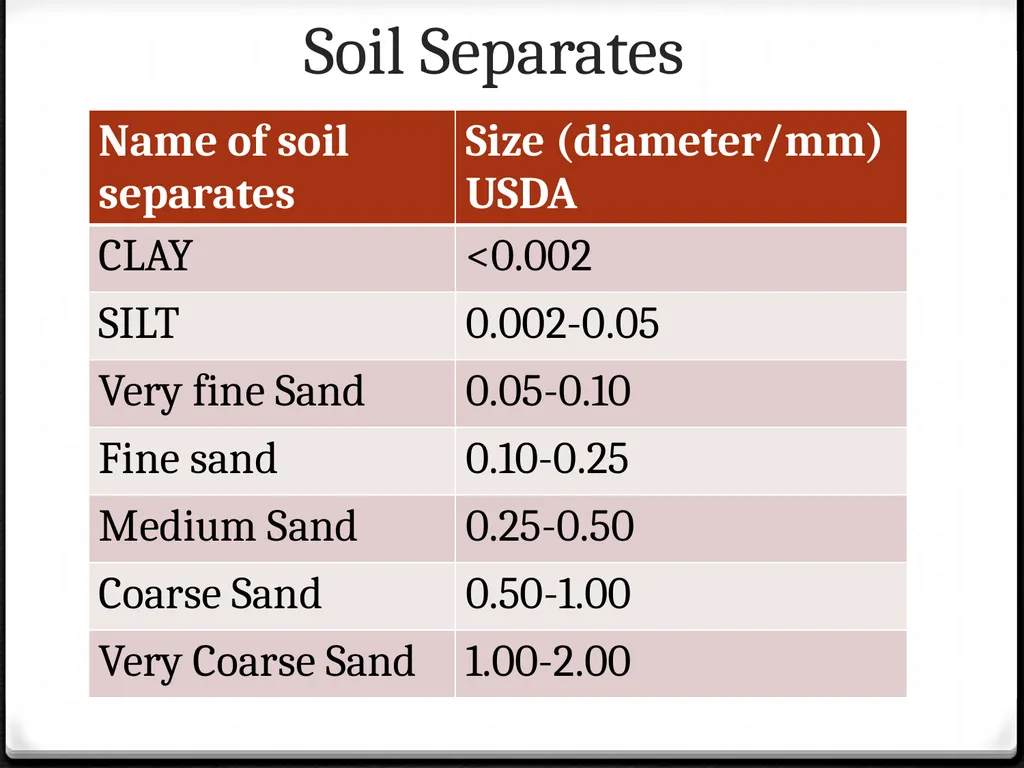
Ref: as SOIL SEPARATES – types of soil have specific range of soil particle size.
Sand particles are sub divided into FIVE from very fine to coarse.<br>
14
Soil Textural Triangle – Clay, Silt & Sand<br>
15
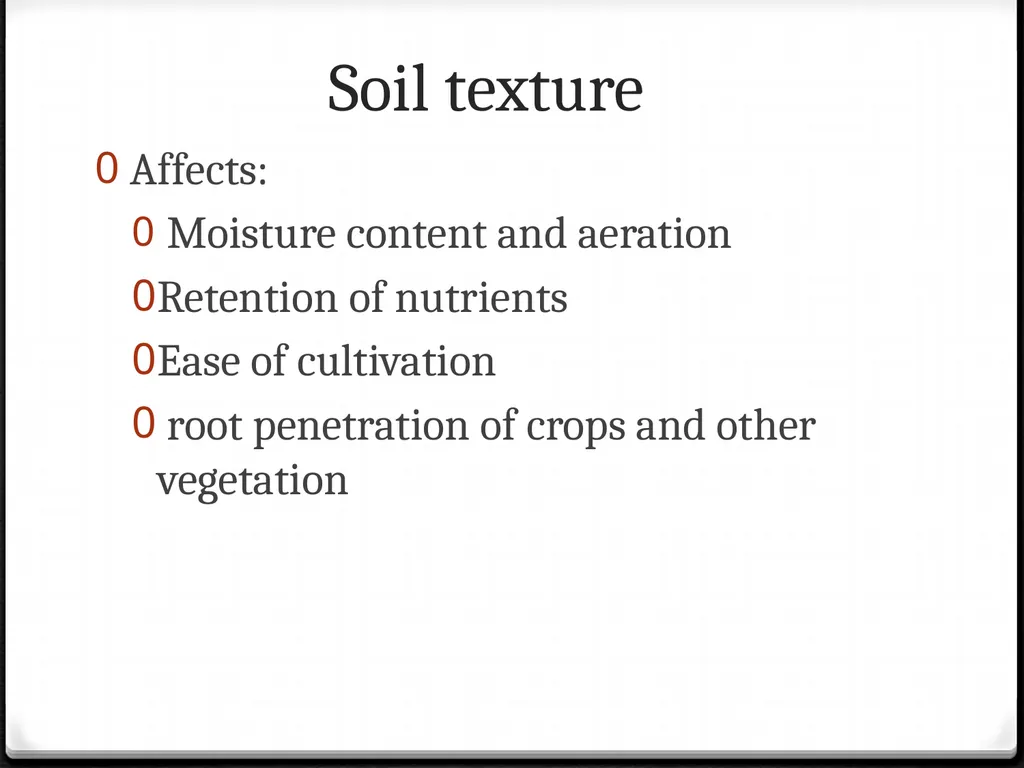
Soil texture Affects:
Moisture content and aeration
Retention of nutrients
Ease of cultivation
root penetration of crops and other vegetation<br>
16
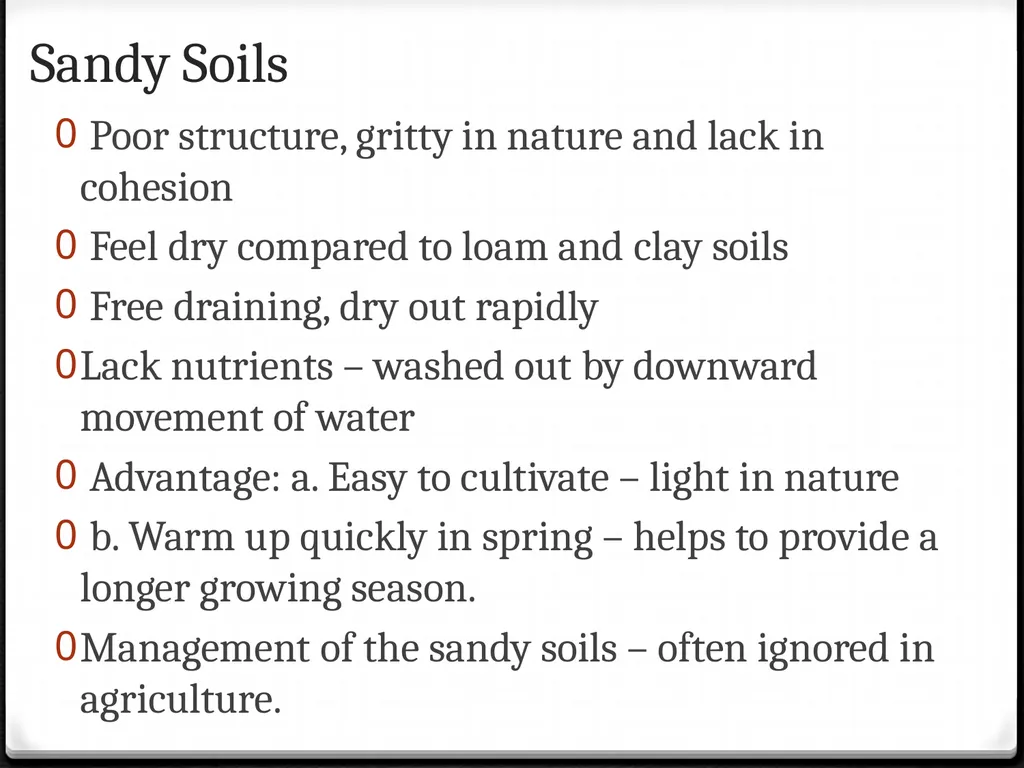
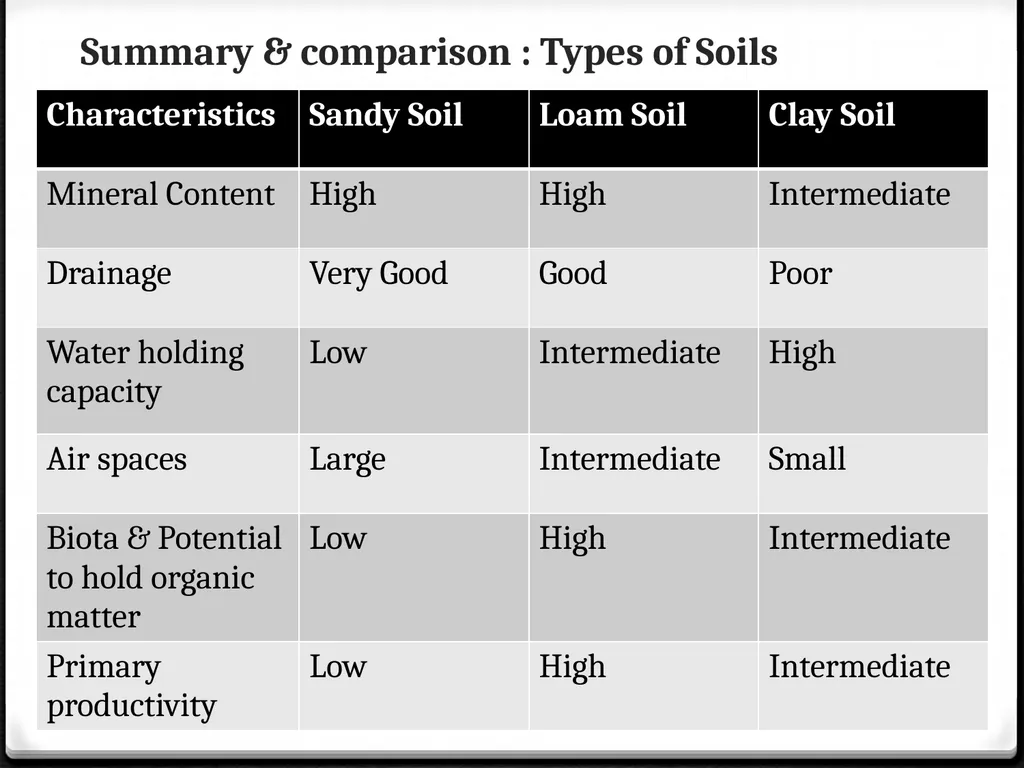
Sandy Soils Poor structure, gritty in nature and lack in cohesion
Feel dry compared to loam and clay soils
Free draining, dry out rapidly
Lack nutrients – washed out by downward movement of water
Advantage: a. Easy to cultivate – light in nature
b. Warm up quickly in spring – helps to provide a longer growing season.
Management of the sandy soils – often ignored in agriculture.<br>
17
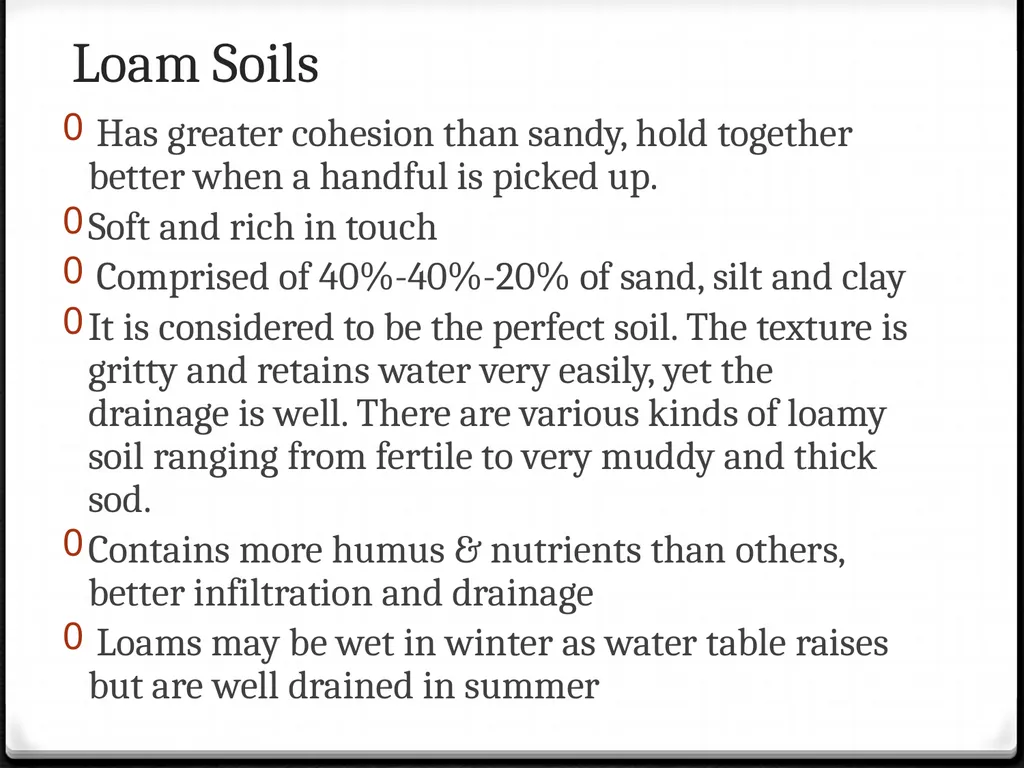
Loam Soils Has greater cohesion than sandy, hold together better when a handful is picked up.
Soft and rich in touch
Comprised of 40%-40%-20% of sand, silt and clay
It is considered to be the perfect soil. The texture is gritty and retains water very easily, yet the drainage is well. There are various kinds of loamy soil ranging from fertile to very muddy and thick sod.
Contains more humus & nutrients than others, better infiltration and drainage
Loams may be wet in winter as water table raises but are well drained in summer<br>
18
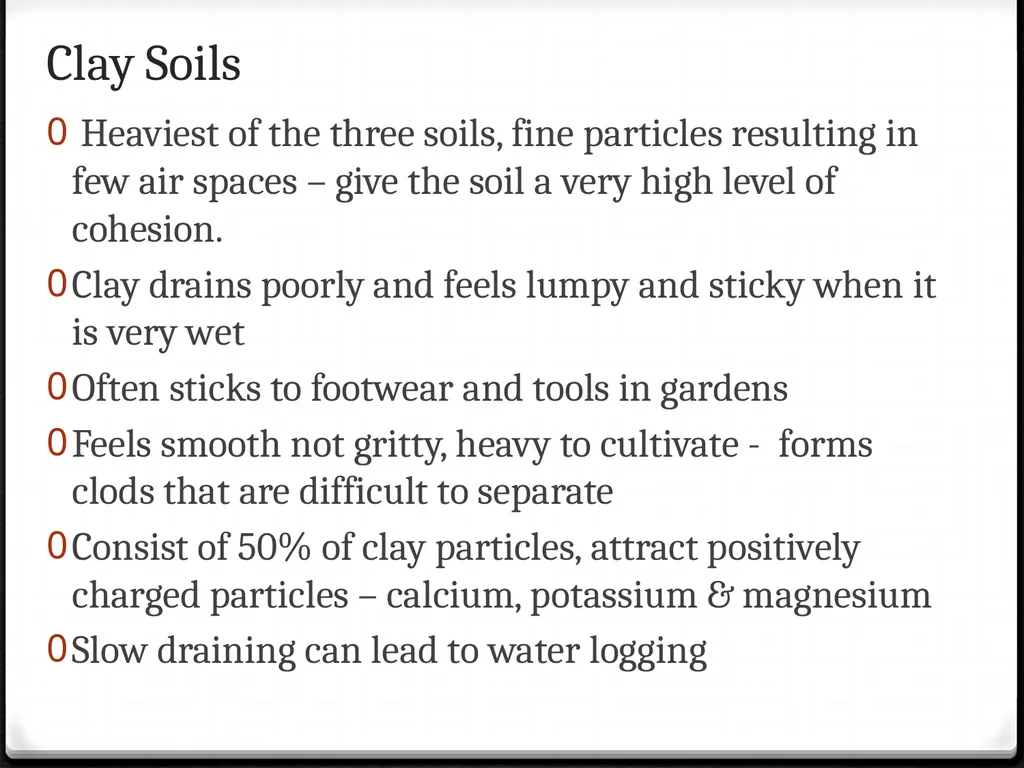
Clay Soils Heaviest of the three soils, fine particles resulting in few air spaces – give the soil a very high level of cohesion.
Clay drains poorly and feels lumpy and sticky when it is very wet
Often sticks to footwear and tools in gardens
Feels smooth not gritty, heavy to cultivate - forms clods that are difficult to separate
Consist of 50% of clay particles, attract positively charged particles – calcium, potassium & magnesium
Slow draining can lead to water logging<br>
19
Summary & comparison : Types of Soils<br>
20
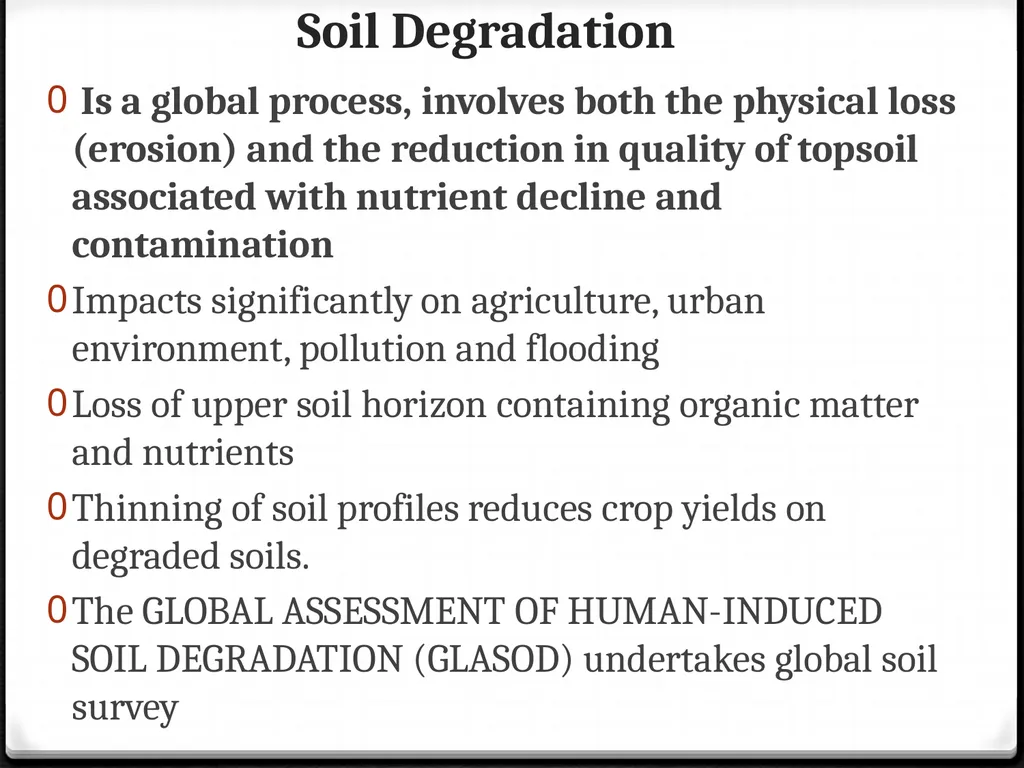
Soil Degradation Is a global process, involves both the physical loss (erosion) and the reduction in quality of topsoil associated with nutrient decline and contamination
Impacts significantly on agriculture, urban environment, pollution and flooding
Loss of upper soil horizon containing organic matter and nutrients
Thinning of soil profiles reduces crop yields on degraded soils.
The GLOBAL ASSESSMENT OF HUMAN-INDUCED SOIL DEGRADATION (GLASOD) undertakes global soil survey<br>
21
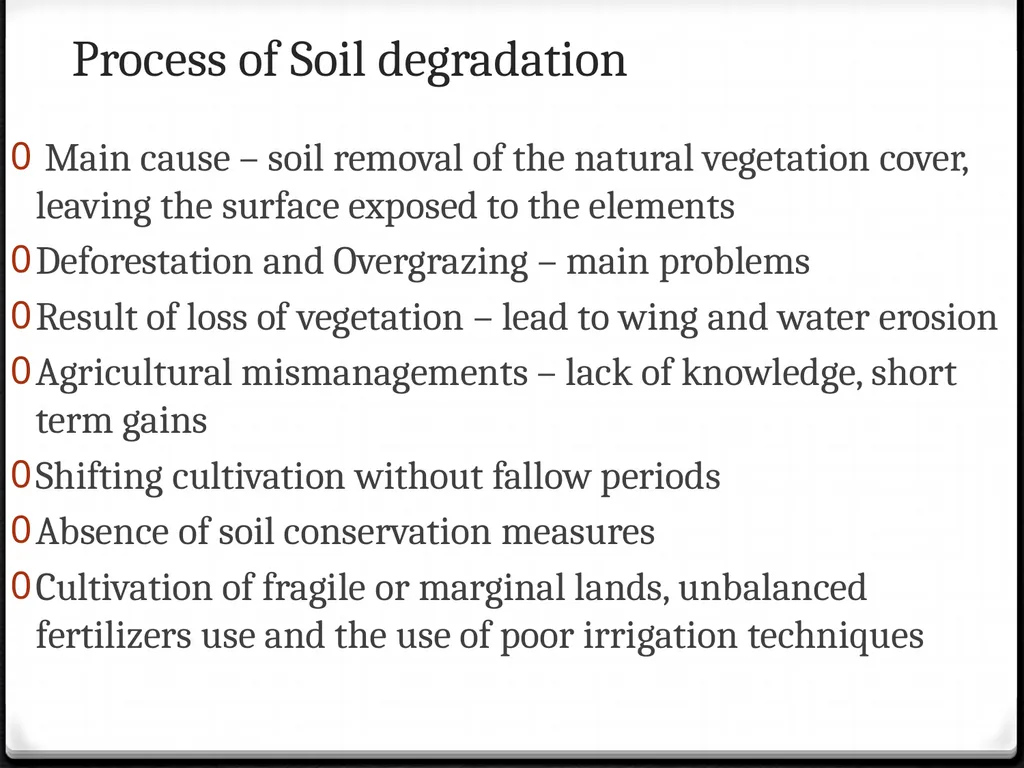
Process of Soil degradation Main cause – soil removal of the natural vegetation cover, leaving the surface exposed to the elements
Deforestation and Overgrazing – main problems
Result of loss of vegetation – lead to wing and water erosion
Agricultural mismanagements – lack of knowledge, short term gains
Shifting cultivation without fallow periods
Absence of soil conservation measures
Cultivation of fragile or marginal lands, unbalanced fertilizers use and the use of poor irrigation techniques<br>
22
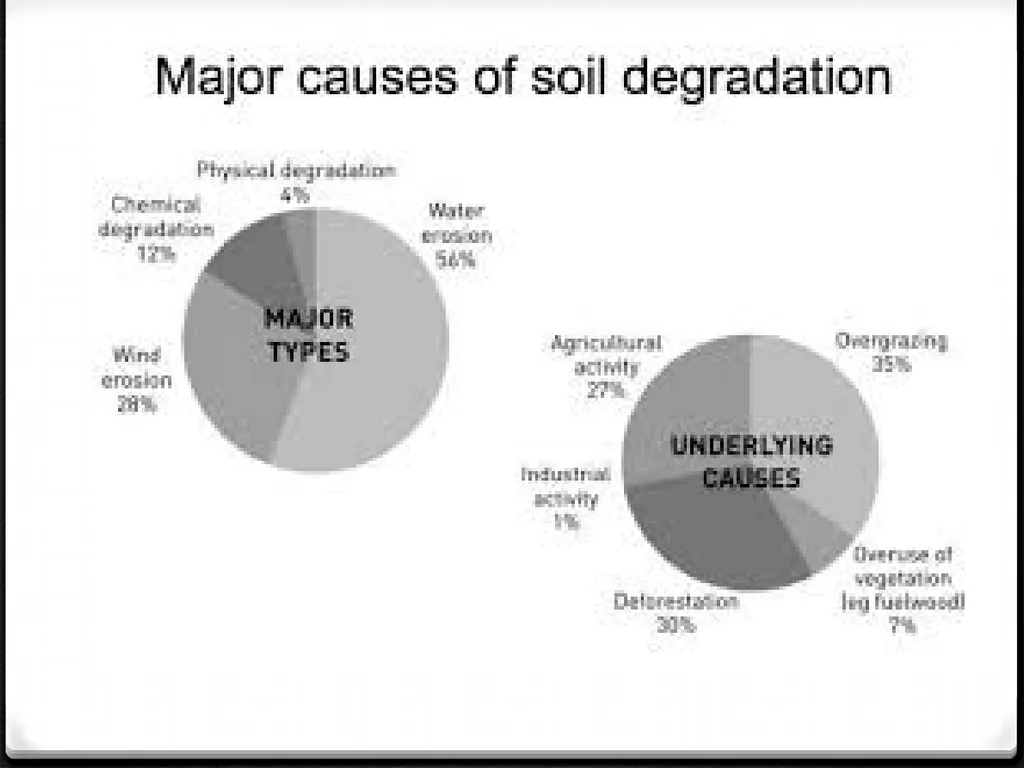
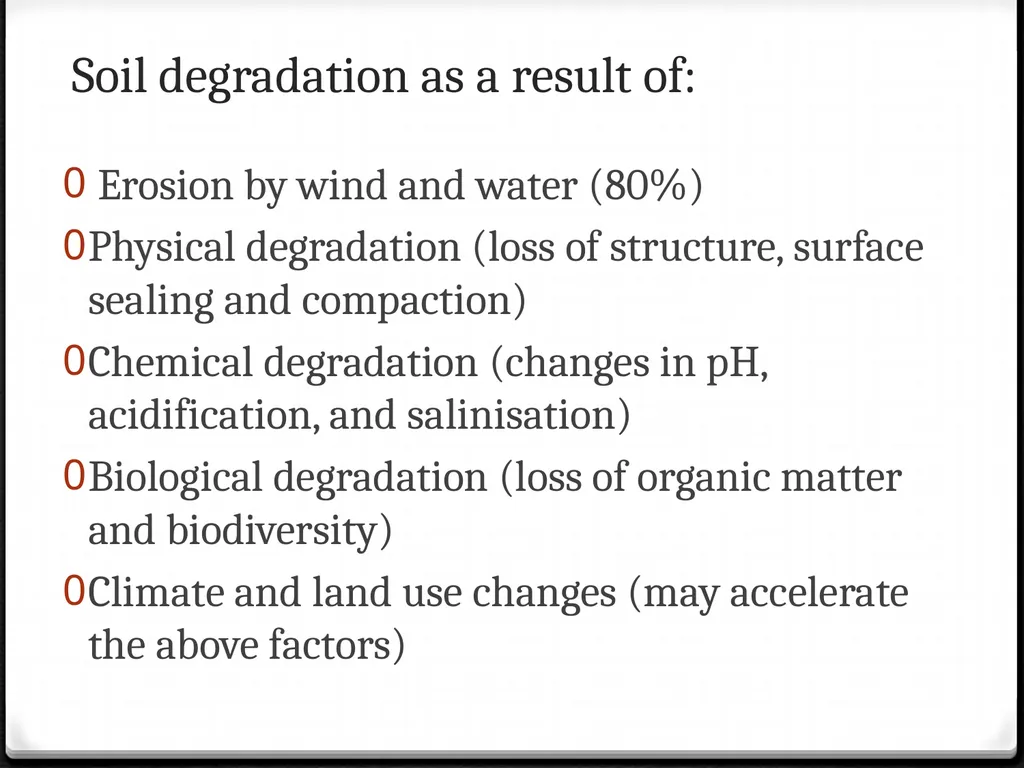
Soil degradation as a result of: Erosion by wind and water (80%)
Physical degradation (loss of structure, surface sealing and compaction)
Chemical degradation (changes in pH, acidification, and salinisation)
Biological degradation (loss of organic matter and biodiversity)
Climate and land use changes (may accelerate the above factors)<br>
23
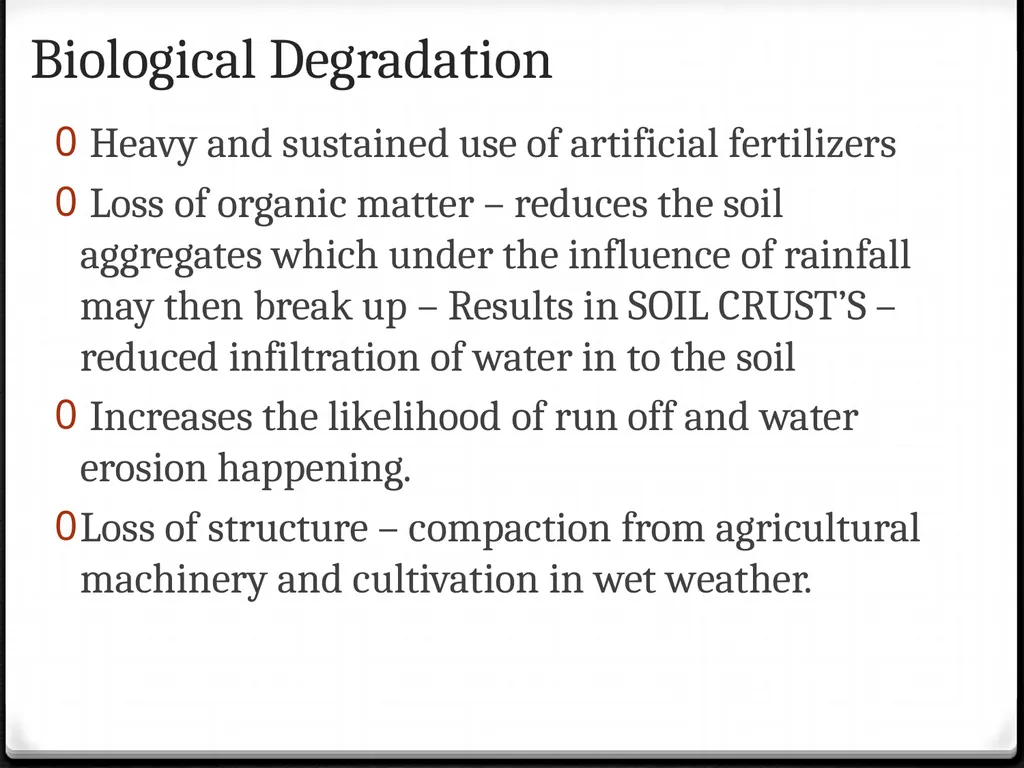
Biological Degradation Heavy and sustained use of artificial fertilizers
Loss of organic matter – reduces the soil aggregates which under the influence of rainfall may then break up – Results in SOIL CRUST’S – reduced infiltration of water in to the soil
Increases the likelihood of run off and water erosion happening.
Loss of structure – compaction from agricultural machinery and cultivation in wet weather.<br>
24
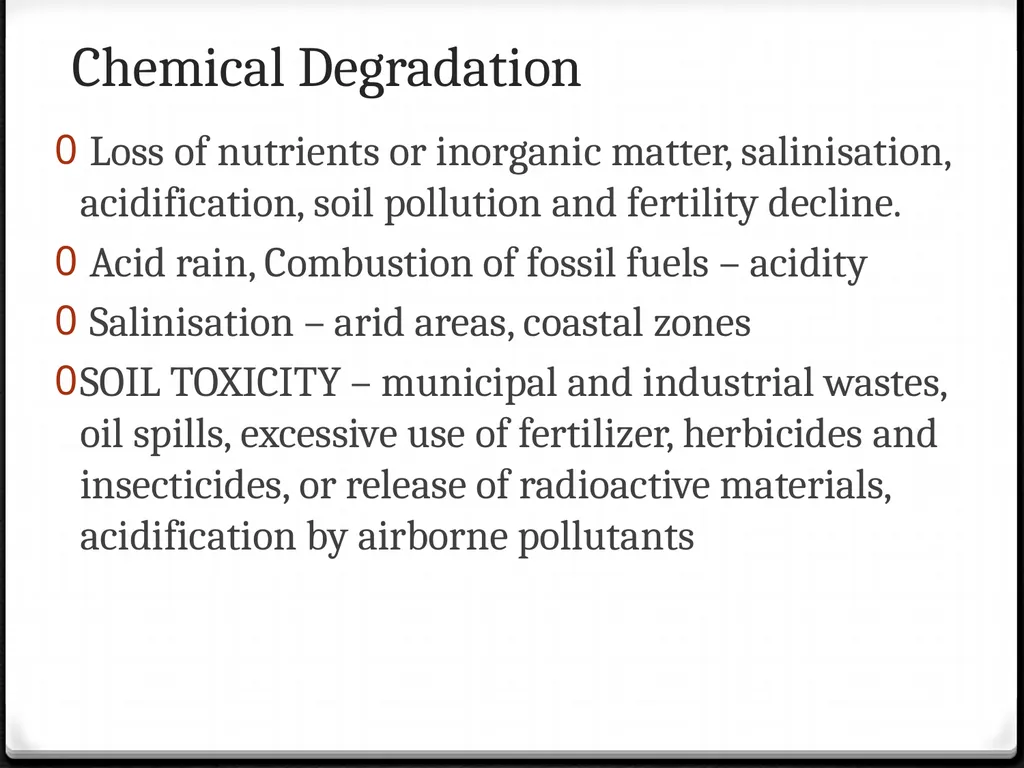
Chemical Degradation Loss of nutrients or inorganic matter, salinisation, acidification, soil pollution and fertility decline.
Acid rain, Combustion of fossil fuels – acidity
Salinisation – arid areas, coastal zones
SOIL TOXICITY – municipal and industrial wastes, oil spills, excessive use of fertilizer, herbicides and insecticides, or release of radioactive materials, acidification by airborne pollutants<br>
25
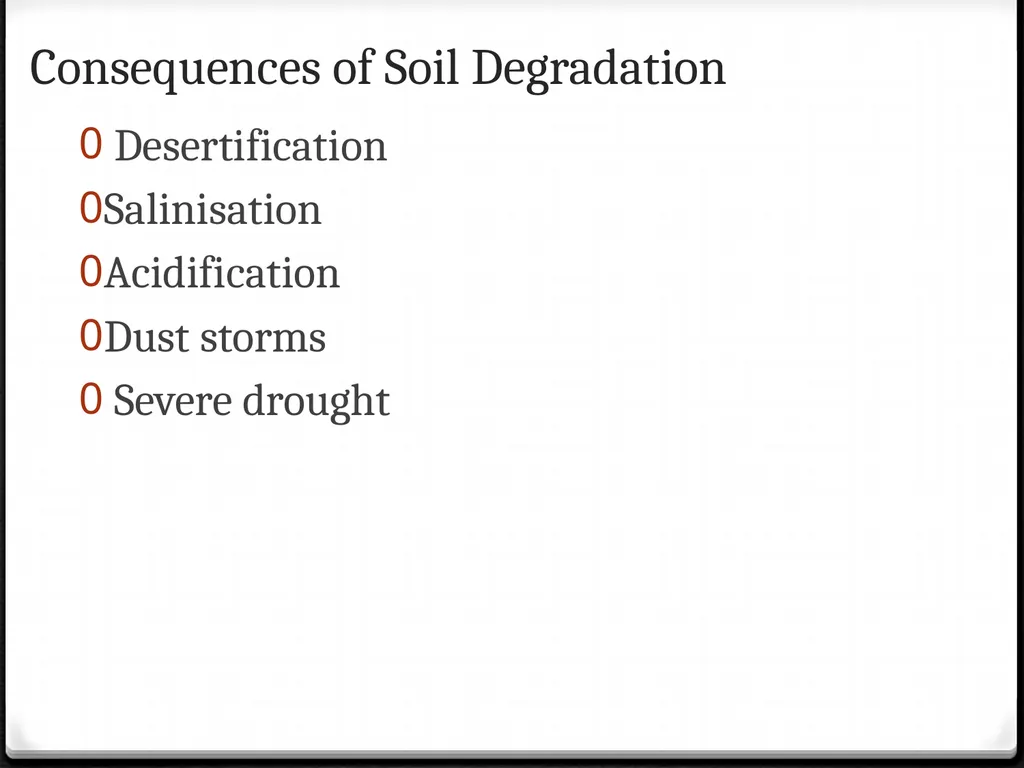
Consequences of Soil Degradation Desertification
Salinisation
Acidification
Dust storms
Severe drought<br>
26
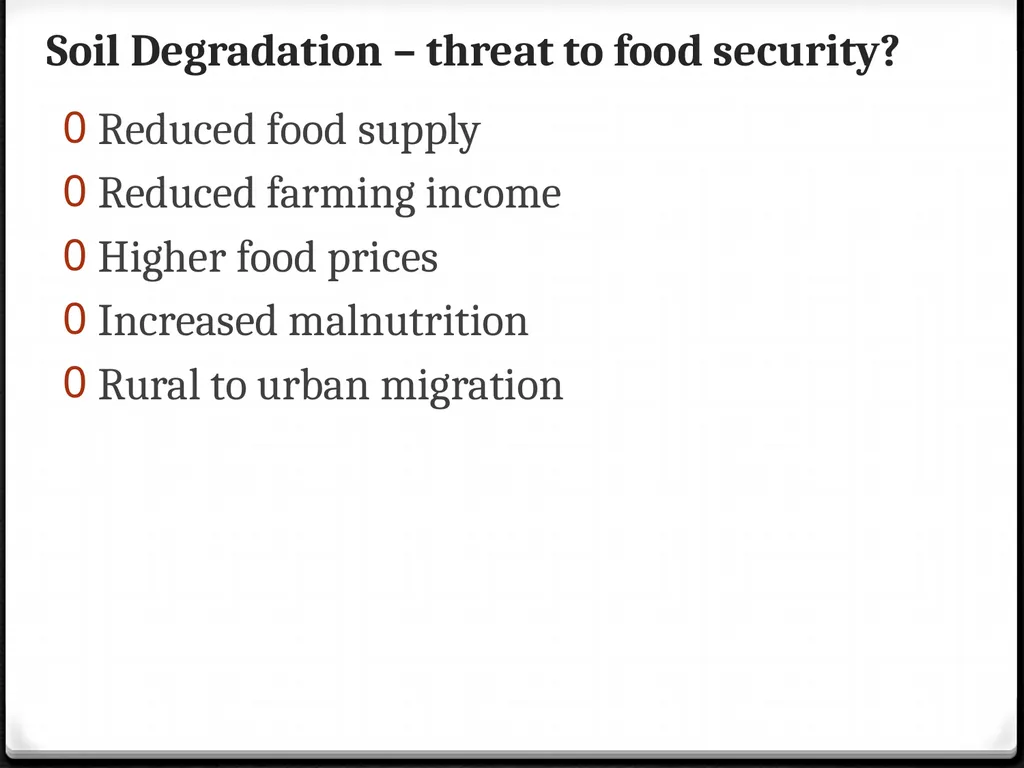
Soil Degradation – threat to food security? Reduced food supply
Reduced farming income
Higher food prices
Increased malnutrition
Rural to urban migration<br>
27
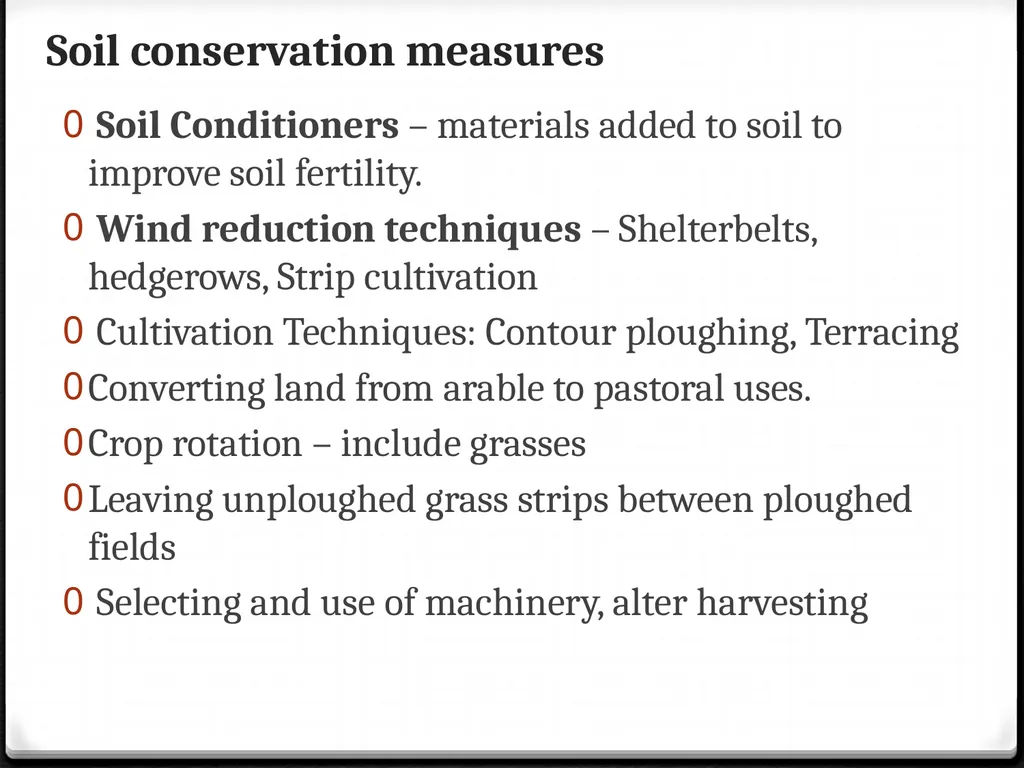
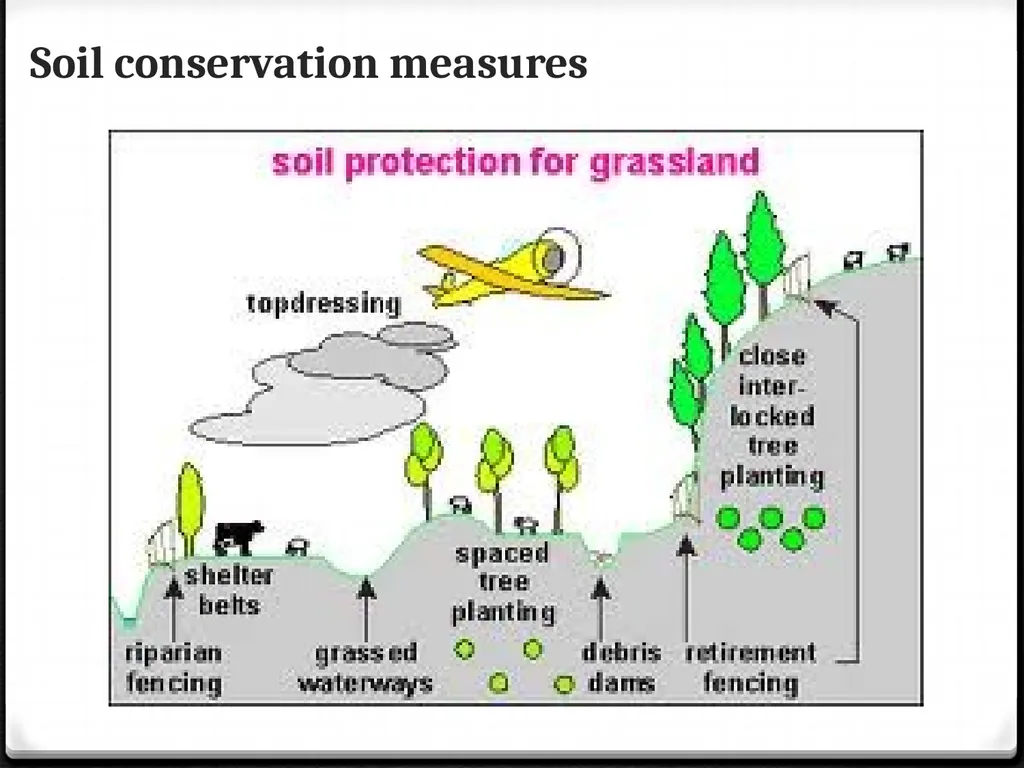
Soil conservation measures Soil Conditioners – materials added to soil to improve soil fertility.
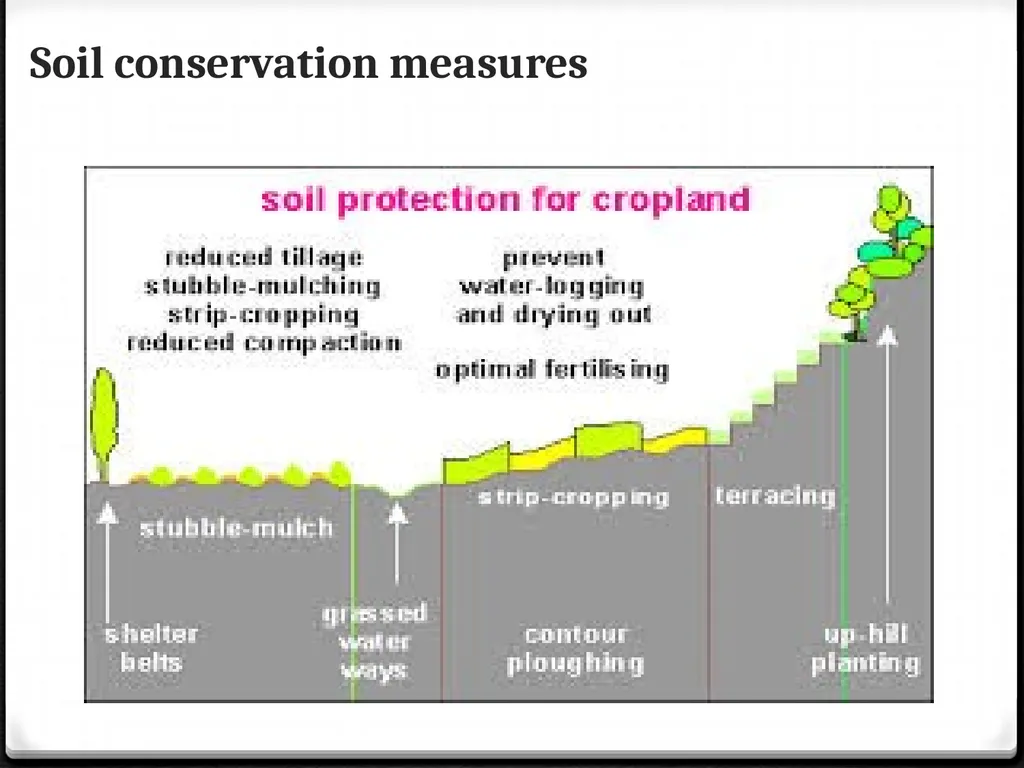
Wind reduction techniques – Shelterbelts, hedgerows, Strip cultivation
Cultivation Techniques: Contour ploughing, Terracing
Converting land from arable to pastoral uses.
Crop rotation – include grasses
Leaving unploughed grass strips between ploughed fields
Selecting and use of machinery, alter harvesting<br>
28
Soil conservation measures<br>
29
Soil conservation measures<br>
30
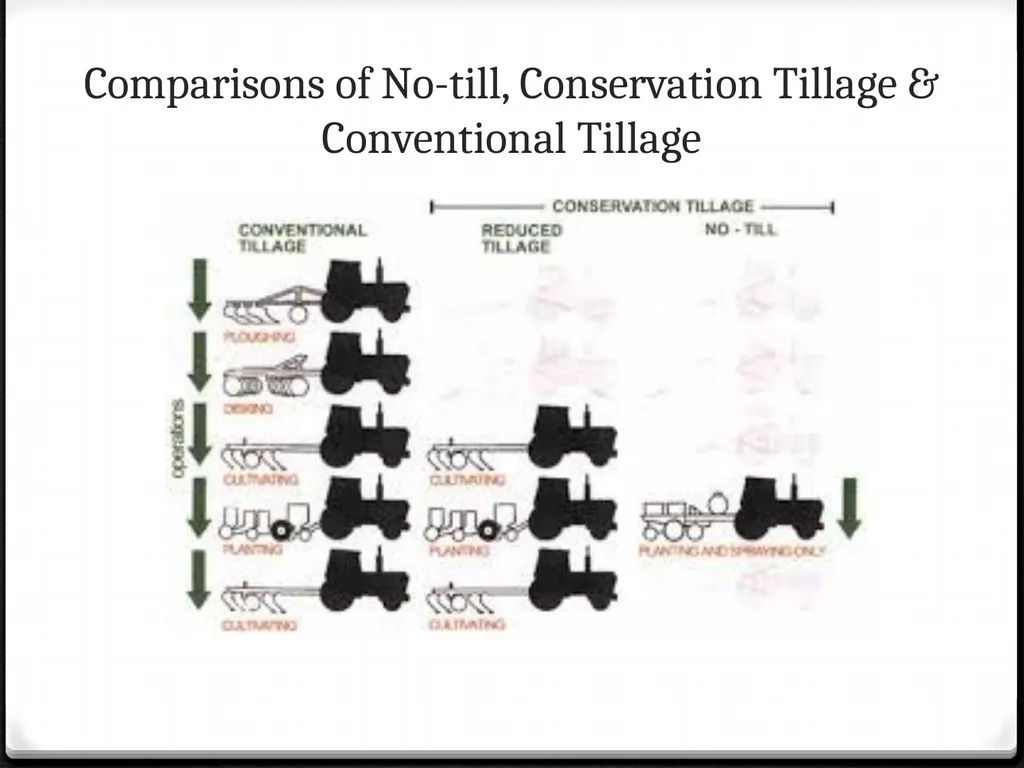
Comparisons of No-till, Conservation Tillage & Conventional Tillage<br>
31
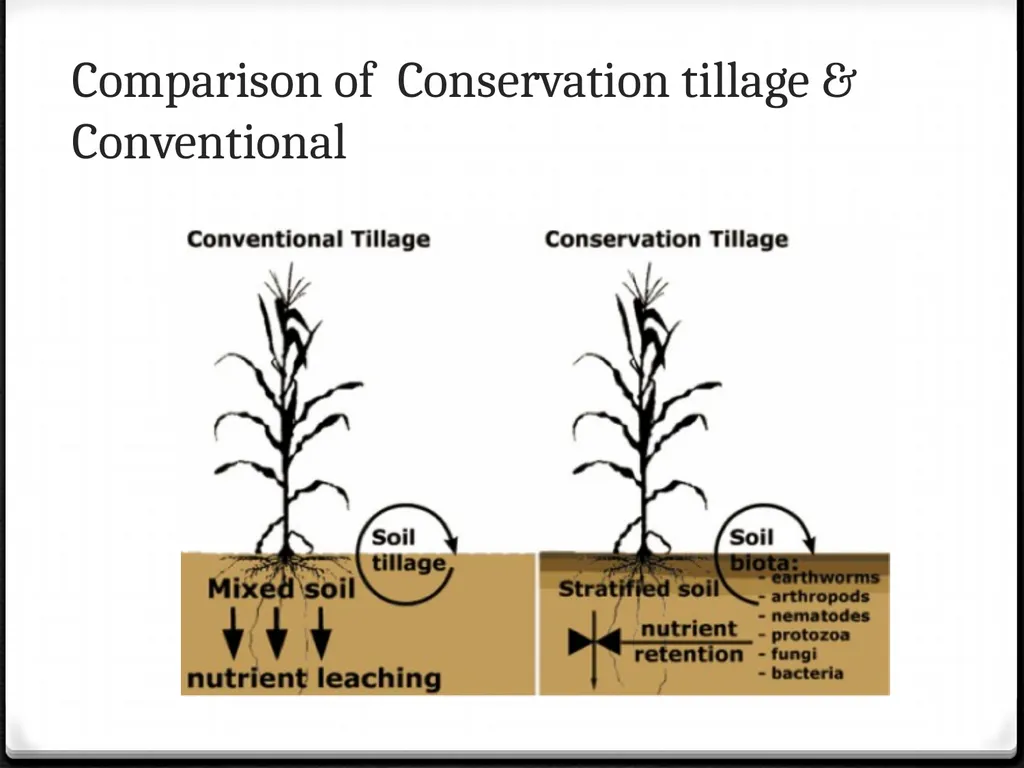
Comparison of Conservation tillage & Conventional<br>
32
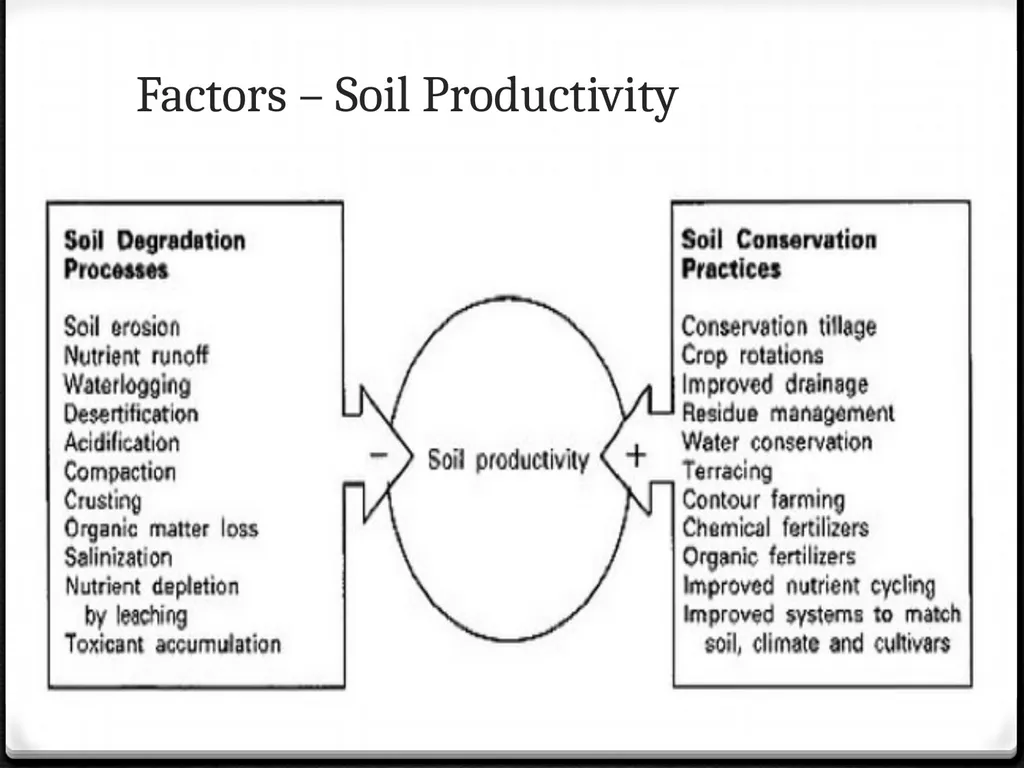
Factors – Soil Productivity<br>
33
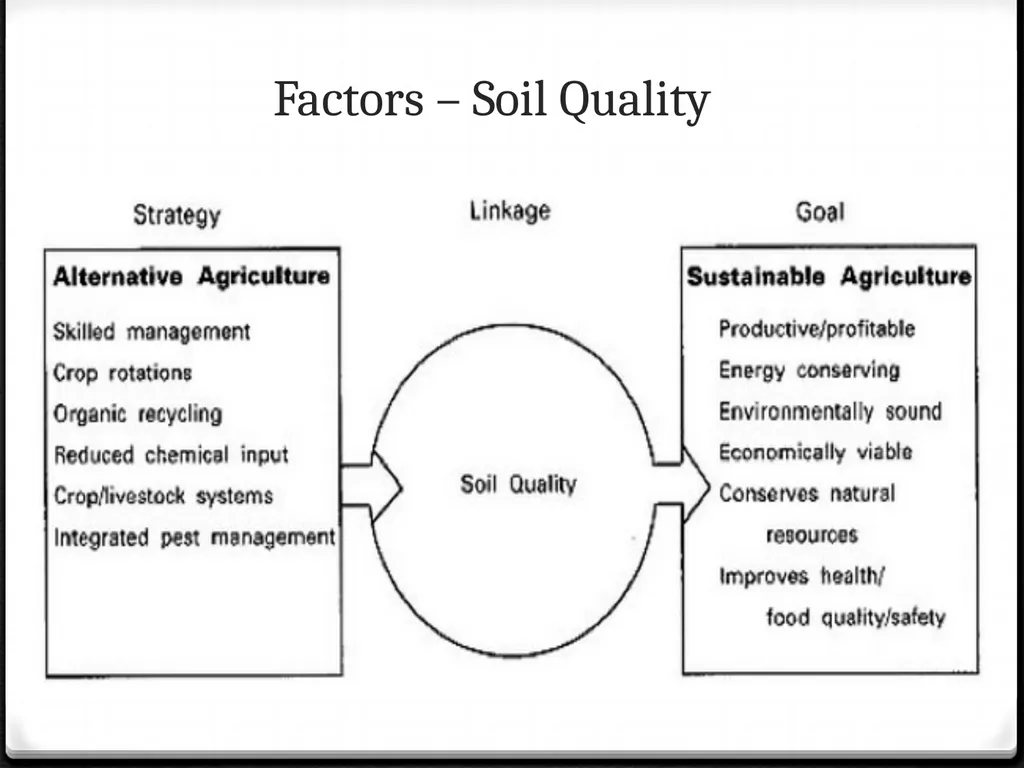
Factors – Soil Quality<br>
34
THANK YOU DEPARTMENT OF GEOGRAPHY
SGGSJGOVERNMENT COLLEGE
PAONTA SAHIB<br>