
United Methodist Ecumenism 101 Rev. Dai Morgan


Description: United Methodist Ecumenism 101 Rev. Dai Morgan Western Pennsylvania Annual Conference United Methodism and Ecumenism Getting to know the opposite sects OUTLINE: UM Ecumenism 101 Definition Mandate Basic Principles History Focus on UMC
Related Topics
Download Presentation
"United Methodist Ecumenism 101 Rev. Dai Morgan" is the property of its rightful owner. Permission is granted to download and print the materials on this website for personal, non-commercial use only, and to display it on your personal computer provided you do not modify the materials and that you retain all copyright notices contained in the materials. By downloading content from our website, you accept the terms of this agreement.
Presentation Transcript
slide1. United Methodist
Ecumenism 101 Rev. Dai Morgan
Western Pennsylvania Annual Conference<br>
slide2. United Methodism and Ecumenism Getting to know
the opposite sects<br>
slide3. OUTLINE: UM Ecumenism 101 Definition
Mandate
Basic Principles
History
Focus on UMC
Practical Considerations
Conclusion<br>
slide4. Etymology Ecumenical
Oikoumenikos
Dwelling/family + earth/world<br>
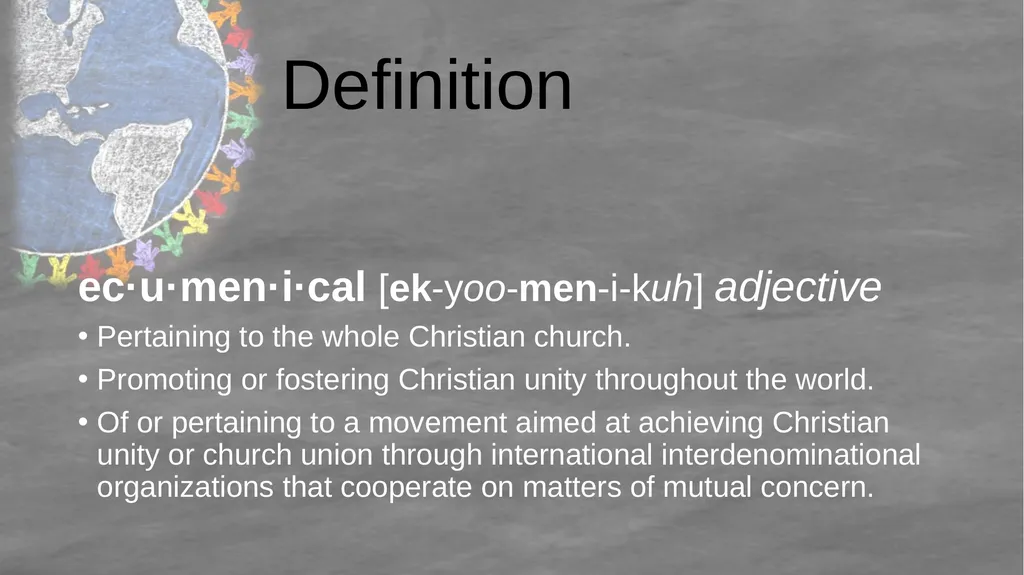
slide5. Definition ec·u·men·i·cal [ek-yoo-men-i-kuh] adjective
Pertaining to the whole Christian church.
Promoting or fostering Christian unity throughout the world.
Of or pertaining to a movement aimed at achieving Christian unity or church union through international interdenominational organizations that cooperate on matters of mutual concern.<br>
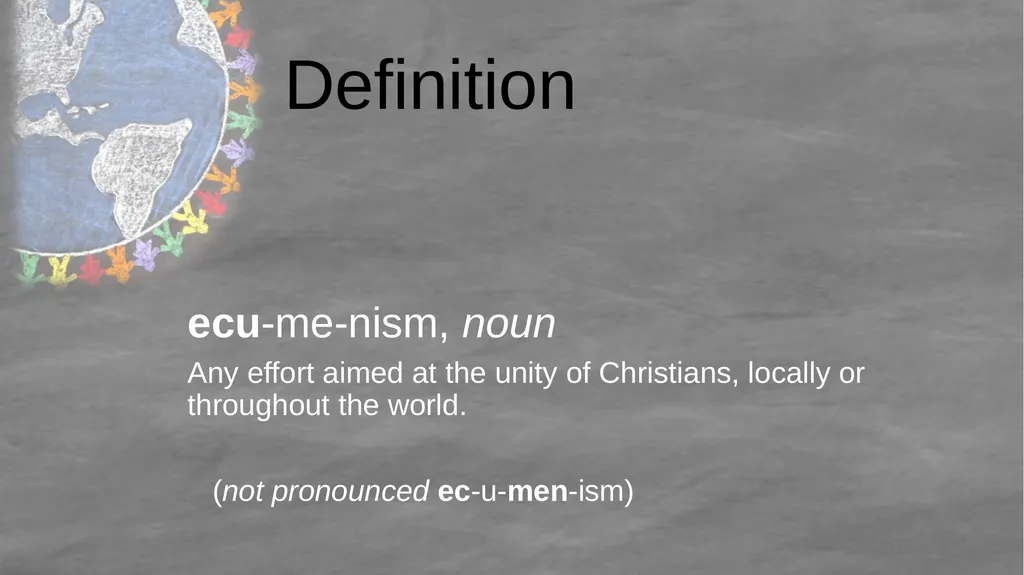
slide6. Definition ecu-me-nism, noun
Any effort aimed at the unity of Christians, locally or throughout the world.
(not pronounced ec-u-men-ism)<br>
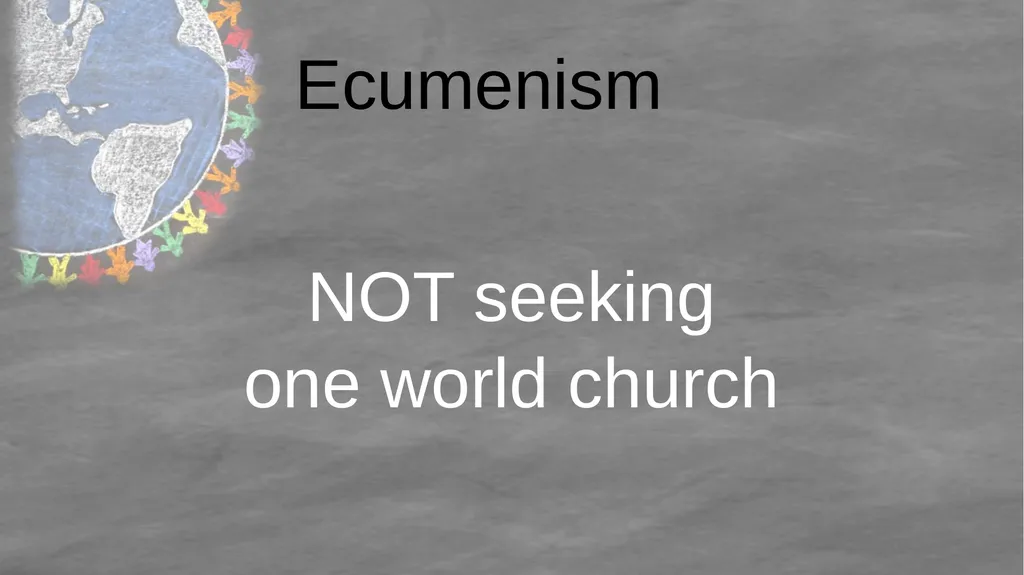
slide7. Ecumenism NOT seeking
one world church<br>
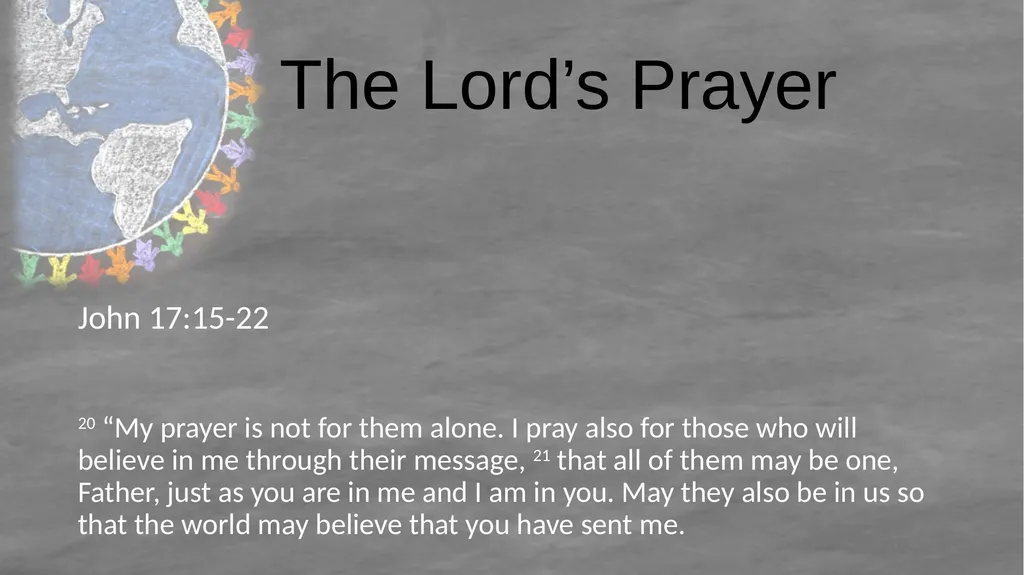
slide8. The Lord’s Prayer John 17:15-22
20 “My prayer is not for them alone. I pray also for those who will believe in me through their message, 21 that all of them may be one, Father, just as you are in me and I am in you. May they also be in us so that the world may believe that you have sent me.<br>
slide9. The Book of Discipline 2012 ¶6, page 25
The Constitution, Article VI: Ecumenical Relations<br>
slide10. The Book of Discipline 2012 ¶105, page 88
Our Theological Task
Ecumenical Commitment<br>
slide11. United Methodism and Ecumenism Connectional
(¶125, page 93-94)
Part of the DNA of United Methodists
(John Wesley = “connexion”)
“Life’s better when we’re connected”
Bank of America<br>
slide12. Ecumenism seeks Unity in Diversity We Christians are not all the same. Every communion has different histories, practices, doctrines and traditions.
Unity does not mean uniformity.
Diversity should not divide.<br>
slide13. Lund Principle Affirms that churches should act together in all matters except those in which deep differences of conviction compel them to act separately.
1952, 3rd World Conference on Faith and Order of WCC held in Lund, Sweden<br>
slide14. Like the old songs says: Accentuate the positive
Eliminate the negative<br>
slide15. Two categories of ecumenical concern Faith and Order
Life and Work<br>
slide16. Roots of the Ecumenical Movement the Late 19th Century Ecumenism is a concept of the modern world arising from the great upheaval of Western Civilization in the 19th century; produced by cultural, social, political, philosophical, theological and technological changes.
The idea of “Tolerance”<br>
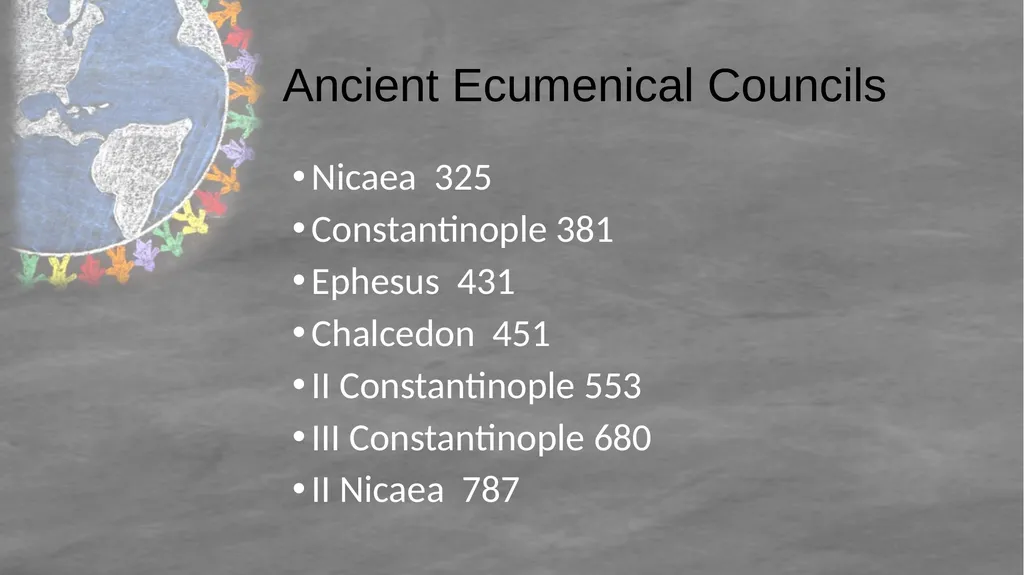
slide17. Ancient Ecumenical Councils Nicaea 325
Constantinople 381
Ephesus 431
Chalcedon 451
II Constantinople 553
III Constantinople 680
II Nicaea 787<br>
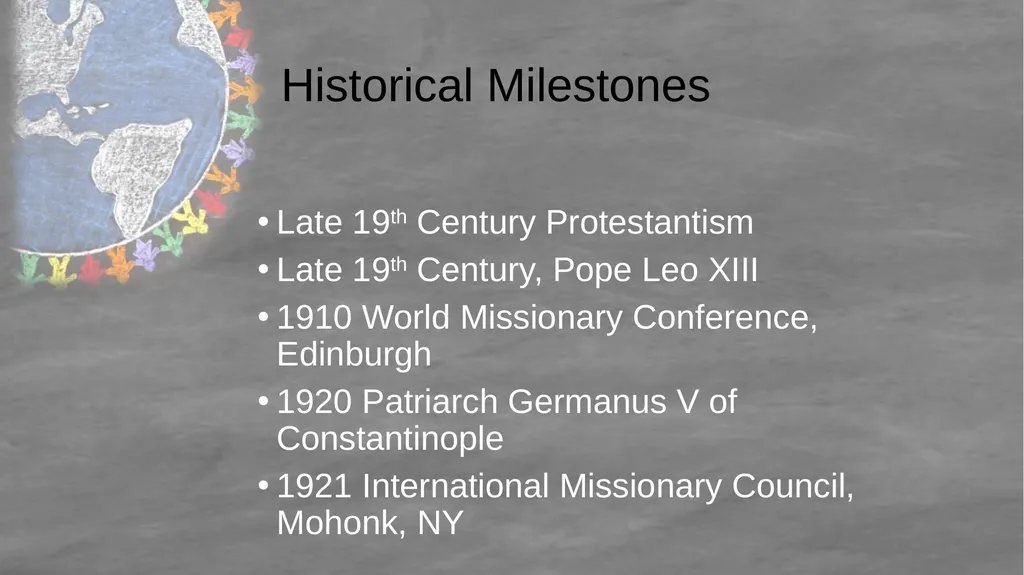
slide18. Historical Milestones Late 19th Century Protestantism
Late 19th Century, Pope Leo XIII
1910 World Missionary Conference, Edinburgh
1920 Patriarch Germanus V of Constantinople
1921 International Missionary Council, Mohonk, NY<br>
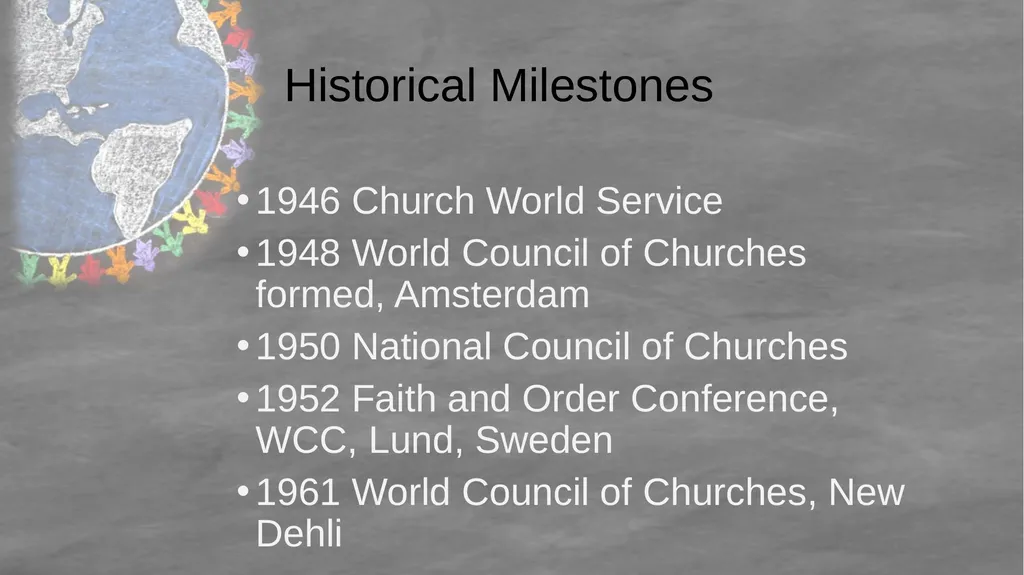
slide19. Historical Milestones 1946 Church World Service
1948 World Council of Churches formed, Amsterdam
1950 National Council of Churches
1952 Faith and Order Conference, WCC, Lund, Sweden
1961 World Council of Churches, New Dehli<br>
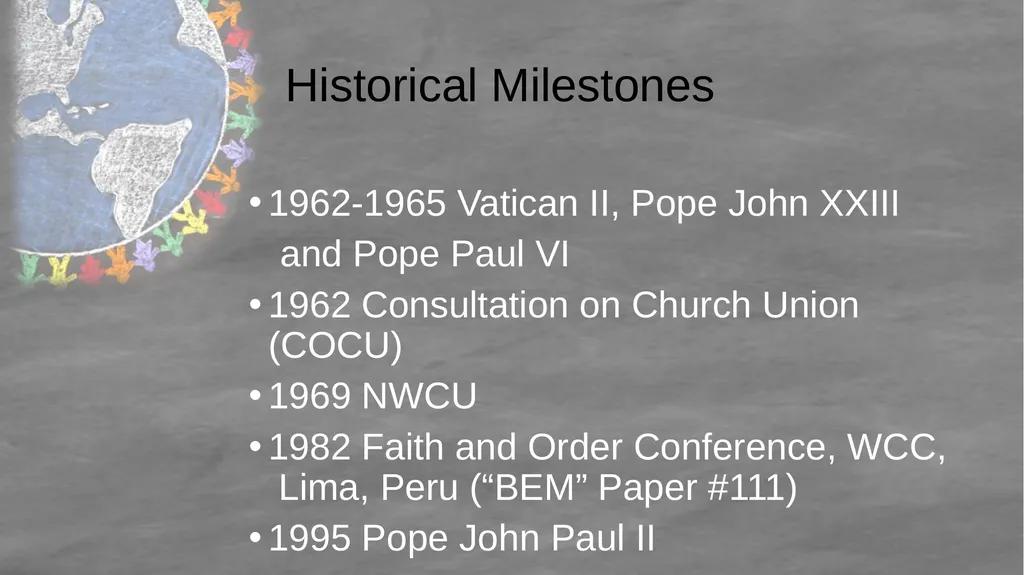
slide20. Historical Milestones 1962-1965 Vatican II, Pope John XXIII
and Pope Paul VI
1962 Consultation on Church Union (COCU)
1969 NWCU
1982 Faith and Order Conference, WCC, Lima, Peru (“BEM” Paper #111)
1995 Pope John Paul II<br>
slide21. Methodist / Evangelical / United Brethren Post-WW II Ecumenical Formations Pages 20-21 (2012 Book of Discipline)
Historical Statement
Movement Toward Union, 1940-1967<br>
slide22. UMC Ecumenism Today Local Church
District
Conference
Jurisdiction
General Church<br>
slide23. Local Church Ecumenical Shared Ministries ¶207, page 147<br>
slide24. Most common areas of WPAUMC local church ecumenical work Ministerium Participation
Food Pantries
VBS
Special Worship Services
Bible Studies / Prayer Groups
Mission Projects<br>
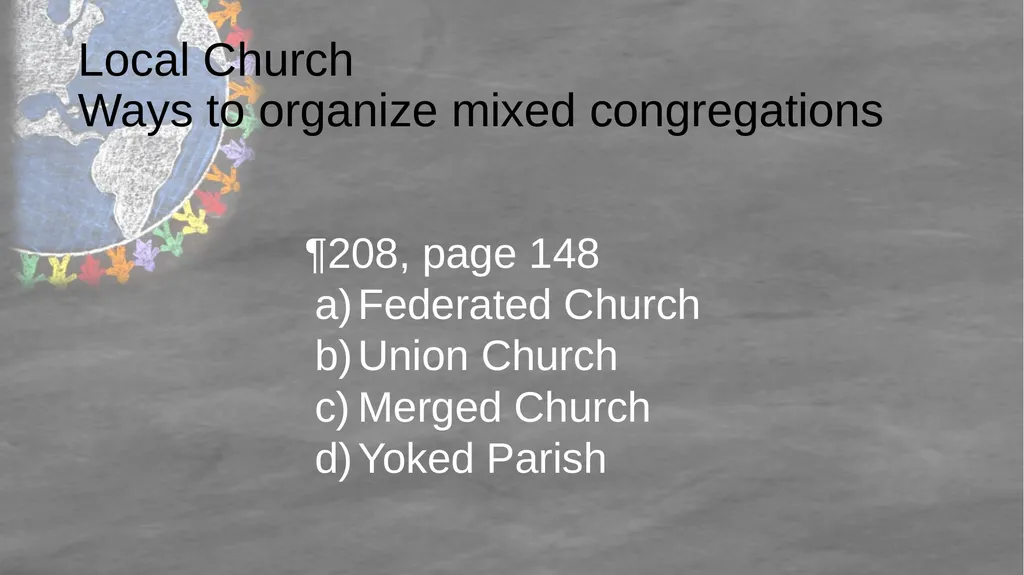
slide25. Local Church Ways to organize mixed congregations ¶208, page 148
Federated Church
Union Church
Merged Church
Yoked Parish<br>
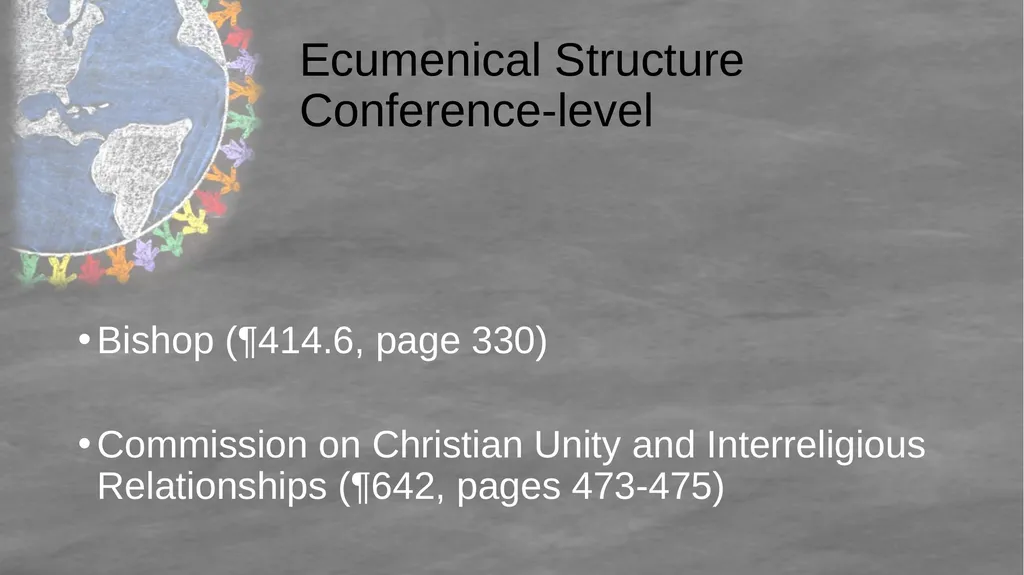
slide26. Ecumenical Structure Conference-level Bishop (¶414.6, page 330)
Commission on Christian Unity and Interreligious Relationships (¶642, pages 473-475)<br>
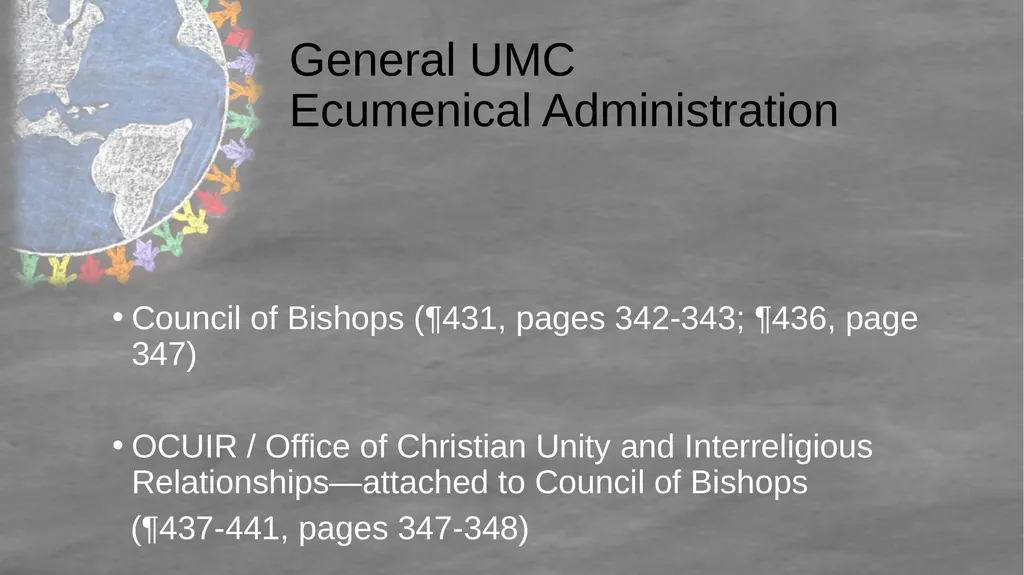
slide27. General UMC Ecumenical Administration Council of Bishops (¶431, pages 342-343; ¶436, page 347)
OCUIR / Office of Christian Unity and Interreligious Relationships—attached to Council of Bishops
(¶437-441, pages 347-348)<br>
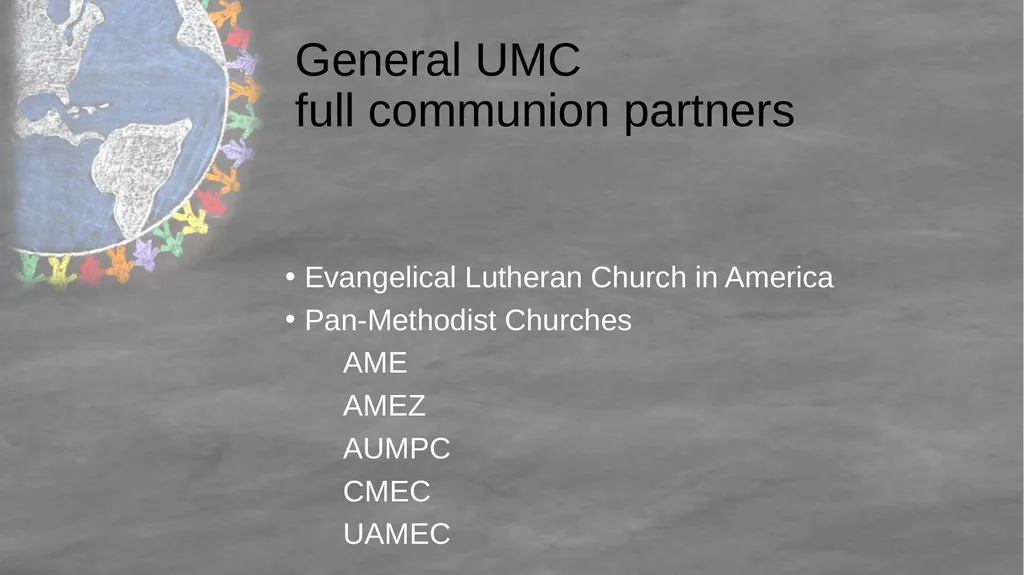
slide28. General UMC full communion partners Evangelical Lutheran Church in America
Pan-Methodist Churches
AME
AMEZ
AUMPC
CMEC
UAMEC<br>
slide29. Inter-Methodist Relationships (Autonomous Methodist Churches)
Affiliated Autonomous Methodist Churches
Affiliated United Churches
Covenanting Churches
Concordat Churches
(¶570-574, pages 380-386)
2016 Pre-General Conference Consultation on Methodist Relationships<br>
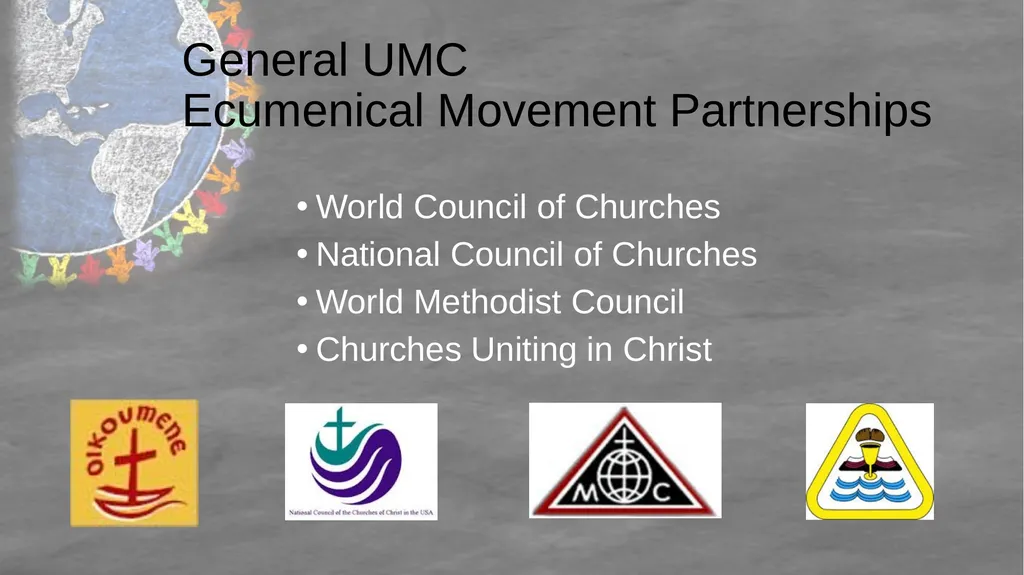
slide30. General UMC Ecumenical Movement Partnerships World Council of Churches
National Council of Churches
World Methodist Council
Churches Uniting in Christ<br>
slide31. How to start a local ecumenical partnership. It’s a relationship.
How do you build relationships?<br>
slide32. Ecumenical Worship and Ministry There is a difference between
inviting other traditions
and
being ecumenical.<br>
slide33. Ecumenical Worship nuts and bolts A collaboration (planning)
Select a theme
Include a procession or gathering element
Involve youth (include in planning)
Have only one or two worship leaders
However, provide roles for many
Represent (appreciate) the participating traditions in the liturgical elements<br>
slide34. Ecumenical Worship Some degree of discomfort is to be expected
Hospitality
Inclusive language
Celebrate commonality
e.g., Baptism, love for Jesus, shared Scriptures
Music is important
Rehearse<br>
slide35. Ecumenical Worship United Methodists offer: Flexibility in worship
Hymnody
Open Table (note: see ¶4, page 24, Article IV of the UM Constitution)<br>
slide36. Conclusion What do you remember?<br>
Western Pennsylvania Annual Conference<br>
slide2. United Methodism and Ecumenism Getting to know
the opposite sects<br>
slide3. OUTLINE: UM Ecumenism 101 Definition
Mandate
Basic Principles
History
Focus on UMC
Practical Considerations
Conclusion<br>
slide4. Etymology Ecumenical
Oikoumenikos
Dwelling/family + earth/world<br>
slide5. Definition ec·u·men·i·cal [ek-yoo-men-i-kuh] adjective
Pertaining to the whole Christian church.
Promoting or fostering Christian unity throughout the world.
Of or pertaining to a movement aimed at achieving Christian unity or church union through international interdenominational organizations that cooperate on matters of mutual concern.<br>
slide6. Definition ecu-me-nism, noun
Any effort aimed at the unity of Christians, locally or throughout the world.
(not pronounced ec-u-men-ism)<br>
slide7. Ecumenism NOT seeking
one world church<br>
slide8. The Lord’s Prayer John 17:15-22
20 “My prayer is not for them alone. I pray also for those who will believe in me through their message, 21 that all of them may be one, Father, just as you are in me and I am in you. May they also be in us so that the world may believe that you have sent me.<br>
slide9. The Book of Discipline 2012 ¶6, page 25
The Constitution, Article VI: Ecumenical Relations<br>
slide10. The Book of Discipline 2012 ¶105, page 88
Our Theological Task
Ecumenical Commitment<br>
slide11. United Methodism and Ecumenism Connectional
(¶125, page 93-94)
Part of the DNA of United Methodists
(John Wesley = “connexion”)
“Life’s better when we’re connected”
Bank of America<br>
slide12. Ecumenism seeks Unity in Diversity We Christians are not all the same. Every communion has different histories, practices, doctrines and traditions.
Unity does not mean uniformity.
Diversity should not divide.<br>
slide13. Lund Principle Affirms that churches should act together in all matters except those in which deep differences of conviction compel them to act separately.
1952, 3rd World Conference on Faith and Order of WCC held in Lund, Sweden<br>
slide14. Like the old songs says: Accentuate the positive
Eliminate the negative<br>
slide15. Two categories of ecumenical concern Faith and Order
Life and Work<br>
slide16. Roots of the Ecumenical Movement the Late 19th Century Ecumenism is a concept of the modern world arising from the great upheaval of Western Civilization in the 19th century; produced by cultural, social, political, philosophical, theological and technological changes.
The idea of “Tolerance”<br>
slide17. Ancient Ecumenical Councils Nicaea 325
Constantinople 381
Ephesus 431
Chalcedon 451
II Constantinople 553
III Constantinople 680
II Nicaea 787<br>
slide18. Historical Milestones Late 19th Century Protestantism
Late 19th Century, Pope Leo XIII
1910 World Missionary Conference, Edinburgh
1920 Patriarch Germanus V of Constantinople
1921 International Missionary Council, Mohonk, NY<br>
slide19. Historical Milestones 1946 Church World Service
1948 World Council of Churches formed, Amsterdam
1950 National Council of Churches
1952 Faith and Order Conference, WCC, Lund, Sweden
1961 World Council of Churches, New Dehli<br>
slide20. Historical Milestones 1962-1965 Vatican II, Pope John XXIII
and Pope Paul VI
1962 Consultation on Church Union (COCU)
1969 NWCU
1982 Faith and Order Conference, WCC, Lima, Peru (“BEM” Paper #111)
1995 Pope John Paul II<br>
slide21. Methodist / Evangelical / United Brethren Post-WW II Ecumenical Formations Pages 20-21 (2012 Book of Discipline)
Historical Statement
Movement Toward Union, 1940-1967<br>
slide22. UMC Ecumenism Today Local Church
District
Conference
Jurisdiction
General Church<br>
slide23. Local Church Ecumenical Shared Ministries ¶207, page 147<br>
slide24. Most common areas of WPAUMC local church ecumenical work Ministerium Participation
Food Pantries
VBS
Special Worship Services
Bible Studies / Prayer Groups
Mission Projects<br>
slide25. Local Church Ways to organize mixed congregations ¶208, page 148
Federated Church
Union Church
Merged Church
Yoked Parish<br>
slide26. Ecumenical Structure Conference-level Bishop (¶414.6, page 330)
Commission on Christian Unity and Interreligious Relationships (¶642, pages 473-475)<br>
slide27. General UMC Ecumenical Administration Council of Bishops (¶431, pages 342-343; ¶436, page 347)
OCUIR / Office of Christian Unity and Interreligious Relationships—attached to Council of Bishops
(¶437-441, pages 347-348)<br>
slide28. General UMC full communion partners Evangelical Lutheran Church in America
Pan-Methodist Churches
AME
AMEZ
AUMPC
CMEC
UAMEC<br>
slide29. Inter-Methodist Relationships (Autonomous Methodist Churches)
Affiliated Autonomous Methodist Churches
Affiliated United Churches
Covenanting Churches
Concordat Churches
(¶570-574, pages 380-386)
2016 Pre-General Conference Consultation on Methodist Relationships<br>
slide30. General UMC Ecumenical Movement Partnerships World Council of Churches
National Council of Churches
World Methodist Council
Churches Uniting in Christ<br>
slide31. How to start a local ecumenical partnership. It’s a relationship.
How do you build relationships?<br>
slide32. Ecumenical Worship and Ministry There is a difference between
inviting other traditions
and
being ecumenical.<br>
slide33. Ecumenical Worship nuts and bolts A collaboration (planning)
Select a theme
Include a procession or gathering element
Involve youth (include in planning)
Have only one or two worship leaders
However, provide roles for many
Represent (appreciate) the participating traditions in the liturgical elements<br>
slide34. Ecumenical Worship Some degree of discomfort is to be expected
Hospitality
Inclusive language
Celebrate commonality
e.g., Baptism, love for Jesus, shared Scriptures
Music is important
Rehearse<br>
slide35. Ecumenical Worship United Methodists offer: Flexibility in worship
Hymnody
Open Table (note: see ¶4, page 24, Article IV of the UM Constitution)<br>
slide36. Conclusion What do you remember?<br>