
Universal Precautions & General Safety Guidelines
CM
Published · 41 slides · 0 views
1 / 1




Description
Universal Precautions General Safety Guidelines This required training applies to all who may reasonably be expected to come into contact with blood, body fluids or other potentially infectious materials on the job. Establishes practices
Related Topics
Share
Embed code
Download this presentation From Below
"Universal Precautions & General Safety Guidelines" is the property of its rightful owner. Permission is granted to download and print the materials on this website for personal, non-commercial use only, and to display it on your personal computer provided you do not modify the materials and that you retain all copyright notices contained in the materials. By downloading content from our website, you accept the terms of this agreement.
Presentation Transcript
01
Universal Precautions & General Safety Guidelines<br>
02
This required training applies to all who may reasonably be expected to come into contact with blood, body fluids or other potentially infectious materials on the job.
Establishes practices for protection of employees Standards set by OSHA in 1991 (Occupational Safety Health Administration)<br>
Establishes practices for protection of employees Standards set by OSHA in 1991 (Occupational Safety Health Administration)<br>
03
What is your agency’s infection control plan? What safety measures are in place?
What work practices should you follow?
What personal protective equipment should you use?
What housekeeping practices are in place?
You can get Hep B vaccine, medical counseling, follow-up (post-exposure)
You will receive annual training.<br>
What work practices should you follow?
What personal protective equipment should you use?
What housekeeping practices are in place?
You can get Hep B vaccine, medical counseling, follow-up (post-exposure)
You will receive annual training.<br>
04
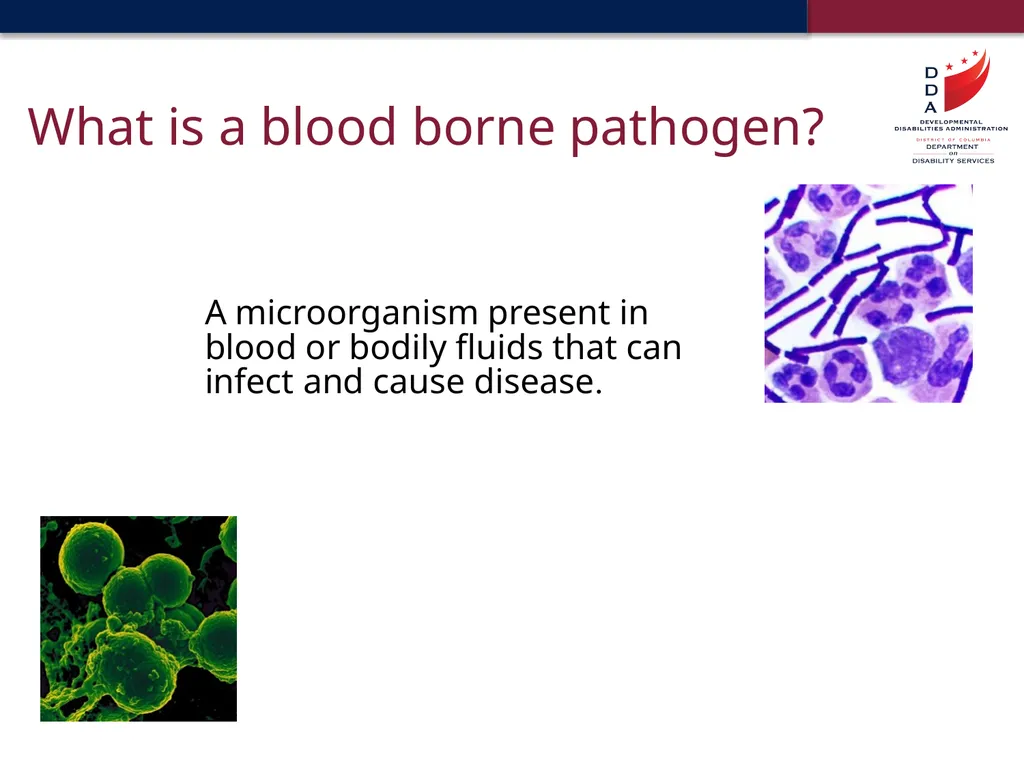
What is a blood borne pathogen? A microorganism present in blood or bodily fluids that can infect and cause disease.<br>
05
What are the most common blood borne
pathogens we are concerned about?
Hepatitis B, C and HIV
How are these pathogens spread?
By exposure to blood or other bodily fluids that may contain blood What and How?<br>
pathogens we are concerned about?
Hepatitis B, C and HIV
How are these pathogens spread?
By exposure to blood or other bodily fluids that may contain blood What and How?<br>
06
Inflammation of the liver caused by the Hepatitis B virus.
It is spread through sexual contact, IV drug use, blood transfusions or exposure to infected blood.
Symptoms may develop 4-6 months after exposure.
** Prevention is the key. To protect yourself use universal precautions and get the Hepatitis B vaccine. Tell me about Hepatitis B<br>
It is spread through sexual contact, IV drug use, blood transfusions or exposure to infected blood.
Symptoms may develop 4-6 months after exposure.
** Prevention is the key. To protect yourself use universal precautions and get the Hepatitis B vaccine. Tell me about Hepatitis B<br>
07
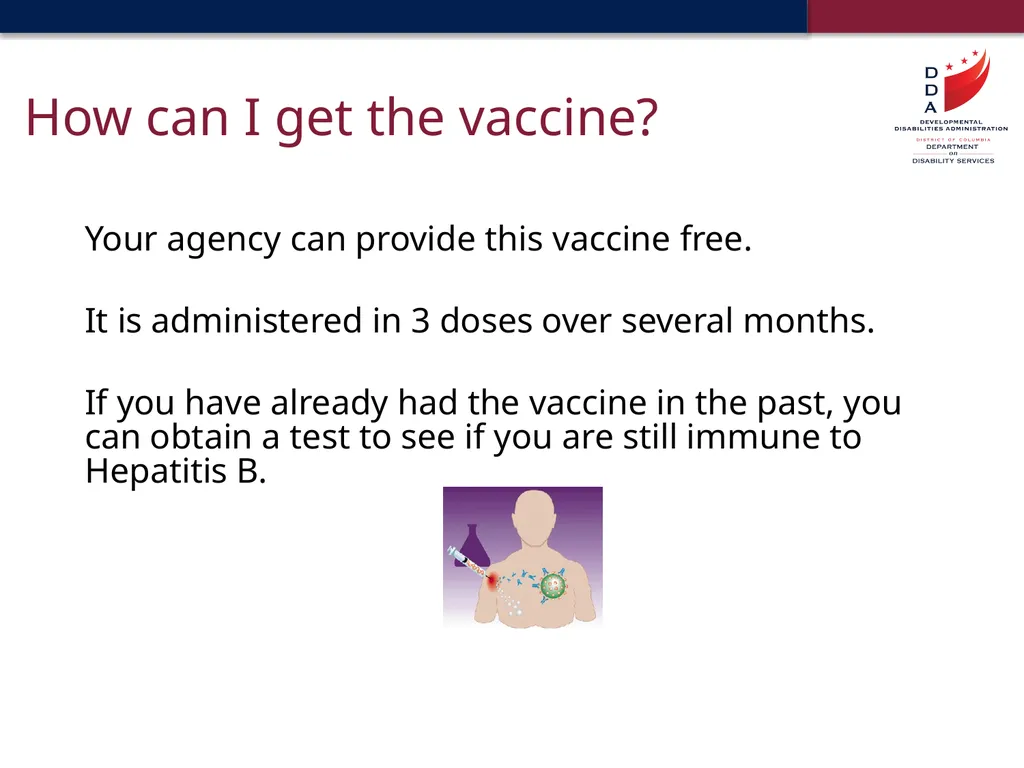
Your agency can provide this vaccine free.
It is administered in 3 doses over several months.
If you have already had the vaccine in the past, you can obtain a test to see if you are still immune to Hepatitis B. How can I get the vaccine?<br>
It is administered in 3 doses over several months.
If you have already had the vaccine in the past, you can obtain a test to see if you are still immune to Hepatitis B. How can I get the vaccine?<br>
08
A major cause of chronic liver disease.
It is also spread like Hepatitis B.
There is NO vaccine available.
It increases your risk for cirrhosis and liver cancer. What is Hepatitis C?<br>
It is also spread like Hepatitis B.
There is NO vaccine available.
It increases your risk for cirrhosis and liver cancer. What is Hepatitis C?<br>
09
Which bodily fluids are potentially infectious?
Blood
Urine
Feces
Saliva
Open wounds
Semen and Vaginal secretions.
NOT perspiration(sweat) or tears! Which Fluids?<br>
Blood
Urine
Feces
Saliva
Open wounds
Semen and Vaginal secretions.
NOT perspiration(sweat) or tears! Which Fluids?<br>
10
When one of these fluids come into contact with “broken” skin.
Cuts
Rashes
Hangnails
Piercings
or open surface like
Eyes
Mouth
Nose
Mucous membrane
An infection may occur. Which Fluids?<br>
Cuts
Rashes
Hangnails
Piercings
or open surface like
Eyes
Mouth
Nose
Mucous membrane
An infection may occur. Which Fluids?<br>
11
Safety measures that are used to prevent harmful bacteria and viruses (pathogens) from infecting people who provide first aid, personal or health care.
It is important that DSPs use universal precautions – it helps to protect everyone!
IT IS IMPORTANT THAT YOU USE UNIVERSAL PRECAUTIONS! What Are Universal Precautions?<br>
It is important that DSPs use universal precautions – it helps to protect everyone!
IT IS IMPORTANT THAT YOU USE UNIVERSAL PRECAUTIONS! What Are Universal Precautions?<br>
12
Appropriate Hand Washing & Personal Hygiene
Disposal/Care of Contaminated Items (like needles, clothing, bedding, tissues, bandages, etc.)
Engineering Controls
Hepatitis B vaccination What are the Safety Measures?<br>
Disposal/Care of Contaminated Items (like needles, clothing, bedding, tissues, bandages, etc.)
Engineering Controls
Hepatitis B vaccination What are the Safety Measures?<br>
13
ALWAYS….when you are providing care and coming into contact with certain bodily fluids.
Treat ALL these fluids as if they were infectious, regardless of what you know about the person.
This is what “universal” means!! When should we use Universal Precautions?<br>
Treat ALL these fluids as if they were infectious, regardless of what you know about the person.
This is what “universal” means!! When should we use Universal Precautions?<br>
14
When you wash your hands properly, you wash away bacteria and viruses that you have picked up from the environment.
Washing your hands properly will prevent the spread of pathogens, thus avoiding illness. Hand Washing<br>
Washing your hands properly will prevent the spread of pathogens, thus avoiding illness. Hand Washing<br>
15
Wet your hands with warm water and apply soap;
Scrub your hands together briskly; get under fingernails and between fingers;
Wash for 10-15 seconds (“A,B,C’s” or “Happy Birthday” one time through);
Dry hands thoroughly with a clean paper towel;
Use the towel to turn off the faucet and open the door! Proper method of Hand Washing<br>
Scrub your hands together briskly; get under fingernails and between fingers;
Wash for 10-15 seconds (“A,B,C’s” or “Happy Birthday” one time through);
Dry hands thoroughly with a clean paper towel;
Use the towel to turn off the faucet and open the door! Proper method of Hand Washing<br>
16
Before and after preparing food
Before and after eating
Before and after providing direct care
After cleaning
After using the bathroom
After touching pets
After blowing your nose
**Be mindful that there may be more times when you need to wash your hands** When Do You Wash Hands?<br>
Before and after eating
Before and after providing direct care
After cleaning
After using the bathroom
After touching pets
After blowing your nose
**Be mindful that there may be more times when you need to wash your hands** When Do You Wash Hands?<br>
17
Use these according to your agency policy:
Gloves
Gowns/Aprons
Protective Eyewear
Masks/Face Shields
These are to protect YOU and
the people you support. Personal Protective Equipment<br>
Gloves
Gowns/Aprons
Protective Eyewear
Masks/Face Shields
These are to protect YOU and
the people you support. Personal Protective Equipment<br>
18
Gloves are the most commonly used protective equipment.
They should be used:
To avoid contact with blood or other body fluids
When handling contaminated items (e.g. laundry with urine or fecal soiling)
When there are open cuts, scratches or wounds on the person you are supporting or on your own hands Personal Protective Equipment (PPE)<br>
They should be used:
To avoid contact with blood or other body fluids
When handling contaminated items (e.g. laundry with urine or fecal soiling)
When there are open cuts, scratches or wounds on the person you are supporting or on your own hands Personal Protective Equipment (PPE)<br>
19
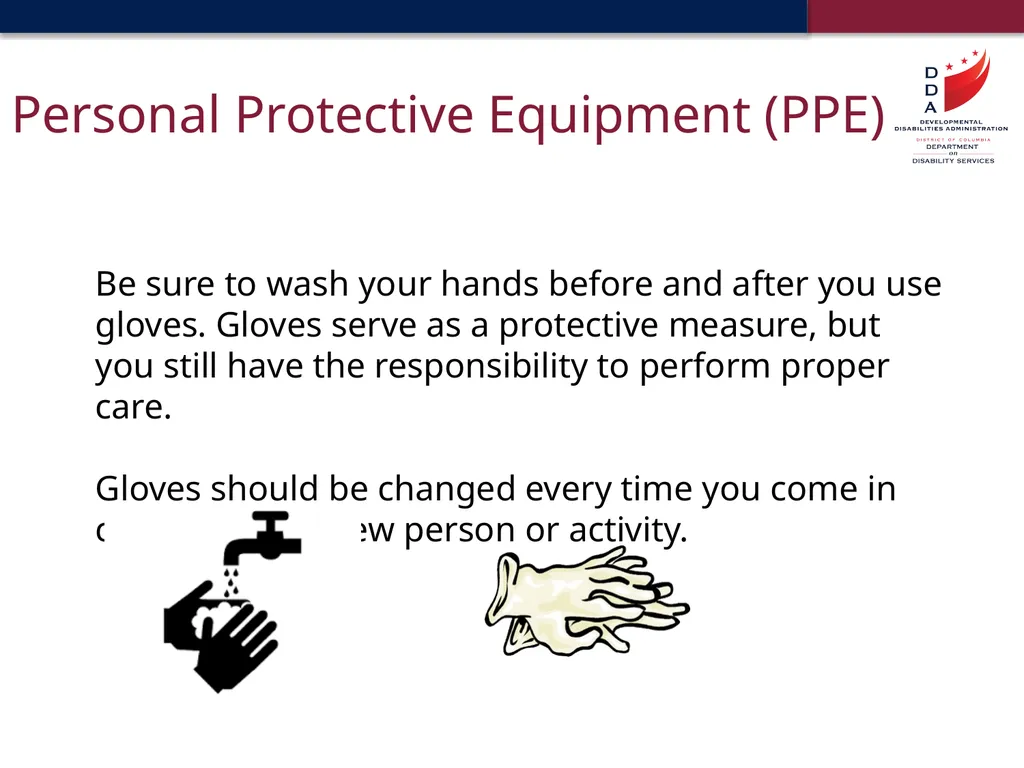
Be sure to wash your hands before and after you use gloves. Gloves serve as a protective measure, but you still have the responsibility to perform proper care.
Gloves should be changed every time you come in contact with a new person or activity. Personal Protective Equipment (PPE)<br>
Gloves should be changed every time you come in contact with a new person or activity. Personal Protective Equipment (PPE)<br>
20
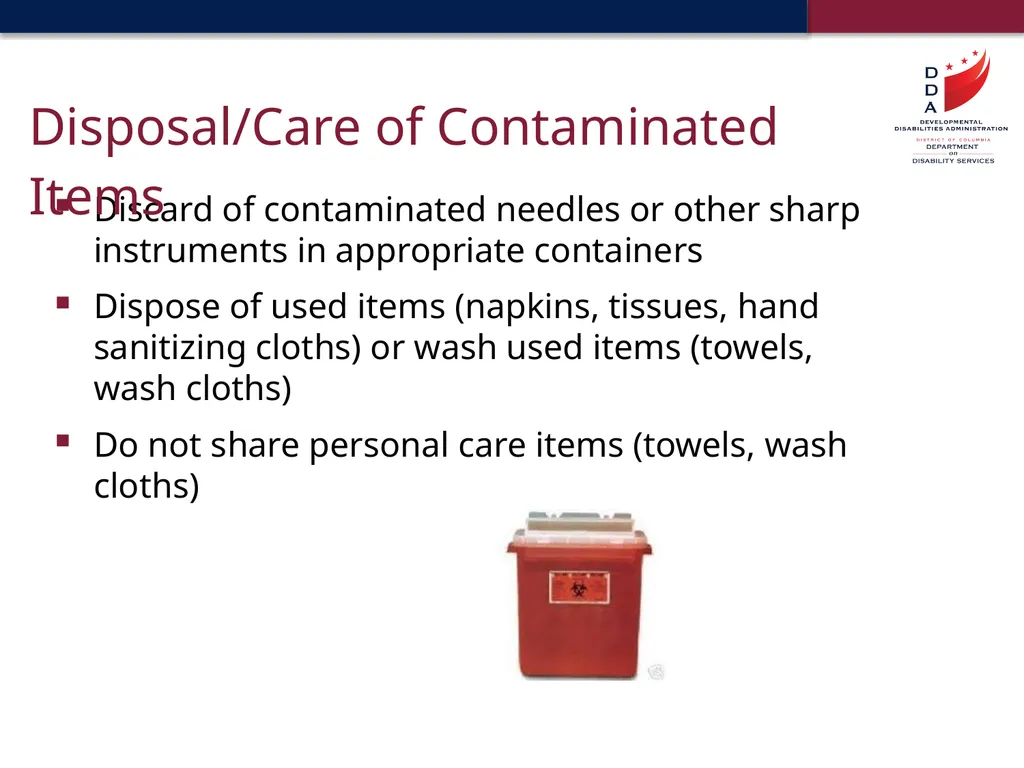
Discard of contaminated needles or other sharp instruments in appropriate containers
Dispose of used items (napkins, tissues, hand sanitizing cloths) or wash used items (towels, wash cloths)
Do not share personal care items (towels, wash cloths) Disposal/Care of Contaminated Items<br>
Dispose of used items (napkins, tissues, hand sanitizing cloths) or wash used items (towels, wash cloths)
Do not share personal care items (towels, wash cloths) Disposal/Care of Contaminated Items<br>
21
Soiled Linen
Should be bagged and transported in a manner to prevent leakage and contamination of DSP’s clothing
Sort linen before washing; use gloves to sort
The settings on household washing machines are sufficient to kill most common bacteria
Use additives at the appropriate amounts for adequate wash and care Disposal/Care of Contaminated Items<br>
Should be bagged and transported in a manner to prevent leakage and contamination of DSP’s clothing
Sort linen before washing; use gloves to sort
The settings on household washing machines are sufficient to kill most common bacteria
Use additives at the appropriate amounts for adequate wash and care Disposal/Care of Contaminated Items<br>
22
Immediately wash/rinse the exposed body part with soap and warm water for sixty seconds. If necessary, flush eyes with clean running water.
Provide immediate first aid if it is necessary
Tell someone! (according to your agency policy). You may need to be tested/treated.
Clean the environment with an appropriate disinfecting solution, such as ten parts water to one part bleach. Bleach will kill both HIV and hepatitis B virus. (Or, your agency may have another product that you should use)
After cleaning, promptly disinfect mops and any other cleaning equipment, or you may spread the viruses to other areas. What to do if there is an exposure<br>
Provide immediate first aid if it is necessary
Tell someone! (according to your agency policy). You may need to be tested/treated.
Clean the environment with an appropriate disinfecting solution, such as ten parts water to one part bleach. Bleach will kill both HIV and hepatitis B virus. (Or, your agency may have another product that you should use)
After cleaning, promptly disinfect mops and any other cleaning equipment, or you may spread the viruses to other areas. What to do if there is an exposure<br>
23
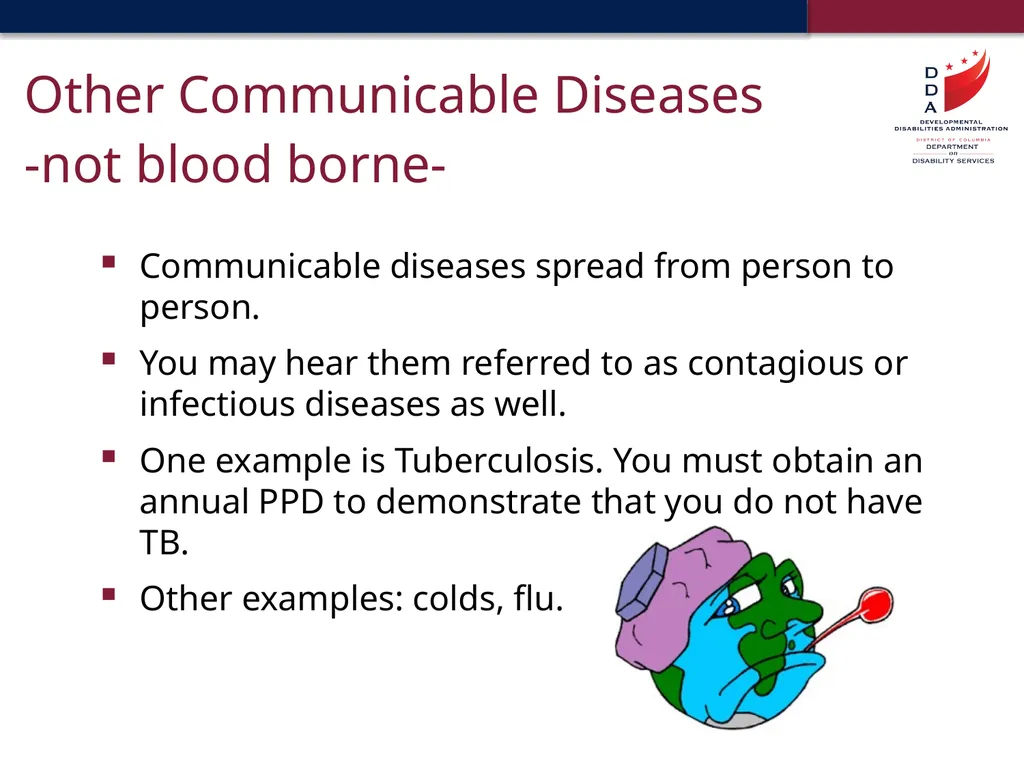
Communicable diseases spread from person to person.
You may hear them referred to as contagious or infectious diseases as well.
One example is Tuberculosis. You must obtain an annual PPD to demonstrate that you do not have TB.
Other examples: colds, flu. Other Communicable Diseases -not blood borne-<br>
You may hear them referred to as contagious or infectious diseases as well.
One example is Tuberculosis. You must obtain an annual PPD to demonstrate that you do not have TB.
Other examples: colds, flu. Other Communicable Diseases -not blood borne-<br>
24
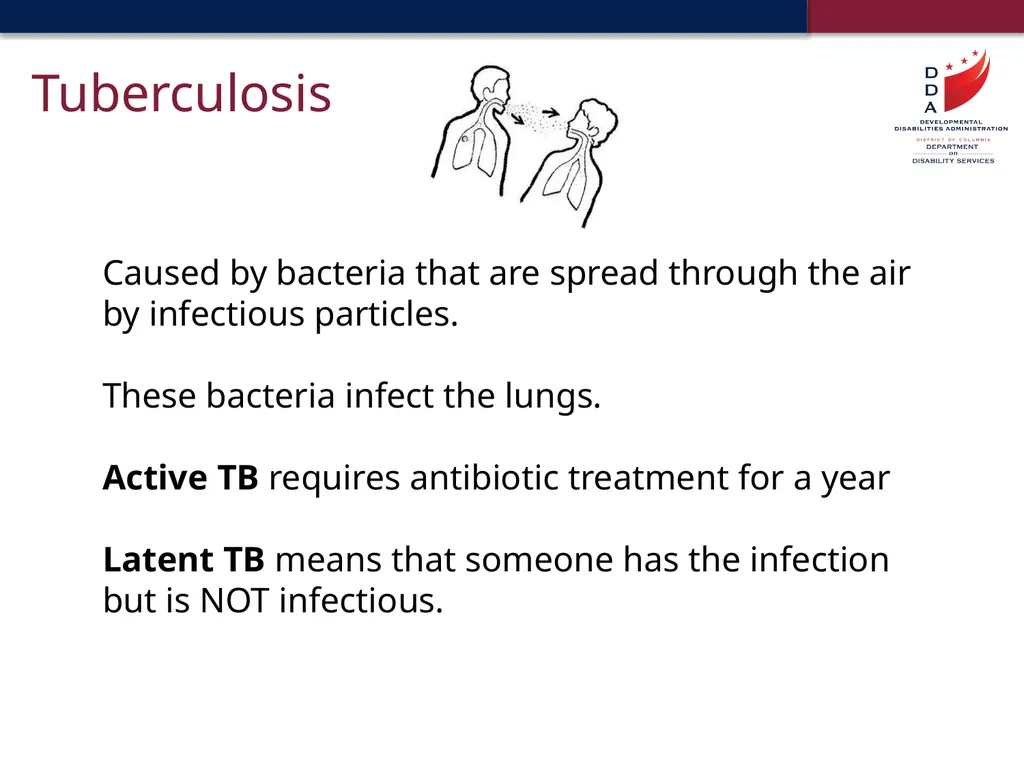
Caused by bacteria that are spread through the air by infectious particles.
These bacteria infect the lungs.
Active TB requires antibiotic treatment for a year
Latent TB means that someone has the infection but is NOT infectious. Tuberculosis<br>
These bacteria infect the lungs.
Active TB requires antibiotic treatment for a year
Latent TB means that someone has the infection but is NOT infectious. Tuberculosis<br>
25
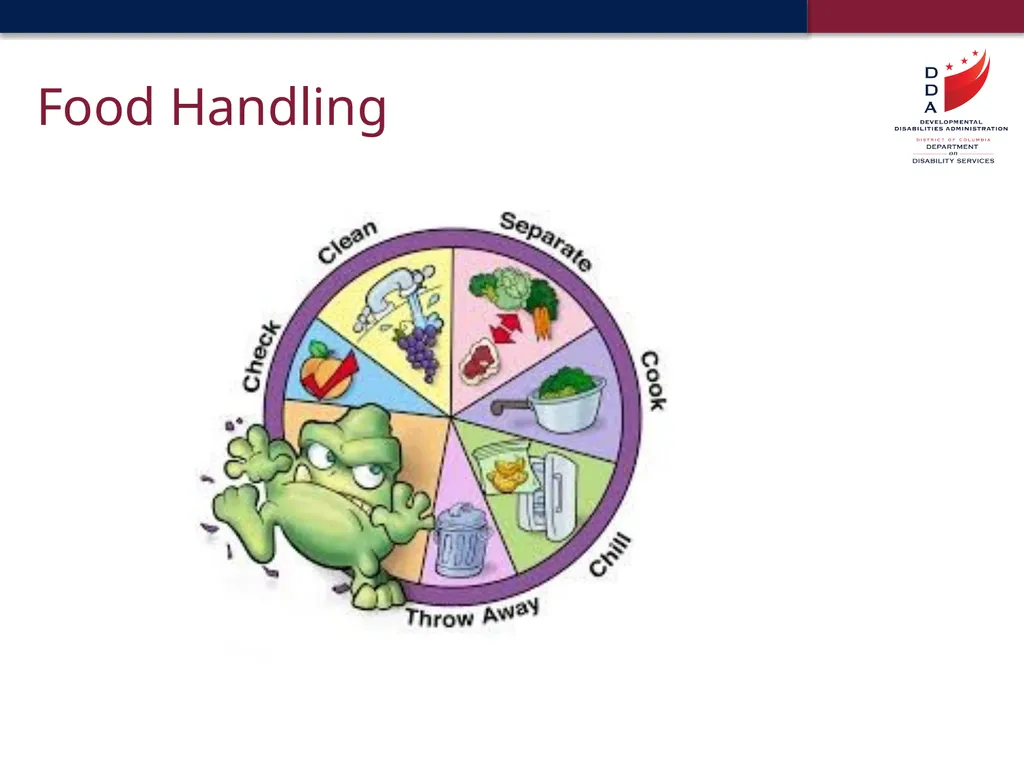
Food Handling<br>
26
Wash hands to prevent food contamination.
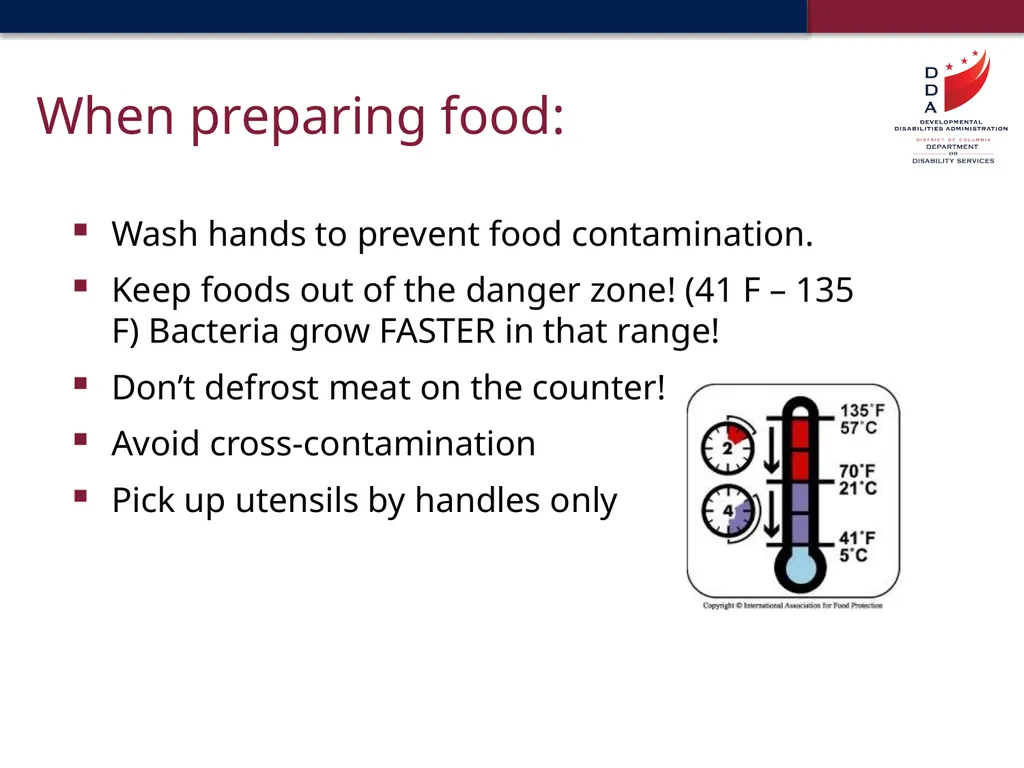
Keep foods out of the danger zone! (41 F – 135 F) Bacteria grow FASTER in that range!
Don’t defrost meat on the counter!
Avoid cross-contamination
Pick up utensils by handles only When preparing food:<br>
Keep foods out of the danger zone! (41 F – 135 F) Bacteria grow FASTER in that range!
Don’t defrost meat on the counter!
Avoid cross-contamination
Pick up utensils by handles only When preparing food:<br>
27
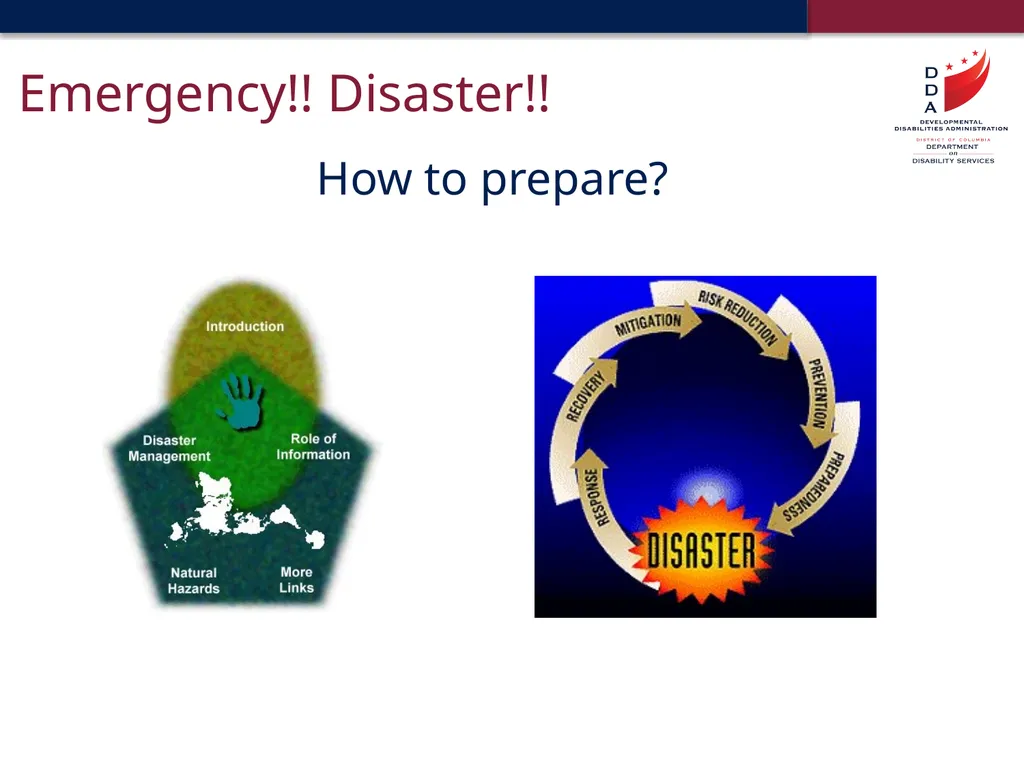
Emergency!! Disaster!! How to prepare?<br>
28
The needs of each person in an emergency are unique. In order to provide the best, most individualized care….
PEPP: Each person has a Personal Emergency Preparedness Plan
CEPP: Each agency has a Comprehensive Emergency Preparedness Plan Emergencies! Being prepared in a person-centered way<br>
PEPP: Each person has a Personal Emergency Preparedness Plan
CEPP: Each agency has a Comprehensive Emergency Preparedness Plan Emergencies! Being prepared in a person-centered way<br>
29
Fire Safety<br>
30
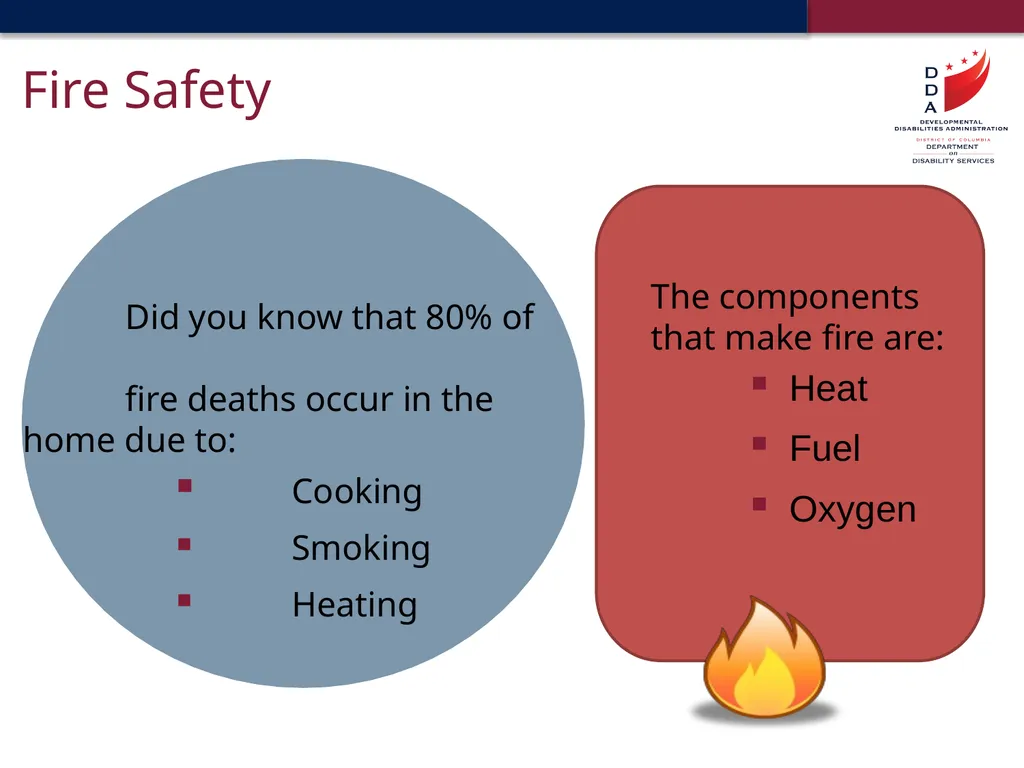
Fire Safety Did you know that 80% of
fire deaths occur in the home due to:
Cooking
Smoking
Heating The components
that make fire are:
Heat
Fuel
Oxygen<br>
fire deaths occur in the home due to:
Cooking
Smoking
Heating The components
that make fire are:
Heat
Fuel
Oxygen<br>
31
To avoid fire, use…
Surge protectors;
extension cords are not recommended and should never be used as primary wiring
Space heaters only when there are 3 feet of space around them
Safe smoking practices Fire Safety<br>
Surge protectors;
extension cords are not recommended and should never be used as primary wiring
Space heaters only when there are 3 feet of space around them
Safe smoking practices Fire Safety<br>
32
To avoid fire, check…
that cooking appliances are turned off after use
cords on electric appliances: check for damage; unplug appliances when not in use
that smoke alarms are tested and batteries changed as required
the fire extinguishers are charged and inspected as required Fire Safety<br>
that cooking appliances are turned off after use
cords on electric appliances: check for damage; unplug appliances when not in use
that smoke alarms are tested and batteries changed as required
the fire extinguishers are charged and inspected as required Fire Safety<br>
33
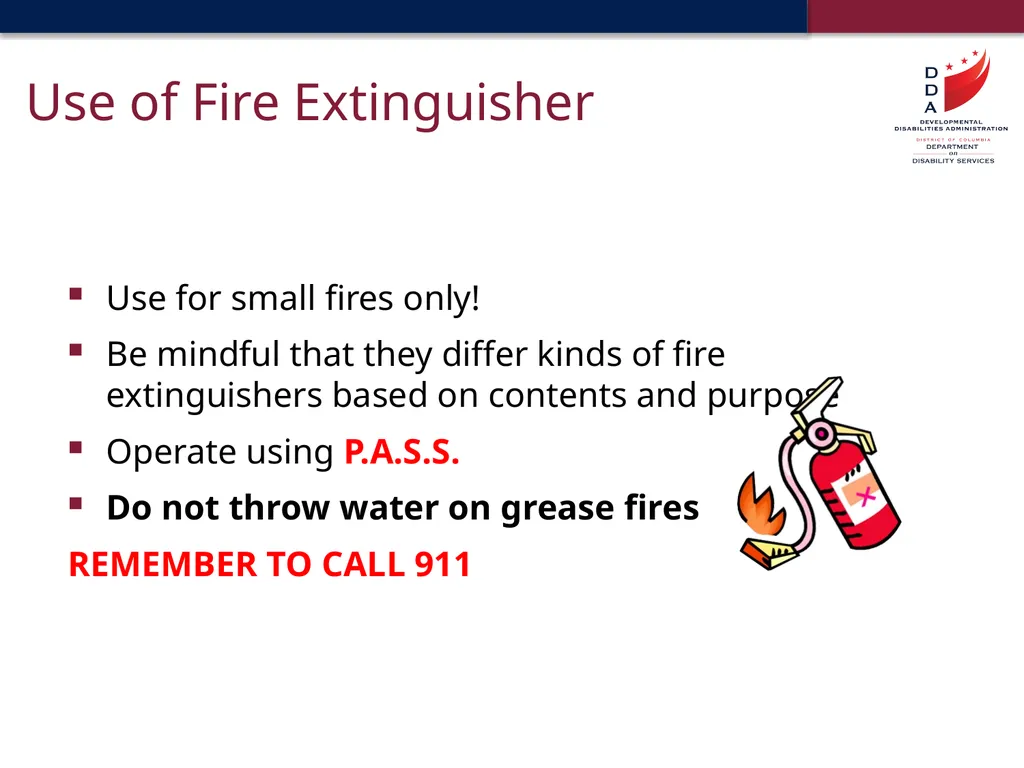
Use for small fires only!
Be mindful that they differ kinds of fire extinguishers based on contents and purpose
Operate using P.A.S.S.
Do not throw water on grease fires
REMEMBER TO CALL 911 Use of Fire Extinguisher<br>
Be mindful that they differ kinds of fire extinguishers based on contents and purpose
Operate using P.A.S.S.
Do not throw water on grease fires
REMEMBER TO CALL 911 Use of Fire Extinguisher<br>
34
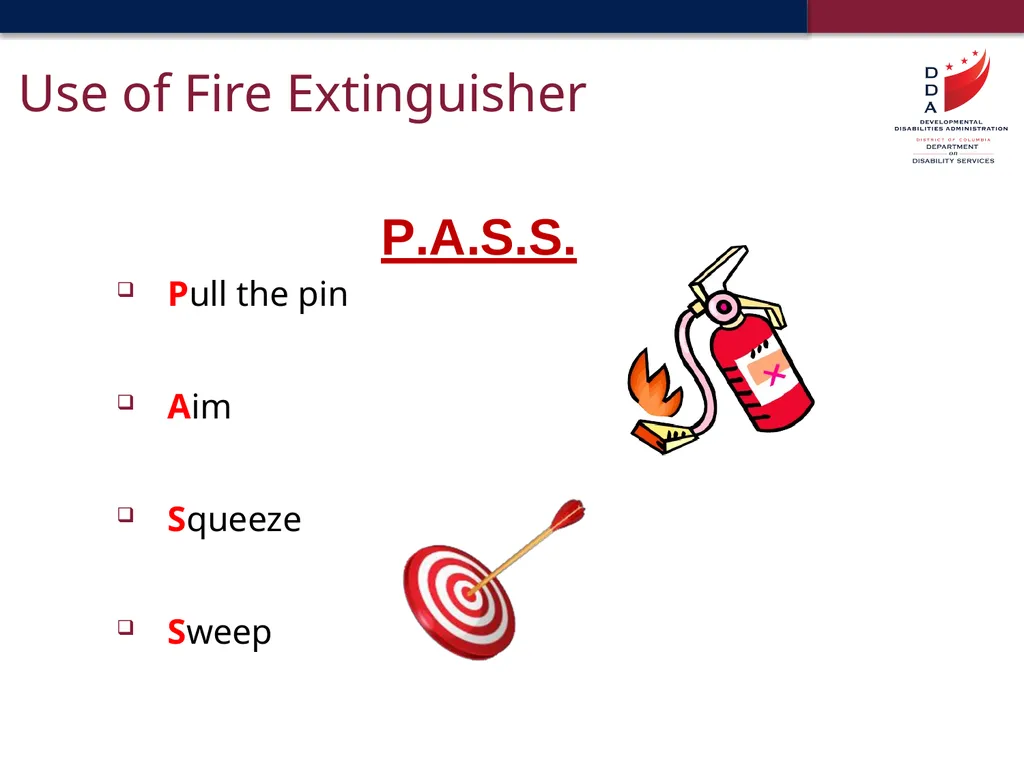
P.A.S.S.
Pull the pin
Aim
Squeeze
Sweep Use of Fire Extinguisher<br>
Pull the pin
Aim
Squeeze
Sweep Use of Fire Extinguisher<br>
35
Know your agency’s policy for fire drills.
Know your agency’s evacuation plan
Know two ways to exit
Mark accessible windows
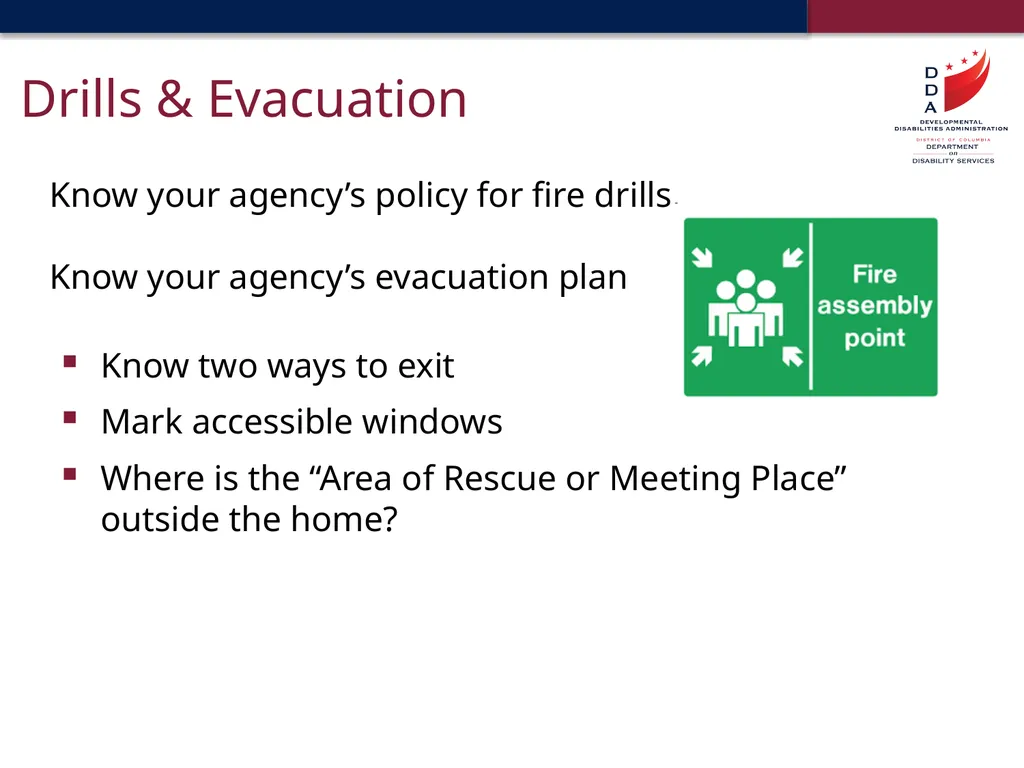
Where is the “Area of Rescue or Meeting Place” outside the home? Drills & Evacuation<br>
Know your agency’s evacuation plan
Know two ways to exit
Mark accessible windows
Where is the “Area of Rescue or Meeting Place” outside the home? Drills & Evacuation<br>
36
Get low
Get out fast
Do not return inside of the house
If fire gets on your clothing, STOP, DROP and ROLL
Contact 911 from another location
Make sure the people you support are evacuated. Escape Procedures<br>
Get out fast
Do not return inside of the house
If fire gets on your clothing, STOP, DROP and ROLL
Contact 911 from another location
Make sure the people you support are evacuated. Escape Procedures<br>
37
Back Safety<br>
38
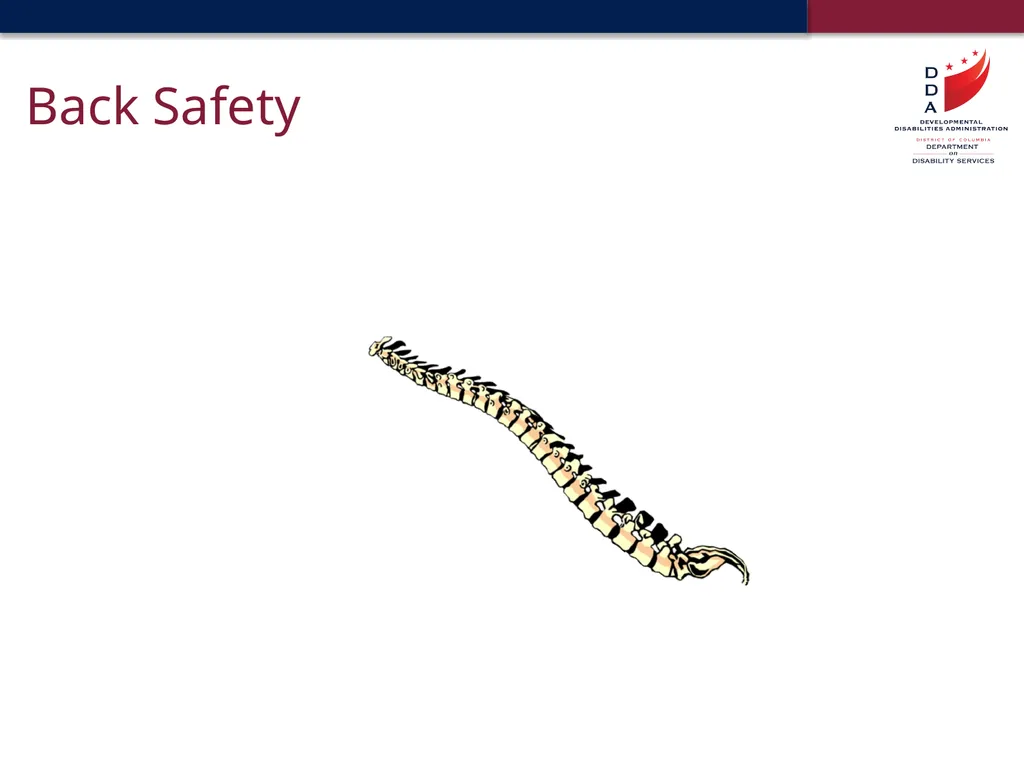
Depending on the duties of your job, you may be required to lift heavy items or help to transfer a person from one place to another.
As a reminder, take care of your back and spine!! Back Safety<br>
As a reminder, take care of your back and spine!! Back Safety<br>
39
Safe Lifting
When lifting any heavy item, do not bend forward and lift. This will place pressure on your back and spinal cord and cause injury. Back Safety<br>
When lifting any heavy item, do not bend forward and lift. This will place pressure on your back and spinal cord and cause injury. Back Safety<br>
40
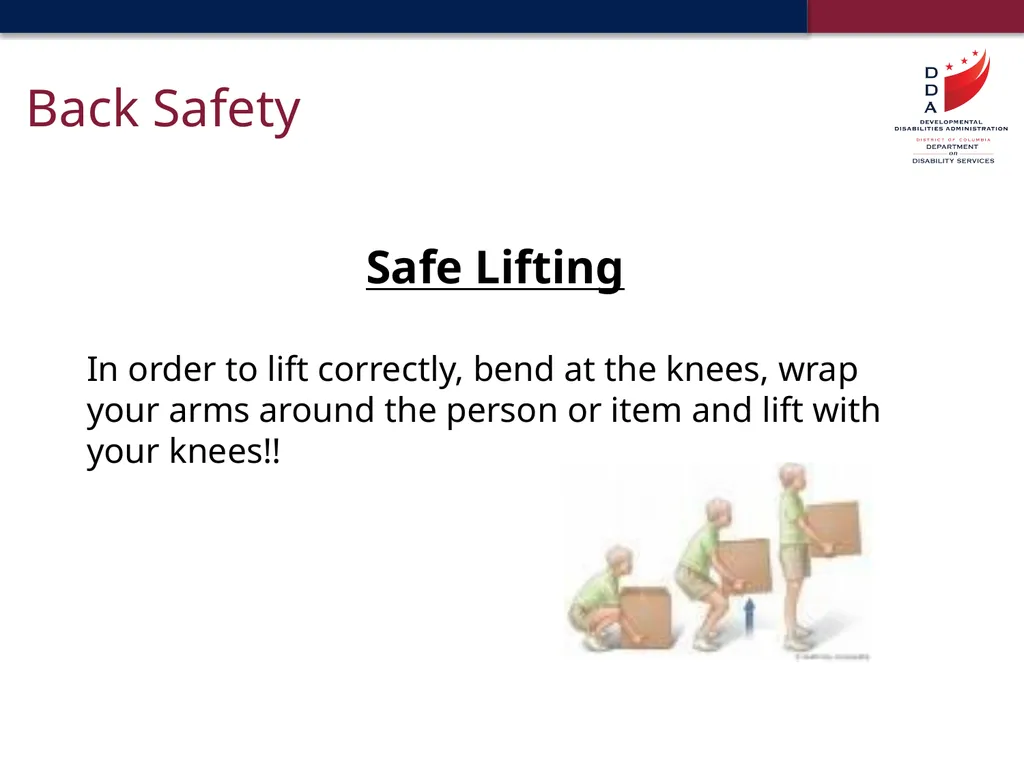
Safe Lifting
In order to lift correctly, bend at the knees, wrap your arms around the person or item and lift with your knees!! Back Safety<br>
In order to lift correctly, bend at the knees, wrap your arms around the person or item and lift with your knees!! Back Safety<br>
41
ANY QUESTIONS?<br>