Unlocking Value Through Responsible Use of Data Rebecca Evans, Product Marketing Responsible AI April 24, 2024 Why does privacy matter in the context of AI? Despite fears, consumers WANT AI 70 No trust in companies how they use AI in
"Unlocking Value Through Responsible Use of Data" is the property of its rightful owner. Permission is granted to
download and print the materials on this website for personal, non-commercial use only, and to display it
on your personal computer provided you do not modify the materials and that you retain all copyright
notices contained in the materials. By downloading content from our website, you accept the terms of this
agreement.
Presentation Transcript
01
Unlocking Value Through Responsible Use of Data Rebecca Evans, Product Marketing – Responsible AI April 24, 2024<br>
02
Why does privacy matter in the context of AI?<br>
03
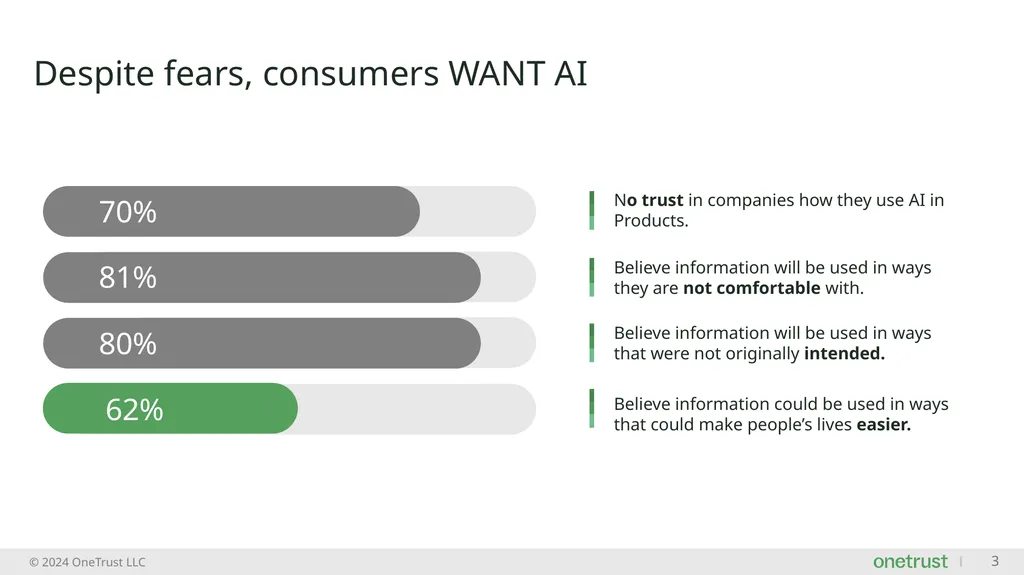
Despite fears, consumers WANT AI 70% No trust in companies how they use AI in Products. Believe information will be used in ways they are not comfortable with. Believe information will be used in ways that were not originally intended. Believe information could be used in ways that could make people’s lives easier. 81% 80% 62%<br>
04
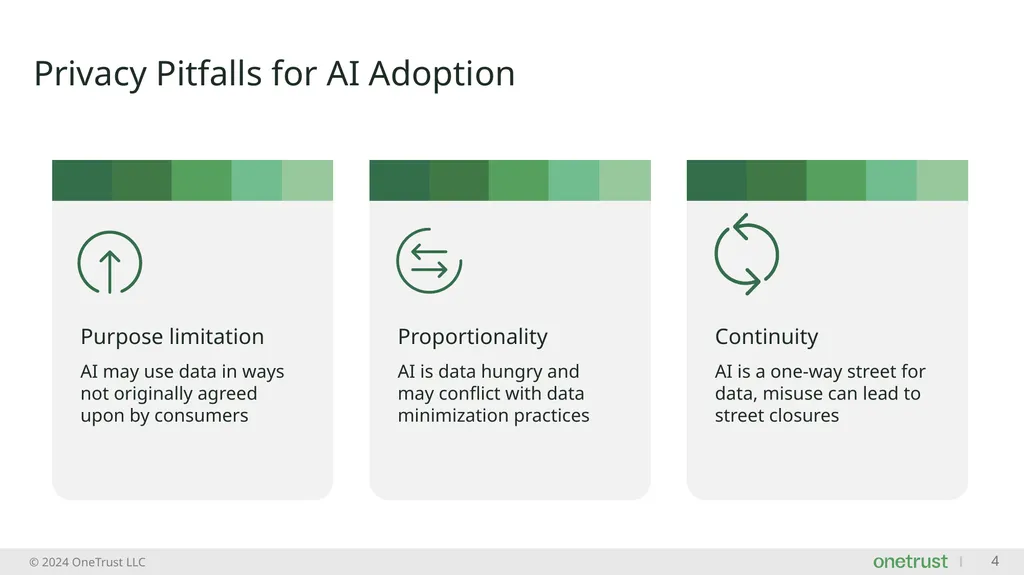
Privacy Pitfalls for AI Adoption AI may use data in ways not originally agreed upon by consumers Purpose limitation AI is data hungry and may conflict with data minimization practices Proportionality AI is a one-way street for data, misuse can lead to street closures Continuity<br>
05
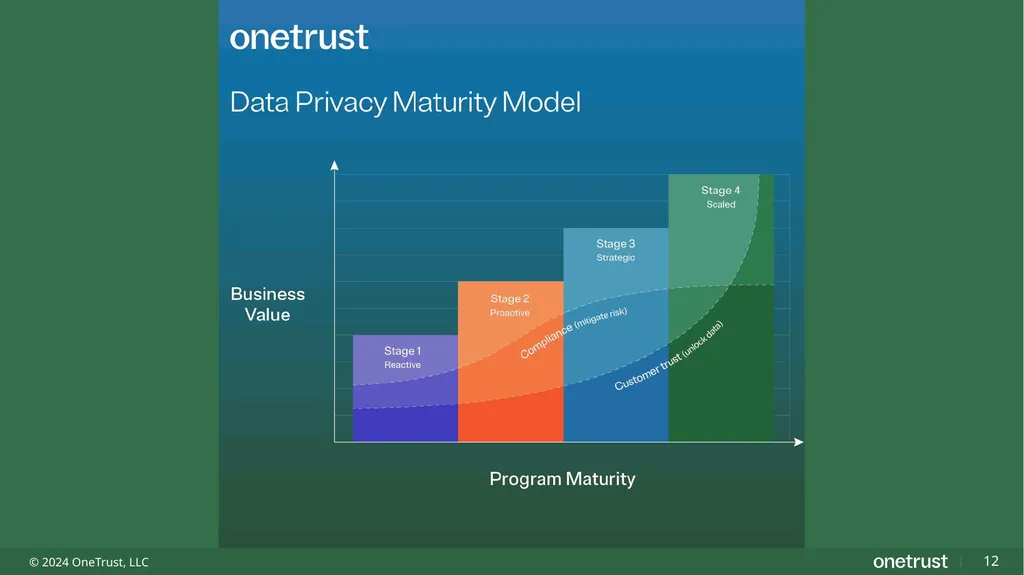
Privacy has evolved from a regulatory compliance initiative to a customer trust imperative to ensure responsible use across the data lifecycle<br>
06
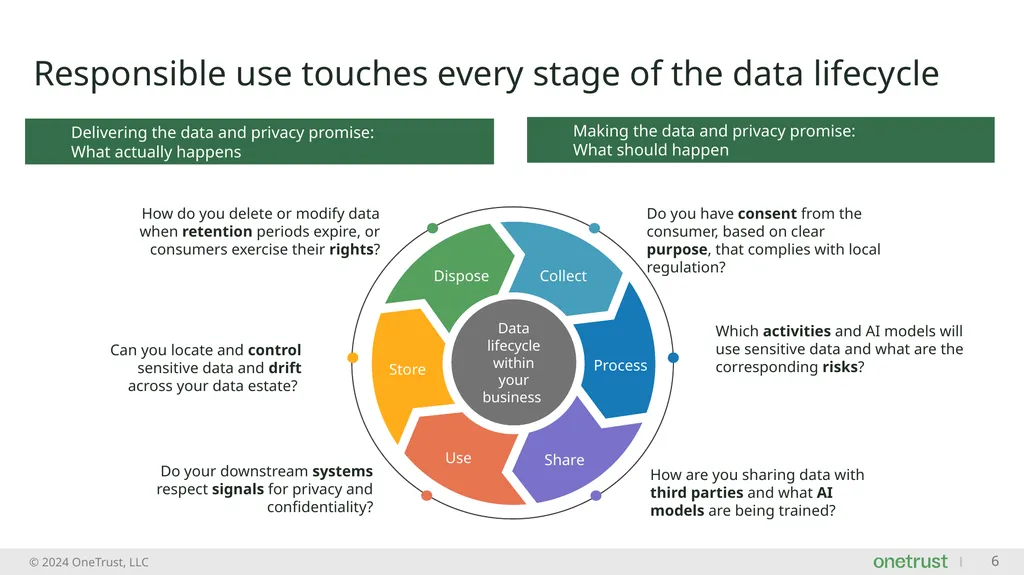
Responsible use touches every stage of the data lifecycle Do you have consent from the consumer, based on clear purpose, that complies with local regulation? Which activities and AI models will use sensitive data and what are the corresponding risks? How are you sharing data with third parties and what AI models are being trained? How do you delete or modify data when retention periods expire, or consumers exercise their rights? Can you locate and control sensitive data and drift across your data estate? Do your downstream systems respect signals for privacy and confidentiality? Making the data and privacy promise:
What should happen Delivering the data and privacy promise:
What actually happens<br>
07
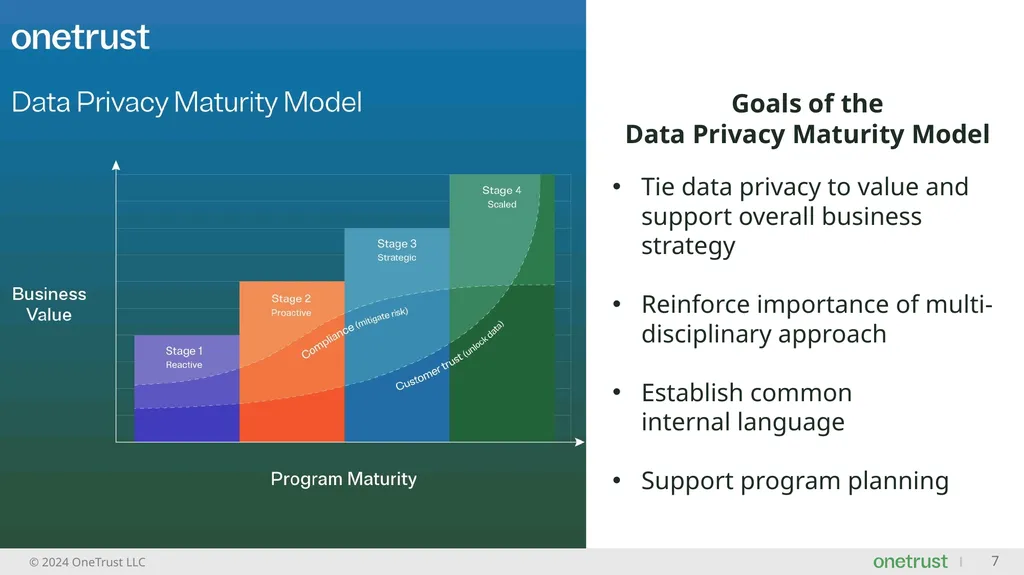
Goals of the
Data Privacy Maturity Model
Tie data privacy to value and support overall business strategy
Reinforce importance of multi-disciplinary approach
Establish common internal language
Support program planning<br>
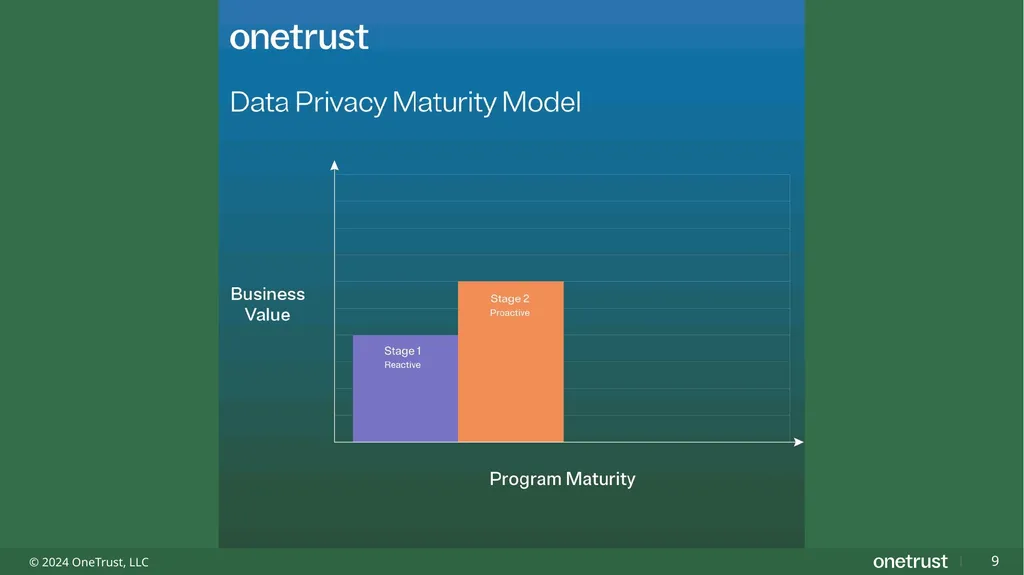
08
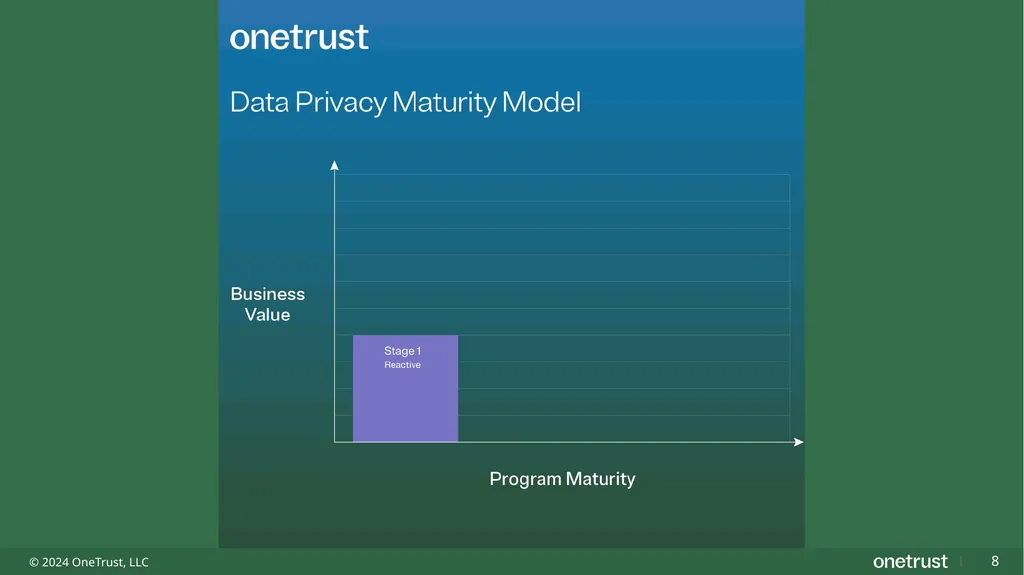
STAGE 1: REACTIVE Value to business Reactive compliance
Reactive, tactical, request-driven workflows
Ad-hoc program, policy, and record-keeping
Minimal funding – perceived as low risk Process Spreadsheet-based manual processes
Ad-hoc, triggered by request or enforcement Consumer experience Basic website cookie compliance
Email-based DSAR process
Static privacy notice Data and activity Static, manual data and activity map
Limited visibility to cross-border data transfers
Ad-hoc risk assessment
Minimal visibility into data storage and usage Organizational alignment Siloed with time-shared privacy owner
Minimal cross-functional collaboration AI governance Minimal visibility into AI usage
Ad-hoc risk assessment<br>
09
Value to business Proactive compliance
Proactive planning for new regulations
Structured data-centric program
Valued by leadership – partial accountability Process Software-based processes
Change management for new regulations Consumer experience Multi-channel consent
Preference center for direct marketing
Web intake and automated workflow for DSAR Data and activity Evergreen map – source of truth for purpose
Structured, collaborative risk assessment
… including third-parties and ecosystem
Visibility and inventory of sensitive data assets Organizational alignment Dedicated leader (e.g., Chief Privacy Officer)
Access to IT resources and budget AI governance Project, model, and dataset inventory
Structured, collaborative risk assessment
Visibility into training datasets STAGE 2: PROACTIVE<br>
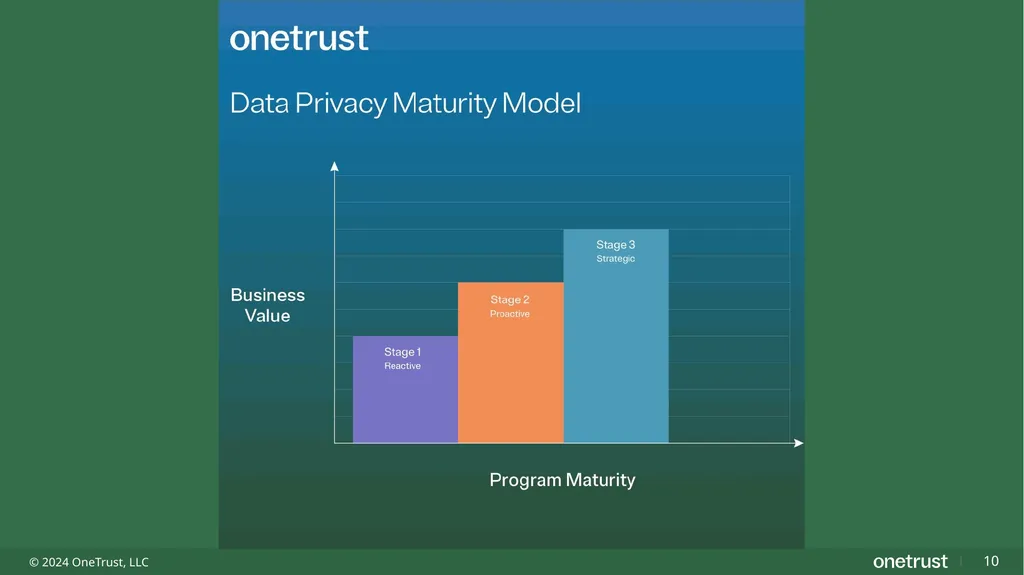
10
Value to business Assured compliance
Strategic framework anticipating regulations
Visibility tied to action for program violations
Clear accountability in the business Customer preferences (enabled by trust)
First-party data acquisition core to business Organizational alignment Privacy DRIs added to IT & marketing teams
Strong IT partnership to deploy and operate Consumer experience Post-cookie consent, incremental opt-out
Preference center: product / service choices
DSAR: Fully automated fulfillment & redaction Process Repeatable, automated workflows
Standards to anticipate future regulation Data and activity Data controls enforcement and validation
Identification and remediation of data drift
Mitigation of risk from sensitive data
Enforcement of data retention / minimization STAGE 3: STRATEGIC AI governance Governance linked with project development
Risk assessment of third-party use of AI
Risk mitigation for training datasets<br>
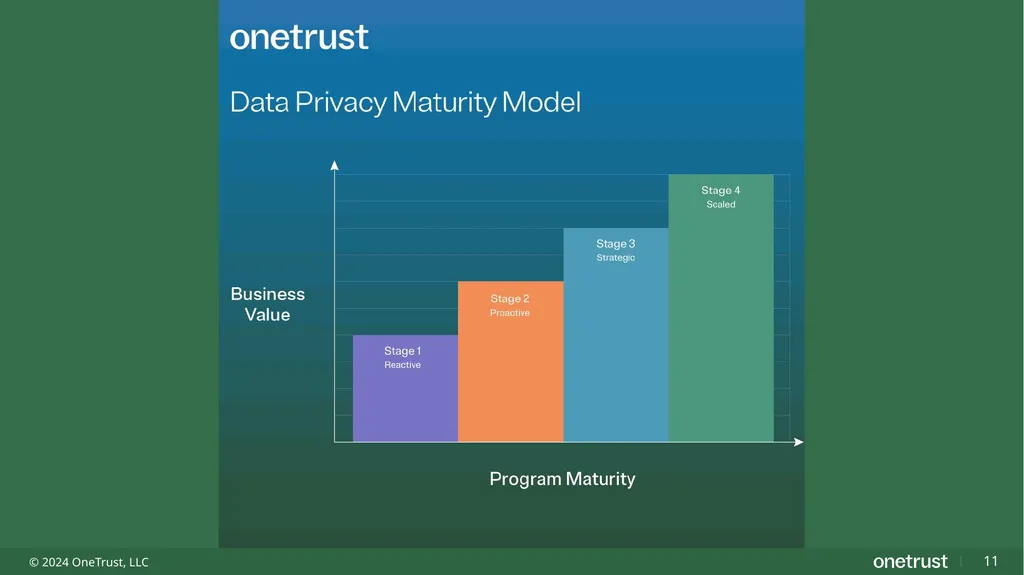
11
Value to business Unlocking and activating data
Data privacy as enabler for innovation
Shift-left governance to address issues early
C-level accountability in the business Customer engagement (centered on trust)
Customer loyalty and lifetime value outcomes Organizational alignment C-level accountability in every functional group
Hub-and-spoke with decentralized execution Consumer experience User consent synchronized across channels
First-party data drives marketing/product strategy
Trust center: Integrated consumer right UX Process Optimized processes, regularly reviewed
Higher standards than required by regulation Data and activity Unlocking and activating data
Behavioral analytics and AI model training
Enforcement of responsible use policies
Data sharing and future-proofing STAGE 4: SCALED AI governance Shift-left governance to surface issues early
Faster innovation and time-to-market
Responsible practices and defensibility<br>