
Update on the Latest ESC Guidelines for Heart


Description: Update on the Latest ESC Guidelines for Heart Failure Dr Christopher Boos Consultant Cardiologist Poole Hospital NHS Foundation Trust Visiting Professor Leeds Beckett University Visiting Fellow Bournemouth University What is new in 2021 HF
Related Topics
Download Presentation
"Update on the Latest ESC Guidelines for Heart" is the property of its rightful owner. Permission is granted to download and print the materials on this website for personal, non-commercial use only, and to display it on your personal computer provided you do not modify the materials and that you retain all copyright notices contained in the materials. By downloading content from our website, you accept the terms of this agreement.
Presentation Transcript
slide1. Update on the Latest ESC Guidelines for Heart Failure Dr Christopher Boos
Consultant Cardiologist Poole Hospital NHS Foundation Trust
Visiting Professor Leeds Beckett University
Visiting Fellow Bournemouth University<br>
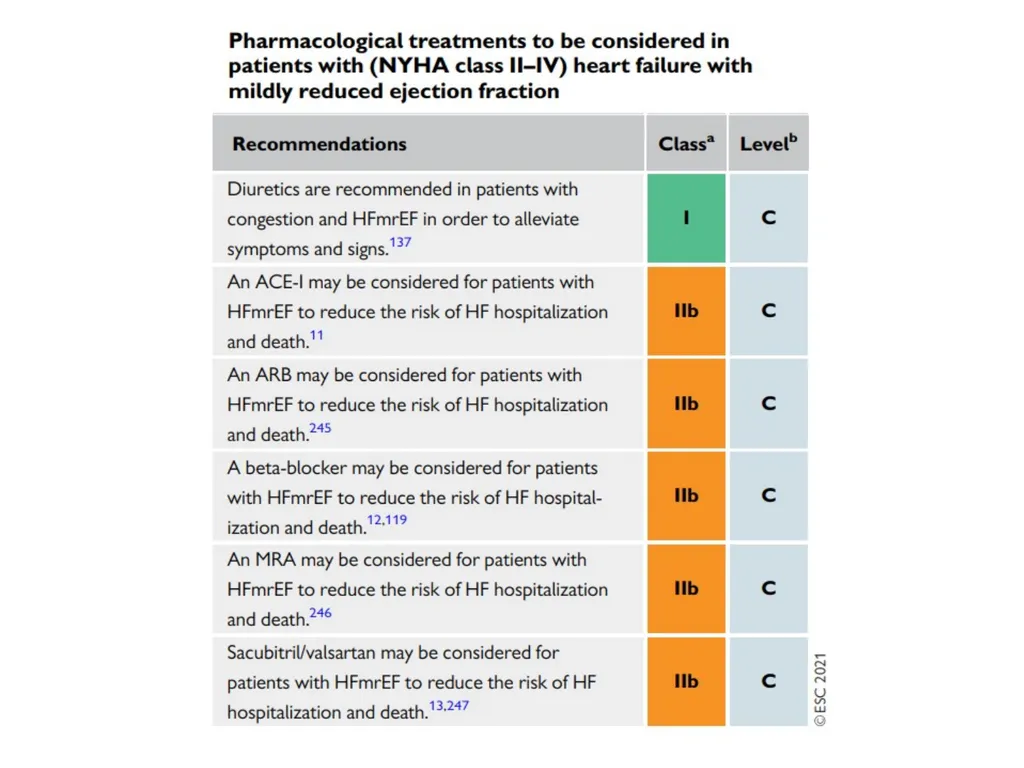
slide3. What is new in 2021 HF Guideline? A change of the term ‘heart failure with mid-range ejection fraction’ to ‘heart failure with mildly reduced ejection fraction’ (HFmrEF)
A new simplified treatment algorithm for HFrEF
The addition of a treatment algorithm for HFrEF according to phenotypes
Updated treatments for most non-cardiovascular comorbidities including diabetes, hyperkalaemia, iron deficiency, and cancer.
Updates on cardiomyopathies including the role of genetic testing and new treatments.
Modified classification for acute HF
The addition of key quality indicators.<br>
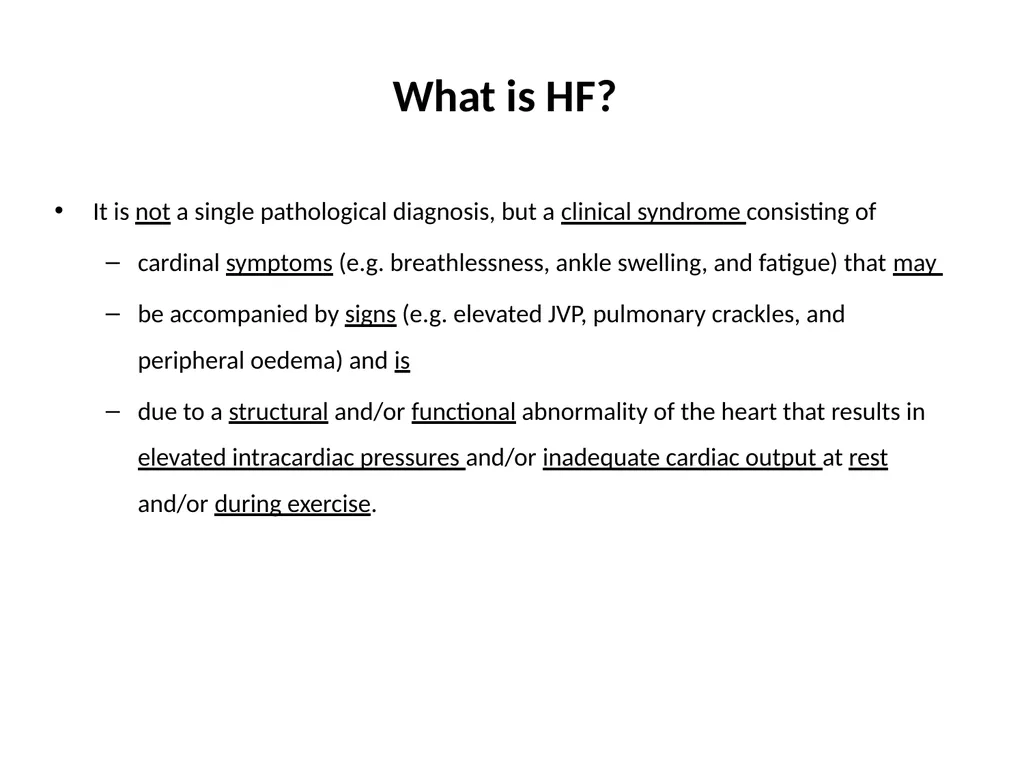
slide4. What is HF? It is not a single pathological diagnosis, but a clinical syndrome consisting of
cardinal symptoms (e.g. breathlessness, ankle swelling, and fatigue) that may
be accompanied by signs (e.g. elevated JVP, pulmonary crackles, and peripheral oedema) and is
due to a structural and/or functional abnormality of the heart that results in elevated intracardiac pressures and/or inadequate cardiac output at rest and/or during exercise.<br>
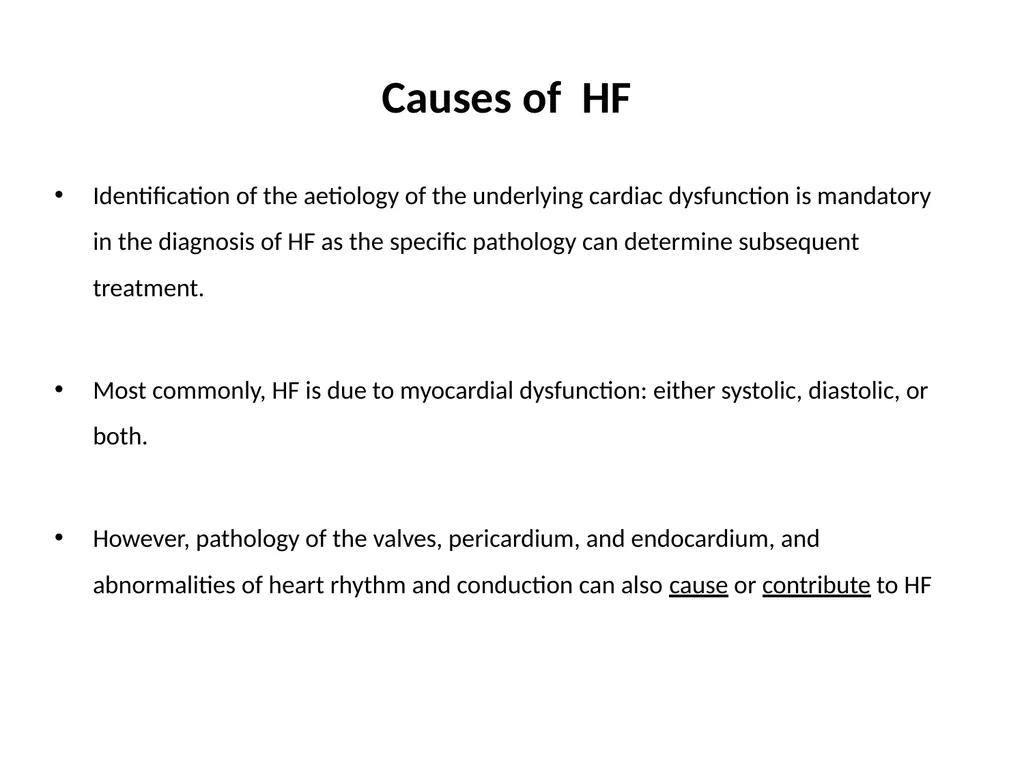
slide5. Causes of HF Identification of the aetiology of the underlying cardiac dysfunction is mandatory in the diagnosis of HF as the specific pathology can determine subsequent treatment.
Most commonly, HF is due to myocardial dysfunction: either systolic, diastolic, or both.
However, pathology of the valves, pericardium, and endocardium, and abnormalities of heart rhythm and conduction can also cause or contribute to HF<br>
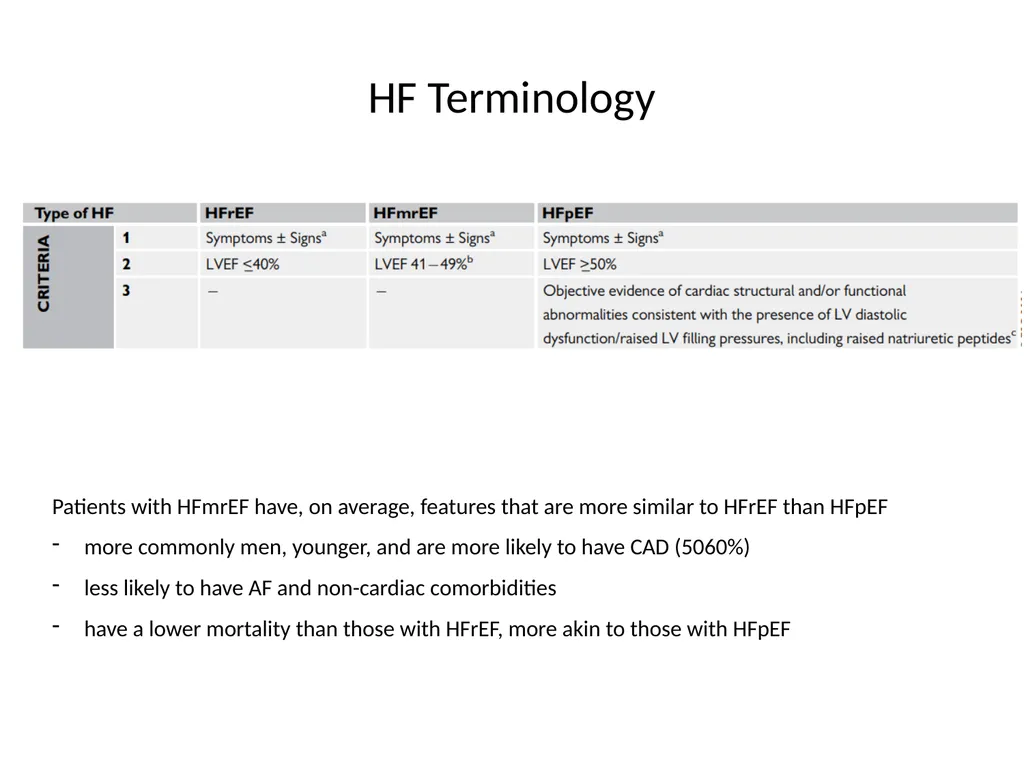
slide6. HF Terminology Patients with HFmrEF have, on average, features that are more similar to HFrEF than HFpEF
more commonly men, younger, and are more likely to have CAD (5060%)
less likely to have AF and non-cardiac comorbidities
have a lower mortality than those with HFrEF, more akin to those with HFpEF<br>
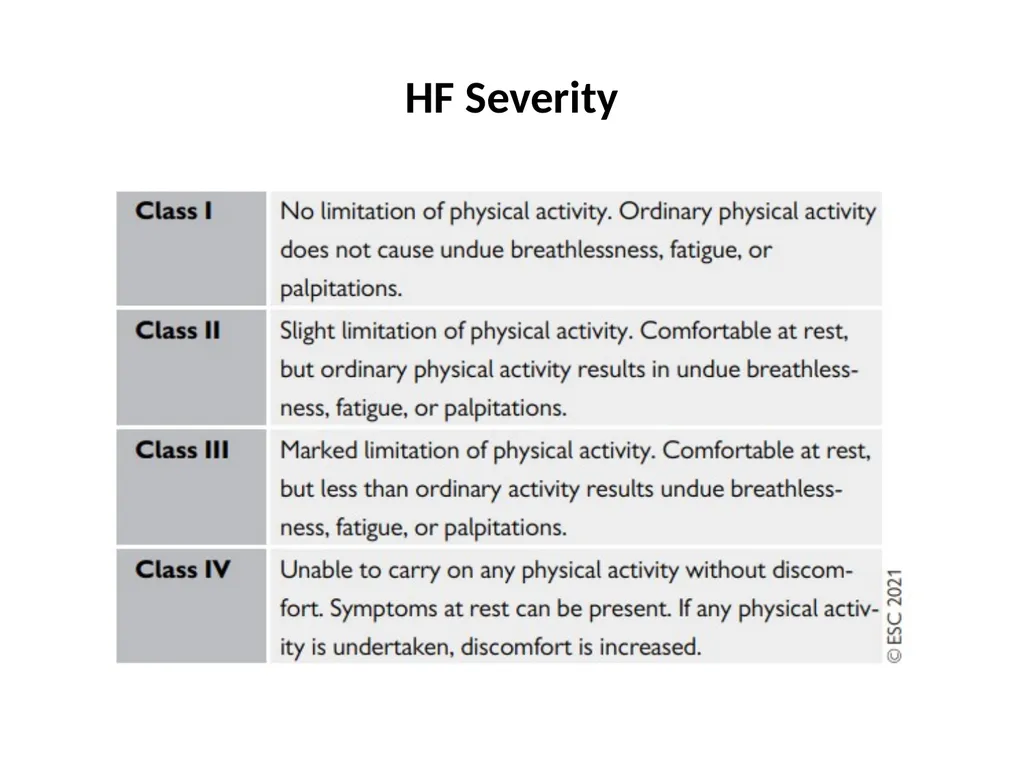
slide7. HF Severity<br>
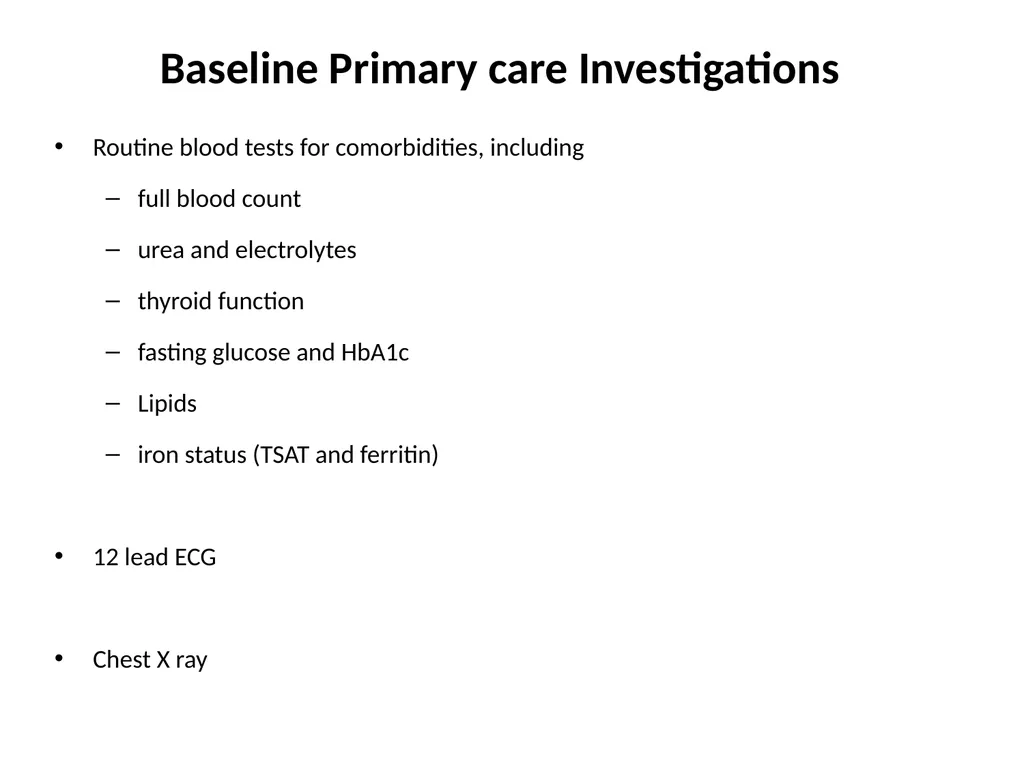
slide8. Baseline Primary care Investigations Routine blood tests for comorbidities, including
full blood count
urea and electrolytes
thyroid function
fasting glucose and HbA1c
Lipids
iron status (TSAT and ferritin)
12 lead ECG
Chest X ray<br>
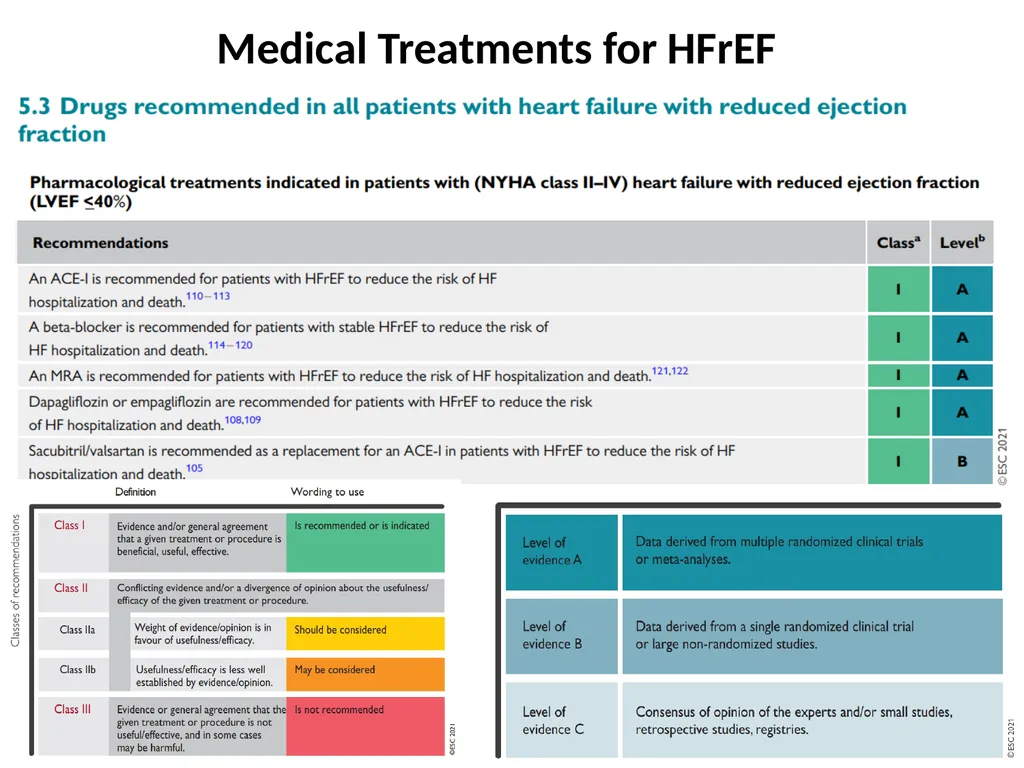
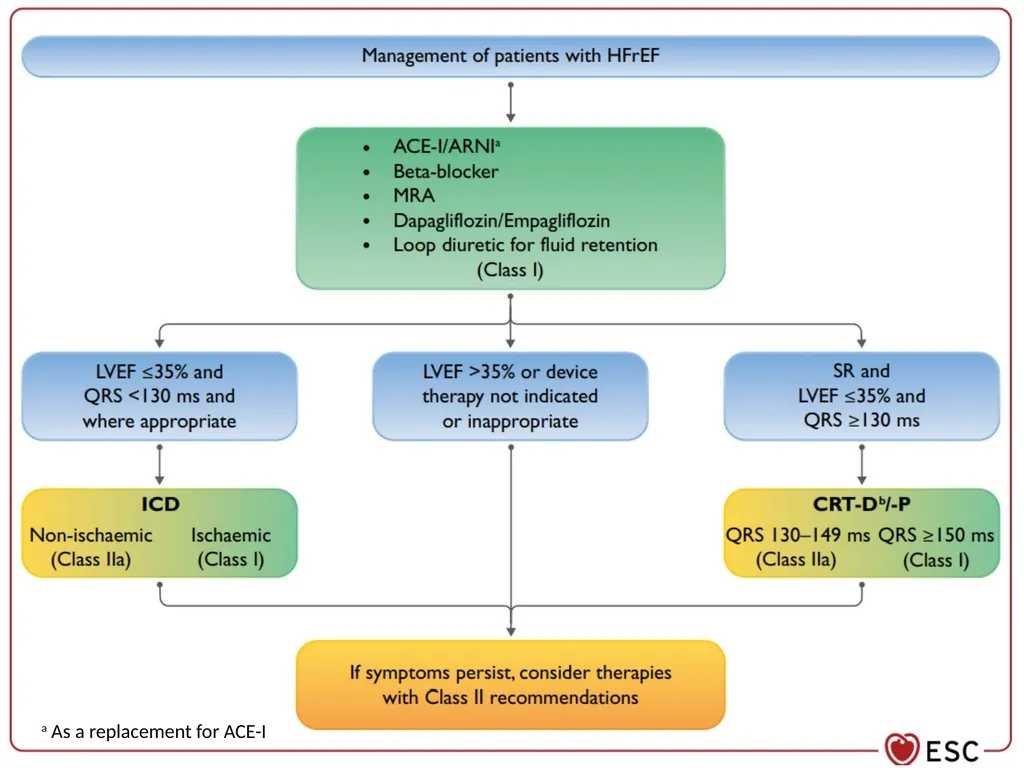
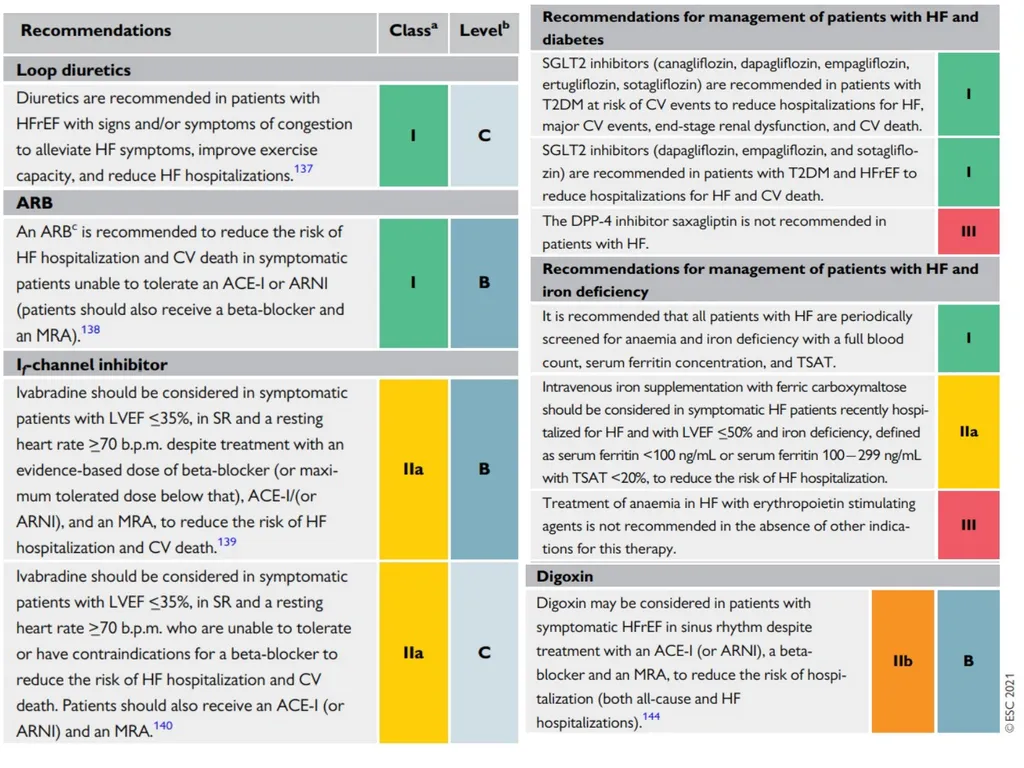
slide9. Medical Treatments for HFrEF<br>
slide10. a As a replacement for ACE-I<br>
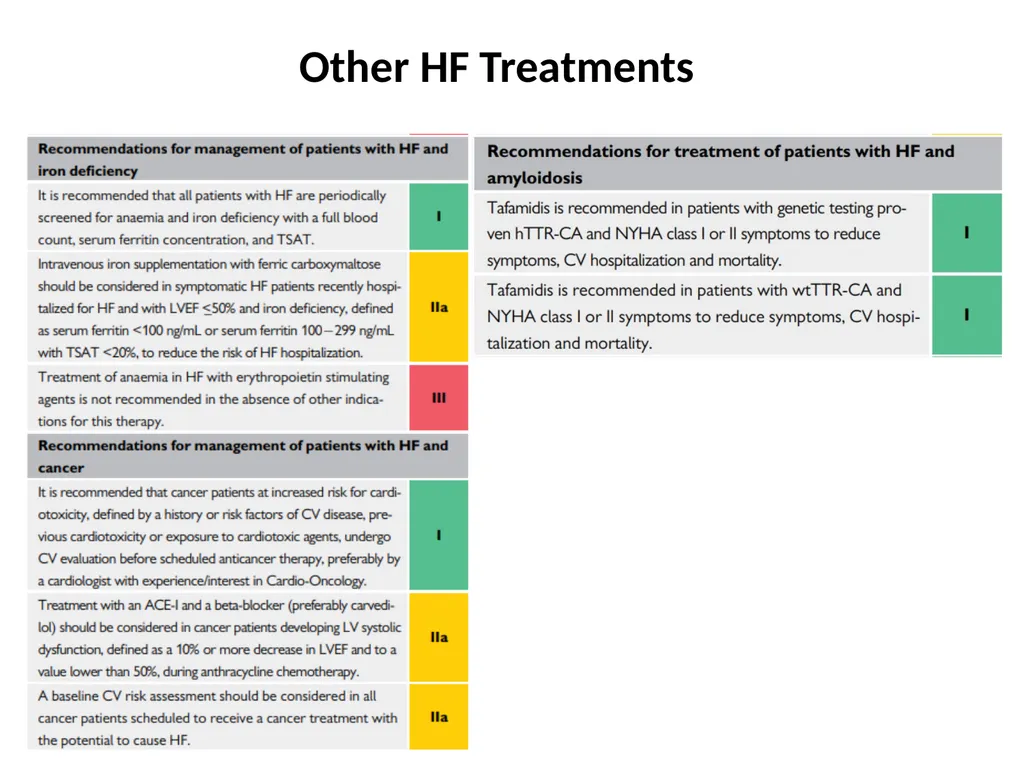
slide12. Other HF Treatments<br>
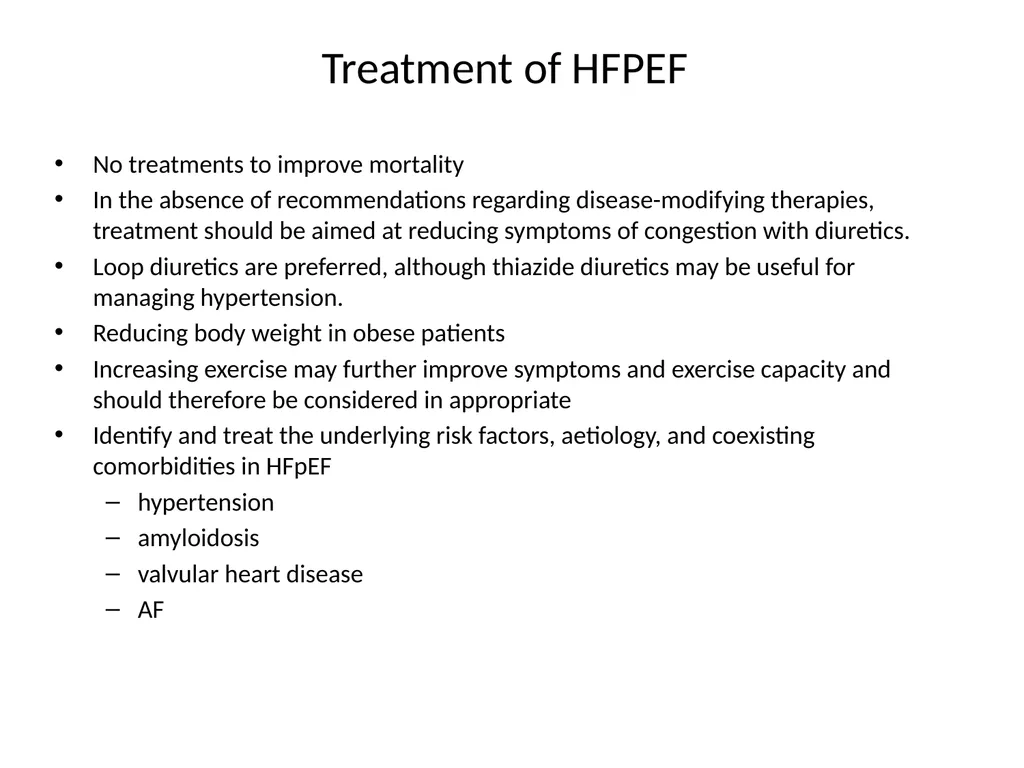
slide14. Treatment of HFPEF No treatments to improve mortality
In the absence of recommendations regarding disease-modifying therapies, treatment should be aimed at reducing symptoms of congestion with diuretics.
Loop diuretics are preferred, although thiazide diuretics may be useful for managing hypertension.
Reducing body weight in obese patients
Increasing exercise may further improve symptoms and exercise capacity and should therefore be considered in appropriate
Identify and treat the underlying risk factors, aetiology, and coexisting comorbidities in HFpEF
hypertension
amyloidosis
valvular heart disease
AF<br>
Consultant Cardiologist Poole Hospital NHS Foundation Trust
Visiting Professor Leeds Beckett University
Visiting Fellow Bournemouth University<br>
slide3. What is new in 2021 HF Guideline? A change of the term ‘heart failure with mid-range ejection fraction’ to ‘heart failure with mildly reduced ejection fraction’ (HFmrEF)
A new simplified treatment algorithm for HFrEF
The addition of a treatment algorithm for HFrEF according to phenotypes
Updated treatments for most non-cardiovascular comorbidities including diabetes, hyperkalaemia, iron deficiency, and cancer.
Updates on cardiomyopathies including the role of genetic testing and new treatments.
Modified classification for acute HF
The addition of key quality indicators.<br>
slide4. What is HF? It is not a single pathological diagnosis, but a clinical syndrome consisting of
cardinal symptoms (e.g. breathlessness, ankle swelling, and fatigue) that may
be accompanied by signs (e.g. elevated JVP, pulmonary crackles, and peripheral oedema) and is
due to a structural and/or functional abnormality of the heart that results in elevated intracardiac pressures and/or inadequate cardiac output at rest and/or during exercise.<br>
slide5. Causes of HF Identification of the aetiology of the underlying cardiac dysfunction is mandatory in the diagnosis of HF as the specific pathology can determine subsequent treatment.
Most commonly, HF is due to myocardial dysfunction: either systolic, diastolic, or both.
However, pathology of the valves, pericardium, and endocardium, and abnormalities of heart rhythm and conduction can also cause or contribute to HF<br>
slide6. HF Terminology Patients with HFmrEF have, on average, features that are more similar to HFrEF than HFpEF
more commonly men, younger, and are more likely to have CAD (5060%)
less likely to have AF and non-cardiac comorbidities
have a lower mortality than those with HFrEF, more akin to those with HFpEF<br>
slide7. HF Severity<br>
slide8. Baseline Primary care Investigations Routine blood tests for comorbidities, including
full blood count
urea and electrolytes
thyroid function
fasting glucose and HbA1c
Lipids
iron status (TSAT and ferritin)
12 lead ECG
Chest X ray<br>
slide9. Medical Treatments for HFrEF<br>
slide10. a As a replacement for ACE-I<br>
slide12. Other HF Treatments<br>
slide14. Treatment of HFPEF No treatments to improve mortality
In the absence of recommendations regarding disease-modifying therapies, treatment should be aimed at reducing symptoms of congestion with diuretics.
Loop diuretics are preferred, although thiazide diuretics may be useful for managing hypertension.
Reducing body weight in obese patients
Increasing exercise may further improve symptoms and exercise capacity and should therefore be considered in appropriate
Identify and treat the underlying risk factors, aetiology, and coexisting comorbidities in HFpEF
hypertension
amyloidosis
valvular heart disease
AF<br>