01
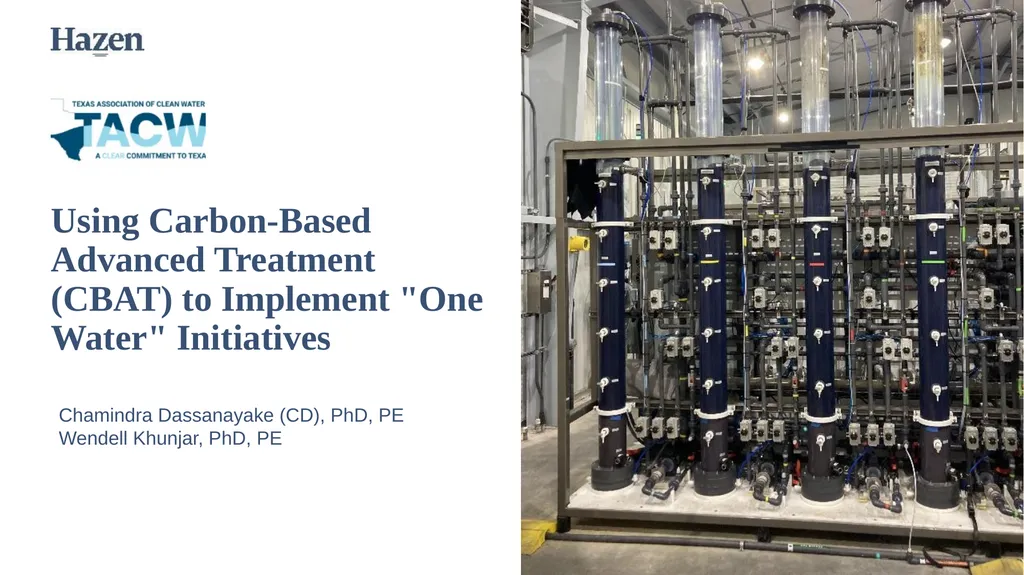
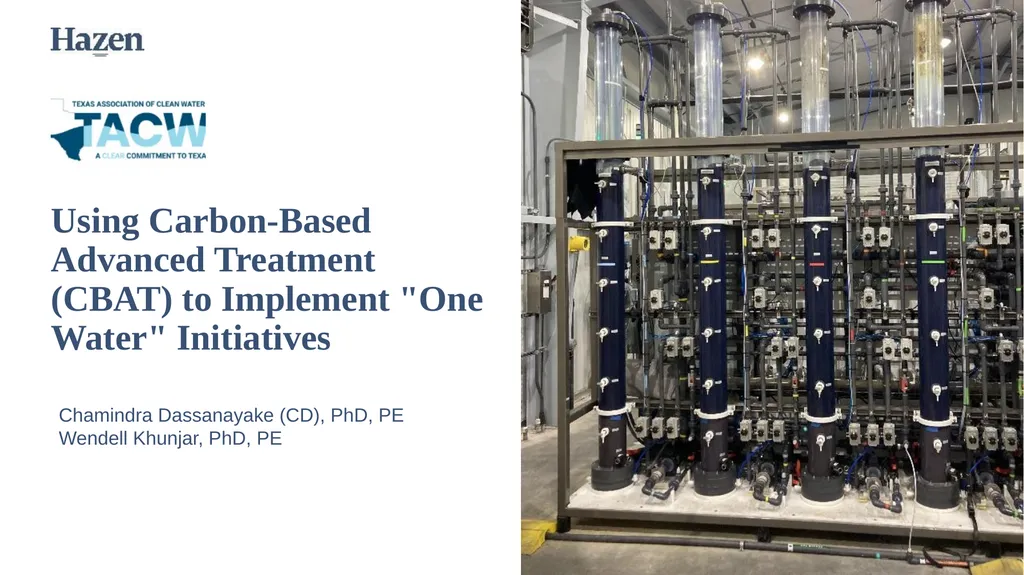
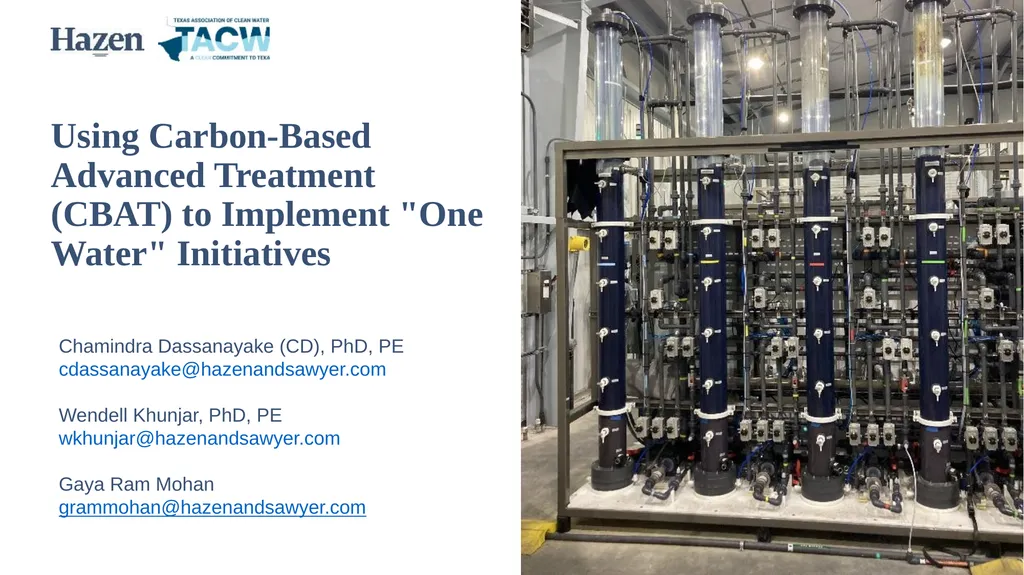
Using Carbon-Based Advanced Treatment (CBAT) to Implement "One Water" Initiatives Chamindra Dassanayake (CD), PhD, PE
Wendell Khunjar, PhD, PE<br>
04
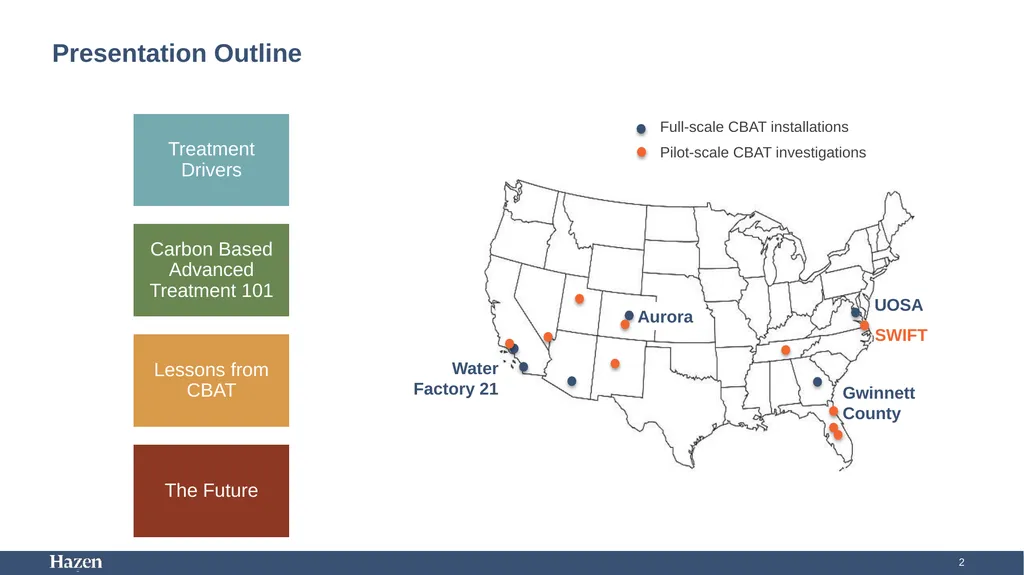
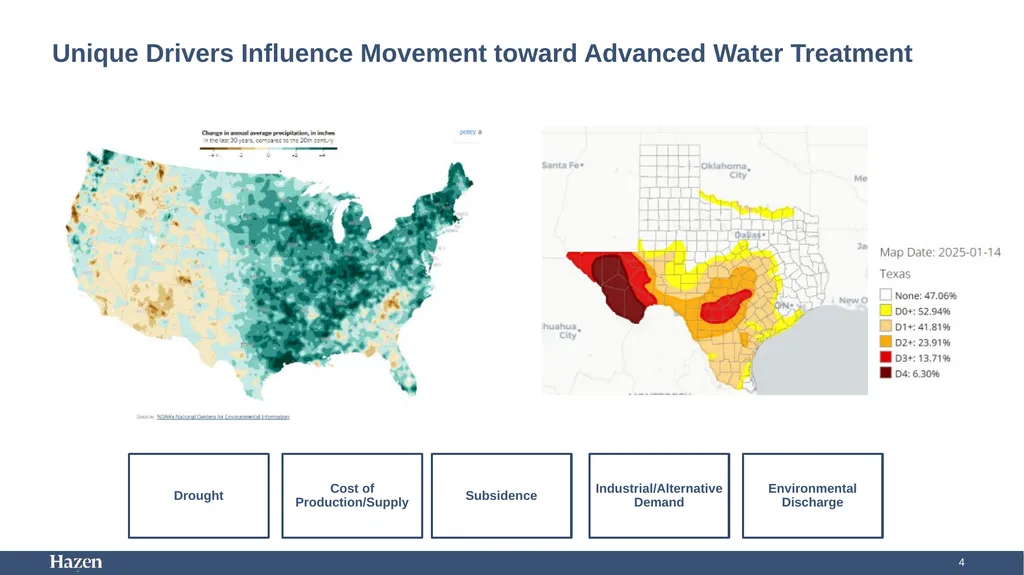
Unique Drivers Influence Movement toward Advanced Water Treatment 4<br>
05
In 101 Seconds Carbon Based Advanced Treatment 5<br>
06
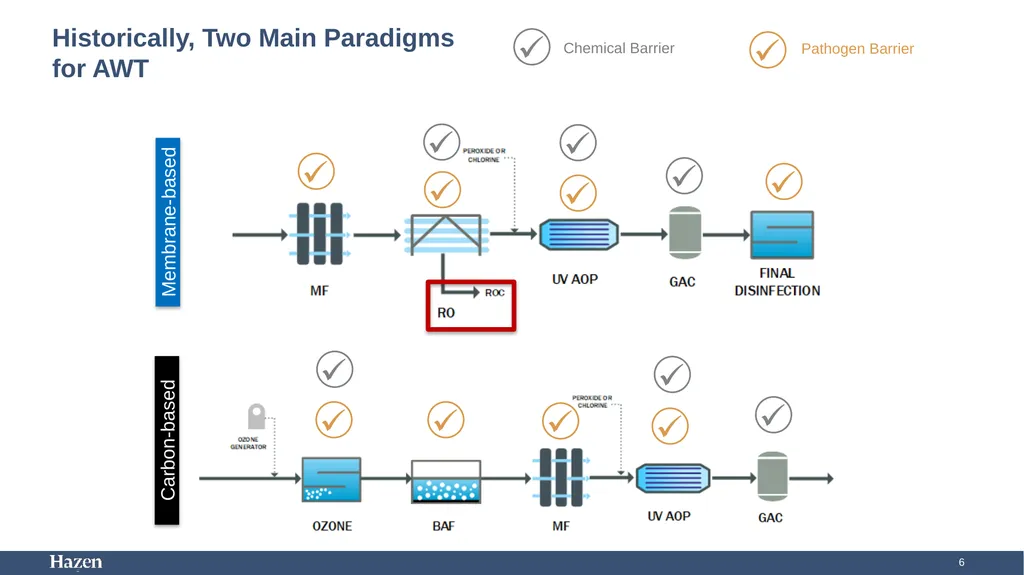
Historically, Two Main Paradigms for AWT 6 Membrane-based Carbon-based Chemical Barrier Pathogen Barrier<br>
07
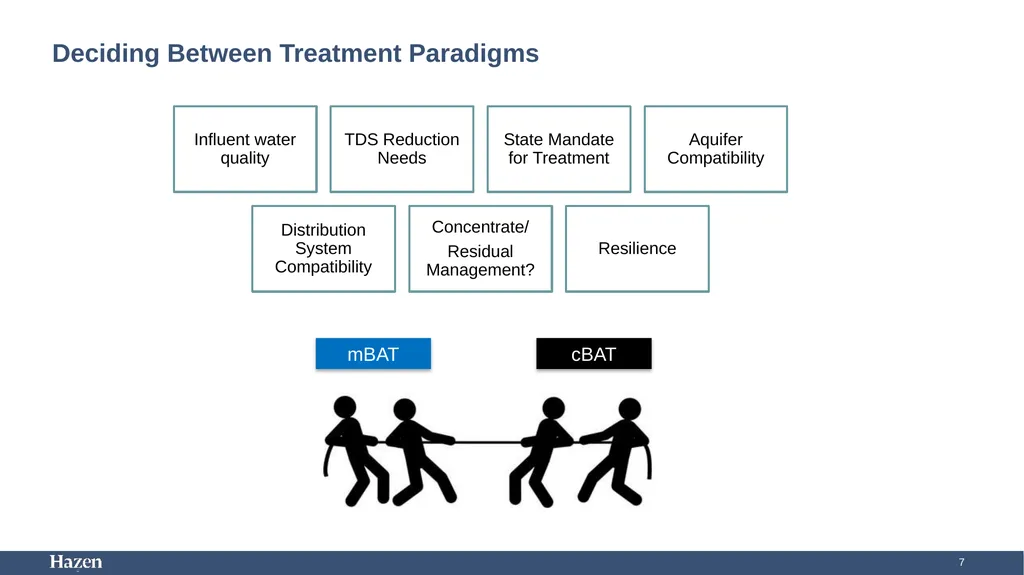
Deciding Between Treatment Paradigms 7 mBAT cBAT<br>
08
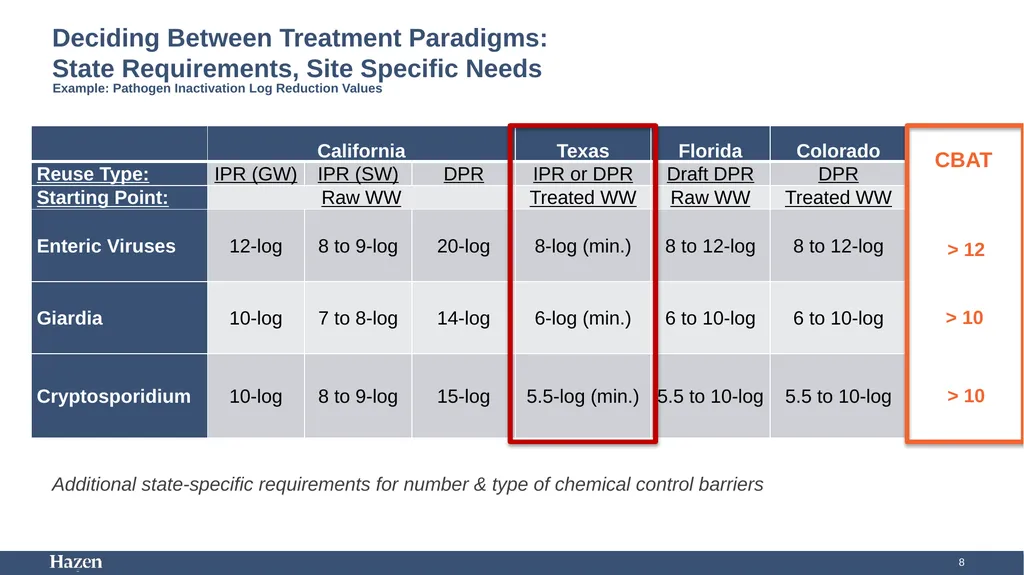
Deciding Between Treatment Paradigms:�State Requirements, Site Specific Needs 8 Example: Pathogen Inactivation Log Reduction Values Additional state-specific requirements for number & type of chemical control barriers CBAT > 12 > 10 > 10<br>
09
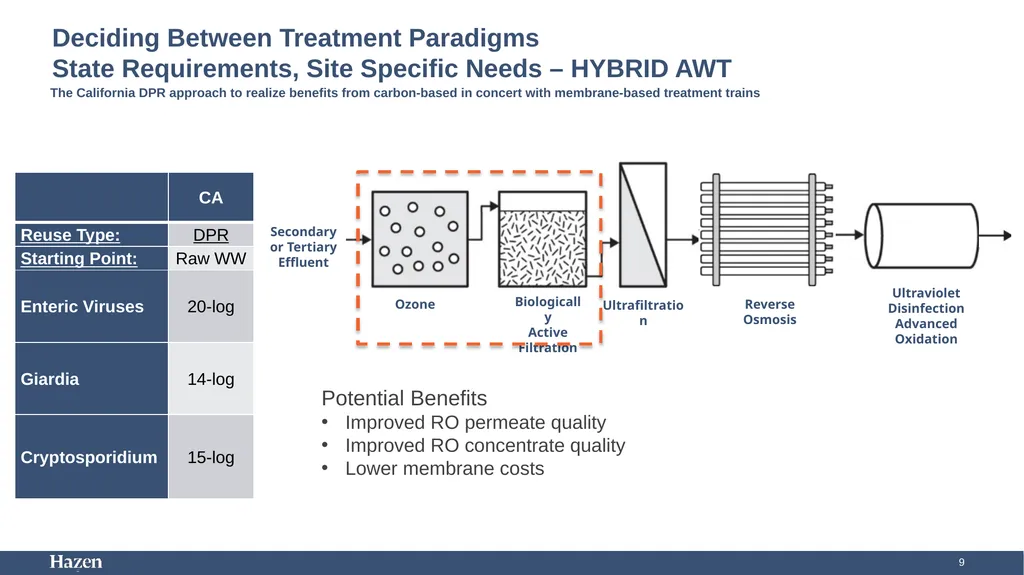
Deciding Between Treatment Paradigms�State Requirements, Site Specific Needs – HYBRID AWT 9 The California DPR approach to realize benefits from carbon-based in concert with membrane-based treatment trains Pure Water San Diego Potential Benefits
Improved RO permeate quality
Improved RO concentrate quality
Lower membrane costs<br>
10
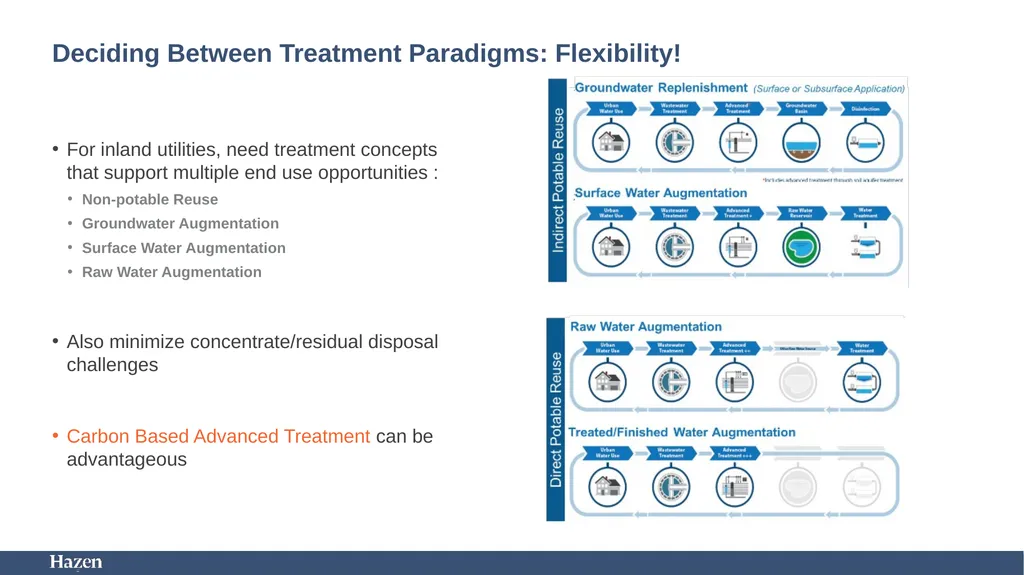
Deciding Between Treatment Paradigms: Flexibility! 10 For inland utilities, need treatment concepts that support multiple end use opportunities :
Non-potable Reuse
Groundwater Augmentation
Surface Water Augmentation
Raw Water Augmentation
Also minimize concentrate/residual disposal challenges
Carbon Based Advanced Treatment can be advantageous<br>
11
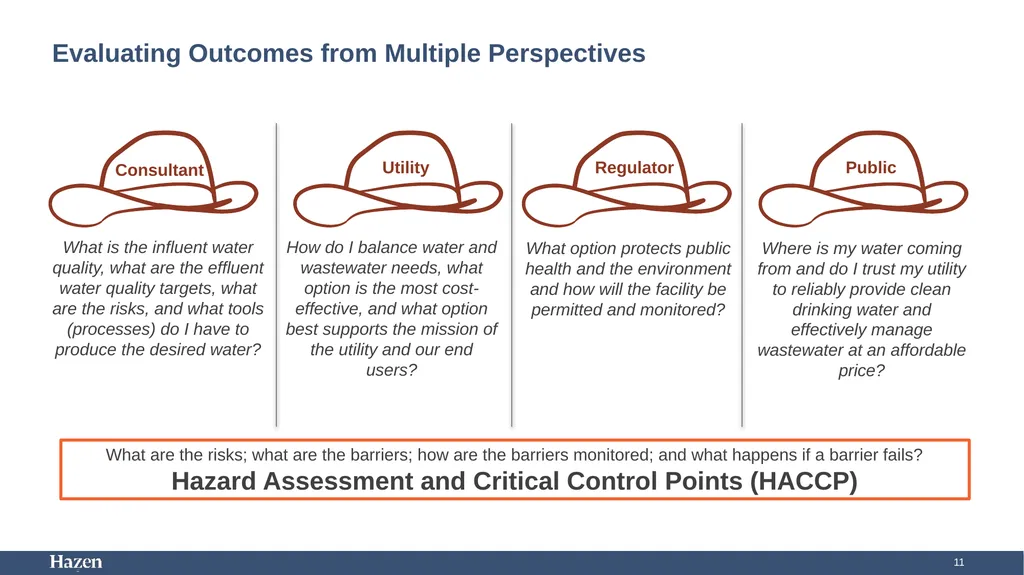
Evaluating Outcomes from Multiple Perspectives 11 What is the influent water quality, what are the effluent water quality targets, what are the risks, and what tools (processes) do I have to produce the desired water? How do I balance water and wastewater needs, what option is the most cost-effective, and what option best supports the mission of the utility and our end users? What option protects public health and the environment and how will the facility be permitted and monitored? Where is my water coming from and do I trust my utility to reliably provide clean drinking water and effectively manage wastewater at an affordable price? Consultant Utility Regulator Public What are the risks; what are the barriers; how are the barriers monitored; and what happens if a barrier fails?
Hazard Assessment and Critical Control Points (HACCP)<br>
12
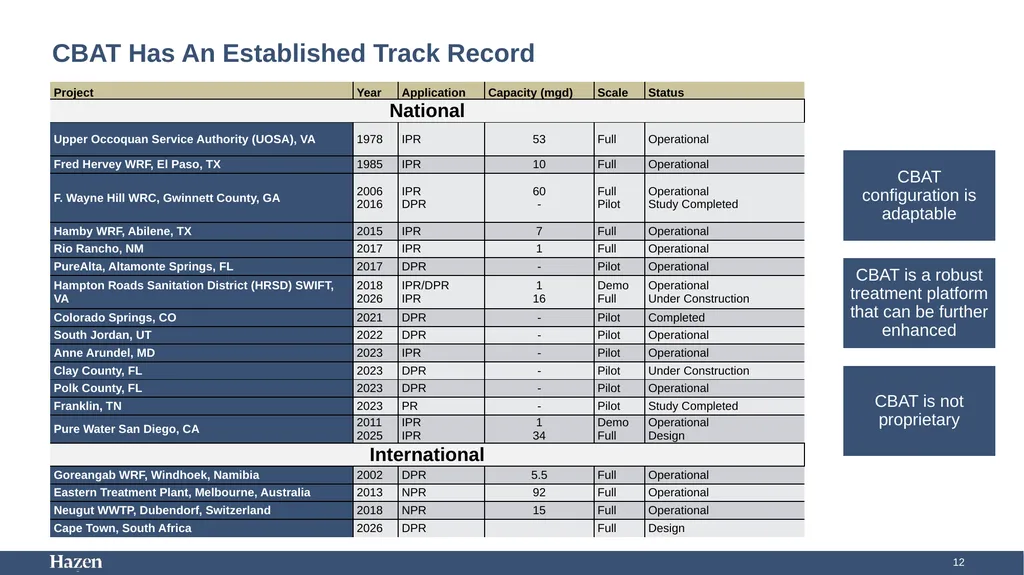
CBAT Has An Established Track Record 12<br>
13
Lessons from CBAT 13<br>
14
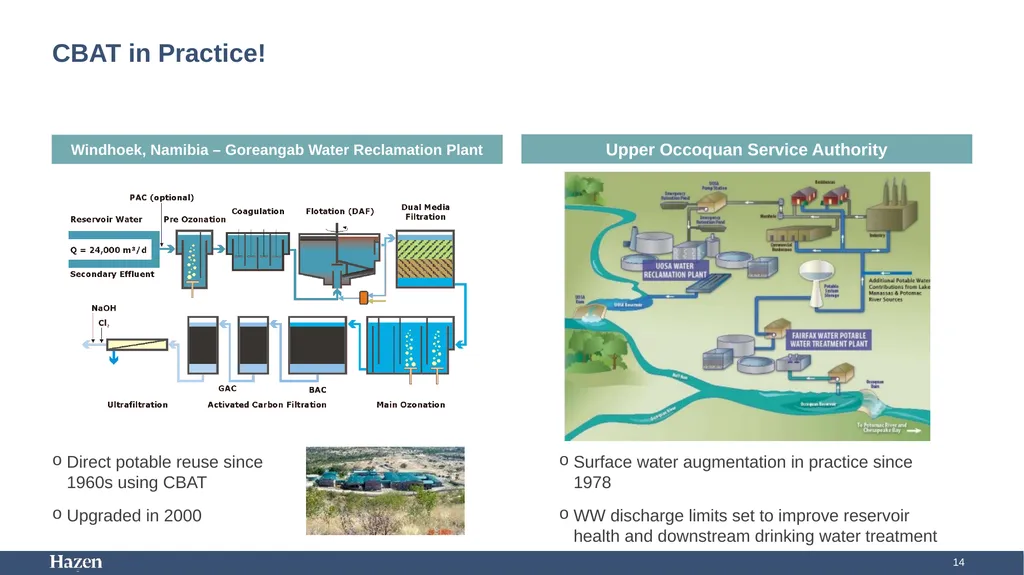
CBAT in Practice! 14 Direct potable reuse since 1960s using CBAT
Upgraded in 2000 Windhoek, Namibia – Goreangab Water Reclamation Plant Upper Occoquan Service Authority Surface water augmentation in practice since 1978
WW discharge limits set to improve reservoir health and downstream drinking water treatment<br>
15
Gwinnett County, GA – F. Wayne Hill WRC Case Studies 15<br>
16
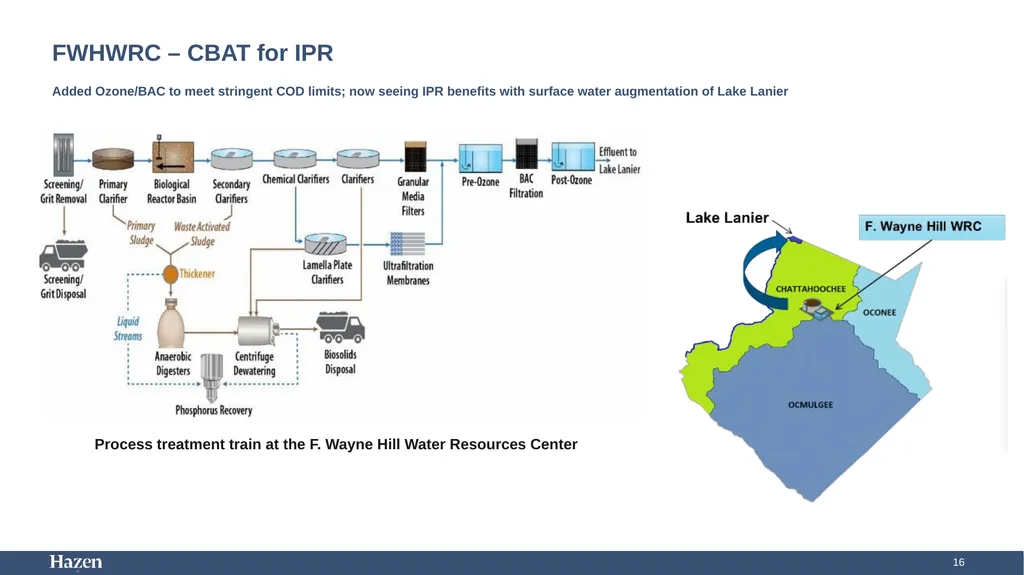
FWHWRC – CBAT for IPR 16 Added Ozone/BAC to meet stringent COD limits; now seeing IPR benefits with surface water augmentation of Lake Lanier<br>
17
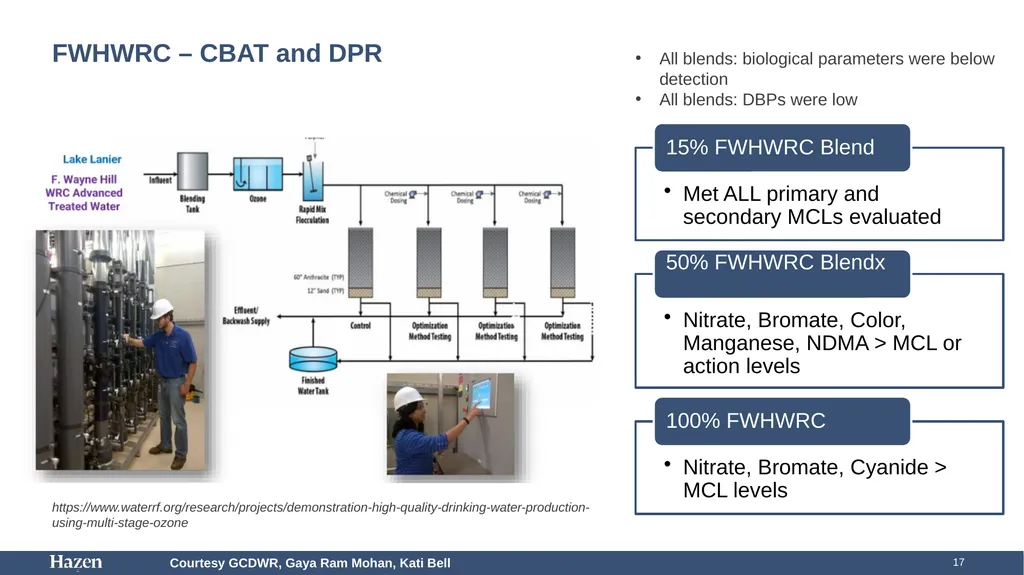
FWHWRC – CBAT and DPR 17 Courtesy GCDWR, Gaya Ram Mohan, Kati Bell https://www.waterrf.org/research/projects/demonstration-high-quality-drinking-water-production-using-multi-stage-ozone All blends: biological parameters were below detection
All blends: DBPs were low<br>
18
Franklin, TN Case Studies 18<br>
19
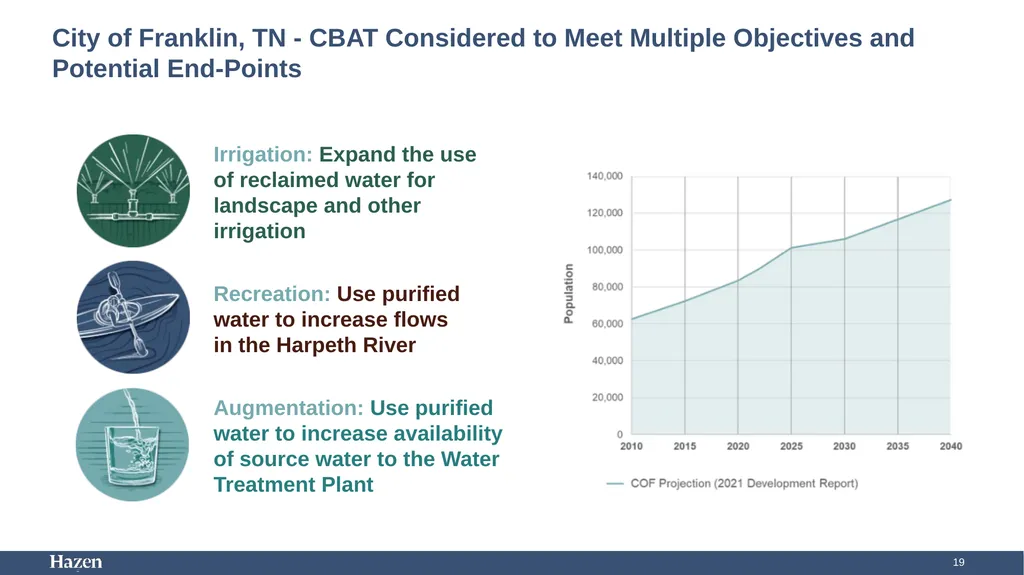
City of Franklin, TN - CBAT Considered to Meet Multiple Objectives and Potential End-Points 19 Irrigation: Expand the use �of reclaimed water for landscape and other irrigation
Recreation: Use purified water to increase flows �in the Harpeth River
Augmentation: Use purified water to increase availability of source water to the Water Treatment Plant<br>
20
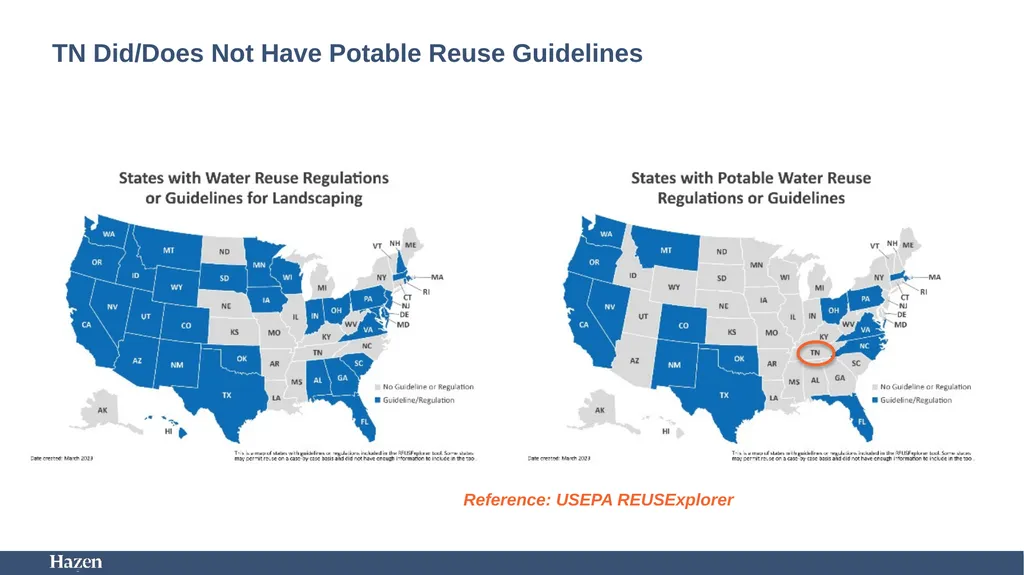
Reference: USEPA REUSExplorer TN Did/Does Not Have Potable Reuse Guidelines<br>
21
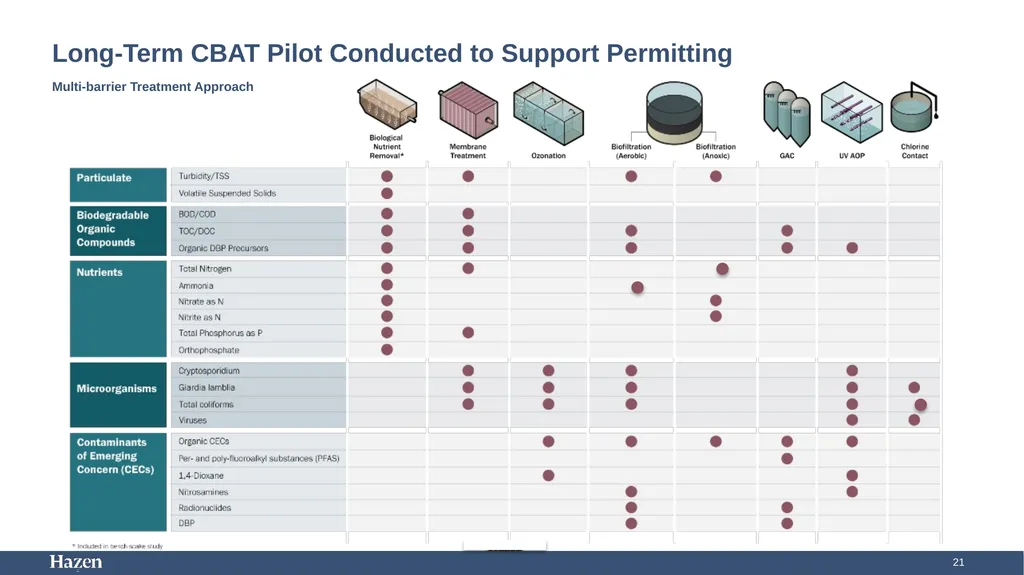
Long-Term CBAT Pilot Conducted to Support Permitting 21 Multi-barrier Treatment Approach<br>
22
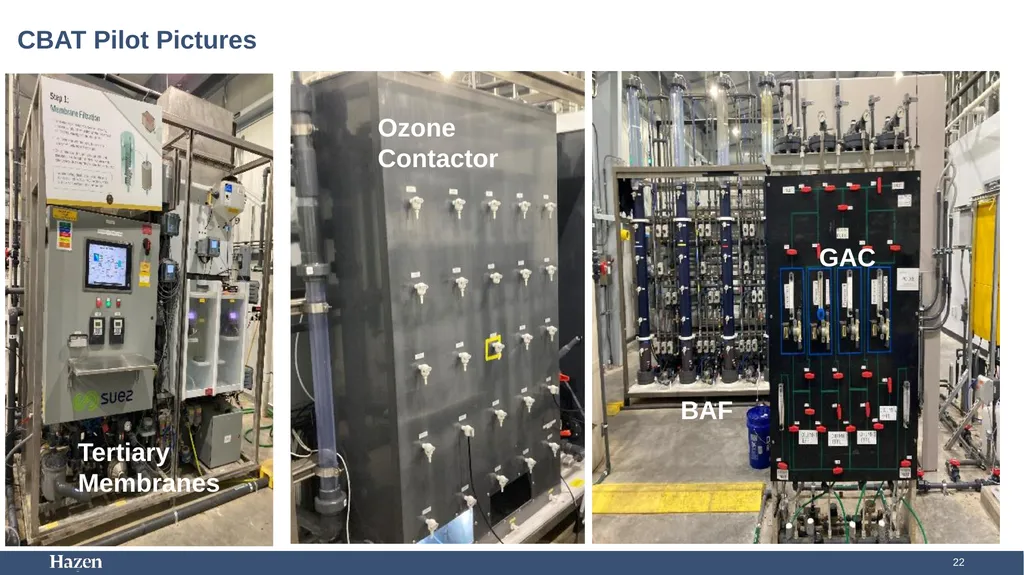
CBAT Pilot Pictures 22 Ozone Contactor BAF GAC Tertiary Membranes<br>
23
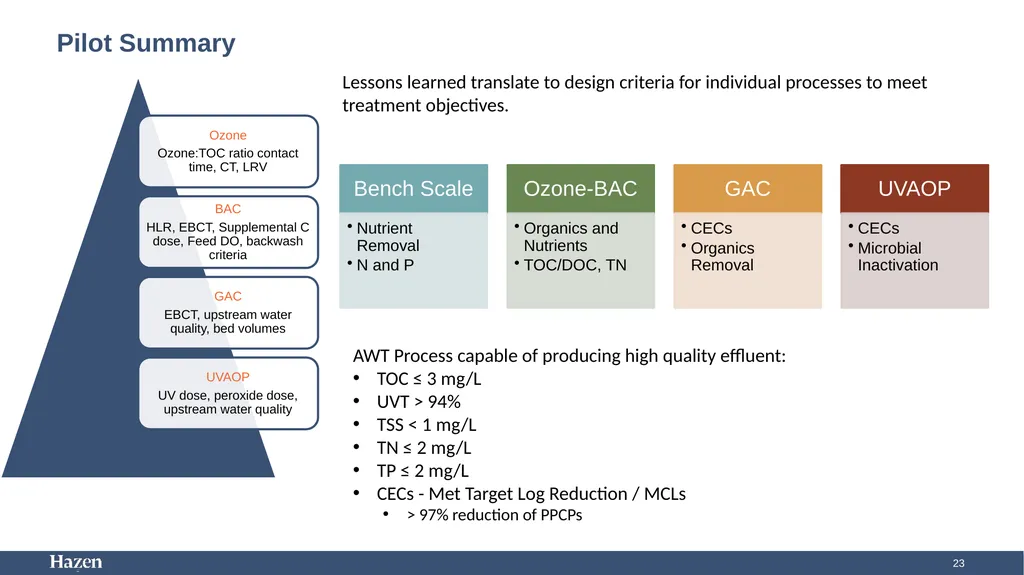
23 Pilot Summary Lessons learned translate to design criteria for individual processes to meet treatment objectives. AWT Process capable of producing high quality effluent:
TOC ≤ 3 mg/L
UVT > 94%
TSS < 1 mg/L
TN ≤ 2 mg/L
TP ≤ 2 mg/L
CECs - Met Target Log Reduction / MCLs
> 97% reduction of PPCPs<br>
24
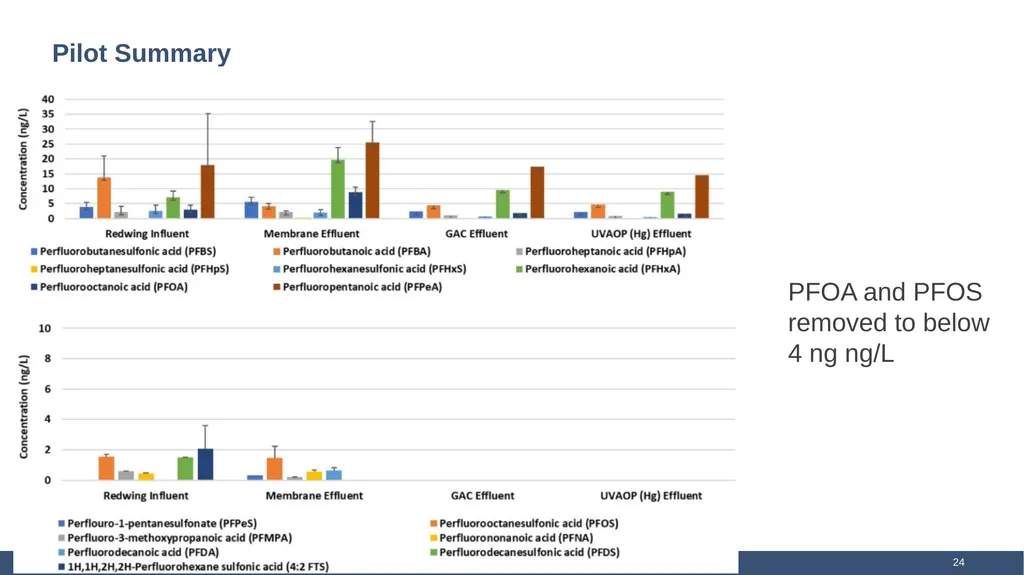
Pilot Summary 24 PFOA and PFOS removed to below 4 ng ng/L<br>
25
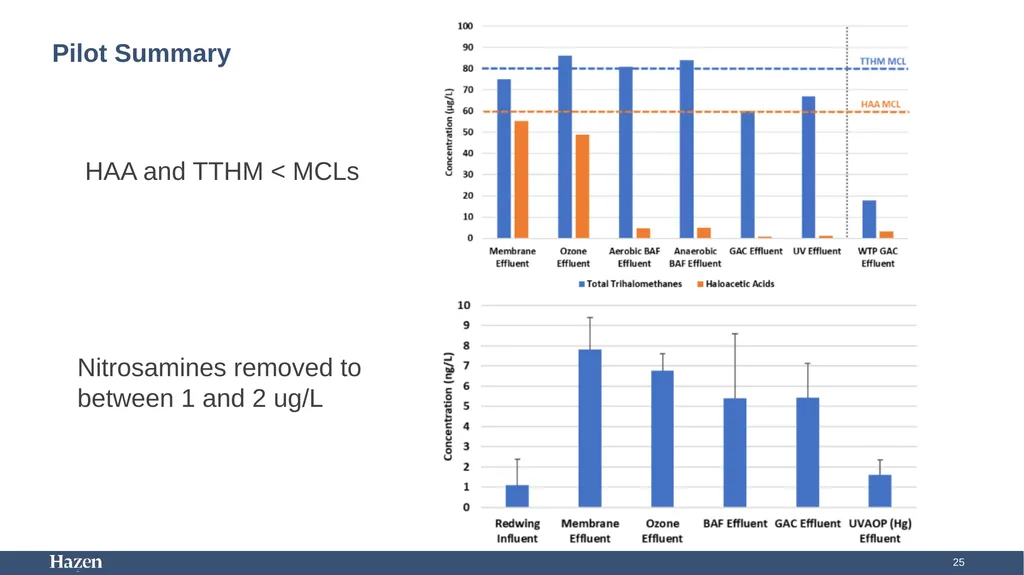
Pilot Summary 25 HAA and TTHM < MCLs Nitrosamines removed to between 1 and 2 ug/L<br>
26
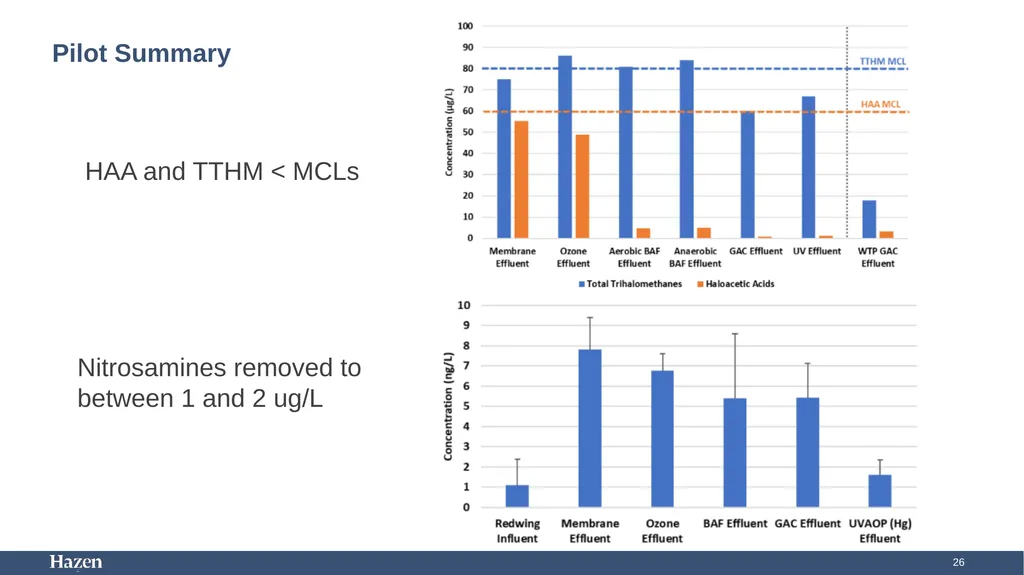
Pilot Summary 26 HAA and TTHM < MCLs Nitrosamines removed to between 1 and 2 ug/L<br>
27
Summary and Future Considerations<br>
28
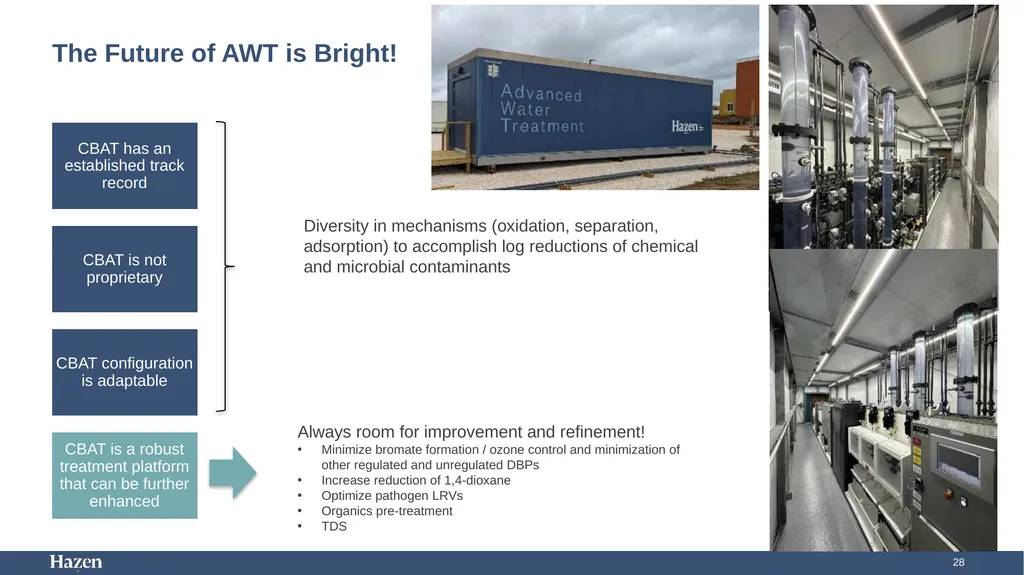
The Future of AWT is Bright! 28 Diversity in mechanisms (oxidation, separation, adsorption) to accomplish log reductions of chemical and microbial contaminants Always room for improvement and refinement!
Minimize bromate formation / ozone control and minimization of other regulated and unregulated DBPs
Increase reduction of 1,4-dioxane
Optimize pathogen LRVs
Organics pre-treatment
TDS<br>
29
Using Carbon-Based Advanced Treatment (CBAT) to Implement "One Water" Initiatives Chamindra Dassanayake (CD), PhD, PE
cdassanayake@hazenandsawyer.com
Wendell Khunjar, PhD, PE
wkhunjar@hazenandsawyer.com
Gaya Ram Mohan
grammohan@hazenandsawyer.com<br>