04
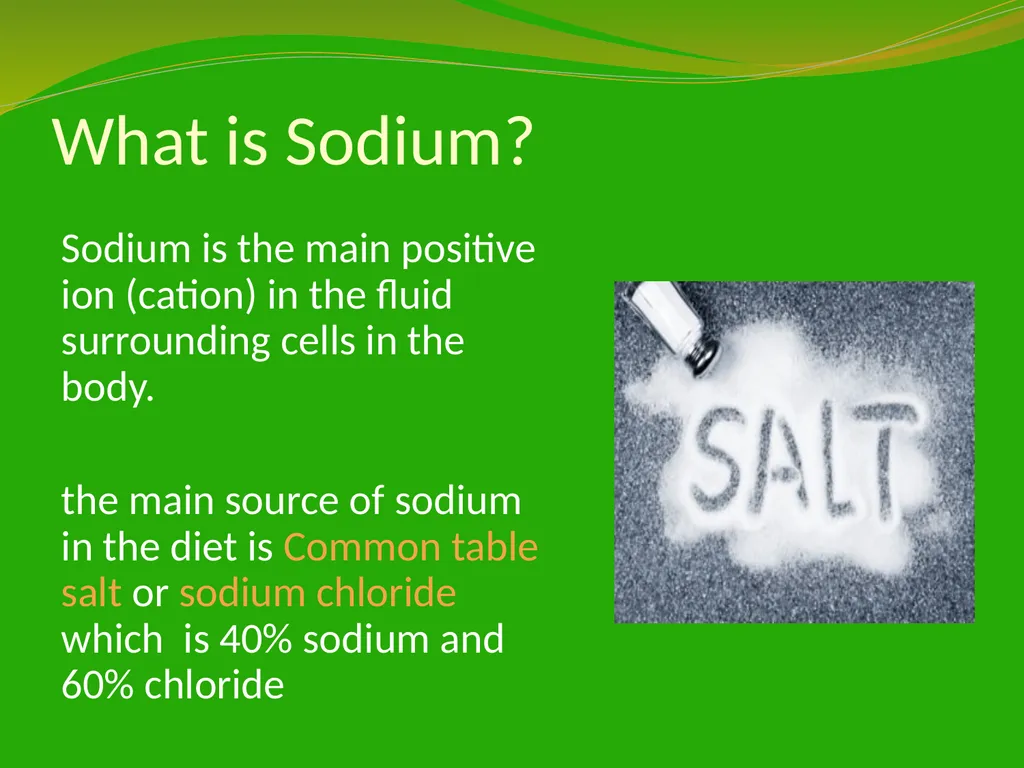
What is Sodium? Sodium is the main positive ion (cation) in the fluid surrounding cells in the body.
the main source of sodium in the diet is Common table salt or sodium chloride which is 40% sodium and 60% chloride<br>
05
Functions of Sodium in the body Most of the body’s sodium is in the blood and the fluid around cells. For good health our bodies need sodium to help:
maintain red blood cells
regulate and maintain fluid balance
regulate and maintain acid-base balance
Maintain normal nerve and muscle function
the heart to beat normally<br>
06
Sodium needs in the body Our bodies only need tiny amounts of sodium to function
(200 to 500 milligrams)
Sodium needs increase with increased sweating from hot days or heavy physical activity<br>
07
BUT
We consume far more
salt and sodium than we need
and
this can harm our bodies<br>
08
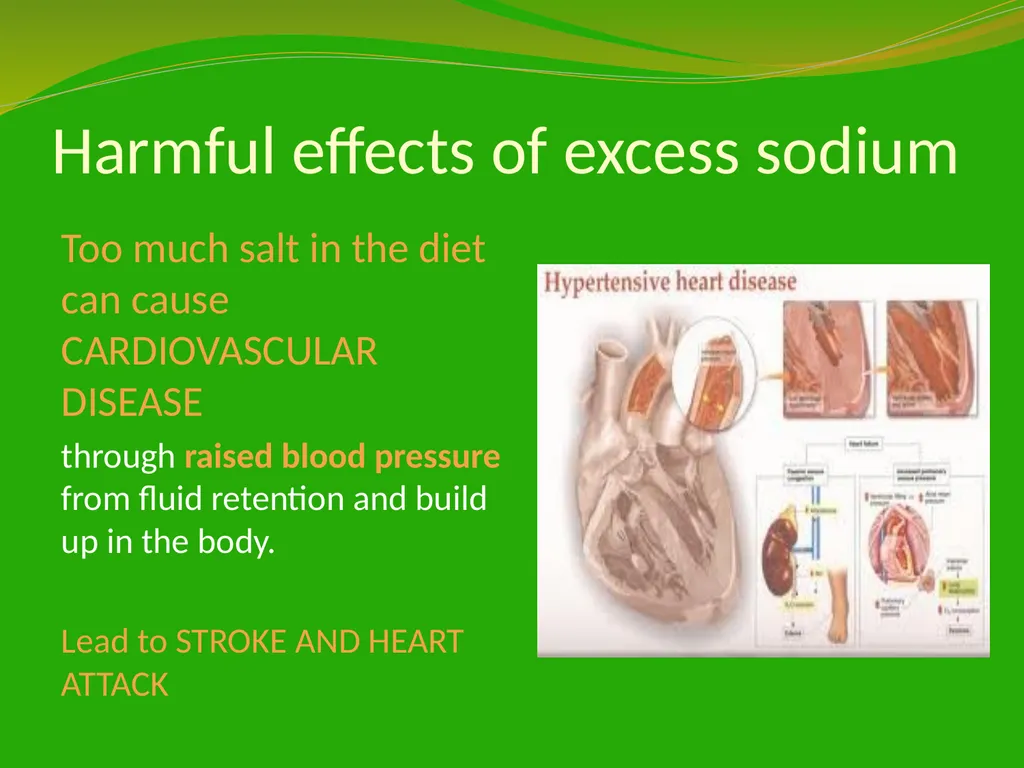
Harmful effects of excess sodium Too much salt in the diet can cause CARDIOVASCULAR DISEASE
through raised blood pressure from fluid retention and build up in the body.
Lead to STROKE AND HEART ATTACK<br>
09
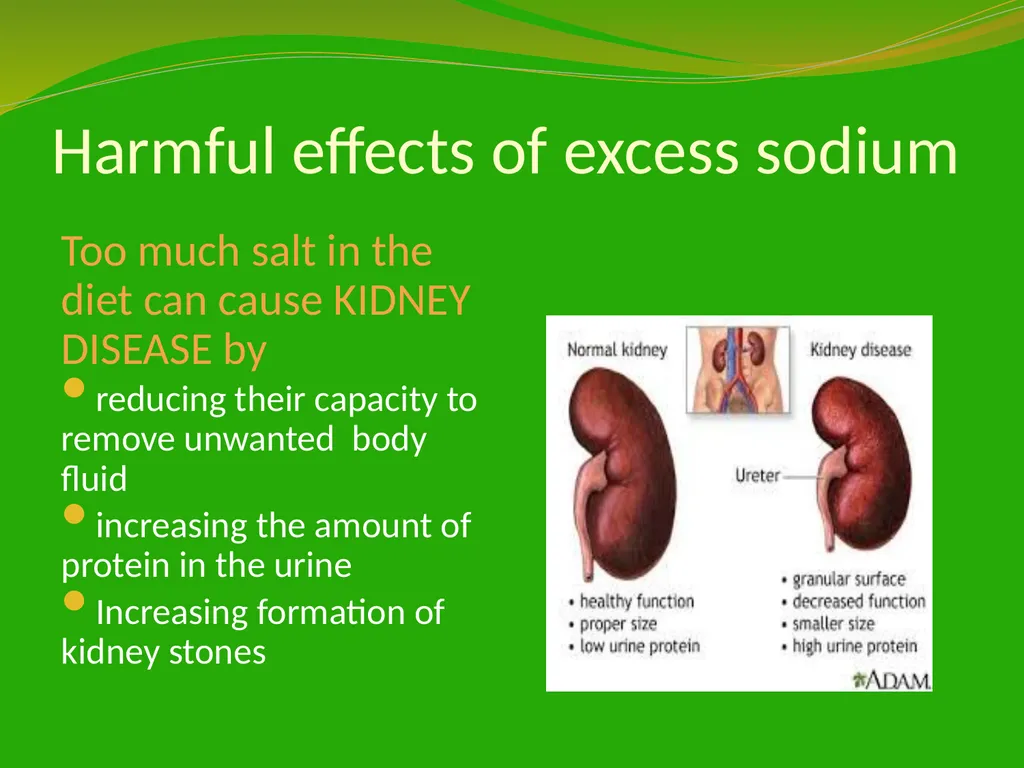
Harmful effects of excess sodium Too much salt in the diet can cause KIDNEY DISEASE by
reducing their capacity to remove unwanted body fluid
increasing the amount of protein in the urine
Increasing formation of kidney stones<br>
10
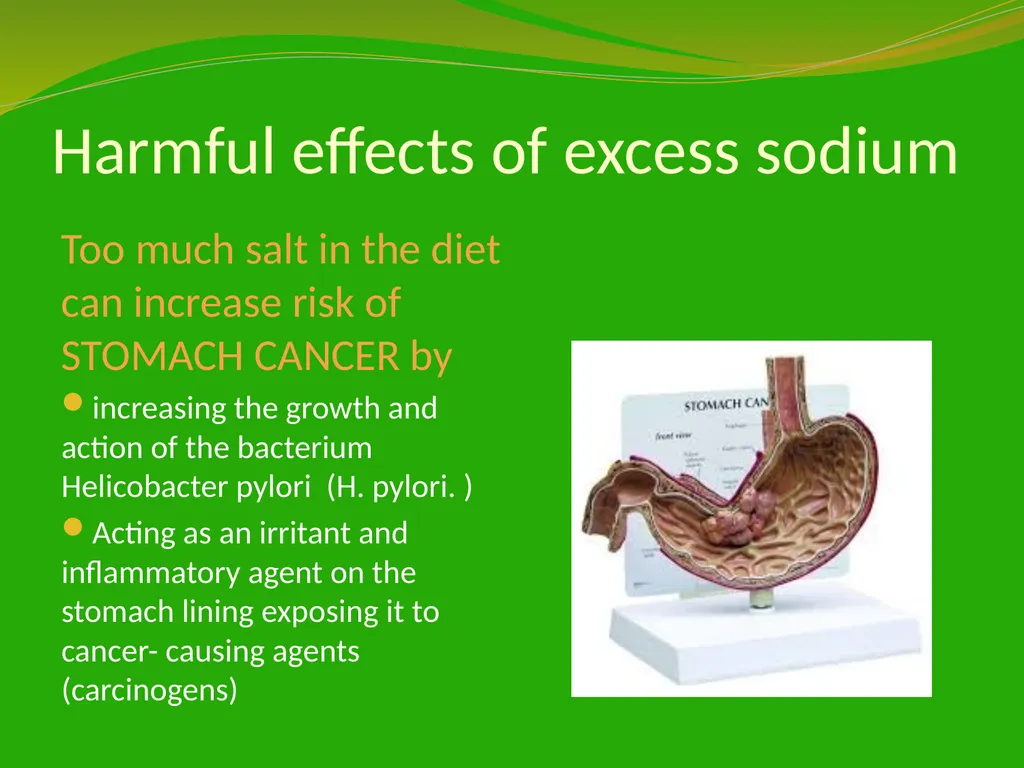
Harmful effects of excess sodium Too much salt in the diet can increase risk of STOMACH CANCER by
increasing the growth and action of the bacterium Helicobacter pylori (H. pylori. )
Acting as an irritant and inflammatory agent on the stomach lining exposing it to cancer- causing agents (carcinogens)<br>
11
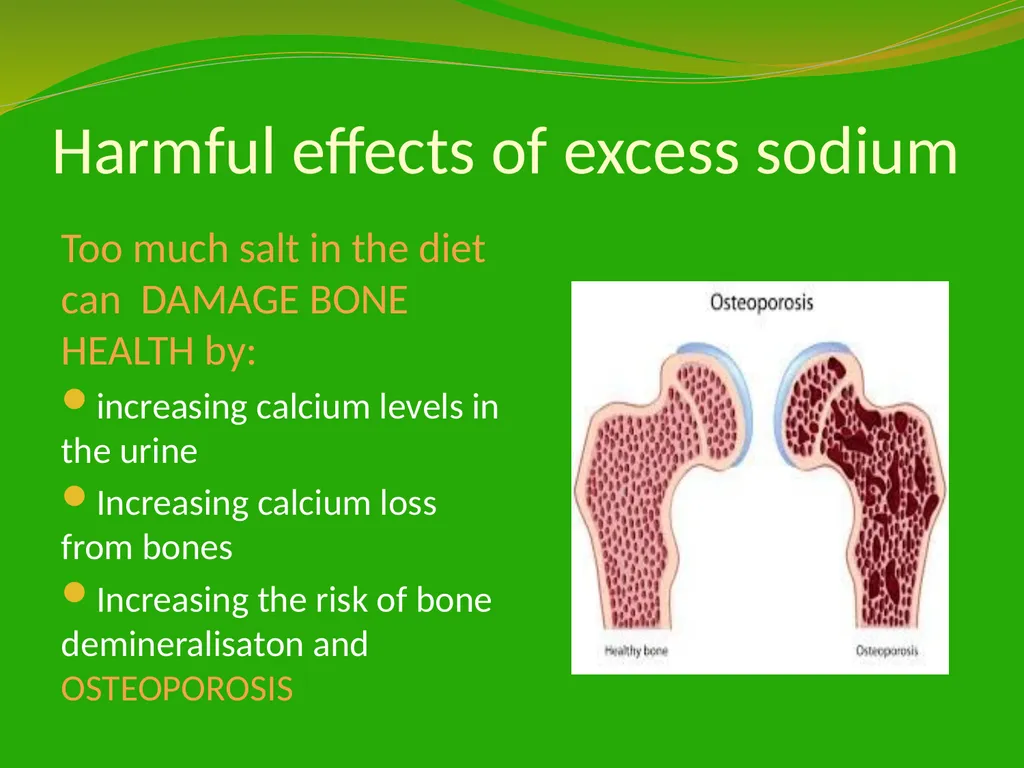
Harmful effects of excess sodium Too much salt in the diet can DAMAGE BONE HEALTH by:
increasing calcium levels in the urine
Increasing calcium loss from bones
Increasing the risk of bone demineralisaton and OSTEOPOROSIS<br>
12
Using less salt and sodium is critical to controlling blood pressure,
and reducing damage to
heart, brain and kidney, stomach and bone health in our population<br>
13
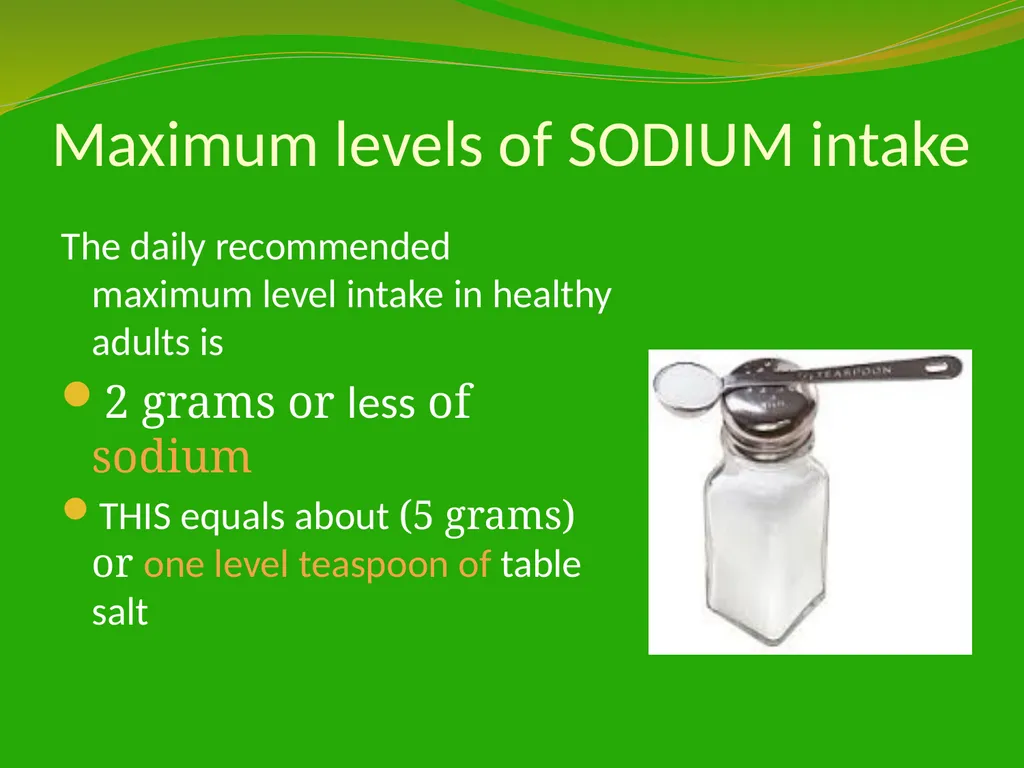
Maximum levels of SODIUM intake The daily recommended maximum level intake in healthy adults is
2 grams or less of sodium
THIS equals about (5 grams) or one level teaspoon of table salt<br>
14
SODIUM guide for hypertensives High blood pressure in most black Caribbean and elderly people tends to be sensitive to salt
SO
a maximum of 1 gram of sodium or one half ½ teaspoon salt a day is recommended for hypertensives.<br>
15
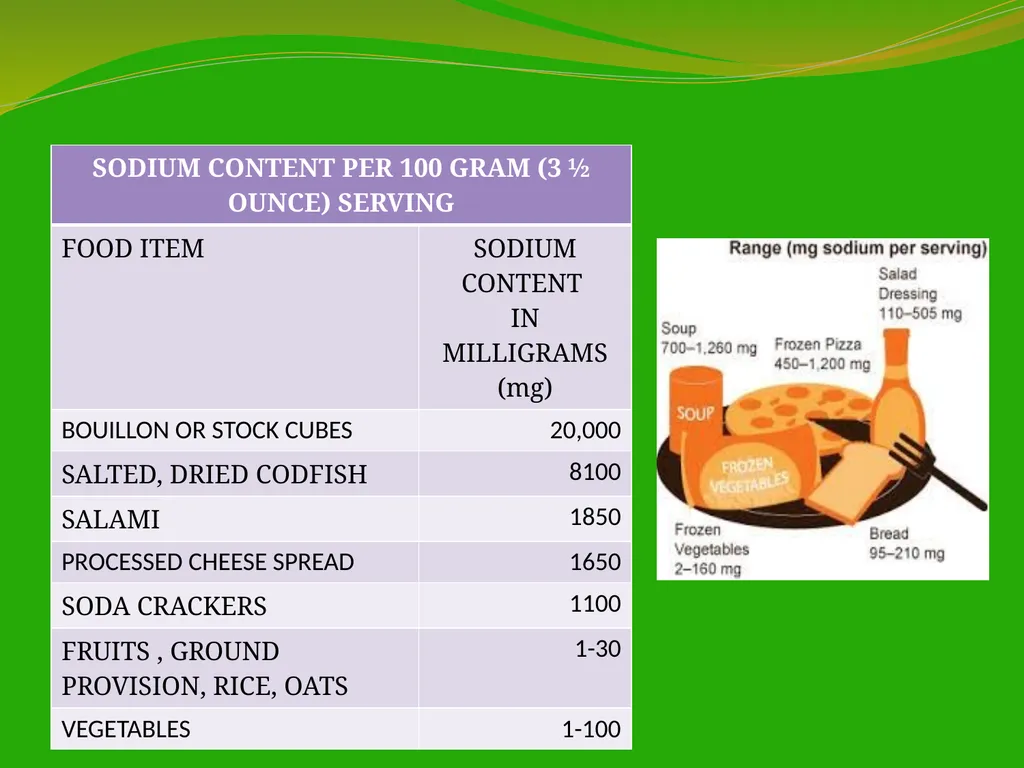
Dietary Sources of Sodium Unprocessed foods contain natural sodium in very small amounts
(milk, meat, fish, poultry and eggs, some vegetables)
Most processed and packaged foods are high in sodium, which is added to enhance taste and to extend shelf-life<br>
16
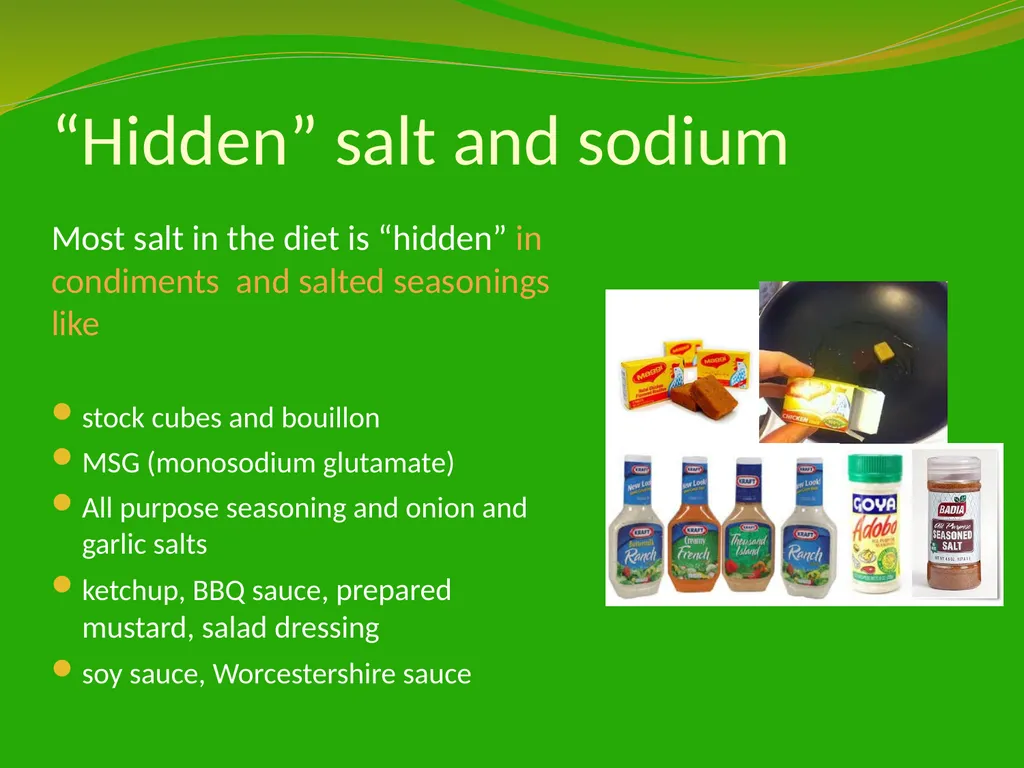
“Hidden” salt and sodium Most salt in the diet is “hidden” in condiments and salted seasonings like
stock cubes and bouillon
MSG (monosodium glutamate)
All purpose seasoning and onion and garlic salts
ketchup, BBQ sauce, prepared mustard, salad dressing
soy sauce, Worcestershire sauce<br>
17
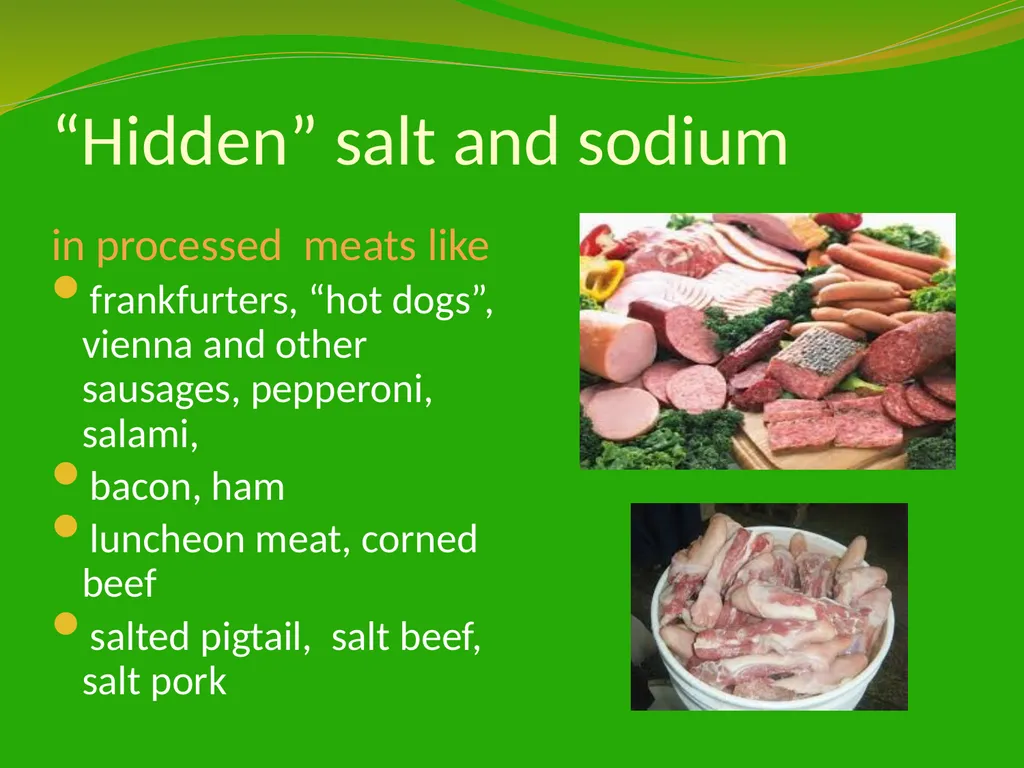
“Hidden” salt and sodium in processed meats like
frankfurters, “hot dogs”, vienna and other sausages, pepperoni, salami,
bacon, ham
luncheon meat, corned beef
salted pigtail, salt beef, salt pork<br>
18
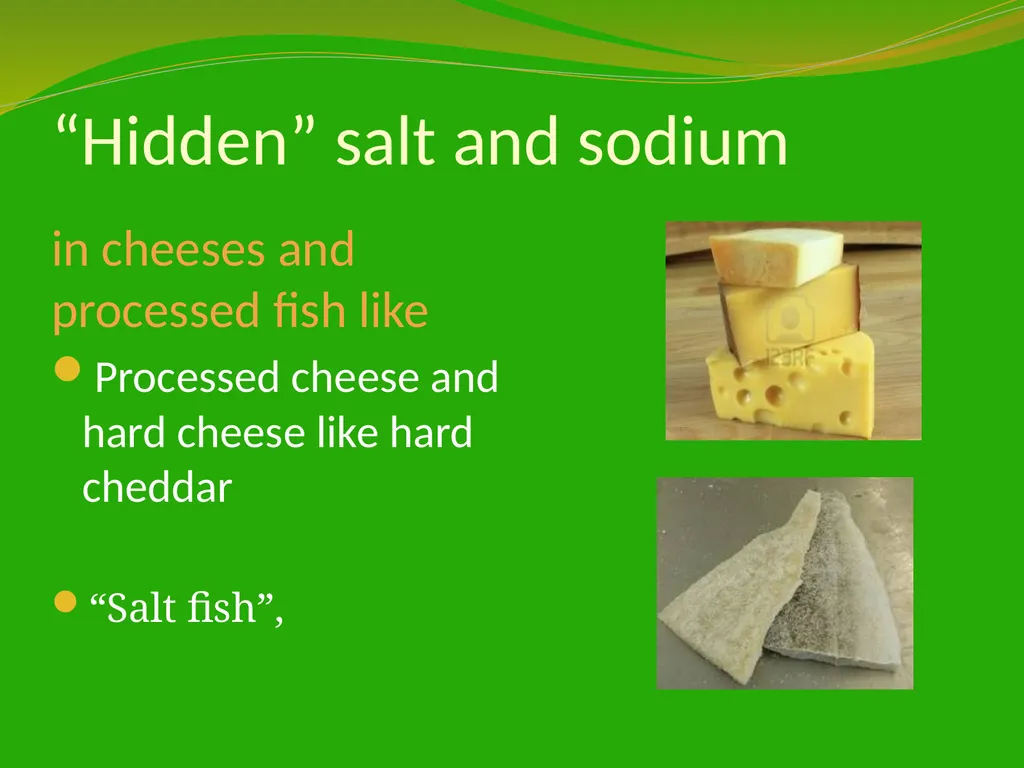
“Hidden” salt and sodium in cheeses and processed fish like
Processed cheese and hard cheese like hard cheddar
“Salt fish”,<br>
19
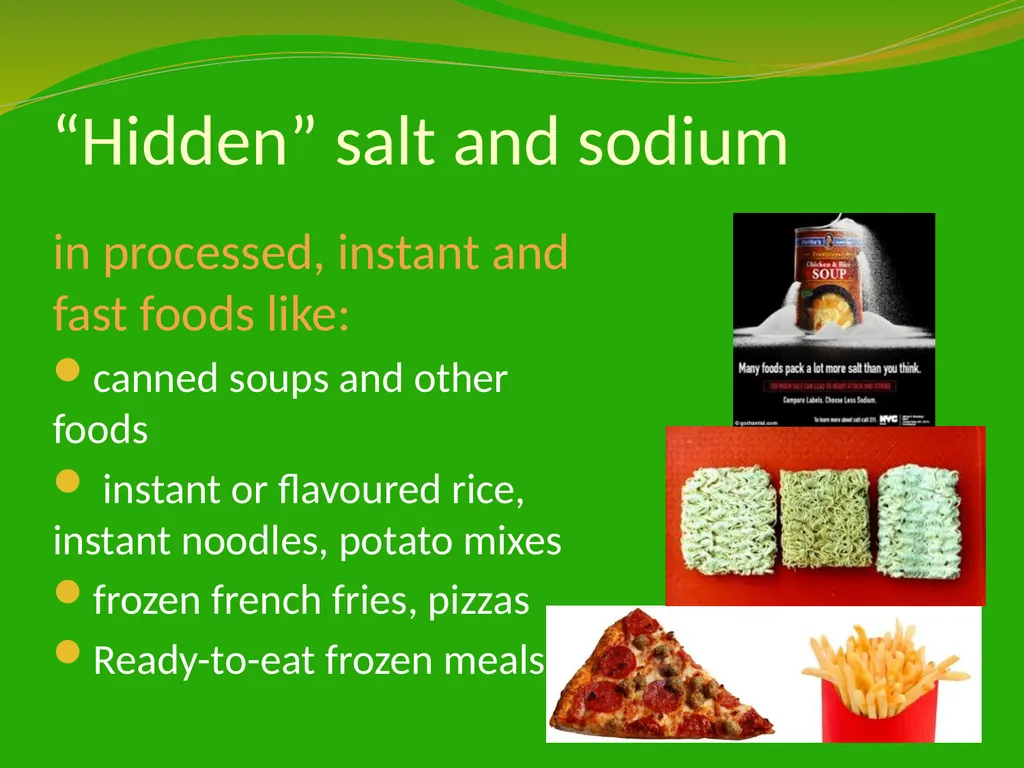
“Hidden” salt and sodium in processed, instant and fast foods like:
canned soups and other foods
instant or flavoured rice, instant noodles, potato mixes
frozen french fries, pizzas
Ready-to-eat frozen meals<br>
20
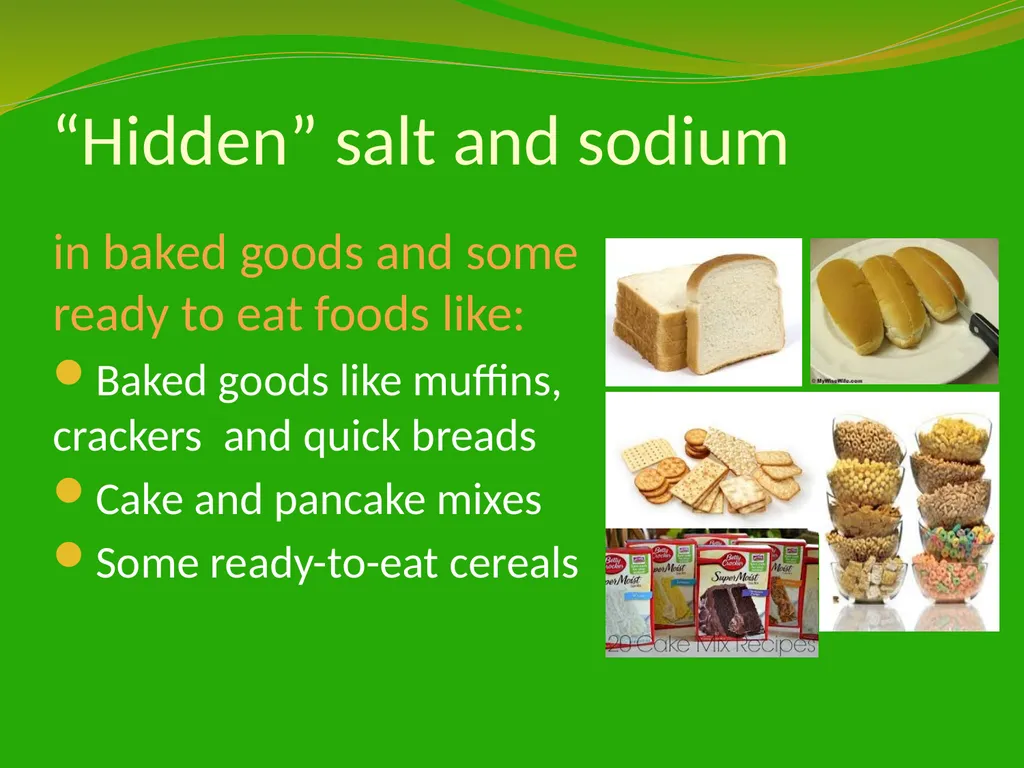
“Hidden” salt and sodium in baked goods and some ready to eat foods like:
Baked goods like muffins, crackers and quick breads
Cake and pancake mixes
Some ready-to-eat cereals<br>
21
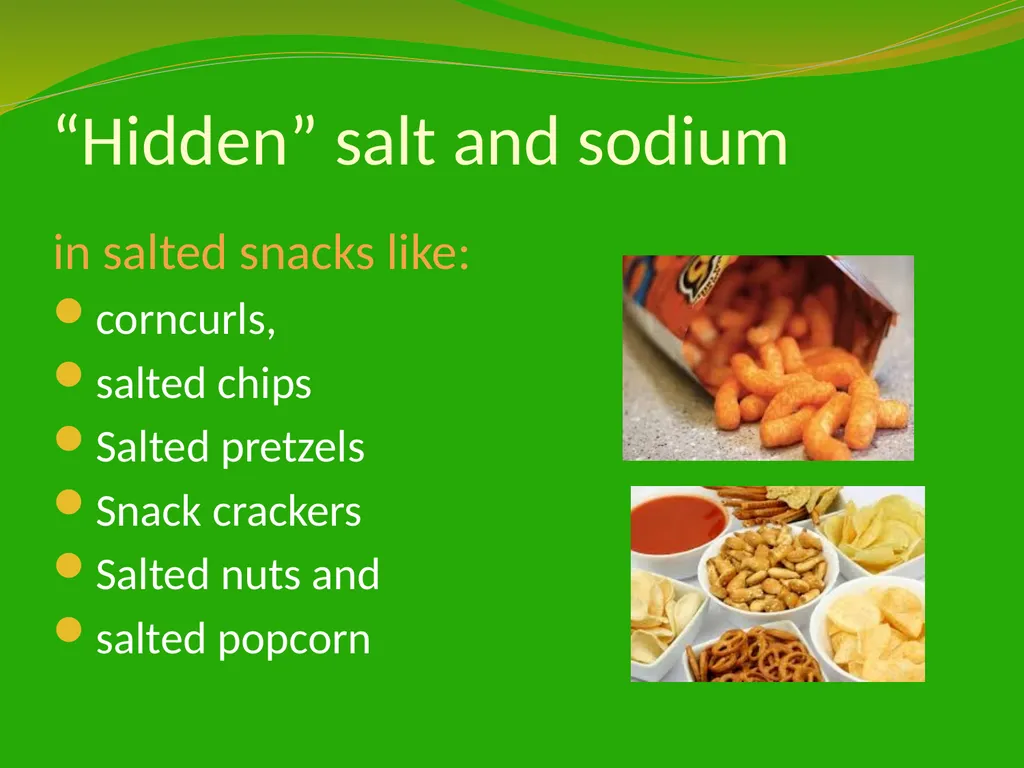
“Hidden” salt and sodium in salted snacks like:
corncurls,
salted chips
Salted pretzels
Snack crackers
Salted nuts and
salted popcorn<br>
22
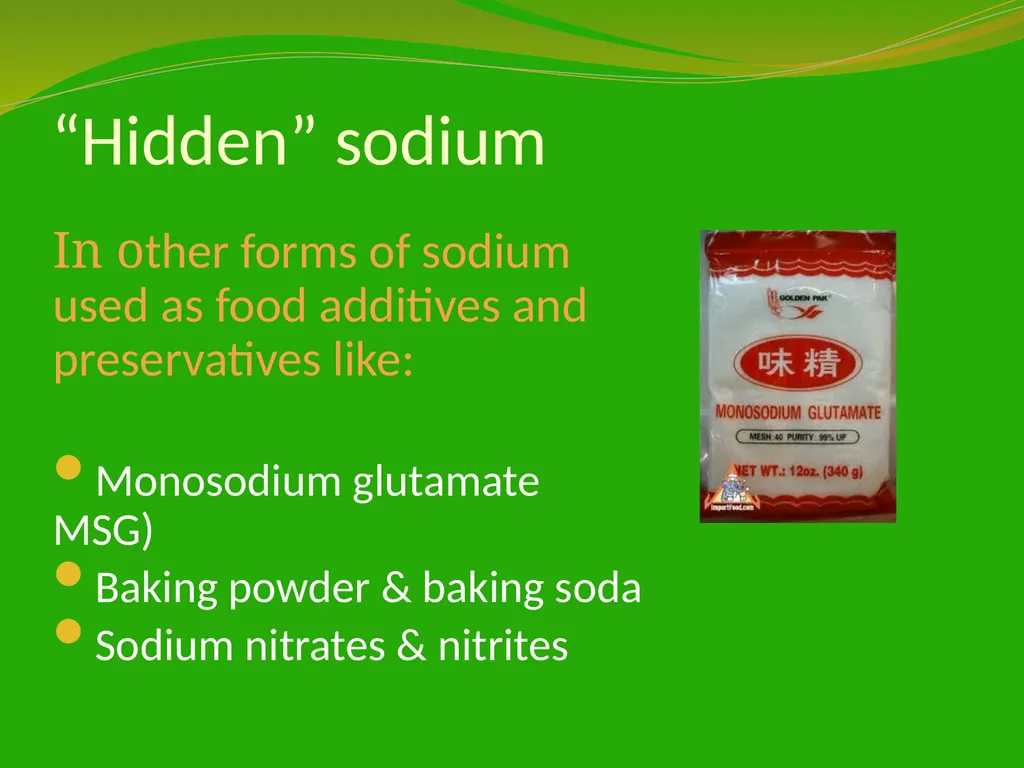
“Hidden” sodium In other forms of sodium used as food additives and preservatives like:
Monosodium glutamate MSG)
Baking powder & baking soda
Sodium nitrates & nitrites<br>
23
Reduce salt and sodium intake There are many ways to reduce salt and sodium intake:
Start by not adding more salt during seasoning or cooking food or at the table
Cut in half the amount of high sodium and salted seasonings used in food preparation
Limit the purchase and use of processed, canned and packaged foods.<br>
24
Reduce salt in seasoning & cooking Use fresh and dried seasonings, herbs, spices like:
chives, garlic, onion, ginger, sweet pepper, flavour pepper, hot pepper, paprika, cayenne pepper, pimento, fine and big leaf thyme, chadon beni, parsley, celery, sage, basil, rosemary, sweet marjoram, oregano, curry, saffron, cloves, cinnamon and allspice<br>
25
Reduce salt in seasoning & cooking Use lime juice, vinegar, and salt/sodium-free seasoning blends
to season and cook chicken, fish, and other meats to enhance food flavor and make them more tasty.<br>
26
Reduce salt in seasoning & cooking COOK
staple foods like green banana, plaintain, breadfruit, provisions , rice and pasta,
peas and beans,
vegetables
without salt, salted seasonings and flavor with the fresh seasonings, herbs and spices<br>
27
Reduce salt in seasoning & cooking Rinse foods canned in brine (salted water), such as tuna, sardines, and canned beans to remove some sodium<br>
28
Shop to Reduce Salt and Sodium It is not possible to rinse or soak away the sodium in cheese, salami, frankfurters, sausages, pepperoni, bacon, ham, corned beef, luncheon meat and other deli meats
SO
Reduce intake of these foods to help control salt intake, particularly in persons who have been diagnosed with hypertension.<br>
29
Shop to Reduce Salt and Sodium Buy fresh poultry, fish, and lean meat, rather than salted, smoked, canned or processed types.<br>
30
Shop to Reduce Salt and Sodium Choose ready-to-eat breakfast cereals that are low in sodium.
Buy less instant or flavored rice, pasta, muffins and quick bread made with baking powder, cereal mixes, and packaged cake mixes, which usually have added salt and/or sodium.
Buy unsalted snacks like unsalted peanuts and popcorn instead of salted snacks<br>
31
Shop to Reduce Salt and Sodium Buy fresh or plain frozen vegetables
When available, buy low- or reduced-sodium or no-salt-added versions of processed foods that you use often.
Buy less frozen dinners, pizza, canned soups or broths, and salad dressings—these often have a lot of sodium.<br>
32
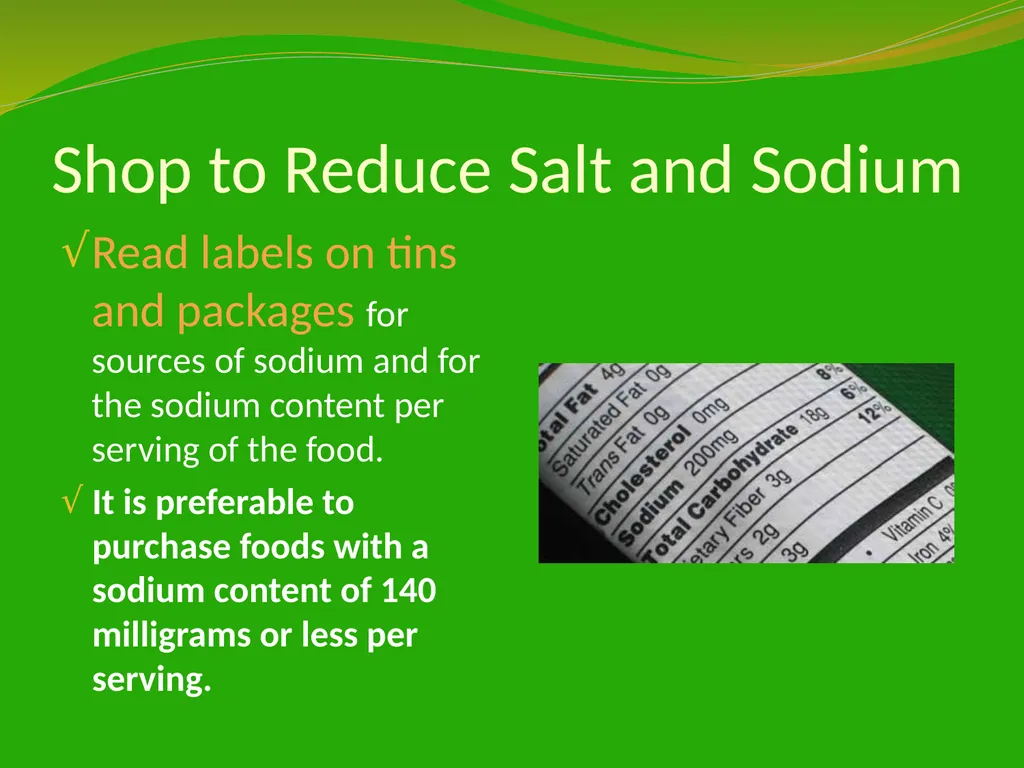
Shop to Reduce Salt and Sodium Read labels on tins and packages for sources of sodium and for the sodium content per serving of the food.
It is preferable to purchase foods with a sodium content of 140 milligrams or less per serving.<br>
33
Use more potassium rich foods Potassium helps regulate fluid balance and blood pressure in your body
low potassium levels may increase risk of raised blood pressure so increased intakes of foods rich in potassium are recommended
Getting enough potassium may help lower your blood pressure.<br>
34
potassium needs The World Health Organization (WHO) recommends MINIMUM potassium intake for healthy adults as follows:
At least 3,510 milligrams (mg) daily
This is even higher for hypertensives on the Dietary (DASH) diet
At least 4,700 milligrams (mg) daily
It is best to get potassium from food instead of supplements.<br>
35
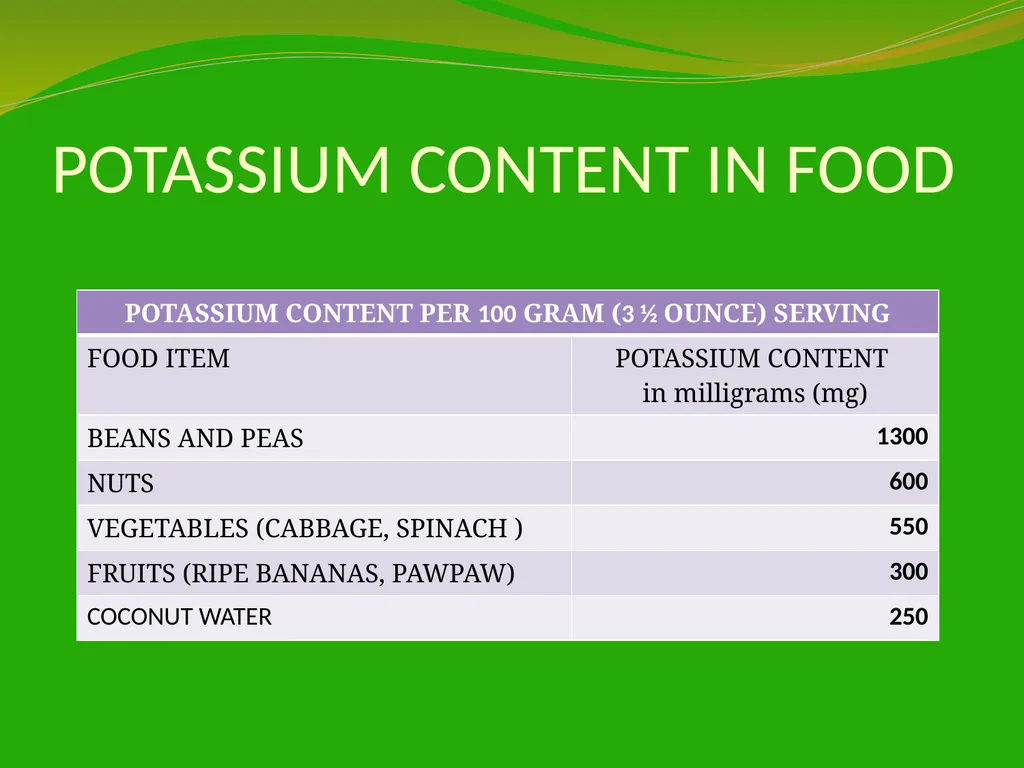
Use more potassium rich foods Try these potassium-rich foods:
Potato: 926 mg
Sweet potato: 540 mg
Small banana: 467 mg
Tomato: 400 mg
1/2 Avocado: 345 mg
1/2 cup cooked spinach: 290 mg
Small orange: 237 mg<br>
36
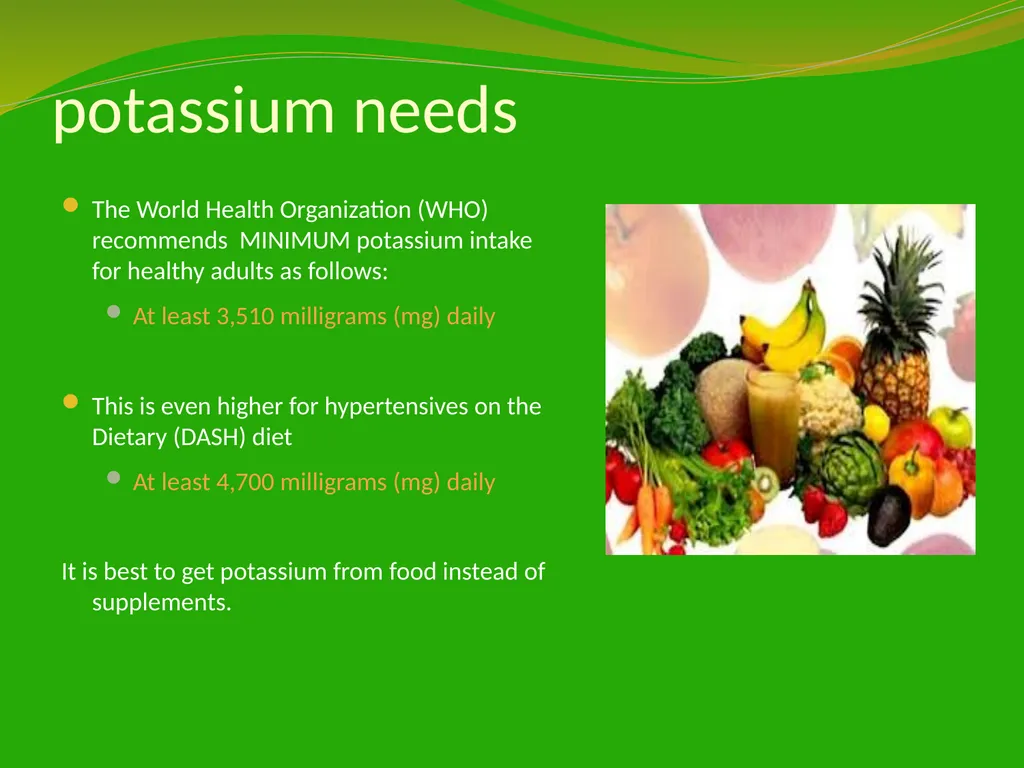
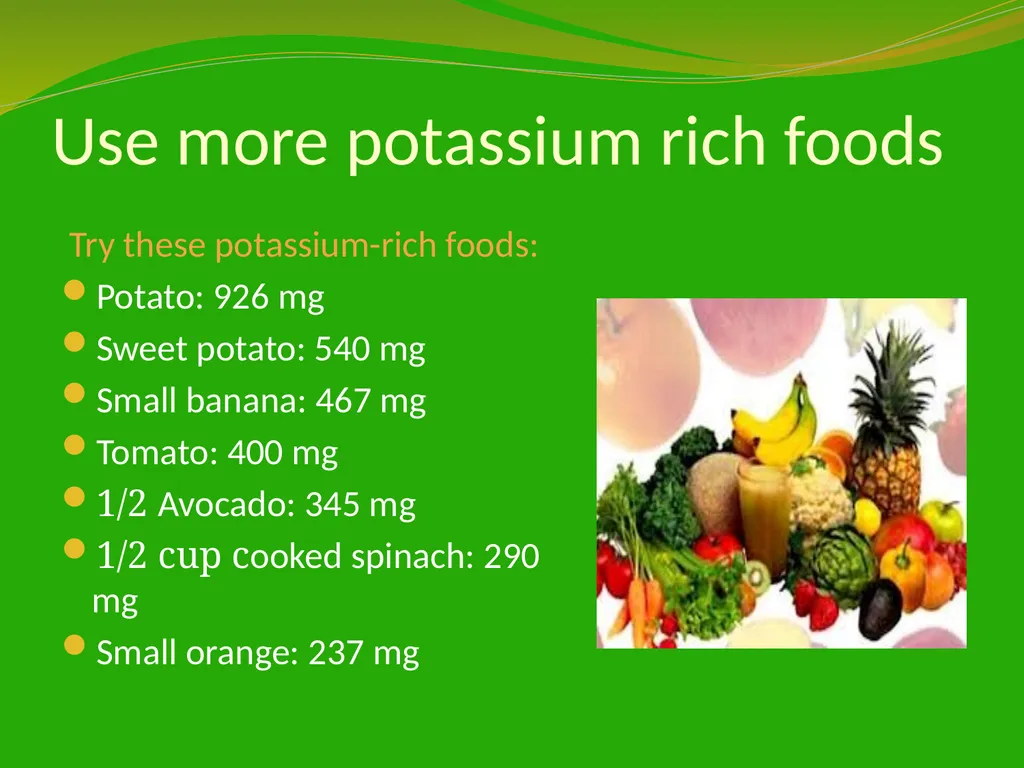
POTASSIUM CONTENT IN FOOD<br>