Using Purchase Data to Inform Digital Advertising W3C Workshop on Digital Marketing September 2015 Satya Satyamoorthy Director of Software Development Nielsen Catalina Solutions satya.satyamoorthyncsolutions.com Agenda Demographic
Related Topics
Share
Embed code
Download this presentation From Below
"Using Purchase Data to Inform Digital Advertising" is the property of its rightful owner. Permission is granted to
download and print the materials on this website for personal, non-commercial use only, and to display it
on your personal computer provided you do not modify the materials and that you retain all copyright
notices contained in the materials. By downloading content from our website, you accept the terms of this
agreement.
Presentation Transcript
01
Using Purchase Data to Inform Digital Advertising W3C Workshop on Digital Marketing
September 2015 Satya Satyamoorthy
Director of Software Development
Nielsen Catalina Solutions
satya.satyamoorthy@ncsolutions.com<br>
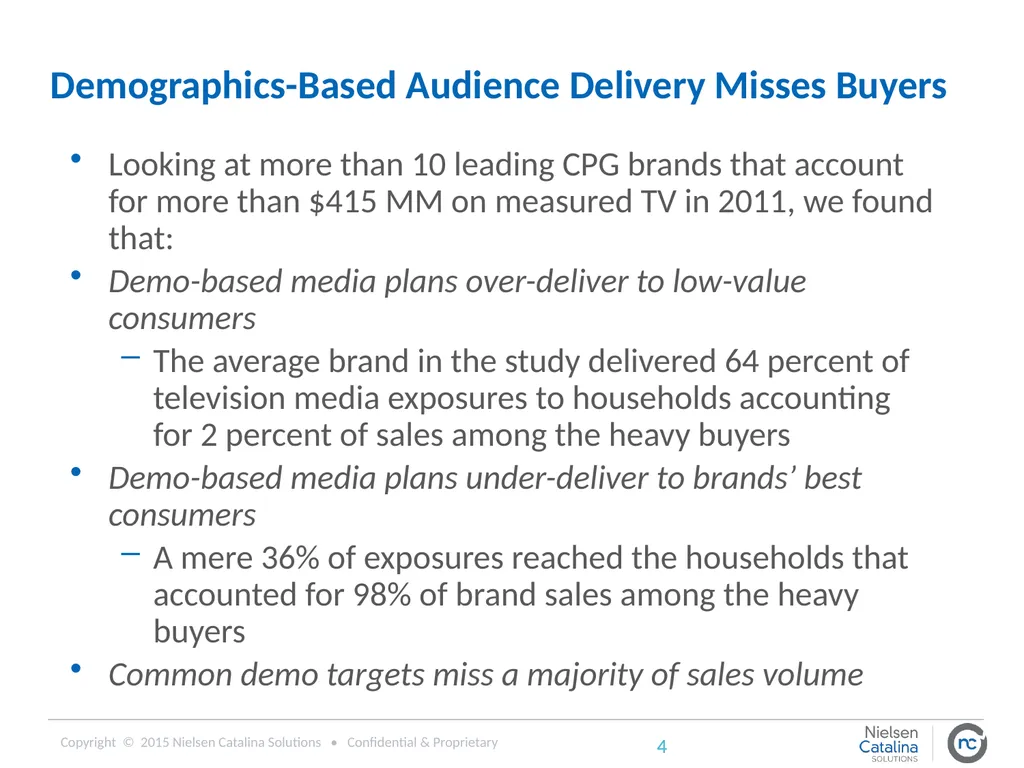
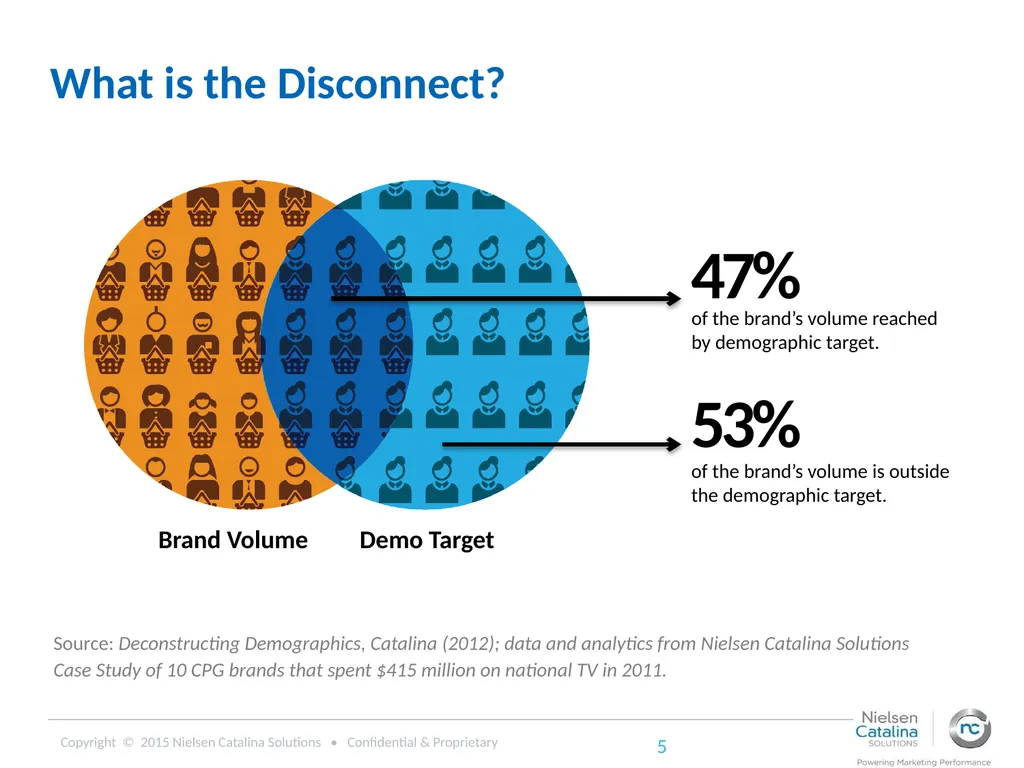
Demographics-Based Audience Delivery Misses Buyers Looking at more than 10 leading CPG brands that account for more than $415 MM on measured TV in 2011, we found that:
Demo-based media plans over-deliver to low-value consumers
The average brand in the study delivered 64 percent of television media exposures to households accounting for 2 percent of sales among the heavy buyers
Demo-based media plans under-deliver to brands’ best consumers
A mere 36% of exposures reached the households that accounted for 98% of brand sales among the heavy buyers
Common demo targets miss a majority of sales volume<br>
05
What is the Disconnect? Brand Volume Source: Deconstructing Demographics, Catalina (2012); data and analytics from Nielsen Catalina Solutions
Case Study of 10 CPG brands that spent $415 million on national TV in 2011. 47% of the brand’s volume reached by demographic target. 53% of the brand’s volume is outside the demographic target. Demo Target<br>
06
So what’s the solution?<br>
07
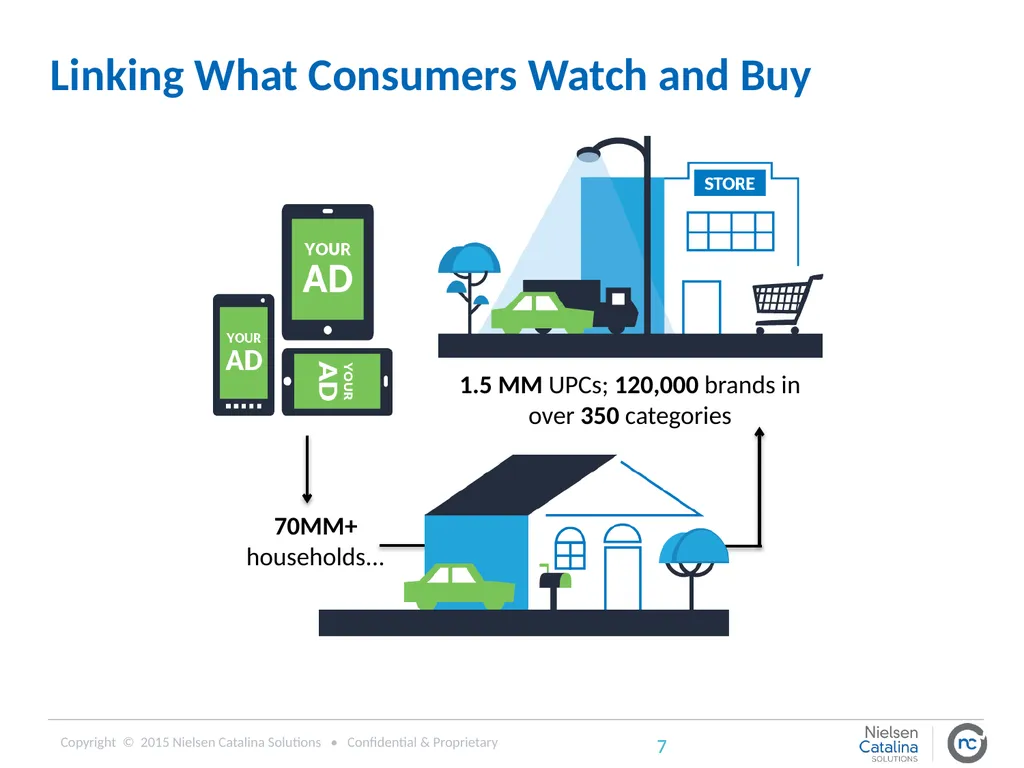
Linking What Consumers Watch and Buy 1.5 MM UPCs; 120,000 brands in over 350 categories 70MM+ households...<br>
08
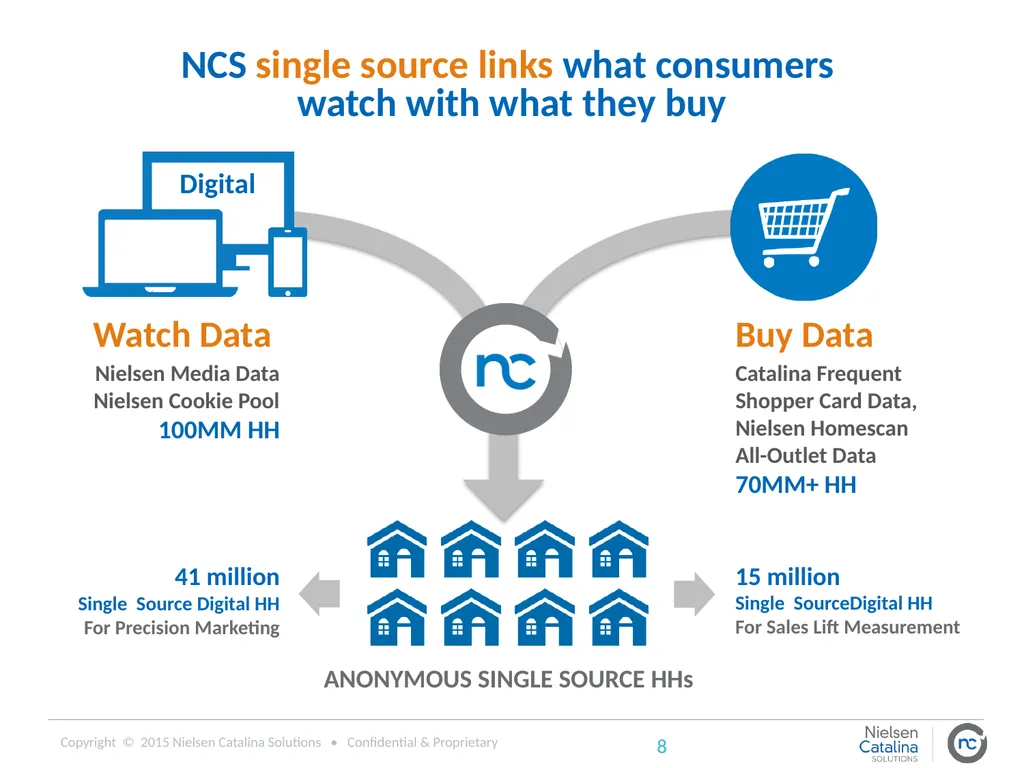
NCS single source links what consumers watch with what they buy Watch Data
Nielsen Media Data
Nielsen Cookie Pool
100MM HH Buy Data
Catalina Frequent Shopper Card Data,
Nielsen Homescan All-Outlet Data
70MM+ HH ANONYMOUS SINGLE SOURCE HHs ~1.4 MM Single
Source
TV HHDs ~1.4 MM Single
Source
TV HHDs 15 million
Single SourceDigital HH
For Sales Lift Measurement 41 million
Single Source Digital HH
For Precision Marketing Digital<br>
09
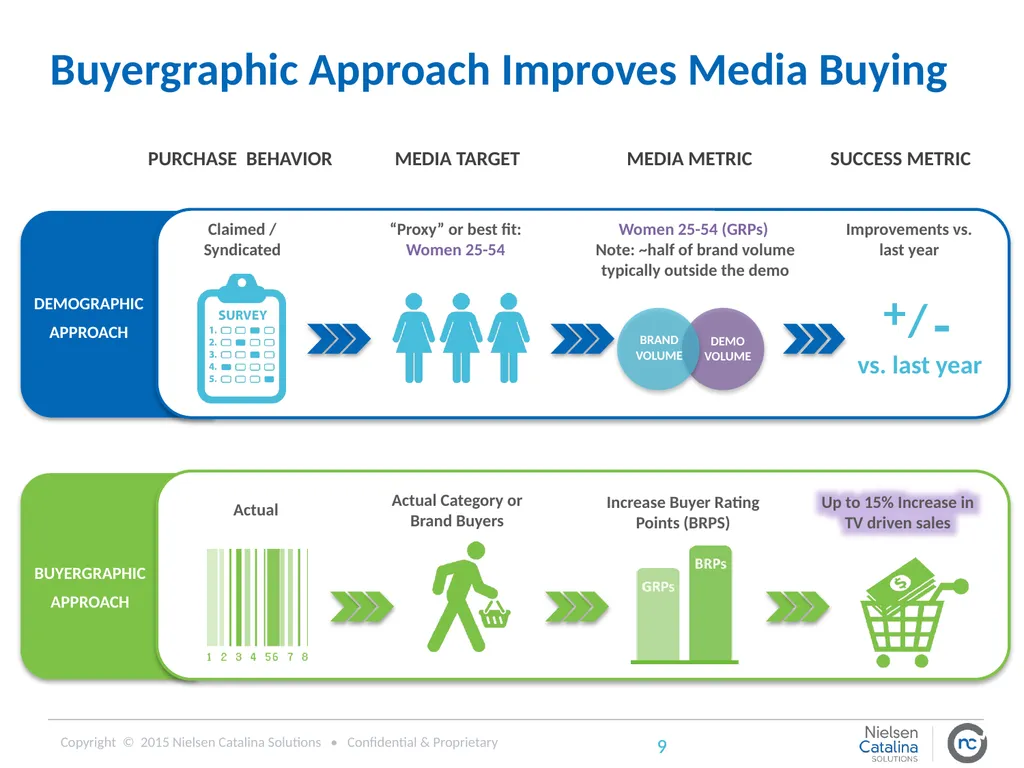
MEDIA TARGET “Proxy” or best fit: Women 25-54 PURCHASE BEHAVIOR Claimed / Syndicated MEDIA METRIC Women 25-54 (GRPs) Note: ~half of brand volume typically outside the demo SUCCESS METRIC Improvements vs. last year Actual Category or Brand Buyers Actual Increase Buyer Rating Points (BRPS) Up to 15% Increase in TV driven sales Buyergraphic Approach Improves Media Buying<br>
10
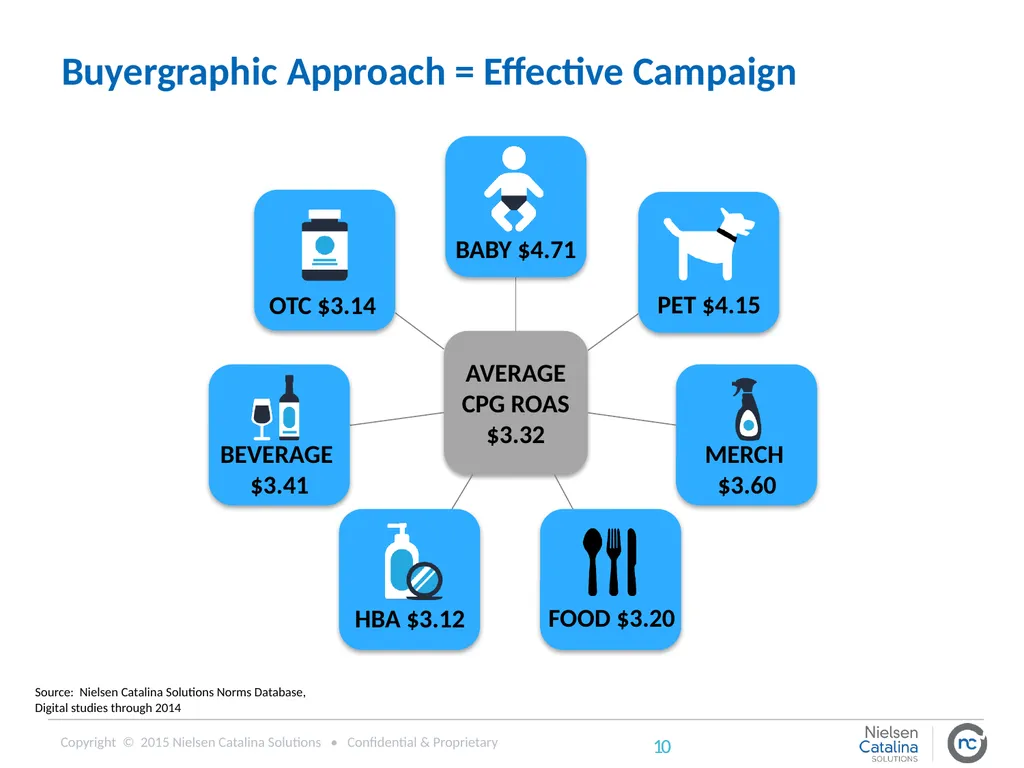
Buyergraphic Approach = Effective Campaign BABY $4.71 PET $4.15 MERCH
$3.60 FOOD $3.20 HBA $3.12 BEVERAGE $3.41 OTC $3.14 Source: Nielsen Catalina Solutions Norms Database,
Digital studies through 2014<br>
11
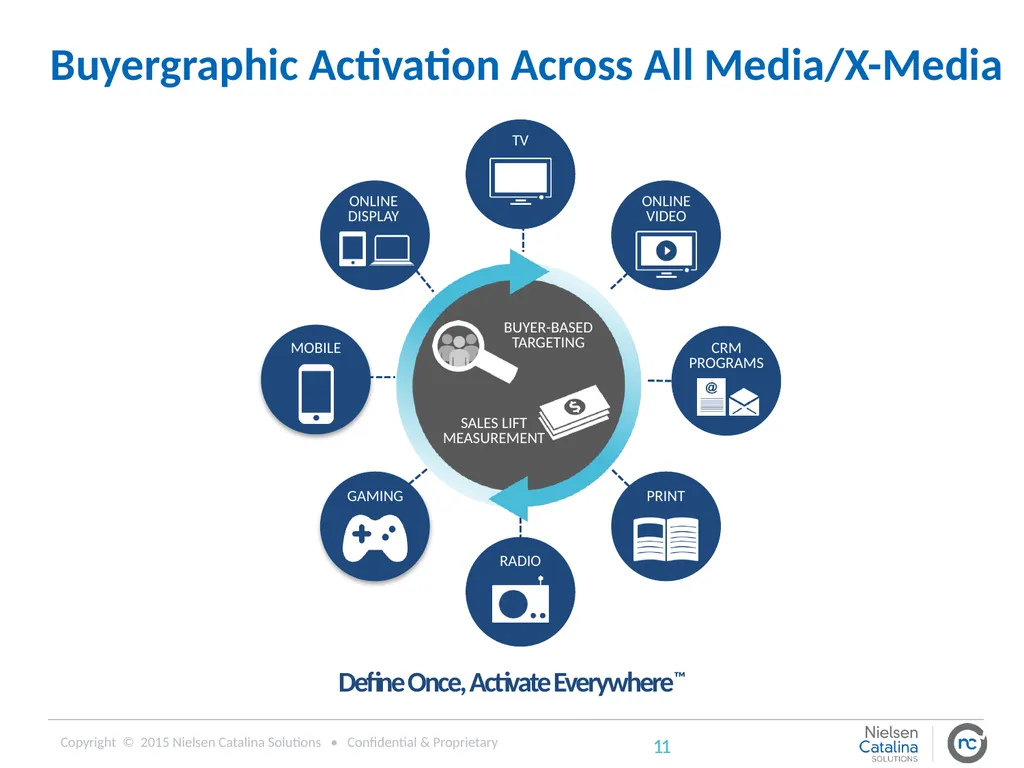
Define Once, Activate Everywhere™ RADIO GAMING CRM
PROGRAMS MOBILE ONLINE
VIDEO TV ONLINE
DISPLAY PRINT Buyergraphic Activation Across All Media/X-Media<br>
12
Digital marketing
is changing, again.<br>
13
8.7 Billion Impressions!<br>
14
A moment of silence for our friend, the digital cookie.<br>
15
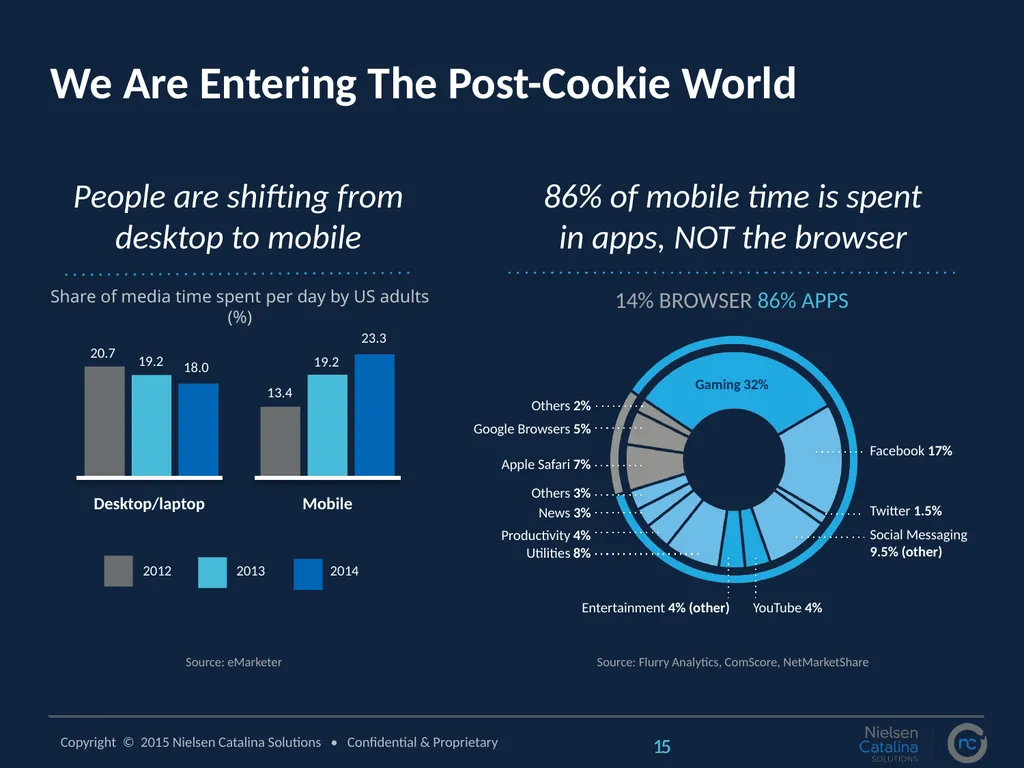
86% of mobile time is spent in apps, NOT the browser Share of media time spent per day by US adults (%) People are shifting from desktop to mobile 14% Browser 86% APPS 13.4 19.2 23.3 20.7 19.2 18.0 Mobile Desktop/laptop Source: Flurry Analytics, ComScore, NetMarketShare Source: eMarketer Social Messaging
9.5% (other) 2012 2013 2014 Gaming 32% Facebook 17% Twitter 1.5% Entertainment 4% (other) Utilities 8% Productivity 4% News 3% Others 3% Google Browsers 5% Others 2% Apple Safari 7% YouTube 4% We Are Entering The Post-Cookie World<br>
16
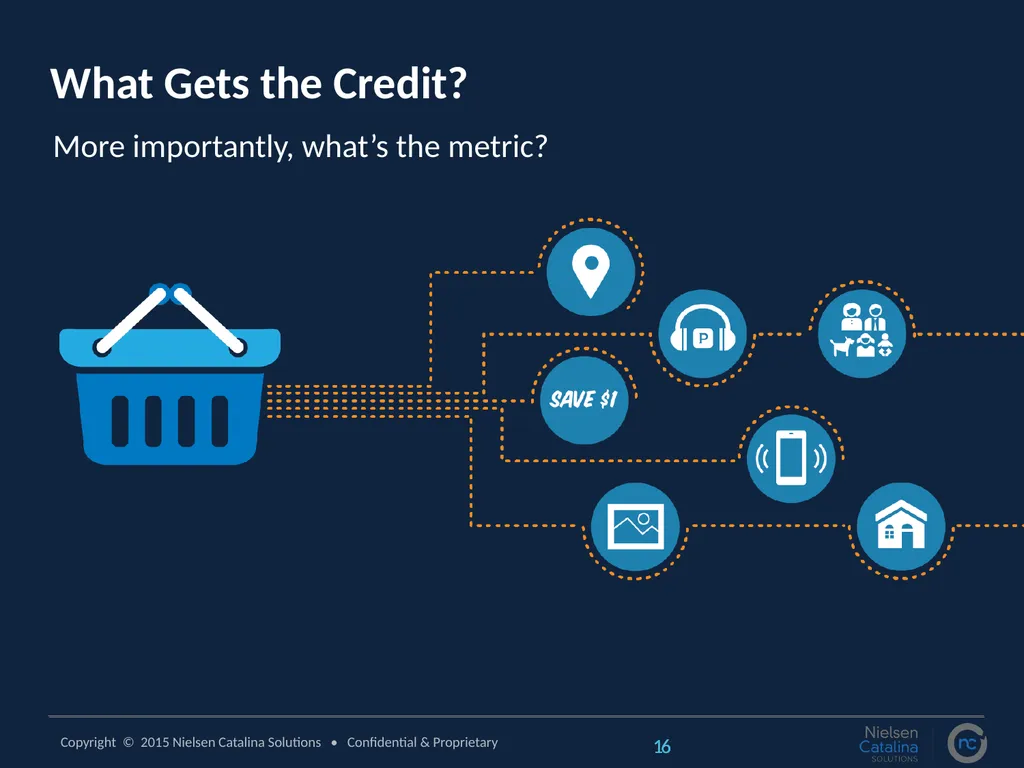
What Gets the Credit? More importantly, what’s the metric?<br>
17
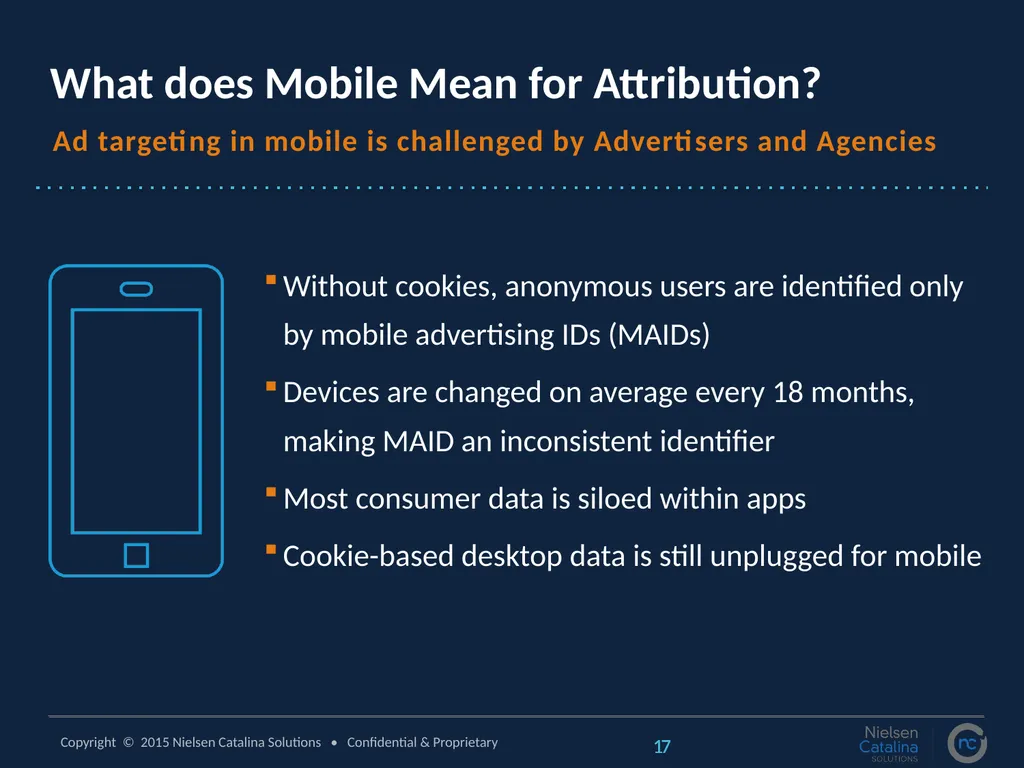
Without cookies, anonymous users are identified only by mobile advertising IDs (MAIDs)
Devices are changed on average every 18 months, making MAID an inconsistent identifier
Most consumer data is siloed within apps
Cookie-based desktop data is still unplugged for mobile Ad targeting in mobile is challenged by Advertisers and Agencies What does Mobile Mean for Attribution?<br>
18
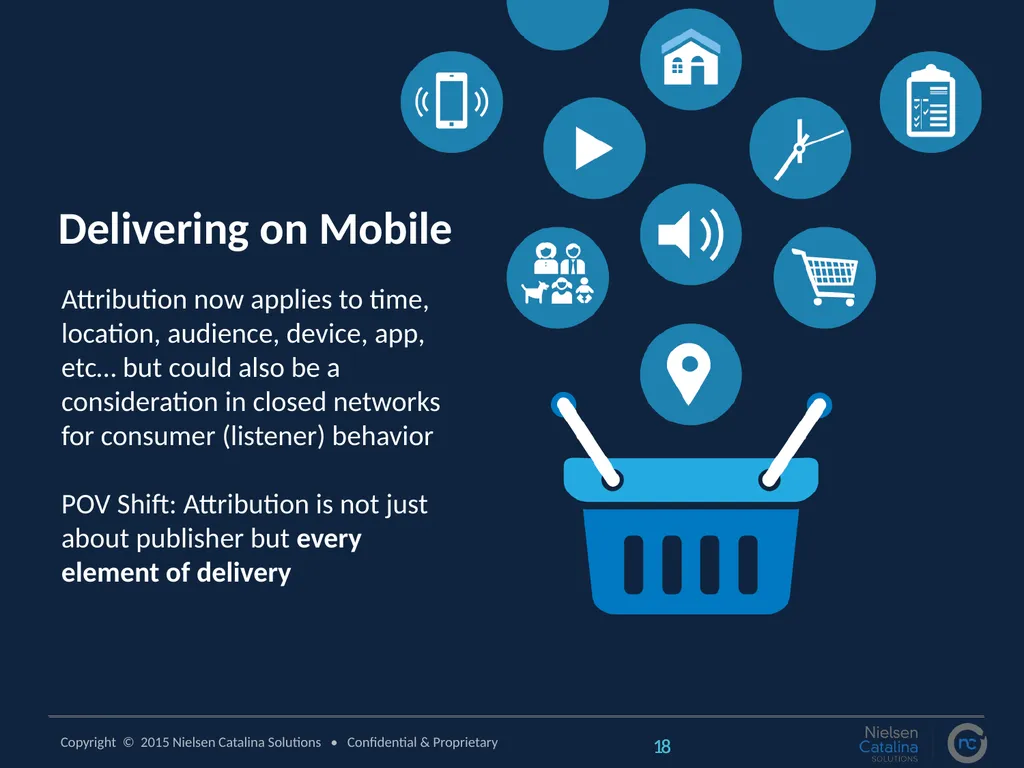
Attribution now applies to time, location, audience, device, app, etc… but could also be a consideration in closed networks for consumer (listener) behavior
POV Shift: Attribution is not just about publisher but every element of delivery Delivering on Mobile<br>
19
Summary: Buyergraphics based Ad delivery increases the efficacy of marketing and Return on Ad Spend (ROAS)
For mobile -- an alternative approach based on time, location, user, device, app and off-line behavior such as purchase behavior is needed to track consumer behavior across multi touch devices<br>