04
Purpose Identification of variation in pathway interpretation, coordination gaps, dependency on informal communication, and instances where the patient acts as messenger.
To identify variation in practice, coordination challenges, and different interpretations of responsibility.
To inform modelling of pathways and interpretation of patient-reported experiences.<br>
05
Context and adaptions Key information
Interview guide based on the validated Care Process Self Evaluation Tool (CPSET) (Vanhaecht et al., 2007), including in Norwegian, and earlier Pathway work on coordination and communication (Halvorsrud & Skjuve, 2018)
Participants: Healthcare professionals
Study period: From weeks to months
Recruitment: Through professional networks in specialist and primary care
Ethical consideration: Participation in the study was voluntary and based on written, informed consent.
Data collection method
Semi-structured in- depth interviews
Results
The interviews provide insight into the current (“as-is”) patient pathways as experienced by healthcare workers, with particular focus on how care is organised and coordinated in practice.
Method adapted by
Binyam Bogale, Ragnhild Halvorsrud and Kristine Gjermestad<br>
06
Step-by-step guide The next slides provide a step-by-step walkthrough
Step 1: Desk review of the patient pathway
Step 2: Participant selection
Step 3: Data collection
Step 4: Data analysis<br>
07
Step 1: Desk review of the patient pathway A desk review of the complete patient flow was conducted to support understanding of how patient pathways are organised in practice and which professional roles are involved across levels of care.
The desk review focused on describing the professional contexts in which the patient pathway is coordinated and delivered, and on identifying key role players involved at different stages of the pathway.
Typical settings include:
Specialist outpatient clinics
Municipal or primary healthcare services
Units responsible for referrals, coordination, or follow-up<br>
08
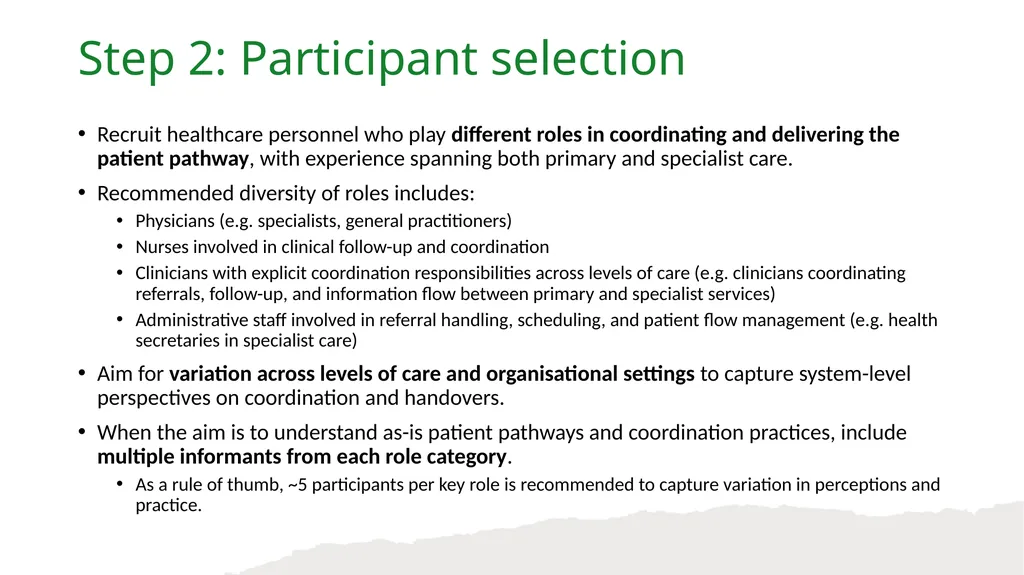
Step 2: Participant selection Recruit healthcare personnel who play different roles in coordinating and delivering the patient pathway, with experience spanning both primary and specialist care.
Recommended diversity of roles includes:
Physicians (e.g. specialists, general practitioners)
Nurses involved in clinical follow-up and coordination
Clinicians with explicit coordination responsibilities across levels of care (e.g. clinicians coordinating referrals, follow-up, and information flow between primary and specialist services)
Administrative staff involved in referral handling, scheduling, and patient flow management (e.g. health secretaries in specialist care)
Aim for variation across levels of care and organisational settings to capture system-level perspectives on coordination and handovers.
When the aim is to understand as-is patient pathways and coordination practices, include multiple informants from each role category.
As a rule of thumb, ~5 participants per key role is recommended to capture variation in perceptions and practice.<br>
09
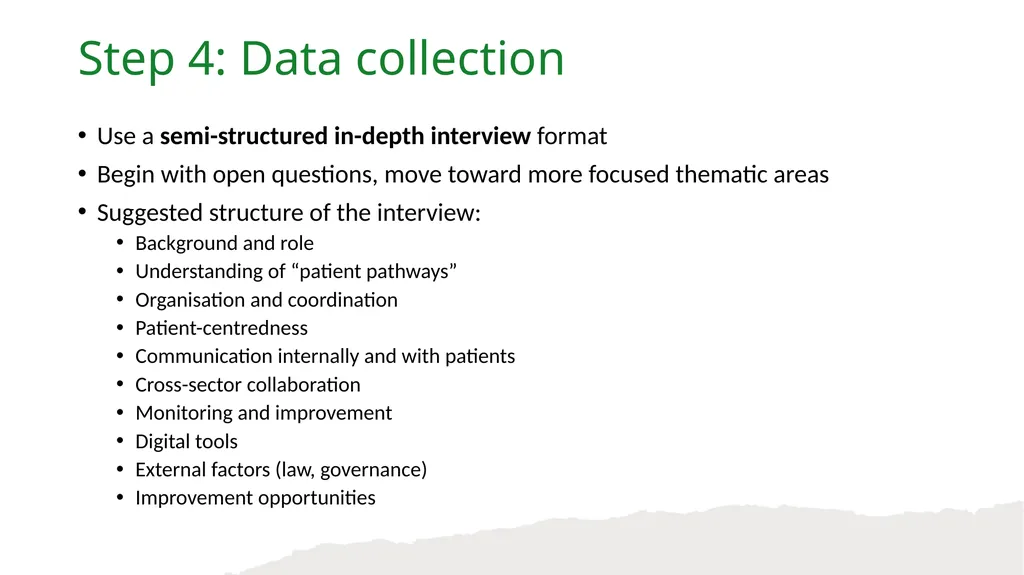
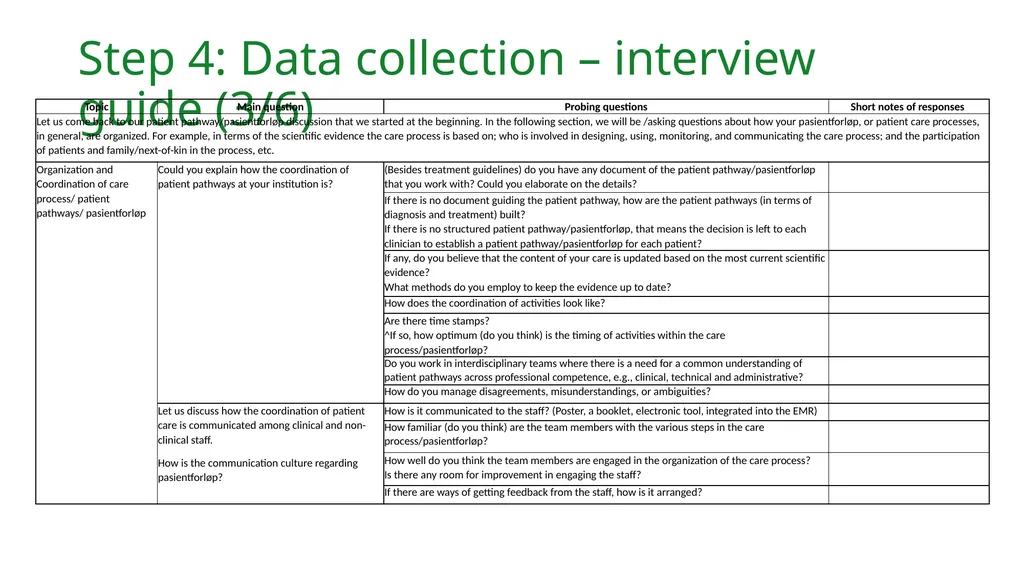
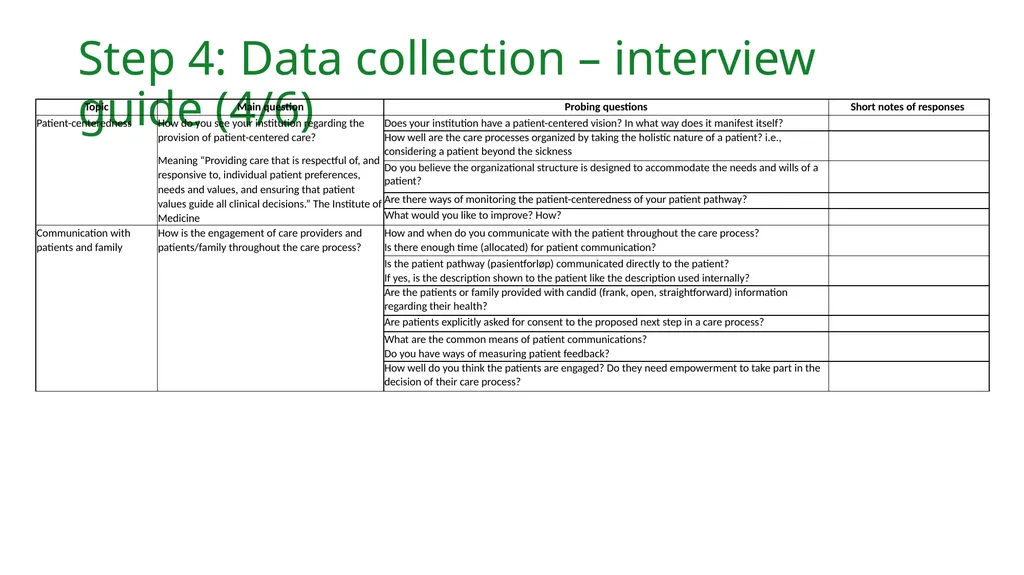
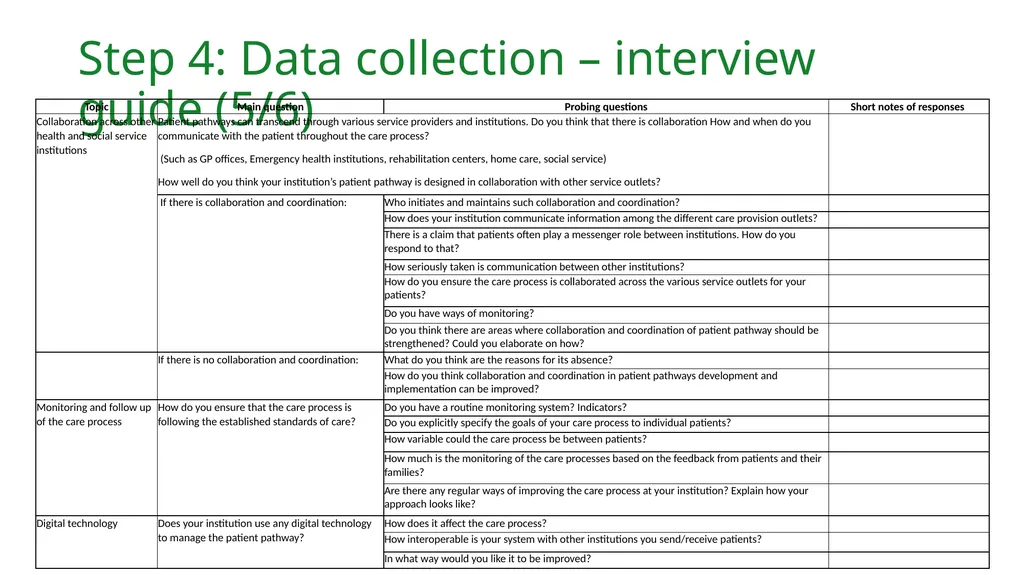
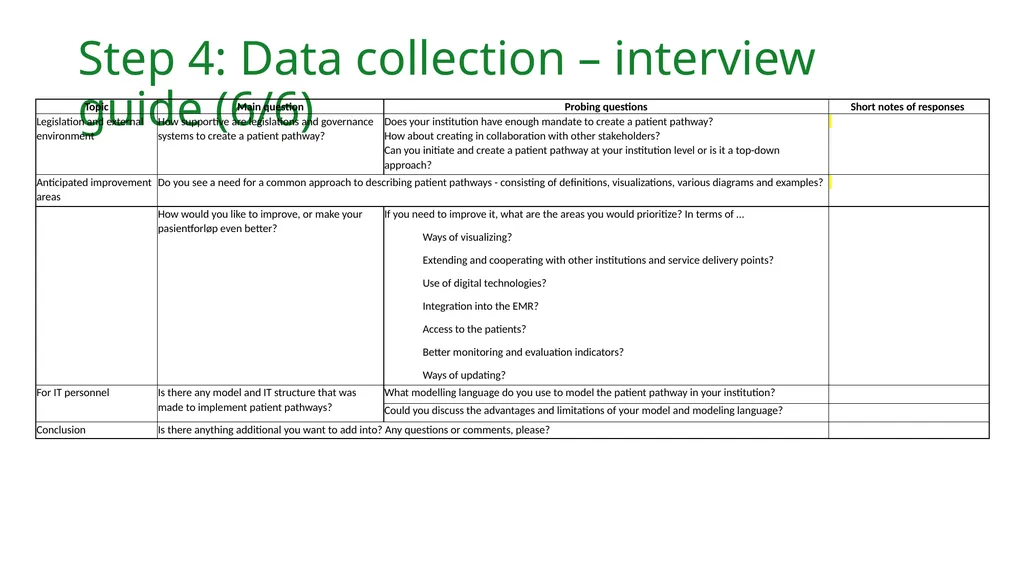
Step 4: Data collection Use a semi-structured in-depth interview format
Begin with open questions, move toward more focused thematic areas
Suggested structure of the interview:
Background and role
Understanding of “patient pathways”
Organisation and coordination
Patient-centredness
Communication internally and with patients
Cross-sector collaboration
Monitoring and improvement
Digital tools
External factors (law, governance)
Improvement opportunities<br>
10
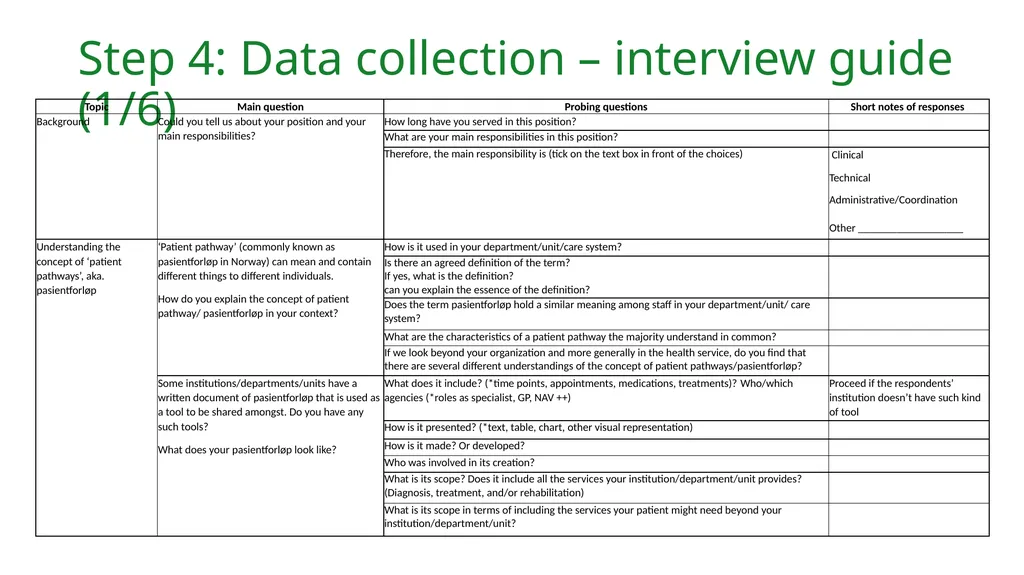
Step 4: Data collection – interview guide (1/6)<br>
11
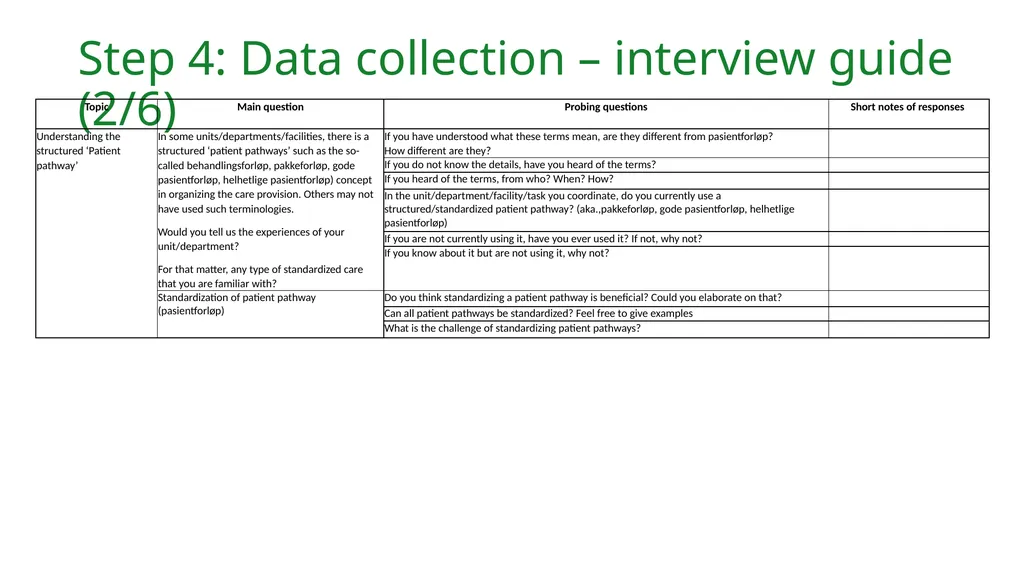
Step 4: Data collection – interview guide (2/6)<br>
12
Step 4: Data collection – interview guide (3/6)<br>
13
Step 4: Data collection – interview guide (4/6)<br>
14
Step 4: Data collection – interview guide (5/6)<br>
15
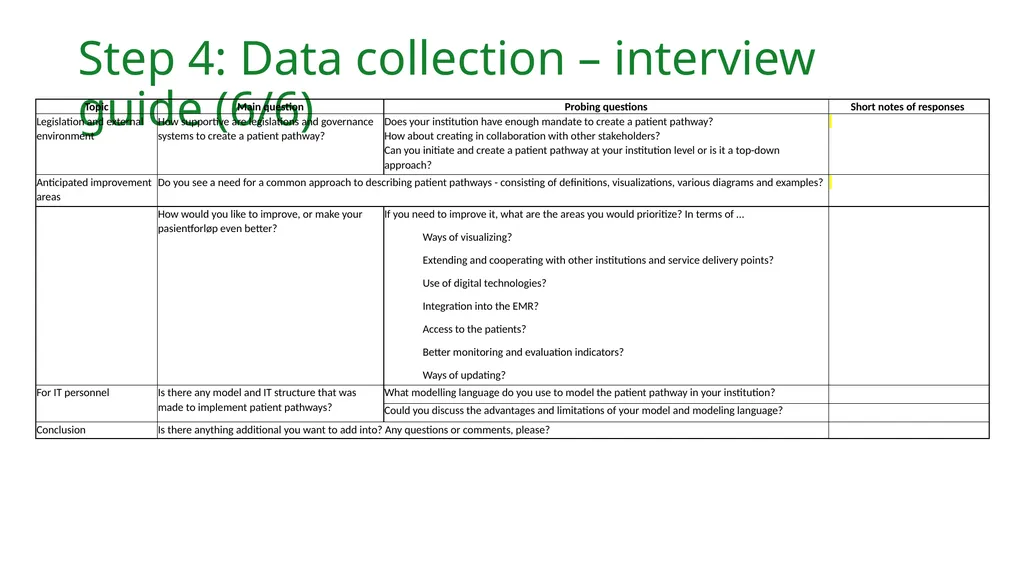
Step 4: Data collection – interview guide (6/6)<br>
16
Step 4: Data collection – interview guide (6/6)<br>
17
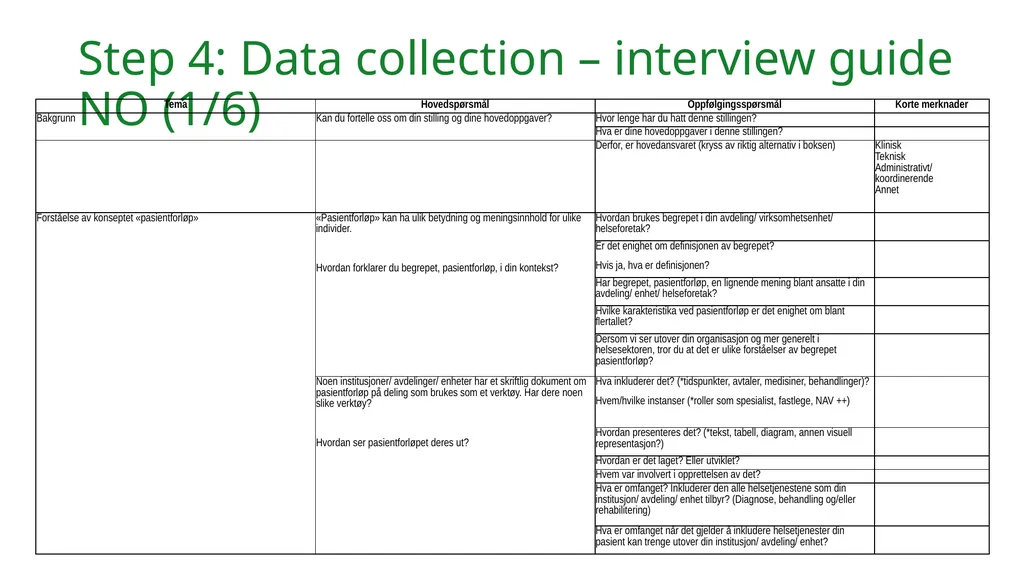
Step 4: Data collection – interview guide NO (1/6)<br>
18
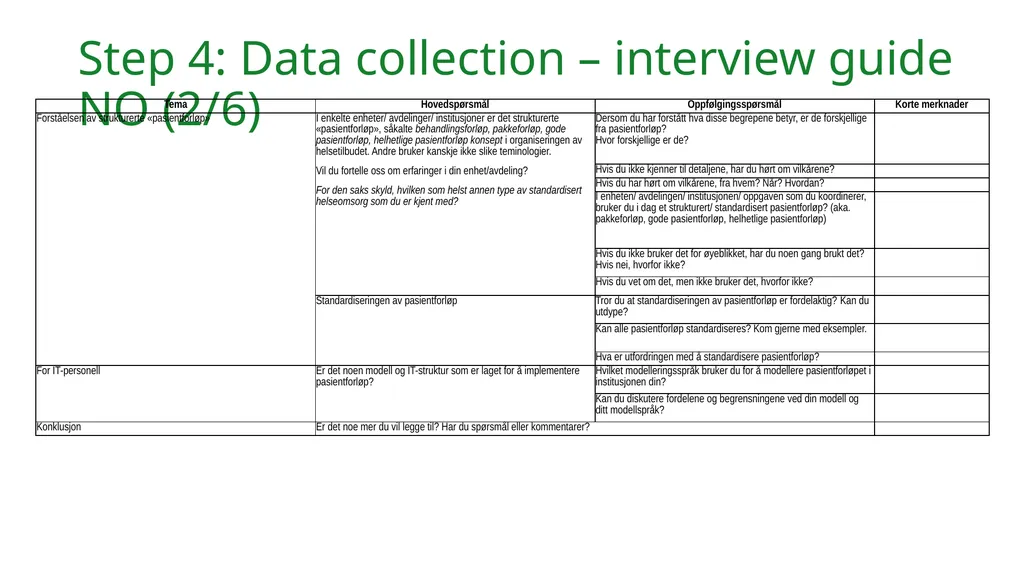
Step 4: Data collection – interview guide NO (2/6)<br>
19
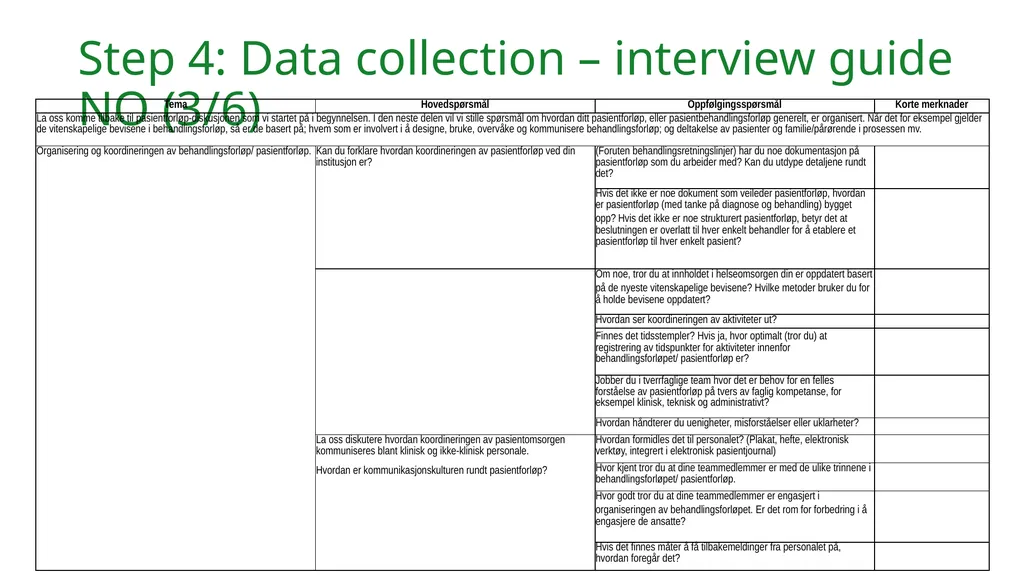
Step 4: Data collection – interview guide NO (3/6)<br>
20
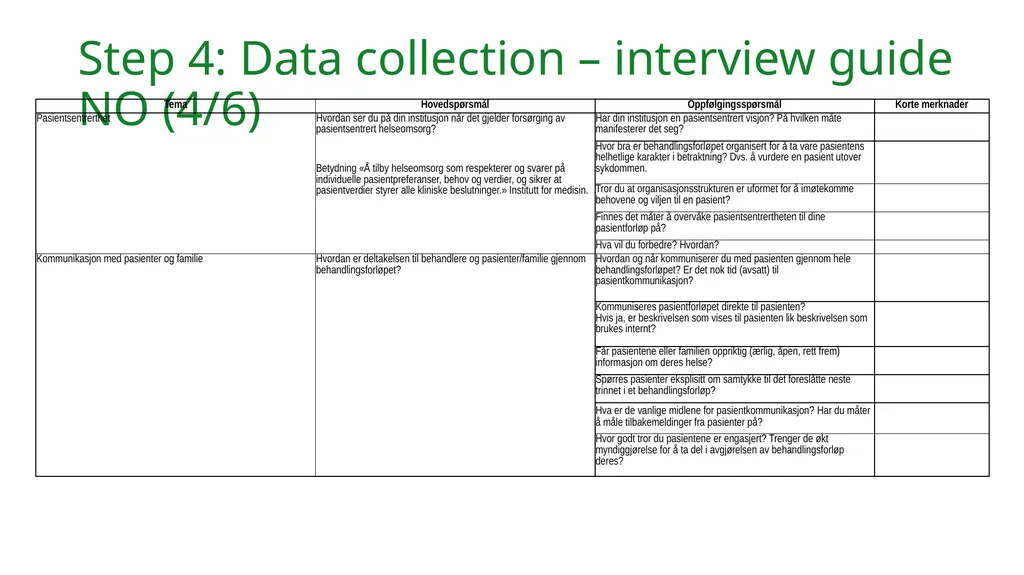
Step 4: Data collection – interview guide NO (4/6)<br>
21
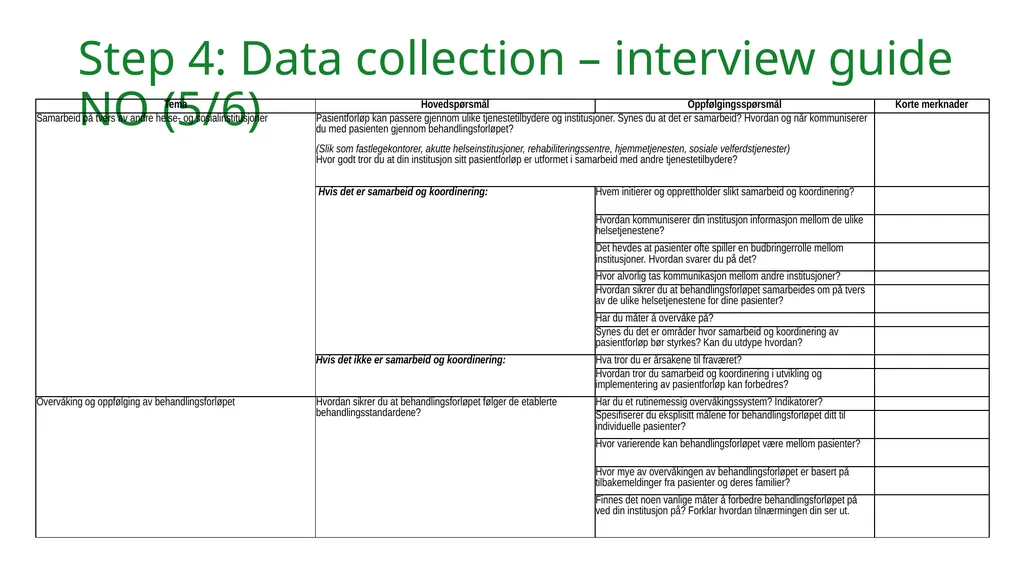
Step 4: Data collection – interview guide NO (5/6)<br>
22
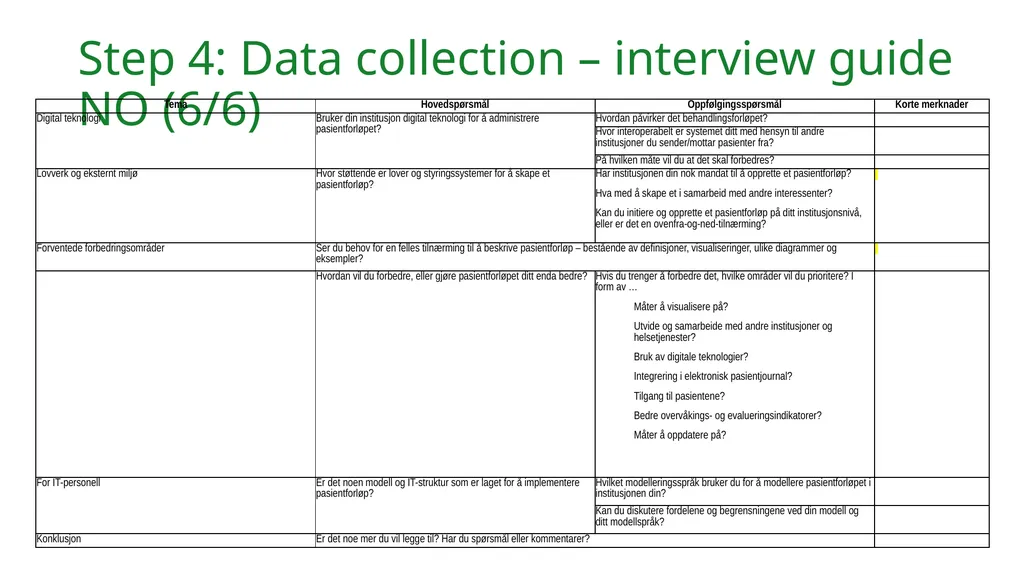
Step 4: Data collection – interview guide NO (6/6)<br>
23
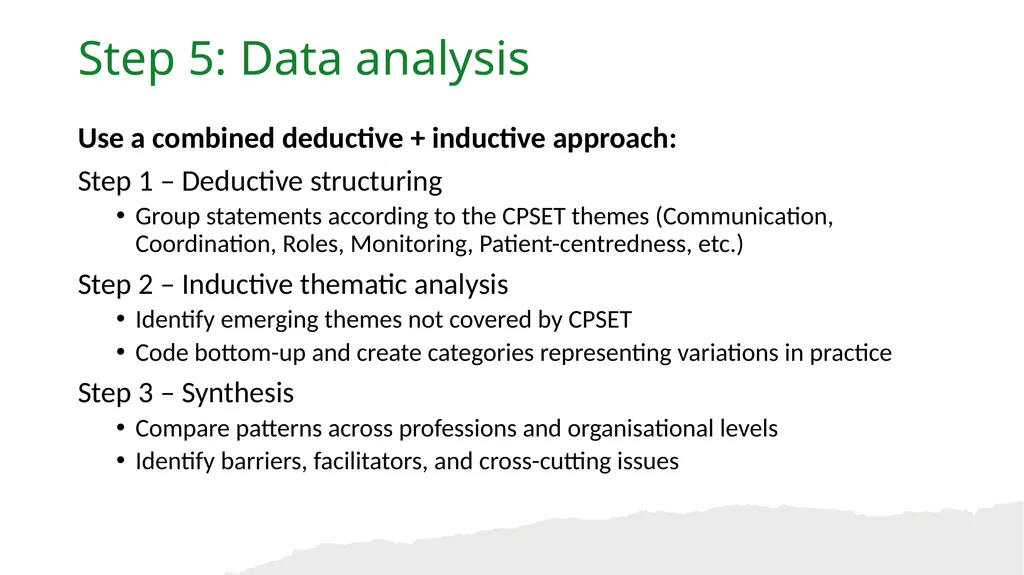
Step 5: Data analysis Use a combined deductive + inductive approach:
Step 1 – Deductive structuring
Group statements according to the CPSET themes (Communication, Coordination, Roles, Monitoring, Patient-centredness, etc.)
Step 2 – Inductive thematic analysis
Identify emerging themes not covered by CPSET
Code bottom-up and create categories representing variations in practice
Step 3 – Synthesis
Compare patterns across professions and organisational levels
Identify barriers, facilitators, and cross-cutting issues<br>
24
More information Lessons learned
Key takeaways
Relevant publications<br>
25
Lessons learned Using CPSET constructs to develop open-ended questions for in-depth interviews ensured coverage of essential coordination domains, while allowing participants to express their perceptions and experiences in depth.
Recruiting informants with varied system roles (clinicians + coordinators + administrative functions) strengthens the validity of insights.
Piloting strengthen clarity and ensure contextual relevance across languages and settings
Interviewers should be flexible: follow the structure, but allow narrative digressions when they provide insight into real workflow challenges.
Participants with different roles require slightly tailored probing to capture role-specific experiences without losing consistency.<br>
26
Key takeaways A structured overview of how healthcare personnel understand, organise and communicate patient pathways
A thematic map showing variation across units/levels
Identified inefficiencies and improvement areas
Input for modelling patient pathway diagrams<br>
27
Relevant publications Bogale, B., Solem, I. K. L., Larsen, A. G., Celius, E. G., & Halvorsrud, R. (2025). Patient Pathways Inefficiencies in Neurology Care: Providers’ Perspectives. In MEDINFO 2025—Healthcare Smart× Medicine Deep (pp. 1676-1677). IOS Press.
Bogale B, Solem IKL, Celius EG, Halvorsrud R. Visual Modeling of Multiple Sclerosis Patient Pathways: The Healthcare Workers’ Perspectives. In: Särestöniemi M, Keikhosrokiani P, Singh D,Harjula E, Tiulpin A, Jansson M, et al., editors. Digital Health and Wireless Solutions. Cham: Springer Nature Switzerland; 2024. p. 303–17.<br>
28
References to original and validated CPSET Vanhaecht K, De Witte K, Depreitere R, Van Zelm R, De Bleser L, Proost K, Sermeus W. Development and validation of a care process self-evaluation tool. Health Serv Manage Res. 2007 Aug;20(3):189-202. doi: 10.1258/095148407781395964. PMID: 17683658.
Seys D, Deneckere S, Sermeus W, Van Gerven E, Panella M, Bruyneel L, Mutsvari T, Bejarano RC, Kul S, Vanhaecht K. The Care Process Self-Evaluation Tool: a valid and reliable instrument for measuring care process organization of health care teams. BMC Health Serv Res. 2013 Aug 19;13:325. doi: 10.1186/1472-6963-13-325. PMID: 23958206; PMCID: PMC3751913.
Størkson S, Biringer E, Hartveit M, Aßmus J, Vanhaecht K. Psychometric properties of the Norwegian version of the Care Process Self-Evaluation Tool. J Interprof Care. 2016 Nov;30(6):804-811. doi: 10.1080/13561820.2016.1203766. Epub 2016 Jul 26. PMID: 27459413.<br>