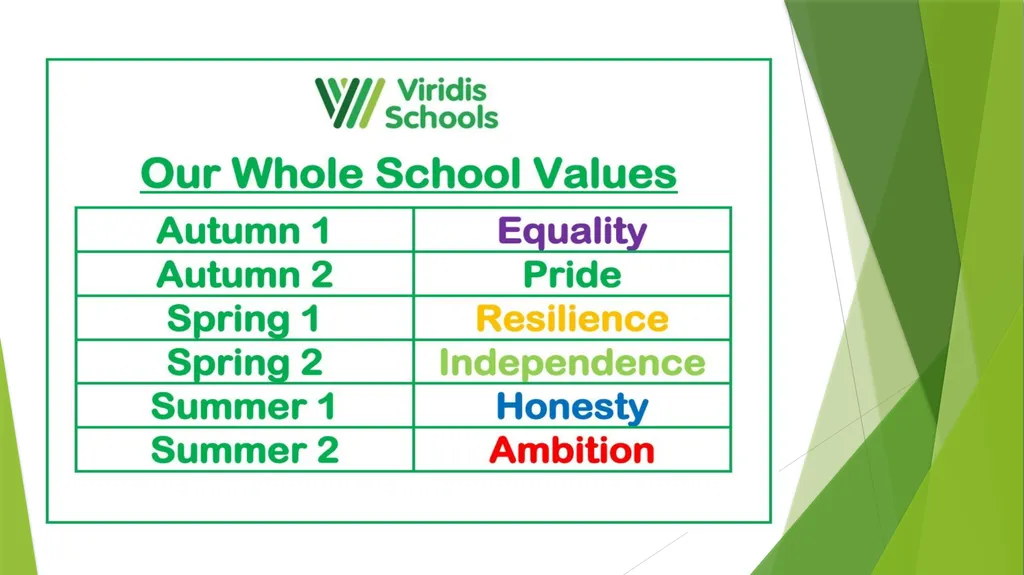
Values at Viridis How do we teach values in our schools: Values embedded in our curriculum Gold Awards Assemblies Base of discussions around behaviour and personal development Praised when spotted Linked to British Values At the heart
"Values at Viridis How do we ‘teach’ values in our" is the property of its rightful owner. Permission is granted to
download and print the materials on this website for personal, non-commercial use only, and to display it
on your personal computer provided you do not modify the materials and that you retain all copyright
notices contained in the materials. By downloading content from our website, you accept the terms of this
agreement.
Share
Embed code
Presentation Transcript
01
Values at Viridis<br>
02
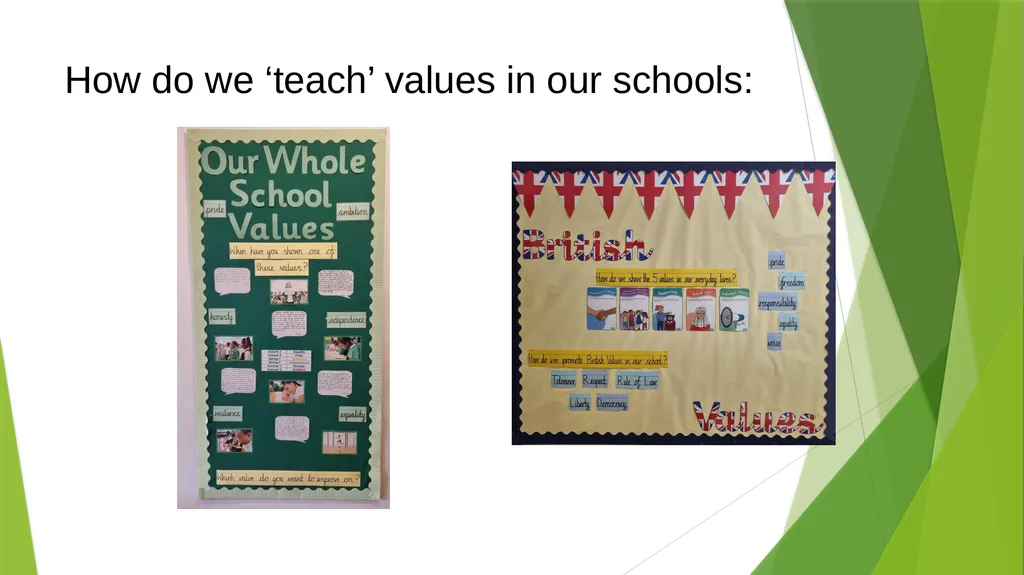
How do we ‘teach’ values in our schools:<br>
03
Values embedded in our curriculum Gold Awards
Assemblies
Base of discussions around behaviour and personal development
Praised when 'spotted'
Linked to British Values
At the heart of the school vision/ ethos<br>
04
Values are threaded through both our school curriculum and our enrichment.
Opportunities are sought to highlight and discuss the importance of these values and the role they play in creating a positive society/ community.
Values are taught both explicitly and indirectly.<br>
05
Embedding the values within our curriculum Our PSHCE curriculum has British and Whole School Values threaded through it. The RE curriculum doesn’t just teach about religion, but teaches children that we can all learn from all religions, developing tolerance and acceptance of others through a better/deeper understanding.<br>
06
British Values in education All schools have a duty to ‘actively promote’ the fundamental British values of:
democracy
the rule of law
individual liberty
and mutual respect
tolerance of those with different faiths and beliefs.
These values were first set out by the government in the ‘Prevent’ strategy * in 2011.
* The purpose of Prevent is to safeguard people who are at risk of radicalisation and to stop them from being exploited by people who would want them to support terrorism<br>
07
Why British Values? The Department for Education has today (27 November 2014) published guidance on promoting British values in schools to ensure young people leave school prepared for life in modern Britain
the changes were designed to “tighten up the standards on pupil welfare to improve safeguarding, and the standards on spiritual, moral, social and cultural development of pupils to strengthen the barriers to extremism”.
A key part of the plan for education was to ensure children become valuable and fully rounded members of society who treat others with respect and tolerance, regardless of background.
This ensures young people understand the importance of respect and leave school fully prepared for life in modern Britain.<br>
08
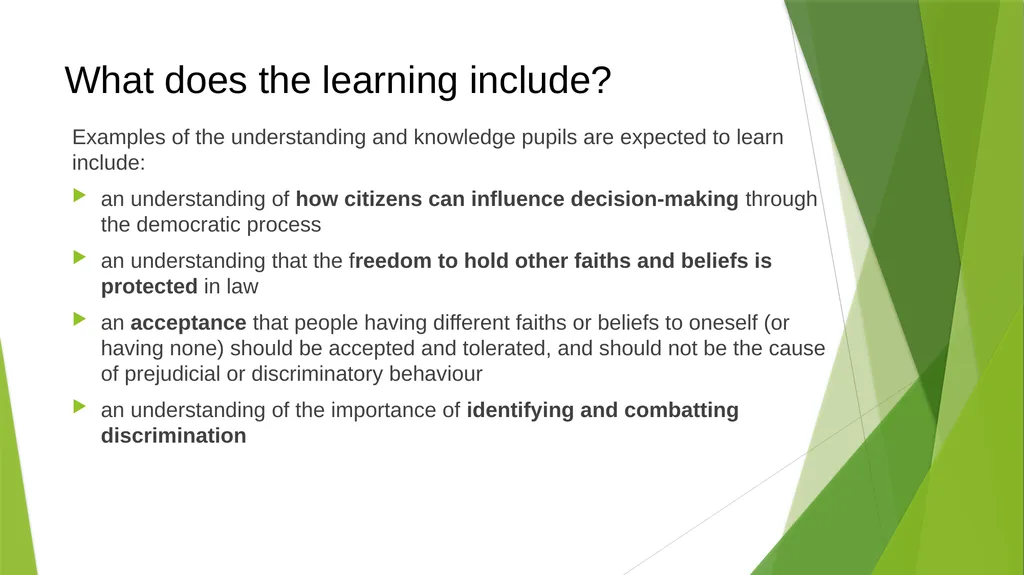
What does the learning include? Examples of the understanding and knowledge pupils are expected to learn include:
an understanding of how citizens can influence decision-making through the democratic process
an understanding that the freedom to hold other faiths and beliefs is protected in law
an acceptance that people having different faiths or beliefs to oneself (or having none) should be accepted and tolerated, and should not be the cause of prejudicial or discriminatory behaviour
an understanding of the importance of identifying and combatting discrimination<br>
09
What might this look like? Examples of actions schools can take to promote British values are to:
include in suitable parts of the curriculum - as appropriate for the age of pupils - material on the strengths, advantages and disadvantages of democracy, and how democracy and the law works in Britain, in contrast to other forms of government in other countries
ensure all pupils within the school have a voice that is listened to, and demonstrate how democracy works by actively promoting democratic processes such as a school council whose members are voted for by the pupils
use opportunities such as general or local elections to hold mock elections to promote fundamental British values and provide pupils with the opportunity to learn how to argue and defend points of view
consider the role of extra-curricular activity, including any run directly by pupils, in promoting fundamental British values<br>
10
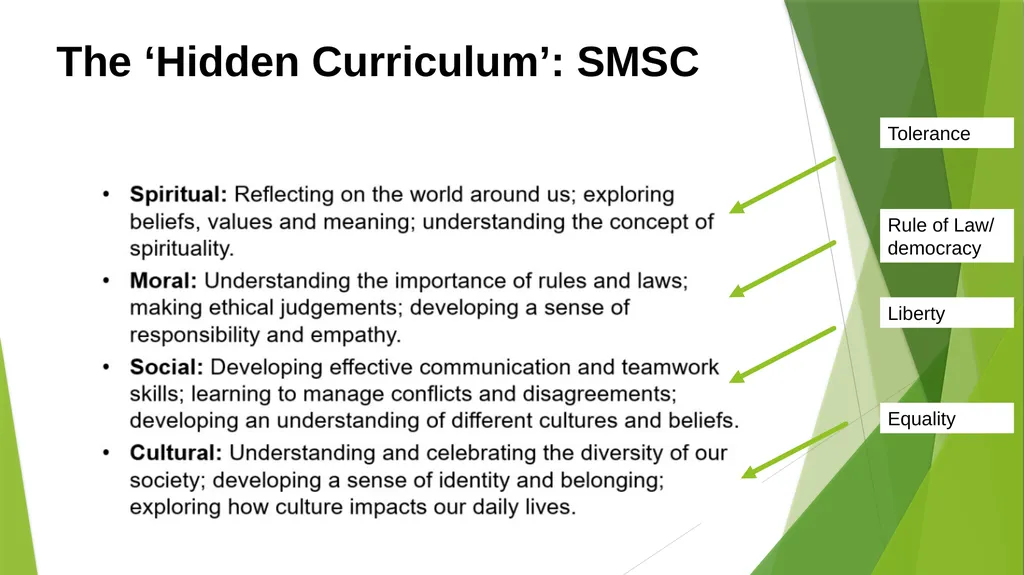
The ‘Hidden Curriculum’: SMSC Tolerance Rule of Law/ democracy Liberty Equality<br>
11
Healthy Unwell Struggling Tolerance
Rule of Law
Liberty
Democracy
Equality<br>
12
Tolerance
Rule of Law
Liberty
Democracy
Equality<br>
13
Tolerance
Rule of Law
Liberty
Democracy
Equality<br>
14
Tolerance
Rule of Law
Liberty
Democracy
Equality<br>
15
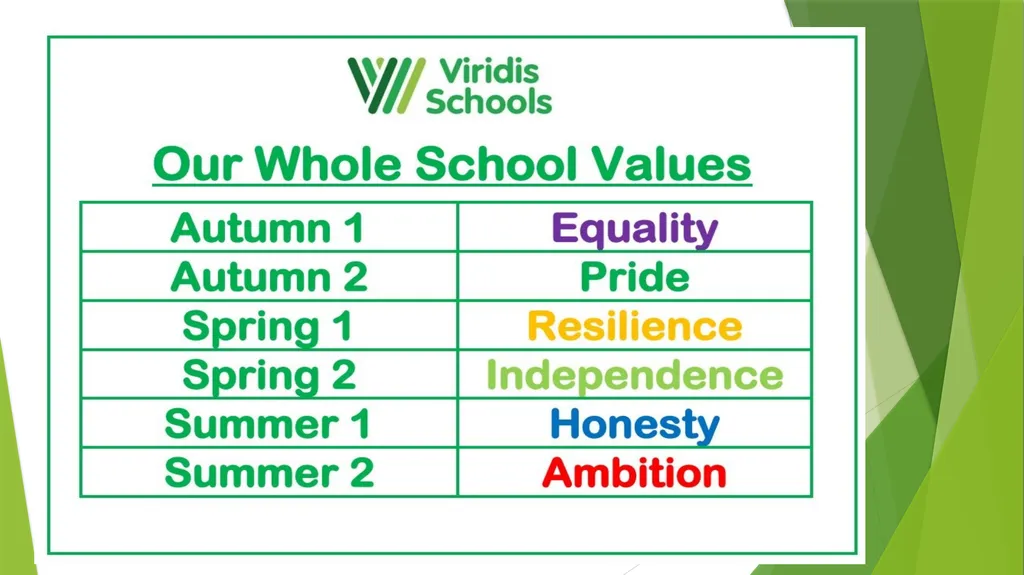
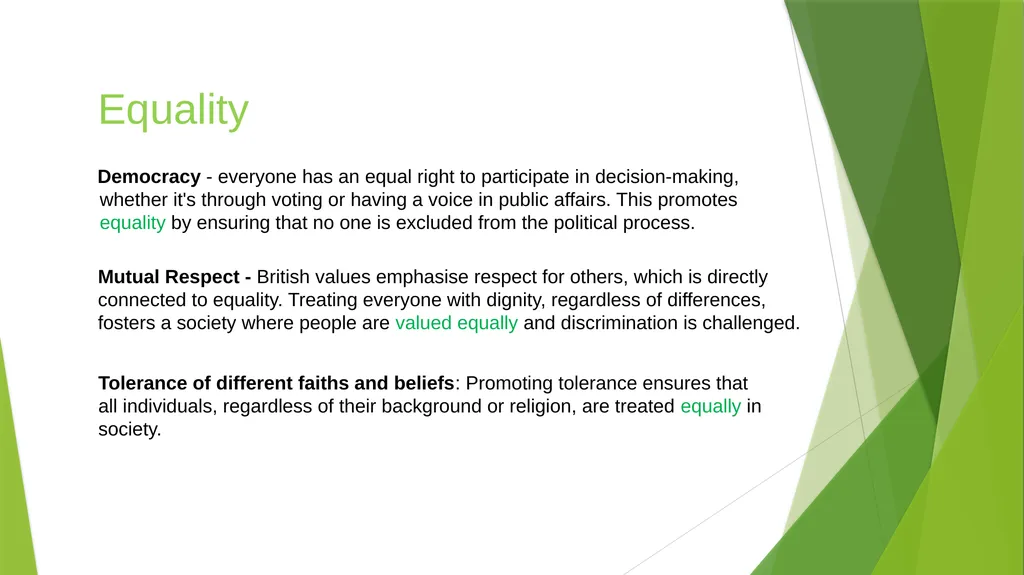
Tolerance of different faiths and beliefs: Promoting tolerance ensures that all individuals, regardless of their background or religion, are treated equally in society. Mutual Respect - British values emphasise respect for others, which is directly connected to equality. Treating everyone with dignity, regardless of differences, fosters a society where people are valued equally and discrimination is challenged. Democracy - everyone has an equal right to participate in decision-making, whether it's through voting or having a voice in public affairs. This promotes equality by ensuring that no one is excluded from the political process. Equality<br>
16
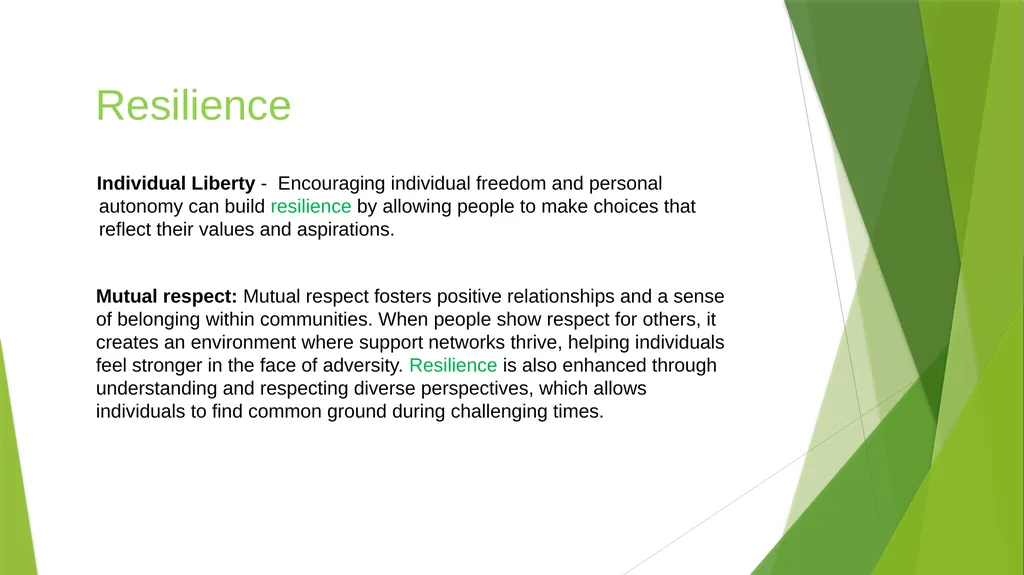
Mutual respect: Mutual respect fosters positive relationships and a sense of belonging within communities. When people show respect for others, it creates an environment where support networks thrive, helping individuals feel stronger in the face of adversity. Resilience is also enhanced through understanding and respecting diverse perspectives, which allows individuals to find common ground during challenging times. Individual Liberty - Encouraging individual freedom and personal autonomy can build resilience by allowing people to make choices that reflect their values and aspirations. Resilience<br>
17
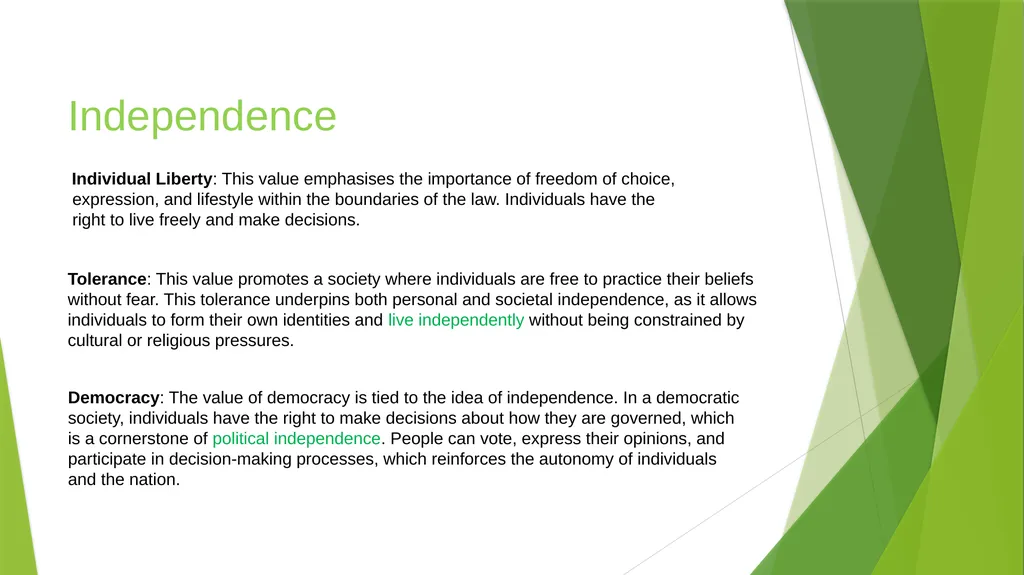
Democracy: The value of democracy is tied to the idea of independence. In a democratic society, individuals have the right to make decisions about how they are governed, which is a cornerstone of political independence. People can vote, express their opinions, and participate in decision-making processes, which reinforces the autonomy of individuals and the nation. Tolerance: This value promotes a society where individuals are free to practice their beliefs without fear. This tolerance underpins both personal and societal independence, as it allows individuals to form their own identities and live independently without being constrained by cultural or religious pressures. Individual Liberty: This value emphasises the importance of freedom of choice, expression, and lifestyle within the boundaries of the law. Individuals have the right to live freely and make decisions. Independence<br>