Various Methods Of Teaching History- Biographical Method By Anuradha ROY Assistant PROFESSOR, namce(B.ED) Meaning Of Source Method Source Method implies using original material and sources in the teaching and learning of history. By
"Various Methods Of Teaching History- Biographical" is the property of its rightful owner. Permission is granted to
download and print the materials on this website for personal, non-commercial use only, and to display it
on your personal computer provided you do not modify the materials and that you retain all copyright
notices contained in the materials. By downloading content from our website, you accept the terms of this
agreement.
Presentation Transcript
01
Various Methods Of Teaching History- Biographical Method By Anuradha ROY
Assistant PROFESSOR, namce(B.ED)<br>
02
Meaning Of Source Method Source Method implies using original material and sources in the teaching and learning of history. By providing first hand experience this method leads to better understanding of the subject.<br>
03
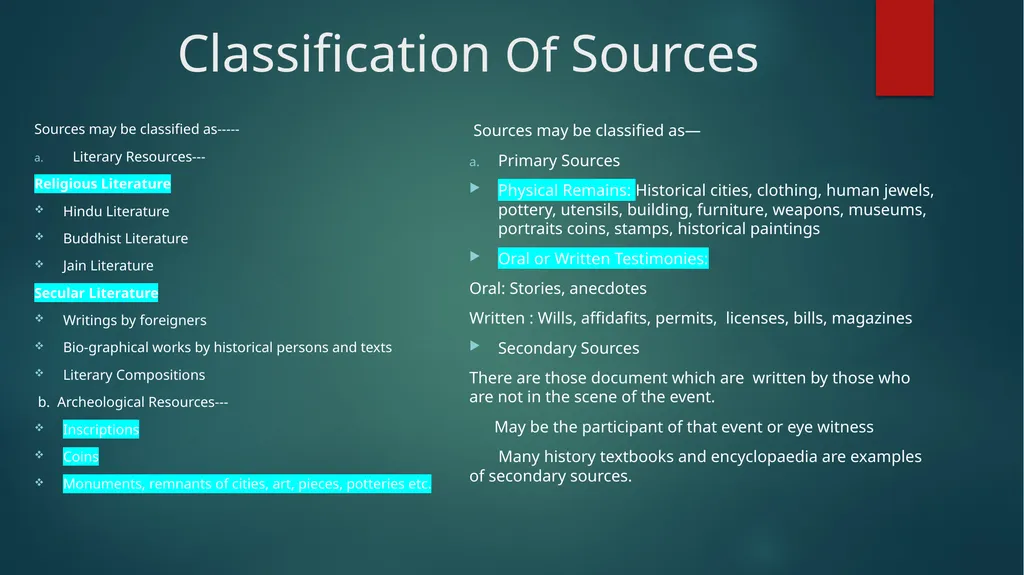
Classification Of Sources Sources may be classified as-----
Literary Resources---
Religious Literature
Hindu Literature
Buddhist Literature
Jain Literature
Secular Literature
Writings by foreigners
Bio-graphical works by historical persons and texts
Literary Compositions
b. Archeological Resources---
Inscriptions
Coins
Monuments, remnants of cities, art, pieces, potteries etc. Sources may be classified as—
Primary Sources
Physical Remains: Historical cities, clothing, human jewels, pottery, utensils, building, furniture, weapons, museums, portraits coins, stamps, historical paintings
Oral or Written Testimonies:
Oral: Stories, anecdotes
Written : Wills, affidafits, permits, licenses, bills, magazines
Secondary Sources
There are those document which are written by those who are not in the scene of the event.
May be the participant of that event or eye witness
Many history textbooks and encyclopaedia are examples of secondary sources.<br>
04
Use Of Source Method Pre lesson Uses: Visits to actual sites of monuments/forts/museums
or teacher can ask them to read some selected pages.
Mid Lesson Uses: During the lesson the teacher may arrange real time situation
Post Lesson Uses: Teacher may given assignments which need to use the resources, they may be encouraged to pursue their interest in a particular topic. Do some critical thinking and analysis & prepare their own account.<br>
05
Advantages It would make historical facts appear real
It provides an opportunity to the pupils to learn history (Visiting museums, actual handling)
The source method offers groupwork, workshop regarding particular material
This method gives the pupil insight into the process of gathering historical facts so that they can develop historical senses
This method is suitable for higher and lower classes.
The source method make the subject history more concrete and more meaningful<br>
06
Disadvantages Original sources are sometimes not available for India
Source method is quite lengthy
Source method is too complex and technical<br>