Verbs, Objects, Subject Complements Unit 3 Week 3 Direct Object A direct object follows an action verb and tells who or what receives the action of the verb. Examples: Chris told a secret. (told is the action verb; secret is the direct
"Verbs, Objects, & Subject Complements Unit 3 Week" is the property of its rightful owner. Permission is granted to
download and print the materials on this website for personal, non-commercial use only, and to display it
on your personal computer provided you do not modify the materials and that you retain all copyright
notices contained in the materials. By downloading content from our website, you accept the terms of this
agreement.
Presentation Transcript
01
Verbs, Objects, & Subject Complements Unit 3 Week 3<br>
02
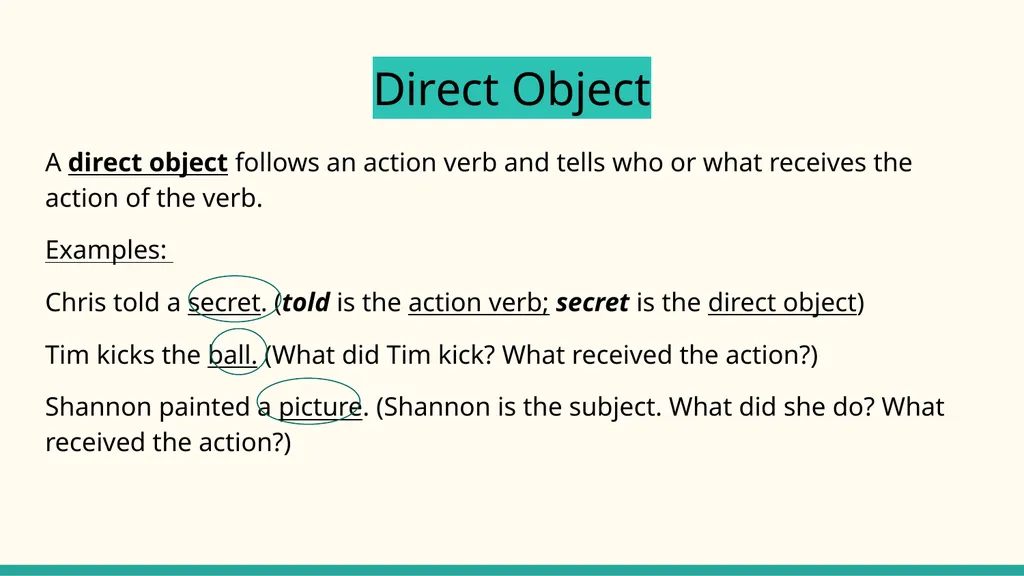
Direct Object A direct object follows an action verb and tells who or what receives the action of the verb.
Examples:
Chris told a secret. (told is the action verb; secret is the direct object)
Tim kicks the ball. (What did Tim kick? What received the action?)
Shannon painted a picture. (Shannon is the subject. What did she do? What received the action?)<br>
03
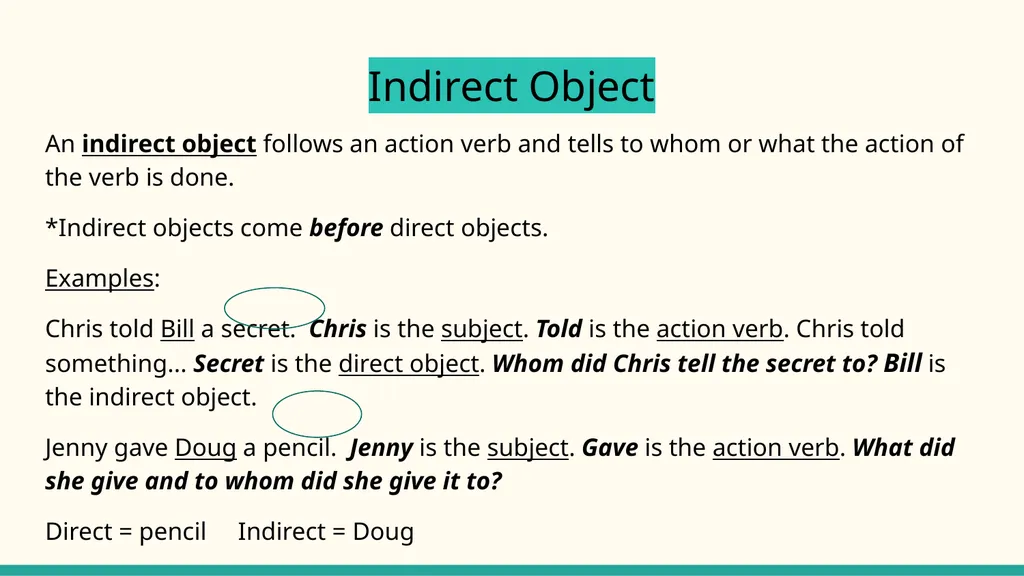
Indirect Object An indirect object follows an action verb and tells to whom or what the action of the verb is done.
*Indirect objects come before direct objects.
Examples:
Chris told Bill a secret. Chris is the subject. Told is the action verb. Chris told something... Secret is the direct object. Whom did Chris tell the secret to? Bill is the indirect object.
Jenny gave Doug a pencil. Jenny is the subject. Gave is the action verb. What did she give and to whom did she give it to?
Direct = pencil Indirect = Doug<br>
04
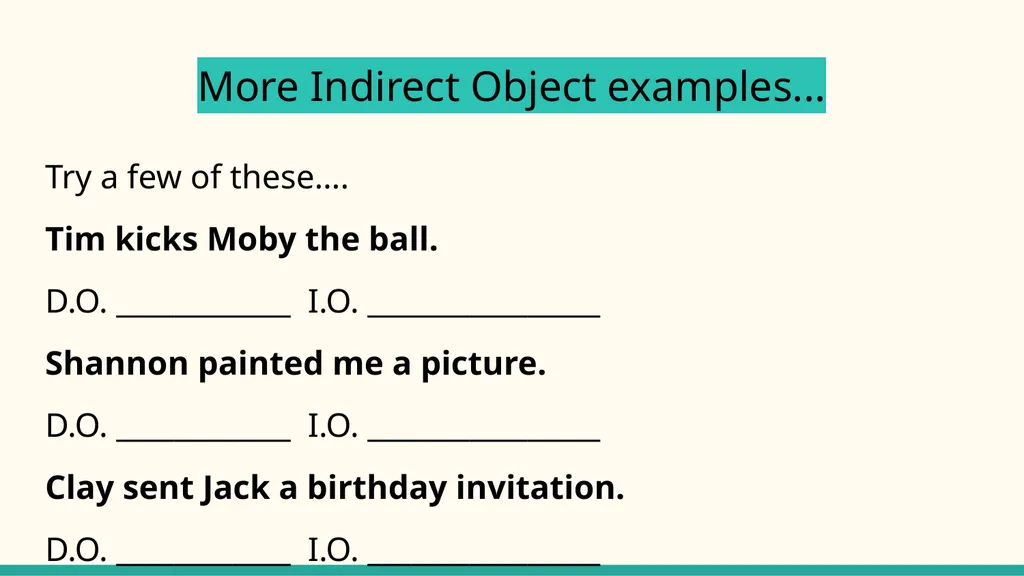
More Indirect Object examples... Try a few of these….
Tim kicks Moby the ball.
D.O. ____________ I.O. ________________
Shannon painted me a picture.
D.O. ____________ I.O. ________________
Clay sent Jack a birthday invitation.
D.O. ____________ I.O. ________________<br>
05
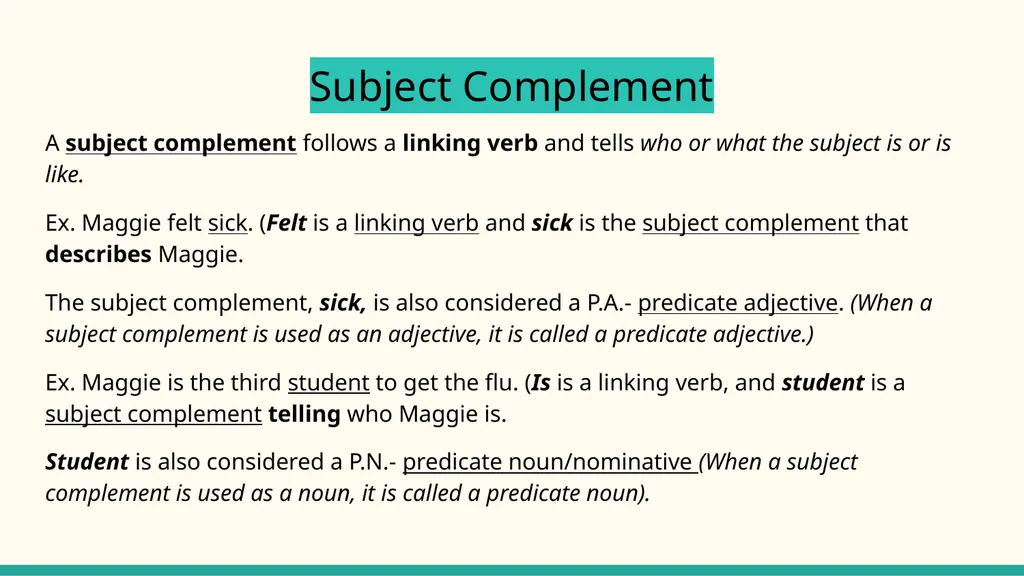
Subject Complement A subject complement follows a linking verb and tells who or what the subject is or is like.
Ex. Maggie felt sick. (Felt is a linking verb and sick is the subject complement that describes Maggie.
The subject complement, sick, is also considered a P.A.- predicate adjective. (When a subject complement is used as an adjective, it is called a predicate adjective.)
Ex. Maggie is the third student to get the flu. (Is is a linking verb, and student is a subject complement telling who Maggie is.
Student is also considered a P.N.- predicate noun/nominative (When a subject complement is used as a noun, it is called a predicate noun).<br>