
‘Veterinary Epidemiology & Zoonoses’ VPH-321



Description: Veterinary Epidemiology Zoonoses VPH-321 (Credit Hours-21) Influenza Influenza is a contagious, acute respiratory illness caused by influenza viruses, usually influenza A or B subtypes Etiology Family-Orthomyxoviridae RNA genome Four
Related Topics
Download Presentation
"‘Veterinary Epidemiology & Zoonoses’ VPH-321" is the property of its rightful owner. Permission is granted to download and print the materials on this website for personal, non-commercial use only, and to display it on your personal computer provided you do not modify the materials and that you retain all copyright notices contained in the materials. By downloading content from our website, you accept the terms of this agreement.
Presentation Transcript
slide1. ‘Veterinary Epidemiology & Zoonoses’
VPH-321
(Credit Hours-2+1)<br>
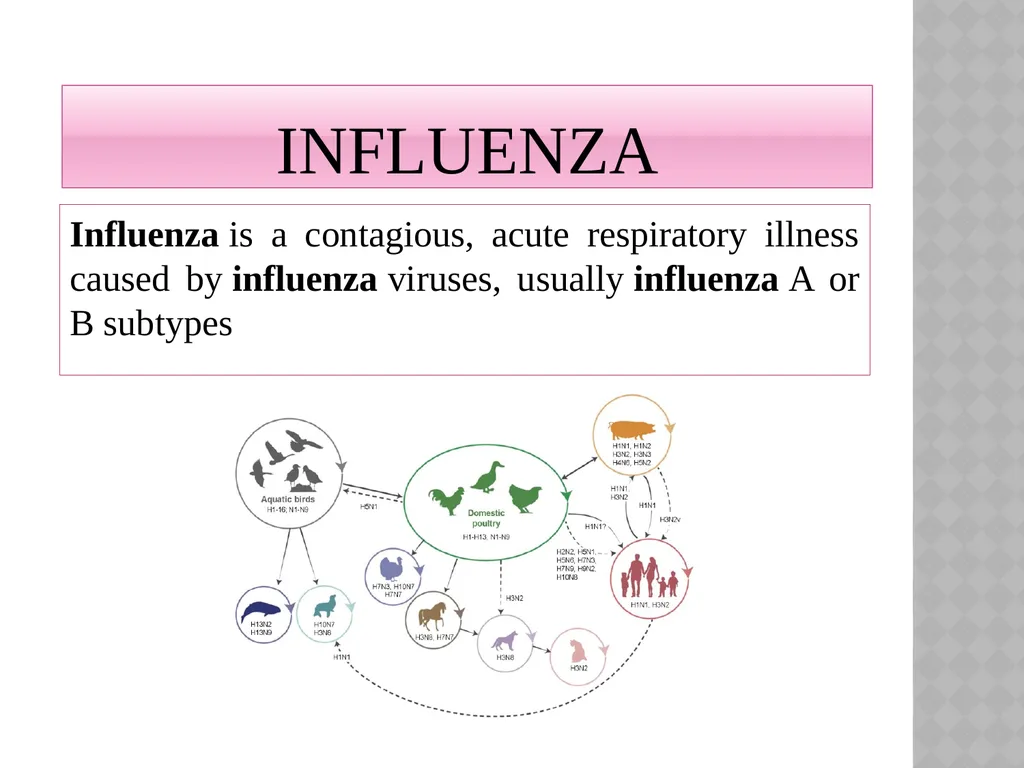
slide2. Influenza Influenza is a contagious, acute respiratory illness caused by influenza viruses, usually influenza A or B subtypes<br>
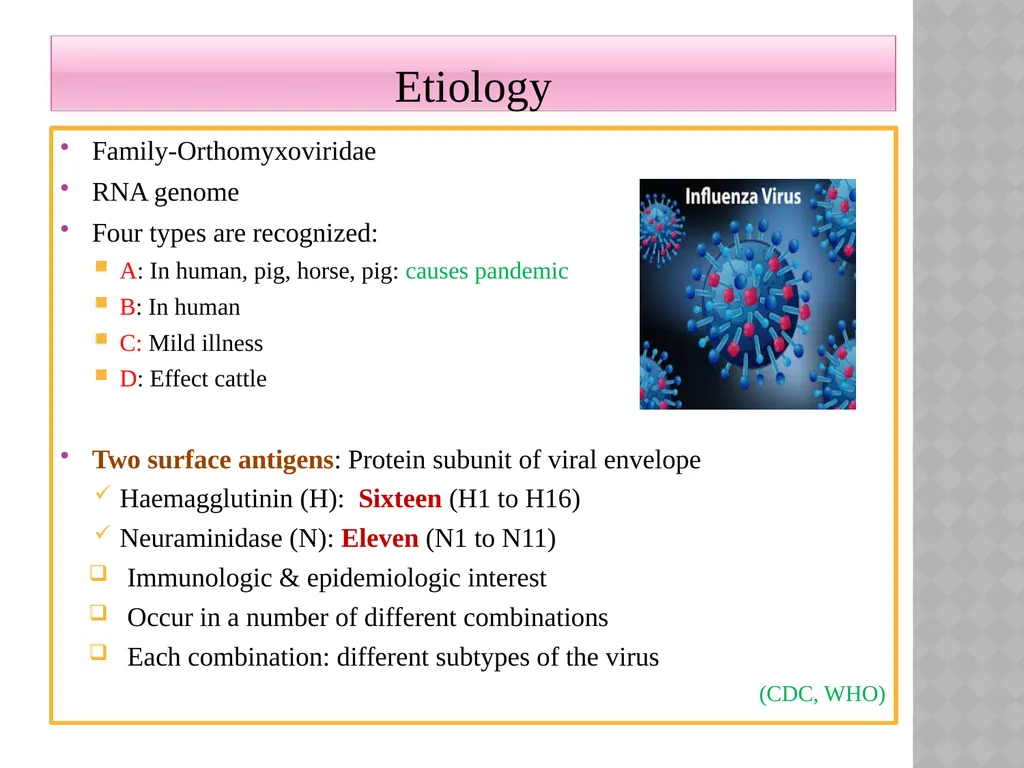
slide3. Etiology Family-Orthomyxoviridae
RNA genome
Four types are recognized:
A: In human, pig, horse, pig: causes pandemic
B: In human
C: Mild illness
D: Effect cattle
Two surface antigens: Protein subunit of viral envelope
Haemagglutinin (H): Sixteen (H1 to H16)
Neuraminidase (N): Eleven (N1 to N11)
Immunologic & epidemiologic interest
Occur in a number of different combinations
Each combination: different subtypes of the virus
(CDC, WHO)<br>
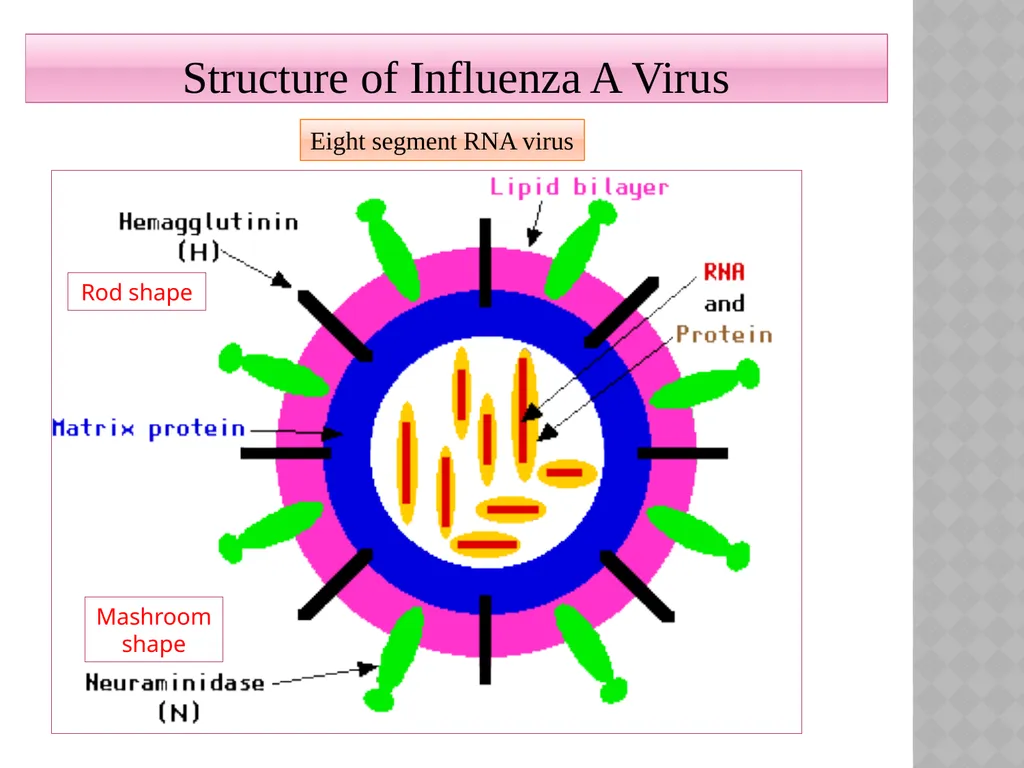
slide4. Structure of Influenza A Virus Rod shape Mashroom shape Eight segment RNA virus<br>
slide5. Nomenclature of the virus 1. Virus type;
2. Host of origin;
3. Geographic origin;
4. Strain number;
5. Year of isolation and
6. Antigenic description of subtype
Ex: A/Duck/Ukraine/1/63 (H3N8)<br>
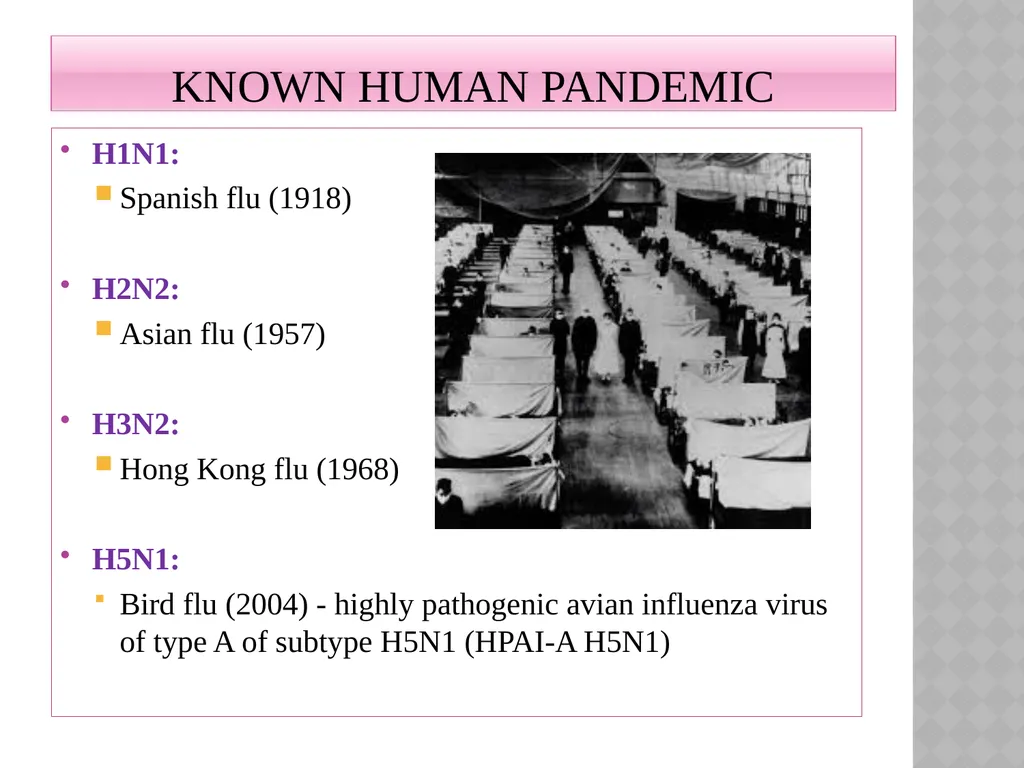
slide6. H1N1:
Spanish flu (1918)
H2N2:
Asian flu (1957)
H3N2:
Hong Kong flu (1968)
H5N1:
Bird flu (2004) - highly pathogenic avian influenza virus of type A of subtype H5N1 (HPAI-A H5N1) Known human Pandemic<br>
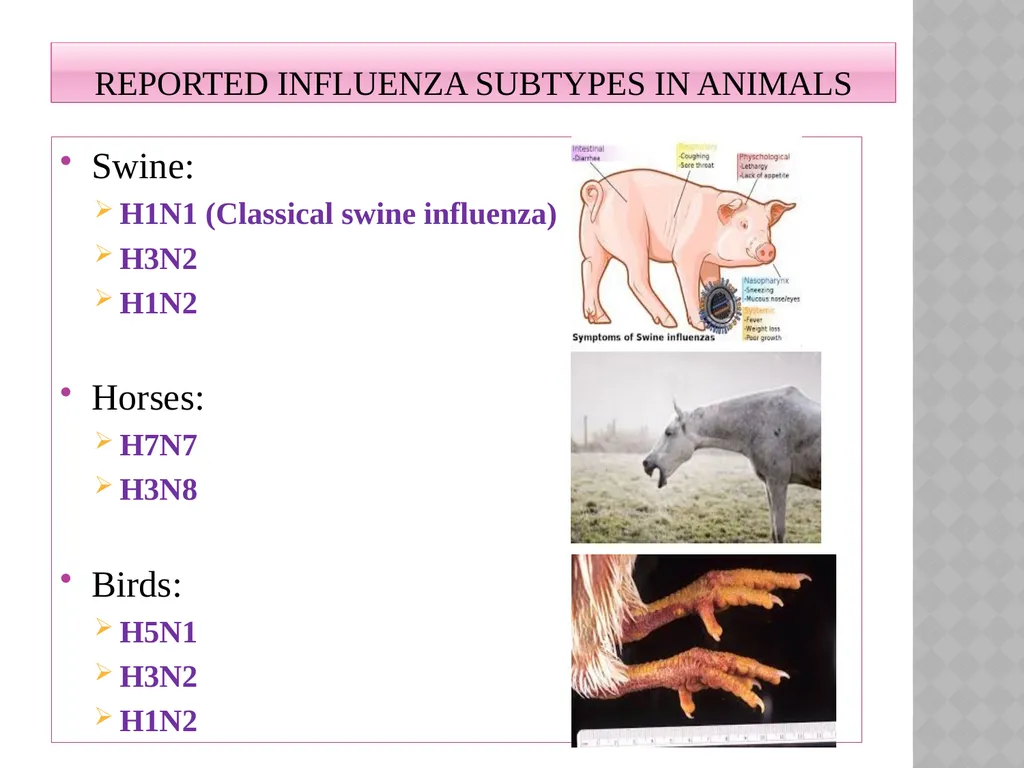
slide7. Swine:
H1N1 (Classical swine influenza)
H3N2
H1N2
Horses:
H7N7
H3N8
Birds:
H5N1
H3N2
H1N2 Reported influenza subtypes in animals<br>
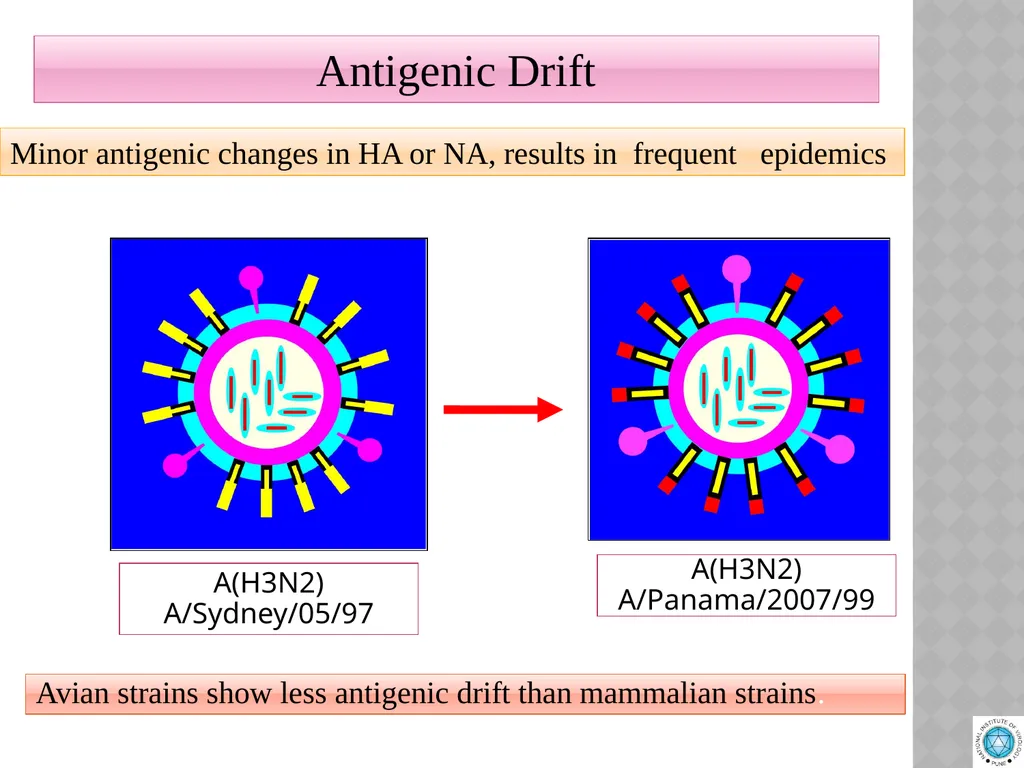
slide8. A(H3N2) A/Sydney/05/97 A(H3N2) A/Panama/2007/99 Avian strains show less antigenic drift than mammalian strains. Minor antigenic changes in HA or NA, results in frequent epidemics Antigenic Drift<br>
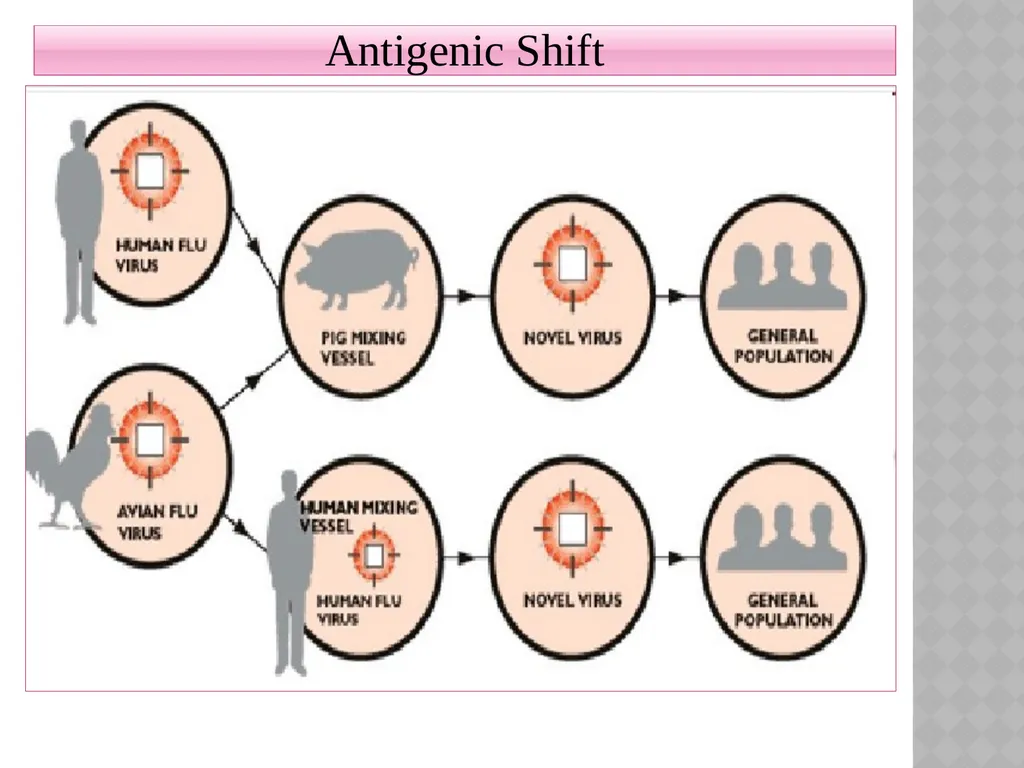
slide9. Antigenic Shift<br>
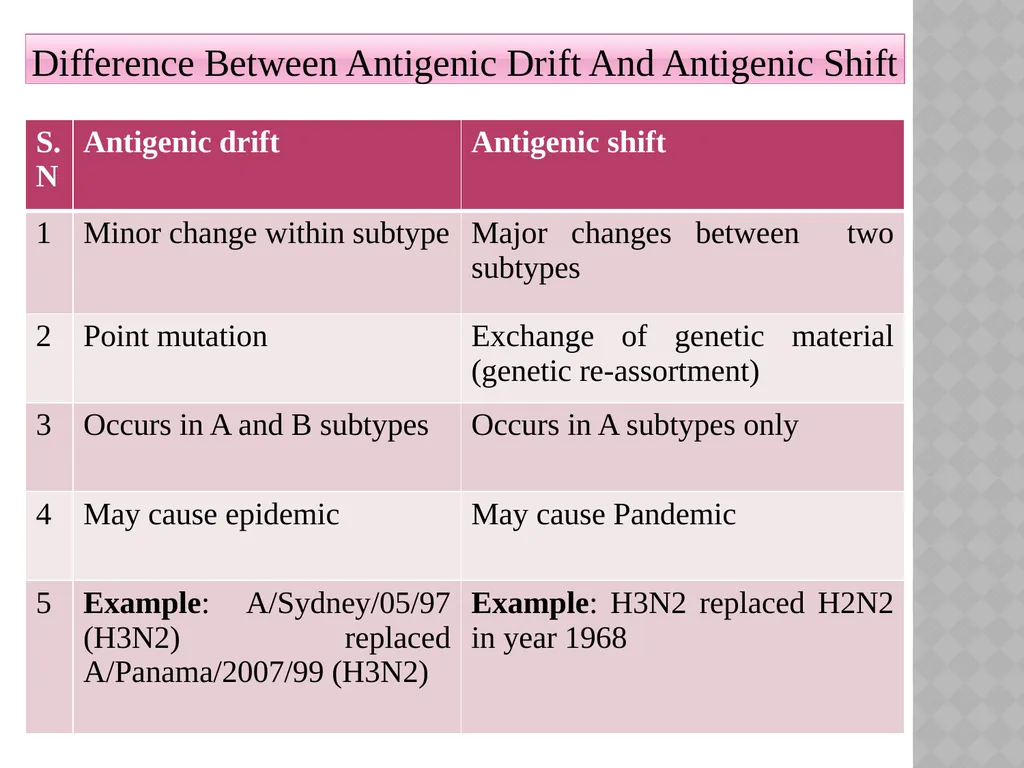
slide10. Difference Between Antigenic Drift And Antigenic Shift<br>
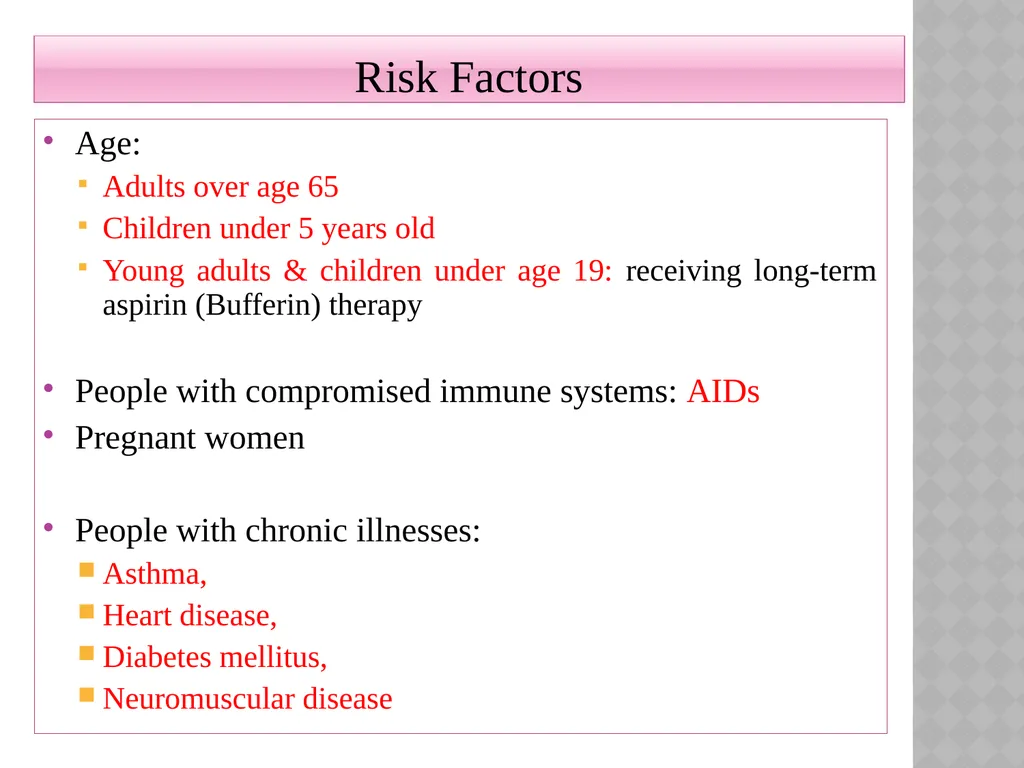
slide11. Risk Factors Age:
Adults over age 65
Children under 5 years old
Young adults & children under age 19: receiving long-term aspirin (Bufferin) therapy
People with compromised immune systems: AIDs
Pregnant women
People with chronic illnesses:
Asthma,
Heart disease,
Diabetes mellitus,
Neuromuscular disease<br>
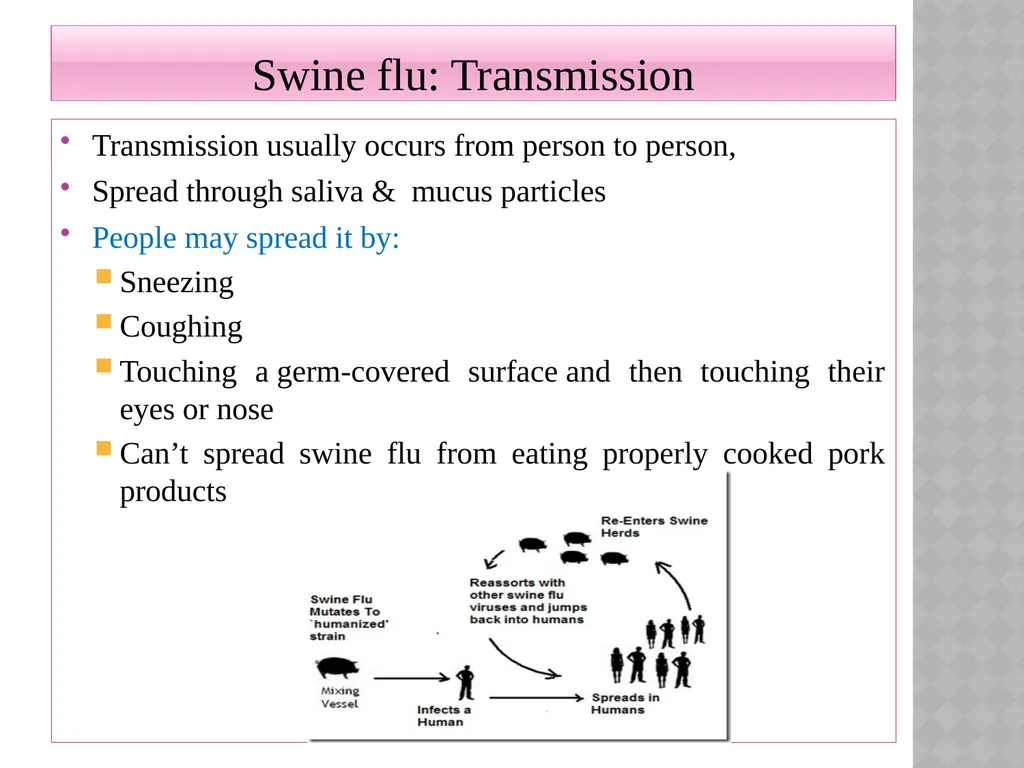
slide12. Swine flu: Transmission Transmission usually occurs from person to person,
Spread through saliva & mucus particles
People may spread it by:
Sneezing
Coughing
Touching a germ-covered surface and then touching their eyes or nose
Can’t spread swine flu from eating properly cooked pork products<br>
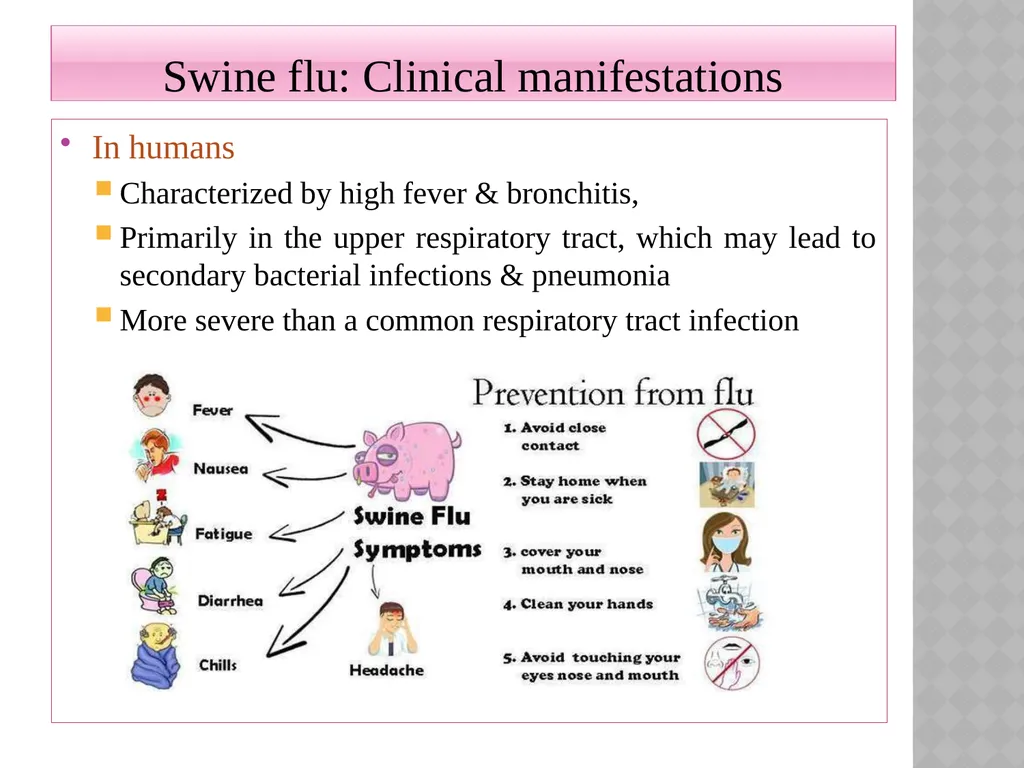
slide13. In humans
Characterized by high fever & bronchitis,
Primarily in the upper respiratory tract, which may lead to secondary bacterial infections & pneumonia
More severe than a common respiratory tract infection Swine flu: Clinical manifestations<br>
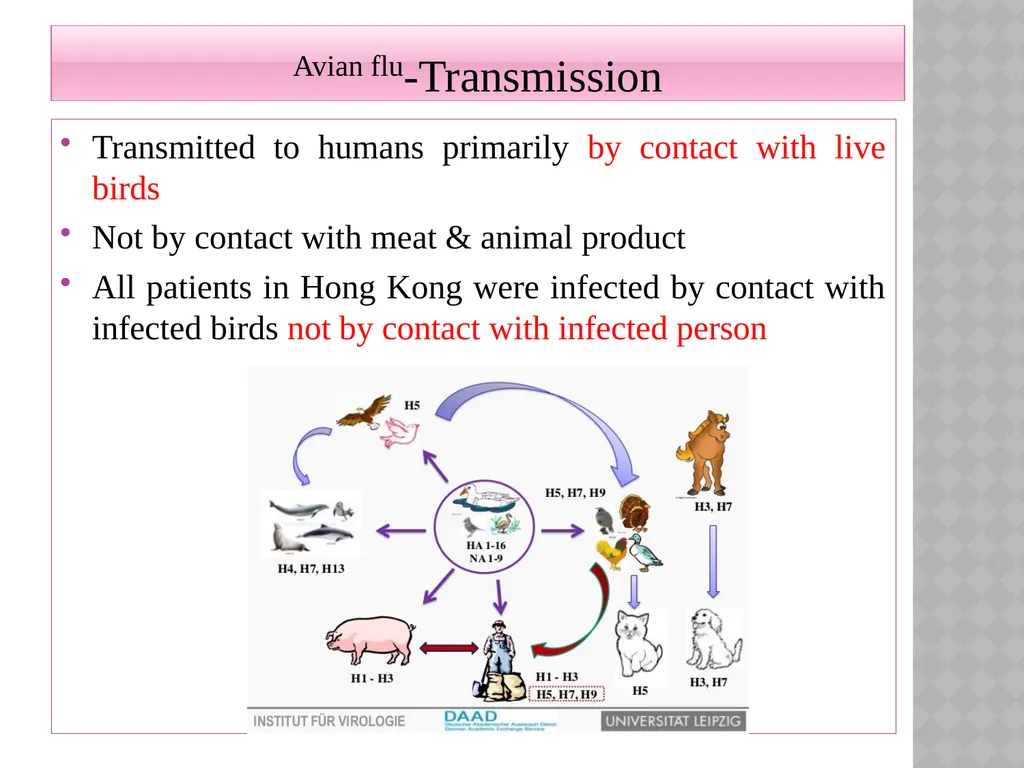
slide14. Transmitted to humans primarily by contact with live birds
Not by contact with meat & animal product
All patients in Hong Kong were infected by contact with infected birds not by contact with infected person Avian flu-Transmission<br>
slide15. A 3 years-old child infected with avian influenza virus H5N1 in Hong Kong in 1997 died with sign of a systemic infection and of Reyes syndrome after the child had been treated with antipyretic drugs
Cough
Diarrhea
Respiratory difficulties
Fever (over 100.4°F or 38°C)
Headache
Muscle aches
Malaise
Runny nose Avian flu-Clinical manifestation<br>
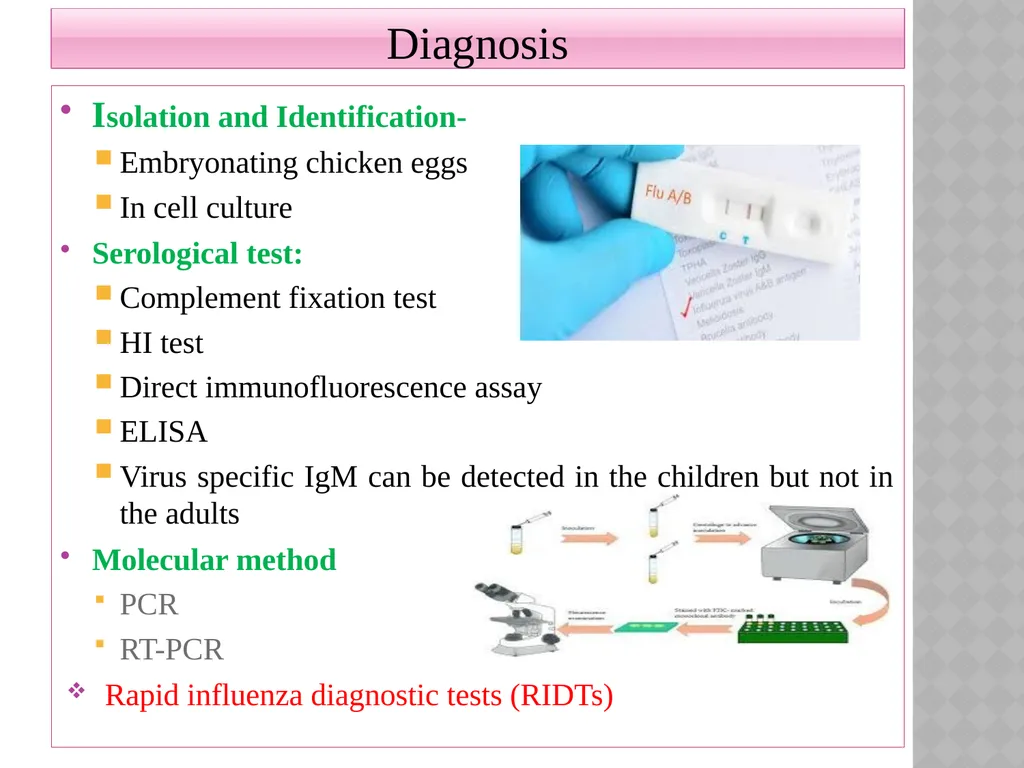
slide16. Isolation and Identification-
Embryonating chicken eggs
In cell culture
Serological test:
Complement fixation test
HI test
Direct immunofluorescence assay
ELISA
Virus specific IgM can be detected in the children but not in the adults
Molecular method
PCR
RT-PCR
Rapid influenza diagnostic tests (RIDTs) Diagnosis<br>
slide17. AmantadineHCL-5mg/kg body weight/day
Rimantadine-100mg twice a day
Oseltamivir (Tamiflu)
Zanamivir (Relenza) two daily doses of 5 mg per inhalation), has become available; it inhibits the neuraminidase activity of the virus
Corticosteroids in asthma & other specific conditions Treatment<br>
slide18. Through personal protective measures
Regular hand washing with proper drying of the hands
Good respiratory hygiene –
Covering mouth & nose when coughing or sneezing,
Using tissues & disposing of them correctly
Early self-isolation of those feeling unwell, feverish and having other symptoms of influenza
Avoiding close contact with sick people
Avoiding touching one’s eyes, nose or mouth
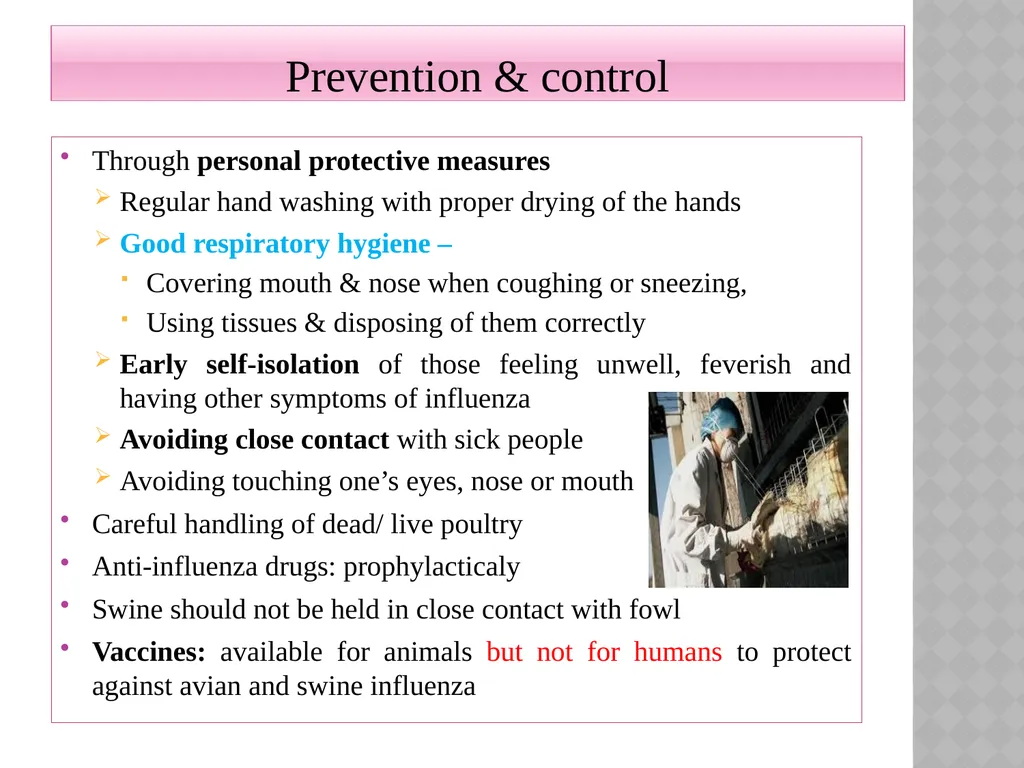
Careful handling of dead/ live poultry
Anti-influenza drugs: prophylacticaly
Swine should not be held in close contact with fowl
Vaccines: available for animals but not for humans to protect against avian and swine influenza Prevention & control<br>
VPH-321
(Credit Hours-2+1)<br>
slide2. Influenza Influenza is a contagious, acute respiratory illness caused by influenza viruses, usually influenza A or B subtypes<br>
slide3. Etiology Family-Orthomyxoviridae
RNA genome
Four types are recognized:
A: In human, pig, horse, pig: causes pandemic
B: In human
C: Mild illness
D: Effect cattle
Two surface antigens: Protein subunit of viral envelope
Haemagglutinin (H): Sixteen (H1 to H16)
Neuraminidase (N): Eleven (N1 to N11)
Immunologic & epidemiologic interest
Occur in a number of different combinations
Each combination: different subtypes of the virus
(CDC, WHO)<br>
slide4. Structure of Influenza A Virus Rod shape Mashroom shape Eight segment RNA virus<br>
slide5. Nomenclature of the virus 1. Virus type;
2. Host of origin;
3. Geographic origin;
4. Strain number;
5. Year of isolation and
6. Antigenic description of subtype
Ex: A/Duck/Ukraine/1/63 (H3N8)<br>
slide6. H1N1:
Spanish flu (1918)
H2N2:
Asian flu (1957)
H3N2:
Hong Kong flu (1968)
H5N1:
Bird flu (2004) - highly pathogenic avian influenza virus of type A of subtype H5N1 (HPAI-A H5N1) Known human Pandemic<br>
slide7. Swine:
H1N1 (Classical swine influenza)
H3N2
H1N2
Horses:
H7N7
H3N8
Birds:
H5N1
H3N2
H1N2 Reported influenza subtypes in animals<br>
slide8. A(H3N2) A/Sydney/05/97 A(H3N2) A/Panama/2007/99 Avian strains show less antigenic drift than mammalian strains. Minor antigenic changes in HA or NA, results in frequent epidemics Antigenic Drift<br>
slide9. Antigenic Shift<br>
slide10. Difference Between Antigenic Drift And Antigenic Shift<br>
slide11. Risk Factors Age:
Adults over age 65
Children under 5 years old
Young adults & children under age 19: receiving long-term aspirin (Bufferin) therapy
People with compromised immune systems: AIDs
Pregnant women
People with chronic illnesses:
Asthma,
Heart disease,
Diabetes mellitus,
Neuromuscular disease<br>
slide12. Swine flu: Transmission Transmission usually occurs from person to person,
Spread through saliva & mucus particles
People may spread it by:
Sneezing
Coughing
Touching a germ-covered surface and then touching their eyes or nose
Can’t spread swine flu from eating properly cooked pork products<br>
slide13. In humans
Characterized by high fever & bronchitis,
Primarily in the upper respiratory tract, which may lead to secondary bacterial infections & pneumonia
More severe than a common respiratory tract infection Swine flu: Clinical manifestations<br>
slide14. Transmitted to humans primarily by contact with live birds
Not by contact with meat & animal product
All patients in Hong Kong were infected by contact with infected birds not by contact with infected person Avian flu-Transmission<br>
slide15. A 3 years-old child infected with avian influenza virus H5N1 in Hong Kong in 1997 died with sign of a systemic infection and of Reyes syndrome after the child had been treated with antipyretic drugs
Cough
Diarrhea
Respiratory difficulties
Fever (over 100.4°F or 38°C)
Headache
Muscle aches
Malaise
Runny nose Avian flu-Clinical manifestation<br>
slide16. Isolation and Identification-
Embryonating chicken eggs
In cell culture
Serological test:
Complement fixation test
HI test
Direct immunofluorescence assay
ELISA
Virus specific IgM can be detected in the children but not in the adults
Molecular method
PCR
RT-PCR
Rapid influenza diagnostic tests (RIDTs) Diagnosis<br>
slide17. AmantadineHCL-5mg/kg body weight/day
Rimantadine-100mg twice a day
Oseltamivir (Tamiflu)
Zanamivir (Relenza) two daily doses of 5 mg per inhalation), has become available; it inhibits the neuraminidase activity of the virus
Corticosteroids in asthma & other specific conditions Treatment<br>
slide18. Through personal protective measures
Regular hand washing with proper drying of the hands
Good respiratory hygiene –
Covering mouth & nose when coughing or sneezing,
Using tissues & disposing of them correctly
Early self-isolation of those feeling unwell, feverish and having other symptoms of influenza
Avoiding close contact with sick people
Avoiding touching one’s eyes, nose or mouth
Careful handling of dead/ live poultry
Anti-influenza drugs: prophylacticaly
Swine should not be held in close contact with fowl
Vaccines: available for animals but not for humans to protect against avian and swine influenza Prevention & control<br>