04
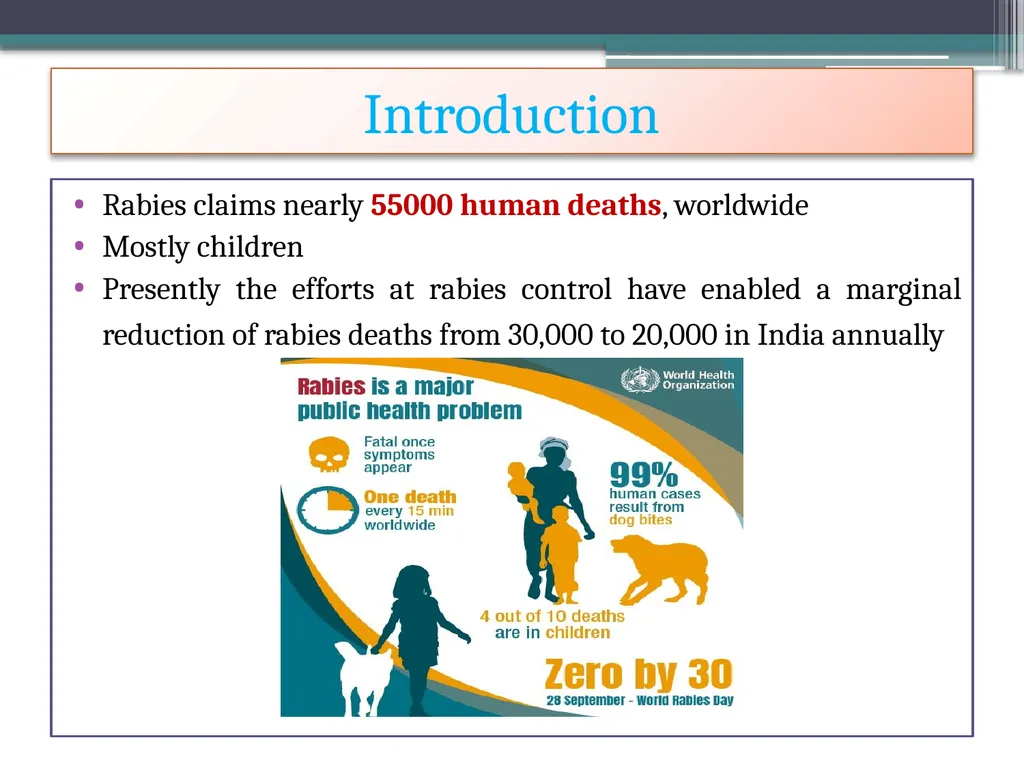
Rabies claims nearly 55000 human deaths, worldwide
Mostly children
Presently the efforts at rabies control have enabled a marginal reduction of rabies deaths from 30,000 to 20,000 in India annually Introduction<br>
05
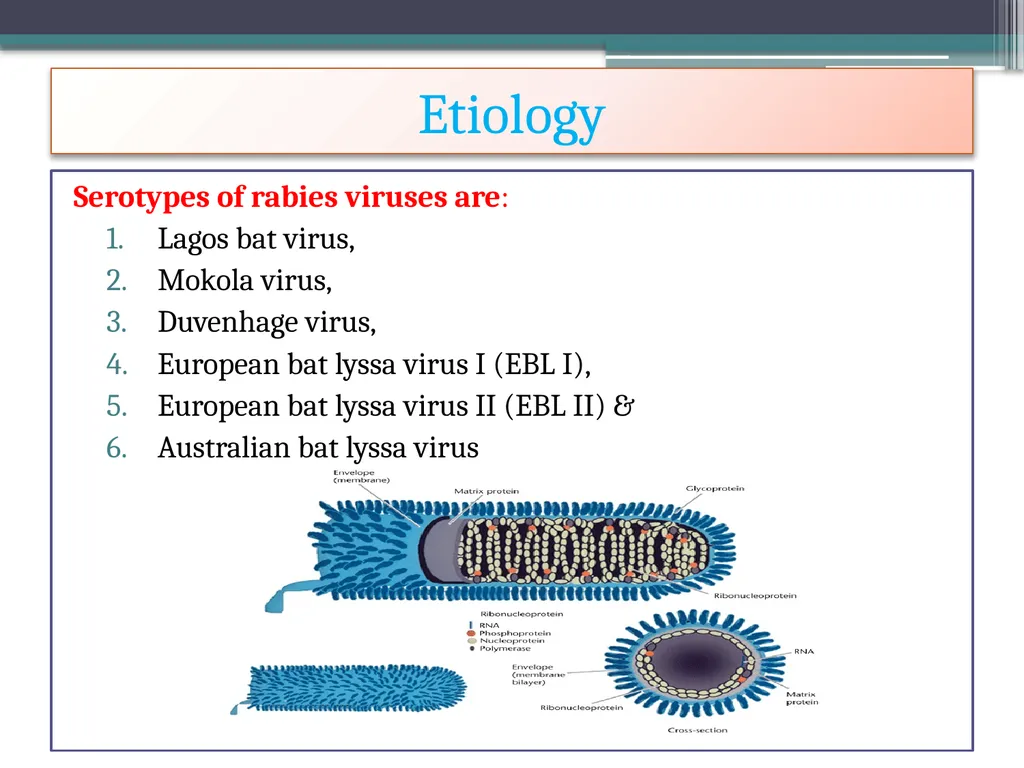
Lyssa virus
Family: Rhabdoviridae
RNA virus,
Bullet shaped (180 nm X 75 nm in dia.)
Highly fragile viruses
susceptible to standard disinfectants
Sunlight & moderate heat destroy the virus
There are 25 viruses in this genus, of which closely related rabies viruses are called “Classical rabies viruses” Etiology<br>
06
Serotypes of rabies viruses are:
Lagos bat virus,
Mokola virus,
Duvenhage virus,
European bat lyssa virus I (EBL I),
European bat lyssa virus II (EBL II) &
Australian bat lyssa virus Etiology<br>
07
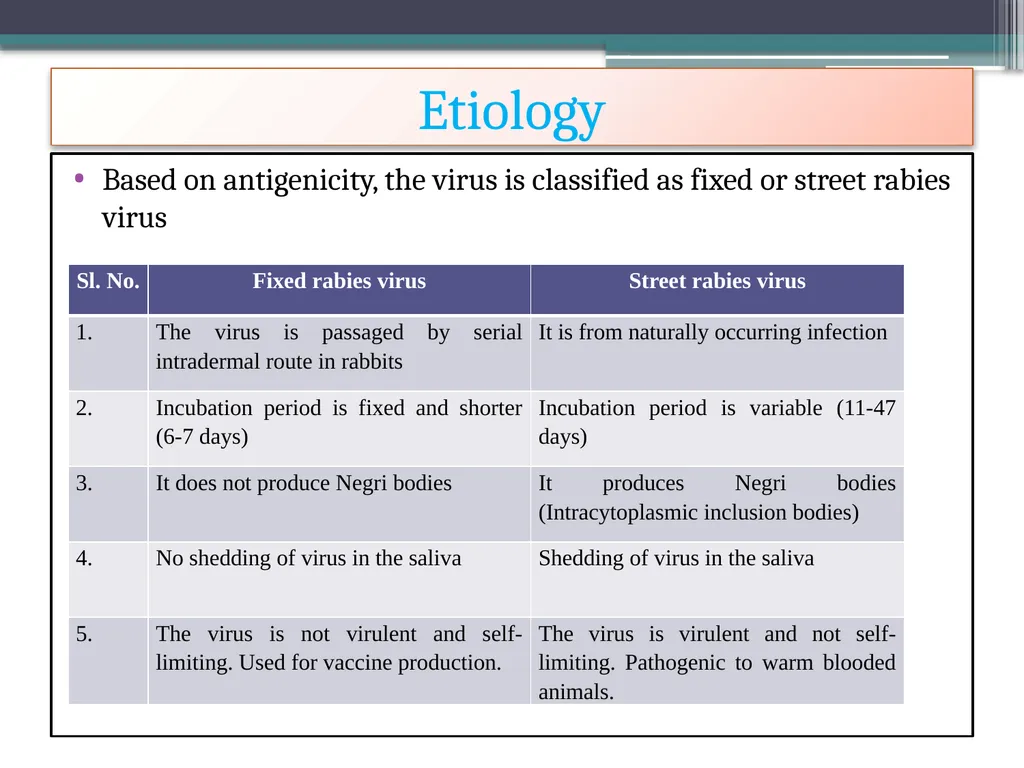
Based on antigenicity, the virus is classified as fixed or street rabies virus Etiology<br>
08
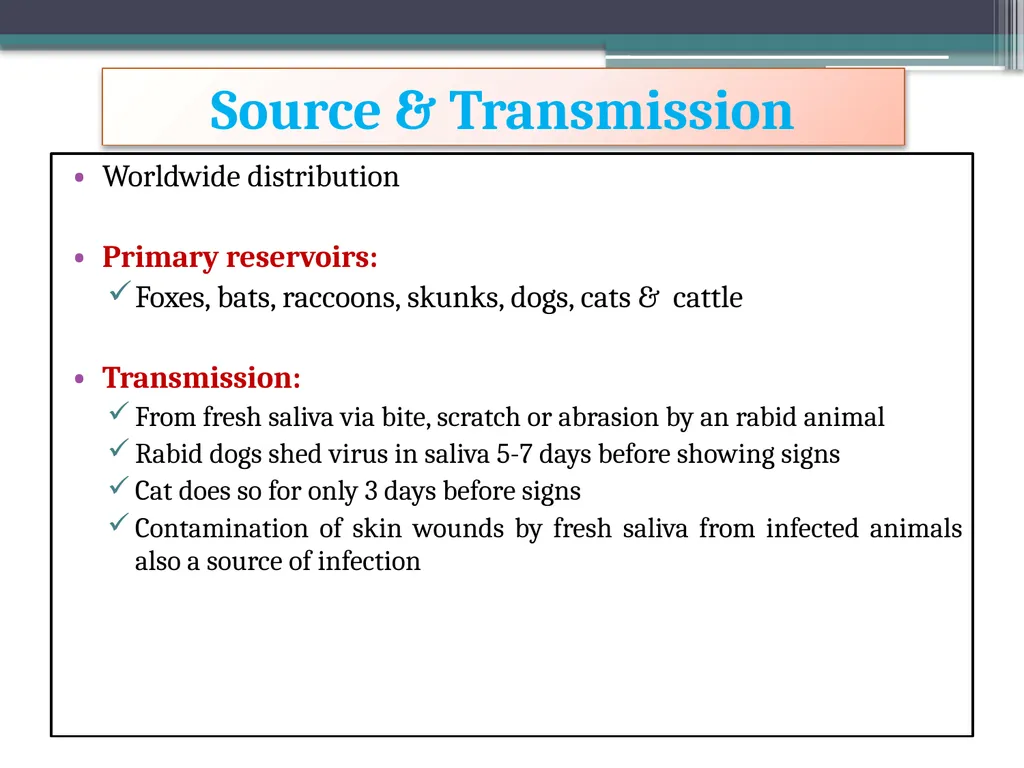
Worldwide distribution
Primary reservoirs:
Foxes, bats, raccoons, skunks, dogs, cats & cattle
Transmission:
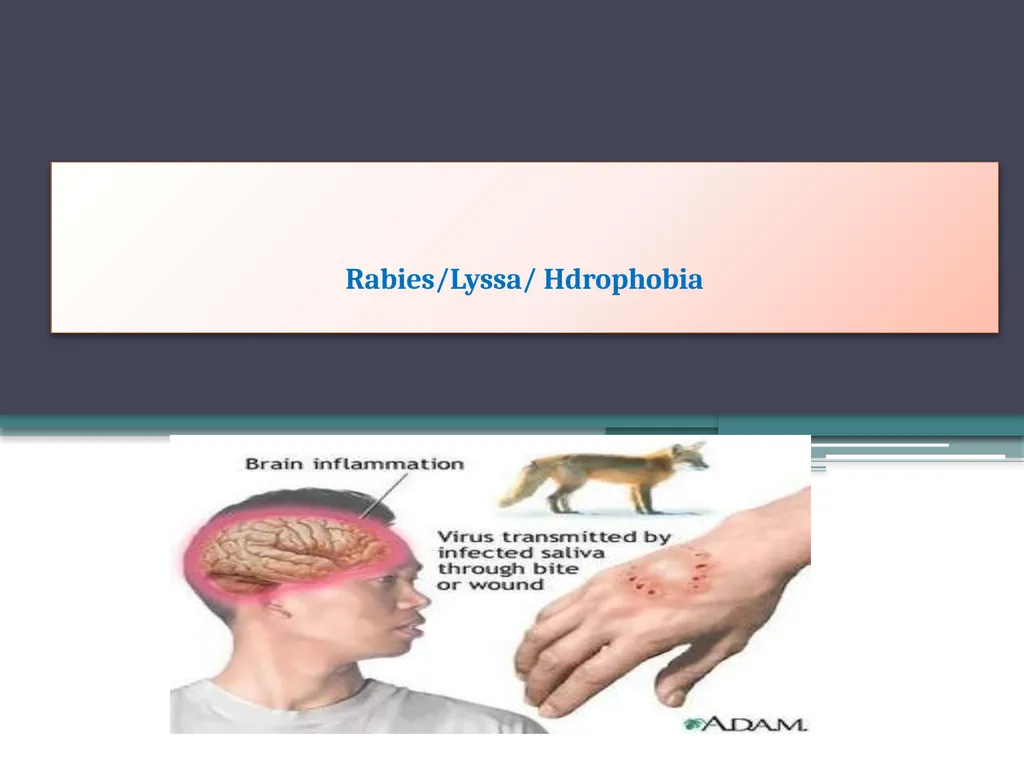
From fresh saliva via bite, scratch or abrasion by an rabid animal
Rabid dogs shed virus in saliva 5-7 days before showing signs
Cat does so for only 3 days before signs
Contamination of skin wounds by fresh saliva from infected animals also a source of infection Source & Transmission<br>
09
Central nervous system disturbances
The clinical course especially (in dogs)
Can be divided into 3 phases:
The prodromal form
The excitative form
The paralytic form
Prodromal period: 1-3 days, animals either show signs of paralysis or become vicious Disease in animals<br>
10
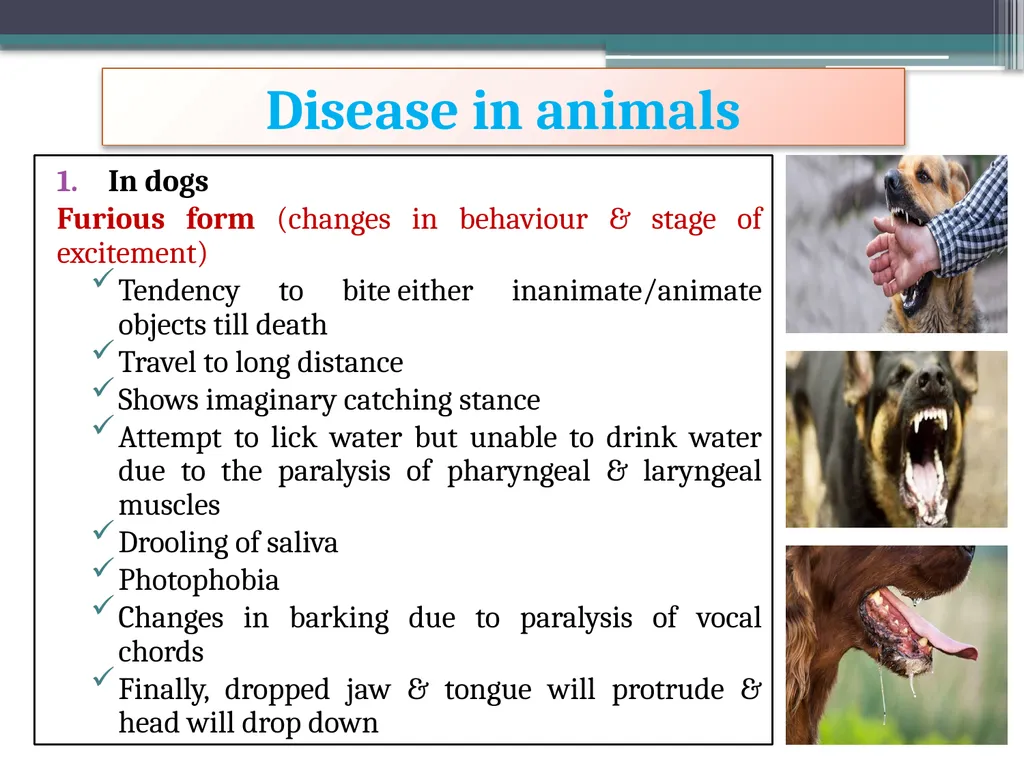
In dogs
Furious form (changes in behaviour & stage of excitement)
Tendency to bite either inanimate/animate objects till death
Travel to long distance
Shows imaginary catching stance
Attempt to lick water but unable to drink water due to the paralysis of pharyngeal & laryngeal muscles
Drooling of saliva
Photophobia
Changes in barking due to paralysis of vocal chords
Finally, dropped jaw & tongue will protrude & head will drop down Disease in animals<br>
11
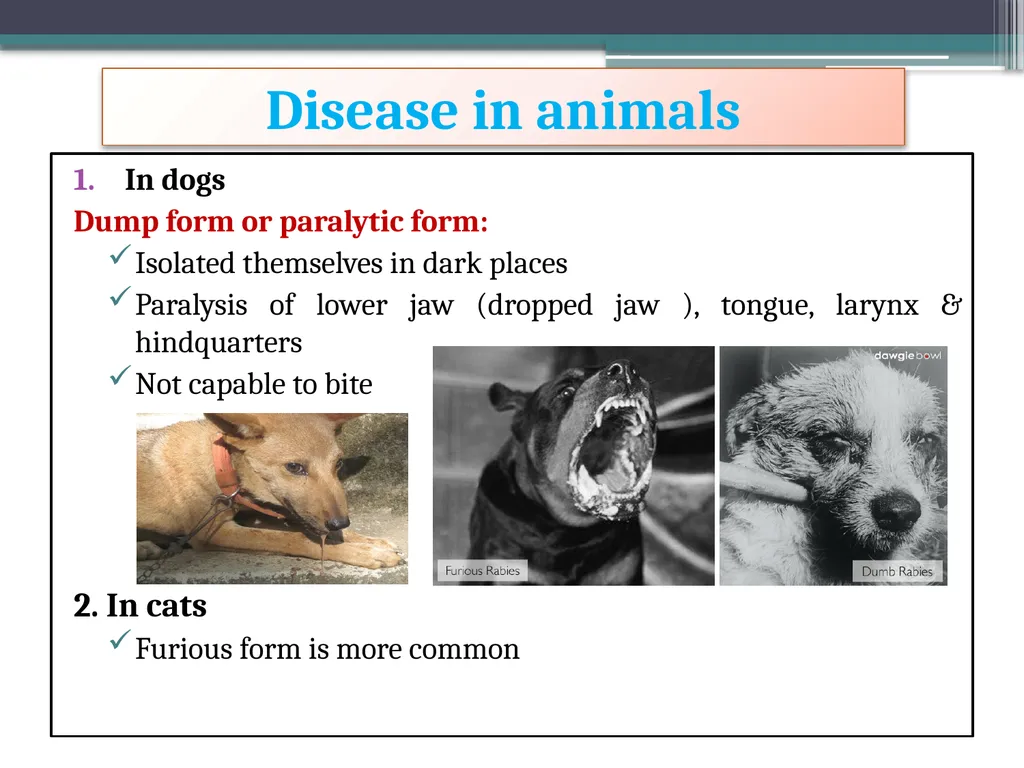
In dogs
Dump form or paralytic form:
Isolated themselves in dark places
Paralysis of lower jaw (dropped jaw ), tongue, larynx & hindquarters
Not capable to bite
2. In cats
Furious form is more common Disease in animals<br>
12
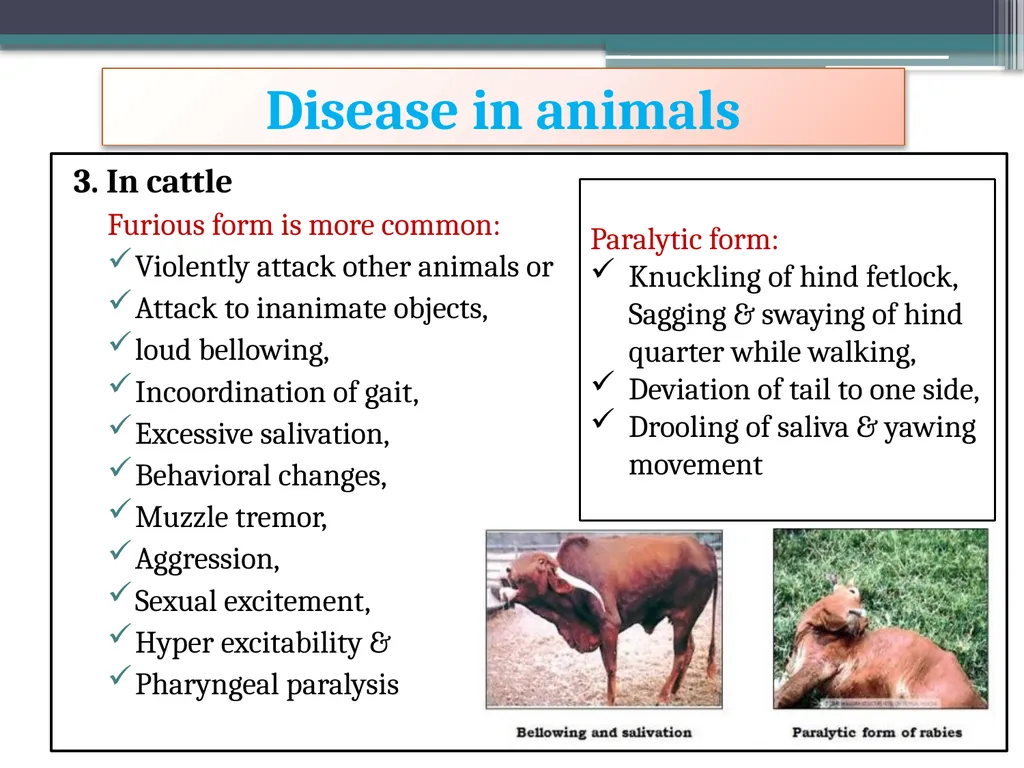
3. In cattle
Furious form is more common:
Violently attack other animals or
Attack to inanimate objects,
loud bellowing,
Incoordination of gait,
Excessive salivation,
Behavioral changes,
Muzzle tremor,
Aggression,
Sexual excitement,
Hyper excitability &
Pharyngeal paralysis Disease in animals Paralytic form:
Knuckling of hind fetlock, Sagging & swaying of hind quarter while walking,
Deviation of tail to one side,
Drooling of saliva & yawing movement<br>
13
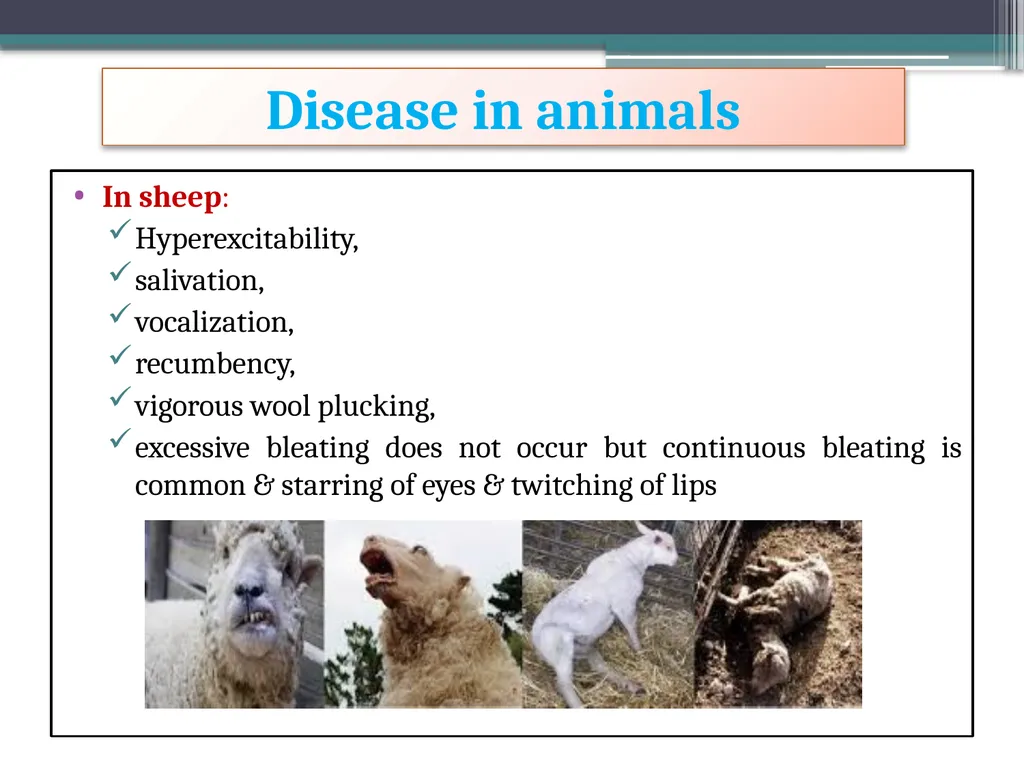
In sheep:
Hyperexcitability,
salivation,
vocalization,
recumbency,
vigorous wool plucking,
excessive bleating does not occur but continuous bleating is common & starring of eyes & twitching of lips Disease in animals<br>
14
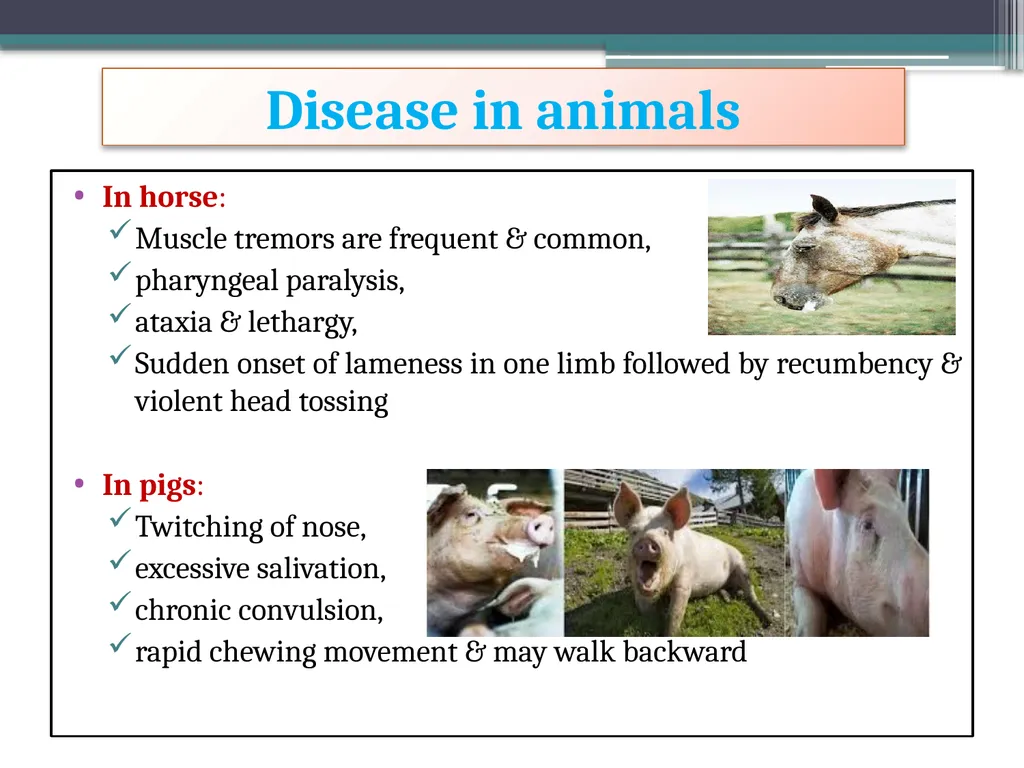
In horse:
Muscle tremors are frequent & common,
pharyngeal paralysis,
ataxia & lethargy,
Sudden onset of lameness in one limb followed by recumbency & violent head tossing
In pigs:
Twitching of nose,
excessive salivation,
chronic convulsion,
rapid chewing movement & may walk backward Disease in animals<br>
15
The incubation period: few months (usually 30 to 60 days),
Depending on
The distance of bite,
Severity of bite,
Amount of virus inoculated
Aggressive status of the rabid animal
Infection reaches to CNS symptoms begin to show
The infection is effectively untreatable & usually fatal within days
Death almost invariably results 2-10 days after first symptoms
Drinking cause extremely painful laryngeal spasm
Patient refuses to drink (hydrophobia-fear of water)
Muscle spasm, laryngospasm & extreme excitability are present Disease in human<br>
16
Convulsions occur
Thick tenacious saliva
Increased lacrimation,
Frequent micturition
Increased perspiration.
The initial symptoms of rabies are often mild fever & pain or paresthesia at the wound site
Furious rabies is rapidly fatal: hydrophobia or aerophobia, phobia towards sound, hyperactivity and fluctuating consciousness
Flaccid paralysis ascending with pain in the affected muscles & mild sensory disturbances will precede death from respiratory paralysis Disease in human<br>
17
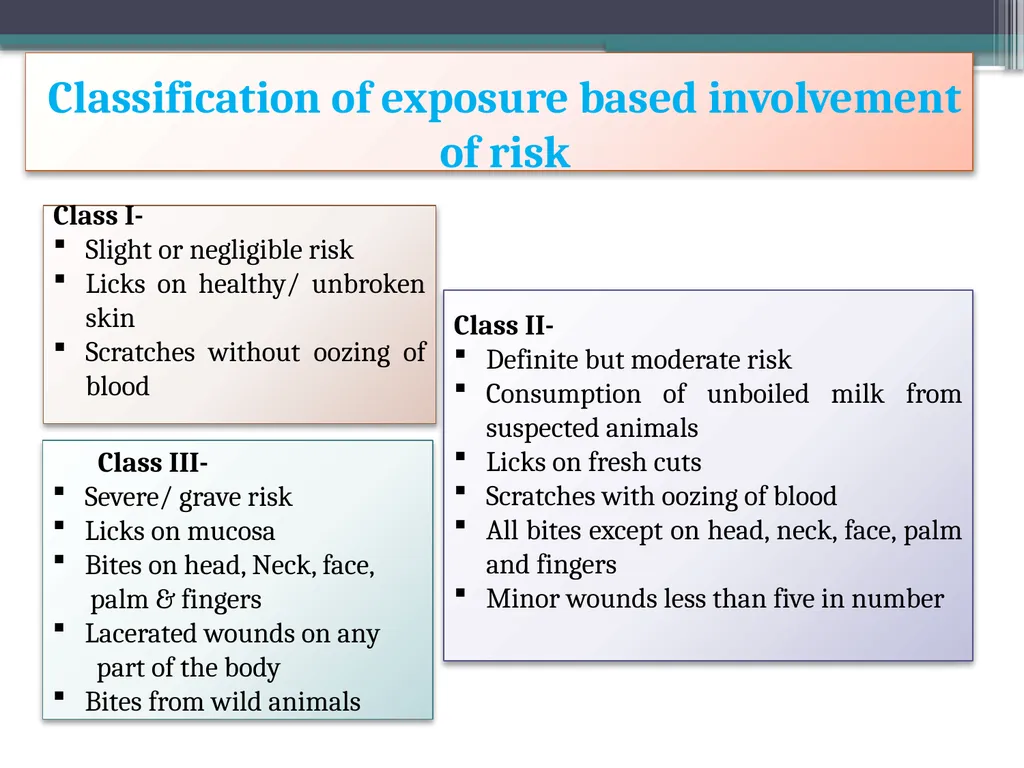
Classification of exposure based involvement of risk Class I-
Slight or negligible risk
Licks on healthy/ unbroken skin
Scratches without oozing of blood Class II-
Definite but moderate risk
Consumption of unboiled milk from suspected animals
Licks on fresh cuts
Scratches with oozing of blood
All bites except on head, neck, face, palm and fingers
Minor wounds less than five in number Class III-
Severe/ grave risk
Licks on mucosa
Bites on head, Neck, face,
palm & fingers
Lacerated wounds on any
part of the body
Bites from wild animals<br>
18
Sign & symptoms
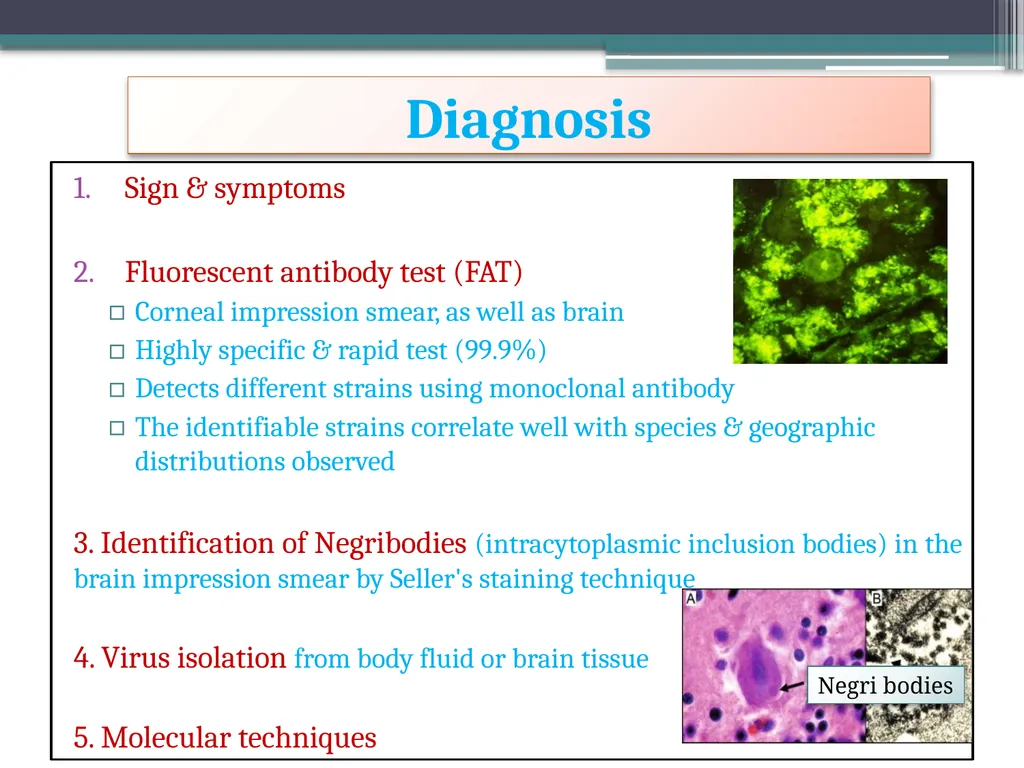
Fluorescent antibody test (FAT)
Corneal impression smear, as well as brain
Highly specific & rapid test (99.9%)
Detects different strains using monoclonal antibody
The identifiable strains correlate well with species & geographic distributions observed
3. Identification of Negribodies (intracytoplasmic inclusion bodies) in the brain impression smear by Seller's staining technique
4. Virus isolation from body fluid or brain tissue
5. Molecular techniques Diagnosis Negri bodies<br>
19
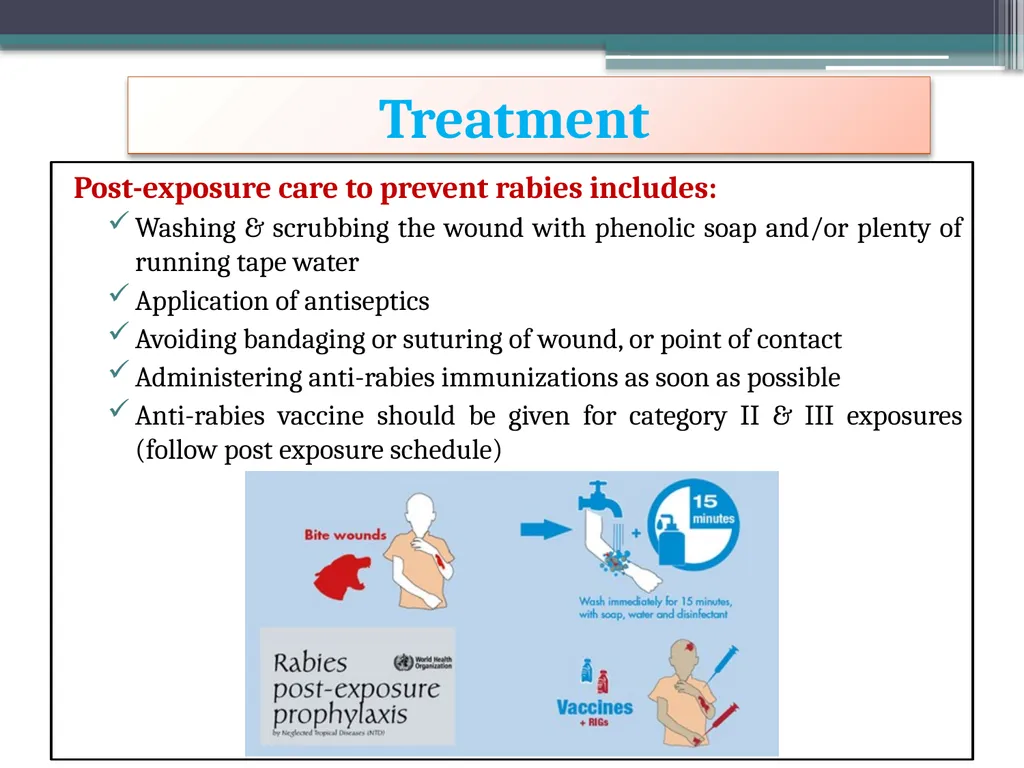
Post-exposure care to prevent rabies includes:
Washing & scrubbing the wound with phenolic soap and/or plenty of running tape water
Application of antiseptics
Avoiding bandaging or suturing of wound, or point of contact
Administering anti-rabies immunizations as soon as possible
Anti-rabies vaccine should be given for category II & III exposures (follow post exposure schedule) Treatment<br>
20
Post exposure schedule
If the animal is not previously immunized,
Post exposure vaccination on
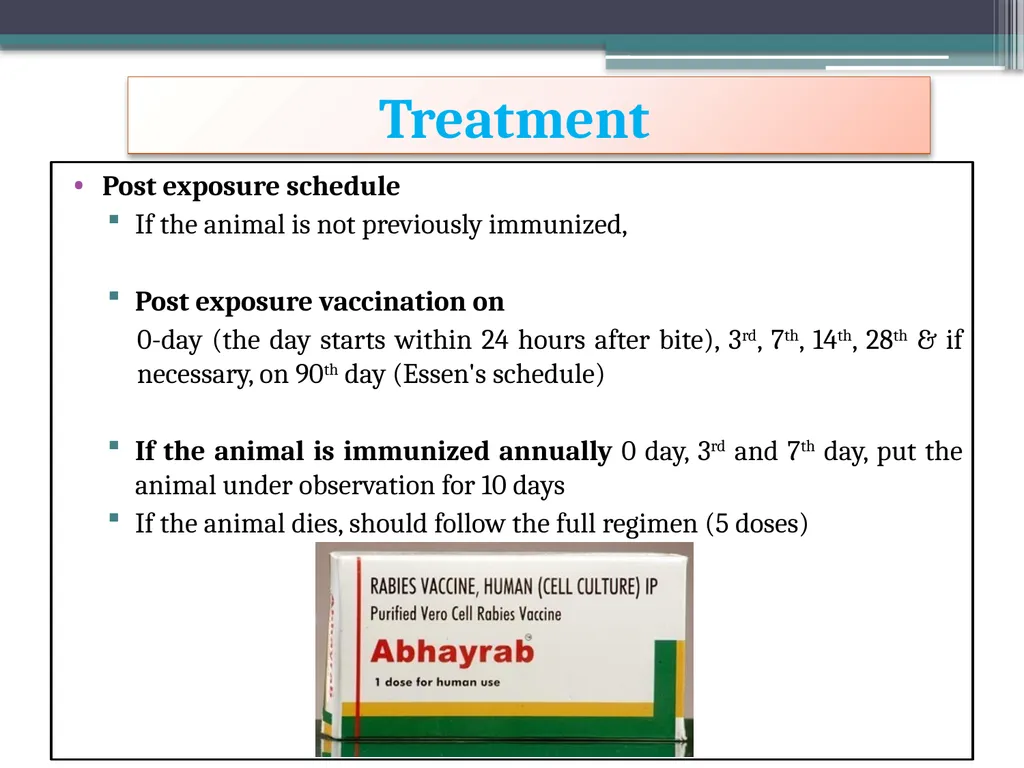
0-day (the day starts within 24 hours after bite), 3rd, 7th, 14th, 28th & if necessary, on 90th day (Essen's schedule)
If the animal is immunized annually 0 day, 3rd and 7th day, put the animal under observation for 10 days
If the animal dies, should follow the full regimen (5 doses) Treatment<br>
21
Pre-exposure schedule
Type of vaccine:
Inactivated (from cell culture or embryonated egg vaccine)
Number of doses:
Three: 0, 7th & 21st or 28th day given by IM or ID route (vaccine should not be given in the gluteal region)
Booster: After one year then every five years
Contraindication:
Severe reaction to previous dose
Adverse reactions:
Mild local or systemic reactions; rare neuroparalytic reactions reported
Special precautions:
Do not use animal-brain-derived vaccines Vaccination<br>
22
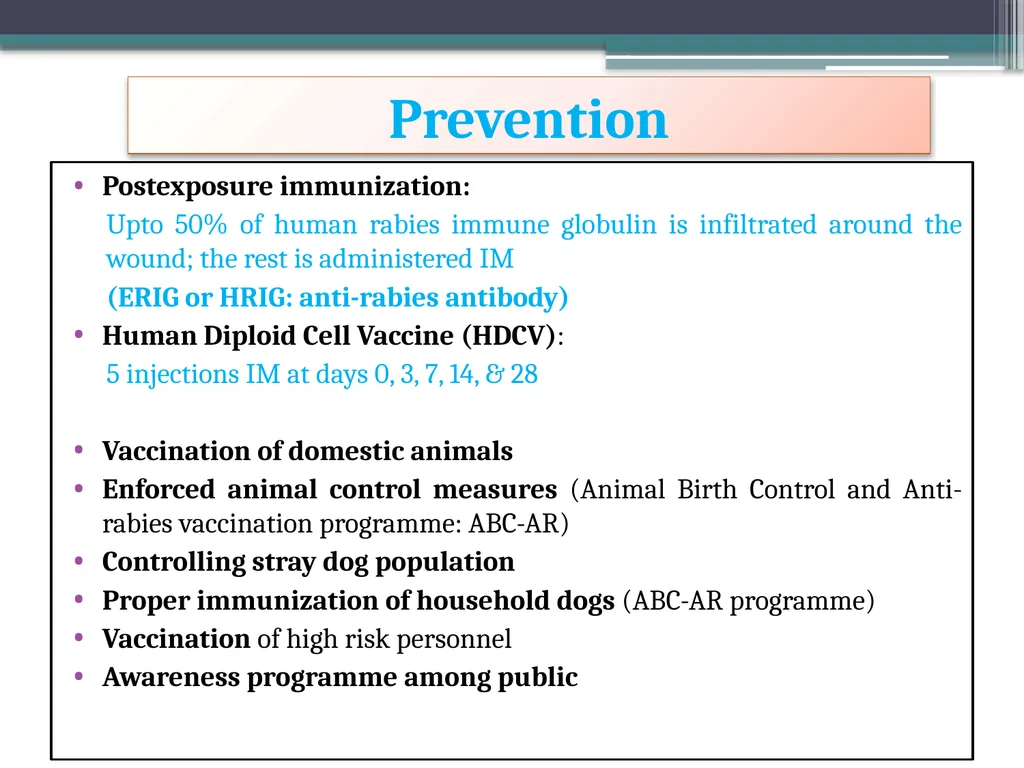
Postexposure immunization:
Upto 50% of human rabies immune globulin is infiltrated around the wound; the rest is administered IM
(ERIG or HRIG: anti-rabies antibody)
Human Diploid Cell Vaccine (HDCV):
5 injections IM at days 0, 3, 7, 14, & 28
Vaccination of domestic animals
Enforced animal control measures (Animal Birth Control and Anti-rabies vaccination programme: ABC-AR)
Controlling stray dog population
Proper immunization of household dogs (ABC-AR programme)
Vaccination of high risk personnel
Awareness programme among public Prevention<br>